War of Words

Words, good slaves but bad masters.
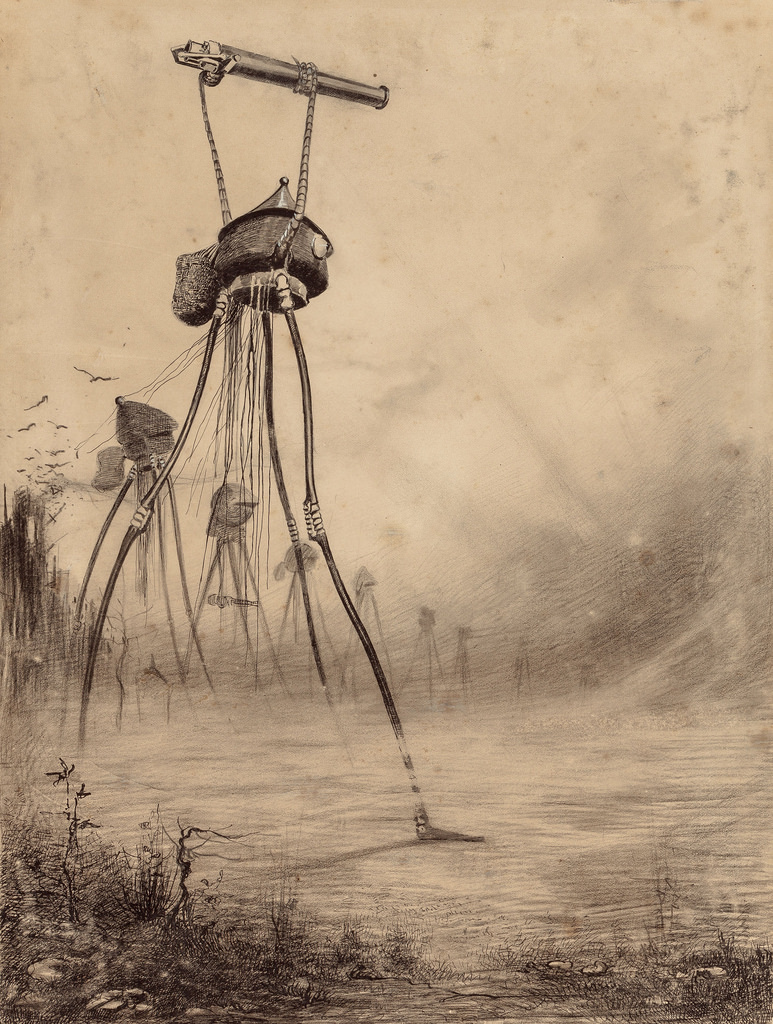
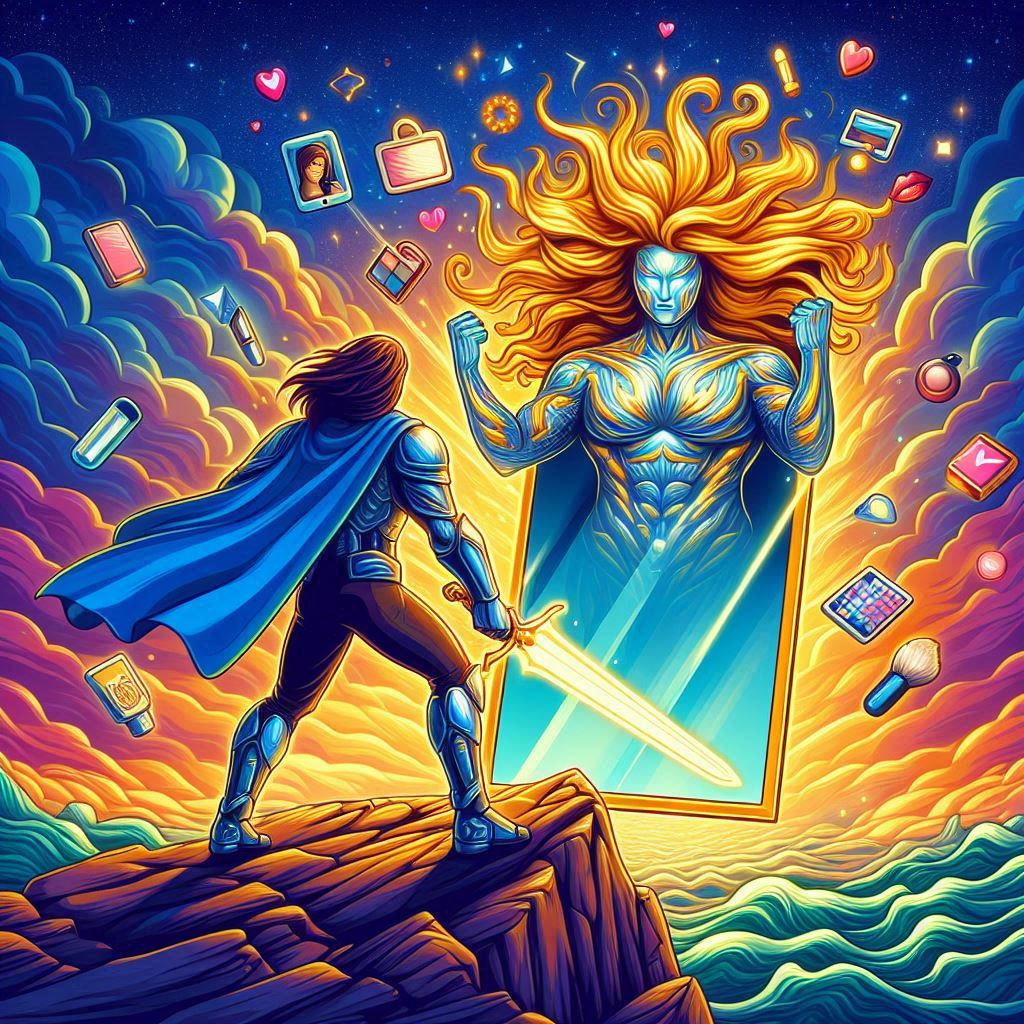
H.G. Wells wrote The War of the Worlds, a story about creatures from another part of the Universe invading the planet Earth and how the humans fought back. Words too can conquer worlds, especially the world in your mind. For this reason, I believe it is vital that we choose words that fit exactly the meaning we intend.

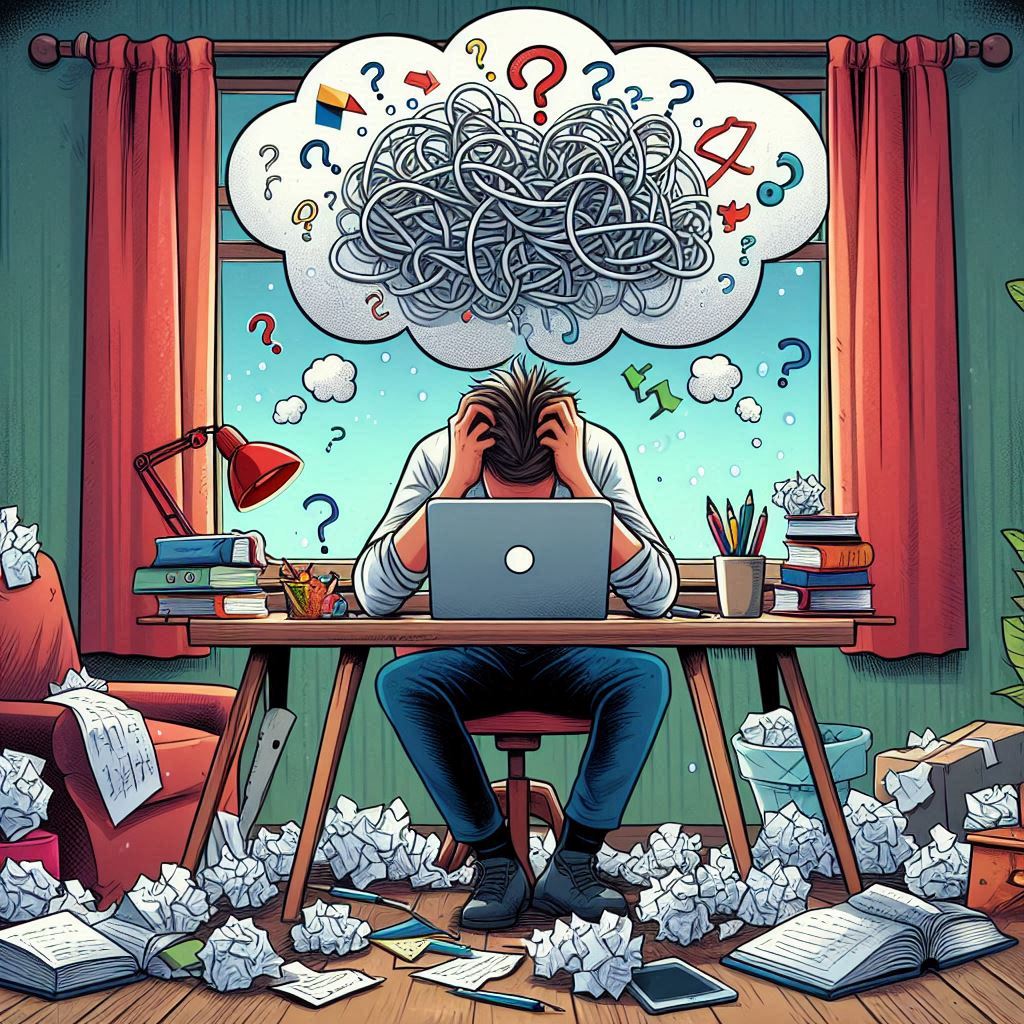
When speaking, we like to believe that we use words to converse clearly with others.

If there are no words in our own language we can create new words in fun and familiar ways. This linguistic phenomena is apparent in the speech of young people. New generations invent their own vocabulary with which to talk behind the backs of adults!

The power of language is it’s ability to open new perspectives on life. A restricted vocabulary will limit thoughts to the point that they no longer serve anyone’s best interest.

Words create our thoughts which can in inturn be inhibited by those words. Imagine a map of a city as a model of your neural pathways. Those journeys we repeat, such as to work, become familiar, almost over used. A map is also constrained by it’s boundaries. It does no show the whole world. The unreachable thoughts are as if in another dimension. Logic cannot venture beyond logic.

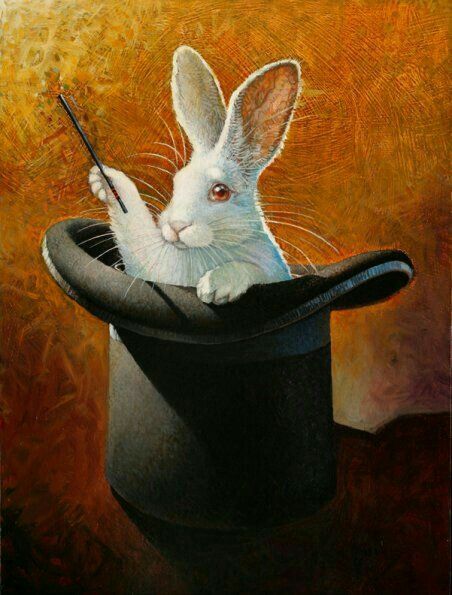
I listened to a debate on the radio recently in which scientists were challenging each other over the popular conundrum, ‘which came first, the chicken or the egg?’ They conjectured about birds as dinosaurs and an absurd point in time when the first egg was laid. Only one scientist suggested that change is a gradual process when viewed over long periods of time. No parrot changes colour over night. Evolutionary changes take thousands of years before being noticeable. There is no single moment when chickens and eggs come ‘into being’.
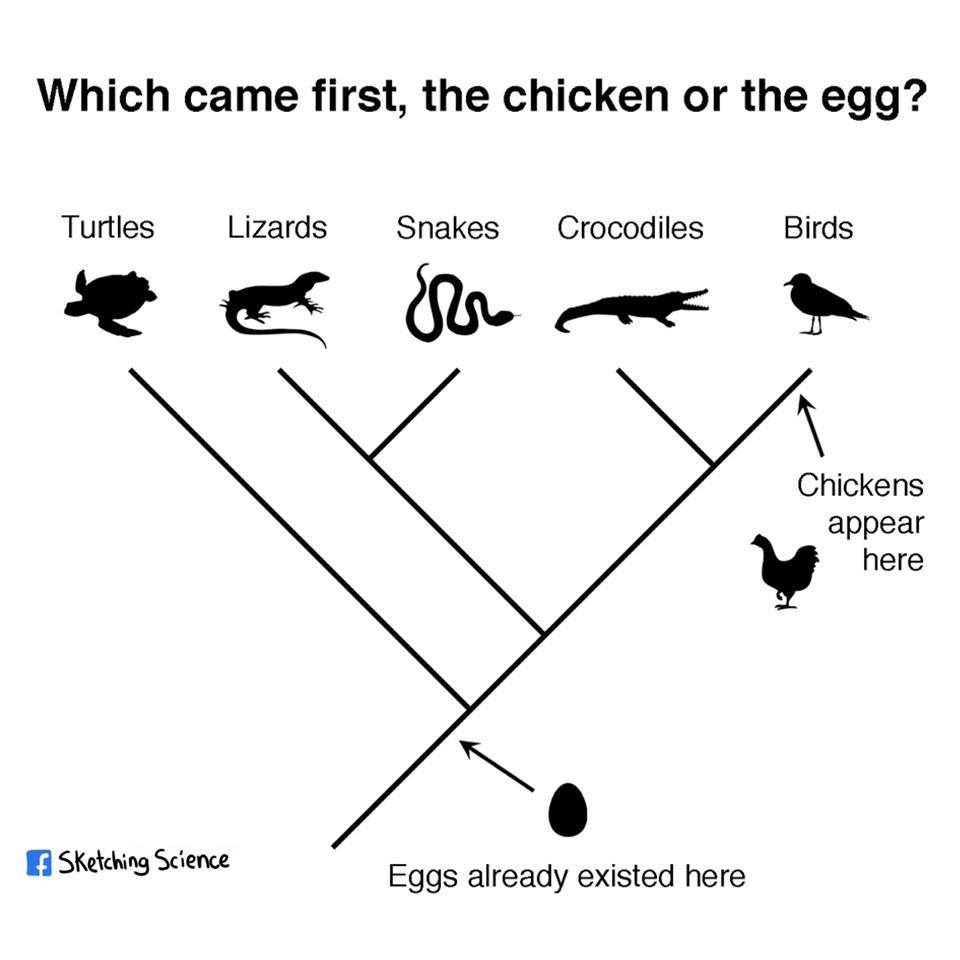
picture credit: The Australian Academy of Science

The same is true in astronomy. Do you believe the universe happened in a nano second as the so called ‘big bang’. Scientists are currently theorising that universes expand and contract over vast periods of time. The explosive power of the ‘big bang’ phrase, froze original thinking about how the universe began for decades. The universe was never a chicken, nor an egg…it is obviously both.

Semiotics is the science of language and meaning. In my view, we all benefit from understanding how we structure our thoughts using language and meaning. Here is an exercise;

Imagine a ‘cake’.

There are many categories we can use to describe cakes. There are cakes we sub-categorise by their ingredients such as a sponge cake, fruit cake, carrot cake and oat cake. Then there terms for cake which describe when we eat it, such as birthday cake, Christmas cake or wedding cake. Alternatively the means of production is a description such as home-made or shop-bought. Another way of thinking about cake is the origin of the recipe such as Black Forest, Dundee or French Fancies.

None of these sub-categories describe cake but the word cake includes all of the sub-categories. When we choose which cake is included in which sub-category we use thought to DISCRIMINATE between different cakes. This tool is an important power of mental faculty but unfortunately it’s meaning has changed in common usage. It has become to mean PREDJUDICE and in my view, there is a loss of meaning and ergo understanding, when these two are confused.

Discrimination is an objective skill whereas prejudice is subjective. When we think subjectively we mix emotions with logic. Feelings introduce prejudice for or against something in a way that cannot be explained logically. Insignificant examples are then used ‘prove’ to oneself and others that a prejudice is based on fact in a process known as ‘bias confirmation’.

Bear with me if you think I am stating the obvious but in my view much cultural, ethnic, racial, gender based, geographic, religious and political misunderstanding has it’s roots in how language governs thinking and in particular, prejudice.

A mind which for whatever reason developes a predjudice against a general category of something is in trouble. To use our previous example, it would be wrong to say ‘I don’t like cake’ when what is meant is that you do not like cake with a lot of cream.

When it comes to making prejudices against categories of fellow human beings we hit trouble. Any prejudice is more a product of intolerance, misunderstanding, eliteism, narrow mindedness and other unelightened views in the mind of the observer. However, we hear predjudice views in the news regularly so it is important to unpick how and why they are held.

Consider the term ‘anti-Semitism’. The German journalist Wilhelm Adolph Marr lived at the end of the nineteenth century. He popularised the term ‘anti-Semitic’ to describe anti-Jewish sentiment within political ideology and the general public.

This prejudice towards Jews we know has been present for thousands of years. What was new then was the term, ‘anti-Semitic’. It could be argued that this contributed to the start of the second world war and it remains in common usage today, so did it ever serve the world well?

Let us examine the term. We might question the meaning of the term Semite. Who can define what this means other than an anthropologist? Cynics might suggest the use of the term was a pseudo scientific device to impress and support a prejudice which in turn came from right wing views on eugenics.

Certainly just as ‘cake’ has many sub-categories, so does the word Semite. Historically a Semite might be from a specific geographical location such as Canaan, Judah, Judea, Israel or Palestine.

The term ‘Jew’ is entomologically derived from the tribe of Judea. Then of course there are sub-categories for a Jewish person by religion such as orthodox, conservative or reform. Then there are those who are Jewish but do not practice a religion such as non-practising Jews and those who do not believe in God such as Zionists; who might be Jewish or Christian.

Sometimes language is used to catergorise a ‘people’ and using this categorisation, Semites would be a group who speak Hebrew and / or Aramaic.

The Nazi’s in the 1930’s arbitrarily define a Jew by racial characteristics, not religion, derived from an elitist philosophy of the Aryan race being superior to others on which an extreme predjudice was based.

We might expect a national category of Jew, but the Supreme Court of Israel has determined there is no Israel nationality.

There are other sub-categories of Jewish identity such as by culture, ethnicity and politics, but I hope that I have made the point that the terms ‘Semite’ and ‘Jew’ mean many things to many people depending on what category you choose to define them.

Who is a Jew? picture: Instagram

There is a criticism of the term Semite as meaning Jewish by non-jewish people, that it ‘disingenuously’ excludes those who also identify themselves as Semite, such as Arabs. Does the term anti-semite poplarly applied to Jewish people, imply a denial that Arabs are also of Semitic origin?

In my view, the nineteenth century pseudo scientific phrase ‘anti-Semitic’ continues to obfuscate clear thought and sustains predjudice rather than exposing it. It has been used by politicians in particular with the intention including victims of the holocaust and stealing their suffering to gain the moral high ground. Such verbal smoke and mirrors has spawned wars and continues to do so to this day, unquestioned.

In my view, it time to clear our thoughts of words that do not describe precisely what they mean. This is not just a matter of taking sides but simply being clinically clear about where are ideas come from? Are they the product of predjudices? What are the intended and unintended consequences?

To be impartial in a debate that is more a minefield than a cornfield, let us reverse the coin and examine the current term for ‘hatred of Muslims’; Islamaphobia. Again, should we not question the use of this term? Should the psychological term ‘phobia’ really be used to describe a fear of spiders, snakes and Muslims? Clearly confusion, not clarity will result from humans being casually categorised using a word from the science of psychology incorrectly, rather than a clear expression most people understand.

Fortunately, words can serve us to correct such unclear thinking. We can invent new words or phrases in any language and in doing so, say exactly what we mean, fairly and without bias.

It should not be, but if a bigot wishes to describe a group of humans using a term of predjudice, then I suggest that those describing distaste of a sub-category of a human being, should use the prefix ‘anti’. This creates the terms anti-jewish or anti-muslim concisely and without ambiguity. Alternatively, the terms ‘jew hate’ and ‘muslim hate’ in countries where ‘hatred’ is an important aspect of a legal definition and unambiguous to all. The prejudice is clear to all and not spun with fake science. It also makes clear that these are irrational generalisations.

There is a war of the worlds, but it is contained in our heads, not the heads of other people who we may not understand.

In my opinion, the dangerous, self-unaware prejudices that thrive in the emotional biases of current politics, poison the thoughts of otherwise rational and compassionate human beings, and in doing so whole communities. Such hatred of difference is so divisive that it incites violence between one group and another. The simplest example is when governments of countries declare war on each other.

Words are powerful as they form a part of the process whereby we create and sustain our beliefs. How much of the horror that we see in the news today, started as copied or learnt bias, built on an emotional response to an unfiltered stimulus, that slipped under the barrier of compassion towards others.

It is clear to many but sadly not all, that those who express ‘anti’ views in the name of a religion, are not following the most basic rules of the religion they profess to follow.

Fortunately, those who are strongly, even violently prejudiced, are in a tiny minority. The general population do respect and are prepared to learn from, those who are different to themselves. The world’s religions all follow the principle of do-as-you-would-be-done-by.

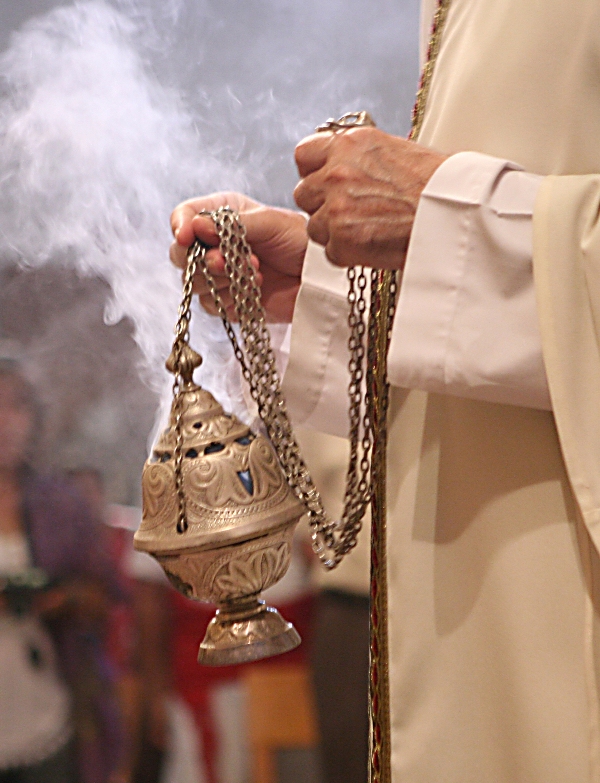
Holy Smoke

And seeing through it!

Burning Francinsense
picture credit Wikipedia

At the zenith of the Julian Calendar we have the festivals of ‘Christmas’ and ‘New Year’.

These celebrations carry warm and fond memories for many westerners. We can trace this back to childhood where children become the centre of attention and adults serve them for a few days; they pretend to be Santa Claus.

If, for whatever reason, you wish to influence the minds of adults for life, then you would start with the child because the child has no filters to prevent unconscious programming. The consumer industry that has grown around Christmas and the New Year suggests, very few adults can see through the smoke and mirrors.

Look objectively at these ‘festive times’. We tell stories to children about Santa Claus and a completely disconnected Nativity which they absorb with relish. And even though these are rather thin and bizarre narratives, children believe them.

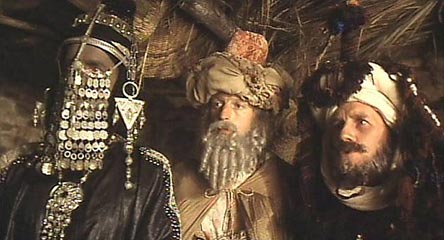
Did shepherds really watch their flocks during the coldest nights of the year? Surely this nightly routine is only necessary when the sheep are lambing which is not in the winter months. Angelic hosts? Moving stars? Do kings saddle up camels and set off with other kings and no armed guard and courtiers towards a new light in the sky? And why give a babe in swaddling cloths such inappropriate gifts? Surely, a rattle, a soft toy and a blanket are more likely to raise cheeky smile?

This Bible story has the quality of a dream and in my view, for good reason. For just as dreams are constructed using symbols, so are these stories. Modern Jungian psychology is very comfortable with dream interpretation and symbols, as have peoples from around the world and throughout history.

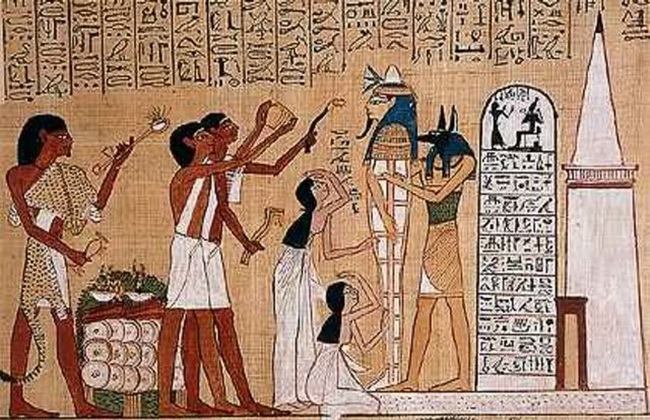
The Roman church does not advertise that the nativity story is laid over identical ancient Egyptian and other traditions in which a child is born on 25th December of a virgin mother.

Isis Nursing Horus
picture credit Isiopolis

It’s interpretation of the gifts are as signs not symbols. They suggest that gold was given to show Jesus was ‘Christ the High Priest‘, in other words giving him power and authority, but a symbolic interpretation carries deeper meaning than signs.

In my view, the symbolic interpretation of the story is related to the winter solstice and a solar god rising and setting (Set being a destroying god from ancient Egypt). At this time the sun effectively dies and is placed in the ‘place of the skull’ or Golgotha. The round stone in front of tomb is closed for three days symbolises the sunrise not moving for three days on the horizon. When the sun moves again on 25th December is resumes it’s daily ascent into heaven.

This is not to say that Jesus the Christ was not a real person, but in my view, Jesus was born in the spring, did not die on the cross and lived his last days as far away from the evil Roman Empire as he could, in the Indian sub-continent, Kashmir.

The Tomb of the Prophet Isa or Jesus the Christ
picture credit Indian Heritage Walks

Surprise to see that there is no Santa Claus in the Bible because his is a symbolic story from another time and place which I have discussed in a previous blog; just as there are no cuddly Easter Rabbits or munchy chocolate eggs at Easter in holy scripture.

Here is a more serious alternative interpretation of the nativity story that might well have been within the teachings of the mystery schools and secret societies.

Consider the three kings as representing the pineal, pituitary and the hypothalamus neuroendrocine glands. These are all within the ‘place of the skull’. We should note that the birth most likely took place in a cave, a symbol of inner consciousness used by Plato, not a stable.

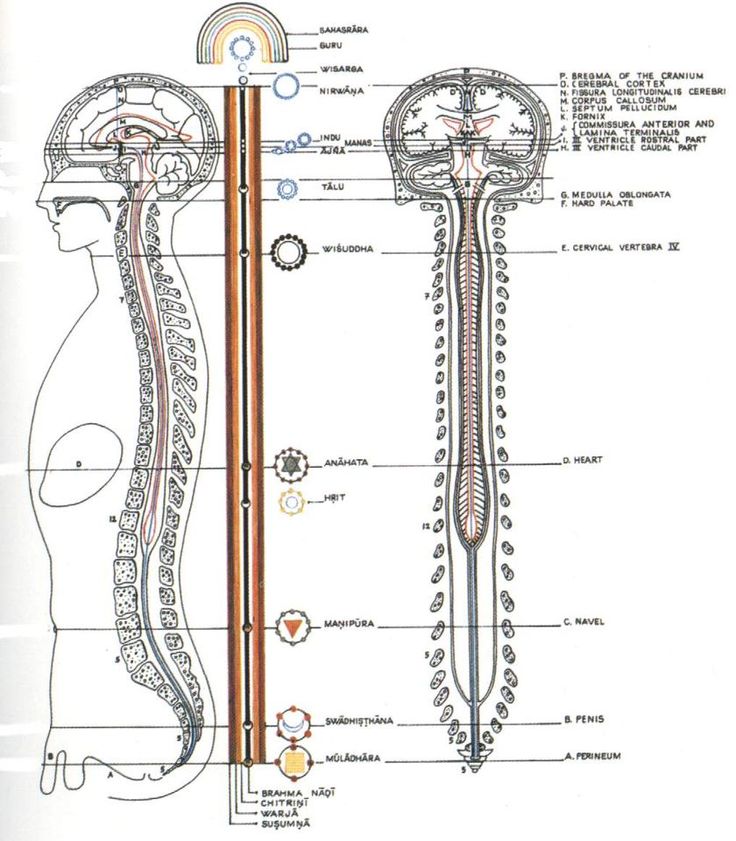
Many believe that much of human experience is ruled by our energy bodies as depicted in Hindu tradition by the chakras. Each month a sacred oil rises in the spine from the solar plexus and the part of the spine we call the sacrum. This is represented as the gift of myrrh from the pituitary gland. The hypothalamus is symbolised by gold, which is a pure, non-tarnishing, noble element, that freely conducts electricity. This charges the oil with golden, solar ions. Lastly the pineal gland secretes frankincense, a precious oil burnt in holy places to symbolise prayers rising into another dimension which becomes visible when the smoke disperses to reveal the source of the light. This was a new light and new consciousness on planet Earth.

I shall move onto the myth of the ‘new year’ in countries around the world which follow the Julian calendar. This was introduced by the dictator perpetuo, Julius Caesar in 45BCE, to replace the ten month Roman calendar. This was a solar calendar for a new sun god, with 365 days and a leap day every four years. It surfaces in the modern names of September, October, November and December (7,8,9,10) and starts on the first day of January.

But this random 1/1 date is not sympathetic with the cycles of nature. At this time, winter is dormant in the natural world. Animals and humans struggle to keep alive. Understanding natural cycles would suggest that the new year should start at the spring equinox when the days lengthen and there is more sun than darkness; a time of renewal and rebirth.

The Roman January god, Janus, had his two views of the world fixed on a melancholy past and an uncertain future. He was not a god of the moment and reality. He was not awake. Yet we celebrate January as the start of the new year, even to this day.

In the Rome influenced west, adults and children stay up until midnight. This hour is known in Wiccan circles as the ‘witching hour’ because at this time, the veils into the human world are opened and spirits may enter unneeded. Spirits are often consumed within an alcoholic drink to start the new year as one means to continue.
The Druid’s magical mistletoe, is used to give protection from such unwanted guests. It’s berries represent sperm and fertility. A future hope or ‘resolution’ is made real by a kiss beneath the mistletoe. It is an evergreen plant, and therefore provides protection throughout the year, even if unkept resolutions do not.
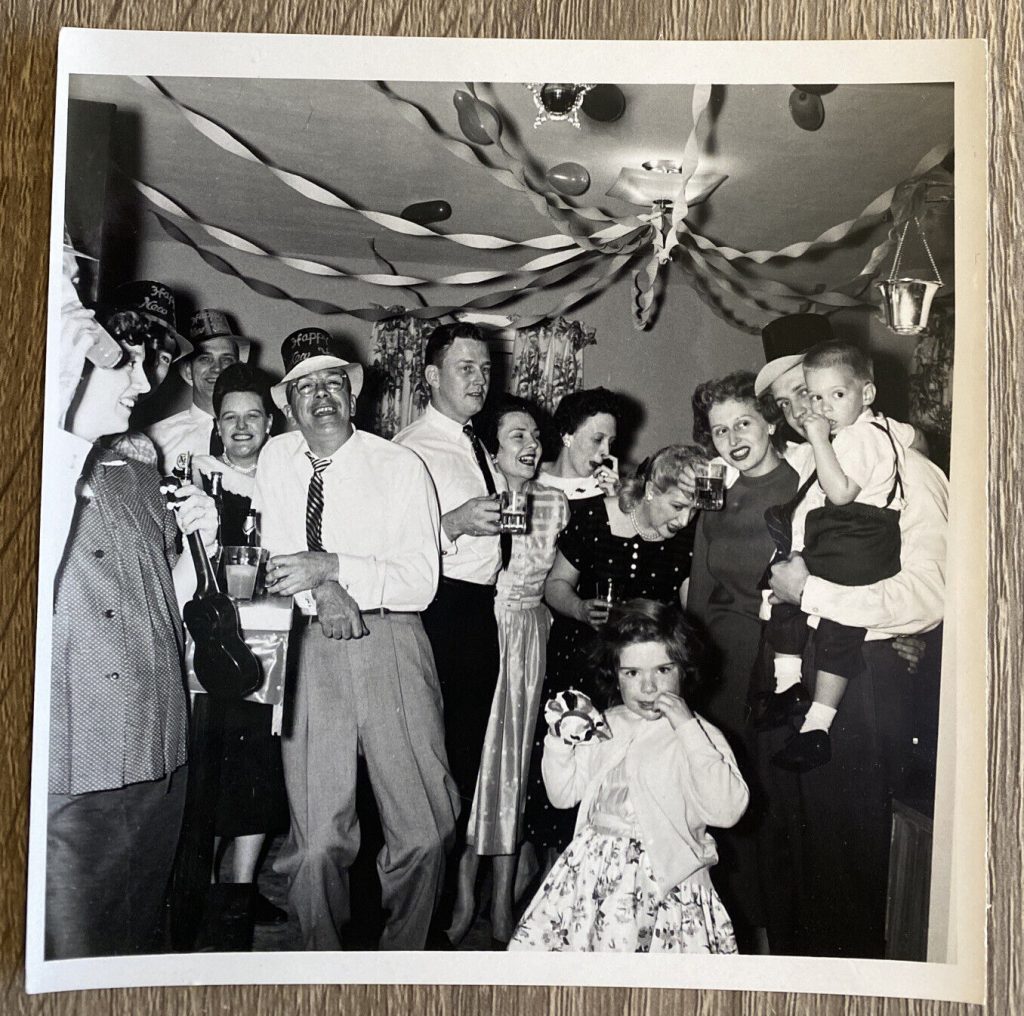
New Year Family Celebration 1950’s Britain

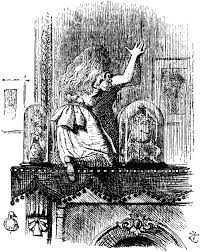
If these interpretations of Christmas and the New Year were explained to the general populace, their ‘programming’ from childhood is likely to resist any questioning; such is the unconscious power of childhood experience. The modern nativity and new year stories occur arbitrarily within the natural cycles. These children stories are unreal but are repeated without question. At the same time, fairy tales and myths (which are real) are described as unreal. This is the looking glass world which Alice ventured into.

In my view, this uncritical retelling of false narratives spills out into popular understanding and even ethics. For instance, exploiting rather than nurturing the natural environment, is a global policy that does not lead to fertile and happy communities. The erosion of natural habitats leading to reduction in the numbers and extinction of many species, I attribute to this dissonance with the natural world. We imagine it will last forever as that suits our modern self pleasing and comfortable way of live, but it will not.

Waking up from a dream is a slow and dizzying process. There are many who are casting aside these children stories that we were coaxed in our innocence with gifts and jollity to believe in. If our outer and inner ‘nature’ is ever truly understood, humans have a chance of being brought back from the abyss of shallow and false beliefs.

As Within So Without

“Whoever battles monsters should see to it that in the process he does not become a monster. And when you look long into the abyss, the abyss also looks into you”.

Friedrich Nietzsche

What Nietzsche does not say in this famous quotation from his book ‘Beyond Good and Evil’, is that the monster you perceive making faces at you, is you.

This slightly heretical philosophical view of mine, suggests that our internal world (mind) creates the people, places and things we experience. By extension, for those who believe, humans create God in their own image, because creativity is an attribute of Divinity which they share and reflect.

You are not a person living a life, you are life living a person.

When we look back at our forefathers and ask how they dealt with this conundrum, there are two paths. One is to be blind to the illusion that we must surrender to a higher will or ‘fate’. Alternatively, not surrendering to fate empowers each individual to become the power that is within us and resist all attempts to submit to ‘the Abyss’.

This second option is taken by very few souls, for the hero (which is you) has to venture far from the comforts of home to an unknown place. Consider the humble Bilbo Baggins in Tolkien’s Lord of the Rings as he pulled the heavy Saturnine ring from his finger and threw it into the flaming Abyss. The Whispering One was destroyed and homely order restored.

The metaphor of looking into an abyss was used in a more gentle way for children by Lewis Carroll in his book, ‘Alice Through the Looking Glass’. Alice’s hallucinogenic encounters in a reversed universe reads as a series of random thoughts and dreams, each jostling for centre stage in Alice’s mind; a type of madness but with it’s own rationale.

Most of the time Alice is vaguely in control of people, places and things. The reader expects a happy conclusion to the story, but as in life, there is always doubt and the fear of horror.

Jalal Udin Rumi refers to this shattered fractal world as what we might see in a “broken glass mirror”. The metaphor refers to the profound idea that ultimate Truth is one, but when it “fell and broke from the hands of God,” people grasped fragments, each glimpsing a fragment of the whole. There is a paradox here because whilst the part is not the whole, it can be mistaken as such. In reality it is the reflection, the message which is the whole, not the physical fragment.

Religious followers are an example of this literal ‘my partial truth’ mentality. They think they know it all but are deceived. Yet there is a commonality to all human experience. Every person sees through the thin skin of their eyes, the cornea. It is transparent and admits all it sees; good and bad. It is our mind that filters and checks what we see in the trillions of connections it makes continuously; a process that dictates and reinforces our personal and randomly biased out-look on life. This is the human frailty of perception which keeps out some or most of the Divine light.

Bashar is an entity channelled consistently for decades by Daryl Anka and for those who are curious his public Q and A sessions are available on You Tube.

To conceive, receive, and perceive in Bashar’s teachings refers to how we can actively create a personal ‘reality’. We conceive a whispered idea or feeling as like a soft touch from outside of our body. This may simply be what time to eat or an inspirational idea that is life changing. Whatever we conceive in our higher Self, from the alpha to the omega, we have the option to be as God the Creator. Making lunch or making the Universe comes from the same Source and is the same.

The second stage of this process is when we receive the idea into our brain and integrate it into our lives. Bashar advises that this is something that must give us our greatest excitement. No working in a factory, unless you love repetition!

Thirdly, our mind must be aware of perception which is like a faithful horse that we groom daily from childhood. Whilst it provides the feeling of freedom and long journeys into the wilderness, it also limits how we experience life. The world we encounter is a reflection of our consciousness. What we think, we see.

There is an saying by Thoth, Hermes or Hermes Trismegistus which has long been treasured by secret societies is;

‘As within, so without, as above, so below, as the Universe, so the Soul.’

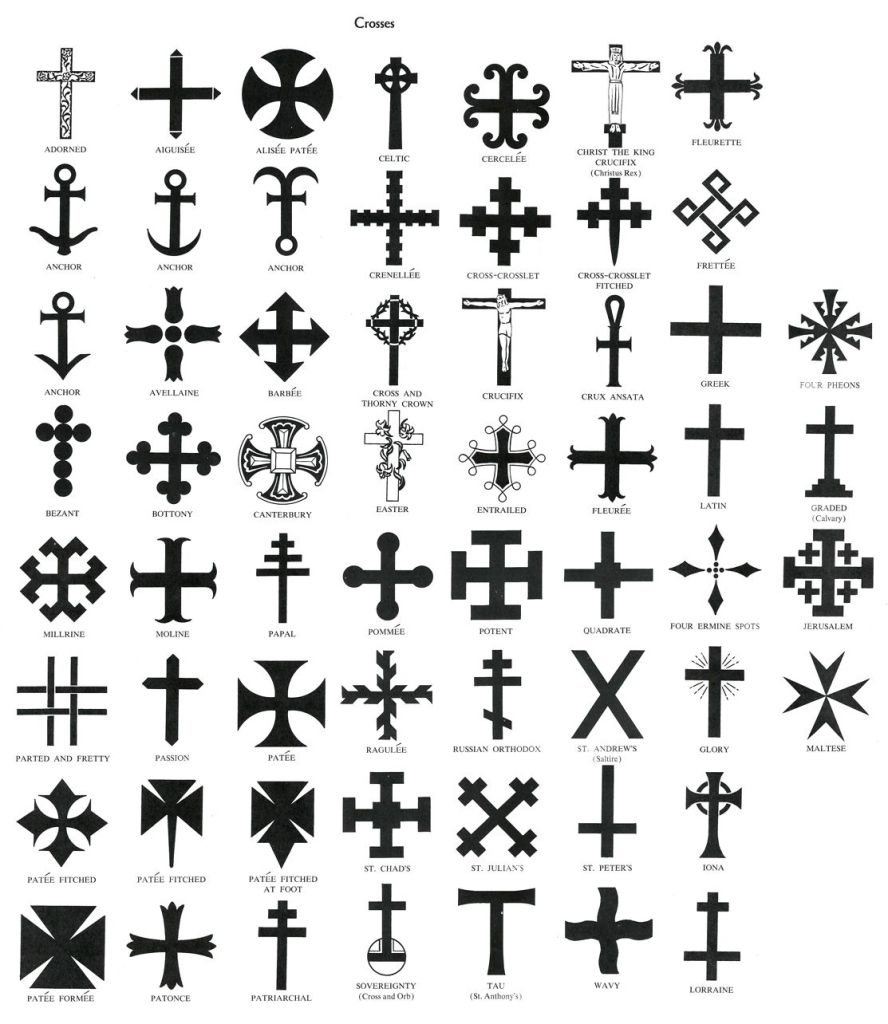
Let me show you three qualities of a symbol.

The horizontal line is the line between Heaven and Earth. Just like the mirror between water and air.

The vertical line is the boundary between what we experience as ‘Self’ and what we perceive as ‘not-Self’. This is the illusion we experience as I-dentity.

Where these two lines intersect is the location of the ‘I‘ or ‘eye‘.

In astrology the 90 degree angle is called a ‘square’ or ‘quartile’. When planets share the same quadrant of the zodiac they conflict. One might say they do not see eye to eye. A right angle is discomfort and sure enough we find the cross historically as an instrument of crucifixion. This was not just a Roman engineering solution for crucifying thieves but also those who threatened their evil Empire with the power of the individual.

The Christ was preaching to people that they contained a ‘light within’, when Rome wanted only Rome to be the light, just as the Empire endeavours to keep things today.

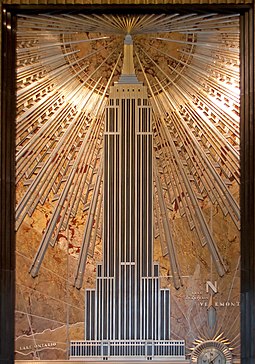
The Roman Empire Continues to Strike Back
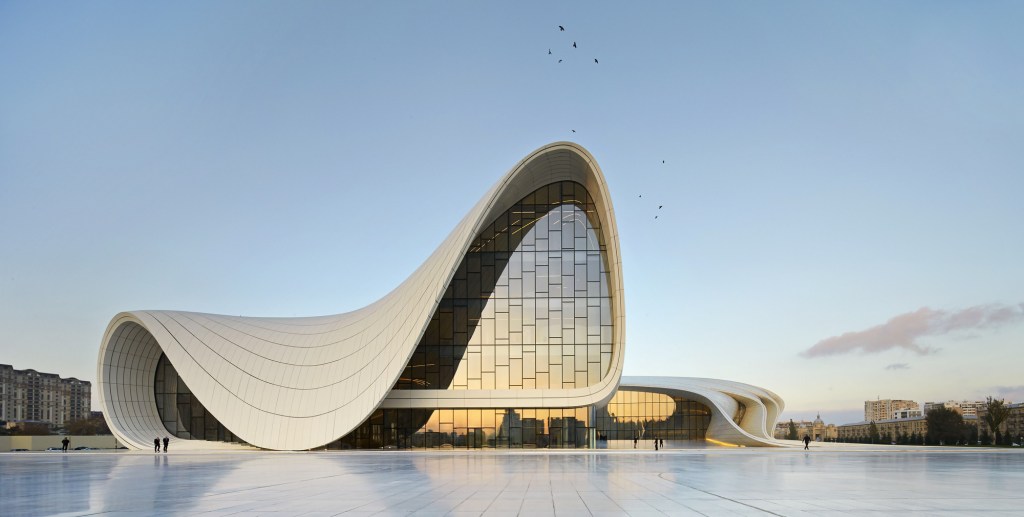
picture credit; Architectural Digest

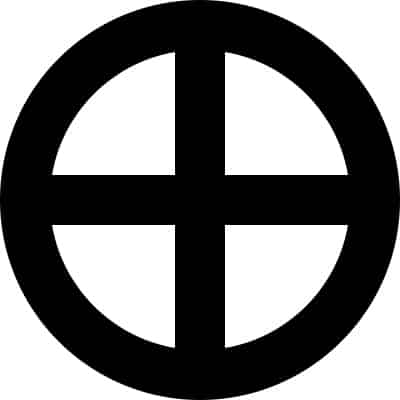
The light – a solar light as within the god Apollo – long before Jesus the Christ – is symbolised by a circle encompassing the four equal lines of the cross within. In my view this symbol is one way of ‘squaring the circle’. This ancient logic puzzle that transfixed the Ancient Greeks has not been solved using geometry, but by moving towards a less logical conclusion. Poetically, the four straight lines can become the parts of a square within the circle. The four / four beat is a masculine marching rhythm that needs to be smoothed and soothed by the feminine, represented by the all embracing circle.

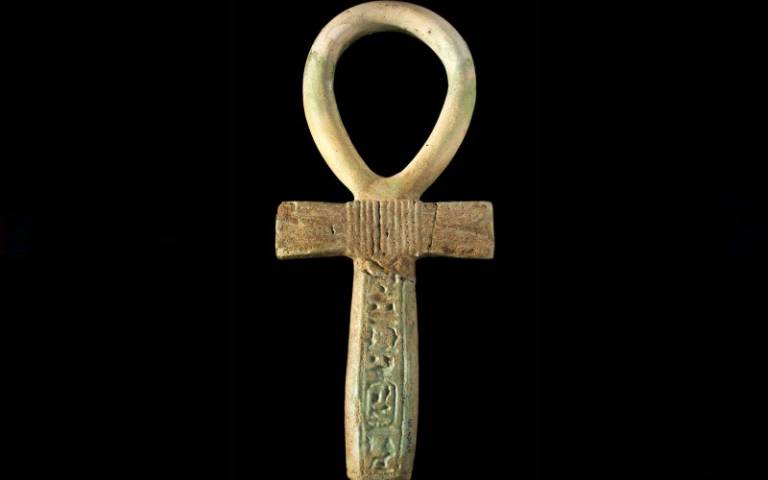
Even the Ancient Egyptian Ankh is a version of this archetypal geometric paradox. It represents the unification of the masculine and feminine coming together as one, in order to align with and receive the Solar spirit of the Divine.

An Ankh in the Petrie Museum University College London

As within, so without, is less quoted than as above, so below. But it expresses the ability of humans to manifest, make real, a reflection of our highest aspirations. This might manifest through a series of unexplainable co-incidental events and chance encounters. If we powerful humans did not believe we can direct chance, we would not play the national lotteries.

The words, ‘serendipity’ and ‘coincidentally’ and ‘synchronistically’ describe this human experience of good or bad fortune. But who is making these choices, Divine Will or us, or both?

We have all been in a situation where we cannot decide what to do. We want a good outcome but do not know how or the best way to achieve it. If you believe in your own creative power as ‘a reflection of God’ then making the best decision is alignment with one’s higher Self.

Tossing a coin may appear random but if you toss three coins several times, you are allowing serendipity to speak to4 you. Oracle cards work in this way and are increasingly popular in Western society today. Personally, I believe they are an aid to personal choice, not makers of choice.

In some cultures the power of the unknown to influence events is described as ‘fate’ but again, I disagree with this concept. To accept fate is to give away one’s own power. Usually, this personal abandonment of responsibility attributes failure or success, solely to the Divine; Mashallah (ما شاء الله).

This ‘victim’ mindset is not endorsed by professional gamblers in Los Vegas. They will have amassed a strong self belief to the extent that they feel they can do nothing wrong. When a such ‘card shark’ or player ‘on a roll’ appears at the tables and starts winning, the management do not stand a chance.

Gambling on a Dream
picture credit Nevada Public Radio

We give away our power constantly. Even prayer can be, in my view, an act of giving away personal power to a ‘higher power’. When things don’t go as requested people lose ‘trust’ or ‘faith’ in Divinity, as if prayer is like a menu for you to order food.

If we accept that we are a tiny fragment of the mirror which is God, then man is indeed made in the image of God. We are His reflection and have god-like attributes and abilities that are obscured until we become a polished mirror.

As the Universe, so the Soul

Love Life Lust

The Traffic Lights Within

I have recently written two essays on ‘Physcial Enlightenment’ and ‘Spiritual Enlightenment’. The former is a rarely discussed subject, certainly amongst spiritual seekers. My point was that both are not only valid but complementary.

But in a western culture that thinks in dualistic terms, there will always be the question, ‘which is the most important?’ Even in spiritual countries such as modern and ancient India, ‘godmen’ have perched themselves on top of poles or stood on one leg for literally years, thinking this was a suitable way to deny their physicality and ergo, increase their spirituality.

This is in my view, nonsense but stay there if you want to.

My sideways sliding mind brought up the famous formula of Albert Einstein and a philosophers permutation of it;

SPIRIT = PHYSICALITY (c2) or E = M (c2)

I will also give credit to Alan Watts for a lecture ( now on You Tube) he gave on why saints struggle with lust. I don’t usually pick over the bones of someone else’s feast but Alan structures his talks so superbly that I shall credit to him because his ideas remain very relevant today.

The subject of lust has of course remained taboo in polite western society for many hundreds of years, repressed largely to it’s own detriment (almost suicide), by the Church.

The irony is that those who seek to become spiritualy awakened and do so, also awaken their sensitivity to everything in the physical world. We are all, after all, spirits in an animal body.

The Temptation of St. Anthony by Hieronymous Bosch c.1501

Alan points out that with spiritual awakening induces a desire to withdraw from the world. The shallowness of values and the platitudes of conversation do not contribute to the compelling desire to know oneself. Silence and contemplation are the tools of those with this particular desire and naturally find a place and a way that enables them to do this.

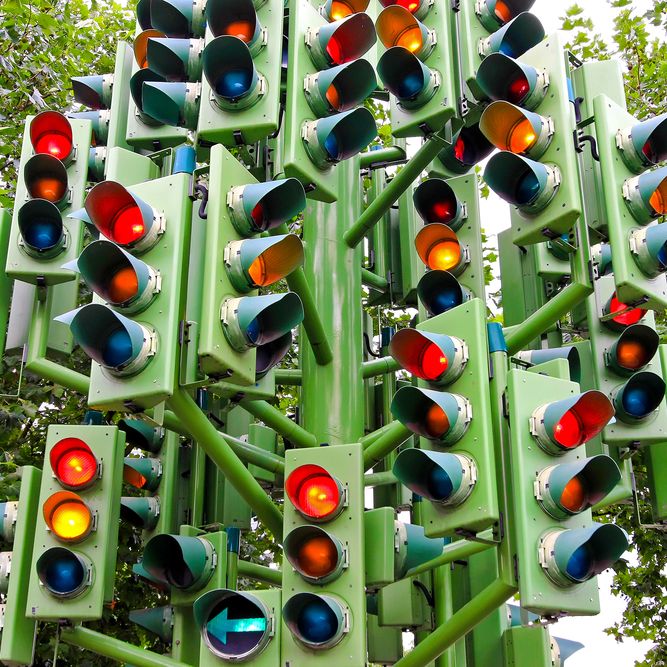
It is my belief that humans are strongly controlled by their ‘chakras’. I assume I need not explain what chakras are so that when I use traffic lights as a metaphor for chakras, readers will understand.

I assume red appears at the top of automatic traffic signals as it can be seen from the furthest distance, and is the only one of the red, amber, green, that causes harm to motorists if not seen.

Let us reverse their order however and place the red light at the bottom, keep amber in the middle and place green at the top.

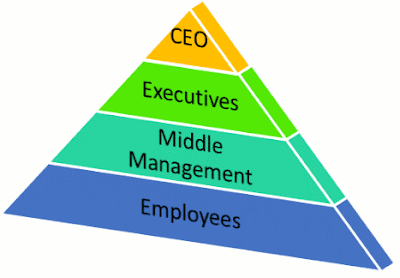
These three chakras, base, sacral and heart are of great interest for the purpose of this essay. The red base chakra covers our strong connection to ‘tribe’ and family and the amber sacral chakra to basically, lust and animal desire. These two chakras show our bodily physicality and how it connects us with ourselves and those around us, family, friends, lovers, colleagues, leaders, employers, politicians…you get the picture.

Yet our green heart chakra transcends all of this. It is concerned with non-instinctual desire namely, love. This is expressed as love between humans, love of nature, beauty, and our strongest excitement, Divine love.

To sustain the metaphor, these signals are changing within us all the time, red, amber, green and in doing so affecting our behaviour. As much as the traffic controller may want to, there is no point in being on green all the time and creating traffic chaos. We go up and down switching on and off our desires in response to our affairs. Importantly, as one becomes spiritually awakened, the lights get brighter and demand constant attention.

picture credit: Live Science

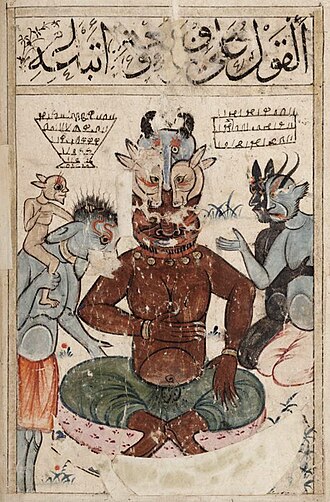
The consequence is that spiritually guided people become unconscious beacons to other people and entities. The latter includes thought forms who exist in other energetic dimensions where there is a vacuum of love. Prayer, choirs, bells, holy relics, smoke, smells, statues, architecture, geomancy, flags, gongs and other devices are employed by religions to dispel these demons from sacred places. The grinning gargoyles on mediaeval cathedrals are the embodiment of these forces that circle us day and night. Gremlins, Demons, Archons or Jinn, wish to shame and ultimately destroy spirituality awakened humans. The power and prescence of saints in any ‘tribal’ congregation is a threat to demons because ‘love conquers all’. They want to pull you down into the red and amber light and keep you there; the red devil. Their desire is to drain your battery to the last few volts.

It gets worse. A spiritually awakening person has to fight their inner demons as well. Since birth our inner lights have been frustrated and dimmed by various spiritual and emotional wounds. I remember crying on my last day of primary school when I realised I would never see my dear friends again. These were children with whom I had grown up, including one, Fiona, who I had literally been born with in the same hospital and ward. I have a photograph.

Alan Watts explains that spiritual awakening brings ‘old pains’ to the surface, such as loss, fear of abandonment, shame, fear of no love. Lustful pleasures sooth these wounds even if only temporarily. For a ‘holy’ or ‘noble’ person seeking the highest enlightenment and benefit for others, these lustful fantasies can be an embarassment if ever aired publically, depending on how unconventional, immoral or illegal they are.

Priests in the Catholic church are an example of how the desire for sexual pleasure, can become perverted and hurtful towards young impressionable children. Royal families live with the same threat of such practices becoming public. Watch out for public figures who fear media ‘intrusion’ and make ‘no comment’ responses or invent and supress ‘facts’ or create a ‘distraction’ or ‘protest too much’, when challenged by journalists and prosecutors.

The present theatre of tricks being played out in the politics of the USA around the love-less characters of the late Jeffrey Epstein and Ghislaine Maxwell will, allegedly, reveal a full picture of perverted lust running amoke amongst an international elite, cheered on by All American demons shaking pom poms and pocket cameras.

Sprituality is not an easy path. When the highest faculties of all the chakras are awakened the challenge is to face inner and outer battles of the highest intensity. As my old teacher used to say, ‘immortality has to be earned’.

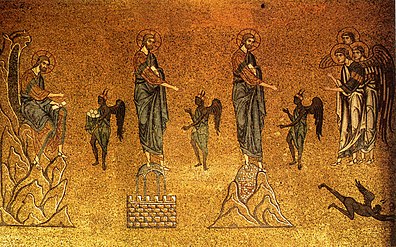
Arch Angels such as Michael carry shields and swords because this is war. Spiritual awakening unleashes human weakness of the same order of magnitude; in the words of Alan Watts, ‘as if the soul seeks balance’.

Here is what Alan suggested to overcome this dilema;

Stop pretending this battle does not exist. Flesh is real and desire is real.

Stop fighting alone. Isolation is the trap that feeds the beast. Find another who is non-judgmental with whom you can be honest. This is not confession, it’s illumination.

Attend to your old wounds – acknowledge the pain and the painful work.

Be present when you feel desire but do not act on it (this is very hard).

Do not suppress shame as this only delays advancement.

Take the middle way which allows you to be present with the feeling but not to give away your energy pursuing and enacting it.

Alan’s view and remedies are principally the way of Mahayana Buddhism. It teaches that a seeker of inner transformation must merely watch dispassionately as life rolls by to overcome desire. The adoption of extreme views (as presently seen in the USA and other countries) is not being dispassionate but passionate.

In my view there is more one can do to have the strength to carry the whispering ring to Mount Doom.

We are guided if we will, by the ‘green for go’ light as a symbol of the human heart and the love it attracts and sends out. For the Sufi’s, this is the dwelling place of Divine Love in the human body. As Divine love is by definition everywhere it is therefore within all of our chakras or centres of consciousness. Divinity is present in our most lustful desires and moments as humans share animal desires and pleasures. Sufi saints were allowed to have one or even more wives, although they did not always. The ‘sin’ of pleasure as seen by some religions, creates guilt and shame which then, only priests can forgive. Life in these religions puts ‘sinners’ on a see-saw of ‘moral and immoral’ judgement favouring only those who use this to weild power over the faithful.

But when we resonate with Divinity we allow our attention to focus on the Divine Prescence within, or in modern terms, ‘our higher self’. This focus is one of being ‘in the world but not of the world’. It is neither moral nor immoral, just being Self.

Noah and his wives collected the animals when the world was in flood. Instead of being overwhelmed and drowned by the great flood of all consuming energy which was water, he and his sons constructed a boat that floated above death and destruction.

Being an Arc is in my view the best strategy for survival in a time when there are great metaphorical floods of anarchic and parasitical energy, pervading and interfering with the normal balance of nature, the affairs of man and ultimately our spiritual well being.

So, build a boat and after great storms a small bird will land in front of you and place down a spray of green leaves from an olive tree, and the waters will slowly receed to reveal a new Earth, to observe from high.

picture credit: Wikipedia

I

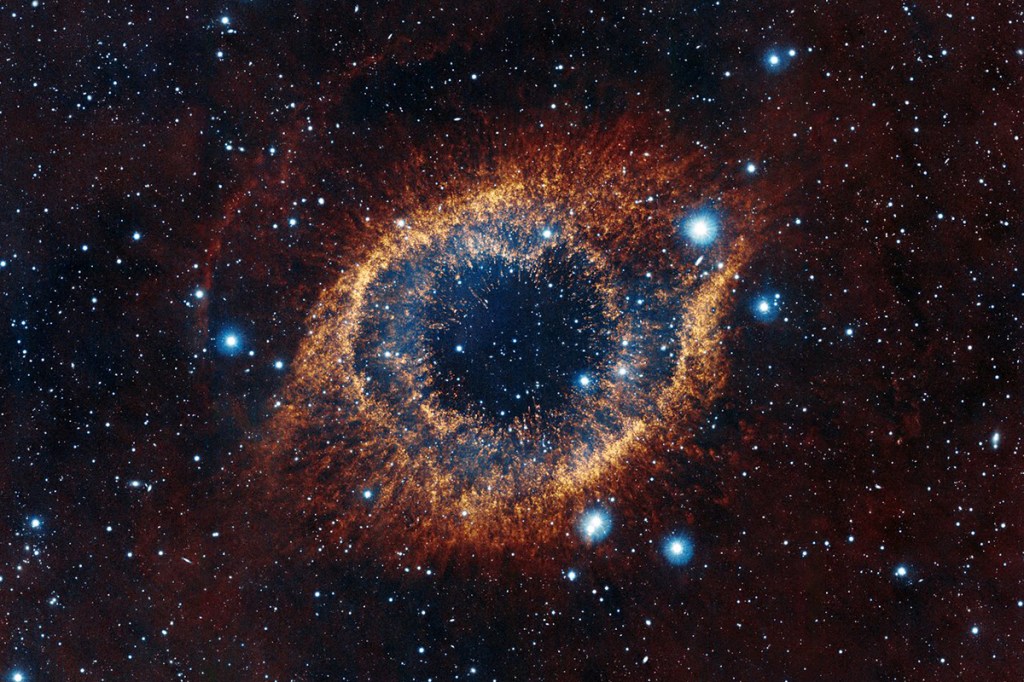
The Eye of God Nebula picture credit: BBC Sky at Night Magazine

“You wander from room to room hunting for the diamond necklace that is already around your neck!                                                                                        Rumi

It is generally accepted that Homo sapiens sapiens have been around for about three hundred thousand years. But our conventional view of history only goes back twelve thousand years or when there was a global deglaciation event that caused a global flood, known as the Yunger Dryas Event.

The continents of Lemuria and Atlantis are generally only accepted by academics as ‘myth’. Yet there is tell today of an extra-terrestrial race known as the ‘Mu’ who created much of the Atlantean civilisation.

More widely accepted in the study of Mesopotamian, Ancient Egyptian, Indus Valley, Mayan, Aztec, Olmec and many other civilisation’s records is that ‘gods came down from the sky’. These various and remarkably similar gods introduced new ideas and technology to humans. For example Thoth in Ancient Egypt, taught writing, sciences, agriculture, engineering and other valuable skills. The Romans knew him as Hermes from which came the Hermetic gnostic tradition.

When the visits of the gods became less frequent and finally stopped, someone had to maintain control of the population on behalf of the absent gods. Pharaohs took on this roll and declared themselves a ‘living god’. Later, priests ran the everyday duties of promoting and conducting religious duties.

Not only the ancient Egyptians, but even early religions focused worship on the sun, as a ‘living and dying’ god. Horus rose on the hor-izon each day and was killed by the evil god Set at sun-set. The solar religions featured similar narratives, such as their gods being born on 25th December, rays coming from their crowns, born of a virgin, being light and life, dying and resurrecting. Apollo fulfilled this role in Ancient Greece and Jesus the Christ later in the Levant, a self-declared ‘sun / son of God’. The early Christian Bishops at the Council of Nicaea, performed a skilful ‘hatchet job’ on the ancient Biblical texts to produce the New Testament; skilful because it told people what they wanted to hear and believe rather than the obscure truths contained in the holy texts that were removed, such as the Book of Thomas.

The Old Testament had introduced several ‘gods’ such as Lucifer, Jehovah and Yahweh. These gods were all male, creating the gender bias towards masculinity. The Divine Feminine was cancelled from the New Testament and perverted into the ‘Holy Trinity’. Mary Magdalene, wife / lover of Jesus and his highest gnostic initiate, was degraded to be a ‘common prostitute’, whilst the gnostic Father, Mother, Son trinity became the single gendered Father, Holy Spirit, Son.

Islam emerged from the debris of these many false narratives in the seventh century as a lunar religion. Worshippers had no priests and prayed before sunrise and after sunset, possibly to avoid praying to the ancient solar gods, such as Horus and Set. Mosques were not East – West orientated as are most Christian churches and cathedrals for the same reason. A non-anthropomorphised religion was a vital move away from the myths that ‘gods’ lived on mountain tops and the sky.

The Lunar Calendar picture credit: Yantar.ae

A discovery in Nag Hammadi in 1945 posed a problem for the modern Catholic Church. Early Christian and gnostic texts compiled by the ‘heretic sect’ known as the Essenes known as the Dead Sea Scrolls revealed what the church fathers had tried to bury.

They contain the revelation or heretical view that there was no God in Heaven or anywhere else, except within us. Such a concept, if widely realised, would have brought down the Catholic cathedral of cards. The Vatican Library remains a locked to this day which only adds to the speculation, why? Perhaps, the Romans destroying global ancient libraries such as the ancient library in Alexandria, had not managed to permanently hide the secrets that were intended to Unite ordinary people with their Creator, without intermediaries.

Sufi gnostics in Islam such as Masur al-Hallaj who dared to pronounce this truth with the words ‘Ana-l Haqq’, was executed for ‘blasphemy’ in 922. Even in this radical religion Allah had to be ‘out there’ as is the perception generated by the ego, not ‘in here’. 

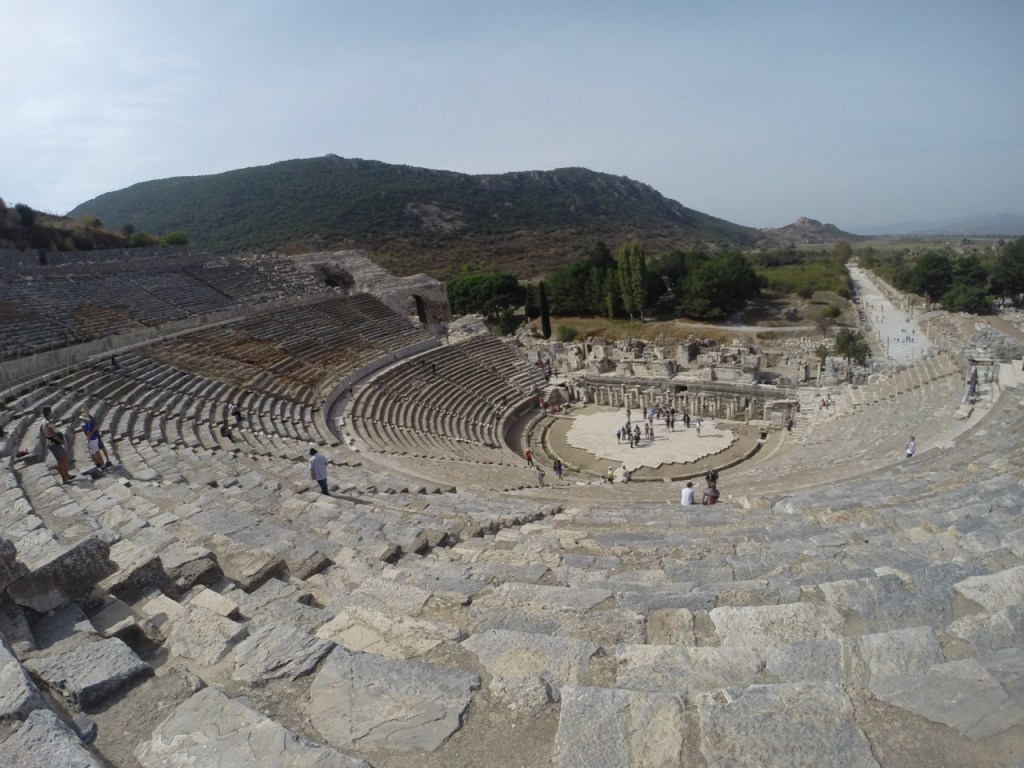
If we go back to Ancient Greece for a moment, most large Greek conurbations had an amphitheatre where plays were enacted. They had a psychological message that the masked players represented the illusions of the ego, in a world of its own ‘make believe’. There was introduced a realisation that everything we experience is in some way a ‘shadow’ of the real world, as encapsulated in the Plato’s story of the men in the cave watching shadows of forms that they cannot see.

The ‘skull shaped’ amphitheatre at Ephesus looks out and listens.
Picture credit: Wikipedia

The tradition of the ‘shadow play’ is just as popular today. The most famous of all theatres of the imagination is of course Hollywood…the Druids magical staff made from the wood of the Holly Tree or Holy Tree. Here, various fantastical ‘Dream Works’ are conceived and enacted, but the story telling has a darker side. Human beings ‘make believe’ these projected dreams and are highly suggestible to believing their content.

Propaganda films in the second world war, promoted accounts of real events which were at best biased and at worst misleading. Governments and interested parties remain keen to promote or un-promote social ideals in strategies; in plain sight, ‘social engineering’. A present-day example in my view, is the statistical over representation of certain ethnic groups on U.K. television, in advertisements depicting ‘typical’ families. In 1960’s U.S.A. this was what I call the perfect ‘Cornflake Family’ with a white husband, white wife, white son and white daughter downing their early morning dose of starch and glucose.

Random players in mainstream cinematic heavenly realms are adored and even worshipped by the masses.  They are called ‘stars’ as if they had fallen from the sky as gods and goddess and awarded golden figures known as Oscars that stand somewhat stiffly in the manner of Osiris.

The love that moves the sun and the other stars‘.

Marilyn Monroe was all too eager to exploit the ‘Folly Wood’ games that were expected of her without abandoning her ‘

homespun alter ego of Norma Jean. To her credit she did this with ‘eyes wide open’, but like Icarus she flew too close the sun. Some say her lover, John F. Kennedy shared ‘pillow talk’ secrets about the presence of extra-terrestrials on earth, something allegedly explained to all American Presidents on their appointment.

The Nordic or Pleiadian male and female extra-terrestrials, are known for their highly attractive humanoid appearance. Perhaps Holy-Wood has a hidden agenda that is preparing humanity for a peaceful and gracious introduction to our extra-terrestrial cousins?
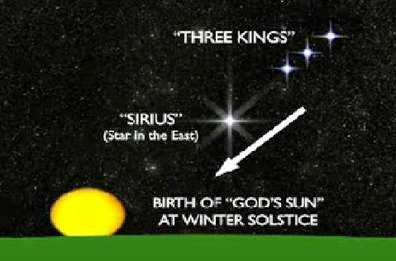
Picture Credit: Gaia.com

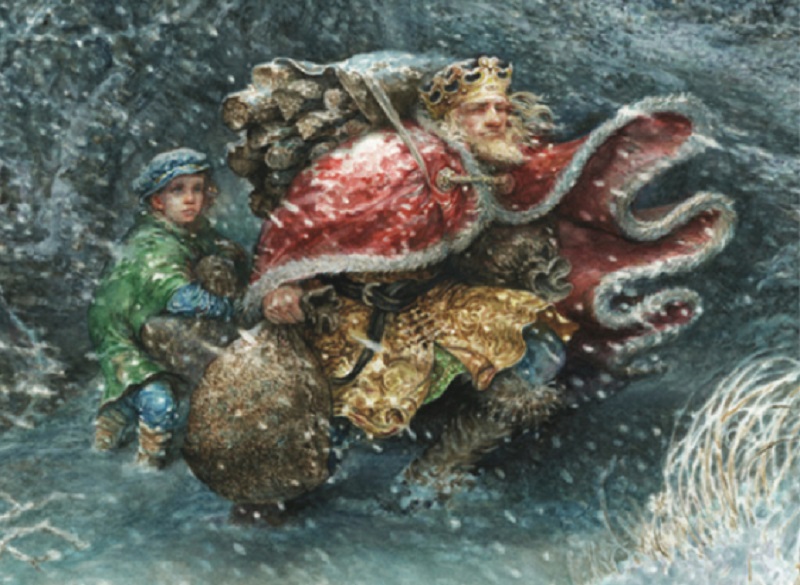
Even the most agnostic amongst us, still like to deceive children into believing a story about a benevolent, Jovial ‘god’ with a long white beard, who comes down the chimney at midnight on the winter solstice (solar dying), with a sack full of material goodies. These play things keep children amused until they break or the childs interest is diverted.  This Capricorn character is the planet Saturn (or Satan) dressed as Old Father Time who sweeps away materiality and our bodies with his scythe, a truth we hide from the innocents.
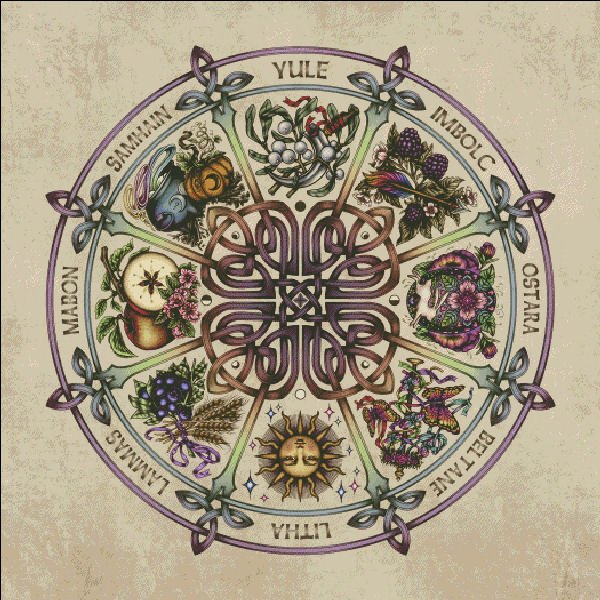
Krampus picture credit: ACIS

Life seen in this way is mysterious, and many materialists and agnostics alike, are frustrated by not knowing the ‘meaning of life’. Things that we are encouraged to work for in life are sooner or later realised to be ephemeral delights, leaving just a few bones on our plates.

This life less reality that is sustained by scientific materialism is proving so lite, that many today are returning to the concept of a non-material spirituality; to the light.

‘We live in two universes – one held together by gravity and the other, the one Dante described, (in the Inferno) by ‘the Love that moves the Sun and the other stars’. 

Extract from ‘The Sacred History’ by Jonathan Black page 272.

In summary let us return to the ‘solar God’ whom we may experience as the rising and falling tides of feelings and life in general. At the highest we experience ‘love’ and the lowest ‘the absence of love’. The Sufi’s such as Rumi quoted above, taught that ultimately all is Divine love. That love is the core of every human being because it is our own Divinity that resonates with and is ‘entangled’ with the Universal love existing in all time and space.

We are no more or less, creatures containing that Divinity that is described by so many cultures.

Spiritual Enlightenment

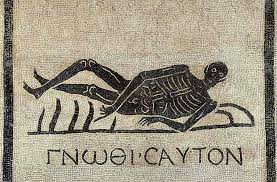
‘Know Thyself’ : words over the Greek Temple of Apollo at Delphi

I suppose the best place to start is to suggest that becoming aware that one is a spiritual being, is not the same as becoming enlightened. The latter is something few people ever achieve in a lifetime. The former is the first step of a long walk.

The question we might ask is ‘who is enlightened?’ There are many historical figures such as Guatama Buddha and Jesus the Christ who would qualify as ‘enlightened’, but surely enlightenment is not so rare that we have to look back two thousand years or more?

In modern times, spiritually aware people do not stand out. They are generally modest and seek actively not be achieve ‘celebrity’ status. They will not perform miracles, but if they did they would allow or manipulate things such that another takes the credit. An enlightened person does not dress up in old fashioned clothes or clothes from another culture. They are not in the game of impressing others.

There is an useful expression today known as ‘virtue signalling’. It explains that the signal is not proof of the integrity of the thing that is signalled. The performance of ‘good deeds’ is something many regard as having a spiritual benefit, but as certain stories in the Holy Quran demonstrate, harmful actions can appear to be good and good deeds can appear to be harmful. Explore this excerpt from Wikipedia;

Surah Al Kahf

  • 60-65 Moses and Joshua visit Khidr
  • 66 Moses desires to be taught by Khidr
  • 66-69 Khidr, knowing Moses’s inability to receive his wisdom, yields to his importunity
  • 71-77 He scuttles a boat, kills a boy, and rebuilds a collapsing wall
  • 78-82 Khidr refuses to communicate further with Moses on account of his protests against his conduct, but condescends to explain his conduct.

You may look up these stories that (and it is worth repeating), when examined in detail, in context, over a period of time and without bias…apparently harmful deeds can be good and good deeds can have unintended harmful consequences. It’s a possibility that needs to be explored vigorously because ignoring invites ignorance. Today, ignoring complexity is a primary tool of those who wish to deceive. The present president of the United States, who enjoys global power, promised Americans he would stop the war between Russia and Ukraine within twenty-four hours. He failed but was elected on this false promise. Since then, he has brokered several ‘peace deals’ around the world, several which, when examined in detail, are no more than temporary ‘cease fires’. He was surprised when he didn’t get a Nobel Peace Prize, which one might allege is because he is not aware of himself. We have to leave him to shine that inward looking light.

Ultimately, the only person whom you have a duty to judge is yourself. Hence, the gnostic practice echoed by Jesus the Christ in his words;

Know what is before thy face and what is hidden from thee shall be revealed unto thee; for there is nothing hidden which shall not be made manifest.”

The Gospel of Thomas Verse 5

But can a mirror reflect it’s own image? Can an eye examine an eye? Have you ever seen the back of your head?

Becoming self-aware requires considerable skill and perseverance in observation. The ‘inner eye’ has to be turned upon one’s own thoughts. This is the first step in meditation where thoughts are likened to passing clouds. Eventually it is hoped the sky clears. It rarely does because there is work to be done, not just sitting.

We have a skill where we can control and create our thoughts. When we are not doing that, control and creation of thoughts does not cease, it becomes automatic. It is like breathing, which is either intended or automatic.

Awareness is similar. Thoughts that ‘come to us’ without our deliberate intent to create them originate in the unconscious part of the individual mind or the collective unconscious. These are largely unresolved and repressed, events and emotional disturbances in our or society’s past.

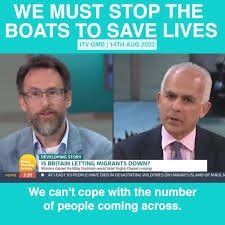
Pieces of music can replay themselves in our heads for which an apt metaphor is a ‘mind worm’. Unresolved encounters with others or other sections of society in the collective mind can become loops that replay themselves. Politicians use these triggers ruthlessly to distract and ultimately control others. In the UK, the cry is ‘stop the boats’ without really understanding the causes and solutions, just reacting emotionally to whatever people imagine ‘immigration’ is and does. The dumb are leading the blind.

Becoming ‘self-aware’ is, therefore, in my view, far more complicated than sitting in meditation. Become awake in a physical world surrounded by other cognisant beings with whom we have relationships, is a vital focus for our mind’s eye. It has to be done with the concentration of a meditator, or as is said, like a cat watching a mouse hole.

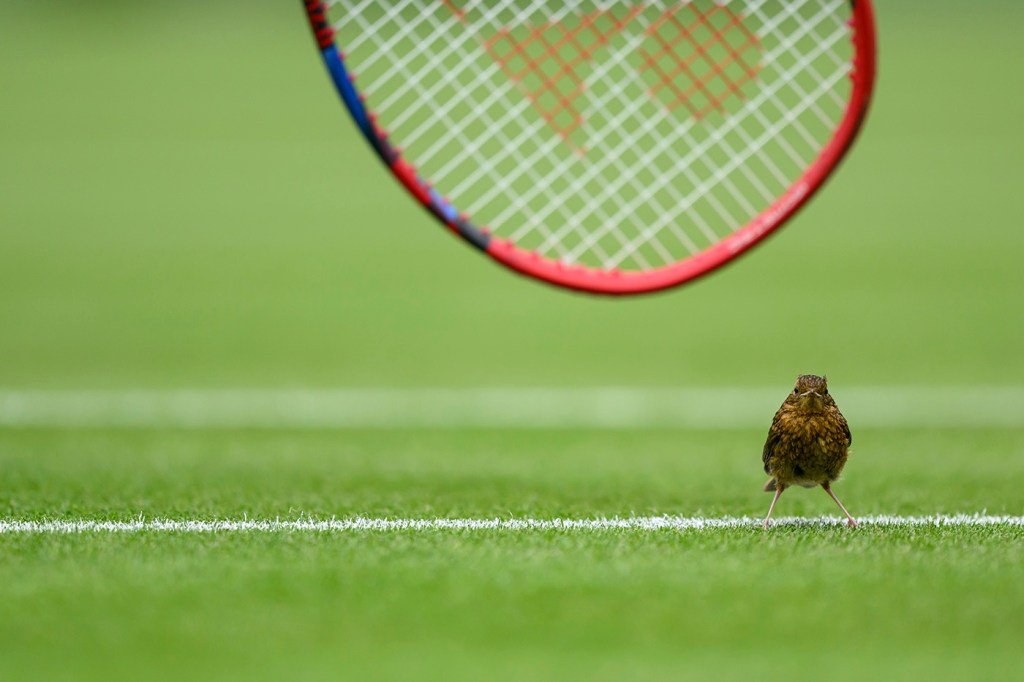
We have one brief but exciting lifetime to encounter all kinds of situations and deal with them skillfully, instantly and with joy, just as a tennis player learns how to deal with the ball when it comes from any probable or possible direction; plus any other ‘wild card’ life may deal!

picture credit: wimbledon.com

I was once asked if I meditated and I replied that I meditate all the time. Whilst I may not achieve this of course, it’s an intention I try to fulfil. I was taught to become an observer of myself by being one step removed. An example of this was given as being able to hold honey in one hand and dog faeces in the other, and lick the honey.

All phobias are clear examples of how our unconscious holds us back from participating in life fully. But we can overcome the dark spaces in our minds and emotions by shining a penetrating light of consciousness into those spaces. This is the process of making the unconscious, conscious…like a baby, breaking the waters and breathing it’s first breath.

“I tell you the truth, unless you are born of water and the Spirit, you cannot enter the kingdom of God.”

John 3:5

The metaphor used by Jesus the Christ was being ‘reborn’ which he meant as complete self realisation and, at another rarely realised level, as re-incarnation.

Enlightenment can only be achieved by opening one’s eyes and taking deep breaths and observing the world as if for the first time.

In Zen Buddhism this practice is known as ‘astonishment’. It is a principle trigger to ‘realisation’ in the same way that a joke operates mentally as ‘getting it’.

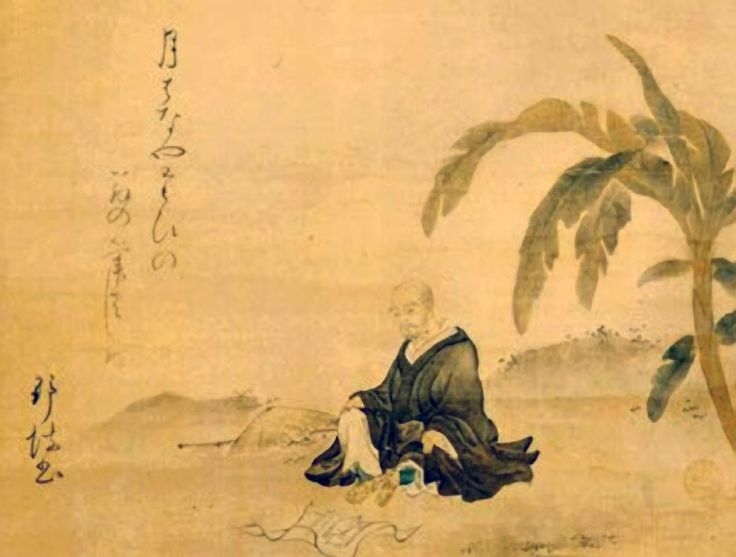
The bamboo shadows sweep the stairs, but raise not dust”

This essay is intended to be complimentary to the previous one entitled ‘physical enlightenment’. To be a fully realised human being, I believe there must be a playful balance in oneself between the physical world and the spiritual. People, we, usually list towards one or the other.

Becoming an observer of the physical world and one’s inner world and the interplay between them, as if you were in no way involved in either, is in my view, the most important technique for self realisation.

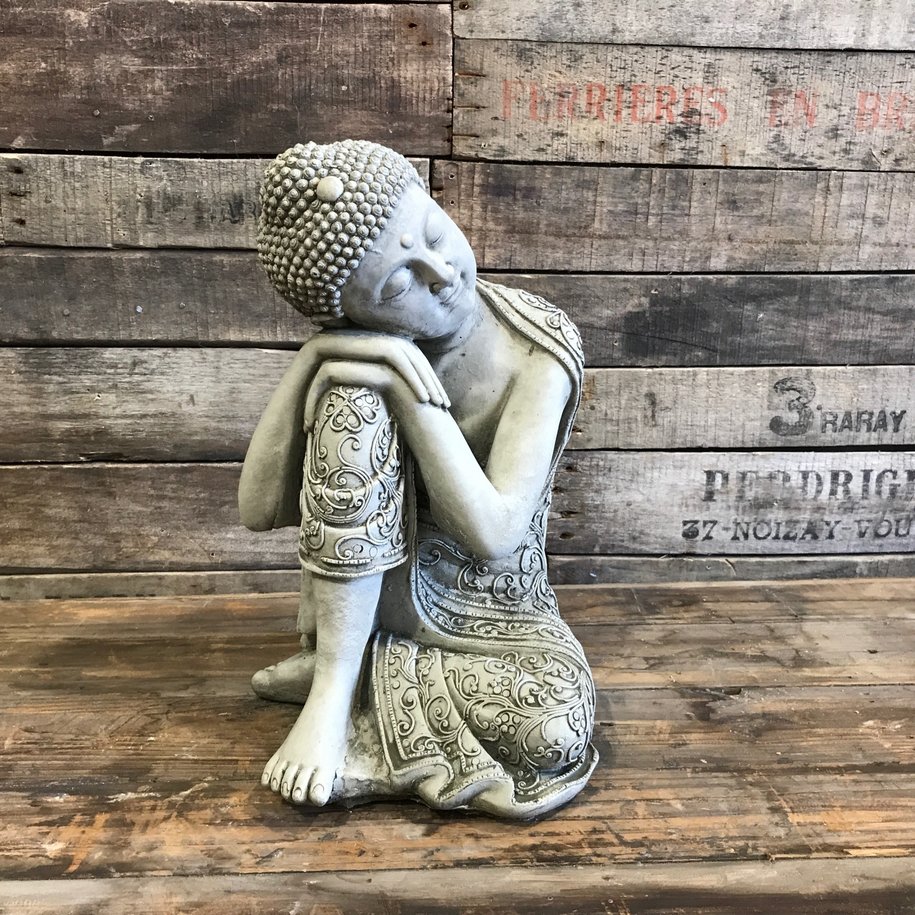
An enlightened person never sleeps. There are many statues of Guatama Buddha where he is sitting upright with one hand resting on a knee and apparently sleeping. But there is only partial rest required for the mind; most is for the body. Being fully conscious in daytime will empower being similarly awake whilst sleeping. We all experience this to some degree as dreams when we sleep, because our unconscious is unrealised and, in effect, has a mind of its own. We generally find dreams confusing. A good dream interpreter can assist in the process of ‘observing’ and understanding what the unconscious is processing because it speaks using symbols, as described in the works of the psychologist C.G. Jung.

An advanced stage of dreaming is becoming conscious whilst asleep, known as lucid dreaming. Some hallucinogenic drugs achieve this same effect although if the conscious mind is not trained in detached observation, the effect can be a ‘bad trip’; a roller coaster ride through the ghost train of the unconscious.

There is also another level of dreaming, in which one’s spirit leaves the body at night and travels through physical reality. This once happened to me whilst sleeping in my car and I moved out through some woods to a statue in the middle of the woods. In the morning, I took a walk into the woods and found the same statue.

People who have had ‘near death experiences’ report similarly leaving the body and observing the room in which there body is, such as a hospital operating theatre.

None of these experiences are ‘enlightenment’. Rather I have tried to describe a few of the curious and infinite depths of the mind. As an analogy, not many of us of us explore the internet in a way that is possible. Instead, we revert to our favourite places again and again. The internet and our mental world become like a cage made from iron bars constructed and installed by ourselves.

Leaving the cage, whether it is the physical cage we leave to go ‘on holiday’ or whether it is a mental cage, is enlightenment. I call holidays, ‘environmental enlightenment’. They are a short lived state of mind and heart, but there is a sense of ‘new world’ in a vacation which excites us before, like Cinderella at the ball, a pumpkin pulled by rats returns us to captivity.

We live in ‘rat runs’ imagining ourselves having god-like freewill, but in fact, we are just repeating repeat. The same applies to every place and connection in the universe of our mind; a state the most imprisoned declare as ‘boring’.

The only constant is observing perpetual change. By being fully aware, we are able to deal with all encounters in any situation, physical and mental. The constantly changing point of Universal consciousness which we contain and describe as ‘the-all-knowing-Creator’ or a thousand other names survives and surpasses this temporary sorjourn in the physical world.

The Enlightened One’s will pass you in the street and you will never notice them, not unless you are also, one of Them.

You wander from room to room hunting for the diamond necklace that is already around your neck!

Look past your thoughts, so you may drink the pure nectar of this moment.”                                

     Rumi

Physical Enlightenment

‘To be conscious in this world is a prerequisite to be conscious in others.’

In recent years many people have ‘awoken’ to spirituality. Perhaps this from a rejection of religious dogma and the availability of spiritual ideas via the internet.

But what it appears to me is often missing in this spiritual revival is an emphasis on materiality. This may sound contradictory but read on.

In many spiritual traditions, one of the first realisations for the aspirant is how important the physical world is. The physical does not cancel out the spiritual and visa versa. From a non-dualistic perspective, the two are complementary, not mutually exclusive.

So before heading down the yellow brick road on one spiritual path or another my personal advice would be to take time to embrace everything practical and become healthy, wealthy and wise in the process. Controversially, I will say that to aspire to physical poverty as do many monastic traditions, is to aspire to spiritual poverty, as in the Hermetic law of ‘as above, so below.’

For me, aestheticism is a poor role model for those seeking enlightenment. Nevertheless, monasteries and nunneries in many countries are occupied by people who avoid being ‘in the world’ presumably in the belief that this puts them ‘on a path to enlightenment’. In practical terms, it is substituting difficulty with institutional routines. The intention to ‘be spiritual’ is sometime the root cause of never finding spiritual meaning in life.

In the Zen Buddhist stories from the East, a young person enters a monastery with an expectation to become spiritually enlightened, perhaps in the first few months or a year or two! Spotting this, the Zen teacher sets them to work in the monastery kitchen. When the meals are over and before the preparation of the next, the novice is given a broom and told to start sweeping. This carries on for years. If the aspirant’s ego gives in after years of being excluded from the spiritual rituals and routines of the monastery, they are appointed Abbot. The teaching was and is, learnt in the kitchen and dusty hallways, not the temple.

The Zen Master Dogen, wrote a practical manual entitled ‘How to Cook Your Life’. It drew parallel lessons between cooking in the monastery and spiritual training. It is available from Shambhala Publications.

It is easy to take physicality for granted, but this three dimensional ‘reality’ is a place where spiritual beings are sent to learn faster and more profoundly than it is possible in other dimensions. This process is known by Christian gnostics as ‘the Creator self knowing’. Certainly, physicality is not a life of ease. Whilst there is beauty and happiness, there is also ugliness and despair.

We would do well not envy the lifestyles of the wealthy and powerful in society who appear to have an easier life than those who have little money or power.

The love of money, as is said, does not bring happiness. Often we see that the poor have a much better chance of growing spiritually than the rich. Possessions are supposed to be bad for spirituality but the benefit is more in your attitude towards possessions and how this is reflected in yourself. Dressing up as a spiritual person, does not make you one. The best philosophy is to be in, but not of, this hologram of physical illusions.

For a person living in our time in a ‘developed’ country, what could be a rewarding spiritual path? As a perhaps unexpected metaphor, consider the ‘boot camp’ style of military training. This starts with the aim of breaking down the ego of the recruits with repeated humiliation. Only after weeks of physical and mental ‘beasting’ is the pressure reduced and replaced with constructive learning. This focuses on polishing boots, pressing uniforms, and keeping personal space clean and orderly, to a level of almost impossible perfection. The point is clearly not the physical tasks but mental resilience in order to excel in an endless cycle physical challenges. What is life if it is not a similar tumble drier of trials?

Members of Royal families face similar challenges, but in contrast to most of us, in an environment of opulence and wealth. Royal children are brought up to serve their nation within the parameters of strict protocols, not personal desire. In return, their every physical need is gratified by servants. Running the bath and cleaning up after the Corgis, royals do not learn. Here, ironically, having few or no physical challenges can be as spiritually disruptive as having too many.

A similar regime of service combined with wealth, governs the lives of high ranking officials in industry, government, and even religious orders. Wealth and power, can become an enormous distraction and many fall from office and spiritual grace through selfish greed.

So what of the ordinary human being who is not wealthy or powerful?

We might start with two aspects of our lives. Consider the physical body and the environment in which the body lives.

The human body is a miraculous and superb creation. You are only given one per lifetime so in my view it is important to treat it with the deepest respect. Jumping from aeroplanes and bridges for excitement is in my view disrespectful to your most sacred gift. Surely, we should be treating our body as if it were a prize race horse?

‘Horse Race’ picture credit: Museo Nacional

For the same reason, every aspect of the physical world is important to the spiritual aspirant. Simply put, every life lesson learnt in a human body, is a lesson that can be applied to the astral or spiritual body.

At the present time there are many ‘spiritual advisors’ advocating moving from this present three dimensional ‘reality’ into a fourth dimension or ‘new Earth’. Dolores Cannon had many insights on this process when she was alive. It is held that those not ready for this transition will not notice any change, and those who are prepared will move quietly ‘on’.

If this is possible and if this is what they want I wish them well. However, personally I regard the greatest challenges and rewards to be firmly here on Earth. Changing the scenery in a theatre does not change the characters or the plot.

In my view, having a deep respect for nature is probably the most important spiritual quality for individuals and human collectives at this time. To watch forests and animals and precious ecosystems be destroyed to support human ignorance and greed is heartbreaking. Similarly, war against one’s brothers and sisters on earth is anathema to spirituality.

We occupy the human learning fields in the present time. To leave this full-on learning environment at the time of it’s greatest need, is to leave an unpaid debt to future generations. I suggest that if we cannot master the fine balancing act between physicality and spirituality, we should at least give our children a chance to do so. Nature rebuilds eco-systems without help from humans, it is all a matter of how much damage has been caused and will an ethical case be made for protecting nature whilst it recovers?

To stroke an elephant or watch a lion sleeping in a tree are both physical and spiritual blessings; one gives life to the other.

picture credit: Pinterest

Getting into a Spin

‘Everything in the Heavens is just through one unique Chi’    Zhuangzi

Please suspend judgement for a moment on what I am about to suggest; that it is my belief that much is missing from our scientific understanding of energy. Certainly the Unified Field Theory remains elusive to conventional science, but what of the energy that flows within living, conscious, nature? Is there a bond between electromagnetism and gravity, and whatever force powers life itself?

The ancient Chinese called the energy of living things, Chi. This is not the electricity that powers our muscles, organs, nerves and brain, although we are certainly electrical and magnetic. There is a more subtle energy within us but why do we understand it so little?

My suggestion is that Chi is always in constant motion and for that reason, hard to observe and measure. A propeller on an aeroplane becomes just a blur when it spins; it almost becomes invisible. Suppose then as a theory, that our chakras are always spinning. Perhaps the Hindus called them ‘wheels’ for this reason. To spin brings seperate elements together into one unity.

The analogy would be a child’s spinning top that when at rest has the full rainbow of colours visible. When it spins a rainblow of colours blurs into white.

If chakras spin, then it must be possible to increase their speed and balance. Imagine looking down through all the chakras in the body, perhaps in the body of a ballet dancer spinning on one foot. They would become a blur of white light.

Imagine also the feeling of being that ballet dancer. Because of the spinning motion, gravity has a reduced effect on a body. You have become a gyroscope. When spinning on an axis, a human body is generating and experiencing Chi, as well as centripedal force, and weighs less. Light has become a white blur to the human eye. The weight of the body is so reduced that the dancer can stand on just one toe, but only whilst spinning.

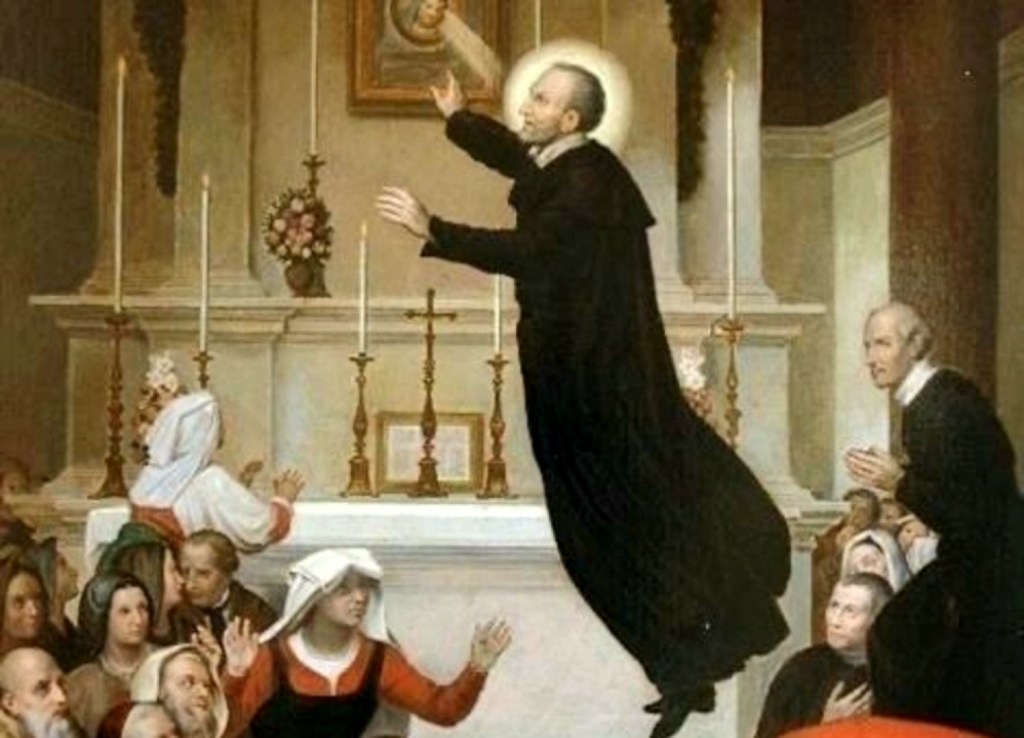
Consider a more extreme example. When a high level of Chi is achieved by mystics and adepts of various disciplines such as Yoga, the less effect gravity has on the body. Mystics such as Padre Pio and adepts from the East such as yogis, demonstrated levitation through their high level of Chi. Some even had to be held down to prevent them from floating.

Saint Alfonso Liguori

Undertakers will tell you that a deceased body is heavier than a living body. Four men are needed to carry a corpse, while one person may lift and carry a living body. After death, Chi leaves.

‘Life is the gathering of Chi. When it disperses, we die.’          Zhuangzi

The most well known example of spinning for spiritual experiences, are the Whirling Dervishes. The dance represents the planets spinning and moving around the sun, the Sheikh. It raises the personal Chi of the dancers and induces ecstatic states of unity with the Divine.

Consider the same principles of nature at a different scale.

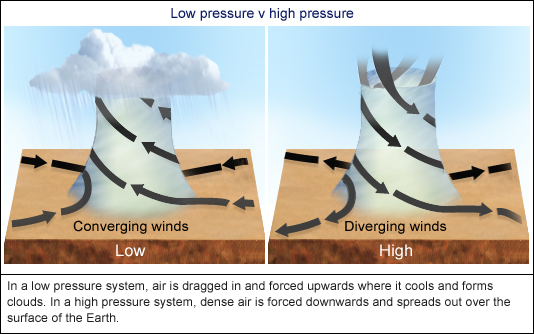
The weather patterns across the globe are vortexes of high and low air pressure. These spin constantly and the churning of the moisture and particles in the air creates static electricity.

Tall buildings on Earth, attract lightning and modern buildings are earthed for this reason but the ancients wished to direct high charges of electricity into and from their sacred buildings with associated Chi.

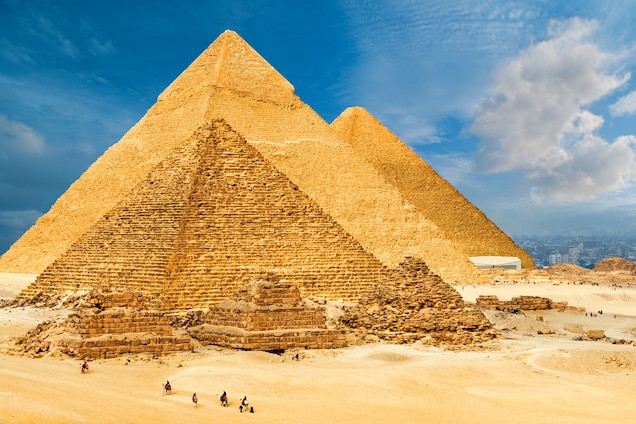
At the Great Pyramid of Cheops for instance, there are pavements of fulgurite, a rock created when sand is melted into glass by lightning.

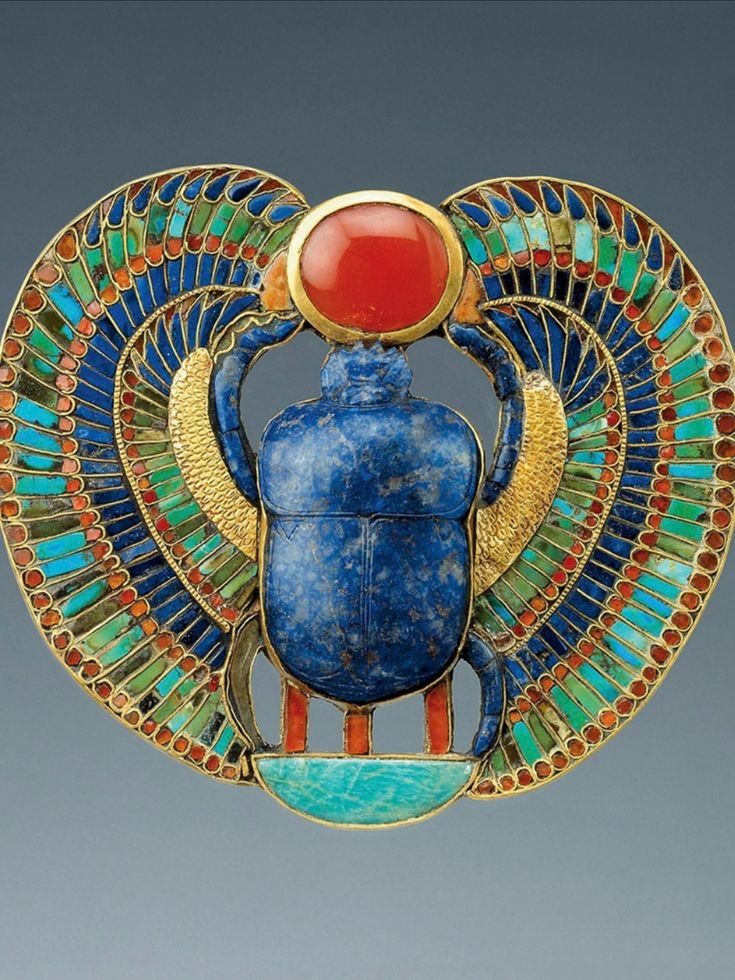
The Ancient Egyptians were masters of Chi energy for it’s various benefits in sustaining mind and body, ritual and intitiation, communication, construction and fertility in fauna and flora. The scarab beetle is an intriguing choice of archetypal symbol until it is considered that it rolls spheres of dung, similar in essence to the movement of the sun and the solar system.

Many of the ancient buildings and cities were constructed so as to produce the best benefit from natural and artificial lines and confluences of Chi. The Chinese were adept at this and perhaps the name of their country contains a reference to this! Certainly their science of Feng Shui meaning Wind Water, was carried out with particular attention to the local environment, the earths magnetism and the planets and stars. Even in modern times, the Hong Kong and Shanghai Bank was placed and aligned according to the principles of Feng Shui, for prosperity in the exchange of money.

In all other parts of the world Chi is associated with the patterns of flow of underground water and aquifers. This affects every building however humble and is particularly relevant to sacred buildings. The effect of Chi a the high levels that these buildings generate, is to induce a feeling of Divine love and spiritual initiation in congregations. The coloured light and rituals were only ever distractions. More cosmic energies were at work. The clever use of natural light through alignment of windows and doors with solar solstices and equinoxes into sacred spaces is found even in the most ancient of constructions such as New Grange in Ireland and the Temples of Abu Simmel in Egypt.

Of course the energy of the Sun and the stars are vital to the welfare of life on Earth, and much has been written on their influence in the field of Astrology and Astronomy. The former includes the energetic effects of cyclic stellar gyrations, whilst the latter observes matter through the electromagnetic spectrum.

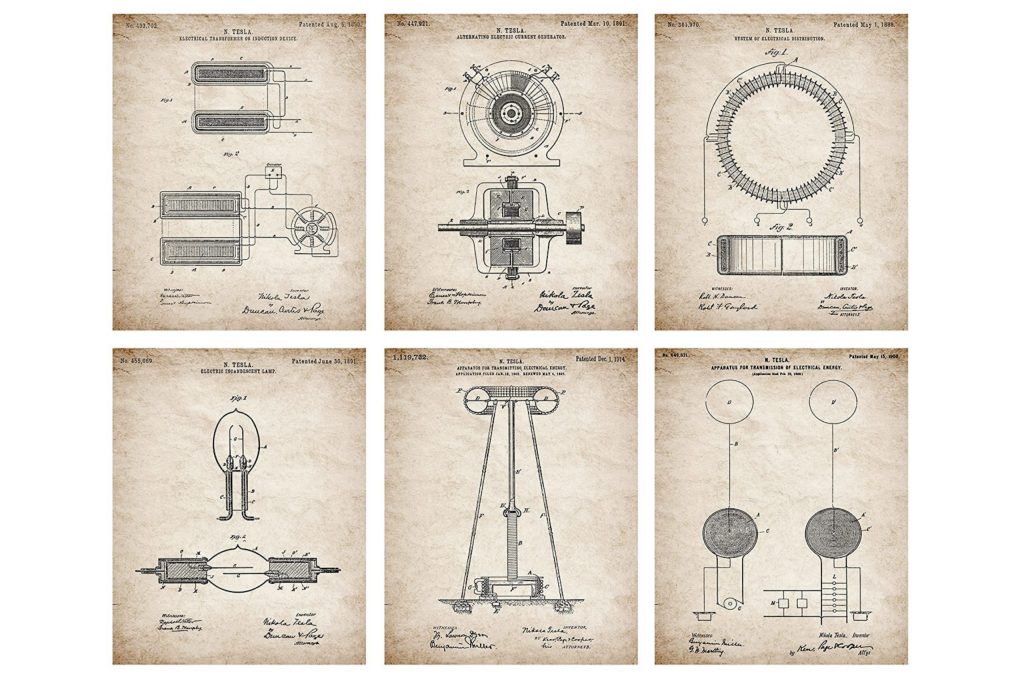
Nicola Tesla, the great prophet of electrical phenomena such as radio, maintained that electricity is a degraded form of Chi. As we understand there is an electro motive force associated with a wire carrying electrical current, it is possible that the currents of rivers and oceans attract Chi in a similar way? Is Chi transfered to humans from the landscape by induction? It is interesting that humans are attracted to such places for leisure and restoration. In the context of this essay, the generator uses this principle to convert a rotational force into electricity. Could not all spinning motion be generators of Chi in a similar way, even as we observe in the nucleus and spinning electrons of sub-atomic matter?

Could the ancients raise Chi in a huge stone block so as to make it levitate? If so, this would certainly explain how pyramids and megalithic sites like Stone Henge were constructed. There is a record of Tibetan Buddhists using sound from horns and chanting choirs to lift large stone blocks.

The fissures in the rocks beneath our feet naturally fill with flowing water. Where two such water courses cross, they create a vortex sometimes apparent as a spring. Wells are dug in such places. What is interesting is that such underground water creates Chi in a particular place. This was controlled in ancient times by the placing of massive stone – preferably containing high levels of mineral crystals. Different crystals give off electromagnetic waves at differing frequencies as in radio technology today. The pyramids of Giza were capped by a crystal above a gold pyramidion, according to John Michell in ‘The View Over Atlantis.

It is speculated that the anti-gravity effects of Chi could have been used to lift the massive stone blocks to build such structures as the pyramids.

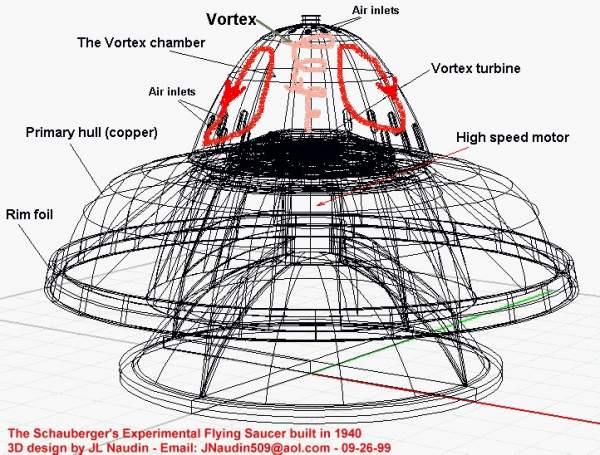
If one examines the simplest principals in ‘anti gravity’ flying machines such as Schaubergers shown below, the vortex is fundamental to the effect that Earth’s gravity has on matter; gravity can be reduced to zero.

Victor Schauberger’s Vortex Engine picture credit: Xaluannews.com

The scientist Wilhelm Reich designed a box to store Chi or, as he called the elusive energy, Orgone. The box was made of layers of organic and inorganic material. A person sitting in the box received a slow charge of orgone. Unlike heat, which goes from a high source to a lower place, orgone moves from a low source to a higher place in a manner that constantly builds up a charge and requiring a discharge.

Ancient structures such as cathedrals appear to have a knowledge of this. The spire in a cathedral concentrates orgone as it ascends up to the point of the spire where Chi is discharged into the atmosphere. The effect can be neutralised by earthing the energy with a copper strip connecting the top of the spire to the earth below.

The pyramids of Egypt and around the world functioned similarly using the principle of the ascending whilst narrowing geometry of a pyramid. The Chi was concentrated at one-third intervals of it’s height where in Giza the Cheops pyramid was constructed without a peak and pyramidion. This was to cap and retain Chi within the sacred chambers of the pyramid.

The King’s chamber is positioned and constructed geometrically as a double cube, so that the effect of a high exposure to Chi induced change in the brain of initiates. Kings, queens, priests and gnostic aspirants would have undergone this as a powerful spiritual initiation. Chi was clearly linked with the ultimate goal for ancient Egyptians, a prolonged and prosperous life outside of the deceased body.

Ultimately, everything is energy – even matter – and the understanding of the effects of all types of energy on human beings is as important as it is for a surfer to understand ocean waves.

Although it is easier to observe the inanimate, material, and stationary, the next step for science, in my view, is to observe the energetic effects of movement in the vast and tiny gyrations of life.

I nature the vast and flowing Chi…it is immense and powerful. When cultivated with integrity and without harm, it fills all space between Heaven and Earth’          

Mengzi     

The Study of Nothing

I am who I am and that is enough              Bashar   ‘You are God in human form’ You Tube

In many parts of the world there exists a tradition of ‘non-sense poetry’. In Victorian 19th-century England, one of the greatest exponents of this was Lewis Carroll.

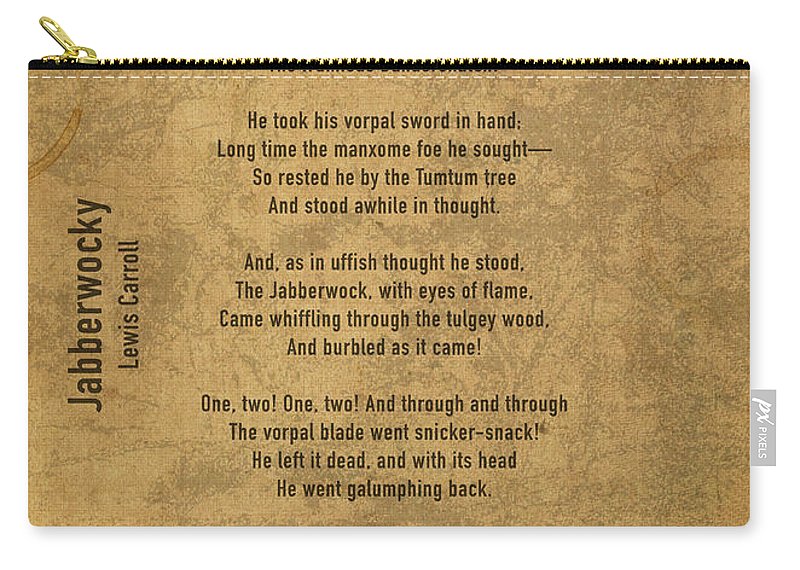
’Twas brillig, and the slithy toves

Did gyre and gimble in the wabe;

All mimsy were the borogoves,

And the mome raths outgrabe.

“Beware the Jabberwock, my son!

The jaws that bite, the claws that catch!

The joke was to move away from the expected in a manner that jolts the reader or listener into a ‘new perspective on the world’ – a journey through the looking glass.

Educators of the mind are appalled if any of this poetry is taken seriously. Scholarly academic method has, for many centuries, led the world of education. Any statements which are clearly not factual are denounced, and their originators flung from the metaphoric castle walls of academia. Nonsense is clearly only for kids.

In an ‘information age’ when artificial intelligence tries to explain all and everything, it struggles with spirituality. Ironically, spirituality requires a reversal of learning, of  habitual, judgmental, invented, edited and prejudiced content from the past.

For the spiritual aspirant, this method of ‘removal’ or ‘overriding’ of established thought patterns is not new. In Sufism, there is a concept of ‘Ma’rifa’ which is an ‘attunement’ or intuitive understanding which manifests as the voice within.  This is the product of the seclusion of the mind from attachments in general and a mastery of being a true observer of oneself and everything.

In Zen Buddhism the teacher aims to stop the student’s self-conscious attempts to learn ‘the Zen Way’ because Zen is no more than a drop of rain perched on the end of a leaf or the catching of an umbrella casually dropped.

Such ‘no thought’ is difficult to understand, which is reasonable from the point of view of a Westerner who relies on thinking to exist.

I think, therefore I am                                                                                        Rene  Descartes

There is a third option available, which is somewhere between these two extremes of thinking and not thinking. That is, ‘resonating with thoughts which originate outside of oneself’. In a metaphor of the human mind as a computer, these are ‘downloads’. These not only affect the individual, but also the planet and ultimately, the entire Universe.

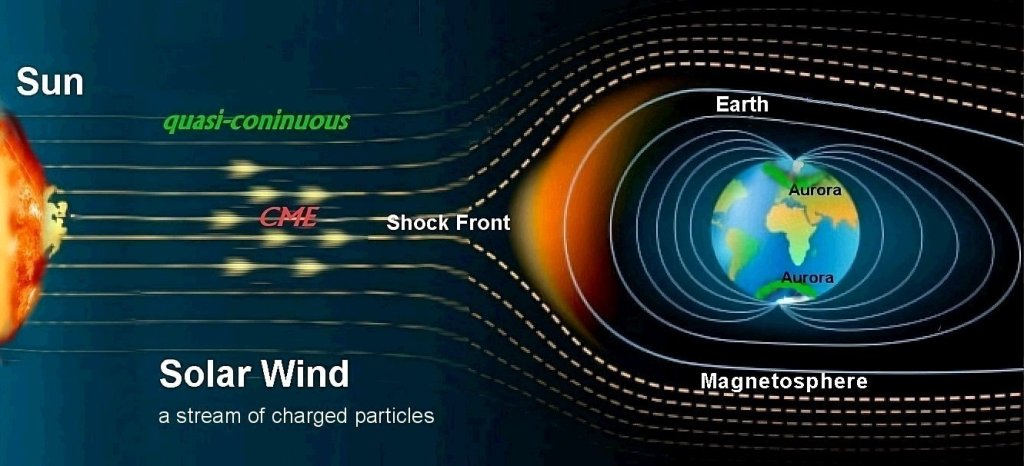
Humankind, we are told, is entering a new dimension of reality sometimes referred to as the ‘New Earth’. In July 23rd 2025 the Schumann Resonances from the planet underwent an extreme event. All the vibrational frequencies between 4 and 40 Hz lit up on the geophysicist’s measuring instruments.

This level of disruption is a product of a bombardment of charged ions (the solar wind) from coronal mass ejections and the interaction with the Earth’s magnetosphere.

Such ‘energetic activity’ prompts the inquiry as to what type of energy? How is this ‘energy’ perceived by human beings if not through the five senses and seven main chakras?

Humans have always been responsive to the environment but we are limited in our minds by learnt behaviour. Prejudice, unconscious thought patterns and the desire to please others, a lack of mental adventure and repetition on past experiences known as ‘habit’, are strong inhibitors to experience the ‘paranormal’.

If the average person in the street was challenged regarding the existence of extraterrestrial intelligence and the imminent arrival of inter-dimensional beings, they would probably respond with derision.

In a growing minority of more open thinkers, however, there is a referral to ‘moving into a higher frequency’ and ‘learning how to resonate with vibrations’. Such ideas are, in my view, not a true description. Pseudo-scientific metaphors using references to ‘energy’ without first defining what sort of energy, is prone to criticism..

Nevertheless, I personally have observed signs of energies that are not electromagnetic, or magnetic or static electricity or gravity. Ancient buildings and megaliths across the planet and time, display a conscious manipulation of an unknown organic force known as Chi, Prana, Vril, Orgone and different names in many cultures.

Electromagnetic Energy Focused in the Great Pyramid of Cheops, Giza picture: phys.org

So it is not absurd to suggest that the human body collects, stores and emits a type of  energy in a similar way to the planet. The vital life force of Chi is fundamental to the practice of Chinese acupuncture and is prescribed by many medically trained doctors.

The chakras are nodes positioned below, within and above the human body ‘. I am personally, not convinced that high frequencies have more value than low frequencies. In our perception of light and sound, we benefit from all frequencies, whether high or low. Likewise, our physical senses work simultaneously to provide a working representation of ‘reality’ to our brains. An analogy would be an orchestra producing an experience from a range of instruments tuned to low and high frequencies, from tubas to piccolos.

Perhaps the best advice is to surrender to the way things are. Surrender requires ‘unlearning’ and also attunement to everything outside of our small mental sphere, the brain. It is perhaps one of the greatest realisations encountered on the spiritual path and requires no preparation or knowledge, but rather a revealing of what was always there.

Whatever the future holds, the old world and our individual egos will resist change. When Jesus the Christ said that ‘the meek shall inherit the earth’, he was not suggesting Marxism or the World Economic Forum’s ‘you will own nothing and be happy’.

Rather, this is a spiritual maxim, advocating surrender, from which the benefits are the greatest gift of all.

….see what synchronicity brings you with the willingness to let go of all restrictions, all limitations, all assumptions and all insistences that in your unconscious, subconscious and conscious mind don’t actually serve you or align with the true vibration of your true ethereal, spiritual core…’                             

Bashar

Magick, Majesty and Matrix

‘The world is an illusion, a dream. It only appears to be real

to the person who is unaware that it is a dream.’ Alan Watts

There is a famous story about a trickster named Rumpelstiltskin. The daughter of a Miller must spin straw into gold. Her father has promised the King she has this skill, but she does not. A strange impish man appears and spins straw into gold on behalf of the Miller’s daughter for three nights. In return, she has to promise him her firstborn child. When she marries the king, she forgets her promise. So, the strange man appears again and demands her child, but she refuses. He says she has three days to guess, otherwise he will take the child. A servant happens to find the little man who is singing a rhyme, which includes his name. The Queen reveals she now knows his name, and Rumpelstiltskin sinks into the ground.

https://www.grimmstories.com/en/grimm_fairy-tales/rumpelstiltskin

The story has appeared in different guises but has the same structure worldwide. Academics have categorised the form as ‘The Name of the Supernatural Helper’ in the genre of ‘fairy tales’.

Like most such tales, it hides meanings beyond the level of a nursery audience. The Miller is clearly also a trickster archetype, as he tells a complete lie to the King, putting his daughter in peril of being called a fraudster. She, in turn, must make a Faustian bargain with the Devil to hide the truth from the King.

It is worth noting that politics today contains similar patterns of lies and pacts with hopelessly untrustworthy tricksters, for personal power and gain. Both President Putin in Russia and the Zionist Israeli government have invaded and made war with their neighbours, disproportionate to the threat posed to their own countries. They expect the world to be fooled by their deceit. A trickster ‘Trump’ ineffectively poses as a ‘peace maker’ to gain a gold medal.

Historically, Jeffrey Epstein is alleged to have made pacts on behalf of shadowy organisations with a view to shaming and blackmailing public figures. He could not spin golden threads from straw, but he convinced many that he could.

Such alluring but shady dealing describes the energy of the trickster archetype well.

To the princess, the character of Rumpelstiltskin is both a blessing and a curse. Psychologically, the creature represents the trickster archetype within her own shadow animus. ‘Stiltskin visits her at night and produces the desired golden threads each morning for three days, to get her out of trouble. It is worth noting that three is a magical number, as in the expression ‘third time lucky’. Names, numbers and spells sustain the suspense of this story.

The transmutation of base matter into gold is a representation of an alchemical and psychological mutation of lead into the noble metal gold, and a feminine persona and a male animus into a noble human, respectively. Perhaps the Miller’s daughter learnt risky deceit for personal gain from her father – her animus model?

We must question why the gold is spun into gold ‘threads’ instead of, say, gold coins? The spinning wheel is again a very ancient symbol. Mahatma Gandhi used it to represent ‘honest work’ to make a political point, but the wheel also represents ‘wholeness’ and the turning of the Universe we call ‘time’.  

picture credit:
Ancient Egypt Online

A sphere is the shape on the crown of the great creator and sun god Ra.

A thread is another old symbol going back to Ariadne and the Minotaur in ancient Greece. It represents the ability of the rational mind to follow a line of reasoning, the product of which today is the basis of science. A thread also suggests woven cloth or carpets, as in the magic carpets of the One Thousand and One Nights tales. Today, the World Wide Web is capable of transporting anybody anywhere in the world instantly.

The whole of the ‘reality’ in which we live has been described as an illusory matrix. In The Matrix cinematic trilogy, the character Neo can move from one reality into another. The Matrix is depicted on a computer screen as lines of descending pictograms. This is certainly an oversimplification and a product of the limits of computers when the film was made.

picture credit: Hindu American Foundation

Two eminent scientists, University of London physicist David Bohm, a protégé of Einstein and one of the world’s most respected quantum physicists, and Stanford neurophysiologist Karl Pribram have put forward a theory that the whole Universe is a hologram. In his book ‘The Holographic Universe’ Michael Talbot describes a ‘revolutionary theory of reality’. We may be familiar with lasers producing talking images of people located elsewhere in real time. There is now a holographic performance by the Swedish pop group ABBA in a London theatre, which many find remarkably real.

Abba Voyage in London: picture credit The Standard Newspaper

A holographic Universe involves ‘warping and wafting’ lines of information-rich energy to create what humans experience as matter. The ancients demonstrated the pivotal moment of their supreme control of matter by building the pyramids on the Giza plateau. Their dynastic evolution moved from an energetic world focused on minor gods and the afterlife, into solid matter.

In a way, this is what Rumpelstiltskin is doing. He uses golden straw to create the eternal element, Au or Gold. Intriguingly, the symbol Au derives from the Latin aurum, for Aurora, the goddess of dawn. Each day, poetically, the beginning of a new world; a new beginning for mankind, and the Miller’s daughter. So perfect are her tricks that she transforms herself from a humble citizen into a Queen. This is the alchemical marriage, as depicted in many of the Alchemist’s works and represents spiritual perfection.

In the story, Rumpelstiltskin says that he wants nothing except a living child. He has mastered the material world and now craves what he can not create, a living child, or you might say, consciousness. This also happens to be the limit of modern science, but perhaps Artificial Intelligence will take up the role of the ancient demigods?

Agent Smith picture credit Weaving Movies Wallpaper

The Agent Smith character/s in the film The Matrix are demonic autonomous programmes which have penetrated the firewalls of The Oracle and threaten humankind.

Key to unravelling the complex layers of our story is the riddle of the trickster’s name. Today, passwords allow us to enter a programme and keep others out.

Words represent ideas, and ideas are the initial stage of the Creation process. ‘In the beginning was the word and the word was with God and the word was God.’ (John1.1)

In magical spells, words and their ‘spelling’ are important. The most well-known might be ‘Abracadabra’, which it has been suggested to mean ‘may it be so’. It is a spell of manifestation and, more darkly, deconstruction. Abracadabra can be spoken, losing one letter at a time to ‘deconstruct’ something.

Rumpelstiltskin, somewhat vainly, believes the princess will never discover his name. Commonly, tricksters can become victims of their vanity and underestimate those whom they are trying to deceive. The politics of the USA today is poisonous with self-important deceivers.

So fundamental to his very existence is the name Rumpelstiltskin that when revealed, he physically deconstructs as a programme uninstalls.

He never achieves his goal of possessing and perhaps creating life. He is beaten at his own game of deceit by one who is more deceitful. The Miller’s daughter has done this by confronting the mischievous spirit within herself. When humans confront their shadow side in this manner, they become whole or ‘holy’. The trickster disappears.

A child will readily listen to this tale, not knowing and not needing to know its levels of meaning. It is a healing story; one that may be carried through life as a mental ‘anti-virus’ programme, always scanning for what will spin the creation process through the realm of dreams.

the Flower of Life picture credit Alziend

The Dark Side of Me

The sky is at times full of aeroplanes. Modern culture encourages ‘travel’ and ‘escape’ as a kind of adventure in which we must indulge. Like many wonders gifted to this generation, there comes with it, a compulsion for more and more of everything…like a billionaire who is never satisfied with living like Royalty. Previous generations have left us another type of wealth; hidden in stories which we call ‘fairy tales’.

“Ladies and gentlemen, please make sure your seat backs and tray tables are in their full upright position ready for take off;”

The Frog Prince

In the forest, a selfish princess accidentally drops her golden ball into a well. A frog offers to retrieve it in exchange for her friendship. She agrees but goes back on her word after getting the ball back and runs to her castle. The next day, she is eating with her father when the frog knocks on the door and requests to be let in. The king tells his daughter that she must keep her promise and she reluctantly obeys. The frog sits next to her and eats from her plate, then desires to sleep in the princess’s bed. She is disgusted at the idea of sleeping with the frog, but her father angrily chastises her for loathing someone who helped her in a time of need. She picks up the frog and places him in the corner of her bedroom, but he hops up to her bed and demands to sleep as comfortably as the princess. Furious, she throws the frog against the wall, but as he falls to the floor he has transformed into a handsome prince. He explains that he was cursed by a wicked witch and the spell could only be broken with the princess’s help. The next day, the two go to the prince’s kingdom where they will be married. (text credit: Wikipedia)

In modern versions, the transformation is triggered by the princess kissing the frog (a motif that apparently first appeared in English translations). In other early versions, it was sufficient for the frog to sleep for three nights on the princess’ pillow. There is more;

The frog prince also has a loyal servant named Henry (or Heinrich) who had three iron bands affixed around his heart to prevent it from breaking from sadness when his master was cursed. When the frog prince reverts to his human form, Henry’s overwhelming happiness causes the bands to break, freeing his heart from its bonds.

The adventure in this tale is the greatest of all – the inner journey. It is told from the point of view of a young princess. She is confronting herself in this story, and her eventual marriage to a prince shows her success in overcoming her unconscious destructive traits; that part of both men and women which Carl Jung called, the dark shadow. Note the contrasting floor tiles in the above illustration symbolising the union of ‘opposites’.

The forest and deep well symbolise that part of the princess’s psyche with which she is not familiar. She possesses a golden ball which symbolises perfection, something we all possess at birth but at some time in our lives will roll down a well.

The Royal Orb and Sceptre: picture credit The Royal Mint

We have to experience this traumatic loss and in the story it is the cold, wet, male, instinctual, shadow side of the Princess that undertakes to retrieve her social position and inner perfection – a frog.

Like all psychic work it comes at a price. The princess makes a promise to her male shadow, that she quickly wants to forget. Her wiser and more honourable male animus, represented by the King, forcefully commands her to keep her promise.

The frog is equally insistent, knowing of the final goal of perfection if he can persuade the princess to overcome her inner loathing of her suppressed ‘maleness’.

The prince ‘frog’ is imprisoned in the Princess’s unconscious, a product of prejudice, fear, ignorance, and other self-destructive emotions. Another aspect of the male persona in women is symbolised by the frog’s servant Henry. He is also constricted by ‘supernatural’ powers with the three iron rings around his heart. Three is a symbolic number as in the Trinity meaning ‘wholeness’ or ‘oneness’. The number reoccurs when the frog spends three nights on the princesses pillow – a position suggesting psychic work of transformation through dreams.

The Four Alchemical Humors

In Alchemy, there are four humors representing ‘the chemical systems that regulate human behaviour’. The prince is changed from his false external appearance of being cold and wet to the warm and dry world of the Princess and her palace.

In older versions of the story the Princess throws the frog against the wall of her room in disgust, but the character of the servant and his ‘heart centred’ problem indicates that the coming together of the prince and the princess is from an emotional change leading to love for each other.

Psychologically, this is self understanding and love, and Jung named the process ‘individuation’. The male and female principles achieve perfection in union. (By the way, all gender references in this story can be reversed and the meaning is the same.)

The Princess’s inner work – so accurately described in this ancient tale – is partly why ‘fairy tales’ and ‘myths’ could not be banished from children’s books. Children have a great appetite for and demand these ancient tales. Their unprejudiced minds intuitively recognise the symbols and the true picture of the mind they represent.

They know that as well as walking and eating and drinking and sleeping and all those skills that a new body requires to be learnt – understanding Mind, is just as important.

The tourist planes one might cynically suggest are bursting at the doors with adult children from Neverland who, like J.M. Barrie’s Peter Pan, have never grown up; never moved out of their body into Mind; never kissed a frog.

The Earth’s moon has always symbolised femininity and the mystery hidden in all things feminine. It is ‘tide locked’ with our planet so that one side of her always is hidden. For many years this was referred to as the ‘dark side of the moon’ and as a metaphor for the hidden, the metaphor of ‘darkness’ fits. But in reality, the moon has phases and when she is ‘new’ her shadow faces Earth and we cannot see her. Her reverse side is then full of light and naturally, orbiting probes and satellites from Earth have photographed what is going on there.

When Apollo 8 flew around the moon for the first time and mission control waited nervously for their reappearance, the crew reported hearing haunting sounds. Rationalised as ‘feedback’ from instruments, one might be more curious; as the best scientists have always been.

A Golden Ball from the Moon: credit Meister Drucke

When a partial view of the moon is visible from Earth, the place between shadow and light reveals most detail. Professional and amateur astronomers have recorded seeing unexplainable lights, EAP’s and their shadows on the moon’s surface, buildings and roads and Spaceports with huge cigar shaped craft entering and leaving craters. In previous decades NASA redacted (shadowed) these images from it’s photos, but today there are photographs and video recordings of these phenomena in the public domain, some of which may be real.

The First Men in the Moon: H.G. Wells picture credit the Library of Congress

What is interesting is that the public have been ‘persuaded’ that the notion of extraterrestrial intelligent life is an unbelievable ‘fairy story’. Revealing the truth would cause ‘widespread public unrest’ (disgust at the sight of non-humans). They are therefore not prepared to reveal the truth and hide evidence; a kind of ‘curse’ on modern humans.

We are still in denial that we owe anything to this ‘Frog Prince’ and continue to live spoilt and shallow lives like immature princesses.

When an ‘alien’ frog comes along one day and demands a kiss, we must overcome our collective unconscious fears and invite it onto our pillow. In my view, this will happen in our lifetimes, and cannot remain repressed and hidden. It will be a process of personal and collective social development involving hatred, denial, and anger. Lasting integration and cooperation between species will only happen when there is a higher emotional collective bond between humans – love. The frog is watching and waiting.

“Make sure your seat belt is securely fastened and all carry-on luggage is stowed underneath the seat in front of you or in the overhead bins. Thank you.”

The Problem Problem

The problem with problems is that their solution requires skilful analysis and creativity.

This is obvious except – who teaches problem solving? Overcoming difficulties is something we expect children to ‘pick up’, as learnt behaviour. By the time we reach adulthood, overcoming complex challenges is assumed to have been mastered. Yet, the problems that we encounter through life, if not solved properly, can have just a devastating effect on our lives as a metaphorical bomb. It is the same for those in charge of large corporations and governments who are known to rely on learning from failure as a somehow justifiable, problem solving technique. The joker advises, ‘try everything until something works’.

There is a story which you are likely to know, about a group of people in a dark room describing an elephant. Each holds and touches a different part of the elephant, which stands patiently; wondering where the light switch is. At the end of their examination each describes the unique part of the elephant that they have examined. None of the participants has an overview of what the whole elephant looks like, so they are all wrong.

It’s a wise story. What it tells us is that everything is not as it appears. Many things are extremely complex and far larger than our expectations and experience and greater than our abilities to interact with them constructively.

As we go through a physical life on planet Earth, we are constantly challenged. The material world is in a constant state of entropy, causing repeated and unexpected disruption, such as your car breaking down or your body ageing.

Because we are human, our ego’s present us with a story about ourselves which says optimistically, ‘I can cope’ or pessimistically ‘I have to die sometime’. If we took a step back and looked at the problems humans suffer, our sense of ‘everything’s alright’ would be replaced humility without pessimism.

Religions have picked up on this and many require the congregation to fall to their knees in the face of that elephant that sits in our minds; vanity.

Yet, is it not courageous to look adversity in the face and smile? There is an archetype of this model which is ‘the hero’. He or She is a humble human who manages to overcome all sorts of impossible problems and captures the prize! Whether this is Odysseus on his epic voyage or Superman defending New Yorkers; heroes have super natural knowledge and powers.

Or do they?

In native communities, education of children consists of physically showing them the problems of bush-life and how to overcome them. An Australian First Nation child will be shown how to collect honey from trees without being attacked by bees and leaving enough for the colony to survive.

But in modern fast changing societies, complex problems are expected to be solved by those who have no prior instruction or experience. Government ministers frequently display an extraordinary naivety when it comes to their principal role, which is to allocate resources and make laws that solve society’s problems.

The examples are numerous. In the UK and many other nations, people are landing on beaches and demanding asylum; as is their right in most countries. The ‘sticks and carrots’ that have led them there are numerous and complex.

Attempts by nation states such as Spain, Greece, Italy and the United Kingdom to ‘stop the boats’, take hold of merely the elephants tail whilst imagining the little tassel on the end is the elephant. One government suggested that a threat of deportation to a third country will stop people reaching their shores in unsafe boats. Another political party takes hold of the metaphorical elephant’s leg and suggests that putting the organisers in jail will stop the problem; which again will not be ineffective because the elephant is not a leg.

In the Middle East, you have to ask what problem Israel’s government is currently trying to solve with open hostility against it’s neighbours. Problems of the people of the tribe Judea go back millennia, yet the Zionist government repeatedly tries to argue that the present problems started on 7 October 2024. Were it so simple to be true. Were the whole truth be known.

When the Sars-2 Covid virus was ‘mysteriously’ released in 2021/22, the problem was not examined in full, and when a solution was required, the pharmaceutical companies were able to react almost immediately. Inquiries into the response to the pandemic uncover ineffective, wildly expensive responses. Countries that did almost nothing like Sweden, and much of Africa came out the best.

The ‘Do Do’ was a bird that flourished on the island of Mauritius until humans appeared in wooden sailing ships. The hapless birds wandered around in a dream, not expecting to be eaten by hungry sailors. The flightless birds had failed to solve their problem. The Portuguese word ‘do do’ means ‘stupid’ which the birds were not, but victims of those who should have understood sustainability.

Today, humans are facing similar population collapse or even extinction from multiple directions.

In my view, oligarchs and corporations, secret societies, media moguls, ‘big pharma’, the military industrial complex, and international criminal organisations exploit human weakness of poor problem solving by deliberately making problems. Interference in elections, rumour and propaganda, distortion of truth, psychological warfare, hacking, negative suggestion, assassination by ‘dirty tricks’, creating riot and unrest, reducing and disrupting food supplies, and many other techniques, are deployed against unwary populations. All whilst any government that genuinely cares for it’s citizens, is running to catch up.

Understanding the causes of problems is the first step to find a solution. The problem must be understood in every aspect of it’s nature and origin, in a unbiased and factual manner. Then a tested solution that is ‘cost benefit’ proven, has to be found and implemented in a timely manner.

When examining the many problems today, all over the world, you might expect a supposedly neutral and unbiased organisation such as the United Nations to have a department that is expert in defining and solving problems. The Secretariat, the Economic and Social Council and the General Assembly are ideally placed to work in this way, and yet world problems continue to cascade out of control. The United Nations has bravely spoken out early about the genocide in Palestine, but has not stopped it.

Stopping a descending spiral of harm, characteristic of weak problem solving, becomes a battle with a Giant, that even global organisations with their huge resources can not win.

Have we put the Do Do’s in charge?

The Ki Key

The Hidden Energy of Life

Western science has many new discoveries to make. The key to unlock the unknown is the simple question; ‘what do we not understand?’

For example; ‘we do not understand energy that is not electromagnetic.’

Such energies must exist as biological energetic processes called ‘life’, have no explanation. We do not have to look far into history and the present day to find indicators of knowledge of another type of energy. In ancient India it was called Prana, in Ancient China – Chi and in Ancient Japan -Ki. In the West it was named ‘Orgone’ by Wilhelm Reich.

This biological energy is commonly linked to healing such as Acupuncture and Reiki but it’s uses are more varied than that.

If we start with the human body, we have evidence that the Ancient Egyptians regarded the body as a receiver of energy from the sun as shown in this image.

The Ankh is a symbol of life and is being held up to absorb the solar rays. Today we are familiar with aerials receiving radio and television in a similar manner.

This biological energy is mapped as pervading the entire human body by Acupuncture practionitioners. The cause of the healing was not understood beyond the concept of ‘Chi’ energy, but the effects were, and it is so effective, it is still in use today.

If we follow the idea of the solar energy as associated with a biological energy from the Cosmos, then the seven planets of ancient times, also affect life on earth through their energetic characteristics. In ancient Greece they were deified as minor gods or archetypes, whose influence as precise ‘qualities’, pervaded every aspect of individual and collective behaviour on Earth. Today we call this astrology.

The energy from the planets affects each of the seven life energy nexuses in the human body known in ancient India as Chakras. Our consciousness as human beings is firmly linked with the ‘heavens’ in this way; obeying the Hermetic principle of ‘as above so below, as below so above.’

The Ancient Chinese combined heaven and humans with the planet earth, represented by the pictogram similar to the capital letter E. The evidence for ‘Ki’ is greatest in the form of the ancient structures built all around the globe.

There is increasing interest in the ‘energetic’ characteristics of megastructures such as pyramids, temples, churches and cathedrals, earthworks, roads, earthworks, hill figures, artificial cave networks and megaliths. All across the ancient world these structures were intricately aligned with and connected to this subtle energy associated with the movements of the sun, moon and the planets, earth and water. Modern water diviners are sensitive to the energy associated with underground water and can tell the water’s volume, depth and speed accurately.

Pyramids are found on every continent of the world (including Antarctica) and it is likely they were connected as a global network to balance and share this subtle energy globally; including sharing information. The present ‘world wide web’ is an analogous modern version of the same form and function.

Examination of the physiology and anatomy of the earth shows that this subtle ‘earth energy’ is associated locally with faults and fissures, springs and wells, water falls which were recognised by local indigenous tribes and cultures as ‘sacred’ with supernatural powers.

They were places where the physical third dimension met other dimensions and acted as ‘portals’ for other entities to interact with humans. In ancient times this was more common as humans were conscious of these subtleties and gods such as Athena would appear in human form to give advice, as recorded in ancient Greek legends. These entities overlap with the experience of so called ‘extra terrestrials’ today; more likely inter-dimensional intelligences who have never left planet Earth.

There was and is a mechanical reality to the generation, manipulation and storage of this subtle energetic system. Pyramids, barrows, dolmens and stone circles are a few of the centres of power used to interconnect and store energy for many purposes such as healing and initiation. The burials that took place at the end of civilisations have been incorrectly focused upon by modern archaeologists. If evidence is needed consider relatively modern Gothic cathedrals which were built for the living, not the dead.

This subtle energy was recorded by the psychiatrist Wilhelm Reich and he named it ‘orgone’. He saw that it accumulated in the human body and was discharged in the orgasm. Orgone is attracted to orgone and does not dissipate like heat energy. Nature can be seen to operate in the same cycle of build-up and discharge. The most familiar would be the accumulation of negative and positive ions in the earth and atmosphere, and the electrostatic discharge of lightning.

The ancient megastructures worked in harmony with nature in this way to regulate the natural flow of energy through the landscape in the same way as a capacitor and resistor in an electric circuit.

Weight and the pressure it creates was known by ancient builders to amplify this subtle energy. In a similar manner, quartz and other crystals build up and discharge piezo-electricity when compressed. The lintels over the uprights at Stone Henge and the T-shape upright stones at Gobleki Tepe in Turkey, performed this function as do the pyramids. It is clear that temples in Ancient Egypt, Greece and Italy have too many columns just to support the roof. Their precise orientation to the magnetic flux of the planet, matching proportions with the golden mean and phi geometry of human body, indicate a primary function of sacred edifices as centres for healing, heightened awareness and initiation.

Finally, to experience this energy within one’s own body, there is a Yogic principle known as ‘kundalini’. This is depicted as a snake (or modern static wave form energy ) and is associated with the spinal column; also in wave form. In my view, the subtle energy which the Yogis call ‘prana’ is in a constant state of build up and discharge, before, throughout and after one’s life. There is no single ‘awakening’ moment when the Kundalini rises up the spine as is sometimes described. Rather the motion of the snake is as seen in nature as a perpetual ascension through the energetic nexuses (chakras). The accumulation purges and cleanses each chakra in turn until discharged naturally in sexual union or used for the process of ‘enlightenment’. For this reason and purpose, many mystics were and are, celibate.

The importance of subtlety of this primal ‘life energy’ awaits formal ‘discovery’ and scientific experimentation and explanation. We can be sure at this moment in history that human beings have forgotten what was once known and drove much of human spiritual evolution for thousands of years.

In my view, now is a good time to re-discover what we have lost, particularly as modern archaeology unearths new evidence almost daily. All that is necessary for archaeologists to advance their theories to another level, and replace ‘grave robbery’ with an understanding of esoteric energy; known once as key to the general advancement of human spirituality, but long ago forgotten.

picture credit: Life Sloka

White Hat Black Hat

In conversation with a friend of mine whose ethical values follow Buddhist philosophy, I was challenged with the idea of killing the mosquitoes in my bedroom at night with a pungent insecticide! ‘It is wrong to kill anything and I should be using a mosquito net to defend myself, not attack’.

To me, if I kill a mosquito, I am preventing it from attacking another person or animal with it’s uncomfortable sting and potential disease transmission, including malaria, dengue fever, Zika virus, chikungunya, yellow fever, West Nile virus, and Eastern Equine Encephalitis. The virus, bacteria or parasite with the disease varies with location in the world of course, however with climate change and species of mosquito: do you feel lucky?

The instruction to preserve life at all costs and in whatever guise, is of course, a dogma contained in many religions but not all. In Christianity the Holy Bible includes the Old Testament describing a blood bath of unholy wars. In the last two hundred years or so, ‘civilised’ humans interpreted Genesis 1,

( And God said, Let us make man in our image, after our likeness: and let them have dominion over the fish of the sea, and over the fowl of the air,)

– -as a licence to kill sentient creatures for sport, vanity and greed.

Even today, western ‘civilisations’ are in the same process of destroying the planet with great efficiency and little conscience. There is a possibility that the translators of the Old Testament should have used ‘steward’ of nature instead of ‘dominion’.

Historically, the planet was not seen as a benign mother in the nineteenth century, except by those who lived close to nature such as the North American First Nation People who were regarded as ‘savages’ by European invaders. Ironically, self styled ‘settlers’ regarded themselves as benign and entitled to lie, break treaties, enter sacred land and commit genocide through war and starvation – all whilst insisting they have moral superiority.

Does this remind you of anything happening today by countries who consider themselves beyond reproach for their actions?

In the ancient Hebrew Ten Commandments we find the instruction not to kill. This was probably meant to refer to human v human – but does it? Could this include insects and small mammals? Like all simplifications, it loses import through lack of detail.

Buddhist teachings could be interpreted that one should have no ‘intention’ to kill. If we kill a virus with our anti-bodies or an ant on the path where we walk without even knowing or controlling this, we are not at fault. To kill to prevent disease or disease spreading is not so plain. We venture then into the quandry of the lesser of two evils.

Because of contradiction and complexity or perhaps, despite of it, religious dogma encourages the following of rules ad absurdum. An example would be nuns of the Jaine religion who spend their days walking and sweeping the path in front of them lest they tread on an insect.

Whilst there is a continuum of intent between conscious and unconscious killing, we have to agree that conscious killing raises the ethical questions. Those who refuse to fight in a national army might agree to become stretcher bearers or another ‘non-combatant’ role. This even though their actions are supporting those who are fighting and killing. ‘Thou shalt not kill, directly or indirectly’ would have been a more relevant commandment to conscientious objectors in any war in my view.

Why would any country seek to start a war, and feel justified morally, is a very relevant question for today. A common cause and justification is the belief that a moral duty of ‘doing good’ is being fulfilled. The irony of this is when both or several parties in a war all use this excuse. Who wears the white hat?

The answer can generally be found through the actions rather than words such as ‘treaties’ and ‘ceasefires’. It used to be that soldiers would fight soldiers and civilian populations were only indirectly affected by war. But since the second World War, technology such as aerial bombardment from the air; drones, rockets and heavy artillery, civilians have become targets.

picture credit: Rocket Guest Hosting

Both or all sides will see themselves as the wearers of the ‘white hat’. Their next ethical choice is to decide the target. Should it be military or civilian? Although the choice is obvious to all but the most morally challenged, much of the warfare we see today is aimed at civilian populations. The offending side continue to lie and break treaties and ceasefires, enter sacred land and commit genocide as if they were actors in the nineteenth century ‘Wild West’ in which religious or any kind of law, did not exist.

To do this they use words in order to confuse themselves and their followers. Military terms such as ‘offence’ and ‘defence’ sound as if their meanings are simple. But take an example from the Roman Army in ancient times. They carried large shields which are technically, purely defensive. But one of their fighting techniques was to use the shield to rush at the enemy and push them off balance, opening their guard and going for the kill. The short sword or gladius was used principally as a weapon of offence, and yet again, a sword fight includes using the sword in defence, as a shield.

picture credit: ECUCBA

Defence and offence therefore overlap and at times – become one. Politicians can over rule moral objections by calling this one something and the other something else. It is called ‘propaganda’. In this way offence using defence is called defence and defence using offence is called defence. Making use of this confusion in minds who do not question, they argue that since ‘defence’ is allowed in international law, every action is a ‘defence’ even when attacking unarmed women and children.

Leaders today deny or are complicit in targeting civilians, just as the Soviet Union did under the absolute dictator, Joseph Stalin in the Second World War.

After that war, Winston Churchill, the Franklin D. Roosevelt wanted to replace Stalin’s ‘white hat’ (Russia had been an important ally) with a black one under ‘Operation Unthinkable’. They wanted to return Poland to the Polish people as that issue had started the war but Stalin refused and the country became part of the Soviet Union.

History has the ability to make sense of current events as world politics has usually been played out before and the consequences of actions do not have to be learnt through experience. The main variable is of course, new technology. But fundamentally, ethical values should not change and there is not reason why an aversion to violence should not be universal. This has been attempted through the United Nations and International Law but these voices are weak today.

‘War crimes’ being allegedly committed are investigated by those committing the crimes. Permanent members of the UN Security Council are allowed vetoe criticism of their actions on the grounds that they are ‘defending’ someone or something. Detail is avoided.

International Laws are dismissed by countries that have not signed the convention. So external rules, which should embody the highest ethical values, are ineffective.

Where civil laws and natural law fail to be applied, religious and spiritual rules, potentially have a greater influence by bringing about change within each individual. The rule supporting non-violence is the well known, ‘do unto others as you would have them do unto you.’ It’s an uncomplicated way to behave but, with this injunction as guidance and followed, the world today would be a very different place.

Stones and Plants

Having reached what is known in common parlance as ‘a ripe old age’, there occurs to me certain insights about the nature of human beings.

Principally, one is given to conclude that human souls, during their own short but sweet personal evolution, consist of two types;

The first might considered to be ‘stones’; that is having as much knowledge and personal charm as a stone. This is not to ‘put down’ the mineral kingdom through comparison with those who are more obviously ‘alive’ and ‘should know better’. Indeed I have personally a great regard for stones of all kinds, as a result of my scientific theoretical understanding of ‘geology’ and ‘geomorphology’ and an artistic appreciation of the significant contribution of stones to the beauty of landscapes. Indeed I have in my possession companion stones, exhibiting curious colours, shapes, sizes, weights etc., as well as natural crystals of miraculous hues and geometries, precious minerals derived from 0res, and indeed a house made entirely of stones giving me shelter from whatever the weather and life is inclined to throw at me. Stones, in short, rock.

http://www.gravitymeditation.com

More metaphysically, I am one of those stark-raving-mad-nics who regard the mineral kingdom as having a complete social structure. This comprises of a noble King and Queen, courtiers and other ‘hangers on’ who are likewise, to be found in the human realm, where matters of high office and rank are ‘out for grabs’. It is true for me, and no doubt certain other ‘cranks’ party to ‘outlandish persuasions’, that the entire earth’s crust and what is below, goes about it’s business in a most conscious, caring and controlled manner. What I am trying to say is that the whole mineral kingdom is as much alive as you or I, but slower…look at a geological time chart to see how aeons pass by as stones do, in short, very little. As one who is a mere butterfly in comparison to the length of life of minerals, I believe that conscious evolutionary changes are almost impossible to observe in stones due to their considerable slow rate of change in all aspects of their lives. From another perspective, we to stones are no more than a spark lifted out of a metaphorical camp fire, which exhausts itself on oxygen in less than a second.

It is this particular quality of stones that brings them to mind as an apt metaphor for the subject of this essay; which I promise I shall come to when the twinkle of the moment is ‘right’. You see, in my unique and therefore unusual opinion, there are certain human beings who are born, live and die with much the same enthusiasm, as a stone. Their brief nascence appears to be a complete quandary to them; to and about which they show little curiosity or even care. They probably are not conscious that ‘existence’ is, in contrast, an issue of considerable fascination for others in their society. As a result, their life consists of certain fixed stations and ideas, about all and nothing, with which they bore those who are unfortunate enough to be within earshot of them. The aspirations of these ‘stone people’, one might conclude, are summarised in the word, horizontal.

Such stones are not the type with whom you wish to spend time in awkward situations, such as ‘stuck-in-a-lift’ or ‘drifting-in-a lifeboat’, following the occurrence of a power cut or submersion of a poorly navigated ocean liner.

picture credit: The Belfast Telegraph

Least of all to be desired, is the idea of forming a relationship with them if you any have a regard for wonder in life; with all it’s twists and turns and curiousnesses. Should you mention in polite conversation or correspondence to one of these mineralised munchins, a matter of considerable interest to yourself, you can certainly expect a glazed expression in place of an informed response, followed by a ‘passing on or over’ your interests in order to talk about something more agreeable to themselves, such as the price of cheese or cucumbers.

On the other hand, patient reader, as you probably are, up until now, eagerly anticipating information about the alternative human type; ‘champ at the bit’ no more. For there is a type of homo sapien sapien who exhibits a completely opposite metaphorical disposition to life than stones; these are ‘plants’. In a sustainably organic way, these merry souls plough through life, planting seeds, irrigating fields, de-pesting, fertilising and generally invigorating life’s very soil, in extremis. Naturally they pass on this envigoration to all fellow humans with whom they come into contact.

Theirs is a life exhibiting a general compulsion to explore ever aspect of their inner self as well as the eminently curious and absorbing exterior world. If change of direction is needed, they will mentally and emotionally transform themselves upwards, in order to enjoy new vistas and ways of seeing, much as in the manner of a broad bean plant escaping the humdrumness of ‘root consciousness’. One is reminded of the wisdom of Jack and his fabled ‘Stalk of a Bean’ through the ascent of which, he returned with a notable harp and a hen that laid solid 24 carat gold eggs.

picture credit: Jack and the Beanstalk – a silent film – (1902)

Being ‘rooted’ is no more an insurmountable challenge for humans of the plant-like nature, than it is for a physically disabled person to overcome their ‘limitations’ and discover wonderful gifts, that otherwise would have been unknown or unavailable to them.

In summary, plant people are eminently the best to grow with, and if you let them, they will lift you out of any circumstance in which you might find yourself ‘rooted’. They will always find out about some thing or matter if they do not know the answer, because they are aware of the fluid nature of knowledge and the fact that ‘not knowing’ carries no shame or closure of opportunities, but is eminently instructive and a ‘good moist and shady spot to start’. In an entirely organic manner, a plant person will carry you along with a skip in their step and a smile on the tips of their leaves, waiting to respond to a challenge, good or bad, and in so doing, gaining the attitude and skill of being able to overcome anything.

With a small amount of reflection and observation of future meetings and relationships with those whose nature is enclosed in a homo sapien sapien animal body, you should, I advise you; be acutely in remembrance of these two human types.

The magic of Mother Earth and Plants meeting;
Spherical Plasma Information Vortexs’s at work in Wiltshire, England this month.

picture credit: fr.news.yahoo.com

Perhaps this knowledge begins some self reflection as to in which corner you reside? If it does, then it is my personal understanding and belief that we are all to different extents and purposes, sometimes a rock and sometimes a plant and sometimes neither; the latter, from which, nothing good will happen.

picture credit: Pinterest

Whirled Without End

The beginning of now

When we look at the art of ancient times it is striking how the world is represented in two dimensions. From the beautiful court scenes from Mogul India, Japanese and Chinese evocations of nature, the wall paintings of Egypt and Mayan and Aztec relief sculptures of Central America.

At the same time and for too long, the world was conceived as a flat plain. If you travelled too far you would fall off. It’s an understandable world view, yet the believers in this theory never questioned how deeply a well could be dug before a hole appeared.

This perceptual paradigm was founded in a vague adherence to the dominion of the Divine Male. The Old Testament God was a man – naturally. Animals marched into Noah’s perfectly measured Ark, 2×2 and cells have been splitting that way ever since.

Roman armies marched in two step time and in battles formed orderly squares allowing all round defence.

Sacred buildings were rigidly formal and measured, such as the Parthenon in Ancient Athens. The Ancient Egyptians were equally inspired by formal and exact right angled geometry.

This male principal permeated the theory of design and practice and in doing so formed a reliable and solid ground work for our modern era.

When I became a student of architecture the tutors ask us on our first day what we would bring to architecture. Somewhat naively and immodestly I said I would bring the curve back to architecture. Even headlights on cars in the 1970’s, headlamps on cars were changing from being round to square.

I had a feeling of a ‘brave new world’ which indeed has happened even if I had to let the brilliant Iraqi architect Zaha Hadid, steal my thunderbolts.

picture credit: Arch Daily

As a boy I used to cycle down to the south coast of England where the land meets the sea in tall chalk cliffs. Creeping along the grass to perch on the precipice to look down at the black pebble beaches far below, I was like a seer peeping over the edge of a flat world, into a third dimension.

Whether we see it or not, we are also now creeping warily into a fourth dimension represented by the principal of the ‘sacred feminine’.

This has nothing to with ‘Votes for Women’, a movement that swelled at the beginning of the nineteenth century perhaps as a natural protest against the male principled dominance of society since for ever. The First world war was perhaps, the last breath of that male principal. It briefly stopped the feminine protests and sent women to factories to build the instruments of war, but the corner had been turned. Women drove buses and ambulances and had tasted freedom from domesticity.

Mothers watched their sons march into the sunset, over the horizon and would never forgive the folly of the male Generals and politicians.

If you hold a ball in front of a child and ask, ‘where does this ball begin?’ the child will look at you as if you only have half a brain and explain that a ball has no beginning.

The question is a Koan and like all koans, challenges the rational, logical and formal pathways of thought.

Many dogmatic religious thinkers hold to the notion that the world could possibly end and proponents of this will present you with a date. Presently it is 13th August 2025 ‘according to Nostradamus’ and this date will, no doubt, pass without incident just as did the Christian Calendar’s year 2000 BCE.

Learning about the sacred feminine is a ‘learning curve’ upon which we still struggle, like young penguins sliding ungracefully up the steep slopes of an iceberg.

Ask an Astrophysicist when the Universe began and they will generally reply based on the so called ‘Big Bang’ theory. Yet the question is as absurd as guessing when and how the Universe will end. Anticipating the common sense of children observing the universe, I would expect they will say it never began and will never end.

That is the beauty of the child’s mind. It still retains the influence of the Divine Mother, before it is sent to the (male) military styled regime of education.

Yet I feel the influence of the Divine Feminine is more influential in modern Western societies than ever before. Parliaments and Judge’s benches are becoming equally filled with women as men.

From Ancient India we are given the map of the idea of the cyclic Yugas; eras circling around 25,000 years in which the world is alternately destructive and creative.

picture credit: Ancient Inquiries

In the view of many, the Age if Aquarius is happening now and introducing the Feminine Principal into all areas of life and knowledge. Exceptions abound of course, as the process is gradual and takes two steps back for each three forward.

The benefit for humankind will be to realise when the pendulum is suspended equally between the two Divine Genders. Modern Feminism becomes flawed when and if it tips the balance too far and unnaturally dominates the male principal.

In Ancient times there are a limited number of symbols that appear in wall paintings and petroglyphs literally, around the world. One of them is the spiral. This remains one of the most easy to comprehend illustrations of an idea that defies logic; infinity. A spiral apparently starts from nowhere and disappears into nowhere.

If something were an mass moving through a void, it would need a circular motion combined with a constant, weak tangental vector, nudging it ever off a circular orbit out of sight.

For a time in history, philosophers were perplexed with the puzzle in geometry of ‘squaring the circle’; famously illustrated by Leonardo de Vinci in his depiction of the ‘Vitruvian Man‘.

picture credit: Britannica

Yet in my view the spiral is a better symbolic representation of that state in matter and spirit, where the feminine is truly in harmony with the male.

In every aspect of nature, from the principals of the growth of the fractal tree and sea shores, to the spiralling movements of the moons, planets, stars, galaxies and universes, we can measure in observation the wonder of creation by two complementary Divine potter’s hands; one male, one female.

Humans were made from clay on the spinning potter’s wheel and the principal known as the anima mundi, is the final result of Divine genius – the Soul of the Whirled.

Peace Begets Peace

Most people hate war, especially soldiers, so why does it happen?

The problem is that war is an option of last resort. Ideally, all other options have been explored before war happens, but from then on, ‘the continuation of politics by other means‘, to paraphrase Carl von Klauswitz.

picture credit: World History Encyclopaedia

War will persist until it is possible to stop it; a process far harder to achieve than starting a war. Each conflict is a set of unique circumstances and different ways to reach a peace. At worst the war will become one of attrition and it becomes impossible for both sides to continue. Alternatively, political and public support for a war wanes or perhaps an overwhelming third force appears that compels surrender.

You would like to think that ‘how to stop a war’ is taught in military academies, but such executive decisions are more likely made my politicians rather than military leaders and politicians usually have no experience of ‘conflict resolution’ at this scale. Even in wars which have been wars of attrition, the conclusion of war requires considerable diplomatic skill. For if one side is forced into conditions of surrender that are too onerous and dishonourable, the process of recovery becomes excessively hard and national pride will almost certainly wish to seek redress sometime in the future.

The world might have learnt this lesson at the conclusion of the first world war, which was a spiral of attrition requiring the intervention of a third party; the USA to make it stop. The armistice terms demanded by the Allies, were so severe that they left a ticking time bomb, which exploded as the second world war.

The present war in Ukraine has been described by some as the beginning of the third world war, but there is another view. It could be argued that what is happening in Ukraine since 2004, when Russia annexed parts of Ukraine and later the Crimean peninsula, is an after shock of the second world war .

In that war, an American General raced against the Russians to roll his tanks into Berlin ; General George Patten.

The politicians tolerated his outspoken gaffs, because he was a superb military leader. Patten was of the opinion that the allies should continue to Moscow and finish the war for good.

The politicians ignored his advice and the United States spent the next few decades ‘fighting communism’ in what became known as, Mc Carthy era. Countries such as Cuba, Korea, China, Russia and Vietnam caused considerable headaches for the American politicians and military; feeding a neurotic culture of suspicion of called;  ‘reds under the beds’.

There is an argument that the present war in Ukraine is the continuation of the communist expansionism in Europe that immediately followed the conclusion of the second world war. President Putin justified invading sovereign Ukraine to the Russian people, by stating that his strategic aim is to defend Russia against an expanding NATO threat but less blatantly to fight ‘Nazis in Ukraine’. For Putin the ‘Great Patriotic War’ fighting fascism did not finish.

The technology of war inevitably played it’s part in this conclusion. The use of the Atomic bomb by the USA in the Japan, brought the conflict there to a sudden halt. Communist sympathisers within the Allies, gave the secrets of the atom bomb to the Soviet Union, who speedily test fired an exact copy of the American atomic bomb, shocking the world. Perhaps as intended by the ‘traitors’ who leaked the secrets of the atom bomb, this mutual threat has forced ‘the Cold War’ and an unsteady world peace ever since. Nine or so countries now have them and others want nuclear weapons despite the efforts of the International Atomic Weapons Agency, set up to prevent their proliferation.

It is important to realise that after the fall and fragmentation of the Soviet Union, Ukraine was left with fifteen pressurised water reactors of Russian VVER design, and importantly Soviet era strategic nuclear weapons.

Three of these ex-Soviet countries were persuaded to give up their nuclear weapons in the Budapest Memorandum on Security Assurances. Belarus, Kazakhstan and Ukraine agreed to give up their nuclear weapons between 1993 and 1996. The nuclear powers overseeing this process were the Russian Federation, the United States and the United Kingdom. They  agreed not to use military force or economic coercion against these three countries unless for self defence or in accordance with the Charter of the United Nations.

The diplomats and lawyers who wrote the Budapest Memorandum were perhaps, not clear about what constitutes ‘self defence’. Most strategists and tacticions, know that the principle of striking the enemy before they hit you, creates an element of surprise that can be construed as ‘defence’. Putin’s original ‘Special Military Operation’ was justified as ‘self defence’ but, unfortunately for him, it didn’t knock out his opponent with the first punch. The surprise was Putin’s. He thought Ukraine would be easy to take.

Putin constantly cites NATO as a growing threat, especially after the fall of Viktor Fedorovych Yanukovych, Ukraine’s president from 2010 to 2014. Yanukovych had promised the Ukrainian people in his election manifesto, that Ukraine would apply to join the European Union or at least set up special trade agreements which would lead to this. But after a phone call from the Kremlin, he enraged on this promise and there were riots in the streets. These were violently suppressed by the government leading to over 100 deaths. Yanukovych fled to Russia and Volodymyr Zelenskyy was elected president on the promise of European integration. Europe responded with indirect support.

Ukraine is an important buffer state for NATO because it has arguably, prevented World War III. It has so far, been a narrow escape for all, provided Trump isn’t elected and gives in to the Russians. The USA has not been good the diplomacy of war and should have learnt some important lessons, such as from the war in Vietnam.

An indignant generation of young people in the United States rebelled against the war in Vietnam as it was played out graphically on their television screens. Newspaper reporters photographed the horror of war; photographs which stunned Americans and the world alike. Young men angrily burnt their call up papers in front of crowds of anti-war protesters as four successive Presidents presided over an unwinnable war. In a way, the protesters against this and later wars (such as the invasion of Iraq by the US and coalition forces in 2003) stuck their flag in the moral ‘high ground’. War was wrong.

Awakenings of conscience and consciousness happen at the individual level long before  parliamentarians hear and reflect the ‘mood of the nation’. If war is going to be rejected as a method of ‘problem solving’, there has to be a global realisation of the immorality and futility of using violence against a fellow human being. It would be idealistic to suggest that this could happen in the near future but perhaps there is, a greater possibility for change than now, than there ever has been.

In my view, change will only happen with the introduction of a ‘third force’ which might be a charismatic world leader from this or another solar system, new technology or a third force with the means to eliminate humans, shared global problems of a catastrophic nature or just a spiritually and / or morally inspired realisation that violence is wrong.

The reference to ‘another solar system’ may have surprised readers! But the presence of advanced beings on earth is hardly a secret any more. The problem is that they are being characterised as violent and a threat to mankind. The narrative of ‘global security’ by successive U.S administrations, introduced ‘Star Wars’ under the Reagan and a whole new defence wing under Trump called the Space Development Agency. Hollywood has aided and abetted a global fear of invasion of ‘beings from outer space’ who wish humans harm.

The reality as described in Dr. Steven Greer’s film, ‘Close Encounters of a Fifth Kind’, is that highly evolved beings are watching and guiding us until we wish only peace for each other. World religions have been advocating this for centuries so humans cannot claim ignorance.

picture credit: Screen Space

Such a change of morals and consciousness is not a vain hope. There have been historical precedents. The crucifixion of one man in Roman Palestine, started a new religion based on love and compassion for all other people, including enemies. The election of a Pope gives some hope to the world that ethics may now take more of a role in international politics.

The demand for a planet where there is no war, is now in the hands of the politicians, lawyers, military leaders, religious leaders, industry. But the arms industry has been more interested in shareholders than ploughshares. The only possible novel outcome to being a victim of unrestrained violence, is for individuals to peacefully protest.

Mahatma Gandhi used non-violent protest to British rule in India. Peaceful overwhelming presence is an extraordinary power.  When it fails, it makes powerful martyrs but when won, makes lasting peace.

Beyond Good and Evil

Genesis gives us the key to opening the door to everything. All we have to accept is that stories in Holy books almost certainly operate at many different levels beyond what is taught to children in Sunday School.

In the story of the original humans in the Garden of Eden, God ‘opens the eyes’ of Adam and Eve as punishment for Eve eating the forbidden fruit of the Tree of Knowledge. For in doing so their eyes are opened to the concept of ‘good and evil’, but we should not be side tracked by wondering what good and evil are. What is being revealed here, in my view, is that the Unity Consciousness of the blissful Garden, split into binary consciousness. If the reader overlooks the reference to newly realised binary opposites, then the message is repeated for reinforcement.

When Adam and Eve see each other naked, for the first time, their consciousness moves from being one, to two. This ‘same but different’ paradox between men and women is the same for all binary thoughts and words. Carl Jung suggested that the minds of men and women differ as metaphorically expressed by the nuanced differnces of their bodies.

The message in Genesis, is not about ‘good’ or ‘evil’ or ‘man’ or ‘woman’; it’s about binary thought; a fataly flawed characteristic.

But thinking in opposites creates an illusion of understanding. This is whispering serpent’…the one that slides down the ladders of thought.

In physics, nothing is black and white; there is just light and an absence of light and everything in between. But using opposites as a sort of ‘algebra’ for thought has enabled modern scientists to deconstruct nature and use it’s methods to make technology.

Batteries consist of negative and positive poles. The brain consists of left and right hemispheres. Breath goes in and out. Humans are born and die. Chromosomes are X and Y.

This is how have un-zipped the polarities that keeps atoms spinning, but there is a catch!

Our thoughts attach to the oversimplified opposites. Left and Right political views are a prime example of extremist views plunging the world into chaos. Edward de Bono introduced the non-binary word Po in his book Beyond Yes and No to express infinite possibility and a practical key to freedom of thought.

Opposite ideas should only ever be a mere framework for rational thought, otherwise the space in between disturbs ‘certainty’, leading to confusion and conflict. Consider a recent example;

In the United Kingdom, the Supreme Court has just ruled that a woman is a person who was born a ‘biological woman’. In other words, a ‘biological man’ cannot become a woman. This rule provides clarity for the lawyers; but is it true?

I would argue that the model does not fit neatly over reality. When it comes to the provision of public toilets, there will need to be a ‘third space’ for those with particular needs, for instance, those who feel different to their biological gender.

Is not an impossible problem for many ‘third spaces’ already exist as a ‘disabled toilet’. All that is needed now is a gender neutral sign on the door. Something that is not ‘men’ or ‘women’.

We see here that humans are not as simple as the rule of two ‘opposite’ biological genders. Consider the complexity of the body. We have a brain with left and right hemispheres. Each half has a nuanced contrast of functions; rational and creative respectively. Psychologically, each woman has an unconscious animus and each man has an unconscious anima. One in ten of us are left handed; the rest right. In some cultures, left is ‘evil’ and right ‘good’. There have been libraries written on the complexities of gender differences.

But we also experience a range of emotions, almost involuntarily, which can be categorised as ‘expansive’ or ‘passive’ in nature. Anger and valour are expansive and ‘male’, sadness and tenderness are ‘female’ emotions, for example. Of course, men and women have the whole range of emotions in varying degrees beneath the fig leaf.

Finally, the subtlest human characteristic that guides mind, heart and body is ‘intuition’. Albeit a peaceful, almost silent, internal voice, it has a function to guide us when we are lost. Another name for intuition is Soul, and yes, souls can be ‘good’ and ‘evil’ as illustrated in the Old Testament. There is a Bible story in which Joseph experienced wise, prophetic dreams. His soul’s ability to describe the future intuitively through the pathway of dreams is symbolised by his ‘coat of many colours’. Dream messages are not black and white, but as subtle as a colour from the subtle spectrum of light.

This level of subtlety is desperately needed today, in my view, if humankind is ever going to recreate the Garden of Eden on earth through deep compassion and understanding. If we do not, a Wasteland awaits.

Who is the third who walks always beside you? When I count there are only you and I together, but when I look ahead up the white road, there is always another one walking beside you, Gliding wrapped in a brown mantle, hooded. I do not know whether a man or a woman – but who is that on the other side of you?

What the Thunder Said (from line 359) from The Wasteland by T.S. Eliot

Francinsense, Gold and Err

Who Stole Christmas?

PREMISE

The Church Fathers have had considerable ‘editorial control’ over what to put in and what to leave out of the Holy Bible. So much was ommitted and added, so should new ‘adjustments’ not be accepted?

OBSERVATION

In 1872 a scholar named George Smith found something remarkable in clay tablets from Nineveh. He was reading in cuneiform the Epic of Gilgamesh in which is described the great flood, God’s punishment for mankind. The suggestion that the Great Flood described in Genesis was just a retelling from ealier Mesopotamian texts, shook Victorian society. They gave Mr. Smith a hard time, as if he was the problem.

Today there is considerable proof that many of the stories in the Old and New Testaments have been subject to editing. We accept that the dates for the Christmas and Easter festivals are not in the Bible. They have been made up. The date for the birth of the Christ child was decided to be December 25th but why?

The Infant Horus: picture credit World History Encyclopedia

Previous gods had been born on this date. There was Horus (Ancient Egypt), Mithra (Persian), Krishna, Zarathustra (Iran), Hercules, Babylonian god Bal (Nimrod), Heracles, Dionysus (Greek), Thammuz (Babylonian) Hermes (Greek) Adonis (Phoenician) and others. All were born of virgins.

If such a clear plagarism of ancient gods is disturbing, there is a logical explanation based on astronomy. December 22nd is when the sun disc halts its annual progression northwards along the horizon. It then pauses for three days and rises anew on December 25th. This natural phenomenon supports neatly the story of a solar god being born; not dying and miraculously resurrecting but being born at least. Perhaps the birth of Jesus does not fit the story and date of how the ancient gods had been born.

If we investigate the ‘blasphemous’ notion that the Christ child was not born at Christmas then we should be able to find another meaningful astronomical date in the solar year relating to birth. After all, should a Christian festival be based on the Pagan festivals and superstition? The church fathers did, we should remember, hate and demonise Paganism, although Pagans did no worse than love nature and each other.

SUGGESTION

I suggest that the birth of Jesus was in the springtime; the lambing season, when shepherds watched their flocks by night. Consider afresh, the Christian nativity narrative.

The three Kings or Magi seeking Jesus were astrologers. So excited by and certain of their prediction were they, that they set off to find him, I argue, in the spring. They ventured eastwards towards the star Sirius, which rises in the east in March in the northern hemisphere. With their learning they probably knew of the goddess ISHTAR from Babylonia who represented Sirius and was associated with fertility, love and war. Another clue for us today is that in the English language is the word Easter which breaks down into two words; EAST STAR. It also is remarkably similar to the word ISHTAR.

If we dig deeper into pre-Christian gods, we find that in Ancient Egypt the star Sirius was represented by the goddess SOPDET meaning ‘skilled woman’. She was important because her appearance signalled the inundation of Nile and the beginning of their new year. She was sometimes portrayed as a large dog.

picure credit: Tarot Aotearoa

Sopdet was associated with ISIS who was the wife of OSIRIS. Their son HORUS just happened to be born on 25th December; a holy family uncannily resembling a later one. They watch over us even to this day as Sirius (ISIS) in the constellation Canis Minor and her husband OSIRIS, the constellation ORION.

These curious facts add up to support the possibility that the Nativity occurred in the spring and the death and resurrection of Jesus the Christ in mid-winter. Certainly, Bible scholars are unable to qoute verses that deny this, as is anyone to confirm it. The Christian practice of using the festivals and stories of the hated Pagan gods, appears to be the only reason for Christmas and Easter being where they are today.

We cannot deny the association in popular modern culture of ISHTAR and Easter. As a nature godess, she is depicted with with hares and rabbits (famed for their procreative success) and eggs (product of the female hormone Oestrogen). Eggs and Rabbits were omitted from the Holy Bible and yet survive as symbols of birth happening at the time of the great initiator, Aries. Perhaps, some archetypes are too strong to supress.

ENDING

At this time of Easter, instead of celebrating the joys of spring, Christians mourn. Then, in midwinter they celebrate birth.

One wonders whether these important festivals, reversed for the wrong reasons, have unknowingly undermined the modern world? Knowing the basics of life and death, ending and beginning, should support rather than undermine what it is to be a human, whose life is dependent on natural cycles.

I cannot expect anyone to agree with my view but for me, this fundamental reversal of ancient truths has led to our misunderstand and abuse not only of nature, but ourselves.

The mystic Hildegard of Bingham wrote ‘wisdom awakens to wetness and greeness and flowing waters. Wisdom says I am the rain coming from the dew that causes the grasses to laugh with the joy of life’.

Pagan Wheel of the Year: picture credit Friends of the Forest

Happy Christmas!

True or Not True?

That is the question

picture credit: Australian Academy of Humanities

The world is experiencing mental chaos in the present; not knowing what to believe. The news media is full of reports that appear to contradict even what was said the day before.

It is important therefore, for our thoughts to be as precise as we can and also our words.

As in the title of this essay, ‘truth’ is causing the confusion and we now longer know who to believe.

Numerous politicians are being routinely accused of ‘lying’. If we consider the meaning of the word then is ‘a statement intended to deceive’. Then there are are false ‘facts’ from unreliable sources, which may not be intended to decieve but do.

The famous Dunning Kruger effect states that amateurs are less concerned about understanding a subject than professionals, who have pondered on it for years. The less you know, the easier everything appears to be. The present administration in the United States of America has more than it’s far share of sufferers of this effect, who simplify complexity to below any standard of professional opinion.

There are also things openly ‘fictional’. These may contain some truth but are largely a product of imagination. Novels and films based on truth will declare that names and events are fictional for artistic and legal reasons. What is important is that we are not deceived into believing in fiction. The World’s religions and cults are particularly prone to this absence of adherence to truth, often for no other reason than there are based on the fog of ancient history and managed so as not to embrace the present.

The civil laws of most countries try to be based on ‘the truth, the whole truth and nothing but the truth’. Judges attempt to distinguish between true evidence and false evidence until something is believed to be ‘beyond doubt’. It still makes mistakes even after the most rigorous processes to remove doubt. Dictators who control the judiciary can get away, literally, with murder, using fabricated evidence or just no evidence at all.

What this shows us is that even after the most challenging and examination, ideas can turn out to be mere theory. In science, theories are subject to ‘peer review’ – critical examination by equally well qualified scientists. As the Ancient Greeks understood, theories should not be confused with facts. The present irrational dismissal of a theory because it suggests a ‘conspiracy’ (intent to cause harm) is irrational. To not investigate an accusation for emotional reasons is a clear divergence from truth, but convinces crowds.

‘Facts’ are illusive and can be the product of distortion. A satellite’s instruments may be malfunctioning or incorrectly calibrated. An individual politician may have an unconscious or deliberate bias. The process of believing that ‘climate change’ is true has taken decades, largely because it was contrary to the interests of companies that extract and sell fossil fuels. As with many complex issues, the theory was too large in scope for the general public to understand. Those who should lead opinion, politicians, often use distraction, omission, obfuscation, irrelevance, obstruction and discontinuity to align facts and fictions with political ideas.

Even when we believe something is true, it can still only be ‘relatively’ true. It might be an oversimplification that just happens to work. Basing the worth of money or tokens on gold reserves was just one such ‘truth’ that reassured governments and populations. Today physical or virtual tokens of ‘worth’ are less and less dependable.

Finally, philosophy has an angle on ‘truth’ and how to find it. If science and religions regard truth as constants and dogma, philosophers understand truth as malleable. There is no ‘fixed law’, other than the law that everything changes.

In Zen Buddhism, truth is whittled down to an individual regarding life’s purpose as no more or less than being present and observing; a formula much needed in our present times; especially when things go wrong!

Oh Bush warblers!

Now you have shit all

over my rice cake on the porch. Basho

The Empires Strike

For centuries, Europe was dominated by Empire building around the world. In the Twentieth Century the Empires, such as the British Empire, finally broke down and gave autonomous sovereign states their freedom back. It might have appeared that the age of ’empire building’ was over, but that is far from the case.

In the Twenty First century it is clear that Empires are back. Key to the once powerful British Empire had been the Navy and control of the seas around the world. Today the vulnerable global ‘key points’ are canals and pinch points in shipping lanes. The Houthis in Southern Yemen potentially control the infamous Straits of Hormuz; gateway to the Red Sea and Suez Canal. They will stop attacking Israeli shipping, they say, when Israel stops attacking Gaza. Neither the British, USA or Israel have tested this, preferring to extend the genocide in Gaza and attack Yemen, than take the Houthis at their word.

One of the strategic reasons for the establishment of a pro-Western State in the Middle East in 1948 (Israel) was, and still is, control of the Suez Canal. In 1956 the British, French and Israelis sought to gain control of the Suez Canal when Egypt nationalised it, moving their tanks from the Gaza Strip into Egypt. In my view, this imperative has never gone away.

The Empire State Building, New York

MAGA? America is already ‘great’. It consists of a continent joined by an isthmus at Panama; again, a critical shipping route. The republic of the United States of America has a ruling president who wants to expand it’s 50 State Empire northwards and south. ‘Look at this arbitrary line between the USA and Canada,’ mocks Donald Trump, as if it means nothing just because it is straight. If it was meaningless, then Canada could claim the USA, as perhaps could Mexico and Denmark, but because of international law and common sense, they do not.

Putin wants the old Union of Soviet Socialist Republics back and China the island of Taiwan. Should then the British march back into India and Pakistan?

Should the French re-take French speaking Algeria?

Should Japan be given back it’s ‘Imperial’ territories in mainland China?

Should Italy claim back it’s Empire around the Mediterranean?

The list of historical reversals is absurd to all but the greedy and unpopular politicians who seek to stay in power indefinitely by empire building. Opponents are fed to the lions.

Today, Gibbon’s ‘The Fall of the Roman Empire’ is a critical read for the Trumps and Putins and Shi Jinpings of this world.

It is available in eight volumes and was read by a famous world statesman when he was twenty years old; Winston Churchill.

Now he knew a thing or two about world statesmanship and his preference for ‘jaw jaw instead of war war’.

Truth Against the World

or “Duw y Digon” ; an ancient Welsh Druid Motto

Swinside Stone Circle picture credit: Wikipedia

The first authority over our personal truth that we encounter is within the family. Losing power to others is an experience that we mainly survive, but should this loss influence us beyond childhood?

Most social organisation, whether it be for religion, employment, education, health, defence or politics, consists of submitting to the will of others; what is termed ‘the greater good’.

It’s a system that Western societies inherited from their forefathers. Consequently, most forms of government rely on the obsequence of the masses; the most extreme example being communism where the interest of the State trumps individual rights.

Even in democracies, the majority is granted authority over the minority; however small the difference. The assumed ‘unchallengeable constant’ is, that all people have the same intelligence, education achievement and wisdom. Socrates was at odds with such a premise two millennia ago!

The question is not whether to submit to authority or not. Someone, somewhere will have a hold over you. The question is not then, how clever are they? The challenge for all of us is not to give away all of our freedom but just to ‘render to Caesar what is Caesar’s’ (Matthew 22:21).

Authority manifests itself in social systems most commonly as a pyramid shaped hierarchy. In politics there will be an ‘overlord’ such as a President or Prime Minister, Chancellor or Chairman or Monarch.

Below the ‘head of government’ there are layers of middle ranking politicians. Unelected bureaucrats disseminate and legislate the strategies of the politicians. The general population occupy the lower part of the pyramid believing they are represented by those above and give away their power.

The military use an undemocratic system of organisation. There is a self organising ‘pyramid of power’. The organisation discourages individuals from thinking for themselves, requiring unquestioning obedience to orders from those higher in rank.

Take this ‘pyramid organisation’ model and transfer it to other social organisations and we see control by a minority of leaders;

Religions – Popes, Priests, Rabbis, Imams, Shaman

Companies – Managing Directors, CEO’s, Owners and Oligarchs

Education – Ministers of State, Head Teachers, Professors, Chancellors

Health – Ministers of State, Hospital managers, General and Specialist practitioners.

There have been exceptions to this ‘hierarchy of merit’. Google, for instance, practised an egalitarian approach to management for a while. At meetings, no individual oversaw proceedings. Each had a theoretical ‘equal say’. What happened in reality was that the person with the strongest personality and loudest voice controlled the meeting, rather than the person or persons with the best ideas.

So far we have considered how hierarchical organisations function. Now let us view the issue from another angle. Is it not the case that there have been in history, two types of leaders; good ones and bad ones?

This may sound trite, but it is an important distinction!

High ranking politicians for example, make promises about what they will do in government if elected. Few discuss the means by which they will achieve this objective. In this way, ‘making America great again’ fails to include a description of what greatness is, how it is going to be achieved and who is going to benefit. It even fails to describe what is meant by ‘America’. Does that include Canada, Greenland, Mexico and South America? Or does it just mean U.S. (us)? Such vague leadership is historically the breeding ground of disappointment at best and catastrophe at worst.

We know in Europe there have been good monarchs and bad monarchs. The last good monarch in England is said to have been King John of England (1166 – 1216). He was persuaded to give his royal power to his Barons. ‘Good King Wenceslas’ was good but European Kings and Queens were too often flawed by greed, anger, adultery, criminality such as murder, drug dependency, jealousy, war warmongering, excess tax demands, madness, religious dogma and bigotry, black magic and worse.

Good and bad are of course not always simple to define. In modern times political ideologies have split voters between the right and left. This is true in both the United States of America and an increasing number of European countries.

To summarise; in democracies people they to vote for who they regard as good leaders. The definition of ‘good leaders’ is unlikely to be agreed upon!

A creative thinker might desire moving power away from this divided collective schizophrenia.

A stabilising element of this unstable social organisation, is truth. For millennia, humans have obeyed whatever ‘truth’ those to whom they have given their personal power. They have been obliged to trust those who claim to be their superiors but in fact they are just acting out their weaknesses and lies! Hans Christian Anderson’s literary folk tale entitled ‘The Emperor’s New Clothes’ mocks the absurdity of delusional leaders and describes the masses failing to speak the truth to power.

Eventually, authority without truth, declines and falls. The Roman Empire is one of the best examples of this. So is there benign alternative to the many shades of autocracy?

In the North American indigenous tribes there was an interesting alternative form of leadership and wise counsel. People of the tribe would sit in a circle to debate important decisions on equal terms. To prevent them all speaking at once, a single feather was handed around in turn and whoever held the feather was permitted to say their truth without interruption. This was called ‘goose leadership’ after the manner of geese in flight that take turns to hold the point position at the front of the flocks V formation.

The legendary King of Britain, King Arthur, declined autocratic rule. He changed his throne into a round table for himself and his knights. In doing so he showed he was prepared to listen to others. Debate was valued for the truth of others, independent of their rank. Perhaps this was Arthur’s metaphorical sword of truth, ‘Excalibur’; released from stone hard systems of government.

As the internet today spreads it’s influence around the globe (another Round Table), disparate individuals try to speak their truth, honestly without fear or favour; so called ‘free speech’.

Humans of all races, have more in common than differences and thrive when not divided by powerful ruling minorities. Even the languages that once divided, are now being instantly translated by artificial intelligence. The ‘wisdom of the crowd’ is the ability of large groups of people to come to a benign consensus of how life is best lived.

A recent survey was made in the United Kingdom asking young people for their favourite word in 2024. It was not ‘artificial intelligence’, but ‘kindness’. The fact that the coming generation have this truth already in their hearts is good news for the population of the world in 2025…and world leaders would be wise to graffiti this word across their round tables.

The Faraday Way

Listening to a science programme on the Radio just now, I heard a amazing fact about Michael Faraday, the great early 19th century scientist. Apparently he was an ardent believer in God as well as a scientist. Unlike his contemporarys, he did not believe in molecular theory and the concept of the ‘atom’, which came from the ancient Greeks. He instead said that matter is where ‘lines of force meet’.

The other great scientist from whom much understanding of electricity today came, was Nicola Tesla in the late 19th century. One of his most famous sayings is; “If you want to find the secrets of the universe, think in terms of energy, frequency and vibration.”

These are not lightweight scientists. Most of our modern technology we owe to these two men.

The idea of ‘lines of force meeting’ immediately suggests the concept the ‘hologram’ although they were not known in Faraday’s time. Several beams or ‘layers’ of energetic force containing information that the human brain interprets as ‘an object’ is precisely what a hologram is. It is a huge leap but one made succinctly by Michael Talbot in his book, ‘The Holographic Universe’, to suggest that everything that we perceive as matter is a hologram.

Mystics have been saying for centuries that matter consists mainly of ‘nothing’ and modern physics now also states this as true. Some scientists are even questioning whether the electron, proton and neutron are just energy. This combined with the observations by astrophysicists that the Universe consists of 94% so called ‘dark matter’ suggests that we know little about what we sense to be most real, matter.

If one thinks of the ‘table of elements’ as a good proof of matter, then Faraday’s theory of there only being ‘lines of force’ does not contradict the possibility of chemical ‘elements’. Elements might simply be unique combinations of ‘lines of force’ which harmonise to produce the illusion of a ‘solid’.

Sound provides a more tangible analogy as it too is energy with fixed frequency and vibration coming together as single notes, or harmonic layers that produce unique chords when in combination.

But our brains are taught only to interpret the electrical signals from our five senses. From childhood we learn to see these patterns as a solid ‘reality’ but like all illusions, sometimes we miss notice the illusionists slight of hand and mastery of distraction.

For example, we might all have seen something in a flash which a few micro seconds later turns out to be not what we thought. It might be a leaf being blown across the road which a driver sees as a mouse or bird for a brief moment. Or a child’s kite flying high above that a walker mistake for a hovering bird of prey; even for a split second.

Such moments are ‘discontinuities’. The Ancient Celts understood this and certain places, such as the hills of Southern England known as the Downs, were described as ‘thin’, meaning localities where the boundary between ‘solid reality’ and ‘parallel dimensions’ create experiences of the metaphysical (beyond matter) realm. A church going shepherd, in the 19th century is said to have seen a vision of Jesus above these hills in the sky, which would probably have been forgotten by now had not many in the local village seen the same vision and the newspaper article from the time still framed on a wall in Firle Church.

My point is simply that, if we can accept the suggestion that the Universe is simply ‘energy, frequency and vibration’ many of the ‘anomalies’ that modern science cannot explain, suddenly become easier to understand and even, accept as true.

We do not all have to become mystics to believe and practise this. What a shepherd can see we can all see. So can we all see what children saw in the village of Fatima in Portugal in 1917 – a vision of ‘Our Lady of Fatima’ – as did hundreds of the inhabitants of Fatima on several occasions.

Santa Hosemaria in Fatima, Portugal picture credit: Opus Dei

I was sitting in the waiting room this afternoon whilst my car was being serviced. I had been meditating, and it was with a single point of attention that I was eating an apple when the garage mechanic burst into the room. The conversation went like this;

‘You are eating sweets.’

‘No I am not.’

‘You are eating a sweet apple.’

‘Yes.’

We probably exchange brief moments of an imagined reality with others, more often than we think. The phenomena of what is called as ‘telepathy’ which I would suggest is more subtle that ‘reading the thoughts in others’.

In my view, two people can experience the same ‘energetic patterns’ at the same time. In the above example this was the feeling experience of ‘sweetness’ observed in a split second by two non-connected but open minds. The mechanic had not seen the apple, only received the feeling of ‘sweetness’.

Mothers will probably have had many examples of understanding a child’s needs without conversation; even and especially when the infant has not yet learnt to speak.

A mother and child are indeed a wonderful metaphor for the scientific understanding that Faraday believed, that everything is merely ‘lines of force’ meeting; something natural philosophers term ‘love’. Following this reasoning I would argue that this is why when humans follow (without expectation of reward), their highest excitement, then they will create the energetic Universe that will provide them with their highest reward. Most people’s highest excitement is simply known as love and with this vibration was and is created, the Universe – and is why it is said that; ‘God is love’.

An Annual Review

Am I Right?

At the end of several years of Matters Blog, it’s time for a review. As complex as life is, my aim is to express opinions based on common sense rather than personal or political bias. Not only that, but to suggest original and innovative solutions many of which have not been taken from the public domain.

The famous Dunning Kruger Effect states that amateur pundits have a false self image of themselves as knowing it all, while experts constantly doubt. So how did I do?

In 06 August 2018 I identified the shortage of affordable housing in the United Kingdom as a problem and offered a solution. My suggestion was that houseboats are moored on the UK’s inland waterways, rivers and lakes. They avoid the purchase of land and as temporary structures can be removed or replaced as needed. They can be built more quickly than a house and provided in enough numbers would create a stop gap whilst houses are built. The housing crisis had not been addressed by the previous government and the new government is intent on more building houses even though there are not the tradesmen to do it.

In 31 July 2021 the blog ‘HS2 Where?’ listed twenty reasons, including cost, on why the proposed high speed train route between London and Northern cities in England was doomed to failure. In 2024 the Conservative government reduced it’s reach to just Birmingham on the grounds of cost.

In 09 February 2019 I wrote a questionnaire for people who voted for Brexit. Apparently they were insulted at the suggestion they did not understand the consequences of Brexit. The questionnaire was intended to highlight the multi level complexity of the process and predictable effects of the UK leaving the European Union. When Brexiteers are asked today what the benefits of Brexit have been, few list any precise benefit. They say they no longer have to obey EU law and have gained ‘Sovereignty’. Ask how this has affected their lives and they will struggle to give an example.

In my blogs ‘Let Me In’ parts one and two in June 2022 and ‘Head for the Hills’ in December 2022, I examined immigration into the UK via unsuitable boats. The last Tory government made this problem a priority but chose a non-viable solution in an expensive plan to send unsuccessful asylum seekers to Rwanda. The slogan of intention missed out the detail of ‘how to stop the boats’ while their policy probably did the opposite. My suggestions included allowing asylum applications to be made from anywhere in the world to anywhere in the world. That hasn’t happened but the new Labour government have pledged to close down the people trafficking gangs which I also had suggested was long overdue.

In 22 October 2023, I published a blog I had written a week earlier following the attack on Israeli defence forces and civilians by Hammas titled Shalom, Salaam, Peace. I suggested that Hammas, as the vastly inferior force to the IDF, had no means to destroy Israel and were instead baiting Israel to over react to attack. Any ‘destruction of Israel’ would be done by the other Arab nations in defence of the people of Gaza, such as Iran. Since then the Iran backed Houthis in Yemen have taken up this role and significant others. I suggested an Arab leader would appear to take on Israel which has not yet happened.

In 20 February 2023 I wrote a parable called The Holy Forest about the politics of the Holy Land and how Israel will one day realise why people resent and hate the actions of successive Israeli Zionist Governments. I further commented on a better solution to bombing in Gaza as being the use of a multinational force of Special Forces to clear Hammas out of Gaza in my blog War Without End in October 24. To date the tactics of the Israeli Zionist government have not changed or met their stated aims of saving the hostages and destroying Hammas. I called out the genocide of the Palestinian early on in the process and qouted the Israeli post WW2 mantra of ‘Never Again’.

These and other blogs allowed me as an observer to suggest descriptions of complexity and apply problem solving techniques without using the techniques of over simplification, project fear and the illusionist’s destraction.

So thank you to those who click the ‘like’ button and may 2025 give us all hope my observations will become shorter and shorter as those in charge of us work smarter and harder for the benefit of those they serve.

Father Noel

The Man in the Elon Mask

What do you associate with Christmas? A man who masquerades as someone else? A cascade of unwanted gifts? The start of a new era? Time-off to be free?

Well all of these things happen already. The man who hides a knowing smile behind a big bearded mask goes by the name of Elon Musk. He doesn’t declare any deception, but the gifts he brings us might make us question what his motives are. Is Father Noel the bringer of benign presents for the whole world? How is this even possible for one person?

We know arch deception is best done in plain view.

But if you were up to no good would you use a brand name with questionable meaning and associations – X? The ‘X’ comes from the Greek letter Chi, which is the first letter of the Greek word Christós (Ancient Greek: Χριστός, romanized: Khristós, lit. ‘anointed, covered in oil’), which became Christ in English.

So when Xmas comes you suspect Father Noel to smile contentedly to himself. He gifted his son to this world with the name ‘X Æ A-12’. What does the X branding mean? The cross is a symbol of crux i-fiction or the story that Jesus died on the X. The ‘A twelve’ he said in interview, are the twelve archangels. The AE is pronounced ‘ASH’. Is that “ashes to ashes?” Really?

The ancient Swastika purlioned by the Nazis, is still used by far right parties and is banned from public display in many countries for that reason; but it is basically an X. Broken relationships produce ex-lovers, ex-husbands and ex-wives. The films that were too disturbing to show to children used to be given an X certificate. To flee you run for the eXit. Let us face it, X is not nice. So why did Father Noel choose such a negative symbol, as did the Russians scrawl ‘Z’ on their ‘Special Operation’ fighting vehicles in Ukraine?

Imagen: Daniëlle Futselaar (artsource.nl) & IAU / CPS

A personal history of Father Noel, describing his business and political activities is available on Wikipedia. Suffice to say here that he has, and will bring, many gifts to spread around the global Christmas tree. Of particular interest is something in the realm of the angels known as Starlink and is a constellation of low earth orbit satellites. These provide internet access to previously disconnected areas of the planet, but the question has to be asked, who approved this? The USA authorities gave permission to proceed, but other world leaders were not consulted – unless or have just acquiesced in an unreported global plan. Internet access is a two edged sword, it’s darkest edge being ‘control of the masses’. Social media platforms are already known to be causing harm to the sanity of young people. Far from being a ‘fairy Godfather’ the service Starlink provides has already been switched on and off in different parts of the world for political rather than commercial reasons; it happened in Ukraine. And if the argument is that this political tool serves only the good of humanity and will not cause harm, remember the beard and friendly chuckle could be false.

Father Noel is the CEO of an extraordinary number of large, innovative companies. How can one person control so much? In politics, the President or leader of a country, delegates the matters of state to lesser politicians and civil servants.

Against the advice of his wife and in an ‘unelected’ sort of way, Noel has accepted a post in the forthcoming Trump administration. Should we seriously wonder how he can find the time? Who are his deputies and more importantly, who are his bosses? Is he a puppet hiding the machinations of a hidden Cabal set on control of the World’s population?

What were Father’s Noel’s motives for buying ‘Twitter’ at a loss of billions of dollars? Father Noel defends this vehicle for ‘free speech’ people around the globe. All are able to insult each other without risk of retribution. One is reminded of the story in the Old Testament of the ‘Tower of Babel’ where a universal language and subsequent understanding was replaced with global misunderstanding. Free speech without boundaries is, in my view, corrosive, not freedom.

Such concerns may not be spoken in mainstream media but examination of what Noel’s other companies do, all point to the removal of the freedom of the individual under the guise of doing good.

The transition from the internal combustion engine to the electric car supports the ethically ‘green’ agenda. Therefore it is good…yes? No. There are many contradictions about the benefits of electric cars which I explore in a previous blog. The main problem is that electricity from the national grid is principally from fossil fuels and nuclear power, both of which pollute the planet. Further more it is generated centrally and distributed inefficiently across national grids causing massive wastage and high prices.

Electricity is only truly ‘green’ when it is produced locally by carbon neutral sources such as solar panels, wave, wind, geo-thermal, hydro electric etc. Nicola Tesla’s ‘free universal energy’ patent might also be worth bringing out into the sunshine. The inventor of alternating current and many other innovative technologies, deserves naming a company after him producing free energy.

In my view, the closeted reason for electric vehicle production is that driver-less cars have to be powered by electricity. Cynically, we can already see that such electric cars are expensive and limited in number. When there are only electric cars allowed, they will have to be shared in ‘car pools’. Infringement of any national law will result in the removal of a citizen’s access to the government controlled car pools. The individual freedom of ownership and choice of where and when to travel, will be taken away.

Mechanised personal transport began in the early 20th century, mainly for the rich and privileged. It was never an option for the working classes. Now, once again, people are not buying electric cars because they cannot afford them. No Tesla X for you this Christmas!

But Father Noel has worse ‘freedom busting’ surprises in his sack.

Neuralink is described in Wikipedia as; ‘Neuralink aims to integrate the human brain with artificial intelligence (AI) by creating devices that are embedded in the brain. Such technology could enhance memory or allow the devices to communicate with software.’

Just as electric cars are presented as a noble way to ‘save the environment’, so too are brain implants presented as a noble way to overcome neural diseases. This repeated ‘cover story’ or being solely for the public good, should make us look for the problem it really intends to solve.

picture credit: Pinterest

Neuralink should have our frontal corteX’s shivering with apprehension.

Throughout history, personal thoughts have been the last bastion of individual freedom and until now, could never be interfered with or removed. Historically, prisoners in appalling conditions for what ever reason, clung onto their sanity by remaining in charge of their minds, their emotions and in some cases, their religious faith. Whatever kept them free kept them alive.

Father Noel is on record warning that Artificial Intelligence requires strict global control otherwise it will replace humans. As there is no such global co-ordination to erase this problem and it is unlikely ever to be so, the AI genii is already out of the elegant gift box.

At least Father Noel’s lawyers can say that he did warn us.

Artificial Intelligence in robots and our cell phones, is already learning to do things better than humans and scarily well. The origins of digital images, sounds or thoughts can no longer be trusted. AI is already taking over human employment and might ultimately lead to humans dependent on government handouts or ‘universal basic income’. If that happens, personal freedom will be severely dependent on governments and the elites. No play, no pay.

Will the rule of global law be enforced by robots? As much as this question sounds like science fiction, Hollywood has already shown us robot versus human wars.

The Matrix Trilogy builds up to an epic battle between robots and humans, as does brilliantly I Robot, starring Will Smith. But the most chilling of all horrors has to be the original Blade Runner starring Harrison Ford. In a dystopian future, rogue robots have merged with human society for evil purposes and the Blade Runners have to hunt and destroy them. The ending has an unexpected twist. The ‘replicant’ robots become so advanced that they have developed sophisticated emotional intelligence. One female robot learns to love and the protagonist robot shows compassion to Ford’s character and commit suicide rather than kill him.

The question we have to ask ourselves is, how far away is all of this and what can we do to avoid it coming true? Brain implants, driver-less cars and humanoid robots that kill humans are already real.

Democracy rarely questions technological ‘progress’. Innovation is has an impetus of it’s own. It’s a form of ‘soft war’ and we have to ask, ‘against whom?’

Whilst Father Noel is not completely responsible for these developments as other companies and countries are working towards similar objectives, X is and will continue to be a world leader. Like the fabled ‘snake oil’ salesman, what we are being offered is just a bottle containing a liquid which gives little or no benefit.

The salesman tricks us all by offering a noble universal cure to problems; especially problems we did not know existed. We hand over our dollars willingly and as we do, our freedom.

And to remind you of the meaning of X; The ‘X’ comes from the Greek letter Chi, which is the first letter of the Greek word Christós meaning; ‘anointed, covered in oil’.

‘A Merry Christmas to us all; God bless us, everyone!’

The Two Mary’s

Resolving the Unresolved

The greatest influence on me as a male child growing up in the 1950’s and 60’s was naturally, my mother. She was my a ‘perfect woman’. To Jungian psychologists, this is the ‘anima’ upon which is modelled the feminine aspect of the male psyche.

But there is also a hidden, darker side to the male’s anima. Ideally hidden from child’s view, it was available in films, newspapers and magazines more openly than it is today. There was a ‘sexual revolution’ going on in the teenage generation above me and all was sex, drugs and rock and roll. ‘Flower (femininity) power’ countered the male Patriarchal aggression of the two world wars. Women were ‘burning their bras’.

Psychologists might view this as a healthy revolt against conformity through open expression of emotion. The mind bending drug culture and sexual freedom of that generation erupted and continues to this day.

The dream goes back to the Garden of Eden and the myths of Christianity. Adam and Eve were exposed to their own nudity and felt shame for the first time; their mutual feelings of new found lust moved into era of ‘covering up’, but the fig leaf was nowhere near big enough. The characters in the Old Testament carried out a lot of begetting and smote-ing. The Ancient World was like the Wild West and it needed a Sheriff to calm things down – Moses.

In the New Testament, Jesus’s mother, Mary, had to be ‘free of original sin’ meaning starting afresh. But how could the mother of the new Christ reproduce without being associated with the shame and guilt of sex? The answer was simple, sophisticated and a mind bender; the mother of Christ is a virgin.

Another convenient proof – after the fact – was provided. Mary’s husband, Joseph, was too old to be a father; so confirming Mary’s ‘immaculateness’. In Renaissance paintings of the Virgin Mary, her guiltless face looks lovingly down upon the infant Jesus, suckling at her breast. All was neatly explained.

Leonardo da Vinci’s ‘Madonna Litta’

The problem is; femininity isn’t like that. There is more than a hint of ambiguity in the archetypal feminine, because it is dark as well as a light; a destroyer as well as a creator.

The church fathers cleverly wrote this contradiction into the script and they did it by depicting ‘Mary Magdalene’ as a prostitute. If Mary and Joseph didn’t ‘do it’, then Mary Magdalene certainly did and according to the Catholic Church, she did ‘it’ plenty. But we might regard this depiction of Mary Magdalene as suspect, not least because the word ‘prostitute’ does no appear in the Bible and because Magdalene or Magdala sported the uncompromising title; ‘The apostle of the Apostles’.

Saint Mary Magdalene by Bernadino Luini – Italy – 1524

How much should we go along with this dichotomy of femininity? Was Jesus in his later life, such a bad character as to keep company with a ‘fallen woman’? The fiction survived until 1969 when the Catholic church declared the Magdalene was not a prostitute after all. But was the damage to women in general irreparable? What were the consequences of this unjustified denouncement of womanhood – ergo the Divine Feminine – by the Patriarchy?

Most frustrating of all about the Magdalene lie is that there had always been another version of her in the Gnostic Gospels or Nag Hammadi Library of the Essenes. In ‘The Gospel of the Saviour’ Jesus describes her as ‘the woman who knows the All’. Jesus must have had many female disciples and it appears that he initiated Mary Magdalene to the highest level. In contrast, the male disciples come over in the Gospels asking dumb questions; you cannot raise the consciousness of those who are not ready – too much ego.

Even Simon Peter was in denial of his faith when asked. In my view Simon Peter, might have been nick named the ‘Rock’ by Jesus because he was spiritually calcified. The Roman Catholic Church in building itself upon the character of Simon Peter, has certainly reflected much of Peter’s stiffness through the centuries.

Mary Magdalene on the other hand was not bland and serves our understanding better as a complementary female counterpart to the male Christ figure. Her wisdom represents that part of the Divine feminine which men find hard to understand. To paraphrase Bob Dylan, she, ‘takes…aches…fakes…just like a woman…with her fog, her amphetamine and her pearls’.

Joan of Arc by Jean Auguste Dominque Ingres 1854

If a further example of the positive anima was needed, then the figure of ‘Joan of Arc’ serves well. She was a saintly virgin with the Creator speaking in one ear and King Charles VII in the other. Joan’s knightly armour represents the code of chivalry brought back by the male knights during the Crusades, a code that held women in the highest esteem and made men bend at the knees in their presence, literally and metaphorically. Joan of Arc was a gender reversed version of knightly chivalry and the reverence owed to perfect womanhood. As a Christlike heroarchetype, she had to suffer an early martyrdom in the hands of the Judas figure – the traitorous Duke of Burgundy. The character of St. Joan, you might feel, is just too goody goody. She needs less fire and more earthiness, more representative of the daily and nightly amours of the common man and woman. In a word; balance.

A more healthy expression of gender roles and spirituality can be found in sculptures of Indian Temples. The depictions of Tantric sexual intercourse in the statues must have made the Victorian missionaries blush. This was not the ‘virginal’ forbidden fruit that created so much male hypocrisy in Victorian society; from Royalty to the gutter creepers. In India we see an understanding and embracing of the spiritual power of sexual energy and an aspiration to achieve immortality through it, for both parties.

Hero Chamunda – Tantra at the British Museum

The two versions of femininity could not be clearer. Whilst the creation of the Raj was believed to be a ‘civilising’ of India and it’s people, the reverse could have been true. The depiction of sacred male and female sexual energy was brought back to Victorian England between the covers of the Kama Sutra and Arthur Avalon’s, ‘Serpent Power’. But their enlightened texts failed to remove the curtains from the legs of pianos of society’s ‘well to do’. Such sexual repression, psychologists now know, creates destructive, unconscious fantasies in the male psyche. A contemporary expression of this was the so called ‘Jack the Ripper’ who murdered prostitutes in Victorian London as readily as the Church burnt ‘witches’ in Mediaeval Europe; probably for the same reasons.

Edvard Munch – Vampire

In Jungian symbology, the negative anima in men is likened to a Vampire that sucks a man’s life blood and by implication, their very Soul; dangerous territory. The term for such a woman in 1930’s, 40 and 50’s was appropriately a ‘Vamp’. Her picture adorned many a barrack room wall. As an aside it is interesting that in the eponymous film, the God-fearing General George E. Patton angrily tore down a soldiers pin-up of Lorraine Bond with the words, ‘this is a barracks not a brothel!’

The evolution of the internet and instant ‘view in private’ pornography, has pushed images of the negative anima onto a new generation young, vulnerable males apparently without consideration of consequences. The pornography and sexual violence on view is far more mentally poisonous than those penny-slot machine Edwardian ladies undressing before voyeuristic butlers. The United Kingdom is currently considering a law to ban the under 16’s from social media, and Australia just dropped the idea.

In 1950’s Britain, the main stream media exploited the saucy postcard ‘seaside’ style of humour, ripe with sexual innuendo. In a sort of uniquely British way, sexual ‘goings on’ were laughed off socially as a bit of ‘slap and tickle’. The ‘Carry On’ films had audiences falling off their seats. Sex and gender jousts were fun and funny.

In this vane, Alec Guinness starred in a 1953 film called ‘Captain’s Paradise’. His character was the Captain of a ferry working between Gibraltar and Spanish enclaves in Morocco. The gag was that he had a wife and mistress with opposite and (for him) complementary characters. In Gibraltar his English middle class wife played by Celia Johnson, spent her days engaged in housework and domestic trivia, in preparation for her husband’s return. In the mid point of the ferry voyage, the Captain always turns his domestic wife’s photograph around in his cabin. Once the reverse side is a photo of his exotic lover played by Yvonne de Carlo. She is by nature a hedonistic, sexually alluring young woman who loves to drink and dance the nights away with her sea Captain. In the end it all goes wrong but the point is clear. Men idealise a particular woman who is a projection of both their negative and positive male anima.

It should be acknowledged that the female anima in the male psyche has an equivalent in women which Jung called the animus. The reader is invited to study this yin yang polarity. Let it be enough to know that the sacred dance in the affairs and affairs of men and women is one that can and should be, vital to their individual spiritual transcendence.

As a summing up and because I like an answer of any kind, I quote Joseph L. Henderson in ‘Man and His Symbols’ p. 157;

Any of us can see, of course, that there is a conflict in our lives between adventure and discipline, or evil and virtue, or freedom and security. But these are only phrases we use to describe an ambivalence that troubles us, and to which we never seem able to find an answer.

There is an answer. There is a meeting point between containment and liberation, and we can find it in the rites of initiation that I have been discussing…

…Initiation is, essentially, a process that begins with a rite of submission, followed by a period of containment and then by a further rite of liberation. In this way every individual can reconcile the conflicting elements of his personality: He can strike a balance that makes him truly human, and truly the master of himself.”

In highlighting the two Mary’s the ‘unresolved’ feelings within males needs such resolution. The Christian religion includes these processes in it’s rites of passage; (submission – mass) reconciliation (confession) and liberation (priesthood) but few ‘initiates’ become masters of themselves because, in my view, St. Peter keeps the key to himself. No gnostics may enter!

For me, the ‘sea captain’ of within, cannot and should not, keep up the charade. The individual needs of the women who are subject to anima projection, rightly demand their own initiation path.

The unresolved in worldly affairs takes place in order to illuminate and help us work through the contradictions within us all.

This ‘fight’ – which scales down in simplest of terms to ‘evil and virtue’ – is indeed hard to reconcile and much of the world’s greatest literature and other forms of expression, unpeels this angst before our eyes.

May we all sail on calm seas.

Time

My thoughts were turned to this subject when I scolded my cat Spooky. I shook my finger and looked cross. ‘Naughty! He slunk off guiltily. Just a few moments later he re-appeared and jumped up onto my lap. I realised that the incident had been completely forgotten in his mind, although in mine it was still fresh. I concluded that animals move through a series of disconnected events and are present most, if not all of the time, in the ‘now’. If they remember anything of the past it is only ever locked in their instinctual memory; the place where they store their ability to hunt and fall on four feet.

The Cat Righting Reflex, the perfect ‘Now!’

One might consider the well known psychology experiment by Pavlov who rang a bell before a dog’s meal time and he observed they salivated even though there was no food. Their response to the bell produced an anticipation of food. I would argue that the link is again instinctual memory rather than dogs imagining an event in the future as humans do.

Humans and animals experience time in the present, but humans go beyond this. We will form memories of past events from which we can recall at will. Films featuring an amnesiac character such as the Jason Bourne series of thrillers, show how difficult it is the function socially without memory.

Then we can imagine future events and manipulate in our minds how we will would like them to turn out or not. As children, we learn about danger by experience or parental instruction; ‘don’t put your hand in the fire’. By imagining an unpleasant future outcome, a bad experience can be avoided.

What the past and future have in common is the concept of time. Neither are occurring in the present moment. Therefore, we can argue, that before humans had the concept of time, events were experienced in the moment. Tribal myths and legends, passed on over the camp fire, were the only record of the past.

Avebury, England: Larger than Stonehenge containing Sun and Moon circles within a ditch and henge.

But these ‘disconnected events’ were at some time, observed to repeat as patterns. The passing of the seasons was undoubtedly a serious matter. Solar and lunar observatories were built all around the world and the Wiccan solar festivals remind us of this function. Megalithic henges and stone circles are commonly found to be astronomical calendars able to measure and predict the solstices and equinoxes. This was more than for agricultural use as archaeologists believe and relate to complex permutations of universal energies.

Although various crude clocks were used such as sun dials and candles, it was not until the 18th Century when an English clockmaker John Harrison invented the marine chronometer. This was a critical moment in history for it meant that navigation of the seas was made considerably safer. The precise time from an chronometer, reliably indicated the longitude on long sea voyages. When combined with the latitude from the height of the sun at midday, this gave navigators the precise position of the ship. The measurement of time not only fixed points in the day and night, but one’s location. Experiences in known time and space joined together in the age of science and reason.

Ariadne hands the thread to Theseus: depicting the wise aspect of his Anima

There is a story from Ancient Greece concerning Ariadne and her lover, Theseus. Theseus was charged with destroying the Minotaur, a flesh eating monster that lived in the centre of a labyrinth. Ariadne gave Theseus a ball of thread and instructed him to unwind it as he walked through the labyrinth, thereby finding his way out. Theseus successfully killed the Minotaur and escaped to Crete with Ariadne.

Ariadne gave Theseus a novel aid to connect the otherwise confusing experiences in the labyrinth, in a rational and repeatable way. Instead of disconnections which lead to the experience of ‘where am I?’, Theseus was able to rationally and repeatedly connect together these individual events. He was the first of Ariadne’s suitors to avoid being consumed by fierce panic and confusion, and by mastering time and location, escape.

The thread in this story, I suggest, represents Time with a capital ‘T’. Although an abstract concept and therefore not ‘real’ to the five senses, the continuity of experience created by time helps every human on their individual journey.

TI – ME

When we tie (TI-E) our experiences together we are able to overcome the monster within ourselves (–ME) and become our Higher Self.

The Sufi’s have an exercise which is conducted just before going to sleep. The entire day is recounted backwards in as great a detail as possible. There are no ‘conclusions’ or ‘observations’ to be made other than to ‘rewind’ daily experience.

In this way a continuous memory is formed of that day. This technique can be used after the death of the body as an objective review of one’s life is rewound before one’s eyes and beyond into the afterlife. Just as time does not exist in our dreams, so time ceases to be useful after death and we enter the fabled ‘eternity’. The fabled ‘lost souls’ of pergatory are those that have lost control of their ability to consciously move from one experience to another. Some even become locked in a repeated event in as described in the story of Tantalus. His condition was not ‘punishment’ as moralists believe but a state of mind.

However sophisticated modern technology becomes, it can only ever approach the idea of infinitely fast things, never achieve them. When a quartz crystal has a tiny electric current pass through it it vibrates at 32,768 times a second. Nature is astoundingly constant in this respect and gave us quartz watches and other electronic devices. Just as quartz crystals are tetrahedral arrangements of oxygen and silicon atoms so precise that light passes straight through it, so it vibrates perfectly constantly.

The same clarity of experience is reproduced in spiritual practice by what is called ‘invocation’. In many mystical practices around the world, a student is tasked with the silent recitation of holy words. This ‘mantra’ is recited within the heart whilst experiencing, not negating, ordinary life. It is a task requiring Herculean concentration and effort, taking a lifetime to master, if ever at all.

The effect is to link the events of daily life in the way that an old fashioned movie film has regular cut outs on either side for the projector to connect with and move the film along at a regular speed. The illusion is one of still images that change imperceptibly and at thirty frames per second.

However difficult it is to understand how individual images scroll at speed, we do not need to know. The imperative is that one maintains the ‘I’ or ‘eye’ of the individual light bulb in the projector…whatever the story that is being projected.

Just as Theseus creeps closer to the centre of the labyrinth, so the observer creeps closer to their God within, using the technique of invocation. Like a cat watching a mouse hole, one’s concentration is fixed; mouse or no mouse.

The Taurean Age of Civilisation on Crete, The Minoans

The slaying of the Minotaur in the age of Taurus, was central to the Minoan civilisation. The dark corridors of life have to be travelled so that the God-self can be discovered. The Beast or Minotaur is the same archetype as in the story of ‘Beauty and the Beast’. It is only truly known when love of true Self, slays the hideous ego.

This Jungian psychology is strangely connected to our modern day by the mystery of ‘time’ and the passing of discontinuous events that can warp into psychosis. The illusion of time becomes, in the clinically ‘sane’ at least, a constant ‘glue’ that makes experience appear continuous. But, just as in the beating chambers of the heart, time has an uncanny ability to increase and decrease it’s pace. Wonderful holiday experiences can fade all too soon while interminable waiting in the airport lounge has no end.

Physicists have there own story about this phenomon. In Albert Einstein’s ‘General Theory of Relativity‘, time is described as being something which can lengthen or shorten in it’s relation to space. ‘Time Dilation’ states that as an observer approaches the speed of light, time slows down. An astronaut might therefore return to Earth after a journey to the edge of the Universe at ‘warp speed’ and find that he or she is younger than their children.

Such concerns await us in the future. For the philospher, the task is to get to grips with the every day meaning of the passing of events. Can we keep a grip of the thread laid out to guide us through the labyrinth? Can we slay the monster within?

The Labyrinth in Chartres Cathedral, France: A Message from the Medieval Masons through time
picture credit: Helen Mueller

Earth and Ether

Part Two

‘There is little that cannot be explained in a few sentences;

sentences that may take a life time to understand.’

What is consciousness? Where is consiousness? Who is conscious of what?

The conscious ‘me’ is clearly gifted a material body but is my body me? Clearly not, but there is evidence that the opposite is true. People have clinically died and remained fully conscious outside of the body. To explain this phenomena, consciousness must exist in another medium and that we call ‘spirit’ or loosely in scientific terms, ‘energy’. What type of energy we will come to.

The concept of spirit outside of matter, is central to many world religions. The Christian priest will attend a person dying or conduct an exorcism and a Tibetan Buddhist will say prayers over a cadaver for several days. Curiously, religious representatives do not attend births. Perhaps this is because there is no agreed moment in gestation when spirit enters the foetus but certainly it does.

In this Ven diagram, is a simple representation of how matter and spirit lock together and what they share in common. Where matter and spirit overlap is a particular energy which modern science has not yet been able to detect and measure, but which has been described extensively across time and cultures as, ether Chi, Qi, Prana, Orgone, Vril, or when in the earth, the tellurgic current.

This invisible energy creates a portal, a zone where there is connection between both matter and spirit, which I shall term ‘ether’. The stronger the ether, the easier it is for consciousness to move between matter and spirit. There is no scientific proof for this other than that humanity throughout history has devoted vast amounts of time and resources to achieve just this effect in it’s magnificent structures and modes of worship.

Depiction of Spirit Entity at Altimira, Spain

Forty thousand years ago homo sapiens sapiens conducted Shamanic rituals in cave dwellings. They created their connection with the spirit world by painting on rock walls. Through these superbly representative paintings, spirit was able to enter the cave and infuse each sentient being with it’s presence. There is also a theory that important star constellations were also represented in these paintings. Cave dwellers would have developed a close relationship with star patterns and apparent movement of the night sky when viewing from the mouth of the cave; itself a domed observatory.

Chi is present in all nature and certain places and times amplify it’s power. This can stimulate ‘extra sensory perception’ in humans and a gateway into our material realm for non-corporeal beings. To this end, throughout history, most civilisations have used and enhanced Chi by building sacred buildings and using their unique qualities as ‘places of power’, to use a phrase from the Toltec Shaman, Don Juan in Carlos Castenada‘s books.

In Ancient Greece, elegant statues of gods were placed in Temples to invite the god to be present in the statue. When the monotheistic religions arrived such ‘idol worship’ was forbidden. This fear is a sure sign of how powerful early churches realised living gods occupying statues to be.

Ancient people’s, who today we would call a, seer, prophet, priest, magician, mason, water-diviner or Oracle, helped in the construction of sacred edifices of all kinds. Temples, obelisks, pyramids, causeways, megaliths, dolmens, wells or hill figures and many others can be found today all over the globe, often unseen or unrealised. Many modern authors have studied global alignments of such sacred monuments based on sacred geometry, alignments, distance and time.

Chi is accumulated and or channelled through these structures. Whilst later burials often occurred in or near them, their main function was generally ceremonial and as places of initiation. To amplify the Chi very similar techniques were used based on geometry, astral alignments and tellurgic currents; all of which have the combined effect of accumulating and focusing Chi on the human heart, right brain and pineal and pituitary glands.

Many historical and current researchers have documented and explain aspects of this sacred knowledge. Unfortunately, left brain biased archaeologists usually support only those theories based on matter, historical records and anthropology, without reference to the living spirit that was once sacred to ancient cultures.

My point in this essay is that by introducing the concept of an invisible but omni-present spirit into our understanding of the past, the relationship between our sensory experiences and our right brained, feeling based consciousness, becomes clear.

The more Chi is present both within and without of a human being, the more easily such a person can slip through the mirror into a world beyond. Consider Alice’s famous journey into the mirror and the inverted playing card world of dreams; where right is wrong and wrong is right. Never trust a flamingo.

Less flippantly we might examine how personal direction of thought is directed outward using personal power or Chi. It is the means through which prayer is sent; through the ethereal veil to ‘God’ or Universal ‘Mind’. Alice created her Wonderland by going within or ‘down the rabbit hole’.

Finally, we should appreciate spirit is able to pass through the veil towards humanity, boosted by Chi. A highly experienced ‘Dowser’ or ‘Water Diviner’ in Scotland for instance, describes grave yards as being places of concentrations of earth energy or Chi. This connects the earthly grave with the spirit world to which our consciousness is always connected. The common story of ‘ghosts’ inhabiting graveyards is a good example of the ‘twilight zone’ occupied by all sorts including the disembodied. The particularly time of year for this veil to thin is of course, ‘The Day of the Dead’ in Mexico and ‘All Hallows Eve’ in Christianity. The displays in shop windows of evil ecrutements for children is not something properly understood in my view.

Examples of portals for the spirit, exist in very old houses, natural features such as caverns, springs, geological features such as magmatic intrusions and dikes, towns and cities like Jerusalem.

What happens in such sacred sites and countries connects through grids and alignments to other countries and even around the world. For much of recorded history, the Holy Land played out a spiritual discourse, such as those narrated in the Old Testament and New. This global effect was so strong that the Crusades set out to ‘take’ Jerusalem for Christianity and suppress to the ‘infidel’. The history of these brutal Medieval wars is well known and yet continues to play out, often with the same disregard for the sanctity of life.

One might wonder what it is about this particular part of the globe that makes it a spiritually significant region for the monotheistic religions.

When the prophet Jesus the Christ is described in the Bible as ‘walking on water’, like many biblical narratives it has multiple meanings; some for the initiated and some not. Between the earthly and spiritual planes is what I have described as an ‘etheric’ plane. Ether similar or identical to Chi; it’s exact nature still defined by effect rather than cause.

It is said that Jesus ‘walked on water’ is a metaphor for the transition from the material into the etheric plane. The water represents ether and the body of Christ is his astral, not his physical body. Like much of spirituality, such things can be experienced and mastered during life; so as to ‘store treasure in Heaven’.

One of the functions of this ability to transcend our material bodies is to enable communication of the highest kind between spirit and mortals. Earth has been visited and given benign advice by angels and prophets many times in it’s history and these form the basis of mystery schools and mysticism but unfortunately much of the glory of such knowledge has historically and to this day, fallen victim of the self interest of religious leaders.

A left brain thought bias in the West leads many to consider only logically constructed thoughts, and yet some of the most important decisions we make in our lives originate in the right side of our brains. How we think is as important as what we think.

Finally, one must acknowledge that in the material world and it’s spiritual equivalent, there are tendencies to descend into chaos as well as to rise to perfection. The spirits that facilitate this amongst mankind are the angels and demons respectively. Through their benign and harmful machinations, human life has evolved into it’s present state of scientific materialism and atheism.

What is happening in this present time of uncertainty and human suffering is in my view, a product of ignoring the possibility and presence of non-material realms and those places and times that invite personal and collective ascension.

War Without End

Obviously violence between neighbouring countries should not happen, but when diplomacy fails, it does. This essay questions the best methods to mitigate the escalating war in the Middle East.

The day for Israel to robustly defend itself was October 7th 2023, but instead many Israeli citizen’s and soldier’s lives were sadly lost and hostages were taken, a failure it admits. The attack came from a country that Israel had occupied, surrounded with high walls, was accessed only through caged tunnels and sealed with check points. The war did not start on this day as some commentators suggest. It started in 1948 and even earlier.

In response to the attack the Israeli government declared it’s aims to eliminate Hammas and recover the hostages. My first question would be, is this vengeance or defence or both? Politically, military objectives need to be achievable and achieved as rapidly as possible. One year on, this has not happened. New aims on new fronts have been opened against the Houthis, Iran? and Hezbollah in southern Lebanon. Confused?

Diplomacy solves differences peacefully, war does the opposite. Diplomacy addresses grievances, war ignores the grievances resulting in grievances remaining; witness the conclusion of the First World War and the burning embers that ignited the Second and the inconclusive end of the Second World War that put thumbs on triggers in the Cold War.

Historically, few violent, subversive political organisations such as Hammas and Hezbollah have been eliminated by force. In recent history, ISIS have re-emerged after ‘defeat’ and in the 20th century, the IRA re-emerged using a new name.

In my view, the Zionist Israeli government have used questionable methods to ‘eliminate Hammas’. Tanks and artillery are traditionally not suitable weapons to fight an enemy in an urban context; especially one with a tunnel complex and ruined buildings forming defensive postions. The end of the Second World War saw Allied infantry troops fighting their way to Berlin, street by street, house by house; difficult and high risk tactics to clear whole cities of the enemy, but effective.

picture credit: BerlinExperiences 1945

Let us consider the second aim of the Israeli’s. The most politically astute days and months to save the hostages were immediately after they were taken. One year on, the task is far less likely ever to be achieved. On top of this, the protests by families of the hostages and undermine trust in their own government which will spread and breed wider disorder and protest.

Killing disproportionate numbers of civilians and destroying infrastructure such as hospitals and schools, is more likely to increase the ranks of Hammas fighters than reduce them, and time will tell if this is true.

At the same time, Israel has been slowly losing support from allies and other countries around the world, not for it’s aims but the manner in which is has attempted and failed to carry out it’s aims. Many observers around the world and in particular South Africa, have condemned the disproportionate loss of civilian life caused by the IDF.

I wish to point out confusion over the word used to describe ‘terrorists’. It is a term that carries considerable emotional weight without clearly defining what it is.

My definition is;

Terrorism by individuals or small cells, is lethal attacks on infrastructure and civilians during peace time in order to produce fear in a population for political motives. The IRA in the UK and ETA in Spain are examples of this from the C20th.

Terrorist tactics, when used on a large scale during peace time or war, becomes guerilla warfare.

A large well armed group using guerilla tactics in open warfare to attack opposing military forces are guerillas (meaning small war). The Mujahideen in Afghanistan fighting against the USSR and the Vietcong, North Vietnamese Army war with the USA are examples of this. Although they have inferior numbers and weapons guerillas can defeat a stronger opponent by attrition, local knowledge, basic instead of sophisticated logistical support and high, politically inspired, morale.

Open warfare is when a State declares itself at war against a specific enemy. Battles are fought by National forces as instructed by the government of each country. Organised land, air, sea and space forces confront similar enemy forces and seeks to overcome the enemy with maximum force in the shortest possible time.

The reader is invited to decide which definition best describes the Houthis, Hammas and Hezbollah, and the IDF. Contemporary leaders sometimes describe guerilla or even national armies as terrorists and in my view, this is more an emotional appeal for support than accurately describing the threat.

The tactics of terrorism and sometimes guerilla warfare have historically failed because brutal tactics particularly against civilians, wanes political support. Israel is currently failing in it’s objectives in my view, and is losing political support from within Israel, from it’s closest allies (including the Biden administration of USA) and the United Nations.

Israel was admitted to the United Nations on 11 May 1949 and participated in it’s aims.

Now it has fired upon an UNFIL base in Lebanon causing injury UN operatives. The political contradiction is obvious and has outraged many nations, including allies of Israel.

Israel insists it is ‘defending itself’ which may convince many of it’s authority in religious Jurisprudence and International Law, but it is dangerous to confuse defence with offence. Anyone who has played chess or watched a team sport game, knows this.

The military advantage of defence is that cover and observation is achieved using pre-prepared defences. A small defensive force can repel a larger offensive force as proved historically by the history of castles and fortifications within Europe and the Middle East.

Israel is currently using a ‘Defence Force’ to attack it’s enemies to prevent them from attacking Israel. This shows that defence and attack are indeed questionable terms.

The British Army carry a card to remind them of the Rules of Engagement;

You can always act in defence of yourself, your team mates and civilians.

You can always return fire when fired upon.

Do not engage a target of opportunity without permission, unless you are in imminent danger.

UNFIL in southern Lebanon also have no authority to attack except when fired upon. In the Rwandan genocide between April and July 1994, nearly one million Tutsi and moderate Hutu were murdered whilst the international community and United Nations Peacekeepers stood by. But UNFIL were placed in Southern Lebanon as a buffer between Lebanon and Israel; in effect a ‘human shield’. Why Hezbollah are allowed to occupy this buffer zone is clearly questionable.

There is a case that the Old Testament ethic of ‘an eye for an eye’ describes proportionate use of violence, and is not a justification for vengeance. This interpretation is not commonly heard or debated. The word ‘vengeance’ is an elephant in Embassy meeting rooms.

The Israeli Government tactics in Gaza, the West Bank and Lebanon have so far failed in their objectives. For reasons described in this essay they are in my view, likely to continue to produce poor results, escalate violence rather than reduce it and reduce support for its cause amongst its allies, particularly the USA.

Specifically, there is loss of moral justification when civilians, peacekeepers and aid workers are killed and excuses such as ‘a mistake’, ‘inadvertent’, ‘targetting the enemy’, ‘we told them to move’, ‘the fog of war’ all risk accusation and investigation of war crimes. Weapons in the 21st century are surgically accurate and guided using real time intelligence.

Many observers have pointed out that there is no justification to using 2000lb bombs to destroy a building occupied mainly by civilians; whether bad people share the building or not. However the Israeli government ‘excuse’ themselves, there is, I believe, a better alternative not discussed publicly, perhaps for security reasons.

The IDF have specially trained soldiers in counter terrorism called the Mista’ravim. They are specialists in working undercover to capture or assassinate high profile enemy targets. Many Hammas leaders, if captured alive, could have been used to negotiate the return of Israeli hostages. This opportunity has been lost as well as the chance to show the professionalism of it’s special forces and sincere desire to protect civilians.

The Mistaravim picture credit: Jerusalem Post

Special Forces all over the world, acting on intelligence from local proxy sources and real time surveillance, are trained to enter buildings with the element of surprise to rescue hostages.

There is an argument that the IDF does not have sufficient special forces to search for the hostages. If this is the case, then an appeal can be made to it’s allies to support these rescues using allied specialist units. One hundred teams working together, could have swept Gaza and it’s tunnel systems before now and would have prevented the need to destroy infrastructure such as hospitals, on the scale that has occurred. A cynical observer might query the motive for not using this tactic.

The reader is invited to view the videos on social media that many parties have posted, and form an opinion as to what ethical rules parties to this war operate under and who is enforcing them.

If the world is watching an escalating war without rules, then we are all in danger; as the First and Second World Wars proved, should we care to remember.

The Human Mirror

Everyday life can be intoxicating. Events carry us along as though we were riding a giant merry go round in an exhilarating Fun Fair. We spin and spin in the whirlpool of coloured lights and sound. We catch glimpses of people riding other horses and try to connect with a wave and a scream. And occasionally, we catch sight of a loved one stood watching on the side.

Perhaps fish have a similar experience in the wonderful underwater world of spectacular coral reefs. But if you were able to ask them about water, they would deny all knowledge of it.

picture credit: Wilkins Safety Group

The human Fairground shares this same irony. The people of earth, mostly deny there is anything other than matter and the pleasures that, if we are lucky, it facilitates. Surely there can be nothing better than an ice cream and holding hands with a loved one.

Yet we know as we age, that life is not like a fairground at all. We can have upsetting experiences from which we have no defence. We can fall and perhaps never get up. Just as the fish are subject to water temperature, tidal surges, currents and long periods of calm; so humans are at the mercy of unseen forces.

The point is a simple one. That there are many levels of experience. The simplest and the most common is to believe that human life is one of sensual pleasure. Some religious people reverse this and live a life of abstinence, without realising that they must be as attached to going without pleasure as others are to pleasure.

Today both scientists, philosophers, intuitive s, artists and mystics explore the idea that in parallel with ‘normal life’ is ‘spirit’ or ‘energy’. Einstein expressed this in his formula E = mC2 in other words, matter can be exchanged for energy and visa versa. It’s not really anything new. Indigenous people around the world and the ancient civilisations have and continue to connect with worlds of ‘spirit’.

To realise this is equivalent to the fabled fish becoming aware of water.

picture credit: Caring For Pets

Spiritually aware humans travel two paths. In the material world they have to learn to achieve some kind of tranquility, which is hard. In the spiritual world their aim is the same and lessons from the former can be applied to the latter. This is described in the Hermetic Law of Correspondence; ‘As above so below, as below so above.’

This knowledge is not new but perhaps is in sharper focus now than any other time in recent human history, at least in the last thousand years. The rather hollow platitudes of most religions and their exponents are giving way to ideas of ‘spirituality’ and ‘energy’. There is silent revolution taking place. Forces unknown are lifting humanity from it’s experiential squalor through such means as naturally occurring energy in the earth and the heavens.

In this ‘spiritual realm’ are what we might term ‘thoughts, messages, knowing, feelings’ and all the untouchable, invisible intelligences that suffice our daily inner experience.

picture credit: Medium

In the science fiction film The Matrix, there is a character called ‘Smith’. He identifies as an algorithm or programme that can replicate itself in any other programme in the Matrix; depicted as a world of illusion as already lives in computers. This programme is immensely powerful and frightened only of the love and truth contained in the hero character, Neo.

We should ask ourselves how real our lives are and ponder on that which we find. In the modern world we sometimes feel mesmerised by the power play of politics and the cultural, religious and social conditioning that we accept as is ‘normal’. It’s what we learnt in our first seven years of life.

Yet there are very destructive spiritual forces that operate against our best interests and try to take over our ‘normal’ world in the same manner that Smith acts like a malignant programme in a computer. This is revealed today as the organisations made up of the powerful and wealthy elite, whose conscious or unconscious function is to spread chaos and division in the populations of the world.

An example would be the political movement known as ‘Black Lives Matter’. Whilst most reasonable people support any and all communities and social groups subject to unfair and degrading treatment by others, we have to ask who created BLM, and who is funding it? Why were those who self identify by the colour black selected to become an activist organisation and not, for instance Hispanics, Asians, Indigenous Peoples and any other of the racial or social group who are wrongly discriminated against. Surely, common sense says that all lives matter, equally?

Any thought engineering whirlpool becomes meaningless the more it is given rational consideration. ‘We all matter and we all support each other’ would be a sentiment closer to the ideal of universal mutual love that most rational people support.

Beyond the ‘moral high ground’ that is so readily occupied by the ‘politically correct’, we might observe a more sinister motive; to separate ethnic groups so that they fight each other. Hatred and destruction triumphs in the guise of goodness.

Such ‘Smith’ programmes are increasingly prevalent today. The most obvious is the war in the middle east at the moment. Culturally and spiritually, those fighting each other have more in common than they have differences. The ongoing dispute of today must have been clear to the British when they ‘gave’ Palestine to the Jews and Zionists in 1948. The Palestinians did nothing to deserve to be ejected from their homes and land. At the time the gesture was doubtless made on a wave of sympathy for the Holocaust survivors but over decades has revealed itself to be a recipe for disaster. Again, we observe a malignant programme which was readily absorbed like a black suited, self reproducing ‘Smith’.

This process is not just visible in world politics and human discourse. There are many ‘natural’ disturbances and weights seeking to counterbalance and overturn human society. Examples would be astronomical, astrological and environmental changes that are producing enormous stress within human societies; particularly to those without the power to protect themselves from harm.

I believe that these malignant ‘thought forms’ or ‘evil spirits’ can be overcome by the spiritually aware and empowered. Beyond any identification with a particular religion or political persuasion, the power of love in the spiritual dimension is very capable of overcoming hatred.

Kitab Al Buhan – Demons

Like the human body, spirit has and is an immune system. Whilst disease (or unease) may attack repeatedly from many directions, a spiritual person enveloped by love is indomitable. Not only that but as love is universal, it too can replicate and stretch out to every cell in the Universe and protect whatever disturbs celestial harmony. Right now it has an Herculean task, and incumbent upon every human being is to pay attention and respond.

picture credit : A-Z Qoutes

The Road to Hell

Dualistic thinkers (thinking using opposite terms such as black and white) have a problem with the idea of good and evil. Most spend their lives seeking goodness and avoiding evil. It’s a well intended strategy and one promoted extensively by Christians. Jesus the Christ spent forty days and nights resisting temptation by the ‘prince of the world’…the Devil.

The problem is, life is not so simple as good and bad…would that it were! Would that Western thinkers looked over the shoulders of Eastern philosophers who believe that there is no such thing as pure goodness, nor pure evil. (The corollary is that there is no Heaven and no Hell which is also true but perhaps the subject for another essay.)

In the Yin Yang symbol, which is central to Eastern philosophy, good contains a little touch of evil and evil a nudge of good. Sometimes goodness may just be a thin shell containing a large quantity of evil and visa versa. An example might be the Atomic bomb dropped on Hiroshima in the second World War. The world would be a better place if that technology had never existed. What you see, is not always what you get.

The past can provide valuable lessons but here I shall use some examples of ‘dualistic thought’ from current Western political debate; there is a tempting assortment to choose from!

The first woe is, ‘Generalisation’. Politicians are by definition, strategists; taking a broad view and delegating attention to detail to minions. They are therefore prone to declare noble ‘aims’ to please voters, such as to ‘reduce inflation, help the vulnerable, create jobs, improve public services’ etc. etc.

What is not presented for examination is how this aim is going to be achieved.

As an example of using the wrong ‘means’, the previous government in the United Kingdom made an election commitment to ‘stop the boats’. This referred to undocumented migrants crossing the English Channel in dangerously unsuitable boats. This aim was presented as ‘good’ because there had been boats sinking and people tragically drowning. The government’s intention was ‘good’; to save life. If the means to stop the boats was challenged, the questioner was accused of wanting people to drown; they were supporting evil over good. The argument was totally dualistic and as a result over simplistic.

Pretending to be a benign policy without hiding the real reason

The absurdity is that any problem solving plan can be justified as ‘moral’ and ‘benign’ whether it was likely to work or not. It just needs a ‘good’ intention or aim and expects never to be challenged on any other grounds.

The detailed plan to ‘stop the boats’ intended to send failed UK asylum seekers to Rwanda. The plan included breaking international law and expense that did not match the benefit. Worse still it was based on an untested assumption that those willing to risk death by drowning would be put off by a comfortable flight across Africa to free food, health care and accommodation in sunny Rwanda. Asylum seekers from Rwanda would probably not be so pleased as it’s not a safe country by most definitions (but that was a level of complexity too deep to examine). The final cost of this plan was the same as putting up each asylum seeker in the Ritz Hotel in London; an option the Ritz would probably have declined.

My point is that however absurd the detailed plan, the government would repeat it’s justification by asking, ‘do you want people to continue to drown in the English Channel?’ as if that were the only option to achieve their well intentioned aim. Of course it was not the only option but presented as such. In the end the plan was abandoned and hundred of millions of pounds metaphorically thrown into the English Channel at a time when the lack of money in the countrie’s coffers was also a problem.

The new Labour government are now desperately trying to balance the books by not giving pensioners an allowance to heat their homes over the coming winter which they agree is regrettable and may cause death ( i.e. an evil ) but is justified by a need to balance the country’s books (i.e. a goodness )

When politicians are not generalising they present details to prove or disprove a generalisation. A prime example appeared in the news this week during the televised debate between candidates for the forthcoming presidential elections in the U.S. of A.

In this debate between Donald Trump and Kamala Harris, Trump purported that migrants were eating the pets of American citizens in Springfield, Ohio. The response of Harris was the only rational one, which was to giggle. Apparently, this story was currently feeding the confirmation bias of social media zealots, which included a person who considers himself fit to rule the world. Fact checkers and local officials confirmed that the story was not true. But this does not stop those repeating it, who wish it was true.

The problem for those caught up in such an argument is that there may have been just one instance of starving migrants cooking up a street animals on a cold and windy night to feed their children. In the world of political debate not using numbers or arguing over whether numbers are true or not, allows generalisations to pass critical examination because even if there is only one instance, the general statement becomes true, even if totally misleading. It’s a gift to politicians.

picture credit: Peakpx

At the beginning of this essay I referred to eastern philosophy as tending to take a holistic view of events, rather than focus on a particular set of facts. In Surah Al-Khaf in the Holy Quran, Moses meets a figure not named but described as a righteous servant of God possessing great wisdom. Moses watches him damage a humble fisherman’s boat and protests despite being sworn not to question any thing he witnesses. In time, an army passes in need of such boats and ignores the damaged one. The fisherman is able to repair the damage and keeps his boat and his livelihood. There follows other stories where actions are ‘evil’ at first sight, but as circumstances develope, are shown to have been benign.

In conclusion, our world at the present time is full of major choices about which we hear politicians of all persuasions expounding strong views. As humble citizens we have little say in these matters and have to trust those promoting ‘good’ and denouncing the ‘bad’.

Decisions are for reasons suggested above, and in my view, never such a clear cut choice. We assume we make choices based on hard facts, reasonableness and clear routes to known consequences. I contest this assumption and suggest we take a more pragmatic view, summed up in the simple word ‘maybe’.

The Party is Over

The Last Supper?

A dictionary definition of the ‘standard of living’ is ‘the degree of wealth and material comfort available to a person or community’. It is not clear from this short description what is included in the concept other than a level of ‘comfort’. We might think that globally people have adequate essentials of life; food, shelter, water, health…but we know wealth is not evenly distributed.

It follows that not everyone on planet Earth will enjoy the same degree of ‘comfort’. There is an extended range from ‘in dire need of comfort’ to ‘having comfort in excess’.

When watching news reports of natural events that have devastated communities in countries with a low standard of, one feels for the victims. But looked at another way, these communities as used to living with little more than the basics. Their frail houses can be rebuilt. If they are lucky, aid tides them over until crops can be harvested again. What I mean is that this is not total devastation. Such people are survivors because they live simply. Inuit hunters, when given quartz watches, threw them away. When asked why, they replied that they were unable to repair them. It’s a wise principle. Round the world sailors know their boats intimately for the same reason.

In contrast, the ‘city dwellers’ of the world are not survivors. If farm land turns into a desert, as happened in the ‘dust bowl’ in 1930’s United States of America, mass hunger and even death within ‘sophisticated’ populations will result. They are, in the words of the Beatles song, “Urban Spacemen”.

picture credit: science.smith.edu

Most people are aware of the global threats to the citizens of planet Earth in the twenty-first century. We have had a ‘pandemic’ and more may follow, we observe the alarming effects of climate change and it’s consequences such as food shortages and habitat destruction, we have localised wars erupting in different parts of the world and mass migration because of all of these things and others.

When Elon Musk talks of moving to other planets, he must be inferring that there is a strategy to sustain the homo sapien sapiens after global catastrophe. Good luck getting a ticket to ride.

We know that humans have survived global catastrophe before. There are meant to have been at least six global disasters wiping out most of life, but not all. The underground cities found in places like northern Turkey are evidence of how a small number of humans survived.

Kaymakli Underground City Turkey

This time though, high tech city dwellers who casually dial up for food on their phones, are not likely to make underground cities. With half of the world’s population living in cities, the question we should be asking ourselves is, ‘how can we prevent disaster?’

We can all make a difference by taking personal responsibility for the likely causes of a catastrophe. One individual can change the world, however rarely you hear this affirmation. There is a story of a child throwing a stranded star fish back into the sea. When questioned what difference the action made the child answered that it made a difference to the starfish.

Every holiday, every sending of goods and foodstuffs around the world, every activity that involves burning carbon based fuels is, however slightly, connected to the tornado or mudslide or nuclear waste release. Governments appear powerless to prevent destructive human behaviour whilst natural disasters will happen with little encouragement.

Have we believed the ‘cornflake family’ myth that television presented as a social aspiration in the 1960’s? The clichéd happy family. Whilst the USA was busy consuming 25% of the world’s resources, the rest of the world was struggling to mimic the same mistake of non sustainable lifestyles.

picture credit: Resilience.org

A Swedish statistician, the late Hans Roslin described a process of increasing global wealth very lucidly in a TED lecture titled ‘Global Population Growth’ using IKEA boxes. He suggested a general rise in the standard of living even if that was merely a transition from flip flops to a bicycle and from bicycles to holidays abroad. Improved birth control and higher wages lead to smaller families, which stalls the global population rise at 9 or 10 billion, and it may then fall.

The argument is interesting but worryingly fails to take into account the ‘threat’ aspect in a ‘strength, weakness, opportunity, threat’ analysis. What is the point of building a brick house for you family is the sea level rises and floods the land? The threats to an improved global standard of living are so complex in quantity and quality that they can only be left to self adjust in a radical manner…meaning disaster.

China and India and other countries are set on ‘industrialisation’ at any cost and critics in the West are not in a strong moral position to criticise. Something has been attempted to build a cockpit in this out of control vehicle, namely the annual COP talks.

If governments bring about the promises they make at the ‘Conference of the Parties’ (COP) talks – to create a viable future for earth’s future inhabitants – so much the better, but this is by no means certain. The levers and pulleys needed for change on a global scale should have been pulled decades ago and, sadly, were not.

What you will not hear from COP is the conclusion that the economic concept of ever increasing ‘standards of living’ was always a myth because it was unsustainable on a global scale. No single planet can support infinite demand using a finite resources. The COP party conferences are, in my view, overseeing the end of the last supper of consumerism and comfort.

‘Forgive them, for they know not what they do.’

Olympics in Flames

Lord, what fools these mortals be!”

Puck’s line to King Oberon Act 3 Midsummer Nights Dream William Shakespeare

This was going to be an essay titled ‘The Party is Over’ but then the Olympic Games Opening Ceremony 2024 stopped me. It was too extraordinary to ignore and in fact, contained the same messages. I wish the Olympics, the athletes and the people of France and the World come together in love at the conclusion of the Olympic 2024 as was surely the original intention of the games. I express no religious or political views other than universal love. If you do not have ten minutes please slide down to the final conclusion.

The gods on Mount Olympus would have watched the Olympic Games Opening Ceremony 2024 in Paris, with a conflation of amusement and horror.

Personally, I found it pedestrian, disjointed and more than at little weird, and I was not the only one. For a country renowned for its consummate sense of good taste, design, style, and pazzazz; what in Hell  happened?

I shall express views here which some will find far fetched, even disturbing. However, this sideways analysis might explain why standards fell so low.

Those who have read Dan Brown’s book or seen the film The de Vinci Code, will appreciate the power of symbols. The main character played by Tom Hanks, is an academic ‘symbolist’. He unravels symbols as a trail of clues that lead to the truth and this is what I believe was happening at this Olympic Ceremony.

So are there ‘clues’ in the ceremony and if so, what truth is being disclosed?

The Olympian gods used to look down on humanity and create situations. If you were a modern organisation, similarly determined to influence the thoughts and feelings of 29 million remote viewers around the world, this ceremony is the perfect vehicle. Being performed in the ‘city of lights’ was surely an invitation the Illuminati could not refuse?

The Illuminati picture credit: National Geographic

I recommend personal research to discover the motives and means of the Illuminati and other cabals, but their aims might be summarised as; ‘to achieve a Global Order through the removal of personal and national freedoms’.

So when you hear on the news that the fibre optic cables serving the high speed trains to the city of Paris have been sabotaged, you wonder why? Curiously, a week or so after the attack, the media are still describing this planned event as ‘vandalism’. No organisation has yet claimed responsibility. You might wonder what reporters are avoiding saying and who has told them not to say it. Was a planned and co-ordinated attack to created fear? Fear of death is the currency of cabals as we witnessed in the recent global pandemic where, again no originator has come forward or been found.

Let them hate us as long as they fear us.’ Caligula

Fibre optic cables carry vast quantities of information over long distances. They send light through gross matter. Cutting off this supply in the four cardinal directions was like cutting off light to the City of Lights; the city of the Sun King, Louis 14th. So similarly ‘cut off from the world’ was Louis, when he moved the Royal Court away from the Parisian minions to Versailles, where he could enjoy a privileged  hedonistic lifestyle.

The leaders of the secret societies were closely involved with and led the French Revolution. They would have introduced the ‘Phrygian Cap’ as headgear for the revolutionaries; a symbol of Mithras represented by the bull.

Close observers of the Olympic Opening Ceremony would have noticed the golden head of a bull next to the five Olympic rings at the flag raising ceremony. Should we conclude that Mithras and Revolution is alive and well in modern France?

picture credit : Israel 365

The Roman Empire nearly adopted the Mithraic religion as it was popular with it’s soldiers and Mithraic temples can be found under many churches. In myth the bull’s spine sprouts corn and the blood is the wine of animal life. Christianity was chosen as the preferred Roman religion but the similarity of this Mithraic myth to the Eucharist should not be overlooked.

Light is a common symbol of spirituality and Jesus was not the only one who proclaimed to be the ‘light of the world’.

‘How thou art fallen from Heaven, son of the morning’ Isaiah 14:12

There is an old Testament character named Lucifer who the Church Fathers decided to eclipse by conflating Satan and Lucifer and Ahriman as the same beings

But Lucifer, the ‘Light Bearer’, is important today as he represents an ‘imbalance’ of spirituality, a powerful overload of light. We should not consider spirituality as being only goodness, as it can be too weak or too powerful and when either occurs it produces bad things.

Lucifer was responsible for the loss of the ‘third eye’ represented as the ‘brow or Adjna Chakra’ in Yoga and a Cobra in Ancient Egypt. Without this sensibility humans descend into illusion and delusion. The figure of Marie Antoinette in red in the Ceremony, represents how humans have collectively ‘lost their heads’ or rational thought and are fixed in the bright red base chakra of animal and tribal desires.

Balanced spiritual energy is a good thing, but when it becomes imbalanced it is not. Gautama Buddha discovered this after living an indulgent life in royal splendour, then aestheticism. He found little of spiritual value in either. He became enlightened when he followed what he called ‘the middle way’, which is the philosophy of Mahayana Buddhism today.

In the ceremony, Venus was represented by Beyonce as a feminine spirit of light and beauty with an enchanting voice; as with the Sirens in the voyage of Odysseus. But it was a narcissistic delight in self reflection that audiences were presented with and not the Venusian sacred mirror of ‘self reflection’.

The decent from balanced spirituality into base narcissism is present around the world in social politics today, not least in France where the left and right wing extremists, with no thought of a ‘middle way’ compromise, have recently taken over the government of the country.

The political values of the French Revolution, “Liberty, Equality, Fraternity or Death” were chapter headings in the ceremony as it appeared on television.

The above background information, is intended be some explanation of the following analysis of the Olympic Games Opening Ceremony 2024. Many have reacted to the ‘weirdness’ in the ceremony as something they could not relate to. The French people had given away their tax payers money and freedom of choice to those who created the ceremony; in other words they had given away their power.

You might ask who decided not to have an audience in the Olympic Stadium for this ceremony, as is traditionally the case. The loss in revenue from ticket sales was clearly a loss out weighed by whatever gain you must imagine. Instead of a climaxing parade of athletes before a cheering international audience, bookended by icons of national pride as in the Beijing and London Olympic Games opening ceremonies, there was nothing.

The world was given a ceremony mainly for the global television audience. The consequence was to separate people into individuals or small groups, such as those Parisians poised on balconies over looking the river. Bystanders had a partial view of the ‘ceremony’ unless they watched it on their phones. The revenue and energy created by sporting event stadiums was sacrificed on an unknown altar.

Performers were perched on buildings as individuals, groups of dancers, musicians, circus artists, singers and actors. Without the power of a telescopic lens and amplifiers, these figures were diminutive both visually and inaudible; a subtle expression of ‘disempowerment’ of the people; ‘divided we fall’.

Human performers made small by large buildings – foolish or just poor design?

Those who were clearly happy or at least good at pretending were the various circus and street performers along the route. They at least added enchantment to proceedings; especially the hired ‘global celebrities’. However these Venusian / Sirenesque qualities, come at a price to the observer as already described.

Only by being tied to the mast of his ship could Odysseus avoid a spiritual death on an island of enchantment and delusion. Is that our world today?

The ‘Minions’ or non-privilege populace, were depicted by cartoon characters who proceeded to sink their own submarine, much in the way humanity is today destroying it’s own space craft; planet earth; cheerless and disempowering messages for us all.

Humanity can not complain that it is has not been warned. The Book of Revelation in the New Testament gives warning of the apocalypse and one of the Four Horsemen of the Apocalypse appeared in the Olympic Ceremony riding a metallic White Horse. Wikipedia informs us that;

In John’s revelation the first horseman rides a white horse, carries a bow, and is given a crown as a figure of, conquest perhaps invoking pestilence, or the Antichrist.

picture credit: Hindustan Times

‘Conquest’ we can understand as victory in war and ‘pestilence’ something like the recent pandemic. The arrival of an ‘Antichrist’ is not an anti-Jesus but inverted Christ consciousness; love thyself instead of love others.

Nuclear war has been threatened by politicians and humanity would be the lesser for the intense light of the nuclear explosion – matter into energy. Are we being prepared? Spiritual and or physical death was shown to us repeatedly in the ceremony using various symbols.

A river was chosen as the central location for the ceremony. Rivers are a symbol of the journey from life to death and the Ferryman on the River Styx is perhaps the best known. At the beginning of the ceremony, three children (innocents) follow the light bearer (a football star) underground, the place of Hades or the Underworld denoted by shelves lined with human skulls.

The innocents (you and I) are given the Olympic torch which they pass onto a hooded figure in a rowing boat who takes them back into the world of light or from death into life.

Spectacular laser lights on the bridges and stages announce spectacularly that Lucifer is present above ground.

The use of the bridges that cross the River Seine must have been an enormous disruption to the daily travel of Parisians so there must also have been an overwhelming case for deciding to allow this disruption and disempowerment of ordinary Parisians. What was the benefit?

Were we being invited to remember in the recent history of these bridges that one was the location for the death of Princess Diana? The Pont d’Alma ‘underworld’ road tunnel is capped today with the symbol the Illuminati, a flaming cauldron; which incidentally is a copy of that held aloft over New York by the Statue of Liberty.

The Sacrifice of Diana the Huntress

Another Royal death featured in the ceremony was that of Marie Antoinette. Actors appeared at the windows of the Conciergerie. This is a building which served the French Revolution by confining 2,370 prisoners, including Marie Antoinette, prior to horrific public execution by guillotine. The Ceremony could have chosen to avoid this macabre place in the interests of good taste, but instead chose to celebrate the horror.

If you are not convinced by these symbolic references, the next is so obvious that many Christian religious leaders have taken offence. They feel that the story of the Last Super in The Bible was mocked and their faith was being deliberately undermined. The long table on the bridge and the peculiar array of sexually ambiguous characters seated beside it employed frenzied cat walking and dance. The display, for many, was a celebration of sexual licence and depravity and even included children to whom Satanists are particularly attracted as a source of energy. The hermaphroditic characteristics of the figure on the left of Jesus in Leonardo de Vinci’s last supper is discussed in Dan Brown’s book referred to earlier and perhaps inspired the theme…is it Mary Magdelene?

To fulfil the imaginary prophecy of these orgiastic encounters, a near naked Dionysus appears wrapped in fruit on a plate as if about to be consumed by the depraved celebrants. Dionysian rites in Roman times were indeed not for the faint hearted. Was this parade endorsing such rites as an end to modern times?

Using the theme of ‘romance and love’ there were scenes in library where three sexually ambiguous young people made eyes at each other and then a rapid exit into a private room and purposefully closing the door. Families might wonder if a ‘ménage a trois’ is something to celebrate in an Olympic Opening Ceremony if is so, why?

In events such this ceremony, Satanists include symbolic messages for fellow Satanists around the world, in the way the newspaper advertisements once were used for covert communication. They will have been alerted to each message by a principle subversive technique, which is ‘reversal’ of the ordinary such when South Korean athletes were introduced as North Korea. Diplomatic telephones started to ring. An apology was demanded ‘for the next time you organise an Olympic ceremony’. Agreement was made but was ‘human error’ really involved?

The Universal Sign for Distress at Sea

The most glaring reversal was surely taking the audience out of the stadium for the ceremony. Disguised no doubt as ‘innovative conceptual thinking’ and ‘this is France’ – as President Macron explained- the losses appear to be greater than the overt gains. Why would you prefer funeral paced boats in the rain to the traditional carnival of athletes in previous ceremonies in the dry?

Light into darkness is a theme enjoyed by Satanists and the Olympic Ceremony would not have disappointed them. Whilst in a stadium the encroachment of night is gradually balanced out by artificial lighting, this effect is almost impossible to produce in a city. The clear ‘light of day’ passed into dark obscurity. One conceptual theme was actually called ‘obscurite’ meaning ‘darkness’.

Woe to those who call evil good, and good evil,

Who put darkness for light, and light darkness,

And put bitter for sweet, and sweet for bitter,

Isaiah 5:20

A few days ago, You Tubers were posting Paris at night with large areas in black out. Electricity had been cut off. The only illuminated building was the Basilique Sacre Coeur in Montmartre. There has also been further ‘vandalism’ to fibre optic communication cables in other parts of the country.

In conclusion, if only half of these interpretations are close to the truth, I believe we are being given a warning of future problems, by those who are about to create them.

Snakes and Ladders

The great game of life in which we are mere pawns, operates on many levels. Like fish in a deep ocean, they select a depth in which to live; many in the shallows, some midway and a few in the deep. Where fish live is principally determined by their nature. As humans however, we can choose how deep we go.

In past times many people would never leave the village in which they were born. Today, when travel to the extremes of the Earth is possible, there are still those who live their lives without exploring the world. The opportunity for exploration of the mind is also rarely taken, probably due to this same inertia.

In olden times board games were played such a dominoes, draughts and chess in order to pass the time and stimulate these inert minds! These brilliant teaching devices have sadly, over time, been relegated to the nursery. Presumably they are mistakenly thought to be so shallow that they are suitable only for children, (as if children are shallow!).

A good example where this has happened is the game called ‘Snakes and Ladders’ in England or ‘Chutes and Ladders ‘ in the U.S.A. It is thought to have originated in India some two thousand years ago where the game was called Moksha Patam meaning ‘path to enlightenment’ and Gyan Chauper. The player journeys up the board until reaching the final square which symbolises enlightenment.

The Muslim version was used in the Mughal period in the late 17th and early 18 th centuries. The board is divided into one hundred squares (10×10) representing the one hundred names of Allah.

‘Snakes and Ladders’ was renamed and brought back to England by the British at the end of the Raj around 1890. This Victorian version ditched the ‘enlightenment’ element and seized upon the ‘high moral virtues and low moral vices’ depicted and the consequences of both; virtue rewarded and vice punished! Interestingly, the English phrase ‘back the square one’, probably derived from this game.

The Victorian interpretation of the game persists but for the natural philosopher one may find deeper meanings and interpretations. For instance, the players move step by step or square by square in a monotonous way. The sobering expression, ‘a journey of a thousand miles begins with a single step’ contains this truth.

We can see that the first step on the ladder is the same as the last. Like a marathon runner who collapses at the finish line, the journey has been a seemingly endless repetition steps, like the words of a mantra repeated ad infinitum. Enlightenment does not happen in flash as many imagine.

There are few ‘easy rides’ in life where one is gifted beyond one’s wildest dreams the game does present a few, much to the joy of players! Ladders, which literally express the ‘step by step’ principle, boost pilgrims up to higher squares as a gift, something which we know does happen occasionally in real life, which is called luck.

In the ancient version of the game there are fewer ladders than the snakes. Life in those times was believed to contain more misfortune than good. In modern times the reverse has probably become true although that can change!

Let us think about ladders a moment. Today we might understand them fractals.

picture credit: Complex Fractal by Bukoslav on Deviant Art

It is possible to keep connecting ladders, each new ladder being like a new rung in a higher scale. The sliding combinations of ladders on Fire Engines illustrate how greater heights can be achieved in this way. Ladders have a mysterious quality of being ‘infinite’; disappearing into the clouds like the pantomime ‘Bean Stalk’ which sprouts upwards as a magical fractal. The clouds into which the ladders reach, are commonly depicted as where the ‘giant’ gods live; such a ‘god’ corresponding to the mathematical notion of the infinite expanding for ever beyond the highest number.

Grace from heaven, the ‘golden buzzer of enlightenment’, showers upon life’s winners when they reach the one hundredth square first.

You might expect modern scientific understanding to cancel any insight beyond the moral platitudes, but I would suggest science too embraces the quality of ‘ladders’ in a microscopic dimension.

Imagine you are looking down a microscope at a string of DNA in a human cell. We know that it appears like a double spiral ladder with magical rungs that contain infinite quantities of information. These genes stay alive for thousands of years and can be retrieved from an ancient human tooth for instance.

Take this image of a spiralling formation and magnify it many hundreds of times and it will produce an identical image of our solar system spiralling through space and time.

The cycles of the sun and it’s planets also contain information by which astrologers have always been able to predict the future. Solar systems describe this pattern for billions of years, just as DNA lasts well beyond a humble human life span.

Curiously, and perhaps by coincidence rather than connection, modern geneticists describe the existence of ‘junk’ DNA in humans. It is about 97% of all of a our DNA and suggests a large area of knowledge yet to be discovered – possibly not ‘junk’ at all! In parallel and at another rung on the reproduction of infinite expansions, there is an estimated 94% of dark matter in the Universe which is also beyond current understanding.

So much for ladders; let us now consider the ‘slippery snakes’. People with a phobia of snakes often describe them as being ‘slimy’ perhaps because of the way they slide on their bellies. In actual fact snakes are smooth and dry to the touch. The common phobia towards snakes and reptiles probably accounts for why the ‘wicked tempter’ in Genesis, is depicted as a snake. Humans fell from Divine favour and were burdened with freewill, an aspect of the snakes and ladders game that makes it so exciting.

Just as ‘evil’ angels fell from Heaven, so the snakes on the board game take players down the path they so diligently ascended. There are no ‘thank Heaven holds’ that climbers grip onto when in trouble; it’s just ‘go to jail and do not pass Go.’ We have all probably experienced that feeling at some point in our lives. It is wise to introduced children early to this feeling so they recognise it when it hits them in later life!

Here’s a thought. Did the ancients in India know about digital and analogue information? If the ladder is a digital 101010101, then the snake is a complementary analogue wave. We know today that light has this contradictory quality of a particle and wave, and it is extraordinary that the ladders and snakes mirrored this long before modern science.

Life gives us no choice but teaches us that experiencing of ladders and snakes on our ascent are inevitable. If we think deeper than the moral Victorian versions of the game, then there are extraordinary truths. In a spiralling universe, of which our own bodies are microcosms, we can see that opposites unite each other;

we are both light and dark

we are both knowledge and forgetting

we are both climbing and falling

we are both Heaven and Hell

This understanding appears in the ancient Hermetic laws of Hermes Trismegitus. One of these is ‘Polarity’ and the dual and complimentary nature of opposites.

“Everything is dual; everything has poles; everything has its pair of opposites; like and unlike are the same; opposites are identical in nature but different in degree; extremes meet; all truths are but half-truths; all paradoxes may be reconciled.” —The Kybalion .

This is clearly depicted in the caduceus staff of the Roman god Mercury as a double helix of snakes coiling around a staff towards a pine cone representing the pineal gland in the brain. Today this symbol remains one associated with physical health and well being and appears on ambulances in many countries.

In Hatha Yoga, the counter spiralling Ida and Pingala Nadis wind up and down around the spine like snakes and enable the Kundalini energy to rise and activate the pineal gland; thereby entering the heavenly domain depicted originally, above the snakes and ladders board.

If Moksha Patam and other ancient games continue to be appreciated as shallow past times, then in my view, we will all be ‘back to square one’ quicker than you can slide down a snake!

The Zen of Tennis

Some of the best humour occurs in very formal situations in which laughter is forbidden. The exploits of the character of Mr. Bean played by Rowan Atkinson often use this device to create impossibly funny situations. It is like steam in a kettle desperate to burst forth but has to be strictly repressed. When there is a release and realisation moment caused by not using the thoughts which we consider ‘logical’.

Humour is a great tool to ‘lighten up’ human beings. Laughter can lift the burden of everyday life bringing a moment of mental and physical ‘enlightenment’. Such a release and realisation is called satori in the Zen Buddhism; a moment of profound personal realisation.

Stressful situations or periods of life can become overwhelming and confusing. Life brings problems; either seen or unseen, controllable or uncontrollable. It is sometimes hard to understand what troubles us and how to overcome it. One of the functions of ‘sport’, I would argue, is to present a simplified version of life on a ‘level playing field’ and scaled down. Then as a team or individual, the game is to obey a string of simple rules. Then we can demonstrate our personal skills to ourselves and others, and the winner is ‘successful’. A cynic would argue that sport is popular because it removes much of the complexity of the ordinary and promises rewards for very little effort by those who stand on the side lines. The players on the other hand are those most in line to gain benefit from the game.

In an attempt to examine this process in sport, I shall use tennis as an example. Professional players at Wimbledon this July will have to obey these rules;

The male or female players will wear all white clothing. They are permitted to rest between games and take light refreshments. They do not speak to their opponent and there are penalties for taking too long to serve and take rests. The rules of tennis are understood and adjudicated by an umpire whose decision is final.

The audience will sit around the court on tiered seats and must remain quiet and motionless during play; with mobile phones turned off.

So the stage is set and play commences. Professional players have achieved exceptionally high levels of skill but are prone to unforced errors which immediately earn opponents a point.

Like most physical games, there is an equal element of the psychology. Players remain ‘poker faced’ throughout the game. If they let emotion take over such as frustration, their mental detachment can be affected causing errors. To remain focused, players sit between games with eyes closed in meditation ignoring unwanted thoughts and distractions.

Players and audience will experience unexpected and unlikely events during play. The most extraordinary is called a ‘fluke’. An example is when a ball hits the top of the net and just falls over in a way that is impossible for the opponent to intercept and loses the point. What philosophers call ‘chance’ has played it’s hand. In Zen Buddhism this is called a ‘controlled accident’. Both skill and chance have combined so perfectly that the unexpected takes place. Or it might be that a bird lands on the court or the ball shoots off into the audience and is caught spontaneously by an alert tennis fan. The effect is one of surprise, as in a joke. The audience had no expectation of what was about to happen and generally, enjoy a moment of delight.

However skilled the player, sometimes chance can take over their state of mind either amplifying mistakes or skill. Suddenly, it is as if one player can do nothing right and the other nothing wrong. Despite the skill of the players, a players state of mind has broken through and taken control.

This state of mind could be described as a state of ‘constant readiness’. The mind and body have been prepared by constant repetition and the perfect moment. In that condition a tennis player becomes like a spring ready to uncoil. Sometimes a player will pick up the ball just before it bounces twice and flick it back with an impossibly clever placement in the opponent’s court. Or there is a high volley delivered by the player high above the head when facing away from the net. It’s rare and highly difficult to achieve and win the point but when it happens even the player making the shot should be surprised and inspired by what their mind / body has just done.

The match, like many individual sports, is like two Samurai performing sword play at an impossible speed and understanding of the unique moment.

One of the skills to be learned in the game of life is spontaneity. Through the application of skill unconsciously – that is without intention – a player can surpass their normal level of play and become quite brilliant.

In the book Zen and the Art of Archery by Eugen Herrigel, the archer must release the arrow without any intention to do so. This ‘unconscious’ technique can become so precise that the arrow can hit a bullseye even with the archers eyes closed. The event is made perfect by not having a response to it in the ego but letting it pass by without reflection; because reflection is not any part of what has just happened and spoils it.

If we let it, our own lives can become spontaneous and unscripted. Even within the many demands on our time, there will be moments – however rare – when we hit a bullseye. It’s a combination of doing the right thing at the right time, perfectly.

In modern life, holidays are intended to have this quality of ‘freedom’ but by definition, spontaneity cannot be planned. Sometimes the intended release from normal life can be spoilt by the literal and psychological baggage that we drag along with us.

I was in an airport a few months ago and jumped into a lift occupied by a young lady. She had with her three of the largest suitcases I have ever seen. I smiled and joked, ‘did you leave anything behind?’ She smiled back. People don’t normally speak to each other in lifts; I broke a rule and created a moment during a journey that was otherwise unmemorable.

Sometimes this gentle humour from those around us will prompt an insight into one’s true nature. It may take several experiences with the same message but eventually, there can be insight.

Ironically, it is children who enjoy the greatest moments of satori and it is that freedom of thought and action that brings so much admiration and delight to adults.

When I was in primary school, our teacher had left her class and a rain storm suddenly broke out. Without a thought the whole class ran out into the rain and danced ecstatically; free from the rules of ‘school’. It was a pure collective satori moment.

This story also expresses a special quality of Zen. This is the realisation of how the most ‘ordinary’ events, can provide the most sublime experiences in life.

A Zen monk was once asked, ‘what is Zen?’ He replied, ‘When I eat I eat, when I sleep, I sleep.’ The questioner was not satisfied with this answer and argued that we all do this. It is normal. The monk replied that when most people eat they are thinking of some other thing and when they sleep they are dreaming.

Zen pupils are introduced to this idea through such formal teaching methods as the Tea Ceremony. Each action and object involved in the ritual is a crucible for realising those things that do not fit into the ‘normal’ and ‘expected’ and ‘overlooked’ or ‘unconscious’ within the routine. It might be a fly entering the room or a lizard falling from the ceiling or a crack in the lid of the tea pot. If you are late for the ceremony and find yourself standing nervously outside, the teacher will judge you on how the moment you choose to enter. That moment will ideally not interrupt the ritual – especially because the choice was spontaneous. The right choice might prompt inner delight, the wrong choice, later admonition.

So the hum drum experience of sport and indeed life, in which moments of deep personal insight occur uniquely, is made richer by the spontaneous and non-reflected moments. Ironically, the more formal, the more repetitive and hum drum the situations we experience are, the more likely the satori moment will just happen.

Not My Body

It’s a Buddhist thing; when you realise that you are not your body. The proof is that if you were unlucky enough to loose a leg, you remain the same conscious individual; complete. Many people are permanently identified with the meat and bones which they were given to complete a life time. This illusion contributes to a general fear death in the population. But from a spiritual perspective, death is completely safe! For the more spiritually aware, death is merely our energetic body leaving the physical body.

Some of the best evidence for the reality of our non-physical higher Self or Soul, comes from those who have died and come back. These ‘near death experiences’ describe the early stages of the transition we call ‘death’. If we accept this, then it becomes easier to allow the possibility that our soul will enter another body for another life on Earth.

For the Soul, the cast off body feels like a well loved overcoat that is left on a train. But in fact the Soul is more at ease without a body; feeling bliss. Those who describe their near death experience felt reluctant to return, but they were guided to complete what they need to do here.

The Holographic Universe

At a even more subtle level, this world can be experienced as a rough representation of a more sublime parallel dimension, because it is digital hologram. As far fetched as this may sound, contemporary physicists are presenting evidence supporting this theory and Michael Talbot explores it in his book ‘The Holographic Universe’. This dimension is what in the Bible is called Heaven and you would therefore expect there also to be it’s opposite. According to David Icke, there is indeed a malign parallel dimension which has broken the law of non-interference by influencing a Cabal of human institutions with the aim of world domination. In order to know what this Hell would be like it is similar to the film ‘Hunger Games’ and parts of this movie have already started in Gaza and Southern Sudan.

The process of our body growing old also prompts serious reflection on what we really are. Most elders ‘feel’ they are a much younger age than their body. From this we might deduct that the natural process of physical ageing does not affect our Soul. Indeed, if we are open to the idea of life , then we might after death we might give credence to the idea that we leave our bodies every night when we sleep. It is the body that needs to regenerate at night, not the Soul. These experiences outside our bodies we can recall as dreams. The Soul has the wonderful ability to go anywhere, as demonstrated by Saints and Prophets throughout history.

To move from this sublime thought to the modern western world, there is a debate about gender which cast some light on the subject of souls and bodies. Some souls feel to the opposite gender to their body, which might be a memory of a previous life where we might have have a body of the opposite gender. A crude solution is ‘gender reassignment’; physical surgery and chemical manipulation. But just because this is possible it does no mean it is wise, in my view. Psychological and spiritual understanding is more important than appearances and gender roles in society. As is said, ‘know yourself’. In Jungian psychology all men contain a female persona and the reverse in women. Our relationship with our opposite gender characteristics within ourselves will produce inner peace for the Soul, rather than the personal and social conflicts which identification with the body creates.

The body is after all, never a problem in itself. The more honest we can be about our bodies, then the sooner we can be less concerned with self image. In Naturism, men and women walk around naked and enjoy the principles of equality, fraternity and liberty. Problems created by the ‘deadly sin’ of lust are not involved as nudity is not sexual in many contexts. Those who cannot control their lust are likely to be trapped in their bodies and are in a Hell – the other state of consciousness to the Garden of Eden. The terrorist group ISIS as an example of souls in Hell, destroyed ancient statues of the human body in the name of religion, whilst importing devout Muslim ‘brides’ and abusing them mercilessly as sex slaves.

The feelings of ‘shame’ in nakedness that Adam and Eve felt are not natural but are produced by controlling social and religious rules and dogma. These treat every person to be no better than the least. Therefore, everyone is treated as being unable to control their lusts. Islam embraced the rule of tolerance and understanding towards sex and gender equality long before modern liberal societies understood the benefits of this ideal.

The Holy Quran insists on ‘modesty’ in dress. There are no specific ‘dress rules’ so different cultures have decided what is ‘modest’. If modesty is understood to mean ‘covering up’, this has to mean covering the whole body. But where to stop ‘covering up’ is a missing detail in this guidance. Why do men not wear face veils for instance? From a moral perspective, the whole issue of modesty is irrelevant if men and women were to control their lust as is their higher spiritual duty. Surely dress codes serve society best when they express the Divine beauty within and without? The human body was, after all, designed by Allah.

The beauty of the Greek gods wonderfully expresses the human body without shame and self consciousness. These gods are powerful symbols of the complete human condition. The ancient Greek myths and legends describe at a psychological level, how to master one’s Self within a single lifetime.

In a different interpretation, the word ‘modest’ may also or instead, be forbidding displays of high self opinion and excess wealth. Such an interpretation would hit hard in many wealthy Arab countries!

These ideals remind us that we should not be distracted by this physical world because it does not last; only our Souls exist perpetually. Vanity, whatever one’s social rank, is always transient, as in the last lines of Percy Bysshe Shelley’s ‘Ozymandias’;

My name is Ozymandias, King of Kings!

Look on my works ye mighty and despair,

Nothing besides remains. Round the decay,

of that colossal wreck, round and bare,

The lone and level sands stretch far away.

Compared with the fruitless pre-occupations of the Guidance Patrol in modern Iran, inner cleansing and self improvement is the most noble spiritual objective, involving no judgment by or about others.

One of the principle Hermetic laws is that every aspect of creation is male or female. The Alchemists depicted the duality of the Sun and Moon as expressing this. The Sun is the radiant expanding male principle, known as Yang in Eastern philosophy. The presence of the sun gives rise to the reflecting moon, or Yin, which expresses the complimentary feminine characteristic of absorbing, contracting and most importantly, reflecting.

This ability of reflection is what distinguishes humans as unique. Although all of nature is ‘aware’ in various ways and differing degrees, only humans are able to properly ‘reflect’ internally. We can remove ourselves from what we observe. We can be independent observers whilst participating. This ability inspired the scientific method. Through this extraordinary ability we reflect the same characteristic as God or Mind who is after all the ‘Great Observer’.

Without the physical world God cannot know itself. Every galaxy, every human and every atom contains this ‘awareness’ and can create and destroy in the same manner as God or Mind which is knowing itself through human experience in the physical dimension. In this view, matter becomes a difficulty but necessary means to experience of the Divine.

From this stand point we might appreciate that what we call ‘my body’ is no more than aeons of star dust, condensed into biology and energised by Mind. This Divine unity enables an experience which we call ‘life’ although at no point can we ever truly put our finger on it and never will.

Ozymandias

From a Distance

You may say I’m a dreamer
But I’m not the only one
I hope someday you’ll join us
And the world will be as one
John Lennon ‘Imagine’

There is an awareness of the prospect of a ‘New World Order’ in many modern western societies. It is ‘globalism’ by another name and assumes that for the eight billion or so inhabitants of planet earth, ‘one size can fit all’. We clearly see this in the communist countries such as China, where citizen’s rights are subordinate to the rights of society; ‘the lowest common denominator is best for everyone’ philosophy.

Astronauts in the International Space Station may enjoy a global view over breakfast and be filled with wonder at the planet without political boundaries and cultural differences.

But of course geo-politics is not as simple as the view from space implies. If we were to break down how societies are structured the categories might look like this;

language, religion and ethics, race, class, cultural background, education, wealth, geographic placement, access to technology and food and so the list goes on. Societies are highly complex when viewed through the lens of a microscope.

There is an indigenous North American saying that, ‘it is easy to be brave from a distance’.

They should know, for their initiation tasks for young ‘braves’ were daunting to the point of life threatening. When poised to jump into a river from a high cliff, suddenly life looks and feels different from ten minutes ago.

This illusion of safety is becoming dominant in many Western societies in the modern times. Citizens go about their daily tasks in relative comfort because of the security that their State promises. Citizens will never be poised on the edge of a metaphorical cliff – so they believe.

We create a ‘safe distance’ around ourselves; living in a tiny bubble of the known and familiar. It is comforting and provides, what in general systems theory is known as ‘homeostatis’, or

The aim of systems theories is to create homeostasis, or a favorable person–environment fit, in that the individual interacts and responds to her/his environment where interactions and change are contributing to positive growth and development and social functioning.‘ ScienceDirect.com

The whole approach to reassurance given by crew to passengers on an aircraft is based on this principal. In a short briefing it is explained that the aircraft could crash in which case here’s a whistle, otherwise, drinks are available from the trolley.

Airliines pretend flyiing is safe, but if we think critically they could do more. For instance, why are children not given child seats as is the general law for cars? Why are companion and service animals so difficult to cater for? A disabled passenger will have their expensive wheelchaire thrown into the hold and they have to stagger to their seat; if they are lucky with extra legroom – at an additional cost. How quickly passengers embark and disembark, is mostly about money for airlines.

Life in western societies is rather like this problem that airlines have when people have unique expectations and needs. The tendency then is humans are herded like lost sheep and most of the time, we oblidge.

Fortunately, what stops the world from wobbling off it’s axis is a counter force which we call ‘co-operation’. Humans emerged successfully from the ‘natural selection’ disaster movie of prehistory by co-operating with each other. Instead of becoming the lone predator like tigers, they became pack hunters, like wolves.

So here is the good news. If generalisations and lack of detail are the centrifugal forces that tend to pull society apart, then co-operative forces are the centripetal reaction, keeping us all together.

A list of these co-operative forces would be something like this;

...written laws and national constitutions that describe and give rights to citizens, shared wealth and resources such as public services, pensions and private insurance, shared territory such a public spaces and open borders, shared fauna and fauna in natural ecosystems, shared technology and scientific research, shared buildings such as blocks of apartments and entertainment facilities, shared national infrastructure, shared human resources in education, health, armed services, politicians…the list is longer.

Those enjoying the re-assurance of a Western lifestyle, are aware of other countries where the centrifugal forces are actually pulling societies apart. We know there are wars, famine, plague and natural disasters, criminal and terrorist organisations, happening somewhere else on our shared planet all the time but we chose to do nothing at worst or give to charity at best. We rationalise our choice as ‘someone else’s problem’ because we were lucky enough to have been born in a bubble.

picture credit: Hedgeye

For the few who do take on responsibility for those less ‘fortunate than themselves’ is more they can do. If they have a set of skills applicable to a particular emergency they can join a charity or non-government organisation. Usually and sadly, such as in earthquakes or flooding, help arrives too little too late. Disaster relief warehouses do not exist at every air and sea port in the world. Instead it can take days for supplies to be shipped and taken overland to those as serious risk of harm, instead of hours. Governments and or those who caused the disaster lie about the cause and solutions that are in place such as is happening in Gaza in Palestine at this present time.

In this way disasters can be diverted from public attention; played down because ‘we’ are not the victims. Our lives continue with a good standard of living, fuel in the service stations, government workers in the social services providing education, health and the rest. The shops are open and we go to work.

Or so it appears, because of the illusion with which we are presented and which we choose to believe; we genuinely think we are brave, upright, honest, caring citizens.

That is until our borders are rushed by people without documents who risk their lives to get help, banks close, world shipping halts, a serious pandemic any other disastrous global event such as, well, global warming…

Arizona Border picture credit: APnews

Then the problem in western countries becomes, ‘how do we keep our way of life?’, because we assume, our lives and standard of living will continue unchanged.

Imagine

Mind and Matter

The thing about Aladdin is that, for a ‘good for nothing’ youth, he had a very powerful imagination.

‘He ordered the jinnee thus; “I want you to bring me a retinue of four dozen slaves, two dozen to ride before me and two dozen to ride behind me, complete with livery, horses and weapons. Both slaves and horses must be arrayed in the finest and the best. After that bring me a thorough bred steed worthy of an emperor’s stable, with trappings all of gold studded with rich jewels.“‘

from : ‘A Thousand and One Arabian Nights’ : translated by N J Wadood : Penguin Classics

Most people in modern times, have played the lottery. Winning is about as likely as being hit by a piece of space debris, but the dream is real enough to part with money. Lottery organisers face an unexpected problem; helping winners, deal with their sudden wealth. Unlike Aladdin, many have no idea how to spend their millions. One U.K. winner went out and bought a new machine machine.

‘New Washing Machine’s for Old!’

As with much of ‘ordinary life’, we are fenced in by, not only our wallet, but our imagination. Aladdin wanted nothing less than the Sultan’s daughter, slaves, dancing girls and a marble Palace with windows made from precious stones. A new washing machine was not on his list.

This essay is about ‘imagination’ and also about another characteristic of human thought; ‘fantasy’. In common usage, these terms are similar but I would like to draw an important distinction between the two.;

Imagination: the ability to configure something that can be made real.

Fantasy: the ability to configure something that can never be made real.

Between these two is a spectrum of the possibility of ‘making dreams come true’. The lottery is highly unlikely to make you rich while becoming an innovative entrepreneur is moderately achievable.

Let us examine a few examples at the ‘fantasy’ end of this spectrum. Fantasy is a pretend world occupied by children in the early stages of their lives. Anything can become anything. You can be the doctor and I shall be the nurse. The whole game is meaningless except as a faculty of mental maturing in which rehearsals for real life are being run safely.

Children are whisked off to see Cinderella’s Castle in Disneyland or Santa Claus in Finland in harmless but expensive escapade’s by indulgent parents. What anyone gains apart from temporary gratification, is open to debate.

Is all this the archetypal ‘Hero’s Journey’ or just ‘Wham! Bam! Sock! Pow?

Teenager’s are sometimes drawn to the concept of a ‘super hero’. It’s a kind of oblique reference to the myths and legends of gods and goddesses of ancient Egypt and Greece that ignores any truth.

The ‘struggle for personal power, haunts many unfulfilled adults even in such mundane matters as their choice of car – a modern day ‘chariot of triumph’. Such self empowment was first expressed in a teenager’s bedroom in posters fantasising about becoming Superman or Wonder Woman or Taylor Swift or Beyonce. Association (borrowing power from another) is expressed but never achieved by mimicry of a ‘super hero’.

Comic heroes in both meanings! picture credit: The Mo Co Show

Whilst the comic hero may enrapture, the bottom line is that they are no stronger than the paper on which they are printed. The fantasy only lasts the time it takes to read the comic, unless you want to dress up!

Cinema certainly has that ability to make us confuse fantasy with reality. The first cinema presentation by the Lumier Brothers in 1896 had audiences running for their lives when they imagined an approaching train in the film was real. Today the opposite has become the case and audiences dissolve their minds with fantasies on the white screen that have no substance.

Marilyn Monroe ; screen godess and girl next door

Whether at home on in collective presentations, Hollywood has led the way. Marilyn Monroe called it Weird Wood because presumably she saw nothing holy in it’s halls. Her off-screen persona – Norma Jean – was as real to her as the on-screen beguiling sex-goddess character and was her anchor that kept her in touch with her true self. Like the fragile letters on the famous hillside, the Hollywood fantasy is always as two dimensional as the silver screen.

The crux of what pure ‘fanatasy’ does to us is that it is a world of ‘pretend’ and gives no objective benefit other than perhaps, passing the time and unsatisying catharsis.

We should study now how the dream states of ‘fantasy’ and ‘imagination’, differ. Imagination introduces the possibility of making thoughts come true. An engineer for instance, might visualise an invention before recording the working processes on paper. Nicola Tesla sometimes invented whilst sleeping. He could turn an scientific device around in his imagination and make any necessary corrections before building it. We have to thank him for AC / DC electricity supply, TV remote controllers, radio and many other inventions in general use today.

Imagination is about making the possible possible and fantasy merely making the impossible, impossible. This is an important distinction because I believe so much human preoccupation today is as useful as smoke. Fantasist s follow, imaginaries lead.

The dreams that float across our minds in childhood may reflect some truth. They may be a memory and anticipation of past and future lives. Fortunate children will know from a very early age what they were in a previous life; a concert pianist or doctor or scientist. Some go on to have a rewarding career in that field. The phenomena of the three year old virtuous violinist fits few other explanations.

There is a channeller on You Tube called Daryl Anka who is worthy of consideration. The principle ‘teaching’ from his channelled entity called Bashar is to;

“Act on your excitement to the best of your ability without any expectation of outcome.”

This trigger of ‘excitement’ is something that is often extinguished by one’s self doubt or unconstructive feedback from others.

In endeavours of an artisitic nature, I would always advise people to explore what they love and are irresistably drawn to. This principle is a spark that contains truth and tremendous possibility of fulfilment in life; not just art. Without love we become like skittles without that array of arms that comes down from above and sets us up straight again, waiting for life’s next ball. We just roll around and fall into the black hole of disappointment.

In contrast, love connects to natural forces in a way that we do not understand and do not need to. It is inherently constructive in the way that imagination is constructive even if we do not know where it’s fractal growing patterns will take us. Nature works in this way and is beautifully described in such books as the Tao Te Ching by Lao Tsu; written 500 BCE and still freshly inspirational.

‘The leaves fall without purpose.’ Zen Photo and poem by the author

Much imagination and inspiration in human cultural and scientific achievement is inspired by nature. Art of great beauty inspires emotional responses in the same way that nature creates delight. Many artificially intelligent robots today, replicate the perfect design of the human body, animals and even humble insects because nature cannot be improved.

The evolution of human imagination using the scientific method, is surely a flowering of human consciousness, in the same way that that classicism inspired the Renaissance. This scientific evolution has brought to life moving holograms and virtual realities which even today are seen as magic. These techniques expand and explore the physical and energetic worlds in a manner that would never have been found without a scientist with imagination. Is this why scientists who are also artists, such as Leonardo da Vinci and Albert Einstein are some of the greatest thinkers?

Human thought that is clearly ‘off the wall’ can be overwhelming and hide a darker force. The world of the ‘impossibly impossible’ was seized and used by religions to control others. When prophets and saints exemplify love, humility and compassion, there message becomes watered down over the centuries and tragically can become toxic, as in the Spanish Inquisition between 1478 and 1834. It would fantasise various versions of ‘heresy’ into being and punish those who did not comply.

Power to imagine is ultimately a personal endeavour. No religion, state or institution should ever be allowed to overrule the highest love and excitement of the people, in my view. I believe that we are all capable of ‘parting the Red Sea’ using mind alone. People with terminal cancer have died, come back and been cured the disease in days. Dr. Eben Alexander’s story describes his own experiences when in a medical coma and being treated by his colleagues in his book Proof of Heaven.

The only slippery nature of this slope is when we fantasise about things that just will never come true.

Our yellow brick road leads us to the Wizard of Oz who turns out to be just like us. Are we being force fed the fantasy of this illusory path and if so by whom?

Soft War

Here is a long bamboo and here is a short one Ts’ui-wei Zen Master

Many western thinkers find it difficult to understand that war and peace are the same. This is because in dualistic thinking there are only two ‘opposite’ words to describe a broader thing for which there is no single word. This dualism and is a clear example of how words determine thoughts, in the same way that roads define journeys.

Consider this koan; when there is no war and no peace, what is there?

In order to construct a bridge that combines the extremes of ‘war ‘ and ‘peace’, one needs to use a phrase which is a paradox; a statement that contradicts itself. The concept of ‘soft war’ for instance, opens a whole new spectrum of possibilities around the ideas of ‘non-violence’. War has historically been the option used by humans to solve disagreements between ‘tribes’. At a higher level of consciousness however, it is possible to achieve the same ends without firing a single arrow. So let us look more closely at this paradox.

I propose a definition of soft war as, ‘the acquisition of state assets and benefits by peaceful means.’ Because surely, state violence as a means to an end should be far behind us in this twenty first century. Nobody has ever really won a war, when you study world history.

Presently, various state players are heading off to the moon. The initial batch of astronauts will need to be real estate agents, taking photographs and writing up a hot and cold, air-less deserted blob, as enticingly as they can for prospective nation clients.

Donald Trump pronounced publicly the creation of the United States Space Force as a department of the Air Force when he was President. Apart from the odd logic of the Air Force fighting in places with no air, one intention is clearly to use violence to acquire lunar assets and benefits for the United States of America. At least this time round there will be no natives and Buffalo to slaughter; assuming they are not hiding on the far side of the moon.

Will a World Space Peace Treaty be conceived before star wars break out?

There is some optomism in the idea that many people no longer believe in using violence to solve problems. An example of this common sense are the students presently demonstrating on the lawns of Columbia University in New York, in sympathy with the oppressed Palestinian people. The compelling argument for such a new vision is that when war became ‘industrial’, it became toxic; nuclear, radiological, biological and chemical.

Loving life and hating killing machines does not imply hating any particular racial or religious group as some oponents argue.

In the sixteenth century soldiers used to dress up in smart uniforms, line up in ranks or ships and shoot each other. Nasty but consensual. Since the ‘industrial’ methods of war emerged in the twentieth century, the victims of war largely became non-consensual civilians. Whole cities were flattened without recourse to any apparent ethical imperative and since it’s use in the second World War, this tactic has been repeated in countries like Vietnam, Lybia, Georgia, Iraq, Syria, Ukraine and now Gaza. Industrial War uses attrition of the civilian population as a means to an end. I will suggest somewhat optimistically, that these examples are the last batch of evil against humanity by humanity. Because there is an alternative and it is called ‘soft war’.

Peace does not mean peace. In ‘peacetime’ some level of pan national aggression is taking place but in secret. Most States use this means in ‘peacetime’ to subvert other States. After the second World War this was called a ‘Cold War’. In the USSR long term strategies were initiated to acquire more States. This I describe in my blog called ‘The World is Spinning Out of Control’ published on 14th December 2022. To save you looking back,

I list the Soviet’s four stages of this process from ‘demoralisation’ to ‘destabilisation’ to ‘crisis’ to ‘normalisation’. In the 2020’s we are well into the ‘crisis’ era. Putin’s Russia in my view is just the USSR Lite.

For those who think the recent Covid 19 Sars 2 pandemic was a spontaneous health crisis, hopefully they have modified their view based on the hindsight of the evidence since then. I strongly believe the pandemic was a dress rehearsal in which future governments control populations against their will. China displayed this more blatantly than most other countries because that is what communism is good at. If you wonder why free thinking democracies used ‘lock down’ and ‘tracking’ contrary to their sacred principle personal freedom, we need to think beyond the official simplified narrative.

Control by governments of their citizens historically, used to be by the threat of force (Iran and other autocracies excepted) but there are more subtle althernatives. Money has always ‘made the world go round’ and soft war uses money as a primary tool. The application of sanctions by one nation over another is a slow process that puts pressure on populations long before governments are persuaded to change an offending policy. Presently all eyes are on digital currencies. As they transfer the power of purchase from governments to individuals, many state leaders are preparing national digital currencies. Once governments acquire control of their own population’s money, they are all powerful. No money, no dinner.

There are many other ways to bring populations to ‘crisis’ and it is happening now in ever increasing degrees. China is producing chemicals that make artificial opioids and flooding America with fentanyl; something the CCCP deny. Vast numbers of America citizens are now addicted to fentanyl. This drug is so harmful that President Biden has just signed off a law called the ‘Fend Off Fentanyl Act’.

‘Drugs and Alcohol’ because alcohol is not a drug – really?

Covertly undermining the health-hospitals-production-tax revenue, of nations using viruses and addictive harmful drugs is a clear example of ‘soft war’. In a liberal society, public safety measures and permitting populations the freedom to experience pleasure from drugs (legalising cannabis for instance), might be welcomed but the reality is frightening.

Even prescribed drugs can have a similar effect if delivered in large enough quantities, such as in a pandemic. ‘Excess deaths’ in the nations who licenced untested mRNA vaccines, have been inexplicably and worryingly high since 2020. Governments are not looking too deeply into why this has happened which raises a natural suspicion of what was really going on and why.

These ­are both perfect examples of ‘soft war’. In psychological terms they are ‘passive aggressive’ techniques producing a collective irrational­ fear of a problem such as disease. Humans are easy to ‘destabilise’ from their preferred condition of ‘tranquillity’ because we are not good at thinking. If we were, why would we ever put on a uniform and go off the commit a genocidal war, as thousands of Israeli’s are doing at this time? They who were the ‘prisoners’ in Nazi Germany are now the ‘guards’ in what they have left of Palestine. And if you do not understand this reference have a look at the ‘Stanford Prison Experiment’ on Wikipedia. Humans are easy to manipulate so that they think they are doing good when the opposite is the case. Not only the victims are manipulated but the oppressors too. The snake chases it’s tail.

The growing phenomenon of mass movements of refugees and economic migrants by legal and illegal means, is impossible to control. Mass movement of people over open borders into populations that are not welcoming, is both the product of complex factors such as climate change and, one must suspect, deliberate crisis creation to subvert sovereign states. The sight of governments arguing vehemently over migration such as within the European Union, brings much satisfaction to those who desire to covertly divide and conquer.

Who could be doing this? Well, The World Economic Forum for instance are notorious for stating ‘you will own nothing and you will be happy’. The clue is in their title…’World’. The World Health Organisation has likewise produced a plan that takes away a sovereign states right to decide how to protect the health of their own populations in a pandemic. The WHO will make the decisions for them;

Member States of the World Health Organization have agreed to a global process to draft and negotiate a convention, agreement or other international instrument under the Constitution of the World Health Organization to strengthen pandemic prevention, preparedness and response.” source: WHO website posting 23 June 2023

These and other soft war players do indeed have the world in their sights. Events such as climate change and the destruction of eco-systems worldwide will enable gaining assets and benefits of self serving ‘entities’, by non-violent means. Clearly, blaming the apparently uncontrollable ( such as ‘nature’ ) is a convincing way of cloaking covert methods of destabilising nation states. Despite well meaning conservation projects, humans have never intended to protect nature and it’s processes that support life on earth. If they had, action would have been taking place to stop it decades ago, in the same way that tobacco companies would have stopped selling cigarettes decades ago, if they had wanted to.

At the centre of all this complexity is the individual human. How can they be expected to understand the deep state and hidden cabals. Most humans are well behind the future curve of our species preferring life as it is. The ‘activist’ minority are also prey to covert manipulation. Instead of raising the roof to stop being cynically manipulated, activist groups, for instance, protest against the slavery of the nineteenth century, whilst ignoring modern slavery. There are those who complain against the loss of ‘black lives’ in the USA, whilst ignoring the supply of American made weapons and the killing of thousands in Haiti, on America’s doorstep. In fact there are racially predudicially discriminationing inspired genocides and pogroms all around the world in present time. But our anger against these is re-directed towards historical injustice and horrors, like the holocaust. History is as an oppurtunity to learn and forgive if we wish to keep our sanity. I cannot be responsible for the sins of my father, only my own.

Such shingle issue civil rights campaigners may not be fully aware of who has started and funded their organisations and what the true motives of their benefactors are. ‘Destabilisation’ and ‘crisis’ are easily achieved by creating well meaning protest movements that actual don’t make sense when the right questions are asked. Investigative journalists used to cover these stories but today their editors pull their punches and a good question is ‘why’?

It is apparently all to easy to get into the heads and their hearts of people and this is the most subtle and worrying aspect of soft war. As Artificial Intelligence looms menacingly, waiting to take over from heart centred humans, humans need to keep strict intellectual, rule based, control. War is increasingly being delivered by anonymous robots such as drones and unpiloted aircraft, in order that no service personnel are hurt and responsibility can be denied.

In a non-ethical, world ‘robot wars’ could be seen as the summit of success by those who believe violence within a species justifies the end.

And yet, ‘ethical concerns’ can ironically also become a cloak to disguise the overpowering of other states by non-violent means. China has displayed a mastery of this over the recent decades. It has used it’s massive wealth to enter foreign countries in Africa and around the world, offering to construct major infrastructure and lending poor nations the money to do it. When the port or whatever is completed, after a while, the other country finds it cannot repay the interest on the loan. China then offers to purchase the port or other project and completes it’s own agenda of using the port for commercial and military dominance.

This process has the same effect of acquiring the assets and benefits of another country in an apparently benign way. Indeed, it might be ethical if China did not ultimately intend to use these assets for military purposes. Looking at the size and sophistication of the Chinese Air, Land, Sea and Space Forces, it becomes obvious that such force will one day be used in offence.

Chinese Expansion picture credit: Research Gate

Russia is expanding (against ‘genocide in Georgia’ and ‘Nazis’ in Ukraine so all ‘legal’) in the same way. Their sights are also on the last great continent to be developed, Africa. By implanting mercenaries and aid into African countries to stabilised them. They are welcomed as many such as have become disillusioned with help from other states such as in French ex-colonies, like Niger.

War has not yet been perceived as moribund. In the same way that Chinese Shaolin monks learn martial arts that are completely ineffective against any firearm, so modern states display out of date weapons in their annual parades. Even the mighty aircraft carriers require a fleet to defend them from innovative methods of attack such as supersonic cruise missiles. The loss of a carrier to any nation would be catastrophe and their production and use, certainly under an ‘America First’ government, is a paper dragon. It is not likely to frighten those who know all about dragons.

Can we conclude that neither open violence nor passive aggression are acceptable in an peaceful world? The alternative was conceived by such historical world leaders as Mahatma Gandhi; to simply use the protest power of the people to alter harmful government policies.

In my view what is needed to stabilise human society before it spins out of control, is an axis of ethical commitment that is so strong it will prevent the world from wobbling. What that will be, we await to see but I expect it will involve, people centred leadership and a universal, spiritually inspired set of values.

Chaos and Old Night

…behold the throne,

Of Chaos and his dark pavilion spread

Wide on the wasteful deep; with him enthroned

Sat, sable-vested Night, eldest of things,

the consort of his reign

John Milton Paradise Lost Book II

The situation in the Middle East is spiralling out of control. The question leaders would do well to ask their advisers is ‘how do we de-escalate?’

The attack on the Iranian Diplomatic compound in Damascus, Syria, was almost certainly the work of the Israeli’s. They have not confirmed or denied this, probably because such an attack was not ‘self defence’ by any definition; unless ‘kill all your enemies’ is now defined as such.

The effect however, was to stir up the sleeping bear called Iran and it’s proxies. Why Israel wanted to do this is for them to answer.

Iran have retaliated a few days ago, with a demonstration of their ability to overwhelm Israeli air defences with decoy drones and missiles of various types. Naively, Israel thinks this was not just domestic crowd pleasing and sabre rattling, but a full on attack that they heroically repelled. This self congratulation is another indication of Israel getting it wrong. If nothing else, compare the costs of a drone and a missile to down it and simple arithmetic tells you that Israel could not defend itself against any repeated daily attacks from Iran. Not if your income is from tourism and oranges.

Israels next move might be another ‘retaliation’, thus sustaining a deadly game of international ping pong.

The situation is absurd.

The beginning of this conflict goes way back into the sands of time; even before the creation of Israel after the second world war by the Allies. The intention then was to create a pro-West fortress in the Middle East; particularly for protection of the Suez Canal. This was characterised as love and compassion for secular Zionist and religious Orthodox Israeli’s, after their attempted genocide in the second world war.

If you ask a class of Palestinian school children to write an essay on all the good things Israel has done for them and their families, they might be sucking on their pencils more than writing.

Love and compassion towards your neighbours has not been in Israel’s strategy book. So if the present government of Israel want to know what has caused so much hatred towards it’s people, the lack of love and compassion towards it’s neighbouring States since 1948, has to be at the top of the list.

So how should Israel proceed? In my essay entitled ‘Shalom, Salaam, Peace’ published on this site on 22 October 23 and written a week earlier, I cited the need for a proportionate response to the attack on Israel by Hammas on 7th October 23.

I said that the best tactic for Israel, was to send it’s Special Forces into Gaza to clear the buildings of Hammas fighters one by one. This would have protected innocent civilians and preserved the infrastructure for future habitation.

We know the opposite has happened.

It is not too late for the Netenyahu government to look back and remember what it’s stated aims are in this war. Number one is to get back the hostages taken by Hammas on 7th October and number two is to destroy Hammas.

I believe Israel now needs to forget about provoking Iran and focus on it’s original aims.

The Israeli Defence Force has shown itself to be the third rate Army described in my earlier essay and this is why so many civilians and so few Hammas fighters have been killed. Hostages have not featured in daily fighting except when IDF soldiers shot three waving a white flag.

Now would be a good time for the IDF to ask for support from Israel’s allies. Let us say there are five western countries prepared to send in one hundred Special Forces troops each; specialising in hostage retrieval. These can then start at one end of Gaza and using Intelligence led tactics, move through every building and tunnel until they reach the other side of Gaza. They will find hostages on the way and safely return them to Israel. The IDF could be used in a supporting role to occupy strategic positions as they are taken, stopping Hammas from filling up the vacuum.

The medieval siege tactics against civilians could end and urgent supplies allowed to pass into Gaza whilst this operation is taking place.

Clearing a city in this way is far safer than bombing it. The IDF have been fighting through rubble at an enemy that has had time to prepare defensive positions. An impossible task, even for competent soldiers.

Getting out the hostages is an achievable aim, destroying Hammas is not. Unfortunately, Israel chose a fight it could not win because small terrorist organisations such as Hammas, ISIS and Al Qaeda retreat and pop up somewhere else. Killing innocents, is the best way of recruiting enemies. Tragically, this is one of the few things the IDF have been good at.

Once the hostage aim has been achieved and a new government has been installed in Gaza, replacing Hammas and other organisations such as the Palestine Liberation Organisation; it will be possible to form new aims. This will hopefully be under a new Israeli government (with the present one under investigation for war crimes and historical allegations from before the war).

With support from other countries Israel, could aim to build a harmonious relationship with Palestine and it’s people. Until this is achieved, no participant in the present chaos, will know why it is doing what it is doing.

Am I Mad?

(almost a palindrome…the art of speaking backwards)

‘But I don’t want to go among mad people’, said Alice. ‘Oh you can’t help that,’ said the cat, ‘we are all mad here.’

…. extract from Alice in Wonderland by Lewis Carroll

December 14th – the birthday of Brian

In the film ‘The Life of Brian’, when Brian was lying in a manger in Bethlehem, a group of exotic strangers with tall hats, entered the stable and started to offer him gifts. ‘Go away!’ repeatedly screams his mother. ‘But we come offering gifts,’ the magicians reply. ‘Gifts! Well why didn’t you say before!’

From birth, we are faced with a bewildering world. People are talking a language we do not understand. Later they arrange a religion for us to enter which we also do not understand. Then the poke us off to school to learn stuff we do not understand. Then we are sent off to work, until we are too old to understand. Then the great mystery wakes us up and we return from whence we came. The oddest thing is that we do not question any of this.

There is something that at a certain point in life, we would do well to understand; to look inside the Magi’s hat, so to speak. For most adults are similar to a placid audience about to watch a ‘magic show’. The magician has set up his props and practiced relentlessly until the show is seamless and the deceptions invisible to the untrained eye. The compliant audience follow the narrative and the hand gestures as if they know they have to in order for the deception to work. Sure enough, the final twist is more extraordinary than anyone’s wildest imagination. It’s a form of collective madness, but it’s fun. Like a joke, it gives us a jolt.

Recently, my dear mother died and I had to return to England for her funeral. The day after, I was sitting at London Airport for serveral hours in a somewhat depressed mood. ‘Departures Waiting’ is a compulsive merrygoround of brightly lit shops, overpriced restaurants and swathes of seating. Recently uncomfortable near horizontal chairs have been added in case you are too giddy or drunk to sit up properly. I watched my fellow passengers quizzically, for their high spirits indicated they believed they were ‘off’ on their long wished for, spring holiday in the sun. They imagined themselves sipping drinks on a beach or clubbing until the night wears thin, and had already begun to live the dream. When we arrived on the south coast of Spain, the weather was not as desired. For the next week it was windy, cold and constantly wet. It was weather that fitted my state of mind perfectly and made me think of those now, unhappy holiday makers huddled in their one star hotels playing endless rounds of cards.

‘The world is as it is’ is a simple truth but hard to realise. We tend to imagine the world is something else and mold our imaginations to fit our dream.

Once I stepped into a crowded underground train in London. There were no available seats except for one, on which a man had placed a goldfish in a polythene bag. I asked him to pick up his bag so that I could sit down. He refused saying that if he did that, the goldfish would die. I was not convinced by his conviction as he had clearly moved the fish already to get on the train, so I challenged him. His reply was the same. I decided to run with the surreal unreal. ‘Does the fish have a ticket?’ He didn’t take the bait on that hook but we continued to argue on his original fishocide position. Those around me were no doubt following this Socratean debate. A man behind me, got up and gave me his seat probably just to make me shut up. Was this kind man averse to nonsense or did he sacrifice his comfort in order to resume the ‘status qou’?

The late hypnotist and therapist Dolores Canon, spent much of her life travelling the world giving lectures and writing books on her work. She found that through hypnosis she could communicate with otherworldly entities, such as the great Nostradamus, connecting across time. One narrative given is that planet earth is presently undergoing a fundamental transition. Some souls will be able to see through the veils of secrecy of lies and tricks and frauds and take a completely new path in life; a path into what Dolores called ‘the New Earth’.

Now odd as this may sound without knowing Doloreses exemplary scientific methods, it may be obvious to readers that much in the modern western world is full of secrecy and lies and tricks and fraud. Politics is a good a example. Political parties in so called ‘democracies’ get randomly donated money to employ teams of persuaders, influencers, nudgers and even hypnotists to design their campaigns and write their speeches. The ‘Brexit’ campaign was designed and conducted in this manner, which is why those more level headed could not understand what the advantages of Brexit were and continue to be. It was all a fish; the infamous red herring.

The present build up to the elections in the United States of America should evoke a response in the average citizen voter;

‘I don’t want to vote for mad people.’

‘Oh, you can’t help that’, replies society, ‘we are all mad here.’

The world voluntarily followed (‘nothing to do with us’) China into a so called ‘pandemic’ based on a slightly harmful virus. We were told by governments across the globe that the situation was ‘unprecedented’ and the virus was deadly, despite the relatively small number of deaths compared to the normal daily death rate. The narrative of reversed common sense continued by insisting masks stopped transmission, cash spread the disease and door handles did not. Vitamin D was good for the immune system and stay indoors…etc. etc. Various novel and untested ‘vaccines’ were the solution to, what was in reality, an imaginary problem. Perhaps the phantom memory of the Black Death and so called Spanish Flu was invoked from the smoke of the cauldron of lies. If you could go back in time, you would see that those were real pandemics, killing half the population of some countries.

During the pandemic in communist China, citizens had to get a green ‘tested clear’ screen on their phones by taking a constant merry-go-round of tests every forty eight hours. The charade was absurd and only a small number of people saw through the illusion at the time at the risk of losing their jobs, fines and prison.

If you have a reflective and analytical mind, you might have been unconvinced by this carnival of absurd narratives and masked figures parading down the centre of your city like the Rio de Janeiro Carnaval on steroids!

If you are still following, let’s return to white rabbits and top hats. Clearly the only person who ever understands the magic tricks presented to the public, is the magician. We the audience, have no idea how to produce a white rabbit from an apparently empty top hat. Magicians are normal people, except that they know how to take ‘power’ from others. The audience sits open mouthed because they have given away their observational and thinking faculties (their power) to a devious stranger.

We all have the means to take back our power from whoever and whatever is trying to decieve us…even if it takes decades. If we are not in the dream, then we cannot be manipulated by it. This is the answer to those who ask ‘what is the meaning of life?’ Life in a lunatic asylum has no meaning. Only those with a truly objective view from high above the clouds might see the slights of hand and madness.

This following paragraph is distressing but real. In the Crocus City Hall in Moscow recently, gunmen shot dead at least 137 members of the audience and injured many more. These were people who had entered the hall for an entertaining evening, as they have done many times before. They would never have expected the horror that confronted them. The headline on ABC News is, ‘Moscow theatre shooting fans flames of a disinformation war.’ Not only did the audience anticipate nothing of the horror of that night but afterwards, governments produced ‘disinformation’ supporting their different versions of the facts.

A macabre example of ‘waking up’ to end this essay but a necessary prod in the ribs because we are all guilty of sleep walking through most of our lives.

In a mad back to front world, it is logical to refer to a ‘fairy story’ for a breath of common sense. Sleeping Beauty is a story familiar to most of us and yet it has a deeper provenance and meaning. In ancient Egypt, the god Osiris is killed by his evil son Seth and placed into a coffin and then a tree. This represents Osisris experiencing a life in a material body on earth. He sleeps whilst in the tree as does Sleeping Beauty for they are both unaware that they are dreaming and mistake dreams for life. In the case of Osiris it is his wife Isis, who discovers him and puts his broken body back together. Similarly, Sleeping Beauty is restored with a kiss from an enlightened being; her prince.

The tales are dark, as is any tale of murder, and yet we lovingly narrate them to our children and let their unconscious minds piece together the ageless wisdom and truth in the story.

The process of learning or ‘waking up’ is a mystery to most, but in present times, the cry to us all is just that, and wake up before you die, not afterwards.

Hot Cross Males

There is a tradition in England to bake special buns at the end of the Christian period of Lent. These are characterised by a white cross symbolising the cross on which, they believe, Jesus the Christ was crucified.

We are familiar with one of the meanings of the word cross is ‘annoyance’. Insignificant in itself but keep it in mind as you read on.

When I was a young student of architecture in London, we had lectures on the philosophy of architecture. I was greatly influenced by an American anthropologist named John Steel, whose philosophy of life in general appeared innovative and exciting to me. He said, for instance, that we should be wary of using right angles in our designs. He sited the geometry of astrology where an angle of 90 degrees indicates a clash, as does 180 degrees. In contrast, the angles of 60 and 120 degrees are harmonious.

I set about designing with architectural plans based on equilateral triangles. Other tutors cited the work of the great American architect Frank Llyod Wright who used this grid extensively. His buildings are greatly valued today for their harmonious relationship with nature and an ambience of content.

In the Chinese order of landscape and building design known as Feng Shui, the corner created by a right angle is called a ‘poisoned arrow’ and needs careful mitigation.

What this is leading up to is an invitation to consider the universal symbol of the cross; two lines that cross each other at right angles. It might be that it is not so benign a symbol after all; if only because it is a depiction of the causing extreme death of a human being.

The symbol of the cross is of course far older than Christianity, whether on the diagonal, vertical or the many other variations.

We should also remember the variation of the spinning cross known as the Swastika and it’s modern association with Facism. The spinning cross was a symbol of the sun for ancient cultures all over world. The Nazi’s reversed it’s direction in a doubtless, intentional Satanic reference because they studied and practiced spirituality for it’s power.

Jesus the Christ called himself ‘the light of the world’ and ‘the son of God’; but we rely on translations for this and it is possible that he came as the solar deity whom the ancient Greeks named Appollo. If modern day Christians are uncomfortable with this association then they are invited to read deeper into this subject.

Whether or not any of the above is absolutely true or relevent is not my thesis. Suffice to say that the crossing of straight lines is generally, a male and solar symbol.

Historically, much of mankind’s evolution over the last millenia, has been male or solar in character and I would argue that it is natural we would expect history to be filled with accounts of male humans fighting; war, opposition.

What was desperate to happen, in terms of human evolution, was the rise of the complimentary feminine principle known as the Divine Feminine. For we are not so bound by our religious dogmas today as to deny that God is equally female and male. The old stereo type of a white bearded ‘nice guy’ needs to be put into the ‘no longer believable box’. Humans were made in the image of the Divine male and the Divine female. Their physical bodies hold more in common than difference meaning the two genders have more in common than difference and are complementary in nature.

The power and relevance of the divine feminine appears in ancient Egypt. Their pantheon is a full of female gods as well as male. Isis and Osiris almost share the same name and are depicted, just as Mary and Joseph, with a divine child from their union.

This balanced recognition of Divinity as a whole ‘yin and yang’ complimentaryness should have informed all of human endeavour to the present day but sadly, the alpha-male energy jumped ahead of the game.

There were exponents of this Divine androgeny based on ancient Egyptian texts, the Greek Cabala and Jewish Cabala and Hermiticism, but they had to operate as a secret society. They were the Rosicrucians whose symbol was a vertical cross with a rose at it’s centre. The meaning is clear; that of a combination of male and female Divine energies forming a Unity.

At a similar time came another religion based on the house of Abraham, Islam. Whilst today many Islamic cultural dogmas (such as dress codes) are based on tribe and tradition. In countries like Iran, enforcement of dress codes if enforced more for male power than to solve any problem. Early Islam was a beacon of feminine influence in society at many levels such as architecture and art. Sufi poets aspired loving feelings towards a soft and nuturing, Creator. Islamic architecture is renowned for it’s flowing depictions of nature and it’s geometric patterns. Courtyards and landscapes were intended as earthly depictions of paradise and were characterised by soft flowing waters and fountains. The contemplative, reflecting, geometric ponds in the Alhambra Palace and castle in Spain, were invitations for reflection and enjoying the solar heat from the cool embrace of shadowed courtyards.

Islam was and is, fundamentally, a lunar religion, still represented today by it’s use of the lunar rather than the solar calendar and it’s use of the crescent moon as a symbol.

This ‘feminine principle’ was carried by returning crusaders and travelling troubadours to the Christian Europe as chivalry. Many of the Crusader knights learnt from Islam the importance of respecting women and the essence that women contained and expressed in enchanting, subtle ways. This sea change should not be underestimated as it continues to inform and revolutionise the feminine principle in modern societies; expressed as ‘feminism’ in modern politics but culturally is far more profound.

The ‘Round Table’ of King Arthur was a practical representation of the sharing of power amongst equals. This replaced the Alpha-male monarch of previous centuries who killed all who opposed him. The circle is a geometric form which expresses harmony and potential infinite expansion and/or introspection. It is a planet and a universe all at once and has none of the negative values associated with a cross. But most of all, it is the maternal womb and the expression of the greatest thing that the Divine Feminine has to offer; completion and life.

It is today, in many European and other progressive countries, that women have been given principle parts to play in the affairs of government and social order. Their plain speaking and intuitive understanding of complexity, is in contrast to the previous male dominated ways. As leaders they have become highly respected, such as Ursula Gertrud von de Leyen in the European parliament.

So may we this Spring season of renewal, view the ending of the male, solar dominated world (open to all to view across North America as a solar eclipse on 8th April 2024) and welcome those gifts that the Divine feminine brings to us in abundance; the natural world, procreation love and an end to those hot cross males!


The Solar Eclipse; a moment for feelings or fiesta?

Defence?

It’s all violence

At some point in it’s evolution, humanity has to decide whether to accept violence or not.

At present, it appears we accept violence within certain rules. We say that if you did not initiate the violence, then you can be violent towards the aggressor, to any degree. This is called ‘self defence’ and few can think of an alternative. But why should defence be more morally right than attack? Can either be justified? What is the difference, morally?

Suppose you were a citizen of the United States of America and you own a gun and know how to use it. You are woken in the middle of the night by a noise downstairs. You arm yourself and go down to investigate. You see a dark figure and shoot. At this moment you believe you are acting in self defence, as is your right. You switch on the lights and to your horror you see the body of your teenage son lying on the floor. He was creeping back into the house after a secret night drinking with his friends. This is not fiction. This happens.

Just because the law enables a gun to be the solution to your ‘problem’, was this the only solution? Were there other more proportionate actions you could have taken? Yes, you could have switched on the light before you shot at a higher risk to your own life, or you could have called the police. You could have just done nothing. Each approach is problematic but only one invites heart break.

I lived in a country where only specialist police carry guns, England. Good peace keepers should be skilled at talking down a potentially violent situation. It’s a technique and can be learnt. Now many officers carry a Taser non-lethal gun as well as non-lethal CS gas. Non-lethal is a practical half way to non-violence.

Between attack and defence there are a thousand grey variations. The best option is always somewhere between total war and total defence; not either or. Ultimately they both are characteristics of the same thing; violence.

Fortunately most sovereign countries do not attack each other and a state of peace exists. But we know that peace is a fragile situation, where historical, economic and political rivalry bubbles away under the surface like a dormant volcano. Violence has to be contained for peace to exist and this is created using ‘deterrence’. Joining forces with another group of nations is one method of deterring attack. Not being a threat is another and here we realise that it is impossible to deter another nation without them being scared of you. Russia is presently in this conundrum with it’s relationship to NATO countries.

We watched as Russia reached a tipping point and claimed that Ukraine had a Fascist army. Historically, the communists (Soviet Union) and fascists (Nazi Germany) were enemies and this history still clearly carries some import as ‘justification’. By fighting ‘fascists’ Putin possibly feels he has his predecessors moral high ground on his shoulder. Coupled with a perceived threat from an expanding NATO and Ukraine moving towards joining the European Union; Putin is clever though and he does not use the word ‘war’ or ‘attack’. He insists he is acting in ‘self defence’ to NATO’s growing threat and his military action is just a ‘special operation’.

Words are master deceivers and suit Putin well. Because two words, ‘attack’ and ‘defence’ are the same thing; a resort to violence is claimed to be justified.

Zionist politicians in Israel have more or less done the same thing. They have an historical antagonism towards the people of Palestine whom they have been squeezed into smaller and smaller enclaves. Any similarity between this and the Warsaw Ghetto in the Second World War is of course, purely coincidental. The question is whether Palestinian or Isaraeli fighters are defending their country by attacking their neighbour. Defence quickly escalates into violent action that can get wildly out of control. The question of ‘proportionate’ use of violence (an eye for an eye) is the current debate.

So how can non-violence ever replace violence? The answer is it probably can’t whilst humans are attached to a materialistic and territorial lifestyle which they guard with weapons. In this respect humans are less sophisticated morally than most animals who rarely fight their own species to the death.

We learn to deal with violent conflict as children in the school playground. When we become adults we are expected to rise above violence as a solution to problems.

Two boys start fighting in the playground. A huddle of eager spectators quickly forms around them. These bystanders are too immature to try to pull the boys apart and instead encourage them. A stronger third party with moral responsibility for order is required; a teacher.

The teacher breaks up the mob and marches the two boys off to the headmasters office.

‘He started it!’ is a common defence from children. Their false logic is that when attacked there is no other response than a defensive counter attack. There is usually an option to run.

If we change the scale of our example, to that of governments and countries, you will find that ‘he started it!’ is also used as a justification for the use of violence by sovereign states. Only a third party intervention from a body with higher moral and political authority has the power to stop and settle wars. After the horrors of the second world war the League of Nations and subsequently United Nations was created to step into this role. The objective voice of world opinion should, in theory, make the warring parties ‘see sense’ and the more mature aim of seeking a peaceful resolution.

The United Nations and the United States of America, could go to the preesnt Israeli Zionist government and point out that killing innocent women and children in Gaza is morally unjustifiable. Putin could be hauled into the headteacher’s office by the United Nations, but has not.

Mahatma Gandhi lead a nation using moral authority based on non-violence. He wanted the British to leave India and for Indian people to govern themselves. His tactics using moral discipline, diplomacy and example turned out to be more powerful than the military might of the British Raj.

War was described by Carl von Clausewitz as ‘ the extension of politics by other means.’ Personally, I would be more precise and describe war as the extension of politics by violent means. This creates the logical possibility that peace is the extension of politics by peaceful means.

Of course, peace is an abstract idea and never completely exists but there is a place close to total peace which might be reached using skilled, non-lethal force.

To use a personal example, when I was a boy at school, I never sought to fight. When I was inevitably confronted aggressively, I stepped forward, put my leg behind the thigh of the aggressor and pushed him to the ground. Yes, it was violent but it only hurt a bully’s pride.

This was the extension of politics by peaceful means, meaning no one was hurt. Later in life I came across Aikido. This an unusual martial art in that it enables winning a fight without confrontation. For this reason it requires no strength and is ideal for women and the elderly.

An interesting example was given me by one of the teachers. He was on an ice-rink when he felt a hand going into his pocket and pulling out his wallet. Instinctively he grabbed the wrist of the thief and continued the forward movement of the pickpocket’s body. The result was to send him rapidly across the ice rink. In Aikido, the art is to avoid conflict using simple non-aggressive moves that eventually tire out or restrain the opponent until help arrives or submission.

City dwellers would do well to learn the tactics of pickpockets even if they do not feel able to defend themselves physically. Usually they work in teams in crowded places and choose victims carefully. This is done by the ‘spotter’. Then the thief moves in using much the tactics of the illusionist in a theatre to distract and act deftly. Then a third party intervenes by preventing escape or creating another distraction.

Governments would do well to learn from these examples at a micro scale of conflict. Having a clear aim is vital to managing any violent unsolicited action. The method of conducting the conflict and ending it with minimum force and casualties for both attacker and defender and vital. Fast and deft military moves have time and time again proved their worth on battle fields.

When Napoleon wanted to teach the Zhar of Russia a lesson for breaking their pact of unity in 1812, he formed an army and headed for Moscow. Contrary to most other opponents Napoleon had fought, the Russians did not line up and wait to be shot or cut down by flanking cavalry. Instead they conducted an extraordinary retreat, burning everything in their wake. Only when Napoleon reached Moscow did they choose their moment to swiftly counter attack. Napoleon’s army fled in disarray and only 5% of the original army returned to France.

Sun Zhu in his famous book on military tactics said, ‘engage with the ordinary, win with the extraordinary’. A little side stepping and originality can nimbly avoid a cataclysmic confrontation like Ukraine v Russia. ‘Give some ground,’ is one solution.

Special forces, such as the British Commando’s came to the forefront of military tactics in the Second World War, where small teams of four men used guerilla tactics against an unprepared enemy. Casualties for the attacking side were minimal compared to strategic gain.

Ultimately the choice is not whether to attack or defend but to avoid unecessary violence by what ever means possible. There are always alternatives that require imagination and focused problem solving techniques in exactly the same way the animals avoid killing their own species. There is no ‘perfect’ state of non-aggression where humans in their present terratorial state of consciousness are concerned. Perhaps in the future, peace will break out and violence will never be the preferred problem solving option. In the words of , ‘what if there was a war and nobody came.’

“Ah! There is the rub.”

Go Electric!

To go or not to go.

When I was in my first year at University I used to have debates with my parents about the harm made by internal combustion engines. Their reply was that if I did not approve of cars why do I ride in them? The answer was of course that at that time there was no alternative; unless you lived in cities. In London I rode my bicycle with a sign on the back saying ‘no noise, no fumes’ for a decade.

Fifty years later I have won my argument. London has introduced ‘low emission zones’ having recognised that the air pollution from vehicles is harmful to the health of it’s inhabitants.

When I retired in Spain I bought a Spanish made electric bicycle. At first it was great but after five years the battery had lost so much of it’s capacity to fully charge that I had to buy a new one. This cost me about a third of what I had paid for the bicycle. Then the computer had a problem and no e-bike specialist knew how to fix it and the BH factory was closed because of the pandemic. When the motor broke I took my bike down to the recycling centre and said goodbye to it. Never has a bicycle caused me so many problems.

Interestingly, many e-car owners are going through the same experience, only worse. They have invested considerably more money in an e-car than the cost of a bicycle and their anxieties must be proportionately larger.

Properganda or Proper Policy?

I will not list all the of the problems they face but here are a few;

*Recharging the batteries; those without a private drive will find it hard or impossible to charge in the street. Already pavements in cities have electric cables running across the pavement from homes to e-cars overnight.

*Recharging is expensive; unless you are recharging at home using your own photo voltaic panels, you will pay for your electricity.

*Mains electricity at home is not green electricity. In Spain mine is mainly produced by nuclear and gas fired power stations. Only 5% of my electricity is from renewable sources.

*Electricity sent to users via a national grid is highly inefficient, losing about 80% of the energy from the original source. Local power production will one day replace this but not yet.

*Electric cars are cheaper to maintain than internal combustion cars but there is not yet the infrastructure and technicians in place to repair broken e-cars.

*Electric cars are heavy and need expensive tyres.

*Electric car tyres put out more particulate matter into the air than diesel cars produce from their exhaust.

*Electric cars are heavy and some multi-storey car parks and car ferries may have to be redesigned.

*Lythium ion batteries have a risk of spontaneously combusting.

*Drivers of electric cars experience ‘distance anxiety’. For longer trips they will have to stop and find a charging point. While these are being increased in number, there is no strategic control over the number of these points and customer demand. Waiting for a recharge is not satisfactory for people in a hurry.

*If there is a traffic jam for any reason, e-car users could find themselves running out of electricity and being powerless (literally) to do anything about it. Apart from planned road closures and random accidents, extreme weather such as freezing blizzards can stop the traffic and cause deaths. Keeping the lights and heater on is not an option for e-car users.

*As one third of a cars energy consumption in it’s lifetime is consumed in it’s production. It makes sense therefore to make cars that last a long time. A diesel engine can do a million miles as often London taxis do before some are sent off to California for an overhaul and new life. The lifetime of new e-cars is unknown but certainly the batteries will the first to be replaced and that raises the question of where new rare earth materials are going to ethically sourced from…the moon?

At present, many e-car users are in the ‘honey-moon’ phase of ownership but already some are questioning whether their choice was really such a good one.

Car producers are also going through the same questioning process. Major companies such as Ford, General Motors, Apple and Volkswagen are applying the brakes.

It is without question that personal transport (outside of cities) is not going to go away. We love our cars and the convenience, privacy and comfort they provide. With the approach of the era of the self drive cars, users will be able to sit back and enjoy the ride…until a pesky teenager deliberately steps out in front of the car (just for a laugh) and forces an emergency stop…or a car jacker on a lonely road at night! Making moral decisions based on appearance of those stopping cars, is still over the horizon for AI. Does it recognise a police officer in uniform?

And then if you are used to driving over the speed limit (as most drivers are except when they approach a clearly signed speed enforcement camera) then you will find your journey times extended as your AI dutifully follows the traffic laws.

In the meantime drivers are left with the internal combustion engine. There are stories of some drivers who bought e-cars dusting off their old diesels and selling the Tesla.

Toyota appear to be the most ‘customer need’ focused car production company and have asked themselves the question; ‘how can we make the internal combustion engine green?’

Toyota Hydrogen Car

One answer is to use hydrogen as a combustible gas using electrolysis to split water into hydrogen and oxygen. I remember watching this being done on a science television programme back in the 1970’s and thinking then – ‘that is the future’. I was not wrong.

There are nuances regarding how ‘green’ hydrogen production is and the infographic below describes this.

There is another alternative fuel which is ammonia. This is a main component of many fertilisers and is a chemical made of hydrogen and nitrogen (NH3). It can be burnt in a combustion engine as a zero carbon fuel.

This essay has focused on electric cars but clearly heavy transport by train, ship and goods vehicles are substantial polluters are the moment. Hydrogen has always been a preferred route for the development of engines of the future for moving heavy goods around the world.

Science tends to have a momentum of it’s own. New inventions often take the lead in how society uses them and evolves. This new ‘green transport’ debate, raises the questions of how much the government provides subsidies for new enterprises and how important planet sustainability is believed to be by various governments around the world.

If these decisions are devolved to industry leaders it is likely that little will be done as we have observed over the last five decades or so, when ‘global warming’ was first highlighted as an issue. Politicians such as Margaret Thatcher took a very forward looking view as to the health of the planet and the effect of unrestrained industrial production and consumption. Private enterprise so far has followed the policy of ripping the planet apart. Only now is this policy biting back.

Perhaps today, it is down to the individual to vote with their feet. Move into a city, use public transport or a bicycle. Or move to the countryside and fit photo voltaic cells and solar water heaters to your house. Or just do nothing.

It depends how important breathing is to you.

The Holy Forest

Once upon a time the world was covered in forests. People lived in these forests happily until one dreadful day a war started.

The people in one particular forest were badly persecuted by their enemy. Most of their trees were cut down and the people died in great numbers as they could not survive without the bounty of nature. By the end of the war only one man survived, called The Hunter.

The Hunter

The kind people from all over the world felt sorry for the Hunter. They decided to send him to the very best forest in the world known as the Holy Forest. It was for him to look after and live in peace with the forest animals for the rest of his life.

The Hunter was very pleased and quickly set to work building himself a timber house in a clearing. The forest animals watched from their hiding places and wondered how the Hunter had been allowed to live in their Holy Forest. One day the Hunter walked out with his axe and started to chop down trees. He chopped and he chopped all day long until the clearing was very much bigger. The forest animals who lived in those trees ran away to their friends and family and hid in fear.

As the months and years went by, the Hunter carried on chopping down trees until there was only a tiny part of The Holy Forest left. The animals were hiding anywhere they could find but could not avoid the bullets from the hunter’s gun.

They could not understand why he hated them, so they sent the largest of the bears to warn him to stop – and fight him if he refused. The Hunter did not want to talk with the bear so the bear scratched his face very badly and blood poured out. The man grabbed his gun in a rage and shot the bear dead.

Now the forest animals were very frightened and hid in their burrows and up in the trees. In a rage The Hunter shouted that he was going to kill every living creature and that was all their fault for sending the bear. He took out his axe and cut down the remaining trees, shooting the forest animals one by one for they had nowhere to run.

The kind people of the world had been watching the Hunter all this time. Although they protested at what he was doing, they never stopped him. When they saw that the Holy Forest was gone and the ground was littered with the bones of the forest animals, they were shocked.

They could not understand how someone who lost his own people’s forest could destroy another one gifted to him in peace, especially one so holy. When they asked him he flew into a rage and accused them of being friends of the bear who cut his face and he pointed to his scars. His sense of self righteousness knew no limits and his eyes flashed anger and hatred at them.

So they walked away, and it started to rain on the once Holy land and the Hunter had no animals to hunt, no kind friends to look after him and only a wasteland in his memory.

He realised then that he had done exactly the bad things that had been done to his people without knowing what he was doing. ‘Bad things happen to make us wise,’ he thought, ‘when all the time I blamed others. Now I understand my actions were filled with fear and hatred but it is too late’. And the Hunter laid down his gun and collapsed. He had broken the sacred law to only do as you would be done by, and to break this law in a holy place was an end of honour for his fallen people and himself.

The Wizard of Light

We Are Off to See the Wizard!

Most of us live ‘out there’. We see and feel our skin as the join between us and ‘that’; whatever ‘that’ is. For more and more people, the outside world is being discovered to be ‘not what it seems’ or in common parlance ‘fake’.

Films like The Matrix trilogy highlight the idea that what we look at is no more than some sort of construction. But who is making this illusory world?

In medieval times, before psychiatry and psychoanalysis, it was a widely held hypothesis that a being called God made the world and us. God therefore, had to be responsible for the running of human and if that gave you a problem you had an option to pray. Prayer was the only way humans were able to feel they had a say in the matter or else they abandoned themselves to kismet or fate. Both are soft options and unrealised humans, like soft options.

Mystics however held a different view, from times well before the Essenes and their Star pupil, Jesus the Christ. Mystics never believed in the story of an all controlling, Commander in Chief, deity. Instead they experienced directly a love of ‘God within’. As beings made ‘in the image of God’ (the literal consequence of what we now call fractal geometry) we are indeed God or as the poet and mystic Rumi said, a fragment of the mirror of God that shattered into countless pieces. We are, in other words, a shell within which energy and Mind (which is not us) are facilitated.

Picture a movie projector plugged into the electric wall socket and a light shining within the magic box. Out of the eye of this box are projected moving images in a most compelling way.

Because of a certain suseptability within the human mind, our attention becomes fixed on the world ‘out there’. Our attention moves from ‘here’ and ‘this’ (Self), to outside ourselves and we are transported to wherever and whatever (ego). So ‘ordinary life’ revolves around us in a merry go round that we call ‘experience’. Indeed it is because of our growing addiction to this series of dream sequences, that life can become a blur. In modern times the spinning world appears faster than ever and in a way and as a consequence, many feel overwhelmed by a lack of clarity and control. But there is a mechanism by which we can halt the confusion.

The ancient Greeks had an interesting take on how the human eye works. Whilst today we describe the eye as a camera or receiver of light, the ancient Greeks understood it as a projector. They thought the eye projected light, but perhaps they were describing how the process of mental projection works? Could it be that they intuited the idea that we create everything we see?

Quantum physics tells us that we are able to affect what we see by being an observer. The conundrum of Schroedinger’s cat imagines two realities present at the same time. Until the human observer makes a choice, the cat is both alive and dead.

When Jesus the Christ preached, ‘you are the light of the world’ he meant that we hold the power within ourselves to be not only our own light (God), but able to illuminate the whole universe. We hold tremendous power and he demonstrated this with miracles. Moses did the same when one of his followers walked into the rising tide of the Red Sea to certain death…except instead reality shifted and the waters receded. Parting waters was one of the many spectacular ‘tricks’ in ancient Egyptian magic.

We know that in Ancient Egypt the so called ‘Emerald Tablets’ of the demi-god Thoth or Djbuti instructed all beings to ‘seek light’. This is not as simple a process as it sounds of course. The illusion of reality is strong and shadows and false figures have to be ruthlessly eliminated in what mystics call ‘the hero’s journey’. The archetype of the hero as a warrior on the physical plane is nothing compared to the life long war of mystics and seers for understanding of themselves or enlightenment. This inner battle is the true and only meaning of the Islamic ‘Jihad’, whereby the veils that cover the inner light are tantalisingly removed, represented by the dance of the seven veils and the tantalising feeling of the hidden essence.

It is important to understand how all of this can apply to our own modern lives. One of the great ‘inhibitors’ to the removal of the veils is, ironically, religion. I shall not name and shame any particular religion because they are probably all guilty in my view.

How religion interrupts and corrupts the ‘hero’s journey’, is by promoting the description of the world as being ‘out there’. Most distracting of all is the notion that the saints and the angels and the Divine are all ‘out there’.

We might smile at the Renaissance painting of an old man sitting on a cloud today, as the archetypal God, but such a distortion of reality is still widely believed. Prayers are offered ‘to God’ as if such a being has both the time and interest in our self obsession. ‘You get on with it!’ one might hear a Divine voice command dismissively. Certainly in Christianity, humans were given ‘freewill’ at the beginning in the Garden of Eden, as a punishment rather than a gift. This Divine curse means we are always ‘on our own’.

If it sounds like heresy that God may not listen to prayers, then you are probably missing the point. Prayer was never intended to benefit a Universal Mind because God is by definition, complete in every way. Prayer is a mechanical process whereby a human mind can open paths to the human Soul, using those words that are not of one’s ego. Muslims are compelled to pray five times a day because it stops the ego in it’s tracks and can send our concentration inward. The body is bent in submission and the forehead (brow chakra) touches the ground. The arrogance of the ego is positioned (in Sajda) lower than the heart chakra, where Soul resides.

This process of ‘submission’ is found in most gnostic practises as a way of overcoming the constant demands of the lesser self (ego) and becoming aligned with the higher self (Self).

The words of the prophets to ‘know thyself’ are a hint to what today we might call ‘therapy’ or ‘psychoanalysis’. But these will not take you to a destination. They are principally an unveiling of an archetypal journey which is to travel inward to one’s higher Self, with skip in your step.

Body, Mind, Spirit and Heart on the Golden Road to the Wizard of Self 
picture credit Pacific Standard

Solutions Without Answers

Give a fool a hammer and the problem is a nail

Surely, your leaders and politicians must excel in one thing above all others; problem solving. I suggest this because all aspects of life are eventually about solving problems. It does not matter if you are trying to look after a home or a country, the principles of good management using skilled problem solving, are the same.

Astoundingly, the study of ‘problem solving’ is not freely available. In the academic world it is assumed that the skills learnt in schools and places of higher education are transferable to the ‘real world’. Well in my experience, I can say that most of those skills are not transferable, which is a problem in itself. Theory and practice should be salt and pepper, but they are not.

To solve a practical problem takes a special kind of thought process. Most importantly there must be a consistent intention aimed at a fruitful result. Technicians and those who learn practical ‘trades’ such as building walls with bricks or carpentry, become great problem solvers very quickly. If they make a mistake, it is plainly on view and has to be taken down and attempted again. Generally, the selection process for soldiers will involve problem solving. Recruits become part of a small team arranging logs and ropes and other props to overcome an obstacle. Real work in real time.

It is said rather cynically that ‘doctors bury their mistakes’; but it is true. It is unfortunately also true of many of today’s politicians and leaders who are entrusted with the welfare of the State and it’s citizens. If they make a wrong policy decision or invent a plan for some new project or public works that goes wrong, the failure is forgotten. Money is wasted on projects that any ordinary person would say is a waste of time and money (just read my earlier blogs on the UK High Speed train project predicting failure). Why, you might ask, does India have a Space Programme when there are thousands of villages in India without proper sanitation? I am only using India as an example. Avoiding and/or mismanagement of real and urgent problems happens in every country run by politicians with their own agendas, not the people’s

If a race of intelligent beings came down from the Planet Problemsolving, they would certainly be appalled at the ignorance of humans in a skill the PP inhabitants are taught from birth.

If humans cannot learn from present times, we can learn from history. In the Biblical era, when Herod heard there was a child to be born who would one day be King, his solution was simple and brutal. To kill all male babes under the age of two years. The solution to his problem was immoral, self centred, and ineffective. Have we improved?

Giovani: The Slaughter of the Innocents

Today, the State of Israel is being led by a person with Herod like, problem solving hypothesis. Because there are fighters who are against the State of Israel (as a consequence of decades of ill treatment towards Palestinians) Israel is using genocide to prevent further problems, just like Herod. And just as Herod assumed a massacre would get every child, so it is assumed that the Israeli government actions will eliminate every fighter who is against the Israeli State. But history tells us that using starvation, disease, killing and maiming, stopping fuel supplies in winter and stopping safe escape routes, will be condemned by world organisations like the United Nations. South Africa has emerged from apartheid in the last century and has been the loudest voice of condemnation. They have learnt from their history.

Hitler is perhaps one of the greatest despots in modern times, who used similar problem solving techniques indiscriminately. He constructed concentration camps with impregnable exterior defences, then filled them with people of direct and indirect Jewish blood. We know the rest. Indeed, the people who know this best are living in the State of Israel today.

Let us examine a less emotionally charged problem being played out over the English Channel at the moment. The problem always requires a definition and for voters in the 2016 referendum it was identified as ‘immigration’. The ‘Vote Leave’ champagne and UKIP party championed the idea that ‘immigrants are a problem to the country’, in the run up to the referendum. Whilst most economists would disagree with this concept ( the USA is a prime historical example of immigration creating prosperity ) the problem was described in emotional terms. We know that rational debate stops when emotions are stirred, if we have lived life at all! Emotional beliefs do not use constructive thinking patterns based on analysis of facts and figures. ‘Solutions’ were expressed as three word slogans such as ‘Take Back Control’, ‘Brexit means Brexit’ ‘Get Brexit Done’.

Broadcaster James O’Brien on LBC said: “I’m looking for a chronology of the meaningless slogans Brexiters used to give people an excuse not to actually look at any detail, evidence or do any thinking.”

As the supposed ‘problem’ of immigration, moved from fringe to mainstream politics, the ‘final solution’ became leaving the European Union. The principle of ‘understanding the problem’ by using statistics for instance, was ignored since only one third of UK immigrants actually came from the European Union. Many of those who did were short term immigrants, such as students and migrant workers. As the fish and chip shop owner said to me on the day of the Brexit vote in June 2016, ‘Who is going to pick my potato’s?’

But the emotions of hatred and fear were exploited using false facts by those in power (just as did the leaders of Nazi Germany) and the UK left the European Union in 2020. Since then, the ‘problem’ of immigrants has not gone away. For no obvious reason the ‘problem’ has be re-defined to be the three per cent of immigrants who enter the country without proper documentation.

Under international law these fall into three basic camps; asylum seekers escaping persecution, economic migrants and the criminal underworld. These categories however require time consuming investigation on a case by case basis.

You Can Use Old Slogans

Far simpler for the government to stir public emotions using a three word slogan which is ‘stop the boats’. Chillingly, the ‘solution’ is steered away from creating safe routes and tackling criminal gangs to being one of ‘deterrent’ or fear. By ‘fear of being sent to Rwanda’ the UK government intends to stop people from risking their lives crossing the English Channel.

The horror of this solution and all ‘final solutions’ is not characteristic of any country that wishes to hold it’s head high in the European Courts of Human Rights and the United Nations. Similarly, the government of Israel is prepared to ignore the Article 2 of the Genocide Convention. The false logic of ‘the end justifies the means’ convinces only the emotions.

The complexity of statistical analysis and testing and proof finding and ethics and morality and compassion and common sense and lessons learnt from history and comparing alternatives and cost benefit analysis, should be the bread and butter for problem solving by those who lead nations.

But complexity is ignored because it does not invite the answer, ‘yes’ or ‘no’. These two words are fundamental to what is the basis of the referendum method of problem solving.

  • Shall I kill all the male children under two years of age? Yes or no?
  • Shall I get rid of the Jews? Yes or no?
  • Shall I destroy Palestine and it’s people as a method to destroy their militant leaders? Yes or no?
  • Shall we leave the European Union? Yes or no?
  • Shall we ‘stop the boats’ by making it illegal to do so? Yes or no?

Each time the question assumes a problem with which the man on the proverbial omnibus, may not agree is a reasonable question to be asked. The question is too simple to answer for the complex mind, but easy for the simple mind.

The so called ‘wisdom of the crowd’ is not something that history proves. Wisdom is unfortunately a rare commodity – whether two thousand years ago or the present day. We only have to listen to Socrates (470-399 BC) opinion about the ‘common man’…

Back to the Present

The present is the greatest gift

I visited my mechanic at his garage a few weeks ago and was surprised to find the place deserted. But an impressive Delorean sports car sat there with it’s rear engine exposed as if ready for ‘take off’. After a few moments of wonder, the garage owner appeared wiping his hands on a rag. ‘Oh!’ I said, ‘I thought you had gone back to the future!’

He didn’t laugh and had probably heard the joke all morning but it made me think on the film ‘Back to the Future’. What a nonsense premise for a story I always think. Odd that in a society that considers itself rational and scientific, writers are fascinated by illogical impossibilities and their absurd consequences. Such non-real accounts are of course, fiction, and humans have an ability that is often taken for granted; to live in factual and fictional worlds simultaneously.

Films like this such as Disney’s ‘Alice Through the Looking Glass’ introduce concepts of non-linear time that I do not believe children are likely to understand or benefit from. Contrary to Lewis Carroll’s original concept, a character known as ‘Time’ played by Johnny Depp, is central to the story as Alice time travels to change the past.

‘You cannot change the past!’ screams Alice at one point in the film.

The same insight applies to the future…a simple fact that children would do well to be taught at an early age. But of course, science fiction knows no end to the concept of jumping forwards and backwards along the illusion of linear time.

The Time Machine’, directed by George Pal, 1960. (Photo by Hulton Archive/Getty Images)

Whilst Western fiction writers are sending their characters off ‘through time’ in absurd contraptions, philosophers and some indigenous tribes like the Dogon, describe a ‘non-linear time’ model in which all pasts, presents and futures exist together.

Just as one needs a map to know a destination, a time traveller needs to know the where and when of a proposed journey. There are many oracle card designers and readers in Western societies today; overtaking the famous ‘Tarot’. An ‘oracle reader’ will use cards to predict ‘the future’ but preface the prediction with ‘this is only one of many futures.’

It would be good for us all, in my view, if we admit that the fourth dimension which we call ‘time’ is a mysterious, filtered perception and, in my view, better left so.

What then? Well, this leaves us with ‘the present’ and we should not feel the lesser for it. Perhaps we should pause and seriously contemplate how much we live in the present and how much in selected memories of past and an imaginary future.

I have noticed how older people, enjoying the last flourish of their lives, tend to talk too much about things that they have done in the past. Sometimes these stories contain humour or valuable life lessons but mostly they are experiences intended to impress rather than amuse or inform.

This phenomena is not only applicable to personal history, but also scholars of global history, politics, religions and any subject that has come and gone.

We tend to understand now, that history is ‘written by the victors’. Writers filter facts in order to record a biased account for intentional or unintentional reasons. Politicians of all colours, do the same. We tend to put previous leaders on pedestals and forget their misjudgements and misdeeds. For example Winston Randolph Churchill was a man whose military mistakes are overlooked for his finer qualities of oratory and leadership. Nelson R. Mandela was an ANC terrorist imprisoned for his acts and yet later was awarded the Nobel peace prize for laying down the foundations of equality of the races and democracy in South Africa. Mother Teresa valued ‘poverty’ so much she rarely distributed the money she was given to the poor. Are these people really good role models for future generations?

The further back into the past one investigates, the more imagination and conjecture colours and shades reality. Religions have a hard time presenting a solid case around revered or ‘holy’ prophets and saints for the same reasons. The main difference compared to politics, in my view, is that for religions, ‘faith’ can be used to excuse the unprovable.

Religious scriptures that do not change endure, because they can be trusted. The dynasties of ancient Egypt could be argued to have remained powerful through thousands of years for this very reason. An nnovatory pharaoh, such as Akhenaten, was overruled by the priests on his death and past traditions restored.

Today academics study the past, apparently for it’s own sake. A cabinet full of Stone Age flints, for instance, is meaningless to the ordinary person. In contrast, the causes and consequences of war might be considered worthy of study and learning lessons, but this rarely happens. For this we pay a price and wars continue to this day.

The tales of olden times, told around the camp fire by our ancestors, sustained knowledge and wisdom, whereas today there is little such continuity and consensus for our children.

Past and future are fraught with conjecture, imagination, bias, incomplete facts and false reasoning. I suggest that the value of both the past and future as treated in the West today, is at best limited and at worst, misleading.

Which leaves us with the present. The ancient Greeks had a word for the quality of the present moment which is ‘kairos’. It describes the true value of every moment. When they measured time with solar shadows or lunar observations for purely practical reasons, they called it ‘chronos’. The two were distinct and even turn up in the Holy Bible in Acts 13:18 and 27:9 .

In the East, ancient thinkers have encapsulated the same idea; such as in Zen Buddhism and Taoism. In Zen, the meditator is kept in the moment by being struck with a stick by the teacher, should a student’s mind be observed to be wandering.

But perhaps it is a surprise to find the same understanding also described in the Holy Bible. Ephesians 5, 15-17, James 4 and Psalm 118 all refer to and imply an awareness of the quality of the ‘God filled’ moment. What the ancient Greeks called ‘chronos’ is time as a measured ‘tick’ of time, however this might be done. This, apart from being helpful when arranging appointments, is a double edged concept that creates the stress of having to avoid ‘lateness’ and ‘sloth’ and ‘waste’.

‘What a complete waste of time!’, we say and yet how is this ever possible?

In contrast, the kairos moments embrace all our thoughts and actions and give grace for inspiration to enter a persons soul. Those who only measure time experience the frustration which we call ‘impatience’.

In Western Judaeo-Christian history, there has always been an understanding of not only the right moment to perform an action but a right season. For instance, there are times in the Jewish Astrological calendar that is it wise to start a new enterprise. This is the month of March or Aries in astrology. If one is wishing to start a new business, for instance, then the unique qualities of this part of the solar year, add benefit to the enterprise and make it more likely to succeed.

The contrast between chronos and kairos concepts of time bear a parallel resemblance to a ‘five senses’ life and an ‘inner senses’ life respectively. The majority of the population are primarily engaged in the former; particularly the agnostics who believe that when the watch winds down, it is dead. Non such ‘clockwork minds’ are able to give less importance to the five senses and develop awareness of ‘Mind’. Mind is what is happening within ones body / mind unity, as a microcosm of everything in the Universe.

This ‘universal’ way of life, is one of the many graces obtainable through being sensible of the subtle, ‘unmeasured’, qualities of our soul and being present in it.

The Silence of Words

Words have both sound and meaning and it is these aspects of words that I shall explore in this essay. My case shall be that there is a subtle and hidden level of meaning contained in the abscence of words as well within words; a fact we tend to ignore in our conventional Western tradition.

A child, when it is born, has no words in it’s head. It has not heard human language and it’s world is without word. It is an obvious yet obscure fact that every human infant is capable of learning any spoken language. It listens, and then one miraculous day – ‘da da’ – it speaks.

From that moment on this organic computer learns what we call an ‘operating system’ based on a language; amazingly, any language. This is all very marvellous and yet in the future our language inhibits meaning, rather than expands it.

At a certain stage in life, we might reflect and realise how words dominate our perception. We have become slaves to both the external and internal chatter of ‘things’. Words run away with themselves in our heads and much of the time we might wonder who we are and who is in charge.

Slavery of the body by another is a very old problem but slavery of the mind is even older. Early philosophers like Socrates, were sent to prison and even forced to commit suicide on account of their desire to cut through the prison bars of language and thought.

Religious and philosophical minds have, at various moments in history, produced a key to unlock the chains that hold us enslaved. In the West, this was done by encoding ritual using a language people did not understand.

In Catholicism this was the Latin language spoken by bilingual priests. Sadly, in recent times church elders have allowed religious incantations to be delivered in the vernacular. The congregation, who previously had been held rather in awe and suspense by the mystery of Mass, suddenly had this balloon popped and replaced by the humdrumness of ‘understanding’. Mystery was unwrapped like presents on Christmas day.

The ghost of Christmas Present

Only those with a deeper calling, such as Christian monks and nuns, are told to move their consciousness away from the meaning of the incantations and ‘just say the words with your mouth’ and ‘keep your consciousness on the presence of God.’ The mystical revelation was that words deceive by reducing mystery to common ‘understanding’. No one explained this to the uninitiated.

In contrast, Islam has not fallen into this trap and in most countries the original words of Divine Revelation are spoken in the original Arabic. Vast swathes of the Qur’an are learnt and recited, without necessarily knowing their meaning, by non-Arabic speakers. When spoken aloud the sound is as important as the meaning as the sounds of the holy words and phrases, even single letters, transmit a power from the Divine.

Exceptionally Mustafa Kemal Ata turk, President of Turkey in the 1920’s and 1930’s, ordered the Quran to be translated into Turkish as part of his ‘modernisation’ political philosophy. Nothing, as they say, is sacred.

Let us pause for a moment and consider the leap of faith that is being suggested here. Behind stories, myths and legends there was always a sacred understanding transmitted from generation to generation. For instance, the mystery of the ‘white stag’ that skips over the horizon or pales into the mist, so evading the hunter, is a mystery that captures and teases with a sense of rapture and bafflement.

This is ‘not knowing’ and has a value that has been largely ignored by ‘rational’ thinkers in the West.

The modern film ‘The Deer Hunter’ 1978 picks up on this theme of and man’s insignificance when compared to the mysteries of Nature. Amidst the heavy hammers of industrialisation, depicted poetically in the opening sequences of a steel works in Western Pennsylvania the central character ‘Mike’ proposes a hunting trip to his friends.

You know what those are? Those are sun dogs… It means a blessing on the hunter sent by the Great Wolf to his children… It’s an old Indian thing.”

It is hard normally, to sustain this sense of mystery in life, as we reduce it to ‘catch phrases’ and cliché in conversation. We talk to much and our words rattle around other people’s heads like toy trains on a table top track.

Personally, I have always enjoyed travelling in non-English speaking countries and not understanding a word anyone is saying. Instead of grabbing a phrase book to attempt to understand the hubble and bubble of random conversations, I smell the unusual air and absorb the colour of exotic flowers. In essence, the mind can and should be permitted to stand still and pause. There is benefit, if not buying vegetables in a market, from concentrating on the profound reality of consciousness without words; what we might call ‘being aliveness’.

Lewis Carroll, is one of the great nonsense poets in the English language and has guided children and adults into the land of ‘not thinking’ for over a hundred years. ‘Beware the Jabberwocky’ is neither useful nor profound information, without mask or disguise. This sense of the absurd is like a door into the ‘not normal’, a place children love and adults avoid.

It would be wrong to be completely dismissive about words. In poetry and other sublimely expressive forms of language, they can explore and reveal areas of ourselves that are beyond thought, emotions and intuition. Initiation ceremonies into mystery schools are designed to bring about a consciousness that is completely without explanation by language; otherwise books would have replaced all knowledge and experience.

Unfortunately, in the roundabout of real and virtual worlds that we experience today, words come to us in a repetitive form. Anyone who has started to learn a language other than their mother tongue, will understand what it feels like to talk like a child to another adult. We converse like fools and (not wanting to insult the intelligence of animals), like ‘talking animals’.

If we are to search beyond the meaning of words, as far as our human soul will allow, then words perform a function most purely as sound; with or without a perceived meaning. This sound is the most fundamental form of creativity and inevitably appears in multiple opening verses of Genesis in the Bible that begin with, ‘And God said…’. In English these words have meaning but in the original Aramaic their would also be a magical power to the expression, just as magicians incant ‘spells’…Abracadabra! Words have the quality of spells and are learnt by a process dependent on ‘spelling’.

Pure sounds have an effect upon the human energetic system, in a most fundamental way, which is why the music we listen to is so important; as creative energy devoid of meaning. Destructive music such as Heavy Metal, attacks our ethereal essence and can lead to mental and physical illness, should we allow it. The Ancient Chinese respected ‘harmonious’ music for this very reason and viewed the opposite as a signature of decadence in decline in the State.

At the other extreme, music of a spiritual nature elevates our mood and perception in an experiential way. Various mystical traditions around the world, such as Sufism within Islam, embrace these ethereal qualities of music with ecstatic chanting.

There is a tradition in Yoga called Mantra Yoga which uses the repetition of sounds either silently or aloud to stimulate the human subtle energy system known as the ‘chakra’ and at the same time, stop the internal babble of the ordinary mind.

The Universe (of which we are a microcosm) is a cloud of sound as well as electromagnetic energy. Even the planets of our solar system vibrate at a different frequencies to one another and this mysterious concert has been recorded by modern astrophysicists. It is akin to the ‘music’ heard by mystics in trance as a constant hum or combination of harmonious overtones. Pythagoras proposed that the Sun, Moon and planets all emit their own unique hum based on their orbital revolution, and that the quality of life on Earth reflects the tenor of celestial sounds which are imperceptible to the human ear. This truth has often been represented allegorically in Western art as ‘choirs of angels’ playing musical instruments such as the harp and trumpet.

Perhaps the greatest example of the decadence that words can bring is contained in the Biblical story of the building of the Tower of Babel in Genesis. Here the Divine restraint from advancement of civilisation was used to confuse mankind with multiple languages instead of just one. The English language translates the word ‘babble’ as to ‘talk rapidly and continuously in a foolish, excited, or incomprehensible way’. Turn on your television sets today and discover that nothing has changed since this Biblical event! The world spins and makes us giddy, words fail us, we argue and fight, and all fall down.

In the Eastern philosophies, you will find a great emphasis on non-verbal communication. Much of the Japanese tea ceremonies are conducted in silence and participants are taught to ‘know’ how to conduct the ceremony without the interruption of words. A Japanese friend of mine was late for her tea ceremony class and found herself standing outside the room in which the class was taking place. She knew she would be judged on knowing exactly when to open the door and enter the room.

The Era of Terror

In 2001 on September 11th there was an attack on the World Trade Centre in the city of New York and simultaneously other locations critical to national security. Many United States of America citizens felt threatened in their own country for the first time; horror was not happening somewhere else. President George W. Bush famously declared a ‘war on *error’ and many sympathetic and perhaps frightened nations, rallied to the clarion call.

The problem was, what is a *errorist? Is it an individual, a group, an army, a State or just a cause?

A definition of *errorism is;

‘The unlawful use of violence and intimidation, especially against civilians, in the pursuit of political aims.’

This definition creates an ambiguity as it so broad, it includes conventional warfare between countries. But perhaps all ‘war’ is a form of *errorism? At the other extreme, one person acting alone can be a *errorist. Attacks by one or many are high risk missions usually against a considerably superior force.

*errorism is mostly a means of engendering fear in a population for political aims and in my view is a tactic distinct from total war.

I list below five examples historical examples of *errorist conflicts. The question I am asking myself is ‘how could these have been better dealt with?’. The conclusion I reach is not what you might expect, given the cost that individuals and nations pay in efforts to ‘eliminate’ the *errorist/s.

  1. In Rwanda there was a mass murder carried out by one tribe against another. Even next door neighbours became enemies overnight and were dealt with brutally.
  2. The Irish Republican Army emerged from Southern Ireland against Northern Ireland using terror tactics. After three decades of getting nowhere with violence the IRA joined the government under the name of their political wing; Shin Feinn and a peace treaty ‘The Good Friday Agreement’ signed.
  3. A Coalition of Nations invaded Afghanistan on 7th October 2001. After a couple of decades they departed unceremoniously, leaving the Taliban extremists to form a government.
  4. The Green Peace ship ‘Rainbow Warrior’ was sunk by two agents of the French government in New Zealand’s Auckland Harbour as it threatened French projects in the region. The agents were sent to jail and Rainbow Warrior II was launched.
  5. The Archduke Ferdinand was assassinated by a Serbian in an act of terror that started the First World War, due to a complex system of Treaties within Europe.

In these examples it can be seen that the *errorist is unlikely to achieve their aim by the use of violence, whilst civilian populations suffer most. Governments also fail to ‘come out on top’ during protracted campaigns against politically motivated *errorists. If the head of the mole is hit, another one pops up.

The challenge, in my view, is one of problem solving: a subject assumed to exist where it often does not. Yes, if your country is attacked you use force to repel the attack, but when the enemy disappears as the smoke rises from the scene of carnage, who are your armies expected to fight? The best they can do is ‘patrol’ and in the process be picked off by an unseen enemy. So what would a ‘problem solver’ do?

If I can use the metaphor of the problem of driving a nail into a piece of wood, we may view it from a different perspective; a tried and tested problem solving technique.

(1) There are those who would argue that a hammer is too brutal and something soft, such as a banana should be used. The United Nations Peace Keeping Force during the Rwandan genocide in 1963/4 are an example of this. Because of strategic priorities and orders ‘not to fire unless in self defence’ they were powerless to stop the atrocities Hutu’s atrocities against the Tutsi.

(2) After decades of effort with little success, the person hitting the nail gets tired. The British Army during the decades of the Northern Ireland ‘troubles’ failed to achieve their aim of keeping the United Kingdom safe from *errorism. The two sides finally came together and shook hands as both finally realised the futility of violence.

(3) In Afghanistan the original nail turned into one of a multitude. As fast as nails can be driven in, others appear unexpectedly. Both the Russian invaders and the Coalition Armies failed to fight effectively against the guerrilla tactics of the Mujahidin and Taliban respectively. The Coalition was beaten militarily and politically, as was the USA in Vietnam.

(4) The nail fails to be driven in one stroke. The *errorists are detained, tried, put in prison but released before their sentences expired. The sinking of the Green Peace ship is an example of this. The building of a new ship to replace the old is an example of the futitily of violence.

(5) Sometimes the hammer produces an unintended spark which sets fire to the whole workshop. The assassination of the Arch Duke Ferdinand igniting the first World War is an example of this.

How our metaphorical nail got there in the first place and whether a skilled carpenter would have more success, or removing the wood from the nail, or not using a hammer, are just a few of the options unlikely to be considered.

What today is termed ‘soft politics’ must be a viable option to the ‘alpha male locking of horns’ approach of the past. Certainly there are lessons from the past which have repeatedly failed to be learnt.

In present times, matters which you might consider to be of the most extreme importance to individuals and nations are put in the hands of politicians and bureaucrats. If there are wise advisers in government or opposition or in the civilian population, they might be ignored or suppressed (prison) or ‘eliminated’ (deportation or execution). This process compounds the dissent in civilian populations.

In the 21st century one would hope that solving problems by direct confrontation is no longer an option. Wars are expensive and if for no other reason than this, governments need to face up to those who commit *errorist acts against them with the answer to a simple question; where did this come from? In my view, unpicking the answer is the beginning of a solution.