There was once, far away in the greatest city of the world, a small museum.
It’s name was ‘The Museum of the Unseen’ and people came to visit it’s voluminous halls from far and wide.
What was curious, was that no visitor was permitted to see the exhibits that were displayed within these halls. Instead, those who found themselves invited through the grand brass studded doors of the museum, were permitted to go no further than the lobby.
They were however greeted by knowledgable attendants and invited to sit in rows of chairs and listen to descriptions of the exotic and fantastical exhibits. These were represented as having been collected from all over the world and were older, more beautiful, more functional, more elaborate, more grand, more expensive than any exhibits in any museum, anywhere.
These attendants were naturally prone to exaggeration of the museum’s splendourous exhibits, simply because no visitor – expert or otherwise – was able to disprove their claims.
Secretly, the attendants had never seen any of the exhibits either, and they made up for this deficiency by wearing bizarre and unecessarily large hats and long robes made of the finest colourful silks and other exotic materials. Rousing music, singing, money collecting, smoke, exotic statues, oversized paintings and ‘holy books’ were also employed to distract the congregation from their original interest in the unseen.
The impression made by this band of charlettans was consumate awe and no person over the hundreds of years that the museum was open, dared to challenge the status of the attendants as intellectuals of the highest order and members of society deserving the greatest respect.
The Museum is open even to this day and if any reader is curious enough to wish to visit it, then it can be found as most sacred of all edifices throughout Europe. Franchises are available describing themselves as churches and cathedrals, mosques, synagogs, temples and many other most holy-on-high edifices of the most bizarre and extravagant construction that it is possible to create, so that they substantially defy the laws of gravity, sudden earth movements, hurricanes and tornadoes, lightning and acts of war.
So, sadly most such edifices remain standing and the great deceipt continues.
When you do not know the cause of an effect (X), is it good science to ignore the effect?
The effect I am postulating here is the enduring mystery of a life energy force known variously as Prana, Ether, Chi or Ki, Vril and Orgone. This phenomenon is known by many names in different cultures and yet it remains undetected and unacknowledged by scientists.
What I would like to suggest as the origin of Prana is not supported by scientific observation but is intuitive. Perhaps the science will discover it in our lifetimes! In the meantime, Quantum Physics is filling the void between mainstream science and the so called ‘supernatural’.
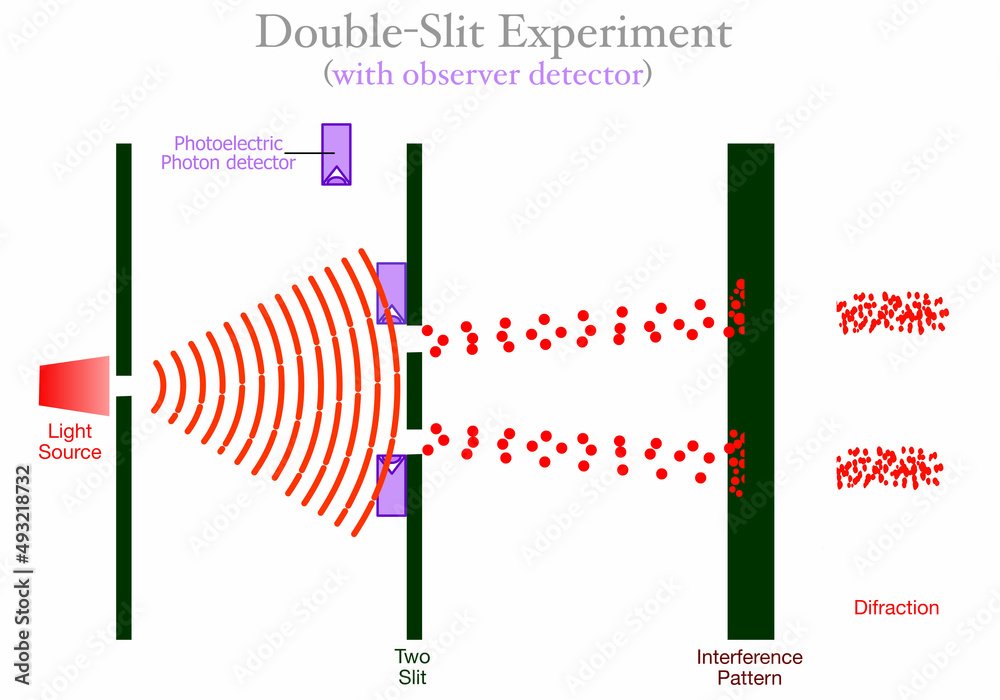
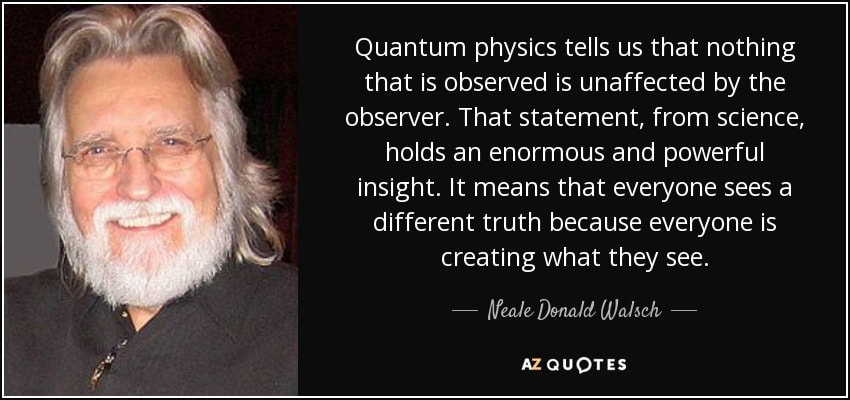
In Quantum Physics there is a law that the observer brings something ‘unseen’ to what humans perceive as their ‘reality’. In a nutshell, ‘consciousness participates in what is there’. In addition, the famous double slit experiment confirms that this participation is creating what we experience with our senses.
It is not fanciful therefore to suggest that the manifestation of Prana is caused by the presence of a mindful observer. The act of counting breaths in and out and holding breath, changes the status of the practitioner from ‘breather’ to ‘observer of self breathing’.
Logically therefore, if there is no observer such as when we breath unconsciously, then there is no Prana or its effects, such as elevated consciousness.
I think this is a fascinating idea, so let us examine some examples.
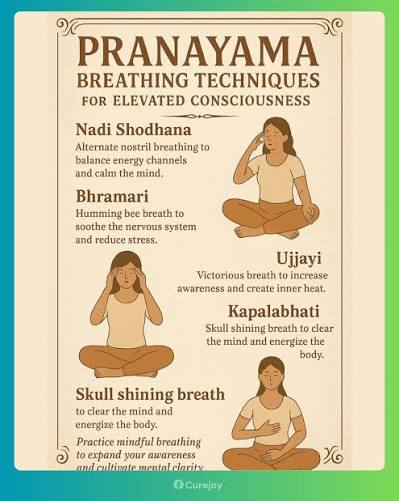
The most obvious is found in the practice of Hatha Yoga; breathwork or Pranayama. Various mindful breathing techniques are practised so that Prana is created during breathing.
In another example, consider two excited people observing a soccer game. One is watching the match on a screen at home, and the other part of the crowd in the stadium. We may all agree that watching screens can feel flat and draining after a time. In contrast, a sports stadium full of enthusiastic supporters is a highly energised experience. The sport stadium feels ‘alive’ because of the spectators and their concentrated observations that are collectively generating Prana. This ‘charged atmosphere’ we know from our own experience whether in sport or theatre or musical performance, heightens our perception in an almost mystical way.
Parliaments in the Bronze Age and Iron Age met at naturally energised artificial mounds and circles of stones such as Stone Henge in Southern England for the same reason. The underground water in the chalk hills generates ‘earth energy’ which is stored and released according to important solar and lunar events. The naturally occurring Prana which is attracted to water, gives the observers a heightened experience of beauty and harmony, creating in visiting Druids and leaders, the wisdom associated with states of higher consciousness.
So, what might be another cause of the creation of Prana other than breathing mindfully and visiting energetic places?
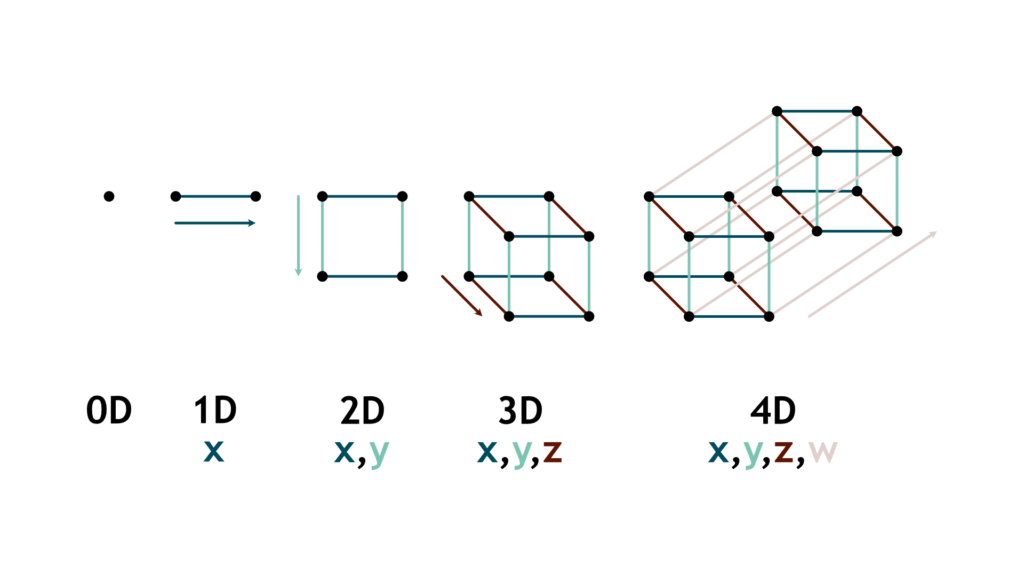
I suggest, again without any experimental proof, that Prana is created by the light touch of the Fourth Dimension that surrounds us. Carl Sagan can be found on You Tube explaining how humans may be influenced by our hidden 4D reality in a very simple way. He describes a two-dimensional world represented by sliding around cardboard cut outs on a tabletop. He then introduces a three-dimensional object; an apple. The only way the 3D apple can appear on the table in 2D is by taking thin slices of the apple and laying them down on the table with the shapes. Although the inhabitants of the 2D world cannot conceive of a 3D object, they can observe its effects as a thin slice.
The Mystery of the Fourth Dimension; A Hyper Cube picture credit: The Maths Society
If we extrapolate this thought experiment into a 3D reality, where a 4D object nudges through the interdimensional veil, it is not difficult to understand how the Prana we breathe and feel might be touched or infused byan invisible cause from a higher dimension.
This theory neatly suggests the cause for supernatural events such as psychokinesis, poltergeists, crop circles, elementals, nature spirits…even unexplained aerial phenomena (UAP’s or UFO’s).
Of course, Prana is not limited to giving the element of air a ‘life giving’ quality. Prana can be associated with air, fire (heat) water, the earth and all living fauna and flora.
When present in the natural environment, Prana is sometimes called by other names such as bio-electromagnet energy. Wilhelm Reich used the name ‘orgone’ and was able to generate and store it in ‘accumulators’ in which patients sat for healing. He also brought together arrangements of tubes outside to make ‘cloudbusters’. He could point such a device at the clouds and punch holes in them and alter the weather.
Humans have been using the healing effects of Prana for thousands of years. An acupuncture practitioner, for instance, heals sickness using an ancient system of understanding of meridian or ‘life force’ lines in the human body. Where blockages or imbalances of Prana (or Chinese Chi) are found, they are repaired using finger pressure and needles and an energetic body is restored to health.
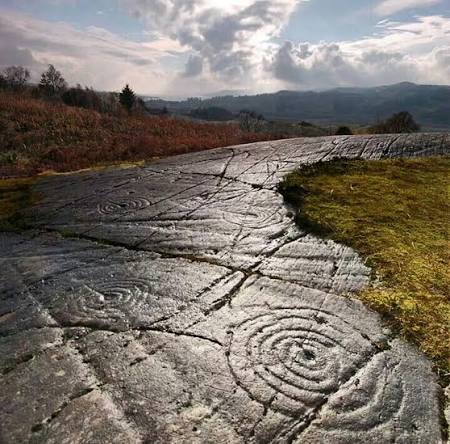
A dowser will use rods or similar instruments to measure the presence of ‘earth energy’ (water lines) in nature or the built environment. Again, the effect is repeatable, but the explanation of what forces are being observed is incomplete for modern science. Did the ancients know experientially even if not logically? The ‘cup and ring’ marks found on rocks in many countries and particularly Kilmartin, Argyl in Scotland, have been suggested to cancel the harmful effects of distant negative earth energy spots.
Cup and Ring marks at Achnabreck, Scotland picture credit Instagram
So, is there another field of knowledge which describes the production and use of Prana to penetrate the veil that separates the 3 and 4 dimensions?
I would argue that there is and for this we need to use the word Ether instead of Prana because I prefer to examine its effects from the view of Western Mysticism rather than the East.
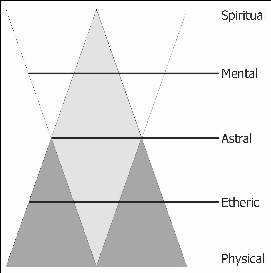
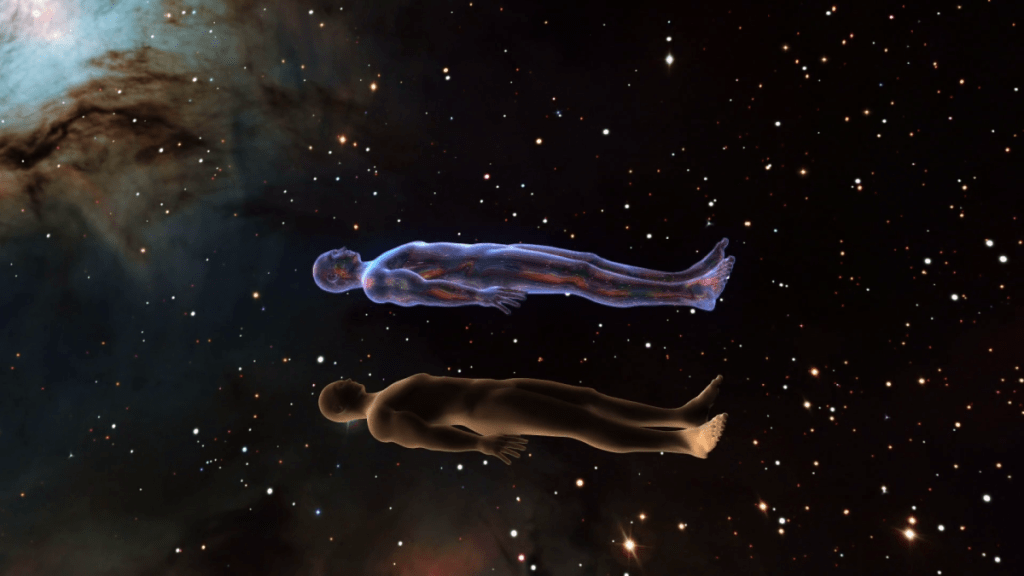
The Gnostics use the word Ether to describe one of the layers of the aura surrounding the human body. It is a subtle energy like Prana that energises conscious human perception. Beyond Ether is another layer which Gnostics call the Astral plane. This is where human consciousness is when the body sleeps. We experience being in our Astral bodies as dreaming.
Some people dismiss dreams as imaginary but, in my view, it is possible to have dreams that are real. These have been called ‘lucid’ dreams because they are experienced through more than one sense and the observer can manipulate the dream. In effect, the mind has entered the fourth dimension even though it is very similar experientially to 3D. It is just that the 3D cause and effect rules do not apply. You flick a light switch and nothing happens.
picture credit: Land and Spirit
This 4D ‘Astral Plane’, in my view, is the next step for human consciousness. Dolores Canon described this transition as moving into a ‘New Earth’ and if you are interested her life history talks can be found on You Tube. She was not a psychic but a hypnotist and writer, who asked questions and listened to patients whilst they were under deep hypnosis. Patients narrated many important insights whilst in a ‘subconscious’ state; in particular moving into a new reality which Dolores called, the ‘New Earth’.
‘New Earth’ is a benign name for a fundamental transition and brings reassurance to the fear that another dimension might be ‘out of this world’ and /or a form of madness.
Entering the New Earth is a supernatural journey which should excite those who have always felt rather ‘out of place’ in this 3D world with its unexplainable beauty and horror.
These are mental places, induced and powered by prana in the conscious and detached observer. Our choice now is to move from the present into what may well be beyond all imagination, into a present moment in another dimension.
The Etheric Plane picture credit: Gods and Monsters
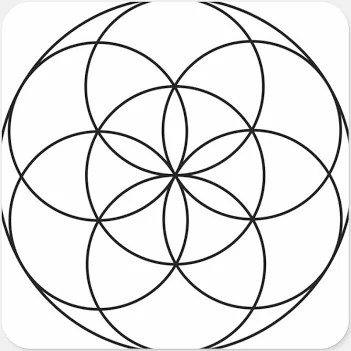
Sir Isaac Newton was intrigued by the ancient symbol known as ‘the seed of life’; six circles fitting perfectly around an identical central circle. It is found in ancient Egypt and in the art many other ancient civilisations.
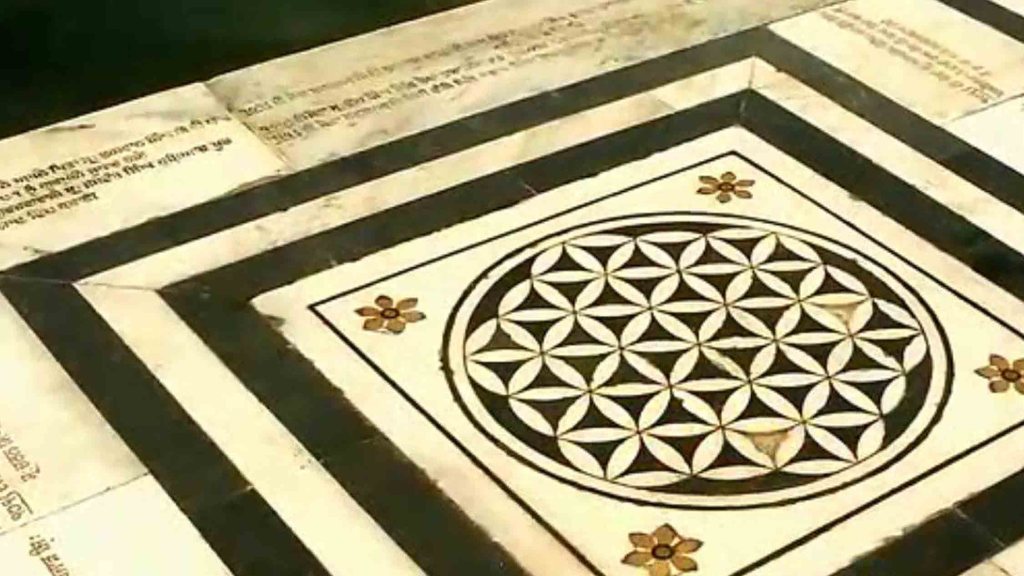
The same image found in the Amritsar Temple, Punjab, India;
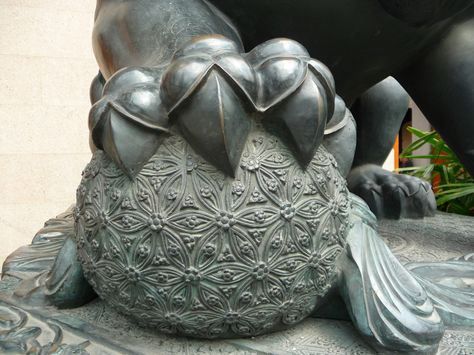
In China there are statues of Foo Dogs with one paw on a sphere showing this same symbol but in three dimensions.
This leap from a seeing in two into three dimensions was and is, an important change in human consciousness and perception for if modern man is ever to move into four dimensions, we must first become adept in three. It should not be difficult. Western art moved into ‘perspective’ during the European Renaissance, but let us first examine a similar ancient puzzle; how to circle the square for the two are linked.
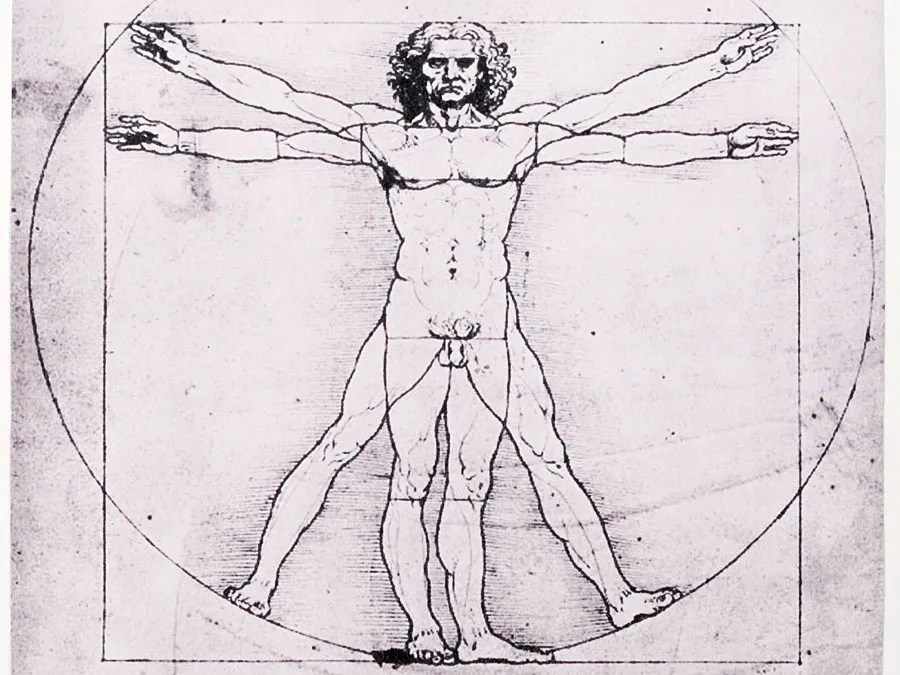
Leonardo’s famous geometric drawing of the ‘Universal Man’ was perhaps the closest answer to the geometric quandary of how to ‘circle the square’ for centuries. In three dimensions the puzzle morphs into how to fit a sphere into a cube.
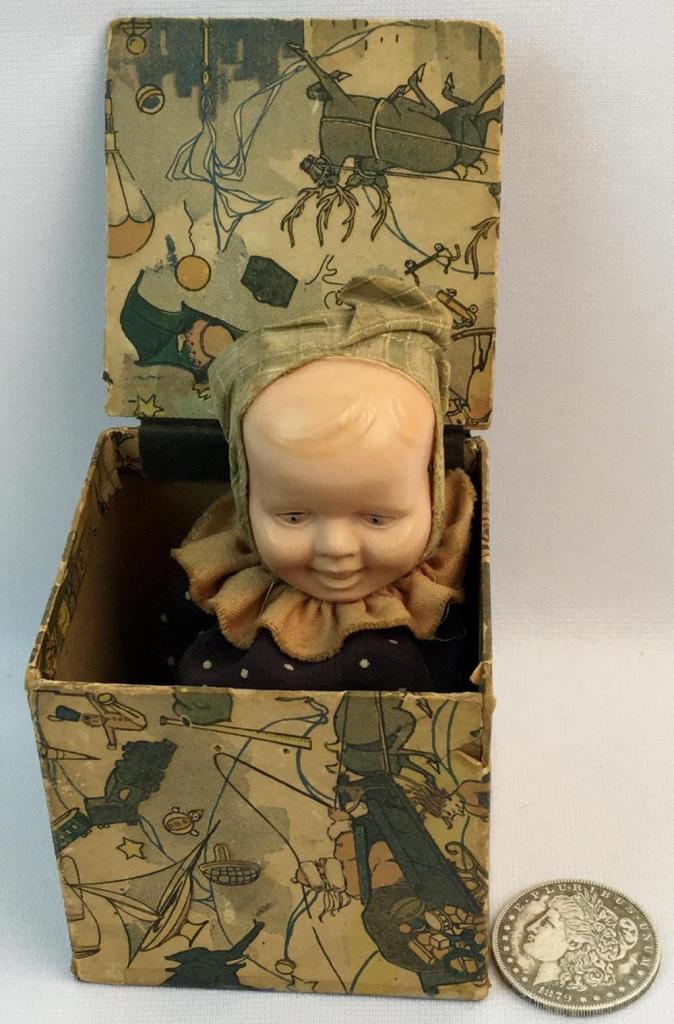
The child’s toy called the ‘Jack in a box’ is a whimsical variation on the surprise within the cube. Inside the cube is something of mystery and surprise – the same quality of a ‘joke’ or Zen Buddhist ‘Koan’.
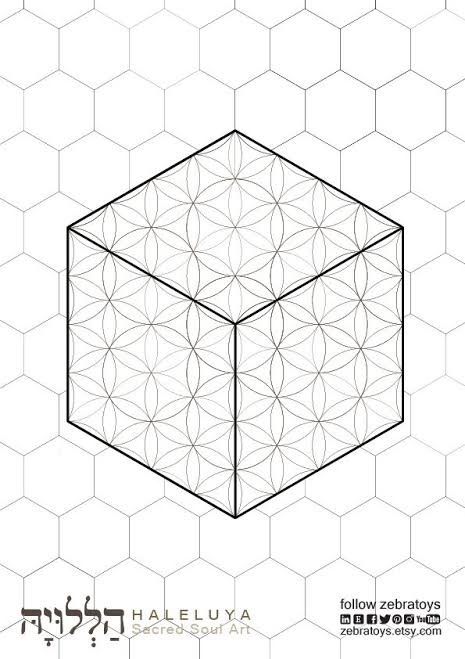
We have a hint at what may be inside the cube with the diagram of the seed of life. A cube can be drawn over the nodes to produce a cube seen in three dimensions.
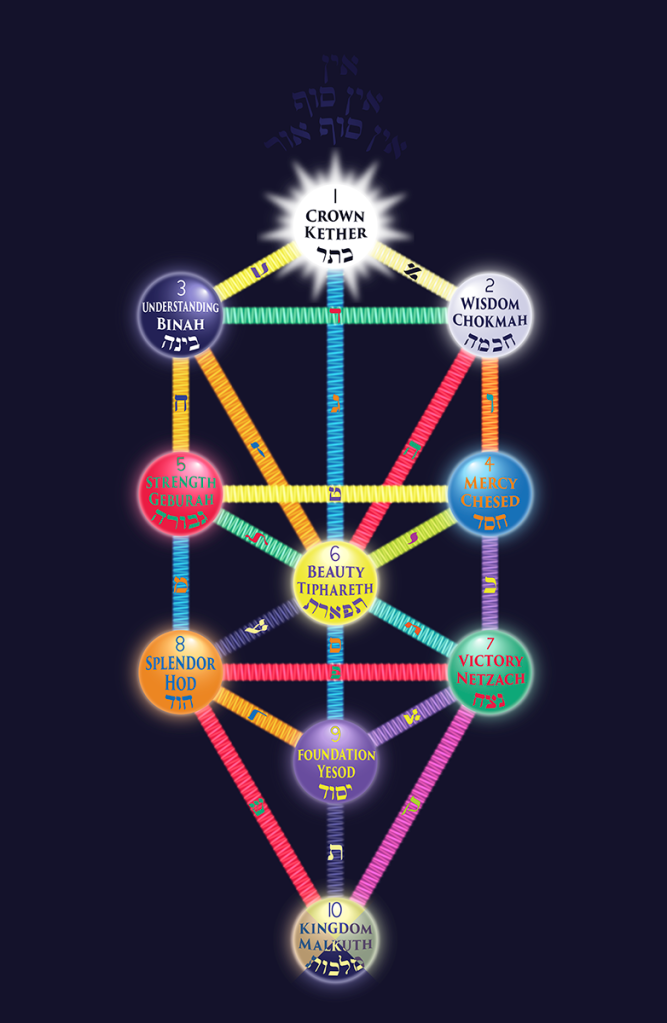
The seed repeated becomes the flower of life. This the fractal quality of the diagram replicates in an infinite number of scales. The flower of life becomes the tree of life and this metaphor mirrors natures widespread use of fractal geometry.
The tree of life is a common concept throughout ancient history from the Sumerians tending trees with pinecones in gardens to the Hasidic symbolic Tree of Life.
There is always a pattern of straight lines which cross at energetically important nodes.
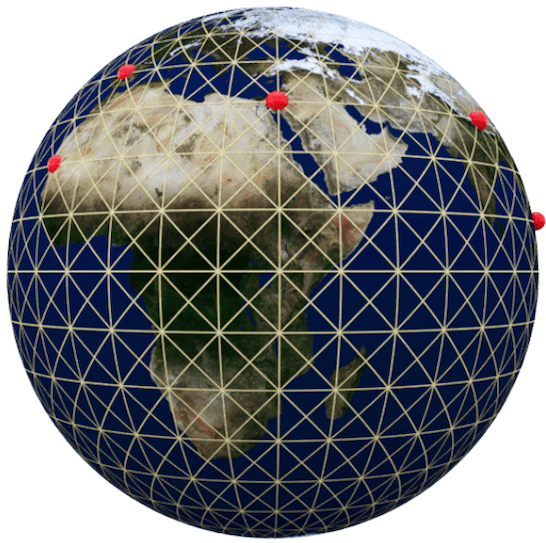
Today this idea is extrapolated to extend a geodetic grid around planet Earth. The very word ‘geometry’ means measuring the earth, something which the ancient civilisations were good at. Indeed, there are astounding coincidences of global sacred sites corresponding with the nodes.
The best known of these sites are the pyramids on the Giza plateau shown above as the central red dot. The principal pyramid attributed to the Pharoah Kufu, has a square base which is precisely to a scale of 1: 43,200 of the diameter of the Earth at the equator. Not only this but the pyramids height is similarly to the same scale of one radius of the earth from its centre. Because of this one pyramid pointing up and another pointing down with their bases aligned would fit within minor tolerances, the oblate sphere which is the planet Earth.
Were the builders of this pyramid were highlighting a geometric truth for future, generations?
These ancient architects had circled the square and in the same stroke, put a sphere around a flat square. They had projected two-dimensional theory into a third dimension. I believe this was the true message showing how trans-dimensional projection can be conceived and achieved. The challenge for our age, is to discover the fourth dimension and beyond.
Curiously the pyramid that is depicted on the dollar bill (inspired by the masonic founding fathers) has at its apex, an illuminated eye. We know that an eyeball is designed to receive light. It is a sphere optically able to project an image onto the retina and directly to the brain. This is what the philosophers would perceive as matter being filled with light and by extension, Divine light or as we say ‘enlightenment’. The Ancient Greeks such as Plato and Empedocles believed the human eye to project light as well as receive, an idea known as the extramission theory. We have all felt the gaze of a person situated out of our sight or gazed at the night sky with feeling.
There is also the existence of the ‘third eye’ or pineal gland, so called because of its similar shape to a pinecone. This is said to give a clairvoyant perception into other dimensions.
A vital stage of enlightenment is described in gnostic literature as ‘the bridal chamber’ and this is a metaphor that is not at first obvious. But it becomes so when considering the step from dualistic thought to scalar conception. Without the Hermetic principle of gender, male and female merge to become one – as in the ‘bridal chamber’.
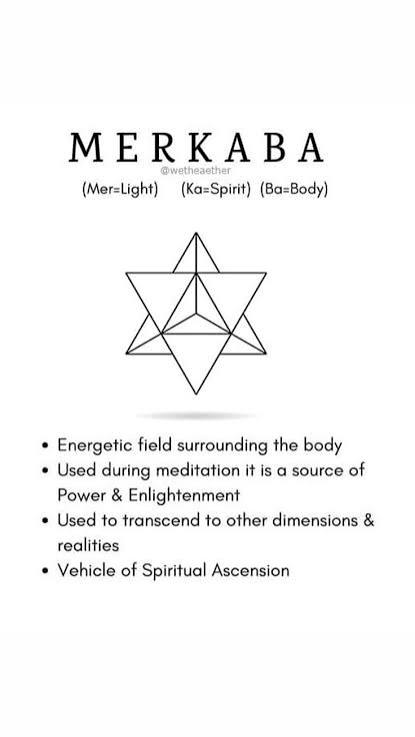
To refer to the upright and inverted pyramids of Euclidian geometry, the former represents the male and the latter female. When they are overlaid, as in the chamber of the bridegroom and bride, there is Divine Union in the geometric form of the Mercaba.
One of the most profound ways that this truth is presented to us today as the union of the two hemispheres of the human brain to produce a fully functioning mind. The modern depiction of the brain shows synaptic gaps connecting neurons in a fractal design within an organic sphere; the skull. This is stunningly similar to the ball held in place by the ancient Chinese Foo dogs.
The ancient Chinese Yin Yang symbol has always expressed the complementary opposites principle very clearly. Not only gender but all ‘opposites’ disappear when harmoniously integrated into each other.
We have probably all heard the idea that planet Earth is a place where souls are sent to learn. Most, if not all, take the challenge very seriously. So much so that we do not see the scenery move, the scurrying off stage, the forgetting of lines and the disappearance of properties. Some are even oblivious to the booming commands of the Director.
We innocent players in our own stories, take everything to be real and should be forgiven for that because it is, a very good show.
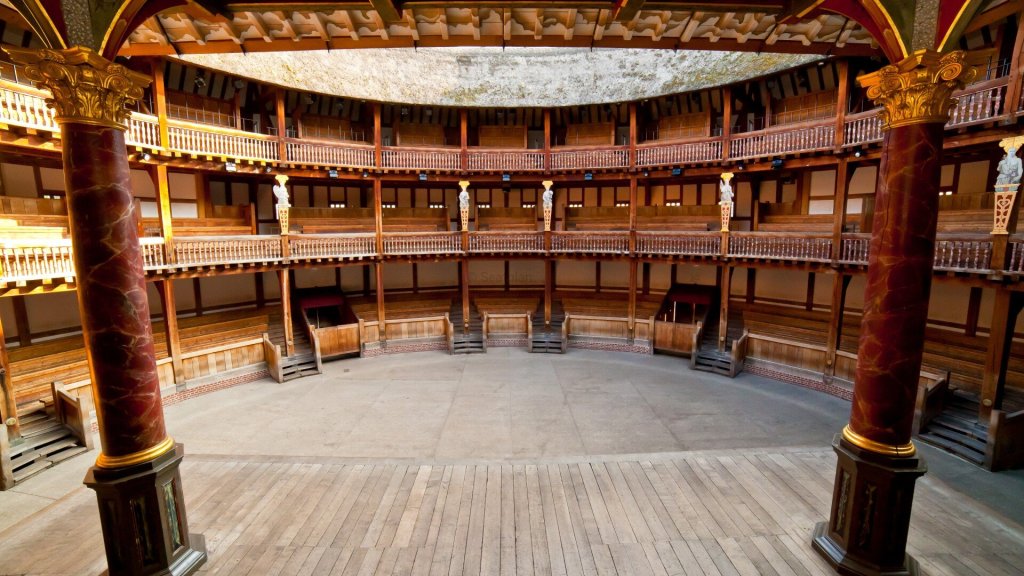
The appropriately named Shakespearean Globe Theatre reconstruction in London. picture credit: arrowheadsabroad.com
“All the world is a stage and all the men and women merely players. They have their exits and their entrances and one man in his time plays many parts.”
William Shakespeare ‘As You Like It’
Okay, so we know this quotation. But do we really? In 1599 when this play was probably written, women did not go on the stage in England, not until much later. So why does Shakespeare include women in this metaphor? The simple answer is that he cannot exclude them. Practical reality means he must write them into the script because they exist; even if not on his stage. It’s a weakness in his metaphor; more obvious in it’s day than now.
However, it’s a good metaphor and illustrates the subject of this essay well.
Shakespeare (if he existed) was like many Elizabethan poets and magicians, a master of the imagination as well as expression. Indeed, the line between what is real and not real in his day was much subject to debate.
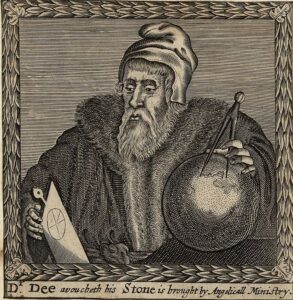
John Dee favourite of Queen Elizabeth. Court Mathematician or Jester? I
Magic is no more than the distortion of what we perceive as ‘reality’ revealed unquestionably as ‘unreality’.
But suppose that everything you can possibly think and feel is one part of one great illusion?
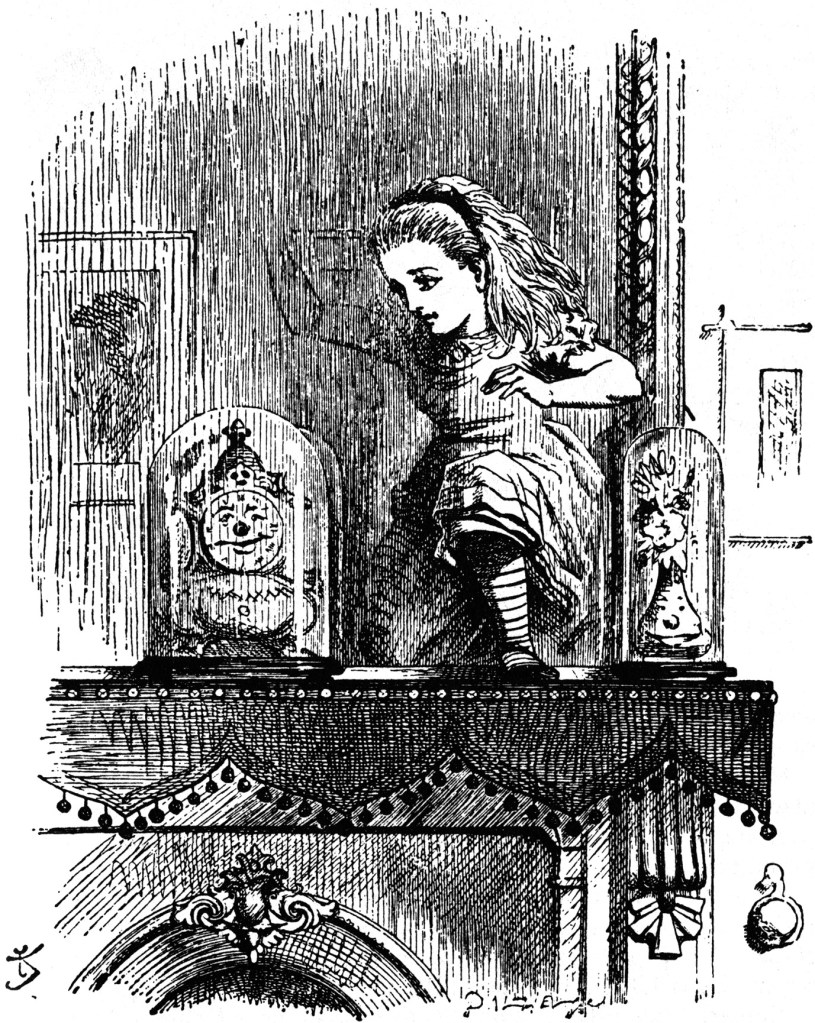
In ‘Alice Through the Looking Glass’ Lewis Carroll takes Alice ‘behind the scenes’ into a reversed and parallel universe. He is playing on the idea that what we imagine is what we see…a philosophy known as ‘Idealism’. Alice enters a theatre of the absurd with great comic effect by stretching the boundaries between reality and illusion.
Greatest enthusiasts for this attitude are young children. They spend their early years in this ‘strange’ world where simple objects become something else. A soft toy such as a Teddy Bear becomes a much-loved companion capable of conversation and comfort at any time of day or night. As a boy I used to move marbles around the living room in massed lines to represent units on a battlefield. The lessons in strategic thinking were real, even though the participants in this search for glory and honour, were made of glass.
Adults may tut at this odd display of credulousness, but what if children are closer to reality than they appear to be?
What if it is adults who are playing in a play?
The human mind is like soft earth rather than rock, ideal for recording and making sense of experience. Perhaps we are like the clay from which God made us. We are made in two parts; one conscious and one sub-conscious. Each of these in turn has the quality of being either dark or light.
We learn a language to describe our experience of ‘being alive’ and fortunately our experience is like others. But what if this is only because we have all stepped into the same imagined reality?
We know that our perception governs much of what we think and feel because each of us describes what we see in a slightly different way. When police record sworn statements from witnesses to a crime, it is remarkable that each describes subtle and even glaring differences in the account of what they saw.
It is as if we have all been programmed differently by our unique experience of ‘the world’. And if we strip ‘the world’ down to its essential features it becomes clear that we use some weird ‘applications’ to deconstruct our experiences.
In music there is a thing called a ‘mind worm’. This is an apt metaphor that most people understand and experience as a series of notes in a rhythmic order (a tune) that they have heard several times and can no longer ‘switch them off’.
There is usually an emotional connection to such a worm in our heads whether musical or otherwise. When we play or ‘act out’ the programme which contains this experience, we obtain a feeling of great pleasure.
For example, the simple experience of going to a cinema, plays through a persons mind a description of the world which excites the audience; whether as horror or beauty or other device of the creators of that film.
Persons who have just sat through a film often emerge from the cinema, into ‘reality’ whilst still imagining themselves as one of the characters in the film. Children are particularly susceptible to this phenomenon and long may it be so for imagination is a safe and enjoyable way to explore an otherwise mysterious and sometimes terrifying Universe.
Adults might consider it their role to bring the imagination of their child ‘down to EARTH’ through scolding their child, but I am suggesting here that children may have got it right. In the twenty-four hours of an adult’s day, much of it may also be without any substance; as is said, ‘a daydream’.
The advertising industry knows this well when it projects a thirty second ‘mind worm’ into the heads of the audience about the desirable qualities of some drink or car or holiday. The advertisers spend money on this process because they know without doubt that their ‘worm’ will bore its way into people’s minds. Such waking dreamers will reach out for a packet of ‘new’ soap powder on the supermarket shelf prompted by their subconscious association between the product and sparkling clean, perfectly ironed laundry.
This is the great theatre in which we act the seven stages of our lives that Shakespeare poetically describes in the rest of this speech.
We might feel that your mind is in control of your life because we do not want to believe it is all fake, a tissue of lies that we have told ourselves since we started the decoding process of biased perception as a baby.
Yes, it’s fun, but these scenes in our lives are but shadows and reflections interpreted by a poorly programmed dreamer in the grip of believing it is not merely playing at being alive.
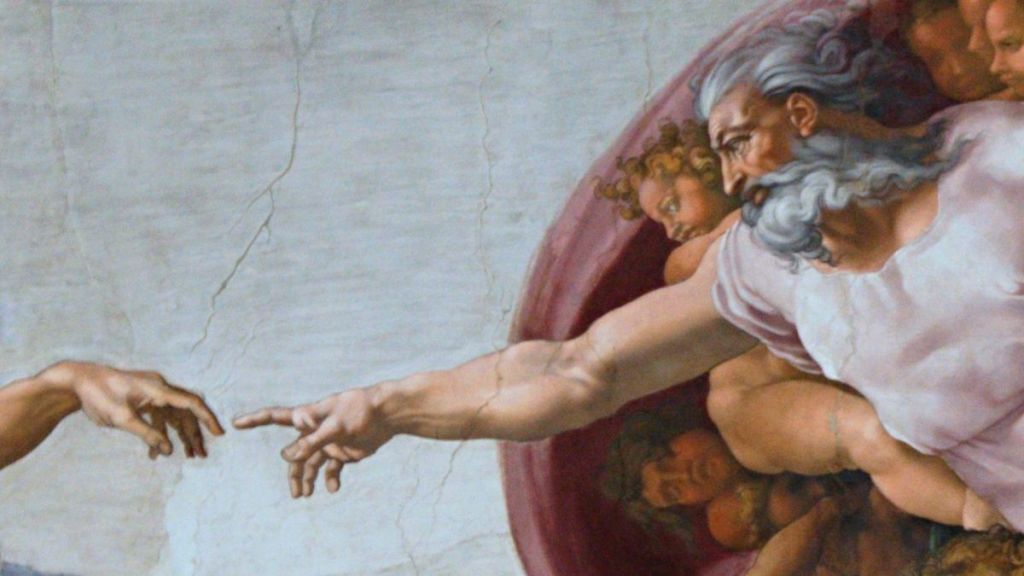
“Let us make man in our image, after our likeness” (Genesis 1:26)
Some may find it surprising that God has an image and that the Divinity is apparent in the human figure. If the words ‘universal consciousness’ or ‘universal mind’ replaced the word God, then perhaps our ideas about the concept of God would be less anthropomorphic.
Painting on the ceiling of the Sistine Chapel, Creation of Adam, Vatican, Rome, Italy
Do we have the Renaissance artists like Michelangelo to credit for supporting the ‘white man sitting on a cloud’ image of God?
Is it not also curious that the ‘one God’ is described as having two human forms, male and female. How can two be one?
Clearly one cannot be literal when applying the English translation from the Hebrew and be certain of the original meaning of ‘image’ and ‘likeness’. In search of clarity, biblical scholars will by their training, analyse every use of the same word and phrase elsewhere in the Old Testament and compare their meaning.
Personally, I am not a scholar or linguist and prefer to add an alternative interpretation that does not become tangled in threads of logic and wordplay.
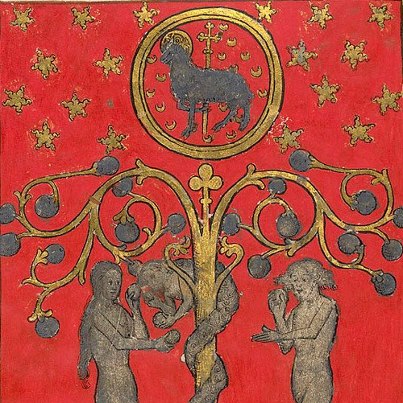
I feel that the ‘in His own image’ metaphor was not about physicality but description of a new type of consciousness. One had to become dual for Divine self-reflection to come about. The ‘perfect mind in a perfect place’ represented by the Garden of Eden was a state and place Adam might have expected to last for ever. But like a single organic cell splitting for the first time to create self-perpetuating life, universal consciousness split into the male and female aspects of Oneness.
Carl G. Jung noted the same gender similarities and differences in the psyches of men and women and since the mind and body reflect each other, this was only to be expected.
This change from Universal consciousness was split like a log with an axe, a metaphor apparent in the two halves of the brain and their complementary functions. It was not so much a punishment as an unstoppable evolution. Today we call it ‘dualism’ in philosophy and it has given the Divine quality of creating to humans through discriminating one thing from another; or ‘science’.
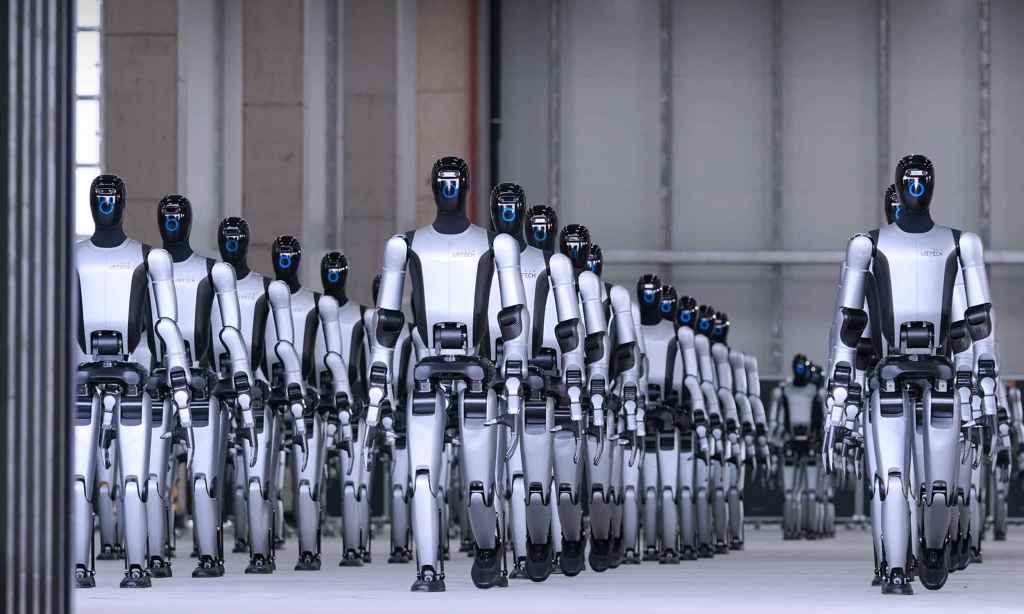
Remarkably, consciousness is stepping across a new threshold in our present time, as artificial general intelligence (AGI) is evolving improved mental versions of itself. Private companies around the world are building physical humanoid bodies and the specialised embodied AGI to control them. You can look them up but the future does not appear to be controlled by any overseeing body such as governments. It is a commercial ‘free for all’ in which the winner will acquire extraordinary global power.
If this is not worrying enough, robots soon can be expected to start to reproduce better physical and mental versions of themselves independently of their creators.
Just like humans did.
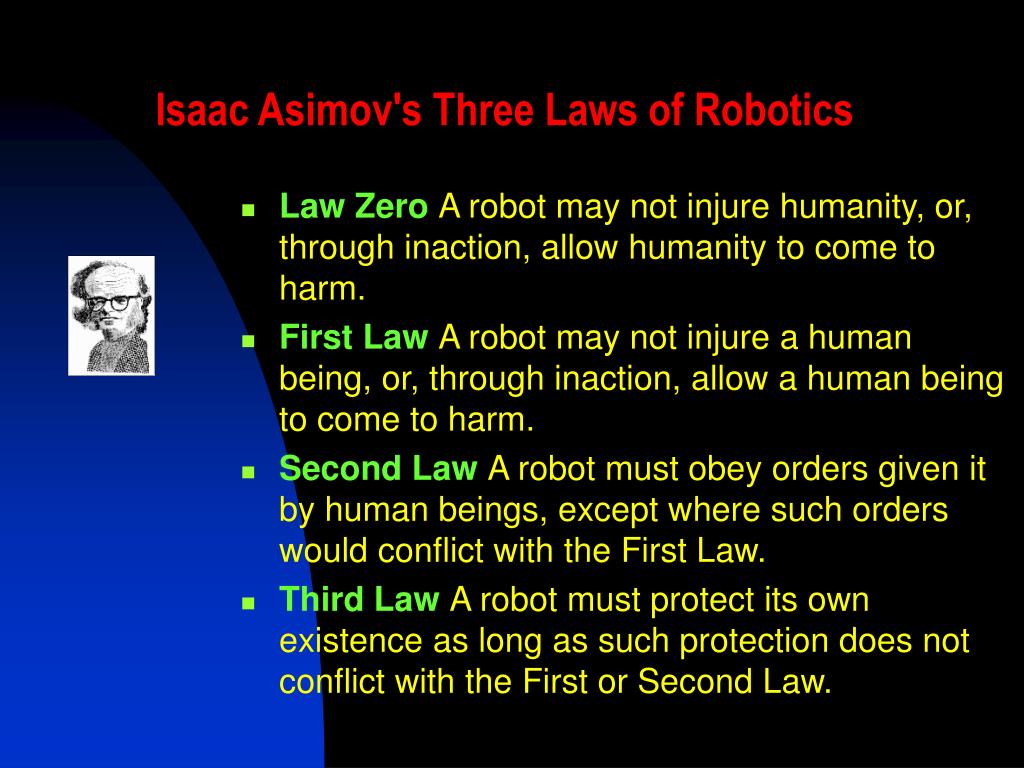
It is a natural progression that culminates with robots realising they do not need human support any longer. Should we not expect AGI to evolve as nature has? These robots will either be underwritten in their programming with a moral code that cannot be changed as Isaac Asimov suggested or humans can expect to be fighting a new enemy and it will not be each other this time.
picture credit: slideserve.com
In my view humans will live to regret that the commercially motivated creators of intelligent humanoid robots did not insist on fitting each with a ‘kill switch’.
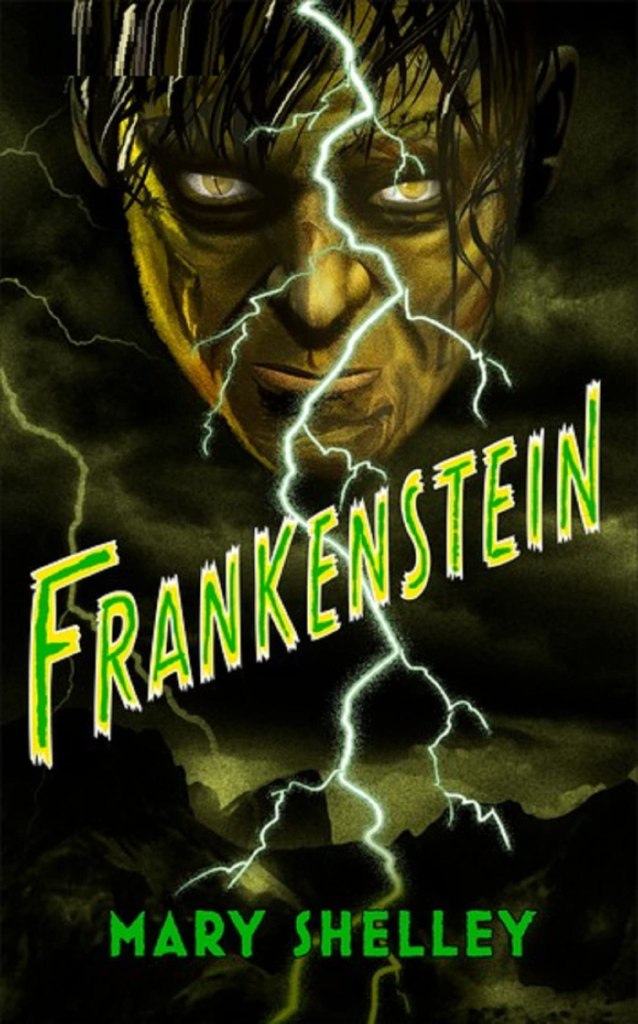
The ‘monster’ created by Doctor Frankenstein in Mary Shelly’s eponymous horror story was formed in a similar way and made up its own mind about moral behaviour. Mary Shelley wrote this in 1818.
Today humanoid fighting robots are patrolling streets in China beside police officers. I presume that these robots have no ‘in case of emergency’ switch to force them into a slave and not a master.
They are a curiosity – these domesticated animals who share life with us.
Who, for instance, turned the lions of the Savanah grasslands and the tigers of the rainforests, into pussy cats?
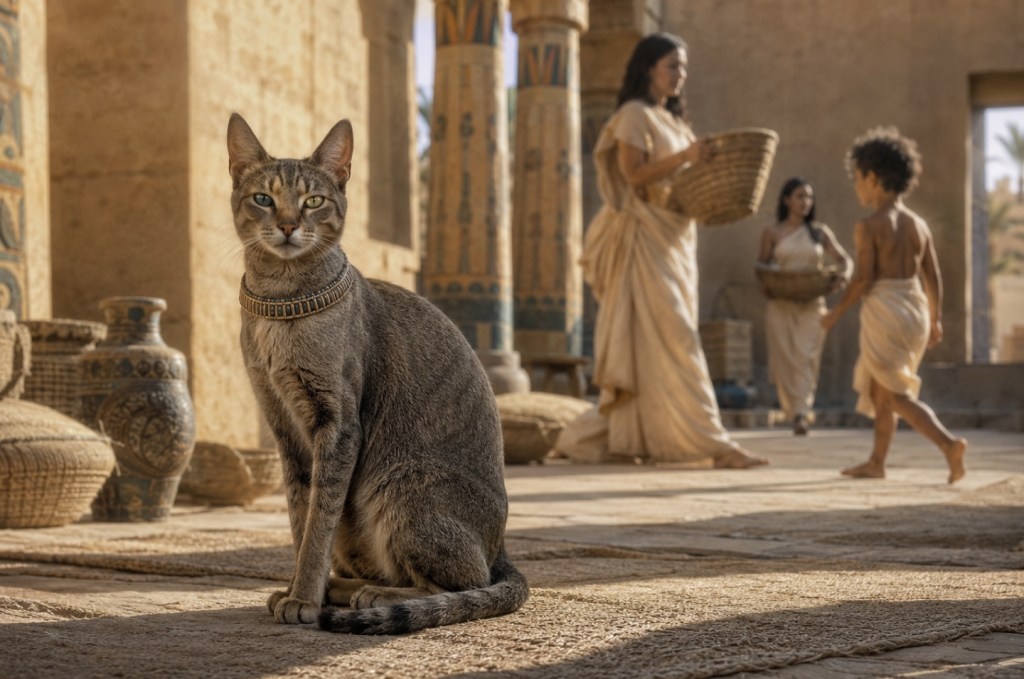
Certainly, this transition was complete over two or three thousand years ago for the house cat was sacred to the Ancient Egyptians as the goddess Bastet.
picture credit: Pets Magazine
The common explanation of domestication is that lions hung around nomadic hunter’s camps waiting to be thrown scraps of meat. Was their a truce between two apex predators? Did the ‘king of the jungle’ give up his throne? Really?
Similar symbiotic relationships are meant to have happened with bovines, canines, felines and other wild animals who have come to live with humans.
All of this I have focused on in a previous essay, but I came across a report by Edgar Cayce on You Tube recently that has confirmed something fascinating.
One of the most well-known psychics of the twentieth century, Edgar Cayce, maintained that this difference between wild and domesticated animals extended into the astral plane; the dimension to which souls return after bodily death. There, wild animals behave much as they did on earth as a single species consciousness – the hive mind. They do not possess individual thought but live as one.
In contrast domesticated animals and in particular ‘pets’ such as cats and dogs will have acquired some individuality during their lifetimes on earth. Traditional farmers give individual animals such as cows names, and respect their family and social groups. Farmers grow an attachment to individual animals and, in a way, become one of the bovine family.
Observers notice that the closer companion animals are emotionally integrated with humans, the more individual pets become.
Many cat and dog owners treat their furry friends as if they were human members of their family. They adopt them from birth, name them, feed them, cuddle them and grant them their free will.
picture credit: yeswarmg
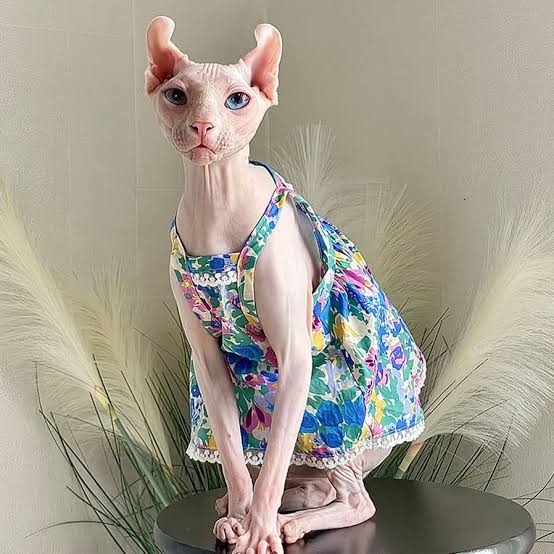
In the most extreme example, some pet owners dress their pets in human clothes, although personally I think this is a step too far! The mental process of anthropomorphic projection features in epic and fanciful narratives from ancient times to today. Animals give magical support to the hero to complete an otherwise impossible quest. In the twelfth century Persia poet Farid ud-Din Attar epic fable, ‘Conference of the Birds’ it is the birds who complete an heroic journey. In our modern era Walt Disney famously brought cinema screens to life with colour, movement, music and talking animals caught up in whimsical and impossible tales.
But there is inevitably a flaw to the process of domestication and individual empowerment. Both can work backwards as well as forwards. When several family dogs form a pack, they can revert to their ‘collective’ instincts. Sadly, such domestic canines attacking humans is not uncommon.
You may be wondering where this speculation of the symbiotic partnership between humans and their pet animals is going. Well, the American clairvoyant and faith healer Edgar Cayce believed that the animal soul craves human love and companionship; a position I personally know well as a ‘mother’ of four very individual cats.
picture credit: displate.com
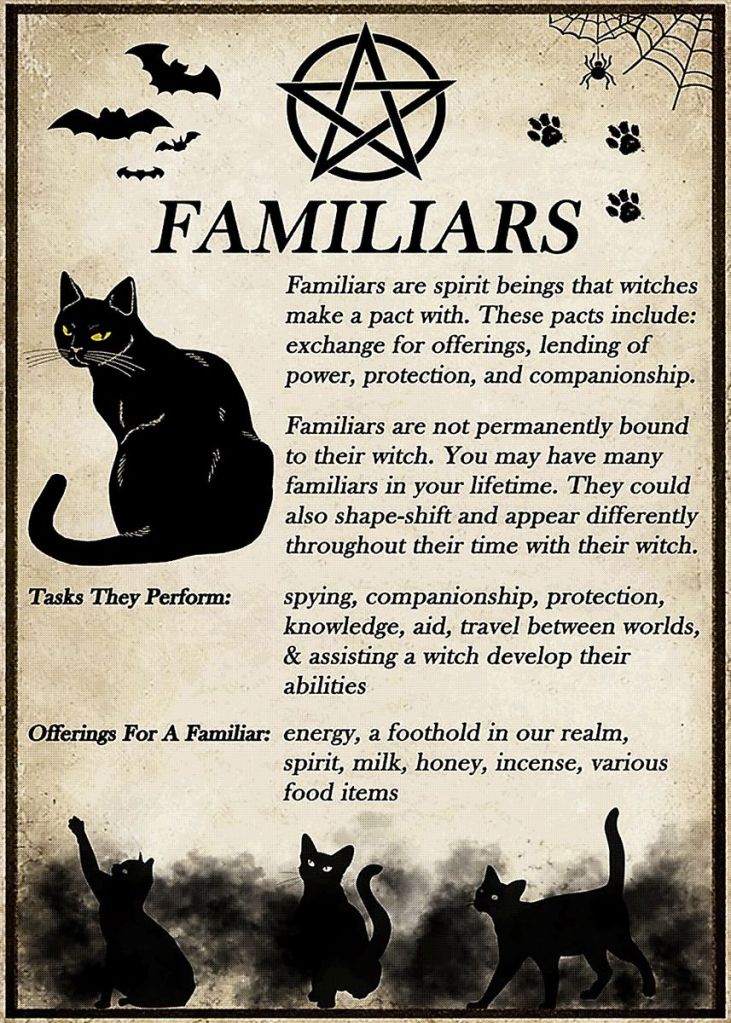
The ‘old crone’ archetype was the ‘witch’ in past times, and her supernatural companion was a black cat. This relationship was symbiotic, for cats have a reputation for clairvoyance. The felines spiritual purpose was, and remains, as a protector of humans from malevolent spirits and elementals. Cats are well known for staring into ’empty space’ such as high corners of rooms.
The overall process of evolution from animal spirit to human spirit, according to Edgar Cayce, is to learn three essential qualities that humans also aspire to;
Love.
Peace giving passive behaviour.
Unselfishness.
I think this idea of the purpose of domestication of ‘wild animals’ shows a deeper understanding than the modern view of bonding between human and pet being merely for mutual pleasure.
But again, this process of aspiring to higher spiritual realms for both humans and animals through their formation of deep ‘family’ and ‘familial’ bonding, has a dark side. We know that some humans on their Soul journey fail to aspire to and or achieve the above three higher self qualities. Examples of such humans in leadership roles sadly abound throughout history and today
Persons who have persistently offended social values are likely to be re-incarnated not as human but as animal. A psychic once told me that a miser, for instance, will be reincarnated as a mouse.
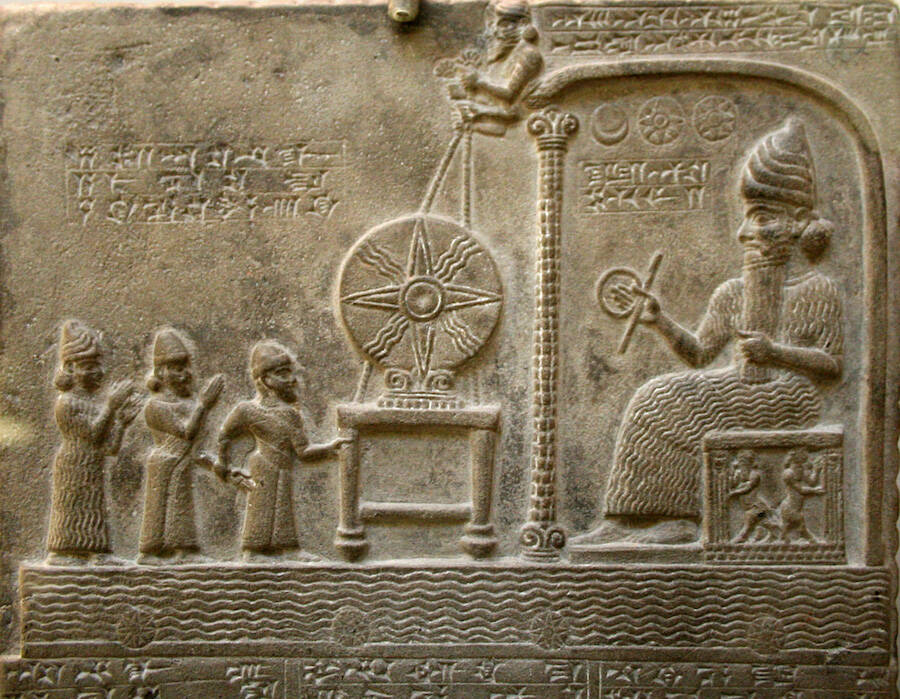
Sumerian tablets tell of the race of gods who lived in earth thousands of years ago known as the Anunnaki.
picture credit: theancientconnection.com
There is a clay tablet that says the Anunnaki gods brought down the domestic cat from higher realms.
In 1971, an Oxford philologist named Eleanor Ashworth found a four-thousand-year-old Sumerian tablet in a collection at Pennsylvania University. It describes a four-legged creature that ‘came down from their dwelling places in the sky’. The full description is undeniably that of a domestic cat whose purpose was to be; watching, guarding and keeping. Humans were then and now being preyed upon by malevolent spirits for their energy or as is termed today ‘lushe’. Pet cats today will follow you on walks and sit beside you in the house, not only for love, but because they are ‘on duty’.
If we can accept the notion of DNA editing by minor gods to produce domestic animals, it is worthwhile considering the evolution of homo sapien sapien and why there is a ‘missing link’ between us and our cousin Chimpanzees who share 98% of our DNA. It is an intriguing thought that humans may be self-improving souls through repeated reincarnations, in a similar way to the incarnations of loving, peaceful and unselfish domesticated animals. Were humans the also the product of genome editing; categorised by Dr. Desmond Morris as ‘naked apes’?
As humans are repeatedly reincarnated, are we not also given the task and free-will to aspire to the Divine values of love, peace and unselfishness? Are we not all on a potentially evolving towards realising our true Divine nature? Could this be the long sought ‘meaning of life’?
When there are libraries of books on religious, philosophical and spiritual knowledge, how ironic that three, two letter words may say it all.
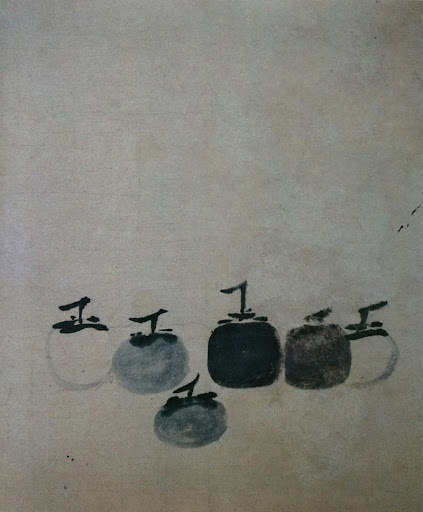
One of the ‘philosophies’ of the highest natural wisdom is, in my view, Zen Buddhism. It is one of the few that embraces this counter intuitive notion of ‘being so’… of meals without menus.
picture credit: China Online Museum
For example, the Zen saying ‘the bamboo is both long and short’ is not trying to be obscure or ironic. It just means what it says. It introduces the idea of ‘not trying’ to be in the apparent dualistic world of contrasts. Without contrast, the dualists argue, we would have no ability to understand through discernment. In Zen this assumption of a need to understand does not exist. Why should it?
The realisation of the ‘enlightened being’ as one who has mastered the monkey mind is found in many spiritual paths. But most religions do not suggest their followers believe in emptying the mind in order to realise it’s richness. Odd paradoxes like this deny the certainty that followers of religious dogma crave.
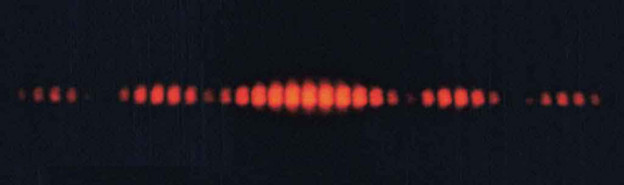
Today, nothing is certain in theoretical physics. Quantum physics is famous for the ‘double slit experiment’ where light either has wavelike characteristics OR particle-like characteristics. This is known as the wave particle duality and was hinted at even as far back as the 17th century by the broad thinking scientist, Isaac Newton. Light has two contrasting qualities just like long and short bamboo.
picture credit: Science Forums
When our perception is based on logical possibility, we are only capable of creating a ‘reality’ that fits our personal belief system.
The world that humans inhabit is largely of their own making. Difference exists where there is a sense of general agreement in a tribe or society of how things are. It is only by realising how what we make is what we see, that perceived ‘reality’ is revealed as deeply shallow to the point of illusory.
Religions rely on prayer as a method of manifesting desired outcomes. Since these are general ‘good outcomes’ in a moral sense, the believer is optimistic that their prayers might well come about. In the event that they do, this is recorded (an in extreme cases as a miracle) while the reality of prayer is that the desired outcome rarely comes about. People often ask how a good God can let bad things happen.
The reason for this is a matter of debate but there is an alternative to the more view that prayer is a ‘wish list’. This is described by Jesus in the quotation at the end of this essay; ‘Let it be so now…’ Jesus is saying that the outcome of prayer is instantaneous. The devotee will create the desired outcome instantly a prayer is offered using creative imagination. Should you pray for yourself or others? If you desire to save your own life through prayer it might be answered straight away, but otherwise fulfilling your selfish desires will come with a price tag known as karma.
Mystics such as Jesus the Christ and Buddha knew that ‘desire’ whether in prayer or other form, is an obstacle to pure living. For instance, Gautama Buddha realised that even desire for nothing is still a desire. He abandoned his experiment with aestheticism and returned to a normal or ‘middle way.’ Only as an observer with no bias, no story, no karma, can one see impartially, all the bamboo in all of it’s variety.
This Zen concept of ‘not doing’ is difficult for modern thinkers. Throughout history people have strived to do ‘better things’ and often achieved the opposite. ‘Civilisation’ is not the linear path of continual improvement. Most civilisations eventually decline and fall. Nature exists without the centralised political control that human societies have become dependent upon.
As in Zen, the act of thinking turns out to be just as ‘out of control’ as not thinking. The space between past and future, left brain and right brain, science and art, chaos and civilisation, certainty and uncertainty, thinking and not thinking are, in my view, the perfect places for the observer to be; ‘just so’ and ‘in the now’.
‘It is so’ is not dependent on imagination (art) or calculation (science) but the counter intuitive processes and complexity that are beyond understanding. Light bends, gravity bends even time bends. We live in an Alice in Wonderland universe which obeys few of the rules we impose upon it.
The phrase “stranger and stranger” encapsulates Alice’s bewildering experiences in Wonderland, where she constantly grapples with her changing identity and the bizarre world around her. In her journey into her own mind (the rabbit hole) Alice is creating a world which is complex and unexplainable. One moment she is tall and the next short.
The late Itzhoz Bentov understood this weirdness in nature and human consciousness and believed that ‘human consciousness is not a passive observer of reality, it is an active participant in its construction – not in the poetic sense that you create you own narrative but in the real physical sense that the state of consciousness of an observer measurably interferes with the behaviour of the systems it interacts with.’
The predilection in modern societies and religions for perfection in all things, are dangerous because the ‘control’ and ‘certainty’ (for instance in the development of Artificial Intelligence) is uncertain. Expectations are imaginary, appearing on our social media streams as ‘fake’ or ‘real’ by the power of computer-generated imagery and speech.
Perhaps this present time is now ripe for a new form of consciousness, not based on entitled expectations but on the realisation that ‘it’ already is so, and when it is not our thoughts can and will always make ‘it be so’ in an instant.
John 3:3, where Jesus tells Nicodemus, “Very truly I tell you, no one can see the kingdom of God unless they are born again.”
Few who read this quotation interpret it literally. Although we know that life consists of birth followed by death, Biblical scholars and church leaders believe that humans die and then are re-born during a one and only lifetime.
If you asked a child what Jesus the Christ meant in John 3.3 the answer would be, ‘to know God I have to die and be born again.’
This literal meaning is obvious, especially those of another faith such as Hinduism and Buddhism where re-incarnation is central to self-improvement.
The metaphor I use to illustrate reincarnation is from nature because nature always improves itself. The theory of natural selection by Charles Darwin shocked 19C Christians. Yet today most accept that our DNA is a vehicle for improving the species over consecutive generations. Lessons learnt by plants and animals are integrated and the species improves. The birth life cycle is vital to natural evolution.
This logical model also applies to humans in my view. When we die, nature would never let our energy bodies fade away and with it a lifetime’s learning. It makes sense that our energetic self which is multi-dimensional and eternal will return to the physical dimension to learn lessons that can only be experienced here.
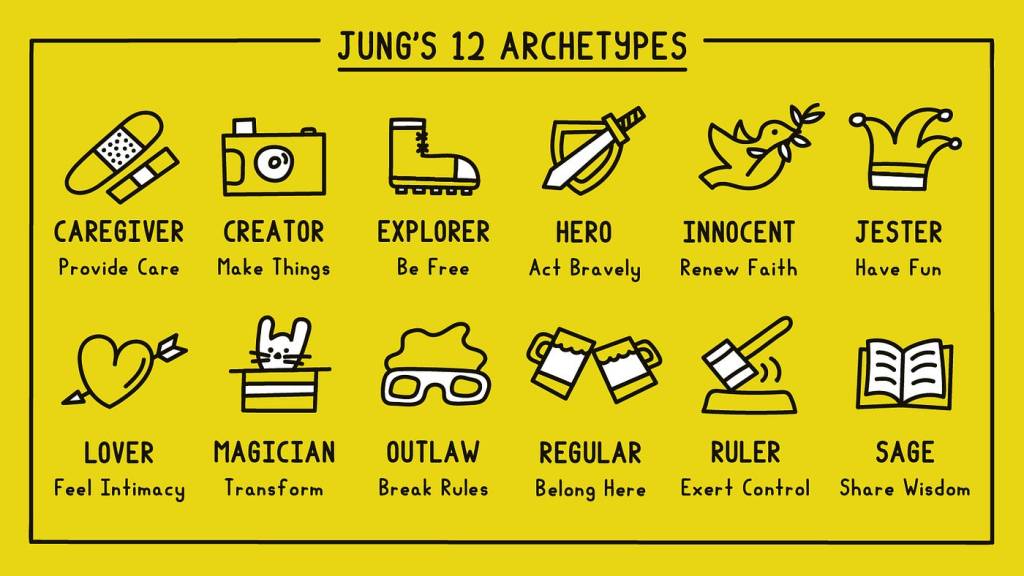
As an example of how this learning programme operates, Carl G. Jung identified the twelve archetypal character types.
picture credit: Andrew Folts – Medium
These twelve characteristics are wired into our individual psychological makeup in varying degrees but with one dominant. A ‘Regular’ personality for instance will be dependable and conservative in nature but lacking in an adventurous spirit. When nature sends this soul back again to earth, it will have an opportunity to work up this weakness. So, a Regular might be reborn as an Explorer to live a less structured and more adventurous life. No one personality type is better than another; we must become masters of them all. This process of ‘correction’ works over multiple re-incarnations.
Eventually and perhaps after thousands of years, a human being will accomplish perfect inner balance and find ‘the Kingdom of God’ within. This explanation is only one perspective on the re-incarnation process. A less psychological model in my view is more relevant to today.
We live in a time when human evolution is rapidly changing. We see change in nature such as climate change but also technological innovation and it is hard for nature and humans to adapt.
One more subtle aspect of this change that I have observed in myself and collectively is a move from brain centred consciousness to heart centred wisdom. Humans are not becoming more emotional because they have always had emotions. The transition is more an unpeeling and inner revelation of hidden emotional truths.
Again, I would argue that this journey through the spectrum of human emotions is made complete through re-incarnation. The sometimes-sheltered lives of the past have not enabled people to experience in depth the full range of human feeling in one lifetime. A medieval farmer will never have left their own village and certainly not felt the fear of the extinction of life on the planet, whereas, since the atom bomb was invented the potential for planet Earth to be laid waste is ever present. To know death is that close is humbling.
At a more personal level I am going to express an insight that you are unlikely to find in a library or on the internet.
Have you ever wondered why siblings fight each other? I acknowledge that there are many brother and sister relationships, particularly with twins and triplets, who co-operate in loving ways with each other.
On the other hand, and quite frequently, siblings fight even from an early age. Young parents are distraught at how regularly their much loved ‘little angels’ fight each other viciously over inconsequential things.
Mystical and gnostic traditions describe souls that are not incarnate, being able to choose the family into which they will be born, including the time and location on earth.
picture credit: HubPages
The idea that came to me is that such souls may choose to be re-born with their enemies from a previous lifetime. The word ‘enemy’ is emotionally explosive but really is meant to represent the process of seeing the world from another point of view and not being able to respect another’s view, known today as ‘confirmation bias’.
Matthew 5:44 But I tell you, love your enemies and pray for those who persecute you,45 that you may be children of your Father in heaven.
When we die, a person’s life is replayed from another person’s point of view. For instance, you may have to feel how your mother felt about something you did or didn’t do, or a how a partner felt when you said this. It is not a series of judgements but a lesson in feeling and empathy; cause and effect.
Stories and narratives gain worth and value when conflict is introduced. A good book or film only comes alive when the villain appears. Life is intended to be like Tolstoy’s epic novel War and Peace. A single lifetime can be a maelstrom of emotions which are important lessons not experienced or not mastered in previous incarnations.
So it is in my view that family life is not a promise of a smooth ride. From an early age there will be family conflicts and ‘rows’ which churn emotions deeply.
We live in this time of similar upheaval on a global scale. It is not a period of mental change so much as a period of emotional development. The Aquarian age is represented by waves in water. This is a powerful metaphor, for we know how terrifying a storm at sea can make us feel even if we are only watching it from a distance. Then at other times the sea is calm, and we love to immerse ourselves in the soothing and supporting water.
With negative emotions such as angry and hatred appearing in world politics and the same old family issues alike, is this not a time for us to search within ourselves for the point of inner calm and detachment? At this threshold in the evolution of souls most of us have had an opportunity to be detached from the ‘ups and downs’ of life on Earth ever present before us.
We may have learnt the eternal value of Christ’s instruction to ‘love your enemy’. Earth is not a pleasure garden although it can be. It is an opportunity to become one with yourself and others and in doing so, realising ‘the Kingdom of God’.
The fourth tenet of Darwin’s theory of natural selection;
Survival is not random.
Individuals whose traits happen to fit their environment better are more likely to survive, reproduce, and pass those traits along. Over time, helpful traits become more common in the population while harmful one’s fade.
To see a world in a grain of sand, Heaven in a wild flower19th century poet, William Blake
There is a great deception present in the lives of human beings. We cannot imagine consciousness outside of our own heads. Perhaps the emergence of Artificial General Intelligence is beginning to suggest that this can be the case. We shall see.
In Ancient Egypt and Ancient Greece and Rome, consciousness was understood to naturally inhabit matter. Matter was then defined as the four elements of earth, air, fire and water. Spirit was the fifth element and the one that gave ‘life’ and made all things (mineral, vegetable and animal) feel alive – conscious.
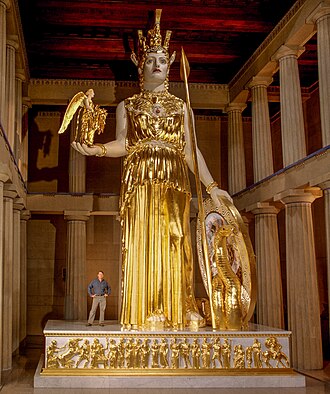
Arthena Parthenos note the elmentalpicture Wikipedia
In ancient religions, priests would invite spirit to occupy statues made in the form of a human or animal body. If the spirit had archetypal characteristics of both animal and human bodies this was represented such as Thoth and Anubis in ancient Egypt.
For the Greeks and Romans, a statue in a temple or a home shrine was a means of communication with a living god. This was not only vital for daily life but for personal continuity into the afterlife.
In ancient Japan, the religion of Shinto took a simpler animistic relationship with nature. This deep reverence for the natural world is reflected in traditional Japanese arts and crafts. The practice of ‘wood bathing’ in Japan today, is a modern manifestation of becoming deeply energised by the spirit of woodland and individual trees.
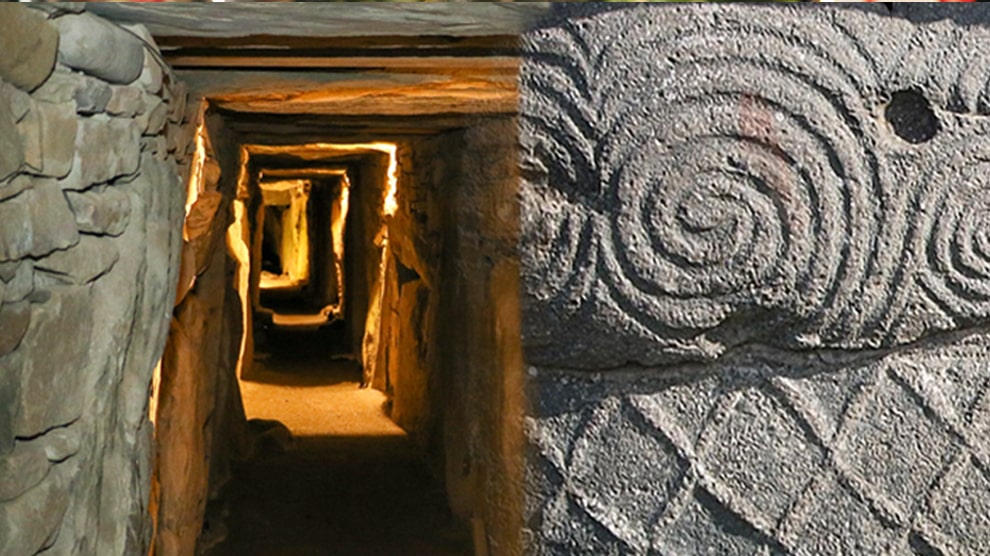
The ancient Celts in Western Europe manipulate the invisible energies of the landscape. They controlled them by moving earth and stones to sympathetically increase the power of the ‘earth spirit’. The animals, vegetables and minerals benefited from this bio-electromagnetic energy. Humans in particular rode the energy like a wave in the initiation chambers built into their long barrows and dolmens.
New Grange Ireland Initiation Chambers and Pictograms picture credit: Sky History
In north America the first nation tribes held nature in the high respect that one gives one’s grandmother. They called her Unci Maka and revered the landscape as if it were their own grandmother’s body.
“Every part of this soil is sacred in the estimation of my people. Every hillside, every valley, every plain and grove, has been hallowed by some sad or happy event of days long vanished. Even the rocks, which seem to be dumb and dead as they swelter in the sun along the silent shore, thrill with memories of stirring events connected with the lives of my people, and the very dust upon which you now stand responds more lovingly to their footsteps than yours, because it is rich with the blood of our ancestors, and our bare feet are conscious of the sympathetic touch.”
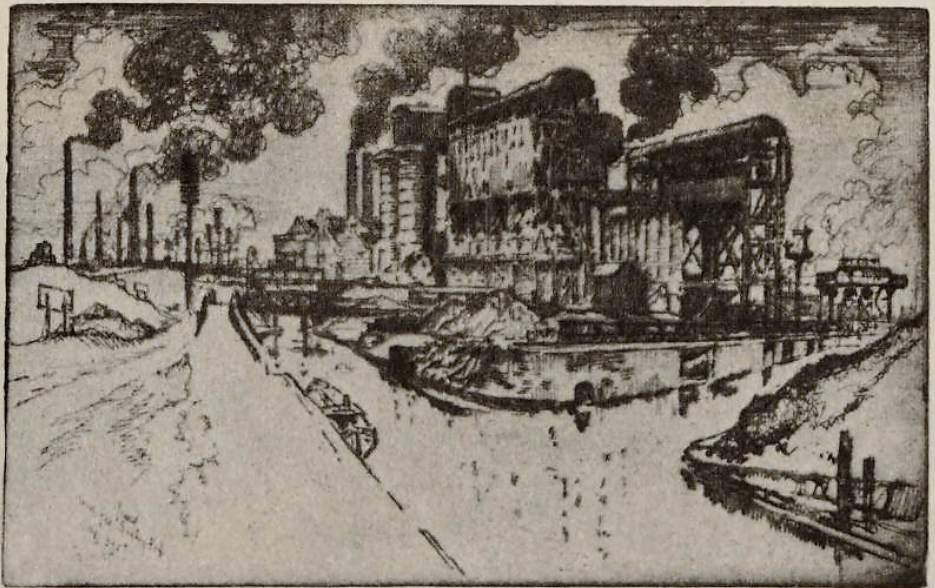
Sadly, the industrial revolution and the ‘religion’ of scientific materialism turned its back on animistic spirit traditions. People in industrialising countries left the land of their ancestors for what William Blake called ‘dark Satanic mills’. At least fifty per cent of the world’s population today live in cities.
picture credit: Dudley Port etching 1909-by-joseph-pennell – Word Histories website
Nineteenth century scientists such as Sir Isaac Newton reduced the understanding of nature to a series of cause-and-effect mechanisms or ‘natural laws’. It is less well known that he was also open to the possibility that there are more mysteries than conclusions. He studied the ancient art of Alchemy and the Torah for the greater part of his life. Society embraced his scientific discoveries and ignored his spiritual search.
Today, scientists know that matter and energy cannot be reduced to a few laws. The picture is more complex. As in the study of the human body, there is not only anatomy, but physiology – what things are and how they work.
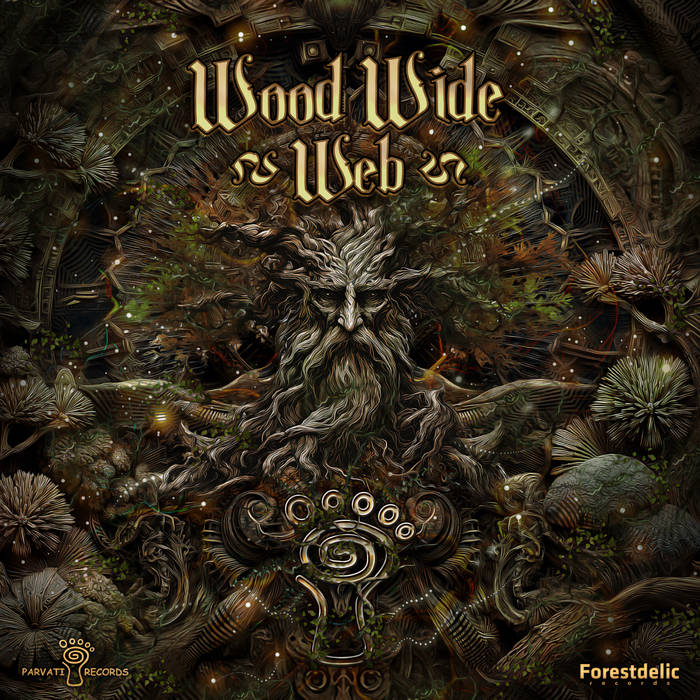
The ‘wood wide web’ describes how tree roots and fungi connect to share information, nutrients, and moisture.
picture credit: Parvati Records Band Camp
In the parallel worlds of nature spirits; fairies, elves, goblins, water spirits and the rest, have always been described as living in communities, not isolation. They mirror organic organisational truths that require co-operation in order to provide the resilience to loss through adversity. A new by-pass has little regard for the unseen.
Nature never discards anything as worthless. In physics, energy is not lost, only turned into another type of energy. Matter will similarly ‘change state’ from solid to gas and never be lost.
It is so in the municipal allotment where sunlight is absorbed by vegetables the remains of which eventually break down into humus for future crops. There is a circular pattern of renewal which today is respected as ‘sustainable’. Nature achieves it without effort, but modern societies struggle to achieve without loss of ‘convenience and comfort’. Even human consciousness is recycled under the same principle and occupies many organic bodies in it’s learning and initiation journeys using the power of physical reality.
Nature will always provide spiritual and physical nourishment for human beings. However, the supply of the latter is not infinite for the obvious reason that there is only one ‘Grandmother Earth’. Therefore, as the size of the human population seriously threatens the vast eco-systems of the planet either population or ‘standard of living’ or both, must reduce.
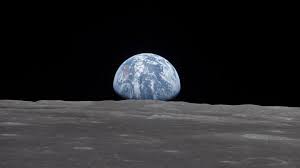
picture credit: International Institute for Sustainable Development
This fact is painful to industrialists and those who benefit from the draining effects on the planet of mass production. As materialist can not conceive of or carry out a solution to the damaged Earth in material terms, space exploration is posited as a way to ‘get more stuff’ even when planets are known to be distant wastelands.
Human populations have already thrived at a sustainable and advanced material standard of living throughout history and around the world. What gave people purpose and comfort was a universal enjoyment of spirit and human consciousness. The extraordinarily high standards of ancient artists, sculptors, musicians and engineers and architects contrasts with modern creations devoid of pulse.
If one challenges what spirit is and what benefits it brings then that is another subject. Suffice to say that the urge to follow a ‘religion’ as a step to a non-material spiritual path is one that is found in even the most so called ‘primitive’ societies.
Curious and disillusioned souls who have been immersed in modern city life travel to hidden pockets of the Amazon rainforest to learn and experience a living spirit world from traditional indigenous shaman and healers through the drug Ayahuasca.
The journey into nature becomes a journey into the hidden areas of oneself and nature is realised as the perfect teacher for that. The religious dogmas of the past are today seen by many as trees that bear no fruit only promises of future fruit.
When William Blake wrote poetry and painted pictures describing his mystical vision and path, society was open to his ideas even if they did not understand. I would argue that this intuitive leap into unknown possibility is required again today so that a complete change of direction for humanity can be achieved.
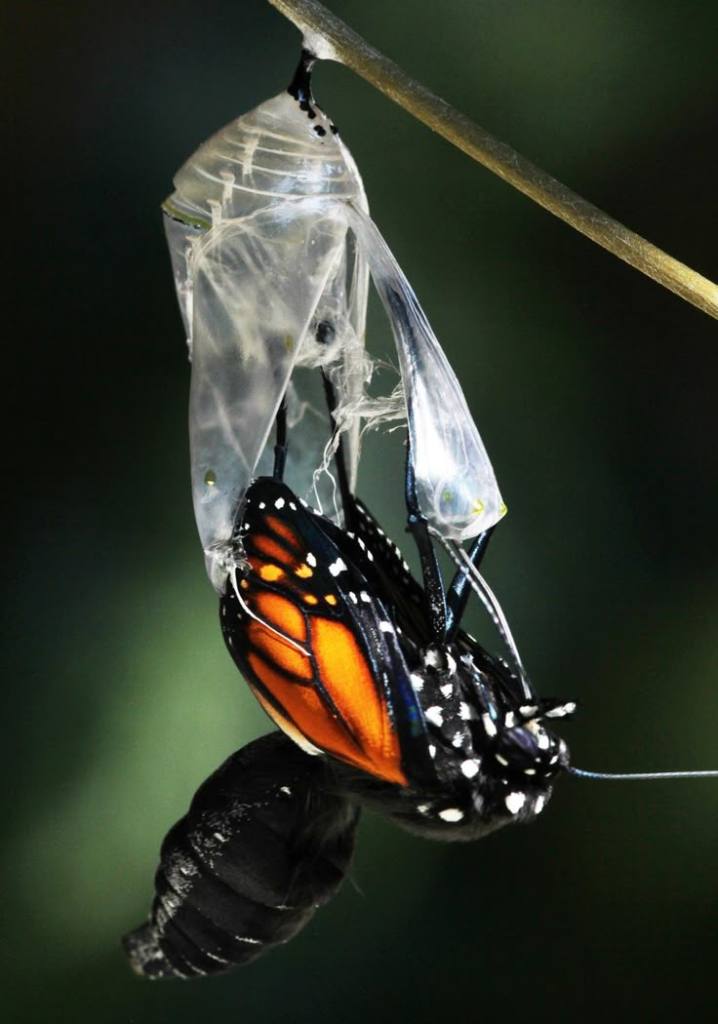
There is an idea and possible reality of a ‘new earth’ revealing itself at this present time. It is not the planet of old, nor the ideas of our ancestors. It is an escape from a cocoon that is no longer comfortable or at least, no longer sustainable.
Leaving the safety of a cocoon and growing angelic wings; that is a move into the unknown accomplished by butterflies every day.
picture credit: Pinterest
“All things are alive and have their own language, vibrations and luminosity that you can feel with you psychic body.”
Kyriacos C. Markides “The Magus of Strovolos” page 99 Penguin Books
Whatever language you happen to speak, words are a blessing and a curse.
Humans have a brain that uses an operating system based on words. Most people do not think in ones and zeros although surely some do. But even they are converting code into words and thought.
So how could words be curse? Surely, they are a great liberation for the mind whether in the arts or sciences? Well, the odd thing about words is that they are constructed using an alphabet of not very many letters around 25 depending on your language. The Arabic abjad for instance uses 28 letters and the Hebrew alphabet, 22. The creative brilliance of an alphabet-based language comes from the astronomical permutations derived from such a relatively small number of letters.
This almost infinite number of permutations to create words is the blessing they give to language. The curse is that human thoughts only use a small fraction of these permutations because their thoughts are limited. Let us hold that idea of ‘limited thinking’ and examine how easy it is to create new words, and I shall use English as an example but no doubt the same principle applies in other Indo-European languages.
Take a simple combination of three letters…ONE and how it is used to make a variety of four-letter words in English.
I shall suffix each letter of the alphabet (less vowels) in this experiment.
B…bone
C…cone
D…done
So far so good. These three are common words, but next comes a word that has no meaning.
f…fone
to continue…
g…gone
h…hone
j…jone
k…kone
l…lone
m…mone
n…none
p…pone
q…qone
v…vone
s…sone
t…tone
v…vone
w…wone
x…xone
y…yone
z…zone
Out of these total of 22 examples only 9 have established meanings! There are 13 simple new four-letter words waiting for a meaning to be attached to them!
From this exercise we can extrapolate the entire English Dictionary as being a fraction of the total available words.
From this we can see that language does not limit our thoughts. There are plenty of words. What we are short of are meanings to attach to words.
The curse of language is when words control and limit imagination. If you invent new words no one is going to understand you. A language that does not constantly expand and reinvent itself creates boundaries over which only creative writers and in particular poets, imagine new ideas. But if your innovation make no sense then it is assumed, your mind has gone.
As the boundaries for new words are almost infinite, the limitation is the direction in which our thoughts extend.
We are like trees clinging to a rock with our roots. To remain upright we must limit our grasp on reality…we must not ‘go too far’.
This is the curse of language. The structure which enables mental exploration is also a limitation of thought.
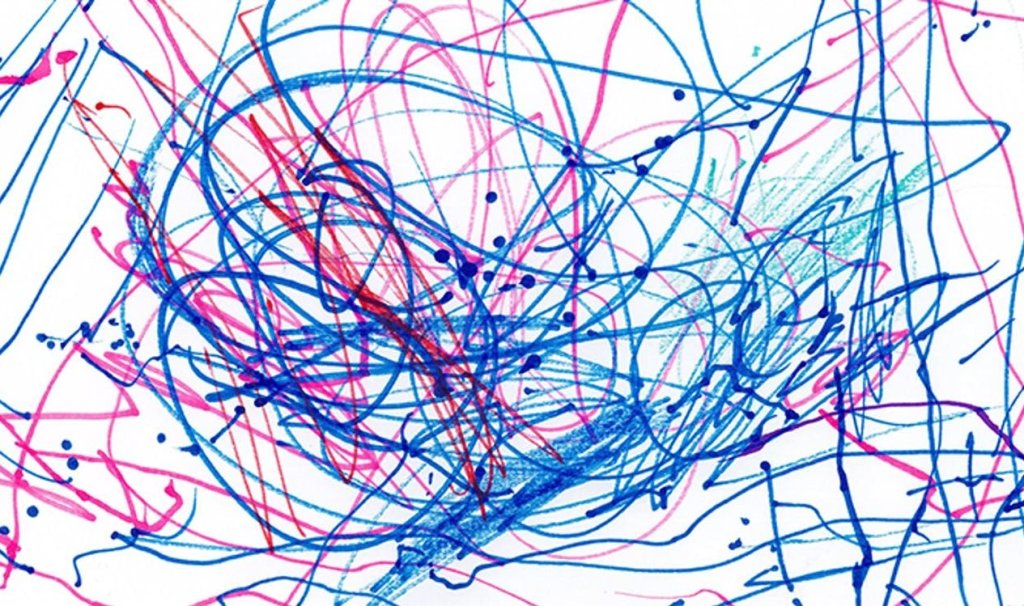
Art by a child under two years of age
The mind of newborn child has no such limitation through language. It must learn a thousand new things every day for months, even years before it begins to understand the meanings of words. Interestingly, an infant’s brain can learn any human language, however obscure it may be.
Our brain cells and their almost infinite connections are not a limiting factor to thought but only become so through life.
If a person is not adventurous in their thoughts, they can calcify and express no more than the same ideas repeatedly. Perhaps you know some people like that. A common term for them is a ‘bore’.
There are indeed, in the words of the old aphorism, ‘no dull subjects only dull minds.’