Since 1990 the world has produced as much carbon dioxide in the atmosphere as in all the previous years. The world has a problem from the unrestrained burning of fossil fuels for average temperatures are rising despite the environmental strategies of government and international agreements.
If you replaced one power station burning fossil fuels everyday until 2100 with 1500 wind turbines you might stop the problem. As this is unlikely to happen, the extinction of current civilisation has begun. New ways of removing carbon from the atmosphere is the only technology that will reverse this process. Technology at present has no such solution.
Why are is technology failing us? Consider the partial solution of transport powered by electricity.
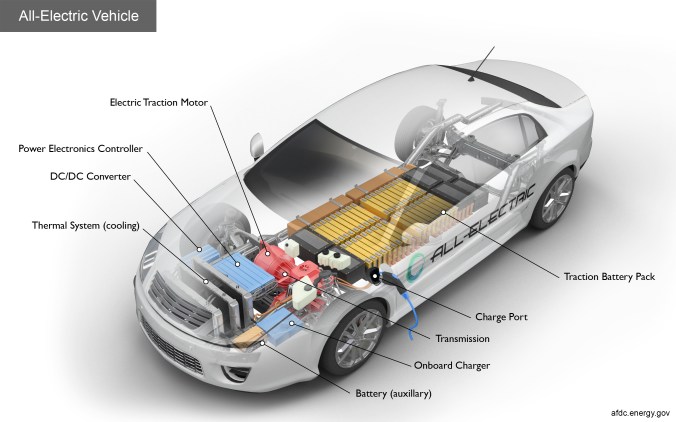
I have to expose the myth that electric vehicles are good for the environment.
This may come as a shock to those who have invested in a hybrid car so reach for a box of tissues as it gets worse.
Perhaps I am being a little harsh on what is a welcome prospect for the future of personal transport but it has to be said. I do not anticipate that the luxury of personal transport is going to go away in the future what ever form it will take. Certainly populations in countries like China, India and Africa feel resentment when those countries who have created the problem require them to forgo the benefits of owning a car.
Efforts to eulogise public transport as the future are futile because people know how good it is to control their own transport. This is not to say that public transport has no place in the future. On the contrary, it should be spearheading the technology that drives vehicles without causing air pollution and greenhouse gases. Sadly in most modern cities it is not. Taxis, buses and trains are still burning fossil fuel in all but the most innovative urban centres.
Decades ago, buses in Amsterdam were running on compressed gas. Cylinders like divers use were positioned under the floor of the bus and charged with compressed air overnight. During the day, the engine turned over using the kinetic energy from the compressed air. The discharge from the exhaust was of course pure air. What happened to this idea, I do not know, but it shows how many technological advances have been left in the urban gutter.
Part of the drive to promote electric vehicles, has been the demonisation of cars using the infernal combustion engine. Whilst these engines are clearly a remnant of the past, they exist and continue to be mass produced. The transition to the new technologies needs to be managed. Most government strategies however, are well intentioned but ineffective.
For instance, in Spain the police write to the owners of cars which are ten years old or above and suggest they get a petrol engine car. Whilst we must admire the green agenda of the government the manner in which it is being promoted is clearly misguided. Firstly, any such agenda should be European wide and not just promoted by one country. The desired outcome should be measured and confirmed as achieving what is intended. Ending the life of any vehicle after just ten years is wasteful because one third of the energy used by a vehicle in its’ lifetime is used in the manufacturing process. So whatever the motive power, cars should be designed to be in use for several decades, if they are to be considered as green.
The impasse that scientists have met when designing batteries for cars is yet another inhibitor to any mass take up of electric motive power. I own an electric bicycle and after four years I had to buy a new battery at about one quarter of the cost of the original bicycle and battery. Present day lithium ion batteries require rare earth elements that will only become more expensive to obtain in the future. Their mining and processing in African states is not environmentally managed. Some electric cars are sold without the batteries as they are provided with the car under a leasehold arrangement. The cost of the battery for my bicycle per mile is about the same as if I had a motor bike and had been buying petrol. I expect electric cars which are touted as being run for a few pence per mile are actually more expensive to run than vehicles running on fossil fuels. Batteries do not last as long as the Duracell bunny would have you believe.
It’s the same lie that is used to promote nuclear power stations as providers of cheap electricity. It is cheap if you discount the astronomical cost of building and decommissioning the power stations, costs which normally governments pay presumably in order to promote the industry and hidden agendas of manufacturing weapon grade uranium. The political games between Iran and North Korea and the USA are a current example of these smoke and mirror politics in which no citizen is the winner.
Faith in the ‘electric car’ as the future of personal transport is misguided for this reason. A car that needs a battery is still being run on fossil fuel, just one step removed. I refer to oil, gas and coal fired power stations that produce the majority of the electricity in most European countries. A car which is plugged into a national grid, is merely acquiring energy made from burning fossil fuels.
If a householder has a contract with an electricity supplier claiming to provide electricity from renewable sources only, then that would be the ideal. But as things stand, local and national governments are in the process of providing charging points right across their respective countries. They fail to see the lesson from the beginning of the twentieth century where electric cars could not compete with the new internal combustion engine when it came to range of travel. It was then and is still, a problem.
As I write this the battery for my bicycle is being charged from the photo voltaic panels attached to my house. Not only dirty electricity but the whole idea of ‘national grids’ is wasteful and expensive. In the future, electricity will be generated locally and stored in ‘gravity batteries’ and similar solutions.
Hybrid electric vehicles are still causing pollution and therefore not a solution for the zero carbon future. Totally electric vehicles being recharged from recharge points in towns is impractical and the hunt for even a parking space is proof of that. Charging by induction when stationary for long periods is possible but waiting times need to be considerable as the process is slow. Roads, car parks and even railway tracks with photo voltaic cells as the road structure and surface will produce electricity locally even when the sun is not shining but charging batteries from these sources is just impractical as already stated.
There is and has been for decades, a better alternative to battery driven vehicles. The hybrid cars being manufactured and subsidised by governments today require a grid of charging points. Should the very large cost of these be paid or subsidised by governments? Who ethically should pay? Those rich enough to be able to afford current electric cars or tax payers who are going to get little or no return.
The question is similar to the quandary faced by consumers in the 1980’s when Video Recorders were appearing in the shops. Which is better, VHS or Betamax? Although the latter was a better quality product, VHS won.
So to all those early adopters looking at battery driven vehicles, I suggest they hold on for the next generation of hydrogen fuel cell powered cars. The energy from these hydrogen is green and relatively very cheap. Used in conjunction with the high torque electric motors like those developed by Tesla and motor racing engineers, these vehicles will provide every comfort and convenience currently enjoyed by the generation who were brought up with fossil fuels.

As has happened many times before with new technology the wrong decisions (for the nation and environment) are made by governments to promote agendas popular with voters instead of just letting the best patent win. So my advice is keep your present car on the road for as long as you can. In five to ten years, new technology will be available at a reasonable price. There will be cars designed to last a whole life with little maintenance. Just don’t expect to be allowed to drive it.
That pleasure will be a thing of the past as well!

 Matters Blog