Alan Watts recounts the following anecdote in one of his erudite lectures entitled ‘The Nature of God and Death’;
An astronaut was asked on returning to earth, ‘did you see God?
‘Oh, yes,’ was the reply.
‘Tell us more about what you saw.’
‘She was black.’
When the Pilgrim Fathers sailed over the horizon, their great mission was to escape the rule of monarchy. Things from which we try to escape however, have an unnerving habit of following us around. So it was for the first settlers in the green and pleasant shores of eastern North America. Without a ‘lord and master’ or ‘father’ figure, everything would be much better, right?
The irony, in their religious beliefs, was that their metaphor for the Divine was a King. If it is odd that the Divine is restricted to being conceived as the masculine principle, we can forgive Biblical writers for being restricted by their own language. There are few words ascribed to neutral or ‘combined’ genders in most languages and unfortunately this has narrowed the way we think. ‘God the Queen’ would have been a very strange concept to Christians of most ages although they only had to refer back to ancient Egypt to broaden their views. The King Osiris was married to Queen Isis, who is often depicted with their infant son, Horus on his mother’s knee. The ‘Holy Family’ represent an all inclusive metaphorical Deity who is active and present throughout the entire biological process of pro-generation, as well as present throughout the entire cosmic process of creating the Universe. The origins of Judeo -Christian beliefs in the religion of Ancient Egypt, are preferred to be ignored despite clear paths of provenance.
It is a fact that religions per se, do not thrive on original thought. The Pilgrim Fathers were accepting of the fact that no one had thought to include the Pilgrim Mothers in the title of their congregation. They were also content to worship a ‘God the King’ even though the autocratic system of government was so abhorrent to them. Monarchs have a power over their subjects which ranges between the benign and malign, depending on the character, mood and carbuncles of the monarch. In a way, the freedom sought by the Pilgrim Mothers and Fathers, was a philosophical freedom as well as a temporal one. They felt justified in asserting their own free will over any other will.

But since the Christian God is one that has given ‘free will’ to his and her subjects, it is open to debate as to whether they were escaping God or a religious restriction of the concept of the Divine pedalled by an all powerful Church, usually in temporal cahoots with a monarch.
For political rather than religious reasons, the Constitution of the United States of America was written with precisely this abhorrence of the ‘all powerful King’ in mind. Judges and Representatives of the people were given tripatied power. No one person should wield political power over the people. For this reason the people were given the free to bear arms and form militias should the politically powerful become malign – in their view.
If government on earth is a mirror of celestial politics you have to wonder whether Angels are similarly empowered to zap their superiors with cosmic ray guns?
This did, of course, happen in the leaves of the Old Testament and the dualistic nature of even Angelic creatures is contained in the story of Beelzebub and his rebellious angelic army challenging the Divine ruler. The rest, as they say, is history.
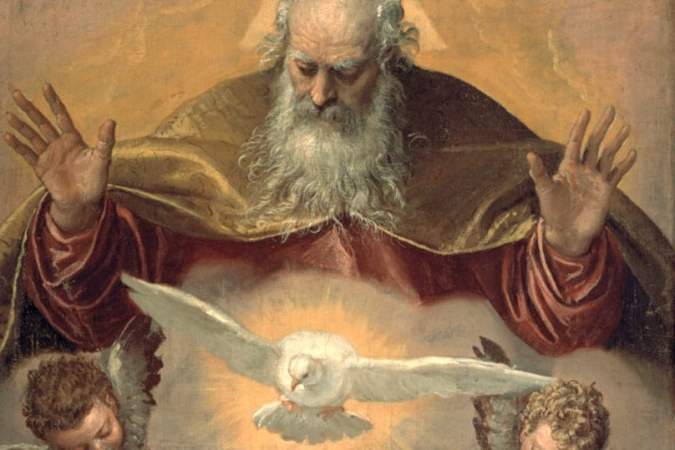
So to return to the question of whether the Divine Being is a white Anglo Saxon male, the answer is, clearly – doubtful. Long white beards aside, human kind has created the monotheistic God in his own image, and since King James and the other chroniclers of the good book were egotists, God has always been what psychologists call a ‘projection’.
This is fitting since much of the Universe is no more than an projection of the Universal consciousness. In this the Divine Feminine and Masculine principles interplay as a sort of fantasy dance – the gyrations of Kali and Shiva – who create and destroy in equal measure.
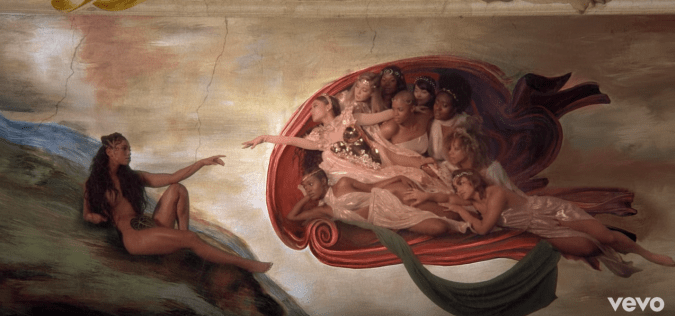
We depict any Godhead as male at our peril. If Jesus used the metaphor ‘Father’ it was not an implication of gender that was intended but the figure of the pro-generator. Jesus was fond of metaphors since mystics find the language of the market place appropriate to use to describe higher concepts. The parables he told contain metaphors which strongly describe unspeakable ideas in the sense that words are not enough. The return of the Prodigal Son to his father is describing the process of individuation within a maturing human being – the path which if followed leads to a union with the Divine. The ‘fat calf’ which we are all in danger of becoming during our easy lifestyles on earth, has to be slain and consumed.
When you eat remember this of me.
The errant son evolves to become a father. An errant daughter evolves to become a mother. An errant non-gender specific person becomes a vother*.
(*Using the principle of ‘ the infinite abundance of thought’ to make up words where missing – Vother is a neutral person.)

So, no, God is not King, nor even a humble father. These were always crude metaphors, crudely carved by restrictive words and dualistic thought. The ancients and the religions of the Far East such as Buddhism and Hinduism, have no difficulty conjuring up ambiguous and contradictory Godheads who break and write as many rules as they can. Reality is not polarised, with one half favoured over the other. Neither does an authority figure ‘reign in heaven’ or anywhere else. Such prosaic concerns are respected by mystics but dismissed as irrelevant to higher task of the search for Divine Union.
Render unto Caesar the things that are Caesar’s;
The ( perhaps ) unpalatable truth to many, is that we the people are king, if only for a day or our humble fifteen minutes of fame. Even if only glimsped once in this lifetime it is my belief that;
Ours is the Kingdom, for ever and ever, Amen.
Whilst it is unfair to criticise the Pilgrim Fathers with the benefit of a good deal of hind sight, one has to wonder what would have happened if they had re-assessed their religion as well as their politics. If their aim in leaving Europe was to seperate from the percieved corruption of the Church of England they had an oppurtunity to wipe the slate of indoctrination clean completely. As unlikely as it was in 1620 for such a shift in belief, if the early church leaders had met and discussed universal outlooks with the native people and their holy men, they might have made some radical philosophical discoveries. At least it is possible for a present day comparison to be made.
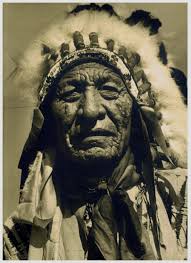
The Holy Man of the Oglala Sioux, Black Elk, is described as understand God in the following way;
‘Black Elk learned that whoever found a centre also became the centre of the universe and that is where God dwells…By placing himself at this centre which is simultaneously physical, spiritual and metaphorical, he encountered the Great Mysterious One…the centre of oneself becomes the centre of the universe. The centre of the earth and the centre of the person are one and the same.’
‘Finding All Things in God’ by Hans Gustafson published by Lutterworth Press
 Matters Blog