Lock Down

The following essay is an examination of how the theory of one area of social problem solving, is similar to and can inform another.

There are elements in common between those who look after our health and those who try to keep crime off the streets. These are the four strategic similarities;

Problems can be prevented

Problems can be analysed

Causes can be detected

Causes can be treated

Corona virus is not new. SARS and then MARS are two recent examples, but throughout history humans have been literally, plagued by them. Each time they come and go, there are lessons to learn. These will help preparation for the next.

This may involve warehousing hospital supplies for instance. The span of time between outbreaks will help to inform the ‘use by’ dates on perishable items. Typical examples would be testing kits, ventilators, hand sanitiser, personal protective equipment, software and even signage.

South Korea has performed particularly well in dealing with the current corona virus pandemic. It puts this down to four key strategies, which are the same as those above;

Prepare

Test

Trace

Isolate

Having the means to deal with the next outbreak at the very earliest opportunity is essential. Countries that have experienced denial of a problem by it’s leaders, or have lacked equipment or funding (e.g.. for research ) are going to lose more citizens than those countries which have prepared.

The old adage ‘a stitch in time saves nine (stitches)‘ is wisdom from the past that we ignore at our peril.

Any police chief trying to reduce crime will be familiar with the principles of crime prevention. Simple and best value strategies for dealing with say, burglary can save the tax payer vast quantities of money needed to put one burglar behind prison bars. Ten pounds spent on preventing burglaries, might save a one hundred thousand pound court case.

Over the last few decades police have moved from the universal production of posters such as the ‘lock it or lose it!’ campaign and ‘watch out there is a thief about!’ to targeted prevention and detection.

It is clear that sending a crime prevention message that may or may not be highly relevant to a community is wasteful. It also raises an unwarranted anxiety of being a victim of crime within low risk areas of the country.

Instead police started analysing their computers and finding patterns. They were interested in where, when and how a particular crime was occurring – long before they asked the question ‘who was doing it’. This built up intelligence which is invaluable to inform the prevention of crime. For instance, if thieves were breaking into cars in town centre car parks, the analysts identified which car parks were most targeted, which parking spaces were being targeted, what time of day and day of the week etc. This might identify an area in a car park where they was a good escape route and poor lighting, no CCTV coverage and little footfall. All of these could be rectified by car park managers on advice from the police. The public would pay nothing and the car park manager would see a rise in the use of the car park and revenue.

The South Koreans were also good at identifying where corona virus victims were. Instead of fighting what Donald Trump and Boris Johnson called ‘the invisible enemy’, the Koreans analysed information from personal smart phone locations cross referenced to recent entry and exit of foreign countries. With this information they were able to target their testing and identifying ‘hot spots’ where transmission of the virus was likely to happen and or happening. They even used police detectives to trace individuals and their movements.

Police call this ‘detection’. It is the natural follow on from the initial process of finding out as much as possible because the problem is hidden, not invisible.

By targeting resources in this way there are two benefits. The first is that it is cheaper. This may sound callous but in fact cost can be a huge inhibitor to action.

The second advantage of targeting action, is that businesses can carry on, if only in a limited way. One tactic for instance would be for elderly high risk victims to be placed in isolation while low risk younger people to maintain the economy and public services.

Prevention and Detection are really two parts of the same process of ‘reduction’ whether you are considering health or crime. They exist on a spectrum between the two extremes. At each end of the spectrum, detection contains some prevention and prevention contains some detection. As an example, the final result of the criminal justice process is to put an offender in prison. One of the possible outcomes of this is hoped to be preventing that individual ever doing the same thing again. They usually do, but sometimes it works.

picture credit: detroitjournalism.cog
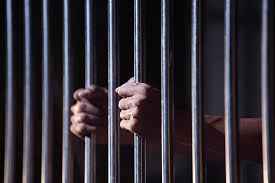
lock down detroitjournalism

It has been suggested that the present pandemic has been dealt with in a manner in which the cure is worse than the disease. The ‘lock down’ approach to entire populations has ramifications that will lead to huge public debt and austerity.

The question has to be asked, ‘is lock down the only way to deal with the pandemic? The answer is no, because the South Koreans didn’t have to go that far.

Their strategy meant that they did not need to lock down their populations, eliminating in part at least, mental and physical health problems resulting from isolation and economic austerity in the future. Although it was clearly not ‘business as usual’ it was a working compromise between the needs of people to maintain health and an income and the need to eradicate the virus as quickly and with the least cost of money and life.

By targeting their treatments to areas of the population in most need, they have provided a model that the rest of the world would do well to study and copy. Lessons learned should already be being digested and fed into the strategy for Covid 20, which we can expect is already hanging in a cave somewhere in the world.

When the Covid 19 strain was first detected in China the world watched. As a top down organised country China had more tools at it’s disposal than democracy’s, but the principles are the same. What the rest of the world might have also taken seriously is asking the question, ‘are we next?’ Governments might have looked to the World Health Organisation for an answer. For many weeks the WHO did not declare a pandemic was happening. What world leaders needed to know was when it would happen i.e. be proactive not reactive.

In the United Kingdom the medical journal The Lancet included an article on how the outbreak in China will become a pandemic. This was in January 2020. In February the country had a chance to prepare. It did not. At the end of March personal protective equipment, ventilators and testing kits are still being ‘rolled out’ – as the government puts it. New cases are doubling every three to four days. The government of course denies being slow in preparing for the pandemic and points to the fifty new hospitals they have built. But hospitals are for the treatment of victims, not preventing people becoming victims. The resources are sent to the results of a pandemic not preventing one.

The vital point here is ‘timing’. There are three possible outcomes from deciding when to take action.

The first is that measures are put in place too early. Ministers in the UK expressed concern that fatigue sets into the population if protective measures are introduced too early. They wanted to time maximum protective measures with maximum victims. There was an assumption that the patience of people to avoid their death or of loved ones, is limited. It could be argued that as more fatalities occur the more concentrated minds become.

The second possibility is that exactly the right moment is chosen. This is ideal but is best judged in retrospect, ‘wise after the event’.

The third possibility is that measures are put in place too late. In this case there will be the highest number of human deaths and the most expenditure of money.

Of these, the first two are proactive and in my view produce the best results.

Reacting to problems is to undertake stitching nine stitches instead of one.

Getting the warnings right, is where you might expect the World Health Organisation is the expert. Viruses are not new and statisticians and virologists can get together and draw up predictive curves. They should be good at this even if each country is different.

The tragedy is that politicians are self selected for their political ideals and personal appeal. They may not have the abilities to assess a situation and give precise direction at the appropriate time. They may not listen to their advisors and or may just use the advice to avert personal responsibility.

These principles of proactive and reactive management and decision making are as true for dealing with crime as for health. They are so universal that they can even be applied to playing a game of football, which is why clubs employ statisticians to analyse games in minute detail, as they progress and after.

There is nothing in life for which we are not equipped. The only real challenge is overcoming our own shortcomings.
Red Ball White Ball

These series of essays have one common theme. They take another view from the conventional one. In life, we encounter complexity and the principle way we deal with this, is to simplify. When this happens however, something is lost and often that thing was the most precious. It is called;

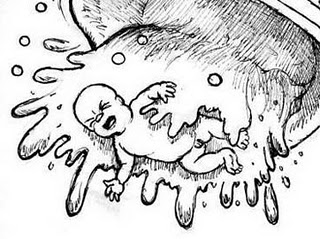
Throwing the baby out with the bath water

Problem solving is one life skill that is invaluable, more so than, dare I say it, algebra. Almost everything we do and our games are problems in need of a solution. If the bath water is cold, mothers remove the baby before throwing the water on to the garden. It may sound obvious but often problems present in confusing ways…too many things are at the same time. That is when the baby ends up in the rhubard patch.

baby_bathwater

A game such as Snooker is a problem solving game. The players are presented with the complex task of putting the red balls into the table pockets. Complexity is introduced by rules. One is that the balls can only be pushed with a stick; you cannot pick them up and put them into the nearest pocket! Then you have to push a coloured ball into a pocket alternately with a red ball, and a scoring system giving values to balls, means that the best player will win prize money and fame. But the most complex skill of all is the use of the white ball. This must be pushed with the stick to hit the other balls and it must always be controlled, so that it comes to rest in anticipation of the next move. Those not familiar with the game take a while to realise that hitting the red balls is not the primary objective, but skilfully placing the white ball as it rebounds off the red or coloured ball. With this skill you  solve the obvious problem and set up for the next problem, within your own hidden game strategy.

red ball white ball pocket

Complete problem solving involves a highly inclusive level of complexity, where consequences are anticipated rather than left to chance. There must be no ‘unintended’ consequences.

Stage illusionists know that the human brain simplifies what it sees in order to interpret what it is seeing. They use the technique of distraction. They know that the audience will watch the hand thrust towards them whilst something not to be seen is done so fast and discretely, that it is not seen. This is classic, red ball, white ball.

Politicians have to solve highly complex problems and apply practical solutions. The first stage of problem solving is to define the problem.

At present the world economy’s are being threatened by a pandemic. That is the problem. People with the disease are a short term problem, whereas the world economy needs to provide work and a livelihood for every citizen of every country. This is a far greater problem in the long term than the present ‘red ball’ events presented to us daily concerning Covid 19.

We are told that the origin of the new virus was from markets in China where bats were being sold. We all believe this. This is the red ball. We think we have seen it go into a pocket. But did the Chinese authorities close down the markets selling wild animals? Why didn’t they after SARS? Could there have been another source of Covid19?

One Chinese lady interviewed declared, ‘This could have happened anywhere’, being defensive over the suggestion that this and previous viruses like SARS, happen in China because of their love for exotic meats. Perhaps she has been told that people in the West also eat bats and rats and cats. That would be her ‘red ball’.

There is an Institute for Virology in Wuhan; the Province where the outbreak is alleged to have started. You might expect that they would be anxious to deny accusations that they let out and or create Covid 19.

Yet if you view the home page on their web site, the top story is about HIV. The top news story is that a delegation from the Ministry of Education of Kenya visited. No red balls present, just a white ball suggesting the aim of the Chinese to develop the untapped resources of Africa.

Was there a terrorist incident involving the release of this virus, as has been the plot in Hollywood films?  Are too many people now living in cities? Have individuals immune defences been reduced through poor diet and lack of sunshine? Is there more than one variety of Covid 19, one strain being more virulent than the other? (The purpose of this would be to increase fear of the virus whilst limiting deaths.)

Could there have been some political placing of the virus in a country to destabilise it more than other countries? Both China and Iran are viewed as threats to peace in the West and Middle East by western politicians.

These and many other possibilities, are unexplored but possible ‘white balls’ that indicate hidden agendas. But we are too engrossed with watching red balls (or red herrings!?) fall neatly into pockets.

Few journalists have asked challenging ‘white ball’ questions on the television screens in the west. What is being presented are ‘red ball’ events such as where the virus is now and in what strength. Which events have been cancelled, how is it going to affect various people in various situations, etc. etc. One red ball after another is being put into a pocket and as quickly as they go more appear on the table. It’s fascinating and distracting.

The real question is ‘what is the white ball doing?’

Who is behind what is going on, is an unspoken question. Any suggestion that the pandemic is a deliberate manipulation is ignored or described as ‘fake’ or ‘conspiracy’. And yet, the most important rational task, is to discover a conspiracy if one exists.

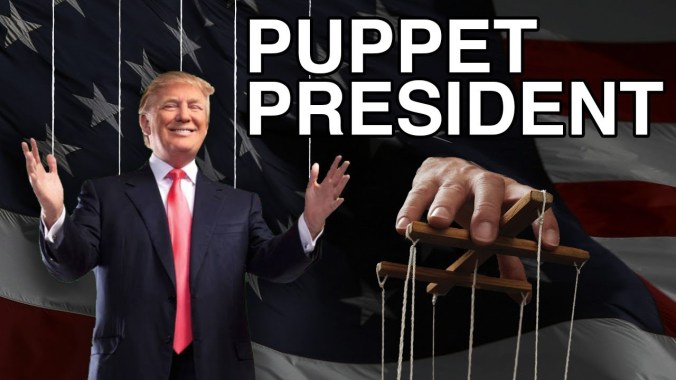
Puppet President

Who is pulling the strings of the puppet president of the United States of America for instance? Why? Because Mr T. started the health emergency by denying one exists and that it will go when the weather gets warmer in April…standard off the cuff remarks made by the uninformed. Behind the curtain a patriotic doctor who started testing for Covid 19 is told to stop, as that is the responsibility of another department. This department came up with a test three weeks later which did not work. By this time the Jennii was already in LA and not to enjoy the surfing. 

We saw the same ‘white ball’ tactics with 9/11. Every day of the year, every hour of the year, fighter jets are on the runway, ready to defend the USA from hostile aircraft entering US air space. But on 9/11 all those jets were off somewhere else on a pre-planned exercise. The guard was down. International conspiracy? The prize for the winner of that game was to up national surveillance and remove individual freedoms for Americans. It is called the National Security Agency and it is saving everyone from terror plots.

Who will gain from the current pandemic and the fall of western economy’s? No individual government gains. In fact they all lose. The only gains will be upping international surveillance and removing individual freedoms.

Specifically, cash will be removed as a system of payment, on the grounds that it ‘spreads viruses’. This has never been true in the past few thousand years but suddenly it is. In place of cash is the card (or RFID implant) and the control this brings to governments to know where it’ s citizens are and whether it wants to allow them to have personal money.

Second is the extinction of small and medium size businesses and the self-employed. Examples might be taxi drivers who own their own cars and certainly low cost airlines. This is in contrast to large and multinational corporations such as Amazon, Microsoft and Google, who act in the interests of the large white ball.

One day this large white ball will put the last ball of the game in the pocket. That will be the black ball worth seven points. If you think things are dark already, then that will be the blackest of black days; the end of personal freedom. Game over.

A New Kingdom

Prejudice is to have an opinion based on false feelings and, or false information. It is to be so fixed in opinion that even when new facts are presented, prejudices are not eradicated.

Prejudice manifests as both positive and negative opinions and feelings. We can praise those who are not worthy of praise and hate those who do not deserve hatred.

Prejudice requires a process of discriminating judgments based on casual classifications such as gender, social class, age, disability, religion, sexuality, race, ethnicity, nationality. The classifications are in themselves chosen irrationally. This is commonly through received opinion either within a group of mutually minded and self selected people, or through inherited ideas and opinions which are accepted and shared uncritically.

Prejudice has been a problem for social groups across time and the world. It has created wars, injustice, repression and hatred between individuals and groups since the beginning of time.

‘He hears but half who hears one part only.’

These are the words of Aeschylus the ancient Greek playwright, written around 500 BC when a new form of clear thinking was heard, if not always respected.

Failure to listen to previously excluded or new facts because they do not support a belief based on opposing facts, is a form of false thinking.

Such a weakness is what temporal law and it’s practitioners aim to rise above, but even and sometimes especially in a Court of Law, arguments present opinions based on a version of the facts, rather than the facts themselves.

There are few who are not a product of their own prejudices and the opinions that reveal them. There is always something that will make a person ‘turn away’.

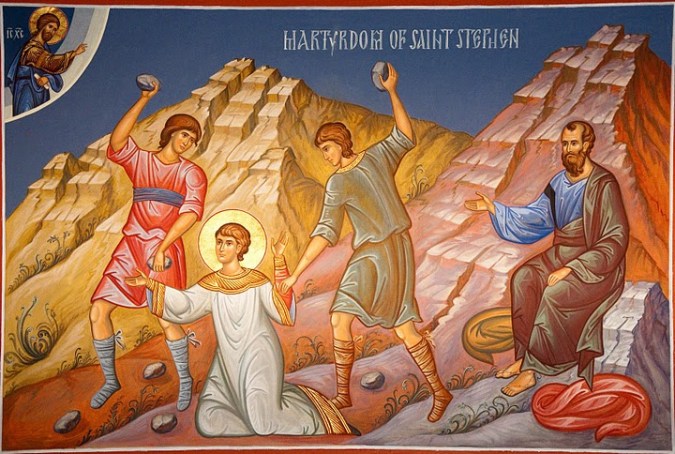
Throughout history, those who have refused to adopt the prejudices of their peer groups, have been murdered or imprisoned. Rarely are they respected and given the respect they deserve. When this respect is given, their moral authority raises them to a respected position in society, or post death, to sainthood.

picture credit: en.holyorderofststephen.org

saint-stephen

Such a clear view and the ability to speak it, is commonly found in those with a highly spiritual understanding. The word ‘mystic’ is unfortunate in English for its similarity to ‘mist’. In a mist we cannot see and are lost, which is a good metaphor for humans who do not possess clarity of thought. That is the precise opposite of mystical ‘vision’.

A mystic is a person who has achieved perfection at all levels of being, including thought. They do not necessarily express ideas that conform to social, religious or cultural norms.

This has lead to their persecution throughout history as they do not say what people expect and require them to say in order to support shared prejudices. The very presence of a clear thinker, such as Socrates, is an affront to the uninitiated.

The initiation that humans are better for acquiring is the ability to train their observations to override what they have not observed. With this ability, people are able to act with complete compassion and love of others, whatever these people may believe or represent.

God blesses those who love and are without judgment towards others.

Such people are needed today and yet how many ‘saints’ are presented in the media? Certainly there is a long line up of ‘sinners’ and the ‘misguided’ – some in positions of authority that they do not deserve, and some on their way to the prisons in shame.

This process is continuing and the present time will create opportunity for men and women of high moral authority to be heard and respected. You will know them for they are without prejudice and pride.

They have walked on the earth before and are here now. Times of tumult and disruption of the norm, herald their recognition and the beginning of the enrichment of societies.

The enrichment is not the type that has lead previous and present generations i.e. wealth and fortune.

‘Jesus said that we could not serve both God and wealth, and it is obvious that Western society is organised in the service of wealth.’

John B Cobb ‘Eastern View of Economics’

To have one’s treasure stored in a parallel dimension, is not a common aim in modern Western Society. And yet, a literal and metaphorical polar shift is already happening and this will bring about a complete change of society.

Black shall be white and white shall be black.

black and white pattern

Only when all men and women have abandoned their prejudices will they be able to see their own society and those who make up society, that they had not seen before.

The truth, as someone once said, is stranger than you think.

Don’t Fence Me In

This the title of a wonderful old song sung, I think by Bing Crosby. It’s all about the exploration of the west in nineteenth century North America. After millennia of humans and animals roaming free, cattle ranching introduced ‘ownership’. The Native American Indians didn’t understand it and gave away their lands before they realised they would have to fight and ultimately die for the ‘reservations’ that were left for them.

picture credit; WallpaperWeb.com

Stampede_African_Cape_Buffalo_Herd

It is an paradox that man craves freedom but loves boundaries. Astronauts report on viewing earth from space, that it appears as one planet. There are no political boundaries that we are so used to see on global maps. Boundaries are ultimately arbitrary. They serve only the tribal mentality of ‘them and us’ present in early man and persisting, almost unconsciously, to the present day.

The poet Robert Frost wrote a poem which included the line, good fences make good neighbours. This concept, at one end of the spectrum of possible combinations of freedom and enclosure, works – but only temporarily. Eventually, because of tribalism and greed, a fight breaks out.

When the British realised the rule of India by a distant Queen of England was over, they were faced with the problem of handing over a sub-continent to self rule. A problem because the Muslims and Hindus were at each others’ throats. If the British left there would be a blood bath. So they drew an arbitrary border on a map and created a new country, Pakistan. Like the creation of the Berlin walls, it divided families, created mass migration, a loss of homes and livelihoods and riots and slaughter. Tribalism, whether under religious or any other banner, is never good for all. Today India and Pakistan face each other with tolerant hostility, with a hundred nuclear missiles each, ready to wipe out each other and the rest of us. As an afterthought little Kashmir remains a flashpoint where this could happen. When you draw political maps, you had better know what you are doing for now and the next thousand years.

When the UK made the minority vote decision (only a quarter of the population voted in favour of Brexit ) to leave it’s partners in Europe, it had not considered the effects this would have on Northern Ireland and Scotland. The border in Eire was created centuries before to create a ‘non catholic’ portion of Ireland that could be controlled from England. The political reasons for it’s connection with United Kingdom are changing, and a likely consequence of the UK seeking ‘independence’ is losing Northern Ireland to the Irish and Scotland to the Scots.

Virus’s, and all the malign forces that nature unleashes on humanity; virus’s do not respect political boundaries. It takes two weeks for a virus to travel around the globe. The only way to extinguish a virus is for each person to crawl into their own cave and stay there. They may die or they may survive. In this situation one is not even aware that one’s neighbours, also potentially dying, are on the other side of the wall.

When this current Covid-19 pandemic is over, as it will be, the nations of the world should take stock. They need to seek to understand the lessons that come from such a pandemic, for virus’s are a greater problem than terrorism and extremism and wars and all our man made horrors. In 1919 the second wave of Spanish Flu killed everyone who caught it.

Surely, world leaders must learn that humanity has more to gain from co-operation and tolerance towards all living beings, whether animal or human. There are no boundaries in nature except those created by habitat and when there is enough habitat to go around, everyone is happy. When large populations move to escape political or natural upheavals, these people are ourselves coming in the other direction.

In Europe, the European Parliament and non-governmental organisations like the WHO, have failed to create a strategy to cope with immigration. Countries on the edges of Europe such as Greece and outside such as Lebanon are full to bursting point. Now Greece is shooting warning shots into the sea at immigrant boats.

In the United States, the solution to immigration from Southern American failing states, is of course ‘a wall’. As if we had not learnt from history how the Berlin wall was pulled down and how Palestine was shrunk into walls – good walls rarely make good neighbours.

Mankind craves to be free and this moment in history is a time for humans to come out of their caves and obeyance to tribal rules. Instead of hating and fighting each other, we are in a position to see the greater picture from above, where barriers do not exist. There is only humanity, and the sooner we treat the planet and each other with humanity, the sooner we will lose the feeling of being ‘fenced in’.

The Good Life

There is a remarkable pair of photographs on the BBC website today. They show satellite images of eastern China, Hong Kong and Japan. The images are filtered to show the intensity of air pollution. The January 2020 image shows ‘business as usual’ and the principal cities and urban conurbations are highly coloured from yellow to high risk, red. The February 2020 image shows no coloured areas at all! The air is clean because production in the factories has stopped. Ironic that such a gift to the populations, of sunshine and clean air occurs when millions are in quarantine.

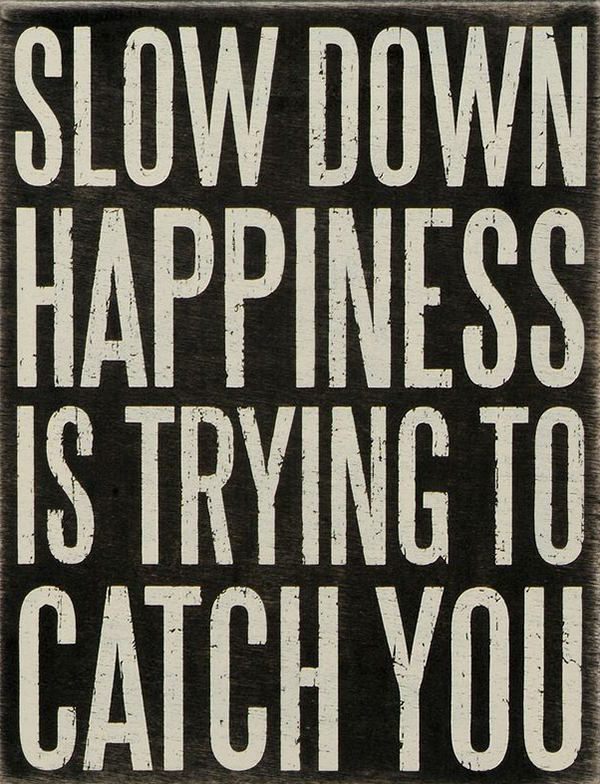
The message we can draw is not how contagious viruses are – we know that. No, the message so plain to see is ‘slow down and stop!’

slow-down poster

The industrial tenets of, ‘more and faster’ for profit and a promise of prosperity for all, are also familiar to us. Humans deserve a good life so the growth of benefits from industrialisation, cannot be denied. Over one hundred and fifty years ago people started to leave the land and live in cities. This process means that now about half the populations of most countries live in cities.

In response industrial production is speeding up, as robots and AI are literally taking over from humans. The only question is; at what point is ‘a good life’ reached?

A casual observer in a modern metropolis, might perceive a collective sadness in the faces of passers by – anxious to reach their individual destinations. If asked if their life is a ‘good life’ – I wonder how they would reply?

picture credit: WithPause.com

Snail credit With Pause

When I was a student in London in the mid-70’s, I took part in a ‘slow walk’. A collection of willing volunteers met at the north end of Hammersmith Bridge and lined up across the wide pavement. We set of in a bunch like marathon runners, only it took us three or four hours to reach the south side of the bridge – a distance of maybe three hundred metres.

Slow walking took discipline at first, but soon became strangely normal. My mind felt completely relaxed. I might as well have been in meditation – in fact, I was.

picture credit: Londr.com

hare and tortoise credit Londnr

That was part of my ‘good life’ when I had time to be fast or slow and chose the latter. There are in the present day, many experiences of ‘slow living’ available as an alternative to the human ‘race’. There is slow food, slow travel, slow cities, slow schools, slow books, slow living and slow money. See www.slowmovement.com and tell your friends!

In 2020 humanity is crossing the threshold where too much – too fast – too wrong – is damaging the planet and as a consequence, ourselves. Whether it is air pollution, sea level rising, food shortages, water shortages – industrialisation is ‘biting back’ the hands that turn the handle.

Sloww-Slow-Living-Synonyms-Infographic

This latest virus Covid 19, is amongst other things, a firm message for humans to ‘slow down and stop!’ Perhaps those confined to a room for two weeks, will draw a positive from the experience. ‘Not doing’ can alter expectations significantly. If ones normal expectations are unrealistic then the distress that comes from failure to satisfy those expectations, will never be encountered. Success or shall we say, contentment, comes from watching a spider cross a floor or a raindrop slide down the window; experiences usually never observed and enjoyed.

We will inevitably all discover that less and slower is more!

Somewhere between the extremes of fast and slow, is where humans can find the ‘good life’ they seek. How close to ‘slow’ do you dare to go?