The Anthropomorphic Universe
Who believes in the man in the moon?
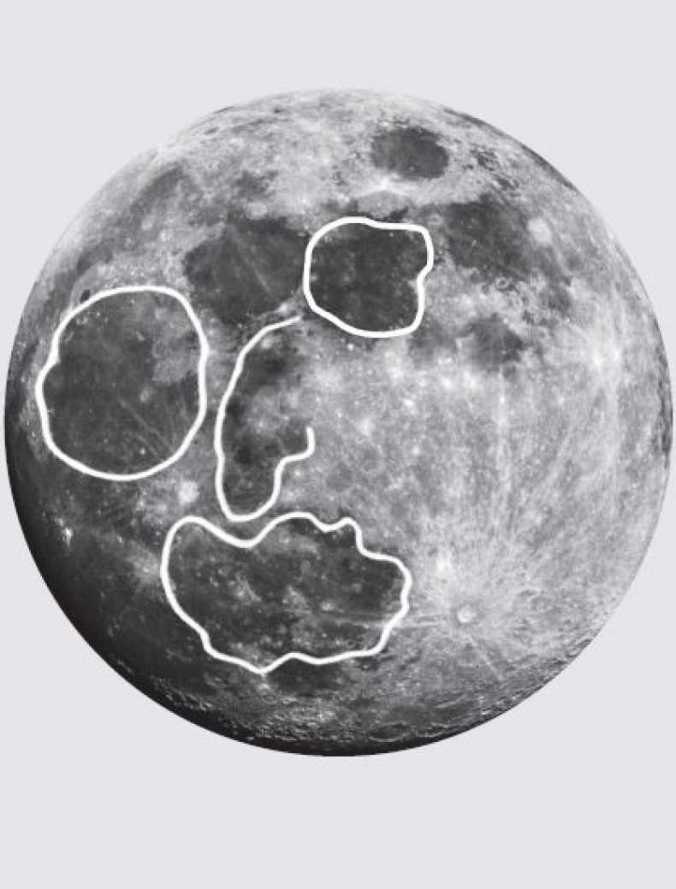
For centuries, so called sophisticated societies have continued traditions, superstitions, folk tales and festivals inherited from rural ancestors. Much will certainly have been lost, as modern man’s connections with nature have been severed. But mothers still point out the face in the moon to their children who stand open mouthed at the mystery. Our companion animals are named and loved as if they were our children who never grow up; Peter Pan style.
Even the star map itself is full of the figures of gods and animals, a continuous tradition going back to the Ancient Egyptians and Sumeria.
Many cultures across time and the world have seen animal and human faces in rock formations and considered the effect significant.

Modern urban man likes to think that these are all in the realm of ‘myth’ – that is, stories that have no meaning any longer.
When I was in Japan with my Japanese girlfriend many years ago, she took me to her grandmother’s beautiful traditional home. In one room was a Shinto shrine. Megumi knelt before this shrine to pray and invited me to join her. I politely declined thinking myself a monotheist and forbidden to worship idols. But I now realise that Shinto is a religion of worship of nature and not idols. Each tree, rock, flower; is seen as a manifestation of living spirit just as we are manifestations of living spirit.

In Pagan Britain before the Roman invasions, people lived by the cyclic laws of nature. Natural features, fauna and flora were also a living presence on the physical and spiritual planes. Such living things acquired names and often magical properties. To kill or take away was done with a blessing for the spirit which was being released.
Now that scientists have persuaded us from viewing the world as sentient, we are expected to consider industrial methods of rearing and killing animals and plants as a necessary evil. But if you want to know the truth, ask a cow in line to enter the red doors of the abortoir.
Such practices which many now view as abhorrent, are likely to become questioned more in the future because modern man is on the brink of extinction.
So brutally has the scientific materialism ethical view damaged the world and it’s creatures that ecosystems are being destroyed faster and in greater areas than ever before.
Already people in so called ‘civilised’ societies are realising that there is only one way to live with a rain forest and that is to live in it. The indigenous people of the Amazon basin have practised a closeness to nature that has retained the forest in it’s glory for many generations. This generation however is having to watch as loggers, farmers and prospectors rape the mother who has protected and fed them. Nature hits back by releasing viruses in the populations of city dwellers – but need it come to this? Perhaps mankind will come to realise that all nature is sentient, before it is too late.
Walt Disney hit on an idea to make cartoon stories using talking animals. As ludicrous as this may have seemed to his contemporaries, who were making films about humans, Walt Disney was digging into the gold mine of imagination.
Despite or perhaps because of being ‘sophisticated’ children in particular needed to view the world in the old way of our rural ancestors. Stories in which animal and magical characters could speak and interact with each other like humans – gripped the imagination. Science may not like it, but humans are complex and deep in their needs and this foaming ocean of stories such as the Cinderella and Snow White and the Seven Dwarfs, are archetypal stories for thousands of years ago (Isis and Osiris if you are curious).

Modern men, women and children naturally engage with nature. We have a deep physical and psychological need to be nourished by nature and allowed to bloom, as flowers do.
There is a young gecko in my bathroom whom I have seen a couple of times now. He looks at me and does not move and I look at him. Yesterday I named him, BR, which stands for ‘bathroom’. We have a relationship – of sorts.
Humour aside, this is the direction that humans in the 21st century must go if they wish to maintain their present numbers. They have to understand the sanctity of all life, whether it is in rocks, vegetation or animals.
Practises such as ‘whaling for scientific purposes’ should be and will be seen as relics of a shameful past when scientific materialism ruled the brain waves.

There have been extraordinary studies between humans and primates already, from which lessons are still to be understood. Chimpanzees have been taught to use tokens to buy food in one study. This is remarkable in itself until it was found that they also understood many more principles of economics, like ‘best price’.
I predict that in the next twenty years man will be speaking with marine mammals as fluently as Google Translate serves us today. These steps are more important than interplanetary exploration at the moment in my view, because they will lead modern man into an honourable way of relating with nature, as did our forefathers.
Once this is accomplished, the further step will be to communicate with sentient beings who are not of this planet. If the E.T’s observe that humans are not responsible enough to inhabit a planet without damaging it, they may introduce themselves first.
And if that thought fills you with dread, then you have been the victim of a misrepresentation of alien beings through propaganda. Be assured that they will not use violence to persuade. Such methods for them and perhaps one day for us – are history.
 Matters Blog