Symbols – unlocking the key
When human beings learn the language of symbolism, a great veil will fall from their eyes
Manly P. Hall
At the end of October each year, there is a flurry of excitement. The night of the 31st October is when the veil between the apparent physical world and the spirit world, opens wide. Across much of the western world the people are encouraged to make light of it. Children dress in demonic costumes and roam the streets knocking on stranger’s doors. This one night is when the ‘stranger danger’ thought bomb does not explode in parent’s minds. Local neighbourhood spirits offer treats to entice and draw children in. It’s viewed as all ‘quite normal’, by people who see the world through the great veil to which Hall refers.
‘Good Christian families’ ( or at least those millions in the United States of America who label themselves so ), engage in this most Pagan of all festivals as if they were celebrating a night with Mickey Mouse.
Few people pose the question, ‘what if All Hallows Eve is real?’.
I use Halloween as an example of the state of consciousness of our current civilisation in the West. Whilst it is true that many Hindus and Tibetan Buddhists for instance, have a powerful understanding of symbology, in the West ancient symbols are ‘not real’ and are treated at best as fantasy and at worst, entertainment.
In the present day, many people have retreated into a safety zone of ‘agnosticism’. They just do not believe in gnosis or ‘union with God’. The gods they trust are thier senses. There is no question when demon possessed magicians achieve the impossible on their television screens. People stare in disbelief as if, for the first time, they cannot trust their own eyes. Scientific reasoning has a lot of undoing to do, for it denies us thoughts beyond the information received from the senses. Western education has worked hard to achieve this.
In an hypnotic ‘Dance of Shiva‘ the technologies of information have built a wall between the soul and senses. To be ‘sensible’ in the English language means to be straight cut – down to earth, whilst also meaning, able to use the senses. So strong is this blockage, that thoughts of the collective soul remain a distant social memory. It is not that the memory is forgotten, although some politcal regimes desire that, it is that our perception is deceived so that reality becomes merely a fantasy and explained away as ‘just a bit of fun’.
We are educated to believe that every effect has a cause; to be rational. From childhood, westerners have been taught that coincidences happen for no reason, ghosts are tricks of the imagination and objects do not move on their own; if you tread on a crack in the pavement the bear will not really eat you…it can all be explained. Sigmund Freud wrote an essay called ‘Determinism, Belief in Chance and Superstition’ in which it was claimed rational explanations cleared the unconscious mind of irrational interpretations of the world and life. According to June Singer in her book Boundaries of the Soul, this view has changed the course of education – a process which aims beningly to turn the light on in a darkened mind.
Freud’s belief that rational explanations clear the unconscious, in the words of June Singer, ‘translated into psychological term the voices of the Enlightenment that called for the elimination of superstitions, the mystical and the non-rational in the Western intellectual tradition.’ As a Jungian psycologist Singer is sceptical to this view and I would agree. Where will we be when we have explained away everything in conclusions that are just interpretations? If you are prepared to believe in the power of the unknown you will never ‘educate away’ the unconscious and the irrational. When symbols link us to these ‘Neverlands‘, our spine should tingle.

David and Goliath retold centuries later
A trip to an ancient Egyptian temple by a group of Europeans straight from breakfast on the Nile river cruise ship, enters world for the merely curious. The guide will lead them through heavy doors into a new world where extraordinary people, long ago once trod. More than that they left for us beautifully designed and constructed buildings encoded from floor to Heaven with cartouches and pictures in relief. The entry into the Holy of Hollies in Karnac’s great halls will make them pause merely to check their camera settings and what time the taxis pick them up for the boat.
Of course this small group should be given credit for making the effort to be there but how sad they make little effort to ask ‘what went on here and what is left of it now?’ Few will entertain the idea that Temples represent a journey for mortals into their body, soul and spirit.

There is a temple in a New York museum which was transport block by block from Egypt. A modern mystic, Lorna Burne who is familiar with angels from early childhood, reports that there is a spirit in this temple in great anguish. The spirit circles in endless frustration that the temple has been moved and needs to be returned. Tell archaeologists that and they are likely to do little more than laugh.
Just as Halloween is reduced to a social joke, so are most experiences of those who make sense of things without using their senses. It’s as if modern cultures need a way of holding off the forces which they distrust, like an ancient DNA memory of a fear of spiders, rats and snakes. It is as if we have repressed our fears into two rationalisations labelled good and bad, then explore one but not the other.
Many modern religionists express this dichotomy firmly with descriptions of the works of Satan on one hand and the love of Jesus on the other as if it was that simple. All mystics get to know Satan very well so as to overcome those elemental forces. Even when countries are at war, such as during the First World War, each hold their field services imploring favour to the same God! No contradiction is acknowledge since ‘the other side are Devils’, not us. Then both sides engage in mass slaughter, explained in their own minds as being on behalf of God. The killing is certainly not the work of the Devil. This is ignorance at it’s most extreme and most harmful.
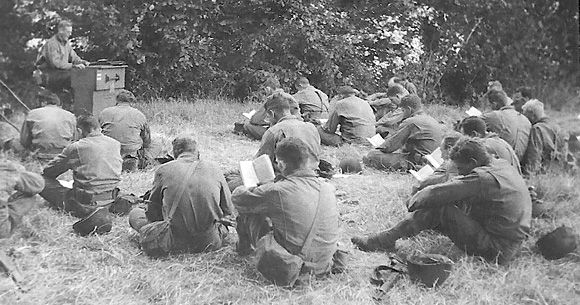
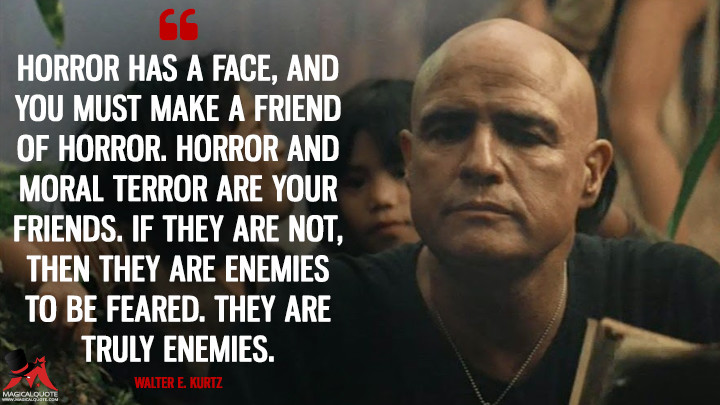
Soldiers returning from war find it incredibly difficult to face ‘civilian life’ after this madness. Sometimes their families and that world have become so alien to them that many choose never to return, like the character of Colonel Kurtz in Heart of Darkness by Joseph Conrad. Soldiers have their eyes opened by Mars, the God of War and enter a reality that has been skinned of fantasy. It is truely horrific, but is more real than anything ever experienced.
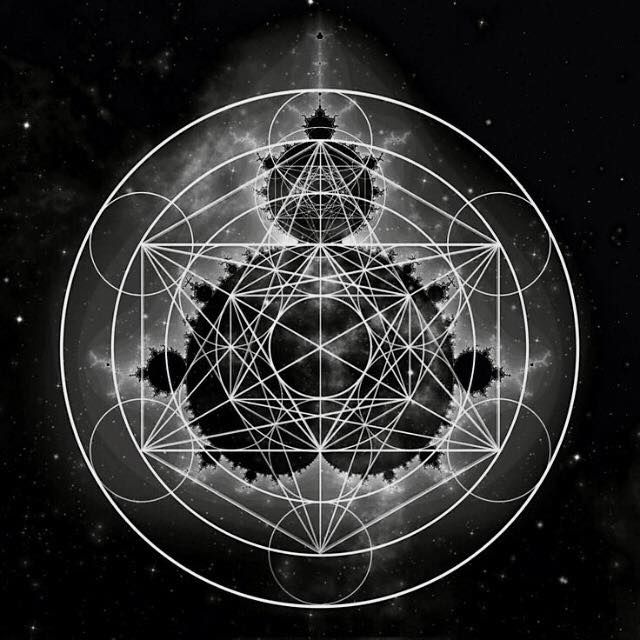
I firmly believe that by getting to grips with the ancient mythical descriptions of ‘mind’ and the human condition through the powerful symbols of the past and present, the possibilit open now for western culture to embrace our personal and collective unconscious.
A series of books by the author Dan Brown bears testament to this popular mood to understand symbols and the hidden worlds to which they allude. Albeit he shrouds his messages as ‘entertainment’, he perhaps knows or hopes that many an ‘agnostic’ might be moved by the power of the non-rational. In an age when even the scientists are building their theories of the contradictory laws of quantum physics, we should at least be open to the wealth of knowledge contained in the improbable.
Symbols are a massively important language for the mind. In a subtle way, the power of poetry is the same as symbols. Poets hint sideways at realities with few words, just as symbols point us to new understandings with no words.
Carl G. Jung was perhaps the most famous psychologist who opened up symbols as a reputable field of study and in particular dream interpretation. He used the study of his own dreams as well as patients, to gain insight into the personal and the collective psyche, the latter which he termed the ‘collective unconscious’.
Symbols dig deep into this unconsciousness, of which modern man was once most fearful but today, in my view, needs to be less so. Symbols not so much ‘explain’ as knock down row after row of balanced dominoes in an unexpected way to produce unintended effects that you might call ‘realisations’.

The plots of the Dan Brown novels are just such a cascade of ‘clue solving’. Through the broad knowledge of symbols by the character Professor Robert Langdon, mysteries are revealed in rapid twists and turns of the plot.
If psychosis is a surfacing of unconscious fears, then symbols enable that to happen as well. Perhaps the fear of that is the process most inhibiting understanding today. Ancient wisdom is wrapped up and scurried away by people of religion, so that it’s power is denied the possession of the people. We are told how damaging such knowledge is and how it is ‘the work of the Devil, aliens and Satanic cults, not for popular consumption and well past it’s sell-by date’.
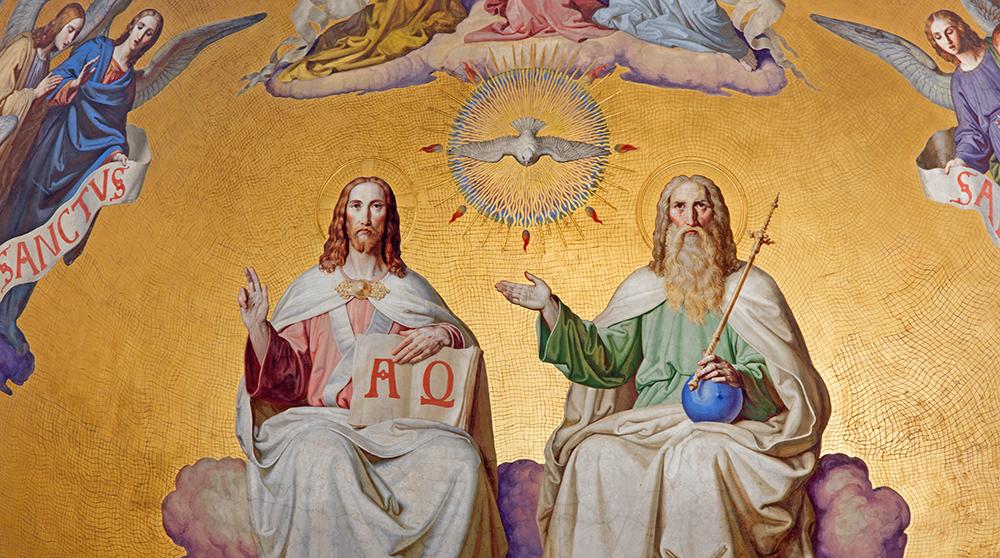
The Vatican Secret Archives are themselves a symbol of this sublimation of sacred wisdom deemed never to surface into the minds of the common people. Beyond the political secrets and records of shameful past and present actions, you would like to think that mankind will benefit more, that be caused harm, by revealing the archive’s contents to the public.
Unfortunately, the battle between the Angels and the Demons takes place right before all of our eyes, if we looked. Even such things scientifically real as the present Covid virus is demonic in character. Viruses are hidden and not understood but powerful and with the ability to kill innocent humans. In this description we can see the description of the malign demi-god of ancient myth, the dragon that inhabits the cave and eats villagers, Count Dracula who enters a country and seeks it’s vulnerable female victims blood, Sleeping Beauty who falls under the spell of the witch and is put in a coma like a hospital patient.
The V1 and V2 rockets of Nazi Germany were powerful killing machines and inspired by the occult secrets of the ancients, as much as by likes of team of rocket scientists.
All of these encounters with demons and angels are happening and as real today, in my view, as they were in the past. The ancient Greeks saw the sun and the moon just as we do. The only difference is that we see them as a nuclear explosion and an empty rock rather than giving them respect for the way they command our every waking moment. The joy of life is dependent entirely on the gift of the sun’s rays depicted by the ancient Egyptians as a straight line from the sun, with an Ankh symbol at the end of each life giving ray of light.

Such symbols may never totally be understood by modern man because historical cycles move in spirals, not circles, but we do have symbols of our own that echo insignts from our ancestors. Understanding our own selves and our environment is key to the sustainability of our technological societies. Modern life is an Odyssey into a world of Sirens and Whirlpools, just as real as it ever was for Odysseus. Hold tight!


 Matters Blog