Throughout the period known as the ‘Stone Age’ we find a variety of structures made with massive stones called ‘monoliths’.
Stone Henge Monolith
Exactly why so much time and effort was expended to create them is uncertain, however I shall endeavour to cast some light on a subject that has fascinated me for a lifetime.
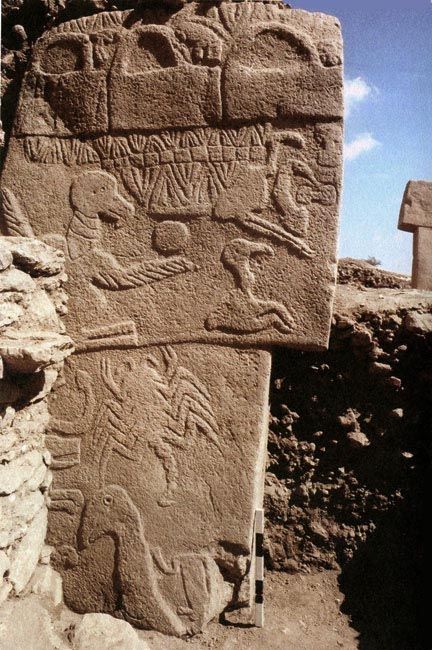
Some of the very earliest such structures have recently been discovered in modern Turkey, what was earlier known as Anatolia, at a place called Gobleki Tepe. I shall draw your attention only to the large vertical monoliths which are unusual for both their ‘T’ shape and incised decoration. The question is; why the T? This shape is clearly top heavy but perhaps that was the intention, to make the stone as heavy as possible. Let us look at some later examples.
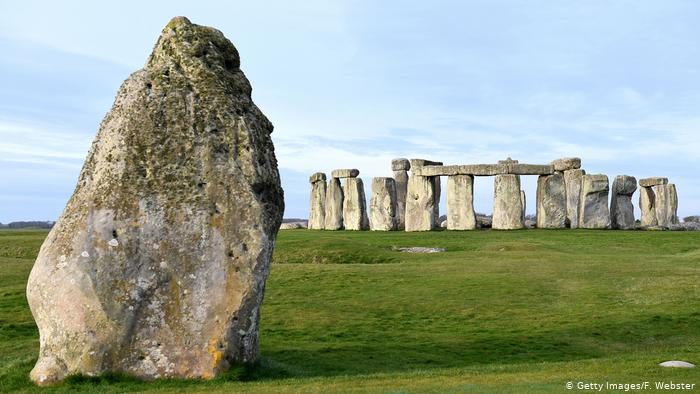
One of the most iconic stone circles is Stonehenge in Southern England. The giant horizontal stones in the ‘trilathons’, again place extra weight on the vertical uprights for no obvious reason. They could have stood upright and detached as is more commonly found.
Stone Henge in Wiltshire England picture credit pw.com
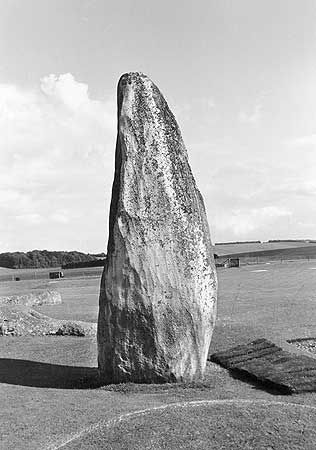
Many standing stones exist in the landscape on their own rather than in circles or lines. The standing stone pictured at the begining, is interesting in it’s shape and sheer size. It is pointed at the top which is so common must not be accidental. There are two clues here then which are scale and shape of monoliths.
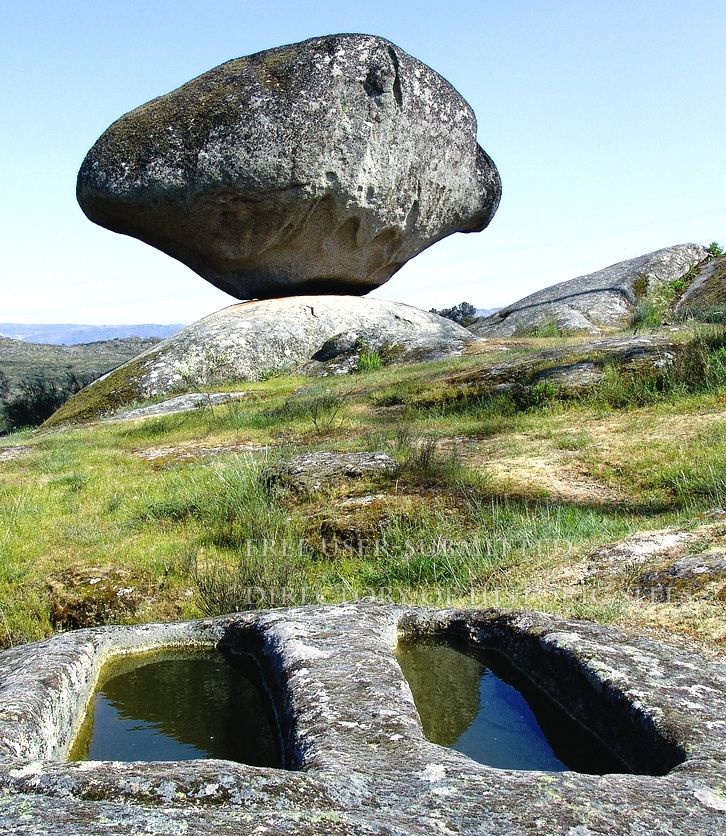
There are also ‘balancing rocks’ and here the shape at the base brings enormous pressure onto the base of the rock.
An inversion of this principle of high localised pressure, is seen where a huge monolith is balanced on top of three vertical stones that have been deliberately pointed. This creates enormous pressure at the point of contact.
None of these structures was intended as shelter or domestic reasons. They are clearly ‘sacred’ in purpose leaving two monolithic questions why this stone why this type of rock and why this shape?
Modern archaeologists have been very successful in analysing the material found at these sites, but because of a materialistic bias, ignore further ways of interpretation. For instance most ancient structures are aligned to underground terrestrial currents as evidenced by the dowser Guy Underwood in his book The Patterns of the Past. In this book he proves that studying the stones as energetic as well as material, opens the mind to new possibilities.
When a stone containing quartz, such as granite, is compressed, a static electric charge is created. This is called ‘piezoelectricity’ and is used today in quartz watches, lighters, even ink jet printers. In order to create the enormous compressive force required for this effect, a large pressure is needed. This just happens to be what is found in ancient monoliths as already described.
It is an extraordinary fact that a 1 cm cube of quartz with a 2KN (500 lb ft) force correctly applied, can produce a voltage of 12500 volts! This is not then a imperceptible effect in nature. Remember that lightning can produce millions of volts in the atmosphere and is both common and natural.
The human body works partly by electrical stimulation in nerves. The heart and brain would not function without volts. It is not surprising that dowsers, such as myself, have experience strong energetic patterns at ancient sites. We can trace energy associated with underground water courses, fissures in rock, caves, volcanic plugs, sacred buildings and many other common landscape features. Animals are responsive to this energy as well with cows selecting underground spring sites to give birth as an example.
There is an effect on the human psyche and emotions for which there is not the possibility to prove here as it is experiential, however the reader is encouraged to explore ‘dowsing’ as most human beings have this additional sense. I contend that we are sensitive to this energy because our body mind unity can be ‘charged’ by it so as to produce beneficial effects such as healing, calming of body and mind and at it’s highest level, enlightenment.
It is therefore reasonable to propose the ancient structures were constructed to produce a natural ‘spiritual’ experience. Sitting in or near such structures for a period of time and or sleeping overnight, can produce ‘supersensory’ experiences such as dreams and visions of extraordinary significance.
The Oracle at Delphi in ancient Greece for instance, gave the female seers their supernatural visions directly because of their location in the underground caverns.
The strength of the terrestrial energies found in these ancient sacred places, is dependent on the size of the structure or series of structures, the unique formation of the location within the landscape, alignment astronomically, geometric proportions and shapes, time of day and season, solar and lunar alignments, sensitivity of the seer or aspirant.
The system of alignment of the human consciousness with nature in order to bring the clarity of mind known as ‘enlightenment’ is therefore highly complex and libraries have been written on the subject.
I highlight the effects of piezoelectricity above as little has been recorded about this and my observations suppositions are largely original and or from the collective unconscious. I include it in particular because I believe that it plays a significant part in one of the most famous sacred buildings, the Great Pyramid of Giza, in Egypt.
A Kirlian Photograph of model pyramid geometry
I shall present my next blog as an in depth study of this last remaining Wonder of the Ancient World and still our best clue as to what ancient people did and believed and what we are still capable of doing today, perhaps even more so.
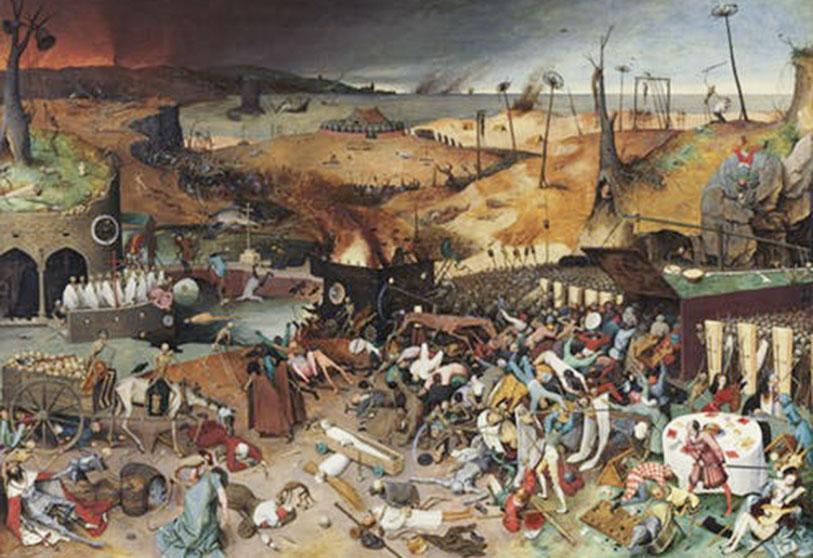
The thing with pandemics is that they are far from being ‘unprecedented’ as many politicians offer as an excuse for making mistakes. Historically there is a long list including the plague or ‘Black Death’ as it was known in England.
So aware are public health experts today that, certainly in the UK, pandemics are regarded as the number one risk. Governments have to be prepared for even the most unlikely eventualities and there will be a plan, somewhere. This will describe the risks – particularly the level of harm – and how to mitigate and eventually, eliminate, those risks.
A well thought out emergency plan will include the ‘hardware’ and ‘software’ needed. Warehouses across the country will store vast quantities of ‘just in case’ resources, from dried baby milk to personal protective equipment. Software will be posters and public information announcements already prepared for broadcasting to worried populations. It’s a whole area of expertise and those trained will be employed in all levels of government, from national to local. Protecting the population of a country is, after all, one of the primary functions of government.
Let us examine, pandemics caused by viruses. To mitigate and plan for a new viral infection there are six stages;
Identify the origin of the virus and strictly control the contributory factors.
Analyse the virus and it’s methods of transmission between hosts.
Analyse the effects of the virus on the human body.
Identify ways of preventing and treating the virus and it’s transmission.
Share all of the hardware and software between countries of the World to do the above.
Initiate prevention and treatment programmes throughout the global population.
At the time of writing there is a pandemic which is estimated as causing between 100,000,000 and 400,000,000 infections a year, according to the World Health Organisation. There has been a dramatic growth of cases in recent decades and at least half of the world’s population are at risk.
picture credit: thenativeantigencompany.com
The virus causes mild symptoms but in some cases can produce acute flu-like symptoms in humans. There are four serotypes meaning it is possible to be infected four times. According the BBC News App, ‘explosive outbreaks can overwhelm hospitals.’ In it’s most lethal form, fatality rates are 1% of the population when proper treatment and care is available.
Readers will probably have realised by now that I am describing dengue fever or DENV.
It’s a viral infection that you certainly do not want to experience. It’s commonly known as ‘break bone fever’ as it causes severe pain in muscles and bones. Like all viruses it poses a significant threat to the human population.
The good news for those living in high risk urban areas in the tropics, is that a new method of prevention has given very promising results in trial. The BBC News App reports that infections in the city where the trial took place were cut by 77%.
The method used ticks item 4. in my list above. Researchers used a ‘miraculous’ bacteria (Wolcachia) to infect host mosquito’s that spread the virus. The bacteria makes it much harder for the DENV to survive in it’s shared host so the mosquito is less likely to cause an infection. The trial set about introducing this bacteria into the local mosquito’s; fighting fire with fire.
What we can learn, in common with most viral outbreaks is that the origin of the virus and it’s method of transmission must be thoroughly investigated (1. above).
With this understanding, whenever new virus’s are discovered, pandemics can be prevented more quickly and as we know – speedy intervention is vital to reduce transmission. In an ideal world, governments will work together. Knowledge and resources should be immediately sent to the centre of any outbreak and paid for by global contributions rather than the host country, in my view. NGOs and strategic public health organisations, I believe, should be given overall control of treatment of the outbreak, with politicians merely signing off the allocation of national resources. Each country contributes according to it’s means, the rich and those without any outbreaks (pre-pandemic) pay more.
And if one pandemic is given disproportionately more publicity and resources than equally serious concurrent pandemics, what could possibly be the reason? Mind the mind gap!
The following is one of many interpretations of the mystery that is the Great Pyramid on the Giza Plateau, Egypt. The fascination thing is that there are many levels of knowledge inherent in it’s construction which do not contradict each other. The creators of the pyramid were able to think multi-dimensionally, that is like a three dimensional chess player. Modern rational thinking usually asks the question, ‘which one is true?’ when the answer is simply, ‘all of them’.
The personal interpretation that I shall discuss in this essay, is how the pyramid creates, attracts and stores static electricity. This is not to ignore electromagnetism, gravity, sound, ‘chi’ and the earth’s magnetic flux, all of which I believe also have a function in the design.
Radio Waves within the Great Pyramid at different frequenicies
Before making any new theories and dismissing others, it is important to examine and understanding our ‘thought patterns’. Archaeologists present themselves as scientists practising scientific method. This is clearly sometimes true, but regrettably their own specialism has suffered from assumptions, rationalising and political suppression when it comes to Egyptology.
As an example, the most common rationalisation amongst academics, is that pyramids are ‘tombs’. Archaeologists in all fields inevitable come across ancient human remains, but it does not mean the place in which they find them was intended and constructed to be a tomb. A Christian church for instance is usually surrounded by burials, but the church was not built only to bury the dead. It has multiple functions.
Even more glaring in the case of the Great Pyramid of Cheops is that there is no evidence it was a tomb. No bodies were ever found inside and no inscriptions exist on the walls in the manner of other Ancient Egyptian burial sites. In fact burials were conducted in the Valley of the Kings to divert grave robbers from the pyramids.
The so called ‘ventilation shafts’ in the King’s and Queen’s chambers were never intended to ventilate as some academics have suggested. Dead people do not breath.
These are just two examples of how ‘scientific’ myths have been created to explain the unknown. It is what humans do. If something is mysterious, we tend to try to offer an explanation however absurd in order to gain peace of mind.
I have therefore tried to examine what we know about the Great Pyramid with an open mind. Very often the very best clues are those the present the most mystery and this is where I shall begin.
Here is a strange fact. The Ancient Egyptians referred to the pyramid as ‘Ta Khut‘ which means ‘the light’. What are we to make of this as there is no light visible from the outside or inside it? Clearly we are missing some information. In addition, the word ‘pyramid’ means ‘fire in the middle’, giving us a real riddle to unravel.
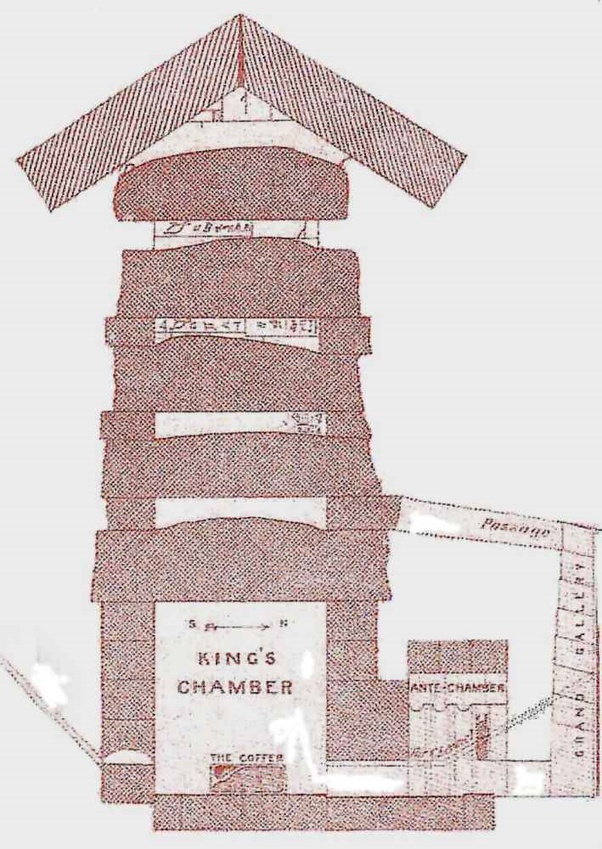
The most glaring incongruity is the use of pink granite from the quarries of Aswan over 500 miles away, to construct the massive walls of the chamber. This choice is clearly not a decorative aesthetic for which a simple granite lining would have sufficed. There are five granite block courses forming the King’s Chamber walls. Above these are five further stories of granite beams, topped by a limestone gable.
King’s Chamber Cross Section
Conventional theory is that this extraordinary construction was to spread the enormous weight of the pyramid above and from earthquakes. Neither of these is correct otherwise the Queens Chamber below and under greater weight above, would have a similar construction. The limestone gable spreads the load as a diagonal vector away from the chambers below.
Now let us consider the selection of the type of rock, that is pink granite. It is piezoelectric; that is, it creates electricity when compressed under extreme weight. It is reasonable then to explore whether this was in any way an intention of the ancient constructors. If electricity was being created by pressure would the granite be able to store it? The answer is yes, as the other characteristic of granite is that it is dielectric, that is it is an insulator that can hold a charge, as in a capacitor.
The third thing we observe about the blocks is the smoothness with which they are built giving perfect contact and conductivity between each block. It has been said that a razor blade can not be inserted into the joints.
Given the massive size of the chamber and the one hundred, over 70 ton granite blocks there could be tens of thousands of volts being generated. Perhaps similar to the voltages carried by the wires of national grids, supported on ‘pylons’ as in the Ancient Egyptian ‘pylon’.
In the King’s Chamber there are two, so called, ‘air shafts’ shown with dotted lines above. This name is yet another assumption by ‘scientists’ which has been repeated without justification. They are not positioned at ceiling height as would any ventilation shaft but at ‘table height’ perhaps for ease of access. They are not continuous so do not admit air. When photographs were taken by exploring robots, a limestone block bars the way. What is most interesting and is largely ignored, are the two copper wires penetrating the block, and the discovery of a length of copper wire in one of the shafts with some cedar wood. If these shafts were intended to carry electricity then two wires would be prudent in case one was broken over time.
Copper wires set into the stone: electrically distanced
Electrical circuits require two polarities and there are two shafts in both chambers. The positive and negative wires (if that is what they were) would be ideally positioned to enter the chamber.
In any electrical circuit we can also expect to see a connection to earth. Sure enough there is the existence of the ‘well shaft’ linking downwards from the Kings Chamber, through the Queen’s Chamber down to the Subterranean Chamber; when viewed looking north in section. It would be interesting to know is any remnants of copper wire or their fixings survive in this shaft.
Finally, a switch would be expected to be found but of course all wires have been removed. But perhaps, if there ever were copper wires, these and the switches have been purloined long ago by thieves. Interestingly, in the King’s Chamber one ‘air shaft’ is horizontal where it goes through the wall with a shallow dome shape above. Could this have been where a switch once was?
The last feature in the King’s Chamber not mentioned so far, is the so called ‘sarcophagus’, an empty, lidless box with no hieroglyphs so is not a tomb. It is moveable; sliding on it’s integral granite base, so may not be in it’s original position. What was this for?
The Spark of the Ark
Here I have to introduce the celebrated Ark of the Covenant. The Old Testament story of it’s theft by Moses from the pyramid shows it’s importance. The loss threatened the ‘power’ of the Ancient Egyptian State so much, that the Pharaoh risked and lost an army trying to get it back.
The Ark is 2 ½ cubits long by 1 ½ cubits square in cross section. To enter the Kings Chamber by the low entrance it would have to be smaller and sure enough the entrance is 2 cubits by 2 cubits. This also allows the ‘sarcophagus’ to be slid inside as well, just.
The Ark could then be place on the sides of the ‘sarcophagus’ and sure enough it does this neatly with outside edge sitting in the centre of the 6 inch thick sarcophagus wall.
The next part of our theory requires the understanding of a ‘Leyden jar’. The image below amply describes how a static charge is built up and discharged in a glass jar.
There is a physicist on You Tube who explains very well how the Ark operated as a large Leyden jar and I direct the ready to this link;
Ancient Aliens: Mysterious Powers of the Ark
The two angels on the lid lean towards each other and their wing tips almost touch leaving a ‘spark gap’ as you would have at the end of a spark plug in an internal combustion petrol engine.
There are accounts in the Old Testament of the Ark being dangerous and able to emit light and smoke. We have to wonder what unique characteristics of the Ark produced this?
Is there a clue in the name? Is an electrical ‘arc’ why it was appropriately named ‘Ark‘?These ancient descriptions suggest a high voltage discharge of static electricity, similar to lightning, causing the air to be super heated. The effect in an enclosed space would have been awe inspiring! No surprise that the Ark is described as the ‘eye of God’.
Any priest entering the Holy of Holies in the Tabernacle, would have a rope tied around one leg. This was because if he was knocked unconscious or killed by the Ark, his body could be retrieved without risk to others. The Ark was even used in battle in some manner according to the biblical story of the fall of Jericho. The accounts suggest it’s function was beyond purely ceremonial.
I hypothesise that the entire King’s Chamber is also a Leyden Jar. I have described the necessary elements already. The granite walls and ceiling are the equivalent to the glass in the jar. Granite has a relative permittivity of 5.45 and glass between 3.7 to 10. Copper wires, which the ancient Egyptians were perfectly able to make, may have connected the outside of the chamber to the outside via the ‘air shafts’ to the pyramidal summit as a positive and the same of the other side as a negative charge. The limestone smooth facing blocks would have acted to insulate the wires, as would the air.
The missing pyramidion peak of the pyramid of Cheops suggests that either it was removed or was never installed. If there was an electrical function to the peak of the pyramid then this might explain why it is flat. There are stories of the pyramidion being gold, fit the theory that gold’s function as the ideal electrical conductor was why it was there.
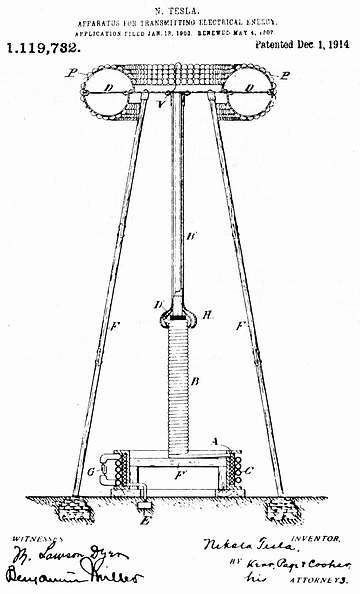
With the copper wires terminating there and probably extending a short way into the air, a natural charge would have entered the wires just from the ionised air, as described by Tesla in his ‘Tesla Tower’. We should remember that the pyramid was the world’s tallest building for 3800 years until our modern era. Clearly height (481 feet) was an important function of the pyramids specification.
Imagine what may have then happened. It is possible that this arrangement would also have enabled to pyramid to emit lightning at times; again as did the famous Tesla Tower in Newhaven, New York State.
The Tesla Tower
Even today, the pyramid is described by visitors in a curious way. One party who ventured to the summit to have a picnic, found their bottle of wine wrapped in a wet cloth for cooling, gave off an electric spark when drunk from. It was being charged as a Leyden jar.
During electrical storms lightning would have been attracted to the copper conductors and been either earthed or directed into the Ark depending on the position of the switch/es.
The ‘Eye of God’ is seen at the top of the pyramid on the dollar bill (see below) and perhaps this is a reference to ancient knowledge by the masonic founding fathers of the USA. Clearly with or without the Ark, the King’s Chamber could have been the centre of the power of the Ancient Egyptian State both literally and metaphorically. It would have been the peak of their technology and kept the population in reverence and respect for all things ‘royal’.
If the King’s Chamber was the charging point, could the Queen’s Chamber have functioned as a neutral place where the Ark of the Covenant could be stored safely. This chamber has no heavy granite beams and walls and therefore had a difference function. Just the presence of two ‘air shafts’ indicates it could discharged static electricity in the direction of precise stellar constellations, as all the shafts are astronomically aligned.
The Stellar Alignments of the Shafts
Moving from conjecture to a natural conclusion, sparks emit radio waves and directional electromagnetic waves could have contained information. Could there have been messages sent to ‘mother’ civilisations and / or to other pyramids around the globe. Tesla, again predicted this possibility using his Tesla Tower and others around the globe. Could this be why we find pyramids today on every continent, including Antarctica?
In my third and last essay on this subject I shall conjecture upon a most esoteric clue hidden inside the Ark itself. Could this enlighten us as a practice that the Egyptians would have inherited from the Sumerians and their overlords, the Anunnaki. It also answers the question many scholars ask which is, ‘where has all the world’s gold gone?’ Could the ‘cow goddess’ Hathor and the fire inside the pyramid, be clues?








 Matters Blog