Twenty Reasons Why HS2 Might Not Be the Promised Public Transport Option of the Future

There is a project in England called HS2. It stands for High Speed 2 and is a plan to build a high speed rail route between London and Birmingham and then beyond. The stated justification for it by the government is to move the political centre of gravity away from London and nearer to the Northern and Midland cities; the so called ‘power house’.
These cities have conventionally voted for the socialist or Labour Party and HS2 was originally a Labour government idea in 2009. Why it has not been cancelled by the Tories in my view is that there may be some political gain for the Conservative and Unionist Party in making Westminster ‘closer’ to the North. In the last election these cities did largely swing to vote Conservative for, no doubt, many reasons.
One skill that I believe is essential for politicians is ‘problem solving’. There is a science to this subject and the first question to be asked in solving a problem is; what is the problem? As much as this may seem obvious, it is heart breaking to observe how much money is wasted on national projects that turn out not to solve the problem. I am reminded the airport in Spain that has never opened and you can probably think of some ‘vanity projects’ in your local area. ‘Vanity’ may be one reason those in power do not ask the right questions. Or perhaps it is the Dunning-Kruger Effect…
(The Dunning–Kruger effect is a hypothetical cognitive bias stating that people with low ability at a task overestimate their ability), : source Wikipedia
…that makes politicians believe they understand the problem perfectly and have the perfect solution.

:
credit Reseachgate net
Another common pitfall for ‘problem solvers’ is the temptation not to apply a new solution when the original one does not work. This is known colloquially as to ‘dig a hole for yourself’. Rather than abandon the first location to dig, the blinkered view and or fear of admitting a mistake and or wasting time, money and effort… compels decision makers to keep applying the original problem solving technique. Feedback is rarely sought, dissenters are ridiculed and rational insight is lost in the rush to jump into the deepest hole ever dug…
The HS2 project in my view is a perfect example of this and even the PM used this metaphor…
Boris Johnson has suggested the only answer to the “hole” enveloping HS2 is “to keep digging”. BBC News 31 January 2020
So far three billion pounds has been spent on demolition and railway infrastructure. To change now would mean wasting all of this money and admitting a mistake. To admit to such things is political suicide, and career politicians need to impress upon their voters that they know what they are doing. This is what we see at the moment.
Personally, I would vote for any politician who is prepared to describe the white elephant under construction as just that. Here is my ‘off the cuff’ list of reasons to abandon the project. I am sure the list could be even longer but it hardly seems necessary. It is not all negative. It contains the precise locations where treasure can be found, should the current hole ever be realised to be just full of air.
Here is my list of strategic reasons to abandon HS2;
1.The people who live in the Midlands and North of England desire most to have better rail links between the East Coast and the West Coast of England and connecting the cities in between.
2. The people who live in the Midlands complain that the existing rail service to London is at full capacity and needs upgrading. This could be achieved quickly and relatively cheaply with additional conventional infrastructure and rolling stock.
3. HS2 is planned to go initially North South, adding a link to London which is contrary to stated intention to move the ‘centre of gravity’ of the country. The word ‘London’ is the clue.
4. The country has borrowed a vast quantity of money during of the Covid -19 pandemic. To reduce this burden ( and presumably vulnerability to any future rise in interest rates) it is proposing to reduce aid to the poorest countries in the world. In doing so it risks losing the ‘world leader’ status it aspires to. One obvious alternative is to admit it can no longer afford to pay for HS2.
5. Since the pandemic, people have become used to communicating using the internet. Moving physically between locations has become less important.
6. Trains are old technology. They have been improved as much as they ever can be and now only new technology should replace it.
7. High speed trains are at their most economic on long distances such as found on the continent of Europe, North America or Australia. As any continental traveller will tell you, the UK major cities are relatively close to each other and journeys short in comparison with countries where high speed trains have been a success.
8. Fast, long distance trains are rivalled by aircraft. In Spain, for instance, internal flights are cheaper and quicker than the extensive high speed rail network.
9. Trains are rivalled by new technology such as the Hyperloop. They are likely to become superseded in the next few decades, just as railways took over from canals. Technology and economics are more sustainable drivers than political policies. New technology by-passes the decision making processes of government. In the era of present rapid ‘advances’ in technology governments must work with new technologies in the way that voters do.
10. A large proportion of ‘clean’ electricity is produced by fossil fuel power stations and nuclear power stations. The first is neither clean nor efficient. The nuclear option is becoming more and more expensive (as decommissioning costs are included) and prone to the dual risks of nuclear accident and the problem of the indefinite safe storage of nuclear waste on planet earth.
11. The costs of major infrastructure projects can be reasonably expected to double by the time they are completed. The original estimate for HS2 in 2005 of 37 billion pounds has already doubled to 78.4 billion pounds by 2015! (according to Institute for Government statistics). At this rate of increase it will have doubled again by 2025 and that is only the estimated cost. There are inevitably going to be delays and unforeseen extra costs. This during predicted future decades of Covid 19 austerity.
12. Europe is joined to one nation by the Channel Rail Tunnel. The United Kingdom is connected to twenty seven countries by the Channel Rail Tunnel – and beyond. The train from Berlin to Manchester appeals to a minority who will either meet virtually, go by air or just not choose to do business in the United Kingdom.
The List Extends into the Tactical Reasons to Abandon HS2
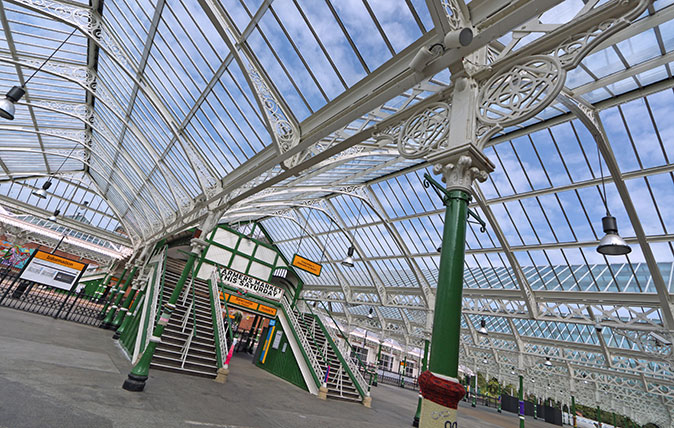
13. When the Victorians built railway stations, they were able to build their palace-like stations in the centre of towns and cities; just where travellers wanted to arrive! Due to high land values and ethical (archaeology, listed buildings, city centre decay, the housing shortage ) concerns around compulsory purchase, this is no longer practical. Most HS2 stations will be built outside the towns and cities they serve. The connecting transport will take away some or all of the time gained (1hour 21 minutes reduced by 29 minutes) by using a high speed train. An example I experienced many decades ago, was in Brisbane. When you arrive in Brisbane rail station you have to stand and wait for a bus or taxi to get you to the centre of Brisbane. I believe a local train has now reduced this problem but the insanity of these slow ‘connections’ remains.
14. Simple analysis of the problem will reveal there are many means to connect the regions of the UK other than high speed trains. The best and perhaps most cost effective of these, is to improve connectivity using the internet. This has the potential to allow passengers to work during their journey on conventional trains. This will make the speed of the train less important.
15. A new train route will cause considerable loss and damage to the countryside and communities through which it is intended to pass. The least of these is the one hundred ancient woodlands which will be destroyed. At a time when the country has been promised it will be more self sufficient in food, farms will be significantly negatively affected.
16. One hundred ancient woodlands, fauna and flora and in areas of outstanding natural beauty and special scientific interest will be permanently harmed or eradicated at a time when the environment is being prioritised, not least because of climate change.
17. Trains are a less safe means of travel than flying and in the future, the hyperloop. The later will be so safe that the prototype has already been trialled over a short distance by it’s designers and backers, personally. Hyperloop is frictionless so will require a fraction of the amount of energy required to propel an ordinary or high speed train.
18. To fit the broader brief of ‘increasing connectivity’ within England, new trains and routes should be started in the North. Phase One HS2, starts in London and therefore does not benefit those in the North unless they want to go to London.
19. The money spent by the Test and Trace and PPE procurement was approximately 57 billion pounds. This is in the same ball park as the current estimated cost of HS2! If HS2 costs reach 106 billion pounds, then this is the same as the cost of running the National Health Service for a year. Politicians have to be asked why not run the NHS for a year with this money?
20. The High Speed train network will not serve the satellite regions of the United Kingdom; known as Northern Ireland, Wales and Scotland. These areas already resent to control of an England-centric government based in the south of England. In my view this may become the straw that breaks the camel’s back and play into the hands of the Nationalist Parties of each country, the first to fall being Scotland followed by Northern Ireland, then Wales and then Yorkshire – Cornwall?!
I have not included any benefits from a High Speed train network in the United Kingdom.
Such as list should always be included in any rational ‘problem solving’ assessment. My problem is, I can’t see any benefits, except some good publicity photos of dolphin-nosed trains and grinning politicians in high visibility jackets.
If there ever were benefits, these should have been gleaned after the second world war when the UK’s industrial cities had been demolished. Despite ‘winning’ the war in 1945 the UK was bankrupt. Japan ‘lost’ the war and in the 1970’s built some of the first high speed trains – the famous Skinhansen.
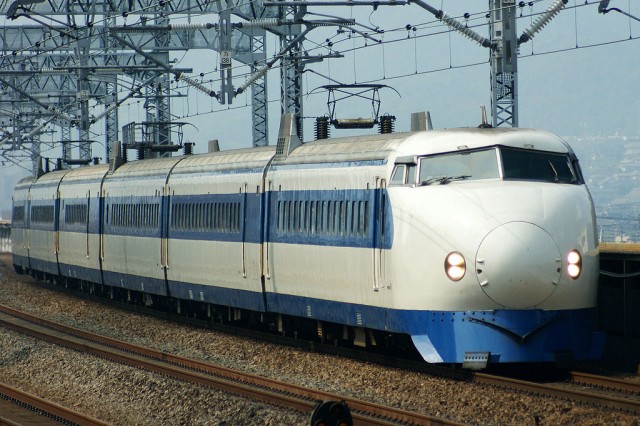
Perhaps some would argue that an electric train speeding along the tracks is much greener than the cars on the motorway running parallel. With the proviso that the National Grid is powered by carbon neutral fuel sources, this is true, but certainly by 2040 (as phase 2 is due for completion), cars and lorries are going to be mainly electric or hybrid. Any ‘green’ advantage to all trains is slowly disappearing.
And in the midst of a pandemic and in preparation for the next, is not personal transport going to be preferred to public transport?
What would Robert Stevenson be thinking if he saw the final phase of his invention being acted out? What would he say about today’s ultra wealthy taking personal travel into the edges of space and is that why he called his invention Rocket?
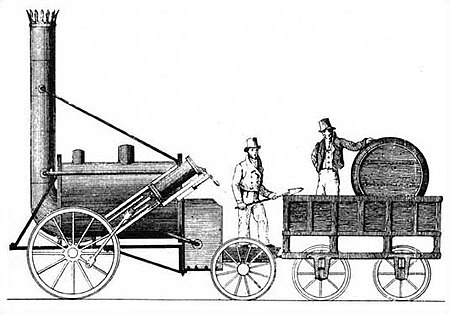
1829 Rocket – Still the best public transport concept applicable two hundred years later?









 Matters Blog