In Part One of this trilogy entitled ‘Ancient Light’, I have described the curious electrostatic qualities of many ancient monolithic structures. They appear to be designed principally to concentrate weight upon piezoelectric rocks. This produces subtle effects that can be sensed by the human body and mind, even to the present day.
I have also examined the unique design of the King’s Chamber in the Great Pyramid of Cheops as an example of use of this same principle. The highly selective construction techniques suggest that static electricity was intentionally generated, stored and exploited in the pyramid. The Arc of the Covenant operates as a capacitor potentially discharging static electricity as an ‘arc light’ and even lightning from the pyramid’s peak.
In this final section I shall describe the ancient knowledge of the production of monatomic gold shared (and possibly inherited) with the Mesopotamian civilisations.
There are depictions of gold mined by humans for the Anunnaki ruling Mesopotamia in ancient times. Humans were possibly created as a slave race mining gold for their rulers. Even as far away as South Africa, Zulu legends speak of a time when “visitors of the stars” came to dig gold and other natural resources.
For more insight into the mystery of the ancient gold mining across Earth the work of Michael Tellinger is the authority on the subject.
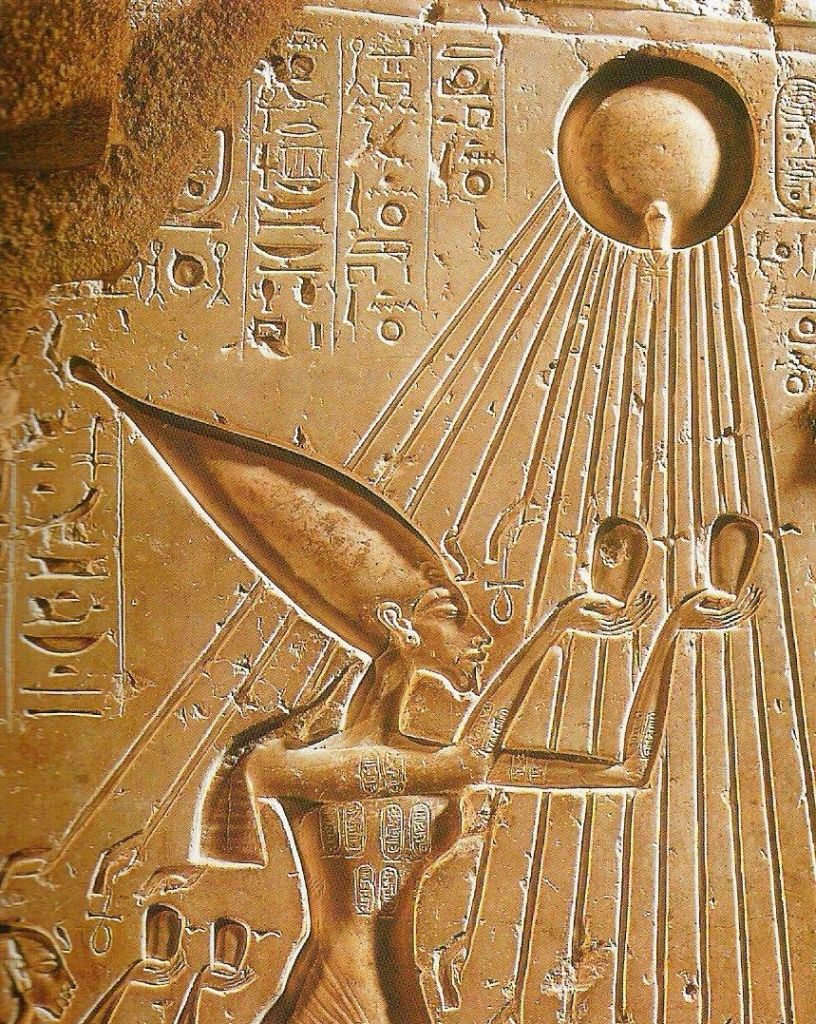
Interestingly there is little in the Mesopotamian drawings to suggest a use for their gold. What there is however is a remarkably common theme in visual representations of two ‘demi-gods’ standing either side of ‘the tree of life’ holding a bag and cone shaped object.


When examined closely the ‘cones’ appear to be made of many spherical objects which have been formed together into the shape of a cone. It is always held at mouth level as if in the gesture to eat. It is surely no coincidence that this same image appears in Ancient Egyptian hieroglyphs.
The best line of investigation that allows modern readers to penetrate this mystery, comes from a renowned Egyptologist Sir Francis Petrie of University College London. He produced a report for his sponsors on a trip he made in 1904 to Mount Horeb in the Sinai Peninsula.
The full story is described in detail by Sir Laurence Gardener in the excellent video below;
Gardener describes Petrie’s discovery of an ‘alchemical laboratory’ in an Egyptian Temple on Mount Horeb ( later Mt. Sinai), dedicated to the goddess Hathor. Within the temple store rooms, is found 50 tons of a mysterious white powder, conical stones, metallurgists crucibles, tanks and basins. Much of the design stylisation on these and other objects is Mesopotamian. Inscriptions mysteriously refer to ‘Mfkzt’ (pronounced Muf Khut)’ and ‘bread’ and ‘light’.
Petrie decided that the use of this laboratory went back to the very first Ancient Egyptian Dynasty and continued in production until the final 18th Dynasty. Laurence Gardener describes the story of the flight of Moses and the Israelites. Moses famously went up Mt. Horeb (or Mt Sinai, as it was later called) where there was seen fire and smoke at night. We are told that this came from an Alchemical Laboratory where Moses would have observed the transmutation of gold into a powder. Exodus describes how Moses burnt the golden calf in the fire and ‘ground it to a powder’.
We should be aware that Moses was trained as a priest by the Egyptians. His great grandfather was Thutmoses 3rd, who reorganised the ancient mystery schools of Thoth and founded the ‘School of Master Craftsmen’ at Karnak. They were called ‘The Great White Brotherhood’ because of their preoccupation with a mysterious white powder.

In the tradition of the goddess Hathor, a cow and a nursing goddess, came the ‘powdered milk that;
‘…gave the Pharaohs their divinity’.
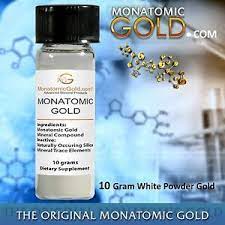
It is no secret today that gold can be transmuted into a white powder in a furnace and this powder confers good and longevity, (common to Royal families even to this day!). It is called ‘monatomic gold’ or ‘ormus’ and can be even purchased on E-bay!
Is it possible that in large quantities over long periods of time, this powder may alter human consciousness to a higher ‘god-like’ level? Clearly the Mesopotamians and Ancient Egyptians thought so, to the extent that they must have processed large amounts of precious gold to deify the Pharaoh. After all, the role of the Pharaoh was to be both man and a god, and achieving this status whilst living, was his or her aim.
Just to explore the Old Testament, Moses story a little more, there is the narrative of ‘Mana’ appearing on the ground like dew ‘from Heaven’. This mana could be made into cakes and consumed and appeared when the Israelites had run out of food. Can we conjecture that this substance was also powdered gold placed there overnight by priests for the people, until we consider a clue from Mesopotamia. Here the name for powdered gold was Shemana and it is more than tempting to take this as being identical to Mana.

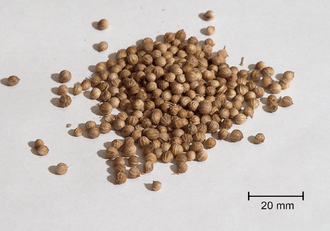
There is a discrepancy in appearance – or perhaps it appeared in two forms. The ‘mana from heaven’ described in Exodus as feeding the Israelites, is described as being ‘like a coriander seed in size and shape’. This appearance resembles the ‘seeds’ that make up the cone shapes in Mesopotamian reliefs.
And thou shalt set upon the table shewbread before me always’
Exodus 25:30
This extract from Exodus show us firstly how important ‘shewbread’ (or white powder cakes) was. The cone shaped stones found by Petrie in the Temple of Hathor on Mt Horeb, may well have been moulds with which to make cone shaped vessels to hold or mould the shewbread.
Laurence Gardener tells us that the 4th Dynasty was the era of the pyramid building where Hathor is always depicted with representations of the Pharaoh. We can imagine a society in which the workers drank beer, the middle classes and aristocrats used a narcotic derived from the blue water lily and Pharoahs ate Monatomic gold.
With the Ark present in the King’s Chamber of the Great Pyramid, I have described in part two how high voltages and plasma could have been generated between the wing tips of the Cherubim. Such a high temperature might have been used as a furnace to turn gold into the precious white powder but I do not believe there is any evidence for this. Such a process would have produced smoke and waste materials and the interior of the King’s Chamber is remarkable for being clean.
The alchemical creation of white powder was in furnaces in the Temples, not in the pyramids, in my view. But there is another cleaner method for producing monatomic gold, which could have been one of the functions of the pyramids.
As a clue, one of the contents of the Ark of the Covenant, as well as the tablets on which the commandments were inscribed, was some Mana. According to the Book of the Epistles, this was possibly held in a pot made of gold.
Modern pyramid experimenters have found many extraordinary characteristics even in scale models of pyramids. Modern experimenters Mary and Dean Hardy of Allegan, Michigan took a gold coin and hung it at the King’s Chamber level of a Great Pyramid model. After some time the gold coin got a clear “oil” on it and the gold was etched away under the drops of oil. This oil can be reduced to the white powder known as Orm or Monatomic Gold.
From my own personal experience I once worked for an architect in Australia who described himself as a ‘modern alchemist’ and had a laboratory over our work place that he regrettably never showed me. I remember him telling me however, that it was possible to produce oils from metals, a fact that struck me at the time, as worth remembering.
An unlikely scientist in this story is Sir Isaac Newton. He was an alchemist for the second part of this life and deeply interested in the Bible and the pyramids. The following extract is from a recent sale of some manuscript belonging to the great scientist.
“He was trying to find proof for his theory of gravitation, but in addition the ancient Egyptians were thought to have held the secrets of alchemy that have since been lost. Today, these seem disparate areas of study – but they didn’t seem that way to Newton in the 17th century,” Gabriel Heaton, Sotheby’s manuscript specialist, told The Guardian.
The traditional quest of alchemists is that they tried to turn ‘lead into gold’. Such a ‘story’ in my view, is yet another example of a ‘red herring’ to hide the truth. The transmutation of gold using a ‘secret fire’, is the true ‘secret of alchemy’. Chemists such as Nicolas Flamel called the Shemana, Mana, white powder, Ormus – the Philosophers’ Stone.

The ‘secret fire’ may not be actual fire but the concentrated energy within the pyramid at the location of it’s inner chambers, where gold transmutes by the action of invisible fire or ‘energy’.
The findings and analysis of his ‘white powder’ by Sir Flanders Petrie where never published. This may have been because it contradicts some elements of the Old Testament. It may also be that the knowledge of the philosophers stone and it’s effects was desired to remain secret by those in powerful positions who already knew about it…such as the Freemasons and other Societies in possession of and trusted with guardianship of ancient secrets.
There is a twist in the story, because the white powder has been analysed in modern times by the physicist Andrei Sarhakov. He describes it as ‘exotic matter’ because one of it’s characteristics was that it weighed less than nothing! In other words it was not affected by gravity. It’s ability to levitate itself could be transferred when placed on other matter.
These gravitational effects remind us of the interest that Sir Isaac Newton took in developing a theory of gravity that has advanced civilisation to this day! Was he also exploring the possibility of ‘anti-gravity’?
Even more extraordinary is that Sarhakov found Orm could move into another dimension if we want it to, a concept familiar to Quantum physicists and modern mystics, but which the general public find hard to comprehend.

This three part story is one with many ‘loose ends’ as a pessimist would describe them or ‘exciting paths to explore’ for optimists. If we accept the possibility of knowledge, nay enlightenment, in the ancient past that is but a memory today, the narrative becomes just slightly easier to tie together.
The great unknown remains the ‘energy’ associated with the monoliths and large buildings from our past. We know that these buildings are found all over the world and were inspired by known effects on human consciousness . All of this was enhanced to a superlative level by the ingestion as ‘bread’ of a mysterious white substance which today is called monatomic gold.
I conclude with a quotation from the rear cover of John Michell’s classic book;
‘The View Over Atlantis’;
*’The entire surface of the earth is marked with traces of a gigantic work of prehistoric engineering, the remains of a once universal system of natural magic, involving the use of a polar magnetism together with another positive force related to solar energy’.
There remains a great mystery about this energy known as ‘Chi’ and many other names. What we can be sure of, is that there is no smoke without, fire.
 Matters Blog