I want to point out a problem that defies a solution in present international law.
It is about ownership of ‘resources’ by nation states. We know that many disputes have started over this issue so in my view it needs absolute clarity.
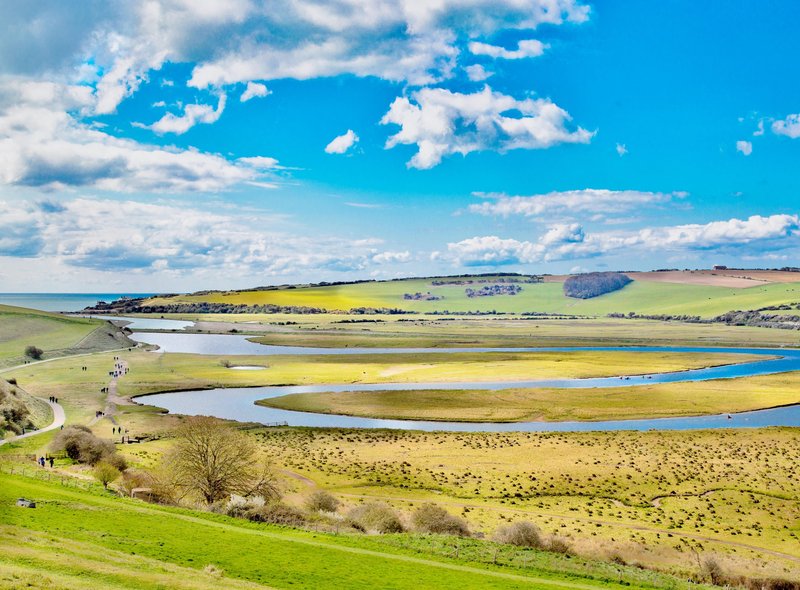
The issue is like where we find water. It is either static like in a lake or dynamic, as in a river. Nations acquire rights over lakes and that is simple. But when the resource is moving there are many parties interested to the water, in addition to the owner of the lands over which it passes.
The concept of a nation ‘owning’ both it’s static and dynamic resources, can lead to a loss of those resources to neighbouring states and in some cases, the whole planet.

The Antarctic Treaty was drawn up and agreed by twelve nations on 1st December 1959. It aims to protect the freedom of scientific investigation by peaceful cooperation. In reality it does a lot more than that. Antarctica is unique in being protected as a shared and protected world resource and the planet is no doubt a better place because of this.
However, global warming is affecting Antarctica. Glacial shelves are breaking off as giant icebergs with increasing size and regularity. Fresh water previously frozen is and will, affect ocean currents which in turn change climates.
Such issues are normally ‘dealt with’ by the government of that country but in this case there is no such responsibility held by a nation state.
This illustrates how the legal concept of ‘it’s in my country so I own everything in it’ sometimes falls short. The rule of thumb works in most countries but clearly not always.

When we forensically consider the case of a country ‘owning’ a resource because it is within that country’s boundaries, neighbours and or the whole planet, can be affected. For instance, the rain forests of South America are, or were, regarded as the ‘lungs of the planet’. They absorbed CO2 gas, slowing one of the main causes of climate change. If we examine the attitude of Brazil to it’s rain forest, the Bolsinario government refuses to be advised by non-Brazilian interested parties. It claims the right to destroy the rain forest and all the resources it contains. The rights of the indigenous tribes are also not respected.
If I found a hoard of Roman gold coins in my garden I would have to inform the government of the country I live in, let us say the UK. They might regard the ‘trove’ as a national treasure an take away my right to it’s worth. Or they could give all or part of it’s value to me, depending on the higher national interest. In this case a ‘lesser owner’s’ rights are trumped by a ‘higher owner’s’ rights. This concept could be appropriately upscaled to national and international rights. The latter trumping the former where the international interests serve a higher purpose than short term economic gain. At present this would not work because legal rulings require the threat of sanctions or even physical force if ignored. There are only limited means to do this at present.
Yet there is another perspective achieved when we consider just the dynamic resources of the country; those most like to be problematic. Dynamic resources are not rooted to the soil like trees and minerals. A simple example is water again. A river may often pass through several countries before it discharges into a greater body of water. Who owns this water as it moves? When the river flows at a constant speed and volume, then the concept of owning the water as it crosses ‘your’ country works. When the rainfall drops or a country near the source of the river pollutes it or decides to build a dam, then they are problems. Such a dispute is occurring between Egypt and Ethiopia at the present time as Ethiopia builds a dam to create hydroelectricity from the Blue Nile.
A moving resource should clearly respect the rights of all countries. As it passes though several countries each should have a right to influence it’s management.
Lawyers and Diplomats would clearly have a great deal to think about to formalise this concept But the world should not delay in my view. Every migrating bird, every ice berg, every bee and butterfly is a shared resource capable of influencing the well being of every human being.
The human race is presently facing an era of catastrophes caused by increasing populations desiring finite global resources and climate change. Denial of these facts was a phase in the 1970’s but not anymore.
When we consider how vital dynamic resources are, it is clear that many are jointly owned and enjoyed by all of humanity. In addition, human beings share a right for dynamic resources not to be destroyed or degraded. The concept of one country having a right to pollute water before it enters it’s neighbour’s land, should be trumped by an international law.

Whales travelling through oceans have no concept of the countries they are passing. Why should one particular country, such as Japan, feel it has rights over whether these whales should live or die? If the consensus of the world is that the whales should not die, then an international body should have to power to order their protection.
Such a body could come under the wing of the United Nations. The chamber might find itself debating the right of the Brazilian government to destroy the Amazon rain forest for Brazil’s short term economic gain and the world’s long term loss. The debate would include the unique forna and flaura and the rights of future generations to have access to this DNA bank. The forest contains chemicals with medicinal properties, viruses that should never be released and countless creatures that once lost, will never be replaced. The neighbouring countries to Brazil, could demand their right to not have desert and refugees, wildlife and viruses crossing into their countries. The indigenous people would also be empowered to demand respect of their rights to the dynamic resources of the forest, in addition to their ancestral land rights.
If the resources that are dynamic are given the international status they deserve, there will be fewer international conflicts over ‘me and mine’ and more co-operation or ‘us and ours’.
Laws work when they embody truths the are Universal. If they are applicable in every corner of the Universe at all scales, they are more enduring and relevant than passing political values. The law would be called The Global Treaty of Dynamic Resources 2021.
Such a law and it’s enforcing body, will become even more important when humans begin to explore new planets and space. It might well be expanded to include static resources. The race to mine the moon that we see today, is about commercial rights to resources that are becoming scarce on earth, so called ‘rare earth elements’. Similarly, the filling up of the earth’s upper atmosphere and deep space with satellites, needs strategic guidance to avoid commercial exploitation and associated ‘space wars’.
If humans don’t get this right, then the next phase after the literal ‘carving up’ of our beloved planet, will be the ‘carving up’ of space and a repitition of the resource-driven disputes and wars in history. Even Helen of Troy was a dynamic resource and if a ruling had been made by a respected Greek god, the Trojan wars would never have happened!
One comment made by many of the men and women who have looked down on earth from space is that there are no national boundaries. We are so used to political maps that the real picture has, until now, been hidden by nationlism. Globalism, whether desired or not, will be the next paradigm for planet care, in my view. Without it, shared dynamic resouces will be seized or destroyed by the short term priorities and political ‘gain’ of politicians who rule without a trace of compassion for the people or the planet. You know who they are.


 Matters Blog