It happens sometimes, that social norms change. On the balance of probabilities, not all of these changes will be for the better. This leaves the challenging task of pinpointing the changes that are for the worse.
In pursuit of this task, I offer to the reader the common experience of telephoning a company or government department for some purpose or other. When you reach the correct recipient, you are greeted by yet another recorded message. It tells you politely that ‘you are in a queue’ and ‘we apologise for the delay due to an unusual high volume of calls’ and if it can get away with it, ‘call back later’. The caller is expected to think that he or she was in some way, adding to the problem for ringing the company at a busy time. We are expected to blindly accept the company policy of not employing enough call takers to answer the telephone in a timely manner.
You know this because there is never the message, ‘we have failed to employ sufficient people to speak to our customers and not valued you.’

The ebb and flow of demand is in some way is understandable. There is a phenomenon that makes shops sometimes empty and sometimes full. Anyone who has worked in a shop will have experienced this. Companies that operate public transport know that their buses and trains are insufficient to meet the demand in the rush hours and making huge loses the rest of the day. We get that, but it should never be a 24 hour excuse. Customers with any sense are going to use competitors instead, or in the case of government departments, start sending endless emails and create another problem.
My reply is that this attitude or ‘go away’, if accepted, is the ‘thin end of the wedge’. Of course phone calls can often be made again, later, but what happens when the stakes are higher?
One current example is the manner countries are operating their hospitals during the Covid 19 pandemic. Because of the fear of the hospital not being able to deal with a sudden high demand from patients with Covid symptoms, the solution is to empty the hospitals of other patients and any newcomers; refuse to give them beds. The system of ‘triage’ (treatment according to immediacy of need) is dropped. Cancer patients are sent home and those awaiting urgent operations are told to seek private treatment (certainly in the UK at least).
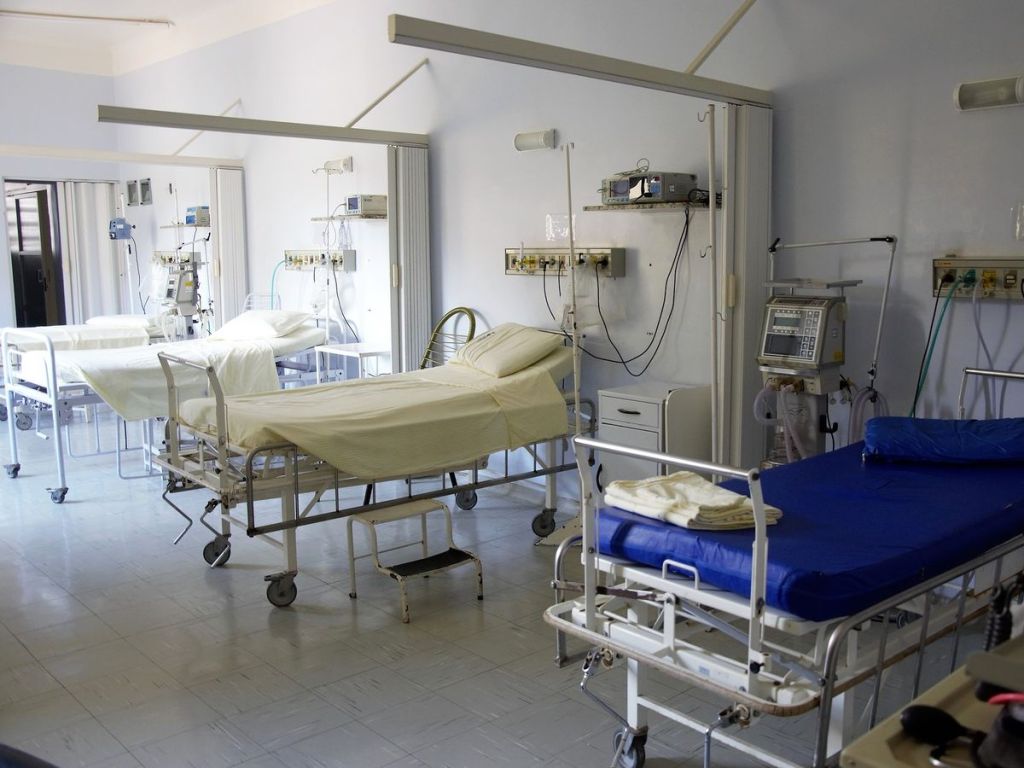
Suddenly the health service’s problem of not having enough hospitals, beds and staff for national emergencies such as wars, famines, plagues, epidemics, pandemics…is not the hospital’s or anybody’s fault except the ill for being too many in number.
‘This situation is completely unprecedented,’ explains the UK government minister, in the hope that the public will accept the lie that pandemics have never happened before and are not at the top of the list of known and planned for threats to public health and social order.
Because society has already accepted the ‘don’t bother us’ reply to reasonable requests. The breaking of Hippocratic oaths by doctors and dereliction of duty and possibly criminal law by hospital managers and government ministers apparently goes unnoticed or at worst tolerated.
There may be differences around the world as to the degree of the point I am making but as a generality, the ‘don’t bother us’ excuse for poor planning and execution has become acceptable.
We should all ask ourselves; are governments guilty of watching people die for lack of or negligent plans for such events? If the current pandemic is not sufficient example to chew on, the next is indisputable.
Due to climate change, wars, famine, economic decline, inept and / or corrupt governments in the world today, there are mass migrations of people. Some are seeking a better life, some an easier life, some free hand outs, some legitimate political asylum. The problem of deciding on the motive of these people and whether to accept them as citizens is regularly discussed. In some blocks like the European Union, a policy which is acceptable to all it’s nation states is notably absent.
Historically, countries have prospered when they have had a benign policy to immigration and at times people have been encouraged to migrate and become citizens of say, Australia and the USA. But with more people on the planet than ever before, the sharing of resources is now problematic. Migration has to be controlled in an ethical manner respecting the human right to claim political asylum…but for governments the ever rising numbers of applicants has been put in the ‘difficult’ box.

In situations of life and death like this, the ‘don’t bother us’ reply that many governments would like to and have made, becomes immoral and bordering on fascism.
The United Kingdom has experienced a large rise in illegal immigration since it left the European Union. Before, it was able to co-operate with France, it’s nearest neighbour and controller of ports, roads and railways. But since the Brexit kick in the teeth to France, the French have far less interest in being part of measures to control the dangerous crossing of the English Channel. This a 30 mile stretch of water with dangerous tides, bad weather and one of the busiest shipping lanes in the world.
People, families, have died attempting this crossing. One solution promoted by the current Home Secretary, Priti Patel, is to turn migrant boats around mid channel. You might as well erect a sign here or in the straights to Italy or Greece saying, ‘don’t bother us’.
So how is it that the UK can continue this ignorant (meaning to ignore in a base and uninformed manner) attitude and why are there no protest marches demanding taking the problem seriously? After all ‘immigration’ and ‘controlling our borders’ were two problems that swung the vote in favour of leaving the European Union.
Could it be because the citizens of Britain have become used to ‘don’t bother us’ as a reasonable reason for sending people away?
It is internationally enshrined in law, that a person must travel to a country before being able to claim political asylum. You might wish to question why when counting the washed up bodies on the beaches of Kent and Sussex. Why is it not possible to go to the British Embassy in say, the People’s Democratic Republic of Congo and make your case for UK political asylum there? No money will have passed hands to illegal traffickers, no houses will have been sold to pay the traffickers, no political confidences should have been breached creating a need to flee, and documents should be to hand. Certainly staff in any country’s local embassy, will have the best evidence to hand for proving or disproving claims. Even the creation of an ‘humanitarian visa’ for immediate travel would be a step towards respecting the basic human right to life and travel.
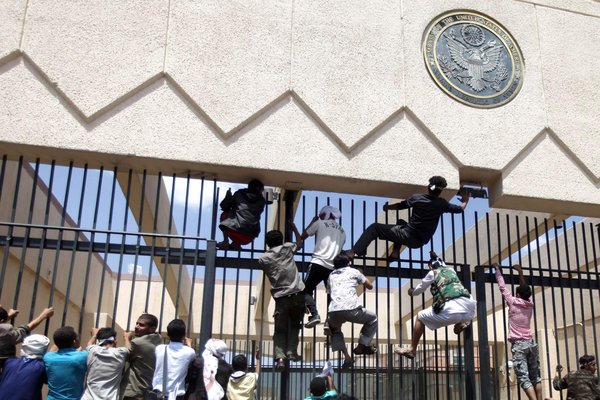
Why is it not so? I recently heard on the BBC radio that the reason you cannot claim asylum in this way is because Embassy’s will be unable to cope with the demand.
This is probably true, at least in the short term. People will be rushing to capital cities and setting up camp sites in the grounds of Embassy’s of their choice. But are they wrong to do this? Are they seeking preferential treatment? No, just wishing to make a claim for international help and avoid the perilous journey at the hands of criminals to safety.
Consider how much better the recent withdrawal from Afghanistan would have been if the processing of refugees was not taking place on the tarmac of the airport under the watchful eye of the Taliban, but in a safe and timely manner in an Embassy? There might be a coffee machine instead of a Kalashnikov.
But as things stand, governments reduce the risk of their various Embassy’s being ‘overwhelmed’ by forcing refugees risk their lives and perpetuated criminal trafficking gangs and modern slavers, before their claim will be considered.
The ‘don’t bother us’ principle is used to justify the injustice of the rules of the nineteenth century being applied in the twenty first. It’s as if the universality of the internet had never happened.
The question we should all be asking is, what will be our next vital need to be refused by our government on the grounds that the system cannot cope? Is their answer something we should question or tolerate?
 Matters Blog