Seeing is Unbelieving

Seeing is Unbelieving

There is an intriguing eye test in which the subject looks at a cross and black dot spaced out on a sheet of paper. As the paper is drawn closer, whilst staring at the cross, the black dot disappears.
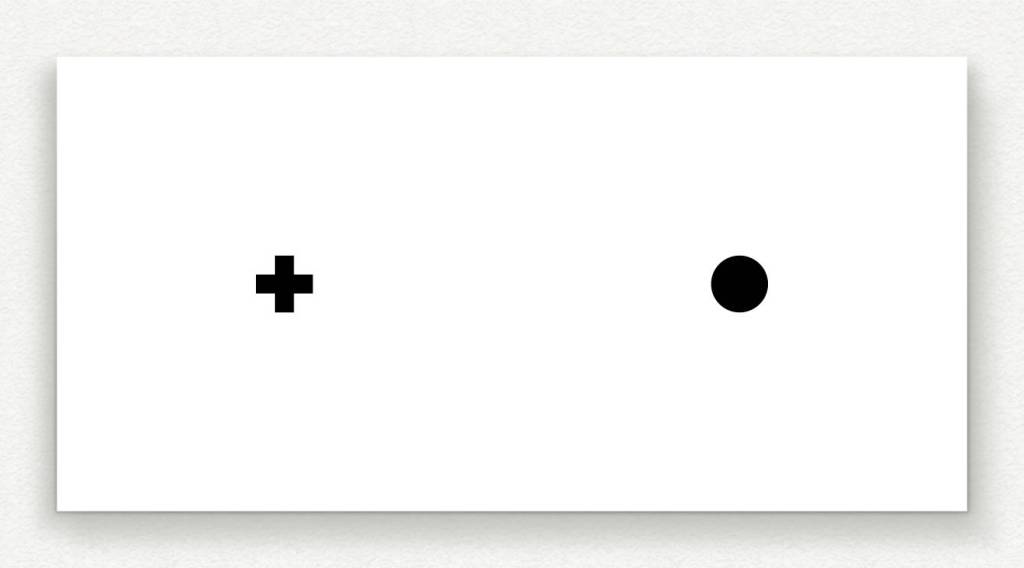
The explanation we know to be the ‘blind spot’ in the retina where the optic nerve enters and fans out. What is intriguing is that the brain is constantly filling in this ‘blind spot’ with information that we are not aware of.

It is the same with white ceilings. If there is a blemish or a stained patch, the brain will ‘see’ the ceiling as perfectly white. What we see is therefore, in some degree, doubtful.

Perhaps it will help us if we define ‘seeing’ and ‘looking’. Most of the time we ‘look’ without discernment. If however we focus our mind on what we are looking at, more information and understanding will become apparent. Artists learn to ‘see’ in order to render every aspect of the subject they are describing to an extraordinarily high degree.

The visual apparatus of humans can be trained, but we should also realise that what the brain does with the information is highly selective.

When two soccer teams play a match, the supporters identify with their own team. If there is an incident where the referee has to make a decision in favour of one side or the other, both sets of ‘witnesses’ i.e. supporters, will be highly biased towards their own side. They will talk about the incident and the injustice of the referee’s decision for weeks afterwards, based on their own biased view.

picture credit;
The Nutmeg News

Witnesses in criminal cases are notoriously biased and the justice system has to record what they saw as objectively as possible. When two witnesses present differing versions of events, which is the truth?

In one extreme case when people on a bus witnessed an incident in Israel, the police used a hypnotist to access what they saw in extraordinary detail. Our brains retain most of what we see, it is just that we blank most of it out unconsciously. Hypnotism retrieves this information in an unbiased way, so that for instance, car registration plates will be remembered.

Unfortunately, we do not have hypnotists to solve our family arguments about who said what to whom and how long this has been going on. Neither do whole nations have access to truthful descriptions of what is going on in the world and dictators exploit this.

It is possible to create a narrative so extreme that it can even be used to start a war with a neighbour. Witnesses to events in the war, even professional reporters, are today regarded as suspect in their reporting because even the media can either intentionally or unintentionally, select the truth according to their editor’s wishes.

picture credit; World Press Freedom Index

Even the photographs and videos are no longer able to be trusted as software is available to alter them.

All of this happens in what we call ‘the physical world’ but of course what we see is not always physical. Take an audience watching a film in a cinema. They are certainly not watching anything ‘real’ in the conventional sense, but they will be completely transfixed by the narrative being played out before them. There may be some self awareness retained as the popcorn in handed around which is similar to the way hypnotised subjects experience what they are viewing, but their focus is mainly in a virtual reality.

Hypnotised subjects reveal much about the complexity of how visual information reaches the mind and how it is interpreted. There is one case referred to in Michael Talbot’s book The Holographic Universe, in which a man is hypnotised and told that his teenage daughter is invisible to him. She stands in front of him and much to the delight of the audience and his giggling daughter, he swears he cannot see her. Then the hypnotists takes out a unique watch and presses it against the back of the young lady. He asks the father details about the watch which he squintsat and reports correctly everything he is asked about the watch.

There is no explanation for this phenomenon, but clearly it shows us that what we see is far more extensive and complicated in it’s mechanics than the diagrams of the eye that we study at school, explain.

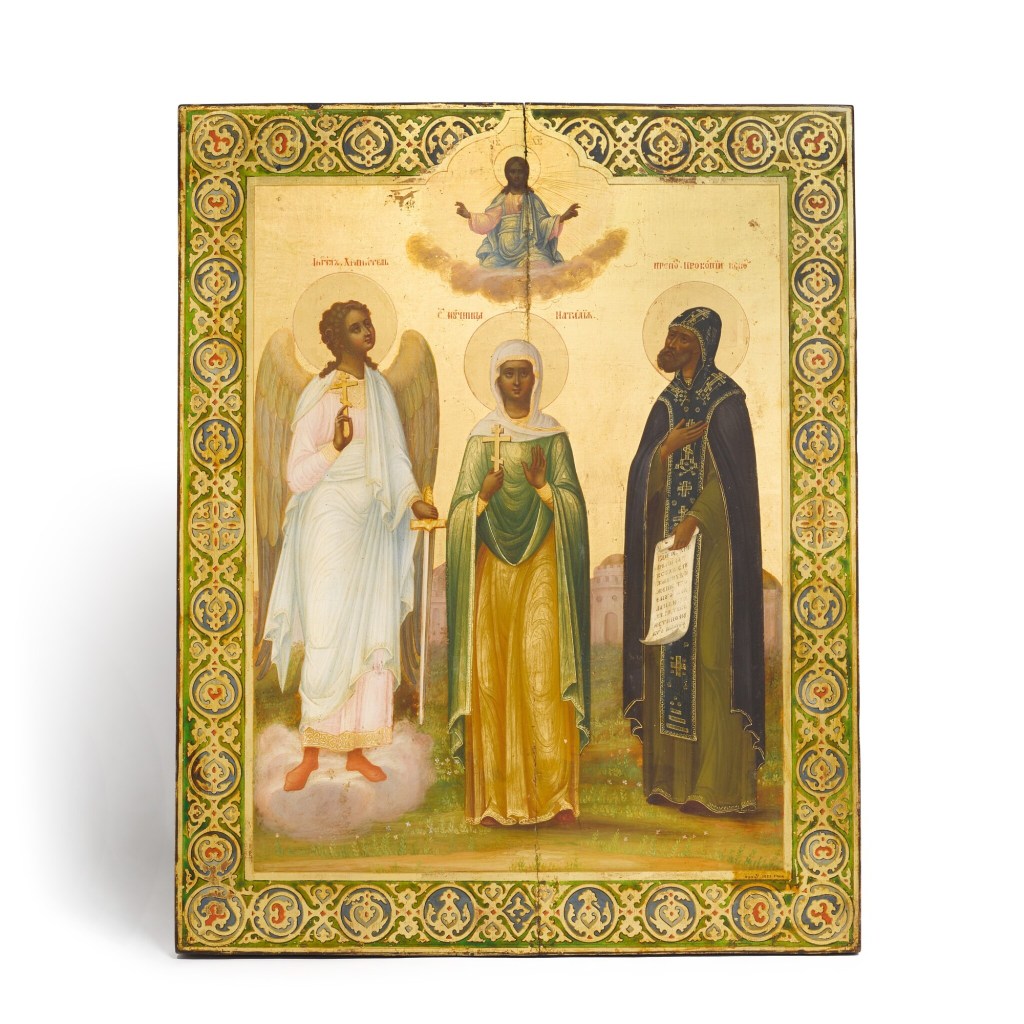
In a lifetime a person may experience visual ‘discontinuities’. These generally fall into the concept of ‘extra sensory perception’ such as seeing ghosts, spirits, poltergeist events, psychokinesis. Lorna Burne is a modern mystic who has written books about how she has seen and interacted with angels and archangels since she was a child. Her whole visual world includes angels and spirits which the ‘ordinary’ observer is completely unaware.
picture credit; Southerbys

Is it right to dismiss those with ‘second sight’ and their experiences or should society be more tolerant and inclusive towards people who in historical times would be regarded as either saints or witches?

Ironically, history has always taught us not to believe our eyes. The whole concept of an invisible God enables us to ‘look inward’ into our hearts and minds. A God who is never revealed is not open to be disproved or proved and yet, humans have sustained the experience of the ‘godhead’ across aeons and continents. The ancient Greeks experienced a world in which minor gods revealed themselves to mortals, and their stories, artefacts and architecture give vivid and consistent accounts of each and their powers to help or obstruct human endeavour.

The Ancient Greeks also believed in the idea that the eye ‘sees’ by projecting energy at the subject in the manner of a torch in a darkened room. Mind was an integral part of the process of seeing to the extent that the observed physical world is capable of being created by the observer.

Quantum physics has rested it’s gaze on exactly this probability; that the observer alters the events that take place right before our eyes. It supports the ‘idealistic’ philosophy in which mind has control of the material Universe. We understand that the Creator or Mind initially created the Universe by thought alone. Now scientists can step down through the different scales in which energy and matter perform their visual effects, and conclude that they personally are part of the experiment.

It is intriguing therefore as ordinary people, to become more sceptical about the ‘reality’ of our world of physicality and factor in our dreams, memories, intentions, ideals, beliefs, expectations, preconceptions in an attempt to grasp the slippery fish we call our world.
Democracy by Numbers

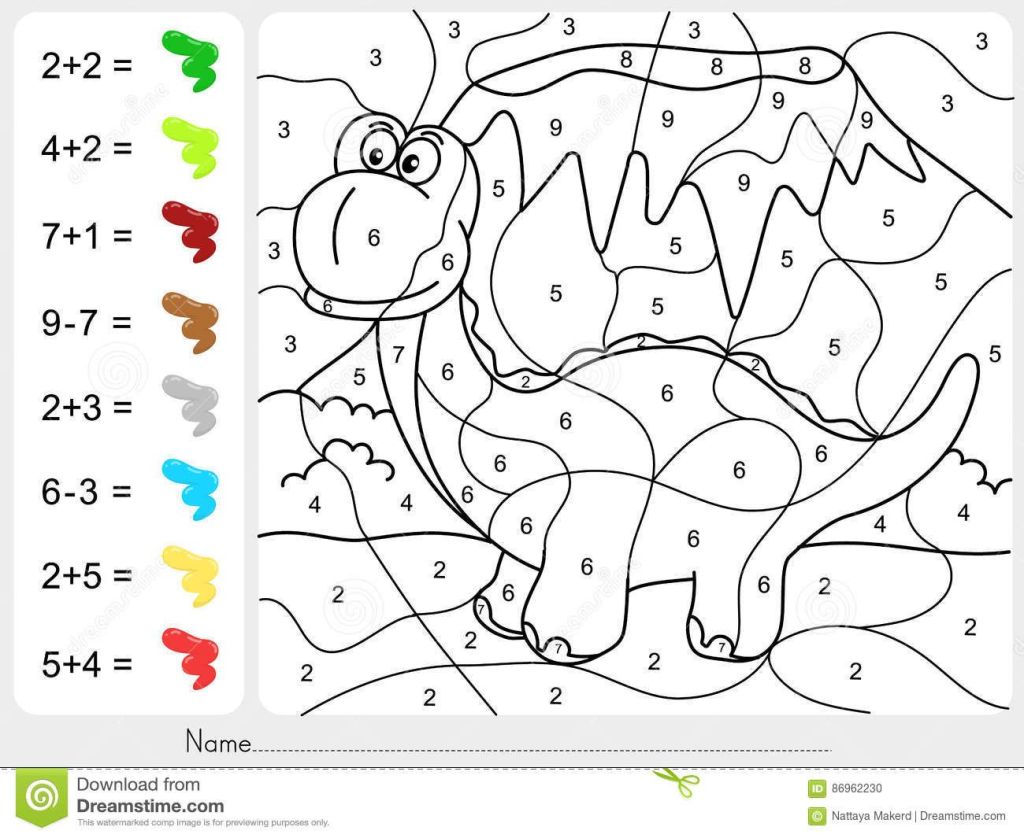
There is a system of ‘painting by numbers’ for novice painters which gives great looking results using very basic skills. A picture created by a professional is divided into sections of say, seven different hues and tones. Each is given a number between one and seven and all the novice painter has to do is fill in each section of the canvas with the appropriate colour or hue.

The majority of the world is now governed by autocratic leaders. In the previous decades of the twentieth century this was not the case but recently the tipping point was passed and autocrats now ‘rule the world’ – or do they?

You see, what I am doing here is making an error of thinking committed by ‘democratic thinkers’, whereby there there are only two possibilities – most or least. What is the ‘most’ or majority, becomes the ‘status quo’ for the oversimplified reason that ‘most people want it’.

It’s a beguiling argument because it simplifies everything into one overgeneralisation, hitting contradictory nuances and unintended consequences right between the eyes with a knock out punch.

At our peril. Because in my view we should always go one layer deeper into what a ‘majority’ is and what effects it will have on the government of a country.

To go back to a basic definition of democracy;

Control of an organization or group by the majority of its members.

So let’s see how self styled Western democracies fit this definition.

The first glaring contradiction is the rise of the super rich, super powerful entrepreneurs like Bill Gates, Elon Musk and others.

These and their lesser known ilk, now constitute one percent of the population of the world and yet, influence most of it and control at least 25% of it, directly or indirectly. Elon Musk created an electronic car when most American motor manufacturers, except Ford, were going out of business. You could also question; how comfortably does a software engineer sit in the theatre of mass vaccination?

Democracy in this 1% of world leaders, (which is what they are by any definition) does not exist. No one voted for any of them or the technologies that they pushed to the top of the mountain.

So there we have brush No.1. Paint in all the areas with the number one on your painting.

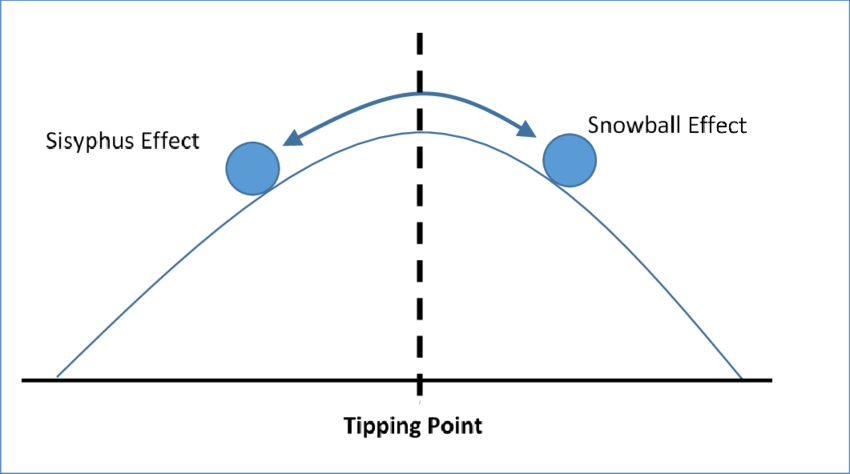
The next significant number is No. 50. This is the magic ‘tipping point’ in any democracy that defines the majority. Once you have this number of voters and ‘a few more’ then you control everything.

Or should they? Well, if we are thinking about ‘free elections’ in western democracies then these never really happen for the simple reason that a large number of people prefer not to vote. In some countries, this problem is countered by making it illegal not to vote…but this makes most liberally minded people uncomfortable… as does the idea of someone under a certain age voting. What right does a sixteen year old have to have an opinion on a country’s energy policy, a policy that is likely to affect them for the rest of their lives unlike an eighty year old who can vote but probably doesn’t have that long left to live.

Then there is the management nuance created by a 51% to 49% result. Imagine you survive a plane crash into the Pacific Ocean. You are bobbing up and down in a life raft with 8 passengers who look to you, the only member of crew to survive. They discount you as their leader as you are just a ‘trolley dolly’. Four of them argue that we should all start paddling. Four say we should stay put, so they all look to you for the casting vote. You know that whichever option you support there is going to be trouble. If everyone starts paddling there will be four who will not be putting their back into the effort. Worse still, they will begin to moan about what a waste of effort it is and how the rescuers will now not find you. The effect on moral is catastrophic. The same will happen if you follow the option to stay put and there is no sign of rescue.

If you think this is an unlikely scenario then just look at ‘Brexit’ and how the 48% to 52% vote (by those who bothered to get out of bed that morning because they thought Brexiteers would never win) has and is, panning out.

picture credit; Are We Europe

The third number on our palette is No.100. This is the colour for the 100% majority in favour. The rule in this version of democracy is that unless everyone agrees, nothing will get done. For this reason autocrats favouring the mere appearance of democracy whilst carry on as a despot, imprison the opposition (or worse) and create voters who are too frightened to vote against another ten years of tyranny.

Anyone who has lived in a family will know how this works and the misery it causes. Dad decides we are all going to the seaside, whilst Mum objects because she has an old friend to meet and Kitty wants to go on a school museum trip and Jazz wants to play in the local soccer team finals. Dad overalls and the family go to the seaside and all have a miserable time. The next day, they all go off in their individual directions and all is well.

Rarely do countries have the same interests and ideals in common which is why it is difficult for the European Union gain consensus in the 27 member countries. The only way is to ‘water down’ the proposal to such an extent that it causes no offence to anyone, but of course such vague proposals then become open to misinterpretation or biased interpretation from then on.

Most blatantly the United Nations Security Council gives the right to ‘veto’ any proposal to all of it’s seven member countries. This means that if one of them is committing war crimes somewhere outside it’s own country, it can veto any criticism and carry on.

So far I have placed three colours on the palette; 1% of unelected powerful people, 51% majority who upset the rest and the 100% who want their own way.

It would be reasonable to ask at this point ‘what does work?’, for democracy is meant to be the foundation stone of modern western civilisation.

Well, the only variation of the rules of democracy that does work in my view, is the requirement for a ‘super majority’. In this system it is recognised that the 51/49 split is unfair and becomes unworkable.

picture credit; Hype and Stuff

A super majority is therefore anything over a 60/40 or 66/34 split.

It’s subtle to understand at first but comes closer to what might be called ‘common sense’ management. If there are four in the family car heading off to the seaside, at least three are happy to be there and soon the fourth finds that perhaps it wasn’t such a bad idea after all or at least, it’s a fair deal.

If the super rich entrepreneurs and Oligarchs were compelled to pay 99% taxes, their power to influence would be taken away and their wealth fed into the poorest people in societies, creating the greatest benefit for most. Most of the super rich might well find that living off 1% of their wealth actually made them happier human beings or at least, that it was a fair deal. After all, Robin Hood was far more popular than the Sheriff of Nottingham.

If Russia is committing war crimes then the Security Council of the United Nations should have to power to act to investigate the allegations and call a cease fire or put in UN troops until the heat of battle dies down, and common sense prevails. Five to Two in favour is a reasonable super majority; get over it Russia and (abstaining) China.

To return to the ‘painting by numbers’ analogy, we can see that one coat of one hue paint is simple, but creates no work of art. Once the notion of ‘government by the people’ is broken down to examine the question ‘how’, several hues of interpretation present themselves. We must be bold because in calling everything ‘democratic’ we are committing the sin of over-simplifying.

Yes, they are all democratic but the devil is in the ‘how’ you create your democracy. You will need nuanced thinking to make things work whether on the small family scale or at a national level. The more colours in your painting the more it’s going to be a master piece and less like an amateur filling in spaces.