Most European countries have at least one land border with another country. But the UK is an island and this proved a great strategic advantage for the British, stopping intending visitors like Napoleon and Hitler. The English Channel is now one of the busiest shipping lanes in the world so you might think that crossing it without being noticed and at least avoided, would be difficult.
This makes you wonder how seriously the borders of the UK are watched when rubber boats arrive who could be invaders from a hostile country. Dorset Police went out and bought three boats, which doubled the patrol capacity for the whole of the UK. Interestingly the Royal Navy have become involved…but only recently.
This essay is not principally about the UK. The plight of those wishing to enter it, is merely intended as an example of similar situations all over the world, such as Cubans wishing to enter the USA.
With climate change, scarcity of food, water and raw materials, wars, disease, corruption, rogue governments and other factors, the world needs to apply a united strategy to those affected. The mass movements of populations needs to be handled co-operatively and competently.
So let us re-focus the problem in the English Channel and consider how a strategy can be formulated and implemented rather than narrowed to a single issue.

Firstly there needs to be a ‘triage’ of emigrants who turn up at the in French sea ports and coastal towns. They will either be in the ‘criminal’ group (5) or one of the other groups listed in Let Me In – part one, and it is of primary importance to identify them in the interests of all countries.
They may well be pretending to be seeking asylum in the UK and will have worked carefully on a fictitious cover story. If and when known criminals are identified by security services, it is imperative that they are dealt with. Those who are known to be linked to crime, war crimes, terrorism, extremism etc. may already have international warrants for their detention enabling their immediate extradition to other countries. In doing harder, what governments should already be doing, there is no longer a temptation or excuse to treat the greater majority of genuine migrants, as criminals.
The ‘people trafficking gangs’ and their leaders clearly, also need to identified and put on trial. Good police work should be capable of locating and monitoring them by using surveillance and sting operations to infiltrate their organisations and make arrests. If this has ever happened it has not hit the headlines. Do more resources need to be aimed towards identification of the gang leaders? They may be linked to other organised crime such as drugs, sex trafficking, terrorism and the rest. This is just bread and butter policing and yet it does no appear, at least, to happen.
The sale of the boats and safety equipment which takes place in the Calais markets and Marine supply shops, could be licensed and stricly monitored by CCTV, forcing traffickers to transport this equipment from elsewhere. This will not stop them, but it will increase the risk of being caught in possession of it and having to spin improbable yarns to police.
Security services have teams scanning the dark web for extremists, terrorists and their associated criminal networks. Little is made public about this work; no doubt for good reason, but there needs to be some publicity if only to reassure the public on both sides of the channel that there is a raft of measures operating to close what is happening down. Why is it so difficult?
Post Brexit, the French north coast became a border of the European Union. As such it will have been given substantially greater security measures than the internal borders within the EU. If 440 people leave the coast in one day and there are 20 people on each boat, then that is 22 boats! The English Channel crossings are made in broad daylight from busy coasts. Do the general public, commercial and leisure users of ports and marine facilities report suspicious activity? Is there a Coastguard hotline to report such craft? If you ask Google this question the answer is yes; 1-888-373-7888, but it’s in the United States of America.
If we consider new technologies then it has become practical and effective to search for and monitor suspicious activity using drones. These will provide real time intelligence and enable land and sea based patrols to investigate in a timely manner. They can also be used to verify reports from the general public before allocating resources. Drones could be used on both sides of the English Channel. It is likely that members of the public with an interest in using drones, could work alongside coastguard officers; reducing costs and releasing officers for duties that require their legal powers and skills. (There will also be a spill over benefit help catch smugglers and other illegal activity.)
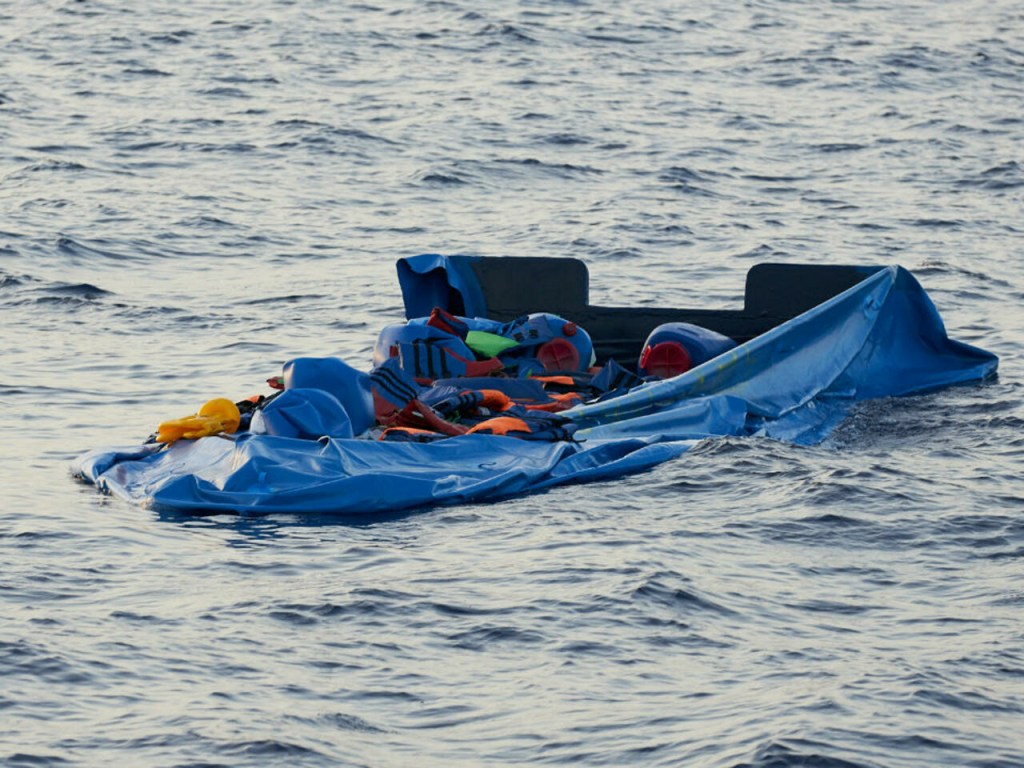
Crossing the Dover Strait from Calais depending on, wind and tides, speed of vessel etc. is going to take at least three to four hours. Crossing the shipping lanes is fraught with danger as all sailors know. This means that it is important to intercept emigrant boats before leaving the relative safety of the inshore waters. Maritime law requires interception of a such a vessel to be taken directly to the nearest safe place. If emigrant boats are allowed to stray too far towards the centre of the Channel this can become an issue between UK and French authorities. Should boats be turned around as they approach the other side of the channel (as the USA Coastguard does to Cuban refugees) or should a border be enforced in the centre of the Channel? Is this idea remotely practical in any case when emigrants dangle their children over the water as a threat to intercepting authorities or simply just jump into the water. At one point the Home Secretary Priti Patel wanted boats physically turned around, not appreciating or perhaps caring, how dangerous confrontations at sea are.
Newspaper articles and even presidents of countries will try to persuade the public that all or most emigrants are all criminals but statistically, the majority will fall into one of the other four groups already described.
Many will probably be without documentation often through no fault of their own. This issue could be solved by the often suggested policy of ‘creating safe routes’ and simply issuing temporary documentation. These can include biometric identification as is reasonably required by the UK government. (Scanning finger prints is part of process of identification of the known or wanted criminals and will already have been done. It takes a few minutes, not months, to do for each person.) The Prime Minister has lauded the idea of ‘safe routes’ in debate, but in reality the only safe routes the UK has set up are for Ukranian Nationals and a restricted number of Afghans.
My principle point, as I have almost certainly missed out many details and parts of a more general strategy simply because I am just writing this as a lay observer, is that controlling the mass movements of undocumented people is a complex issue. Enormous co-operation between nations is required, the sort of relationships that the European Union was partly set up to achieve.
There is an ‘elephant in the room’ however and they is why the UK is a honey pot to emigrants. Why do individuals and families wish to come to the UK so very badly they will risk their savings and their lives to get there? Perhaps the answer includes the facts that English is a lingua franca for many, it has given out UK passports following it’s Empire days (e.g. Hong Kong), it has a free health service based solely on residency and has a generous welfare system into which there is no immediate requirement to pay, in contrast to most other European countries.

The UK public might be proud of these humane and welcoming promises but it is cruel to dangle the carrot without letting go of it just as the donkey has finally completed the journey and this is precisely the strategy of the present government in most cases. In my view this is a slippery slope to the UK losing it’s reputation for fairmindedness.
This essay has been long and covered at lot of ground. This has been deliberate and well done if you have reached this far! My aim has to be to outline only the broad spectrum of issues around the mass movement of people around the globe, using the UK as a sorry example of ineptitude.
Governments ignore complexity at their peril. It is always tempting for policticians who often are vastly under qualified for the roles they attempt to do and say as little as possible. This is all very well for the ordinary person who knows they have no idea about international polictics, but leaders are expected to be better than this. The detail is most often where policies go wrong and ignoring detail is much the same as devil worship, for does he not love the same?












 Matters Blog