
Serpent worship in some form has permeated nearly all parts of the earth.
Manly P. Hall
The 20th century author and mystic, Manly P. Hall then cites these examples of ‘serpent worship’ in his best known book, ‘The Secret Teachings of All Ages’.
Serpent mounds of the American Indians
Python; the great snake of the Greeks
Druids; sacred serpents
Scandinavia; Midgard snake
Burma Siam Cambodia; Nagas
Jews; brazen serpent
Orpheus; mystic serpent
Greek; snakes at the Oracle of Delphi
Egyptian Temples; sacred snakes, Uraeus coiled on foreheads of Pharaohs and priests
But clearly, from this general idea, there is plenty of detail to fill in. For ‘worship’ and ‘the use of symbols to express something greater than words’, are very different things. None of above list, in my view, are examples of worship of snakes as minor or major deities. They function rather as ‘tools’ for expression of energy and ‘symbols’ of natural law in some way.
Perhaps if we examine the snake as a symbol first, it will help us understand the root and branch of what universal and cultural expressions are being made.
The snake is of course a reptile and different from the mammalian kingdom by laying eggs and having cold blood. We know that reptiles are one of the earliest forms of life and are quite distinct from homo sapiens sapiens. However there is a ‘reptilian’ part of our brains that organises our most basic instincts and therefore we are not so far apart.
The snake moves in a most compelling way that even today makes human jump out of their way instinctively. Most snakes are poisonous and this memory is both in our bodies and our minds.
We should not be surprised that this poisonous aspect of snakes gives them power beyond their size, in fact the smaller snakes are often the most dangerous to humans. Alternatively the snakes that outsize humans several times are able to coil their bodies around us and crush us to death.
We should expect them therefore to be associated with ‘evil’ in our minds.
In addition the shape of snakes and how they move is fascinating to watch. They move on land and water as a ‘standing wave’, the tail taking exactly the same path as the rest of the body and the head.
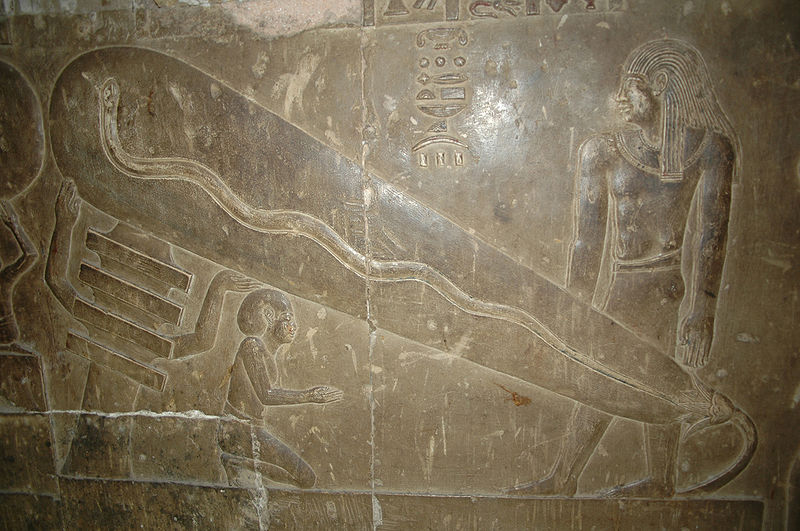
Waves express energy as static and active states. We watch alternating current on our instruments as a sine wave and are immediately reminded of a snakes powerful and scintillating shape. They appear to move without moving and like energy have an ‘invisibility’ about them.
On a grand scale we see snakes represented in the landscape as rivers curling through flat plains and underground as coiling springs rising to the surface or plunging into the ‘underworld’.
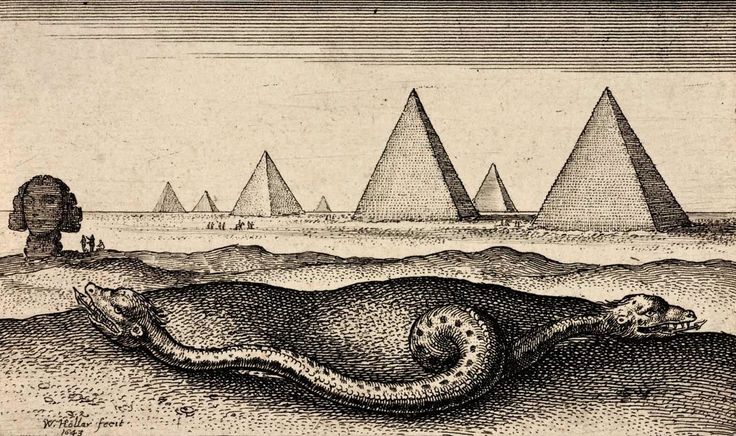
Most compelling of all is the way in which this ‘earth energy’ or ‘chi’, ‘ki’ or ‘prana’, is coiled at the base of the human spine. Through yogic practices (the path to union with the Divine) as described by Arthur Avalon in his classic book ‘Serpent Power‘, human beings can experience the uncoiling of this energy vertically through the chakras and nadis associated with the spinal column and it’s rampant tower of nerves.
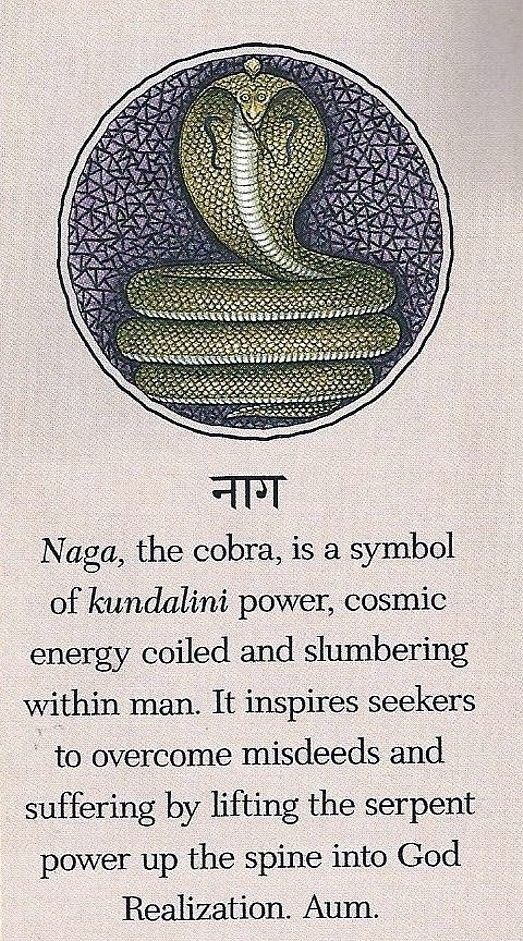
When we have ‘spine tingling’ experiences through realisation or fear, we can feel this primal energy and experience being intensely alive.
Not only in these peak moments but also the every day health of the body depends on the balance and even flow of prana as expressed in our every breath. Becoming unwell may have many causes but the return to health involves re-balancing of the powerful creative and destructive processes of living beings.
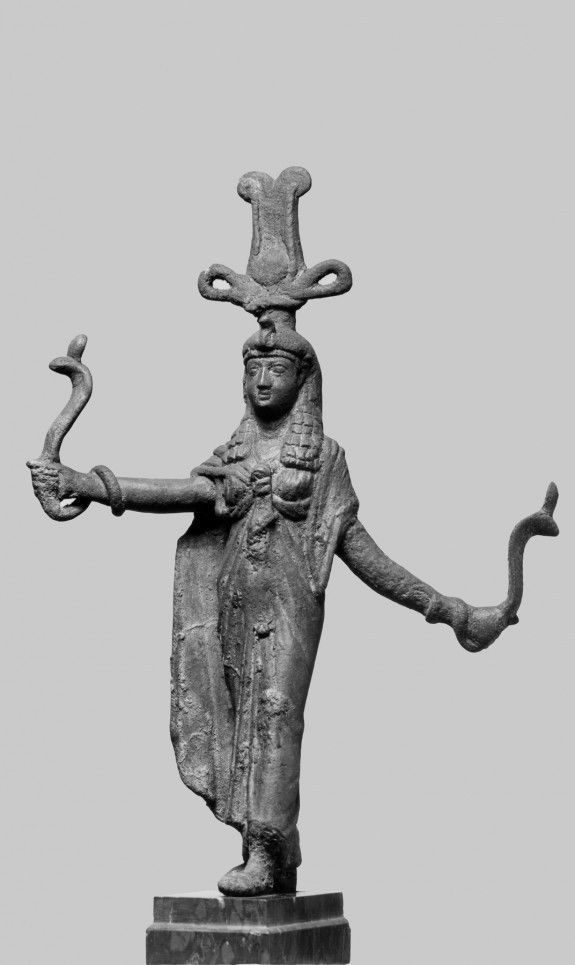
When we watch waves building and crashing on a beach we are able to tune to this understanding of a most basic truth of nature. Life is given and taken away. The caduceus is a rod entwined by counter coiling serpents is a symbol of this used even today in medicine.

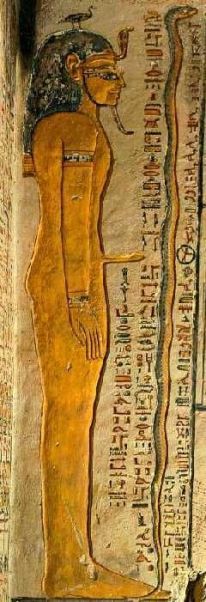
Perhaps the most intriguing and unspoken parts of the human body in which the serpent is expressed, is the male penis which is able to coil and stand erect like a cobra. In it’s standing moments it is able to literally express Prana in the life creating process as a most god-like creative experience of the human body. It literally creates the life of a new being and gives a surge of energy (experienced as ecstasy) so powerful that it enables a soul to be ‘kick started’ into this physical world.
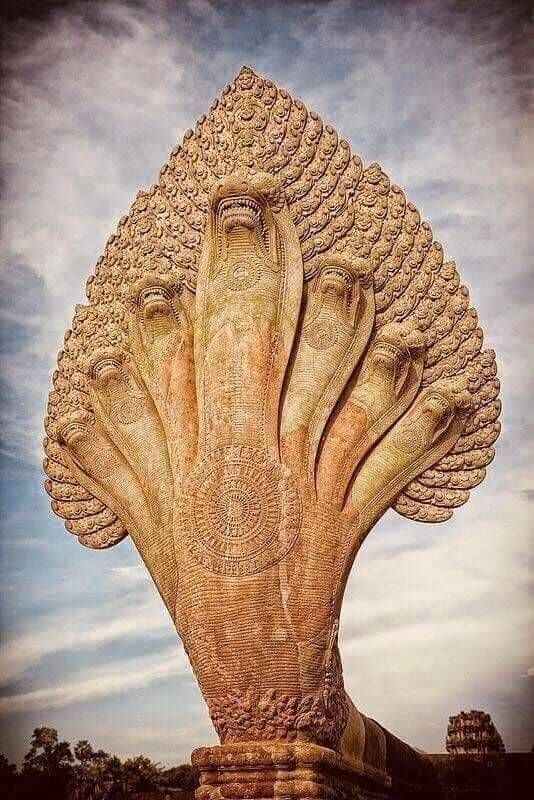
The Ancient Egyptians depict the standing penis unselfconsciously in their wall paintings, but certain prudish visitors to these depictions chose to deface and remove them whenever they could! Perhaps they were influenced by the story in Genesis told in gilded form to wide eyed children.
The story of Old Testament the serpent in the Garden of Eden perpetuates the negative associations of the serpent as a symbol.
But the Tree of Knowledge of good and evil, thou shalt not eat from it; for in the day that thou eatest thereof thou shalt surely die. Genesis 2:17
And the argument of the serpent made to Eve giving her reason to disregard God’s command is clever (and reminds us of the ‘fake news’ of today!)
For God doth know that in the day that ye eat thereof, then your eyes shall be opened, and ye shall be as gods, knowing good and evil. Genesis 3:5
Interestingly the first example we are given of knowing good and evil is Adam and Eve realising they are naked and feeling this as an ‘evil’ to be redressed by ‘doing good’. They make ‘aprons’ to cover their genitals – a tradition echoed in the Masonic symbols of modern times.
Certainly Adam’s ‘serpent’ is so banished as rapidly as is tried today to the ‘fake news’ distributor.
We might also interpret that this sacred ‘knowledge’ is both a curse and a blessing. For accompanying the descent of human beings from eternal life (Heaven) into the physical world (a garden), they do indeed acquire the awareness of duality represented by the two extremes ‘good’ and ‘evil’.
The dualistic form of thinking is a serpent with so many heads, humans cannot work out which one is real and we are turned to stone; made useless. This understanding is contained in the Greek myth of the goddess Medusa with her head made of serpents.
Psychologically we have descended from the bliss of ‘oneness with God’ to a psychotic state in which we cannot determine the difference between dream and reality, happiness and sadness, toil and rest, gain and loss, good and bad. Our lives are lived in this constant confusion created by a dualistic outlook; believing all things are polarised.
We have to look to the Eastern religions for the veil of this dualistic perception to be lifted. In Zen Buddhism they would only see the whole serpent, not it’s head or it’s tail or it’s body. The real world is a cosmic Unity; a place described as the original Garden of Eden or state of bliss.
Some alchemical gnostics in the West knew this truth and the symbol of the serpent swallowing it’s tail is the expression of this truth, as not told in the Bible.

The serpent’s tale is then one of great complexity throughout history, well beyond what Manly P. Hall describes as being an ‘object of worship’. It appears as a figure holding two serpents in the manner of a pair of scales, with as much regularity as any other. The scales represent objective judgment; the giving of balanced views and feelings which we call wisdom.
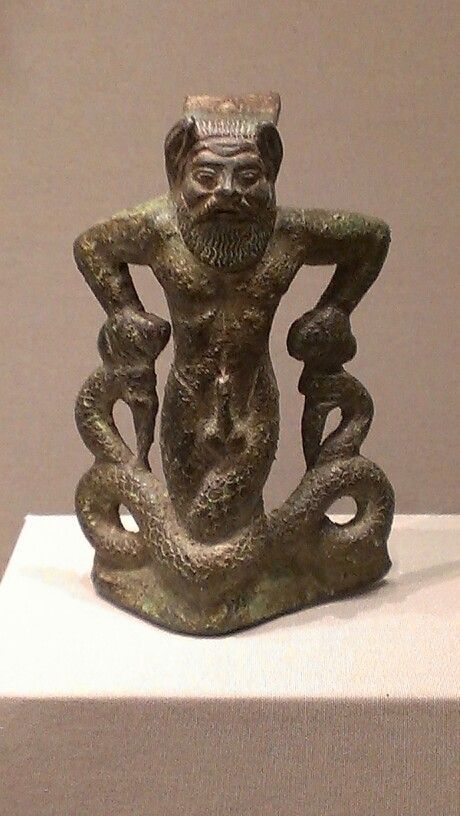
It tells us we are not necessarily ruled only by our heads and the compulsions that we imagine derive from our thoughts, but rather we are a function of the coiling energy paths and nexuses in our own bodies. These are neither right nor wrong, good nor bad, but merely the experience of being neither an unborn human being, nor a dead one.
 Matters Blog