I do not normally watch football matches. The reason is simply that I find them slow and the match result often unsatisfying. More on this later. One the other hand I can be persuaded to watch any sport where England takes part in a sporting final and where there is a high likelihood of a match of equals.
So I sat down to watch the European Final of Womens Football 2022 last night. History, we were told, was about to be made.
But first, some game theory. Many games simulate military strategy and football is no different. Each side has an area to defend. The resources of each side are matched with no particular advantage to either other than their own esprit de corps, skill and strategy. With these resources, the sides must defend at the same time and with the same force, as attack.
What happens when one side is considerably less skilled and less determined in it’s aim than the other…is that the more skilful side wins convincingly.
This gives rise to a certain inevitability as to the outcome giving the supporters and participants of the losing side enormous disappointment. Their expectations of winning were shown to be based on false confidence in their own ability.
This is why sides which are equal in every way, provide the greatest challenge to the players and entertainment to the supporters.
The game of football, however, provides a disappointing set of rules that restricts uncertainty and the excitement that comes from the expectation of gaining a winning advantage at any moment.
What works most against football being entertaining, is the system of low scoring. A 0-0 result is not uncommon and only slightly better is a draw of say 1-1. Ideally a score should reflect the skill of a side as closely as possible and in low scoring games, it is unlikely to do this. In fact sometimes the better side may lose due to some random misfortune such as an injury or poor refereeing decision, giving rise to indignation amongst players and supporters; the phenomenon of a ‘pitch invasion’ by angry supporters must happen more in football than any other sport.
If we examine how well high scoring games reflect the process of a match and outcome, such as tennis or cricket or snooker, players have a chance to change the course of the game almost every time they touch the ball. The better player or side will almost certainly be identified by the final score and both sides feel fair play has taken place.
Compare this with football, where much of the play and touch of the ball results in no particular advantage to either side. Players often kick the ball back into their own area rather than forward. They engage in a series of safe passes in which the ball moves between players of the same side with little risk of losing possession. During this time the grass grows another micro millimeter.
Losing possession is not even a great disadvantage to either side. Goal keepers regularly kick the ball away high in the air with only limited accuracy as to where it is going to land. The opposing side might intercept the landing with a header which is so uncontrolled that possession changes side yet again.
The prospect of the ball moving around the pitch in this manner gives no reward to either side. Players compensate for their frustration by taking a risk of injury to themselves or other players, with aggressive tackles. The result is that play stops whilst a fallen party rolls around theatrically on the ground in order for the referee to take the matter more seriously than is warranted. Medical teams are permitted to run onto the pitch to give ‘treatment’ that in olden days consisted of squeezing a wet sponge over an affected area and today consists of more elaborate physiotherapy, ICU teams and trauma psychologists.
So the game stops and starts with as much randomness as a demolition ball and certainly not as interestingly. At the end of 45 minutes of nothing, both sides rush off as if they need a break. During this time supporters argue or fight or get more drunk, and players are given a victory talk by their coaches and managers and anyone else who happens to be in the dressing room, telling them all to ‘work together as a team’ and ‘get the ball in the back of the net’.
At the end of another 45 minutes of lawn care, neither side has managed to kick the ball into the exceedignly large space enclosed by the goal posts. One almost gets the feeling that even if the opposing side was not present, a team working on it’s own to move the ball from one end of the pitch to the other and then between the goal posts, would find the challenge irritatingly difficult.
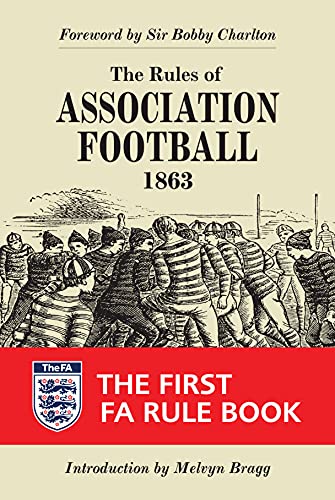
At the end of the game one side may have by some fluke, scored a goal and this sometimes unearned (even an own goal), event is considered enough in the Football Association rule book, to warrant deciding which is the better side.
In the likely event of a draw, the most frustrating spectacle of a ‘penalty shoot out’ is commenced. Each side takes it in turns to stand right in front of the goal posts and kick the ball past the goal keeper. The success of this depends largely on randomness on behalf of the boot of the player, the arrangement of worm-casts, damage to the pitch over the penalty taking position, the strength and direction of the wind, the strength, height and direction of the sun, the clarity of mind of the players ( after brain damage caused by heading the ball too frequently in their career ) the clarity of mind of the goal keeper who has to guess which way the kicker is going to kick, and the conflicting chants of two opposing tribes of supporter.
In order for any game to avoid such a spectacle of chance to ‘decide’ the result of previous vain and worthless endeavours, I strongly suggest that a new system of continuous assessment is introduced.
This means that points will be awarded more often.
So to improve football certain changes might occur;
- Use a point based system instead of counting goals.
- Award 3 points for a goal, 2 for a corner and 1 for a side throw or hitting one of the football posts and horizontal bar by skill or fluke. This will keep the ball in play and the game moving and require skill and concentration.
- Increase the size of the goal or remove the goal keeper completely.
- Reduce or increase the number of players. For instance there could be one additional player coming on for each side every ten minutes. After half time players leave the pitch in the same way.
- Change the size of shape of the ball. A ball as large as the players would be hilarious if nothing else.
- Change the number of balls. Two balls could be in play at the same time, or twenty.
- Allow hitting the ball with a fist instead of the head (to preserve brains)
- Break the game down into more parts as in tennis, so that an uneven number of wins is required of sub parts of the game rather than have just the one result.
- Permit obstacles on the pitch such as sand pits and water holes and or circus perfomers.
- Give each player a giant inflatable hammer with which to hit each other.
There are no doubt many other variations to the rules of football that would create far greater entertainment. The key change to make however is to get rid of the unsatisfactory scoring system.
Games are invented by mankind and not received from God, and should never be subject to dogma. It’s okay to change / improve the rules.
People who resist change it is said, are willing to accept change only so long as the new version is the same as the old.
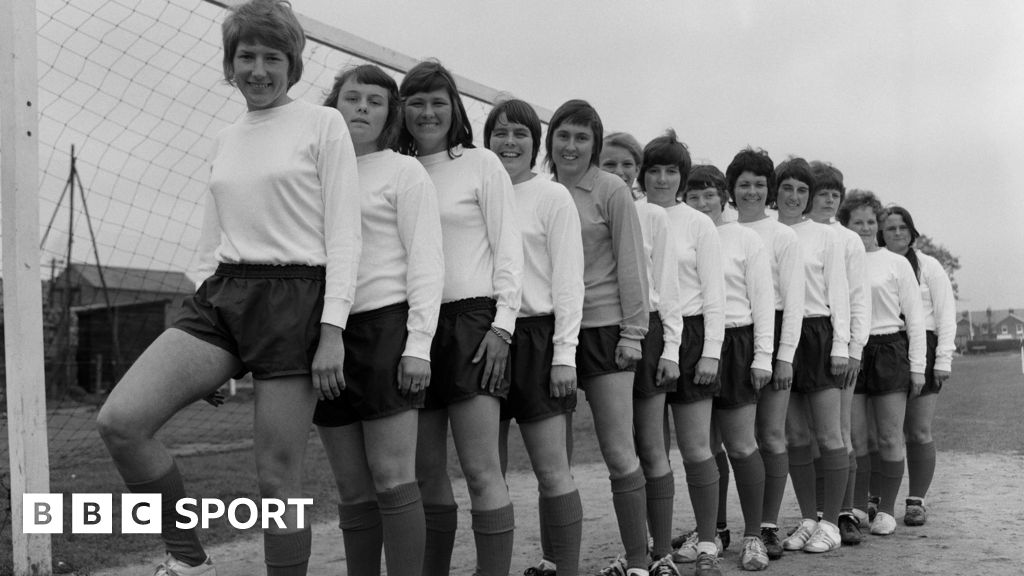
Flippant? Not really. Consider how after centuries of having male only matches, females are now also playing the game of football. Trouble is, it’s just more of the same.
Flippant? Then consider that football in this analogy illustrates how the human mind is resistant to change even when a particular mode of human behaviour and rules is clearly in need of improvement. Then, when change is finally accepted, it is often no change at all but the similitude of change.
 Matters Blog