Very few people have come up with a good answer to the question of the meaning of life, the universe and everything. Perhaps the least reliable is in Douglas Adam’s ‘The Hitchers Guide to the Galaxy‘ where the computer gives the answer of ’42’.

In my view, the query itself may be wrong. It may be an impossible question, like the Koans beloved of the Zen masters in ancient China such as;
Q: Without speaking, without silence, how can you express the truth?
R: I always remember springtime in southern China. The birds sing among innumerable kinds of fragrant flowers.
‘OK smart guy. So if the meaning of life is a dead question, what should it be?’
Smart Guy replies, ‘how about; what is the challenge of life?’
This is a little easier to attempt to answer.
There are four interlinked aspects of ourselves. When these are understood individually (which could take a lifetime) and balanced (which could take another lifetime ) then a flowering of the human soul occurs. A poet might call it ‘the becoming the rose’, but before that, let us start at where we are.
As human souls we manifest into a physical body; from energy to matter.
A baby comes as a complete package ready to grow in four main areas;
Intellect The human brain is considered the nerve centre of the human being and consciousness appears to be centred here; although there are examples of near death experiences and other practices that induce consciousness to leave the body and return. The ‘mind’ learns the language of those around it and uses play to practice thought and actions that it will experience for real in the future.
Emotion This ‘feeling’ is generally experienced in the centre of the chest and heart. The nerve plexuses here connect directly with parts of the brain and can generate overwhelming imperatives that can override thought. Feelings are often completely correct despite the more usual reliance on rational thought, certainly in Western societies.
Instinct The body is controlled by conscious thought and automatically by the parasympathetic nervous system. Some bodily functions such as breathing, can be both consciously controlled or automatic.
Intuition The quietest of the four ‘imperatives’ yet possibly the closest to the question of what the challenge of life is. Many psychics, saints and seers have developed this faculty to a high degree and share their insights through example and teachings contained in art and ‘holy books’.

None of these four aspects of the ‘being human, roller coaster’ is particularly new. What may be new to you is the following very important consideration. That humans may acquire one of more of these four aspects of themselves to a certain level. What this level is ( e.g. how good you are at languages or art or dancing or wisdom ) can be ignored. What is important is; ‘are each of these four aspects of a person balanced?’
Now get personal and ask this question of yourself. How well balanced am I in these four areas of the my human experience?
We have to be careful, as the ego will resist any sort of challenge to it’s dominating ideas about itself. Ego’s like to feed the false notion that we are balanced individuals and good at most things.
‘I am’
But clearly, when we examine ourselves closely, we realise that we have not reached our full potential by any means of measurement. The challenge we face of becoming strong in all aspects of ourselves, is daunting and most of us fall well short of the target.

A metaphor for this task is an internal combustion engine that has four cylinders; each fired by a spark plug. It doesn’t matter what the cubic capacity is of each cylinder or even how many cylinders there are. What is critical is whether all cylinders are being fired in equal strength.
Perhaps you have driven a car that only has three cylinders working. The speed of the car is reduced and it is difficult to accelerate. If only two cylinders are working the engine may just judder to a halt.
Humans are similar. With these four aspects of being human consider how there are many permutations of weakness and strength.
A person who has a highly developed intellect might be a university professor with little emotional intelligence, is hopeless at dancing and sports and considers intuitive insights to be ‘flights of fancy’. The characterture is an elderly man who keeps losing his glasses, trips over carpets and forgets his wife’s birthday.
…among contemporary European people, only one of the three independent data necessary for obtaining a sound human mind has developed – namely, their so-called thought, which tends to predominate in their individuality; whereas without feeling and instinct, as every man with normal reason must know, the understanding accessible to man cannot be formed.
-introduction to ‘Meetings With Remarkable Men’ by G. I. Gurdjieff
A poet or artist might be very good at expressing their feelings, but intellectually they cannot understand, or at least see the value, of logical hypothesis and experimentation. They will buy a car because of it’s colour.
An athlete might be exceptionally good at running (lean and large lungs) or jumping (good speed and long legs ) and yet they may not be able to fill in a form at the post office, tell someone they love them or understand mystery.
Empathic seers and psychics might find themselves at the subject of jokes and accusations of ‘fraud’ and yet be correct more times than chance. Similarly they might struggle in the other areas of their full potential.
Of course these examples are charactertures, but we see their similitude’s in the ‘celebrities’ of modern culture and those we know.
This, in my view, is the challenge of being human. We have not one purpose but four precise, aspects of ourselves to nurture and harmonise within us.
There is nothing new about this idea. If we look back in time we see it as part of many human cultural experiences and remains most prominently in symbols. The concept of a ‘balanced human being’ is the cross.

This symbol is older than Christianity, and represents the division of the whole into four equal parts. There may be different ideas as to the meaning but it is common to many interpretations that where the horizontal crosses the vertical the centre, is a special place.
The Rosicrucians placed a rose in this centre as a symbol of a ‘fifth element’ – a transcendence. Only by being ‘geometrically balanced’ – as a cross is – can the fourfold aspects of our nature integrate in equal measure. At that harmonious place, one is at the ‘centre of the universe’.
At this spot, miracles can come from the depths of the human soul. Various saints of all religions, have demonstrated extraordinary abilities such as being in two places at once, manifesting physical objects from nothing, miraculous healing and other miracles. We, the ‘unbalanced’ and ‘imperfect’, watch on in awe and have no explanation for what we see.

The challenge, in my view, is to concentrate on reaching your own potential. We are each capable of excellence but this is difficult because our weaknesses are pushed into the shadow areas of ourselves to be ignored.
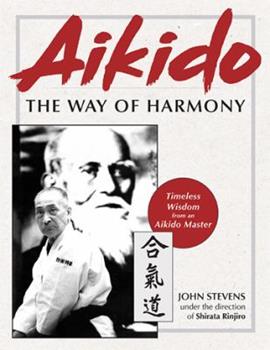
As children, one of the first things we explore is the miraculous experience of being in a body. We watch this as we see children run, skip and jump. But we may take a long time to learn to control our bodies. Most martial arts contain the teaching of moving into the centre of gravity of one’s body, which in most people is in line with the navel or sacral chakra. In Karate it is called the Hara, from where the student is taught to move the whole body. It is a mini-brain with it’s own supply of Ki energy. Masters of Aikido, even in old age, can produce a pulse of Ki energy from this centre to push a much stronger opponent across a room without physical contact.
The body never forgets it’s skills. It can act independently of mind such as in the old adage; ‘as easy as getting on a bike’.
There are also ‘reflexes’ which are part of the autonomic system of the body such as respiration, cardiac regulation and many other functions vital to life. The enteric nervous system is the intrinsic nervous system of the gastrointestinal functions. It has been described as “the Second Brain of the Human Body”.
In exactly the same way as our bodies, our mind, emotions and intuition learn and then repeat lessons and skills that become autonomous. To some extent, younger members of our tribe can learn from elders through such things as stories and sage advice, but generally, learning and personal development cannot be taught. It has to be experienced and recorded viscerally.
I am a teacher without a pupil and a pupil without a teacher.
When we have nurtured and grown our instincts, emotions, mind and intuition equally, we become balanced; in the same way that a cross can balance on one finger in its centre. This is known as ‘centreing’ or in Jungian psychology, ‘individuation’. We are no longer a ‘push over’ either physically, emotionally, intellectually or intuitively. The hardest shocks of life bounce off us and sent on their way. We do not become ‘victims’ and demand reparation. We are beyond argueing, sulking, resenting, blaming and all the other traits found in the unbalanced personality.
A Zen master was sitting in a room when an earthquake started. The other people in the room immediately started to panic and run screaming for the door, pushing each other out of the way in order to get to safety. The Zen master remained seated and upright.

The act of centering places an imaginary rod of iron vertically from the stars, through the top the head, through the chakras and into the earth below.
Once planted we do not move, other than to nod our head; as a rose in the garden moves with the breezes.
Further reading:
Biorhythms describe the idea that the strength each of the four aspects of ourselves; mind, body, instinct, intuition…varies cyclically over time. For instance our physicality is governed by a 28 day cycle and during this time it follows a sine wave form from high to low. It is activated at birth so by calculating how many days since you were born, you will know where you are on this cycle. When your status is high is a good time to run a marathon. When it crosses the centre line of the graph is a ‘critical’ day and you will feel discombobulated before entering the less energetic 14 days of the cycle. To complicate matters the other three aspects of yourself are on different length cycles and the four combined describe how you are feeling. Fortunately there are Apps available to do the maths for you. This may help in ‘working backwards’ to achieving balance by being more aware of your whole self and it’s rhythms.
 Matters Blog