
If the Inuit have multiple words for ‘snow’ then you might think that there are many words in English for ‘love’. Language has the ability to enable mutual understaning, even for the most mundane thing;
qanuk: ‘snowflake’kaneq: ‘frost’kanevvluk: ‘fine snow’qanikcaq: ‘snow on ground’muruaneq: ‘soft deep snow’nutaryuk: ‘fresh snow’pirta: ‘blizzard’qengaruk: ‘snow bank
So why does the word ‘love’, in all languages, fail to identify the spectrum of feelings it could and should represent?
Before we start, let us agree that the word ‘feeling’ affirms love is an emotion. It is not the instinct ‘lust’ although the two may often be confused! As it can with the love of beauty and attraction that is only ‘skin deep’. Perhaps these errors once ‘launched a thousand ships’ to enable Paris to seduce Helen of Troy, or was an epic love story?
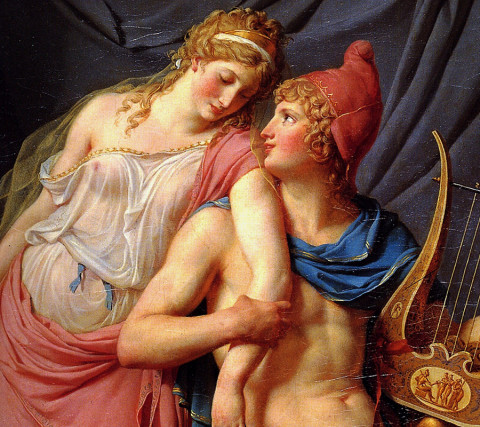
Lust has been crystallised in the English language by the phrase ‘to make love’. But clearly, animals ‘make love’; if all that is meant is to have sexual intercourse. When looking up ‘roll in the hay’ in a thesaurus, there are twenty seven synonyms for this expression. Clearly, westerners are as interested in sex as the Inuits are snow.
But we are going to pass over lust and concentrate on it’s more sublime incarnation and affirm that love is one of the most sublime emotions that humans ever experience. Although not easy to find, It too has many shades if we can find words to ‘nuance’ it into sub-categories.
So if we think of how we ‘love’ in our daily lives we can identify several ‘objects’ for our love to directed.
Romantic love should be our first choice as here we find the core of the word and it’s associated feeling. Romance sends humans into true and false expectations that are sometimes completely out of character. In youth this feeling is unknown and untested. But we are already on a collision course with that special person who will come into our lives. The emotional ‘volcano’ that erupts can leave one without thought and speech so paralysing is the impact of the explosive force. And just as in the making of volcanic mountains, the results of the experience last forever; impermeable to all later hurricanes and earthquakes.
The greatest romantic love involves a kind of electronic circuit, where both ends of the battery connect in what is called ‘requited love’. It’s corollary, unrequited love has spawned many an ancient Saga such as Sir Lancelot’s love for King Arthur’s wife, Guinevere.

Then there is love which has a different character; more calm and assured. When we think of how we love members of our family, we use the same word ‘love’ although there is no sudden ‘falling in love’. We learn to love our parents and siblings from birth to grave, a process that is not one necessarily of our own making. It is like a cosmic ‘arranged marriage’ where a soul is placed into the intimate company of strangers, it’s family. What we call ‘paternal’ and ‘maternal’ feelings of love are curiously blended with their equivalent instincts of unconditional parental protection; in the same way that ‘romantic love’ depends, in subtle ways, upon instinctual drives.
When children are old enough to leave the ‘love nest’ they call home and go on their own way, their connection with ‘family members’ falls more to a purely emotional attachment instead of one based on physical dependence. But when parents have bad characters and the process of childhood has involved abuse by parents towards their children, the detachment of a child to the family home becomes a ‘release’.
In that situation we have moved to the opposite end of the scale of the ‘fifty shades of love’ and discover the word ‘hate’. Hate after all, is the same as love only destructive in it’s effects rather than constructive. But the emotions come from the same source.

Romantic lovers and family members sometimes find themselves in the space of mutual emotional hate at the beginning and or end of relationships. In Shakespeare’s play ‘Much Ado About Nothing‘ the principal characters of Benedict and Beatrice cannot stand the sight of each other. Through the play their characters develop towards a deeper understanding of their similarities rather than their differences. The English language deserves a word for the ‘love / hate’ relationship!
We find the same scarcity of words when we describe ‘love’ in the context of religion and the concept of ‘loving God’. Those religions founded on monotheism, place intermediaries between the Divine and ourselves such as the prophets and the saints, their disciples and the self elected clergy who claim to be able to understand what was going on in the lives of the characters in the holy books.
There are those who have a direct relationship with the Divine with no intermediaries. Their relationship with God is greater than any love for any human and many retreat to monasteries and nunneries to play out and understand these feelings. Is such a feeling irrational? Again we need another word for ‘love of God’ because without it, we can cancel without due consideration the possibility that prophets and mystics can unconditionally love God.

As we scan these ‘shades of love’ we find next a rather prosaic category of ‘love of places, activities and things’. These I place together as they are generally dismissed by the aforementioned mystics as being ‘illusions’ at worst and ‘not of benefit to the soul’ at best.
And yet ninety nine percent of human activity is centered on the places, activities and things that we love. People who express in exceptional and imaginative ways are the artists in society. They choose things that inspire a love, such as nature in it’s many forms and people in their many activities, that they wish to share with others.
Certainly artists are able to observe and understand their feelings of love and passion in a focused and controlled way. Just as the person smelling blends of tea in a tea factory, artists are able to savor their deepest emotions, such as love, and present their inspiration in a way that is agreeable to others.

An example might be the Moghul mausoleum, the Taj Mahal in Agra (picture credit Smarthistory). It was famously built by the Shah Jahan to express his eternal love for his favourite wife Mumtaz Mahal. This leads us into the idea that love between human beings can be regarded as limited by society (monogamy) or plural (bigamy). With such dilemmas we can observe how ‘uncontrolled’ our emotions can become in the eyes of ‘society’ and again many great works of literature and art have been inspired to explore how this plays out among the humble and the great.
We should not overlook one of the most extraordinary aspects of love between humans; that we have an infinite capacity for love. Our hearts are wells that do not run dry, circulating love as effeciently as blood. Which is why many religions extorty Universal love for all things. As Jesus the Christ said, ‘love thy neighbour’.
The subject of love is indeed an immensely contradictory and complex; partly because of a lack of words to describe it’s many faces and flavours but also because of what today is identified as ’emotional intelligence’. If the ‘e’ in emotion represents the ‘energy’ that causes feelings to erupt as if from nowhere, the ‘motion’ part of the word describes how feelings are constantly changing. If we form fixed beliefs in our minds and accomplish specific skills in our bodies that do not change, can we extrapolate this to the idea that emotions are the same?

It would be good to believe this and allow our emotions, thoughts and bodies to constantly learn ‘new tricks’ throughout our lives. Our minds may wish to give the appearance that they are ‘in control’ but our emotions can overrule mind and the decisions it makes.
‘Don’t believe a thing just because you thought it.’ Groucho Marx.
What differentiates love from mind and body, in my view, is that emotions can understand what we might term, ‘truths’. A woman for instance may take a dislike for a person who her husband admires for no explainable reason, just a feeling. And years later the husband arrives at the same conclusion using the circuitous route of logic and deduction.
At the most sublime level the words of the prophets and saints express eternal truths when they experience a direct and immutable Divine command. Since such commands are always based on love and light, all who follow these words will benefit.
We can conclude then that love has multiple incarnations and pushes and pulls us simple humans, in the way that asteroids and meteors dance with solar systems. There are irresistible forces at work that can propel us further and faster as well as sometimes, cause us to crash.

What appears to be important and yet missing, is the ability to use language in subtle and, yes, exquisite ways, to direct our course of destiny. If nothing deserves better attention, I would contend that what, who, how, where and when we submit our very own ability to love; then we have learned the greatest trick of all.
 Matters Blog