Imagination Theory

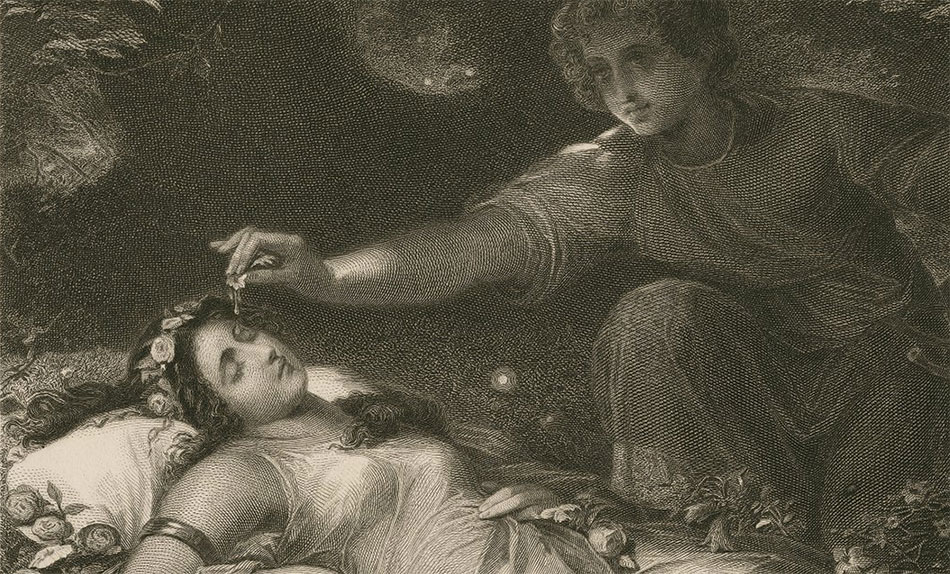
If we shadows have offended,

think but this and all is mended,

that you have but slumbered here,

While these visions did appear.

The Faerie ‘Puck’ in William Shakespeare’s ‘Midsummer Nights Dream’
The greatest mistake a human can make, in my view, is to not treat imagination as real. This does not mean that what we call ‘reality’, is unreal. Reality and imagination both have a vital role to play in our lives.

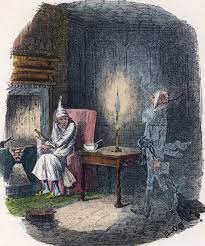
The character of Ebenezer Scrooge in Charles Dickens’s A Christmas Carol, had to learn this lesson three times in order to understand himself better. Three ‘spirits’ took him on three journeys into his own past, present and future. From objectively viewing his own character weaknesses, his false pride was beaten into submission and he learnt the most valuable life lesson of all – unconditional love. These ‘imaginary’ journeys and the lessons overpowered the lonely ‘refority’ he had built for himself.
All of us encounter these three ‘spirits’ in our lives, if we can make a leap of faith and objectify our ‘imaginary’ selves as ‘real’.

The first such spirit we encounter is in our childhood when we understand very little about the real workings of life. Rather, we ‘act out’ roles that our imaginary selves would like to be in the future…our ‘Christmas yet to come.’ The dressing up box is a most useful item, enabling children to assume wildly fanciful roles as magicians, dentists, racing drivers, astronauts and so on. The most ordinary prop fulfils the need for an exact semblance of physical reality in their imaginary world. Watching children at play is a most rewarding way to understand our own susceptibility to imaginary states of mind. When we are children, fantasy often overwhelms what we feel is our ‘objective self’ and teases us with pleasures and torments, in a safe way. But, like Peter Pan, some children refuse to ‘grow up’ into an adult. The world of frigates, flying and fairies is far too much fun to frizzle away.

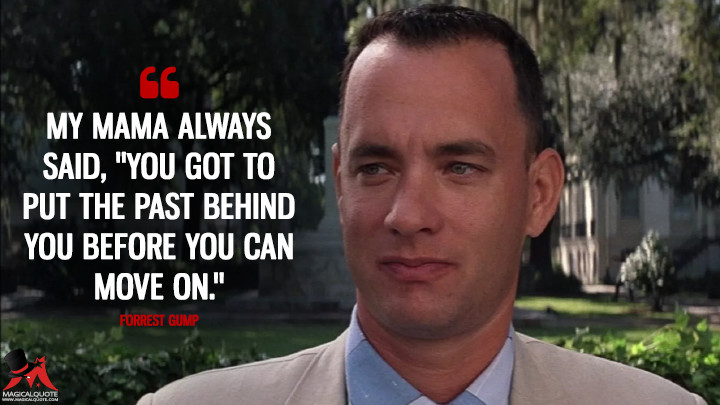
The character of Walter Mitty is a literary example of how there can be a child in an adult’s body. Mitty lived in an absorbing ‘dream world’ with flights of fancy that would replay dreams with himself in the lead role. He would encounter a situation the real Walter Mitty would be completely unable to deal with, and compensate with his imagination; such as flying a plane or conducting an orchestra. This is the ‘ghost of Christmas present’ where as individuals we have moved on the adulthood, but in a failed way. Unlike Walter Mitty, most people engage with the ‘hum drum real world’ and it’s seemingly endless burdens and chores, punctuated by few delights. Remember the character played by Tom Hanks; Forest Gump? For this character, a string of exciting situations were both wild and implausible enough to be fantasy and yet were firmly, real. Forest, in contrast to Walter Mitty, had mastered the most important challenge of all; to successfully merge imagination with reality.
Our most important decision is to find what people call our ‘destiny’, but this often sounds rather a vague destination. Even the decision to find a career is an extremely difficult one for a young person. From the view of an elder, I would define ‘destiny’ as simply following the people and things that you love. Although this sounds simple it is of course much harder that it sounds, as there are often obstacles to our dreams. As a child my dream was to be an Admiral but when the time came, my eyesight was not good enough. Watching Lionel Andres Messi play football for Argentina in the 2022 World Cup, is to see a man fulfill his destiny as a footballer. Those who purchased his No.10 shirt and wore it to the match were merely living the dream of a third partie’s achievements, a dead end path to their own destiny.

When we follow and act out an overwhelming excitement to do something, this is our own dream becoming true. Unfortunately, it is a sad fact that less than 4% of Western Europeans are in what they would call ‘their dream job’. The rest find themselves working in order to earn money and have no dream. The servers in the restaurants in Hollywood are often ‘wannabe’ film stars. The lucky minority who are ‘successful’, appear on our television screens.

As well as finding the employment that makes us fulfilled, we must find a partner who fits our ‘imaginary ideal’ of a partner. This again is a huge challenge as the ‘ideal’ man or woman is rarely found and if found; is available and inclined to reciprocate those feelings. If the latter does happen, as in the fairy story of the prince and princess falling in love for ever and ever, then blue birds will sing among the pink clouds and the castle turrets will tower over the cheering crowds at their wedding. Walt Disney has relived this imaginary moment for millions of children and adults and I would argue it is not wrong to dream. Through all these types of stories, whether in ancient myths and legends or on soap TV and radio, we learn to match objectively, our imaginations with reality. It is like two QR codes marked on two sheets of glass. When they slide over each other, the two appear to be identical. The worlds of imagination and physicality are just as unique and, when blue birds start flying around your head for real, they are in perfect harmony.

To return to our Christmas Carol theme, we enter the final stage of life. The woman or man lose their beauty as their body withers with age but their mind is usually disproportionately active and many older people will give you their ‘feeling age’ as their early twenties. When you engage them in conversation, they will recount their times of ‘Christmas past’ when significant moments fulfilled them. These will be substantially real but also coloured by imagination. Like old black and white films that have been digitally ‘colourised’, life becomes a series of memories which are a mixture of physical reality and imagination. The best are of course, those moments when our ‘dreams come true’.

Memories are valuable, but we should not forget that our true self is always in the present.

For this reason we cannot compare ourselves with others and form judgements.

We can only use the ‘guiding spirit’ (who taps on the frozen window pane of our own self pity one night) to remind us of who we might be and that we are not that person yet. The Dickens story recounts how it is never too late to learn how to become better. It is never too late to live the dream that you always wished for. It is never too late, unless you are one of those people who refuses to be motivated by your own imagination; to follow your own ‘yellow brick road’ that leads to the encounter with the Wizard of Oz or purchase the ‘giant Christmas turkey’ that with unconditional love, fills the bellies of all, including Tiny Tim.

What Mr. Scrooge had learnt was that living the present moment is the ultimate present to oneself and those around you.
What Seems to be the Problem?

Many media outlets provide harrowing examples of problems in the National Health Service in the UK today, so here are my ideas for attempting to solve them.

Firstly, I would determine what the government strategy for the National Health Service is. Cynics would say that based on the previous ten years, the aim of government has been to make the NHS fail. To define ‘failure’ quasi-scientifically, the first step is to introduce targets so that hospitals can fail to meet them. But logically, if targets were removed then failure would also. Successes would be highlighted instead, so staff are allowed to feel valued rather than judged negatively. Keeping staff moral high has numerous beneficial effects for the whole system including the patients.

However, if the government wants private hospitals for all, as in the USA, then that should be their stated aim and the public allowed to vote on that idea, either in a general election manifesto or two third majority referendum.

If the government want the NHS to protect the health of UK citizens then these are my ideas;

  1. Engage in preventative health as keenly as reactive health. This is difficult since ill people are more vocal than those who have no problems. However, if hospitals and doctors surgeries were paid when people were well, rather than for health interventions, then they would be incentivised to prevent illness. One example of this would be to include diet and nutrition and exercise regimes more fully in a medical doctor’s training.
  2. Presently resources are wasted on treating patients with imaginary and or minor ailments. The high street pharmacies are presently under-used as places for diagnosis and intervention of such complaints. Pharmacists are highly trained and if allowed to view patients records on line, would relived doctors from such complaints. Also, patients can be empowered to self help through information online to a far greater extent than has already been achieved. This is not to promote Doctor Google but to provide interactive consultation with a health consultant rather than an algorithm.
  3. Presently local doctor’s surgeries are often understaffed and GP’s overworked. One of the effects of this is for patients to be diverted to the Accident and Emergency Department at the local hospital. The first remedy I suggest is to change the name of this department to simply ‘Emergency Department’. People with minor cuts and bruises from ‘accidents’ are not ’emergencies’ and again could be treated in a local pharmacy ‘treatment room’ when the GP is not available.
  4. Training more doctors and health workers of all kinds is so basic that it should hardly need mentioning but sadly, it has been been neglected by politicians who did not write this intention into their manifestos.
  5. Presently A and E Departments are often unable to cope with demand in peak periods such as during winter flu season. This is partly due to ‘bed blocking’ where vital hospital beds are occupied by patients who are well but have no safe place to be discharged to. The other reason is a lack of staff as already mentioned. In response to the problem of ambulances queuing for long periods when they are needed to respond to emergencies, one hospital has set up a dedicated room for patients to wait for treatment. There are paramedics in the room who take over monitoring and keeping waiting patients comfortable and safe with the same equipment that is available in the back of an ambulance. The effect is to reduce ambulance waiting times at hospitals.
  6. The pay and conditions for health workers has been allowed to decline over the last ten years or so. The present strike by health workers is as a result of this as much as the general decline in their effectiveness to treat patients. During the recent ‘pandemic’ there was an ‘unlimited budget’ to ‘protect the NHS’. Getting back the money which was subject to fraud during this time would be a good start to begin to protect the NHS by paying living wages to health workers. The presence of food banks for staff in hospitals is unforgivable, as they are in high streets and goes back to staying healthy with a good diet, let alone suffering malnutrition. Planning for the next pandemic is also imperative.
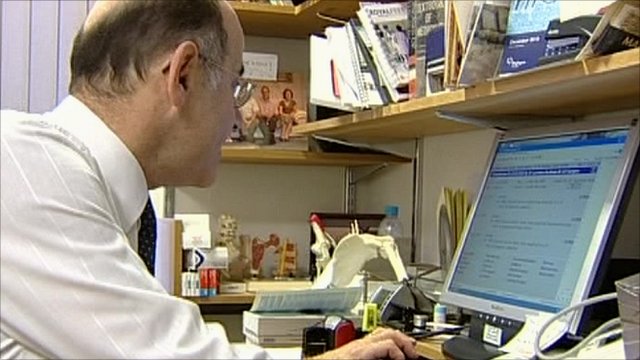
  7. Most public services have become burdened with the demand for recording information on computers. Doctors, nurses, police, fire personnel, social workers, teachers and many others have a general feeling that they spend to much time recording information on computers rather than dealing with people. These services all functioned before the invention of computers and they would benefit from a study into how to reduce the time spent recording information today by asking the question, why? One probable reason would be as a tool to supervise staff by managers and at it’s worse to be able to prove negligence and or malpractice by staff in a court of law. I would suggest that whilst public liability and duty of care is a vital ethical stance, the large financial pay outs is inappropriate. Private services have a contractual responsibility as money changes hands but in public service the ethics are different. You would like to think that most NHS patients merely wish to point out negligence so that mistakes ‘do not happen again’. If there has been a life altering error for a NHS patient then the same services will intervene at no cost to the patient for any extra home care. For instance patients might be offered insurance policies before operations with an element of risk and be asked to sign a document that they will not sue if something goes wrong with the operations due to this risk. People will take out insurance to go on holiday so this is not so absurd as it may seem. The effect will enable staff to operate under less stress about mistakes and as a consequence be more competent.

picture credit: BBC

This list is not exhaustive nor are all the ideas practical or good ones as the writer is not an expert in these matters, just an observer. But when there is an obvious problem, then problem solving must surely be attempted head on. Usually, rather than expensive professional ‘management consultants’ the best people to ask for problem definition possible solutions are the staff on the wards.

Managers often overlook the vital details that only staff will necessarily know about and be able relate to why things are not working.

There is also a case for different services and specialities within those services to share information about patients. A very simplified on line system as easy to use as a Facebook account could be used to function in a way the social media presently shares information to the benefit of those who need to know.

Thus mental health workers, pharmacists, care workers, mental health teams, police, social workers, teachers and many others, would be part of an overarching system of protection and service provision for each citizen. The more old fashioned ‘silo system’ of public service provision has begun to be dismantled but needs to speed up and widen.

Public expectation also needs serious consideration and the present promise of a ‘blank cheque’ for treatment and compensation when mistakes are made, needs comparing to the original aims and promises in the Beveridge Report of 1942 entitled ‘Social Insurance and Allied Services.’ The lesson is not to promise what cannot be delivered and if it can’t, explain why before, not after, being elected.