We may consider ourselves ‘modern’ but most social scientists today will agree that we operate as members of a tribe. Class distinction is an example. In each class we accept difference of ‘rank’ with alarming credulity. We know that those ‘above us’ may not deserve automatic respect and yet that is the way it is.
Many of the politicians in power today are people who you would think twice to employ to clean the windows of your house, and yet they are tribal ‘chiefs’. So who are these people and why did we hand over our power to them?

There has been a lineage of ‘royal families’ since prehistoric times. In Mesopotamia there was discovered a ‘King’s list’; a long line of Kings stretching back in time. In Ancient Egypt, hieroglyphs name a chronology of the Pharaoh’s who were the mid-point between man and the gods. Power was handed down as a birthright and royal families, including the Roman Caesar’s, accepted incest as a means to maintain the ‘blue blood’.
The problem with monarchs was always that there are good monarchs and bad ones. The self indulgences of dynasties such as the Bourbons in France, were persuasive catalysts to republican revolutionaries.
But what is interesting is the way in which since then, some Republics have morphed back into Monarchy’s. The United States of America is an interesting example. The Pilgrim Fathers were intent on leaving behind the absolute power of the royal families of Great Britain. The original Constitution of the United States of America handed power to the individual. The Freemasons who wrote this, including such figures as Thomas Jefferson and Abraham Lincoln, did not anticipate how power would slowly return to the president. Today, the President of the United States is given the freedom from prosecution and pomp once only afforded to Kings. If they have an idea they make it law. They are free to write ‘executive orders’ with as much alacrity as Popes write bulls and Monarch’s, decrees.

My point is that however far you try to strip an individual of absolute power, it doesn’t work. The present Presidents of China and Russia are examples of how to ‘eliminate the opposition’, in the same brutal manner as various Caesar’s in Ancient Rome. Today, there are more people living under dictators than democracies.
The only power that ‘the people’ retain is protesting on the streets. Today, many countries ruled by dictators, such as Iran, Myanmar, China, Russia, have had to deal with popular public demonstrations demanding basic rights for the individual. Often their pleas go unheard and their banners are without words.
In all of these affairs, both of state and in business, there rises to the surface, persons whose suitability as figures of respect, is doubtful at best. Those who seek power over others are almost by definition the least worthy. In democracies, there is no election of those who wish to be even considered as candidates. ‘Running for office’ is left to self promotion and lambasting the opposition; characteristics generally found in the most narcissistic and least worthy personalities.
You may be wondering where this sad description of human self organisation is leading. Well, there has to be a solution to the problem.
In the many native tribes of North America, there was also a system of leadership which was known as ‘Goose Leadership’. A group would sit in a circle and a goose feather would be produced. The rule for the meeting was that only those who held this feather were able to speak.
The result was a collective assurance that if someone had some poor ideas, their influence would not hinder the others for long! Similarly, the inspired suggestions would be recognised and adopted.
The significance of the goose feather is of course, from the instinct of geese to share the lead role in their familiar V-shape flying formation.
What arises here is a noble social structure that is neither strong nor weak, rich nor poor. This is contrary to the binary ideal within other systems of social organisation where only wealth and power gain respect. Between absolute wealth and absolute poverty, there is always a more balanced, middle path.
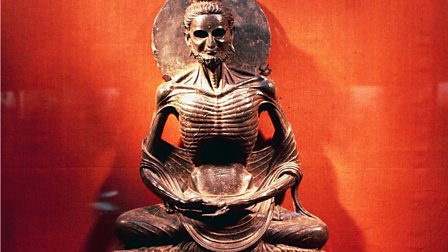
The Prince Siddhartha Guatama was born in a palace and lived in northern India, with a life of luxury beyond imagination. But he was aware enough to realise that he was unfulfilled by this lifestyle.
He left his life of total sensory satisfaction to become a wandering ascetic and teacher. At one stage this left his body in a most withdrawn and malnourished state and statues sometimes depict him with his rib cage exposed and thin limbs. Aestheticism also did not satisfy him and he finally gave up the search for the right path, by sitting under a tree.
Here he attained enlightenment and the name Budh was applied to him as a form of respect which in it’s masculine form is Buddha, in the same way that Jesus was the Christ.
Buddha, “Awakened One” or “Enlightened One,” is the masculine form of budh (बुध् ), “to wake, be awake, observe, heed, attend, learn, become aware of, to know, be conscious again,” “to awaken” “”to open up” (as does a flower),””one who has awakened from the deep sleep of ignorance and opened his consciousness to encompass all objects of knowledge.”It is not a personal name, but a title for those who have attained bodhi (awakening, enlightenment).Buddhi, the power to “form and retain concepts, reason, discern, judge, comprehend, understand,”is the faculty which discerns truth (satya) from falsehood.
source: Wikipedia
A benign leader is not then, an individual concerned with status and personal wealth. Such a leader will discard these ‘trappings’ as of no value.
Most importantly, I am optimistic enough to believe that the leaders who will emerge for humanity in the near and far future, will have benign, spiritual qualities. They will not live in palaces but be content with a humble dwelling amongst the common people. They will own little, in the manner of the native American people, and be perfectly content.
‘Living by need and not greed’ as Manhatma Ghandi once advised, will become the norm. Many god-less people, used to unsustainable European materialist lifestyles, will have had their day. Their lives will become like those of Kings and Queens of the past who had to be beheaded before they understood their arrogance!
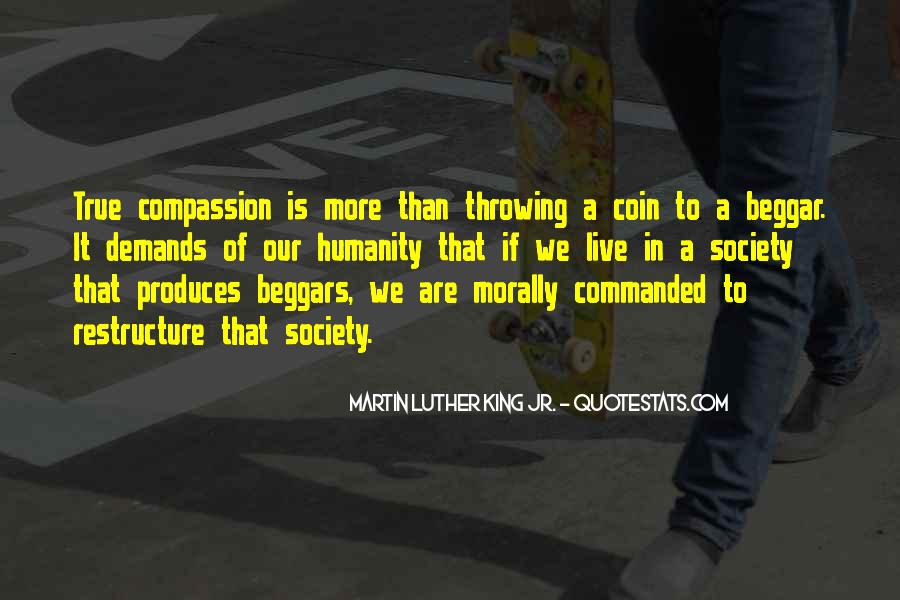
To give up riches and power requires considerable humility, the type present in those who we find begging on the streets. They may not have sought humility, but life – either fairly or unfairly – has brought them to the depths of despair.
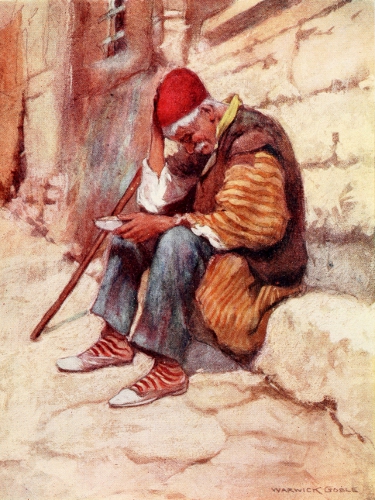
We are all capable of beings King’s, as in the goose leadership model. We are also all capable of being beggars. Neither is a sustainable position however, either socially or spiritually. If we are to learn anything from the history of mankind, it is to realise that the ideal place for the individual to be is somewhere in the middle, without pride or greed and with the desire towards the common good for all.
Such a psychological transformation is contained in the concept of the ‘Beggar King’; the one who was once powerful and once the lowest, but has now found a ‘happy medium’; what the Buddha called, ‘The Middle Way’.
 Matters Blog