May your spirit live,
Last for millions of years,
You who love Thebes, sitting
with the face to the north wind,
The eyes full of happiness.
from Tut-Ankh-Amun’s Alabaster Glass 1336-1327 BCE
Artificial Intelligence is something this and future generations are going to have to manage. But is intelligence the same as consciousness and if not, what’s the difference?
Anyone who has seen the body of a person who has died, will be aware of the extraordinary change in appearance of the person after consciousness leaves a body. It’s not something that can be described but similarities in nature when an animal dies, gives an impression.
Our problem is that consciousness remains hard for scientists and humanists to measure and describe. There are no instruments and ideas that enable measurements of consciousness to be made, except the ‘on / off ‘ switch.
The only area of human intelligence that approaches this problem in depth, is perhaps spirituality. Being spiritually aware is different to religions, where invisible gods and Gods have to be accepted as a matter of ‘faith’. Not much progress can be made beyond this dogmatic belief. But with spirituality there is a chance of increasing understanding of what is happening when we are ‘awake’ or ‘conscious’. In particular, how this might affect us in the future, if machines also become ‘conscious’?
Nothing is new in this world according to King Solomon, so let us consider how gods and God related to humans in the past. In the ancient Greek and Roman worship, statues of gods were of central importance. The statue of the goddess Athena in the Parthenon for instance, was built so that the spirit that is Athena could enter our physical reality.

Spirits are disadvantaged in the physical world because they cannot be ‘anchored’. Human spirits, ergo consciousness, need an organic body to enter in order to be born and interact with physicality using the sense organs of the body. Goddesses such as Athena cannot do that but they can enter a static representation of their form. Roman citizens would have a shrine in one corner of a room where prayers could be offered to minor gods with whom that family has a connection. Moses was enraged by the Israelites who built a golden calf to worship, from which we can deduce that the Taurean statue was real and powerful.
To untangle these confusing ideas we need to try to understand ourselves. From a mystics point of view, consciousness has three levels. The normal human experience is simply being in the physical world in the way that a fish swims through the ocean. The first level beyond this perceptual awareness is becoming conscious as an objective observer. Using the fish analogy, the fish becomes aware of the water.
At the next level the objective observer becomes detached from the experiential phenomena and is aware of thoughts / spirit entities which are not oneself. This an extraordinary concept at first but actually every ‘ghost story’ is merely a description of such a change in consciousness by the observer; albeit momentary in most cases.
The third level is to study and gain an understanding of the thoughts / spirits that occupy those universes / dimensions, beyond and parallel to this physical one. There are many types and these are how the individual characteristics of the gods and goddesses of early pantheon’s came to be understood. Even across cultures, there stand out similarities in the characters of, for instance, Zeus in ancient Greece. With his mountain top palace and plentiful supply of thunder bolts, he was also known as Jupiter to the Romans and Thor in the Norse pantheon.
Modern psychiatrists would describe experiencing consciousness outside of oneself as ‘psychosis’ or ‘madness’, so there is a glass ceiling in this present culture that few pass through.
That way madness lies.
Madness in sentient beings maybe taboo but technology has no such boundaries. Technology can go as far into the abyss as it likes and so the atom bomb was built. Less obviously malevalent are those technologies that bring great benefits, hiding the harm humans can make them cause. An example is modern computers for which there appear to be no limits.
The early computers awakened some ethical thinkers which have fed the imaginations of early science fiction writers. For example, the film ‘2001 Space Odyssey’ explores the horror of a computer named ‘Hal’, taking over from and eliminating, the crew of it’s space ship. Giving a human name to a computer is significant, because it imagines the idea of a computer becoming conscious before does so. We do the same with our pet animals.
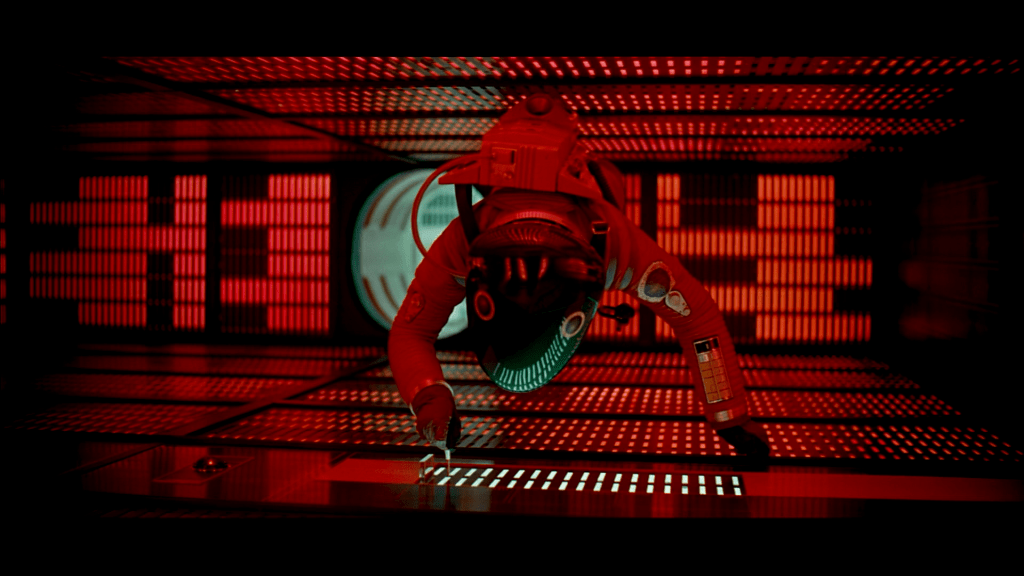
Unlike in the film, powerful computers are now small enough to be placed into humanoid robots. Worryingly we have turned full circle from the static, stiff representations of the ‘gods’ or ‘spirit’ or ‘thought’ of the ancients and created agile and intelligent robots. These human shaped machines are far more appealing for spirit entities to get inside and take over. Genies are being squeezed back inside the lamp as in the ‘1001 Arabian Nights‘ stories.

Science fiction writers such as Isaac Asimov, thought through the ethics of conscious computers and produced three rules;
The first law is that a robot shall not harm a human, or by inaction allow a human to come to harm. The second law is that a robot shall obey any instruction given to it by a human, and the third law is that a robot shall avoid actions or situations that could cause it to come to harm itself.
It is simple for a computer to be intelligent. They can be programmed to beat human chess masters simply because they think through permutations quicker than humans. So ‘artificial intelligence’ is no more than a fast thinking human. It that is not ‘artificial consciousness’.
Isaac Asimov could see that humanoid robots with artificial brains might become conscious. He may not have understood the spiritual process described above, but he did see the possibility and he was right to jump this far ahead in time and possibility. He could see that conscious robots could miraculously (or sinisterly ) adopt ‘free will’ just like humans and this would enable ignore their ethical programming.

picture credit: Film Blitz
The ’cause no harm to humans’ ethic, was also built into the humanoid robots that feature in the science fiction film ‘I Robot‘ starring Will Smith. This film again explores the consequences of intelligent robots overriding their programming. In this case it was made by a ‘mad scientist’ but in reality it could just as easily happen by an evolutionary accident, the way that nature itself ‘steps up’ the functionality of creation. At one time there were no flowers on plants, then suddenly, millions of years ago, they arrived.
All things bright and beautiful, all creatures great and small,
All things wise and wonderful, the lord God made them all.
It is important to understand that humans do not create consciousness. Rather it is alsways present within each individual and it’s influence operates through this tiny flame. Mystics for centuries have known that consciousness is not the ‘me’ within.
~~“The truth was a mirror in the hands of God. It fell, and broke into pieces. Everybody took a piece of it, and they looked at it and thought they had the truth.” Jallal-a-din Rumi Sufi mystic and poet.
It is not our personality ‘egos’ which are works of fiction. The only reality is the consciousness we share with all creatures great and small. This includes all of nature from the rocks to the clouds, as recorded by indigenous peoples such as the native Americans and Australians.
Consciousness is particularly attracted to humanoid forms and this was fearfully reconstructed in the story of Dr. Frankenstein monster by Mary Shelley in 1818.
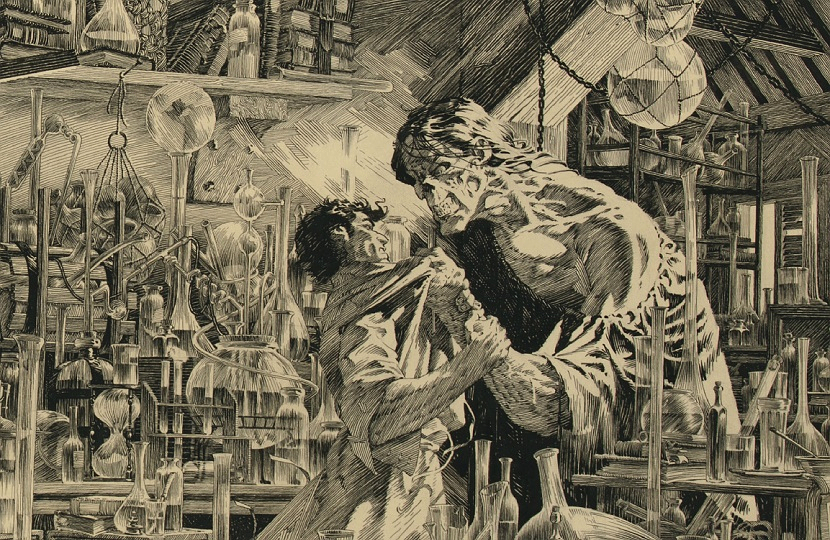
Prophetic writers such as Shelley were only able to imagine what advanced technology could do, as did the ancient writers of the Prometheus myth; the man who stole from the gods at the price of eternal punishment.
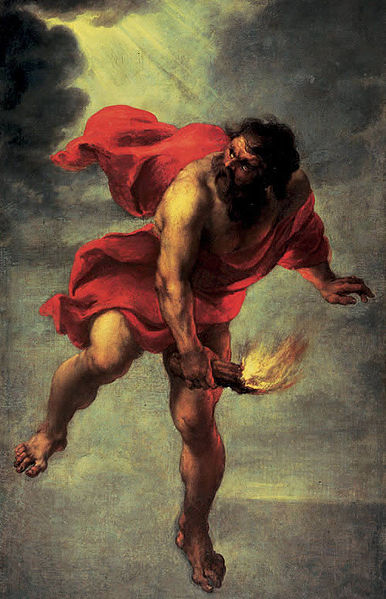
Only now are we crossing the red lines that have previously prevented this technology; the sort of knowledge that can make agile humanoid forms carry weapons and mass kill humans in a modern form of eternal punishment.

If we believe there is even a fraction of a chance that such robots may decide to override the ‘protect humans’ instruction, then should we not be concerned in the highest degree?
The high priests of the modern era are no longer the prophets and saints of old; contained within a system of high morals and ethics. Instead our worship is lead by those who invent and explore technology, such as Elon Musk, Bill Gates and Mark Zuckerberg. They are not judged by their good characters and good intentions as historical leaders of humanity usually were.
These technology wizards, have become all powerful because they have become immensely wealthy. Their characters must be judged on their actions and words. Elon Musk has recently expressed his concern about where Artificial Intelligence training is leading mankind and has called for a global moratorium to consider it’s effects.
Key figures in artificial intelligence want training of powerful AI systems to be suspended amid fears of a threat to humanity. They have signed an open letter warning of potential risks, and say the race to develop AI systems is out of control.
source BBC.com Mar 30, 2023
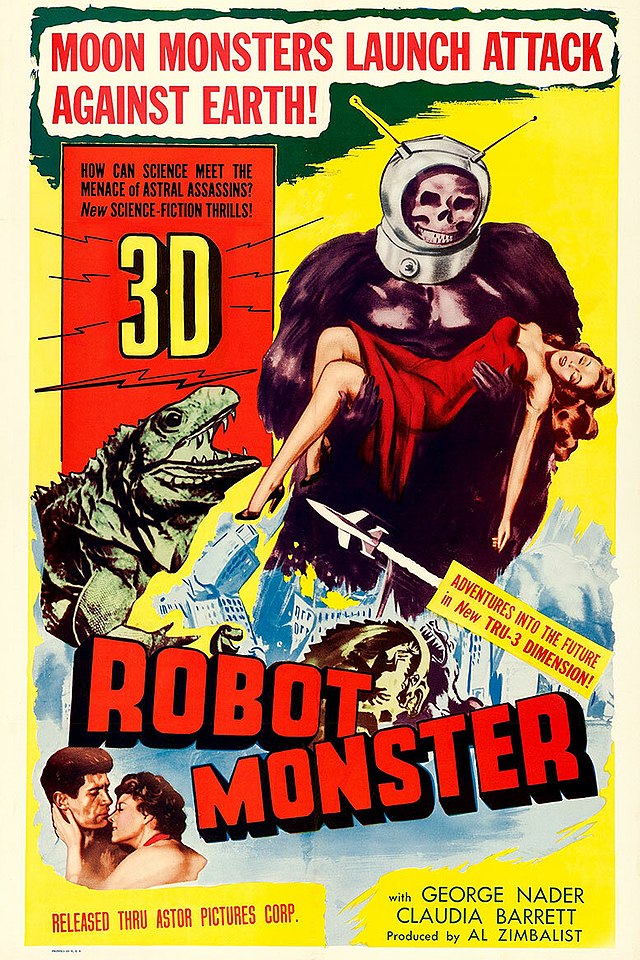
The question we all should be asking is;
‘Robot, do you feel lucky?’
 Matters Blog