“No matter what plans you make,
No matter what you acquire,
The thief will enter from the unguarded side.
Be occupied then with what you really value,
and let the thief take something else.“
Jalaluddin Rumi (1207-1273)

“The thief left it behind,
The moon at the window.”
Matsuo Basho (1644-1694)
You may wonder why many great mystics have used poetry to express themselves. The masters who have written volumes of scholarly books might look across the writing table at the snoring companion who finished writing after just a few lines.
Brevity in speech and writing is not accomplished easily. Winston Churchill remarked how much easier it is to write a half hour speech than a five minute one. This paradox is perhaps why men of few words are misunderstood, when they should be revered. In a world where technology encourages everyone to ‘have their say’, words are flying around the globe with a speed and volume never known before.
Yet ‘saying more with less’ is surely an art well worth remembering and putting to good use?
If poetry were an equation then let us suppose, it would look like this;
1 + 1 = 3
To explain:
There is a principle of the sum of the parts being greater than the whole.
The first ‘1’ is a simple fact or what we call ‘information’. It is like a railway timetable or menu. It is not generally revealing of anything except as an aid to the general running of things.
The second ‘1’ is knowledge. It is again fairly basic but more subtle to acquire as it comes with experience, understanding and manipulation of all that ‘information’.
Strangely their sum is not ‘2’. When a person acquires a significant amount of information and knowledge during their life, a moment is reached, or at least grasped out for, which conflates facts and knowledge into wisdom which is represented as ‘3’. Wisdom has the quality of the unexpected and often comes as a jolt or joke…as in the Japanese Koan or the royal court Jester’s flippant remark.
In the game of chess this is represented as the ‘knights move’. The knight decides to take what Robert Frost describes in his famouse poem as ‘The Road Not Taken’.

Wisdom has the same quality as; ‘that’s it!’
So why does poetry use brevity to such effect?
We might define a poem as;
…the realisation of ideas using few words…
This runs counter to most modern philosophy and thought where books are written on obscure subjects using specific terms. In other words, if you used these ideas in conversation with those not conversant with them; no one would understand you.
By drawing back from the minutely specific, a poet has the advantage of not only using fewer words, but unexpected ones that suddenly make sense. There becomes an understanding already in place between the writer and the reader through shared experience of life and perhaps, intution. This might be described as a resonance between a subtle sequence of words and the experience to which they refer. If the reader has not had that life experience, as in a child for instance, then the poem cannot be understood.
Tuning forks work as a metaphor for resonance in the physical world. Usually in the physics lab, they are of similar size but if we use ‘philosophical’ tuning forks, then an infinitely large tuning fork will animate a very small one and visa versa.
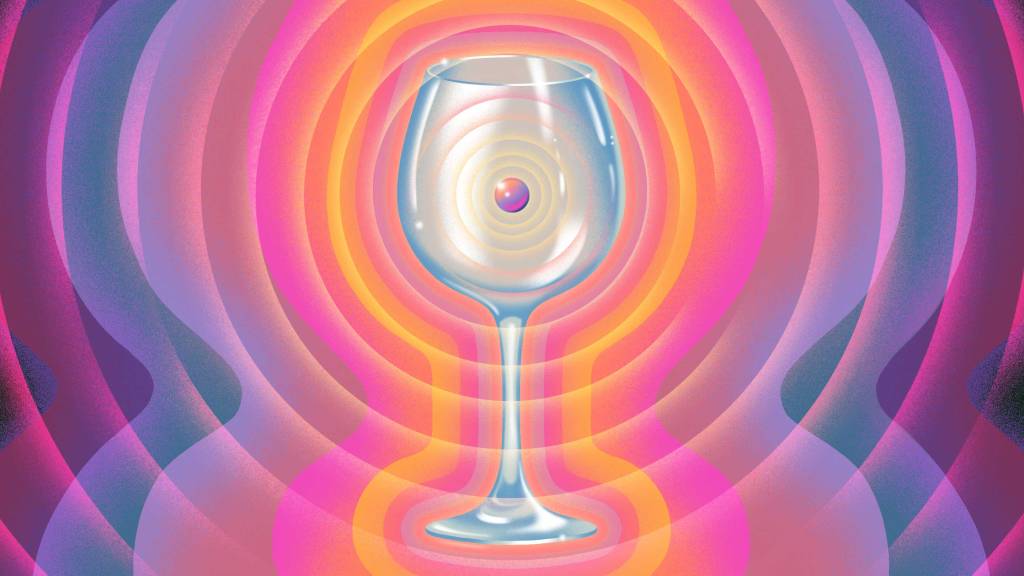
In this way, as we experience life, we become literally ‘attuned’ to the Universe. There is a Universal tuning fork and a human one. The human feels the energy of the Universe and the information/knowledge/wisdom that travels with the resonant waves. (Remarkable recordings of sounds have now been made from the planets in the solar system which should be heard to believe!) Beyond this level of vibration is the Perfect Word which we might call Mind or God.
The Ancient Egyptians may have understood this or something similar, as they built temples at several times a larger scale than the proportions of the human body. We know that much of the beauty of the body is a product of precise use of sacred proportions.

In his book ‘The Temple in Man’; Schwaller de Lubitz laid images of an upscaled human body over plans of Temples in Luxor. The proportions known as the Golden Mean and Fibonacci series (as evident in the natural processes of growth and fractal patterns in nature) were used to amplify the resonant frequencies focused in and emanating from the Holy of Holies. By this way whatever was contained and protected within the Holy of Holies – such as a statue of a god in Ancient Egypt or the Ark of the Covenant when in possession of the Hebrews – became energised by universal wisdom or one might say; alive.

Scaled down to the human body is our own ‘Holy of Holies’; the human heart. It is placed in the body at a point of focus, so that when metaphorically cleansed and open, the Universal resonances can tune into the own body’s resonance. What you become is whatever energy you focus on in this lifetime whether demonic or angelic, factual or wise, destructive or creative.
The choice as always, is ours. It will there reflect, your truths and generate into the world the messages which you will relay to other people; just as a mobile or cell phone relay station, receives and transmits microwaves.
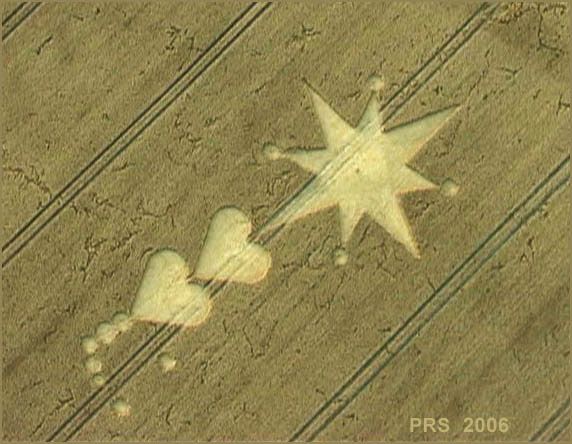
As an aside, the manifestation of crop circles in certain parts of the world is, in my view, this same effect. Wisdom from inter-dimensional intelligences is being expressed as diagrams and projected onto the surface of the globe. These diagrams are in a way visual poems; very precise and full of meaning. By merely looking at the patterns, it is said, their message can be absorbed and understood; even unconsciously as in the mandala paintings of the East.
 Matters Blog