
In 2001 on September 11th there was an attack on the World Trade Centre in the city of New York and simultaneously other locations critical to national security. Many United States of America citizens felt threatened in their own country for the first time; horror was not happening somewhere else. President George W. Bush famously declared a ‘war on *error’ and many sympathetic and perhaps frightened nations, rallied to the clarion call.
The problem was, what is a *errorist? Is it an individual, a group, an army, a State or just a cause?

A definition of *errorism is;
‘The unlawful use of violence and intimidation, especially against civilians, in the pursuit of political aims.’
This definition creates an ambiguity as it so broad, it includes conventional warfare between countries. But perhaps all ‘war’ is a form of *errorism? At the other extreme, one person acting alone can be a *errorist. Attacks by one or many are high risk missions usually against a considerably superior force.
*errorism is mostly a means of engendering fear in a population for political aims and in my view is a tactic distinct from total war.
I list below five examples historical examples of *errorist conflicts. The question I am asking myself is ‘how could these have been better dealt with?’. The conclusion I reach is not what you might expect, given the cost that individuals and nations pay in efforts to ‘eliminate’ the *errorist/s.
- In Rwanda there was a mass murder carried out by one tribe against another. Even next door neighbours became enemies overnight and were dealt with brutally.
- The Irish Republican Army emerged from Southern Ireland against Northern Ireland using terror tactics. After three decades of getting nowhere with violence the IRA joined the government under the name of their political wing; Shin Feinn and a peace treaty ‘The Good Friday Agreement’ signed.
- A Coalition of Nations invaded Afghanistan on 7th October 2001. After a couple of decades they departed unceremoniously, leaving the Taliban extremists to form a government.
- The Green Peace ship ‘Rainbow Warrior’ was sunk by two agents of the French government in New Zealand’s Auckland Harbour as it threatened French projects in the region. The agents were sent to jail and Rainbow Warrior II was launched.
- The Archduke Ferdinand was assassinated by a Serbian in an act of terror that started the First World War, due to a complex system of Treaties within Europe.
In these examples it can be seen that the *errorist is unlikely to achieve their aim by the use of violence, whilst civilian populations suffer most. Governments also fail to ‘come out on top’ during protracted campaigns against politically motivated *errorists. If the head of the mole is hit, another one pops up.

The challenge, in my view, is one of problem solving: a subject assumed to exist where it often does not. Yes, if your country is attacked you use force to repel the attack, but when the enemy disappears as the smoke rises from the scene of carnage, who are your armies expected to fight? The best they can do is ‘patrol’ and in the process be picked off by an unseen enemy. So what would a ‘problem solver’ do?
If I can use the metaphor of the problem of driving a nail into a piece of wood, we may view it from a different perspective; a tried and tested problem solving technique.
(1) There are those who would argue that a hammer is too brutal and something soft, such as a banana should be used. The United Nations Peace Keeping Force during the Rwandan genocide in 1963/4 are an example of this. Because of strategic priorities and orders ‘not to fire unless in self defence’ they were powerless to stop the atrocities Hutu’s atrocities against the Tutsi.
(2) After decades of effort with little success, the person hitting the nail gets tired. The British Army during the decades of the Northern Ireland ‘troubles’ failed to achieve their aim of keeping the United Kingdom safe from *errorism. The two sides finally came together and shook hands as both finally realised the futility of violence.
(3) In Afghanistan the original nail turned into one of a multitude. As fast as nails can be driven in, others appear unexpectedly. Both the Russian invaders and the Coalition Armies failed to fight effectively against the guerrilla tactics of the Mujahidin and Taliban respectively. The Coalition was beaten militarily and politically, as was the USA in Vietnam.
(4) The nail fails to be driven in one stroke. The *errorists are detained, tried, put in prison but released before their sentences expired. The sinking of the Green Peace ship is an example of this. The building of a new ship to replace the old is an example of the futitily of violence.
(5) Sometimes the hammer produces an unintended spark which sets fire to the whole workshop. The assassination of the Arch Duke Ferdinand igniting the first World War is an example of this.
How our metaphorical nail got there in the first place and whether a skilled carpenter would have more success, or removing the wood from the nail, or not using a hammer, are just a few of the options unlikely to be considered.
What today is termed ‘soft politics’ must be a viable option to the ‘alpha male locking of horns’ approach of the past. Certainly there are lessons from the past which have repeatedly failed to be learnt.
In present times, matters which you might consider to be of the most extreme importance to individuals and nations are put in the hands of politicians and bureaucrats. If there are wise advisers in government or opposition or in the civilian population, they might be ignored or suppressed (prison) or ‘eliminated’ (deportation or execution). This process compounds the dissent in civilian populations.
In the 21st century one would hope that solving problems by direct confrontation is no longer an option. Wars are expensive and if for no other reason than this, governments need to face up to those who commit *errorist acts against them with the answer to a simple question; where did this come from? In my view, unpicking the answer is the beginning of a solution.
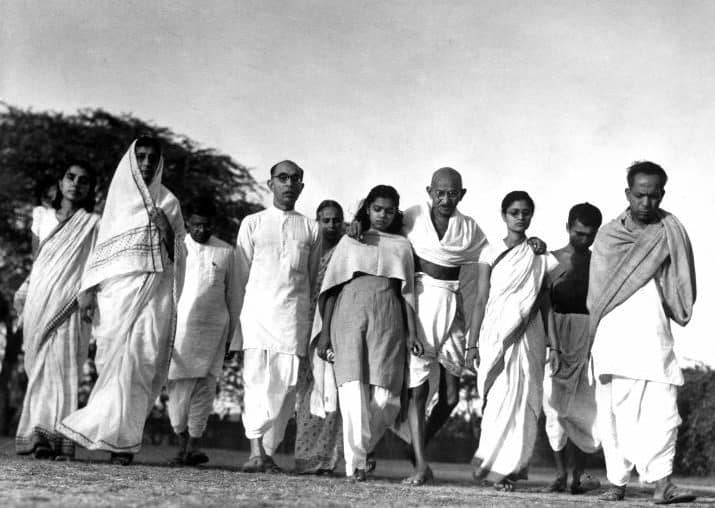
Perhaps all war is *errorism and as Winston Churchill suggested, ‘Jaw Jaw’ is how to solve all the problems. Perhaps warfare in general is the error? How cleverly Mahatma Gandhi reclaimed the jewel of the British Empire with just a loin cloth and spinning wheel.
 Matters Blog