
Give a fool a hammer and the problem is a nail
Surely, your leaders and politicians must excel in one thing above all others; problem solving. I suggest this because all aspects of life are eventually about solving problems. It does not matter if you are trying to look after a home or a country, the principles of good management using skilled problem solving, are the same.
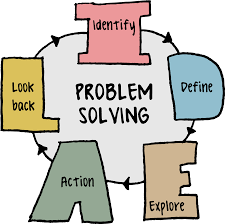
Astoundingly, the study of ‘problem solving’ is not freely available. In the academic world it is assumed that the skills learnt in schools and places of higher education are transferable to the ‘real world’. Well in my experience, I can say that most of those skills are not transferable, which is a problem in itself. Theory and practice should be salt and pepper, but they are not.
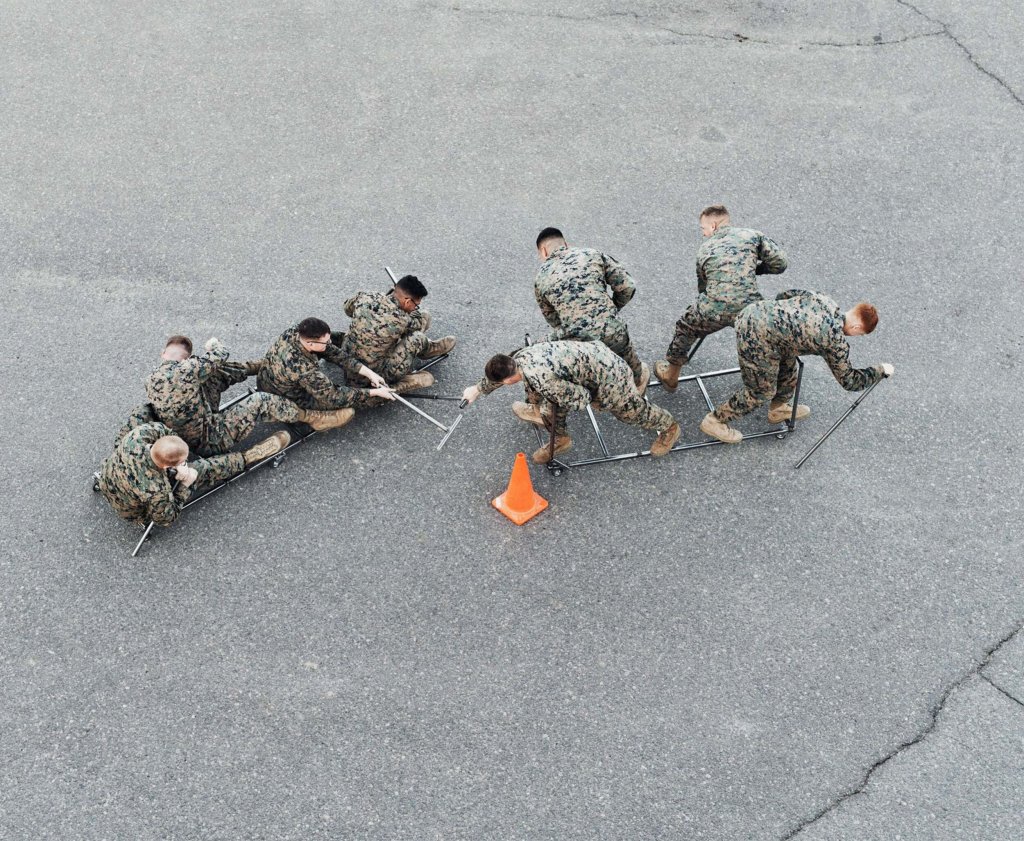
To solve a practical problem takes a special kind of thought process. Most importantly there must be a consistent intention aimed at a fruitful result. Technicians and those who learn practical ‘trades’ such as building walls with bricks or carpentry, become great problem solvers very quickly. If they make a mistake, it is plainly on view and has to be taken down and attempted again. Generally, the selection process for soldiers will involve problem solving. Recruits become part of a small team arranging logs and ropes and other props to overcome an obstacle. Real work in real time.
It is said rather cynically that ‘doctors bury their mistakes’; but it is true. It is unfortunately also true of many of today’s politicians and leaders who are entrusted with the welfare of the State and it’s citizens. If they make a wrong policy decision or invent a plan for some new project or public works that goes wrong, the failure is forgotten. Money is wasted on projects that any ordinary person would say is a waste of time and money (just read my earlier blogs on the UK High Speed train project predicting failure). Why, you might ask, does India have a Space Programme when there are thousands of villages in India without proper sanitation? I am only using India as an example. Avoiding and/or mismanagement of real and urgent problems happens in every country run by politicians with their own agendas, not the people’s
If a race of intelligent beings came down from the Planet Problemsolving, they would certainly be appalled at the ignorance of humans in a skill the PP inhabitants are taught from birth.
If humans cannot learn from present times, we can learn from history. In the Biblical era, when Herod heard there was a child to be born who would one day be King, his solution was simple and brutal. To kill all male babes under the age of two years. The solution to his problem was immoral, self centred, and ineffective. Have we improved?

Today, the State of Israel is being led by a person with Herod like, problem solving hypothesis. Because there are fighters who are against the State of Israel (as a consequence of decades of ill treatment towards Palestinians) Israel is using genocide to prevent further problems, just like Herod. And just as Herod assumed a massacre would get every child, so it is assumed that the Israeli government actions will eliminate every fighter who is against the Israeli State. But history tells us that using starvation, disease, killing and maiming, stopping fuel supplies in winter and stopping safe escape routes, will be condemned by world organisations like the United Nations. South Africa has emerged from apartheid in the last century and has been the loudest voice of condemnation. They have learnt from their history.
Hitler is perhaps one of the greatest despots in modern times, who used similar problem solving techniques indiscriminately. He constructed concentration camps with impregnable exterior defences, then filled them with people of direct and indirect Jewish blood. We know the rest. Indeed, the people who know this best are living in the State of Israel today.
Let us examine a less emotionally charged problem being played out over the English Channel at the moment. The problem always requires a definition and for voters in the 2016 referendum it was identified as ‘immigration’. The ‘Vote Leave’ champagne and UKIP party championed the idea that ‘immigrants are a problem to the country’, in the run up to the referendum. Whilst most economists would disagree with this concept ( the USA is a prime historical example of immigration creating prosperity ) the problem was described in emotional terms. We know that rational debate stops when emotions are stirred, if we have lived life at all! Emotional beliefs do not use constructive thinking patterns based on analysis of facts and figures. ‘Solutions’ were expressed as three word slogans such as ‘Take Back Control’, ‘Brexit means Brexit’ ‘Get Brexit Done’.
Broadcaster James O’Brien on LBC said: “I’m looking for a chronology of the meaningless slogans Brexiters used to give people an excuse not to actually look at any detail, evidence or do any thinking.”
As the supposed ‘problem’ of immigration, moved from fringe to mainstream politics, the ‘final solution’ became leaving the European Union. The principle of ‘understanding the problem’ by using statistics for instance, was ignored since only one third of UK immigrants actually came from the European Union. Many of those who did were short term immigrants, such as students and migrant workers. As the fish and chip shop owner said to me on the day of the Brexit vote in June 2016, ‘Who is going to pick my potato’s?’
But the emotions of hatred and fear were exploited using false facts by those in power (just as did the leaders of Nazi Germany) and the UK left the European Union in 2020. Since then, the ‘problem’ of immigrants has not gone away. For no obvious reason the ‘problem’ has be re-defined to be the three per cent of immigrants who enter the country without proper documentation.
Under international law these fall into three basic camps; asylum seekers escaping persecution, economic migrants and the criminal underworld. These categories however require time consuming investigation on a case by case basis.

Far simpler for the government to stir public emotions using a three word slogan which is ‘stop the boats’. Chillingly, the ‘solution’ is steered away from creating safe routes and tackling criminal gangs to being one of ‘deterrent’ or fear. By ‘fear of being sent to Rwanda’ the UK government intends to stop people from risking their lives crossing the English Channel.
The horror of this solution and all ‘final solutions’ is not characteristic of any country that wishes to hold it’s head high in the European Courts of Human Rights and the United Nations. Similarly, the government of Israel is prepared to ignore the Article 2 of the Genocide Convention. The false logic of ‘the end justifies the means’ convinces only the emotions.
The complexity of statistical analysis and testing and proof finding and ethics and morality and compassion and common sense and lessons learnt from history and comparing alternatives and cost benefit analysis, should be the bread and butter for problem solving by those who lead nations.
But complexity is ignored because it does not invite the answer, ‘yes’ or ‘no’. These two words are fundamental to what is the basis of the referendum method of problem solving.
- Shall I kill all the male children under two years of age? Yes or no?
- Shall I get rid of the Jews? Yes or no?
- Shall I destroy Palestine and it’s people as a method to destroy their militant leaders? Yes or no?
- Shall we leave the European Union? Yes or no?
- Shall we ‘stop the boats’ by making it illegal to do so? Yes or no?
Each time the question assumes a problem with which the man on the proverbial omnibus, may not agree is a reasonable question to be asked. The question is too simple to answer for the complex mind, but easy for the simple mind.
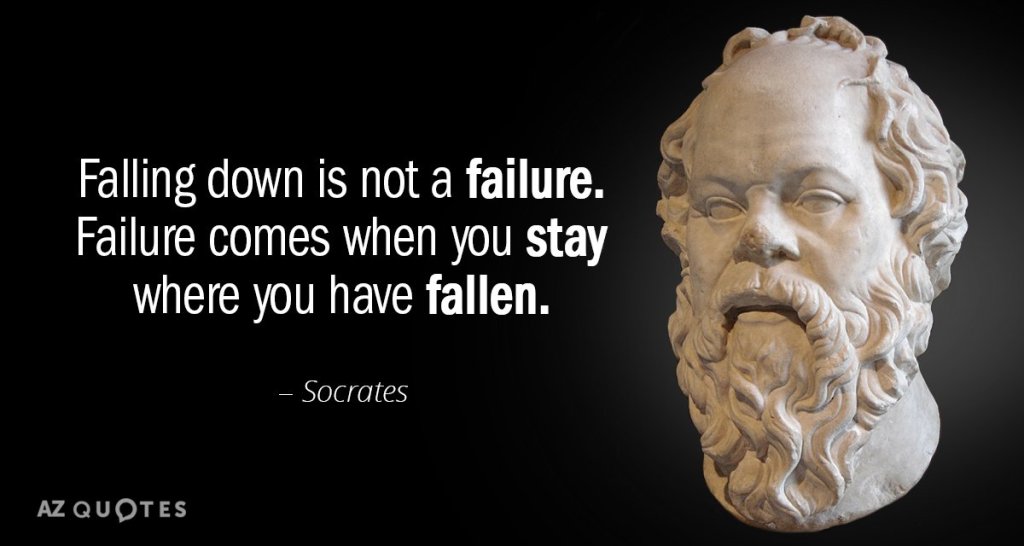
The so called ‘wisdom of the crowd’ is not something that history proves. Wisdom is unfortunately a rare commodity – whether two thousand years ago or the present day. We only have to listen to Socrates (470-399 BC) opinion about the ‘common man’…
Socrates wisely points out that voting itself is a skill. Knowing what kinds of issues are being raised, and how best to deal with them is a real skill required to know how to best govern people. If people are not properly educated, then what ends up happening is demagoguery, which is when people exploit others’ emotions, seducing them with easy answers, so that they could be elected.




 Matters Blog