Go Electric!

To go or not to go.

When I was in my first year at University I used to have debates with my parents about the harm made by internal combustion engines. Their reply was that if I did not approve of cars why do I ride in them? The answer was of course that at that time there was no alternative; unless you lived in cities. In London I rode my bicycle with a sign on the back saying ‘no noise, no fumes’ for a decade.

Fifty years later I have won my argument. London has introduced ‘low emission zones’ having recognised that the air pollution from vehicles is harmful to the health of it’s inhabitants.

When I retired in Spain I bought a Spanish made electric bicycle. At first it was great but after five years the battery had lost so much of it’s capacity to fully charge that I had to buy a new one. This cost me about a third of what I had paid for the bicycle. Then the computer had a problem and no e-bike specialist knew how to fix it and the BH factory was closed because of the pandemic. When the motor broke I took my bike down to the recycling centre and said goodbye to it. Never has a bicycle caused me so many problems.

Interestingly, many e-car owners are going through the same experience, only worse. They have invested considerably more money in an e-car than the cost of a bicycle and their anxieties must be proportionately larger.

Properganda or Proper Policy?

I will not list all the of the problems they face but here are a few;

*Recharging the batteries; those without a private drive will find it hard or impossible to charge in the street. Already pavements in cities have electric cables running across the pavement from homes to e-cars overnight.

*Recharging is expensive; unless you are recharging at home using your own photo voltaic panels, you will pay for your electricity.

*Mains electricity at home is not green electricity. In Spain mine is mainly produced by nuclear and gas fired power stations. Only 5% of my electricity is from renewable sources.

*Electricity sent to users via a national grid is highly inefficient, losing about 80% of the energy from the original source. Local power production will one day replace this but not yet.

*Electric cars are cheaper to maintain than internal combustion cars but there is not yet the infrastructure and technicians in place to repair broken e-cars.

*Electric cars are heavy and need expensive tyres.

*Electric car tyres put out more particulate matter into the air than diesel cars produce from their exhaust.

*Electric cars are heavy and some multi-storey car parks and car ferries may have to be redesigned.

*Lythium ion batteries have a risk of spontaneously combusting.

*Drivers of electric cars experience ‘distance anxiety’. For longer trips they will have to stop and find a charging point. While these are being increased in number, there is no strategic control over the number of these points and customer demand. Waiting for a recharge is not satisfactory for people in a hurry.

*If there is a traffic jam for any reason, e-car users could find themselves running out of electricity and being powerless (literally) to do anything about it. Apart from planned road closures and random accidents, extreme weather such as freezing blizzards can stop the traffic and cause deaths. Keeping the lights and heater on is not an option for e-car users.

*As one third of a cars energy consumption in it’s lifetime is consumed in it’s production. It makes sense therefore to make cars that last a long time. A diesel engine can do a million miles as often London taxis do before some are sent off to California for an overhaul and new life. The lifetime of new e-cars is unknown but certainly the batteries will the first to be replaced and that raises the question of where new rare earth materials are going to ethically sourced from…the moon?

At present, many e-car users are in the ‘honey-moon’ phase of ownership but already some are questioning whether their choice was really such a good one.

Car producers are also going through the same questioning process. Major companies such as Ford, General Motors, Apple and Volkswagen are applying the brakes.

It is without question that personal transport (outside of cities) is not going to go away. We love our cars and the convenience, privacy and comfort they provide. With the approach of the era of the self drive cars, users will be able to sit back and enjoy the ride…until a pesky teenager deliberately steps out in front of the car (just for a laugh) and forces an emergency stop…or a car jacker on a lonely road at night! Making moral decisions based on appearance of those stopping cars, is still over the horizon for AI. Does it recognise a police officer in uniform?

And then if you are used to driving over the speed limit (as most drivers are except when they approach a clearly signed speed enforcement camera) then you will find your journey times extended as your AI dutifully follows the traffic laws.

In the meantime drivers are left with the internal combustion engine. There are stories of some drivers who bought e-cars dusting off their old diesels and selling the Tesla.

Toyota appear to be the most ‘customer need’ focused car production company and have asked themselves the question; ‘how can we make the internal combustion engine green?’

Toyota Hydrogen Car

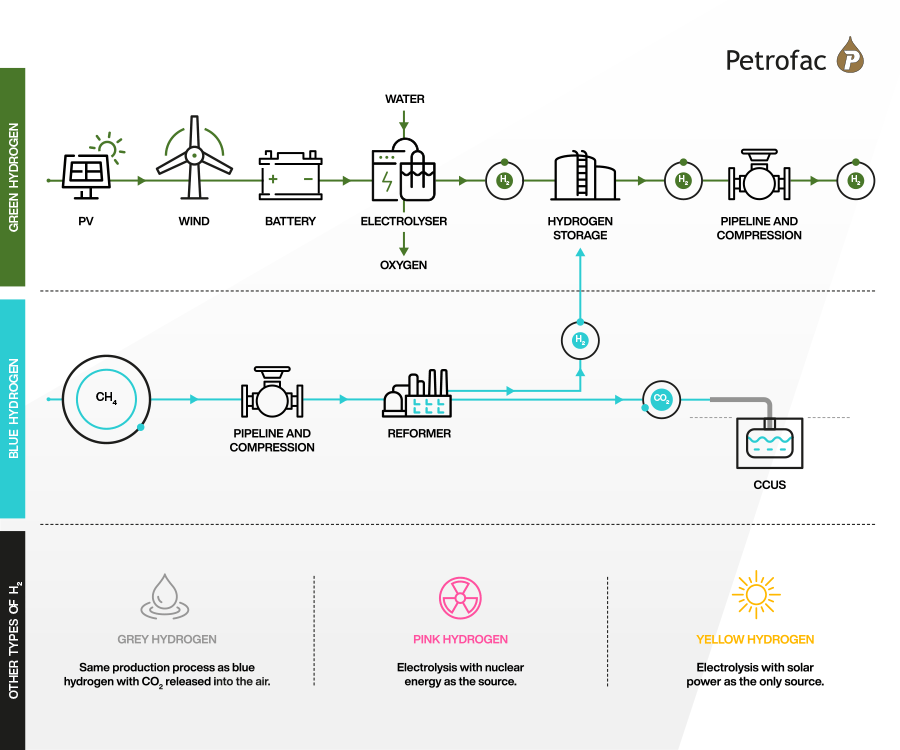
One answer is to use hydrogen as a combustible gas using electrolysis to split water into hydrogen and oxygen. I remember watching this being done on a science television programme back in the 1970’s and thinking then – ‘that is the future’. I was not wrong.

There are nuances regarding how ‘green’ hydrogen production is and the infographic below describes this.
There is another alternative fuel which is ammonia. This is a main component of many fertilisers and is a chemical made of hydrogen and nitrogen (NH3). It can be burnt in a combustion engine as a zero carbon fuel.

This essay has focused on electric cars but clearly heavy transport by train, ship and goods vehicles are substantial polluters are the moment. Hydrogen has always been a preferred route for the development of engines of the future for moving heavy goods around the world.

Science tends to have a momentum of it’s own. New inventions often take the lead in how society uses them and evolves. This new ‘green transport’ debate, raises the questions of how much the government provides subsidies for new enterprises and how important planet sustainability is believed to be by various governments around the world.

If these decisions are devolved to industry leaders it is likely that little will be done as we have observed over the last five decades or so, when ‘global warming’ was first highlighted as an issue. Politicians such as Margaret Thatcher took a very forward looking view as to the health of the planet and the effect of unrestrained industrial production and consumption. Private enterprise so far has followed the policy of ripping the planet apart. Only now is this policy biting back.

Perhaps today, it is down to the individual to vote with their feet. Move into a city, use public transport or a bicycle. Or move to the countryside and fit photo voltaic cells and solar water heaters to your house. Or just do nothing.

It depends how important breathing is to you.

The Holy Forest

Once upon a time the world was covered in forests. People lived in these forests happily until one dreadful day a war started.

The people in one particular forest were badly persecuted by their enemy. Most of their trees were cut down and the people died in great numbers as they could not survive without the bounty of nature. By the end of the war only one man survived, called The Hunter.

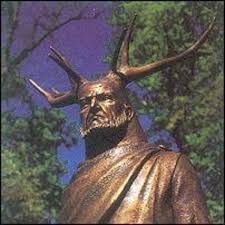
The Hunter

The kind people from all over the world felt sorry for the Hunter. They decided to send him to the very best forest in the world known as the Holy Forest. It was for him to look after and live in peace with the forest animals for the rest of his life.

The Hunter was very pleased and quickly set to work building himself a timber house in a clearing. The forest animals watched from their hiding places and wondered how the Hunter had been allowed to live in their Holy Forest. One day the Hunter walked out with his axe and started to chop down trees. He chopped and he chopped all day long until the clearing was very much bigger. The forest animals who lived in those trees ran away to their friends and family and hid in fear.

As the months and years went by, the Hunter carried on chopping down trees until there was only a tiny part of The Holy Forest left. The animals were hiding anywhere they could find but could not avoid the bullets from the hunter’s gun.

They could not understand why he hated them, so they sent the largest of the bears to warn him to stop – and fight him if he refused. The Hunter did not want to talk with the bear so the bear scratched his face very badly and blood poured out. The man grabbed his gun in a rage and shot the bear dead.

Now the forest animals were very frightened and hid in their burrows and up in the trees. In a rage The Hunter shouted that he was going to kill every living creature and that was all their fault for sending the bear. He took out his axe and cut down the remaining trees, shooting the forest animals one by one for they had nowhere to run.

The kind people of the world had been watching the Hunter all this time. Although they protested at what he was doing, they never stopped him. When they saw that the Holy Forest was gone and the ground was littered with the bones of the forest animals, they were shocked.

They could not understand how someone who lost his own people’s forest could destroy another one gifted to him in peace, especially one so holy. When they asked him he flew into a rage and accused them of being friends of the bear who cut his face and he pointed to his scars. His sense of self righteousness knew no limits and his eyes flashed anger and hatred at them.

So they walked away, and it started to rain on the once Holy land and the Hunter had no animals to hunt, no kind friends to look after him and only a wasteland in his memory.

He realised then that he had done exactly the bad things that had been done to his people without knowing what he was doing. ‘Bad things happen to make us wise,’ he thought, ‘when all the time I blamed others. Now I understand my actions were filled with fear and hatred but it is too late’. And the Hunter laid down his gun and collapsed. He had broken the sacred law to only do as you would be done by, and to break this law in a holy place was an end of honour for his fallen people and himself.

The Wizard of Light

We Are Off to See the Wizard!

Most of us live ‘out there’. We see and feel our skin as the join between us and ‘that’; whatever ‘that’ is. For more and more people, the outside world is being discovered to be ‘not what it seems’ or in common parlance ‘fake’.

Films like The Matrix trilogy highlight the idea that what we look at is no more than some sort of construction. But who is making this illusory world?

In medieval times, before psychiatry and psychoanalysis, it was a widely held hypothesis that a being called God made the world and us. God therefore, had to be responsible for the running of human and if that gave you a problem you had an option to pray. Prayer was the only way humans were able to feel they had a say in the matter or else they abandoned themselves to kismet or fate. Both are soft options and unrealised humans, like soft options.

Mystics however held a different view, from times well before the Essenes and their Star pupil, Jesus the Christ. Mystics never believed in the story of an all controlling, Commander in Chief, deity. Instead they experienced directly a love of ‘God within’. As beings made ‘in the image of God’ (the literal consequence of what we now call fractal geometry) we are indeed God or as the poet and mystic Rumi said, a fragment of the mirror of God that shattered into countless pieces. We are, in other words, a shell within which energy and Mind (which is not us) are facilitated.

Picture a movie projector plugged into the electric wall socket and a light shining within the magic box. Out of the eye of this box are projected moving images in a most compelling way.

Because of a certain suseptability within the human mind, our attention becomes fixed on the world ‘out there’. Our attention moves from ‘here’ and ‘this’ (Self), to outside ourselves and we are transported to wherever and whatever (ego). So ‘ordinary life’ revolves around us in a merry go round that we call ‘experience’. Indeed it is because of our growing addiction to this series of dream sequences, that life can become a blur. In modern times the spinning world appears faster than ever and in a way and as a consequence, many feel overwhelmed by a lack of clarity and control. But there is a mechanism by which we can halt the confusion.

The ancient Greeks had an interesting take on how the human eye works. Whilst today we describe the eye as a camera or receiver of light, the ancient Greeks understood it as a projector. They thought the eye projected light, but perhaps they were describing how the process of mental projection works? Could it be that they intuited the idea that we create everything we see?

Quantum physics tells us that we are able to affect what we see by being an observer. The conundrum of Schroedinger’s cat imagines two realities present at the same time. Until the human observer makes a choice, the cat is both alive and dead.

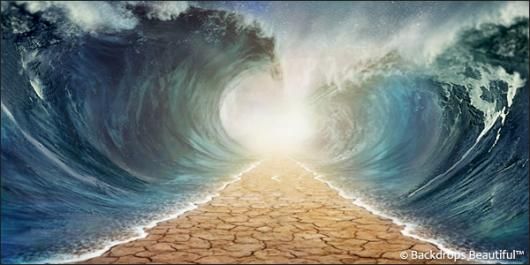
When Jesus the Christ preached, ‘you are the light of the world’ he meant that we hold the power within ourselves to be not only our own light (God), but able to illuminate the whole universe. We hold tremendous power and he demonstrated this with miracles. Moses did the same when one of his followers walked into the rising tide of the Red Sea to certain death…except instead reality shifted and the waters receded. Parting waters was one of the many spectacular ‘tricks’ in ancient Egyptian magic.

We know that in Ancient Egypt the so called ‘Emerald Tablets’ of the demi-god Thoth or Djbuti instructed all beings to ‘seek light’. This is not as simple a process as it sounds of course. The illusion of reality is strong and shadows and false figures have to be ruthlessly eliminated in what mystics call ‘the hero’s journey’. The archetype of the hero as a warrior on the physical plane is nothing compared to the life long war of mystics and seers for understanding of themselves or enlightenment. This inner battle is the true and only meaning of the Islamic ‘Jihad’, whereby the veils that cover the inner light are tantalisingly removed, represented by the dance of the seven veils and the tantalising feeling of the hidden essence.

It is important to understand how all of this can apply to our own modern lives. One of the great ‘inhibitors’ to the removal of the veils is, ironically, religion. I shall not name and shame any particular religion because they are probably all guilty in my view.

How religion interrupts and corrupts the ‘hero’s journey’, is by promoting the description of the world as being ‘out there’. Most distracting of all is the notion that the saints and the angels and the Divine are all ‘out there’.

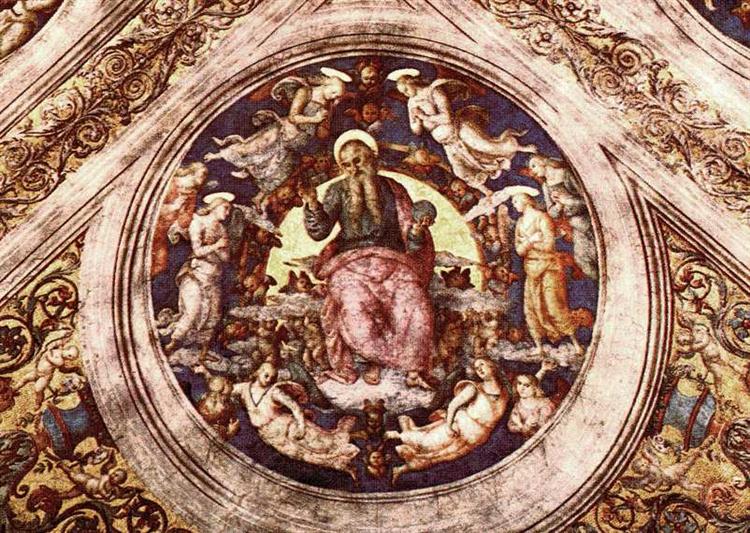
We might smile at the Renaissance painting of an old man sitting on a cloud today, as the archetypal God, but such a distortion of reality is still widely believed. Prayers are offered ‘to God’ as if such a being has both the time and interest in our self obsession. ‘You get on with it!’ one might hear a Divine voice command dismissively. Certainly in Christianity, humans were given ‘freewill’ at the beginning in the Garden of Eden, as a punishment rather than a gift. This Divine curse means we are always ‘on our own’.

If it sounds like heresy that God may not listen to prayers, then you are probably missing the point. Prayer was never intended to benefit a Universal Mind because God is by definition, complete in every way. Prayer is a mechanical process whereby a human mind can open paths to the human Soul, using those words that are not of one’s ego. Muslims are compelled to pray five times a day because it stops the ego in it’s tracks and can send our concentration inward. The body is bent in submission and the forehead (brow chakra) touches the ground. The arrogance of the ego is positioned (in Sajda) lower than the heart chakra, where Soul resides.

This process of ‘submission’ is found in most gnostic practises as a way of overcoming the constant demands of the lesser self (ego) and becoming aligned with the higher self (Self).

The words of the prophets to ‘know thyself’ are a hint to what today we might call ‘therapy’ or ‘psychoanalysis’. But these will not take you to a destination. They are principally an unveiling of an archetypal journey which is to travel inward to one’s higher Self, with skip in your step.

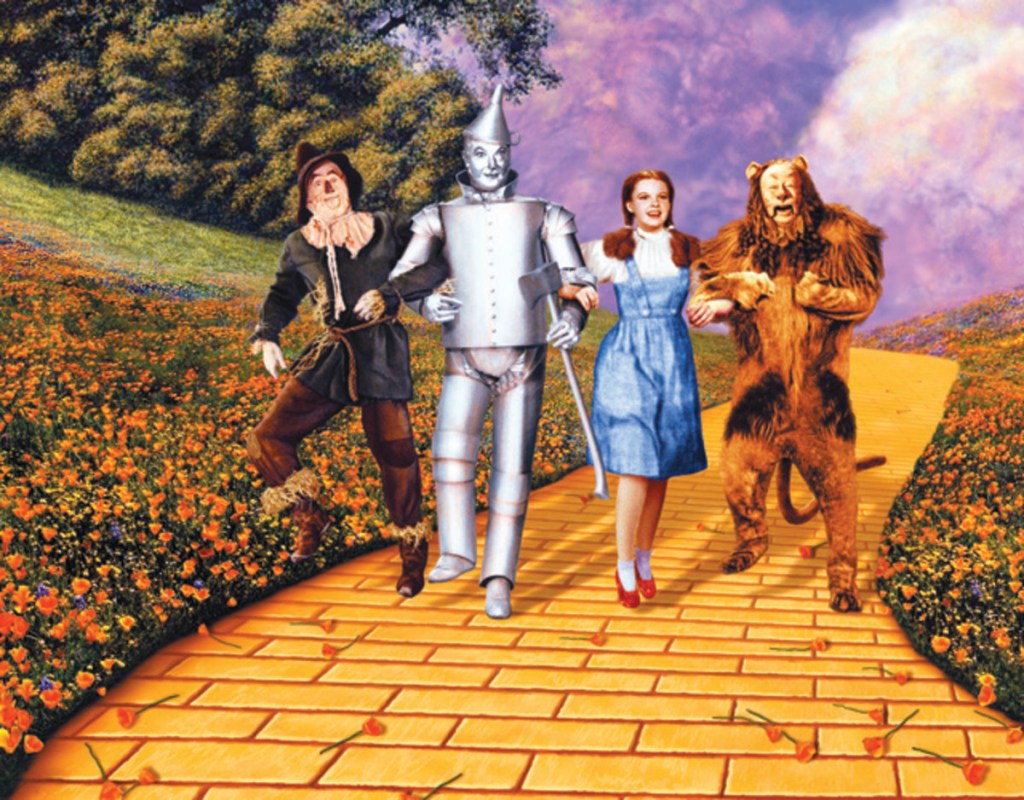
Body, Mind, Spirit and Heart on the Golden Road to the Wizard of Self 
picture credit Pacific Standard