Hot Cross Males

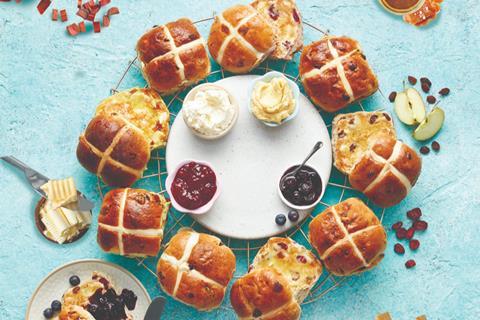
There is a tradition in England to bake special buns at the end of the Christian period of Lent. These are characterised by a white cross symbolising the cross on which, they believe, Jesus the Christ was crucified.
We are familiar with one of the meanings of the word cross is ‘annoyance’. Insignificant in itself but keep it in mind as you read on.

When I was a young student of architecture in London, we had lectures on the philosophy of architecture. I was greatly influenced by an American anthropologist named John Steel, whose philosophy of life in general appeared innovative and exciting to me. He said, for instance, that we should be wary of using right angles in our designs. He sited the geometry of astrology where an angle of 90 degrees indicates a clash, as does 180 degrees. In contrast, the angles of 60 and 120 degrees are harmonious.

I set about designing with architectural plans based on equilateral triangles. Other tutors cited the work of the great American architect Frank Llyod Wright who used this grid extensively. His buildings are greatly valued today for their harmonious relationship with nature and an ambience of content.

In the Chinese order of landscape and building design known as Feng Shui, the corner created by a right angle is called a ‘poisoned arrow’ and needs careful mitigation.

What this is leading up to is an invitation to consider the universal symbol of the cross; two lines that cross each other at right angles. It might be that it is not so benign a symbol after all; if only because it is a depiction of the causing extreme death of a human being.

The symbol of the cross is of course far older than Christianity, whether on the diagonal, vertical or the many other variations.
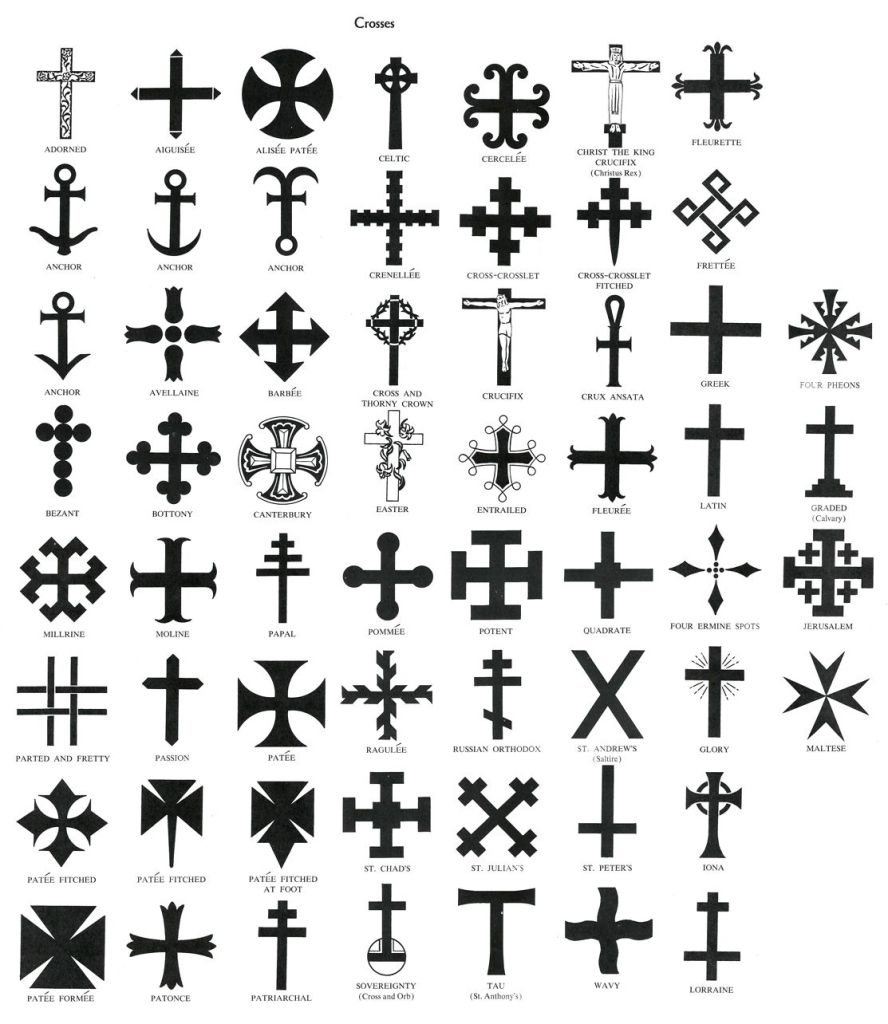
We should also remember the variation of the spinning cross known as the Swastika and it’s modern association with Facism. The spinning cross was a symbol of the sun for ancient cultures all over world. The Nazi’s reversed it’s direction in a doubtless, intentional Satanic reference because they studied and practiced spirituality for it’s power.

Jesus the Christ called himself ‘the light of the world’ and ‘the son of God’; but we rely on translations for this and it is possible that he came as the solar deity whom the ancient Greeks named Appollo. If modern day Christians are uncomfortable with this association then they are invited to read deeper into this subject.

Whether or not any of the above is absolutely true or relevent is not my thesis. Suffice to say that the crossing of straight lines is generally, a male and solar symbol.

Historically, much of mankind’s evolution over the last millenia, has been male or solar in character and I would argue that it is natural we would expect history to be filled with accounts of male humans fighting; war, opposition.

What was desperate to happen, in terms of human evolution, was the rise of the complimentary feminine principle known as the Divine Feminine. For we are not so bound by our religious dogmas today as to deny that God is equally female and male. The old stereo type of a white bearded ‘nice guy’ needs to be put into the ‘no longer believable box’. Humans were made in the image of the Divine male and the Divine female. Their physical bodies hold more in common than difference meaning the two genders have more in common than difference and are complementary in nature.

The power and relevance of the divine feminine appears in ancient Egypt. Their pantheon is a full of female gods as well as male. Isis and Osiris almost share the same name and are depicted, just as Mary and Joseph, with a divine child from their union.

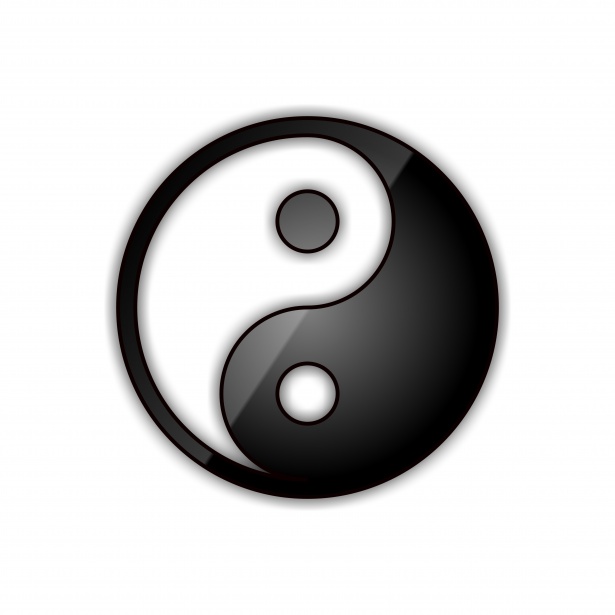
This balanced recognition of Divinity as a whole ‘yin and yang’ complimentaryness should have informed all of human endeavour to the present day but sadly, the alpha-male energy jumped ahead of the game.
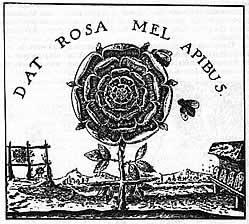
There were exponents of this Divine androgeny based on ancient Egyptian texts, the Greek Cabala and Jewish Cabala and Hermiticism, but they had to operate as a secret society. They were the Rosicrucians whose symbol was a vertical cross with a rose at it’s centre. The meaning is clear; that of a combination of male and female Divine energies forming a Unity.
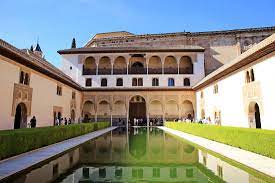
At a similar time came another religion based on the house of Abraham, Islam. Whilst today many Islamic cultural dogmas (such as dress codes) are based on tribe and tradition. In countries like Iran, enforcement of dress codes if enforced more for male power than to solve any problem. Early Islam was a beacon of feminine influence in society at many levels such as architecture and art. Sufi poets aspired loving feelings towards a soft and nuturing, Creator. Islamic architecture is renowned for it’s flowing depictions of nature and it’s geometric patterns. Courtyards and landscapes were intended as earthly depictions of paradise and were characterised by soft flowing waters and fountains. The contemplative, reflecting, geometric ponds in the Alhambra Palace and castle in Spain, were invitations for reflection and enjoying the solar heat from the cool embrace of shadowed courtyards.
Islam was and is, fundamentally, a lunar religion, still represented today by it’s use of the lunar rather than the solar calendar and it’s use of the crescent moon as a symbol.

This ‘feminine principle’ was carried by returning crusaders and travelling troubadours to the Christian Europe as chivalry. Many of the Crusader knights learnt from Islam the importance of respecting women and the essence that women contained and expressed in enchanting, subtle ways. This sea change should not be underestimated as it continues to inform and revolutionise the feminine principle in modern societies; expressed as ‘feminism’ in modern politics but culturally is far more profound.

The ‘Round Table’ of King Arthur was a practical representation of the sharing of power amongst equals. This replaced the Alpha-male monarch of previous centuries who killed all who opposed him. The circle is a geometric form which expresses harmony and potential infinite expansion and/or introspection. It is a planet and a universe all at once and has none of the negative values associated with a cross. But most of all, it is the maternal womb and the expression of the greatest thing that the Divine Feminine has to offer; completion and life.

It is today, in many European and other progressive countries, that women have been given principle parts to play in the affairs of government and social order. Their plain speaking and intuitive understanding of complexity, is in contrast to the previous male dominated ways. As leaders they have become highly respected, such as Ursula Gertrud von de Leyen in the European parliament.

So may we this Spring season of renewal, view the ending of the male, solar dominated world (open to all to view across North America as a solar eclipse on 8th April 2024) and welcome those gifts that the Divine feminine brings to us in abundance; the natural world, procreation love and an end to those hot cross males!
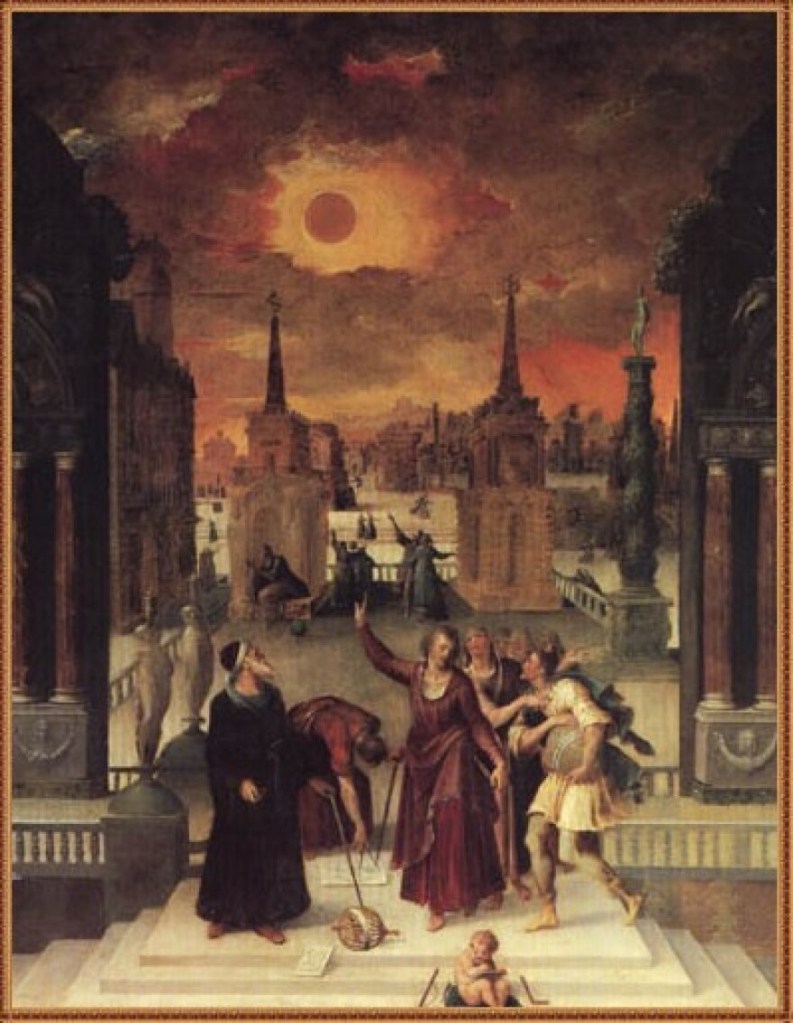

The Solar Eclipse; a moment for feelings or fiesta?

Defence?

It’s all violence

At some point in it’s evolution, humanity has to decide whether to accept violence or not.

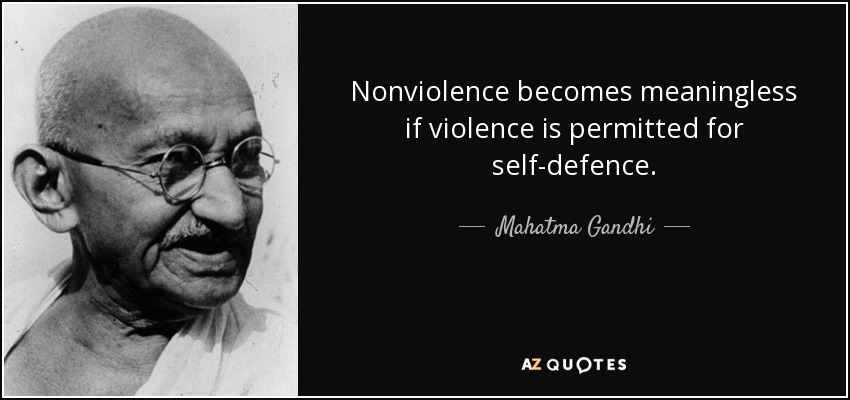
At present, it appears we accept violence within certain rules. We say that if you did not initiate the violence, then you can be violent towards the aggressor, to any degree. This is called ‘self defence’ and few can think of an alternative. But why should defence be more morally right than attack? Can either be justified? What is the difference, morally?

Suppose you were a citizen of the United States of America and you own a gun and know how to use it. You are woken in the middle of the night by a noise downstairs. You arm yourself and go down to investigate. You see a dark figure and shoot. At this moment you believe you are acting in self defence, as is your right. You switch on the lights and to your horror you see the body of your teenage son lying on the floor. He was creeping back into the house after a secret night drinking with his friends. This is not fiction. This happens.

Just because the law enables a gun to be the solution to your ‘problem’, was this the only solution? Were there other more proportionate actions you could have taken? Yes, you could have switched on the light before you shot at a higher risk to your own life, or you could have called the police. You could have just done nothing. Each approach is problematic but only one invites heart break.

I lived in a country where only specialist police carry guns, England. Good peace keepers should be skilled at talking down a potentially violent situation. It’s a technique and can be learnt. Now many officers carry a Taser non-lethal gun as well as non-lethal CS gas. Non-lethal is a practical half way to non-violence.

Between attack and defence there are a thousand grey variations. The best option is always somewhere between total war and total defence; not either or. Ultimately they both are characteristics of the same thing; violence.

Fortunately most sovereign countries do not attack each other and a state of peace exists. But we know that peace is a fragile situation, where historical, economic and political rivalry bubbles away under the surface like a dormant volcano. Violence has to be contained for peace to exist and this is created using ‘deterrence’. Joining forces with another group of nations is one method of deterring attack. Not being a threat is another and here we realise that it is impossible to deter another nation without them being scared of you. Russia is presently in this conundrum with it’s relationship to NATO countries.

We watched as Russia reached a tipping point and claimed that Ukraine had a Fascist army. Historically, the communists (Soviet Union) and fascists (Nazi Germany) were enemies and this history still clearly carries some import as ‘justification’. By fighting ‘fascists’ Putin possibly feels he has his predecessors moral high ground on his shoulder. Coupled with a perceived threat from an expanding NATO and Ukraine moving towards joining the European Union; Putin is clever though and he does not use the word ‘war’ or ‘attack’. He insists he is acting in ‘self defence’ to NATO’s growing threat and his military action is just a ‘special operation’.

Words are master deceivers and suit Putin well. Because two words, ‘attack’ and ‘defence’ are the same thing; a resort to violence is claimed to be justified.

Zionist politicians in Israel have more or less done the same thing. They have an historical antagonism towards the people of Palestine whom they have been squeezed into smaller and smaller enclaves. Any similarity between this and the Warsaw Ghetto in the Second World War is of course, purely coincidental. The question is whether Palestinian or Isaraeli fighters are defending their country by attacking their neighbour. Defence quickly escalates into violent action that can get wildly out of control. The question of ‘proportionate’ use of violence (an eye for an eye) is the current debate.

So how can non-violence ever replace violence? The answer is it probably can’t whilst humans are attached to a materialistic and territorial lifestyle which they guard with weapons. In this respect humans are less sophisticated morally than most animals who rarely fight their own species to the death.

We learn to deal with violent conflict as children in the school playground. When we become adults we are expected to rise above violence as a solution to problems.

Two boys start fighting in the playground. A huddle of eager spectators quickly forms around them. These bystanders are too immature to try to pull the boys apart and instead encourage them. A stronger third party with moral responsibility for order is required; a teacher.

The teacher breaks up the mob and marches the two boys off to the headmasters office.

‘He started it!’ is a common defence from children. Their false logic is that when attacked there is no other response than a defensive counter attack. There is usually an option to run.

If we change the scale of our example, to that of governments and countries, you will find that ‘he started it!’ is also used as a justification for the use of violence by sovereign states. Only a third party intervention from a body with higher moral and political authority has the power to stop and settle wars. After the horrors of the second world war the League of Nations and subsequently United Nations was created to step into this role. The objective voice of world opinion should, in theory, make the warring parties ‘see sense’ and the more mature aim of seeking a peaceful resolution.

The United Nations and the United States of America, could go to the preesnt Israeli Zionist government and point out that killing innocent women and children in Gaza is morally unjustifiable. Putin could be hauled into the headteacher’s office by the United Nations, but has not.

Mahatma Gandhi lead a nation using moral authority based on non-violence. He wanted the British to leave India and for Indian people to govern themselves. His tactics using moral discipline, diplomacy and example turned out to be more powerful than the military might of the British Raj.

War was described by Carl von Clausewitz as ‘ the extension of politics by other means.’ Personally, I would be more precise and describe war as the extension of politics by violent means. This creates the logical possibility that peace is the extension of politics by peaceful means.

Of course, peace is an abstract idea and never completely exists but there is a place close to total peace which might be reached using skilled, non-lethal force.

To use a personal example, when I was a boy at school, I never sought to fight. When I was inevitably confronted aggressively, I stepped forward, put my leg behind the thigh of the aggressor and pushed him to the ground. Yes, it was violent but it only hurt a bully’s pride.

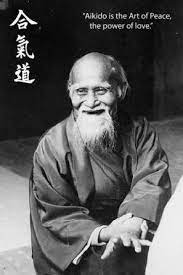
This was the extension of politics by peaceful means, meaning no one was hurt. Later in life I came across Aikido. This an unusual martial art in that it enables winning a fight without confrontation. For this reason it requires no strength and is ideal for women and the elderly.

An interesting example was given me by one of the teachers. He was on an ice-rink when he felt a hand going into his pocket and pulling out his wallet. Instinctively he grabbed the wrist of the thief and continued the forward movement of the pickpocket’s body. The result was to send him rapidly across the ice rink. In Aikido, the art is to avoid conflict using simple non-aggressive moves that eventually tire out or restrain the opponent until help arrives or submission.

City dwellers would do well to learn the tactics of pickpockets even if they do not feel able to defend themselves physically. Usually they work in teams in crowded places and choose victims carefully. This is done by the ‘spotter’. Then the thief moves in using much the tactics of the illusionist in a theatre to distract and act deftly. Then a third party intervenes by preventing escape or creating another distraction.

Governments would do well to learn from these examples at a micro scale of conflict. Having a clear aim is vital to managing any violent unsolicited action. The method of conducting the conflict and ending it with minimum force and casualties for both attacker and defender and vital. Fast and deft military moves have time and time again proved their worth on battle fields.

When Napoleon wanted to teach the Zhar of Russia a lesson for breaking their pact of unity in 1812, he formed an army and headed for Moscow. Contrary to most other opponents Napoleon had fought, the Russians did not line up and wait to be shot or cut down by flanking cavalry. Instead they conducted an extraordinary retreat, burning everything in their wake. Only when Napoleon reached Moscow did they choose their moment to swiftly counter attack. Napoleon’s army fled in disarray and only 5% of the original army returned to France.

Sun Zhu in his famous book on military tactics said, ‘engage with the ordinary, win with the extraordinary’. A little side stepping and originality can nimbly avoid a cataclysmic confrontation like Ukraine v Russia. ‘Give some ground,’ is one solution.

Special forces, such as the British Commando’s came to the forefront of military tactics in the Second World War, where small teams of four men used guerilla tactics against an unprepared enemy. Casualties for the attacking side were minimal compared to strategic gain.

Ultimately the choice is not whether to attack or defend but to avoid unecessary violence by what ever means possible. There are always alternatives that require imagination and focused problem solving techniques in exactly the same way the animals avoid killing their own species. There is no ‘perfect’ state of non-aggression where humans in their present terratorial state of consciousness are concerned. Perhaps in the future, peace will break out and violence will never be the preferred problem solving option. In the words of , ‘what if there was a war and nobody came.’

“Ah! There is the rub.”