From a Distance

You may say I’m a dreamer
But I’m not the only one
I hope someday you’ll join us
And the world will be as one
John Lennon ‘Imagine’

There is an awareness of the prospect of a ‘New World Order’ in many modern western societies. It is ‘globalism’ by another name and assumes that for the eight billion or so inhabitants of planet earth, ‘one size can fit all’. We clearly see this in the communist countries such as China, where citizen’s rights are subordinate to the rights of society; ‘the lowest common denominator is best for everyone’ philosophy.
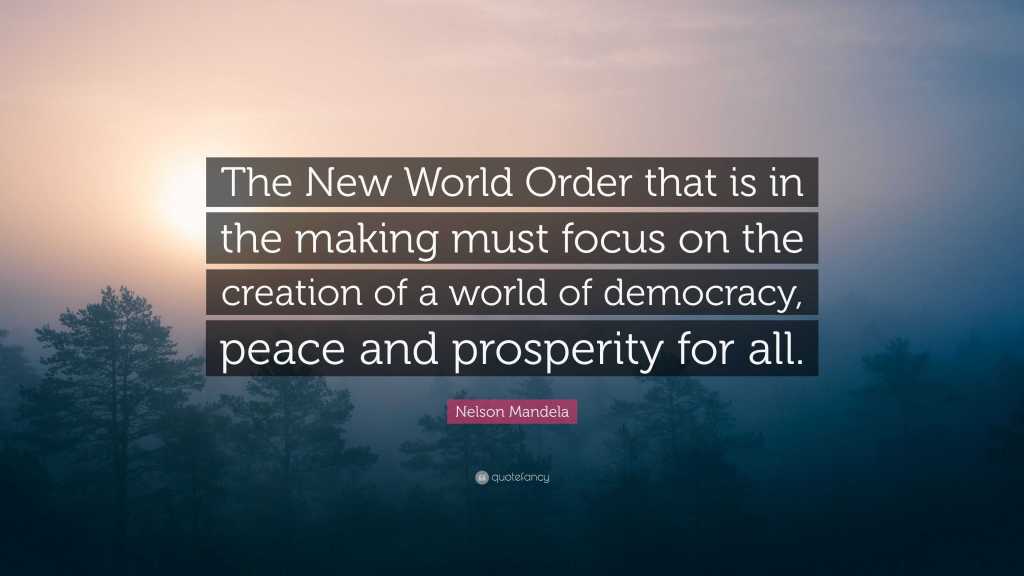
Astronauts in the International Space Station may enjoy a global view over breakfast and be filled with wonder at the planet without political boundaries and cultural differences.

But of course geo-politics is not as simple as the view from space implies. If we were to break down how societies are structured the categories might look like this;

language, religion and ethics, race, class, cultural background, education, wealth, geographic placement, access to technology and food and so the list goes on. Societies are highly complex when viewed through the lens of a microscope.

There is an indigenous North American saying that, ‘it is easy to be brave from a distance’.
They should know, for their initiation tasks for young ‘braves’ were daunting to the point of life threatening. When poised to jump into a river from a high cliff, suddenly life looks and feels different from ten minutes ago.

This illusion of safety is becoming dominant in many Western societies in the modern times. Citizens go about their daily tasks in relative comfort because of the security that their State promises. Citizens will never be poised on the edge of a metaphorical cliff – so they believe.

We create a ‘safe distance’ around ourselves; living in a tiny bubble of the known and familiar. It is comforting and provides, what in general systems theory is known as ‘homeostatis’, or

The aim of systems theories is to create homeostasis, or a favorable person–environment fit, in that the individual interacts and responds to her/his environment where interactions and change are contributing to positive growth and development and social functioning.‘ ScienceDirect.com

The whole approach to reassurance given by crew to passengers on an aircraft is based on this principal. In a short briefing it is explained that the aircraft could crash in which case here’s a whistle, otherwise, drinks are available from the trolley.

Airliines pretend flyiing is safe, but if we think critically they could do more. For instance, why are children not given child seats as is the general law for cars? Why are companion and service animals so difficult to cater for? A disabled passenger will have their expensive wheelchaire thrown into the hold and they have to stagger to their seat; if they are lucky with extra legroom – at an additional cost. How quickly passengers embark and disembark, is mostly about money for airlines.

Life in western societies is rather like this problem that airlines have when people have unique expectations and needs. The tendency then is humans are herded like lost sheep and most of the time, we oblidge.

Fortunately, what stops the world from wobbling off it’s axis is a counter force which we call ‘co-operation’. Humans emerged successfully from the ‘natural selection’ disaster movie of prehistory by co-operating with each other. Instead of becoming the lone predator like tigers, they became pack hunters, like wolves.

So here is the good news. If generalisations and lack of detail are the centrifugal forces that tend to pull society apart, then co-operative forces are the centripetal reaction, keeping us all together.

A list of these co-operative forces would be something like this;

...written laws and national constitutions that describe and give rights to citizens, shared wealth and resources such as public services, pensions and private insurance, shared territory such a public spaces and open borders, shared fauna and fauna in natural ecosystems, shared technology and scientific research, shared buildings such as blocks of apartments and entertainment facilities, shared national infrastructure, shared human resources in education, health, armed services, politicians…the list is longer.

Those enjoying the re-assurance of a Western lifestyle, are aware of other countries where the centrifugal forces are actually pulling societies apart. We know there are wars, famine, plague and natural disasters, criminal and terrorist organisations, happening somewhere else on our shared planet all the time but we chose to do nothing at worst or give to charity at best. We rationalise our choice as ‘someone else’s problem’ because we were lucky enough to have been born in a bubble.
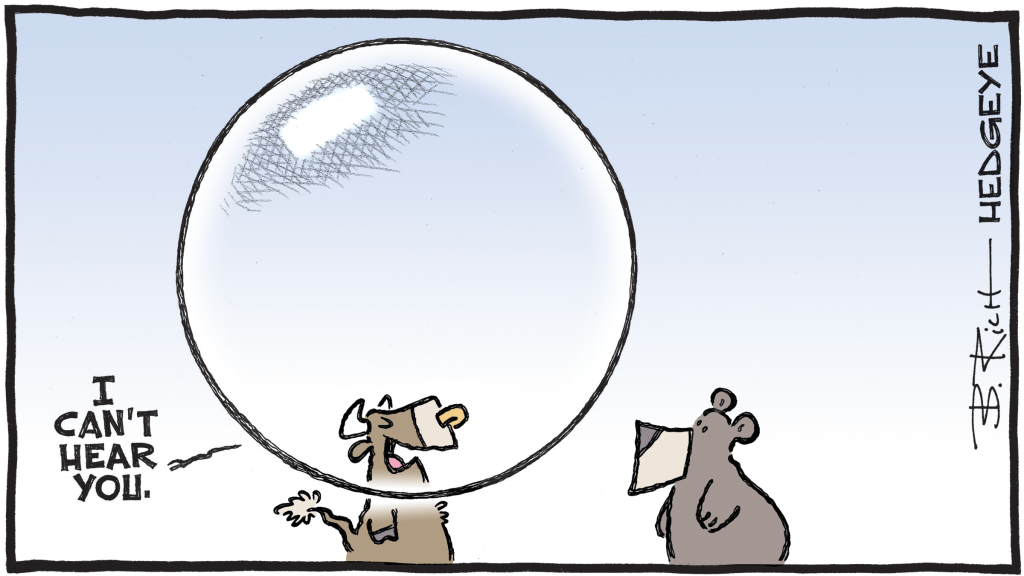
picture credit: Hedgeye

For the few who do take on responsibility for those less ‘fortunate than themselves’ is more they can do. If they have a set of skills applicable to a particular emergency they can join a charity or non-government organisation. Usually and sadly, such as in earthquakes or flooding, help arrives too little too late. Disaster relief warehouses do not exist at every air and sea port in the world. Instead it can take days for supplies to be shipped and taken overland to those as serious risk of harm, instead of hours. Governments and or those who caused the disaster lie about the cause and solutions that are in place such as is happening in Gaza in Palestine at this present time.
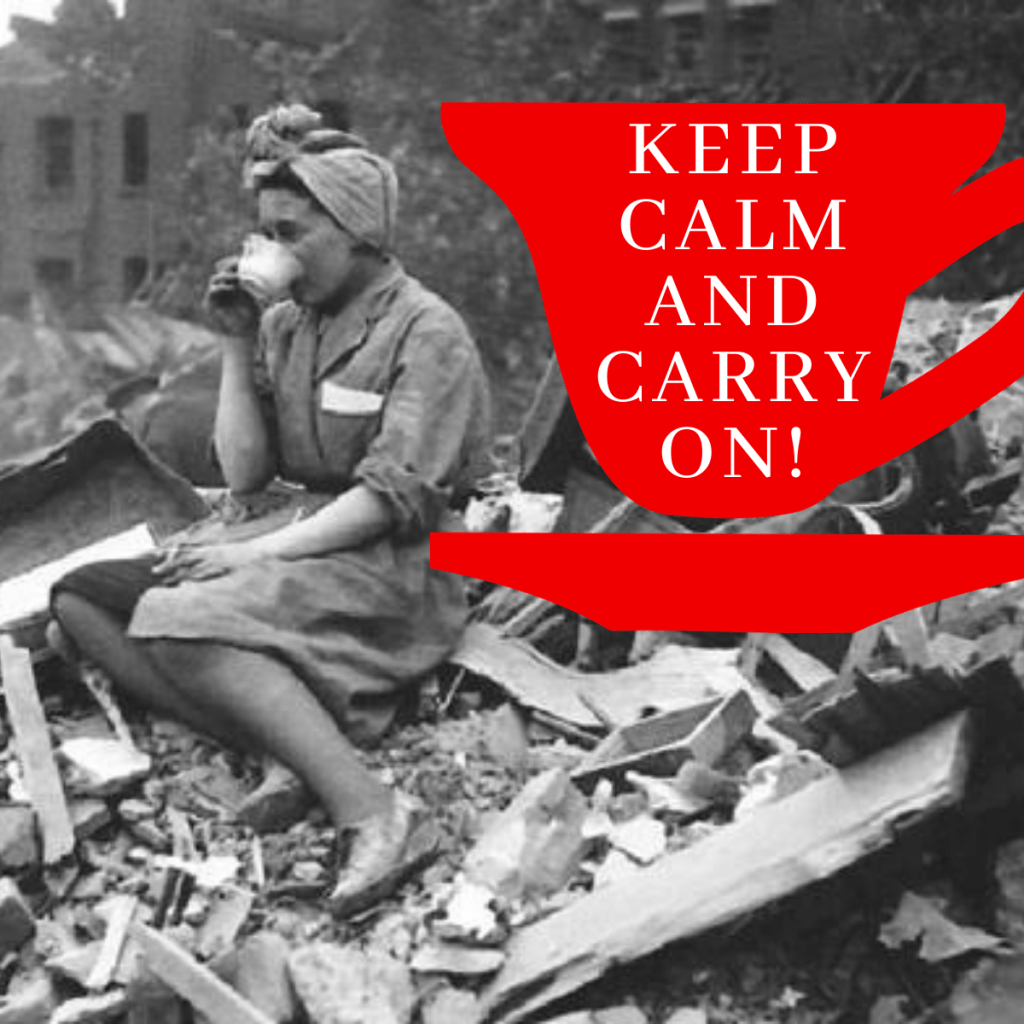
In this way disasters can be diverted from public attention; played down because ‘we’ are not the victims. Our lives continue with a good standard of living, fuel in the service stations, government workers in the social services providing education, health and the rest. The shops are open and we go to work.

Or so it appears, because of the illusion with which we are presented and which we choose to believe; we genuinely think we are brave, upright, honest, caring citizens.

That is until our borders are rushed by people without documents who risk their lives to get help, banks close, world shipping halts, a serious pandemic any other disastrous global event such as, well, global warming…
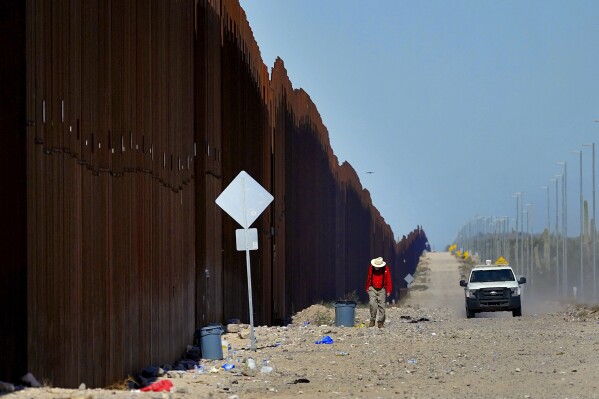
Arizona Border picture credit: APnews

Then the problem in western countries becomes, ‘how do we keep our way of life?’, because we assume, our lives and standard of living will continue unchanged.

Imagine

Mind and Matter

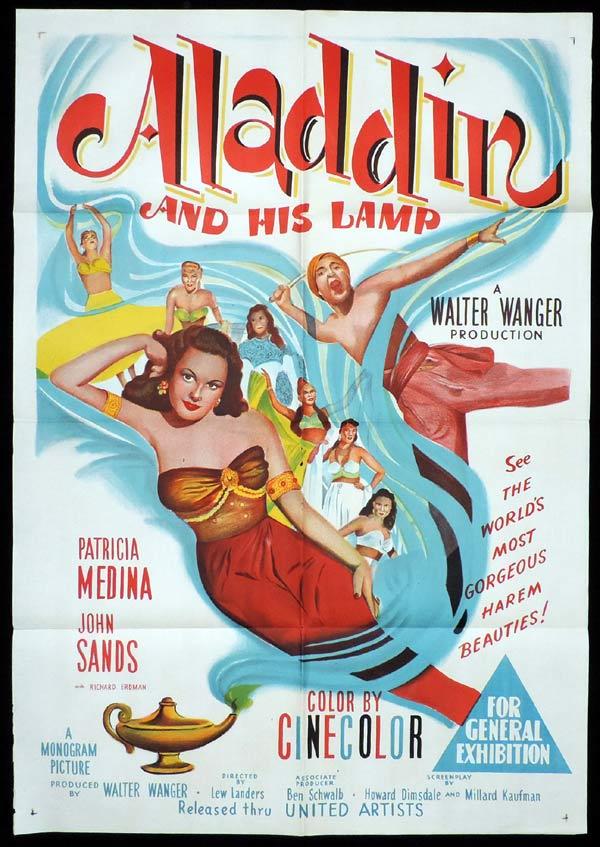
The thing about Aladdin is that, for a ‘good for nothing’ youth, he had a very powerful imagination.

‘He ordered the jinnee thus; “I want you to bring me a retinue of four dozen slaves, two dozen to ride before me and two dozen to ride behind me, complete with livery, horses and weapons. Both slaves and horses must be arrayed in the finest and the best. After that bring me a thorough bred steed worthy of an emperor’s stable, with trappings all of gold studded with rich jewels.“‘

from : ‘A Thousand and One Arabian Nights’ : translated by N J Wadood : Penguin Classics

Most people in modern times, have played the lottery. Winning is about as likely as being hit by a piece of space debris, but the dream is real enough to part with money. Lottery organisers face an unexpected problem; helping winners, deal with their sudden wealth. Unlike Aladdin, many have no idea how to spend their millions. One U.K. winner went out and bought a new machine machine.

‘New Washing Machine’s for Old!’

As with much of ‘ordinary life’, we are fenced in by, not only our wallet, but our imagination. Aladdin wanted nothing less than the Sultan’s daughter, slaves, dancing girls and a marble Palace with windows made from precious stones. A new washing machine was not on his list.

This essay is about ‘imagination’ and also about another characteristic of human thought; ‘fantasy’. In common usage, these terms are similar but I would like to draw an important distinction between the two.;

Imagination: the ability to configure something that can be made real.

Fantasy: the ability to configure something that can never be made real.

Between these two is a spectrum of the possibility of ‘making dreams come true’. The lottery is highly unlikely to make you rich while becoming an innovative entrepreneur is moderately achievable.

Let us examine a few examples at the ‘fantasy’ end of this spectrum. Fantasy is a pretend world occupied by children in the early stages of their lives. Anything can become anything. You can be the doctor and I shall be the nurse. The whole game is meaningless except as a faculty of mental maturing in which rehearsals for real life are being run safely.

Children are whisked off to see Cinderella’s Castle in Disneyland or Santa Claus in Finland in harmless but expensive escapade’s by indulgent parents. What anyone gains apart from temporary gratification, is open to debate.

Is all this the archetypal ‘Hero’s Journey’ or just ‘Wham! Bam! Sock! Pow?

Teenager’s are sometimes drawn to the concept of a ‘super hero’. It’s a kind of oblique reference to the myths and legends of gods and goddesses of ancient Egypt and Greece that ignores any truth.

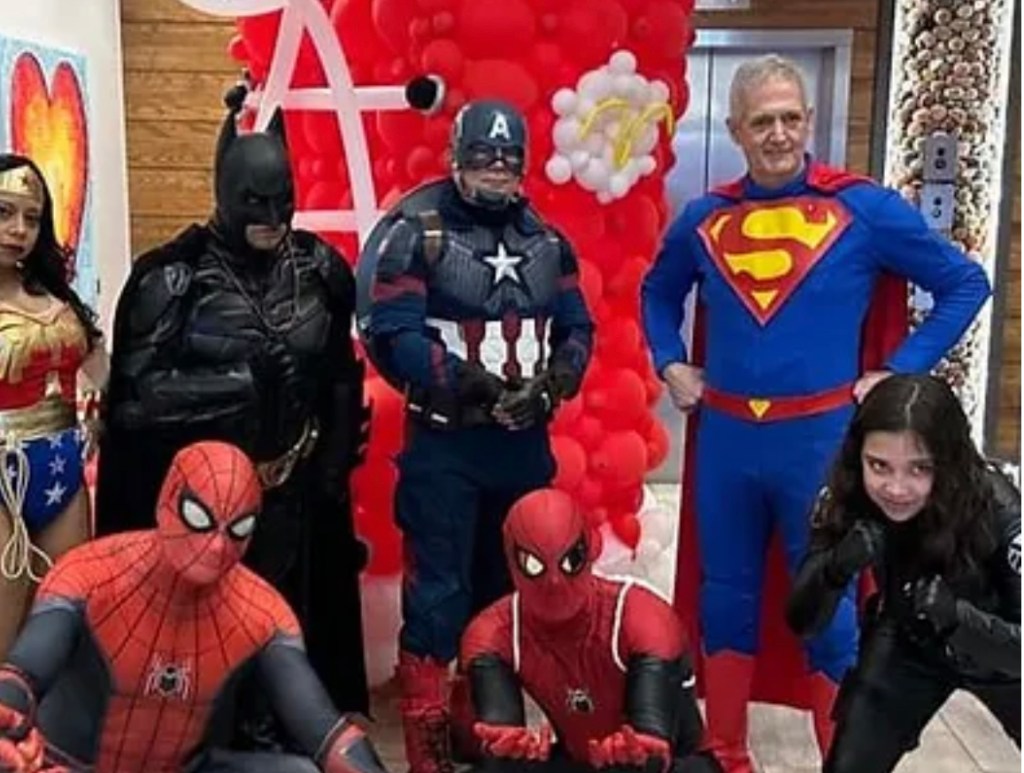
The ‘struggle for personal power, haunts many unfulfilled adults even in such mundane matters as their choice of car – a modern day ‘chariot of triumph’. Such self empowment was first expressed in a teenager’s bedroom in posters fantasising about becoming Superman or Wonder Woman or Taylor Swift or Beyonce. Association (borrowing power from another) is expressed but never achieved by mimicry of a ‘super hero’.

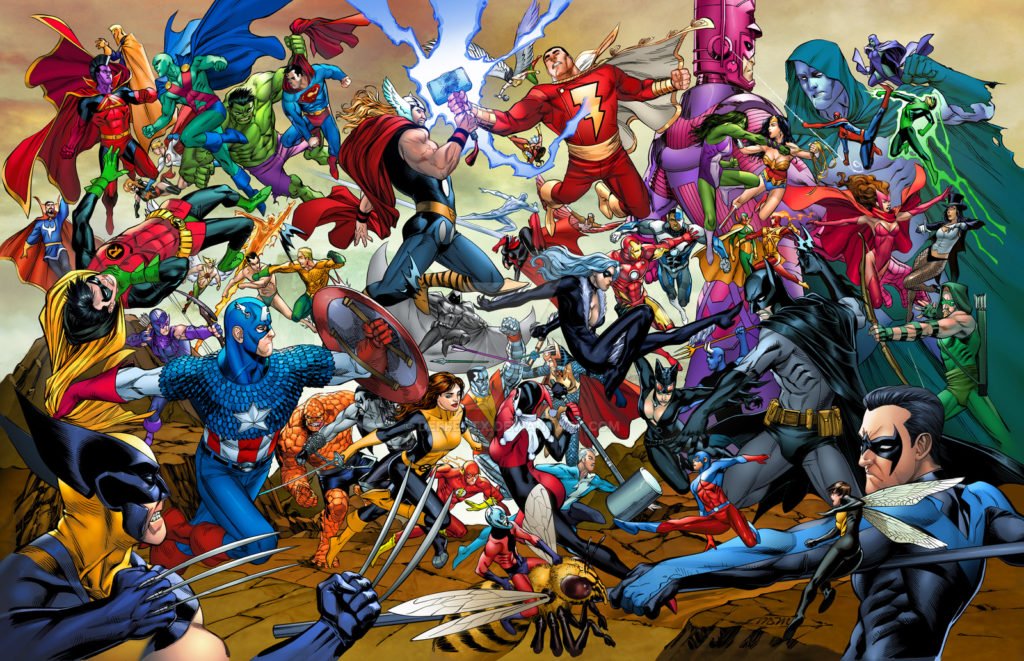
Comic heroes in both meanings! picture credit: The Mo Co Show

Whilst the comic hero may enrapture, the bottom line is that they are no stronger than the paper on which they are printed. The fantasy only lasts the time it takes to read the comic, unless you want to dress up!

Cinema certainly has that ability to make us confuse fantasy with reality. The first cinema presentation by the Lumier Brothers in 1896 had audiences running for their lives when they imagined an approaching train in the film was real. Today the opposite has become the case and audiences dissolve their minds with fantasies on the white screen that have no substance.

Marilyn Monroe ; screen godess and girl next door

Whether at home on in collective presentations, Hollywood has led the way. Marilyn Monroe called it Weird Wood because presumably she saw nothing holy in it’s halls. Her off-screen persona – Norma Jean – was as real to her as the on-screen beguiling sex-goddess character and was her anchor that kept her in touch with her true self. Like the fragile letters on the famous hillside, the Hollywood fantasy is always as two dimensional as the silver screen.

The crux of what pure ‘fanatasy’ does to us is that it is a world of ‘pretend’ and gives no objective benefit other than perhaps, passing the time and unsatisying catharsis.

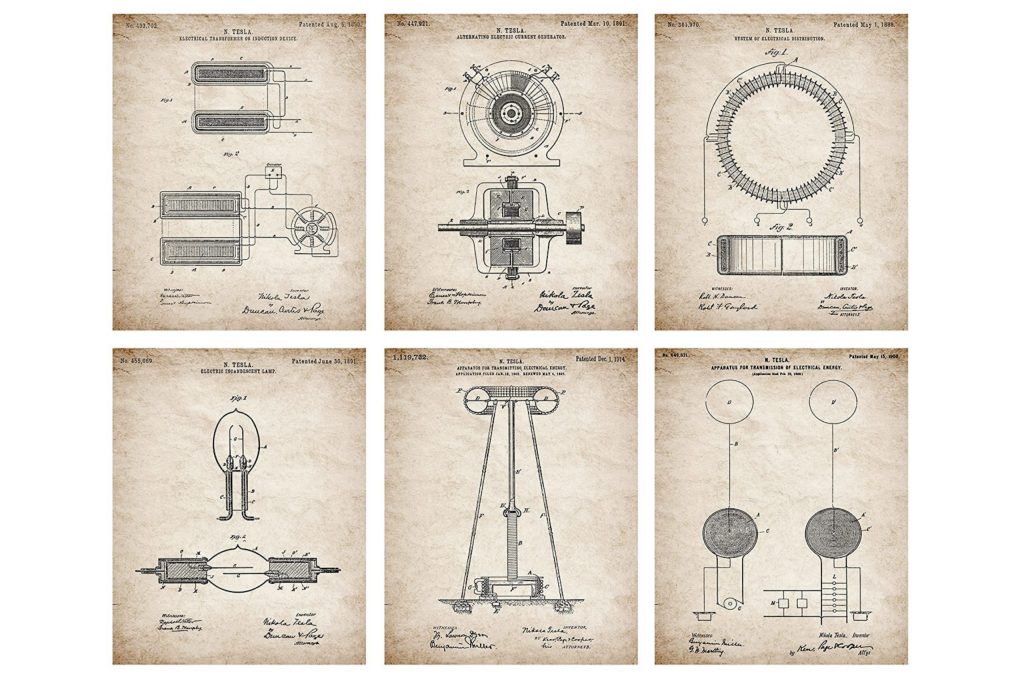
We should study now how the dream states of ‘fantasy’ and ‘imagination’, differ. Imagination introduces the possibility of making thoughts come true. An engineer for instance, might visualise an invention before recording the working processes on paper. Nicola Tesla sometimes invented whilst sleeping. He could turn an scientific device around in his imagination and make any necessary corrections before building it. We have to thank him for AC / DC electricity supply, TV remote controllers, radio and many other inventions in general use today.

Imagination is about making the possible possible and fantasy merely making the impossible, impossible. This is an important distinction because I believe so much human preoccupation today is as useful as smoke. Fantasist s follow, imaginaries lead.

The dreams that float across our minds in childhood may reflect some truth. They may be a memory and anticipation of past and future lives. Fortunate children will know from a very early age what they were in a previous life; a concert pianist or doctor or scientist. Some go on to have a rewarding career in that field. The phenomena of the three year old virtuous violinist fits few other explanations.

There is a channeller on You Tube called Daryl Anka who is worthy of consideration. The principle ‘teaching’ from his channelled entity called Bashar is to;

“Act on your excitement to the best of your ability without any expectation of outcome.”

This trigger of ‘excitement’ is something that is often extinguished by one’s self doubt or unconstructive feedback from others.

In endeavours of an artisitic nature, I would always advise people to explore what they love and are irresistably drawn to. This principle is a spark that contains truth and tremendous possibility of fulfilment in life; not just art. Without love we become like skittles without that array of arms that comes down from above and sets us up straight again, waiting for life’s next ball. We just roll around and fall into the black hole of disappointment.

In contrast, love connects to natural forces in a way that we do not understand and do not need to. It is inherently constructive in the way that imagination is constructive even if we do not know where it’s fractal growing patterns will take us. Nature works in this way and is beautifully described in such books as the Tao Te Ching by Lao Tsu; written 500 BCE and still freshly inspirational.

‘The leaves fall without purpose.’ Zen Photo and poem by the author

Much imagination and inspiration in human cultural and scientific achievement is inspired by nature. Art of great beauty inspires emotional responses in the same way that nature creates delight. Many artificially intelligent robots today, replicate the perfect design of the human body, animals and even humble insects because nature cannot be improved.

The evolution of human imagination using the scientific method, is surely a flowering of human consciousness, in the same way that that classicism inspired the Renaissance. This scientific evolution has brought to life moving holograms and virtual realities which even today are seen as magic. These techniques expand and explore the physical and energetic worlds in a manner that would never have been found without a scientist with imagination. Is this why scientists who are also artists, such as Leonardo da Vinci and Albert Einstein are some of the greatest thinkers?

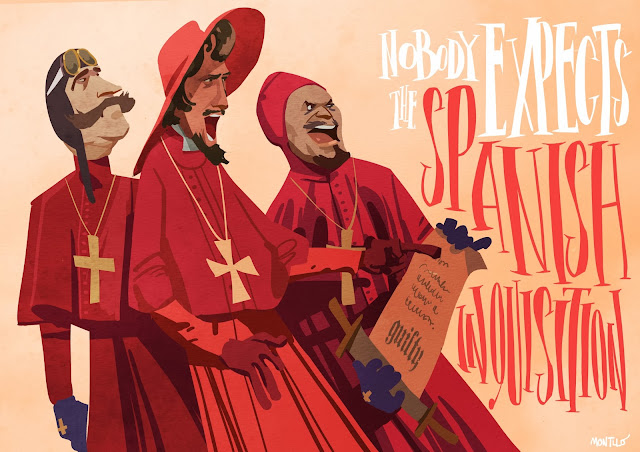
Human thought that is clearly ‘off the wall’ can be overwhelming and hide a darker force. The world of the ‘impossibly impossible’ was seized and used by religions to control others. When prophets and saints exemplify love, humility and compassion, there message becomes watered down over the centuries and tragically can become toxic, as in the Spanish Inquisition between 1478 and 1834. It would fantasise various versions of ‘heresy’ into being and punish those who did not comply.

Power to imagine is ultimately a personal endeavour. No religion, state or institution should ever be allowed to overrule the highest love and excitement of the people, in my view. I believe that we are all capable of ‘parting the Red Sea’ using mind alone. People with terminal cancer have died, come back and been cured the disease in days. Dr. Eben Alexander’s story describes his own experiences when in a medical coma and being treated by his colleagues in his book Proof of Heaven.

The only slippery nature of this slope is when we fantasise about things that just will never come true.

Our yellow brick road leads us to the Wizard of Oz who turns out to be just like us. Are we being force fed the fantasy of this illusory path and if so by whom?