Mind and Matter
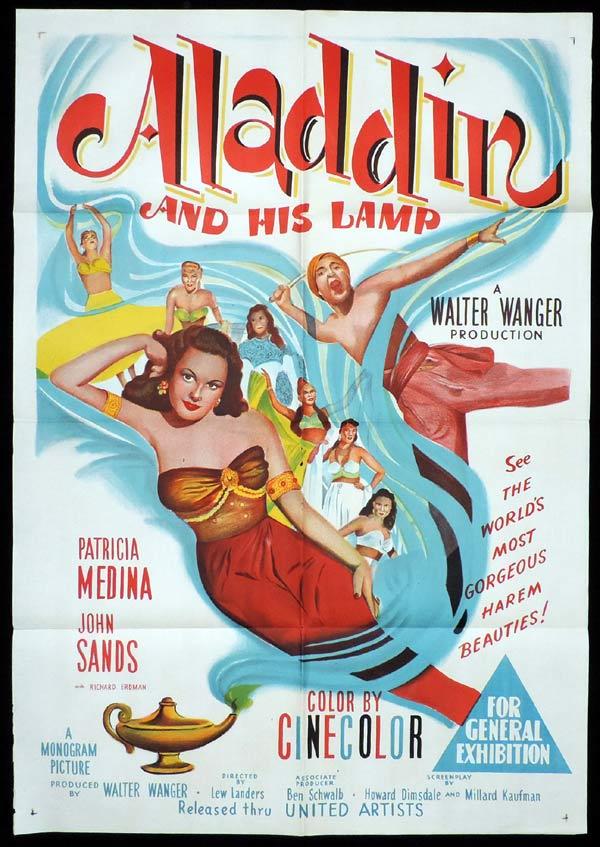
The thing about Aladdin is that, for a ‘good for nothing’ youth, he had a very powerful imagination.
‘He ordered the jinnee thus; “I want you to bring me a retinue of four dozen slaves, two dozen to ride before me and two dozen to ride behind me, complete with livery, horses and weapons. Both slaves and horses must be arrayed in the finest and the best. After that bring me a thorough bred steed worthy of an emperor’s stable, with trappings all of gold studded with rich jewels.“‘
from : ‘A Thousand and One Arabian Nights’ : translated by N J Wadood : Penguin Classics
Most people in modern times, have played the lottery. Winning is about as likely as being hit by a piece of space debris, but the dream is real enough to part with money. Lottery organisers face an unexpected problem; helping winners, deal with their sudden wealth. Unlike Aladdin, many have no idea how to spend their millions. One U.K. winner went out and bought a new machine machine.

As with much of ‘ordinary life’, we are fenced in by, not only our wallet, but our imagination. Aladdin wanted nothing less than the Sultan’s daughter, slaves, dancing girls and a marble Palace with windows made from precious stones. A new washing machine was not on his list.
This essay is about ‘imagination’ and also about another characteristic of human thought; ‘fantasy’. In common usage, these terms are similar but I would like to draw an important distinction between the two.;
Imagination: the ability to configure something that can be made real.
Fantasy: the ability to configure something that can never be made real.
Between these two is a spectrum of the possibility of ‘making dreams come true’. The lottery is highly unlikely to make you rich while becoming an innovative entrepreneur is moderately achievable.
Let us examine a few examples at the ‘fantasy’ end of this spectrum. Fantasy is a pretend world occupied by children in the early stages of their lives. Anything can become anything. You can be the doctor and I shall be the nurse. The whole game is meaningless except as a faculty of mental maturing in which rehearsals for real life are being run safely.
Children are whisked off to see Cinderella’s Castle in Disneyland or Santa Claus in Finland in harmless but expensive escapade’s by indulgent parents. What anyone gains apart from temporary gratification, is open to debate.
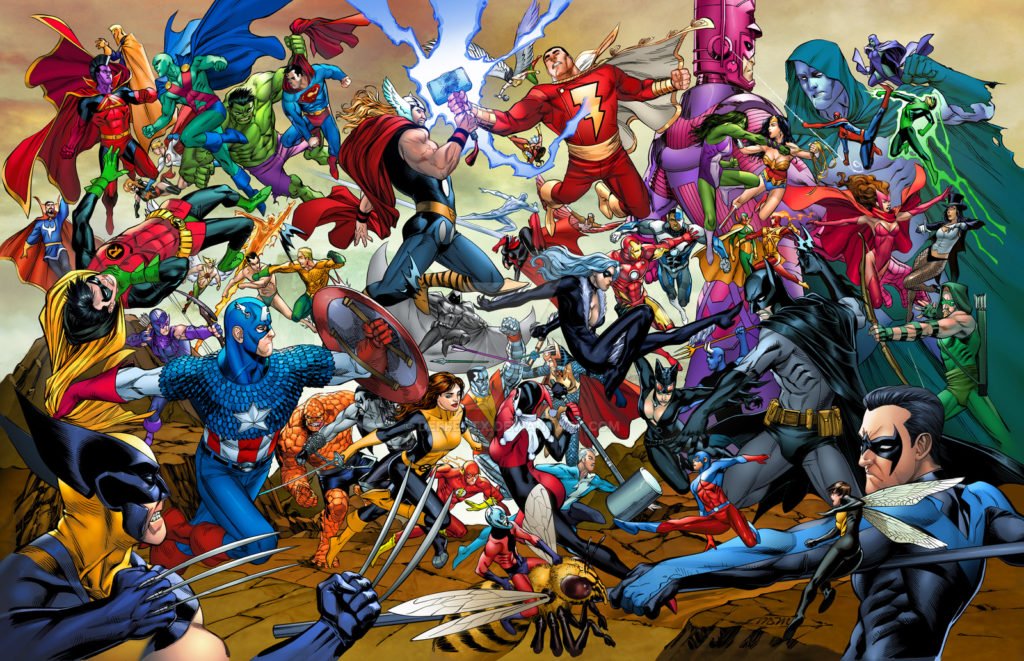
Teenager’s are sometimes drawn to the concept of a ‘super hero’. It’s a kind of oblique reference to the myths and legends of gods and goddesses of ancient Egypt and Greece that ignores any truth.
The ‘struggle for personal power, haunts many unfulfilled adults even in such mundane matters as their choice of car – a modern day ‘chariot of triumph’. Such self empowment was first expressed in a teenager’s bedroom in posters fantasising about becoming Superman or Wonder Woman or Taylor Swift or Beyonce. Association (borrowing power from another) is expressed but never achieved by mimicry of a ‘super hero’.
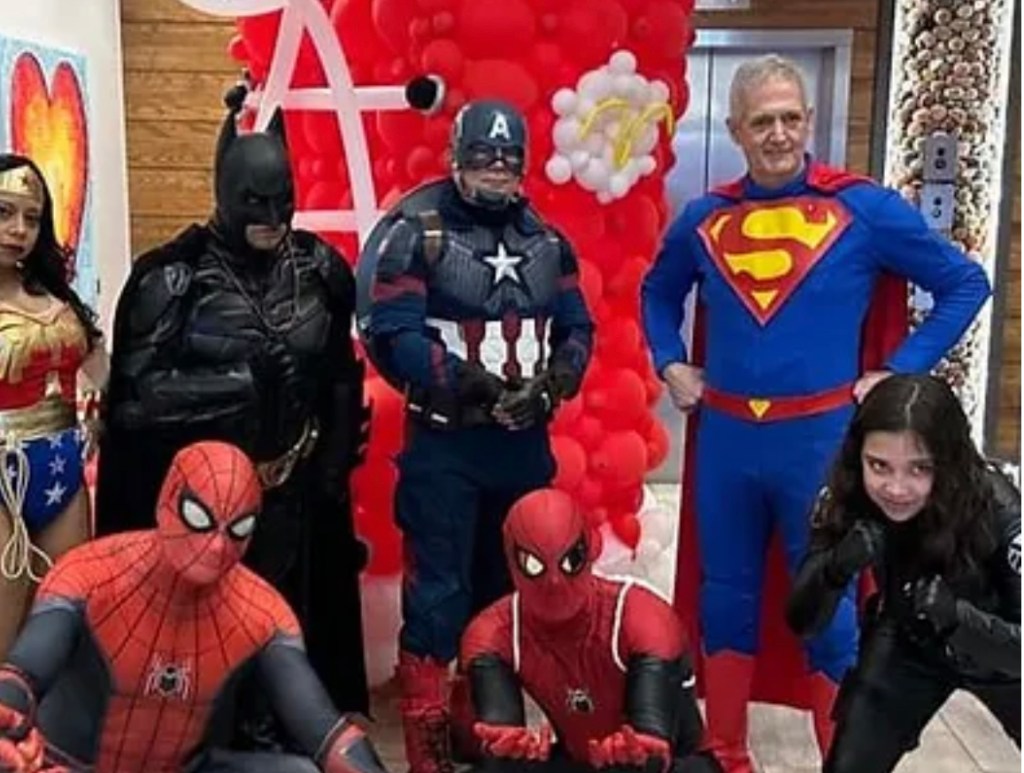
Whilst the comic hero may enrapture, the bottom line is that they are no stronger than the paper on which they are printed. The fantasy only lasts the time it takes to read the comic, unless you want to dress up!
Cinema certainly has that ability to make us confuse fantasy with reality. The first cinema presentation by the Lumier Brothers in 1896 had audiences running for their lives when they imagined an approaching train in the film was real. Today the opposite has become the case and audiences dissolve their minds with fantasies on the white screen that have no substance.

Whether at home on in collective presentations, Hollywood has led the way. Marilyn Monroe called it Weird Wood because presumably she saw nothing holy in it’s halls. Her off-screen persona – Norma Jean – was as real to her as the on-screen beguiling sex-goddess character and was her anchor that kept her in touch with her true self. Like the fragile letters on the famous hillside, the Hollywood fantasy is always as two dimensional as the silver screen.
The crux of what pure ‘fanatasy’ does to us is that it is a world of ‘pretend’ and gives no objective benefit other than perhaps, passing the time and unsatisying catharsis.
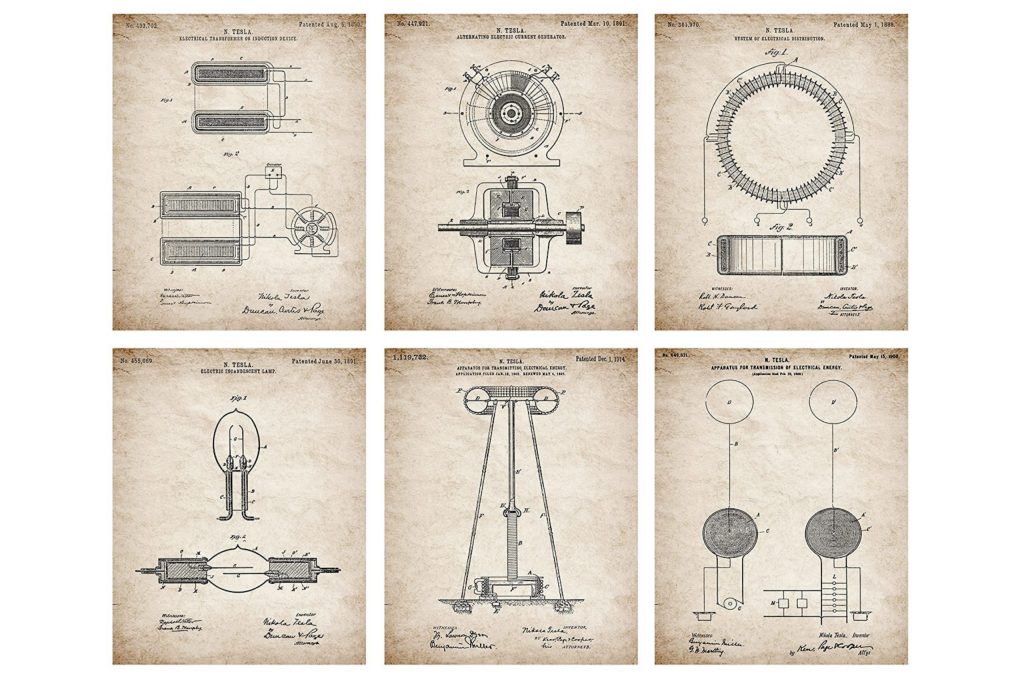
We should study now how the dream states of ‘fantasy’ and ‘imagination’, differ. Imagination introduces the possibility of making thoughts come true. An engineer for instance, might visualise an invention before recording the working processes on paper. Nicola Tesla sometimes invented whilst sleeping. He could turn an scientific device around in his imagination and make any necessary corrections before building it. We have to thank him for AC / DC electricity supply, TV remote controllers, radio and many other inventions in general use today.
Imagination is about making the possible possible and fantasy merely making the impossible, impossible. This is an important distinction because I believe so much human preoccupation today is as useful as smoke. Fantasist s follow, imaginaries lead.
The dreams that float across our minds in childhood may reflect some truth. They may be a memory and anticipation of past and future lives. Fortunate children will know from a very early age what they were in a previous life; a concert pianist or doctor or scientist. Some go on to have a rewarding career in that field. The phenomena of the three year old virtuous violinist fits few other explanations.
There is a channeller on You Tube called Daryl Anka who is worthy of consideration. The principle ‘teaching’ from his channelled entity called Bashar is to;
“Act on your excitement to the best of your ability without any expectation of outcome.”
This trigger of ‘excitement’ is something that is often extinguished by one’s self doubt or unconstructive feedback from others.
In endeavours of an artisitic nature, I would always advise people to explore what they love and are irresistably drawn to. This principle is a spark that contains truth and tremendous possibility of fulfilment in life; not just art. Without love we become like skittles without that array of arms that comes down from above and sets us up straight again, waiting for life’s next ball. We just roll around and fall into the black hole of disappointment.
In contrast, love connects to natural forces in a way that we do not understand and do not need to. It is inherently constructive in the way that imagination is constructive even if we do not know where it’s fractal growing patterns will take us. Nature works in this way and is beautifully described in such books as the Tao Te Ching by Lao Tsu; written 500 BCE and still freshly inspirational.

‘The leaves fall without purpose.’ Zen Photo and poem by the author
Much imagination and inspiration in human cultural and scientific achievement is inspired by nature. Art of great beauty inspires emotional responses in the same way that nature creates delight. Many artificially intelligent robots today, replicate the perfect design of the human body, animals and even humble insects because nature cannot be improved.
The evolution of human imagination using the scientific method, is surely a flowering of human consciousness, in the same way that that classicism inspired the Renaissance. This scientific evolution has brought to life moving holograms and virtual realities which even today are seen as magic. These techniques expand and explore the physical and energetic worlds in a manner that would never have been found without a scientist with imagination. Is this why scientists who are also artists, such as Leonardo da Vinci and Albert Einstein are some of the greatest thinkers?
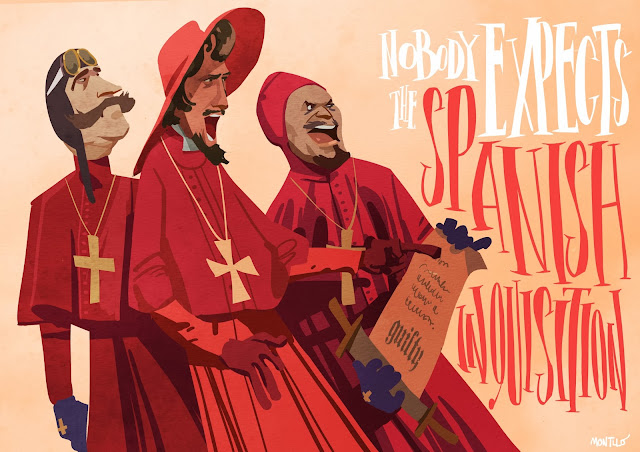
Human thought that is clearly ‘off the wall’ can be overwhelming and hide a darker force. The world of the ‘impossibly impossible’ was seized and used by religions to control others. When prophets and saints exemplify love, humility and compassion, there message becomes watered down over the centuries and tragically can become toxic, as in the Spanish Inquisition between 1478 and 1834. It would fantasise various versions of ‘heresy’ into being and punish those who did not comply.
Power to imagine is ultimately a personal endeavour. No religion, state or institution should ever be allowed to overrule the highest love and excitement of the people, in my view. I believe that we are all capable of ‘parting the Red Sea’ using mind alone. People with terminal cancer have died, come back and been cured the disease in days. Dr. Eben Alexander’s story describes his own experiences when in a medical coma and being treated by his colleagues in his book Proof of Heaven.
The only slippery nature of this slope is when we fantasise about things that just will never come true.
Our yellow brick road leads us to the Wizard of Oz who turns out to be just like us. Are we being force fed the fantasy of this illusory path and if so by whom?
Have we become slaves to those who promise a journey to nowhere?
 Matters Blog