Some of the best humour occurs in very formal situations in which laughter is forbidden. The exploits of the character of Mr. Bean played by Rowan Atkinson often use this device to create impossibly funny situations. It is like steam in a kettle desperate to burst forth but has to be strictly repressed. When there is a release and realisation moment caused by not using the thoughts which we consider ‘logical’.
Humour is a great tool to ‘lighten up’ human beings. Laughter can lift the burden of everyday life bringing a moment of mental and physical ‘enlightenment’. Such a release and realisation is called satori in the Zen Buddhism; a moment of profound personal realisation.
Stressful situations or periods of life can become overwhelming and confusing. Life brings problems; either seen or unseen, controllable or uncontrollable. It is sometimes hard to understand what troubles us and how to overcome it. One of the functions of ‘sport’, I would argue, is to present a simplified version of life on a ‘level playing field’ and scaled down. Then as a team or individual, the game is to obey a string of simple rules. Then we can demonstrate our personal skills to ourselves and others, and the winner is ‘successful’. A cynic would argue that sport is popular because it removes much of the complexity of the ordinary and promises rewards for very little effort by those who stand on the side lines. The players on the other hand are those most in line to gain benefit from the game.
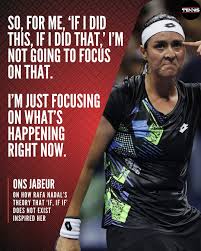
In an attempt to examine this process in sport, I shall use tennis as an example. Professional players at Wimbledon this July will have to obey these rules;
The male or female players will wear all white clothing. They are permitted to rest between games and take light refreshments. They do not speak to their opponent and there are penalties for taking too long to serve and take rests. The rules of tennis are understood and adjudicated by an umpire whose decision is final.
The audience will sit around the court on tiered seats and must remain quiet and motionless during play; with mobile phones turned off.
So the stage is set and play commences. Professional players have achieved exceptionally high levels of skill but are prone to unforced errors which immediately earn opponents a point.
Like most physical games, there is an equal element of the psychology. Players remain ‘poker faced’ throughout the game. If they let emotion take over such as frustration, their mental detachment can be affected causing errors. To remain focused, players sit between games with eyes closed in meditation ignoring unwanted thoughts and distractions.
Players and audience will experience unexpected and unlikely events during play. The most extraordinary is called a ‘fluke’. An example is when a ball hits the top of the net and just falls over in a way that is impossible for the opponent to intercept and loses the point. What philosophers call ‘chance’ has played it’s hand. In Zen Buddhism this is called a ‘controlled accident’. Both skill and chance have combined so perfectly that the unexpected takes place. Or it might be that a bird lands on the court or the ball shoots off into the audience and is caught spontaneously by an alert tennis fan. The effect is one of surprise, as in a joke. The audience had no expectation of what was about to happen and generally, enjoy a moment of delight.
However skilled the player, sometimes chance can take over their state of mind either amplifying mistakes or skill. Suddenly, it is as if one player can do nothing right and the other nothing wrong. Despite the skill of the players, a players state of mind has broken through and taken control.
This state of mind could be described as a state of ‘constant readiness’. The mind and body have been prepared by constant repetition and the perfect moment. In that condition a tennis player becomes like a spring ready to uncoil. Sometimes a player will pick up the ball just before it bounces twice and flick it back with an impossibly clever placement in the opponent’s court. Or there is a high volley delivered by the player high above the head when facing away from the net. It’s rare and highly difficult to achieve and win the point but when it happens even the player making the shot should be surprised and inspired by what their mind / body has just done.
The match, like many individual sports, is like two Samurai performing sword play at an impossible speed and understanding of the unique moment.
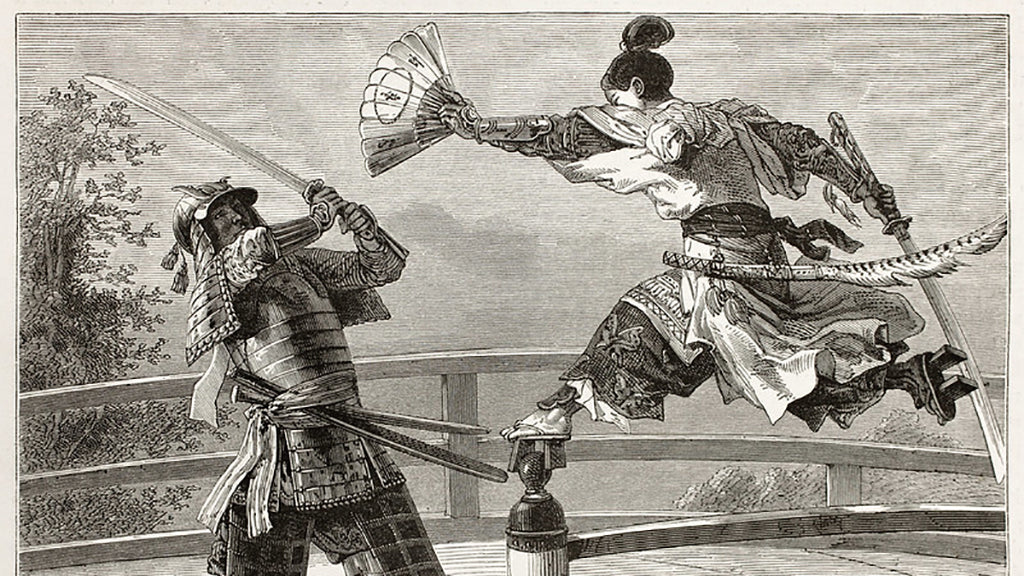
One of the skills to be learned in the game of life is spontaneity. Through the application of skill unconsciously – that is without intention – a player can surpass their normal level of play and become quite brilliant.
In the book Zen and the Art of Archery by Eugen Herrigel, the archer must release the arrow without any intention to do so. This ‘unconscious’ technique can become so precise that the arrow can hit a bullseye even with the archers eyes closed. The event is made perfect by not having a response to it in the ego but letting it pass by without reflection; because reflection is not any part of what has just happened and spoils it.
If we let it, our own lives can become spontaneous and unscripted. Even within the many demands on our time, there will be moments – however rare – when we hit a bullseye. It’s a combination of doing the right thing at the right time, perfectly.
In modern life, holidays are intended to have this quality of ‘freedom’ but by definition, spontaneity cannot be planned. Sometimes the intended release from normal life can be spoilt by the literal and psychological baggage that we drag along with us.
I was in an airport a few months ago and jumped into a lift occupied by a young lady. She had with her three of the largest suitcases I have ever seen. I smiled and joked, ‘did you leave anything behind?’ She smiled back. People don’t normally speak to each other in lifts; I broke a rule and created a moment during a journey that was otherwise unmemorable.
Sometimes this gentle humour from those around us will prompt an insight into one’s true nature. It may take several experiences with the same message but eventually, there can be insight.
Ironically, it is children who enjoy the greatest moments of satori and it is that freedom of thought and action that brings so much admiration and delight to adults.
When I was in primary school, our teacher had left her class and a rain storm suddenly broke out. Without a thought the whole class ran out into the rain and danced ecstatically; free from the rules of ‘school’. It was a pure collective satori moment.
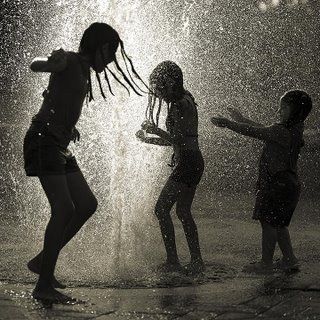
This story also expresses a special quality of Zen. This is the realisation of how the most ‘ordinary’ events, can provide the most sublime experiences in life.
A Zen monk was once asked, ‘what is Zen?’ He replied, ‘When I eat I eat, when I sleep, I sleep.’ The questioner was not satisfied with this answer and argued that we all do this. It is normal. The monk replied that when most people eat they are thinking of some other thing and when they sleep they are dreaming.
Zen pupils are introduced to this idea through such formal teaching methods as the Tea Ceremony. Each action and object involved in the ritual is a crucible for realising those things that do not fit into the ‘normal’ and ‘expected’ and ‘overlooked’ or ‘unconscious’ within the routine. It might be a fly entering the room or a lizard falling from the ceiling or a crack in the lid of the tea pot. If you are late for the ceremony and find yourself standing nervously outside, the teacher will judge you on how the moment you choose to enter. That moment will ideally not interrupt the ritual – especially because the choice was spontaneous. The right choice might prompt inner delight, the wrong choice, later admonition.
So the hum drum experience of sport and indeed life, in which moments of deep personal insight occur uniquely, is made richer by the spontaneous and non-reflected moments. Ironically, the more formal, the more repetitive and hum drum the situations we experience are, the more likely the satori moment will just happen.
Just watch and be amazed.
 Matters Blog