The great game of life in which we are mere pawns, operates on many levels. Like fish in a deep ocean, they select a depth in which to live; many in the shallows, some midway and a few in the deep. Where fish live is principally determined by their nature. As humans however, we can choose how deep we go.
In past times many people would never leave the village in which they were born. Today, when travel to the extremes of the Earth is possible, there are still those who live their lives without exploring the world. The opportunity for exploration of the mind is also rarely taken, probably due to this same inertia.
In olden times board games were played such a dominoes, draughts and chess in order to pass the time and stimulate these inert minds! These brilliant teaching devices have sadly, over time, been relegated to the nursery. Presumably they are mistakenly thought to be so shallow that they are suitable only for children, (as if children are shallow!).
A good example where this has happened is the game called ‘Snakes and Ladders’ in England or ‘Chutes and Ladders ‘ in the U.S.A. It is thought to have originated in India some two thousand years ago where the game was called Moksha Patam meaning ‘path to enlightenment’ and Gyan Chauper. The player journeys up the board until reaching the final square which symbolises enlightenment.
The Muslim version was used in the Mughal period in the late 17th and early 18 th centuries. The board is divided into one hundred squares (10×10) representing the one hundred names of Allah.

‘Snakes and Ladders’ was renamed and brought back to England by the British at the end of the Raj around 1890. This Victorian version ditched the ‘enlightenment’ element and seized upon the ‘high moral virtues and low moral vices’ depicted and the consequences of both; virtue rewarded and vice punished! Interestingly, the English phrase ‘back the square one’, probably derived from this game.
The Victorian interpretation of the game persists but for the natural philosopher one may find deeper meanings and interpretations. For instance, the players move step by step or square by square in a monotonous way. The sobering expression, ‘a journey of a thousand miles begins with a single step’ contains this truth.

We can see that the first step on the ladder is the same as the last. Like a marathon runner who collapses at the finish line, the journey has been a seemingly endless repetition steps, like the words of a mantra repeated ad infinitum. Enlightenment does not happen in flash as many imagine.
There are few ‘easy rides’ in life where one is gifted beyond one’s wildest dreams the game does present a few, much to the joy of players! Ladders, which literally express the ‘step by step’ principle, boost pilgrims up to higher squares as a gift, something which we know does happen occasionally in real life, which is called luck.
In the ancient version of the game there are fewer ladders than the snakes. Life in those times was believed to contain more misfortune than good. In modern times the reverse has probably become true although that can change!
Let us think about ladders a moment. Today we might understand them fractals.

It is possible to keep connecting ladders, each new ladder being like a new rung in a higher scale. The sliding combinations of ladders on Fire Engines illustrate how greater heights can be achieved in this way. Ladders have a mysterious quality of being ‘infinite’; disappearing into the clouds like the pantomime ‘Bean Stalk’ which sprouts upwards as a magical fractal. The clouds into which the ladders reach, are commonly depicted as where the ‘giant’ gods live; such a ‘god’ corresponding to the mathematical notion of the infinite expanding for ever beyond the highest number.
Grace from heaven, the ‘golden buzzer of enlightenment’, showers upon life’s winners when they reach the one hundredth square first.
You might expect modern scientific understanding to cancel any insight beyond the moral platitudes, but I would suggest science too embraces the quality of ‘ladders’ in a microscopic dimension.
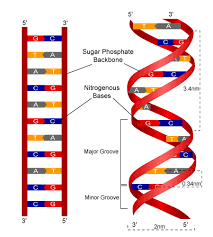
Imagine you are looking down a microscope at a string of DNA in a human cell. We know that it appears like a double spiral ladder with magical rungs that contain infinite quantities of information. These genes stay alive for thousands of years and can be retrieved from an ancient human tooth for instance.
Take this image of a spiralling formation and magnify it many hundreds of times and it will produce an identical image of our solar system spiralling through space and time.

The cycles of the sun and it’s planets also contain information by which astrologers have always been able to predict the future. Solar systems describe this pattern for billions of years, just as DNA lasts well beyond a humble human life span.
Curiously, and perhaps by coincidence rather than connection, modern geneticists describe the existence of ‘junk’ DNA in humans. It is about 97% of all of a our DNA and suggests a large area of knowledge yet to be discovered – possibly not ‘junk’ at all! In parallel and at another rung on the reproduction of infinite expansions, there is an estimated 94% of dark matter in the Universe which is also beyond current understanding.
So much for ladders; let us now consider the ‘slippery snakes’. People with a phobia of snakes often describe them as being ‘slimy’ perhaps because of the way they slide on their bellies. In actual fact snakes are smooth and dry to the touch. The common phobia towards snakes and reptiles probably accounts for why the ‘wicked tempter’ in Genesis, is depicted as a snake. Humans fell from Divine favour and were burdened with freewill, an aspect of the snakes and ladders game that makes it so exciting.
Just as ‘evil’ angels fell from Heaven, so the snakes on the board game take players down the path they so diligently ascended. There are no ‘thank Heaven holds’ that climbers grip onto when in trouble; it’s just ‘go to jail and do not pass Go.’ We have all probably experienced that feeling at some point in our lives. It is wise to introduced children early to this feeling so they recognise it when it hits them in later life!
Here’s a thought. Did the ancients in India know about digital and analogue information? If the ladder is a digital 101010101, then the snake is a complementary analogue wave. We know today that light has this contradictory quality of a particle and wave, and it is extraordinary that the ladders and snakes mirrored this long before modern science.

Life gives us no choice but teaches us that experiencing of ladders and snakes on our ascent are inevitable. If we think deeper than the moral Victorian versions of the game, then there are extraordinary truths. In a spiralling universe, of which our own bodies are microcosms, we can see that opposites unite each other;
we are both light and dark
we are both knowledge and forgetting
we are both climbing and falling
we are both Heaven and Hell
This understanding appears in the ancient Hermetic laws of Hermes Trismegitus. One of these is ‘Polarity’ and the dual and complimentary nature of opposites.
“Everything is dual; everything has poles; everything has its pair of opposites; like and unlike are the same; opposites are identical in nature but different in degree; extremes meet; all truths are but half-truths; all paradoxes may be reconciled.” —The Kybalion .
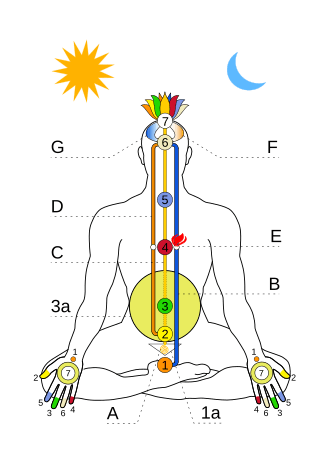
This is clearly depicted in the caduceus staff of the Roman god Mercury as a double helix of snakes coiling around a staff towards a pine cone representing the pineal gland in the brain. Today this symbol remains one associated with physical health and well being and appears on ambulances in many countries.

In Hatha Yoga, the counter spiralling Ida and Pingala Nadis wind up and down around the spine like snakes and enable the Kundalini energy to rise and activate the pineal gland; thereby entering the heavenly domain depicted originally, above the snakes and ladders board.
If Moksha Patam and other ancient games continue to be appreciated as shallow past times, then in my view, we will all be ‘back to square one’ quicker than you can slide down a snake!
It is comforting that there are increasing numbers of people who are willing to dive deeper into the games and the stories of the nursery in order to find the hidden treasures from ancient times.
 Matters Blog