
Theatre is a valuable metaphor to help us understand how our perceptions operate. Stories have the unique ablility to press the play, fast forward, rewind and stop buttons, in our heads, for the dimension of time holds no power over imagination. Weirdly our physical ‘reality’ has a similar quality, as the Shakespeare quotation above infers. Our experience of the world is as a stage set, with backdrops, painted scenes, actors and special effects…whizz! bang! hoopla!
Can we deny that there is an illusory quality to our experience of the world, a fakeness that was recognised even four hundred or so, years ago? Elizabethan England was vivified by magic, notably by those who were masters of illusion through magic, poetry and prose, such as John Dee, Francis Bacon and of course, William Shakespeare.
Magic is ‘other worldly’ and sorcerers manipulate what others believe. Our minds have a frailty which is both our power and a weakness. Mind slips in and out of our control. It is called waking and dreaming and the two are interchangeable, morphing at the mere echo sound of cricket’s cough.
Modern psychologists will describe a person who fades out of our contemporary collective theatre of the imagination as psychotic, but are we not all, at times, cretins in the same bowl of soup? Is this not a modern world of illusion, experiencing super-charged storytellers, on-line, in cinemas, in the media, television; spinning a world wide web of illusion.
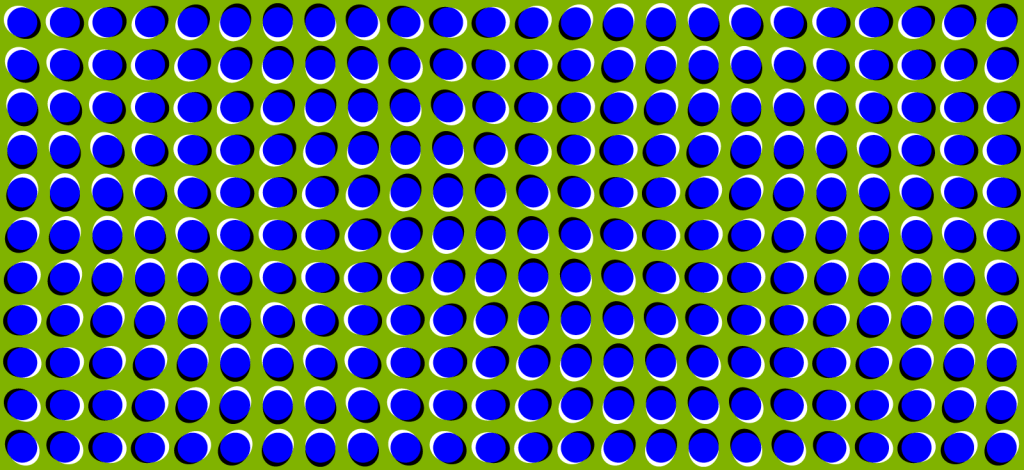
When we dream at night we experience alternative realities most vividly. Impressions form in our minds that we recognise but in the way we perceive a surreal painting or story. As an ‘Alice in Wonderland’, the whole geometry and order of life is tipped on it’s head, stirred, shaken and rolled out as a disturbing dream.
Such states can control us in our waking and sleeping, but it is possible to step out of the magnetic loop in which we are contained. ‘Lucid dreaming’ is the experience of waking up whilst still dreaming. Physical objects exist such as a light switch, but when flicked the light does not come on. Many drug induced experiences are states of mind that are both illusory and real. The latter are more likely found in indigenous cultures such as the legendary Don Juan in the books of his pupil Carlos Casteneda. Such experiences involve energetic beings and powers way beyond anything we might call ‘physical reality’.
Shaman in traditional communities inherit ‘second sight’ and the means to constructively use drugs, such as ayahuasca and peyote, from their forefathers. There are recognisable separate realities occupied by conscious but disembodied entities, which offer insights not available on You Tube. The encounters by adepts and students are predictable and repeatable, so rationally, are not vague dream impressions.
Much of the work of C.G. Jung explored this area of experience and established the concept of archetypes; powerful entities that resonate as mathematical constants that do not change with time or place.

On the other hand, there is our waking experience in which repeatable rules apply. We are able to manipulate the world and agree with others about our perceptions, even if we may sometimes disagree. In this ‘reality’ we can also repeat experience in the same way that a scientist can repeat an experiment and get the same result. But again, this ‘reality’ is nuanced by an undercurrent of dreaming. We experience ‘day dreams’ where our train of thought occupies our attention in place of our immediate sensual experiences. Children are particularly susceptible to daytime dreaming and much of their play is in their imagination, a world in which they usually reject adult interference!
From these examples we may appreciate that dreaming is not binary; our minds do not switch it on or off. Waking and sleeping are both areas where dreams operate.

In ‘waking’ our egos develope ‘areas of interest’ which are the well trodden paths of our fascinations. Such compulsions are triggers of past memories of excitement and pleasure that control us mostly unconsciously. For instance, when we go to a sports stadium to watch the team we have supported all our lives, we are in our own ‘heaven’. Our senses align with pleasant memories that we wish to re-experience, even as we park our car. If our team loses we experience displeasure, even though our lives have not really been affected; it’s just a dream turned into a nightmare. The faces of the losers tell it all!
So human experience bounces between pleasure seeking and displeasure avoidance. Gamblers enter a deep rut from which it is nearly impossible to escape. The ‘comfortable’ in society are risk averse seek a circular life, as in the classic comedy on UK Television sitcom, ‘Ever Decreasing Circles’.
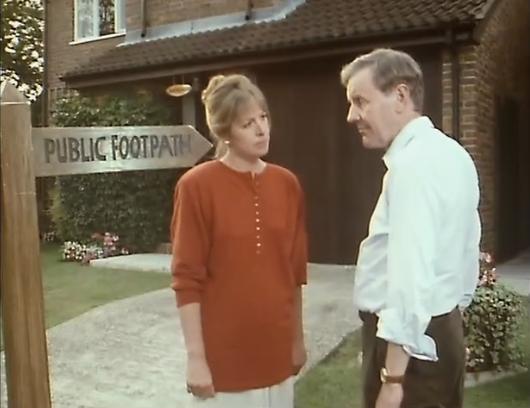
Those who challenge ‘responsible’ comfort zones are the artists and drug users. Artists ‘create a stir’ by fashioning a form that breaks the rules. Drug users do the same but within very personal boundaries and without guidance as a consequence, which can cause harm and mental illness.
The mind is complex and we should expect to encounter one special trick that it plays on us, whether dreaming or awake. This is ‘projection’ and acts unconsciously. Within our unconscious mind is that which we have little or no control. During our waking state we might project a ‘complex’ from within that part of our mind. This is best expressed by the adage, the ‘pot calling the kettle black’. We criticise a shadow aspect of our character most strongly when we see it in others. It’s an opportunity to self realise and can become less ‘compulsive’ through self reflection and if appropriate, self control.
The autonomic nature of dreams is remarkably similar, projecting as in a film, elements of our own character in the play’s cast.
Whilst a comfortable physical reality is beguiling, it can be experienced too literally and believed too much. We are born into material bodies to overcome the limitation of being purely ‘Mind’ and one might expect such a transition merits a determination not to waste life by just staring out of the window.
After the use of our physical bodies, I believe we will once again return to ‘pure Mind’ or ‘God’. Without a physical body our mind is no longer able to observe the physical world or be informed by the physical senses.
Whilst in a body we are like a person who has learnt to swim in water; which we might experience as an ocean. Without a body we become that swimmer using all their skills learnt by swimming in that physical ocean. Within this ocean are small islands, which remind the swimmer of the physical world but are mere dream impressions and memories; just as in they physical world there are small islands which are not real.

This Ocean is what the Aboriginal Australians call, ‘The Dreaming’
and that, as they say, is another story.



 Matters Blog