The Last Supper?
A dictionary definition of the ‘standard of living’ is ‘the degree of wealth and material comfort available to a person or community’. It is not clear from this short description what is included in the concept other than a level of ‘comfort’. We might think that globally people have adequate essentials of life; food, shelter, water, health…but we know wealth is not evenly distributed.
It follows that not everyone on planet Earth will enjoy the same degree of ‘comfort’. There is an extended range from ‘in dire need of comfort’ to ‘having comfort in excess’.
When watching news reports of natural events that have devastated communities in countries with a low standard of, one feels for the victims. But looked at another way, these communities as used to living with little more than the basics. Their frail houses can be rebuilt. If they are lucky, aid tides them over until crops can be harvested again. What I mean is that this is not total devastation. Such people are survivors because they live simply. Inuit hunters, when given quartz watches, threw them away. When asked why, they replied that they were unable to repair them. It’s a wise principle. Round the world sailors know their boats intimately for the same reason.
In contrast, the ‘city dwellers’ of the world are not survivors. If farm land turns into a desert, as happened in the ‘dust bowl’ in 1930’s United States of America, mass hunger and even death within ‘sophisticated’ populations will result. They are, in the words of the Beatles song, “Urban Spacemen”.

Most people are aware of the global threats to the citizens of planet Earth in the twenty-first century. We have had a ‘pandemic’ and more may follow, we observe the alarming effects of climate change and it’s consequences such as food shortages and habitat destruction, we have localised wars erupting in different parts of the world and mass migration because of all of these things and others.
When Elon Musk talks of moving to other planets, he must be inferring that there is a strategy to sustain the homo sapien sapiens after global catastrophe. Good luck getting a ticket to ride.
We know that humans have survived global catastrophe before. There are meant to have been at least six global disasters wiping out most of life, but not all. The underground cities found in places like northern Turkey are evidence of how a small number of humans survived.

This time though, high tech city dwellers who casually dial up for food on their phones, are not likely to make underground cities. With half of the world’s population living in cities, the question we should be asking ourselves is, ‘how can we prevent disaster?’
We can all make a difference by taking personal responsibility for the likely causes of a catastrophe. One individual can change the world, however rarely you hear this affirmation. There is a story of a child throwing a stranded star fish back into the sea. When questioned what difference the action made the child answered that it made a difference to the starfish.
Every holiday, every sending of goods and foodstuffs around the world, every activity that involves burning carbon based fuels is, however slightly, connected to the tornado or mudslide or nuclear waste release. Governments appear powerless to prevent destructive human behaviour whilst natural disasters will happen with little encouragement.
Have we believed the ‘cornflake family’ myth that television presented as a social aspiration in the 1960’s? The clichéd happy family. Whilst the USA was busy consuming 25% of the world’s resources, the rest of the world was struggling to mimic the same mistake of non sustainable lifestyles.
A Swedish statistician, the late Hans Roslin described a process of increasing global wealth very lucidly in a TED lecture titled ‘Global Population Growth’ using IKEA boxes. He suggested a general rise in the standard of living even if that was merely a transition from flip flops to a bicycle and from bicycles to holidays abroad. Improved birth control and higher wages lead to smaller families, which stalls the global population rise at 9 or 10 billion, and it may then fall.
The argument is interesting but worryingly fails to take into account the ‘threat’ aspect in a ‘strength, weakness, opportunity, threat’ analysis. What is the point of building a brick house for you family is the sea level rises and floods the land? The threats to an improved global standard of living are so complex in quantity and quality that they can only be left to self adjust in a radical manner…meaning disaster.
China and India and other countries are set on ‘industrialisation’ at any cost and critics in the West are not in a strong moral position to criticise. Something has been attempted to build a cockpit in this out of control vehicle, namely the annual COP talks.
If governments bring about the promises they make at the ‘Conference of the Parties’ (COP) talks – to create a viable future for earth’s future inhabitants – so much the better, but this is by no means certain. The levers and pulleys needed for change on a global scale should have been pulled decades ago and, sadly, were not.
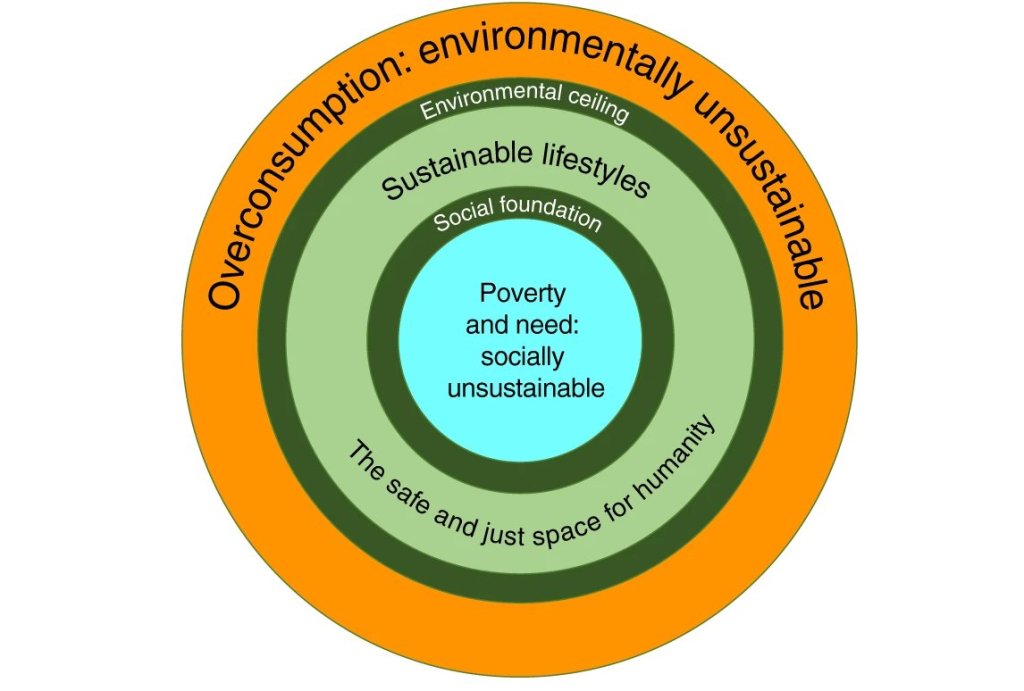
What you will not hear from COP is the conclusion that the economic concept of ever increasing ‘standards of living’ was always a myth because it was unsustainable on a global scale. No single planet can support infinite demand using a finite resources. The COP party conferences are, in my view, overseeing the end of the last supper of consumerism and comfort.

‘Forgive them, for they know not what they do.’
 Matters Blog