
Everyday life can be intoxicating. Events carry us along as though we were riding a giant merry go round in an exhilarating Fun Fair. We spin and spin in the whirlpool of coloured lights and sound. We catch glimpses of people riding other horses and try to connect with a wave and a scream. And occasionally, we catch sight of a loved one stood watching on the side.
Perhaps fish have a similar experience in the wonderful underwater world of spectacular coral reefs. But if you were able to ask them about water, they would deny all knowledge of it.

The human Fairground shares this same irony. The people of earth, mostly deny there is anything other than matter and the pleasures that, if we are lucky, it facilitates. Surely there can be nothing better than an ice cream and holding hands with a loved one.
Yet we know as we age, that life is not like a fairground at all. We can have upsetting experiences from which we have no defence. We can fall and perhaps never get up. Just as the fish are subject to water temperature, tidal surges, currents and long periods of calm; so humans are at the mercy of unseen forces.
The point is a simple one. That there are many levels of experience. The simplest and the most common is to believe that human life is one of sensual pleasure. Some religious people reverse this and live a life of abstinence, without realising that they must be as attached to going without pleasure as others are to pleasure.
Today both scientists, philosophers, intuitive s, artists and mystics explore the idea that in parallel with ‘normal life’ is ‘spirit’ or ‘energy’. Einstein expressed this in his formula E = mC2 in other words, matter can be exchanged for energy and visa versa. It’s not really anything new. Indigenous people around the world and the ancient civilisations have and continue to connect with worlds of ‘spirit’.
To realise this is equivalent to the fabled fish becoming aware of water.

Spiritually aware humans travel two paths. In the material world they have to learn to achieve some kind of tranquility, which is hard. In the spiritual world their aim is the same and lessons from the former can be applied to the latter. This is described in the Hermetic Law of Correspondence; ‘As above so below, as below so above.’
This knowledge is not new but perhaps is in sharper focus now than any other time in recent human history, at least in the last thousand years. The rather hollow platitudes of most religions and their exponents are giving way to ideas of ‘spirituality’ and ‘energy’. There is silent revolution taking place. Forces unknown are lifting humanity from it’s experiential squalor through such means as naturally occurring energy in the earth and the heavens.
In this ‘spiritual realm’ are what we might term ‘thoughts, messages, knowing, feelings’ and all the untouchable, invisible intelligences that suffice our daily inner experience.

In the science fiction film The Matrix, there is a character called ‘Smith’. He identifies as an algorithm or programme that can replicate itself in any other programme in the Matrix; depicted as a world of illusion as already lives in computers. This programme is immensely powerful and frightened only of the love and truth contained in the hero character, Neo.
We should ask ourselves how real our lives are and ponder on that which we find. In the modern world we sometimes feel mesmerised by the power play of politics and the cultural, religious and social conditioning that we accept as is ‘normal’. It’s what we learnt in our first seven years of life.
Yet there are very destructive spiritual forces that operate against our best interests and try to take over our ‘normal’ world in the same manner that Smith acts like a malignant programme in a computer. This is revealed today as the organisations made up of the powerful and wealthy elite, whose conscious or unconscious function is to spread chaos and division in the populations of the world.
An example would be the political movement known as ‘Black Lives Matter’. Whilst most reasonable people support any and all communities and social groups subject to unfair and degrading treatment by others, we have to ask who created BLM, and who is funding it? Why were those who self identify by the colour black selected to become an activist organisation and not, for instance Hispanics, Asians, Indigenous Peoples and any other of the racial or social group who are wrongly discriminated against. Surely, common sense says that all lives matter, equally?
Any thought engineering whirlpool becomes meaningless the more it is given rational consideration. ‘We all matter and we all support each other’ would be a sentiment closer to the ideal of universal mutual love that most rational people support.
Beyond the ‘moral high ground’ that is so readily occupied by the ‘politically correct’, we might observe a more sinister motive; to separate ethnic groups so that they fight each other. Hatred and destruction triumphs in the guise of goodness.
Such ‘Smith’ programmes are increasingly prevalent today. The most obvious is the war in the middle east at the moment. Culturally and spiritually, those fighting each other have more in common than they have differences. The ongoing dispute of today must have been clear to the British when they ‘gave’ Palestine to the Jews and Zionists in 1948. The Palestinians did nothing to deserve to be ejected from their homes and land. At the time the gesture was doubtless made on a wave of sympathy for the Holocaust survivors but over decades has revealed itself to be a recipe for disaster. Again, we observe a malignant programme which was readily absorbed like a black suited, self reproducing ‘Smith’.
This process is not just visible in world politics and human discourse. There are many ‘natural’ disturbances and weights seeking to counterbalance and overturn human society. Examples would be astronomical, astrological and environmental changes that are producing enormous stress within human societies; particularly to those without the power to protect themselves from harm.
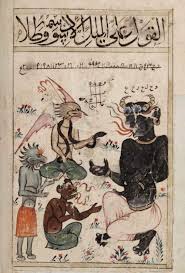
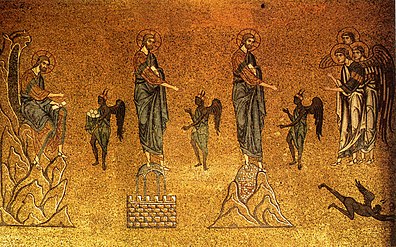
I believe that these malignant ‘thought forms’ or ‘evil spirits’ can be overcome by the spiritually aware and empowered. Beyond any identification with a particular religion or political persuasion, the power of love in the spiritual dimension is very capable of overcoming hatred.
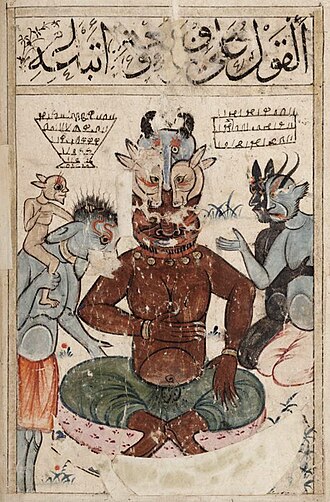
Like the human body, spirit has and is an immune system. Whilst disease (or unease) may attack repeatedly from many directions, a spiritual person enveloped by love is indomitable. Not only that but as love is universal, it too can replicate and stretch out to every cell in the Universe and protect whatever disturbs celestial harmony. Right now it has an Herculean task, and incumbent upon every human being is to pay attention and respond.






 Matters Blog