In conversation with a friend of mine whose ethical values follow Buddhist philosophy, I was challenged with the idea of killing the mosquitoes in my bedroom at night with a pungent insecticide! ‘It is wrong to kill anything and I should be using a mosquito net to defend myself, not attack’.
To me, if I kill a mosquito, I am preventing it from attacking another person or animal with it’s uncomfortable sting and potential disease transmission, including malaria, dengue fever, Zika virus, chikungunya, yellow fever, West Nile virus, and Eastern Equine Encephalitis. The virus, bacteria or parasite with the disease varies with location in the world of course, however with climate change and species of mosquito: do you feel lucky?
The instruction to preserve life at all costs and in whatever guise, is of course, a dogma contained in many religions but not all. In Christianity the Holy Bible includes the Old Testament describing a blood bath of unholy wars. In the last two hundred years or so, ‘civilised’ humans interpreted Genesis 1,
( And God said, Let us make man in our image, after our likeness: and let them have dominion over the fish of the sea, and over the fowl of the air,)
– -as a licence to kill sentient creatures for sport, vanity and greed.
Even today, western ‘civilisations’ are in the same process of destroying the planet with great efficiency and little conscience. There is a possibility that the translators of the Old Testament should have used ‘steward’ of nature instead of ‘dominion’.
Historically, the planet was not seen as a benign mother in the nineteenth century, except by those who lived close to nature such as the North American First Nation People who were regarded as ‘savages’ by European invaders. Ironically, self styled ‘settlers’ regarded themselves as benign and entitled to lie, break treaties, enter sacred land and commit genocide through war and starvation – all whilst insisting they have moral superiority.
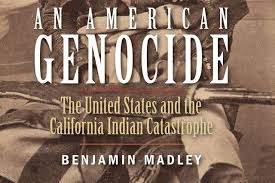
Does this remind you of anything happening today by countries who consider themselves beyond reproach for their actions?
In the ancient Hebrew Ten Commandments we find the instruction not to kill. This was probably meant to refer to human v human – but does it? Could this include insects and small mammals? Like all simplifications, it loses import through lack of detail.
Buddhist teachings could be interpreted that one should have no ‘intention’ to kill. If we kill a virus with our anti-bodies or an ant on the path where we walk without even knowing or controlling this, we are not at fault. To kill to prevent disease or disease spreading is not so plain. We venture then into the quandry of the lesser of two evils.
Because of contradiction and complexity or perhaps, despite of it, religious dogma encourages the following of rules ad absurdum. An example would be nuns of the Jaine religion who spend their days walking and sweeping the path in front of them lest they tread on an insect.
Whilst there is a continuum of intent between conscious and unconscious killing, we have to agree that conscious killing raises the ethical questions. Those who refuse to fight in a national army might agree to become stretcher bearers or another ‘non-combatant’ role. This even though their actions are supporting those who are fighting and killing. ‘Thou shalt not kill, directly or indirectly’ would have been a more relevant commandment to conscientious objectors in any war in my view.
Why would any country seek to start a war, and feel justified morally, is a very relevant question for today. A common cause and justification is the belief that a moral duty of ‘doing good’ is being fulfilled. The irony of this is when both or several parties in a war all use this excuse. Who wears the white hat?
The answer can generally be found through the actions rather than words such as ‘treaties’ and ‘ceasefires’. It used to be that soldiers would fight soldiers and civilian populations were only indirectly affected by war. But since the second World War, technology such as aerial bombardment from the air; drones, rockets and heavy artillery, civilians have become targets.
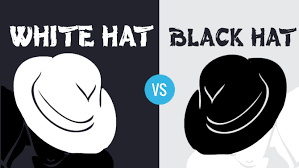
Both or all sides will see themselves as the wearers of the ‘white hat’. Their next ethical choice is to decide the target. Should it be military or civilian? Although the choice is obvious to all but the most morally challenged, much of the warfare we see today is aimed at civilian populations. The offending side continue to lie and break treaties and ceasefires, enter sacred land and commit genocide as if they were actors in the nineteenth century ‘Wild West’ in which religious or any kind of law, did not exist.
To do this they use words in order to confuse themselves and their followers. Military terms such as ‘offence’ and ‘defence’ sound as if their meanings are simple. But take an example from the Roman Army in ancient times. They carried large shields which are technically, purely defensive. But one of their fighting techniques was to use the shield to rush at the enemy and push them off balance, opening their guard and going for the kill. The short sword or gladius was used principally as a weapon of offence, and yet again, a sword fight includes using the sword in defence, as a shield.
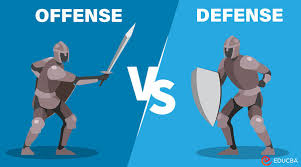
Defence and offence therefore overlap and at times – become one. Politicians can over rule moral objections by calling this one something and the other something else. It is called ‘propaganda’. In this way offence using defence is called defence and defence using offence is called defence. Making use of this confusion in minds who do not question, they argue that since ‘defence’ is allowed in international law, every action is a ‘defence’ even when attacking unarmed women and children.
Leaders today deny or are complicit in targeting civilians, just as the Soviet Union did under the absolute dictator, Joseph Stalin in the Second World War.
After that war, Winston Churchill, the Franklin D. Roosevelt wanted to replace Stalin’s ‘white hat’ (Russia had been an important ally) with a black one under ‘Operation Unthinkable’. They wanted to return Poland to the Polish people as that issue had started the war but Stalin refused and the country became part of the Soviet Union.
History has the ability to make sense of current events as world politics has usually been played out before and the consequences of actions do not have to be learnt through experience. The main variable is of course, new technology. But fundamentally, ethical values should not change and there is not reason why an aversion to violence should not be universal. This has been attempted through the United Nations and International Law but these voices are weak today.
‘War crimes’ being allegedly committed are investigated by those committing the crimes. Permanent members of the UN Security Council are allowed vetoe criticism of their actions on the grounds that they are ‘defending’ someone or something. Detail is avoided.
International Laws are dismissed by countries that have not signed the convention. So external rules, which should embody the highest ethical values, are ineffective.

Where civil laws and natural law fail to be applied, religious and spiritual rules, potentially have a greater influence by bringing about change within each individual. The rule supporting non-violence is the well known, ‘do unto others as you would have them do unto you.’ It’s an uncomplicated way to behave but, with this injunction as guidance and followed, the world today would be a very different place.
 Matters Blog