Life in the Soup

For us simple human beings, working our way through our lives like fish in a kind of information soup, we long for the soup to become clear. We long to see the other side of the dish and to travel in every direction. It can be done, because we are super computers. We just need to know the process and that is what life in soup can do. That is why, we are – in the soup with not a clue what to do but go round and round! Even religions offer little advice or explanation to why we cannot see what is right in front of us. Why is human behaviour so repetitive – throughout history and the history of histories. Surely there is a process to move us into the next dimension? Well here it is; read on.

It is a well known phenomenon that radio waves have been leaving this planet since the first Marconi, Bell and Tesla radio transmissions. Like some giant expanding onion, information has been hurtling ever outward at the speed of light. If you could catch everything up in a warp speed craft, you would overtake the history of broadcasting, second by second.

Aldebaran residents are about to listen to WW II – if the baseball didn’t put them off.

soup how-far-radio-signals-have-traveled

So it is not so hard to understand the idea that electromagnetic energy can be used to carry information. Just as we compress and release air in our vocal chords to make sounds that carry words, so em wave energy can be compressed into ones and noughts in infinite combinations.

Can you imagine yourselves, contained apparently in a physical body, with the memory of your many lives, expanding in an ever increasing bubble of information? Perhaps you have to grow old to realise this. When you are very young, your universe is proportionately small and memories are being made, like a new formed galaxy.

Recently I was trying remember the names of a couple who I knew almost fifty years ago. I could see their faces, but my memory was blank. So I left it for a while and sure enough, the librarians in my head approached me triumphantly with just what I had been looking for. Wow! The names themselves then become memory triggers for more information; incidents, happy days.

Any hypnotists will tell you that their science of the mind is premised on the fact that every piece of information that has even entered the human brain is still there. As an organic super computer; the brain can store and retrieve information without or without instructions from the conscious mind. A hypnotist uses suggestion to the unconscious mind, to travel in these memories of events and people both in this and past lives*. They take what useful lessons can be learnt from the highs and lows of someone’s life. As conscious beings we have a habit of remembering highs and forgetting lows, which is why we see the world and ourselves, with rose tinted spectacles.

*look up the late Dolores Canon on You Tube for a complete life’s work on this subject

Soup Dolores Cannon

This great bubble of information that is contained within and without of our bodies, becomes what we believe ourselves to be. We are the sum of the books we have read, the films we have seen, the computer programmes and television programmes, the motor skills of the body, the languages of the mind, the poetry of inner space and countless other forms of perception.

The secondary process that the brain undertakes with time, is to bring together strands of information which can be classified in complementary ways. These are the patterns we use to help ‘understanding’ take over from the fear of the unknown that we experience as children. When we know what has happened we get a general idea of what will happen when the ducks line up in a particular way. Brains love patterns, and much of mankind’s classic architecture, sculpture, mosaics, art, puzzles work on this particular hunger. And patterns are important because they become what we term ‘knowledge’.

Knowledge is a higher form of information because knowing is the bare facts spun and woven into a useable cloth. It has a practical function similar to cloth and performs well for as long as it remains without tears and holes. Even computer programmes need ‘patches’ every now and again and human knowledge is the same. We have to edit and update skills that we have learnt and maybe need refreshing. We have to make space for new cloth to be woven and hung where we can see it. The advantage knowledge has over information is that it is faster to retrieve and read.

soup Warp_and_weft

Iron Man sits in his palace with a wall of transparent computer screens in front of him. The images and words present a pattern that only he is comfortable with.

Neo in the Matrix films, moves in and out of an information soup which is a green cascade of numbers and letters, bytes.

Neither view of information is a particularly accurate representation of how complexity compresses into simple strands of knowledge. One example would be a Japanese chef who spends hours creating a dish. On the plate looks like it has taken minutes to prepare. Simplicity is one of the hardest things to get right because it is made from complexity with exactness.

Then, to extend this metaphor to it’s extreme, one day the weft is separate from warp. The warp stretches out as a single, perfectly aligned, strand of knowledge.

Just as a metamorphic rock is opaque and it’s associated minerals like quartz are clear. A mineral is compressed and heated before it cools into perfect molecular alignment. Light travels through it in the same way that the rising sun’s rays can travel through an orchard, of perfectly aligned trees.

Crystal_skull_british_museum_random9834672

The childhood negative memories of the bee string and the choking in water and the hot coals and the unexpected negative emotions and abuse from other humans. Well these can potentially become realised and placed in a perfect pattern in the later years of life.

What was opaque has become clear. This is wisdom. Wisdom is no more than knowing intuitively and rationally every aspect of everything. Light travels in all directions through the mind and the person has become ‘enlightened’.

It is not a learning process. It is not a remembering process. It is not a staring into space process. There are no wishes and no regrets. There is no instructed and no instructor. There is no god and no devil. There are no special words and no special clothes.

Everything that made your information bubble has collapsed into it’s centre, because it was able to. The process is no more than returning everything to a single point; the place where you were when you were born.

And if you don’t believe this, then consider the Universe because the transient human, is a working, scale model of the same. The Universe is currently expanding in all directions. It is even speeding up, which baffles astronomers but because we have only a fraction of a nano-second in astronomical time, to view the subject, it is possible only to surmise what is going on and the present Big Bang theory is only partly correct. It does not explain what caused the Big Bang – there is a chicken and egg logic puzzle that is avoided. If I look into the future, then I see the universe will slowly stop expanding just as a ball thrown into the air vertically, finds a still point before falling.

The universe will then contract into a single point over unimaginable aeons of time and at that single moment the concentration of power that started the last ‘big bang’ will start a new universe. As Isaac Newton observed; to every action there is an equal and opposite, reaction.

Our own lives are made up of a similar expansion and contraction process which can work through in one life time, but because it is complex, usually not. It is called Transfiguration and is the spiritualisation of the human body. When the process is completed, such happened to prophets like, Moses, Elijah, Jesus of Nazareth and the Prophet Mohammed (SAS), the body becomes light. When the Universe is also begins the process of Transfiguration or ‘big bang’, it also is light.

In the beginning, God created the heavens and the earth. The earth was without form and void, and darkness was over the face of the deep. And the Spirit of God was hovering over the face of the waters. And God said, “Let there be light,” and there was light. And God saw that the light was good. Genesis 1.1-31

which is complementary to John (not contradictory as light is both a wave and a particle )

In the beginning there was the word and the word was with God and the word was God. John 1.1

And from this expanding light /energy / information; tiny droplets of matter are formed – star dust – because matter can become light / energy and visa versa ( e = mc2 ).

soup star dust

And as we are told our bodies are made of ‘star dust’:

We Are Stardust—Literally. In this infrared image, stellar winds from a giant star cause interstellar dust to form ripples. There’s a whole lot of dust—which contains oxygen, carbon, iron, nickel, and all the other elements—out there, and eventually some of it finds its way into our bodies.

National Geographic Jan 28, 2015

– then are we not fortunate to live in a time when science is viewing the world in the same way as the mystics? Is not the soup becoming more, a consommé?


The Tunnel at the End of the Light


There used to be a car, in the 1950’s called the Ford Popular, endearingly known as the ‘Ford Pop’.

If the model T industrialised the manufacture or cars, it was still only affordable for the middle classes of America.

But the Ford ‘Pop’ bridged that class divide and provided a ‘people’s car’. Germany had done this in the 1940’s with the Volks Wagon Beetle, but Britain took a while to catch up due to a short ‘intermission’ called the second World War.

The greatest car ever built – Ford Popular 1954

picture credit: carandclassic.co.uk

Light Ford Pop 103e 1954 carandclassic

What do you expect from a people’s car? Certainly it is not going to have a chilled drinks cabinet and cigar lighter. Everything was basic, functional and appealing to the common denominator of public taste, availalbe in black, black or black. It was, naturally, very popular and it transported families in comfort from city to beauty spot in large numbers. If you wanted anything other than a can of baked beans, you had to get a pay rise.

Fast forward to today and you can draw a parallel between the dumbing down from ‘the good life ‘ for a few, to ‘dull and ordinary’ for all. The middle classes in both the UK and USA lost their grip on political dominance, because the workers have come out in larger numbers to vote.

In the last decades of the 20th century, politics was complicated. Whilst you didn’t need a degree in political science to understand what was going on – it helped. The whole process of electing representatives on multiple – often contradictory – manifestos, parliamentary debate, Sovereignty, national priorities, international relationships and above all, law amending and making – was baffling to most. So it was left to the ‘Toffs’ from elite universities to speak down to voters in election campaigns to make promises everyone could understand – even if they were expected to forget them later.

Enter the internet in the 21st Century. Whilst you could write the equivalent length of Nelson’s Column on how this availability of information has changed societies across the world, there must be changes.

The most obvious of these is, in my view, the ‘citizen scientist’. In a stealth move worthy of the Great Harry Houdini, ordinary people who never understood science at school, are suddenly ‘on to it’.

If we  regard science as a way of thinking logically about anything – using the ‘scientific method’ to prove or disprove propositions – then everything is up for change and challenge.

Call a friend?

Light NHS Direct

Suddenly people were empowered to not believe their medical Doctors. You look up your symptoms on the internet and then go and tell your Doctor what the problem is how you want to be cured providing it does not involve vaccination. The UK National Health Service even encourages this by creating NHS call centres. The staff follow algorithms in the same way G.P.’s do – perhaps even quicker and certainly without having to catch another disease in the Waiting Room.

The same process has crept into most other areas of professional expertise; people design their own houses, people cook and bake, people make art, play musical instruments, make astrological predictions, indulge in puppy care and kitten care – you name it people do it – and the walls of Jericho surrounding the professional classes have fallen.

Great, you might think. This is democracy at it’s best. People power!

The problem is the obvious one and why even Socrates, warned against empowering the masses.

The problem is that people do not access and use information, knowledge and wisdom in the way that professionals have been painstakingly trained to do. As always it remains true that, things are more complicated than they seem.

It is easy to reduce areas of knowledge to ten ‘top tips’ – how to build your own house- and make it look easy. Speak to anyone who has built their own house and they will describe the most stressful time of their lives, going over time and over budget and still the roof leaks.

Socrates warned that ordinary people did not have the education to be trusted in such things as – voting. Perhaps this is one reason why women in the UK at the turn of the 19th century were still denied a university education and a vote – why this particular prejudice was suffered for so long.

Even with a university education, young men and women in the twenty first century are finding it hard to get a job. When the Blair government in the UK declared an aim to give a top class education to fifty per cent of young people, the ideal appeared noble. But the reality was that ‘degrees’ became so common that they were no longer the doorway into top jobs.

Worse still, with the introduction of University fees in the UK, young people were enslaved into a life time of paying off a high interest debt – all on the promise of ‘earning more’. And governments too are unlikely to get their ‘pound of flesh’ from the deal. Grants to the few worked better in my view.

In primary schools the children of the first decade of the twenty first century were told how clever they are and one day they might be Prime Minister. It was of course a lie told be people who had only become teachers who took holidays at home.

Only a few people ever become Prime Minister- as if we need telling.

The president of the United States for instance, has been described by psychologists as ‘adolescent’. Although he boasts of a ‘very, very, good education indeed’ – he didn’t listen in school and learnt very little. Add to being academically dumb, other short comings which doubters love to list, then you have a candidate appealing to those who are fed up with being talked down to because they are ‘very, very good people indeed’. Fortunately in America there are plenty of these in the southern states.

Trump uses short phrases to plug home a message easy to understand and remember for the masses;

Make America Great!’ ‘America First!’

Johnson does the same; ‘No Deal Brexit!’ ‘Project Fear!’

Their close advisers are no longer civil servants or even elected politicians. They are media savvy individuals who know how to change how voters and party members think. In the UK now there is not even a deputy Prime Minister the PM can discuss strategy with. Instead their is an unelected ‘close adviser’ to whom the PM remains loyal – at least until Brexit is over – despite protests from his own party back benchers.

But the patients have not completely taken over the Mental Health Institution. There is today a swing back towards trusting the middle class professionals. Self build houses leak, Mr Kipling’s cakes taste better, art is not easy. But particularly at this time of crisis, people have seen the highly trained men and women in the health services, battling away for little personal reward and realise, ‘I could not do that’.

Suddenly, the science of Virology is laid out like a patient etherised upon a table, and no one except the professionals understands.

picture credit newseu.cgtn.com

light Neweu cgtn Virology Lab

Because it’s difficult to ‘do the right thing’, science is emerging as a wise advisor to governments. When Boris Johnson gives press briefings he is flanked by non-elected scientists who give ‘advice’. This appears to be a correct and ethical process until you realise that there as many views on a subject as there are scientists. Scientists often disagree with each other’s ‘version of the facts’. They will say that more studies are needed, larger samples, more vigorous methodologies, new measuring instruments and technologies – innovation and discovery!

(A particularly cynical pundit will suggest that governments are setting up someone to blame, when the strategy is seen to have killed thousands because the government policy was late and or wrong.)

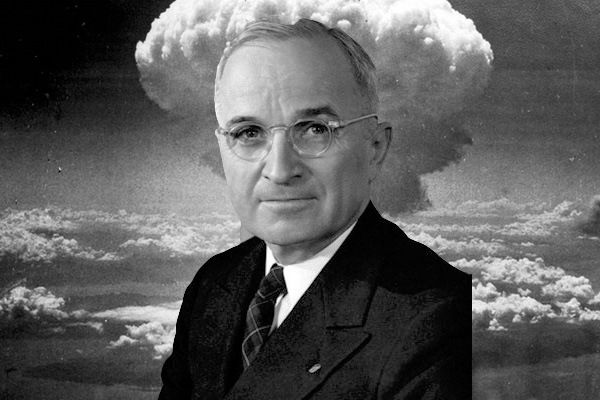
This dark secret of science is not so dark and we should demand to know it. Should President Harry Truman have been persuaded to build the Atomic bomb – ending one war and starting a cold one that sits like a dripping glacier, to the present day?

picture credit: atomicheritage.org

Is that a nuclear weapon or are you just pleased to see me?

Light Harry Truman atomicheritage org

Who voted for the Atomic bomb? Certainly plenty of people protested against it in hindsight but knowledge, once out of Pandora’s Box, never wants to get back in.

Suddenly ‘the people’ see the scientists as doubtful holders of solutions to problems. Science has mucked things up just as often as it has created a better world.

And if you can’t trust the scientists surely you have to trust the politicians? Unfortunately there are as many political view points are there are sea gulls behind a fishing boat and the only thing you can be sure about is the direction of the boat.

So societies trundle into the twentieth century lead on by TV and radio personalities with regional accents – commoners who you can understand. Everything has been reduced to guessing games that requires no skill because the people tried science and it was even more difficult than at school.

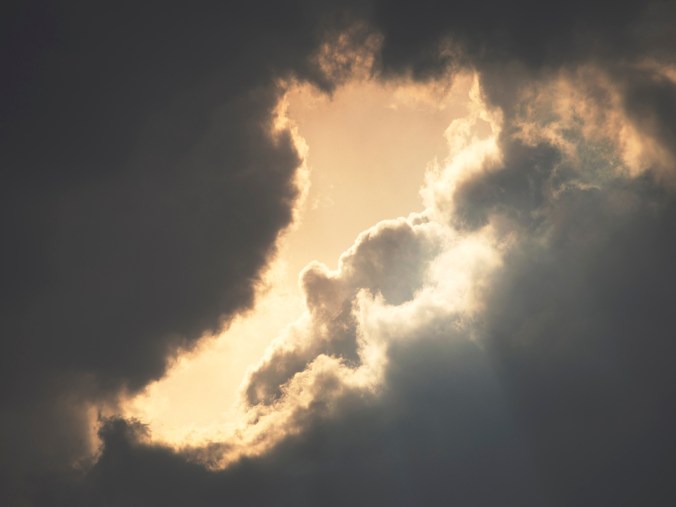
If our politicians are also guessing their way along – without scripts, experience and the wrong pick of scientific views – is this the end of the light?

picture credit: author – unfortunately God moved.

Light through clouds

Cuckoo Cats

There is something very strange about cats. Now don’t get me wrong, I am one of the half of the population who adores furry felines – the other half giving allegiance to cuddly canines. Like Brexit, this is disunity within the United Kingdom, is unlikely to ever go away.

However, let me explore the enigma of cats. I am going to express an opinion that some may find absurd, but I crave their indulgence as I describe the facts as I choose them to be.

Firstly, isn’t it odd that cats turn up in large numbers in Ancient Egypt – getting on for 5000 years ago?

‘Get in you basket – Bastet’

cat-statue-Bastet

So many were mummified, that their swathed remains were once used as a form of domestic heating. There was even a minor god who was a cat – see above. Being a cat in Egypt in those days was probably a pleasant incarnation – provided you kept away from the embalming and mummification factory.

Don't Laugh at the Cat 001

But it is odd that prior to the rule of the pharaohs, domestic cats even existed. Some how the ‘big cats’ of Africa, had been genetically engineered to become ‘small cats’ or ‘pussy cats’. Were lions somehow persuaded to model for the famous Sphinx ( a lion before it was repurposed as a blokes head ) ?

Did big lions take up sitting around the camp fire at night with the nomadic tribes? Were these lions engineered through unnatural selection to become – small, domesticated lions?

What is also interesting is how small they did not become. There are no mouse size cats. Such a creature would have to put up with a fair fight with the mice – rather than the easy kills the cats enjoy today. Yes, cats were decided to be the size of a human baby – almost exactly – a small mature cat weighing in at around eleven pounds. Picking up a cat and supporting the hind legs by cradling the arms, is exactly how human babies are carried. Cats and babies look up at you and then around the room from a this new view, in exactly the same way.

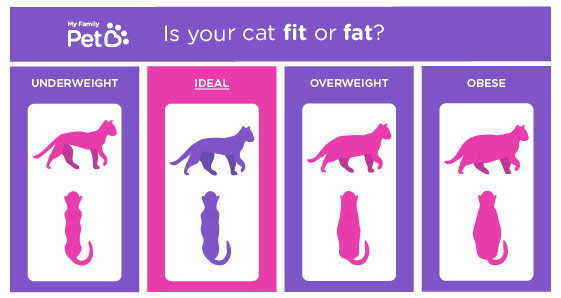
Warning to cat owners how cats explode if on the wrong diet

cat-weight

It gets more odd. Cats and human babies make the same high pitched screaming sound when requiring attention. Any one who has been accompanied by a cat in a car, on the way to the vets or next ‘forever home’, will know how deeply unsettling the cat will make the car occupants. The whining will be near enough constant and totally disproportionate to the level of comfort the cat is being afforded by the air conditioned, smooth, silent ride. ‘What is your problem!’ you will hear people say both to their babies and their cats. Ultimately, both species get their way, whatever the time of day or night.

Then I realised what was going on with cats. All of this ‘babyishness’ is a deliberate ploy to make humans think, unconsciously, that they are not cats, but babies. It’s a brilliant stroke of unnatural selection, to force humans to ‘take in’ cats – whether welcome or not.

My own experience of cats is that there is no system of choice or purchase when becoming a cat owner. A cat, somehow – from somewhere – turns up and demands entry into your home. Very soon the game starts where it explains to the besotted human that the price of stroking it’s fur is food – regularly and plenty of it.

And in this way, I extend the parallel between cats and babies (who also want food regularly and in vast quantities) to birds. Not just all avians but one species in particular. Can you guess?

‘Doesn’t he look just like his Mum?’

Cat Cuculus_canorus_chick1

Yes, it’s the cuckoo. Well the clue was in the title I know but you might have forgotten it by now. Yes, cats operate in the same way as cuckoos. The name for this technique of seeking foster parents for spare eggs is an ‘obligate brood parasite’. And the cuculos canorus is not the only one playing this game-for-the-innately lazy.

Mother cats push their brood out at some point; into the big wide world. Kittens on Facebook have unaturaly selected to look both frail and fanciable – a kind of Marilyn Monroe come hither look. ‘You want to prrrrrrrrotect me – Mr. Prrrrrrrrrresident’ delivered in husky tones before the high screaming begins in the kitchen post coitus.

No, I am not saying MM was a cat – although ‘pussy cat’ might be the right badge of honour – no, I am saying the kittens / ergo cats, are full on con-merchants, checking out every nook and cranny before calmly adopting a pre-dinner sleeping position in what was once, your private home.

I have four cats whom I adore, and every one of them – I now realise – has obligated itself into my home with the natural charm of a film star come used car salesperson. Thanks to the Ancient Egyptians or whoever first thought up ‘baby sized lions’ – half of the human race has become cat crazed.

The other half of humans? Well they have to own up to the fact that they have adopted a baby sized wolf-monster, that uses every trick in the book -like ‘undying loyalty’ to get the human to obligate as well.

Woof! woof!

The Fishdemic of 2020

big fish little fish

Once upon a time – like now – there was an Ocean full of fish. Over the years some fish grew bigger than others. Eventually there were seven large fish and millions of small ones. The big fish consumed most of the food and lived in the warmest and sunniest parts of the Ocean, leaving the small fish to live in holes in the coral and sea bed. Here they made as much of their lives as they could, but there was constant quarrelling and fighting for territory because they had so little.

The big fish were not happy with this ‘chaos’ amongst the masses so they thought up a plan to keep the little fish in their control. They decided to spread a story that the water was poisoned and the little fish had to stay in their holes and in the sand, to keep themselves and their families safe. To make the story realistic they showed the little fish pictures of hospitals full of little fish dying of poisoned water. This was something that happens all the time in the Oceans but little fish have no idea of how big the problem is and whether they should worry. So the big fish exploited this ignorance and employed scientist fish to show how plastic particles were in the water and little fish were dying. Each day the counter was displayed on their televisions of how many little fish had died that day. Up and up and up went the numbers and the scientists drew graphs to make the problem easier to understand.

The little fish obeyed the strict rules not realising that these numbers of fish die every year and the situation was unfortunate but normal. They stopped doing their work amongst the coral reefs and lived on whatever food the big fish let them have. They felt terribly sorry for themselves. They watched graves of little fish being dug in front of their holes, which was actually a clever plan by the big fish to frighten them more.

The big fish knew that when fish are frightened they are more likely to die and the whole sorry business became self fulfilling.

Eventually, after several months, the big fish allowed the little fish to come out under very strict rules. They took away most of the freedom that the little fish used to enjoy. If there were complaints, the big fish reminded them of how they had solved the problem of the plastic in the water and how arguing and quarrelling amongst the little fish had now stopped.

The big fish kept the little fish alive on crumbs falling from the warm and sunny surface waters where they lived. The seven big fish lived happily ever after.

I am

I am that, I am this, I am

There are three principle perceptions of the human mind. One is not ‘better’ than the other in moral terms, it is just useful to know how one works and experience mental and spiritual states objectively.

The first state of mind is the most common. It is the awareness of something other than self consciousness and is ‘I am that.’ It is the least real of all three and is summed up in the idea of ‘fantasy’. Like all human experience it can be positioned on a calibrated scale from weak to extreme. For example a person watching a narrative such as a film is fantasising, whilst also being aware of their own present mind and body. The fantasy is enjoyable. It fills the potential of unexplored human experience and is fulfilling in the regard of saving time, resources and often personal risk. Imagine watching a film in which the characters visit a wild life reserve in central Africa. There is an experience depicted by characters in the story; one or more of whom, the viewer will identify as being somewhere between ‘likeable’ and ‘I wish that was me’. They might sit in the evening around a camp fire and sing songs with the fire flies scattering in the flames and the crystal stars piercing the ocean black night sky. The roar of a hunting man-eating lion that has attacked several similar parties and is known in the area, sends them rushing to the safety of their vehicles.

I am Safari

This is a typical ‘I am that’ experience. Usually it is benign and is a willing and useful invigorating, promising stimulation to achieve such experiences ‘one time’ for real or just passing the time. It may add the ‘spice’ to an occupation such as those in ‘first responder’ roles experience. But in it’s harmful extreme, it is the illusion that drives a person to commit horrific crimes, such as mass shootings. The fantasy that they have nurtured for possibly most of their lives, finally overtakes their waking personality and they have to act out to achieve satisfaction. Acting out a fantasy is known as ‘psychosis’ and is so common that it is even a defence in law, though not a way of avoiding being withdrawn from society by the State. Humans acting out fantasy for real is not good and needs to be ‘enacted’ within an unreal place such as a modern gamer in ‘virtual reality’. The Ancient Greeks used the word ‘catharsis’ to describe the healing power of mentally exhausting the power of the fantasy over the rational mind, through theatre, songs and stories. Their stories such as Homer’s Odyssey remain powerful descriptions of the rudders, sails and oars of the human mind to this day.

The experience of such fantasy worlds is of course flawed in a very real and obvious way. The objection is ‘this is not you’ or ‘this is not me’ and that is clearly true. If the fantasy of being a world class athlete stimulates a person to become a world class athlete then the fantasy has worked as a transition tool, a stepping stone. But in modern society few get that chance. There is only one winner and one cup, one Oscar, one Nobel Prize. All the rest, in a competitive society, are left with unfulfilled dreams.

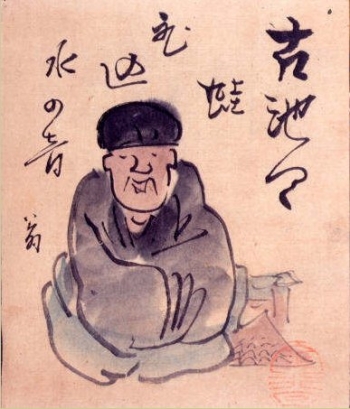
There is another state of mind which overcomes this. It is; ‘I am this’. This is a considerably more profound and rewarding attitude to personal experience. It gives no personal power to ‘the other’ whether these are other people or other activities or other places, times. The simple reward to being ‘I am this’, is realising that mind / personality has no real need to be other than itself. The reward is found in what one truly is. In this state of mind a Zen monk will relinquish identifying with possessions and social status, ‘cleverness’ in intellectual argument and most harmful of all, the allure of the other. Basho, the famous Japanese Zen poet and ascetic, was content with no worldly attachments;

The thief left it behind

The moon at the window

I am Basho

Because mind is realised as a totally personal experience independent of any other thing, the things that mind is not, are described as ‘illusion’ – or the dunna in Sufism, ‘samasara‘ in Hinduism.

The total clarity of ‘I am this’ can be achieved whilst wearing a pin striped suit, or two piece, driving a luxury car and living the a modern life style of ease. It is just that these objects and pleasures are not identified with as being any part of one’s higher self. They are as meaningless as the wind, because the person is continually aware and focused on ‘I am this’. Clearly having wealth and being detached from it, is more difficult than not having wealth and being detached from it. Ascetics have it easy and the Buddha realised this truth after nearly killing his body through starvation. He proposed a ‘middle way’ to truth without physical hardship.

This does not mean believing the fantasy of being a body. The sense of ‘this’ is so fundamental that it excludes one’s own body and body sensations. Buddhists argue quite rationally that if one loses a leg in an accident, one is still complete as a person – therefore we are not our bodies.

The was a song in the 1960’s by Donovan which included the lines;

‘First there is a mountain,

then there is no mountain,

then there is.’

This is a very clear summary of the states of mind being described. The perception of ‘that’ as being real, is seeing the mountain and all it’s mental and emotional associations. These associations are revealed as being mere ‘figments’ of imagination and not real; in which moment the mountain disappears. The relationship between viewer and viewed is realised as just a fantasy.

But of course, the mountain has done nothing through out all of this inner process. It has just done what it has been doing for millions of years – being a mountain.

This is the third state of mind summarised as; ‘I am’. The ‘I am this’ has been dissolved into the mist of the morning by the sun’s rays penetrating the dark night of the soul. The experience of life has become neither object nor subject. Things that were once held as real and true, never were and never will be. The only single experience is to become ‘I’ in the sense that the whole of created things and experience is identical and resonant to what human beings are.

We are not only created in the image of God, we are God and for suggesting this many a Sufi saint and Christian gnostic (Cathars, Templars), was flailed at the stake until death.

The irony was that such holy beings were never in their bodies in the first place and were laughing inwardly, no doubt, all the way to Heaven.

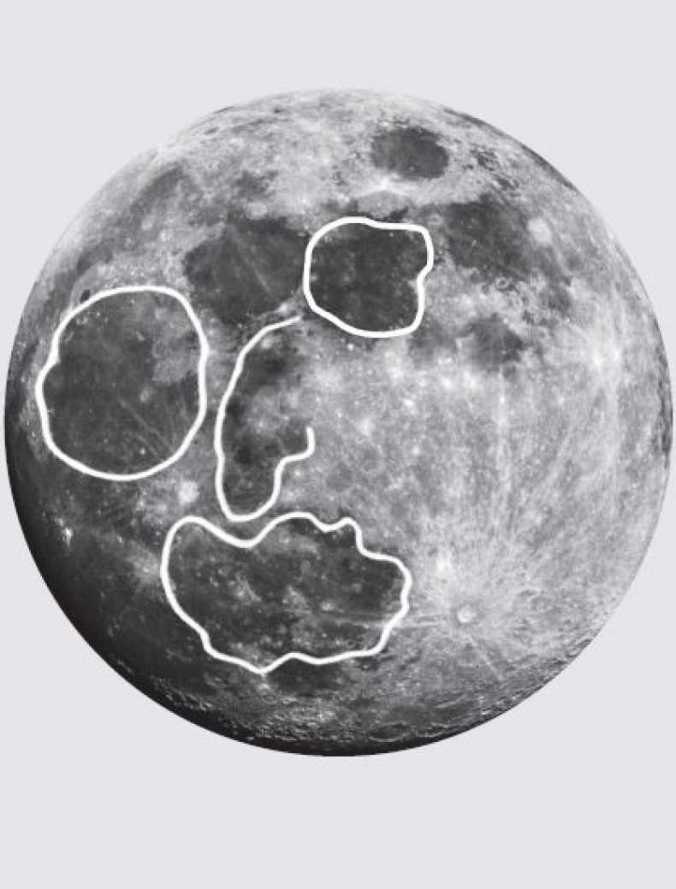
The Man in the Moon

The Anthropomorphic Universe

Who believes in the man in the moon?

man-in-moon-crop

For centuries, so called sophisticated societies have continued traditions, superstitions, folk tales and festivals inherited from rural ancestors. Much will certainly have been lost, as modern man’s connections with nature have been severed. But mothers still point out the face in the moon to their children who stand open mouthed at the mystery. Our companion animals are named and loved as if they were our children who never grow up; Peter Pan style.

Even the star map itself is full of the figures of gods and animals, a continuous tradition going back to the Ancient Egyptians and Sumeria.

Many cultures across time and the world have seen animal and human faces in rock formations and considered the effect significant.

rock as a face

Modern urban man likes to think that these are all in the realm of ‘myth’ – that is, stories that have no meaning any longer.

When I was in Japan with my Japanese girlfriend many years ago, she took me to her grandmother’s beautiful traditional home. In one room was a Shinto shrine. Megumi knelt before this shrine to pray and invited me to join her. I politely declined thinking myself a monotheist and forbidden to worship idols. But I now realise that Shinto is a religion of worship of nature and not idols. Each tree, rock, flower; is seen as a manifestation of living spirit just as we are manifestations of living spirit.

Shinto Shrine

In Pagan Britain before the Roman invasions, people lived by the cyclic laws of nature. Natural features, fauna and flora were also a living presence on the physical and spiritual planes. Such living things acquired names and often magical properties. To kill or take away was done with a blessing for the spirit which was being released.

Now that scientists have persuaded us from viewing the world as sentient, we are expected to consider industrial methods of rearing and killing animals and plants as a necessary evil. But if you want to know the truth, ask a cow in line to enter the red doors of the abortoir.

Such practices which many now view as abhorrent, are likely to become questioned more in the future because modern man is on the brink of extinction.

So brutally has the scientific materialism ethical view damaged the world and it’s creatures that ecosystems are being destroyed faster and in greater areas than ever before.

Already people in so called ‘civilised’ societies are realising that there is only one way to live with a rain forest and that is to live in it. The indigenous people of the Amazon basin have practised a closeness to nature that has retained the forest in it’s glory for many generations. This generation however is having to watch as loggers, farmers and prospectors rape the mother who has protected and fed them. Nature hits back by releasing viruses in the populations of city dwellers – but need it come to this? Perhaps mankind will come to realise that all nature is sentient, before it is too late.

Walt Disney hit on an idea to make cartoon stories using talking animals. As ludicrous as this may have seemed to his contemporaries, who were making films about humans, Walt Disney was digging into the gold mine of imagination.

Despite or perhaps because of being ‘sophisticated’ children in particular needed to view the world in the old way of our rural ancestors. Stories in which animal and magical characters could speak and interact with each other like humans – gripped the imagination. Science may not like it, but humans are complex and deep in their needs and this foaming ocean of stories such as the Cinderella and Snow White and the Seven Dwarfs, are archetypal stories for thousands of years ago (Isis and Osiris if you are curious).

Snow white

Modern men, women and children naturally engage with nature. We have a deep physical and psychological need to be nourished by nature and allowed to bloom, as flowers do.

There is a young gecko in my bathroom whom I have seen a couple of times now. He looks at me and does not move and I look at him. Yesterday I named him, BR, which stands for ‘bathroom’. We have a relationship – of sorts.

Humour aside, this is the direction that humans in the 21st century must go if they wish to maintain their present numbers. They have to understand the sanctity of all life, whether it is in rocks, vegetation or animals.

Practises such as ‘whaling for scientific purposes’ should be and will be seen as relics of a shameful past when scientific materialism ruled the brain waves.

header-illegal-whaling

There have been extraordinary studies between humans and primates already, from which lessons are still to be understood. Chimpanzees have been taught to use tokens to buy food in one study. This is remarkable in itself until it was found that they also understood many more principles of economics, like ‘best price’.

I predict that in the next twenty years man will be speaking with marine mammals as fluently as Google Translate serves us today. These steps are more important than interplanetary exploration at the moment in my view, because they will lead modern man into an honourable way of relating with nature, as did our forefathers.

Once this is accomplished, the further step will be to communicate with sentient beings who are not of this planet. If the E.T’s observe that humans are not responsible enough to inhabit a planet without damaging it, they may introduce themselves first.

And if that thought fills you with dread, then you have been the victim of a misrepresentation of alien beings through propaganda. Be assured that they will not use violence to persuade. Such methods for them and perhaps one day for us – are history.


A Light to Lighten the Gentiles

I personally think Christianity would be a better religion if it recognised itself as a clever patchwork of beautiful stories arranged in a questionable order.

When Jesus was alive, there were many self proclaimed prophets, any of whom might have been chosen to be the ‘true’ prophet; not least of whom was the also immaculately conceived, John the Baptist. He has a following even today who are known as the Johannites. It is said he was the secret prophet of the Knights Templar and such Renaissance notables as Leonardo de Vinci. So who made Jesus – the Christ?

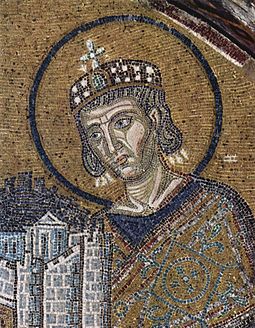
The Roman Emperor Constantine became a follower of Christianity and through the Roman Empires in the East and West at that time, Christianity became the State religion.

Constantine the Great: picture credit Wikipedia

Constantine the Great

In the process of change and at the Council of Nicaea in 325 AD, various books, were not included in the New Testament. In modern journalistic parlance, a ‘hatchet job’ – but a clever one. Clever because it contained the best of the old and the best of the new. It had to be good to have survived to the present day.

This Council meeting also sought to agree on the principle of a universal date for Easter, although it stopped short of setting down a method for this date to be calculated. After much disagreement this date became established according to the lunisolar calendar. No need to go into detail on this complicated subject here, but bear in mind that it is related to the 21st March in the Julian calendar; that is the vernal equinox.

Most religions are based on ancient ideas, but sometimes opportunities for improvements from new knowledge and reflection are missed.

If you asked a young child about the seasons, you would get a reply that spring is about birth and winter death. Despite this simple truth of natural cycles, Christians are given the story that Jesus died in the spring and was born in the winter. The Bible does not tell us this. Only copying other ancient religions have determined these dates. At the time, when Christianity was seeking dominance as a religion, resemblance to old ways was important in convincing people to adopt the new ways.

So, let us reflect on the story of the birth of Christ and see if it fits best into spring or winter.

picture credit: Pinterest

Three Kings and God's Sun

The Magi followed a star in the East. These astrologers would have known the difference between a star and a planet, but there are theories that in 7 BC in 4th April the planet Venus appears to stop in one place at it’s brightest, due east. Alternatively, Venus is the brightest object in the sky and the three Kings may be an astronomical metaphor.  What we do know is that the new prophet was the ‘sun of god’, a bringer of light and love, a new era, who later told us, ‘I am the light of the world.’

In Ancient Egypt the months were determined by the arrival of known stars on the horizon. There were twelve of them, from which our modern months are derived. We have kept the solar calendar of the ancients. When Herod interrogated the Magi, he ‘enquired of them diligently what time the star appeared.’ He wanted to know when the prophet was to be born and the answer they gave was only accurate to within two years (as Herod later ordered the killing of children under that age). Even these astrologers were unclear on when Jesus was to be born.

Joseph and Mary were responding to an edict to go to Bethlehem for a census and pay taxes. This was unlikely to have been arranged in the middle of winter when nights are cold and days shortest.

Mankind’s new spiritual era is symbolised by the birth of Jesus in a cave (not a stable as in some versions of the story). This cave was a well known symbol to the Ancient Greeks, such as Plato, of the human skull and therefore mind. The birth of a child of light in the brain represents a new level of consciousness and the opportunity for mankind to raise their understanding and experience of life. Historically, this is exactly what Christianity achieved, although it could be argued many other religions might have done the same equally well such as Buddhism in the Far East. 

Should we ask, why were shepherds were in their fields at night? Any country person will tell you that the time of year when shepherds are working around the clock is in the lambing season – the spring.

Common to many solar and Pagan religions, there are four important landmarks in the calendar. These are the summer and winter solstices and the spring and autumn equinoxes. Most churches face the spring equinox, for the sun rises due east on 21st/22nd March. The Sphinx which turns it back to the pyramid of Cheops in Egypt (and faces all four of these points exactly) faces due east.

So fundamental are these seasons and the new consciousness of light and love to the message of Jesus, that he is even crucified on a form of compass; the cross. That remains his symbol, although many other symbols could have been chosen.

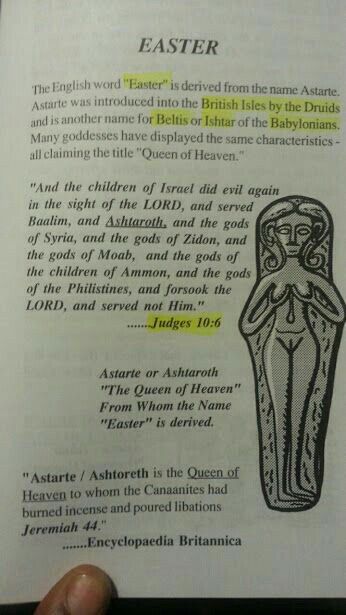
Ishtar

The goddess Ashtaroth or Ishtar of the Babylonians was a fertility goddess. The word ‘Easter’ is probably derived from her name. The conflation of the word ‘east’ into ‘Easter’ should not be overlooked. Her symbol was also a rabbit, on account of their love of procreation, – but Jesus had no connection with rabbits!

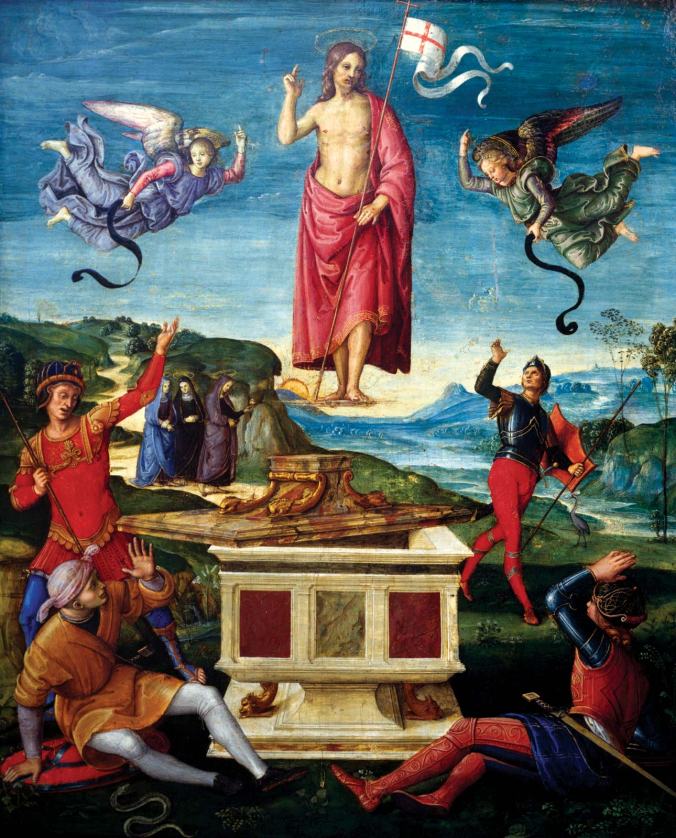
Easter is all about looking to the east, for it’s wisdom, it’s new light, new hope and it’s rising sun. It is clear to me that the birth of Christ in the spring of each year represents a message of the dawn of love.

Ressurection with Rising Sun: picture credit Raphael

Resurrection-oil-Christ-wood-panel-Raphael-Sao-1502

If any of the above is likely to be true, then it would be more convincing if the death and rebirth of Christ fitted the narrative of the winter solstice. I have taken up enough of the reader’s time, so let me suggest that you explore this possibility with an open mind and form your own opinion. To compare the dying and re-birthing winter sun with the dying and re-birthing son of the Father, I found to be a light to enlighten the Gentiles.

Lock Down

The following essay is an examination of how the theory of one area of social problem solving, is similar to and can inform another.

There are elements in common between those who look after our health and those who try to keep crime off the streets. These are the four strategic similarities;

Problems can be prevented

Problems can be analysed

Causes can be detected

Causes can be treated

Corona virus is not new. SARS and then MARS are two recent examples, but throughout history humans have been literally, plagued by them. Each time they come and go, there are lessons to learn. These will help preparation for the next.

This may involve warehousing hospital supplies for instance. The span of time between outbreaks will help to inform the ‘use by’ dates on perishable items. Typical examples would be testing kits, ventilators, hand sanitiser, personal protective equipment, software and even signage.

South Korea has performed particularly well in dealing with the current corona virus pandemic. It puts this down to four key strategies, which are the same as those above;

Prepare

Test

Trace

Isolate

Having the means to deal with the next outbreak at the very earliest opportunity is essential. Countries that have experienced denial of a problem by it’s leaders, or have lacked equipment or funding (e.g.. for research ) are going to lose more citizens than those countries which have prepared.

The old adage ‘a stitch in time saves nine (stitches)‘ is wisdom from the past that we ignore at our peril.

Any police chief trying to reduce crime will be familiar with the principles of crime prevention. Simple and best value strategies for dealing with say, burglary can save the tax payer vast quantities of money needed to put one burglar behind prison bars. Ten pounds spent on preventing burglaries, might save a one hundred thousand pound court case.

Over the last few decades police have moved from the universal production of posters such as the ‘lock it or lose it!’ campaign and ‘watch out there is a thief about!’ to targeted prevention and detection.

It is clear that sending a crime prevention message that may or may not be highly relevant to a community is wasteful. It also raises an unwarranted anxiety of being a victim of crime within low risk areas of the country.

Instead police started analysing their computers and finding patterns. They were interested in where, when and how a particular crime was occurring – long before they asked the question ‘who was doing it’. This built up intelligence which is invaluable to inform the prevention of crime. For instance, if thieves were breaking into cars in town centre car parks, the analysts identified which car parks were most targeted, which parking spaces were being targeted, what time of day and day of the week etc. This might identify an area in a car park where they was a good escape route and poor lighting, no CCTV coverage and little footfall. All of these could be rectified by car park managers on advice from the police. The public would pay nothing and the car park manager would see a rise in the use of the car park and revenue.

The South Koreans were also good at identifying where corona virus victims were. Instead of fighting what Donald Trump and Boris Johnson called ‘the invisible enemy’, the Koreans analysed information from personal smart phone locations cross referenced to recent entry and exit of foreign countries. With this information they were able to target their testing and identifying ‘hot spots’ where transmission of the virus was likely to happen and or happening. They even used police detectives to trace individuals and their movements.

Police call this ‘detection’. It is the natural follow on from the initial process of finding out as much as possible because the problem is hidden, not invisible.

By targeting resources in this way there are two benefits. The first is that it is cheaper. This may sound callous but in fact cost can be a huge inhibitor to action.

The second advantage of targeting action, is that businesses can carry on, if only in a limited way. One tactic for instance would be for elderly high risk victims to be placed in isolation while low risk younger people to maintain the economy and public services.

Prevention and Detection are really two parts of the same process of ‘reduction’ whether you are considering health or crime. They exist on a spectrum between the two extremes. At each end of the spectrum, detection contains some prevention and prevention contains some detection. As an example, the final result of the criminal justice process is to put an offender in prison. One of the possible outcomes of this is hoped to be preventing that individual ever doing the same thing again. They usually do, but sometimes it works.

picture credit: detroitjournalism.cog

lock down detroitjournalism

It has been suggested that the present pandemic has been dealt with in a manner in which the cure is worse than the disease. The ‘lock down’ approach to entire populations has ramifications that will lead to huge public debt and austerity.

The question has to be asked, ‘is lock down the only way to deal with the pandemic? The answer is no, because the South Koreans didn’t have to go that far.

Their strategy meant that they did not need to lock down their populations, eliminating in part at least, mental and physical health problems resulting from isolation and economic austerity in the future. Although it was clearly not ‘business as usual’ it was a working compromise between the needs of people to maintain health and an income and the need to eradicate the virus as quickly and with the least cost of money and life.

By targeting their treatments to areas of the population in most need, they have provided a model that the rest of the world would do well to study and copy. Lessons learned should already be being digested and fed into the strategy for Covid 20, which we can expect is already hanging in a cave somewhere in the world.

When the Covid 19 strain was first detected in China the world watched. As a top down organised country China had more tools at it’s disposal than democracy’s, but the principles are the same. What the rest of the world might have also taken seriously is asking the question, ‘are we next?’ Governments might have looked to the World Health Organisation for an answer. For many weeks the WHO did not declare a pandemic was happening. What world leaders needed to know was when it would happen i.e. be proactive not reactive.

In the United Kingdom the medical journal The Lancet included an article on how the outbreak in China will become a pandemic. This was in January 2020. In February the country had a chance to prepare. It did not. At the end of March personal protective equipment, ventilators and testing kits are still being ‘rolled out’ – as the government puts it. New cases are doubling every three to four days. The government of course denies being slow in preparing for the pandemic and points to the fifty new hospitals they have built. But hospitals are for the treatment of victims, not preventing people becoming victims. The resources are sent to the results of a pandemic not preventing one.

The vital point here is ‘timing’. There are three possible outcomes from deciding when to take action.

The first is that measures are put in place too early. Ministers in the UK expressed concern that fatigue sets into the population if protective measures are introduced too early. They wanted to time maximum protective measures with maximum victims. There was an assumption that the patience of people to avoid their death or of loved ones, is limited. It could be argued that as more fatalities occur the more concentrated minds become.

The second possibility is that exactly the right moment is chosen. This is ideal but is best judged in retrospect, ‘wise after the event’.

The third possibility is that measures are put in place too late. In this case there will be the highest number of human deaths and the most expenditure of money.

Of these, the first two are proactive and in my view produce the best results.

Reacting to problems is to undertake stitching nine stitches instead of one.

Getting the warnings right, is where you might expect the World Health Organisation is the expert. Viruses are not new and statisticians and virologists can get together and draw up predictive curves. They should be good at this even if each country is different.

The tragedy is that politicians are self selected for their political ideals and personal appeal. They may not have the abilities to assess a situation and give precise direction at the appropriate time. They may not listen to their advisors and or may just use the advice to avert personal responsibility.

These principles of proactive and reactive management and decision making are as true for dealing with crime as for health. They are so universal that they can even be applied to playing a game of football, which is why clubs employ statisticians to analyse games in minute detail, as they progress and after.

There is nothing in life for which we are not equipped. The only real challenge is overcoming our own shortcomings.

Red Ball White Ball

These series of essays have one common theme. They take another view from the conventional one. In life, we encounter complexity and the principle way we deal with this, is to simplify. When this happens however, something is lost and often that thing was the most precious. It is called;

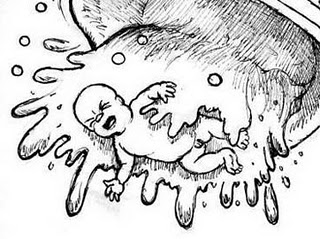
Throwing the baby out with the bath water

Problem solving is one life skill that is invaluable, more so than, dare I say it, algebra. Almost everything we do and our games are problems in need of a solution. If the bath water is cold, mothers remove the baby before throwing the water on to the garden. It may sound obvious but often problems present in confusing ways…too many things are at the same time. That is when the baby ends up in the rhubard patch.

baby_bathwater

A game such as Snooker is a problem solving game. The players are presented with the complex task of putting the red balls into the table pockets. Complexity is introduced by rules. One is that the balls can only be pushed with a stick; you cannot pick them up and put them into the nearest pocket! Then you have to push a coloured ball into a pocket alternately with a red ball, and a scoring system giving values to balls, means that the best player will win prize money and fame. But the most complex skill of all is the use of the white ball. This must be pushed with the stick to hit the other balls and it must always be controlled, so that it comes to rest in anticipation of the next move. Those not familiar with the game take a while to realise that hitting the red balls is not the primary objective, but skilfully placing the white ball as it rebounds off the red or coloured ball. With this skill you  solve the obvious problem and set up for the next problem, within your own hidden game strategy.

red ball white ball pocket

Complete problem solving involves a highly inclusive level of complexity, where consequences are anticipated rather than left to chance. There must be no ‘unintended’ consequences.

Stage illusionists know that the human brain simplifies what it sees in order to interpret what it is seeing. They use the technique of distraction. They know that the audience will watch the hand thrust towards them whilst something not to be seen is done so fast and discretely, that it is not seen. This is classic, red ball, white ball.

Politicians have to solve highly complex problems and apply practical solutions. The first stage of problem solving is to define the problem.

At present the world economy’s are being threatened by a pandemic. That is the problem. People with the disease are a short term problem, whereas the world economy needs to provide work and a livelihood for every citizen of every country. This is a far greater problem in the long term than the present ‘red ball’ events presented to us daily concerning Covid 19.

We are told that the origin of the new virus was from markets in China where bats were being sold. We all believe this. This is the red ball. We think we have seen it go into a pocket. But did the Chinese authorities close down the markets selling wild animals? Why didn’t they after SARS? Could there have been another source of Covid19?

One Chinese lady interviewed declared, ‘This could have happened anywhere’, being defensive over the suggestion that this and previous viruses like SARS, happen in China because of their love for exotic meats. Perhaps she has been told that people in the West also eat bats and rats and cats. That would be her ‘red ball’.

There is an Institute for Virology in Wuhan; the Province where the outbreak is alleged to have started. You might expect that they would be anxious to deny accusations that they let out and or create Covid 19.

Yet if you view the home page on their web site, the top story is about HIV. The top news story is that a delegation from the Ministry of Education of Kenya visited. No red balls present, just a white ball suggesting the aim of the Chinese to develop the untapped resources of Africa.

Was there a terrorist incident involving the release of this virus, as has been the plot in Hollywood films?  Are too many people now living in cities? Have individuals immune defences been reduced through poor diet and lack of sunshine? Is there more than one variety of Covid 19, one strain being more virulent than the other? (The purpose of this would be to increase fear of the virus whilst limiting deaths.)

Could there have been some political placing of the virus in a country to destabilise it more than other countries? Both China and Iran are viewed as threats to peace in the West and Middle East by western politicians.

These and many other possibilities, are unexplored but possible ‘white balls’ that indicate hidden agendas. But we are too engrossed with watching red balls (or red herrings!?) fall neatly into pockets.

Few journalists have asked challenging ‘white ball’ questions on the television screens in the west. What is being presented are ‘red ball’ events such as where the virus is now and in what strength. Which events have been cancelled, how is it going to affect various people in various situations, etc. etc. One red ball after another is being put into a pocket and as quickly as they go more appear on the table. It’s fascinating and distracting.

The real question is ‘what is the white ball doing?’

Who is behind what is going on, is an unspoken question. Any suggestion that the pandemic is a deliberate manipulation is ignored or described as ‘fake’ or ‘conspiracy’. And yet, the most important rational task, is to discover a conspiracy if one exists.

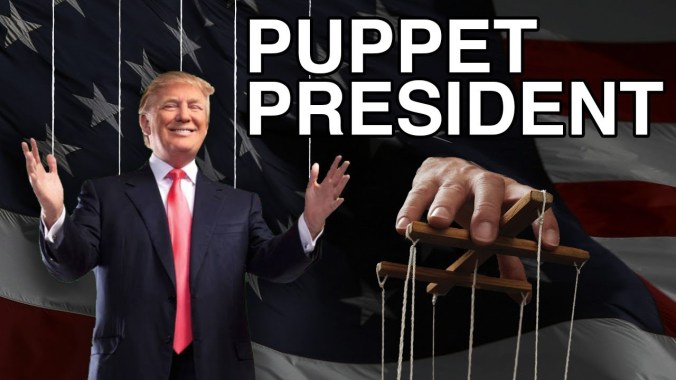
Puppet President

Who is pulling the strings of the puppet president of the United States of America for instance? Why? Because Mr T. started the health emergency by denying one exists and that it will go when the weather gets warmer in April…standard off the cuff remarks made by the uninformed. Behind the curtain a patriotic doctor who started testing for Covid 19 is told to stop, as that is the responsibility of another department. This department came up with a test three weeks later which did not work. By this time the Jennii was already in LA and not to enjoy the surfing. 

We saw the same ‘white ball’ tactics with 9/11. Every day of the year, every hour of the year, fighter jets are on the runway, ready to defend the USA from hostile aircraft entering US air space. But on 9/11 all those jets were off somewhere else on a pre-planned exercise. The guard was down. International conspiracy? The prize for the winner of that game was to up national surveillance and remove individual freedoms for Americans. It is called the National Security Agency and it is saving everyone from terror plots.

Who will gain from the current pandemic and the fall of western economy’s? No individual government gains. In fact they all lose. The only gains will be upping international surveillance and removing individual freedoms.

Specifically, cash will be removed as a system of payment, on the grounds that it ‘spreads viruses’. This has never been true in the past few thousand years but suddenly it is. In place of cash is the card (or RFID implant) and the control this brings to governments to know where it’ s citizens are and whether it wants to allow them to have personal money.

Second is the extinction of small and medium size businesses and the self-employed. Examples might be taxi drivers who own their own cars and certainly low cost airlines. This is in contrast to large and multinational corporations such as Amazon, Microsoft and Google, who act in the interests of the large white ball.

One day this large white ball will put the last ball of the game in the pocket. That will be the black ball worth seven points. If you think things are dark already, then that will be the blackest of black days; the end of personal freedom. Game over.

A New Kingdom

Prejudice is to have an opinion based on false feelings and, or false information. It is to be so fixed in opinion that even when new facts are presented, prejudices are not eradicated.

Prejudice manifests as both positive and negative opinions and feelings. We can praise those who are not worthy of praise and hate those who do not deserve hatred.

Prejudice requires a process of discriminating judgments based on casual classifications such as gender, social class, age, disability, religion, sexuality, race, ethnicity, nationality. The classifications are in themselves chosen irrationally. This is commonly through received opinion either within a group of mutually minded and self selected people, or through inherited ideas and opinions which are accepted and shared uncritically.

Prejudice has been a problem for social groups across time and the world. It has created wars, injustice, repression and hatred between individuals and groups since the beginning of time.

‘He hears but half who hears one part only.’

These are the words of Aeschylus the ancient Greek playwright, written around 500 BC when a new form of clear thinking was heard, if not always respected.

Failure to listen to previously excluded or new facts because they do not support a belief based on opposing facts, is a form of false thinking.

Such a weakness is what temporal law and it’s practitioners aim to rise above, but even and sometimes especially in a Court of Law, arguments present opinions based on a version of the facts, rather than the facts themselves.

There are few who are not a product of their own prejudices and the opinions that reveal them. There is always something that will make a person ‘turn away’.

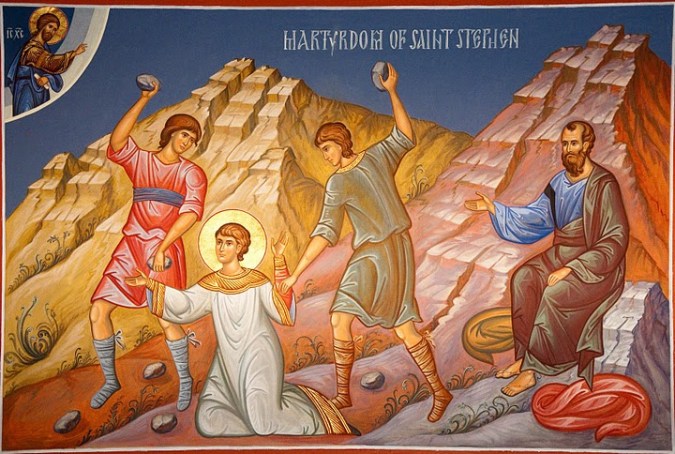
Throughout history, those who have refused to adopt the prejudices of their peer groups, have been murdered or imprisoned. Rarely are they respected and given the respect they deserve. When this respect is given, their moral authority raises them to a respected position in society, or post death, to sainthood.

picture credit: en.holyorderofststephen.org

saint-stephen

Such a clear view and the ability to speak it, is commonly found in those with a highly spiritual understanding. The word ‘mystic’ is unfortunate in English for its similarity to ‘mist’. In a mist we cannot see and are lost, which is a good metaphor for humans who do not possess clarity of thought. That is the precise opposite of mystical ‘vision’.

A mystic is a person who has achieved perfection at all levels of being, including thought. They do not necessarily express ideas that conform to social, religious or cultural norms.

This has lead to their persecution throughout history as they do not say what people expect and require them to say in order to support shared prejudices. The very presence of a clear thinker, such as Socrates, is an affront to the uninitiated.

The initiation that humans are better for acquiring is the ability to train their observations to override what they have not observed. With this ability, people are able to act with complete compassion and love of others, whatever these people may believe or represent.

God blesses those who love and are without judgment towards others.

Such people are needed today and yet how many ‘saints’ are presented in the media? Certainly there is a long line up of ‘sinners’ and the ‘misguided’ – some in positions of authority that they do not deserve, and some on their way to the prisons in shame.

This process is continuing and the present time will create opportunity for men and women of high moral authority to be heard and respected. You will know them for they are without prejudice and pride.

They have walked on the earth before and are here now. Times of tumult and disruption of the norm, herald their recognition and the beginning of the enrichment of societies.

The enrichment is not the type that has lead previous and present generations i.e. wealth and fortune.

‘Jesus said that we could not serve both God and wealth, and it is obvious that Western society is organised in the service of wealth.’

John B Cobb ‘Eastern View of Economics’

To have one’s treasure stored in a parallel dimension, is not a common aim in modern Western Society. And yet, a literal and metaphorical polar shift is already happening and this will bring about a complete change of society.

Black shall be white and white shall be black.

black and white pattern

Only when all men and women have abandoned their prejudices will they be able to see their own society and those who make up society, that they had not seen before.

The truth, as someone once said, is stranger than you think.