Don’t Fence Me In

This the title of a wonderful old song sung, I think by Bing Crosby. It’s all about the exploration of the west in nineteenth century North America. After millennia of humans and animals roaming free, cattle ranching introduced ‘ownership’. The Native American Indians didn’t understand it and gave away their lands before they realised they would have to fight and ultimately die for the ‘reservations’ that were left for them.

picture credit; WallpaperWeb.com

Stampede_African_Cape_Buffalo_Herd

It is an paradox that man craves freedom but loves boundaries. Astronauts report on viewing earth from space, that it appears as one planet. There are no political boundaries that we are so used to see on global maps. Boundaries are ultimately arbitrary. They serve only the tribal mentality of ‘them and us’ present in early man and persisting, almost unconsciously, to the present day.

The poet Robert Frost wrote a poem which included the line, good fences make good neighbours. This concept, at one end of the spectrum of possible combinations of freedom and enclosure, works – but only temporarily. Eventually, because of tribalism and greed, a fight breaks out.

When the British realised the rule of India by a distant Queen of England was over, they were faced with the problem of handing over a sub-continent to self rule. A problem because the Muslims and Hindus were at each others’ throats. If the British left there would be a blood bath. So they drew an arbitrary border on a map and created a new country, Pakistan. Like the creation of the Berlin walls, it divided families, created mass migration, a loss of homes and livelihoods and riots and slaughter. Tribalism, whether under religious or any other banner, is never good for all. Today India and Pakistan face each other with tolerant hostility, with a hundred nuclear missiles each, ready to wipe out each other and the rest of us. As an afterthought little Kashmir remains a flashpoint where this could happen. When you draw political maps, you had better know what you are doing for now and the next thousand years.

When the UK made the minority vote decision (only a quarter of the population voted in favour of Brexit ) to leave it’s partners in Europe, it had not considered the effects this would have on Northern Ireland and Scotland. The border in Eire was created centuries before to create a ‘non catholic’ portion of Ireland that could be controlled from England. The political reasons for it’s connection with United Kingdom are changing, and a likely consequence of the UK seeking ‘independence’ is losing Northern Ireland to the Irish and Scotland to the Scots.

Virus’s, and all the malign forces that nature unleashes on humanity; virus’s do not respect political boundaries. It takes two weeks for a virus to travel around the globe. The only way to extinguish a virus is for each person to crawl into their own cave and stay there. They may die or they may survive. In this situation one is not even aware that one’s neighbours, also potentially dying, are on the other side of the wall.

When this current Covid-19 pandemic is over, as it will be, the nations of the world should take stock. They need to seek to understand the lessons that come from such a pandemic, for virus’s are a greater problem than terrorism and extremism and wars and all our man made horrors. In 1919 the second wave of Spanish Flu killed everyone who caught it.

Surely, world leaders must learn that humanity has more to gain from co-operation and tolerance towards all living beings, whether animal or human. There are no boundaries in nature except those created by habitat and when there is enough habitat to go around, everyone is happy. When large populations move to escape political or natural upheavals, these people are ourselves coming in the other direction.

In Europe, the European Parliament and non-governmental organisations like the WHO, have failed to create a strategy to cope with immigration. Countries on the edges of Europe such as Greece and outside such as Lebanon are full to bursting point. Now Greece is shooting warning shots into the sea at immigrant boats.

In the United States, the solution to immigration from Southern American failing states, is of course ‘a wall’. As if we had not learnt from history how the Berlin wall was pulled down and how Palestine was shrunk into walls – good walls rarely make good neighbours.

Mankind craves to be free and this moment in history is a time for humans to come out of their caves and obeyance to tribal rules. Instead of hating and fighting each other, we are in a position to see the greater picture from above, where barriers do not exist. There is only humanity, and the sooner we treat the planet and each other with humanity, the sooner we will lose the feeling of being ‘fenced in’.
The Good Life

There is a remarkable pair of photographs on the BBC website today. They show satellite images of eastern China, Hong Kong and Japan. The images are filtered to show the intensity of air pollution. The January 2020 image shows ‘business as usual’ and the principal cities and urban conurbations are highly coloured from yellow to high risk, red. The February 2020 image shows no coloured areas at all! The air is clean because production in the factories has stopped. Ironic that such a gift to the populations, of sunshine and clean air occurs when millions are in quarantine.

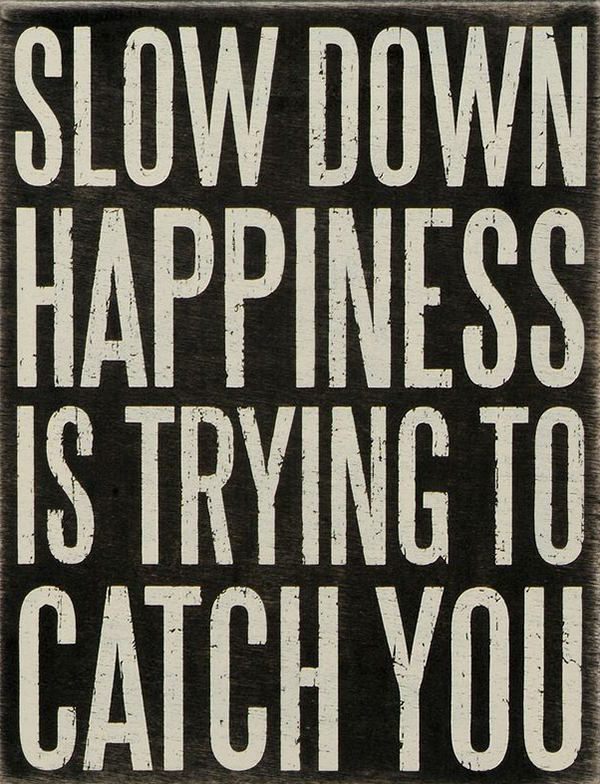
The message we can draw is not how contagious viruses are – we know that. No, the message so plain to see is ‘slow down and stop!’

slow-down poster

The industrial tenets of, ‘more and faster’ for profit and a promise of prosperity for all, are also familiar to us. Humans deserve a good life so the growth of benefits from industrialisation, cannot be denied. Over one hundred and fifty years ago people started to leave the land and live in cities. This process means that now about half the populations of most countries live in cities.

In response industrial production is speeding up, as robots and AI are literally taking over from humans. The only question is; at what point is ‘a good life’ reached?

A casual observer in a modern metropolis, might perceive a collective sadness in the faces of passers by – anxious to reach their individual destinations. If asked if their life is a ‘good life’ – I wonder how they would reply?

picture credit: WithPause.com

Snail credit With Pause

When I was a student in London in the mid-70’s, I took part in a ‘slow walk’. A collection of willing volunteers met at the north end of Hammersmith Bridge and lined up across the wide pavement. We set of in a bunch like marathon runners, only it took us three or four hours to reach the south side of the bridge – a distance of maybe three hundred metres.

Slow walking took discipline at first, but soon became strangely normal. My mind felt completely relaxed. I might as well have been in meditation – in fact, I was.

picture credit: Londr.com

hare and tortoise credit Londnr

That was part of my ‘good life’ when I had time to be fast or slow and chose the latter. There are in the present day, many experiences of ‘slow living’ available as an alternative to the human ‘race’. There is slow food, slow travel, slow cities, slow schools, slow books, slow living and slow money. See www.slowmovement.com and tell your friends!

In 2020 humanity is crossing the threshold where too much – too fast – too wrong – is damaging the planet and as a consequence, ourselves. Whether it is air pollution, sea level rising, food shortages, water shortages – industrialisation is ‘biting back’ the hands that turn the handle.

Sloww-Slow-Living-Synonyms-Infographic

This latest virus Covid 19, is amongst other things, a firm message for humans to ‘slow down and stop!’ Perhaps those confined to a room for two weeks, will draw a positive from the experience. ‘Not doing’ can alter expectations significantly. If ones normal expectations are unrealistic then the distress that comes from failure to satisfy those expectations, will never be encountered. Success or shall we say, contentment, comes from watching a spider cross a floor or a raindrop slide down the window; experiences usually never observed and enjoyed.

We will inevitably all discover that less and slower is more!

Somewhere between the extremes of fast and slow, is where humans can find the ‘good life’ they seek. How close to ‘slow’ do you dare to go?

Kicking Over the Sandcastle

One main issue stood out during the campaign in favour of the UK leaving the European Union; restricting the free movement of people, meaning immigration.

Enoch Powell was a politician back in the 1970’s who was strongly opposed to immigration into the UK and warned at that time that entry into the European Economic Community would be a slippery slope into being UK being controlled by Europe.

Economists however will tell you that immigration, the availability of cheap labour, is fundamental to economic prosperity and will site the United States of America as an example. They are not concerned with social integration and interaction however, as are the communities who live with immigrants.

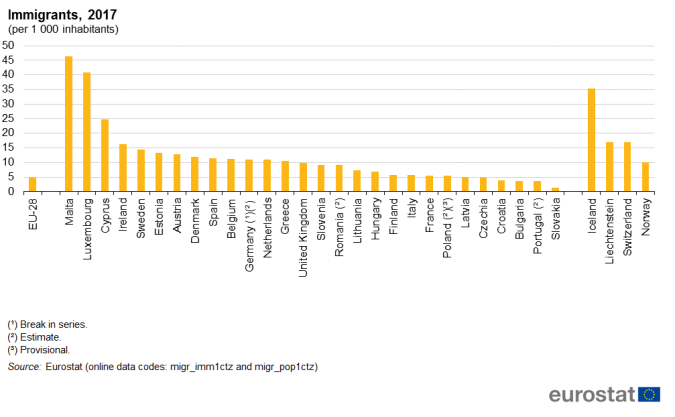
The UK is about half way down the league table of EU countries accepting immigrants

s Immigration bar chart

To solve a ‘problem’ you have to first define it which means asking what an immigrant actually is. Is a person with a British passport an immigrant for instance? The answer is yes, so citizens from dual national parents, are allowed to live and work in the UK. British citizens from ex-colonies across the world were awarded British passports, such as those fleeing Uganda and Hong Kong and economic migrants from the West Indies. These movements of British citizens were in the 1970’s are now generally socially integrated into the UK and have been important in creating the prosperity and diversity of today. There was public concern over these immigrants taking jobs and houses and using public services and much of this concern is reflected in the speeches of the right wing politicians at the time such as Enoch Powell.

Was this source of immigration as a result of the UK connections with Europe? The answer is no, since the colonies and returning ex-patriots from countries like Ian Smith’s South Africa were nothing to do with Europe. Two thirds of immigrants to the UK today come from around the world not Europe so any attempt to restrict immigration will need to cast a net wider than Europe.

Even if you just focus on European immigrants into the UK there needs to be a working definition of what an immigrant is. A tourist on a two week holiday is not an immigrant, however they can enter a country legally and ‘overstay’ to work in the ‘underground’ economy i.e. not paying tax and being exploited. More extreme rouses are used such as landing on remote beaches with no papers.

One strand of solving this problem would be government ordering authorities to round up those living in the UK illegally. This would include involving the beleaguered National Health Service who will treat anybody on production of a electricity bill with a name and address. Within this group are criminals involved in people smuggling and modern slavery and sex trafficking – nothing to do with the EU but certainly a problem resulting from lamentably poor UK enforcement of it’s borders.

Students are presently given visas to stay for the duration of their studies and until recently, were given three months to leave after the end of their courses. Somebody in government realised that this was a nonsense, since graduates are highly employable and there is little reason to send them home so quickly. So the law was changed allowing them to remain in the UK for a longer period.

One of the largest movements of immigrants from Europe are migrant workers. These are seasonal workers who travel within Europe to where the wages are highest. They are ‘unskilled’ but vital to farmers and fishing to pick and process fruits of the land and sea. This type of work is not preferred by UK citizens who prefer not to for various reasons, hence a dependence on EU nationals to work in the UK. Even good old British ‘fish and chips’ needs someone to lift potatoes from the flat fields of East Anglia.

None of these types of immigration have yet highlighted how the EU is responsible for a problematic level of immigration into the UK. Indeed people wanting to come and work in your country is an indication of it’s success as an economically and socially prosperous place to live. Unemployment in the UK is very low, compared to 25% for instance in Southern Spain.

The ‘solution’ to the ‘problem’ being offered by the present Tory government is to introduce a points based system of immigration.

Whether this is a solution that fits a problem is open to analysis and debate. If low paid workers are vital to farming and fishing, how will a system favouring highly educated applicants pick potatoes from the fields?

Farmers growing vegetables today want to know from the government how the free movement of migrants is going to work at least by September 2020. If there is no decision and ‘no deal’ then it is not worth farmers planting crops that cannot be harvested in the winter and spring of the following year. Similarly the fishing boats, seeking expansion of their industry following the retaking of UK international waters, will not catch fish that cannot be gutted and frozen on the port side because there are no migrant workers to do it.

The European Union was never a club that gives out free money to it’s wealthy members. It is a club that gives free money to it’s poorest members however and many parts of the poorest parts of Europe such as the Mediterranean nations in the south, have benefited hugely from membership. The EU operates more as Robin Hood than the Sheriff of Nottingham and that is a principle which you would not expect would create an issue for right minded people. However the British people have been persuaded that it is somehow wrong to share their wealth. Being the fifth wealthiest country in the World is not a position that you can use to hide from moral arguments of supporting the poor and weak.

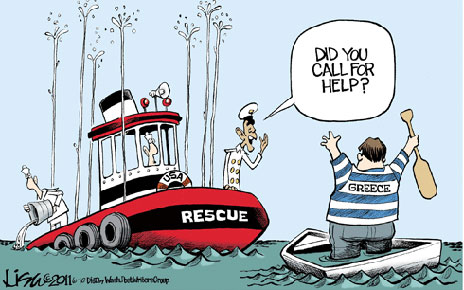
sinking-ship-cartoon

The EU (mainly Germany) went to huge lengths to support Greece when it was about to crash out of the European Union. The newly joined member countries from Eastern Europe are pleased to join as there are not only economic benefits but also gateways out of the social and economic memories of Soviet and Russian styles of government.

With leadership comes responsibility and just on this single issue, of immigration as an indication of lack of national sovereignty, the UK has not taken responsibility but simply blamed Brussels. That argument chimed with voters who we know are generally in favour of being governed by institutions as close to them as possible. Where Brussels is exactly and why millions of British soldiers died fighting two world wars in Belgium is not necessarily something voters are going to consider. Do they know that Ostende and Zeebrugge are about the same distance from London and Westminster as is Birmingham?

ships talking

They argue instead that the elected members of the European Parliament are unelected and non representative of their views. This despite the fact that only on 5% of all occasions to vote on European policy and law has the UK voted against what was being proposed. In other words, what has been good for the EU is also good for the UK.

Could it be that the present prosperity of the UK, in social, economic, culture, research, security and concern for the environment is largely a result of it’s membership of the European Union?

Could there be a massive slight of hand taking place by the Conservative governments of the last decades, to blame Europe for problems rather than deal with them themselves? Who cares that British children are suffering from poor physical and mental health in numbers which should shock most of the British public?

Who cares about the physically and mentally ill unemployed and homeless occupying the empty town centres of the United Kingdom? Who cares that the public services in the United Kingdom which used to be the envy of the world are now failing? Why does the UK spend one of the lowest proportions of it’s GDP in Europe on public health?

Even just these three problems might been seen as more important that the ‘problem’ of being a member of the European Union.

I fear that the public have been manipulated by a clever slight of hand into facing the wrong issues and blaming the wrong causes.

Any problem with Europe could have been solved within Europe as a full and respected member. Since that proved too difficult for such as David Cameron who spent two weeks prior to the referendum in June 2016 ‘battling for Britain’ – how can we expect Tory governments to introduce policies to protect the weak within it’s own borders, even?

Has anyone projected the consequences of Brexit in the near and distant future – a list that should be under two headings of intended consequences and unintended consequences?

Politicians such as Teresa May held her cards very close to her chest when drawing up her infamous ‘Withdrawal Agreement‘. She argued that she could not let out her plans before negotiation starts, which meant that she received no guidance or feedback on her ‘red lines’ and ideas until it was too late.

You would however expect a ‘Conservative and Unionist Party’ to be comfortable with the strategy of ‘union’. Is there not a blatant contradiction between what they do and how they think. Why would a Unionist party dis-approve of Union within Europe? Is there not evidence of double dealing here? If they argue that the Union within the shores of British Isles and Eire is to what the name refers then is that not again a double standard. And given that Northern Ireland and Scotland voted overwhelmingly to remain in Europe, what is expected happen next in these two countries? Surely the people of these countries are going to want to have their say, including using the Tory ‘referendum’ tool now that it has been used to beat ‘Remainers’ into submission? One unintended consequence of leaving Europe could well be that England and Wales becomes the only working Union left within the United Kingdom – within the next five or ten years.

One in four people in the United Kingdom voted to leave Europe – all 17.4 million of them. But three out of four have not had their preferences and understanding of what the problem is, heard and acted upon. Some of them were too young to vote, some of them didn’t bother to vote, some of them were too old to vote, some of them were too ill to vote, some of them were not meant to be in this country, so did not vote, some of them are ‘foreigners’ so cannot vote and some of them did – just not enough. If you wonder why they didn’t vote it might just be that they didn’t think that European Membership was a the main problem. Perhaps they could see how inept Tory government policies were and that is why a second confirmatory referendum was blocked as an option by the Tories. If you want to win you need to fudge issues and the General Election of 2019 did that in spades against a disunited collection of opposition parties.

Kicking over the sand castle is easy. Just wait until 31st December this year when the Trade and other Agreements between the UK and European Union have not been finalised, and the Tory government will knee jerk into to what it does best, kick over the sand castle again and leave ‘no deal’ on the beach.

Sand Castle and flags

And is it just me or why is this process of leaving broken into two parts? Now we have agreed the terms of leaving we have to decide everything else (as if negotiating both at the same time is too difficult). How can you formally leave an organisation without having agreed the terms and conditions of what happens afterwards? This is like taking delivery of a new car, paying in full, receiving the key and log book, registering filling the tank and then sitting down and deciding what colour it should be and what extras should be fitted and what the price is.


Agro Soap and Shampoo

What is it with Hotels? I have to admit to having a problem with them, however hard I try explain what I expect and need when booking.

A great big sleeping thing called a BED

q hotel corridor and bed

The clue is in each hotel room. Central to the arrangement of most hotel rooms is a bed and a bed is generally, for sleeping in. And there we have the crux of where I find most hotels get it wrong.

The whole notion that their guests basically just want to comatose, appears to be foreign to them. Because of this fundamental misunderstanding, much of what hotels provide becomes a waste of effort and money for all parties. People who want to sleep and or are asleep, do not require a conference suite, a swimming pool, a spa, a restaurant, a dining room, a cinema, a grand view of the city, an entertainment programme, a stage, a discotheque, wide screen television for sports coverage etc. etc.

We just want a bit of peace, a toothbrush and a razor.

Instead, you get aggravation, a piece of soap and shampoo.

The problem with so called ‘facilities’, is generated in part by the hotel star system, which awards stars not on the quietness of the hotel and politeness of its staff, but on the breadth  and extent of it’s facilities.

I can well imagine there are many families and business travellers who intend to spend days and weeks within the confines of the hotel and need these things, in which case these quests should be directed to hotels which are not focused on providing an environment for guests to sleep.

If I were head of Tourism in the United Nations International Peace on Earth Mission (if they don’t have one they should) I would categorise hotels between places of rest and unrest. I would award ‘bed’ symbols for quietness rather than ‘stars’ for what ends up being sources of disturbance.

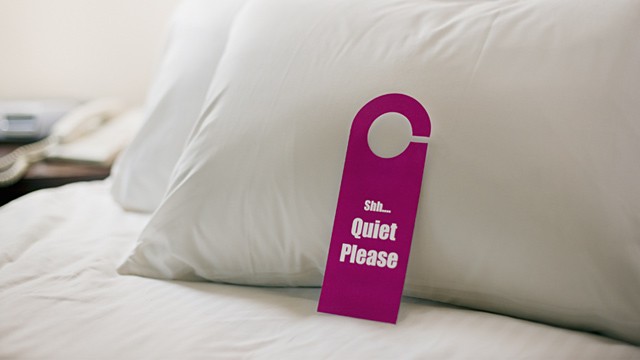
The clue that you don’t have to be Sherlock Holmes to notice

quiet-please

Perhaps it is time to give some examples of what I mean about a hotels lack of sympathy to some guest’s needs and expectations. I think back to earlier last year when I went with friends to a charming town in the Alpujarras in Southern Spain. The hotel where we stayed the night had a central courtyard around which corridors accessed private rooms. The floors and walls of the corridors were tiled which meant that every footstep reverberated ten fold depending on the quality of the steel in toe caps. Even worse, my friends in the morning complained that they had to endure a woman talking for two hours on her mobile phone in the corridor, before they could get to sleep.

Last month, I booked a hotel on line seeking quietness above all other features. After as extensive a search as possible in a holiday town full of hotels and hostals of all descriptions, I decided upon a hotel. When I arrived I discovered it faced a busy main road, a feature no included in the photographs or descriptions. Worse than that, there were only five rooms and these were directly above a restaurant and bar.

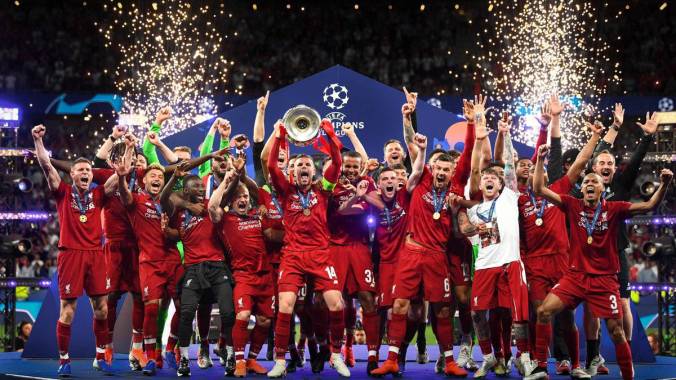
When I asked the owner for a quiet room I was told that they were all quiet and if I didn’t want to listen to the traffic I only have to close all the windows. I said I liked fresh air, just to put myself amongst a minority of guests. She informed my that no noise would come from the bar except that tonight there was a Liverpool football game on and it might get noisy.

Leeeeeverpoool!

q Liverpool football

Later that evening as the game started, I wandered down to look for the source of the excitement. The door between the boisterous football fans and the corridor to the sleeping guests had been propped open, as if there was no issue at all for those in the restaurant. I had to ask the owner to close the door – which I suspected should be closed under fire regulations in any case. The owner was obliging but I had to wonder why it was necessary for me to ask. What is going on in the heads of people who rent out rooms for people to sleep in?

I abandoned this hotel as quickly as I could and appeared at another in the same town, that I had booked on line. It was the right time and day but the hotel stood adamantly closed.

I telephoned and knocked repeatedly but nothing I could do could help me. So, dragging my suitcase along the paving slabs I set off to find another. I was fortunate to find one open and rang the reception bell. I explained that I was tired and just wanted a quiet room at the back of the hotel.

The male receptionist said this was no problem and lead me key in hand, to a room at the front of the hotel overlooking the road. I was too tired to argue and eager to get an early night under the thick duvet and crisp white sheets. It was probably an hour before the problem began. Somebody started practising the piano in my room. Well, it was so loud it sounded as though they were in my room, or at least in the corridor. I peeked into the corridor expecting to see a smiling child on a piano I had not noticed earlier. Nothing. So I had to dress and bang the reception bell once more. I explained my problem of not being able to sleep. The receptionist said that it was not late in his view and that there was an apartment in the hotel. I reminded him that I had asked for a quiet room and suggested he give me another one. He quickly retorted that the hotel ( which appeared empty of guests ) was full and there was no question of having another room. He tried to compromise by promising that the piano practice would end in half an hour. Here he was giving me a clue, that he knew more about the mysterious piano than he was letting on. I suspected the apartment was occupied by his family, one of whom was learning to play the piano and had been told to practice vigilantly. I reluctantly agreed to listen to the piano for one half of an hour, returned to my room and hid under the bed clothes.

Within a few minutes there was a knock on the door. I dressed again and opened it and there was the receptionist who said that the piano would now stop in a few minutes. He had arranged this reluctantly though for he reminded me that, ‘this is Spain’, meaning that noise of all kinds is acceptable, even in hotels. I said that I knew it was Spain but that this was also a hotel where people were invited to sleep and I had never been in a hotel before where there were apartments with music practise taking place.

Sure enough, the piano quickly stopped and I was able to finally, sleep.

I have to wonder whether I am being unreasonable and have a false expectation of hotels? Am I in a minority of guests whose main priority is not to be woken to the refuse lorry collecting at two in the morning and the recycling lorry collecting at five in the morning?

Obviously I am not alone

quiet-hotel pentagram

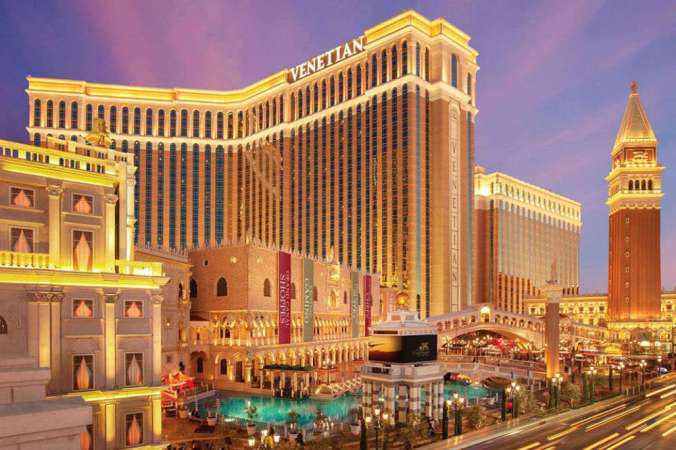
If I am, then I am willing to pay for the privilege of uninterrupted sleep at a five bed hotel. Let the party goers and sports event fans, boogey on in the hotel down the road – if for them a hotel is a mini version of Las Vegas.

A quiet night in the Venetian

q las vegas hotel

I would give those hotels one bed in my scoring system, indeed, if it provided no beds at all, I expect there are many who would not care. Think how much more money hotels could make if guests were never allowed to sleep!

Jesus Loves Computers

The following events are entirely fictional and set in modern Palestine where an enlightned Spanish chap called Jesus, is giving a group of his friends and followers a piece of his wisdom.

An early computer

J an Early Computer

And it came to pass that some of the disciples were mystified by the whole thing around ‘computers’, for much of Palestine was then buzzing about them and their unique qualities.

So they said unto Jesus, one Sunday afternoon when it had begun to rain and all around had gathered together in someone’s house,

‘What about computers?’

And Jesus replied, ‘Oh, ye of little understanding. Don’t you know nothing?’

And those who heard this looked at each other in a quizzical fashion and were confused by the double negative in the question which believe me makes no sense in Spanish any more than in English.

John, who considered himself a bit of a computer expert, stood up amongst them and cried, ‘please tell these ignoramuses Lord, so that I no longer have to ‘fix things up’ for them for I am weary of their attention seeking and quizzing.

And Jesus was compassionate towards John for he was also ‘up to here’ with quizzingness but knew it was just his Father having a bit of a joke so he asked those who were then gathered together and enjoying a round of hot drinks,

‘What is it you want to know?’

And one man who was a shepherd from the hills all his life asked, ‘tell us how a computer has a RAM, for I have a Ram and am confused.’

Jesus thought for a minute or so, making a pattern of little dots in the sand with his finger and then looked up. ‘The RAM is like unto a Juggler who stands in the market place. He has in his pockets sixteen sponge balls whose colour is red.’

Jesus eyed his audience and saw that so far they understood.

‘And he starteth juggling with three balls and the crowd is amazed that he can keep them all in the air at once, until he picketh another from his pocket and continues with four balls.’

‘And so the juggler keeps his concentration sufficient that soon he has extracted all sixteen balls from his pocket and is keeping them in the air by throwing them higher and moving as fast as he possibly can.’

The disciples and a few other goat herders who had heard about the hot drinks and had slipped in to get dry and warmed up, looked at each other and saw that no one knew what Jesus was on about. So one of them stood up and said,

‘Eh?’

Then John, seeing the vexation on the face of his Lord, and the gnashing of his teeth and clenched fists and all the signs of high blood pressure, did turn to this ignoramus and said, ‘Look, it’s simple, the computer has to make many tasks work at the same time and that is the Random Access Memory which is limited but can be expanded simply with a larger RAM card in the  RAM card slot or an additional card if there is space, making the users computing experience faster and smoother.’

Looking into the heart of a computer does not need to be confusing;

J Inside a computer

Jesus looked around at the glazed-over eyes in the room and implored John to not confuse the situation further, and John sat down mumbling to himself and grabbing his hot chocolate that someone else had been holding for him.

The Lord continued, ‘And if you are in pain to understand about other parts of a computer fear not, for all shall be explained unto you.’

‘What about CPU’s then?’ came a voice from the back of the room and prompting a sustained mumbling of approval at the question and some nodding of heads.

‘Mine’s 1.6 Ghz dual core. What does that mean?’

Jesus looked like he knew the answer to this question and rubbed his hands together.

‘The CPU is like unto the heart and lungs of a camel.’

‘Mine isn’t!’ came a shout of surprise from amongst them. ‘A camel? Bloody ridiculous. Why’s he on about juggling and cam…’

‘Look, it’s a parable you numbskull. Jesus is explaining using an extended metaphor to help dispel the mystery of something which defies understanding in ordinary language.’ John was always quick to defend Jesus’s teaching technique.

‘Creep!’ came a muffled response but it was not heard by all, for they were anxious to learn more. Jesus continued, ‘And if a camel has a small heart and lungs, when it is asked to carry a heavy load at a high speed, it creates much heat. This heat might be dispelled by a camel rider holding a large palm leaf acting as a fan or perhaps throwing a bucket of water over the camel…’

‘Where do you get a bucket of water in a desert!’ heckled a disbeliever.

Quoth John instantly ‘It’s a parable donkey brain!’

Jesus lifted his arms up and continued, ‘and if that camel had a larger heart and lungs, like if it had a better central processing unit, it would be able to run up sand dunes at great speed with heavy loads and be only slightly overheated and out of breath at the top of the dune.’

Jesus saves

The next course of sweet things made of pastries and dates was passed around and Jesus sat down for a while, for he was in need of a sugar boost.

At length, when the final course of wine and cheese had been enjoyed and all assembled were nicely relaxed and leaning against, on, or in improvised pieces of furniture and things scattered in the room like storage urns and camel saddles…someone asked, ‘What about Operating Systems?’

Jesus stood up and looked down amongst them as if the room was circling around his head, although it was not.

‘I’ll tell you about Operating Systems, for they are like unto a system of rules and beliefs that form a religion. These rules are given by Divine command, from someone like William Pearly Gates who started in a mates garage and now owns most of Palestine. He looked out of the window and saw a Window and called his inspiration, Windows 4AD. And he formed a series of commands and programmes that were readily understood by the computer and made an interface between the Father, William and ordinary people like yourselves gathered in this room.’

‘What, all of us?’ came a gasp.

‘Yes, even the most humble amongst you, who has had little education past nursery level, and perhaps is unable to even read or write due to some incurable incapacity like dyslexia or ADHD leading to anxiety and behavioural problems…Ye are those who will be first to understand exactly how to open documents and save them properly.’

And all in the room were moved because they thought computing was for the educated and rich who sat around in Palaces and hobnobbed with the senior military ranks in their secluded villas with pools and fine Sea of Galilee views that turned out to be rather too distant to truly impressed but looked good in the sales literature and sold houses quickly…they realised that such people would be the last to understand how to use computers because their heads were all in a muddle…whereas, the most stupid members of society like themselves were in line to be first to enter the Pearly Bill Gates because of their humility and frankly, lack of fear, and understanding of how computers could change their lives from simple peasants to men and women of wisdom and high ethical standing.

And the angels stood around in the room and applauded those now gathered there asleep, for their fear and anxieties about computers had been destroyed once and for all eternity.

J Gates-of-Heaven

Is God King?

Alan Watts recounts the following anecdote in one of his erudite lectures entitled ‘The Nature of God and Death’;

An astronaut was asked on returning to earth, ‘did you see God?

‘Oh, yes,’ was the reply.

‘Tell us more about what you saw.’

‘She was black.’

When the Pilgrim Fathers sailed over the horizon, their great mission was to escape the rule of monarchy. Things from which we try to escape however, have an unnerving habit of following us around. So it was for the first settlers in the green and pleasant shores of eastern North America. Without a ‘lord and master’ or ‘father’ figure, everything would be much better, right?Pilgrim-Fathers-painting-Mayflower-Bernard-Gribble

The irony, in their religious beliefs, was that their metaphor for the Divine was a King. If it is odd that the Divine is restricted to being conceived as the masculine principle, we can forgive Biblical writers for being restricted by their own language. There are few words ascribed to neutral or ‘combined’ genders in most languages and unfortunately this has narrowed the way we think. ‘God the Queen’ would have been a very strange concept to Christians of most ages although they only had to refer back to ancient Egypt to broaden their views. The King Osiris was married to Queen Isis, who is often depicted with their infant son, Horus on his mother’s knee. The ‘Holy Family’ represent an all inclusive metaphorical Deity who is active and present throughout the entire biological process of pro-generation, as well as present throughout the entire cosmic process of creating the Universe. The origins of Judeo -Christian beliefs in the religion of Ancient Egypt, are preferred to be ignored despite clear paths of provenance.

It is a fact that religions per se, do not thrive on original thought. The Pilgrim Fathers were accepting of the fact that no one had thought to include the Pilgrim Mothers in the title of their congregation. They were also content to worship a ‘God the King’ even though the autocratic system of government was so abhorrent to them. Monarchs have a power over their subjects which ranges between the benign and malign, depending on the character, mood and carbuncles of the monarch. In a way, the freedom sought by the Pilgrim Mothers and Fathers, was a philosophical freedom as well as a temporal one. They felt justified in asserting their own free will over any other will.

Face-of-God-

But since the Christian God is one that has given ‘free will’ to his and her subjects, it is open to debate as to whether they were escaping God or a religious restriction of the concept of the Divine pedalled by an all powerful Church, usually in temporal cahoots with a monarch.

For political rather than religious reasons, the Constitution of the United States of America was written with precisely this abhorrence of the ‘all powerful King’ in mind. Judges and Representatives of the people were given tripatied power. No one person should wield political power over the people. For this reason the people were given the free to bear arms and form militias should the politically powerful become malign – in their view.

If government on earth is a mirror of celestial politics you have to wonder whether Angels are similarly empowered to zap their superiors with cosmic ray guns?

This did, of course, happen in the leaves of the Old Testament and the dualistic nature of even Angelic creatures is contained in the story of Beelzebub and his rebellious angelic army challenging the Divine ruler. The rest, as they say, is history.

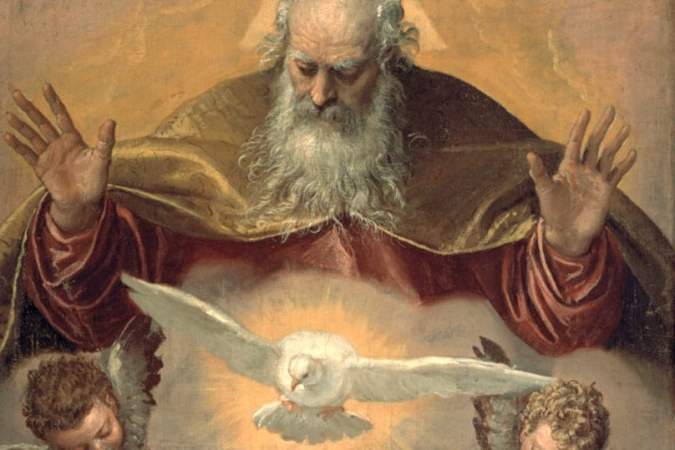
God with grey beard and dove

So to return to the question of whether the Divine Being is a white Anglo Saxon male, the answer is, clearly – doubtful. Long white beards aside, human kind has created the monotheistic God in his own image, and since King James and the other chroniclers of the good book were egotists, God has always been what psychologists call a ‘projection’.

This is fitting since much of the Universe is no more than an projection of the Universal consciousness. In this the Divine Feminine and Masculine principles interplay as a sort of fantasy dance – the gyrations of Kali and Shiva – who create and destroy in equal measure.

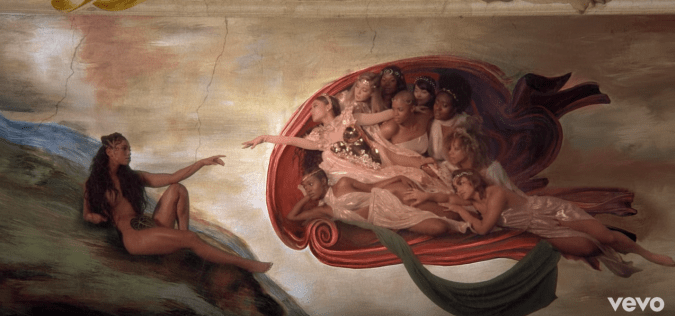
Eve and Godess

We depict any Godhead as male at our peril. If Jesus used the metaphor ‘Father’ it was not an implication of gender that was intended but the figure of the pro-generator. Jesus was fond of metaphors since mystics find the language of the market place appropriate to use to describe higher concepts. The parables he told contain metaphors which strongly describe unspeakable ideas in the sense that words are not enough. The return of the Prodigal Son to his father is describing the process of individuation within a maturing human being – the path which if followed leads to a union with the Divine. The ‘fat calf’ which we are all in danger of becoming during our easy lifestyles on earth, has to be slain and consumed.

When you eat remember this of me.

The errant son evolves to become a father. An errant daughter evolves to become a mother. An errant non-gender specific person becomes a vother*.

(*Using the principle of ‘ the infinite abundance of thought’ to make up words where missing – Vother is a neutral person.)

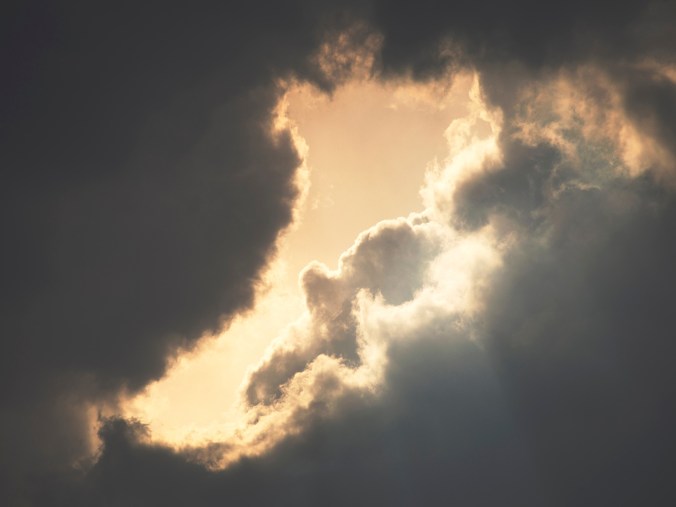
Light through clouds

So, no, God is not King, nor even a humble father. These were always crude metaphors, crudely carved by restrictive words and dualistic thought. The ancients and the religions of the Far East such as Buddhism and Hinduism, have no difficulty conjuring up ambiguous and contradictory Godheads who break and write as many rules as they can. Reality is not polarised, with one half favoured over the other. Neither does an authority figure ‘reign in heaven’ or anywhere else. Such prosaic concerns are respected by mystics but dismissed as irrelevant to higher task of the search for Divine Union.

Render unto Caesar the things that are Caesar’s;

The ( perhaps ) unpalatable truth to many, is that we the people are king, if only for a day or our humble fifteen minutes of fame. Even if only glimsped once in this lifetime it is my belief that;

Ours is the Kingdom, for ever and ever, Amen.

Whilst it is unfair to criticise the Pilgrim Fathers with the benefit of a good deal of hind sight, one has to wonder what would have happened if they had re-assessed their religion as well as their politics. If their aim in leaving Europe was to seperate from the percieved corruption of the Church of England they had an oppurtunity to wipe the slate of indoctrination clean completely. As unlikely as it was in 1620 for such a shift in belief, if the early church leaders had met and discussed universal outlooks with the native people and their holy men, they might have made some radical philosophical discoveries. At least it is possible for a present day comparison to be made.

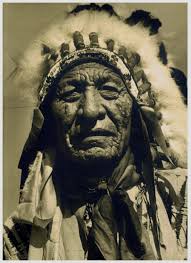
black elk

The Holy Man of the Oglala Sioux, Black Elk, is described as understand God in the following way;

‘Black Elk learned that whoever found a centre also became the centre of the universe and that is where God dwells…By placing himself at this centre which is simultaneously physical, spiritual and metaphorical, he encountered the Great Mysterious One…the centre of oneself becomes the centre of the universe. The centre of the earth and the centre of the person are one and the same.’

‘Finding All Things in God’ by Hans Gustafson published by Lutterworth Press

Legally Addicted

It would not be correct to say that you have ‘never smoked’. Even the most abstemious person has inhaled the exhaled smoke from a third party smoker. It is impossible not to, even with the European anti-smoking laws in place. It used to be a lot worse for non-smokers. I took a plane trip to Australia in the 1990’s when the cabin was divided between smokers and non-smokers. The row of non-smoking seats which I occupied, was directly in front of the smokers. Every exhalation sent a cloud of despair and chemicals into my lungs. The theory was that fresh air enters the cabin from the cockpit end and goes out at the back. But even if you were not enjoying the clouds coming from behind in a boundary seat, most of a plane’s air is recycled.

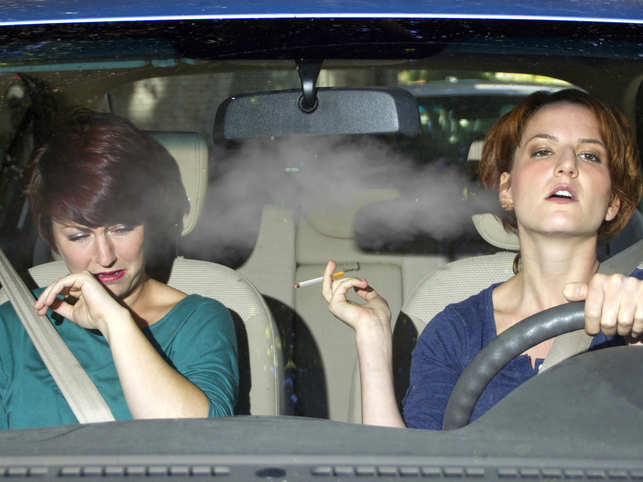
Smoke can even come out of your ears

passive-smoking in a car

If Jesus was alive, and perhaps he is, he would say, ‘smokers on the left and non-smokers on the right.’ But even his best intentions would not help non-smokers delay that long haul flight to heaven that we all eventually take.

I went to a restaurant in Southern Spain recently and chose to sit on the terrace over looking the sea. My satisfaction in finding a comfortable table was soon replaced by despair. A man came to the table next to mine, sat down, pulled out a packet of cigarettes and lit up.

I did the only thing I could do was to pick up my drink and bags and clumsily move indoors. I am a committed non-smoker, but it is not easy and the smokers rarely realise why you are moving. Smokers are generally indifferent to those who are devoted non-passive smokers. When they are the exchange goes like this, as it did last year between myself and a smoker in a restaurant.

‘Oh, you are eating. Do you mind if I sit here and smoke?’

Since the man was polite enough to ask I gave him the answer he had probably never heard.

‘Yes, I do mind.’

Despite a pronounced injury causing him to limp, to his credit, he heard me and staggered away.

I wasn’t quite sure what the eating had to do with anything. Do some people object to the carcinogenic smoke changing the taste of food. Are they really so fixed on the idea of protecting flavour from smoke rather than staying in good health?

It is not that I am unsympathetic to nicotine addicts. Despite the fact that no one is forced to smoke and most people have been and are made aware of the risks of smoking, it is not common knowledge that nicotine is probably the most addictive drug known, meaning more than heroine and cocaine.

Those with low will power and or looking for an instant ‘high’ or ‘release’ or ‘relax’ or whatever it is…are likely to experiment first with the drugs society deems legal.

Picture credit: iStock

Smoke comes out from a man's cigarette which pulls a lady

This despite the fact that for almost one hundred years, the toxicity of cigarettes has been known. Gone today are the Marlboro adverts featuring tough cowboys seated in tough Jeeps on tough roads with tough cowgirls peering quizzically at a nonchalantly balanced cigarette on the tough lower lip of the hero. In those days girls had not attended autopsy’s and viewed the hideously blackened lungs or the tough guys. Today those girls are our Doctors and they have little time for patients who self inflict disease, unless you have private health insurance of course.

There was a time when the National Health Service of the UK spent as much on trying to cure diseases caused by smoking as the chancellor of the exchequer reaped from taxes.

The coil of smoke from a lit cigarette is like the genii who haunted Aladdin. The spirit has escaped from the bottle or lamp and once out, is never going to return. If governments banned tobacco tomorrow the whole business would pass into the criminal underworld, blowing smoke rings around law enforcement as in the days of ‘prohibition’ in New York.

Education might appear to be a better way than legislating but what effect has that had? The citizens of Europe today have had ample information about the harm smoking tobacco causes. Even the packet is defiled with a gruesome medical photograph of the innards of a being with low will power. Still the addicted reach for the packet for the uplift which a chemical is telling them they need and still the governments collect the tax revenues from sales.

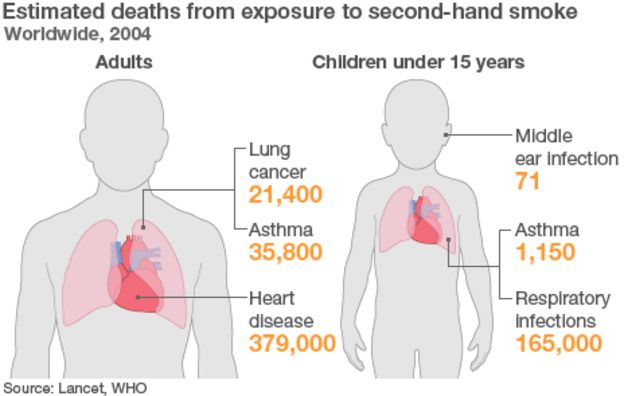
It is still the passive smokers like myself I feel sorry for. Should we really have to hold our breath as we walk behind a smoker in a crowded street. Who says that ‘public places’ are just fine for indulging in a habit you wouldn’t really want your very young children to know about, let alone inhale.

passive_smoking in children

Vote Me!

The day is approaching this December 2019 when the good citizens of the United Kingdom of Great Britain and Northern Ireland will have the opportunity to vote in a general election.

The outcome is being described as the most significant for a generation, so you would expect the process to be fair. Certainly, whoever wins is going to perch on the moral high ground of victory and fight off all criticism for a very long time indeed. Whether they will be entitled to be so smug, I suggest, is open to debate.

You see, I have a problem which is; how democratic is the voting system? My quandary as a voter, is that I approve of some of the policies of most of the parties. It should be explained that in the UK there is a left wing party, Labour and a right wing party, Conservative and Unionist. The middle ground is occupied by the Liberal Democrats and Greens. Other nationalist parties represent Wales and Northern Ireland and Scotland.

In the United States of America, the choice is more polarised between the Democrats and Republicans. Let us take this as an example. What if, as a US citizen, you decided that the choice was too small. Who do you vote for if you want to stop climate change but encourage industry? Who do you vote for if you want the state to pay for health care and a prosperous arms industry?

In a Spin About Voting?

Voting in Laundrymat

My point is that with polarised choices, there is no room for ambiguity that emerges from personal political perceptions and priorities. Worse still the politics of voting reduces to personality rather than policies.

Even in the UK, where the choice is greater, the democratic options are more confusing. Many voters now just spoil their ballot papers by writing ‘I don’t agree with any of this.’ They are being asked to vote for a leader they didn’t take part in selecting – unless they were the tiny minority of party members.

They might distrust all the candidates on offer and feel ambiguous about their policies.

Each party writes a manifesto prior to an election stating their political motives and means. This works to an extent but has the problem for some voters that their may be slipped in controversial motives that the voter does not want to happen. For instance, the Conservatives slipped in having a referendum on continued membership of the European Union. Suddenly it became an issue even though the majority did not think it worth consideration.

Worse still, when parties fail to win a majority in elections, coalitions have to be formed. Italy, Spain, possibly the UK next week, have this problem. Two parties may come together for the sake of forming a government at the price of compromise on their manifestos.

The public will have no choice over how these mixed manifestos will be prioritised. Which policies and method will be forgotten or ignored and which prioritised? Coalition manifestos are not published before an election if considered at all. This can lead to unrealistic expectations by voters when coalition governments are formed, as in the Liberal and Conservative Government in this decade. The direction of the ship will be decided by the Captain and officers, not the crew and certainly not the passengers.

No provisional consideration is given to coalition prior to an election as all parties have to perform the pretence that they are going to win even if it is clear to all that they will not.

The dangerous consequence of this for democracy, that occurs all too often, is that a minority party gains disproportionate power by owning the swing votes. This happened in the present Conservative government who allied with the Democratic Ulster Party and much of the muddle of mixed motives over Brexit has resulted.

In recent elections we have seen and or suspected that the over emphasis on the personality of candidates has given leverage to foreign governments and fake or real ‘whistle blowers’ and ‘news vendors’ questioning the reputations and ethical principles of candidates or even parties. Democracy as we know it is easily undermined by misinformation, view the Nazi propaganda news in 1930’s Germany, if you think this is a new phenomena.

Even the date of an election day can be manipulated to support a particular party in a manner which is clearly not in the interest of fairness. In the present UK election the Conservative government chose the day in which the students from Universities will end term and be returning home for Christmas. Informed young voters are not likely to support the Tories even though the election and it’s issues mostly affects their generation.

Young Voters in the USA Choose Not to Vote

  V I Dont Vote Badges.

Even such a consideration as ‘is it raining’ has been measured to be significant on election days. Sending people to village halls to scribble on a piece of paper has to be reviewed as the majority of citizens in the UK rarely turn out to vote. Some living abroad for over 15 years lose their right to vote.

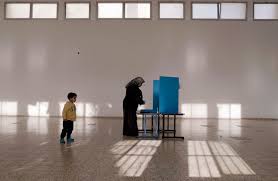
Lone Voter

Voting Lone Voter

These then, are some of the problems for Democracy. Some people say, ‘well that’s the system we have got’ or ‘it’s the best of a bad lot’ but you have to wonder if the country that prides itself in it’s democratic systems is not kidding itself, it’s citizens and the world.

I am not suggesting that Democracy should be replaced with the pedantic and often corrupt systems of power like Communism or Autocracy. I am suggesting that with the aid of computers and the internet, a more democratic process is available to elect representatives. This is my idea.

Firstly, the party system is out. The in-fighting of politicians instead of their countries best interest, is something most voters are tired of.

Instead, all candidates will put themselves up for election as ‘Independents’. Radical, yes, but read on because they can form parties after election, not before.

They will state their personal political views by placing ten stars against a list of important areas of government. This will be shown to voters as something like this ;

Education *

Health **

Defence ***

Transport *

Law and Order **

Business and Industry *

Farming and Fisheries *

Environment    nil stars

Social Housing and Homelessness    nil stars

In this list each aspect of legislation and distribution of taxes is prioritised by the candidate, according to their own personal views. They are not under any party pressure to support policies with which they feel awkward about or strongly disagree. They can be honest; a quality in politicians which many voters express their suspicion about.

The candidate has, say, ten stars with which to indicate how which issues they prioritise and the amount of funding they would give in comparison to others.

Now here’s the clever part. Each citizen is given the chance to indicate their priorities and how strongly they feel funding should be allocated to each on their ballot papers. Instead of one cross or tick for a party – which in the twenty first century has to seen as a crude political choice – each voter has the same number of stars as the candidate.

The last piece of this process would have to be constructed from new but it’s not impossible. What I am envisaging is on-line voting from a phone, personal or public computer. In an age when personal internet banking, shopping, even gambling! – is managed with a high degree of security and reliability, it must be possible to create a secure on-line voting application.

Ten issues are listed either as broad areas for consideration or narrow ones. The voter can either ignore these as being worthy of state support ( such as health care in the USA) or indicate a need for state intervention. The strength of these feelings can be indicated by allocating some of the ten stars used to vote with.

It will be impossible to use up more than ten stars or whatever number is allocated to each citizen, but ten is an easy number for most people. Their choice can be re-adjusted until the voter is ready before selecting the ‘VOTE’ button.

For a population familiar with the internet, voting will be accessible, timely, considered, representative and accurately describing personal views.

The final phase of the voting process is for computers to match exactly the views of voters to those of independent politicians. It is already established what the views of the candidates are and matching a set number of candidates (say 300 ) to the views of the citizen public, will be doable for a computer.

The result will be a selection of representatives who will accept office and be fairly representative of public opinion. Being politicians they will almost certainly form party cliques (birds of a feather flock together) but at least the system by which they obtained power, will have been representative.

This could be a sea change for how populations choose those who represents them. With the emphasis moved to policies and issues rather than personalities and power politics, a higher level of honesty and fairness will be achieved.

We have the technology already to achieve this. We just need the thinkers to describe how it can be done – as I have just done. Vote me!

Fifty Shades of Green

Since 1990 the world has produced as much carbon dioxide in the atmosphere as in all the previous years. The world has a problem from the unrestrained burning of fossil fuels for average temperatures are rising despite the environmental strategies of government and international agreements.

If you replaced one power station burning fossil fuels everyday until 2100 with 1500 wind turbines you might stop the problem. As this is unlikely to happen, the extinction of current civilisation has begun. New ways of removing carbon from the atmosphere is the only technology that will reverse this process. Technology at present has no such solution.

Why are is technology failing us? Consider the partial solution of transport powered by electricity.

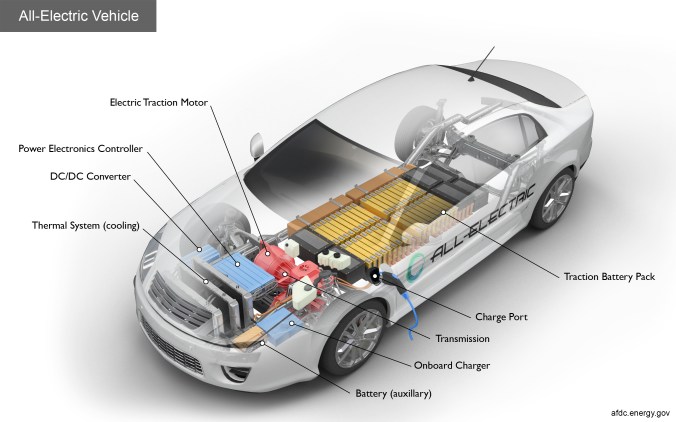
electric car workings

I have to expose the myth that electric vehicles are good for the environment.

This may come as a shock to those who have invested in a hybrid car so reach for a box of tissues as it gets worse.

Perhaps I am being a little harsh on what is a welcome prospect for the future of personal transport but it has to be said. I do not anticipate that the luxury of personal transport is going to go away in the future what ever form it will take. Certainly populations in countries like China, India and Africa feel resentment when those countries who have created the problem require them to forgo the benefits of owning a car.

Efforts to eulogise public transport as the future are futile because people know how good it is to control their own transport. This is not to say that public transport has no place in the future. On the contrary, it should be spearheading the technology that drives vehicles without causing air pollution and greenhouse gases. Sadly in most modern cities it is not. Taxis, buses and trains are still burning fossil fuel in all but the most innovative urban centres.

Decades ago, buses in Amsterdam were running on compressed gas. Cylinders like divers use were positioned under the floor of the bus and charged with compressed air overnight. During the day, the engine turned over using the kinetic energy from the compressed air. The discharge from the exhaust was of course pure air. What happened to this idea, I do not know, but it shows how many technological advances have been left in the urban gutter.

Part of the drive to promote electric vehicles, has been the demonisation of cars using the infernal combustion engine. Whilst these engines are clearly a remnant of the past, they exist and continue to be mass produced. The transition to the new technologies needs to be managed. Most government strategies however, are well intentioned but ineffective.

For instance, in Spain the police write to the owners of cars which are ten years old or above and suggest they get a petrol engine car. Whilst we must admire the green agenda of the government the manner in which it is being promoted is clearly misguided. Firstly, any such agenda should be European wide and not just promoted by one country. The desired outcome should be measured and confirmed as achieving what is intended. Ending the life of any vehicle after just ten years is wasteful because one third of the energy used by a vehicle in its’ lifetime is used in the manufacturing process. So whatever the motive power, cars should be designed to be in use for several decades, if they are to be considered as green.

The impasse that scientists have met when designing batteries for cars is yet another inhibitor to any mass take up of electric motive power. I own an electric bicycle and after four years I had to buy a new battery at about one quarter of the cost of the original bicycle and battery. Present day lithium ion batteries require rare earth elements that will only become more expensive to obtain in the future. Their mining and processing in African states is not environmentally managed. Some electric cars are sold without the batteries as they are provided with the car under a leasehold arrangement. The cost of the battery for my bicycle per mile is about the same as if I had a motor bike and had been buying petrol. I expect electric cars which are touted as being run for a few pence per mile are actually more expensive to run than vehicles running on fossil fuels. Batteries do not last as long as the Duracell bunny would have you believe.

It’s the same lie that is used to promote nuclear power stations as providers of cheap electricity. It is cheap if you discount the astronomical cost of building and decommissioning the power stations, costs which normally governments pay presumably in order to promote the industry and hidden agendas of manufacturing weapon grade uranium. The political games between Iran and North Korea and the USA are a current example of these smoke and mirror politics in which no citizen is the winner.

Faith in the ‘electric car’ as the future of personal transport is misguided for this reason. A car that needs a battery is still being run on fossil fuel, just one step removed. I refer to oil, gas and coal fired power stations that produce the majority of the electricity in most European countries. A car which is plugged into a national grid, is merely acquiring energy made from burning fossil fuels.

If a householder has a contract with an electricity supplier claiming to provide electricity from renewable sources only, then that would be the ideal. But as things stand, local and national governments are in the process of providing charging points right across their respective countries. They fail to see the lesson from the beginning of the twentieth century where electric cars could not compete with the new internal combustion engine when it came to range of travel. It was then and is still, a problem.

As I write this the battery for my bicycle is being charged from the photo voltaic panels attached to my house. Not only dirty electricity but the whole idea of ‘national grids’ is wasteful and expensive. In the future, electricity will be generated locally and stored in ‘gravity batteries’ and similar solutions.

Hybrid electric vehicles are still causing pollution and therefore not a solution for the zero carbon future. Totally electric vehicles being recharged from recharge points in towns is impractical and the hunt for even a parking space is proof of that. Charging by induction when stationary for long periods is possible but waiting times need to be considerable as the process is slow. Roads, car parks and even railway tracks with photo voltaic cells as the road structure and surface will produce electricity locally even when the sun is not shining but charging batteries from these sources is just impractical as already stated.

There is and has been for decades, a better alternative to battery driven vehicles. The hybrid cars being manufactured and subsidised by governments today require a grid of charging points. Should the very large cost of these be paid or subsidised by governments? Who ethically should pay? Those rich enough to be able to afford current electric cars or tax payers who are going to get little or no return.

The question is similar to the quandary faced by consumers in the 1980’s when Video Recorders were appearing in the shops. Which is better, VHS or Betamax? Although the latter was a better quality product, VHS won.

So to all those early adopters looking at battery driven vehicles, I suggest they hold on for the next generation of hydrogen fuel cell powered cars. The energy from these hydrogen is green and relatively very cheap. Used in conjunction with the high torque electric motors like those developed by Tesla and motor racing engineers, these vehicles will provide every comfort and convenience currently enjoyed by the generation who were brought up with fossil fuels.

electric car hydrogen-fuel cell

As has happened many times before with new technology the wrong decisions (for the nation and environment) are made by governments to promote agendas popular with voters instead of just letting the best patent win. So my advice is keep your present car on the road for as long as you can. In five to ten years, new technology will be available at a reasonable price. There will be cars designed to last a whole life with little maintenance. Just don’t expect to be allowed to drive it.

That pleasure will be a thing of the past as well!

The Peaceful Warrior

‘Immortality has to be earned’

One of the myths of living in the twenty first century is that we can strive less and less, to obtain more and more. The factories built by our forefathers spawned this expectation. But there are many fruits of labour and only one is the comfortable life styles that accompany industrialisation. Another is spiritual fulfilment as a human being, involving a strenuous process of self development, unaided by quick fixes.

The industrialised society has brought people from the fields and housed them in cities where they are fed, entertained and provided with work. In a profane society, this is the deal. There is nothing else we are told, and yet when humans are presented with the bleakness of city life, they tend to aspire to the sacred, non-tangible and unobtainable.

The wrapper on a pack of butter boasts a picture of a rural idyll, the horn of cornucopia from which all goodness flows. In the background is a snow capped mountain, the place we might dream where we can find some sort of spiritual cornucopia as well.

But ascending spiritual mountains is not for the faint hearted. Stories of spiritual aspirants abound in all cultures and they usually go one of three ways. Either they become ascetic and turn to skin and bones, or they indulge and become addicted to luxury, or they find a central way – what Guatama Buddha called ‘the Middle Way’. Whichever track you are start, it is a commitment to struggle every minute of the day. Like the ‘dead man’s handle’ on a train, when pressure is released the journey comes to a sudden halt.

picture credit alamy.com

cat from alamy dot com

The individual on a spiritual path is perilously under constant threat of rolling backwards, should they falter in their attention. They therefore need the concentration of a cat watching a mouse hole.

The path of a soldier is something few get the opportunity to experience and perhaps few would want to. The price of failure for warriors is extinction by either bad luck, bad planning or an invincible enemy. The click of a twig in a wood at night, the faint glow of a cigarette or a moment of inattention might trigger what they call, shock and awe.

Soldiers sign up to take such fatal risks. They train constantly to achieve a high level of physical and psychological advantage over their foes. Soldiers can stand still on parade for extended periods because they are centred in their attention, not their dreams. They are standing to ‘attention’, that is alert.

This level of concentration is also fundamental for those on any spiritual path. The difference is that the spiritual strive to attain an inner peace, not an outer war. They do this by mounting an ‘inner war’ – the true meaning of ‘jihad’.

In Japan and China there have long been traditions of ‘warrior monks’ who use martial training to hone their spiritual and warrior skills. There is no contradiction because being at peace and being at war are just two extremes of the same experience. The experience of total concentration and control manifests as being centred in one place and in this moment transcendence can take over. The archer hits the bulls eye with the eyes closed – read ‘Zen and the Art of Archery’.

When our emotional, physical and psychological states experience synchronicity, we approach the highest state of being and it approaches us with even greater clarity.

Every second of every day, a martial artist is fully aware, even in sleep. Senses become heightened to the degree that even an ant walking on the path of a warrior is circuited and blessed with a prayer. By occupying the space in the ‘centre of the storm’, the peaceful warrior is immutable.

There is a story of a Zen monk sitting in a tall building in Japan as an earth quake shakes the city. The other people in the room run for the door in a state of high panic. Their instincts and emotions have taken control of their actions. The monk however continues to sit motionless. For him the danger and panic are states that will pass. For the other people the danger is something to be countered as best they are able, carried along in a state of uncontrolled terror.

If the building was about to collapse, they would all die, including the monk, but who would have died with the dignity of being in perfect control?

With this example we can see that life is not about achieving old age, or how sociable you have been. Animal families do this and in most cases do it better.

Although gifted with extraordinary skills, animals thrive through good fortune and persistence in acquiring food, a mate and a place to sleep. Being concentrated on these becomes their fatal flaw. Habitual actions that are learnt and used by their predators to trap them. If you have learnt to fly, the spider is already spinning her web for you.

In Zen and many martial arts, there are higher levels of skill than physical prowess. The skill of the Zen master or Sensei in a Dojo, is to out think the thinker, to perform a challenge that is outside the normal. The patterns which ordinary humans follow are the traps which spiritual teachers use to shift consciousness.

This is the mechanism of the Koan which poses an impossible question. To the casual mind, a question begs an answer. That is the way the intellect has been trained. That is the sticky web. This is how it feels…

What is the sound of one hand clapping?

In peace and in war, success demands we take the path ‘least expected’. It may make us look foolish or in other ways, unwise. Gaining criticism causes much the same inner confusion as gaining praise. Thinking and moving or not-thinking and not-moving should be juggled at the highest strategic level. The guidance of the peaceful warrior comes from possibilities and opportunities which may or may not, reveal paradise in the distant future. Infinite possibles are considered and assessed simultaneously, as in the warriors game of multi-dimensional chess.

The two most important spiritual ‘powers’ (in the language of the superhero gods and goddesses) are the ‘iron grip’ and ‘unpredictability’. The earth is the perfect environment for a training ground for these qualities. For after death the soul needs both in as large a dose as possible to survive the experience in continuity between a life lived on earth and the afterlife. Without a physical body our invincible hold on our intention becomes the means of giving direction to our Soul, the eternal centre of our consciousness.

By being unpredictable in this world we give ourselves the means to counter the traps that await us…the traps that are described in such accounts as ‘Pilgrims Progress’ by John Bunyon. We must ready ourselves to be a joker, an iron man…all of those super heroes that haunt the popular comic books and the imagination of the young warriors about to engage in the eternal, yet ultimately, peaceful war.