Hammering in the Screw

Readers of this blog will know that the author is fascinated by the science and art of problem solving. Problem solving is a daily occurrence and yet is rarely taught or even considered as a subject worthy of study.

Problem Solution Success

The brain can acquire an commanding attitude that sometimes dismisses objectifying a problem. Either from previous experience or acquired behaviour – a solution ‘comes to mind’ that is promoted without question. This idea is regarded and defended as the only possible solution and perceived as unquestionably better to any alternative.

Let us take an example from the world of sociology, ethics, law, health and politics. The example I am using is ‘drugs’.

The ‘normal’ response to the problems created by citizens who take drugs, has been for the State to make them illegal.

Avid problem solvers will already have noticed that when the problem has a stack of layers already listed;

Social stability

Economics and Taxation

Ethics and Religion

Law

Health

Politics

– then the solution has to apply at every level of the problem.

It is not difficult to appreciate that the ‘make it illegal’ or ‘bang-em-up’ solution, only addresses one layer of the problems associated with drug taking.

In the 1930’s recession in North America a law against the consumption of alcohol was introduced known as ‘prohibition’. We are probably all familiar with the unintended consequences of this law in handing over the production and supply of alcohol into the hands of criminals. The government lost the taxes associated with the sale of alcohol and little benefit was gained by anyone except the criminal gangs. The law was repealed because it didn’t solve the problem – if there ever was a defined problem!

But even today the Indian States of Bihar, Gujarat, Bagaland are today places where alcohol is banned. Despite this alcohol consumption in India has risen 72.5%* in the last twenty years (*source Wikipedia).

In the United Kingdom in 1971 an act of parliament was passed called the Misuse of Drugs Act. This was heralded as a so called ‘war on drugs’. But because the problem was only considered at one level, the laws have failed to the extent that contemporary analysts are proposing more inclusive solutions to the problem.

Instead of examining these alternative solutions the more general point here is that they need to be wide ranging in their origins and effect. Just taking a narrow attitude such a s ‘law making’ is ineffective.

Therefore a problem solver might examine ‘what is a drug?’ first. In the religion of Islam, a drug is categorised as an ‘intoxicant’ and believers are forbidden to become ‘intoxicated’. This is clever because it does not attempt to list all drugs that are harmful, in the present and future, (as lawyers did in the UK and other Western countries) – it just bans the consequences of any drug. It does not even define the point at which a person becomes ‘intoxicated’. The clerics and interpreters of Sharia law have erred towards ‘zero tolerance’ – and gets a bad press in liberal democracies.

However, it has to be recognised that religious laws can be considerably more effective than  criminal law and overcome the problems associated with criminalising drug addicts.

But even this strand of a solution to drug taking is not completely effective; some Muslims drink alcohol. Therefore a problem solver might attempt to define what degree of success in reducing the consumption of drugs is being aimed at. In a competitive world it is natural to attempt a one hundred per cent success rate, but a reality check is usually needed on what can really be achieved. Is a person ‘intoxicated’ after one beer?

Like all ‘genies’ and malign inventions – once set free they can never be completely put back into the bottle. Perhaps for this reason, in western liberal democracies at least, an increasing level of tolerance is being given to drug use and users.

There is clearly a sliding scale defining drugs, with mild drug taking at one end (coffee, tea, medicines) to hard drug taking at the other (heroine, cocaine, alcohol). Societies assess the positive effects of drugs against the negative such as in the production of medicines. Desired consequences of medicinal drugs are balanced against the side-effects, some of which may be worse than the symptoms of the problem!

Some European countries such as Portugal are treating drug addicts as patients with an illness rather than criminals who will change as a result of punishment. The statistics on the success rates between the two approaches would make interesting comparison. What is of interest for this essay, is how a change of direction and depth in the problem solving process, may be more successful than the previous direction and depth.

Clearly the politicians and law makers (with an knowledge of changing social attitudes) need to be on board with the idea of such changes , as do health and social workers and the criminal justice system.

Any lasting solution has to know what it is trying to achieve and how to measure that goal. It must also take into account how to change and how to control the various strands of the solution involving the multiple agencies within society.

Many people in power like to think they know the solution by some sort of divine gift of seer-ship. This makes them blind to whether the measures they propose will work and by what measure they can be considered effective in their goal.

Reluctance to change is familiar in problem solving and is characterised as a person engaged in digging a hole in the wrong place. When the error is pointed out ‘you won’t find water here mate!’ the digger just digs deeper.

Or when the carpenter only has one tool in the workshop, this tool is used for anything that it can hit. No question is asked whether the metal thing sticking up is a nail or a screw. The problem is a ‘metal thing’ and the solution is the only tool in the workshop.

This type of thinking is clearly insane when viewed analytically – and yet whole societies and national systems of government appear to be digging holes deeper and hitting screws with hammers.

What do you think is the solution?

Problem Solving

English-ish


Now I want you all to come and sit in the story time circle children. Come along now! Timothy! Don’t scrape your chair. No, it is not a Roman chariot crossing the finishing line made of the bodies of slaves, it’s just a chair. That’s right. Thank you boys and girls. Sitting up straaaaaight! Good.

Now this morning we are going to learn some new words. This is part of our Easy English Learning Year 2 book exercise 11. No Jonathan you don’t need your book. Well because it’s a simple lesson so you don’t need your book.

So listening…my arm is up Peter! What can we say to make the sentence ‘the cat sat on the mat’ sound better?

No Simon, dead cats do not sit on mats. Well they sort of fall over – but that is not the point – it is not nice to think of dead cats. No please don’t cry Susan. There isn’t really a dead cat, nor a real cat at all. It’s just something we are trying to talk about and the boys are being silly.

So now, how can we make ‘the cat sat on the mat’ a more interesting thing to talk about?

No ideas? Well has anyone heard their Mummy or Daddy or Carer say ‘to be honest’ before a sentence? You all have! Except you Carol…because your Daddy is in prison. Well that doesn’t mean he is not honest some of the time. Susan , stop crying now and go and help Carol stop crying. And whilst that is happening look this way; and I want someone to try out my suggestion. Wendy…how about you.

Wendy ‘To be honest, the cat sat on the mat.’

That’s really good, thank you Wendy. Do you see class how by saying ‘to be honest’ the meaning of the short sentence sounds more likely to be true than not true? Yes Giles, it might not be true at all. You think there might not be a cat…or a mat. But I am saying in this case there is. All RIGHT! Sorry I didn’t mean to shout. Let me have a hanky please Carol. Thank you.

So, now we can say, ‘to be honest’ in front of any sentence can’t we children? Just like our Mummies and Daddies and Carers do, and don’t they sound clever people when they do? Yes, of course they do and they sound really, well, honest.

Well sometimes grown ups are not honest so by saying ‘to be honest’ makes people believe what they say, John. No, not just amongst Gangsters. Nor criminals like Carol’s Dad. Nor corrupt officials or members of parliament. Look I don’t know why I am saying this. To be honest I want you all to listen carefully. See what I just did to get your attention? Yes, clever wasn’t it?

So, now our simple sentence has become longer.

To be honest the cat sat on the mat.

Who is clever enough to think how we can make this sentence more true sounding? You can Penny? Have a go then and all listening to Penny, class please.

Penny: To be honest, the cat actually sat on the mat.

Well done Penny. How did you know that? Your Mum actually says actually a lot actually? That’s clever of her.

And can you see what Penny has taught us children? Timothy don’t lean back on your chair like that. It’s dangerous. Yes, it is actually dangerous, actually.

So, what other word can we add to our simple sentence?

Your hand was up first Annabel…yes you may be excused but be quick! Anyone else? Simon?

Simon ‘So, to be honest, the cat actually sat on the mat,

actually.’

Good Simon. I don’t think we need two actual actually’s in the same sentence actually…what is it Timothy, put your hand down. Oh, did I just say three actually’s, twice? Well, that’s the good thing about our English lesson today. No one is going to notice how many times you say ‘So’ and ‘to be honest’ and ‘actually’ because everyone is saying these words so many times that it’s difficult to notice them any more.

Yes, even an English teacher like me doesn’t notice them Simon, because they are such useful words and expressions. Grown ups think it is clever to use them so I think you children should learn to say them as well.

No it is not ‘inane padding’ Peter. Who did you hear say that? Your Dad is an English teacher…yes I already know that actually…because he taught me when I was in big school. OK, call it secondary education if you want Peter. I am not going to argue. Well, since you ask, I am trying to make my speech simple for those who are not as fast as you at English, that’s why. Now can we review what we have learnt in our work books? Go back to your tables and open your English books to a new page. Slowly Stephen, it’s not a race! And as you are getting ready I am writing our new improved sentence on the board and I want you to copy it.

Peter. You are not writing? Where is your pen and book? It’s not drivel I assure you. Well there is nothing wrong with ‘the cat sat on the mat’ it’s just that in 2019 it’s a bit old fashioned. It’s much more normal to say, to be honest at the beginning. Even when you are an honest person, yes, even then because the other person might not know how honest you might be. No it’s not an absolute proof of honesty. No, I don’t think I would buy a used car from someone saying this, they could be dishonest just like any other person. It’s just an expression. Yes, possibly an expression that is not true but when it comes to cats and mats it normally, in fact most likely, is true. And that is also why we say ‘actually’ as well, yes. We actually do. We really really really do say actually.

When you do actually get to University to study English, you can write to me in my retirement home and tell me how wrong I was today. Until then Peter I want you to write the word actually on the last page of your exercise book one hundred times.

And the rest of you can go now. No running!

Peter, start actually writing actually.

Every Breath You Take

For about eight years now I have been driving a 2.2 litre diesel estate Toyota. The ‘Top Gear’ television presenters drove a selection of similar cars across Europe to see which went the furthest. Jeremy Clarkson found that his diesel Jag used so little fuel that he ran the air-con and anything else he could to use more fuel. Large cars have space for large fuel tanks, so their range can be phenomenal. Mine will drive from southern Spain to the north coast of Spain without stopping – a journey of 1000km.

Last week I hired an ultra small Toyota Aygo car in the UK; a nice little automatic with a petrol engine. When I came to fill up the tank I was disappointed to find that it had travelled about 45mpg whereas my trustee diesel gives me over 55 mpg.

So why are diesel cars getting such a bad press at the moment? Diesel engines were preferred in 1997 by the European Union as a response to the Tokyo Climate Change Protocol. These engines produce on average 120g of CO2 per km whilst petrol engines reach 200g of CO2 per km. This is because diesel engines cold burn and so use less fuel. These figures do not include the energy used to make and dispose of the vehicle most of which will come from fossil fuels. It makes sense to make cars that last several decades in order to stretch out the environmental impact of production and disposal.

But the problems with just the emissions from internal combustion engines, has been re-defined. Whilst CO2 emissions must continue to be reduced, it has been recognised that the toxic gases and particulates from engines are causing a serious health risk – especially for children.

So when you examine these two types of engines, the toxic gas produced by older diesel cars is Nitrogen Oxide, in various compounds. Petrol cars can reduce this with a catalytic converter whilst diesel cars require particulate filters that are regularly maintained. If they are maintained then the NO gases gases from diesel cars can be reduced by 90%.

Governments have been victims of their own ‘political’ thinking; putting problems into compartments rather than viewing the whole issue and how each aspect of it interconnects.

Complexity challenges even those minds with an expensive private education (i.e. politicians). The lazy solution is to reduce the problem to something people can understand – especially voters.

The bottom line is that neither petrol nor diesel engines should be in use in the 21st century. There should already be ‘electric only’ zones in all urban centres with buses and taxis leading the way.

Cars do not need to be scrapped on account of their motive power source becoming a problem. New zero carbon, zero particulate engines can be retro-fitted – even into fondly maintained ‘classic’ cars. Friends of the Earth believe we need to achieve this in less than a decade, whilst the UK government thinks 2050 acceptable.

When I was a student in London in the 1970’s, I hung a sign under my bicycle saddle with the words;

No Noise, No Fumes’

I didn’t buy a car until I was 30. Was I ahead of my time? No.

Fritchie Early Electric Car

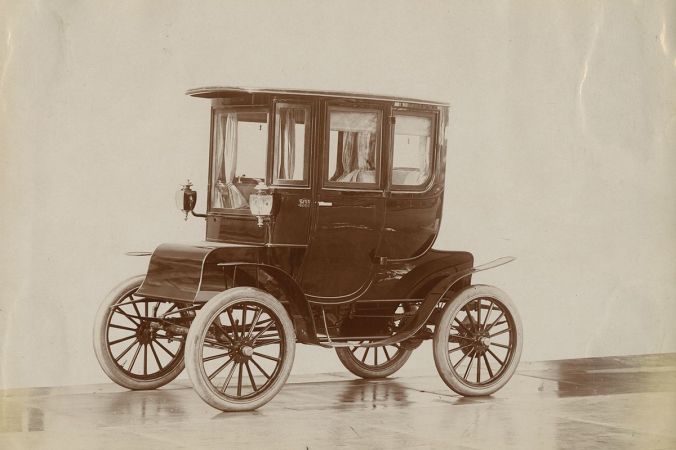
Electric cars had been the brain child of inventors in the 1830s. By 1900, New York City had a fleet of electric taxis. The electric car designed by an American, Oliver Fritchie, could travel 100 miles between charges but it could not compete with the Model T Ford on price or range. The rest, as they say, is history, because in those times governments were oblivious to the consequential problem they were leaving their ancestors – us.

1970’s Electric Car – with only a 40 mile range and apparently you had to stand on the roof.

1974 Electric Car

Today governments spend considerable time and resources in a phoney ‘war’ against terrorism. ‘Phoney’ because conventional troops cannot overcome guerilla tactics – as was proved to be the case in Northern Ireland.

The massive expenditure of public money on this ‘war’ is justified because terrorism grabs the imagination and emotions of voters – by it’s very nature as a font of repeated horrors.

You might be forgiven for wondering which is the greater issue – millions of citizens  (especially the young) dying of lung related diseases caused by internal combustion engines or citizens dying in terrorist related incidents?

When that question is considered statistically – resources should be allocated to each problem in proportion to amount of human misery and suffering it generates. They should not be allocated on the basis of which problem gets most votes and the most media coverage.

Regrettably terrorist acts will generally sell more newspapers than children dying silently in hospitals of lung diseases or adults with heart problems.

Newspapers  inflict the final blow of horror and despair on behalf of the terrorists into the hearts and minds of  victimised populations. Margaret Thatcher knew this and ordered a policy of non-reporting of terror related stories in Northern Ireland.

To his credit, the Mayor of London, Sadiq Khan, has identified the toxic air of his city as a very real and serious contemporary problem. He has made small steps to reduce it – such as charging motorists of the most polluting vehicles to enter the centre of London. The European guidelines on air pollution were exceeded within the first two months in 2018 in London. Is this another reason for the UK to leave Europe? No more awkward tests of the atmosphere in our cities?

When the United Kingdom first became a member of the European Union one of the directives from the European Parliament was for the UK to clean up it’s bathing beaches.

This was duly ignored for the first year. Why should the UK not continue to send it’s children to play on filthy polluted beaches? But the following year the EU reminded the UK of it’s obligation in law. The UK reluctantly (one expects) began to clean up it’s inshore waters; beaches are now awarded Blue Flags for water quality and facilities.

Now in 2019 the River Thames in London has been transformed from a toxic environment in which nothing could live, into a clean river with fish and mammals such as seals – on view from the Houses of Parliament.

So why now should clean air be such an difficult objective for successive governments?

If the problem is short term planning on account of the four year term of office for elected representatives in parliament – then perhaps politicians need to start to deal with the complexity of uniting long term and short term objectives.

The current air pollution problems in the UK are not local – just look at Mombai and Beijing. There has to be consideration – however complex- on how to integrate solutions within complementary European and global strategies and policies.

Clean air has to be one of the most fundamental of human rights. If we cannot wish it on ourselves, how is it likely to ever happen for our long suffering environment?

In the Beginning

Before the Earth was born and the great stars were in the sky, there was a traveller.

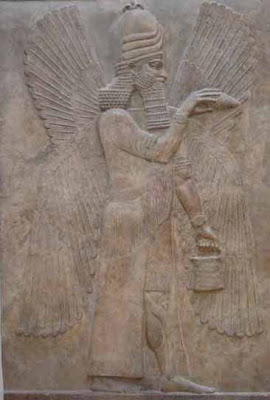
His name was Enki and he was what people now call a ‘god’ although this is not really the case. He is a being, like any other with an idea of himself as a traveller, warrior and hunter. He takes pleasure in his life and meeting other similar beings with whom he passes the time as he pleases.

Sumerian – Enki

Enki

This ‘entity’ or ‘god’ is no more ‘powerful’ than a snail that crawls upon the earth in our present day. For even a snail guards it’s own identity with pride – in the way of any ‘god’.

The ‘gods’ are therefore not interested or indeed able to alter the course of the consciousness of other centres of consciousness that coalesce in identical or alternative dimensions.

So it was that in the very first stages of the formation of a universe in the dimension known as ‘matter’ – Enki had to develop a means of travel – for in the material world it is necessary to move molecule by molecule and the number of these is infinitely great.

He built for himself a sophisticated ‘cocoon’ that enveloped his consciousness. He took the dimensions of this cocoon from nature. So it was that geometry and proportion were made to coalesce in the material world for the first time that was not spontaneous and without ‘will’.

At the moment of his arrival in this dimension – there were already animals and spirits in the form of amalgamated living beings living and parading on the planet he chose. This planet was itself a living being known as ‘Gaia’ and welcomed new entities for the diversity of genetic form that they brought. Enki lived on his own in a large swathe of trees that covered mountains and continents. He plucked animals and birds from their nests at night when his ‘cocoon’ craved replenishment. It was necessary for him to explore new regions and so he set off one day on a journey.

His journey took him out of the forest and across Oceans until he came to a place around which everything spun. He dipped his huge hand into the empty space that was there and pulled out enormous volumes of light and dust that he flung away. At the same time he sang the heavenly scale of one octave and at each pure note, the dust held itself together to form a perfect sphere. These spheres remain even today and are visible travelling in a line around the centre of all mass, known as the Sun.

So Enki worked and at the end of his travails he sat and rested, this being the seventh day. Then he set about creating a sphere to travel around Gaia to keep her strong and stable.

And for the last part of this heavely symphony, Enki set about creating a creature using just the clay at his feet. This creature was was modelled much on Enki’s own proportions and power. But he wanted this being to have more than just strength. He wanted it to have beauty, so he created a smaller replica using the mysterious proportions that govern music and harmony in every dimension that exists in the physical world.

The two being’s were later named Adam and Eve and from this moment on, Gaia had to support the actions of Adam and Eve, based on their desires.

Enki never made himself known to his creations but slipped back to the great forest from which he came. When he needed to know what was occurring in the world that he had made, he connected with the seven planets. Each one resonated at an exact frequency from which the consciousness of minor ‘gods’ travelled. These minor ‘gods’ were not permitted to interfere with the activities of Adam and Eve and their progeny but tasked merely as observers. However as the interest of Enki moved to other dimensions, the minor ‘gods’ took pleasure in interfering. They would even present themselves in apparent material form and give their advice – un-requested more often – on how a certain aspect of a mortals life should proceed.

Naturally as a result of these unimaginable encounters, the mortals began to study their ‘protectors’ and gave them names – which are the names of the seven planets to this day. The mortals concentrated so hard on them that they began to offer sacrifices of mineral, plant and animal form.

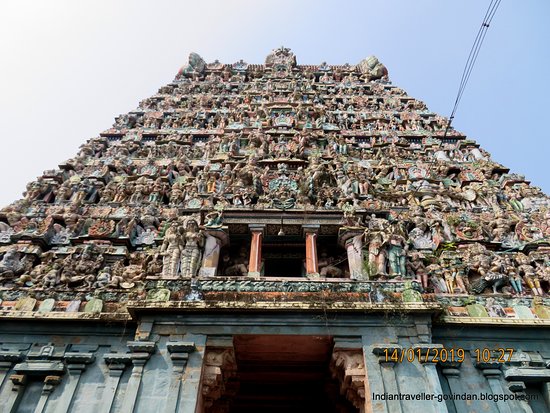
TempleGopuramMars temple-gopuram-mars

They also built resplendent temple’s that followed the divine proportions of their own bodies. In them they placed replicas of themselves as minor ‘gods’ which the eponymous observers could inhabit at will and in doing so occupy both an ‘observing’ position and a surreptitious means to influence mortal proceedings and outcomes.

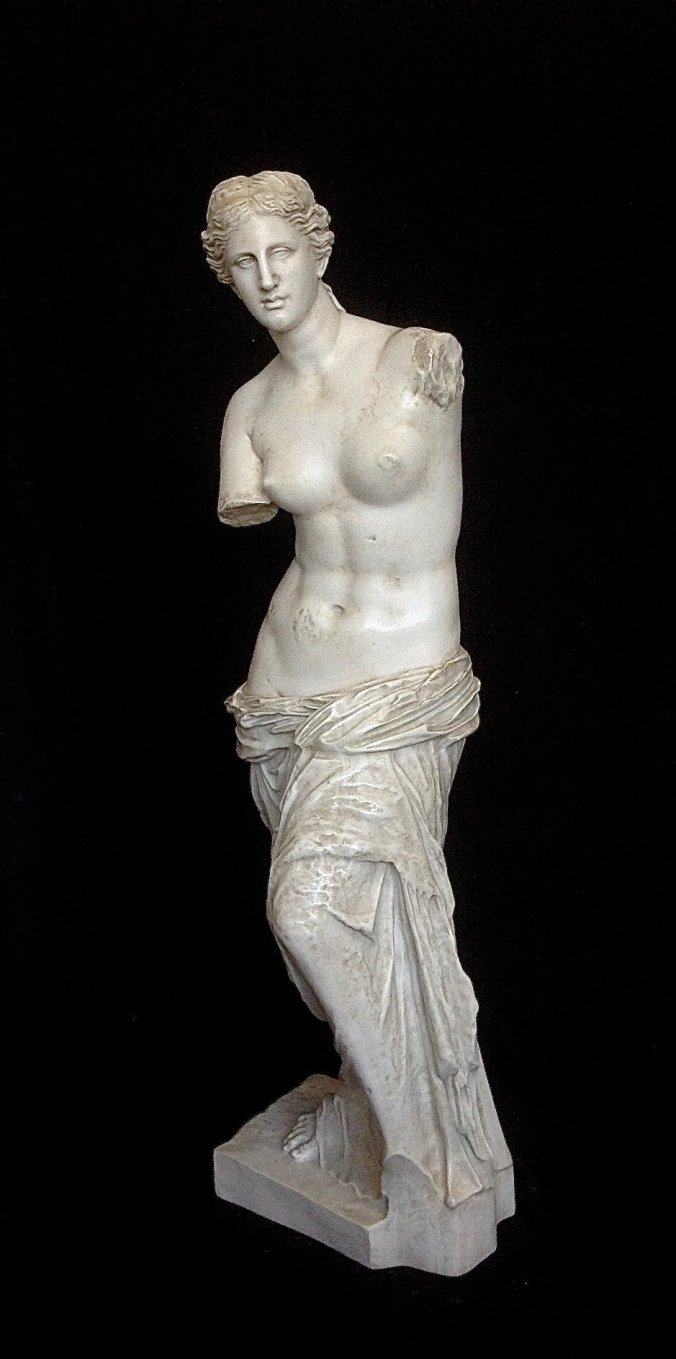
Venus

Venus de Milo

In this manner, the world as we know it today evolved from being influenced from without to within. Individuals have become ‘explorers’ ‘hunters’ and ‘warriors’ in the manner of their and this Universes originator, Enki.

It is hard for them to progress into the next dimension because they devote their resources too much to fighting each other. This trait or compulsion, does them little credit and builds no resilience to explore into the openings of new dimensions. It makes them weak and mistrustful. To this end certain empowered souls have travelled amongst the mortals and introduced the idea that they must emphatically learn to love each other in the manner of their original progenitors, Adam and Eve.

Through this means the future progenitors will progress into what was called a ‘Kingdom’ by one soul traveller. This realm is one where energy vibrates in harmonious patterns and allows consciousness to maintain an idea of a ‘reality’ that is completely separate from the material world. It is hard for the mortals to end their fixation on the material world. Although it is fraught with the laws of decay through chaos and violence, they still find great fascination in it’s beauty and sustaining power over their bodies.

Free of their Gaia-formed bodies, a very few of the mortals have and will evolve, in the manner of Enki, into a dimension that is more benign to their spiritual progress and less centred on ‘earthly’, constructive and de constructive processes.

To open this space they must travel in their minds through the forest of their thoughts to the very centre around which everything rotates. This centre they visualise and name a ‘black hole’ and they fear it as a place where matter and energy disappear. This however is not the case because all energy and matter re-appears in another forest – another garden from which others one day – will also bid to escape.

This is the nature of the Universes of Universes that turn in on themselves perpetually, without end or beginning.

Renaissance of the Renaissance

Where is the wisdom we have lost in knowledge?

Where is the knowledge we have lost in information?                          

Choruses from the Rock by T.S. Eliot

Futures have many directions. They spread into an infinity of possibilities every second of the day. This is true for the micro management of everyday things to the macro management of the planet and the cosmos.

One future is with us now and like all futures – it has been here before. What I am talking about is the tendency for people, science, art, industry, politics to start working together.

This may sound like the norm but in a culture of competition, copyright, industrial secrets, political manoeuvres, artistic repression and exploitation – believe me, working together has not been normal.

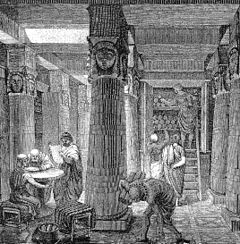
Art and science as pure and applied subjects have always led a culture into new possibilities. This was true particularly in Ancient Egypt where the great library in Alexander brought together learning and expression from all over the world. The Buddhist teachers were there and many influential thinkers and scholars of the second and third centuries B.C. It was by all accounts a Universal library a sort of Wikipedia of it’s day.

Lighthouse_-_Thiersch

When a large spectrum of subjects are considered by a single or a collective mind some thing extraordinary happens. The subjects are discovered to have areas in common. For example an astronomer would have a lot to share with a sea captain who navigated by the stars. A surgeon might have plenty to share with an artist trying to understand the human body.

Because the ethos of the library was to discover what beliefs and understanding was held in common and the connections investigated. Information and knowledge are the paths resulting from the investigation of the spaces between what is already known.

It was fitting that Pharos Lighthouse of Alexandria built between 284 and 286 BC spread light ‘across the world’. The metaphor of enlightenment is apt when considering the sharing of knowledge. It is the discovery of electromagnetic radio waves and their ability to carry information – that heralded the global sharing of information today, via the internet.

Ancientlibraryalex

With the spread of libraries across the eastern end of the Mediterranean the Alexandrian library fell into disuse and suffered destruction by armies and Christian zealots.

Many of the scholars, artists, sages and seers who frequented the library moved or fled. Using text books and records, often made by Arab scholars, some information and knowledge survived.

One of the nexus’s of the world to which the knowledge travelled, was Venice. It was the terminus of the Silk Road and linked the East with the Middle East and Western Europe.

The Ancient Greek texts on philosophy, astronomy, geometry, mathematics and their interpretation and substantiation by Arab scholars were like gold dust. Most contemporary lines of thought were abandoned in favour of this newly discovered old knowledge – like the Helio centric solar system. Much of it was ‘heretical’ to the church but eventually, the church had to hold it’s tongue. For the burst of colours from the fountain of knowledge were like the precious silks adorning the harlots and aristocratic women of the Venice. Artist and Scientist grew in renown and fame, patronised by wealthy families such as the Medici s. The flower that was opening was to be known as the Renaissance.

Today, despite or perhaps resulting from previous ignorance and prejudice, there is happening a similar flowering – inspired by Universal information and knowledge carried on the electromagnetic sea of the internet.

At the same time over the last few decades, academic institutions ( where the internet was first conceived and initiated ) – these institutions have started to share what they know with each other. This spark is vital to transform information into knowledge, ideas into creations.

For example, archaeologists studying Neanderthal humans are sitting around the metaphoric camp fire of storytelling, with forensic pathologists, palaeontologists, weapons experts, linguists and artists amongst many others – to visualise exactly how they lived.

Gone and the archaeologists who specialise in Western Mediterranean arrow heads for their entire academic careers. Such ‘silo’ thinking inhibits understanding. The arrow head was just a small part of the whole story of how Neanderthal humans lived and gives information but not knowledge.

This is just one example of the interconnections between artists and scientist that is now found in today’s Universities and places of study.

And most telling of all is the recreation of the ‘Renaissance Man’. These are artists or scientists who are also scientists and artists. For just as the first Renaissance created it’s Leonardo de Vinci’s, so we need and have today, our own ‘masters of all knowledge’.

This means considerably more than the previous scientists who wore a trade mark bow tie and long hair. Or  those artists who adopt a mannerism of the scientific method (sharks in tanks) in their conceptualisations.

What it will bring is the fruit from the flower – the seed that will give life to a new plant and perhaps the next Renaissance after the present one.

This fruit is what is known as ‘wisdom’. It is the essence of knowledge, just as knowledge is the essence of information and information the essence of data. There is a fractal that grows and shrinks, but always follows the same pattern.

In this seed the whole future of our civilisation has it’s potential to grow exponentially. We see it on the media everyday – new discoveries, new inventions, new ideas. Let us hope that these seeds will temper our desire for material prosperity, just as the Silk Road became a line of empty caravanserai’s.

Stable Weather Initiative and Study SWIS

earth12-copy

I have found a rare thing; a blank piece of paper. Since it is no longer produced, on account of the death of trees, writing surfaces are reserved for significant statements. Here is mine.

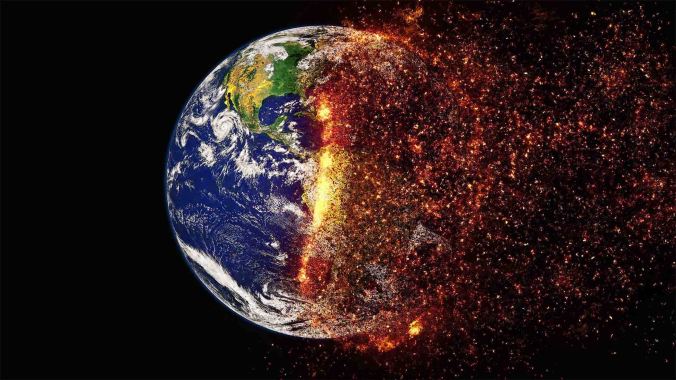
Even in the twentieth century the authorities knew that the earth’s weather systems were becoming erratic to unstable. I studied climate science in the University of Boston at the end of that century and applied what I had learnt to analysis and interpretation. The United States of America (as it was then known – before global disintegration ) used information gathered from sources hidden deep in the oceans to the outer limits of the atmosphere. This was my ‘bread and butter’ as the saying goes before bread was a luxury of the past.

My best analogy to what ultimately occurred, reducing the earth’s population to the estimated 10,000 currently, is that climate is like an avalanche. There is an imperceptible slow build up of stress within a system over a period of time. It cannot be measured but the signs that it is likely are well known. When the cataclysm occurs and tons of snow and ice hurtles down a mountain taking everything in it’s path – then the survivors look back knowing that what happened was expected.

climate-change-figure-1-1

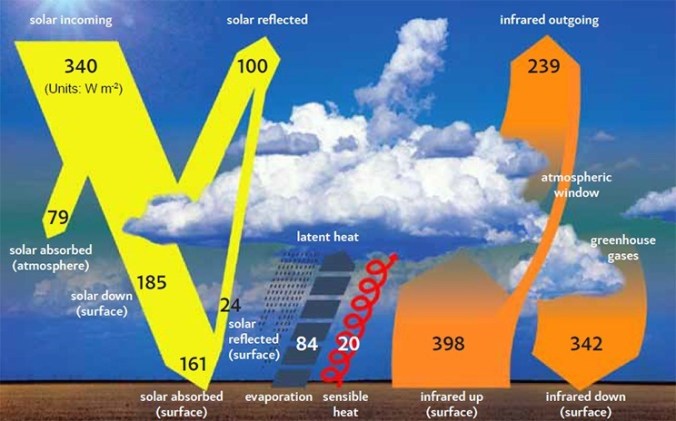
The earth’s climates behaved in precisely the same way. When newspapers talked of ‘climate change’ at the beginning of this century, it was a simplification of the facts. The earth has multiple climates and micro-climates which interface with the local events known as ‘weather’. Even the super computers of the day, ( which we used to carry on our wrists before this happened ) even these computers could not track climate interrelationships, growth and transition with sufficient detail and fluidity. The dynamics of this flux was to be the deciding factor in our government’s miscalculation.

Perhaps the politicians listened more to voters than to those paid to research the subject. No, for sure they did! The popular imagination saw ‘climate change’ as reversible. Stop doing this and you get back to normal. But as with an avalanche in the making, or a glacial crack – the damage was already done.

The radiation from the sun – so called ‘space weather’ – was a particular interest of mine and I admit I should have been the first to issue warnings to the administration. Solar mass ejections were known and monitored but their exact influence on the earth’s atmosphere was guess work at best. When the first of the ten cataclysmic ejections came, we lost not only our ability to monitor but some of our best scientists – along with a portion of the global population. Computers were down, transport stopped, power supplies – in fact anything that needed electricity to function was kerput.

We had weeks of electrical storms. The HARPA grid was one of the earliest to go…one of the few ‘climate influencers’ that was operating at that time. But no amount of intervention on the scale needed was possible. Storms created floods, and floods washed away mountains and cities, quite literally. Tectonic plates moved and water came up from inside the earth to raise sea levels in addition to the melting glaciers and snow fields.

We kind of knew this would happen, but we also knew not to talk too much about it because it was well, just too frightening. Just as skiers will happily spend a day on a mountain after rain the previous night and knowing avalanches could occur.

I was in the Stable Weather Initiative and Study, but it was a bucket put out to catch an ocean. Perhaps the things we did made things worse?

I am coming to the end of both sides of this paper now. So I have to record that the days are still dark. From my view out of the cave on our island there are sometimes views of the sun above. We are hoping for light to re-enter our world before we have grown too weak. If I had any advice for the people of the past and the ‘good times’ they enjoyed, it is to carry on carrying on. For weather, climates and space weather proved just too multi-complex for us to know about. We didn’t evolve in the direction of ‘earth management’ fast enough to counter the forces heading to destroy us. We were a parasite destroying the host but ultimately the host is destroying us.

We are clinging on here living each day on found food and storytelling. Record these days in your books if you find this message. We were the generation ‘damned for all time’ because we allocated our resources to the easy life we had built for ourselves, rather than the planet.

Quick Quick Slow Slow

The British Raj in India was a colossal enterprise, whatever your views on its moral worth. It was set up in 1858 and ended in 1947, lasting almost one hundred years. The creation of the instruments of power and their administration were not simple. They were accompanied over time by the development of education, public health, railways, missions, industry, irrigation and other essential aspects of the colonisation.

The point of interest is the time which this took to establish. To say that it took almost one hundred years would not be an exaggeration. In effect, at the time of the rebellion and the handing back of rule, the process has continued as self rule took control, and continues to do so.

Vast undertakings take vast amounts of time at huge environmental, economic and social costs. The concept of colonisation was not new and had been exercised in many parts of Africa by the British before – so they knew the complexity involved.

Complexity always adds time to tasks whether political or such things as domestic repairs. At a certain point in home DIY for instance, you realise that you don’t know what you are doing or don’t have the skills and ring a professional trades person. The reason is that one person cannot know everything.

So when faced with the intention of a task, it is important to estimate how long it will take. Will it be completed this afternoon or in an hundred years?

Reluctantly – we should apply this understanding to the process of ‘Brexit’.

The initiation and development of the European Union goes back to the 1951 Treaty of Paris and the 1957 Treaty of Rome (although it could be argued that both Napoleon Bonaparte, Adolph Hitler and before them ‘Rome in the West‘ – sought to do the same by means of force rather than persuasion).

The institutions of the Union have themselves developed beyond their original aims of economic unity. The process to the present day has been complex and now involves over half a billion citizens.

It should not be expected to be unreasonable therefore that the process of leaving such an organisation is equally complex. What might be expected?

  1. Rules of leaving as agreed when joining.

  2. The Penalties for leaving as agreed when joining.

  3. The Process of leaving as agreed when joining.

  4. The preparation and planning, instigation, monitoring and completion of leaving.

Which leads to the question, ‘how long is this going to take?’

There appears to have been insufficient consideration during the formation of the European Union, to the process leaving the Union. It was after all, set up in the way of many religions, to attract new members. The unthinkable process of losing members is naturally inclined to become ‘unthinkable’.

The managerial notion of ‘we’ll deal with that at the time’ or ‘a dynamic assessment’ is not a good one when applied to organisations of this size and complexity.

Ordinary citizens can be forgiven for buying into such inane over simplifications as ‘Brexit means Brexit’. In the present western cultures where the idea of the expert is ridiculed and ordinary citizens believe themselves able to understand what they do not understand, a simple question like ‘do you want to leave the European Union‘ is not challenged as in itself, absurd.

Supported by the idea that ‘Britain once ruled over one quarter of the world’ – megalomania takes hold. The simpler the chants of those wishing to ignore complexity, the more supporters rally round.

If the problem was considered in the manner that civil servants are empowered to do, then almost certain more caution would be applied.

What is the aim?

What is already in place to achieve it?

What extra measures are needed to achieve it?

How long will it take to achieve it?

When will we know that the aim is accomplished?

These questions are the roots supporting the tree and like all roots, they extend in directions and distances unknown.

Suffice to say the withdrawal of any state from the European Union requires considerable planning and resources. The planning stage should start at the inception of the Union and be part of the conditions of joining – in order to simplify subsequent negotiations.

Any problems, such as politically sensitive borders, should be required to be solved prior to the start of leaving.

The process of leaving should be phased rather than all aspects negotiated and initiated ‘with immediate effect’.

The phases should be given generous time periods. The spectacle of the United Kingdom repeatedly applying for ‘extensions of time’  merely to start the withdrawal process is not something a manager of even a small company or organisation would be comfortable with.

Each phase would encompass one aspect of being a member of the European Union. In this way, proper consideration of the details of the present and proposed arrangements would be given.

Lessons should be learnt from the withdrawal of the European States from their colonies in Africa. Books could be written on this subject but in essence, there were problems created by the ‘political vacuum’ left after the transfers of power. These problems continue as symptoms at least, to the present day.

In my own way, I return to the reality that humans tend to become victims of their thoughts, rather than the masters.

It is possible to consider the absurd, and not realise that the matter is downright impossible to solve. Thinking itself is an inaccurate process, challenged continually by evidence from ‘the ground’.

So my own view of the process of leaving the European Union would be the phase each aspect and form consensus on this process based on the details of each phase.

To think that the process is simple and can be initiated at the stroke of a pen, has been done before. History as always is our teacher when this has happened.

Thinking About Thinking

Thought Maze

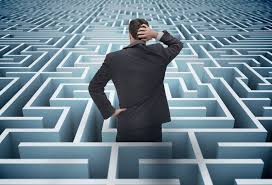
This may sound like digging a spade with a spade or mixing clouds – confusing.

But thinking is a tool and like all tools it needs to be made of high quality materials and regularly maintained.

Thinking was not taught in schools and places of further education. Perhaps it is on the National Curriculum now? If it is not and I was a parent I would want to know why. Because thinking is perhaps the most important of all acquired and learnt skills. Not only because it governs our whole perception of events and things we call – reality – but because it has the tendency to pretend it is not there.

Like a fish swimming in the sea, if you asked it where the sea was, it would not know.

The nearest we get to any sort of scientific reality is through ‘rational’ thought. To be rational is to use logic as a device in which information is chosen to be from a credible source, tested in every manner possible and judged to be useful or not.

Here are some of the ways of thinking that are problematic;

Filtering: when information is presented the thinker chooses either consciously or unconsciously the facts which fit the thinkers prior beliefs.

For example: a person develops a hatred towards a religion and it’s followers. Events around the world which reflect badly on those who may or may not represent that religion, are used as examples justifying extreme behaviour.

Polarisation: Dualistic thought considers only the two extremes of something that in reality has a million levels of degree. An action can be judged as bad when in fact it has some good effects. To judge how far along the see-saw between good and bad is complex and sometimes impossible.

For example: Criminals are sent to jail for an act that is perceived as ‘bad’. If Adolph Hitler had been murdered to stop the war early, was that a ‘bad’ act?

Over-generalisation: The thinker arrives at a conclusion based on sparse or selected facts. The saying ‘one swallow does not make a summer’ describes this. Sometimes political correctness will leap on one very minor aspect of a statement or action and generalise this into something much greater than it is.

For example a group of young girls wearing unsuitable clothing and footwear attempt to climb a mountain; get lost and have to be rescued suffering from hypothermia. Afterwards the politically correct Authorities revue whether to close access to the mountain for reasons of safety.

Mind Reading: Without their saying so, the thinker assumes to know what people are feeling and why they do what they do. This may be particularly directed towards how others feel about you.

For example someone you think of as a friend ignores you when you pass them in the street. You feel offended and decide to cut them out of your friendship circle. In reality they are short sighted (which you did not know about) and on this particular day they were not wearing their contact lenses and therefore did not recognise you.

Catastrophising: The thinker suffers from emotional fears which tell them to ‘expect the worse’. These type of emotional demons can be learnt in an unbalanced way from watching or reading tragic news reported from anywhere in the world. These events are not representative of the thinkers personal risks but never the less influence their decisions.

For example: A plane crashes in on the other side of the world the day before someone frightened of flying is due to fly. They cancel their ticket and take the train. The fact that air travel is the safest method of travel per mile, is ignored.

Personalisation: Another individual, often in authority, makes a decision that affects the thinker in a way that displeases them. The thinker does not refute the actions / decisions of the authority figure with reasoned debate. Instead the thinker personalises matters. In this way they move the debate from a subject they are less likely to win to won that may allow the thinker to ‘triumph’.

For example: A politician decides to allow the building of a nuclear power station contrary to the wishes of the local people. At a public meeting they pillory the politician over his or her personal conduct and private life.

Control Fallacies: You are Under Control

The thinker may feel that they are in a situation over which they have no control. This can lead them to feeling stressed and unable to escape.

For example; A person believes that the authorities are monitoring their behaviour using technology for sinister reasons. This is fictionalised as ‘Big Brother’.

Control Fallacies: You are In Control

The thinker feels that they are responsible for the pain, happiness or other feelings of those around.

For example the hostess of a dinner party is distraught when two of the guests have an argument in the garden.

To be continued…

Caterpillar Sheds his Skin

The marble table in the centre of the kitchen is gleaming. You make a note to compliment Mrs. Caterpillar – the housekeeper – how well she keeps the servants busy cleaning and polishing.

For you have been the butler in this fine and noble house for as long as you can remember. You sit now, at the kitchen table with a copy of yesterday’s Time’s (that your master discarded) a warm coffee and rather tasteless cigarette. It is seven o’clock in the morning and the kitchen staff will be down soon to prepare breakfast. But for the moment all is quiet.

Above you are seven brass bells are linked to thin wires that travel across the ceiling and up. Each bell is labelled in gold script with the name of a room.

Before we going any further, bemused yet interested reader, know that the house in which you sit is yourself; your physical body and all the aspects of self that you experience as ‘being alive’.

The first three bells relate to the three rooms commanding your instinctual behaviour. Your body mind unity has many instinctual needs and of all the bells, this one summons you the most – or at least it seems that way. They are characterised as demanding immediate gratification whether it be the alleviation of pain, sleep or hunger. Sometimes they are craving pleasure associated with sex or relaxation. The bells are labelled in accordance with the three base chakras (which the master learnt about during his service in the Army for the West India Company). They are named Root chakra, Sacral chakra and Solar Plexus chakra

And as if these were not demanding enough, there are four more.

The next in line is the one labelled Heart chakra. In a way, this one is the most important and yet most difficult to satisfy. When you enter this room and enquire politely after the reason for your attendance, the master or mistress is likely to be experiencing either pleasing or difficult emotions. The pleasing are generally rewarding and include happiness and contentment. The less positive will present as states of anxiety or extreme disquiet as a result of some injustice, frustration, jealousy, annoyance and many others.

Each one has to be dealt with head on and care taken for the matter in hand to be explored thoroughly and in the presence of other parties involved, if possible. Failure to work through these emotions to an acceptable conclusion to all, can lead to problems. The master has been known to order you to lock a troublesome feeling in one of the large cupboards – to be ignored. When in there, experience tells you that it will grow and emerge even more strongly and therefore more troublesome. Emotions tempt your master and mistress into behaviour which is clearly ‘risky’ whether it involves amorousness and romance, gambling, cocained addiction and much, much worse.

The next bell is labelled Throat chakra. This is the room where all communication goes on. There are comfortable chairs for sitting and smoking after dinner for the gentlemen. The ladies occupy another room in which to withdraw, where considerable conversation takes place on topics which the men are generally totally unaware.

The conversations in these rooms are contained within the room as silent speech or as we say, ‘thoughts’. They can take over your time with alarming ease and rapidity often in the middle of the night. Little or no benefit is likely to occur from this obsession with thinking and chattering, but still it goes on.

The last two bells are the rooms which interest you most; although being called there is regrettably all too uncommon.

They are labelled the Third Eye chakra and Crown chakra. You might expect these rooms to be occupied mostly on religious festivals and Sundays, but this is not the case at all. When the master and mistress enter these rooms they do so generally in complete silence. In this condition and in a slightly melancholy atmosphere tinged by the musty smell coming from the peeling wallpaper where it meets the ceiling and the roof above, here great self discoveries are made. It is as if not only the combined knowledge and experience of those in the room come into conscious understanding and therefore ‘guidance’; but the whole knowledge and experience of the community at large – indeed the whole world – is here.

All of the above illustrates in metaphor the position that we occupy in our early lives in relation to our body mind complex. It is hard to get to grips with and involves a lot of running around. Fortunately the energy of youth makes these huge tasks just about manageable – although you are aware that there are some of your peers for whom the tasks become too difficult. They withdraw into a sort of mechanical relationship with the world and their fellow occupants of the world – whom they blame for most of their own shortcomings.

Now as in all tales told by the masterful story tellers of the past, there is a twist – an unexpected turn – as in life, the road very occasionally takes a sideways impromptu step or about turn.

Here in your house, where you thought you were the butler, something extraordinary happens. As you peer over the top of your Times newspaper one morning, you observe yourself unexpectedly sitting in the master’s high backed leather chair. The pipe resting on the ivory holder next to you, curls a wisp of luxurious perfume and tempts you to take another draught of it’s smoky elixir.

With both shock and satisfaction in equal measure, you realise that you have either become the master of the house or have in fact, been the master all along and failed to realise it.

And there is Mdme. Butterfly, your wife now, sat opposite, threading a needle into a circle of cream canvass stretched on a mahogany frame. Several of her colourful depictions of your favourite flowers, adorn the wall behind her.

Sun enters the room, as if to sweep the colour from the exquisite Persian rugs into the air. You feel exalted, ecstatic even – and only the ardour of your parallel experience ‘downstairs’ prevents you from rising at will to the ceiling.

You have experienced what psychologist’s term ‘individuation’ – become a collection of part’s united – a whole being.

Slowly, tentatively, tortuously you reach across the rich velvet arm of your chair for the tasselled bell chord. You wonder;

‘Is there anybody there?’

butterfly and flowers

Love Your Brother and Sister Humans

Once again the lawyers and politicians are going around in circles.

For in the United Kingdom a cross party group of MPs have had a go at defining Islamaphobia ( a word not contained in my Word spell check!)

Before looking at this definition it is worth thinking back a year or so when we were treated to the spectacle of Teresa May and advisers thinking up a definition of Anti-Semitism. This at a time when hatred of Muslims was a far more important problem.

Perhaps the group of MP’s missed a trick. A school child might think that to define Islamaphobia you substitute the word ‘Islam’ for ‘Hebrew’ in the Anti-Semitism definition.

Not a moment too late has the spot light now moved onto our Muslim brothers and sisters who are suffering hatred in the UK and other countries, in a way that the Jews were targeted in Nazi Germany.

It is good someone has the intelligence to write a definition of what is the problem. This is the first step to the review of existing laws and any supplementary or new UK legislation.

Here is what the cross-party group came up with;

‘Islamaphobia is rooted in racism and is a type of racism that targets expressions of Muslimness or perceived Muslimness.’

Here is the first test of the statement. Let’s change the religion in question.

‘Christianaphobia is rooted in racism and is the type of racism that targets expressions of Christianness or perceived Christianness.’

So the attack on the congregation in Christ Church New Zealand was racist? I think not.

Consider for a moment what racism is, since it is being included in the definition in question.

It appears that there are numerous definitions; made more confusing the ‘ethnicity’ being considered the same as ‘race’.

My contribution to this word play would be to suggest that there is only one race, the human race. This is split by ethnic difference based on environmental, genetic, cultural, linguistic and other fundamental factors.

So here is what the UN Convention on the Elimination of All Forms of Racial Discrimination said;

The term “racial discrimination” shall mean any distinction, exclusion, restriction, or preference based on race, colour, descent, or national or ethnic origin that has the purpose or effect of nullifying or impairing the recognition, enjoyment or exercise, on an equal footing, of human rights and fundamental freedoms in the political, economic, social, cultural or any other field of public life.

If this definition were adopted into UK law then the signs at airports instructing EU Members to queue here and all the rest to queue there – would be illegal.

Fortunately gender and race are universal constants and in my view, nothing to do with prejudice based on ethnicity or religion.

Taking a step back from what we are discussing here is the unpleasant aspect of being ‘human’ – hatred of ‘the other’.

As members of the human race to our shame we have a long history of dividing ourselves up into tribes or villages or clans or nationalities or supporters of a football team and seen this as reason enough to wage war on ‘the others’.

All the prejudice in the world is an expression of intolerance towards other humans.

It’s expression ranges on a scale from minor to major. Football hooligans are at the pathetic end of the scale and fascist government leaders at the other. In between is all the prejudice – hidden and open – that we carry within ourselves.

Hatred based on religion is therefore simply another expression of intolerance ranging between sour looks to beheading.

My definition of Islamaphobia would be;

Hatred of Muslims

Now can we get down to the real problem? Because until a child steps forward to take over the role of Prime Minister, no single person appears to see the problem with any clarity.

The head of the National Police Chiefs Council, Martin Hewitt, is dismayed at the vagueness of the definition. He believes it will cause confusion and hamper the effectiveness of the police against minor and serious crimes motivated by religious hatred.

In law, precise definitions produce laws which are executable.

If I had any advice for the devout of any religion, it would be to remove all cultural affectations in dress and any other public signification of your personal beliefs. Put these items on in the place of worship if it makes you feel more comfortable.

Hitler had to identify Jews by ordering the placing of a yellow star of David on their dress. To preserve your dignity and safety – I would advise not to make it easy for the biggots.

When the time and place is right – in a tolerant society – freedom of religious expression will be protected.

To base new laws on eliminating hatred is in my view to start at the wrong end of the stick. I believe the best way to introduce tolerance is to introduce love, as well as eliminate hatred. One cannot exist without the other but we can at least set the balance straight. So this debate is not just for the law makers, it is for all the humans.

Raise a hand if you are a human!