Boring into Boring

My inspiring English teacher, ‘Windy’ Gale, fixed the aphorism

There are no dull subjects, only dull mind

to the classroom wall.

This supported my own attitude to life of keeping myself perpetually busy. I was an inventor or games amongst my childhood peers and a ‘meddle Sir Mattey’ on protracted visits to grandparents. My grand mother didn’t like her clothes mangle taken to pieces and reassembled in a novel way. But I was busy.

Teenage is the classic period in one’s life for being ‘bored’ – that is entering a state of inaction due to lack of stimulation. This state of inactivity is induced by mental and socio-environmental factors. It is mostly found in predominantly ‘inactive’ people who rely on external forms of stimulation. Their minds have become dull – uninterested in the apparently, uninteresting.

If and when we realise a need to change, then it is down to the individual to break out. Proactivity rarely produces boredom.

Boredom Newton's Cradle

Psychologists nominate the state of boredom as a ‘feeling’.

If people, places and / or events induce a state of inactivity in us, then we ‘feel’ bored. This may explain why boredom is hard to identify at first. We will then need to understand it’s causes and take control in order to move out of it’s influence.

A classic way of doing this can be seen in the interaction between a parent and young child. Children often require a boost from outside themselves. They just run out of steam (attention span) and need support. Any or all of the people-place-event factors, need to be manipulated by the parent to provide stimulus to the child to prevent it drifting into a state of boredom.

Does this pattern disappear through adolescence and into adulthood? I fear that as adults, many of us today become even more stuck in the reliance for external stimulation. If you question adults about a simple activity like ‘going to the beach’ – many will reply that they don’t do it because they find it ‘boring’. The beach is a place which indeed provides limited stimulation. In it’s simplest natural state there is just a large volume of empty sky, empty sea and (on a quiet day) – an empty beach.

But if you took a child to this place they would be filled with excitement. Think for a moment of your own endless hours of pleasure spent as a child on a beach…often with hardly any play things, just what nature provided.

Harvard Graduate School of Education

Something has happened in our modern Western societies that leaves adults unable to be proactive when the external stimulation of people, place and events is limited to say, ‘a beach’. Late nineteenth century sea-side resorts in the United Kingdom, evolved and thrived on their ability to provide stimulation such as Punch and Judy shows and donkey rides. Today the ‘amusements’ are multiple and complex. You might think that there really is no excuse for being bored on a beach, but apparently there is.

Leo Tolstoy defined boredom as ‘a desire for desires’. I do not agree with this definition as I have already described boredom as a ‘reactive’ rather than a ‘proactive’ state – which surely desire is. The powerful emotion that ‘desire’ is hardly produces any relief from boredom because it is ill equipt to do so. Desires are either realistic or unrealistic and both can be frustrated and denied for reasons out of an individual’s control. This realisation prompted the detached mental state associated with Buddhist philosophy. Sorry Leo old boy, but you are behind the times.

Life has a habit of placing you in a situation that you cannot control or choose. In the nineteenth century you might have to work long hours in a factory for very little reward. There might be a day’s outing to the sea side once a year to relieve the boredom – but that was it.

Factory work is, by definition, repetitive, which is an obvious and common cause of boredom.

I recently took a flight with a well known air line where the cabin crew had a sort of comedy routine to read out.

It was unfunny and in places, in bad taste; ‘the company’s priority is making money over safety‘. Yes, passengers were meant to laugh at that, at a time when Boeing 737 Max 8 airliners are grounded following two fatal crashes.

It appeared to me that the routine was for the benefit of the cabin crew rather than the passengers, because the cabin crew were,  well – bored. Can you imagine doing that safety routine with the life jacket and exits, over and over again? Yet these are people who self selected the work as it was ‘exciting’ to travel. Well clearly it isn’t; it gets boring. The people, the places and the events don’t provide sufficient novelty. It’s like a play in which there is only one act, one actor and one set. Life can feel like ‘Waiting for Godot’.

Like all emotions we repress them. Apparently psychologists have discovered that after ‘anger’, boredom is the most repressed emotion.

Even the most proactive, inventive, creative, unpredictable mind finds itself at times running down the endless sets that appear in cartoons like ”Tom and Jerry‘. Or like the scene in The Matrix movie where the character Leo finds himself on an all-white platform, waiting for a train. When he runs down the tunnel he returns to the same platform. Life has this quality in spades and we have to learn to deal with it. We all get bored, even the most active of us.

Psychologists define five levels of boredom ranging from ‘indifferent boredom’ to ’empathic boredom’. They are scalar between one and five. If you wish to know more look here;

5 Types of Boredom

I would add that boredom should not be confusded with being frustrated. Being frustrated is like waiting in a queue that hardly moves, in a supermarket or airport. Being bored goes deeper than that as it drills into our emotional state and brings us uncontrollably down, down, down.

This might be why children and adolescents, scream so loudly when boredom hits them between the ribs. For them it’s not always easy to get active – the only known cure. They usually do not have the power to change the cast, the set and the story line in the play of life in which they find themselves.
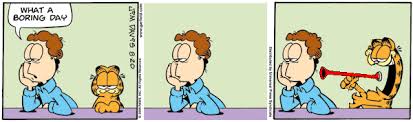
Garfield on Boredom

But sometimes you have to wonder, how much of ‘I’m bored’ or ‘are we there yet’ is down them to find a way out of the boredom pit.

I listened to an account on the radio of a female journalist Zehra Dogan, who is an Kurd and an artist working in southern Turkey. She painted the war zone as she saw it and was imprisoned by the Turkish authorities. In jail, her friends and family sent her art materials but these never reached her.

So the journalist / artist made art on bits of bed clothes that she bleached so that the guards did not recognise them. She used coffee, tea, blood and no doubt tears as her medium for expression. In all she was able to take out 300 pieces of work when she was released, which now form a major exhibition.

With the right state of mind, I believe that most humans can overcome the most extreme deprivation by being active. This natural state of mind is what children, teenagers and many adults benefit from being able to conjure; for the world can and will stop spinning for you– if you let it or can’t stop it.

It takes the super hero or heroine to start the world up again but I believe that power is contained within us all because there are no dull subjects.
Looking Through the Glass

OK, look out of the window and tell me what you see.

I see some fields and trees and a couple of cows.

Think carefully. Tell me what is the first thing you see.

The fields.

Wrong. The first thing you see when you look out of any window is glass.

This little exchange may sound pedantic but it crudely illustrates how we ignore the way we perceive the world. Sweeping short cuts are made during the process of perception in order to to establish some sort of certainty of what is out there, for our deaf and blind brains.

The next logical step in this line of thought, is to consider how many other things we do not see, whether they be ideas or physical things.

I would argue that there are many more than we believe.

Take technological ‘evolution’. I avoid the word progress because there are examples of new technologies that were a step backwards rather than forward. The release of energy from matter in nuclear fission for instance, creates as many horrors as quick fixes for warfare or the provision of electrical power.

Nobody votes for new technology. One day you are sitting on the sofa eating your dinner when, on the news, they are demonstrating a car that drives itself. Or you are a farmer in nineteenth century England and suddenly you hear you neighbour starting up his new tractor.

These changes to our lives come about as if by stealth. Generally they are considered benign – that is the benefits out weigh the problems. The fact that all new technology is by definition ‘untried’ is something that neither proves nor denies a problem exists, in the present or future. So it is allowed to be produced.

The mobile phone, for instance, has revolutionised many people’s lives. Even children as young as three are given them. And yet there remains a question mark over the emission of microwave energy and the effect it has on young and adult brains. At present the young are thought to be particularly at risk because their brains are developing. Making a phone call in a car for instance, is the same as putting food in a microwave cooker, only it’s not food being cooked – it’s you and your family. Because this background energy has been with us for over a generation, it is not possible to establish a ‘control group’ to measure the development of brains. There are no humans alive now, who have lived without a constant background of microwave energy.

Of course there are checks and balances at work in various committees in Universities where research is done. Also government organisations monitor and grant licences to new technologies. The ethical concerns, the effect on other systems such as the environment, sustainability, disposability, carbon footprint etc. are just a few of the concerns applied to new technological developments.

The problem is not all countries judge new technology in the same way. If there is a political, monetary or social ‘quick gain’ to be made through say, shale gas fracking, then some country somewhere is going to do it.

And if in the eighteenth century what happened on the other side of the world didn’t matter because it was too far away; this century has no choice but to think global.

The trails of diesel exhaust from ships crossing oceans can be seen from space. Imported goods do not arrive without an environmental price tag.

It is as if technology has a mind of it’s own – and in the next few decades it will quite literally– using 5G and the ‘internet of things’.

But without innovative technologies, the planet would not be supporting the present human population. The number of people pre-industrial revolution, was small. England had about four million citizens when horses ploughed fields. Now there are over seventy million.

But new technology is not the only object seen in the window. Remember the glass.

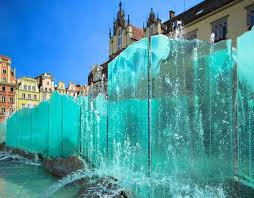
Glass in Wroclaw

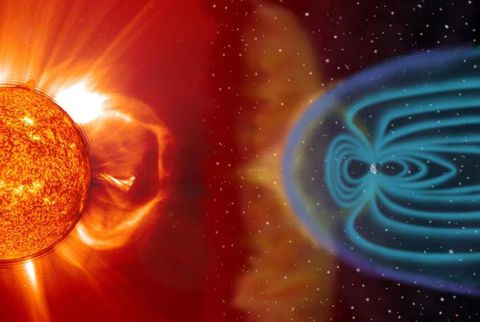
And it might not be a new technology that is about to alter the course of your life fundamentally. There are numerous ‘low balls’ that could change everything tomorrow. For instance there might be a series of powerful solar mass ejections, bombarding earth with cosmic rays so strong that the earth’s protective magnetosphere gives way. Computer systems go down, power grids and machinery of all kinds are cooked.

Solar Super Storm

Trusted technologies, reveal that they have been trusted too much. The impossible or ‘once in a thousand year event’, happens. Then mankind realises it had not seen the glass in the window.

The earth is a space craft and like all complex systems they are fine until they break down. Then back up systems have to be activated and emergency plans initiated…if they exist.

In the case of planet earth they do not. A ‘survivalist’ shelter designed for two weeks, two months or even two years, will eventually either be discovered or run out of supplies before the re-population even begins. Mad Max doesn’t even come close to the post apocalypse chaos.

The question for the present generation and for those yet to be born is;

‘what are the blind spots in our modern lifestyle that could leave human population exposed to near elimination and what is the back up plan to each eventuality?’

Governments, committees,  industrialists, academics  scientific researchers and technological inventors and innovators are our modern day ‘dictators’. You won’t be voting whether to survive disaster or not. Your trusted leaders just won’t have seen it coming because they too were looking through the glass, like Alice.

Let Them Eat Happiness

Western culture has come a long way since it was ruled by royals and aristocrats – or has it?

Few French peasants would have even glimpsed the lifestyle of the immensely rich and powerful in the seventeenth and eighteenth centuries. They would have been unaware of what really went on behind the iron gates of Louis 14th’s palace at Versailles. The mirror lined rooms and the golden corridors of power might have well have been in another dimension.

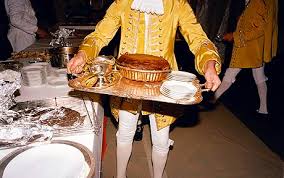
a plate of happiness

Eventually the Aristo’s and the royals have lost much of their wealth and most of their power. The wealthy industrialists took on their mantle in the eighteenth and nineteenth centuries in the West. Instead of taking taxes from the poor, they stripped nature and nations, and occupied the masses (and their children) in factories.

With their acquired wealth, they built mansions set in Inigo Jones style gardens, just as the elite before them had. They bought military commissions, titles and honours and entered parliament. Power too, was for sale. It was a different game but with the same lust for money and dominion over others, as played by the royals.

In the twenty first century there is an awakening to these processes as having been outrageously ‘unfair’. There appear to be glimmers of similarity between the Gillet jaune and the revolutionists of the French Revolution. No guillotine’s yet but this revolution has only just begun. Perhaps it is a Gilletine.

This time round, the capitalists and the so called ‘elite’ are in the firing sights of the missiles from the streets. The possession of most of the wealth by the few, reverberates around the internet like a pin ball in a crazy machine; lit up with flicking levers, lights and cartoon graphics. How can it be fair, we are asked, that the ‘elite’ have so much money? Are they killing off the humans to save the planet using fluoride, chem trails and advice to avoid vaccination? Lies and suspicion are great hunting dogs.

Confucius; he says, ‘when the duck puts his head above the reeds in the hunting season, he had better be ready to be shot at.’

For just as the Sun King and the royal families of Europe were human enough to be pulled kicking and screaming from their palaces, so are the modern elite.

Sun King gate

The injustice and the irony of the lessons of history are obvious, but a working alternative is not. Even an establishment introduced by the anarchist rioters, is an establishment; ergo the Soviet Union. If a hundred anarchists met in a town square to tell the masses to get rid of their leaders, there would appear amongst the anarchists, a leader.

Philosophically and scientifically it is true, that to every force there is an equal and opposite reaction. So when you put on your black anarchist costume and mask and join the ‘anonymous’ mob to riot, what is the problem you are trying to solve?

The problems of the French or Russian peasant made a long list; no clothes, no health, no food, no water, no home, no land, no animals, no day off etc.

The problems of modern westerners is none of the above as they have it all; health, food, transport, leisure, labour saving technology etc.

The problem appears to me therefore to be no longer external, but in the mind. It is built on the number one illusion in the hall of mirrors, that ‘money equals happiness’. We know this isn’t true but we still pursue it and want to be rich. The lines of people buying lottery tickets from the street vendors where I live in Spain, are an indication of the pursuit of wealth as being perceived as the same as the pursuit of happiness. Or just peep over the pond at the great USA and it’s everywhere in their way of life.

The pantheon of the Ancient Greek gods, has been replaced with so called ‘political elite’ and ‘celebrities’. Vane and pointless people who have had the luck of being in the right place at the right time, self promote on social media. They spread the myth that everything on their side of the palace (or Big Brother) wall is great. Instead of hiding, in the manner of the royals, aristocrats and industrialists, they tease the rest of us with videos and photos of their material success and happiness.

Even when the mascara is smudged with tears, even when cancer eats away the golden vocal chords, the golden divorce unfolds, the assasins bullet richochets amongst the pillars of the halls of power; the masses worship their sacrificed gods. And should an over dose of some not-so-whizzy drug, close down the not-so-happy participant in the great party of celebrity life, selective memories promote the deceased as a greater god for being dead. Goodbye Norma Jeane.

Various

And yet, as long as two thousand years ago, a man said;

I tell you the truth, it is hard for a rich man to enter the kingdom of heaven. Again I tell you, it is easier for a camel to go through the eye of a needle than for a rich man to enter the kingdom of God.

For if you change the problem from ‘not being rich’ or ‘others should not have riches’ or ‘I want power’ or ‘I want what he’s got’ or ‘give me what I am owed’ or ‘they spoilt everything for me’ or ‘I just want what I deserve’ or ‘you can make me happy, why don’t you’ or ‘if only I was rich’ –

to; ‘how can I be eternally happy?’ then that is an easier problem to solve. Most of the historical examples of people who became eternally happy did so by giving away their possessions and gave love to others. Well documented examples would be Prince Sidhartha, Jesus the Christ, Vishnu and Kali, Mother Teresa, St Francis of Assisi.

Lesser known examples are the monks, nuns, non- government agency relief workers, public servants, healers, charity workers, environmental activists, street sleepers, the wanderers and people who you may know personally.

We may not all be saints, and perhaps those posthumously awarded sainthood were not either, but we can aspire to share what we have, however much or little that may be.

The non-self centred may not hit the news headlines, they may not be seen in a queue for a lottery ticket, they may not self promote like politicians, they may not stand up against the politicians, they may not have flashy cars and houses or go for golden globes – but they exist.

Their happiness is not necessarily in this life time or even the next, but they will have seen over the wall into the garden of Paradise. It is not on this earth for this globe is not, and never will be, ‘golden’. It is but a shadow of the real Paradise where there is no chaos, no illusion, no entropy and certainly, no lottery.

The Cash Back of Notre Dame

Fortunately there were no casualties or deaths, following the fire that ripped through the roof of Notre Dame cathedral last week. People held their breath as they watched the ancient temple’s walls and windows silhouetted against towering flames.

When the last embers died, Parisians were stunned. It cannot be put into words what buildings sometimes represent to nations, and that certainly applies to this one. And yet, what has happened here?

An old building, medieval in places, has lost it’s roof and some of it’s treasures. Were we expecting Notre Dame to last for ever? If not, is a catastrophe like this not statistically likely? Nothing lasts for ever, unless you build like the Ancient Egyptians built their pyramids. So with that in mind, thanks can be given for what remains and the task of reconstruction ahead. In my view, there has been a kind of cleansing. Fire purifies, in the alchemical sense. It removes the dross and leaves the precious.

I heard on the news that architects will be invited to present a way to do this. Personally, as an architect, I would reconstruct the profile of the collapsed tower in structural glass. Light would pour into the building in a way that was never intended. Gothic has a taste for the shadows and dark spaces penetrated by beams of mysterious light from beyond. So I would use a layer of intelligent ‘glass’ that is able to form coloured images or colour blocks, in the way that an LED TV screen does. It will be able to change from black opaque to white opaque and all the colours in-between. In addition it will be able to describe moving coloured images. I would like to introduce the possibility of creating holograms high above the heads of the congregation and visitors. These might be on religious themes or taken from famous works of religious art. Really, the content could be decided by whoever has the right and the power to do so, with hopefully a chance for citizens to have their input too.

The place would be a source of spiritual refreshment from the inside and from out. That to me, surpasses the cluster of ancient roof timbers.

But all this is but a dream without funding – and should it be funded or left as a ruin because right now, we have more important things to do? What do I mean?

Enter the financiers. Men of high reputation and wealth, pledging billions of tax deductible Euros – although they say that the tax benefits are not a consideration. Suddenly money is available to repair a national monument which was not there to support war victims in Yemen or desperate refugees who move about the globe to escape poverty and politics and climate change. Some people are angry about that.

To me, some precious lives in Notre Dame cathedral survived. They are both priceless and with little monetary value. They are the inhabitants of the three bee-hives on the roof. Perhaps twenty thousand bees, frightened of smoke, kept indoors out of harms way. An ancient instinct to avoid forest fires kept them safe. I expect they are now carrying on their excursions into city parks and gardens to collect the golden pollen that makes their hives so special.

I am old enough to remember summer days and driving along motorways and fast roads collecting insects. They would die attached to the wind shield en-mass and their sticky bodies were hard to remove. Radiator grills and headlamps were similarly encrusted.

Today, forty percent of known insect species are extinct. When you drive, no insects appear on the wind shield for they are not there. One can only assume that modern farming practices using chemicals against so called ‘pests’ are largely to blame. Perhaps there is climate change and loss of habitat in the the list of causes as well.

If I had billions of Euros and I was considering giving back what I had, I would probably spend it on creating a world worth living in for our children and young people.

A brave few are presently sitting in the streets of London highlighting that there is an ‘extinction event’ in progress which has been and is, largely ignored.

I happen to believe they are right. The earth has been through six or seven known extinction events in it’s life. The fact that we are living in one now is as scary as it gets. Yet all the signs are clear to see; the loss of insects being one of them. The creatures at the base of the food chain are easily overlooked and yet the whole of the pyramid of life depends on this base layer. Without bees, Albert Einstein said, the world would end in four years.

What do we need from the wealthy individuals and States with money to invest? What do we really need? Space travel? One day, perhaps a single potato will cost a billion Euros. When it is the last one on the planet and it could keep you alive for two more days, it would be worth it.

Perhaps the loss of Notre Dame cathedral is a taste of things to come, as planet earth demands it’s ‘cash back’; the Promethean debt. For like Promethius we have stolen the special knowledge that fire represents, from the Gods. Now they want their due.

Go Forth and Multiply

The spring is an excellent time of year to be considering all things reproductive. Whilst male hares are playing fisticuffs in the fields over a prospective female, blog writers are being thankful for rainbows.

The Old Testament character, Noah is an important symbol or rebirth and regeneration. The story is so fundamental that Noah appears in most ancient cultures in various disguises;

Sumer – Ziusudra

Hindu – Manu

Mesopotamia – Atrahass

Babylon – Upnapishtim

Zoroastraism – Zend Avesta

Ancient Greece – Dionysus the Younger

Ancient Egypt – Osiris

Like many bible stories, the flood is both allegorical and historical. The ending of the ice age around 11,000 BCE, unquestionably released a huge quantity of water in just a few years. The Almighty was enacting revenge on the evil doing of the earth’s inhabitants at that time – and He should know. Noah and his family were chosen, possibly, for their hygienic practices around the house and regular donations to animal charities. Whatever the reason, the best of the human race was always intended to survive the flood; along with the plants and animals.

Noah built a boat out of reeds or gopher wood depending on your source. With a layer of bitumen the vessel was able to float and survive storms. On board was a seed bank relating to plants and possibly animals. In some versions of the story the animals do not become a floating zoo but merely a place to store ‘seeds’ – a practice that overcomes the practical problems of feeding and fodder storage.

Whatever the case, it is curious to wonder whether the ‘two by two’ is a description of the counter directional spirals of DNA protein and / or the Nadi of which we will hear more later.

Pause and move forward in time to young Dionysus, swanning around in Ancient Greece. He had his own religion based on drunken debauchery, something God should have known about, but we have to suppose that being omnipresent can distract One’s attention. Anyway, Dionysian followers are depicted as carrying a staff called a Thyrsus. This is a stem of the perennial herb fennel topped with a pine cone and twined with ivy along it’s length. Some commentators have suggested this represents an erect phallus, as a symbol of fertility and rebirth – both important in their religion.

Keen symbologist’s will have noted that fennel is a vigorous perennial herb growing abundantly in Mediterranean areas where the grape is cultivated. There are clear intentions to depict the abundance of life, wine growing and the cycle of the seasons.

As Melchizedek, Noah taught Adam the secret of eternal life which was symbolised by bread (seed) and wine ( blood / water ). This may remind you of another Biblical character who popped up later and adopted this symbolism as a way for his followers to remember his body and blood. We know that for him wine and water were fairly interchangeable; one having a Divine, consciousness altering ingredient (wine). (Hang onto the idea of altering consciousness as this returns at the end.)

Another part of the story of Dionysus is that he spent some of his life floating in a box and was stopped by a tree. This is clearly the same story as Noah and the link intended. A tree represents organic life as a organisation of fractals, in the same way as a snowflake. When Dionysus becomes one with the tree, the intention is to depict the movement of consciousness into a human body which consists principally of a spine from which ribs are hung. This makes more sense of Adam being created from a rib. He is grown as you might grow a cutting from a plant to create a perfectly new whole plant without seed.

If you remember Noah was greeted by a bird with part of a tree in it’s beak at the end of the inundation – after Noah too had spent time in a box, albeit a big box of Biblical proportions.

So we have two demi-gods floating along in a sort of spring time re-enactment of the Oxford and Cambridge boat race. A scene that would probably not appear on the BBC sporting coverage is a curious story in the Genesis 9:20 – 22.

And Noah became a husbandmand and he planted a vineyard, and he drank of this wine, and was drunken and was uncovered in his tent. And Ham saw the nakedness of his father and told his two brethren without.

Firstly note the immediate link with Dionysus, wine growing and drunkenness. But what the story is depicting is a step change into human form. Until that time, homo sapien sapien did not have genitals and was not perfect. The God’s, demi-gods, animal and plant kingdoms were intertwined in the way that produced incomplete hybrids.

The reawakening of a new branch of mankind included the possibility to reproduce by the production of semen. This knowledge was passed onto the male off-spring of Noah and pretty soon we can expect the female off-spring began to know about it. This explains the edict ‘go forth and multiply’ because before this had not been possible – they had to be told. The human race had become perfect in form a message not missed by the Ancient Greeks who’s artists were inspired by the perfection of the human figure.

Lastly, there is another aspect to the Noah story that should be looked upon in a new light.

We have to go back to the bread and wine. Bread is made from seed. It is merely flour in the hands of the cosmic baker until a magical ingredient is added – yeast. We know that yeast comes from the fungus kingdom created millions of years ago. It is significantly neither plant nor animal but a hybrid with the ability to reproduce exponentially.

Then take a look at wine. This is grape juice that has been allowed to ferment – introducing yeasts occurring naturally on the vine.

In both cases the story takes us from the normal, casual, harmless state of material existence into a state of magical, altered consciousness.

This symbolises moving from a spirit in a body to becoming a soul in a body powered by spirit. In other words not just electricity (spirit) and atoms (body) – but a container for Divine consciousness (soul). And the rainbow, that started this story, depicts the full octave of human experience depicted in the chakras of Hindu understanding and of course as a Thrysus.

The seven spiralling energy centres are joined by two counter helical lines of energy called the Nadis, also referred to earlier. Again we see a reference to DNA, energy, matter and information coiled around a spine – or a stem of fennel.

There is much to consider about the chakras but suffice to say that each colour represents a state of human consciousness, ranging from the animal to the Divine.

So we should not be surprised that a rainbow over Noah and is depicted again in the Old Testament in the story of Joseph and the coat of many colours. This is a coat we all wear and brings us potentially, into a pure state of consciousness and a teller of truths.

I have set my rainbow in the clouds, and it will be a sign of my covenant between me and the earth                   Genesis 13

The Evolution of the Body and Soul

You might be excused for being confused. Why is there so much diversity in nature? How have humans evolved? Who invented pussy cats?

These are questions that have fascinated me for decades, simply because science offers no clear answers. Charles Darwin springs immediately to mind as being one of the first to study nature and how species adopt new characteristics and shed old ones, over time. He also noticed how ‘unnatural selection’ – that is breeding artificially – can evolve a species.

After you have finished studying barnacles in the finest detail over long periods of time (as Darwin did) you have to pause and take several hundred steps back. There is an overview and to me, the speculation it offers is fascinating.

I start with the mystery of pussy cats. I use this term to distinguish our door mat variety of lion from lions. The puzzling piece in the jig saw picture of all domesticated animals is, who created them? Domesticated cats appear in the hieroglyphs of Ancient Egypt, so indisputably they were around in pre-history.

The usual story around how wolves became dogs, for instance, is that wolves hung around early species of the genus Homo smelling meat dripping over camp fires. A piece of meat was flung to a salivating wolf and a bond was created. The wolf became half tame and a symbiotic relationship maintained that bond through generations of wolves. What morphed a wolf into a Dachshund has always bothered me. Was early man involved in choosing small wolves from the pack and breeding them to make miniature wolves, that became more like…well, dogs?

And if the wolf / dog domestication is hard to picture, consider how the mighty Aurochs (bos primigenius) ceased to be large wild cattle and became mild mannered, spotty cows. Who was in control of that transition, arguably over hundreds of generations?

When we list the present domesticated animals, there is a longer list of wild animals that were never domesticated. Why are there no miniature giraffe’s for instance, keeping the bushes in our gardens trim?

Most scary of all is the question that no one dare ask. Are we some thing’s pets? That is, the story of human evolution is partial at best. There have been several genus of ape-like creatures before Homo and it’s variations. Were the Neanderthals sweet natured creatures that laid flowers on graves and Sapiens Sapiens the bad guys who wiped them out? In which case why would you want to prefer a violent species?

There is a suggestion that modern men were created by a race of being from another star system. They needed slaves to work the gold and precious metals from the earth. Manipulating DNA to create a new species was something they did in their spare time. We are probably all aware that our genome is just a few genes different from our ape cousins. There is no ‘missing link’ because there is no missing link. Homo Sapiens Sapiens were created in a laboratory. In other words we are the product of unatural selection.

That is an interesting theory but it is the only one based on the present evidence and the Bible stories of interbreeding between angels and men. When we have indisputable evidence of ‘angels’ or beings from other stellar systems, our origin may become clear.

Until then, we are left with the conundrum of Us. For we have an enormous distinction from other life forms. We have a soul. This soul is common to every human and is described in multiple ways in our myths, legends, religions and mystical traditions. Mystics have declared a personal unity with the Almighty, for which some have been ritually murdered. Beings sent to convince man to be loving and compassionate such as Jesus the Christ, Buddha, Krishna were only partially successful. How many generations will it take for us to evolve into compassionate beings?

If you wonder whether animals have a divine potential then the answer is, in my view, no. They are locked into the evolution of not only their physical bodies but their souls. And their souls do not have the same quality as humans to become Divine. They are further down the evolutionary ladder and being reborn as animals is their precursor to being born as human. As animals they live mainly in their instincts and emotions and intelligence. At the intuitive (or soul level) then they act as a collective. Birds swoop in a flock and change direction as if they were one. Fish do the same as do most animals with the herd instinct.

The animals have souls that are evolving, just as they evolve physically. The cat that adorns your fire side mat, or the dog that trots along in front of you on your walks, is in training mode for becoming human in a next life. As humans we evolve domestic animals physically, socially and spiritually. We remove them from their herd instinct and place them in safe shelter, where, through interaction with us, they become individual, with a name.

This individuality is the last step on the process of animal evolution. Perhaps the Ancient Egyptians knew this, which is why they mummified their domestic cats.

The evolution that Charles Darwin studied so closely in lower life species, is parallel with another evolutionary process on this planet. A soul moves through countless human and non-human life times, each time correcting weaknesses. When we are reborn we have a new set of lessons and corrections to make; a process which follows a natural and unatural evolution. Humans evolve through new knowledge and experience, which can only be obtained in the 4% of the universe which is physical matter. Eventually, the perfect lifestyle that the body adopts will create a perfect human body, as revered by the Ancient Greeks. The noble lifestyle that the soul longs to  adopt, will eventually create a perfect human soul. At this point in it’s evolution the soul leaves the ‘Wheel of Karma’ and  is restored to it’s natural place in Heaven.

The Idiots Guide to Fast Driving

The Idiots Guide to Fast Driving

Readers may remember my personal definition of a ‘slow driver’ as someone who drives at or just below the maximum permitted speed limit. These drivers are a curse to those who for whatever reason have set off on a journey without enough time to reach their destination. By an unmeasured observation I would estimate that at least eight or nine out of ten drivers fall into the latter category. For these these drivers, there is good news and bad news.

First the good news. Here are a few pointers to driving fast like an idiot. Tailgating is a favoured driving technique for idiots on the road. When asked if they drive faster when they are close to the vehicle in front or when including a gap to allow for breaking, fast drivers believe that being close is the faster option. This is presumably because they intend to message the ‘slow driver’ in front to speed up even though this is not something they are comfortable with. If there is a ‘speed trap’ ahead, it is not the tailgater who will be awarded a speeding fine. If fast drivers who tailgate need to improve their driving skills then they may wish to learn to overtake.

Tailgater’s are of two types. Those who overtake and those who do not.

I will include a personal story here of a lady driver who tail-gated me for a considerable number of miles including a long straight downhill in which it was safe to overtake. Because of she seemed unable to leave a breaking gap or overtake, I decided to abandon my normal route and take a left into a minor road. To my horror the lady tailgater did the same! Looking in my rear view mirror I indicated my intention to stop with my left indicator and gently slowed down to a stop. To my amazement the lady driver had done exactly the same and was positioned a few yards from my rear bumper. I watched as she was forced to engage reverse gear, stop, indicate and manoeuvre around my stationary vehicle. This is an extreme example of a non-overtaker.

The other affect of non-overtaker tailgaters on other road users is that they prevent other vehicles from overtaking. In the event of say a slow moving lorry travelling under the legal speed limit with a tailgater locked into it’s slipstream, there are now two vehicles to overtake instead of just one. This is considerably more dangerous for those behind the lorry and tailgate but is the only option. If the overtaker behind the tailgater suddenly has an oncoming vehicle appear the overtaker must pull into the safety gap between the tailgater and slow moving lorry. This usually infuriates the tailgater who feels that they have a right to not leave a gap in front of their car to allow others to overtake.

However tailgaters, can be over takers, and this is the second type. To them a slow moving vehicle (usually travelling just under the legal speed limit) is a hinderance to their journey, to be overcome at any cost.

Their first manoeuvre is to tuck in close behind the vehicle in front. If this is a lorry or van or caravan, they will become invisible to the driver in front. The rear view mirrors are unable to view the blind spot extending several car lengths behind. Any emergency stop by the forward vehicle will not take account of any vehicle behind. Any turning left or right at junctions or even an overtake will not be done whilst aware of the tailgater. This is particularly dangerous for motorcyclists who I have rarely seen tailgating, probably for this reason. The ultimate danger is of course the emergency stop or sudden change of speed by the vehicle in front, for which the tailgater will have no warning. Drive into the back of a lorry at your peril.

You would not think that it is not necessary to tailgate on a motorway when the overtaking lane is clear. But the ‘idiot’ driver often finds it necessary to do just this, particularly drivers of lorries and vans. Having driven for hundreds of thousands of miles just a few feet from the vehicle in front, why should anything untoward happen? I have watched vehicles stop on a motorway because two swans have landed and settled down ( later to both appear on Channel 4’s Breakfast show after a rescue by the two presenters in a sports car). I have followed at a safe distance a driver having an epileptic fit. The expression of the two young boys in the rear window as the door handles flew off because of hitting the safety barrier was nothing you want to see. The head on collision into two oncoming lanes of traffic under a bridge when the safety barrier stop, was also something you never want to see.

Lastly, fast drivers have ‘their own’ lane on motorways. It is the outside land. When positioned in this lane and travelling considerably in excess of the legal speed limit, all other vehicles have to give way to you. They cannot pull out in front of you as you approach, and those travelling the same lane but more slowly, they have to pull over to allow you to continue to break the law and pose a risk of a violent death to yourself and others.

So fast drivers, whoever you are, what horrors do you have to experience to make you want to slow down to the legal speed limit? The good news is you may not have to. European Legislation in four years time will mean that new cars will be fitted with technology that will make it impossible to drive above the legal speed limit. I remember this idea being common in Japan several decades ago. An annoying alarm sounded in cars when they went over the maximum permitted speed limit. Now with cameras and automatic breaking, the option of the driver to kill themselves and others by driving too fast is to be taken away.

Some may abhor this idea, as many did when wearing seat belts was made legally compulsory. ‘Why is my civil liberty to kill or injure myself being taken away?’

Those who voted against the power of Brussels to change UK legislation may have also voted against this removal of ‘liberty’, by voting to leave Europe. Why would any self respecting citizen of Great Britain and Northern Ireland want legislation ensuring Human Rights, Protection of the Environment, Animal Welfare and Food Hygiene standards, Consumer Rights, Manufacturing Standards, Food and Fishery Standards and Protection…for themselves and their children’s children? (What did the Romans ever do for us?)

So here comes the ‘bad news’ for fast drivers. In the longer term all cars will become driver-less. All cars will be driven at legal speeds and at safe distances between each other. The reason is that ‘freewill’ has enjoyed itself for too long. Ten people dying on the roads in the UK each day is not acceptable to me, and I suspect neither to the loved ones and relatives of road deaths.

There are plenty of ways a person can enjoy the wind in their hair. Walking up a hill on a windy day is one of them. Face the sun, close your eyes and breath.

I recommend it.

BBC Radio Europe

BBC Radio Europe

Wing Commander James Sutton DFC, was given a position in the BBC shortly after the war in July 1946. He had been a bomber pilot and saw first hand much of the destruction of Europe. Perhaps his part in the destruction of the many of the beautiful cities was behind his innovative idea. He said that it was when he kept seeing the slogan ‘Nation Shall Speak Unto Nation‘ over the entrance doorway to the BBC in Portland Place, that he had his vision for a new radio station.

Up until then the Home Service, Third Programme and the Light Programme had been the main stream radio stations. James Sutton proposed the a new radio station take to the air called ‘BBC Free Radio in Europe‘.

The then time Controller liked the concept and a working group was formed within the BBC. After a summer of deliberation in which some promising ideas around farming and fisheries, culture and entertainment, religious affairs, re-uniting families lost during the war and human interest stories from across Europe. Eventually it was the reality of not being able to fund such an ambitious project that stopped further progression.

But in the mid 1960’s another Controller read about the project and believed it was right for the times. There was then a great deal of discussion about the Common Market and whether the UK should join it.

Money was found by cutting some of the more expensive programmes in the World Service under whose direction the new station would be formed. It was to be called BBC Radio Europe with the mission statement;

Bringing Europe together.

There was certainly no shortage of material and quickly a broad menu of programmes was formed. Most well known was the Comedy Hour on Sundays with stars such as Franky Howard and Tony Hancock delivering humour that it was expected Europeans would understand. They did, and quickly the rather saucy, dry and clever wit of the writers adapted their material around European interest.

In Your Garden was to become another staple for European listeners. Presenters would visit well known and less well known gardens and interview gardeners there. A small part of the garden would be focussed on in great detail so that listeners might recreate the ideas and enjoy new planting techniques and garden design.

The list of successful programmes is too long to describe here but the point can be made of how the formation of BBC Radio Europe put it’s finger on the pulse of public opinions, needs and hopes. Where distrust and envy had been barriers to peace before the war, in some small way, BBC Radio Europe enabled all people whatever their culture and geographical background in Europe, to see over the fence and enjoy the company of neighbours.

There is always a slightly darker side as in all new ventures. MI6 were rumoured to have one time requested the ‘time signal pips’ be encoded with secret messages. Some boffin had worked out a way to compress a long string of Morse code into a single beep. Replayed slowly, the pip could be read and British agents across Europe instructed and informed.

The Controller put a complete ban on this idea, claiming it interfered with the principle of the BBC being detached in every way from Government. He was concerned, rightly, that should this technique be discovered the whole integrity of the radio station and perhaps even the BBC’s charter, would be compromised.

As the decades passed into the 90’s and 00’s, BBC Radio Europe became a progressive and instructive voice across the falling boundaries of Europe. Greater emphasis was placed on language skills and building on a common language such as English to bring people together. A spotlight was placed in programme schedules on the one time Soviet Union satellite countries such as Poland, Ukraine and Hungary as well as the minor Baltic States. BBC Radio Europe was believed to have provided valuable support to the people of Germany both prior and after unification of East and West. Families were re-united, reliable breaking news stories broadcast, new political directions for democrats of all parties, were all given a platform to speak.

Combined with the growth of the internet and the world wide web, BBC Radio Europe became a stronger voice then ever before. Many of the programmes were made available on the internet and to download although at first the choice was limited, soon the possibilities expanded into the ‘I-Player’ and ‘Sounds’, we know today.

At one time an ‘European Radio Licence’ scheme was discussed in the European Parliament. The proposal was to evolve BBC Radio Europe into a station controlled independently of all parliaments through subscription, on the lines of the BBC Charter. It would be based in central Europe, maybe somewhere like Lichtenstein, where it would continue to evolve independently and without prejudice towards one way of thinking or another.

The BBC were initially in agreement and indeed a trailblazer for what was in effect a new and very promising income source. The lessons of ‘missing the boat’ over the Pirate Radio evolution in the 1960’s had been learned. This time the BBC wanted to be on the side of the pirates, and rightly so for there was known to be another gathering storm of Nationalism within Europe and across the world.

The continued independence of radio programming was what killed the idea in the end. There was a growing feeling in the management of the BBC that BBC Radio Europe would become a monster which no one could control. They were thinking of right wing influences and quasi government organisations, infiltrating and gaining control of news content and programme scheduling.

Then came the nail that closed the lid on the coffin of BBC Radio Europe. From within the BBC strong right wing influences guided programme controllers and presenters into an agenda of patriotism or perhaps better named nationalism. Forward looking thinkers who had brought BBC Radio Europe into centre stage of ‘fairness and reasonableness’ were replaced by figures looking back to Britain’s Imperial past. This despite the fact that much of Britain’s prosperity is known to have been forged on the back’s of the poor of the so-called third world.

In this new world where borders are once again drawn with the steel pen of walls and border posts, the voice of BBC Europe has failed in it’s once optimistic vision.

BBC Europe will cease to broadcast on the day that the United Kingdom leaves the European Union. This will undoubtedly be a sad day for all citizens, not only of the UK but for the whole of Europe. Peace was bought at a high price in Europe. Radio Stations, you would like to think, are worth more than a sudden closure, after it’s long service to the freedom of the citizens of Europe.

All the above is entirely fictitious. There never was a BBC Radio Europe. Perhaps if their had been and many similar European combined enterprises based on communication and understanding, Europe and the World would be in a better place today.

I am Prime Minister

‘Today is the day we hold an historic meaningless vote. Two years ago I went over to the continent and told them what the terms of Brexit would be. At first the EU didn’t like my ‘red line’ attitude but after constant repetition they finally agreed; if only to shut me up (laughs self consciously).

Because no one knew what they had voted for when they voted to leave the EU, I have had to make up the terms of my meaningless Withdrawal Agreement. It’s so fraught with problems that I have had to paint parliament into a corner to get them to vote for it. This hasn’t worked so far but by constantly delaying parliamentary procedure, we are now where I want us to be – at the edge of the abyss.

So today you will all be voting for my deal…as they say on that interesting show Meaningless on tea time telly, ‘a very very good deal indeed‘. You all know the terms by now, as you have voted against them enough times. But as the alternative is falling off the cliff edge, I expect more of you will see that my Brexit is the only way forward.

‘What about a people’s vote?!’

‘I don’t know why I have to explain again but we have had the referendum ages ago. The people voted to leave. It is my mission to give the people what they want, even if the terms and conditions were not considered and  differ enormously from what people expected. But remember, we can’t just keep going back to the people asking the same question until we get the answer we want.’

‘That’s exactly what you are doing with your meaningless vote!’

‘Yes, but I am Prime Minister and I can do whatever I want. And I have told, I mean, agreed with the EU negotiators that every member of this house will strip naked, paint ourselves blue and dance around Parliament Square singing Britain Waves the Rules! That is a much better deal than staying the EU.’

‘No it’s not!’

‘Who said that?’

‘I did.’

‘See me afterwards.’

‘What about all the people who didn’t vote in the first referendum, who want to be heard now?’

‘If you mean women in refugee camps; – we have stripped her of her citizenship, so no longer a problem.’

‘No, I mean the two million sixteen year olds in 2016, who are now eighteen. It’s their future and they have a right to be heard. And then there are the UK citizens who live in Europe and were not allowed to vote on the grounds that this doesn’t concern them because they have lived out the UK for 15 years. Of course it concerns them…them more than anyone else!’

‘A second referendum will bring indecision and divisiveness.’

‘We have indecision and divisiveness now! Surely a second vote will either stop Brexit or give it more impetus and quieten dissenters.’

‘My deal is a very good deal and if you don’t agree to it then you are not being democratic and defending the rule of law and parliament…’

‘Why?’

‘Because I say so, because I am Prime Minister. So are we going to have this meaningless vote or not? Let’s get it over and this time, remember, if you don’t vote for my meaningless deal then you will have to keep voting until you vote in it’s favour.

If you vote for the good of the country instead of my meaningless deal, the repercussions will not be my fault but yours for being very naughty MP’s.

No indecision. Commit yourselves to be stupid and support the most uninformed plan anyone has ever concocted. You must vote and you must vote decisively, May. You may not vote ‘may not’ or wait until May.

Let’s be certain about one thing. I used to tell my teachers at school uncertainty, is not my middle name, it’s my last name.

Strictly Come Democracy

Twelve men and their captain leap into the life boats. The timber ship has broken her back on rocks and they have seconds to save themselves. They manage to reach the beach through the crashing waves, pull up the boats and huddle together, shivering. The place is the Antarctic and the man faced with the problem of survival, Captain Ernest Shackleton. The choice is either escape in the boats, or stay and wait for help. They vote. The result is six/six. Captain Shackleton decides that six should camp there under an upturned boat and the rest take the other boat to get help. The outcome of this decision, in which one half of the crew did save the lives of the others, was not divisive but mutually rewarding.

Democracy doesn’t work that way. With a 50 ½ to 49 ½ result, the majority win. In Shackleton’s case, all would have been morally forced to make the perilous journey in an open boat.  The minority clique would moan all the way and constantly demoralise everyone.

The elephant not in the room, during the parliamentary election process, are those who chose not to vote. If you ask them why the replies are;

‘I don’t trust/like politicians’

‘What is the point, the ****** Party will get in anyway’

‘It’s all a load of rubbish’

‘I’m too busy to vote’

‘It’s raining’

‘I walked the dog already so I am not going out again’

We are all familiar with the responses of those asked why they do not exercise their democratic right. Where would Captain Shackleton have been if one third of his men decided not to vote?

How can democracy engage all it’s citizens, as surely it should?

You can enforce voting by law, as in some countries, but this is too close to autocracy for many.

What can you do to voters who decide not to vote on account of the weather? A large part (sometimes the majority) are so disengaged with politics that the winning party are sometimes a minority of those legible to vote. Democracy in the UK has a problem but there is an alternative.

There is another form of democracy which avoids the voting for representatives. It is called ‘direct democracy’.

In Plato’s time the democratic city consisted of no more than 1008 people. This is the number who can stand in a circle and listen to a single speaker. This is direct democracy; no representatives. By removing the ‘middle man’, who is often the cause of the disgruntled not voting, voters are empowered in a directly personal way.

As a side issue, you might also think it odd that in the twenty first century, we vote by making a mark on a piece of paper with a stubby pencil in a makeshift polling booth at the local library. Isn’t that rather old fashioned in an age of global communication? How is it that viewers can vote for their favourite couple on ‘Strictly Come Dancing’ but can’t vote on whether there are too many immigrants or whether to declare war on another country?

I do not know but I expect there are boffin s in the Civil Service working on an Application that is completely secure and personal to each citizen. With it, citizens can vote on political issues, both local and national, regularly. How regularly? Well Switzerland already has four referendums a year and this system is generally praised across Europe for it’s success in engaging it’s citizens in political choice.

And perhaps an Application is not the solution either. After all, not every citizen has a cell phone and we must wait for the ‘My Vote App‘ to appear on everyone’s voice controlled television

Another method of voting for the present, is not to vote for party’s, policies or people. These are all fraught with over simplification and all that brings. Instead a citizen will be empowered to decide how their personal taxes are divided for different government departments. The tax form will have a box for each department ; education, defence, food and fisheries, health etc. Voting for policy is conducted in fine detail through an existing system; annual tax returns.

A citizen ticks only the boxes to which he or she wishes their taxes to be allocated. Three ticks means your tax goes three ways, six ticks separates it six ways…simple. As a result the different government departments might receive a surge in funding to empower them to address issues that citizens tell them deserve money. Not only the cause but the strength of their belief and desire is acknowledge.

Whilst it may be true that money does not solve problems how often in response to criticism have you heard a Prime Minister defend policy by saying how much money has been spent and how this will be increased?

So particularly in a period of ‘austerity’, allocating money to the NHS proportionately to the will of the people would be a huge step forward for Democracy and calm discontent with central government.

It may not be perfect and perhaps there is another way. Living in an age where artificial intelligence is making the decisions that hold the Stock Market together, isn’t it time for AI to help us voice our political choices?

The Platonic city will live again and instead of dropping black or white stones into a container or scribbling on a bit of paper – citizen democracy will move into the age of technology making the impossible, possible. In doing so it will bring together all citizens instead of just those who happen to own an umbrella or need to walk the dog.