The Ki Key

The Hidden Energy of Life

Western science has many new discoveries to make. The key to unlock the unknown is the simple question; ‘what do we not understand?’

For example; ‘we do not understand energy that is not electromagnetic.’

Such energies must exist as biological energetic processes called ‘life’, have no explanation. We do not have to look far into history and the present day to find indicators of knowledge of another type of energy. In ancient India it was called Prana, in Ancient China – Chi and in Ancient Japan -Ki. In the West it was named ‘Orgone’ by Wilhelm Reich.

This biological energy is commonly linked to healing such as Acupuncture and Reiki but it’s uses are more varied than that.

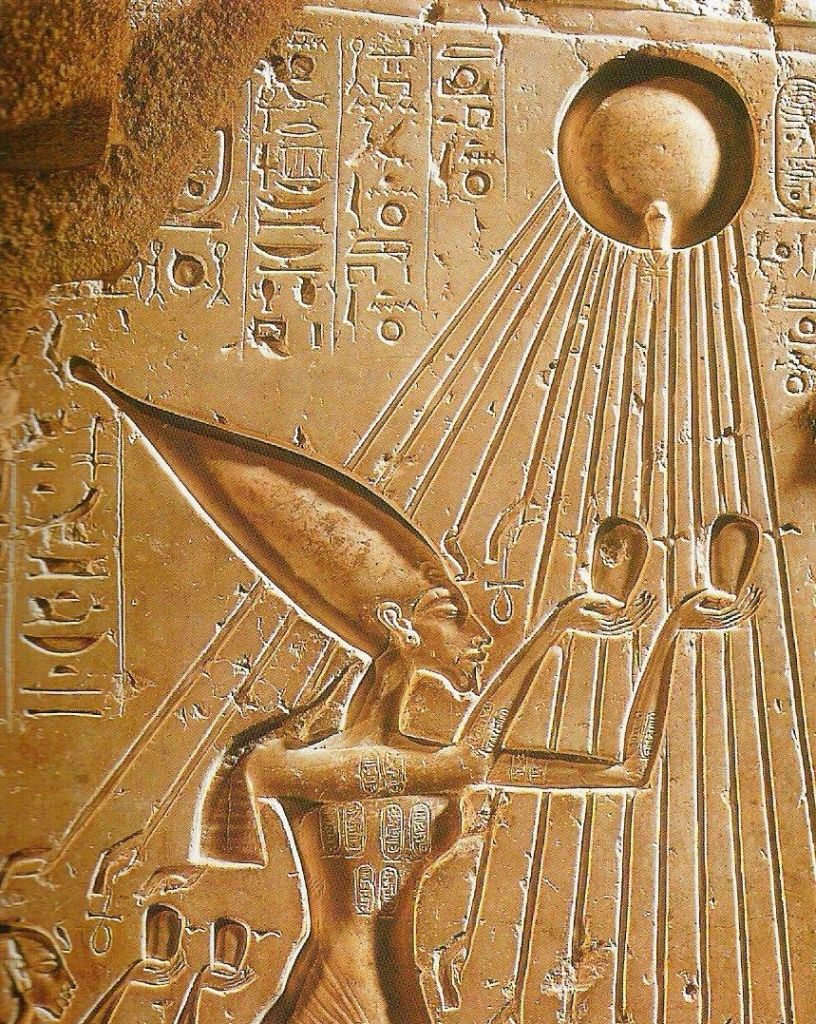
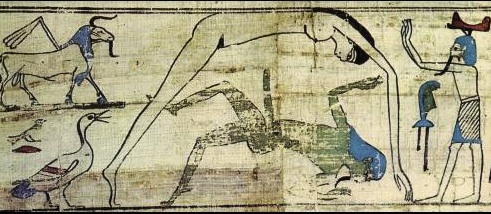
If we start with the human body, we have evidence that the Ancient Egyptians regarded the body as a receiver of energy from the sun as shown in this image.

The Ankh is a symbol of life and is being held up to absorb the solar rays. Today we are familiar with aerials receiving radio and television in a similar manner.

This biological energy is mapped as pervading the entire human body by Acupuncture practionitioners. The cause of the healing was not understood beyond the concept of ‘Chi’ energy, but the effects were, and it is so effective, it is still in use today.

If we follow the idea of the solar energy as associated with a biological energy from the Cosmos, then the seven planets of ancient times, also affect life on earth through their energetic characteristics. In ancient Greece they were deified as minor gods or archetypes, whose influence as precise ‘qualities’, pervaded every aspect of individual and collective behaviour on Earth. Today we call this astrology.

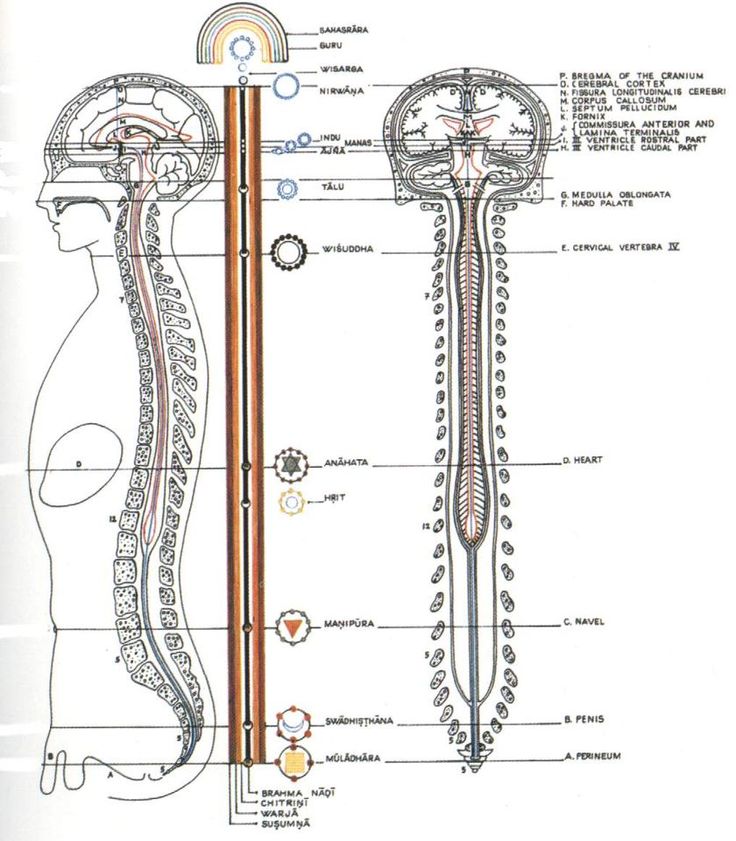
The energy from the planets affects each of the seven life energy nexuses in the human body known in ancient India as Chakras. Our consciousness as human beings is firmly linked with the ‘heavens’ in this way; obeying the Hermetic principle of ‘as above so below, as below so above.’

The Ancient Chinese combined heaven and humans with the planet earth, represented by the pictogram similar to the capital letter E. The evidence for ‘Ki’ is greatest in the form of the ancient structures built all around the globe.

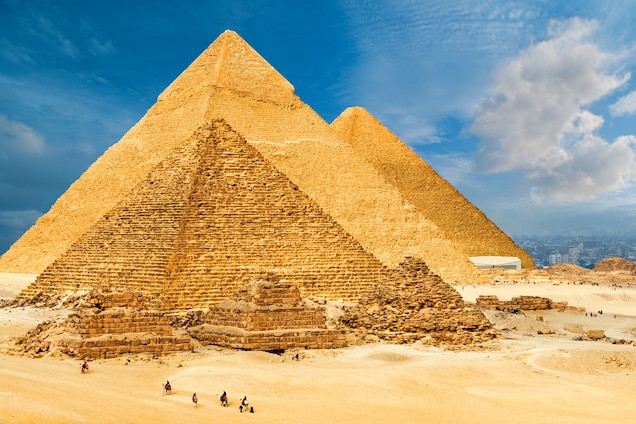
There is increasing interest in the ‘energetic’ characteristics of megastructures such as pyramids, temples, churches and cathedrals, earthworks, roads, earthworks, hill figures, artificial cave networks and megaliths. All across the ancient world these structures were intricately aligned with and connected to this subtle energy associated with the movements of the sun, moon and the planets, earth and water. Modern water diviners are sensitive to the energy associated with underground water and can tell the water’s volume, depth and speed accurately.

Pyramids are found on every continent of the world (including Antarctica) and it is likely they were connected as a global network to balance and share this subtle energy globally; including sharing information. The present ‘world wide web’ is an analogous modern version of the same form and function.

Examination of the physiology and anatomy of the earth shows that this subtle ‘earth energy’ is associated locally with faults and fissures, springs and wells, water falls which were recognised by local indigenous tribes and cultures as ‘sacred’ with supernatural powers.

They were places where the physical third dimension met other dimensions and acted as ‘portals’ for other entities to interact with humans. In ancient times this was more common as humans were conscious of these subtleties and gods such as Athena would appear in human form to give advice, as recorded in ancient Greek legends. These entities overlap with the experience of so called ‘extra terrestrials’ today; more likely inter-dimensional intelligences who have never left planet Earth.

There was and is a mechanical reality to the generation, manipulation and storage of this subtle energetic system. Pyramids, barrows, dolmens and stone circles are a few of the centres of power used to interconnect and store energy for many purposes such as healing and initiation. The burials that took place at the end of civilisations have been incorrectly focused upon by modern archaeologists. If evidence is needed consider relatively modern Gothic cathedrals which were built for the living, not the dead.

This subtle energy was recorded by the psychiatrist Wilhelm Reich and he named it ‘orgone’. He saw that it accumulated in the human body and was discharged in the orgasm. Orgone is attracted to orgone and does not dissipate like heat energy. Nature can be seen to operate in the same cycle of build-up and discharge. The most familiar would be the accumulation of negative and positive ions in the earth and atmosphere, and the electrostatic discharge of lightning.

The ancient megastructures worked in harmony with nature in this way to regulate the natural flow of energy through the landscape in the same way as a capacitor and resistor in an electric circuit.

Weight and the pressure it creates was known by ancient builders to amplify this subtle energy. In a similar manner, quartz and other crystals build up and discharge piezo-electricity when compressed. The lintels over the uprights at Stone Henge and the T-shape upright stones at Gobleki Tepe in Turkey, performed this function as do the pyramids. It is clear that temples in Ancient Egypt, Greece and Italy have too many columns just to support the roof. Their precise orientation to the magnetic flux of the planet, matching proportions with the golden mean and phi geometry of human body, indicate a primary function of sacred edifices as centres for healing, heightened awareness and initiation.

Finally, to experience this energy within one’s own body, there is a Yogic principle known as ‘kundalini’. This is depicted as a snake (or modern static wave form energy ) and is associated with the spinal column; also in wave form. In my view, the subtle energy which the Yogis call ‘prana’ is in a constant state of build up and discharge, before, throughout and after one’s life. There is no single ‘awakening’ moment when the Kundalini rises up the spine as is sometimes described. Rather the motion of the snake is as seen in nature as a perpetual ascension through the energetic nexuses (chakras). The accumulation purges and cleanses each chakra in turn until discharged naturally in sexual union or used for the process of ‘enlightenment’. For this reason and purpose, many mystics were and are, celibate.

The importance of subtlety of this primal ‘life energy’ awaits formal ‘discovery’ and scientific experimentation and explanation. We can be sure at this moment in history that human beings have forgotten what was once known and drove much of human spiritual evolution for thousands of years.

In my view, now is a good time to re-discover what we have lost, particularly as modern archaeology unearths new evidence almost daily. All that is necessary for archaeologists to advance their theories to another level, and replace ‘grave robbery’ with an understanding of esoteric energy; known once as key to the general advancement of human spirituality, but long ago forgotten.

picture credit: Life Sloka

The Cave of Light

Roman Barcelona – picture Eportfolios@McCaulay

There is a city plan used by the Romans which is a circle divided vertically and horizontally into four sections. The divisions form streets aligned to the four points of the compass.

The circular form aligned to the cardinal directions had been used by many other cultures before, most notable being the great Henge’s found around the world. Research into these has revealed their astronomical alignments predicted precisely the solar, lunar and stellar cycles. The motivation for understanding these cycles was to appease the instinctive and intuitive desire to be in harmony with nature. Ancient civilisations depended on the cycles of nature for their next meal and their most holy festivals.

There are four principle solar annual events; the equinoxes and solstices. Using the solar calendar the winter solstice occurs in December, the summer solstice in June, the spring equinox in March and the autumn equinox in September; on around 21st and 22nd days of these months.

These correspond with four sacred festivals that originate in ancient times and are celebrated to this day, even if they have morphed from their origins.

In the most simple way we can divide the six months from September to March as being ‘winter’ and the subsequent months as ‘summer’. There are six months of ‘darkness’ and six months of ‘light’ in the broadest of terms.

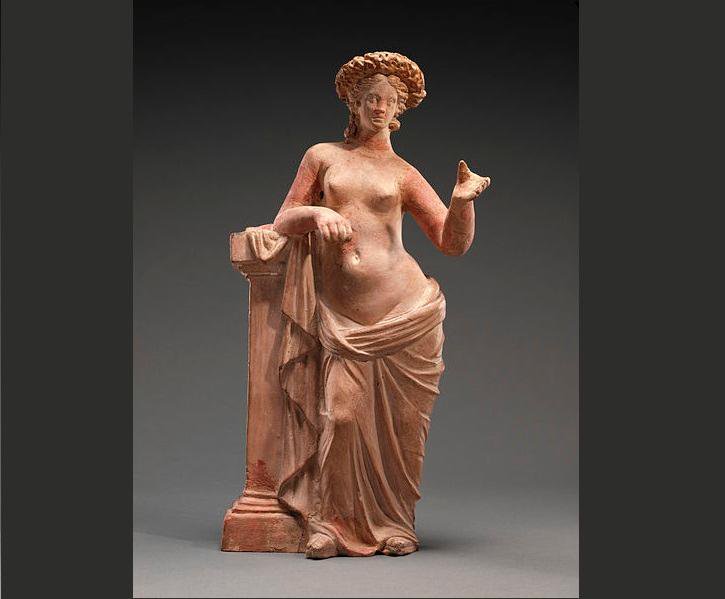
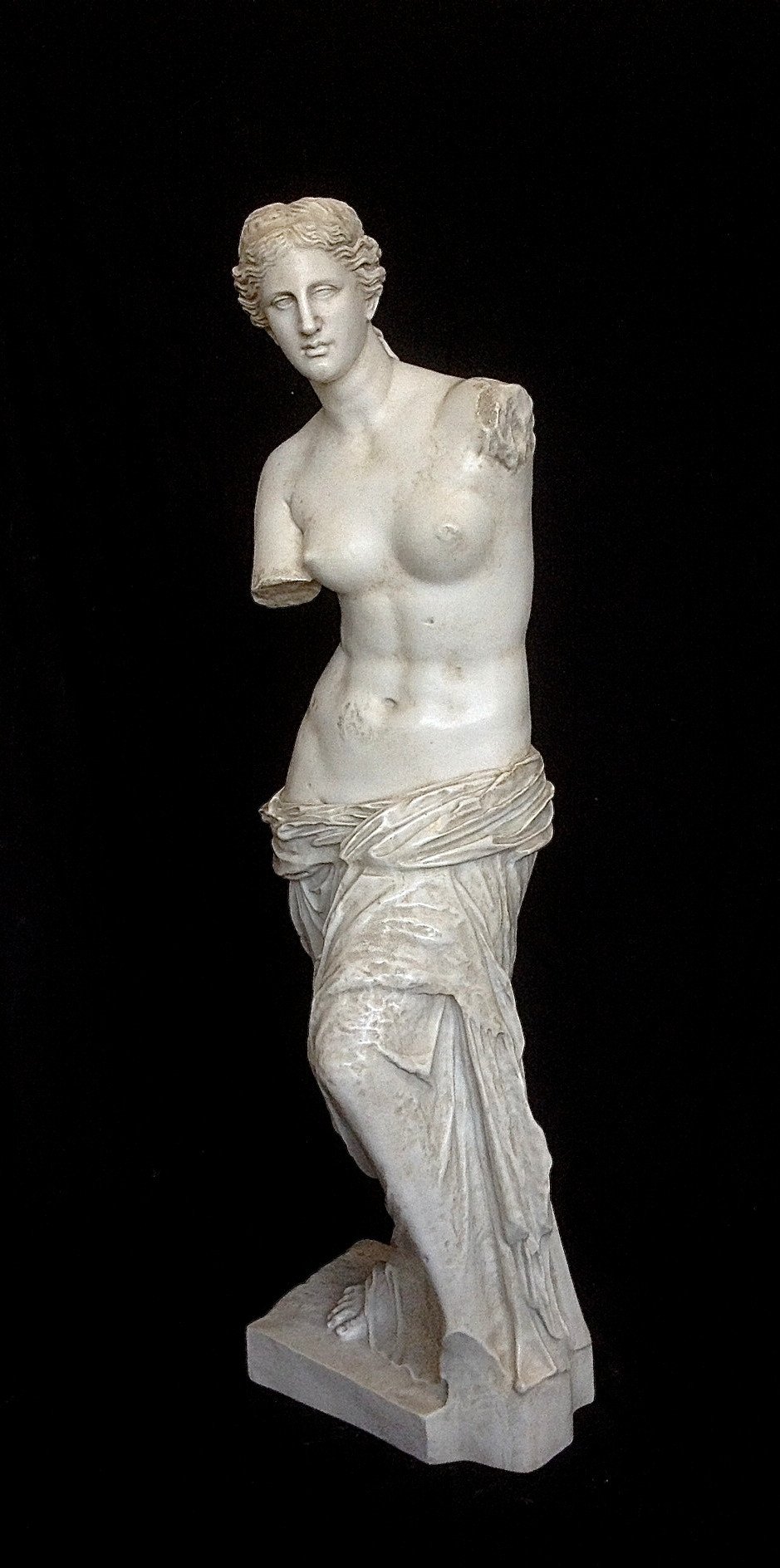
In the myths of ancient Greece and Rome, the goddess Aphrodite or Venus lived in the light or ‘Heaven’ and Persephone in darkness or ‘Hades’. Both were in love with Adonis and appealed to Zeus to decide how they could share him. His decree was that they should have him for six months of each year.

Aphrodite – picture Smithsonian Magazine

The figure of Adonis is in this way critical to understanding the importance of the movement of the seasons in ancient times. Nature lived and died quite literally, as did their harvests, from these forces. If the harvests failed, famine turned nature and cities into wastelands.

April is the cruellest month, breeding

Lilacs out of the dead land, mixing

memory and desire, stirring

dull roots with spring rain

The Wasteland – The Burial of the Dead – (opening lines) by T.S. Eliot

This uncertainty placed enormous importance for people to give proper respect to the ‘gods’ and nature through ritual worship.

Within the solar year are overlaid the twelve ‘moons’ or months within each solar cycle. The phases of the moon and sun combined were known then and to this day, to govern the process from seed to harvest. This is naturally between spring and autumn, the exact length of this season being determined by latitude. Nevertheless, the spring equinox is a date used today to fix the date of the festival of Easter. This is the Sunday after the first full moon after the 21st or 22nd March, proving the importance of the moon combined with the sun in their influence for humans and everything on earth.

We know this because of the plethora of ancient gods and goddess whose lifespans fitted into these celestial cycles. Because spring is the ‘rebirth’ of nature there are corresponding stories incorporating the ‘death and resurrection’ cycle. In the Christian calendar this is known as ‘Easter’ but it is known that that the goddess Astarte preceded this in the ancient Near East. Much later Ostara ( medieval Germanic) gave rise to the traditional Easter symbols of the moon gazing hare and eggs.

Ostara by Johannes Gehrts

What is less well known in our current times is the antithesis of this ‘spirit of new life’. There is a tradition of the deaths of various ancient gods and goddesses at this time; the goring of Adonis by a boar, Dionysus with the first leaves from grape vines, the rape of Persephone and the death of Hyacinthus. Each of these however is given a heavenly reprieve by a resurrection. Adonis was turned into a Myrtle tree, Persephone released from Hades for six months of the year and Hyacinthus turned into a spring flower, the Hyacinth by Apollo – the Solar deity.

Apollo and Hyacinth – picture Wikiart

It was natural therefore when the Roman Church fixed the date for the death and resurrection of the Christ Jesus, to choose the beginning of spring in the celestial manner described above. The church fathers did not need to know about the strong and balanced influence of the sun and full moon at this time of year, but relied upon the old method of supplanting old ways with a new religion using the previous festivals.

Adonis is an interesting mythological character as for many scholars his festival occurred in spring. In the city of Byblos (in modern Lebanon) where he was born and worshipped, the river ran red each year with the spring rains mixed with red earth. This fertility symbol and literal fertility for the fields, remind us of the menstrual cycle in women, bearer of eggs; nature’s cycle is the same as the human cycle.

And yet, according to Rudolph Steiner in his lecture on Easter*, the ‘Festival of Adonis’ was celebrated at the time of the autumn equinox rather than spring.

(*available on You Tube)

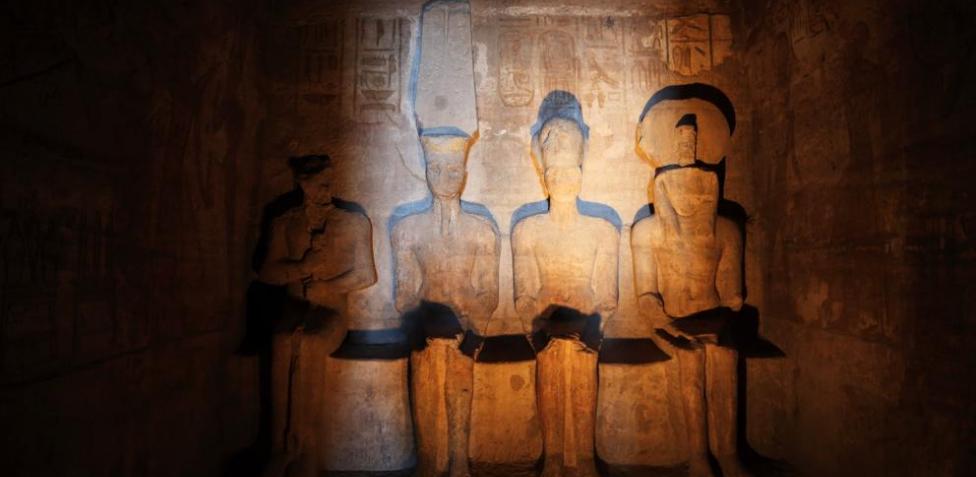
Numerous ancient temples (the Great Temple of Abu Simbel, Egypt) and dolmens (New Grange, Ireland), are aligned to allow the solstice rays of sun to penetrate an entrance passage into a womb like chamber and fill it with life giving light.

Abu Simbel solar solstice – picture La Vanguardia

Steiner describes the ‘Feast of Adonis’ as being conducted by women in pagan societies. They would sow seeds like cress, on a thin layer of soil in a broken pot shard. After tending them during the spring, the summer drought would kill the plants. After two days of ceremonial mourning, these were ceremonially processed on the third day to the sea or a nearby lake to be immersed as an ‘image’ of Adonis. Adonis is therefore a tragic god who is ‘born to die’ as much later was written into the story of the Christ Jesus. Further evidence is contained in Sir James Fraser’s prodigious work The Golden Bough (an anthropological study of Mediterranean religions) claiming the Jesus is a fertility god in the lineage of Adonis.

The Entrance Stone to the Garden Tomb – picture Inspiration Cruises and Tours

The references to dying processes taking three days, is described by Steiner as being a reference to an ancient understanding of the human dying process which also takes three days. The first day completes the death of the physical body, the second the ‘ether’ body and the third the ‘astral’ body. This is an theosophical categorisation similar to the ‘body, soul and spirit’ of the Hermeticists or ‘animal, vegetable and mineral’ of the Idealists. Either way, man and nature take three days for the process of dying or ‘transitioning’.

It is a fact that the dying sun the during winter solstice, stops moving on the horizon for three days, before the days lengthen again. The circular stone rolled over the tomb in which the body of Christ Jesus was moved after a similar number of days, referencing him to be a solar deity; a ‘sun of God’.

The true dates of the life of Christ are not stated in the Bible, although there are a few clues. If we are persuaded to imagine the nativity to take place in the winter, then there are suggestions that state otherwise. The first is that shepherds were out in the fields at night, indicating that they were ‘lambing’ – a season that all farmers know. A ‘census’ of people is unlikely to be held in the dark and cold winter months for practical reasons; the Romans were practical administrators. The ‘star in the east’ is likely to be Venus which is well known by agricultural communities, to rise in the early morning in the East in the spring.

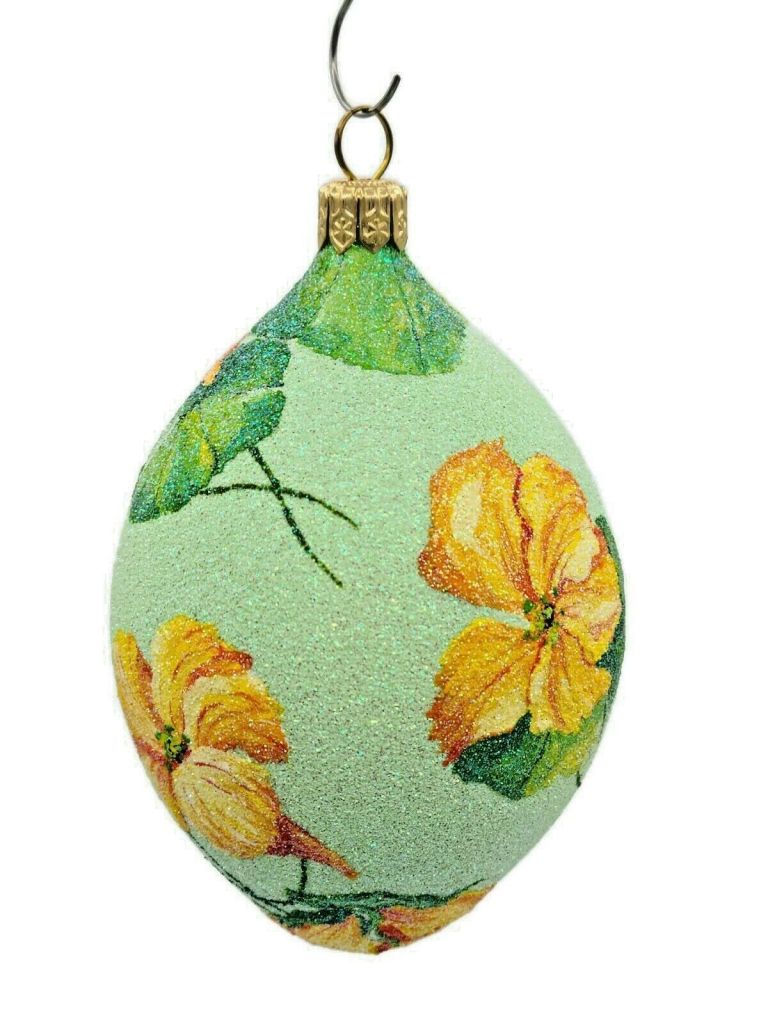
Nastrium Egg – picture The Ornament Emporium

Finally, it is curious how men travelling east were following a star appearing in the east. It is probably, in my view, that this information is coded and the direction east indicates a time of year rather than direction of travel; after all, their direction of travel is not important information to progress the story and a good story teller would omit this. It is only included to complete the sub-narrative.

The east road of the city is of course corresponding to spring on the solar calendar and the time of year you would expect a ‘sun god’ to be born. So, whether the ‘Christ Mass’ is held in the winter, spring, summer or autumn is open to interpretation and would not be contradicted by the Bible.

What modern observers would do well to recognise is not the dogma but the symbolism of the Christian churches. The ‘mass’ is confidentially encouraging congregations to drink blood and eat human flesh on the solar day of the week whilst facing the rising sun.

For me, the symbols are only partly transcendent, as we feel in the energy of spring, while carrying more than a hint of the macabre death and the dying sun/son.

That corpse you planted last year in your garden,

Has it begun to sprout? Will it bloom this year?

Or has the sudden frost disturbed its bed?

poem: The Wasteland 1922 – The Burial of the Dead – T.S. Elliot

HS2 Where?

Twenty Reasons Why HS2 Might Not Be the Promised Public Transport Option of the Future

There is a project in England called HS2. It stands for High Speed 2 and is a plan to build a high speed rail route between London and Birmingham and then beyond. The stated justification for it by the government is to move the political centre of gravity away from London and nearer to the Northern and Midland cities; the so called ‘power house’.

These cities have conventionally voted for the socialist or Labour Party and HS2 was originally a Labour government idea in 2009. Why it has not been cancelled by the Tories in my view is that there may be some political gain for the Conservative and Unionist Party in making Westminster ‘closer’ to the North. In the last election these cities did largely swing to vote Conservative for, no doubt, many reasons.

One skill that I believe is essential for politicians is ‘problem solving’. There is a science to this subject and the first question to be asked in solving a problem is; what is the problem? As much as this may seem obvious, it is heart breaking to observe how much money is wasted on national projects that turn out not to solve the problem. I am reminded the airport in Spain that has never opened and you can probably think of some ‘vanity projects’ in your local area. ‘Vanity’ may be one reason those in power do not ask the right questions. Or perhaps it is the Dunning-Kruger Effect…

(The Dunning–Kruger effect is a hypothetical cognitive bias stating that people with low ability at a task overestimate their ability), : source Wikipedia

…that makes politicians believe they understand the problem perfectly and have the perfect solution.

An Idiots Guide to Digging a Hole for Yourself
:
credit Reseachgate net

Another common pitfall for ‘problem solvers’ is the temptation not to apply a new solution when the original one does not work. This is known colloquially as to ‘dig a hole for yourself’. Rather than abandon the first location to dig, the blinkered view and or fear of admitting a mistake and or wasting time, money and effort… compels decision makers to keep applying the original problem solving technique. Feedback is rarely sought, dissenters are ridiculed and rational insight is lost in the rush to jump into the deepest hole ever dug…

The HS2 project in my view is a perfect example of this and even the PM used this metaphor…

Boris Johnson has suggested the only answer to the “hole” enveloping HS2 is “to keep digging”. BBC News 31 January 2020

So far three billion pounds has been spent on demolition and railway infrastructure. To change now would mean wasting all of this money and admitting a mistake. To admit to such things is political suicide, and career politicians need to impress upon their voters that they know what they are doing. This is what we see at the moment.

Personally, I would vote for any politician who is prepared to describe the white elephant under construction as just that. Here is my ‘off the cuff’ list of reasons to abandon the project. I am sure the list could be even longer but it hardly seems necessary. It is not all negative. It contains the precise locations where treasure can be found, should the current hole ever be realised to be just full of air.

Here is my list of strategic reasons to abandon HS2;

1.The people who live in the Midlands and North of England desire most to have better rail links between the East Coast and the West Coast of England and connecting the cities in between.

2. The people who live in the Midlands complain that the existing rail service to London is at full capacity and needs upgrading. This could be achieved quickly and relatively cheaply with additional conventional infrastructure and rolling stock.

3. HS2 is planned to go initially North South, adding a link to London which is contrary to stated intention to move the ‘centre of gravity’ of the country. The word ‘London’ is the clue.

4. The country has borrowed a vast quantity of money during of the Covid -19 pandemic. To reduce this burden ( and presumably vulnerability to any future rise in interest rates) it is proposing to reduce aid to the poorest countries in the world. In doing so it risks losing the ‘world leader’ status it aspires to. One obvious alternative is to admit it can no longer afford to pay for HS2.

5. Since the pandemic, people have become used to communicating using the internet. Moving physically between locations has become less important.

6. Trains are old technology. They have been improved as much as they ever can be and now only new technology should replace it.

7. High speed trains are at their most economic on long distances such as found on the continent of Europe, North America or Australia. As any continental traveller will tell you, the UK major cities are relatively close to each other and journeys short in comparison with countries where high speed trains have been a success.

8. Fast, long distance trains are rivalled by aircraft. In Spain, for instance, internal flights are cheaper and quicker than the extensive high speed rail network.

9. Trains are rivalled by new technology such as the Hyperloop. They are likely to become superseded in the next few decades, just as railways took over from canals. Technology and economics are more sustainable drivers than political policies. New technology by-passes the decision making processes of government. In the era of present rapid ‘advances’ in technology governments must work with new technologies in the way that voters do.

10. A large proportion of ‘clean’ electricity is produced by fossil fuel power stations and nuclear power stations. The first is neither clean nor efficient. The nuclear option is becoming more and more expensive (as decommissioning costs are included) and prone to the dual risks of nuclear accident and the problem of the indefinite safe storage of nuclear waste on planet earth.

11. The costs of major infrastructure projects can be reasonably expected to double by the time they are completed. The original estimate for HS2 in 2005 of 37 billion pounds has already doubled to 78.4 billion pounds by 2015! (according to Institute for Government statistics). At this rate of increase it will have doubled again by 2025 and that is only the estimated cost. There are inevitably going to be delays and unforeseen extra costs. This during predicted future decades of Covid 19 austerity.

12. Europe is joined to one nation by the Channel Rail Tunnel. The United Kingdom is connected to twenty seven countries by the Channel Rail Tunnel – and beyond. The train from Berlin to Manchester appeals to a minority who will either meet virtually, go by air or just not choose to do business in the United Kingdom.

The List Extends into the Tactical Reasons to Abandon HS2

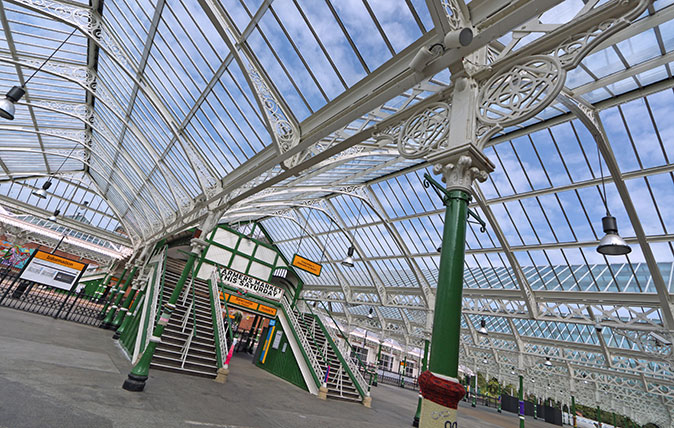
What have the Victorians ever done for us? picture credit Country Life

13. When the Victorians built railway stations, they were able to build their palace-like stations in the centre of towns and cities; just where travellers wanted to arrive! Due to high land values and ethical (archaeology, listed buildings, city centre decay, the housing shortage ) concerns around compulsory purchase, this is no longer practical. Most HS2 stations will be built outside the towns and cities they serve. The connecting transport will take away some or all of the time gained (1hour 21 minutes reduced by 29 minutes) by using a high speed train. An example I experienced many decades ago, was in Brisbane. When you arrive in Brisbane rail station you have to stand and wait for a bus or taxi to get you to the centre of Brisbane. I believe a local train has now reduced this problem but the insanity of these slow ‘connections’ remains.

14. Simple analysis of the problem will reveal there are many means to connect the regions of the UK other than high speed trains. The best and perhaps most cost effective of these, is to improve connectivity using the internet. This has the potential to allow passengers to work during their journey on conventional trains. This will make the speed of the train less important.

15. A new train route will cause considerable loss and damage to the countryside and communities through which it is intended to pass. The least of these is the one hundred ancient woodlands which will be destroyed. At a time when the country has been promised it will be more self sufficient in food, farms will be significantly negatively affected.

16. One hundred ancient woodlands, fauna and flora and in areas of outstanding natural beauty and special scientific interest will be permanently harmed or eradicated at a time when the environment is being prioritised, not least because of climate change.

17. Trains are a less safe means of travel than flying and in the future, the hyperloop. The later will be so safe that the prototype has already been trialled over a short distance by it’s designers and backers, personally. Hyperloop is frictionless so will require a fraction of the amount of energy required to propel an ordinary or high speed train.

18. To fit the broader brief of ‘increasing connectivity’ within England, new trains and routes should be started in the North. Phase One HS2, starts in London and therefore does not benefit those in the North unless they want to go to London.

19. The money spent by the Test and Trace and PPE procurement was approximately 57 billion pounds. This is in the same ball park as the current estimated cost of HS2! If HS2 costs reach 106 billion pounds, then this is the same as the cost of running the National Health Service for a year. Politicians have to be asked why not run the NHS for a year with this money?

20. The High Speed train network will not serve the satellite regions of the United Kingdom; known as Northern Ireland, Wales and Scotland. These areas already resent to control of an England-centric government based in the south of England. In my view this may become the straw that breaks the camel’s back and play into the hands of the Nationalist Parties of each country, the first to fall being Scotland followed by Northern Ireland, then Wales and then Yorkshire – Cornwall?!

I have not included any benefits from a High Speed train network in the United Kingdom.

Such as list should always be included in any rational ‘problem solving’ assessment. My problem is, I can’t see any benefits, except some good publicity photos of dolphin-nosed trains and grinning politicians in high visibility jackets.

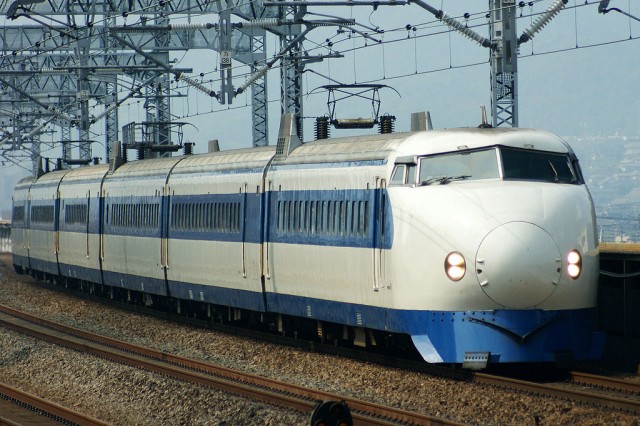
If there ever were benefits, these should have been gleaned after the second world war when the UK’s industrial cities had been demolished. Despite ‘winning’ the war in 1945 the UK was bankrupt. Japan ‘lost’ the war and in the 1970’s built some of the first high speed trains – the famous Skinhansen.

The Right Technology at the Right Time in the Right Place – Shinkansen

Perhaps some would argue that an electric train speeding along the tracks is much greener than the cars on the motorway running parallel. With the proviso that the National Grid is powered by carbon neutral fuel sources, this is true, but certainly by 2040 (as phase 2 is due for completion), cars and lorries are going to be mainly electric or hybrid. Any ‘green’ advantage to all trains is slowly disappearing.

And in the midst of a pandemic and in preparation for the next, is not personal transport going to be preferred to public transport?

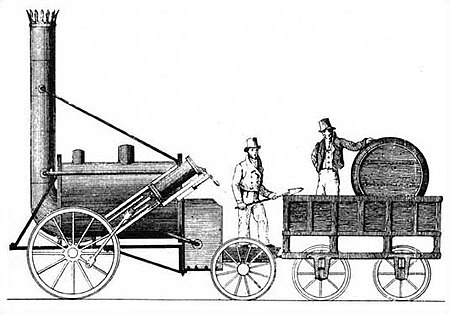
What would Robert Stevenson be thinking if he saw the final phase of his invention being acted out? What would he say about today’s ultra wealthy taking personal travel into the edges of space and is that why he called his invention Rocket?

1829 Rocket – Still the best public transport concept applicable two hundred years later?

Ancient Light Part Three

In Part One of this trilogy entitled ‘Ancient Light’, I have described the curious electrostatic qualities of many ancient monolithic structures. They appear to be designed principally to concentrate weight upon piezoelectric rocks. This produces subtle effects that can be sensed by the human body and mind, even to the present day.

I have also examined the unique design of the King’s Chamber in the Great Pyramid of Cheops as an example of use of this same principle. The highly selective construction techniques suggest that static electricity was intentionally generated, stored and exploited in the pyramid. The Arc of the Covenant operates as a capacitor potentially discharging static electricity as an ‘arc light’ and even lightning from the pyramid’s peak.

In this final section I shall describe the ancient knowledge of the production of monatomic gold shared (and possibly inherited) with the Mesopotamian civilisations.

There are depictions of gold mined by humans for the Anunnaki ruling Mesopotamia in ancient times. Humans were possibly created as a slave race mining gold for their rulers. Even as far away as South Africa, Zulu legends speak of a time when “visitors of the stars” came to dig gold and other natural resources.

For more insight into the mystery of the ancient gold mining across Earth the work of Michael Tellinger is the authority on the subject.

Interestingly there is little in the Mesopotamian drawings to suggest a use for their gold. What there is however is a remarkably common theme in visual representations of two ‘demi-gods’ standing either side of ‘the tree of life’ holding a bag and cone shaped object.

When examined closely the ‘cones’ appear to be made of many spherical objects which have been formed together into the shape of a cone. It is always held at mouth level as if in the gesture to eat. It is surely no coincidence that this same image appears in Ancient Egyptian hieroglyphs.

Akhenaten Offering / Honouring Bread to the Sun god Ra and the life giving ‘solar energy*’ symbolised by the Ankh at the end of the ray.

The best line of investigation that allows modern readers to penetrate this mystery, comes from a renowned Egyptologist Sir Francis Petrie of University College London. He produced a report for his sponsors on a trip he made in 1904 to Mount Horeb in the Sinai Peninsula.

The full story is described in detail by Sir Laurence Gardener in the excellent video below;

Gardener describes Petrie’s discovery of an ‘alchemical laboratory’ in an Egyptian Temple on Mount Horeb ( later Mt. Sinai), dedicated to the goddess Hathor. Within the temple store rooms, is found 50 tons of a mysterious white powder, conical stones, metallurgists crucibles, tanks and basins. Much of the design stylisation on these and other objects is Mesopotamian. Inscriptions mysteriously refer to ‘Mfkzt’ (pronounced Muf Khut)’ and ‘bread’ and ‘light’.

Petrie decided that the use of this laboratory went back to the very first Ancient Egyptian Dynasty and continued in production until the final 18th Dynasty. Laurence Gardener describes the story of the flight of Moses and the Israelites. Moses famously went up Mt. Horeb (or Mt Sinai, as it was later called) where there was seen fire and smoke at night. We are told that this came from an Alchemical Laboratory where Moses would have observed the transmutation of gold into a powder. Exodus describes how Moses burnt the golden calf in the fire and ‘ground it to a powder’.

We should be aware that Moses was trained as a priest by the Egyptians. His great grandfather was Thutmoses 3rd, who reorganised the ancient mystery schools of Thoth and founded the ‘School of Master Craftsmen’ at Karnak. They were called ‘The Great White Brotherhood’ because of their preoccupation with a mysterious white powder.

Hathor picture credit Worldhistory.org

In the tradition of the goddess Hathor, a cow and a nursing goddess, came the ‘powdered milk that;

‘…gave the Pharaohs their divinity’.

It is no secret today that gold can be transmuted into a white powder in a furnace and this powder confers good and longevity, (common to Royal families even to this day!). It is called ‘monatomic gold’ or ‘ormus’ and can be even purchased on E-bay!

‘There is nothing new under the sun’ – King Solomon

Is it possible that in large quantities over long periods of time, this powder may alter human consciousness to a higher ‘god-like’ level? Clearly the Mesopotamians and Ancient Egyptians thought so, to the extent that they must have processed large amounts of precious gold to deify the Pharaoh. After all, the role of the Pharaoh was to be both man and a god, and achieving this status whilst living, was his or her aim.

Just to explore the Old Testament, Moses story a little more, there is the narrative of ‘Mana’ appearing on the ground like dew ‘from Heaven’. This mana could be made into cakes and consumed and appeared when the Israelites had run out of food. Can we conjecture that this substance was also powdered gold placed there overnight by priests for the people, until we consider a clue from Mesopotamia. Here the name for powdered gold was Shemana and it is more than tempting to take this as being identical to Mana.

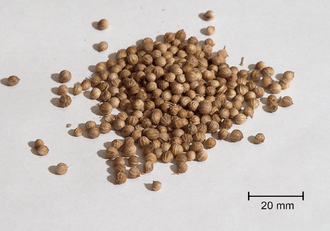
There is a discrepancy in appearance – or perhaps it appeared in two forms. The ‘mana from heaven’ described in Exodus as feeding the Israelites, is described as being ‘like a coriander seed in size and shape’. This appearance resembles the ‘seeds’ that make up the cone shapes in Mesopotamian reliefs.

Corriander Seed – picture credit Wiki

And thou shalt set upon the table shewbread before me always’

Exodus 25:30

This extract from Exodus show us firstly how important ‘shewbread’ (or white powder cakes) was. The cone shaped stones found by Petrie in the Temple of Hathor on Mt Horeb, may well have been moulds with which to make cone shaped vessels to hold or mould the shewbread.

Laurence Gardener tells us that the 4th Dynasty was the era of the pyramid building where Hathor is always depicted with representations of the Pharaoh. We can imagine a society in which the workers drank beer, the middle classes and aristocrats used a narcotic derived from the blue water lily and Pharoahs ate Monatomic gold.

With the Ark present in the King’s Chamber of the Great Pyramid, I have described in part two how high voltages and plasma could have been generated between the wing tips of the Cherubim. Such a high temperature might have been used as a furnace to turn gold into the precious white powder but I do not believe there is any evidence for this. Such a process would have produced smoke and waste materials and the interior of the King’s Chamber is remarkable for being clean.

The alchemical creation of white powder was in furnaces in the Temples, not in the pyramids, in my view. But there is another cleaner method for producing monatomic gold, which could have been one of the functions of the pyramids.

As a clue, one of the contents of the Ark of the Covenant, as well as the tablets on which the commandments were inscribed, was some Mana. According to the Book of the Epistles, this was possibly held in a pot made of gold.

Modern pyramid experimenters have found many extraordinary characteristics even in scale models of pyramids. Modern experimenters Mary and Dean Hardy of Allegan, Michigan took a gold coin and hung it at the King’s Chamber level of a Great Pyramid model. After some time the gold coin got a clear “oil” on it and the gold was etched away under the drops of oil. This oil can be reduced to the white powder known as Orm or Monatomic Gold.

From my own personal experience I once worked for an architect in Australia who described himself as a ‘modern alchemist’ and had a laboratory over our work place that he regrettably never showed me. I remember him telling me however, that it was possible to produce oils from metals, a fact that struck me at the time, as worth remembering.

An unlikely scientist in this story is Sir Isaac Newton. He was an alchemist for the second part of this life and deeply interested in the Bible and the pyramids. The following extract is from a recent sale of some manuscript belonging to the great scientist.

“He was trying to find proof for his theory of gravitation, but in addition the ancient Egyptians were thought to have held the secrets of alchemy that have since been lost. Today, these seem disparate areas of study – but they didn’t seem that way to Newton in the 17th century,” Gabriel Heaton, Sotheby’s manuscript specialist, told The Guardian.

The traditional quest of alchemists is that they tried to turn ‘lead into gold’. Such a ‘story’ in my view, is yet another example of a ‘red herring’ to hide the truth. The transmutation of gold using a ‘secret fire’, is the true ‘secret of alchemy’. Chemists such as Nicolas Flamel called the Shemana, Mana, white powder, Ormus – the Philosophers’ Stone.

Oil of Gold – picture credit Kymiaarts.com

The ‘secret fire’ may not be actual fire but the concentrated energy within the pyramid at the location of it’s inner chambers, where gold transmutes by the action of invisible fire or ‘energy’.

The findings and analysis of his ‘white powder’ by Sir Flanders Petrie where never published. This may have been because it contradicts some elements of the Old Testament. It may also be that the knowledge of the philosophers stone and it’s effects was desired to remain secret by those in powerful positions who already knew about it…such as the Freemasons and other Societies in possession of and trusted with guardianship of ancient secrets.

There is a twist in the story, because the white powder has been analysed in modern times by the physicist Andrei Sarhakov. He describes it as ‘exotic matter’ because one of it’s characteristics was that it weighed less than nothing! In other words it was not affected by gravity. It’s ability to levitate itself could be transferred when placed on other matter.

These gravitational effects remind us of the interest that Sir Isaac Newton took in developing a theory of gravity that has advanced civilisation to this day! Was he also exploring the possibility of ‘anti-gravity’?

Even more extraordinary is that Sarhakov found Orm could move into another dimension if we want it to, a concept familiar to Quantum physicists and modern mystics, but which the general public find hard to comprehend.

Interdimensional Travel – not new to mystics and of greater benefit than physcial space travel…

This three part story is one with many ‘loose ends’ as a pessimist would describe them or ‘exciting paths to explore’ for optimists. If we accept the possibility of knowledge, nay enlightenment, in the ancient past that is but a memory today, the narrative becomes just slightly easier to tie together.

The great unknown remains the ‘energy’ associated with the monoliths and large buildings from our past. We know that these buildings are found all over the world and were inspired by known effects on human consciousness . All of this was enhanced to a superlative level by the ingestion as ‘bread’ of a mysterious white substance which today is called monatomic gold.

I conclude with a quotation from the rear cover of John Michell’s classic book;

‘The View Over Atlantis’;

*’The entire surface of the earth is marked with traces of a gigantic work of prehistoric engineering, the remains of a once universal system of natural magic, involving the use of a polar magnetism together with another positive force related to solar energy’.

There remains a great mystery about this energy known as ‘Chi’ and many other names. What we can be sure of, is that there is no smoke without, fire.

Ancient Light

Throughout the period known as the ‘Stone Age’ we find a variety of structures made with massive stones called ‘monoliths’.

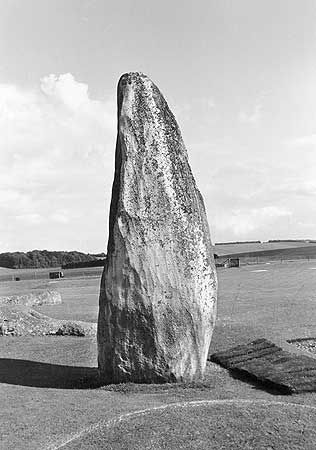
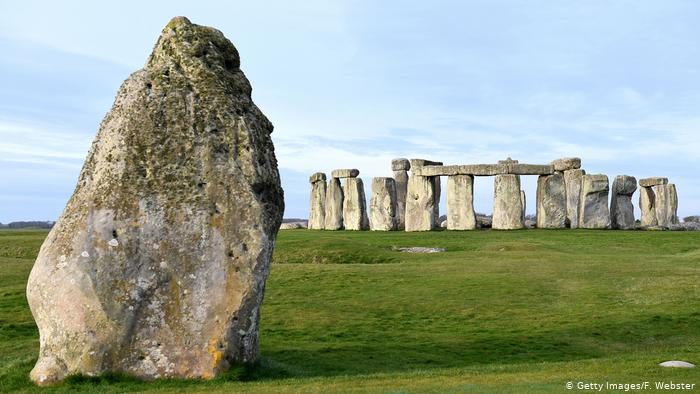
Stone Henge Monolith

Exactly why so much time and effort was expended to create them is uncertain, however I shall endeavour to cast some light on a subject that has fascinated me for a lifetime.

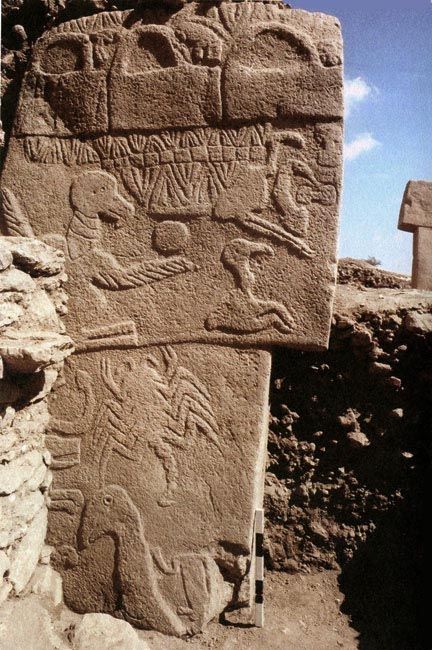
Some of the very earliest such structures have recently been discovered in modern Turkey, what was earlier known as Anatolia, at a place called Gobleki Tepe. I shall draw your attention only to the large vertical monoliths which are unusual for both their ‘T’ shape and incised decoration. The question is; why the T? This shape is clearly top heavy but perhaps that was the intention, to make the stone as heavy as possible. Let us look at some later examples.

One of the most iconic stone circles is Stonehenge in Southern England. The giant horizontal stones in the ‘trilathons’, again place extra weight on the vertical uprights for no obvious reason. They could have stood upright and detached as is more commonly found.

Stone Henge in Wiltshire England picture credit pw.com

Many standing stones exist in the landscape on their own rather than in circles or lines. The standing stone pictured at the begining, is interesting in it’s shape and sheer size. It is pointed at the top which is so common must not be accidental. There are two clues here then which are scale and shape of monoliths.

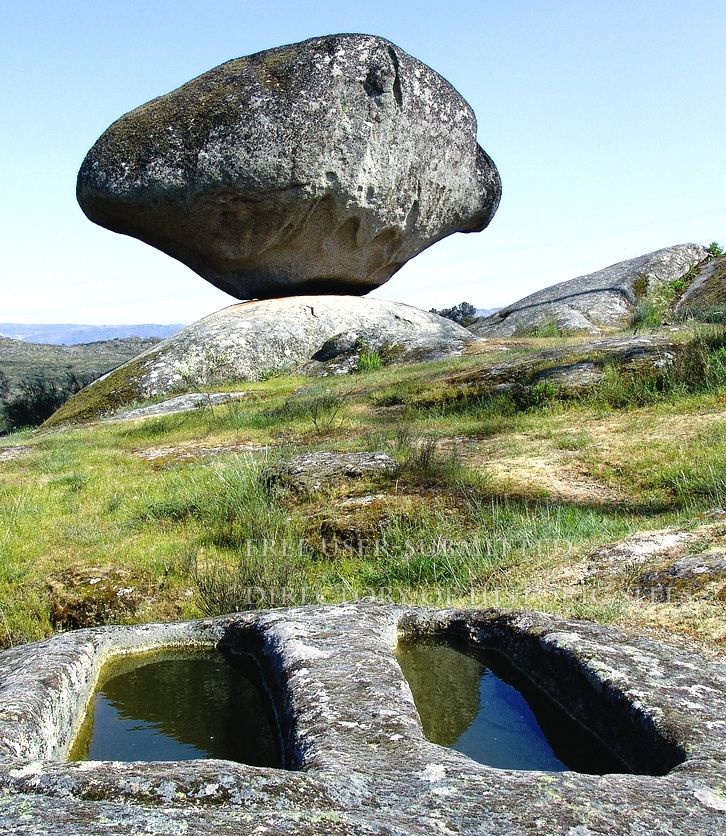
There are also ‘balancing rocks’ and here the shape at the base brings enormous pressure onto the base of the rock.

An inversion of this principle of high localised pressure, is seen where a huge monolith is balanced on top of three vertical stones that have been deliberately pointed. This creates enormous pressure at the point of contact.

None of these structures was intended as shelter or domestic reasons. They are clearly ‘sacred’ in purpose leaving two monolithic questions why this stone why this type of rock and why this shape?

Modern archaeologists have been very successful in analysing the material found at these sites, but because of a materialistic bias, ignore further ways of interpretation. For instance most ancient structures are aligned to underground terrestrial currents as evidenced by the dowser Guy Underwood in his book The Patterns of the Past. In this book he proves that studying the stones as energetic as well as material, opens the mind to new possibilities.

When a stone containing quartz, such as granite, is compressed, a static electric charge is created. This is called ‘piezoelectricity’ and is used today in quartz watches, lighters, even ink jet printers. In order to create the enormous compressive force required for this effect, a large pressure is needed. This just happens to be what is found in ancient monoliths as already described.

It is an extraordinary fact that a 1 cm cube of quartz with a 2KN (500 lb ft) force correctly applied, can produce a voltage of 12500 volts! This is not then a imperceptible effect in nature. Remember that lightning can produce millions of volts in the atmosphere and is both common and natural.

The human body works partly by electrical stimulation in nerves. The heart and brain would not function without volts. It is not surprising that dowsers, such as myself, have experience strong energetic patterns at ancient sites. We can trace energy associated with underground water courses, fissures in rock, caves, volcanic plugs, sacred buildings and many other common landscape features. Animals are responsive to this energy as well with cows selecting underground spring sites to give birth as an example.

There is an effect on the human psyche and emotions for which there is not the possibility to prove here as it is experiential, however the reader is encouraged to explore ‘dowsing’ as most human beings have this additional sense. I contend that we are sensitive to this energy because our body mind unity can be ‘charged’ by it so as to produce beneficial effects such as healing, calming of body and mind and at it’s highest level, enlightenment.

It is therefore reasonable to propose the ancient structures were constructed to produce a natural ‘spiritual’ experience. Sitting in or near such structures for a period of time and or sleeping overnight, can produce ‘supersensory’ experiences such as dreams and visions of extraordinary significance.

The Oracle at Delphi in ancient Greece for instance, gave the female seers their supernatural visions directly because of their location in the underground caverns.

The strength of the terrestrial energies found in these ancient sacred places, is dependent on the size of the structure or series of structures, the unique formation of the location within the landscape, alignment astronomically, geometric proportions and shapes, time of day and season, solar and lunar alignments, sensitivity of the seer or aspirant.

The system of alignment of the human consciousness with nature in order to bring the clarity of mind known as ‘enlightenment’ is therefore highly complex and libraries have been written on the subject.

I highlight the effects of piezoelectricity above as little has been recorded about this and my observations suppositions are largely original and or from the collective unconscious. I include it in particular because I believe that it plays a significant part in one of the most famous sacred buildings, the Great Pyramid of Giza, in Egypt.

A Kirlian Photograph of model pyramid geometry

I shall present my next blog as an in depth study of this last remaining Wonder of the Ancient World and still our best clue as to what ancient people did and believed and what we are still capable of doing today, perhaps even more so.

The Arc – part two

My personal interpretation of the flood-myth story departs from the account in the Old Testament of the Bible. I take issue with the simplistic account of wild animals compliantly lining up in pairs. We are told that the majority (seven of each) of the animals were domesticated, not wild and selected as food for Noah and his tribe. Therefore, I suggests that the only live animals taken onboard the ark were domesticated. Could it not have been that a considerable amount of work had gone into transforming wild species into domesticated varieties?

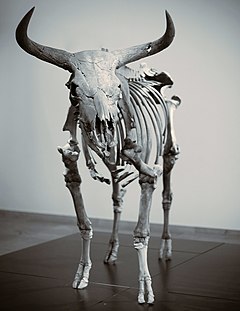
There was a strong motive to harness the power of a giant Aurochs in a ‘lite’ version which we now know in bovine form as bulls and cows.

picture credit Wikipaedia
An Auroch

Animals supported the burgeoning transition into settlements and farming. There is evidence from the excavations at Gobleki Teke in Anatolia that the monolithic structures there were created by agricultural communities 5000 years before the ‘official’ date. Nobody knows who these communities were but the appearance of the Mullilu ‘bags’ carved onto one stone, suggests an intriguing link with the Annunaki.

picture credit: Wikipeadia – Goblekli Tepe in Anatolia Turkey – the so called Vulture Stone

So we should not be surprised when we see mummified pussy cats in Ancient Egypt. Domestication of big cats to, presumably rid grain stores of vermin, lead to the creation of the domesticated feline. She was even elevated to the position of ‘god’ and many statues of her exist, as do mummified cats in such numbers their bodies were once burnt for heating.

The final step in this theory and certainly the most disturbing and controversial is that homo sapiens are ourselves domesticated animals, not for food but also as genetically engineered ‘gods’. Animals so beautifully perfect in their form that cosmic consciousness felt free to enter and inhabit human bodies as ‘soul’.

Let us return to the animals being selected to be preserved in the Arc. Should we take at face value the account in the Bible?

The reference to the animals going into the arc ‘two by two’ is a conspicuous detail. Why state this? Why not explain what happened to the plant, reptile, bird and insect kingdoms? And there is surely a fascinating tale to tell about the animals that did not survive, such as Unicorns.

The omissions are glaring, including the assumption that Noah and his family were the only humans at that time to own a boat. Many other races survived to tell the tale, one on similar lines as Noah only perhaps with smaller boats and their own food banks; we have their stories so no proof is needed on that point.

With reference to the Biblical version, we might ask why the precise dimensions of the ship were worth recording. If there is any detail we require it is its means of propulsion, navigation and anchoring. If we are examine the credibility of the Arc’s uncontrolled travels on a tempestuous ocean, it is hard to take it literally.

A boat, loaded with wild carnivorous animals, was always going to be an impossibility. How do you stop the animals eating each other like they do in nature? A powerless and rudderless ship was more likely to hit a mountain top and sink, than preserve life with a big L.

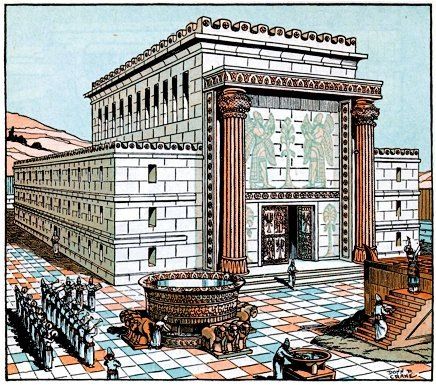
Picture credit: Pinterest King Solomon’s First Temple with the Molten Sea supported by animals in the foreground

Was the Arc really a ship? Since the proportions of the Arc in the Bible are given as a cubic rectangular shape, I personally think it more likely it was a giant building. The dimensions of the Arc are exactly proportional to the First Temple of Jerusalem, which of course, was a building. Not only that but there is a truth in the creation of similar geometric forms at different scales, what we call today, fractals. The proportions demonstrate a complete understand of the Divine mathematics that governs all Creation. Perfect mathematical proportions are beauty and beauty is Divine.

So perhaps the Arc was a beautiful and functional building. Perched on a mountain top it would have had a far better chance of surviving. There might even have been several such buildings scattered around the globe around the world erected by different cultures and described, we know, in their own myths. After all, there was no real rush. To flood the world would have taken several hundreds if not thousands of years.

What we are missing in the Bible is an overview. Perhaps it has been over redacted over time, but certainly the Annunaki put a lot of effort into fine tuning a wobbling world so that it could emerge from catastrophe completely cleansed of impurity.

An Annunaki with Tree of Life in background

When we look at the records of how the Annunaki Sumerian gods are repeatedly depicted in pictures, they are standing either side of a flowering tree, a ‘tree of life’. This firstly gives us an idea of a ‘family tree’ with it’s various branches – genetic connections – as in ‘royal family’. The ‘blue blood’ of the modern royals might well be a linguistic remnant of the reptilian DNA in humans.

The pictures are intriguing. In one hand the ‘god’ or ‘demi-god’ is holding one of those bags already mentioned, and in the other, something resembling a fir cone. The bracelet contains a clue; an eleven petalled flower and a central ovary, one for each month of the solar year.

Pine cones are counter clockwise spiral forms that obey the arithmetical, Fibonacci growth patterns. They hint, symbolically, of the process of genetic engineering and or horticultural hybridisation. The seeds of a pine cone are fractals of a tree in nascence, and seeds is where this hypothesis goes next.

There are very few contemporary descriptions of what the ‘fir cone’ and ‘bag’ represent. However there is one translation from the Acadian language which uses the word, BANDUDDU or ‘Turkish Pine Cone’. The bag is a MULLILU or ‘purifier’. If we accept that the Sumerian gods were active in global DNA management, part of that process would be to eradicate unwanted elements of DNA, or as it is known today, ‘gene editing’. It was vital that disease and inferior life was eradicated or ‘purified’, for future generations, whether prior to a catastrophe or in micro-management of earth’s delicate ecosystems. At another level it was vital that humans became able to access ever increasing levels of consciousness.

picture credit: Wakehurst Place, Sussex, the Millenium Seed Bank

The subject of genes returns us to this ‘two by two’ anachronistic detail. It is an interestingly similar mathematical picture of the double helix of mitochondrial DNA. Could Noah’s Arc have been a bank of DNA? Does the Mullilu contain genetically altered / improved pollen to fertilise the tree of life? Small bags, even today, usually contain light, high value items. (One of the strategy’s adopted by the scientists today in order to preserve life in the event of a global catastrophe is to create seed banks.)

Should we be surprised that DNA codes are binary and there are two sets of two letters to describe them; A and C = 0 / G and T = 1. As we know, 0 and 1 is the binary language of computers. This code and it’s most recent ‘quantum’ addition (neither 0 nor 1) is now understood by many scientists to be how not only life forms are described, but the whole fractal universe. This is why beings from infinitely large distances away can come to our small planet and know the deep structures, or programming, of our three dimensional existence. It’s the same everywhere in the binary code Universe…two by two.

The Tree of Life

Sacred Secrets Writ Large

In my previous two essays I have investigated and speculated over the ancient origins of two well known hill figures in Southern England. These are the Long Man of Wilmington and the Cerne Abbas Giant.

I shall now expand on some of the entomology of the place names, possible associations and derivation from ancient mythology and their significance.

This type of study might be called ‘sacred archaeology’ where the study of the past reveals not only the every day lives of the ancient people but their spiritual practices and level of awareness.

In my first essay I investigated the origins of the hill figures and suggested that they origins lay in the land known as Atlantis. The catastrophic earth changes that seeded the inhabitants of Atlantis around the world are described in detail elsewhere.

Taking on the hypothesis that the Atlantean people shared their advanced knowledge with developing Kingdoms such as Mesopotamia and Early Ancient Egypt, it becomes possible to trace common myths, gods, through the millennia.

Thoth – Judging the Soul with a balance.

CE thoth balances

Note the Ankh symbol at the centre representing the human soul. The two staffs either side represent balance between the masculine and feminine.

For instance the Ancient Egyptian god of the Underworld is known as Thoth, usually depicted with a staff. He is the keeper of esoteric knowledge, writing and conducts the passage of souls into the Underworld. These god like characteristics carry through into the Celtic world around 800 to 450 BCE, during the Iron Age.

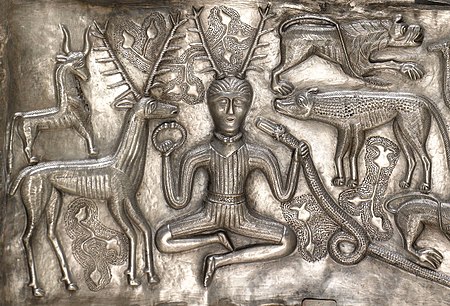
Cernunnon wearing a Torc around his neck, where the throat chakra is postioned.

Ce Gundestrupkedlen

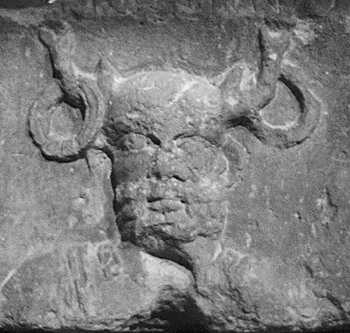
In the Celtic pantheon there is a god of the Underworld known as Cernunnon. He is depicted with antlers and is commonly seated cross legged and holding a serpent (masculine) and a torc (feminine).

I referred to the Long Man’s vertical staff symbol in the previous essay as representing conductors of energy (present today as the Magician’s wand) The rod or rods become ‘aerials’ able to induce tellurgic currents from the earth and waters below through the human body into the air and fire of heaven above. The human body and staffs of a particular length (ergo wavelength) are able to induce through resonance, tellurgic currents.

The Long Man of Wilmington in Sussex, England.

CE Long-Man-of-Wilmington

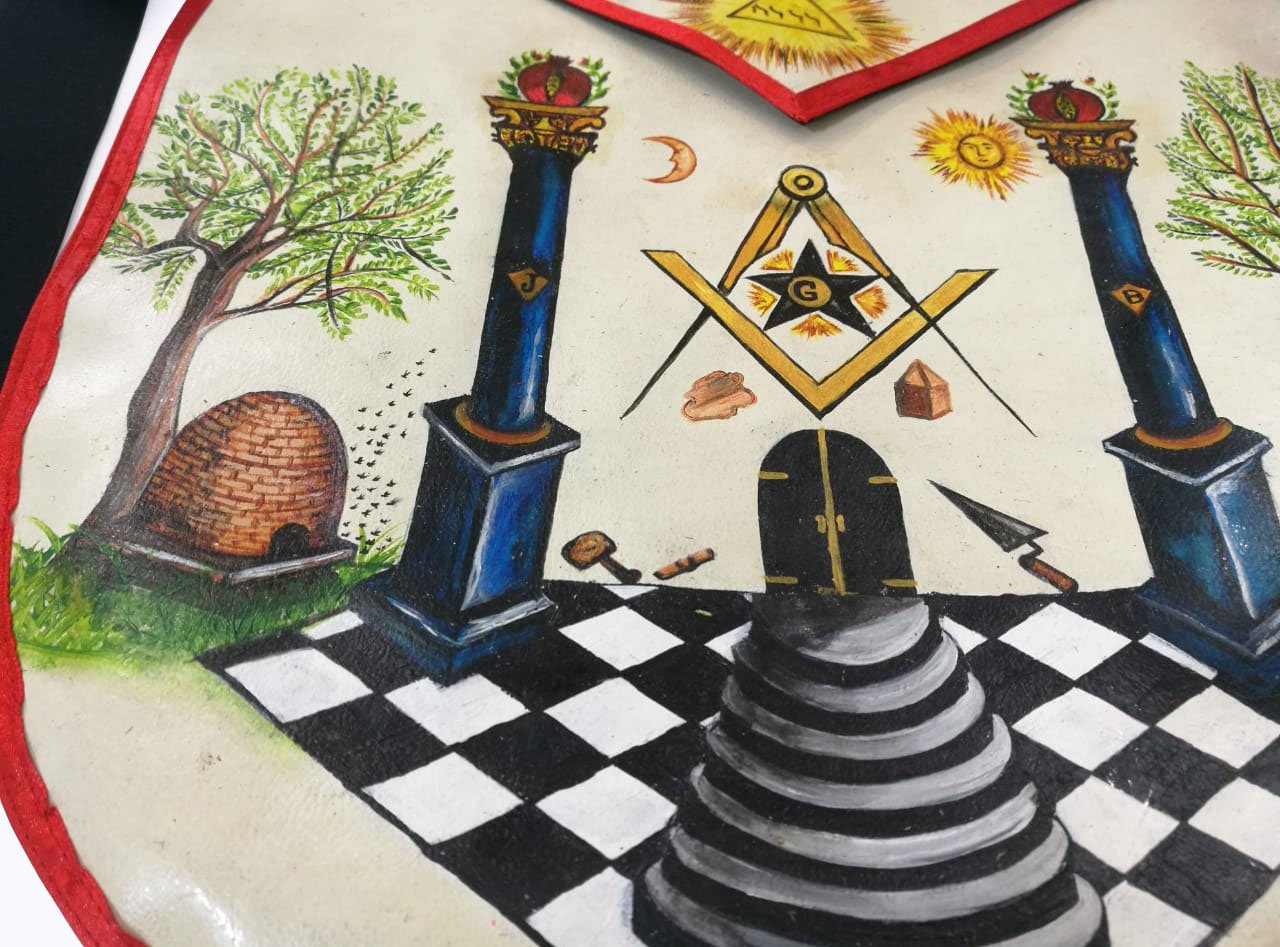
These vertical forces are depicted in the figure of the Long Man of Wilmington and are echoed in the pillars, church spires and obelisks of later and earlier civilisations. They even emerge as the pillars of the sun and moon in the Freemason tradition, one of the most direct connections we have today to this ancient knowledge.

Ce Boaz and Jachim

The ability to transform oneself spiritually by literally ‘tuning’ into the earth at sacred places is shown in the depictions of Cernunnos to be even more sophisticated than the gods with vertical staffs (or serpents).

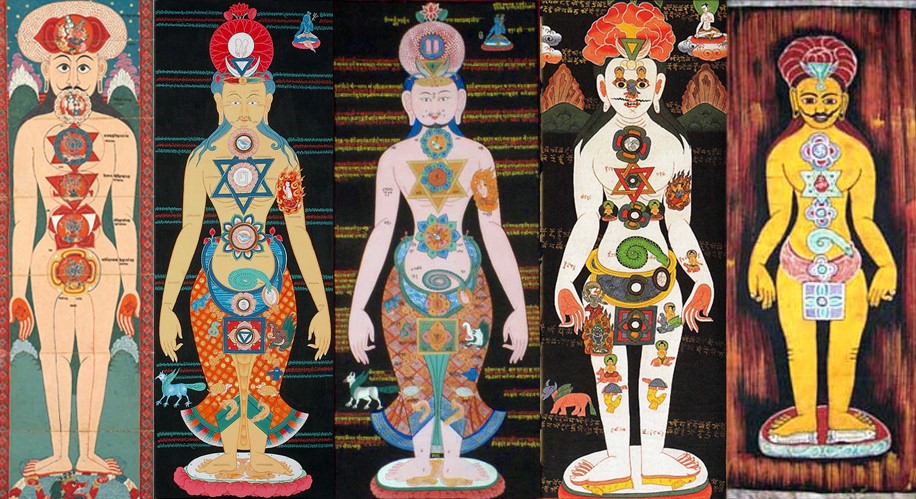
The vertical Idas in the human body and the horizontal chakras are a fundamental part of the very ancient system of Yoga.

CE chakra-and-yoga

(Further description of the horizontal nature of chakras can be found in my blog chakracard.wordpress.com)

What is important in the depictions of Cernunnon is that the earth energy is depicted as snakes wrapped horizontally around his waist. This is a direct symbolic connection between the spiralling underground water below a sacred place, known to Dowser or Water Diviners such as Guy Underwood who wrote ‘The Patterns of the Past‘. The circular motion of the chakras is signified in their description by clair clairvoyants as ‘wheels’ or ‘lotus flowers’.

The author’s depiction of the horizontal chakra wheels in three dimensions instead of the conventional two dimensional images.

PIM fig 4 Horizontal DiscsNote the author identifies a lunar chakra balancing the solar chakra with the heart chakra as the fulcrum. This observation is thrown in for free! The justification is examined in the essay to which I have previously referred. The prescence of a Lunar Chakra in humans, substantiates the ancient knowledge described in this essay.

When the human body sits cross legged, it forms the shape of a triangle or pyramid – a shape repeated in built form across the world from Atlantean traditional knowledge. The fact that Cernunnon is seated is not insignificant. Few gods are shown seated as they do not exude power over the viewer as much as if they are standing. But Cernunnon was not a symbol of power of the gods or the priests or elders over the common people. He was showing how to balance the horizontal energy of the human body with the vertical energies. When this balance is achieved then a ‘fixed point’ is created as an infinitely small and infinitely large centre of the universe in the human heart.

The Christian symbol of the cross and other cruciform symbols such as the Ancient Egyptian ‘ankh’, symbolise this knowledge.

And as if Cernunnon had not made the point enough, he wears two antlers on which are hung ‘torcs’. The number two is important (as in the Long Man of Wilmington) as it symbolises the complimentary nature of the solar and lunar energies and their ideal harmonious relationship. The antlers are ‘aerials’ used by deer not only to fight but more importantly, as sensory organs containing blood and nerves.

Ce Cernunnos Antler Man

Place two metal rings on these vertical forces is to introduce the feminine vulva with the masculine phallus, or the moon and sun energies. This is highly significant for the spiritual aspirant who communes, by the invitation of the magus or shaman, with the spirit of the local god, during initiation.

If you had not already linked the entomology of the word Cernunnon with the place name of the Cerne Abbas giant, then I shall do so now.

The Celtic polities linked their word CARNUTES with ‘The Horned Ones’.

CE Cerne Abbas Giant Dorset Echo

But the Cerne Abbas giant of today has no horns, you may observe. He does have one obvious sexual feature that in modern English slang is referred to as a ‘horn’ – but perhaps that is too speculator to be meaningful, or perhaps not.

The figure we know today as the Cerne Abbas giant is not seated nor wearing antlers of horns. He has clearly been changed at a later time and I suggest that we have the Romans to thank for that.

The Romans also have a god of the Underworld, who is known as ‘Dis Pater‘. You might immediately note that ‘Abbas‘ and ‘Pater‘ share the meaning of ‘father’, odd if coincidental. Cicero, the Roman historian, suggested it meant ‘father of riches’.

‘Dis’ is reported in Wikipedia as being a contraction of the word DIVES meaning wealthy or rich. This is itself derived from the DIVUS or DIUS meaning god like or divine via the form DEIU.

This is highly significant as the whole spiritual process is one of making an ordinary person achieve divinity or divine qualities – treasure stored in Heaven as Jesus said. And Jesus we know, constantly referred to God as ‘Father’ curiously family orientated in common speech but significant in this ancient use of the word ‘Abbas’.

Julius Caesar claimed in his Commentaries of the Gallic Wars that the Gauls ‘claimed descent from Dis Pater’. This is therefore an important god to all Celts, whose memory was carried on by the Romans.

Venus by the Ancient Greeks achieved a level of art the Romans could not replicate.

Venus de Milo

In my view the Romans were lesser beings than the cultures who preceded them. The transition in sculptures from Greek to Roman shows how poorly skilled they were in this area of culture alone. The Romans were skilled engineers and soldiers who, in my view, lost their understanding of most ancient knowledge. Perhaps because of this, their empire was doomed to descend into decadence, and on that subject books have been written.

The figure at Cerne Abbas, has become a war-like giant, who stands erect in more than one sense. He wields a war club above his head instead of antlers, clearly a figure interested in overcoming others rather than himself.

The Roman Dis Pater; note his horns and the horned stag and bull at his feet. Balancing feminine and masculine figures stand either side of him in place of the staffs or columns.

CE Dis Pater

The Cerne Abbas Giant, I therefore believe, is a lesser figure of the Celtic Cernunnon god who late morphed into the Roman Dis Pater.

The former gods balanced the masculine and feminine energies within themselves, whereas the Cerne Abbas Giant allowed himself to degenerate into a slave of the masculine energy only.

***

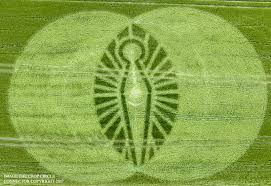
A Crop Circle that appeared near the Cerne Abbas Giant

CE Crop circle

The Vesica Pisces is formed by two overlapping cirles (sun and moon) in which a knife stands erect; an affirmation of the masculine and feminine balancing energies described in this essay.

***

Afterword;

And then I was looking at Google Earth a few weeks after writing this essay and found this same crop circle in a field about five hundred metres away from the giant, top middle. The giant is in the bottom right corner above the capital G. Thanks Google Earth!

Screenshot 2020-08-23 16.49.17


The Living Giants from Atlantis

 ‘On those vast shady hills between America and Albion’s shore,

Now barr’d out by the Atlantic sea, call’d Atlantean hills,

Because from their bright summits you may pass to the Golden world,’

Excerpt from the poem ‘America’ by William Blake

From east to west and north to south there is evidence of a lost continent in the Atlantic Ocean named ‘Atlantis’.

I shall not go deeply into proving or disproving such a continent in this essay, as it is not the main focus. I shall only briefly consider the existence of a ‘Golden world’ in the remants in the landscapes that we see today.

In 1972-3, just as the ‘sleeping prophet’ Edgar Cayce predicted, archaeological evidence of an advanced civilisation was discovered off the coast of Bimini. Huge blocks of stone formed wide pavements stretching up to 1600 feet.

Map of Atlantis by William Scott-Elliott 1910; picture credit Wikipedia
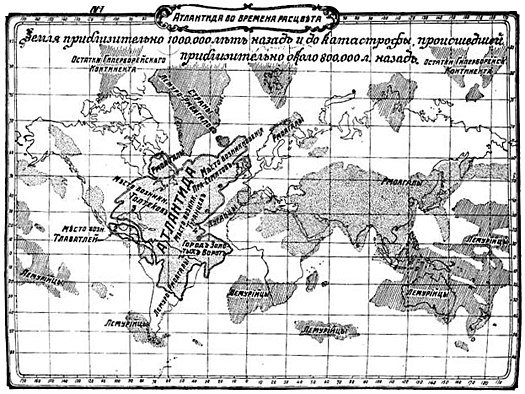
Ce Map_of_Atlantis 1925

In July and August 1973 an expedition from Pepperdine University in California, discovered paved roads and broken columns in the Bay of Cadiz off the Spanish mainland at a depth of 120 feet.

Plato is perhaps the best known written source of a description of the lost continent situated beyond the Pillars of Hercules which were at the entrance to the Mediterranean sea.

When Atlantis collapsed into the sea amidst earthquakes and catastrophic seismic and volcanic activity, the survivors were those who were able to take to their boats; just as at Pompeii. If the Atlantean s fled in every direction we would expect their ‘footprints’ to appear around the globe and so we do. There are few other good explanations for the existence of pyramids on all of the continents unless they were inspired by one race of people with their own sophisticated knowledge of why and how to build them.

Less obvious, but still meaningful, is the existence of menhirs, dolmens, stone circles running along the western edge of Europe. One example is ‘chambered cairns’ which are large mounds covering narrow passages leading to a central circular room. These are found from southern Spain (Antequera) to the Orkney Islands (Maes Howe) and are identical in design, purpose and function.

The anthropologists identify ‘unknown’ ancestry to some peoples of the western Atlantic coast. One such group are the Guanche from the western Canary Islands. Sadly they are now extinct but records from the 15th Century describe them as tall, massively built with pale brown to white skin.

The people of the Basque country in northern Spain are equally out of place genetically, culturally, linguistically and even by having a rare blood group.

I shall leave this subject here leaving the reader to satisfy their curiosity further about Atlantis.

If we propose that much of the post apocalypse Atlantean knowledge was spread in each direction, in doing so it ‘flavoured’ existing cultures and we should be able to ‘taste’ that ancestry today.

In support of this supposition I shall present two ‘enigmatic hill figures in Southern England. I shall propose that the Atlantean knowledge came indirectly through the civilisation of Ancient Egypt. We know that there was trade in tin, gold, iron and flint between the British Isles and the Mediterranean in the ancient past and that the cultures such as the Phoenicians were expert mariners.

So should it be a surprise to find two ‘giant’ figures scraped into the turf of the chalk hills of Sussex and Dorset?

Giant Number One – The Long Man of Wilmington
CE Long-Man-of-Wilmington

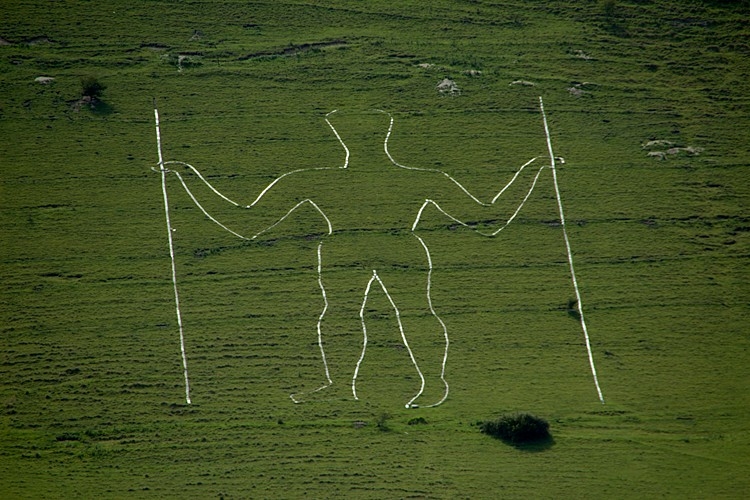
The Long Man of Wilmington faces north on the escarpment of the chalk hills known as the Downs, near the village of the same name in E. Sussex, England.

The illustration shows the size of this figure and this should not be overlooked. The Ancient Egyptians also built statues of pharaohs which could only be described as ‘giant’ such as those of Abu Simnel and his Queen, near Karnak.

It is also interesting that the figure is stretched in proportion from head to toe, so that when viewed from below, the foreshortening effect reduces the figure to correct proportions. A similar graphic technique is used in the centre of football pitches for advertising today. The effect leaves the arms appearing too long like an ape but there was a reason for that.

This tells us that the figure was designed to be viewed from the ground in front and below the giant near where the village stands today and possibly where the Priory and Church are. This would have been a place where ceremony and rituals took place within the influence and power of the giant figure.

The other obvious feature is the two ‘staves’ or ‘staffs’ that the figure holds vertically in each hand. The staff is a symbol of office and power and a version of it as a crook was held by Ancient Pharoahs and Christian Bishops today. Aaron held a staff which had ‘magical properties’ for finding water and Moses famously turned his staff into a snake.

These Biblical stories describe a connection with the energy associated with underground and overground water. The nearby River Cuck presents a snaking path to the sea through a series of wide curves and ‘ox bow lakes’ often featured in academic books on Geomorphology.

As a young man I myself have used a divining rod to determine the directions and paths of the underground ‘water lines’ under the Long Man of Wilmington. The ‘water lines’ clearly describe the figure in a manner normally unseen. This opens the question, does the figure attract the water lines or the water lines attract the figure? As a dowser myself I will answer this by saying that the figure is attracting the water lines. Large ancient stones when moved, bring with them the water lines to their new position.

The hill figure is therefore a form of engineering using an as yet, force unexplained by modern science. Clearly though, this figure was designed to empower a community to bring it health and prosperity via a ‘deity’ or ‘god’ or ‘giant’ or ‘angel’ or ‘genii’.

It was only in Victorian times that ‘fairies’ were reduced in size to fit into butter cups without creasing dresses. In reality, nature spirits can be any size, from the size of an atom (from which bombs are made) to that of a planet.

The staffs may symbolise balance, as there are two held identically and remind us of the two pillars at the entrance to King Solomon’s Temple and the symbolism of these valued so much in Freemasonry. They represent the sun and moon or male and female qualities of nature.

An inference to the tools of the acupuncturist is appropriate, since the penetration of the earth by staffs and stakes, stones and monuments is analogous to acupuncture and it’s aim of harmonising energy imbalances and stopping energy leakages.

The earliest dating of the figure accepted by modern archaeologists, is Roman, on account of a similar figure being found on Roman coins. Having said that, the figure of a person holding two staffs or snakes in a similar manner is common throughout the Ancient World.

It is clear that the figure contains few other clues except one important one which is easy to miss and has been the subject of some academic controversy. The question relates to the direction in which the figure of the feet point. A paper entitled ‘The Long Man of Wilmington‘ by E.W. Holden from the Sussex Archaeological Collections Volume 109, 1971 comes down on the side of those who believe the feet correctly both face in one direction.

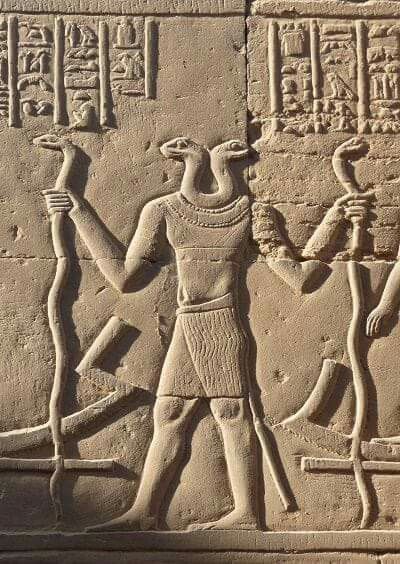
A whimsical thought came into my mind which is the song title ‘Walk Like and Egyptian‘ from the 1930’s when Prince Tutankhamun had made a reappearance and was influencing taste and design in popular culture. It is noteworthy that perspective was not used in representation and art until the Renaissance in Europe.
Ce Nehe with serpent staffs

Almost all Ancient Egyptian representations of figures are two dimensional and show feet both pointing in one direction. This is clearly no proof of a link to Ancient Egypt but it suggests a connection that may be corroborated by other facts. The first such suggestion is that we see the same depiction of feet in the next figure, the Cerne Abbas Giant.

Giant Number Two – Cerne Abbas, Dorset, England
Cerne Giant National Trust Dorset

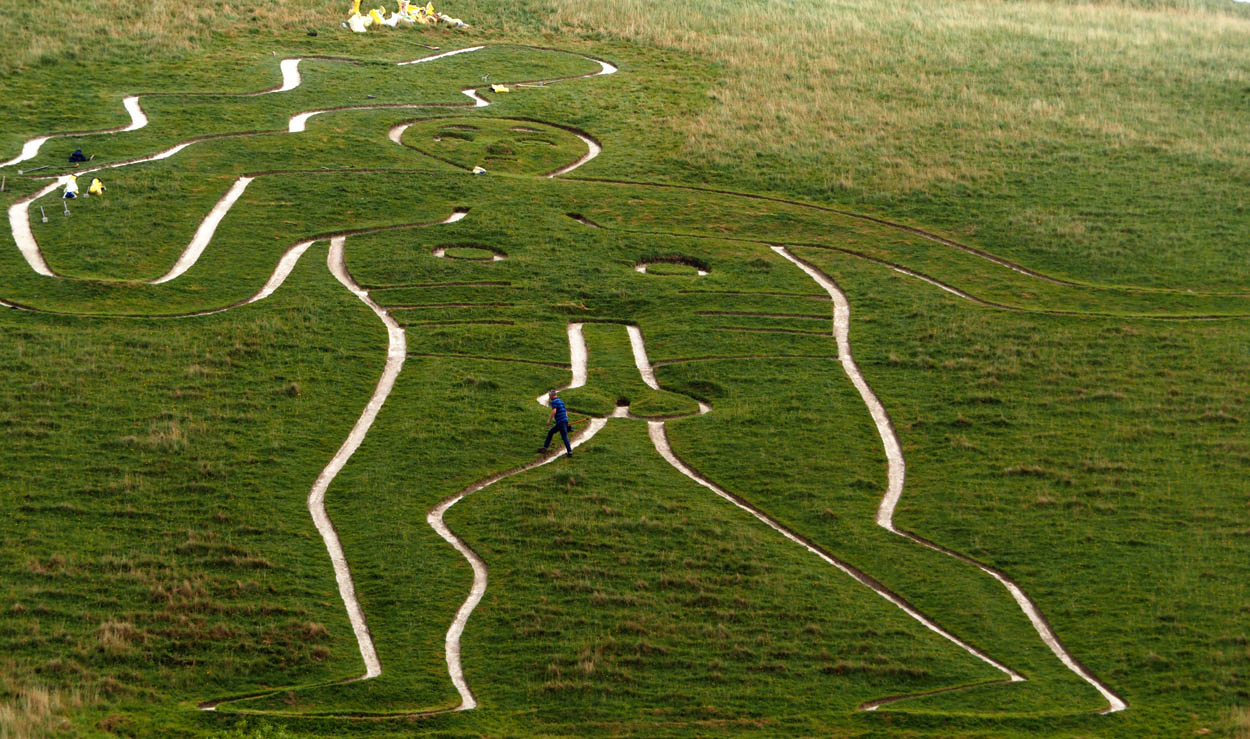
The ancient Cerne Giant at Cerne Abbas, Dorset is having a make-over. Dozens of volunteers and local families have been invited by the National Trust to help reinstate it on the steep hillside. The edges are trimmed and fresh loads of ground up chalk pounded into the markings. It is famous for having its manhood on full display.

All along the chalk hills that stretch from west to east in the south east of England, hill figures are found. The most notable example is the Giant named after the village of Cerne Abbas. He faces west, measures 180 feet (60m) from head to toe and like his Wilmington cousin carries a staff, which he waves this time above his head in a war like manner.
Ce Cerne Abbas Giant Aquastats

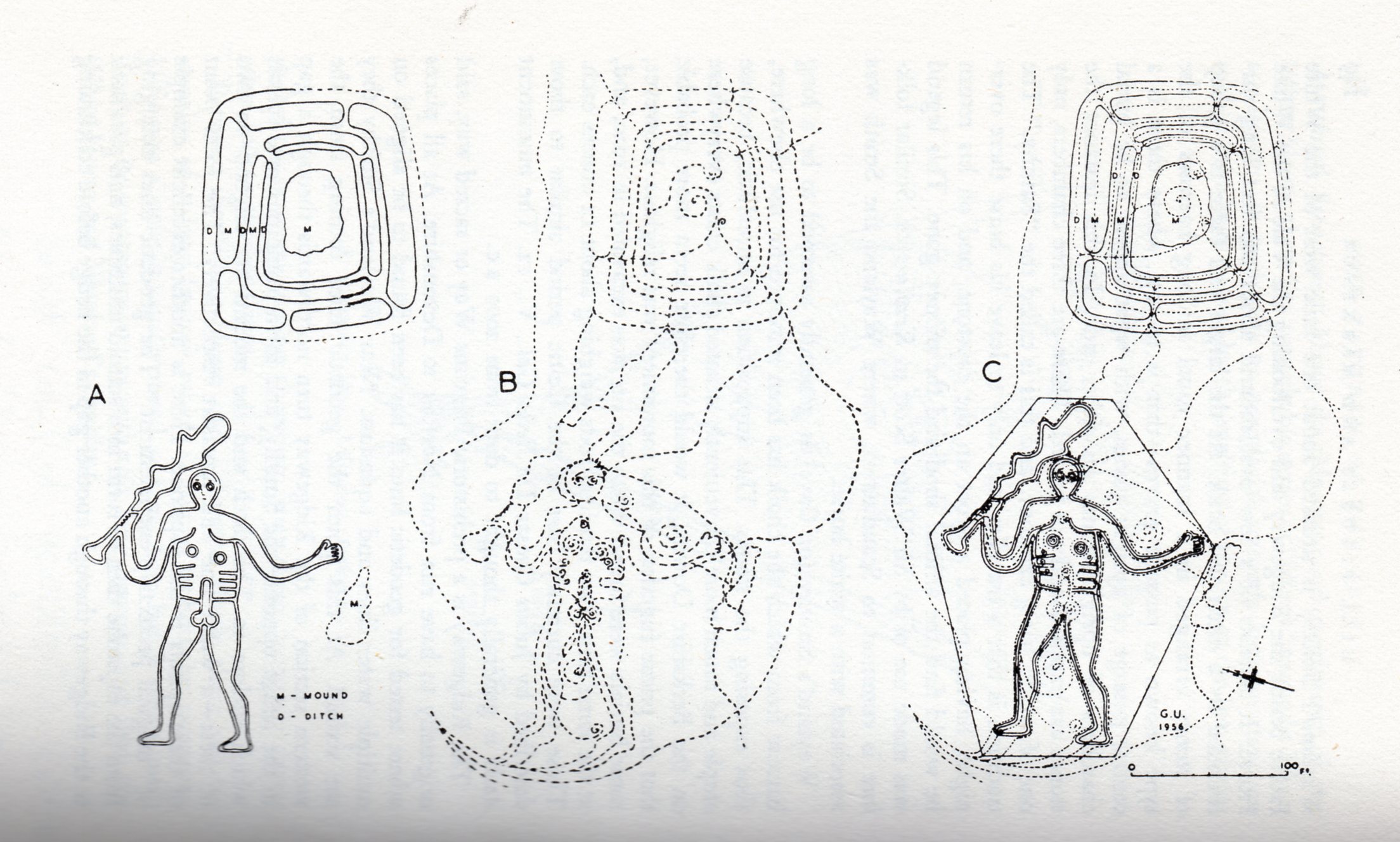
Guy Underwood dated this figure as about 4000 B.C. As can be seen in the diagrams from his book The Patterns of the Past p150, the shape of the figure corresponds with the hidden ‘aquastats’ or energy lines associated with underground water. Above the figure is a rectangular enclosure formed by ditches and mounds. This was possibly used as the meeting place for pagan communal worship and celebration at sacred times of the year. (Contrary to negative propaganda, Pagans are great believers in the family and communal living to produce a harmonious life style respectful of the energy and forms of the great mother, nature.)

If we examine the figure from the top down, the club has the appearance of being made of wood and it’s purpose warring. The arms are outstretched horizontally much in the manner of the Long Man of Wilmington.

The most notable feature of the figure is the erect phallus and perhaps the club is an echo of this also. Local traditions celebrate this overt sexuality such as that if a girl sleeps on the Giant she will have many children. Also it is said, that if a girl walks around the Giant at night she will have a happy marriage. The figure is therefore representing energy and power in a very demonstrative way that country people through time would have understood and respected.
CE Isis-and-penis

If we accept the premise of a force of nature as yet unmeasured by modern science but recorded in structures for thousands of years across the world, then the Cerne Giant expresses the sexual designs of nature that literally makes the world go round. The feature known as ‘the Mound’ at the same level as the phallus in the figure is to me an erect phallus viewed sideways, giving another sacred feature and area for this power to express itself and interact with humans. It is important to note briefly that this sexual energy, (celebrated as Tantra in the East and the Karma Sutra it’s most famous reference book) can be directly converted to sacred energy within the human body.

As we move down to the feet, again we have the clue that they are two dimensional and both point to the figure’s right, in the manner of the ancients such as the Egyptian figurative artists. Giving a side view of the phallus also shows a need to express a three dimensional form on a flat plane.

The arrival of Christianity came in the form of St. Augustine with missionaries to convert the pagan inhabitants of Cerne in about 700 A.D. Their hill figure we might expect would have shocked the saint as a demonstration of the natural forces that the local people engaged with. He was mocked by them and they tied cow’s tails to the missionaries garments and sent them away. In return the saint put a curse on them to the effect that their children should be born with tails in the future. As he did this a fountain of crystal water appeared and he started to baptize the people and eventually founded Cerne Abbey.

Such an important figure as a saint who practised a form a magic as curses and water divination brought the pagan god into the modern world where profane images are forbidden. Was there a general fear of the unknown and the forces of nature within the landscape? The Christianisation of the sacred landscape by the imposition of Christian buildings declared a new world view based on the crystal clarity of love rather than lust.

What do they Mean?

Both figures describe quite literally the underground energy of the two places they inhabit. They are both local minor ‘gods’ or ‘spirits’ that inhabit a sacred place. They share their powers of fecundity and healing with the local people proven by the reproductive cycles of animals, crops and humanity.

To the sensitive this energy comes as both male and feminine, in the manner that electricity is describe today. The two forces can be kept apart to create a potential difference but ultimately they strive to be drawn together in balance and harmony.

The Long Man of Wilmington describes both of these aspects with the two staffs stretched equally apart of the vertical form of the body. This is most common stance in ancient times and is recorded by many civilisations across the world. It is not proven but a possibility that the Ancient Atlantean race were either familiar with or originated this stance. Their ‘golden world’ of Blake’s vision would have been built of matter and energy in a way that these simple hill figures resemble.

The Cerne Giant is in my view representing the male or positive aspect of this power and is a minor god of considerable power – so much so that the Church had to intervene to contain it. The presence of ribs in the figure, the reference to the spine and the extension of the tail in the human body, could be an occult pagan reference. The Pagan Tree of Life is central to their belief and worship and the human upright form is a representation of itself as a tree. Energy flows through the human body from the base of the spine to the top of the head, connecting earth to heaven through the human form as a kind of ‘fuse’ or cut out.

Alchemical depiction of the Divine feminine balancing the energies of the sun and moon.
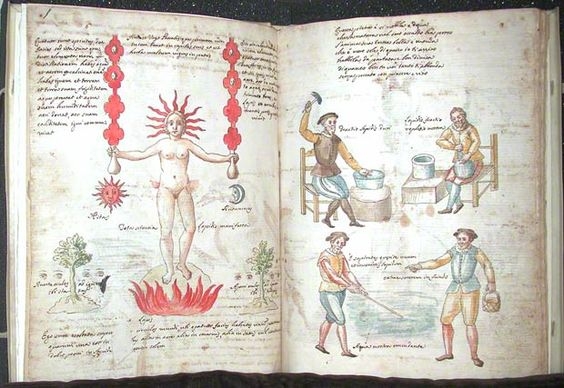
Ce Alchemical female with sun and moon

At their inception both figures represent the minor god or spirit who inhabits the place. The god or spirit is attracted to the pervasive energy of the place to fulfil it’s own spirit and in turn, the spirit of the natural world and it’s inhabitants.

In Ancient Egypt, one of the principle gods, Osiris was murdered by his son Seth and his body parts scattered. His wife Isis set about reconstructing the body and found all the parts but for Osiris’s penis.

A Roman depiction circa 400 A.D. of Seth with the head of a donkey and staffs.
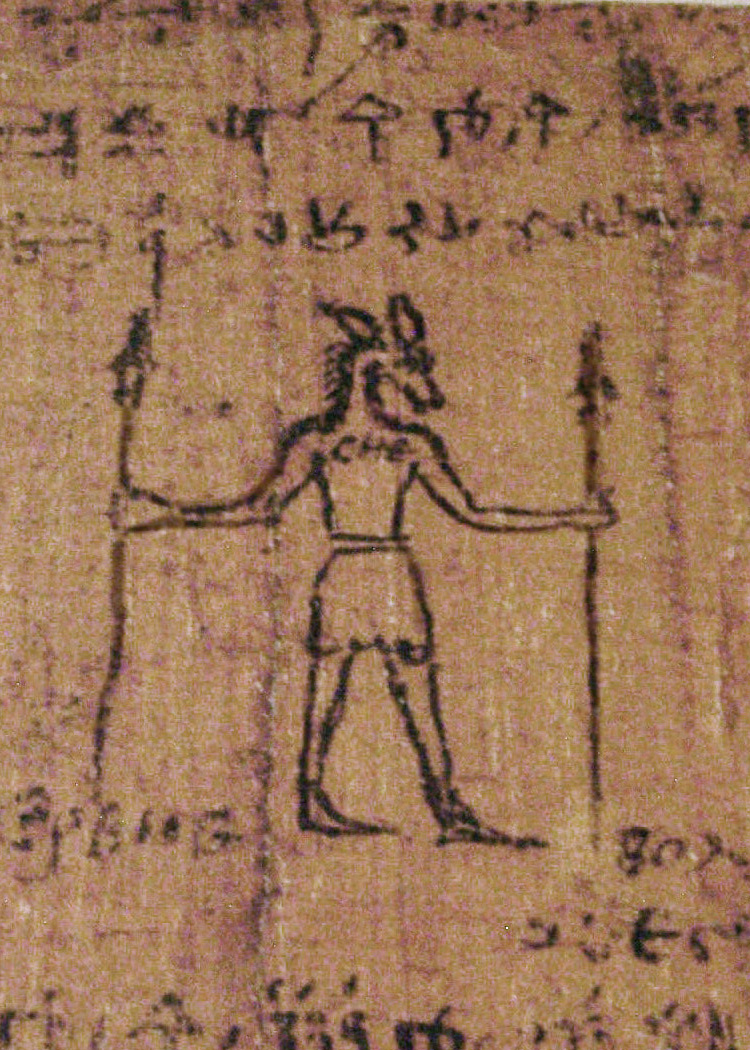
Ce Roman 4c AD God Seth

In a metaphoric way, we might surmise that the ancient language of form and energy mastered by our ancient ancestors, lives on in the remains scattered across the world’s landscapes today.

Many are still energised, some are being re-energised by mystics and seers, and some remain undiscovered.

We live in a time when the power of these ancient gods or spirits are re-emerging. Both the natural male or positive power that brings about change – sometimes through war and conflict as in the Cerne Giant – and the natural feminine power that brings about nurturing, renewal and growth.

At few other times in history has mankind needed the intervention of the natural forces that it has shunned and even destroyed, through exploitation of the natural resources of the planet.

The people of Atlantis reached a similar apotheosis as our own. In the end of their civilisation they were at war with each other and perverted the natural forces to their own self centred ends and pleasure seeking.

In the manner of the Old Testament, they were overwhelmed and destroyed by the angry and vengeful forces of nature. Their continent sank into the ocean and their vane projects destroyed just as could happen in the twenty first century.

There are places for us to visit and pay homage now. To find the ancient power of nature in the sacred places of the landscape and to bring it into our lives through prayer and worship, much as the ancient people of southern England were able to do – perhaps as a memory of our common ancestors – not only the Atlanteans but the whole human family.

And as all glimpses of the past teach us, these are not our times. The two hill figures described are both male and reflect the creative male energy that was forming the societies and consciousness of that time. Further away on the other side of the Atlantic the Navajo Indians had another figure to revere, Changing Woman.

CE Navaho changing-woman

One of the primary characters of Navajo mythology
and religion is Changing Woman who grows old and
young again with the seasons. She represents the
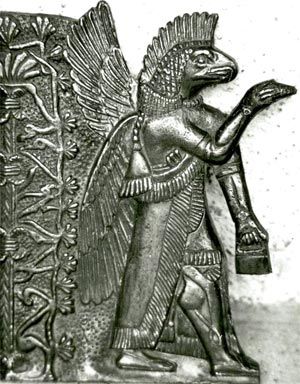
power of the earth and of women to create and
sustain life. Other Holy Women stand at the four
directions: in the East is Earth Woman, in the South
is Mountain Woman, in the West is Water Woman, and in the North is Corn Woman.

Source www.nativeamerican-art.com

The present time is in need of this feminine energy to rebalance the eons of cultures in which the masculine principle of war, metal work and Kings were supreme.

The energy coming from Ancient times now is the Divine feminine that embodies rivers and seas and soft landscapes, water meadows, calling birds and the gentle people for whom love of nature and mankind is supreme.

We can learn from the Atlanteans, who by their mistakes of tampering with the masculine Divine, created an imbalance and brought about their own destruction. The energy of the feminine Changing Woman is calling us now and our ability to respond will be the measure of our success as a species.