Solutions Without Answers

Give a fool a hammer and the problem is a nail

Surely, your leaders and politicians must excel in one thing above all others; problem solving. I suggest this because all aspects of life are eventually about solving problems. It does not matter if you are trying to look after a home or a country, the principles of good management using skilled problem solving, are the same.
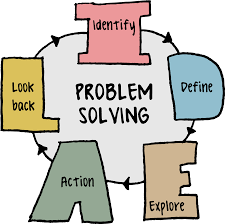
Astoundingly, the study of ‘problem solving’ is not freely available. In the academic world it is assumed that the skills learnt in schools and places of higher education are transferable to the ‘real world’. Well in my experience, I can say that most of those skills are not transferable, which is a problem in itself. Theory and practice should be salt and pepper, but they are not.

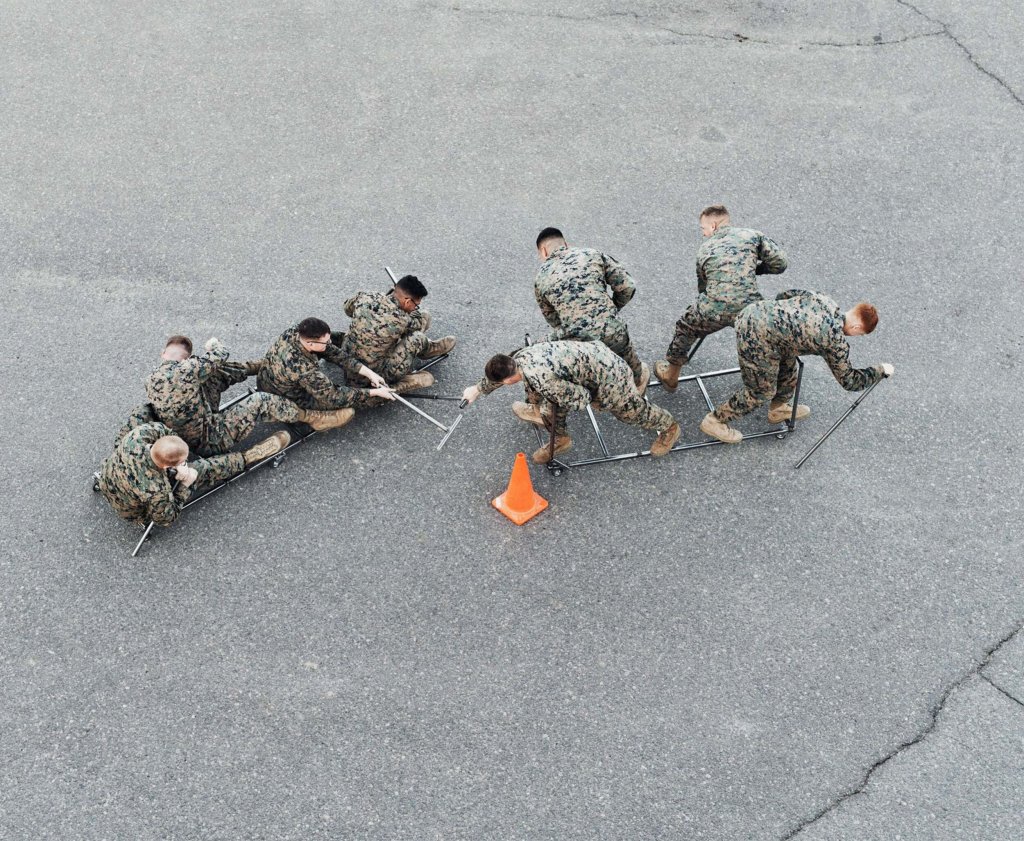
To solve a practical problem takes a special kind of thought process. Most importantly there must be a consistent intention aimed at a fruitful result. Technicians and those who learn practical ‘trades’ such as building walls with bricks or carpentry, become great problem solvers very quickly. If they make a mistake, it is plainly on view and has to be taken down and attempted again. Generally, the selection process for soldiers will involve problem solving. Recruits become part of a small team arranging logs and ropes and other props to overcome an obstacle. Real work in real time.
It is said rather cynically that ‘doctors bury their mistakes’; but it is true. It is unfortunately also true of many of today’s politicians and leaders who are entrusted with the welfare of the State and it’s citizens. If they make a wrong policy decision or invent a plan for some new project or public works that goes wrong, the failure is forgotten. Money is wasted on projects that any ordinary person would say is a waste of time and money (just read my earlier blogs on the UK High Speed train project predicting failure). Why, you might ask, does India have a Space Programme when there are thousands of villages in India without proper sanitation? I am only using India as an example. Avoiding and/or mismanagement of real and urgent problems happens in every country run by politicians with their own agendas, not the people’s

If a race of intelligent beings came down from the Planet Problemsolving, they would certainly be appalled at the ignorance of humans in a skill the PP inhabitants are taught from birth.

If humans cannot learn from present times, we can learn from history. In the Biblical era, when Herod heard there was a child to be born who would one day be King, his solution was simple and brutal. To kill all male babes under the age of two years. The solution to his problem was immoral, self centred, and ineffective. Have we improved?

Giovani: The Slaughter of the Innocents

Today, the State of Israel is being led by a person with Herod like, problem solving hypothesis. Because there are fighters who are against the State of Israel (as a consequence of decades of ill treatment towards Palestinians) Israel is using genocide to prevent further problems, just like Herod. And just as Herod assumed a massacre would get every child, so it is assumed that the Israeli government actions will eliminate every fighter who is against the Israeli State. But history tells us that using starvation, disease, killing and maiming, stopping fuel supplies in winter and stopping safe escape routes, will be condemned by world organisations like the United Nations. South Africa has emerged from apartheid in the last century and has been the loudest voice of condemnation. They have learnt from their history.

Hitler is perhaps one of the greatest despots in modern times, who used similar problem solving techniques indiscriminately. He constructed concentration camps with impregnable exterior defences, then filled them with people of direct and indirect Jewish blood. We know the rest. Indeed, the people who know this best are living in the State of Israel today.

Let us examine a less emotionally charged problem being played out over the English Channel at the moment. The problem always requires a definition and for voters in the 2016 referendum it was identified as ‘immigration’. The ‘Vote Leave’ champagne and UKIP party championed the idea that ‘immigrants are a problem to the country’, in the run up to the referendum. Whilst most economists would disagree with this concept ( the USA is a prime historical example of immigration creating prosperity ) the problem was described in emotional terms. We know that rational debate stops when emotions are stirred, if we have lived life at all! Emotional beliefs do not use constructive thinking patterns based on analysis of facts and figures. ‘Solutions’ were expressed as three word slogans such as ‘Take Back Control’, ‘Brexit means Brexit’ ‘Get Brexit Done’.

Broadcaster James O’Brien on LBC said: “I’m looking for a chronology of the meaningless slogans Brexiters used to give people an excuse not to actually look at any detail, evidence or do any thinking.”

As the supposed ‘problem’ of immigration, moved from fringe to mainstream politics, the ‘final solution’ became leaving the European Union. The principle of ‘understanding the problem’ by using statistics for instance, was ignored since only one third of UK immigrants actually came from the European Union. Many of those who did were short term immigrants, such as students and migrant workers. As the fish and chip shop owner said to me on the day of the Brexit vote in June 2016, ‘Who is going to pick my potato’s?’

But the emotions of hatred and fear were exploited using false facts by those in power (just as did the leaders of Nazi Germany) and the UK left the European Union in 2020. Since then, the ‘problem’ of immigrants has not gone away. For no obvious reason the ‘problem’ has be re-defined to be the three per cent of immigrants who enter the country without proper documentation.

Under international law these fall into three basic camps; asylum seekers escaping persecution, economic migrants and the criminal underworld. These categories however require time consuming investigation on a case by case basis.

You Can Use Old Slogans

Far simpler for the government to stir public emotions using a three word slogan which is ‘stop the boats’. Chillingly, the ‘solution’ is steered away from creating safe routes and tackling criminal gangs to being one of ‘deterrent’ or fear. By ‘fear of being sent to Rwanda’ the UK government intends to stop people from risking their lives crossing the English Channel.

The horror of this solution and all ‘final solutions’ is not characteristic of any country that wishes to hold it’s head high in the European Courts of Human Rights and the United Nations. Similarly, the government of Israel is prepared to ignore the Article 2 of the Genocide Convention. The false logic of ‘the end justifies the means’ convinces only the emotions.

The complexity of statistical analysis and testing and proof finding and ethics and morality and compassion and common sense and lessons learnt from history and comparing alternatives and cost benefit analysis, should be the bread and butter for problem solving by those who lead nations.

But complexity is ignored because it does not invite the answer, ‘yes’ or ‘no’. These two words are fundamental to what is the basis of the referendum method of problem solving.

  • Shall I kill all the male children under two years of age? Yes or no?
  • Shall I get rid of the Jews? Yes or no?
  • Shall I destroy Palestine and it’s people as a method to destroy their militant leaders? Yes or no?
  • Shall we leave the European Union? Yes or no?
  • Shall we ‘stop the boats’ by making it illegal to do so? Yes or no?

Each time the question assumes a problem with which the man on the proverbial omnibus, may not agree is a reasonable question to be asked. The question is too simple to answer for the complex mind, but easy for the simple mind.

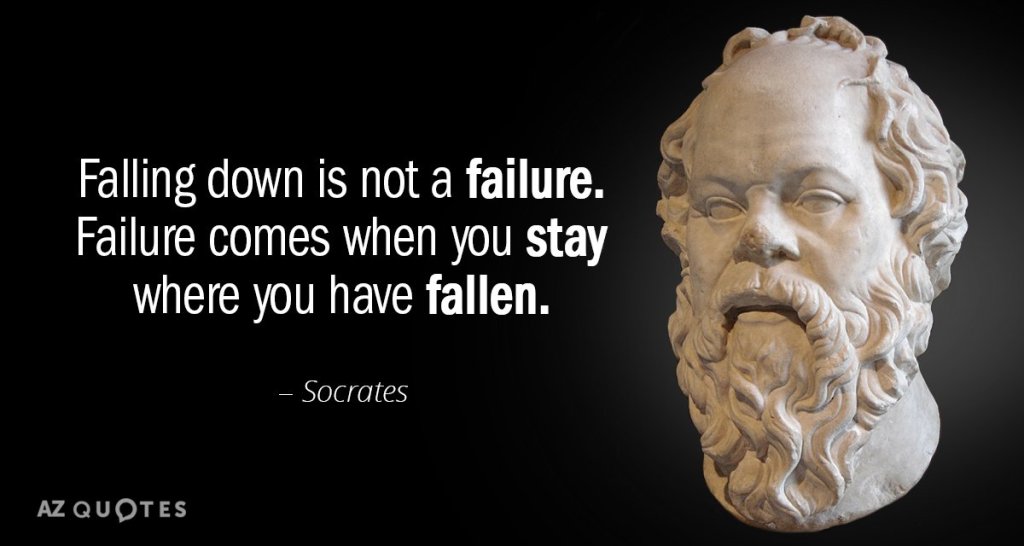
The so called ‘wisdom of the crowd’ is not something that history proves. Wisdom is unfortunately a rare commodity – whether two thousand years ago or the present day. We only have to listen to Socrates (470-399 BC) opinion about the ‘common man’…

Death and Taxes

picture credit: Playrights Canada Press

As loyal and obedient citizens and patriots, we do not question the taxes we pay. Just as in the saying attributed to Benjamin Franklin; ‘nothing is certain except death and taxes’; we observe ourselves enduring the prospect of dying with the same equanimity as an annual tax return.

Yet throughout history, many revolts by citizens have had their roots in what were perceived as ‘unfair taxes’ of which there have been many. The American revolution against the British crown in the 18th century is a prime example. Perhaps the distance between the taxer and the taxee gave courage to those who through boxes of tea into the sea in Boston harbour, but whatever it was, it signified a general feeling of ‘enough is enough’ where taxes were concerned.

Today, many so called ‘developed’ nations are experiencing a rise in the cost of living and stagnant wages. The effect is to squeeze the financial security of the poorest in society until they are eventually turned out of their homes and onto the streets.

Homeless on Venice Beach, California

Governments have a large part to play in this scenario and often are called into account for their policies. The citizens of France, at present, are being informed they will get their government pensions two years later than they expected. Those soonest about to retire will be most enraged by the decision along with those who resent the way the President Macron used parliamentary privilege to push the change through without debate…like a monarch.

The citizens who pay their taxes (and there are those who don’t in the so called, ‘black economy’ ) feel strongly that they should get some return on their life long financial support of their nation. Few question how much they actually pay the government over their lifetime. If they did they might be shocked.

If we take the United Kingdom as an example, when taxes are referred to in budgets this is assumed to mean income tax. There will be ‘a penny in the pound’ added to taxes or a penny taken away. It all sounds rather trivial but the reality is the opposite. Multiply that penny by pounds earned in a year and multiply that by the millions of tax payers and the figure is staggering.

Yet there are more feints going on, that hide the true worth of taxes to governments. Their favourite trick is to rename taxes as something else. In the UK there is a tax which is named ‘national insurance’. It is currently 2% of weekly earnings for those earning over £967 and 12% of weekly earnings for those who pay less. You will note that this is over 8% a month because the amount has been broken down into a 52nd of a year.

So if you pay say 25% income tax and add roughly 12.5% national insurance you pay 37.5% tax on your income.

It gets worse. Every time you buy most items, you pay ‘value added tax’. Another name for it is ‘purchase tax’. There are different levels for different items but let us say you pay 17.5% on average. That now brings your tax contributions to 55% tax; in other words over half your income.

In the UK it doesn’t stop there. Continuing the theme of disguising taxes by not using the ‘t’ word, there is the ‘community charge’. This evolved from what was originally named the ‘poll tax’ but was renamed by the Thatcher government for reasons that are hopefully becoming clear. A person who lives in the average B and D council tax set by local authorities in England for 2023-24 is about £2,000. So for a person earning £40,000 a year, pays an extra 5% tax to their local council bringing their taxation up to 60% of total income.

We are approaching the extraordinary, agreed approximately calculated, annual personal taxation being two thirds of total income in the UK.

You might add on an annual ‘car tax’ for those who own one, and now, various charges for entering ‘low emmision zones’. You might also pay the local council for using the parking space outside your home or at work. The car owner has long been a ‘golden goose’ for the Chancellor of the Exchequer.

Of course, there are particular life events that will shift your total taxation figure upwards. Inheriting money over a fairly low threshold, brings more tax in for the government treasury. The same happens when an item is sold that has gained in value, such as a house or painting. Agreed there are exemptions for houses if it has been a main residence but after a few years of say, renting out the house, this exemption expires.

To top it all, the ‘National Lotteries’ all over the world, constitute a ‘voluntary tax’ disguised as a chance to become rich…also known as gambling. Ironically, it tends to be the least able to afford a lottery ticket who feel most drawn to the one in x million chance it offers; in other words, ‘unlikely in the most extreme’.

Remember the certainty of death and taxes? Well of course there is a final tax on death, paid not by the deceased who tend not to have an opinion on the matter any longer, but by those who inherit the estate. There is a threshold of £325,000 below which this tax does no apply but above this amount the tax on the estate is 40%. An example from the government website;

Your estate is worth £500,000 and your tax-free threshold is £325,000. The Inheritance Tax charged will be 40% of £175,000 (£500,000 minus £325,000).

It could be a tidy sum given the rising cost of houses and number of home owners in the UK. It would certainly bring the tax rate paid over a lifetime above 66% for a moderately wealthy person. But even this lucky person might then have had to dispose of this assett and pay care home fees of over £1000 a week during the last few breaths of being a tax payer.

Using the example of the United Kingdom may be extreme because it has the high standards of social welfare that accompany and indeed are paid for by high taxes.

DescriptionPercentage of tax
Health21.9%
Welfare19.6%
Business and Industry14.4%
State Pensions10.1%
Education9.6%
Transport4.5%
Defence4.5%
National Debt Interest4.1%
Public Order and Safety3.9%
Government Administration2.0%
Housing and Utilities, like street lighting1.4%
Environment1.3%
Culture, like sports, libraries, museums1.2%
Overseas Aid0.9%
UK Contribution to the EU Budget0.60%
Where taxes are spent in the UK: pre-Brexit (note how the gains from leaving the EU are a fraction of the interest on the national debt, especially when the benefits of being in the EU are added.)

In the United States of America, those who can afford insurance against illness buy it because they will certainly not be to afford the high costs of health care. A person being told they need a new liver for $100,000 may not be able to pay and, as in the old joke; ‘will stop buying green bananas’.

There is no perfect system and to some extent one can change country if you do not like the taxation and welfare system. But where ever you live, in my view it should never to be taken for granted that governments are being open and honest about how much money they take from you, and how much loose change you get back.

An after thought; why don’t democracies offer voting for where taxes are allocated, rather than on the personality cult figures who present themselves randomly as representing you.

Means to an End?

There are two kinds of people alive today; the manipulators and the manipulated.

It is important to realise how we are manipulated and recognise it when we see it. In this essay only one method will be considered because it is easy to see.

There is an old saying; ‘the end justifies the means’. This encapsulates a very real problem, but the fact that the expression is so well known and easy to understand has in a way, bled the life blood from it. But if it was not still full of meaning, there would not be so many examples of it.

For instance; a world leader wishes to invade a neighbouring state. There are various reasons which might be; historical, to obtain economic gain, to bring freedom to enslaved inhabitants, to eliminate a threat of war, to change a bad government for a good one etc.

All or just some of these reasons are used to persuade a population of a moral need. Then comes the twist. In order to achieve the aim, means are used which are far more destructive than the supposed problem being eliminated.

President Putin’s invasion of Ukraine is an obvious example but let us look nearer to home, to that bastion of fairness and reasonableness, the United Kingdom.

Politicians promise to solve problems. In this case they promised to ‘take back control of our borders’ in the 2016 referendum on Brexit. A minority right wing party, UKIP, perceived ‘immigration’ as being ‘out of control’ and having a detrimental effect on the standard of living. This despite the economic rule that immigration is beneficial to a country and the history of United States of America being a prime example.

But ordinary people do not have degrees in economics and the far right politicians are well known to pick a ‘scape goat’ cause for a problem; the Nazi policies towards minorities in 1930’s Germany being a prime example.

All nations have problems with land borders. They are hard to control. But an island nation should have an advantage and so it should be with the UK. Given this ‘false problem’ of immigration, how can the government ‘take back control of it’s borders’?

A degree of problem solving skill is needed, a faculty that is not unfortunately taught in schools and universities, including it appears, Eton; one of the most expensive private (fee paying) schools in the UK.

It was thought that if the UK could stop people wanting to come to the UK from their own failing countries, a solution would be to stop their country from failing. This megalomaniac assumption suggest that a minor world power is able to solve problems in other countries.

Unfortunately, two thirds of the countries from which people flee to the UK are not in the European Union; countries like Afghanistan.

So voting to ‘take back control of our borders’ would largely, not be solved by leaving the European Union. La di dah.

In the case of Afghanistan, large amounts of money and human life had already been lost in trying to prop up an Afghan government and Army. History shows that complex tribal nations are almost impossible for successful intervention by third party states, and so it was in Afghanistan. The Americans decided to pull out their support, the Afghan government and Army collapsed and the power vacuum was taken over by the Taliban.

So it is obvious that removing the need to flee from a country is not in the power of any one nation or even a United Nations.

The rules of asylum state that this must be done in the first safe country entered. This however is absurd as a single country cannot reasonably take all the refugees from a neighbouring country, once a certain number has been reached. Italy is a good example where refugees from Tunisia arrive in boats in such numbers that the government cannot cope.

The European Union must take some of the blame for not taking an overview of it’s member states and allocating refugees, asylum seekers and immigrants in proportion to their ability to do so. Germany has taken a disproportionately large number compared to other EU nations, while Italy is begging for help. The problem perhaps was instrumental in the election of a right wing government there.

But let us return to the UK. Having voted to lose all influence over European Union policy by leaving, it weakened it’s influence in the countries through which immigrants pass. France is a prime example and now has to be given money by the UK to carry out border controls on the north coast of France, most of which will be ineffective as the majority of traffickers operate from the UK.

The problem is never clearly defined, as ‘immigrants’ have varied motives. The economic migrants used to help with harvesting seasonal crops in the UK and those have largely ceased to do this; crops have rotted in the fields as a result. Young Albanians work in the UK illegally and return with amounts of money that it would take decades for them to earn in Albania.

Genuine asylum seekers are not given safe routes by the UK government, excepting Ukrainians and Afghans for whom there is a system on line to get a visa.

Instead of extending this humane approach to all asylum seekers, who make up 80% of ‘illegal immigrants’, the UK government have put forward another idea.

This ‘means to an end’ is intended to be so harsh that it will dissuade those seeking asylum, many of whom are forced to arrive in unsuitable small boats on UK beaches. The government’s idea is to treat them all as having entered the country ‘illegally’ and to send them to a third country; Rwanda.

In doing so the government of the UK are choosing to ignore the human rights of the asylum seekers and ignore the ruling of the European Court of Human Rights, of which the UK is still a member (even though many who voted for Brexit did not realise this political independence of the ECHR).

Ironic that the UK had done much to promote Human Rights within the European Parliament when it had influence to do so.

Instead their ‘solution’ to immigration by asylum seekers is to class them as criminals for entering the UK illegally, and sending them to Rwanda.

Here, clearly, the end is being used to justify the means for if anyone should question why this policy is being followed the reply by government politicians such as the Chancellor Jeremy Hunt is words to the effect, ‘would you rather they drown?’

By concentrating the emotional decision on the horror of women and children drowning in a cold sea, the appeal to the faculties of their opponents is not rational but emotional.

The rational ‘problem solving’ has been skipped over and a ‘solution’ being tried that mostly works politically. Is it not rather being seen to act on an election promise in readiness general election next year?

What will happen to immigrants once they arrive in Rwanda is hardly advertised. No doubt the Rwandans have been given money as other advantages to their nation are doubtful. At worst the money supply will stop in a few years after a change of government and the Rwandans will get their machetes out again.

Thus it can be seen that horror and inhumanity is being ‘justified’ as being the only solution to ‘saving people from drowning in boats in the English Channel’.

The tail is most certainly wagging the dog and this is how our own thoughts can be manipulated to think what is happening is ‘okay’. Bad things are ‘justified’ as ‘an evil to stop a worse evil’. In reality, it’s an evil instead of a humane solution.

Should we not be instructing the problem solvers in ‘problem solving’? The books of Edward de Bono have been used by business leaders to teach this skill and the reader is recommended to study them if a life in politics is being considered.

The World Spinning out of Control

To everything there is an overview and to help understand the drama being played out in Ukraine at the moment, read on;

Tomas Schuman is an Soviet-era secret service agent and has spilled the beans on how the Soviet era strategy to undermine the West. He now describes the Soviet techniques of international subversion openly on You Tube.

He says there are four stages, extended over several decades.

Stage 1: Demoralisation

This takes at least one generation, maybe 15 to 20 years. During this time various completely fake replacements take over established religion, education, law and order and social life in general.

These institutions are replaced with un-elected ‘influencers’ such as the media, secret societies, wealthy individuals and clandestine branches of government.

Labour relations are undermined by taking away the power of trade unions.

Stage 2: Destabilisation

This process is aimed at institutions. ‘Sleepers’ who have been installed in societies institutions such as local government, law, military, industry and commerce and educational hubs, are activated. They move into positions of authority through the perceived lack of law and order e.g. military coup, ‘fake’ election results, single issue protest groups lobbying government and on the streets (Black Lives Matter)(‘statue toppling’)(‘defund the police’). At the same time various antagonistic single issue parties move into power vacuums created by the effects of stage 1. (the Brexit Party in the UK).

Stage 3: Crisis

This process starts when social functions cease to work such as the effects on the free movements of goods and people within the UK and the EU. This includes the issues around the Good Friday Agreement and possibly leading to nationalist politics breaking up the United Kingdom. Poverty and homelessness (e.g. California) forces large numbers of people to seek food aid and other handouts to simply exist. Fake information is fed at an industrial scale to social media sites at carefully selected times e.g. elections and referendums. This and weak government, leads to discontent which can spiral out of control leading to the call for more authoritarian rule and a ‘strong man’ ruler such as seen in the United States when Trump was elected. The result is civil war or invasion of another country e.g. Afghanistan, Lebanon, Syria and now Ukraine.

Stage 4: Normalisation

As a pretence of solving the problems (real and fake) of the first three stages,

it is now possible to justify extreme action to ‘normalise’ society and bring ‘peace’. The tanks move in to a desired country, however ‘normal’ the citizens feel, with the aim of physically taking over the seat of government (e.g. the protesters at the Washington rally who disputed the election results or now Ukraine). Once the leaders of the former government have fled or been jailed, a new ‘puppet’ government can be installed with the aim of ‘restoring law and order’ which of course comes at the price of loss of democratic freedom and human rights.

The USSR may have imploded in on itself but the ‘vision’ of it’s leaders is still deeply ingrained in it’s institutions and leaders. Mr. Putin was after all a KGB officer and would have expertise in and taken part in the above process. Transfer these four stages to ‘predator’ and ‘predated’ countries in Asia (Myanmar now in military rule) Africa (Somalia) the Far East (North Korea) the Middle East (Iran, Iraq, Yemen, Israel) in addition to Europe and the Americas and elements of this Soviet-era method of insurrection ‘government toppling’ are alarmingly aparrent.

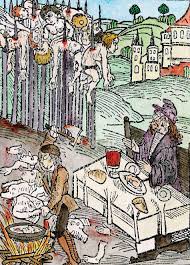
Vladimir the Impaler – picture credit National Geographic

All of the above was my blog written and published at the begining of 2022. Events have moved on and the symptons of this subversion process of natural law and order, remain and gather momentum.

Storms are not catastrophes except when they happen simultaneously and then they are called ‘perfect storms’. On they Oceans they appear as ‘rogue waves’ which can sweep over huge ocean going liners such as the Queen Elizabeth II at great risk to passengers and crew of capsize and sinking.

To sustain this metaphor 2022 has witnessed the sad loss of the real Queen Elizabeth through natural causes and with her passing the end of an era. Her reign included the Second World War of which she was one of the last veterans. In my view that experience raised the social ownership of responsibility, in Britain and around the world. Out of harm usually comes a realisation of the need for change and significantly a socialist prime minister in the UK succeded the Tory Winston Churchill. People realised the need for good housing, food and education and in particular the provision of health care for all.

What has happened today is the disappearance of a generation who cherished those social values as being of primary importance to a peaceful and good life for all, not just the rich and privileged. The stabilising influence of high ethical standards was sanctified in the creation of the European Commission in which what were called ‘human rights’ were enshrined not just in religious values but in law. Many who voted for Brexit are surprised and disappointed that the European Union (also created with an eye on peaceful coexistence in Europe) is a seperate organisation to the EC. They now wish to send asylum seekers (80% who are genuine) back home or to a third world country against their wishes and chances of even staying alive.

Should we be surprised that this division amongst left and right in many European countries and the weakening of the ‘centre ground’ has played right into the hands of the ghosts of the USSR – Vladimir Putin.

Was Brexit not only partly engineered by the Russia and her allies, but a green light to start a war in Europe?

Your enemy will always tell you where you are weak.

The rise of autocratic countries as being now a majority of governments in the world, should make us more than worried. When we watch the government clamp downs on free speech and the right to protest in China, Russia and Iran, are we watching European countries in the next decade?

In my view we should be extremely concerned. In summary we can identifiy two storms; the subversion of democracy by Russia and various rogue states such as Iran and North Korea, combined with weakened social values in divided democratic countries such as the UK and the USA.

Into this gathering tsunami is added a third wave which travels around the world largely unseen. It is generated by those who have huge political power through extreme wealth and social privilege. They work in the background by buying media organisations, pharmaceutical companies, industrial conglomerates and arms and municians amongst other diverse service and product providers. No one votes for them and their influence is being swelled by the rising tide enabled by new technology and biological sciences.

But wait! There are at least three storms producing this hurricane, now made even more worrying by the no longer deniable catastrophe of, climate change.

At the risk of having mixed my metaphors it is apparent now to most observers that the ‘minor details’ produced by this storm of all storms such as inflation, migration, poverty, hunger, war, homelessness are not only problems in themselves but indicate a far larger and uncontrolled pattern towards global catastrophe and harm to each and every individual alive today.

The old saying ‘there is no smoke without fire’ has never been more true. The challenge today is to find the fire and put it out. And when that is done, look around and see what is left and work out if those who stepped forward to ‘save us’ were our friends or our enemies.

Let Me In – part two

Most European countries have at least one land border with another country. But the UK is an island and this proved a great strategic advantage for the British, stopping intending visitors like Napoleon and Hitler. The English Channel is now one of the busiest shipping lanes in the world so you might think that crossing it without being noticed and at least avoided, would be difficult.

This makes you wonder how seriously the borders of the UK are watched when rubber boats arrive who could be invaders from a hostile country. Dorset Police went out and bought three boats, which doubled the patrol capacity for the whole of the UK. Interestingly the Royal Navy have become involved…but only recently.

This essay is not principally about the UK. The plight of those wishing to enter it, is merely intended as an example of similar situations all over the world, such as Cubans wishing to enter the USA.

With climate change, scarcity of food, water and raw materials, wars, disease, corruption, rogue governments and other factors, the world needs to apply a united strategy to those affected. The mass movements of populations needs to be handled co-operatively and competently.

So let us re-focus the problem in the English Channel and consider how a strategy can be formulated and implemented rather than narrowed to a single issue.

Le Manche – as seen from France

Firstly there needs to be a ‘triage’ of emigrants who turn up at the in French sea ports and coastal towns. They will either be in the ‘criminal’ group (5) or one of the other groups listed in Let Me In – part one, and it is of primary importance to identify them in the interests of all countries.

They may well be pretending to be seeking asylum in the UK and will have worked carefully on a fictitious cover story. If and when known criminals are identified by security services, it is imperative that they are dealt with. Those who are known to be linked to crime, war crimes, terrorism, extremism etc. may already have international warrants for their detention enabling their immediate extradition to other countries. In doing harder, what governments should already be doing, there is no longer a temptation or excuse to treat the greater majority of genuine migrants, as criminals.

The ‘people trafficking gangs’ and their leaders clearly, also need to identified and put on trial. Good police work should be capable of locating and monitoring them by using surveillance and sting operations to infiltrate their organisations and make arrests. If this has ever happened it has not hit the headlines. Do more resources need to be aimed towards identification of the gang leaders? They may be linked to other organised crime such as drugs, sex trafficking, terrorism and the rest. This is just bread and butter policing and yet it does no appear, at least, to happen.

The sale of the boats and safety equipment which takes place in the Calais markets and Marine supply shops, could be licensed and stricly monitored by CCTV, forcing traffickers to transport this equipment from elsewhere. This will not stop them, but it will increase the risk of being caught in possession of it and having to spin improbable yarns to police.

Security services have teams scanning the dark web for extremists, terrorists and their associated criminal networks. Little is made public about this work; no doubt for good reason, but there needs to be some publicity if only to reassure the public on both sides of the channel that there is a raft of measures operating to close what is happening down. Why is it so difficult?

Post Brexit, the French north coast became a border of the European Union. As such it will have been given substantially greater security measures than the internal borders within the EU. If 440 people leave the coast in one day and there are 20 people on each boat, then that is 22 boats! The English Channel crossings are made in broad daylight from busy coasts. Do the general public, commercial and leisure users of ports and marine facilities report suspicious activity? Is there a Coastguard hotline to report such craft? If you ask Google this question the answer is yes; 1-888-373-7888, but it’s in the United States of America.

If we consider new technologies then it has become practical and effective to search for and monitor suspicious activity using drones. These will provide real time intelligence and enable land and sea based patrols to investigate in a timely manner. They can also be used to verify reports from the general public before allocating resources. Drones could be used on both sides of the English Channel. It is likely that members of the public with an interest in using drones, could work alongside coastguard officers; reducing costs and releasing officers for duties that require their legal powers and skills. (There will also be a spill over benefit help catch smugglers and other illegal activity.)

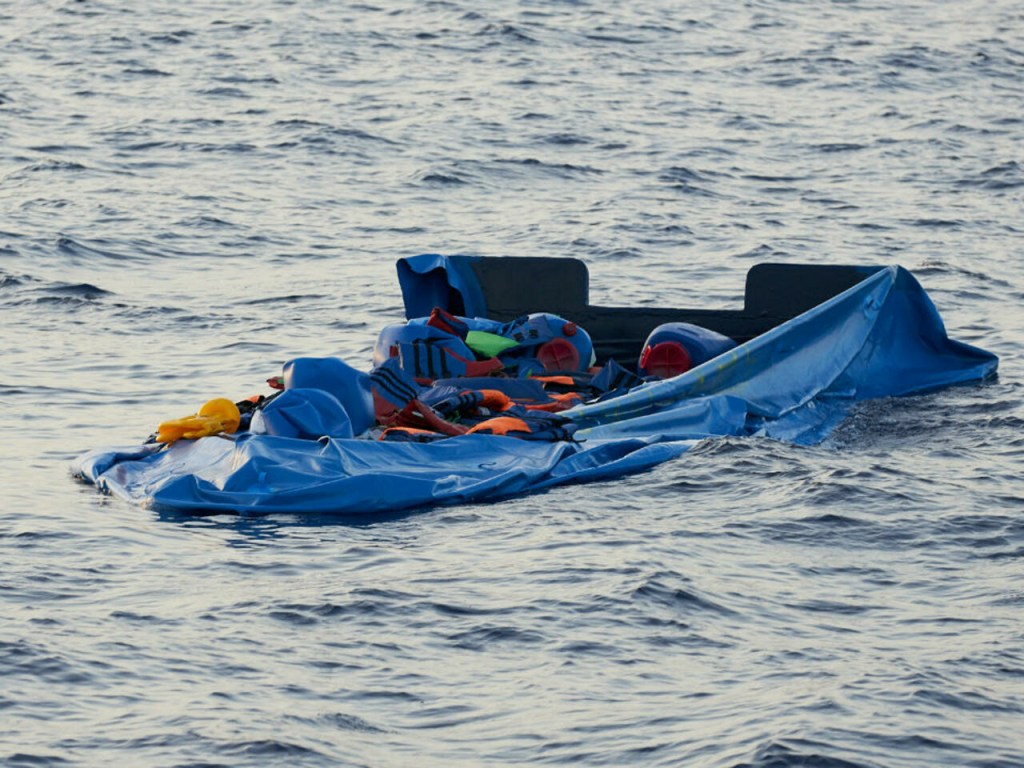
Migrant Boat – picture credit France 24

Crossing the Dover Strait from Calais depending on, wind and tides, speed of vessel etc. is going to take at least three to four hours. Crossing the shipping lanes is fraught with danger as all sailors know. This means that it is important to intercept emigrant boats before leaving the relative safety of the inshore waters. Maritime law requires interception of a such a vessel to be taken directly to the nearest safe place. If emigrant boats are allowed to stray too far towards the centre of the Channel this can become an issue between UK and French authorities. Should boats be turned around as they approach the other side of the channel (as the USA Coastguard does to Cuban refugees) or should a border be enforced in the centre of the Channel? Is this idea remotely practical in any case when emigrants dangle their children over the water as a threat to intercepting authorities or simply just jump into the water. At one point the Home Secretary Priti Patel wanted boats physically turned around, not appreciating or perhaps caring, how dangerous confrontations at sea are.

Newspaper articles and even presidents of countries will try to persuade the public that all or most emigrants are all criminals but statistically, the majority will fall into one of the other four groups already described.

Many will probably be without documentation often through no fault of their own. This issue could be solved by the often suggested policy of ‘creating safe routes’ and simply issuing temporary documentation. These can include biometric identification as is reasonably required by the UK government. (Scanning finger prints is part of process of identification of the known or wanted criminals and will already have been done. It takes a few minutes, not months, to do for each person.) The Prime Minister has lauded the idea of ‘safe routes’ in debate, but in reality the only safe routes the UK has set up are for Ukranian Nationals and a restricted number of Afghans.

My principle point, as I have almost certainly missed out many details and parts of a more general strategy simply because I am just writing this as a lay observer, is that controlling the mass movements of undocumented people is a complex issue. Enormous co-operation between nations is required, the sort of relationships that the European Union was partly set up to achieve.

There is an ‘elephant in the room’ however and they is why the UK is a honey pot to emigrants. Why do individuals and families wish to come to the UK so very badly they will risk their savings and their lives to get there? Perhaps the answer includes the facts that English is a lingua franca for many, it has given out UK passports following it’s Empire days (e.g. Hong Kong), it has a free health service based solely on residency and has a generous welfare system into which there is no immediate requirement to pay, in contrast to most other European countries.

picture credit: AA Milne and Walt Disney

The UK public might be proud of these humane and welcoming promises but it is cruel to dangle the carrot without letting go of it just as the donkey has finally completed the journey and this is precisely the strategy of the present government in most cases. In my view this is a slippery slope to the UK losing it’s reputation for fairmindedness.

This essay has been long and covered at lot of ground. This has been deliberate and well done if you have reached this far! My aim has to be to outline only the broad spectrum of issues around the mass movement of people around the globe, using the UK as a sorry example of ineptitude.

Governments ignore complexity at their peril. It is always tempting for policticians who often are vastly under qualified for the roles they attempt to do and say as little as possible. This is all very well for the ordinary person who knows they have no idea about international polictics, but leaders are expected to be better than this. The detail is most often where policies go wrong and ignoring detail is much the same as devil worship, for does he not love the same?

Let Me In – part one

Governments have to identify goals which are desired by their supporters and decide the means by which these goals can be achieved.

This simple statement makes sense, until the details and the means are examined in depth. Specifically, the means may not either be effective, or worse, they bring about unintended consequences which may cause harm.

An example of this is happening in the United Kingdom right now over the issue of immigration.

Voters in the Brexit referendum of 2014 had many concerns and one was a perception (stoked up by the media over inadequate public services and poor town planning rather than economists) that immigration into the UK was a problem. Brexit was posited as a means to ‘take control of our borders’. Unfortunately the ‘problem’ was incorrectly perceived in my view and I will explain why.

Economist promote immigration as it promotes growth and prosperity. The Tory governments of the last decades have known this and Home Secretaries such as Teresa May, did little to control immigration. Why would you when you need foreign workers? But after Brexit voted against the free movement of people within the European Union, unemployment in the UK now stands at 1.3 million.

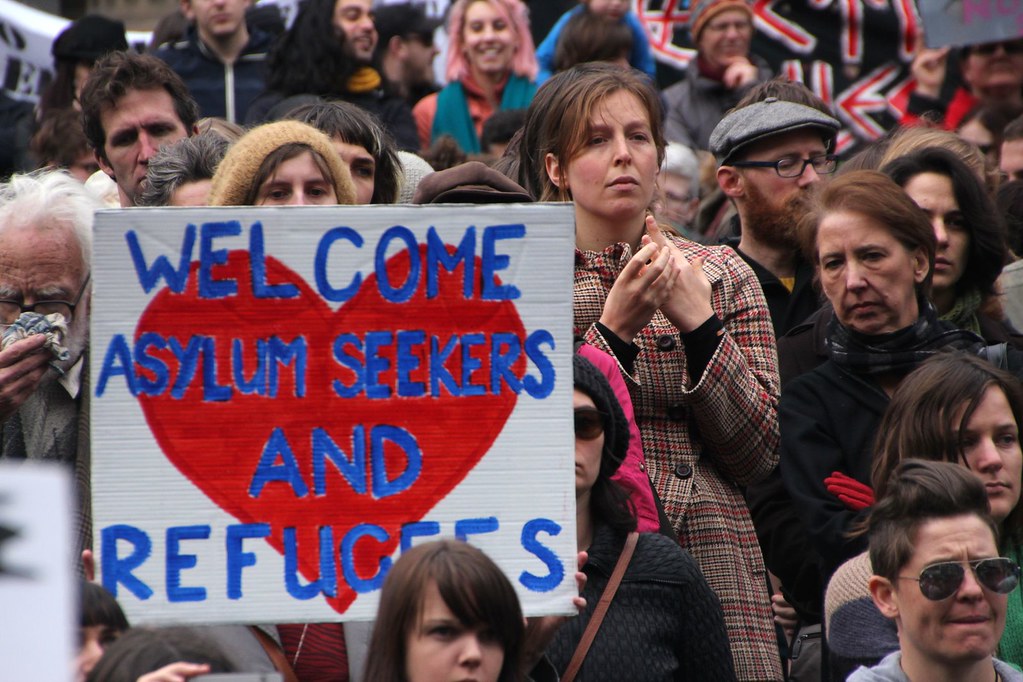
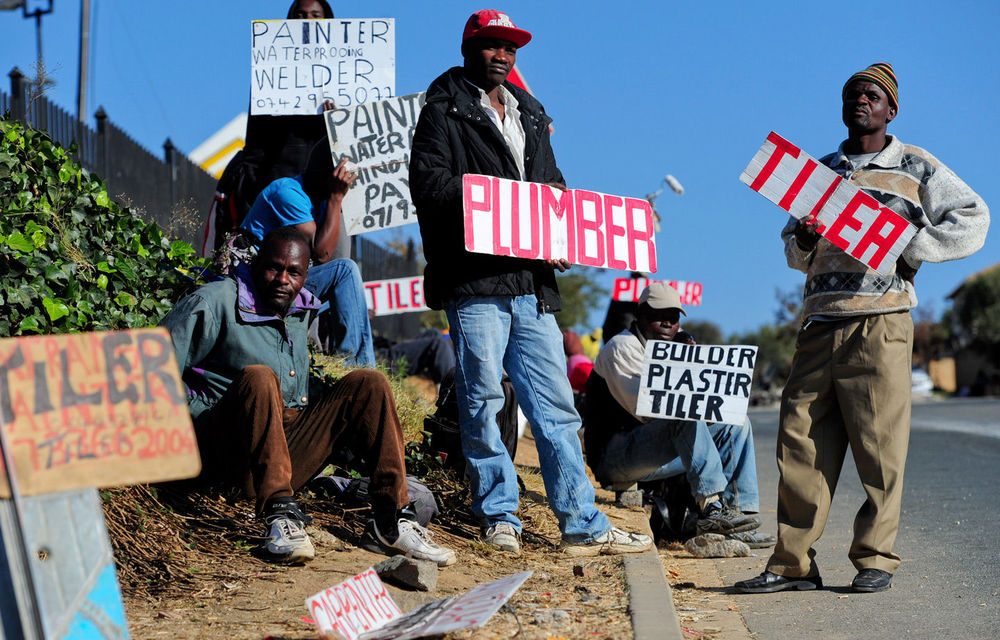
picture credit; I Volunteer International

The present argument by the Johnson government, is that the ‘problem of immigration’ is the number of people who die on inadequate boats whilst trying to cross the English Channel. This emotive argument correctly demonises the illegal traffickers but fails to approach the problem from a strategic perspective. If they used safe boats would that be okay? Is this a sea worthyness of boats problem?

The absurdly narrow focus on what the problem is and how to solve it, only satisfies voters who are content with a simplistic problem / solution statement. To gain a full grasp of the problem, I shall outline as best I can, the breadth of the issue of mass movements of people into the UK and how improved ‘control’ of the borders of the UK could be achieved.

Firstly, there are five types of emigrants;

  1. Those escaping hardship in their own countries through famine, war, climate change through no fault of their own.
  2. Skilled and unskilled economic emigrants who are seeking work and higher remuneration.
  3. Political emigrants who are escaping persecution by their own government because of their political views and acts and seek political asylum.
  4. Emigrants who are seeking to be re-united with their families; a group that includes children travelling alone.
  5. Those outside of the law in any country involved in subversive and or illegal activities, either in the interests of their own government or for criminal motives.

For each of these groups, there has to be a specific solution to their desire to emigrate to another country to live and work. But before I examine these, there is one further beneficial general approach.

The conditions in countries which people are seeking to leave own a large part of the problem. You might expect diplomats from countries likely to become unwilling hosts to emigrants to spend a large part of their time and resources in working on this problem with other governments. I personally suggest this should include processing asylum claims in local embassies (excepting when appropriate, political emigrants) and issuing temporary visas on ’emergency passports’ to enable safe travel using conventional means. Buying a 50 euro airline ticket instead of paying people traffickers, is no financial burden on the UK government and puts illegality out of business. It is certainly less than chartering an aircraft for 500,000 pounds to take the unwilling to Rwanda, but who am I to point this out?

But let us assume that all the targeted aid and supportive diplomatic steps have been taken and people are still desperate to leave their own countries. What interventions are available and appropriate for each of the five types identified above?

Group 1. Escaping hardship;

  • In the short to medium term, build refugee camps.
  • Identify suitable locations for these and provide appropriate support.
  • Have international protocols and means in place to be ready for the next global catastrophe, through non-political global organisations that are trusted by those seeking help.

Group 2. Economic migrants;

  • Maintain physical border controls so that border crossings can be managed and legal crossings enabled.
  • Put in place means to screen those with and without documents to confirm identity, purpose, ability for self support and seek work opportunities or evidence offers of employment.

Group 3. Political emigrants;

  • These should be identified by host countries only, as they will not wish to be intercepted by the countries they leave.
  • They may be oblidged to cross borders by illegal means in order to remain safe.

This group is likely to be used by group 5 (criminals) so particularly high security measures and screening methods will have to be used by potential hosting countries.

Group 4. Seeking family re-union;

  • Set rules for family members to be able re-unite after non-self imposed trauma legally and permanently.
  • Have facilities and protocols in place to process unaccompanied children.

This group would benefit from being able to apply for a visa and /or residency before leaving their own country.

Group 5. Criminals; This is the group that makes it necessary to have strict controls on all the rest.

  • They need to be identified at the earliest opportunity and dealt with according to international law and extradition agreements, much of which may need revue and extending in scope to fit the present movement towards a ‘global community’ rather than nationalist self interest.

You can appreciate that these principles apply to most emigration and immigration, and examples abound in today’s current affairs. To keep this essay focused I shall use just the example of immigration into the UK and the policy that the government believes will stop people crossing the English Channel in unsuitable craft.

My first point is a fault in the government’s argument. They state that the aim is to stop people drowning in the English Channel. Clearly no person is going to be against this. However their method is to deter people getting into unsafe boats and how strong a deterrent this is going to be, is unproven. The counter argument suggests the policy is ineffective and costly, at which point government ministers will accuse those against the policy of being ‘in favour of allowing people to drown in the English Channel’.

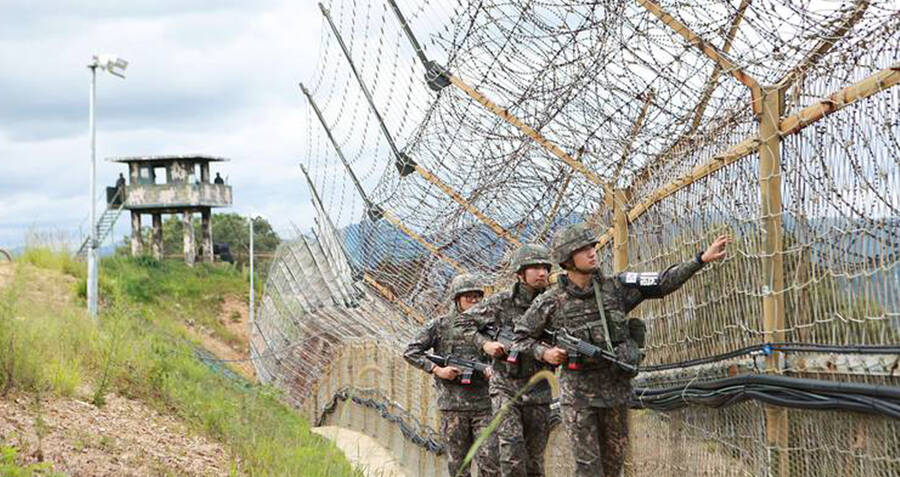
Unfortunately this extremely poor level of debate and problem solving has been carried over from the Brexit referendum in 2014. The focus of the ‘benefits’ of Brexit was on immigration, stating a desire to reduce numbers entering the UK. Not surprisingly, by being no longer a part of Europe the interests of the Mayor of Calais became no longer aligned with the UK. The solution for the French to the problems around refugee camps in Calais, was to do as little as possible to stop migrants leaving for the UK. For this reason they expressed no interest in accepting UK money for extra police and border controls on French territory. Such measures are popular with voters but are again ineffective. Emigrants who have already made long journeys are expert at avoiding detection. Effective ‘strong borders’, require measures in place similar to those between North and South Korea and it is unreasonable for Calais to accept machine gun posts, razor wire and mine fields along it’s beaches.

picture credit; All That is Interesting

So after the UK government has stopped accusing France of being ‘uncooperative’ rather than understanding the points about motive and means just made, the brutal ‘one size fits all’, send-emigrants-to-Rwanda solution is put in place. The British public – who have traditionally been internationally respected for being fair minded – are expected to accept that denying the human rights of desperate men, women and children will deter others from entering the UK illegally.

On the first day that this policy started the plane carrying eight emigrants, was grounded by the European Court of Human Rights and 440 people crossed the English Channel successfully in the other direction. Even after a year of this policy in operation – is it really likely that there will be fewer people crossing the English Channel in boats and if so how many fewer? Is denying human rights as a deterrent really acceptable?

In my view the government’s problem solving ability would hardly be accepted in a school debating society.

to be continued

Democracy by Numbers

There is a system of ‘painting by numbers’ for novice painters which gives great looking results using very basic skills. A picture created by a professional is divided into sections of say, seven different hues and tones. Each is given a number between one and seven and all the novice painter has to do is fill in each section of the canvas with the appropriate colour or hue.

The majority of the world is now governed by autocratic leaders. In the previous decades of the twentieth century this was not the case but recently the tipping point was passed and autocrats now ‘rule the world’ – or do they?

You see, what I am doing here is making an error of thinking committed by ‘democratic thinkers’, whereby there there are only two possibilities – most or least. What is the ‘most’ or majority, becomes the ‘status quo’ for the oversimplified reason that ‘most people want it’.

It’s a beguiling argument because it simplifies everything into one overgeneralisation, hitting contradictory nuances and unintended consequences right between the eyes with a knock out punch.

At our peril. Because in my view we should always go one layer deeper into what a ‘majority’ is and what effects it will have on the government of a country.

To go back to a basic definition of democracy;

Control of an organization or group by the majority of its members.

So let’s see how self styled Western democracies fit this definition.

The first glaring contradiction is the rise of the super rich, super powerful entrepreneurs like Bill Gates, Elon Musk and others.

These and their lesser known ilk, now constitute one percent of the population of the world and yet, influence most of it and control at least 25% of it, directly or indirectly. Elon Musk created an electronic car when most American motor manufacturers, except Ford, were going out of business. You could also question; how comfortably does a software engineer sit in the theatre of mass vaccination?

Democracy in this 1% of world leaders, (which is what they are by any definition) does not exist. No one voted for any of them or the technologies that they pushed to the top of the mountain.

So there we have brush No.1. Paint in all the areas with the number one on your painting.

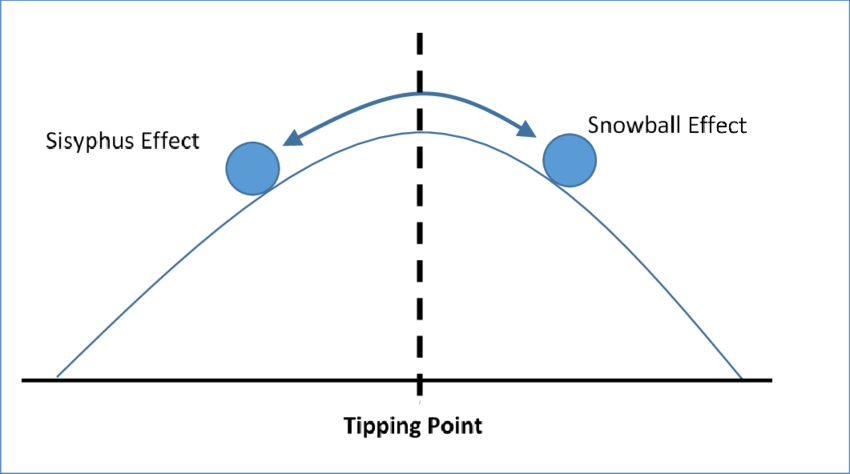
The next significant number is No. 50. This is the magic ‘tipping point’ in any democracy that defines the majority. Once you have this number of voters and ‘a few more’ then you control everything.

Or should they? Well, if we are thinking about ‘free elections’ in western democracies then these never really happen for the simple reason that a large number of people prefer not to vote. In some countries, this problem is countered by making it illegal not to vote…but this makes most liberally minded people uncomfortable… as does the idea of someone under a certain age voting. What right does a sixteen year old have to have an opinion on a country’s energy policy, a policy that is likely to affect them for the rest of their lives unlike an eighty year old who can vote but probably doesn’t have that long left to live.

Then there is the management nuance created by a 51% to 49% result. Imagine you survive a plane crash into the Pacific Ocean. You are bobbing up and down in a life raft with 8 passengers who look to you, the only member of crew to survive. They discount you as their leader as you are just a ‘trolley dolly’. Four of them argue that we should all start paddling. Four say we should stay put, so they all look to you for the casting vote. You know that whichever option you support there is going to be trouble. If everyone starts paddling there will be four who will not be putting their back into the effort. Worse still, they will begin to moan about what a waste of effort it is and how the rescuers will now not find you. The effect on moral is catastrophic. The same will happen if you follow the option to stay put and there is no sign of rescue.

If you think this is an unlikely scenario then just look at ‘Brexit’ and how the 48% to 52% vote (by those who bothered to get out of bed that morning because they thought Brexiteers would never win) has and is, panning out.

picture credit; Are We Europe

The third number on our palette is No.100. This is the colour for the 100% majority in favour. The rule in this version of democracy is that unless everyone agrees, nothing will get done. For this reason autocrats favouring the mere appearance of democracy whilst carry on as a despot, imprison the opposition (or worse) and create voters who are too frightened to vote against another ten years of tyranny.

Anyone who has lived in a family will know how this works and the misery it causes. Dad decides we are all going to the seaside, whilst Mum objects because she has an old friend to meet and Kitty wants to go on a school museum trip and Jazz wants to play in the local soccer team finals. Dad overalls and the family go to the seaside and all have a miserable time. The next day, they all go off in their individual directions and all is well.

Rarely do countries have the same interests and ideals in common which is why it is difficult for the European Union gain consensus in the 27 member countries. The only way is to ‘water down’ the proposal to such an extent that it causes no offence to anyone, but of course such vague proposals then become open to misinterpretation or biased interpretation from then on.

Most blatantly the United Nations Security Council gives the right to ‘veto’ any proposal to all of it’s seven member countries. This means that if one of them is committing war crimes somewhere outside it’s own country, it can veto any criticism and carry on.

So far I have placed three colours on the palette; 1% of unelected powerful people, 51% majority who upset the rest and the 100% who want their own way.

It would be reasonable to ask at this point ‘what does work?’, for democracy is meant to be the foundation stone of modern western civilisation.

Well, the only variation of the rules of democracy that does work in my view, is the requirement for a ‘super majority’. In this system it is recognised that the 51/49 split is unfair and becomes unworkable.

picture credit; Hype and Stuff

A super majority is therefore anything over a 60/40 or 66/34 split.

It’s subtle to understand at first but comes closer to what might be called ‘common sense’ management. If there are four in the family car heading off to the seaside, at least three are happy to be there and soon the fourth finds that perhaps it wasn’t such a bad idea after all or at least, it’s a fair deal.

If the super rich entrepreneurs and Oligarchs were compelled to pay 99% taxes, their power to influence would be taken away and their wealth fed into the poorest people in societies, creating the greatest benefit for most. Most of the super rich might well find that living off 1% of their wealth actually made them happier human beings or at least, that it was a fair deal. After all, Robin Hood was far more popular than the Sheriff of Nottingham.

If Russia is committing war crimes then the Security Council of the United Nations should have to power to act to investigate the allegations and call a cease fire or put in UN troops until the heat of battle dies down, and common sense prevails. Five to Two in favour is a reasonable super majority; get over it Russia and (abstaining) China.

To return to the ‘painting by numbers’ analogy, we can see that one coat of one hue paint is simple, but creates no work of art. Once the notion of ‘government by the people’ is broken down to examine the question ‘how’, several hues of interpretation present themselves. We must be bold because in calling everything ‘democratic’ we are committing the sin of over-simplifying.

Yes, they are all democratic but the devil is in the ‘how’ you create your democracy. You will need nuanced thinking to make things work whether on the small family scale or at a national level. The more colours in your painting the more it’s going to be a master piece and less like an amateur filling in spaces.

Vote Me!

The day is approaching this December 2019 when the good citizens of the United Kingdom of Great Britain and Northern Ireland will have the opportunity to vote in a general election.

The outcome is being described as the most significant for a generation, so you would expect the process to be fair. Certainly, whoever wins is going to perch on the moral high ground of victory and fight off all criticism for a very long time indeed. Whether they will be entitled to be so smug, I suggest, is open to debate.

You see, I have a problem which is; how democratic is the voting system? My quandary as a voter, is that I approve of some of the policies of most of the parties. It should be explained that in the UK there is a left wing party, Labour and a right wing party, Conservative and Unionist. The middle ground is occupied by the Liberal Democrats and Greens. Other nationalist parties represent Wales and Northern Ireland and Scotland.

In the United States of America, the choice is more polarised between the Democrats and Republicans. Let us take this as an example. What if, as a US citizen, you decided that the choice was too small. Who do you vote for if you want to stop climate change but encourage industry? Who do you vote for if you want the state to pay for health care and a prosperous arms industry?

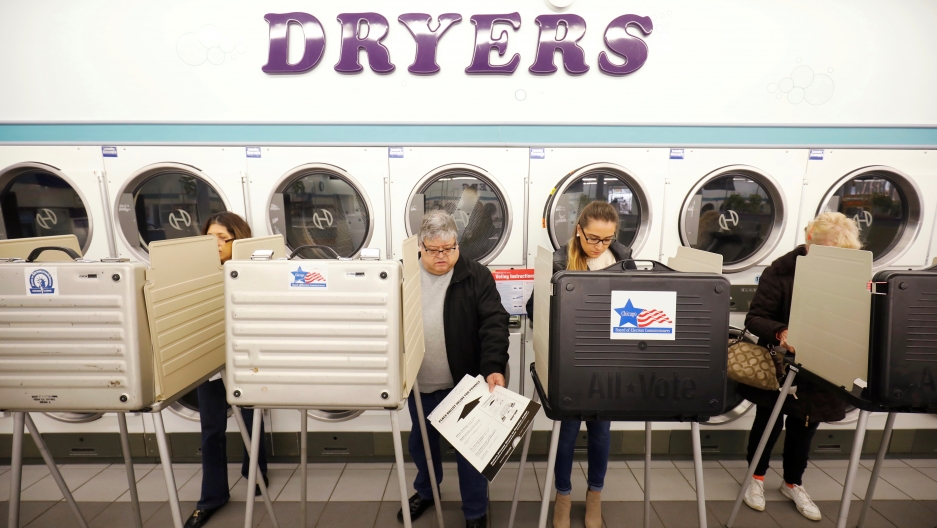
In a Spin About Voting?

Voting in Laundrymat

My point is that with polarised choices, there is no room for ambiguity that emerges from personal political perceptions and priorities. Worse still the politics of voting reduces to personality rather than policies.

Even in the UK, where the choice is greater, the democratic options are more confusing. Many voters now just spoil their ballot papers by writing ‘I don’t agree with any of this.’ They are being asked to vote for a leader they didn’t take part in selecting – unless they were the tiny minority of party members.

They might distrust all the candidates on offer and feel ambiguous about their policies.

Each party writes a manifesto prior to an election stating their political motives and means. This works to an extent but has the problem for some voters that their may be slipped in controversial motives that the voter does not want to happen. For instance, the Conservatives slipped in having a referendum on continued membership of the European Union. Suddenly it became an issue even though the majority did not think it worth consideration.

Worse still, when parties fail to win a majority in elections, coalitions have to be formed. Italy, Spain, possibly the UK next week, have this problem. Two parties may come together for the sake of forming a government at the price of compromise on their manifestos.

The public will have no choice over how these mixed manifestos will be prioritised. Which policies and method will be forgotten or ignored and which prioritised? Coalition manifestos are not published before an election if considered at all. This can lead to unrealistic expectations by voters when coalition governments are formed, as in the Liberal and Conservative Government in this decade. The direction of the ship will be decided by the Captain and officers, not the crew and certainly not the passengers.

No provisional consideration is given to coalition prior to an election as all parties have to perform the pretence that they are going to win even if it is clear to all that they will not.

The dangerous consequence of this for democracy, that occurs all too often, is that a minority party gains disproportionate power by owning the swing votes. This happened in the present Conservative government who allied with the Democratic Ulster Party and much of the muddle of mixed motives over Brexit has resulted.

In recent elections we have seen and or suspected that the over emphasis on the personality of candidates has given leverage to foreign governments and fake or real ‘whistle blowers’ and ‘news vendors’ questioning the reputations and ethical principles of candidates or even parties. Democracy as we know it is easily undermined by misinformation, view the Nazi propaganda news in 1930’s Germany, if you think this is a new phenomena.

Even the date of an election day can be manipulated to support a particular party in a manner which is clearly not in the interest of fairness. In the present UK election the Conservative government chose the day in which the students from Universities will end term and be returning home for Christmas. Informed young voters are not likely to support the Tories even though the election and it’s issues mostly affects their generation.

Young Voters in the USA Choose Not to Vote

  V I Dont Vote Badges.

Even such a consideration as ‘is it raining’ has been measured to be significant on election days. Sending people to village halls to scribble on a piece of paper has to be reviewed as the majority of citizens in the UK rarely turn out to vote. Some living abroad for over 15 years lose their right to vote.

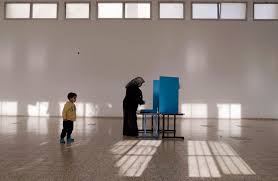
Lone Voter

Voting Lone Voter

These then, are some of the problems for Democracy. Some people say, ‘well that’s the system we have got’ or ‘it’s the best of a bad lot’ but you have to wonder if the country that prides itself in it’s democratic systems is not kidding itself, it’s citizens and the world.

I am not suggesting that Democracy should be replaced with the pedantic and often corrupt systems of power like Communism or Autocracy. I am suggesting that with the aid of computers and the internet, a more democratic process is available to elect representatives. This is my idea.

Firstly, the party system is out. The in-fighting of politicians instead of their countries best interest, is something most voters are tired of.

Instead, all candidates will put themselves up for election as ‘Independents’. Radical, yes, but read on because they can form parties after election, not before.

They will state their personal political views by placing ten stars against a list of important areas of government. This will be shown to voters as something like this ;

Education *

Health **

Defence ***

Transport *

Law and Order **

Business and Industry *

Farming and Fisheries *

Environment    nil stars

Social Housing and Homelessness    nil stars

In this list each aspect of legislation and distribution of taxes is prioritised by the candidate, according to their own personal views. They are not under any party pressure to support policies with which they feel awkward about or strongly disagree. They can be honest; a quality in politicians which many voters express their suspicion about.

The candidate has, say, ten stars with which to indicate how which issues they prioritise and the amount of funding they would give in comparison to others.

Now here’s the clever part. Each citizen is given the chance to indicate their priorities and how strongly they feel funding should be allocated to each on their ballot papers. Instead of one cross or tick for a party – which in the twenty first century has to seen as a crude political choice – each voter has the same number of stars as the candidate.

The last piece of this process would have to be constructed from new but it’s not impossible. What I am envisaging is on-line voting from a phone, personal or public computer. In an age when personal internet banking, shopping, even gambling! – is managed with a high degree of security and reliability, it must be possible to create a secure on-line voting application.

Ten issues are listed either as broad areas for consideration or narrow ones. The voter can either ignore these as being worthy of state support ( such as health care in the USA) or indicate a need for state intervention. The strength of these feelings can be indicated by allocating some of the ten stars used to vote with.

It will be impossible to use up more than ten stars or whatever number is allocated to each citizen, but ten is an easy number for most people. Their choice can be re-adjusted until the voter is ready before selecting the ‘VOTE’ button.

For a population familiar with the internet, voting will be accessible, timely, considered, representative and accurately describing personal views.

The final phase of the voting process is for computers to match exactly the views of voters to those of independent politicians. It is already established what the views of the candidates are and matching a set number of candidates (say 300 ) to the views of the citizen public, will be doable for a computer.

The result will be a selection of representatives who will accept office and be fairly representative of public opinion. Being politicians they will almost certainly form party cliques (birds of a feather flock together) but at least the system by which they obtained power, will have been representative.

This could be a sea change for how populations choose those who represents them. With the emphasis moved to policies and issues rather than personalities and power politics, a higher level of honesty and fairness will be achieved.

We have the technology already to achieve this. We just need the thinkers to describe how it can be done – as I have just done. Vote me!

Time Traveller

Good evening and welcome to another edition of Time Traveller. In this programme we ask a well known personality which seven items they would take into the future as their personal memories of today.

Our guest in the studio with me is Mrs. Teresa May, the recently deposed Prime Minister of the United Kingdom.

Welcome Teresa May and let us start by introducing your first item which is a film you have liked of admired and wish to take into a time in the future.

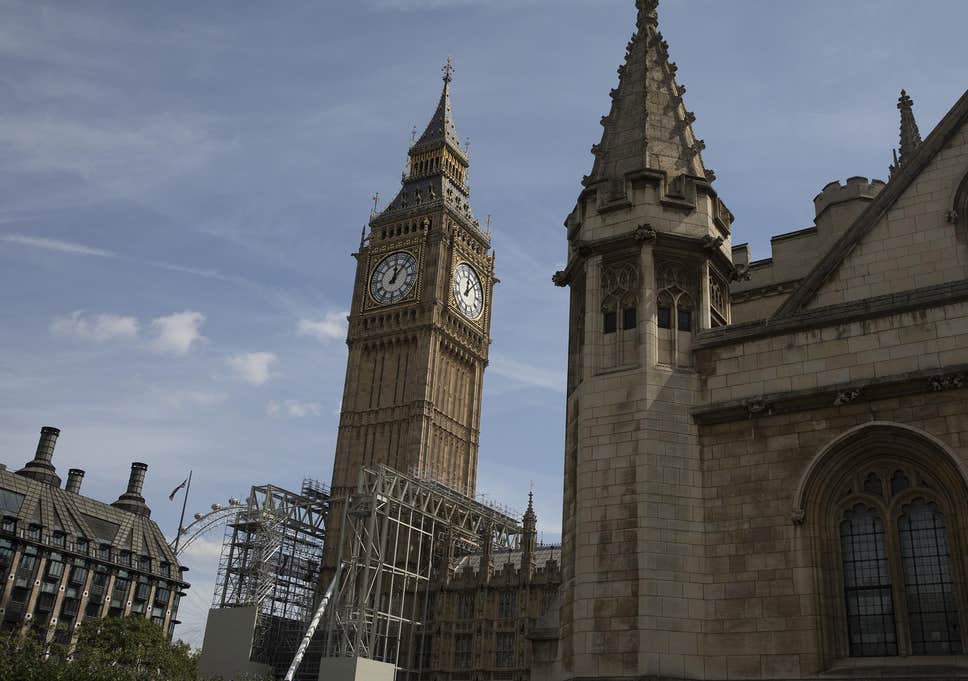
Well Robin, firstly thank you for inviting me onto your programme and giving me a chance to talk on one of my favourite subjects, myself. My most memorable film would have to be For Whom the Bell Tolls. Politics, as someone once said, is ‘war by another means’ or was that me? Anyway, I recently have discovered just that. I knew that I had a slim chance of achieving anything let alone the Brexit debate. Now with a career worst legacy of a failing health service, failing prison service, failing criminal justice system (in particular the probation service), failing police service, failing education system, failing defence services (those aircraft carriers oh dear), failing transport infrastructure, failing social cohesion, failing high streets and housing provision, failing agriculture and fisheries, failing trade deals, failing immigration policy, failing universal credit benefits system – I feel that there I have done enough for the country that I love (tear). What a pity that even the Houses of Parliament are leaking and in a bad state of repair in particular the Big Ben bell that has not tolled for quite a long time.

big-ben-getting-work-done

Well, what an extraordinary legacy and one which few people could be less proud, so let’s move on. Give us you favourite piece of music that you would take with you into the future.

Ah! Yes well this would have to be one of the places I would like to visit which is the Dark Side of the Moon by Pink Floyd. I believe the Chinese have a little something walking around there already and I would like to make similar ever decreasing circles in the dust bowls and craters so abundant there and not be asked awkward questions by members of the opposition and press.

A fine choice and somewhere we hope you will be able to go and stay perhaps, in the future? Your next choice is to consider a favourite meal that you would want to enjoy on the moon.

Ah! Well that’s a easy one because I expect it will not be so abundant in the future as it is now – good old British ‘fish and chips’. Because with the Fisheries and Farming policies of my previous government will mean that there are hardly any fish left in the seas in the future and no casual labourers to pick the potatoes rotting in the fields.

Extraordinary to contemplate no fish and chips but yes, perhaps you have sown those seeds not least when you were a disastrous Home Secretary who did little to reduce uncontrolled immigration (nervous laugh). So let us move on to your next choice which is a painting you would like to take into the future.

Can I have The Last Supper by Leonardo de Cohen, even though it is painted on a wall?

The whole wall is yours.

Yes, because whilst I don’t think I am Jesus (well not yet anyway) I have to consider my last appearance in the House of Commons and how nice the other disciples, I mean politicians, were to me. There was so much praise for my character and policies, saying how clever I was and how much I had done for the country I love selflessly – I know it was all untrue but what a lovely fantasy.

OK, a good choice and one which will remind you of your prophet like status at least in your own household if you include your cat. So next we have a poem for you to choose and take into the future. What would that be Teresa May?

Well Robin, I am not really one to read poetry mainly because I can’t understand most of it written with so many words missed out. But I think the words of the hymn Jerusalem by William Blake would remind me of the ‘green and pleasant land’ that England once was before my inept environment policies to reduce climate change turned England into a burnt and unpleasant desert.

What about the other countries of the UK?

I can’t see that they will still want to be part of a Brexited desert by then and will have gone off in their own directions to maintain the models of prosperity that I strived for and never achieved.

Great, so nearing the end of the programme we just have two more requests for you. What novel would you bring with you into the future?

That’s a simple one. I’d like the Secret Life of Walter Mitty because I can identify so closely with the main character whose name I forget? Is it Teresa…

No it’s Walter Mitty.

Yes, so there is this fantacist who dreams of all sorts of accomplishments way above his or her real life potential and abilities and creates all sorts of confusion amongst the people around him or her. That so reminds me of the me I love!

Marvellous, how interesting and finally then we have to ask what play you would take into the future.

That would be The Importance of Being Earnest by Oscar Wilde. I have always found in my career as a politician, that it matters little what you say and more how you say it. If you sound unsure of yourself it will show, even if it’s the most obvious and benign policy you are suggesting people will want to shrug it and you off. However if you come up with the most bizarre and unpractical ideas but are completely and utterly earnest in your pursuit of them, well, doors open, as they did for me.

Astonishing. An one luxury item you would like to bring with you into the future you describe so well?

Can I have a Tesla submarine. I do believe that in the future we will no longer be living on the land on account of global desertification and will have moved into the seas to earnestly carry on the destruction of the planet to the very end. Therefore I think a nice shiny Tesla submarine powered by the phosphorescence of tiny planktony things will be the perfect place to contemplate the last days of my life.

dead coral

A little domed perspex window into a world of dying coral and empty abysses?

Oh, yes, what a wonderful legacy.

Teresa May, thank you for causing all the worlds problems and being on this edition of Time Traveller.

Boris Gump

The End Game for Brexit

Only a vain fool would want to be prime minister of the United Kingdom today. Teresa May was greatly flattered when she was asked to take the poisoned chalice of leadership. Today, 22 July 19 is her last day of holding that chalice.

There was little democracy in the process of electing the new prime minister of the United Kingdom today. Only members of the conservative party were eligible to vote – almost 160,000 of them which is just 0.000625% of the population of the United Kingdom. This process was preferred to a general election for what reason? Could there have been a fear of losing the majority of two seats in the House of Commons and therefore power?

This absence of a sizeable working majority, an apparent inability to consult with like minded partners and her private belief in ‘remaining’, was what ultimately brought down Teresa May, as I see it.

So having decided that the country has no right to choose their next prime minister, ‘they’ decided to pitch a ‘remainder’ against a ‘leaver’ as candidates to – well – leave. Which one do you think was expected…no…intended to win? Yes, the leave campaigner was always going to win.

boris_2877536a

Unfortunately for Boris Johnson, he will have to act out his dreams of being a right honourable politician whilst facing an impossible situation. It’s like arriving at five in the morning at the Glastonbury music festival after an all night concert in which all the bands were booed off stage. Only a single cleaner is to be seen sweeping up debris from the back of the stage.

Come on Boris, get your ukulele out and give us a number!

shouts someone from the crowd. They are not quite sure how he got there but they are willing to sit through one more act before the stage is dismantled.

Vanity makes you so thick skinned you find yourself being handed a battered ukulele (called the Withdrawal Agreement) and tuning it’s three remaining strings. You can now say you have been in a band at Glastonbury 2019, when your grand kids ask you Boris.

But he is not so poor a politician that he has forgotten to organise a bus to take him home. It sits at the back of the stage with the engine just ticking over. The driver leans against an open door dragging on cigarette. This bus has written on the side; ‘no deal’.

Many politicians cringe at the thought of a ‘no deal’ with the danger of a catalogue of unintended consequences emerging from it like the Monty Python one ton weight descending from above. The EU commissioners are expecting the £39 billion pound debt to be paid by the United Kingdom. Failure to do this would leave the UK’s reputation as an honourable nation in tatters, the pound would crash and investors rush to remove capital and businesses from the nation.

Yet Boris has cleverly wrapped up this ‘no deal’ option in a transparent tissue of lies paper. ‘This is on the table so that we have bargaining power’ the public are told. But of course the mere presence of this option means that there would be no deceit if it were decided to be used. After all, the problems faced by Boris Johnson are so unmanageable that ‘throwing the baby out with the bath water’ is an appealing Party ploy.

And when the unexpected consequences start appearing one by one, he can say that none of this was his fault. Third parties such as the EU commissioners and Teresa May and all the other political parties, were the cause of the chaos now falling from the skies.

One such cloud burst, in my view, will inevitably be the countries that make up the United Kingdom seeking independence. I expect Northern Ireland to vote to become part of Eire (and Europe) first. That will pave the way for Scotland to seek independence and perhaps even the north of England!

Boris will be like the male lead in a farce that ends with his trousers around his ankles and a chicken on his head – but then – I expect he would rather like that look.

I am disheartened when I listen to people asked for their views on Brexit on TV. They expect there to be some sort of change after Brexit but rarely state what that might be. The ‘end game’ is lost in the excitement of the ‘present game’.

I am reminded of the ‘independence’ parties held in countries in Africa as the colonial powers withdrew in the 1950’s. The national exuberance and excitement lasted several days. New national flags were flown from windows and vehicles, horns blaring. People danced in the streets all because they were ‘free’ without pausing to think what that meant.

I make no excuse for colonialism which was clearly wrong. But when the European countries left Africa there was a political vacuum. Despots and power hungry ‘leaders’ filled the parliaments and military top jobs. Corruption and victimisation of populations became normal. People found the end game was no better than before – sometimes worse.

I wonder what will be the ‘end game’ for Brexit, once the bunting has been taken down from the streets parties.

Nigel Farage will disappear from the scene because his great ‘oversimplification of the facts’ will be over.

All that will be left will be a resounding silence, little direction in the shape of cleverly managed new prospects.

The EU will treat the UK as positively second class; why shouldn’t they? And America will not save the UK from nasty Europe this time round – unless you think President Trump is a very very good person… very loyal and trustworthy person who loves British Trump…Boris Gump.