A dictionary definition of the ‘standard of living’ is ‘the degree of wealth and material comfort available to a person or community’. It is not clear from this short description what is included in the concept other than a level of ‘comfort’. We might think that globally people have adequate essentials of life; food, shelter, water, health…but we know wealth is not evenly distributed.
It follows that not everyone on planet Earth will enjoy the same degree of ‘comfort’. There is an extended range from ‘in dire need of comfort’ to ‘having comfort in excess’.
When watching news reports of natural events that have devastated communities in countries with a low standard of, one feels for the victims. But looked at another way, these communities as used to living with little more than the basics. Their frail houses can be rebuilt. If they are lucky, aid tides them over until crops can be harvested again. What I mean is that this is not total devastation. Such people are survivors because they live simply. Inuit hunters, when given quartz watches, threw them away. When asked why, they replied that they were unable to repair them. It’s a wise principle. Round the world sailors know their boats intimately for the same reason.
In contrast, the ‘city dwellers’ of the world are not survivors. If farm land turns into a desert, as happened in the ‘dust bowl’ in 1930’s United States of America, mass hunger and even death within ‘sophisticated’ populations will result. They are, in the words of the Beatles song, “Urban Spacemen”.
picture credit: science.smith.edu
Most people are aware of the global threats to the citizens of planet Earth in the twenty-first century. We have had a ‘pandemic’ and more may follow, we observe the alarming effects of climate change and it’s consequences such as food shortages and habitat destruction, we have localised wars erupting in different parts of the world and mass migration because of all of these things and others.
When Elon Musk talks of moving to other planets, he must be inferring that there is a strategy to sustain the homo sapien sapiens after global catastrophe. Good luck getting a ticket to ride.
We know that humans have survived global catastrophe before. There are meant to have been at least six global disasters wiping out most of life, but not all. The underground cities found in places like northern Turkey are evidence of how a small number of humans survived.
Kaymakli Underground City Turkey
This time though, high tech city dwellers who casually dial up for food on their phones, are not likely to make underground cities. With half of the world’s population living in cities, the question we should be asking ourselves is, ‘how can we prevent disaster?’
We can all make a difference by taking personal responsibility for the likely causes of a catastrophe. One individual can change the world, however rarely you hear this affirmation. There is a story of a child throwing a stranded star fish back into the sea. When questioned what difference the action made the child answered that it made a difference to the starfish.
Every holiday, every sending of goods and foodstuffs around the world, every activity that involves burning carbon based fuels is, however slightly, connected to the tornado or mudslide or nuclear waste release. Governments appear powerless to prevent destructive human behaviour whilst natural disasters will happen with little encouragement.
Have we believed the ‘cornflake family’ myth that television presented as a social aspiration in the 1960’s? The clichéd happy family. Whilst the USA was busy consuming 25% of the world’s resources, the rest of the world was struggling to mimic the same mistake of non sustainable lifestyles.
picture credit: Resilience.org
A Swedish statistician, the late Hans Roslin described a process of increasing global wealth very lucidly in a TED lecture titled ‘Global Population Growth’ using IKEA boxes. He suggested a general rise in the standard of living even if that was merely a transition from flip flops to a bicycle and from bicycles to holidays abroad. Improved birth control and higher wages lead to smaller families, which stalls the global population rise at 9 or 10 billion, and it may then fall.
The argument is interesting but worryingly fails to take into account the ‘threat’ aspect in a ‘strength, weakness, opportunity, threat’ analysis. What is the point of building a brick house for you family is the sea level rises and floods the land? The threats to an improved global standard of living are so complex in quantity and quality that they can only be left to self adjust in a radical manner…meaning disaster.
China and India and other countries are set on ‘industrialisation’ at any cost and critics in the West are not in a strong moral position to criticise. Something has been attempted to build a cockpit in this out of control vehicle, namely the annual COP talks.
If governments bring about the promises they make at the ‘Conference of the Parties’ (COP) talks – to create a viable future for earth’s future inhabitants – so much the better, but this is by no means certain. The levers and pulleys needed for change on a global scale should have been pulled decades ago and, sadly, were not.
What you will not hear from COP is the conclusion that the economic concept of ever increasing ‘standards of living’ was always a myth because it was unsustainable on a global scale. No single planet can support infinite demand using a finite resources. The COP party conferences are, in my view, overseeing the end of the last supper of consumerism and comfort.
When I was in my first year at University I used to have debates with my parents about the harm made by internal combustion engines. Their reply was that if I did not approve of cars why do I ride in them? The answer was of course that at that time there was no alternative; unless you lived in cities. In London I rode my bicycle with a sign on the back saying ‘no noise, no fumes’ for a decade.
Fifty years later I have won my argument. London has introduced ‘low emission zones’ having recognised that the air pollution from vehicles is harmful to the health of it’s inhabitants.
When I retired in Spain I bought a Spanish made electric bicycle. At first it was great but after five years the battery had lost so much of it’s capacity to fully charge that I had to buy a new one. This cost me about a third of what I had paid for the bicycle. Then the computer had a problem and no e-bike specialist knew how to fix it and the BH factory was closed because of the pandemic. When the motor broke I took my bike down to the recycling centre and said goodbye to it. Never has a bicycle caused me so many problems.
Interestingly, many e-car owners are going through the same experience, only worse. They have invested considerably more money in an e-car than the cost of a bicycle and their anxieties must be proportionately larger.
Properganda or Proper Policy?
I will not list all the of the problems they face but here are a few;
*Recharging the batteries; those without a private drive will find it hard or impossible to charge in the street. Already pavements in cities have electric cables running across the pavement from homes to e-cars overnight.
*Recharging is expensive; unless you are recharging at home using your own photo voltaic panels, you will pay for your electricity.
*Mains electricity at home is not green electricity. In Spain mine is mainly produced by nuclear and gas fired power stations. Only 5% of my electricity is from renewable sources.
*Electricity sent to users via a national grid is highly inefficient, losing about 80% of the energy from the original source. Local power production will one day replace this but not yet.
*Electric cars are cheaper to maintain than internal combustion cars but there is not yet the infrastructure and technicians in place to repair broken e-cars.
*Electric cars are heavy and need expensive tyres.
*Electric car tyres put out more particulate matter into the air than diesel cars produce from their exhaust.
*Electric cars are heavy and some multi-storey car parks and car ferries may have to be redesigned.
*Lythium ion batteries have a risk of spontaneously combusting.
*Drivers of electric cars experience ‘distance anxiety’. For longer trips they will have to stop and find a charging point. While these are being increased in number, there is no strategic control over the number of these points and customer demand. Waiting for a recharge is not satisfactory for people in a hurry.
*If there is a traffic jam for any reason, e-car users could find themselves running out of electricity and being powerless (literally) to do anything about it. Apart from planned road closures and random accidents, extreme weather such as freezing blizzards can stop the traffic and cause deaths. Keeping the lights and heater on is not an option for e-car users.
*As one third of a cars energy consumption in it’s lifetime is consumed in it’s production. It makes sense therefore to make cars that last a long time. A diesel engine can do a million miles as often London taxis do before some are sent off to California for an overhaul and new life. The lifetime of new e-cars is unknown but certainly the batteries will the first to be replaced and that raises the question of where new rare earth materials are going to ethically sourced from…the moon?
At present, many e-car users are in the ‘honey-moon’ phase of ownership but already some are questioning whether their choice was really such a good one.
Car producers are also going through the same questioning process. Major companies such as Ford, General Motors, Apple and Volkswagen are applying the brakes.
It is without question that personal transport (outside of cities) is not going to go away. We love our cars and the convenience, privacy and comfort they provide. With the approach of the era of the self drive cars, users will be able to sit back and enjoy the ride…until a pesky teenager deliberately steps out in front of the car (just for a laugh) and forces an emergency stop…or a car jacker on a lonely road at night! Making moral decisions based on appearance of those stopping cars, is still over the horizon for AI. Does it recognise a police officer in uniform?
And then if you are used to driving over the speed limit (as most drivers are except when they approach a clearly signed speed enforcement camera) then you will find your journey times extended as your AI dutifully follows the traffic laws.
In the meantime drivers are left with the internal combustion engine. There are stories of some drivers who bought e-cars dusting off their old diesels and selling the Tesla.
Toyota appear to be the most ‘customer need’ focused car production company and have asked themselves the question; ‘how can we make the internal combustion engine green?’
Toyota Hydrogen Car
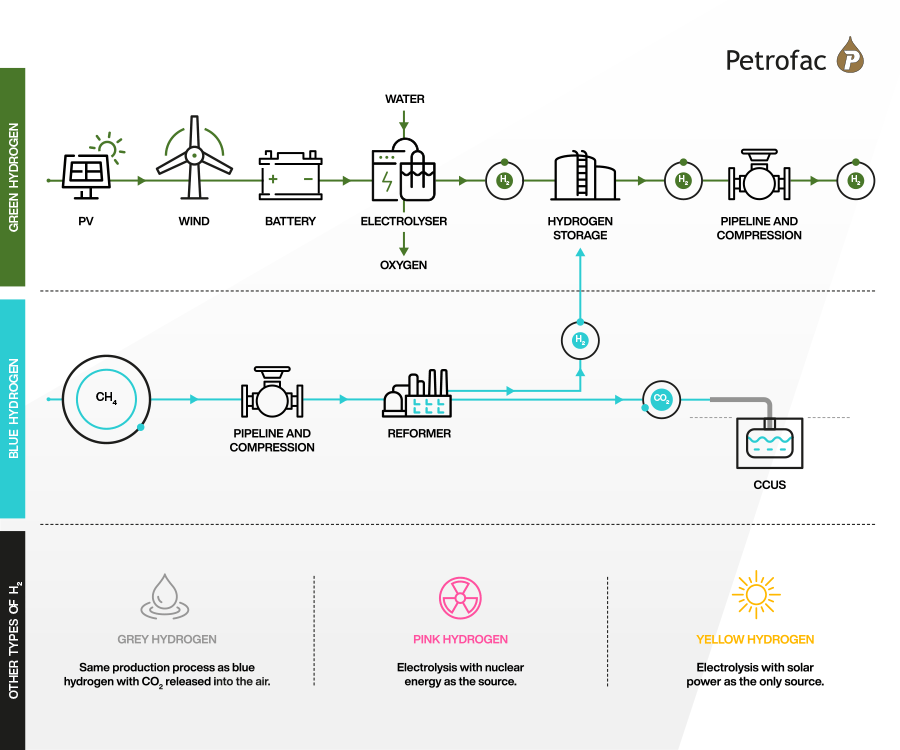
One answer is to use hydrogen as a combustible gas using electrolysis to split water into hydrogen and oxygen. I remember watching this being done on a science television programme back in the 1970’s and thinking then – ‘that is the future’. I was not wrong.
There are nuances regarding how ‘green’ hydrogen production is and the infographic below describes this.
There is another alternative fuel which is ammonia. This is a main component of many fertilisers and is a chemical made of hydrogen and nitrogen (NH3). It can be burnt in a combustion engine as a zero carbon fuel.
This essay has focused on electric cars but clearly heavy transport by train, ship and goods vehicles are substantial polluters are the moment. Hydrogen has always been a preferred route for the development of engines of the future for moving heavy goods around the world.
Science tends to have a momentum of it’s own. New inventions often take the lead in how society uses them and evolves. This new ‘green transport’ debate, raises the questions of how much the government provides subsidies for new enterprises and how important planet sustainability is believed to be by various governments around the world.
If these decisions are devolved to industry leaders it is likely that little will be done as we have observed over the last five decades or so, when ‘global warming’ was first highlighted as an issue. Politicians such as Margaret Thatcher took a very forward looking view as to the health of the planet and the effect of unrestrained industrial production and consumption. Private enterprise so far has followed the policy of ripping the planet apart. Only now is this policy biting back.
Perhaps today, it is down to the individual to vote with their feet. Move into a city, use public transport or a bicycle. Or move to the countryside and fit photo voltaic cells and solar water heaters to your house. Or just do nothing.
Once upon a time the world was covered in forests. People lived in these forests happily until one dreadful day a war started.
The people in one particular forest were badly persecuted by their enemy. Most of their trees were cut down and the people died in great numbers as they could not survive without the bounty of nature. By the end of the war only one man survived, called The Hunter.
The Hunter
The kind people from all over the world felt sorry for the Hunter. They decided to send him to the very best forest in the world known as the Holy Forest. It was for him to look after and live in peace with the forest animals for the rest of his life.
The Hunter was very pleased and quickly set to work building himself a timber house in a clearing. The forest animals watched from their hiding places and wondered how the Hunter had been allowed to live in their Holy Forest. One day the Hunter walked out with his axe and started to chop down trees. He chopped and he chopped all day long until the clearing was very much bigger. The forest animals who lived in those trees ran away to their friends and family and hid in fear.
As the months and years went by, the Hunter carried on chopping down trees until there was only a tiny part of The Holy Forest left. The animals were hiding anywhere they could find but could not avoid the bullets from the hunter’s gun.
They could not understand why he hated them, so they sent the largest of the bears to warn him to stop – and fight him if he refused. The Hunter did not want to talk with the bear so the bear scratched his face very badly and blood poured out. The man grabbed his gun in a rage and shot the bear dead.
Now the forest animals were very frightened and hid in their burrows and up in the trees. In a rage The Hunter shouted that he was going to kill every living creature and that was all their fault for sending the bear. He took out his axe and cut down the remaining trees, shooting the forest animals one by one for they had nowhere to run.
The kind people of the world had been watching the Hunter all this time. Although they protested at what he was doing, they never stopped him. When they saw that the Holy Forest was gone and the ground was littered with the bones of the forest animals, they were shocked.
They could not understand how someone who lost his own people’s forest could destroy another one gifted to him in peace, especially one so holy. When they asked him he flew into a rage and accused them of being friends of the bear who cut his face and he pointed to his scars. His sense of self righteousness knew no limits and his eyes flashed anger and hatred at them.
So they walked away, and it started to rain on the once Holy land and the Hunter had no animals to hunt, no kind friends to look after him and only a wasteland in his memory.
He realised then that he had done exactly the bad things that had been done to his people without knowing what he was doing. ‘Bad things happen to make us wise,’ he thought, ‘when all the time I blamed others. Now I understand my actions were filled with fear and hatred but it is too late’. And the Hunter laid down his gun and collapsed. He had broken the sacred law to only do as you would be done by, and to break this law in a holy place was an end of honour for his fallen people and himself.
Humans are social animals and their historic ascent to the top of the food chain, came largely from this instinct to act as a group.
We should not be too conceited about this however as many creatures live as a ‘colony’. When a wolf pack moves across ground in line, the strongest animals lead and follow and the weakest take a place in the middle for safety. Penguins form a dynamic huddle to survive the sub-zero winds. Those on the perimeter continually shuffle towards the centre before going back the edge.
Even insects such as drone bees, protect future of the colony in the shape of the Queen, above their own lives.
Humans, however, have a freedom to ignore the ‘greater good’ and act purely in their individual interests. The result is clearly apparent in ‘western’ societies, where the wealthy thrive and the poor strive to survive. Heroic characters such as Robin Hood of Nottingham, epitomised this ‘greater good’ principle and heroically stole from the rich to give to the poor.
As the R.M.S. Titanic cut through the icy waves, part of the wealthy owner’s focus was to beat the record time for a crossing of the Atlantic by an ocean liner. The White Star Line needed to beat the competition. This desire and it’s consequences, as we know, seeded catastrophe.
Ironically, when it came to individuals on the sinking ship, there was an honourable decorum, and the men generally helped the women and children onto the lifeboats. ‘Me first’ as an instinct for survival was selflessly over ridden by the ‘common good of the species’ and the orchestra played on.
These philosophical reflections on social morality shine a revealing light on what is happening today in western societies.
A certain candidate for the forthcoming elections for the president of the USA, has the campaign slogan, ‘America First’. This highlights the paradox between the rights of the State and the individual. There is an implied promise that by making America ‘great again’, each and every citizen will get a fair share of the apple pie.
But there is no promise and if the homeless of ‘down town America’ stopped to think about this vague contract, they might not vote for the orange Orang U’tang again.
Governance along lines of the good of all and sharing, or socialism if you want, was part of the American Declaration of Independence. The King of Great Britain was characterised as the Sheriff of Nottingham in the Robin Hood story. He was a tyrant, as had most British Kings been since Alfred the Great.
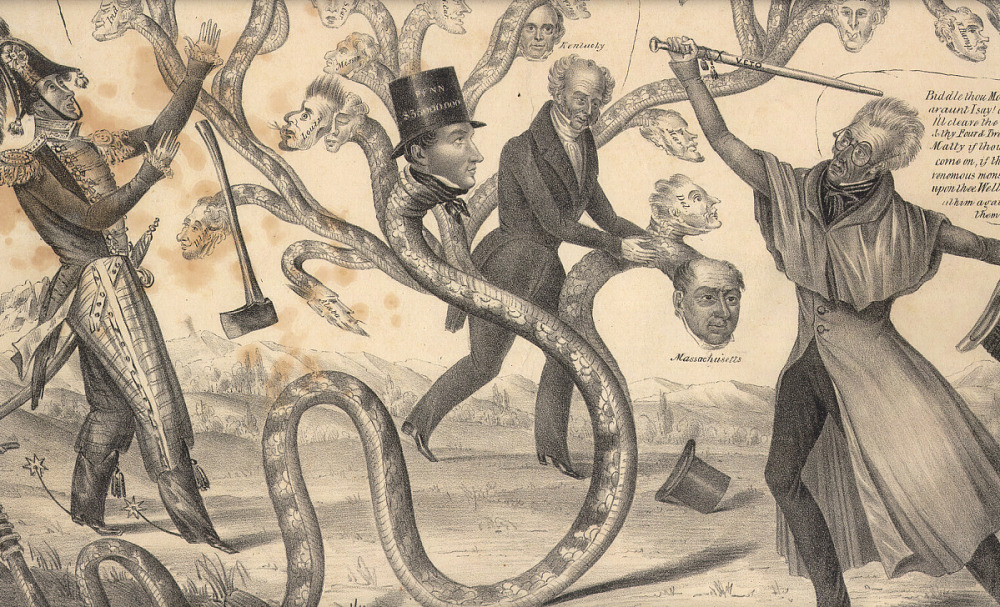
The governance of a nation by one person ironically contained a great advantage for the common people. If you remove the tyrant Monarch, you end his reign in one swing of the sword. But today, ‘treason for the common good’ is not so simple. With the many levels of power in modern democracies, the monster has many self regenerating heads.
You might find yourself slashing and lunging at the Military Industrial Complex, the Deep State, the Secret Societies, the Elected Government, the Illuminati, the Billionaire families and the Tech Billionaires, the Banks including the Central Reserve, the numerous Institutions of State (some declared and some not), the Dark Web, major organised crime…the list goes on. If it is hard to fight a royal monster with one head, it’s near impossible to fight one with many.
But revolution rarely results in lasting peace. It generally creates a lull whilst the monster just grows another head.
In the United Kingdom of Great Britain and Northern Ireland, in 2016 there was a referendum for change. The question was whether the State should remain part of the European Union. As the fifth richest nation in the world at that time, the citizens of that country saw the EU as a kind of Robin Hood, that took from the rich countries and gave to the poor ones. When they asked the question, ‘what is in it for me?’ their was silence. So just over half of those who were motivated by this ‘injustice’ to vote, voted for ‘independence’ or ‘us first’. They were persuaded that a country that turns it’s back on it’s 27 neighbours is going to be much better off and if not better off, British. Again, there was an expectation that what benefits the Nation will ‘trickle down’ to the individual.
picture credit: Sunday Mirror
Seven years on, poverty is such a problem in the UK that the poor, go to food banks in order to survive. If they become ill, their beloved NHS will send to the end of a very long line of the sick and dying. If they can no longer afford to pay the monthly mortgage payments or rent, they will have to sofa surf whilst waiting in an even longer line for ‘social housing’. Either that or a cardboard box under a bridge. These and many other social failures herald an era where the State is run by the prosperous with little deference to the deprived.
Russia and China look on with interest. A divided community of European Nations and a division between the USA and Europe pulls, the trigger of the starting pistol for their plans. The communist system embraces the principle of reducing individual wealth so that everyone is equally poor, or at best, equally good party members.
If they ever existed in Communist regimes, the rights of the individual were banished during the SARS -2 , Covid 19 pandemic. Those who view social ‘lock downs’ as a rehearsal, will be wondering what is coming next. If the richest want to abandon ship, at this moment in time they cannot move their money out of China. Control of money by the State, is a very modern way to control the individual.
The citizens of Western democracies are discovering that cash machines are disappearing from the high streets…as are the high streets. States are setting up digital currencies giving them complete control over the individual. Freedom to travel is being restricted to 15 minute zones and autonomous cars will not be driven by citizens but the Ministry for Citizen Movement. Even the right to decide what goes into their own bodies, once held as sacrosanct, was rescinded during the Covid pandemic.
At a time when individuals find themselves in a world that presently stumbles from one crisis to another, they must ask themselves if these world problems are real and if so, do they want the solution being offered by the State?
There is no system of governance that is perfect be it right or left wing. This is because organisation has to incorporate change of social and individual values, swinging sometimes to the left and at other times to the right. Like the shuffling penguins in an Arctic huddle, an penguin may experience extreme cold for a period of time before it’s turn to shuffle to the warm centre again.
picture credit: Birdwatching Magazine
Democracies are the nearest system of governance to this ideal, as they generally swing from left to right every set number of years. But it’s not a smooth series of transitions and often change is poorly managed. Social housing was sold off in the 1980’s in the UK and no government of any description has sought to bring it back. The result is a housing shortage crisis.
At a global level, there is a ‘climate crisis’. Nations of the world are being asked to join together in overcoming an imminent threat to each and every citizen of the world. Right wing politicians in individual rich countries like the UK, argue that they only caused 1% of the emergency so they do not have to help the rest of the world. Again we hear the ‘me first’ argument but upscaled to global proportions.
The West does not have control of the Equatorial Rain Forests and the benefits they bring to climate change. Neither does it have control of the American Meridional Overturning Circulation (AMOC) and rising sea temperatures and melting polar ice, nor the new hole in the Ozone Layer over northern Arctic regions.
This blue and green spinning space ship is racing towards a metaphorical iceberg. In the rush for the life boat known as Space X and other wildly hopeful Mars missions, you might discover that there is a new component in human evolution. It is called ‘the survival of the richest’, otherwise known as ‘me first’.
To everything there is an overview and to help understand the drama being played out in Ukraine at the moment, read on;
Tomas Schuman is an Soviet-era secret service agent and has spilled the beans on how the Soviet era strategy to undermine the West. He now describes the Soviet techniques of international subversion openly on You Tube.
He says there are four stages, extended over several decades.
Stage 1: Demoralisation
This takes at least one generation, maybe 15 to 20 years. During this time various completely fake replacements take over established religion, education, law and order and social life in general.
These institutions are replaced with un-elected ‘influencers’ such as the media, secret societies, wealthy individuals and clandestine branches of government.
Labour relations are undermined by taking away the power of trade unions.
Stage 2: Destabilisation
This process is aimed at institutions. ‘Sleepers’ who have been installed in societies institutions such as local government, law, military, industry and commerce and educational hubs, are activated. They move into positions of authority through the perceived lack of law and order e.g. military coup, ‘fake’ election results, single issue protest groups lobbying government and on the streets (Black Lives Matter)(‘statue toppling’)(‘defund the police’). At the same time various antagonistic single issue parties move into power vacuums created by the effects of stage 1. (the Brexit Party in the UK).
Stage 3: Crisis
This process starts when social functions cease to work such as the effects on the free movements of goods and people within the UK and the EU. This includes the issues around the Good Friday Agreement and possibly leading to nationalist politics breaking up the United Kingdom. Poverty and homelessness (e.g. California) forces large numbers of people to seek food aid and other handouts to simply exist. Fake information is fed at an industrial scale to social media sites at carefully selected times e.g. elections and referendums. This and weak government, leads to discontent which can spiral out of control leading to the call for more authoritarian rule and a ‘strong man’ ruler such as seen in the United States when Trump was elected. The result is civil war or invasion of another country e.g. Afghanistan, Lebanon, Syria and now Ukraine.
Stage 4: Normalisation
As a pretence of solving the problems (real and fake) of the first three stages,
it is now possible to justify extreme action to ‘normalise’ society and bring ‘peace’. The tanks move in to a desired country, however ‘normal’ the citizens feel, with the aim of physically taking over the seat of government (e.g. the protesters at the Washington rally who disputed the election results or now Ukraine). Once the leaders of the former government have fled or been jailed, a new ‘puppet’ government can be installed with the aim of ‘restoring law and order’ which of course comes at the price of loss of democratic freedom and human rights.
The USSR may have imploded in on itself but the ‘vision’ of it’s leaders is still deeply ingrained in it’s institutions and leaders. Mr. Putin was after all a KGB officer and would have expertise in and taken part in the above process. Transfer these four stages to ‘predator’ and ‘predated’ countries in Asia (Myanmar now in military rule) Africa (Somalia) the Far East (North Korea) the Middle East (Iran, Iraq, Yemen, Israel) in addition to Europe and the Americas and elements of this Soviet-era method of insurrection ‘government toppling’ are alarmingly aparrent.
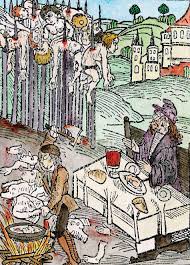
Vladimir the Impaler – picture credit National Geographic
All of the above was my blog written and published at the begining of 2022. Events have moved on and the symptons of this subversion process of natural law and order, remain and gather momentum.
Storms are not catastrophes except when they happen simultaneously and then they are called ‘perfect storms’. On they Oceans they appear as ‘rogue waves’ which can sweep over huge ocean going liners such as the Queen Elizabeth II at great risk to passengers and crew of capsize and sinking.
To sustain this metaphor 2022 has witnessed the sad loss of the real Queen Elizabeth through natural causes and with her passing the end of an era. Her reign included the Second World War of which she was one of the last veterans. In my view that experience raised the social ownership of responsibility, in Britain and around the world. Out of harm usually comes a realisation of the need for change and significantly a socialist prime minister in the UK succeded the Tory Winston Churchill. People realised the need for good housing, food and education and in particular the provision of health care for all.
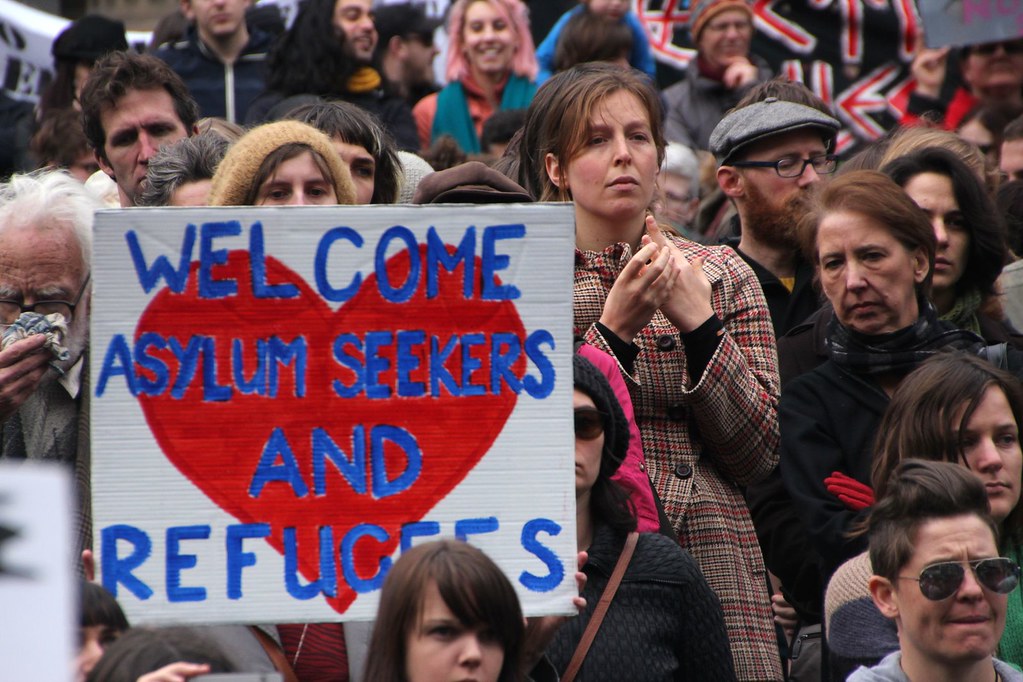
What has happened today is the disappearance of a generation who cherished those social values as being of primary importance to a peaceful and good life for all, not just the rich and privileged. The stabilising influence of high ethical standards was sanctified in the creation of the European Commission in which what were called ‘human rights’ were enshrined not just in religious values but in law. Many who voted for Brexit are surprised and disappointed that the European Union (also created with an eye on peaceful coexistence in Europe) is a seperate organisation to the EC. They now wish to send asylum seekers (80% who are genuine) back home or to a third world country against their wishes and chances of even staying alive.
Should we be surprised that this division amongst left and right in many European countries and the weakening of the ‘centre ground’ has played right into the hands of the ghosts of the USSR – Vladimir Putin.
Was Brexit not only partly engineered by the Russia and her allies, but a green light to start a war in Europe?
Your enemy will always tell you where you are weak.
The rise of autocratic countries as being now a majority of governments in the world, should make us more than worried. When we watch the government clamp downs on free speech and the right to protest in China, Russia and Iran, are we watching European countries in the next decade?
In my view we should be extremely concerned. In summary we can identifiy two storms; the subversion of democracy by Russia and various rogue states such as Iran and North Korea, combined with weakened social values in divided democratic countries such as the UK and the USA.
Into this gathering tsunami is added a third wave which travels around the world largely unseen. It is generated by those who have huge political power through extreme wealth and social privilege. They work in the background by buying media organisations, pharmaceutical companies, industrial conglomerates and arms and municians amongst other diverse service and product providers. No one votes for them and their influence is being swelled by the rising tide enabled by new technology and biological sciences.
But wait! There are at least three storms producing this hurricane, now made even more worrying by the no longer deniable catastrophe of, climate change.
At the risk of having mixed my metaphors it is apparent now to most observers that the ‘minor details’ produced by this storm of all storms such as inflation, migration, poverty, hunger, war, homelessness are not only problems in themselves but indicate a far larger and uncontrolled pattern towards global catastrophe and harm to each and every individual alive today.
The old saying ‘there is no smoke without fire’ has never been more true. The challenge today is to find the fire and put it out. And when that is done, look around and see what is left and work out if those who stepped forward to ‘save us’ were our friends or our enemies.
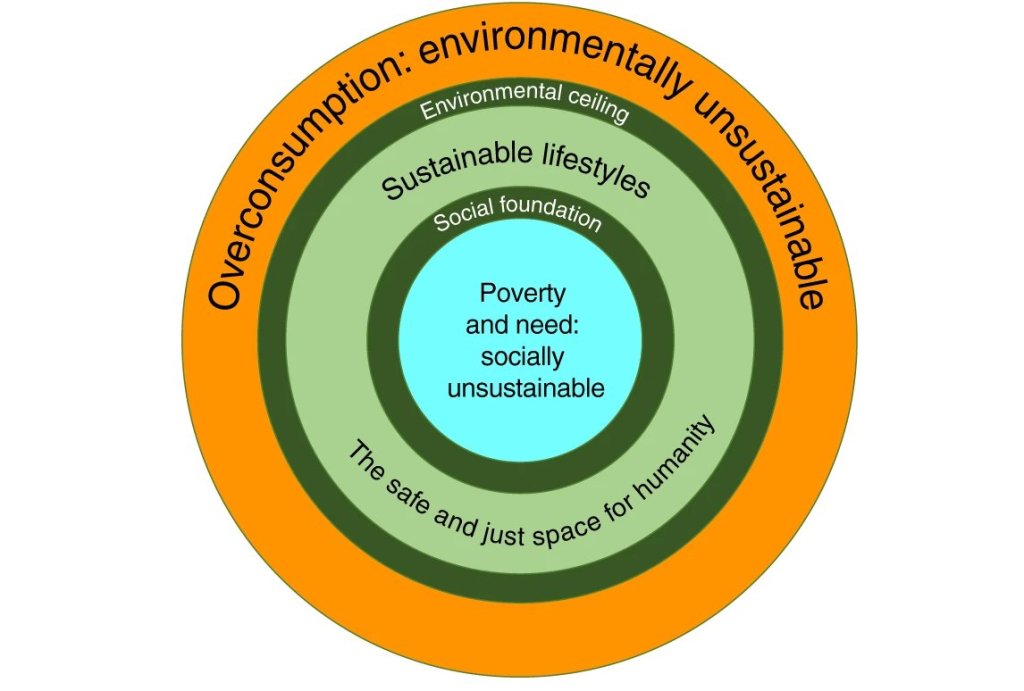
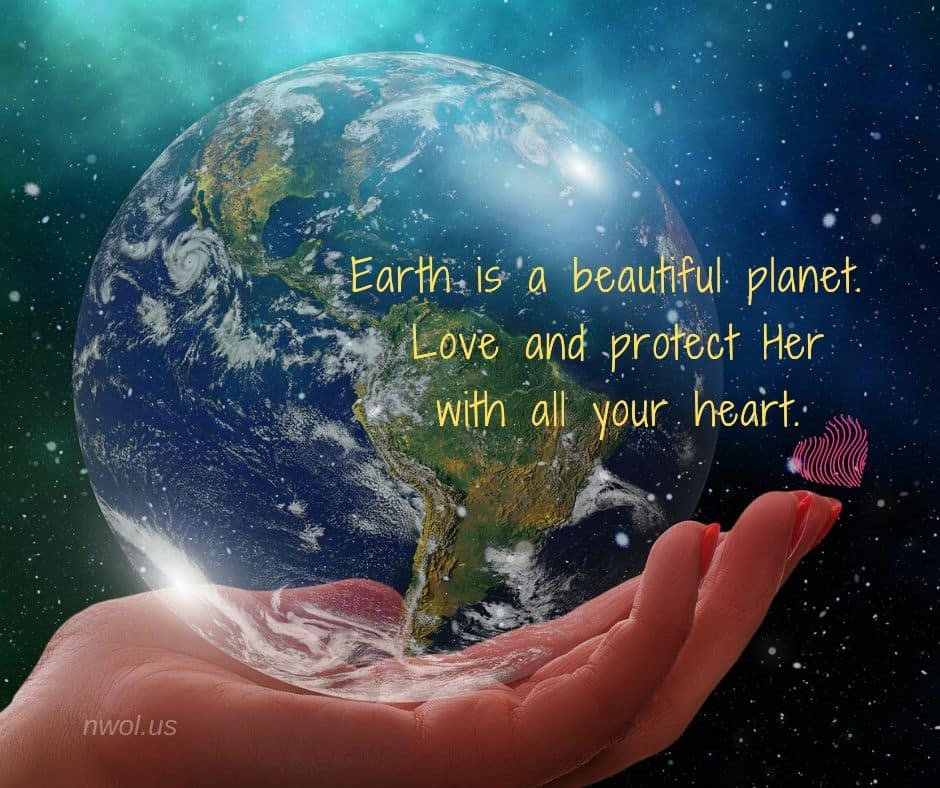
“Earth provides enough to satisfy every man’s needs, but not every man’s greed.“
picture credit; Meer.com
It’s not usual for the writer to look into the future. But at this moment in history, there is no need to be psychic to see where the world is heading and the consequences.
We live at a moment in time when change in the standard of living of the ‘developed countries’ is inevitable. The change will be what some would call a ‘reduction’ in this standard; meaning things will not be a cheap and plentiful as they have been in the past. For the rest of humanity the change will be having things that have not been available in the past, what will be an ‘increase’ in their standard of living to include all the essentials.
These are the essentials to life;
Shelter
Food and water
Health and reproduction
Education
Work
What will bring about this change is an increasing scarcity of these five necessities in both the ‘developed’ and ‘undeveloped’ countries, so that sharing of resources will be the only humane political direction.
The previous trend of ‘civilisation’ has been for certain countries to grow richer whilst others get poorer. The ‘master and slave’ Empires of history and the present day, are examples of this.
New technology, and primarily the ability to communicate on a global scale, is an essential part of ‘leveling down’ and ‘leveling up’, the uneven distribution of dwindling resources.
Technology, such as birth control and free health facilities has been changing the global demographic for many decades. As a consequence, families have been having fewer children because infant mortality has drastically reduced.
Smaller families has meant a reducing population in many parts of the world, such as China and parts of Europe.
The process of industrialisation was always founded on a false assumption; that more and more stuff can be made from limited resources. Whether those resources are fossil fuel sourced energy, raw materials, places to store noxious waste products, dwindling natural resources such as rare earth elements and the traditional metal ores.
All of these things and more, have become cheaper and more available but their limited availability and other factors means that the industrial train is about to hit the buffers.
Perhaps sharing more and making more with less and eliminating pollution would have held off this inevitable moment for longer but the global system of human development is too fragile and too complex.
The effect of industrialisation on nature has been ignored for convenience and perhaps not a little arrogance, but nature ultimately strikes back. What is wrapped up in the term ‘climate change’ is the tip of a rapidly melting ice berg of global human catastrophe.
picture credit; Friends of the Earth
Nature has a plentiful and powerful armory with which to fight back. Viruses, extreme weather, planetary warming, desertification leading to wars over scarce resources are and will put great demands on the human population to re-organise.
If humans had any self respect, they would respect this powerful process and become co-operative with nature. It has to, because the option to carry on as before is no longer available; unless wars, mass starvation, migration and pandemic diseases are ‘risks worth taking’.
There are some religious communities such as the Amish in States in the in the United States of America and Canada, who will not directly face fundamental changes to their way of life. Hundreds of years ago they decided for religious reasons that their ‘standard of living’ had reached a level that is sufficient for their needs. The number of Amish people has risen from 100,000 in 1989 to 251,000 and is predicted to increase. Respecting the boundaries of nature is a lesson many have learned, thus avoiding the hard process before being forced to.
An Amish Homestead picture credit Stuff.co.nz
Similarly, there are remote tribes in ‘undeveloped parts of the world who live in harmony with natural places and have done for millennium undisturbed. They have nothing to fear from nature, only their fellow humans.
Industrialised societies have taken far more than their fair share of nature’s bounty. The city dwellers who make up fifty per cent of these societies live on the promise of unlimited food from farms. Unfortunately soil needs constant replenishment when using factory farming methods and fertiliser is becoming increasingly expensive, to a point where growing crops is no longer profitable. City dwellers have become so cut off from nature that they might as well be living on the moon; totally unable to sustain themselves except by trade using ‘money’- a substance you cannot eat.
The dwindling of world resources and the consequences for national economies will require counter intuitive management. People who have more, will have less and people who have less will have more.
Food will no longer be shipped all over the world to satisfy the demand for non-seasonal, exotic, non-local, high protein, artificial fertiliser enhance ingredients.
Wine and olive oil, will not be for sale in shops in countries where wine and olive oil is not produced. Such luxury is only a recent expectation. Nations used to have their own diets and dishes based on local seasonal food. Northern countries drank mainly beer made from local grain crops and southern countries drank wine made from local grapes. Choice in food and drink will become more than halved and people will be grateful for what is available.
Politicians will have an almost impossible task of balancing the overwhelming and impending need for ‘developed’ populations to significantly reduce their ‘standard of living’.
Nobody votes to lose their holiday home/s, luxury car, cheap flights, energy wasteful house and bulging refrigerators. You might think this and you could be right, but when citizens understand the hardship that is the alternative, they will.
And if this sounds depressing then all is not necessarily gloomy, because humans have a unique skill at adaptation, both physically and mentally. Some of the poorest people on earth are also the happiest. Travelers who visit the homes of remote communities that are living off the land (whether forest, steppe or desert), find they are welcomed with dignity and honour and the food in the house is shared equally with them. This food may taste better than any they have had before because it is resourced locally, prepared traditionally and presented with love.
No factory on earth has ever made a product with love so should we be surprise that people who have ‘high standards of living’ often live loveless lives?
Here is that list again;
Shelter; simple, warm, light, organic houses and public buildings and gardens.
Food and water; locally sourced and stored, lovingly prepared and shared.
Health and reproduction; Enough health professionals for populations in order to prevent disease, educate and encourage healthy lifestyles, treated body with the mind and mind with the body, practice traditional medicine and techniques less based on chemicals. Because communities will support the elderly young people will manage the size of families using contraception.
Education; a holistic, approach to giving young people the skills and characters that promote informed and respectful relationships and communities.
Work; local activities that produce goods and services in ways that respect nature and the environment. Labour will not to use more energy and materials than nature can supply and live in a way that gives responsibility to all and shared rewards.
There are many micro-communities already living in this way according to their own religions and traditions. If you are fortunate enough to live near one my advice is sell everything and join them as have done many and joined Amish and similar communities.
You might be happier than at anytime in your life and if you are not happier, well you at least will be the same person you are now.
As so often happens, Hollywood is ahead of the curve and perhaps forcing, as well as, predicting change. There have been many ‘post apocalypse’ films in the last few decades. The apocalypse will only come if it is allowed to. As in most things, the trick is to be pro-active (ahead of the wave) rather than wait for it to swallow us whole.
I want to point out a problem that defies a solution in present international law.
It is about ownership of ‘resources’ by nation states. We know that many disputes have started over this issue so in my view it needs absolute clarity.
The issue is like where we find water. It is either static like in a lake or dynamic, as in a river. Nations acquire rights over lakes and that is simple. But when the resource is moving there are many parties interested to the water, in addition to the owner of the lands over which it passes.
The concept of a nation ‘owning’ both it’s static and dynamic resources, can lead to a loss of those resources to neighbouring states and in some cases, the whole planet.
Picture Credit: British Antartic Survey
The Antarctic Treaty was drawn up and agreed by twelve nations on 1st December 1959. It aims to protect the freedom of scientific investigation by peaceful cooperation. In reality it does a lot more than that. Antarctica is unique in being protected as a shared and protected world resource and the planet is no doubt a better place because of this.
However, global warming is affecting Antarctica. Glacial shelves are breaking off as giant icebergs with increasing size and regularity. Fresh water previously frozen is and will, affect ocean currents which in turn change climates.
Such issues are normally ‘dealt with’ by the government of that country but in this case there is no such responsibility held by a nation state.
This illustrates how the legal concept of ‘it’s in my country so I own everything in it’ sometimes falls short. The rule of thumb works in most countries but clearly not always.
Picture credit: Alliance Photo
When we forensically consider the case of a country ‘owning’ a resource because it is within that country’s boundaries, neighbours and or the whole planet, can be affected. For instance, the rain forests of South America are, or were, regarded as the ‘lungs of the planet’. They absorbed CO2 gas, slowing one of the main causes of climate change. If we examine the attitude of Brazil to it’s rain forest, the Bolsinario government refuses to be advised by non-Brazilian interested parties. It claims the right to destroy the rain forest and all the resources it contains. The rights of the indigenous tribes are also not respected.
If I found a hoard of Roman gold coins in my garden I would have to inform the government of the country I live in, let us say the UK. They might regard the ‘trove’ as a national treasure an take away my right to it’s worth. Or they could give all or part of it’s value to me, depending on the higher national interest. In this case a ‘lesser owner’s’ rights are trumped by a ‘higher owner’s’ rights. This concept could be appropriately upscaled to national and international rights. The latter trumping the former where the international interests serve a higher purpose than short term economic gain. At present this would not work because legal rulings require the threat of sanctions or even physical force if ignored. There are only limited means to do this at present.
Yet there is another perspective achieved when we consider just the dynamic resources of the country; those most like to be problematic. Dynamic resources are not rooted to the soil like trees and minerals. A simple example is water again. A river may often pass through several countries before it discharges into a greater body of water. Who owns this water as it moves? When the river flows at a constant speed and volume, then the concept of owning the water as it crosses ‘your’ country works. When the rainfall drops or a country near the source of the river pollutes it or decides to build a dam, then they are problems. Such a dispute is occurring between Egypt and Ethiopia at the present time as Ethiopia builds a dam to create hydroelectricity from the Blue Nile.
A moving resource should clearly respect the rights of all countries. As it passes though several countries each should have a right to influence it’s management.
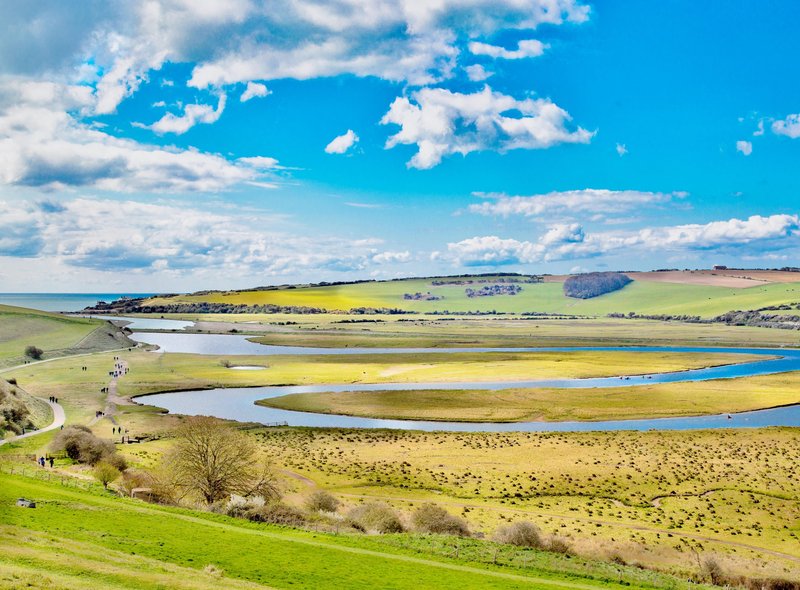
picture credit: Eastbourne Herald The River Cuckmere East Sussex England
Lawyers and Diplomats would clearly have a great deal to think about to formalise this concept But the world should not delay in my view. Every migrating bird, every ice berg, every bee and butterfly is a shared resource capable of influencing the well being of every human being.
The human race is presently facing an era of catastrophes caused by increasing populations desiring finite global resources and climate change. Denial of these facts was a phase in the 1970’s but not anymore.
When we consider how vital dynamic resources are, it is clear that many are jointly owned and enjoyed by all of humanity. In addition, human beings share a right for dynamic resources not to be destroyed or degraded. The concept of one country having a right to pollute water before it enters it’s neighbour’s land, should be trumped by an international law.
picture credit: NASA
Whales travelling through oceans have no concept of the countries they are passing. Why should one particular country, such as Japan, feel it has rights over whether these whales should live or die? If the consensus of the world is that the whales should not die, then an international body should have to power to order their protection.
Such a body could come under the wing of the United Nations. The chamber might find itself debating the right of the Brazilian government to destroy the Amazon rain forest for Brazil’s short term economic gain and the world’s long term loss. The debate would include the unique forna and flaura and the rights of future generations to have access to this DNA bank. The forest contains chemicals with medicinal properties, viruses that should never be released and countless creatures that once lost, will never be replaced. The neighbouring countries to Brazil, could demand their right to not have desert and refugees, wildlife and viruses crossing into their countries. The indigenous people would also be empowered to demand respect of their rights to the dynamic resources of the forest, in addition to their ancestral land rights.
If the resources that are dynamic are given the international status they deserve, there will be fewer international conflicts over ‘me and mine’ and more co-operation or ‘us and ours’.
Laws work when they embody truths the are Universal. If they are applicable in every corner of the Universe at all scales, they are more enduring and relevant than passing political values. The law would be called The Global Treaty of Dynamic Resources 2021.
Such a law and it’s enforcing body, will become even more important when humans begin to explore new planets and space. It might well be expanded to include static resources. The race to mine the moon that we see today, is about commercial rights to resources that are becoming scarce on earth, so called ‘rare earth elements’. Similarly, the filling up of the earth’s upper atmosphere and deep space with satellites, needs strategic guidance to avoid commercial exploitation and associated ‘space wars’.
If humans don’t get this right, then the next phase after the literal ‘carving up’ of our beloved planet, will be the ‘carving up’ of space and a repitition of the resource-driven disputes and wars in history. Even Helen of Troy was a dynamic resource and if a ruling had been made by a respected Greek god, the Trojan wars would never have happened!
One comment made by many of the men and women who have looked down on earth from space is that there are no national boundaries. We are so used to political maps that the real picture has, until now, been hidden by nationlism. Globalism, whether desired or not, will be the next paradigm for planet care, in my view. Without it, shared dynamic resouces will be seized or destroyed by the short term priorities and political ‘gain’ of politicians who rule without a trace of compassion for the people or the planet. You know who they are.
Twenty Reasons Why HS2 Might Not Be the Promised Public Transport Option of the Future
There is a project in England called HS2. It stands for High Speed 2 and is a plan to build a high speed rail route between London and Birmingham and then beyond. The stated justification for it by the government is to move the political centre of gravity away from London and nearer to the Northern and Midland cities; the so called ‘power house’.
These cities have conventionally voted for the socialist or LabourParty and HS2 was originally a Labour government idea in 2009. Why it has not been cancelled by the Tories in my view is that there may be some political gain for the Conservative and Unionist Party in making Westminster ‘closer’ to the North. In the last election these cities did largely swing to vote Conservative for, no doubt, many reasons.
One skill that I believe is essential for politicians is ‘problem solving’. There is a science to this subject and the first question to be asked in solving a problem is; what is the problem? As much as this may seem obvious, it is heart breaking to observe how much money is wasted on national projects that turn out not to solve the problem. I am reminded the airport in Spain that has never opened and you can probably think of some ‘vanity projects’ in your local area. ‘Vanity’ may be one reason those in power do not ask the right questions. Or perhaps it is theDunning-Kruger Effect…
(The Dunning–Kruger effect is a hypothetical cognitive bias stating that people with low ability at a task overestimate their ability), : source Wikipedia
…that makes politicians believe they understand the problem perfectly and have the perfect solution.
An Idiots Guide to Digging a Hole for Yourself : credit Reseachgate net
Another common pitfall for ‘problem solvers’ is the temptation not to apply a new solution when the original one does not work. This is known colloquially as to ‘dig a hole for yourself’. Rather than abandon the first location to dig, the blinkered view and or fear of admitting a mistake and or wasting time, money and effort… compels decision makers to keep applying the original problem solving technique. Feedback is rarely sought, dissenters are ridiculed and rational insight is lost in the rush to jump into the deepest hole ever dug…
The HS2 project in my view is a perfect example of this and even the PM used this metaphor…
Boris Johnson has suggested the only answer to the “hole” enveloping HS2 is “to keep digging”. BBC News 31 January 2020
So far three billion pounds has been spent on demolition and railway infrastructure. To change now would mean wasting all of this money and admitting a mistake. To admit to such things is political suicide, and career politicians need to impress upon their voters that they know what they are doing. This is what we see at the moment.
Personally, I would vote for any politician who is prepared to describe the white elephant under construction as just that. Here is my ‘off the cuff’ list of reasons to abandon the project. I am sure the list could be even longer but it hardly seems necessary. It is not all negative. It contains the precise locations where treasure can be found, should the current hole ever be realised to be just full of air.
Here is my list of strategic reasons to abandon HS2;
1.The people who live in the Midlands and North of England desire most to have better rail links between the East Coast and the West Coast of England and connecting the cities in between.
2. The people who live in the Midlands complain that the existing rail service to London is at full capacity and needs upgrading. This could be achieved quickly and relatively cheaply with additional conventional infrastructure and rolling stock.
3. HS2 is planned to go initially North South, adding a link to London which is contrary to stated intention to move the ‘centre of gravity’ of the country. The word ‘London’ is the clue.
4. The country has borrowed a vast quantity of money during of the Covid -19 pandemic. To reduce this burden ( and presumably vulnerability to any future rise in interest rates) it is proposing to reduce aid to the poorest countries in the world. In doing so it risks losing the ‘world leader’ status it aspires to. One obvious alternative is to admit it can no longer afford to pay for HS2.
5. Since the pandemic, people have become used to communicating using the internet. Moving physically between locations has become less important.
6. Trains are old technology. They have been improved as much as they ever can be and now only new technology should replace it.
7. High speed trains are at their most economic on long distances such as found on the continent of Europe, North America or Australia. As any continental traveller will tell you, the UK major cities are relatively close to each other and journeys short in comparison with countries where high speed trains have been a success.
8. Fast, long distance trains are rivalled by aircraft. In Spain, for instance, internal flights are cheaper and quicker than the extensive high speed rail network.
9. Trains are rivalled by new technology such as the Hyperloop. They are likely to become superseded in the next few decades, just as railways took over from canals. Technology and economics are more sustainable drivers than political policies. New technology by-passes the decision making processes of government. In the era of present rapid ‘advances’ in technology governments must work with new technologies in the way that voters do.
10. A large proportion of ‘clean’ electricity is produced by fossil fuel power stations and nuclear power stations. The first is neither clean nor efficient. The nuclear option is becoming more and more expensive (as decommissioning costs are included) and prone to the dual risks of nuclear accident and the problem of the indefinite safe storage of nuclear waste on planet earth.
11. The costs of major infrastructure projects can be reasonably expected to double by the time they are completed. The original estimate for HS2 in 2005 of 37 billion pounds has already doubled to 78.4 billion pounds by 2015! (according to Institute for Government statistics). At this rate of increase it will have doubled again by 2025 and that is only the estimated cost. There are inevitably going to be delays and unforeseen extra costs. This during predicted future decades of Covid 19 austerity.
12. Europe is joined to one nation by the Channel Rail Tunnel. The United Kingdom is connected to twenty seven countries by the Channel Rail Tunnel – and beyond. The train from Berlin to Manchester appeals to a minority who will either meet virtually, go by air or just not choose to do business in the United Kingdom.
The List Extends into the Tactical Reasons to Abandon HS2
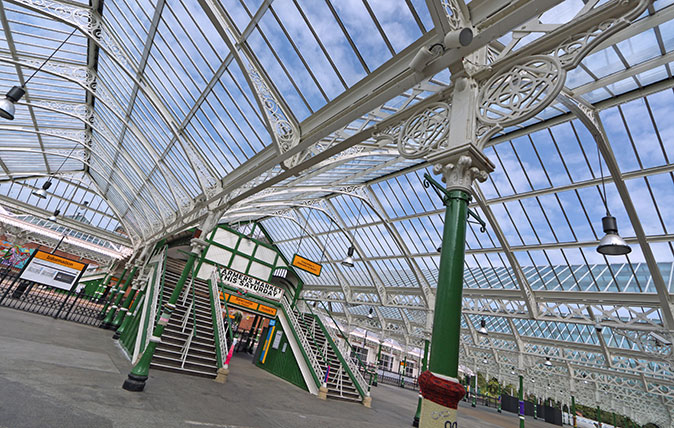
What have the Victorians ever done for us? picture credit Country Life
13. When the Victorians built railway stations, they were able to build their palace-like stations in the centre of towns and cities; just where travellers wanted to arrive! Due to high land values and ethical (archaeology, listed buildings, city centre decay, the housing shortage ) concerns around compulsory purchase, this is no longer practical. Most HS2 stations will be built outside the towns and cities they serve. The connecting transport will take away some or all of the time gained (1hour 21 minutes reduced by 29 minutes) by using a high speed train. An example I experienced many decades ago, was in Brisbane. When you arrive in Brisbane rail station you have to stand and wait for a bus or taxi to get you to the centre of Brisbane. I believe a local train has now reduced this problem but the insanity of these slow ‘connections’ remains.
14. Simple analysis of the problem will reveal there are many means to connect the regions of the UK other than high speed trains. The best and perhaps most cost effective of these, is to improve connectivity using the internet. This has the potential to allow passengers to work during their journey on conventional trains. This will make the speed of the train less important.
15. A new train route will cause considerable loss and damage to the countryside and communities through which it is intended to pass. The least of these is the one hundred ancient woodlands which will be destroyed. At a time when the country has been promised it will be more self sufficient in food, farms will be significantly negatively affected.
16. One hundred ancient woodlands, fauna and flora and in areas of outstanding natural beauty and special scientific interest will be permanently harmed or eradicated at a time when the environment is being prioritised, not least because of climate change.
17. Trains are a less safe means of travel than flying and in the future, the hyperloop. The later will be so safe that the prototype has already been trialled over a short distance by it’s designers and backers, personally. Hyperloop is frictionless so will require a fraction of the amount of energy required to propel an ordinary or high speed train.
18. To fit the broader brief of ‘increasing connectivity’ within England, new trains and routes should be started in the North. Phase One HS2, starts in London and therefore does not benefit those in the North unless they want to go to London.
19. The money spent by the Test and Trace and PPE procurement was approximately 57 billion pounds. This is in the same ball park as the current estimated cost of HS2! If HS2 costs reach 106 billion pounds, then this is the same as the cost of running the National Health Service for a year. Politicians have to be asked why not run the NHS for a year with this money?
20. The High Speed train network will not serve the satellite regions of the United Kingdom; known as Northern Ireland, Wales and Scotland. These areas already resent to control of an England-centric government based in the south of England. In my view this may become the straw that breaks the camel’s back and play into the hands of the Nationalist Parties of each country, the first to fall being Scotland followed by Northern Ireland, then Wales and then Yorkshire – Cornwall?!
I have not included any benefits from a High Speed train network in the United Kingdom.
Such as list should always be included in any rational ‘problem solving’ assessment. My problem is, I can’t see any benefits, except some good publicity photos of dolphin-nosed trains and grinning politicians in high visibility jackets.
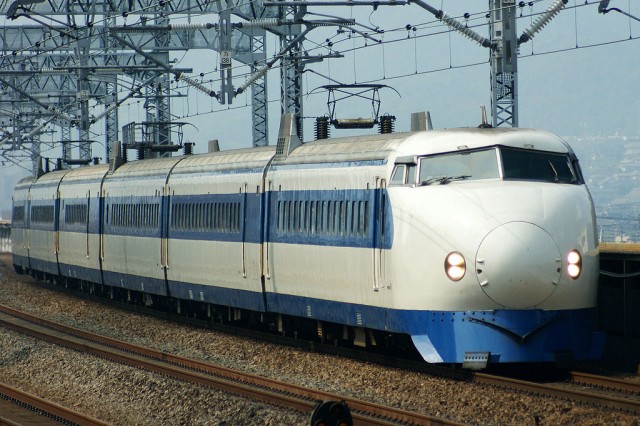
If there ever were benefits, these should have been gleaned after the second world war when the UK’s industrial cities had been demolished. Despite ‘winning’ the war in 1945 the UK was bankrupt. Japan ‘lost’ the war and in the 1970’s built some of the first high speed trains – the famous Skinhansen.
The Right Technology at the Right Time in the Right Place – Shinkansen
Perhaps some would argue that an electric train speeding along the tracks is much greener than the cars on the motorway running parallel. With the proviso that the National Grid is powered by carbon neutral fuel sources, this is true, but certainly by 2040 (as phase 2 is due for completion), cars and lorries are going to be mainly electric or hybrid. Any ‘green’ advantage to all trains is slowly disappearing.
And in the midst of a pandemic and in preparation for the next, is not personal transport going to be preferred to public transport?
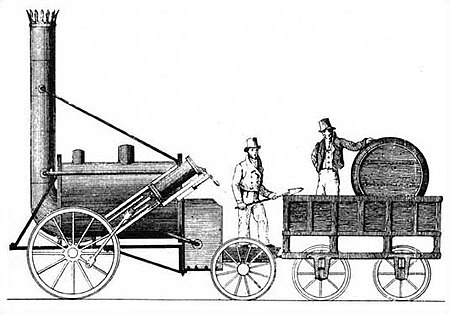
What would Robert Stevenson be thinking if he saw the final phase of his invention being acted out? What would he say about today’s ultra wealthy taking personal travel into the edges of space and is that why he called his invention Rocket?
1829 Rocket – Still the best public transport concept applicable two hundred years later?
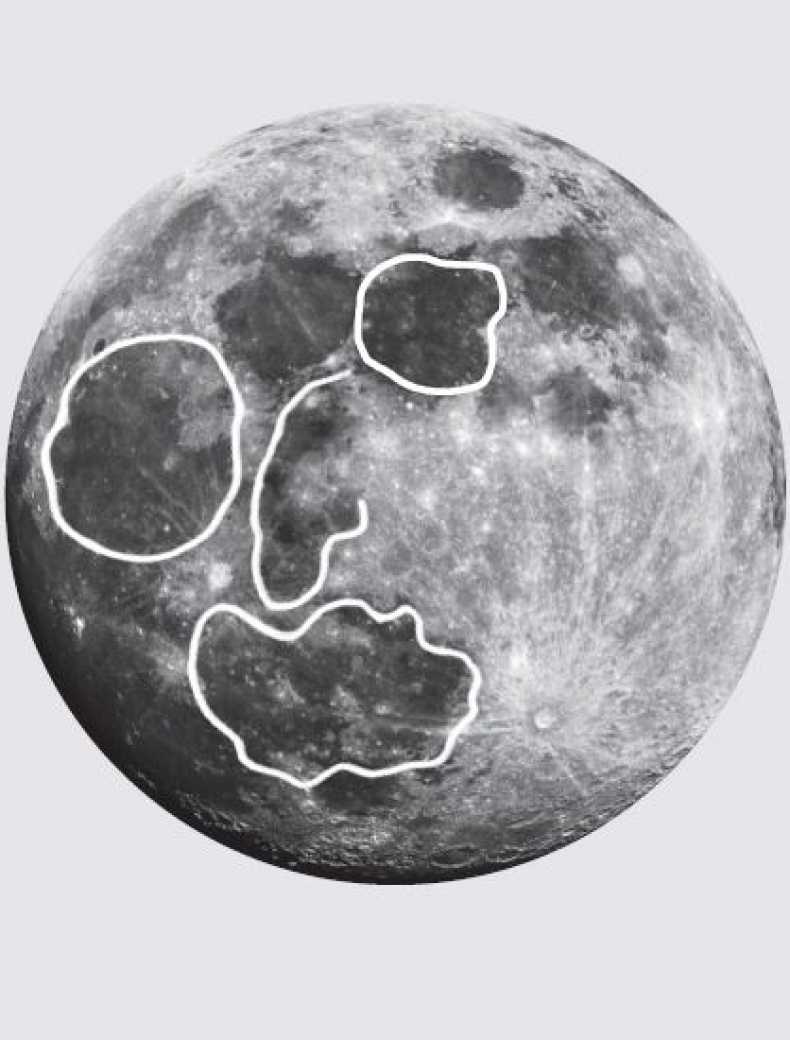
For centuries, so called sophisticated societies have continued traditions, superstitions, folk tales and festivals inherited from rural ancestors. Much will certainly have been lost, as modern man’s connections with nature have been severed. But mothers still point out the face in the moon to their children who stand open mouthed at the mystery. Our companion animals are named and loved as if they were our children who never grow up; Peter Pan style.
Even the star map itself is full of the figures of gods and animals, a continuous tradition going back to the Ancient Egyptians and Sumeria.
Many cultures across time and the world have seen animal and human faces in rock formations and considered the effect significant.
Modern urban man likes to think that these are all in the realm of ‘myth’ – that is, stories that have no meaning any longer.
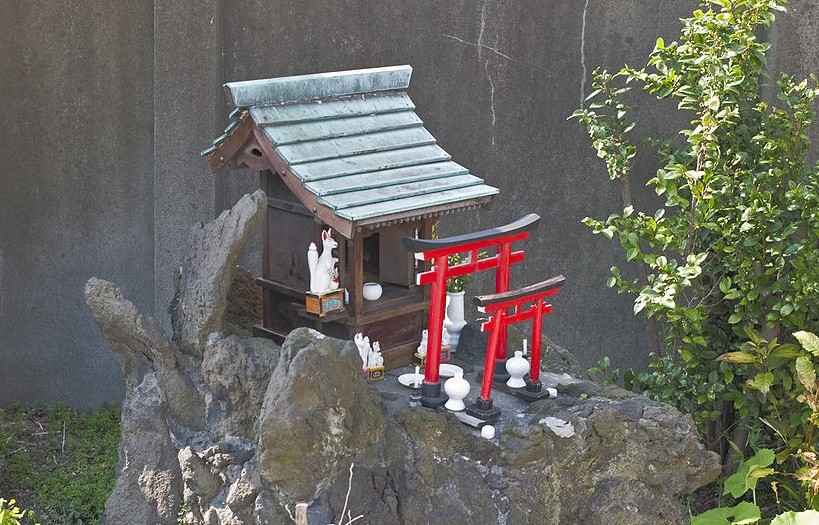
When I was in Japan with my Japanese girlfriend many years ago, she took me to her grandmother’s beautiful traditional home. In one room was a Shinto shrine. Megumi knelt before this shrine to pray and invited me to join her. I politely declined thinking myself a monotheist and forbidden to worship idols. But I now realise that Shinto is a religion of worship of nature and not idols. Each tree, rock, flower; is seen as a manifestation of living spirit just as we are manifestations of living spirit.
In Pagan Britain before the Roman invasions, people lived by the cyclic laws of nature. Natural features, fauna and flora were also a living presence on the physical and spiritual planes. Such living things acquired names and often magical properties. To kill or take away was done with a blessing for the spirit which was being released.
Now that scientists have persuaded us from viewing the world as sentient, we are expected to consider industrial methods of rearing and killing animals and plants as a necessary evil. But if you want to know the truth, ask a cow in line to enter the red doors of the abortoir.
Such practices which many now view as abhorrent, are likely to become questioned more in the future because modern man is on the brink of extinction.
So brutally has the scientific materialism ethical view damaged the world and it’s creatures that ecosystems are being destroyed faster and in greater areas than ever before.
Already people in so called ‘civilised’ societies are realising that there is only one way to live with a rain forest and that is to live in it. The indigenous people of the Amazon basin have practised a closeness to nature that has retained the forest in it’s glory for many generations. This generation however is having to watch as loggers, farmers and prospectors rape the mother who has protected and fed them. Nature hits back by releasing viruses in the populations of city dwellers – but need it come to this? Perhaps mankind will come to realise that all nature is sentient, before it is too late.
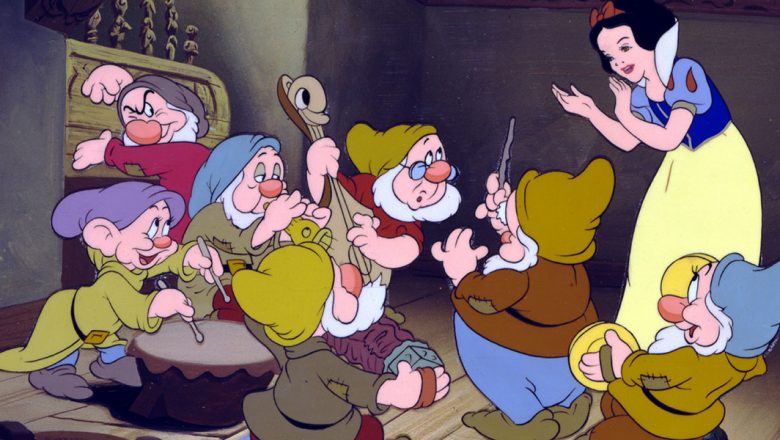
Walt Disney hit on an idea to make cartoon stories using talking animals. As ludicrous as this may have seemed to his contemporaries, who were making films about humans, Walt Disney was digging into the gold mine of imagination.
Despite or perhaps because of being ‘sophisticated’ children in particular needed to view the world in the old way of our rural ancestors. Stories in which animal and magical characters could speak and interact with each other like humans – gripped the imagination. Science may not like it, but humans are complex and deep in their needs and this foaming ocean of stories such as the Cinderella and Snow White and the Seven Dwarfs, are archetypal stories for thousands of years ago (Isis and Osiris if you are curious).
Modern men, women and children naturally engage with nature. We have a deep physical and psychological need to be nourished by nature and allowed to bloom, as flowers do.
There is a young gecko in my bathroom whom I have seen a couple of times now. He looks at me and does not move and I look at him. Yesterday I named him, BR, which stands for ‘bathroom’. We have a relationship – of sorts.
Humour aside, this is the direction that humans in the 21st century must go if they wish to maintain their present numbers. They have to understand the sanctity of all life, whether it is in rocks, vegetation or animals.
Practises such as ‘whaling for scientific purposes’ should be and will be seen as relics of a shameful past when scientific materialism ruled the brain waves.
There have been extraordinary studies between humans and primates already, from which lessons are still to be understood. Chimpanzees have been taught to use tokens to buy food in one study. This is remarkable in itself until it was found that they also understood many more principles of economics, like ‘best price’.
I predict that in the next twenty years man will be speaking with marine mammals as fluently as Google Translate serves us today. These steps are more important than interplanetary exploration at the moment in my view, because they will lead modern man into an honourable way of relating with nature, as did our forefathers.
Once this is accomplished, the further step will be to communicate with sentient beings who are not of this planet. If the E.T’s observe that humans are not responsible enough to inhabit a planet without damaging it, they may introduce themselves first.
And if that thought fills you with dread, then you have been the victim of a misrepresentation of alien beings through propaganda. Be assured that they will not use violence to persuade. Such methods for them and perhaps one day for us – are history.
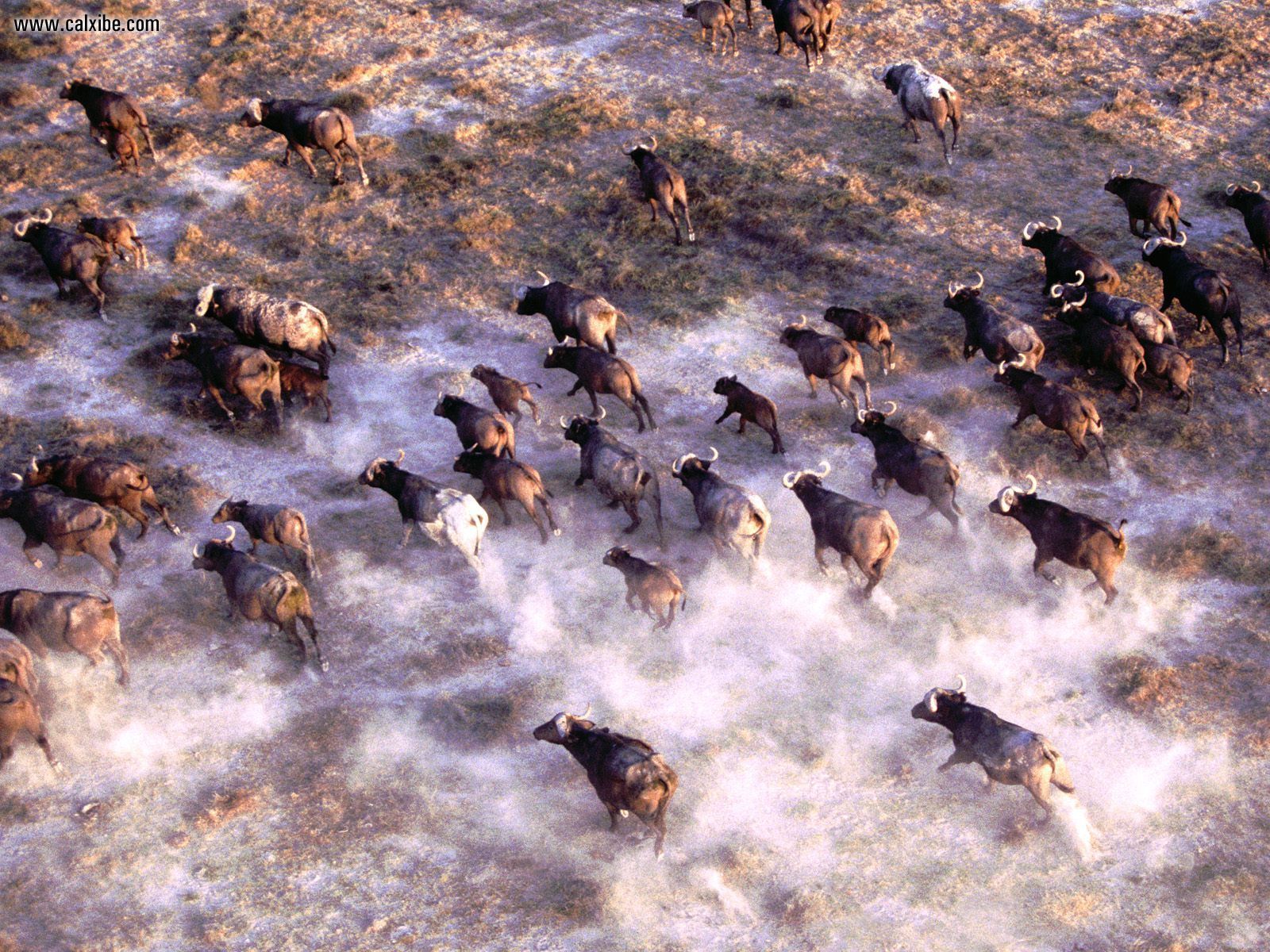
This the title of a wonderful old song sung, I think by Bing Crosby. It’s all about the exploration of the west in nineteenth century North America. After millennia of humans and animals roaming free, cattle ranching introduced ‘ownership’. The Native American Indians didn’t understand it and gave away their lands before they realised they would have to fight and ultimately die for the ‘reservations’ that were left for them.
picture credit; WallpaperWeb.com
It is an paradox that man craves freedom but loves boundaries. Astronauts report on viewing earth from space, that it appears as one planet. There are no political boundaries that we are so used to see on global maps. Boundaries are ultimately arbitrary. They serve only the tribal mentality of ‘them and us’ present in early man and persisting, almost unconsciously, to the present day.
The poet Robert Frost wrote a poem which included the line, good fences make good neighbours. This concept, at one end of the spectrum of possible combinations of freedom and enclosure, works – but only temporarily. Eventually, because of tribalism and greed, a fight breaks out.
When the British realised the rule of India by a distant Queen of England was over, they were faced with the problem of handing over a sub-continent to self rule. A problem because the Muslims and Hindus were at each others’ throats. If the British left there would be a blood bath. So they drew an arbitrary border on a map and created a new country, Pakistan. Like the creation of the Berlin walls, it divided families, created mass migration, a loss of homes and livelihoods and riots and slaughter. Tribalism, whether under religious or any other banner, is never good for all. Today India and Pakistan face each other with tolerant hostility, with a hundred nuclear missiles each, ready to wipe out each other and the rest of us. As an afterthought little Kashmir remains a flashpoint where this could happen. When you draw political maps, you had better know what you are doing for now and the next thousand years.
When the UK made the minority vote decision (only a quarter of the population voted in favour of Brexit ) to leave it’s partners in Europe, it had not considered the effects this would have on Northern Ireland and Scotland. The border in Eire was created centuries before to create a ‘non catholic’ portion of Ireland that could be controlled from England. The political reasons for it’s connection with United Kingdom are changing, and a likely consequence of the UK seeking ‘independence’ is losing Northern Ireland to the Irish and Scotland to the Scots.
Virus’s, and all the malign forces that nature unleashes on humanity; virus’s do not respect political boundaries. It takes two weeks for a virus to travel around the globe. The only way to extinguish a virus is for each person to crawl into their own cave and stay there. They may die or they may survive. In this situation one is not even aware that one’s neighbours, also potentially dying, are on the other side of the wall.
When this current Covid-19 pandemic is over, as it will be, the nations of the world should take stock. They need to seek to understand the lessons that come from such a pandemic, for virus’s are a greater problem than terrorism and extremism and wars and all our man made horrors. In 1919 the second wave of Spanish Flu killed everyone who caught it.
Surely, world leaders must learn that humanity has more to gain from co-operation and tolerance towards all living beings, whether animal or human. There are no boundaries in nature except those created by habitat and when there is enough habitat to go around, everyone is happy. When large populations move to escape political or natural upheavals, these people are ourselves coming in the other direction.
In Europe, the European Parliament and non-governmental organisations like the WHO, have failed to create a strategy to cope with immigration. Countries on the edges of Europe such as Greece and outside such as Lebanon are full to bursting point. Now Greece is shooting warning shots into the sea at immigrant boats.
In the United States, the solution to immigration from Southern American failing states, is of course ‘a wall’. As if we had not learnt from history how the Berlin wall was pulled down and how Palestine was shrunk into walls – good walls rarely make good neighbours.
Mankind craves to be free and this moment in history is a time for humans to come out of their caves and obeyance to tribal rules. Instead of hating and fighting each other, we are in a position to see the greater picture from above, where barriers do not exist. There is only humanity, and the sooner we treat the planet and each other with humanity, the sooner we will lose the feeling of being ‘fenced in’.















 Matters Blog