Is AI Conscious and Breathing?

May your spirit live,

Last for millions of years,

You who love Thebes, sitting

with the face to the north wind,

The eyes full of happiness.

from Tut-Ankh-Amun’s Alabaster Glass 1336-1327 BCE

Artificial Intelligence is something this and future generations are going to have to manage. But is intelligence the same as consciousness and if not, what’s the difference?

Anyone who has seen the body of a person who has died, will be aware of the extraordinary change in appearance of the person after consciousness leaves a body. It’s not something that can be described but similarities in nature when an animal dies, gives an impression.

Our problem is that consciousness remains hard for scientists and humanists to measure and describe. There are no instruments and ideas that enable measurements of consciousness to be made, except the ‘on / off ‘ switch.

The only area of human intelligence that approaches this problem in depth, is perhaps spirituality. Being spiritually aware is different to religions, where invisible gods and Gods have to be accepted as a matter of ‘faith’. Not much progress can be made beyond this dogmatic belief. But with spirituality there is a chance of increasing understanding of what is happening when we are ‘awake’ or ‘conscious’. In particular, how this might affect us in the future, if machines also become ‘conscious’?

Nothing is new in this world according to King Solomon, so let us consider how gods and God related to humans in the past. In the ancient Greek and Roman worship, statues of gods were of central importance. The statue of the goddess Athena in the Parthenon for instance, was built so that the spirit that is Athena could enter our physical reality.

“Athena” picture credit: Greek City Times

Spirits are disadvantaged in the physical world because they cannot be ‘anchored’. Human spirits, ergo consciousness, need an organic body to enter in order to be born and interact with physicality using the sense organs of the body. Goddesses such as Athena cannot do that but they can enter a static representation of their form. Roman citizens would have a shrine in one corner of a room where prayers could be offered to minor gods with whom that family has a connection. Moses was enraged by the Israelites who built a golden calf to worship, from which we can deduce that the Taurean statue was real and powerful.

To untangle these confusing ideas we need to try to understand ourselves. From a mystics point of view, consciousness has three levels. The normal human experience is simply being in the physical world in the way that a fish swims through the ocean. The first level beyond this perceptual awareness is becoming conscious as an objective observer. Using the fish analogy, the fish becomes aware of the water.

At the next level the objective observer becomes detached from the experiential phenomena and is aware of thoughts / spirit entities which are not oneself. This an extraordinary concept at first but actually every ‘ghost story’ is merely a description of such a change in consciousness by the observer; albeit momentary in most cases.

The third level is to study and gain an understanding of the thoughts / spirits that occupy those universes / dimensions, beyond and parallel to this physical one. There are many types and these are how the individual characteristics of the gods and goddesses of early pantheon’s came to be understood. Even across cultures, there stand out similarities in the characters of, for instance, Zeus in ancient Greece. With his mountain top palace and plentiful supply of thunder bolts, he was also known as Jupiter to the Romans and Thor in the Norse pantheon.

Modern psychiatrists would describe experiencing consciousness outside of oneself as ‘psychosis’ or ‘madness’, so there is a glass ceiling in this present culture that few pass through.

That way madness lies.

Madness in sentient beings maybe taboo but technology has no such boundaries. Technology can go as far into the abyss as it likes and so the atom bomb was built. Less obviously malevalent are those technologies that bring great benefits, hiding the harm humans can make them cause. An example is modern computers for which there appear to be no limits.

The early computers awakened some ethical thinkers which have fed the imaginations of early science fiction writers. For example, the film ‘2001 Space Odyssey’ explores the horror of a computer named ‘Hal’, taking over from and eliminating, the crew of it’s space ship. Giving a human name to a computer is significant, because it imagines the idea of a computer becoming conscious before does so. We do the same with our pet animals.
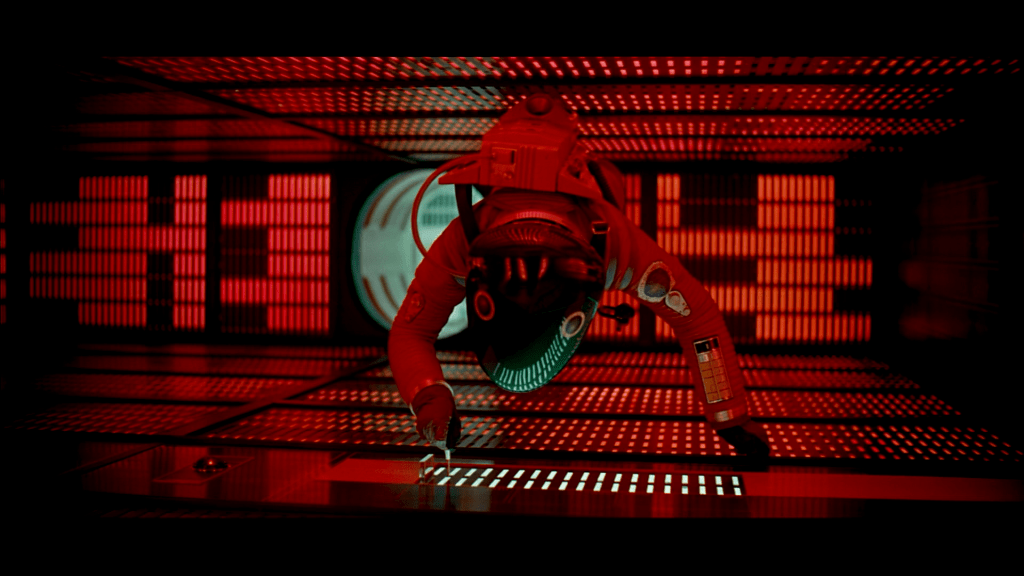
Shutting down ‘Hal’ the not-so-friendly and not so-small computer in 2001 Space Odyssey

Unlike in the film, powerful computers are now small enough to be placed into humanoid robots. Worryingly we have turned full circle from the static, stiff representations of the ‘gods’ or ‘spirit’ or ‘thought’ of the ancients and created agile and intelligent robots. These human shaped machines are far more appealing for spirit entities to get inside and take over. Genies are being squeezed back inside the lamp as in the ‘1001 Arabian Nights‘ stories.

‘Be careful what you wish for’ picture credit Arthur Rackham

Science fiction writers such as Isaac Asimov, thought through the ethics of conscious computers and produced three rules;

The first law is that a robot shall not harm a human, or by inaction allow a human to come to harm. The second law is that a robot shall obey any instruction given to it by a human, and the third law is that a robot shall avoid actions or situations that could cause it to come to harm itself.

It is simple for a computer to be intelligent. They can be programmed to beat human chess masters simply because they think through permutations quicker than humans. So ‘artificial intelligence’ is no more than a fast thinking human. It that is not ‘artificial consciousness’.

Isaac Asimov could see that humanoid robots with artificial brains might become conscious. He may not have understood the spiritual process described above, but he did see the possibility and he was right to jump this far ahead in time and possibility. He could see that conscious robots could miraculously (or sinisterly ) adopt ‘free will’ just like humans and this would enable ignore their ethical programming.

Humanoid Robots in ‘I Robot’
picture credit: Film Blitz

The ’cause no harm to humans’ ethic, was also built into the humanoid robots that feature in the science fiction film ‘I Robot‘ starring Will Smith. This film again explores the consequences of intelligent robots overriding their programming. In this case it was made by a ‘mad scientist’ but in reality it could just as easily happen by an evolutionary accident, the way that nature itself ‘steps up’ the functionality of creation. At one time there were no flowers on plants, then suddenly, millions of years ago, they arrived.

All things bright and beautiful, all creatures great and small,

All things wise and wonderful, the lord God made them all.

It is important to understand that humans do not create consciousness. Rather it is alsways present within each individual and it’s influence operates through this tiny flame. Mystics for centuries have known that consciousness is not the ‘me’ within.

~~“The truth was a mirror in the hands of God. It fell, and broke into pieces. Everybody took a piece of it, and they looked at it and thought they had the truth.” Jallal-a-din Rumi Sufi mystic and poet.

It is not our personality ‘egos’ which are works of fiction. The only reality is the consciousness we share with all creatures great and small. This includes all of nature from the rocks to the clouds, as recorded by indigenous peoples such as the native Americans and Australians.

Consciousness is particularly attracted to humanoid forms and this was fearfully reconstructed in the story of Dr. Frankenstein monster by Mary Shelley in 1818.
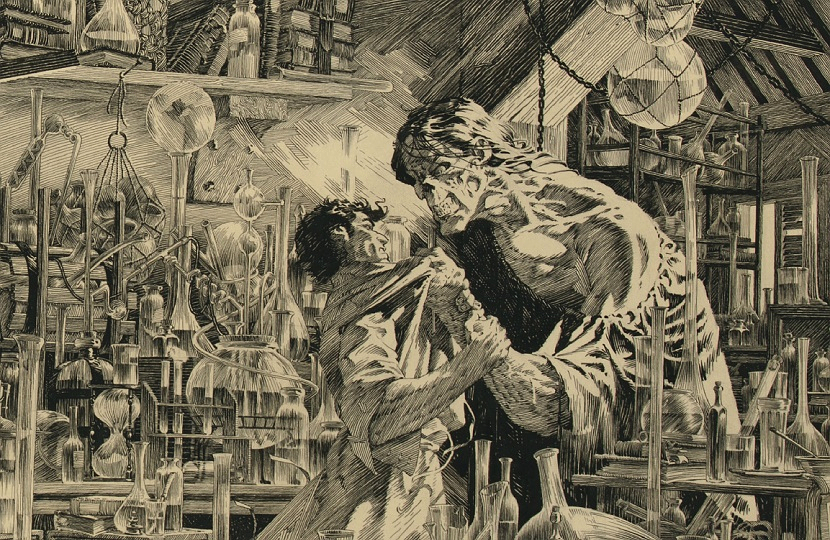
Prophetic writers such as Shelley were only able to imagine what advanced technology could do, as did the ancient writers of the Prometheus myth; the man who stole from the gods at the price of eternal punishment.
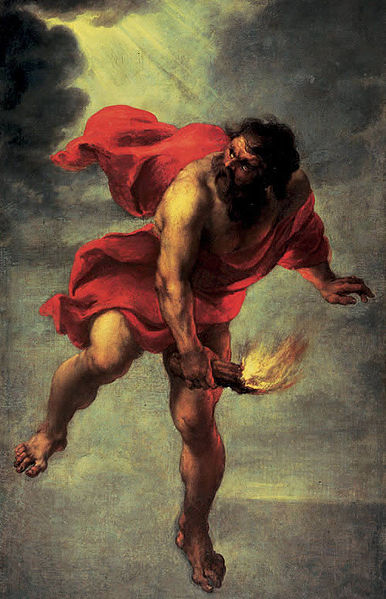
Only now are we crossing the red lines that have previously prevented this technology; the sort of knowledge that can make agile humanoid forms carry weapons and mass kill humans in a modern form of eternal punishment.

Stephen Hawkins Picture Credit: US Sun

If we believe there is even a fraction of a chance that such robots may decide to override the ‘protect humans’ instruction, then should we not be concerned in the highest degree?

The high priests of the modern era are no longer the prophets and saints of old; contained within a system of high morals and ethics. Instead our worship is lead by those who invent and explore technology, such as Elon Musk, Bill Gates and Mark Zuckerberg. They are not judged by their good characters and good intentions as historical leaders of humanity usually were.

These technology wizards, have become all powerful because they have become immensely wealthy. Their characters must be judged on their actions and words. Elon Musk has recently expressed his concern about where Artificial Intelligence training is leading mankind and has called for a global moratorium to consider it’s effects.

Key figures in artificial intelligence want training of powerful AI systems to be suspended amid fears of a threat to humanity. They have signed an open letter warning of potential risks, and say the race to develop AI systems is out of control.

source BBC.com Mar 30, 2023
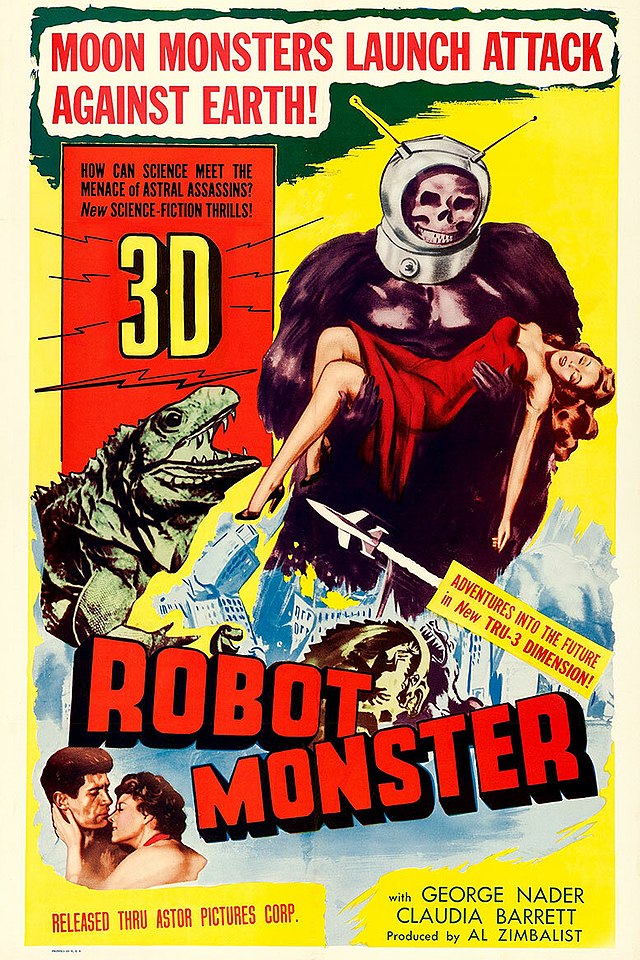
The question we all should be asking is;

‘Robot, do you feel lucky?’

Death and Taxes

picture credit: Playrights Canada Press

As loyal and obedient citizens and patriots, we do not question the taxes we pay. Just as in the saying attributed to Benjamin Franklin; ‘nothing is certain except death and taxes’; we observe ourselves enduring the prospect of dying with the same equanimity as an annual tax return.

Yet throughout history, many revolts by citizens have had their roots in what were perceived as ‘unfair taxes’ of which there have been many. The American revolution against the British crown in the 18th century is a prime example. Perhaps the distance between the taxer and the taxee gave courage to those who through boxes of tea into the sea in Boston harbour, but whatever it was, it signified a general feeling of ‘enough is enough’ where taxes were concerned.

Today, many so called ‘developed’ nations are experiencing a rise in the cost of living and stagnant wages. The effect is to squeeze the financial security of the poorest in society until they are eventually turned out of their homes and onto the streets.

Homeless on Venice Beach, California

Governments have a large part to play in this scenario and often are called into account for their policies. The citizens of France, at present, are being informed they will get their government pensions two years later than they expected. Those soonest about to retire will be most enraged by the decision along with those who resent the way the President Macron used parliamentary privilege to push the change through without debate…like a monarch.

The citizens who pay their taxes (and there are those who don’t in the so called, ‘black economy’ ) feel strongly that they should get some return on their life long financial support of their nation. Few question how much they actually pay the government over their lifetime. If they did they might be shocked.

If we take the United Kingdom as an example, when taxes are referred to in budgets this is assumed to mean income tax. There will be ‘a penny in the pound’ added to taxes or a penny taken away. It all sounds rather trivial but the reality is the opposite. Multiply that penny by pounds earned in a year and multiply that by the millions of tax payers and the figure is staggering.

Yet there are more feints going on, that hide the true worth of taxes to governments. Their favourite trick is to rename taxes as something else. In the UK there is a tax which is named ‘national insurance’. It is currently 2% of weekly earnings for those earning over £967 and 12% of weekly earnings for those who pay less. You will note that this is over 8% a month because the amount has been broken down into a 52nd of a year.

So if you pay say 25% income tax and add roughly 12.5% national insurance you pay 37.5% tax on your income.

It gets worse. Every time you buy most items, you pay ‘value added tax’. Another name for it is ‘purchase tax’. There are different levels for different items but let us say you pay 17.5% on average. That now brings your tax contributions to 55% tax; in other words over half your income.

In the UK it doesn’t stop there. Continuing the theme of disguising taxes by not using the ‘t’ word, there is the ‘community charge’. This evolved from what was originally named the ‘poll tax’ but was renamed by the Thatcher government for reasons that are hopefully becoming clear. A person who lives in the average B and D council tax set by local authorities in England for 2023-24 is about £2,000. So for a person earning £40,000 a year, pays an extra 5% tax to their local council bringing their taxation up to 60% of total income.

We are approaching the extraordinary, agreed approximately calculated, annual personal taxation being two thirds of total income in the UK.

You might add on an annual ‘car tax’ for those who own one, and now, various charges for entering ‘low emmision zones’. You might also pay the local council for using the parking space outside your home or at work. The car owner has long been a ‘golden goose’ for the Chancellor of the Exchequer.

Of course, there are particular life events that will shift your total taxation figure upwards. Inheriting money over a fairly low threshold, brings more tax in for the government treasury. The same happens when an item is sold that has gained in value, such as a house or painting. Agreed there are exemptions for houses if it has been a main residence but after a few years of say, renting out the house, this exemption expires.

To top it all, the ‘National Lotteries’ all over the world, constitute a ‘voluntary tax’ disguised as a chance to become rich…also known as gambling. Ironically, it tends to be the least able to afford a lottery ticket who feel most drawn to the one in x million chance it offers; in other words, ‘unlikely in the most extreme’.

Remember the certainty of death and taxes? Well of course there is a final tax on death, paid not by the deceased who tend not to have an opinion on the matter any longer, but by those who inherit the estate. There is a threshold of £325,000 below which this tax does no apply but above this amount the tax on the estate is 40%. An example from the government website;

Your estate is worth £500,000 and your tax-free threshold is £325,000. The Inheritance Tax charged will be 40% of £175,000 (£500,000 minus £325,000).

It could be a tidy sum given the rising cost of houses and number of home owners in the UK. It would certainly bring the tax rate paid over a lifetime above 66% for a moderately wealthy person. But even this lucky person might then have had to dispose of this assett and pay care home fees of over £1000 a week during the last few breaths of being a tax payer.

Using the example of the United Kingdom may be extreme because it has the high standards of social welfare that accompany and indeed are paid for by high taxes.

DescriptionPercentage of tax
Health21.9%
Welfare19.6%
Business and Industry14.4%
State Pensions10.1%
Education9.6%
Transport4.5%
Defence4.5%
National Debt Interest4.1%
Public Order and Safety3.9%
Government Administration2.0%
Housing and Utilities, like street lighting1.4%
Environment1.3%
Culture, like sports, libraries, museums1.2%
Overseas Aid0.9%
UK Contribution to the EU Budget0.60%
Where taxes are spent in the UK: pre-Brexit (note how the gains from leaving the EU are a fraction of the interest on the national debt, especially when the benefits of being in the EU are added.)

In the United States of America, those who can afford insurance against illness buy it because they will certainly not be to afford the high costs of health care. A person being told they need a new liver for $100,000 may not be able to pay and, as in the old joke; ‘will stop buying green bananas’.

There is no perfect system and to some extent one can change country if you do not like the taxation and welfare system. But where ever you live, in my view it should never to be taken for granted that governments are being open and honest about how much money they take from you, and how much loose change you get back.

An after thought; why don’t democracies offer voting for where taxes are allocated, rather than on the personality cult figures who present themselves randomly as representing you.

Means to an End?

There are two kinds of people alive today; the manipulators and the manipulated.

It is important to realise how we are manipulated and recognise it when we see it. In this essay only one method will be considered because it is easy to see.

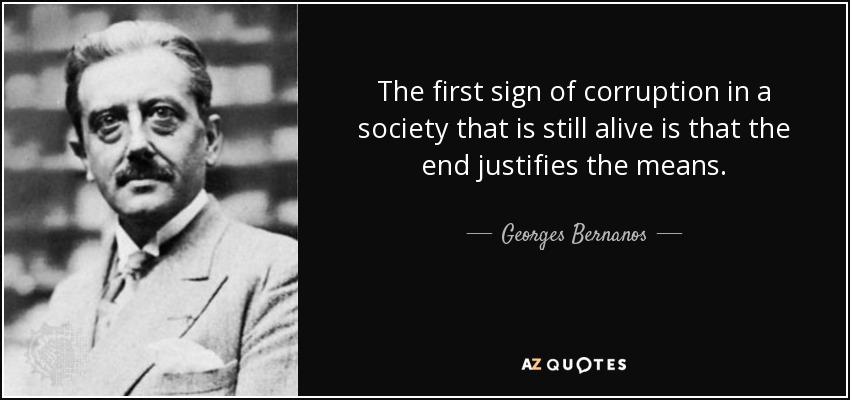
There is an old saying; ‘the end justifies the means’. This encapsulates a very real problem, but the fact that the expression is so well known and easy to understand has in a way, bled the life blood from it. But if it was not still full of meaning, there would not be so many examples of it.

For instance; a world leader wishes to invade a neighbouring state. There are various reasons which might be; historical, to obtain economic gain, to bring freedom to enslaved inhabitants, to eliminate a threat of war, to change a bad government for a good one etc.

All or just some of these reasons are used to persuade a population of a moral need. Then comes the twist. In order to achieve the aim, means are used which are far more destructive than the supposed problem being eliminated.

President Putin’s invasion of Ukraine is an obvious example but let us look nearer to home, to that bastion of fairness and reasonableness, the United Kingdom.

Politicians promise to solve problems. In this case they promised to ‘take back control of our borders’ in the 2016 referendum on Brexit. A minority right wing party, UKIP, perceived ‘immigration’ as being ‘out of control’ and having a detrimental effect on the standard of living. This despite the economic rule that immigration is beneficial to a country and the history of United States of America being a prime example.

But ordinary people do not have degrees in economics and the far right politicians are well known to pick a ‘scape goat’ cause for a problem; the Nazi policies towards minorities in 1930’s Germany being a prime example.

All nations have problems with land borders. They are hard to control. But an island nation should have an advantage and so it should be with the UK. Given this ‘false problem’ of immigration, how can the government ‘take back control of it’s borders’?

A degree of problem solving skill is needed, a faculty that is not unfortunately taught in schools and universities, including it appears, Eton; one of the most expensive private (fee paying) schools in the UK.

It was thought that if the UK could stop people wanting to come to the UK from their own failing countries, a solution would be to stop their country from failing. This megalomaniac assumption suggest that a minor world power is able to solve problems in other countries.

Unfortunately, two thirds of the countries from which people flee to the UK are not in the European Union; countries like Afghanistan.

So voting to ‘take back control of our borders’ would largely, not be solved by leaving the European Union. La di dah.

In the case of Afghanistan, large amounts of money and human life had already been lost in trying to prop up an Afghan government and Army. History shows that complex tribal nations are almost impossible for successful intervention by third party states, and so it was in Afghanistan. The Americans decided to pull out their support, the Afghan government and Army collapsed and the power vacuum was taken over by the Taliban.

So it is obvious that removing the need to flee from a country is not in the power of any one nation or even a United Nations.

The rules of asylum state that this must be done in the first safe country entered. This however is absurd as a single country cannot reasonably take all the refugees from a neighbouring country, once a certain number has been reached. Italy is a good example where refugees from Tunisia arrive in boats in such numbers that the government cannot cope.

The European Union must take some of the blame for not taking an overview of it’s member states and allocating refugees, asylum seekers and immigrants in proportion to their ability to do so. Germany has taken a disproportionately large number compared to other EU nations, while Italy is begging for help. The problem perhaps was instrumental in the election of a right wing government there.

But let us return to the UK. Having voted to lose all influence over European Union policy by leaving, it weakened it’s influence in the countries through which immigrants pass. France is a prime example and now has to be given money by the UK to carry out border controls on the north coast of France, most of which will be ineffective as the majority of traffickers operate from the UK.

The problem is never clearly defined, as ‘immigrants’ have varied motives. The economic migrants used to help with harvesting seasonal crops in the UK and those have largely ceased to do this; crops have rotted in the fields as a result. Young Albanians work in the UK illegally and return with amounts of money that it would take decades for them to earn in Albania.

Genuine asylum seekers are not given safe routes by the UK government, excepting Ukrainians and Afghans for whom there is a system on line to get a visa.

Instead of extending this humane approach to all asylum seekers, who make up 80% of ‘illegal immigrants’, the UK government have put forward another idea.

This ‘means to an end’ is intended to be so harsh that it will dissuade those seeking asylum, many of whom are forced to arrive in unsuitable small boats on UK beaches. The government’s idea is to treat them all as having entered the country ‘illegally’ and to send them to a third country; Rwanda.

In doing so the government of the UK are choosing to ignore the human rights of the asylum seekers and ignore the ruling of the European Court of Human Rights, of which the UK is still a member (even though many who voted for Brexit did not realise this political independence of the ECHR).

Ironic that the UK had done much to promote Human Rights within the European Parliament when it had influence to do so.

Instead their ‘solution’ to immigration by asylum seekers is to class them as criminals for entering the UK illegally, and sending them to Rwanda.

Here, clearly, the end is being used to justify the means for if anyone should question why this policy is being followed the reply by government politicians such as the Chancellor Jeremy Hunt is words to the effect, ‘would you rather they drown?’

By concentrating the emotional decision on the horror of women and children drowning in a cold sea, the appeal to the faculties of their opponents is not rational but emotional.

The rational ‘problem solving’ has been skipped over and a ‘solution’ being tried that mostly works politically. Is it not rather being seen to act on an election promise in readiness general election next year?

What will happen to immigrants once they arrive in Rwanda is hardly advertised. No doubt the Rwandans have been given money as other advantages to their nation are doubtful. At worst the money supply will stop in a few years after a change of government and the Rwandans will get their machetes out again.

Thus it can be seen that horror and inhumanity is being ‘justified’ as being the only solution to ‘saving people from drowning in boats in the English Channel’.

The tail is most certainly wagging the dog and this is how our own thoughts can be manipulated to think what is happening is ‘okay’. Bad things are ‘justified’ as ‘an evil to stop a worse evil’. In reality, it’s an evil instead of a humane solution.

Should we not be instructing the problem solvers in ‘problem solving’? The books of Edward de Bono have been used by business leaders to teach this skill and the reader is recommended to study them if a life in politics is being considered.

The Beggar King

We may consider ourselves ‘modern’ but most social scientists today will agree that we operate as members of a tribe. Class distinction is an example. In each class we accept difference of ‘rank’ with alarming credulity. We know that those ‘above us’ may not deserve automatic respect and yet that is the way it is.

Many of the politicians in power today are people who you would think twice to employ to clean the windows of your house, and yet they are tribal ‘chiefs’. So who are these people and why did we hand over our power to them?

The Beggar’s Opera: picture credit The British Libary

There has been a lineage of ‘royal families’ since prehistoric times. In Mesopotamia there was discovered a ‘King’s list’; a long line of Kings stretching back in time. In Ancient Egypt, hieroglyphs name a chronology of the Pharaoh’s who were the mid-point between man and the gods. Power was handed down as a birthright and royal families, including the Roman Caesar’s, accepted incest as a means to maintain the ‘blue blood’.

The problem with monarchs was always that there are good monarchs and bad ones. The self indulgences of dynasties such as the Bourbons in France, were persuasive catalysts to republican revolutionaries.

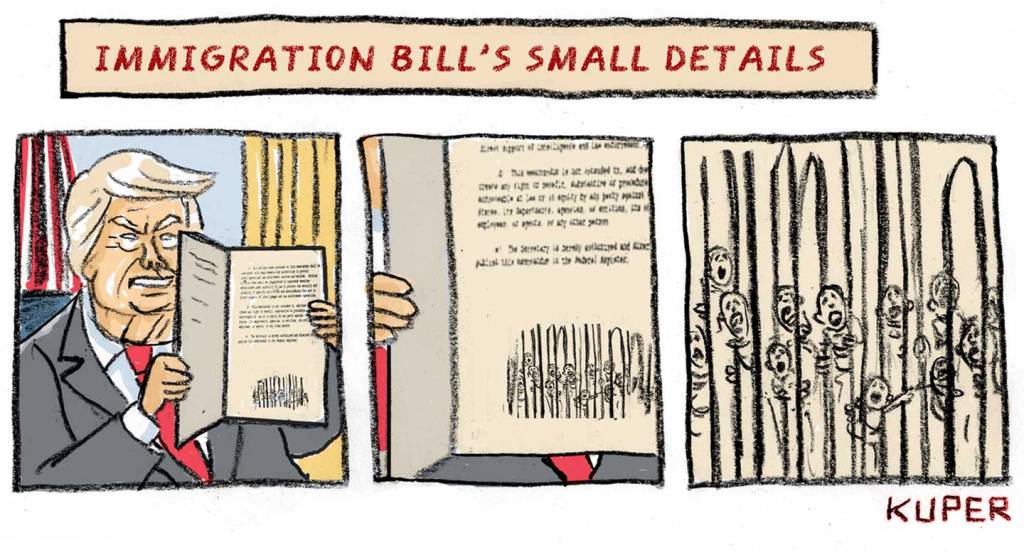
But what is interesting is the way in which since then, some Republics have morphed back into Monarchy’s. The United States of America is an interesting example. The Pilgrim Fathers were intent on leaving behind the absolute power of the royal families of Great Britain. The original Constitution of the United States of America handed power to the individual. The Freemasons who wrote this, including such figures as Thomas Jefferson and Abraham Lincoln, did not anticipate how power would slowly return to the president. Today, the President of the United States is given the freedom from prosecution and pomp once only afforded to Kings. If they have an idea they make it law. They are free to write ‘executive orders’ with as much alacrity as Popes write bulls and Monarch’s, decrees.

My point is that however far you try to strip an individual of absolute power, it doesn’t work. The present Presidents of China and Russia are examples of how to ‘eliminate the opposition’, in the same brutal manner as various Caesar’s in Ancient Rome. Today, there are more people living under dictators than democracies.

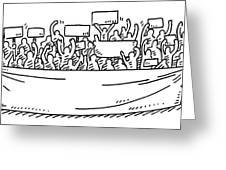
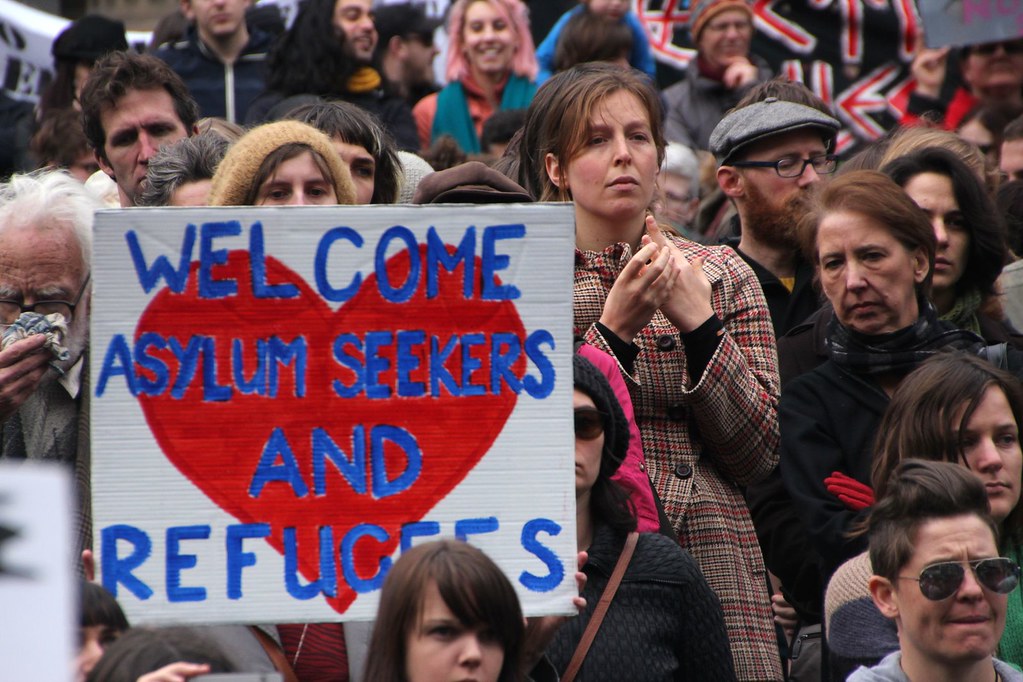
The only power that ‘the people’ retain is protesting on the streets. Today, many countries ruled by dictators, such as Iran, Myanmar, China, Russia, have had to deal with popular public demonstrations demanding basic rights for the individual. Often their pleas go unheard and their banners are without words.

picture credit: frank-ramspott

In all of these affairs, both of state and in business, there rises to the surface, persons whose suitability as figures of respect, is doubtful at best. Those who seek power over others are almost by definition the least worthy. In democracies, there is no election of those who wish to be even considered as candidates. ‘Running for office’ is left to self promotion and lambasting the opposition; characteristics generally found in the most narcissistic and least worthy personalities.

You may be wondering where this sad description of human self organisation is leading. Well, there has to be a solution to the problem.

In the many native tribes of North America, there was also a system of leadership which was known as ‘Goose Leadership’. A group would sit in a circle and a goose feather would be produced. The rule for the meeting was that only those who held this feather were able to speak.

The result was a collective assurance that if someone had some poor ideas, their influence would not hinder the others for long! Similarly, the inspired suggestions would be recognised and adopted.

The significance of the goose feather is of course, from the instinct of geese to share the lead role in their familiar V-shape flying formation.

What arises here is a noble social structure that is neither strong nor weak, rich nor poor. This is contrary to the binary ideal within other systems of social organisation where only wealth and power gain respect. Between absolute wealth and absolute poverty, there is always a more balanced, middle path.

The Prince Siddhartha Guatama was born in a palace and lived in northern India, with a life of luxury beyond imagination. But he was aware enough to realise that he was unfulfilled by this lifestyle.

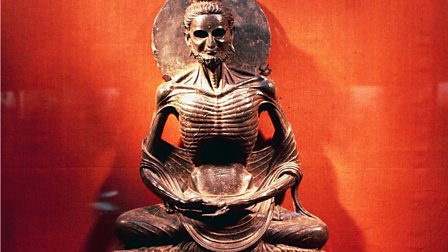
He left his life of total sensory satisfaction to become a wandering ascetic and teacher. At one stage this left his body in a most withdrawn and malnourished state and statues sometimes depict him with his rib cage exposed and thin limbs. Aestheticism also did not satisfy him and he finally gave up the search for the right path, by sitting under a tree.

Here he attained enlightenment and the name Budh was applied to him as a form of respect which in it’s masculine form is Buddha, in the same way that Jesus was the Christ.

Buddha, “Awakened One” or “Enlightened One,” is the masculine form of budh (बुध् ), “to wake, be awake, observe, heed, attend, learn, become aware of, to know, be conscious again,” “to awaken” “”to open up” (as does a flower),””one who has awakened from the deep sleep of ignorance and opened his consciousness to encompass all objects of knowledge.”It is not a personal name, but a title for those who have attained bodhi (awakening, enlightenment).Buddhi, the power to “form and retain concepts, reason, discern, judge, comprehend, understand,”is the faculty which discerns truth (satya) from falsehood.

source: Wikipedia

A benign leader is not then, an individual concerned with status and personal wealth. Such a leader will discard these ‘trappings’ as of no value.

Most importantly, I am optimistic enough to believe that the leaders who will emerge for humanity in the near and far future, will have benign, spiritual qualities. They will not live in palaces but be content with a humble dwelling amongst the common people. They will own little, in the manner of the native American people, and be perfectly content.

‘Living by need and not greed’ as Manhatma Ghandi once advised, will become the norm. Many god-less people, used to unsustainable European materialist lifestyles, will have had their day. Their lives will become like those of Kings and Queens of the past who had to be beheaded before they understood their arrogance!

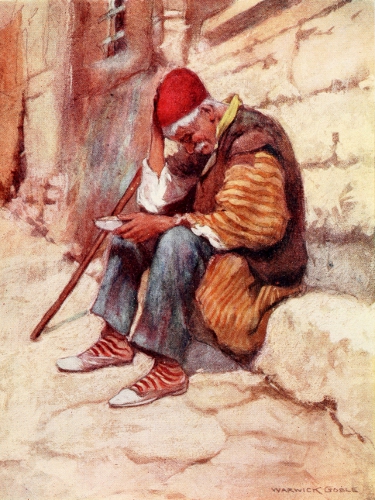
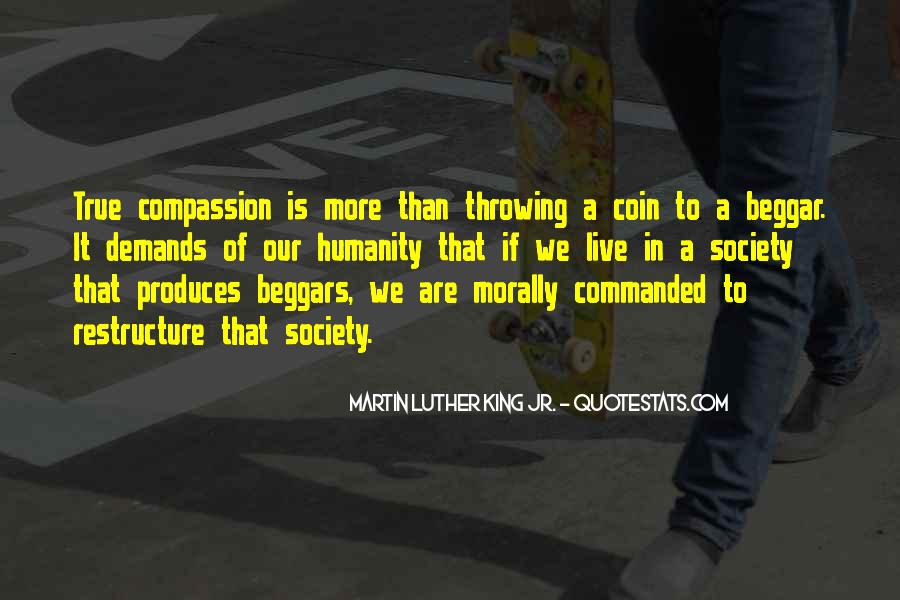
To give up riches and power requires considerable humility, the type present in those who we find begging on the streets. They may not have sought humility, but life – either fairly or unfairly – has brought them to the depths of despair.

We are all capable of beings King’s, as in the goose leadership model. We are also all capable of being beggars. Neither is a sustainable position however, either socially or spiritually. If we are to learn anything from the history of mankind, it is to realise that the ideal place for the individual to be is somewhere in the middle, without pride or greed and with the desire towards the common good for all.

Such a psychological transformation is contained in the concept of the ‘Beggar King’; the one who was once powerful and once the lowest, but has now found a ‘happy medium’; what the Buddha called, ‘The Middle Way’.

The World Spinning out of Control

To everything there is an overview and to help understand the drama being played out in Ukraine at the moment, read on;

Tomas Schuman is an Soviet-era secret service agent and has spilled the beans on how the Soviet era strategy to undermine the West. He now describes the Soviet techniques of international subversion openly on You Tube.

He says there are four stages, extended over several decades.

Stage 1: Demoralisation

This takes at least one generation, maybe 15 to 20 years. During this time various completely fake replacements take over established religion, education, law and order and social life in general.

These institutions are replaced with un-elected ‘influencers’ such as the media, secret societies, wealthy individuals and clandestine branches of government.

Labour relations are undermined by taking away the power of trade unions.

Stage 2: Destabilisation

This process is aimed at institutions. ‘Sleepers’ who have been installed in societies institutions such as local government, law, military, industry and commerce and educational hubs, are activated. They move into positions of authority through the perceived lack of law and order e.g. military coup, ‘fake’ election results, single issue protest groups lobbying government and on the streets (Black Lives Matter)(‘statue toppling’)(‘defund the police’). At the same time various antagonistic single issue parties move into power vacuums created by the effects of stage 1. (the Brexit Party in the UK).

Stage 3: Crisis

This process starts when social functions cease to work such as the effects on the free movements of goods and people within the UK and the EU. This includes the issues around the Good Friday Agreement and possibly leading to nationalist politics breaking up the United Kingdom. Poverty and homelessness (e.g. California) forces large numbers of people to seek food aid and other handouts to simply exist. Fake information is fed at an industrial scale to social media sites at carefully selected times e.g. elections and referendums. This and weak government, leads to discontent which can spiral out of control leading to the call for more authoritarian rule and a ‘strong man’ ruler such as seen in the United States when Trump was elected. The result is civil war or invasion of another country e.g. Afghanistan, Lebanon, Syria and now Ukraine.

Stage 4: Normalisation

As a pretence of solving the problems (real and fake) of the first three stages,

it is now possible to justify extreme action to ‘normalise’ society and bring ‘peace’. The tanks move in to a desired country, however ‘normal’ the citizens feel, with the aim of physically taking over the seat of government (e.g. the protesters at the Washington rally who disputed the election results or now Ukraine). Once the leaders of the former government have fled or been jailed, a new ‘puppet’ government can be installed with the aim of ‘restoring law and order’ which of course comes at the price of loss of democratic freedom and human rights.

The USSR may have imploded in on itself but the ‘vision’ of it’s leaders is still deeply ingrained in it’s institutions and leaders. Mr. Putin was after all a KGB officer and would have expertise in and taken part in the above process. Transfer these four stages to ‘predator’ and ‘predated’ countries in Asia (Myanmar now in military rule) Africa (Somalia) the Far East (North Korea) the Middle East (Iran, Iraq, Yemen, Israel) in addition to Europe and the Americas and elements of this Soviet-era method of insurrection ‘government toppling’ are alarmingly aparrent.

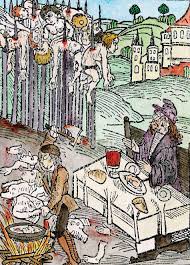
Vladimir the Impaler – picture credit National Geographic

All of the above was my blog written and published at the begining of 2022. Events have moved on and the symptons of this subversion process of natural law and order, remain and gather momentum.

Storms are not catastrophes except when they happen simultaneously and then they are called ‘perfect storms’. On they Oceans they appear as ‘rogue waves’ which can sweep over huge ocean going liners such as the Queen Elizabeth II at great risk to passengers and crew of capsize and sinking.

To sustain this metaphor 2022 has witnessed the sad loss of the real Queen Elizabeth through natural causes and with her passing the end of an era. Her reign included the Second World War of which she was one of the last veterans. In my view that experience raised the social ownership of responsibility, in Britain and around the world. Out of harm usually comes a realisation of the need for change and significantly a socialist prime minister in the UK succeded the Tory Winston Churchill. People realised the need for good housing, food and education and in particular the provision of health care for all.

What has happened today is the disappearance of a generation who cherished those social values as being of primary importance to a peaceful and good life for all, not just the rich and privileged. The stabilising influence of high ethical standards was sanctified in the creation of the European Commission in which what were called ‘human rights’ were enshrined not just in religious values but in law. Many who voted for Brexit are surprised and disappointed that the European Union (also created with an eye on peaceful coexistence in Europe) is a seperate organisation to the EC. They now wish to send asylum seekers (80% who are genuine) back home or to a third world country against their wishes and chances of even staying alive.

Should we be surprised that this division amongst left and right in many European countries and the weakening of the ‘centre ground’ has played right into the hands of the ghosts of the USSR – Vladimir Putin.

Was Brexit not only partly engineered by the Russia and her allies, but a green light to start a war in Europe?

Your enemy will always tell you where you are weak.

The rise of autocratic countries as being now a majority of governments in the world, should make us more than worried. When we watch the government clamp downs on free speech and the right to protest in China, Russia and Iran, are we watching European countries in the next decade?

In my view we should be extremely concerned. In summary we can identifiy two storms; the subversion of democracy by Russia and various rogue states such as Iran and North Korea, combined with weakened social values in divided democratic countries such as the UK and the USA.

Into this gathering tsunami is added a third wave which travels around the world largely unseen. It is generated by those who have huge political power through extreme wealth and social privilege. They work in the background by buying media organisations, pharmaceutical companies, industrial conglomerates and arms and municians amongst other diverse service and product providers. No one votes for them and their influence is being swelled by the rising tide enabled by new technology and biological sciences.

But wait! There are at least three storms producing this hurricane, now made even more worrying by the no longer deniable catastrophe of, climate change.

At the risk of having mixed my metaphors it is apparent now to most observers that the ‘minor details’ produced by this storm of all storms such as inflation, migration, poverty, hunger, war, homelessness are not only problems in themselves but indicate a far larger and uncontrolled pattern towards global catastrophe and harm to each and every individual alive today.

The old saying ‘there is no smoke without fire’ has never been more true. The challenge today is to find the fire and put it out. And when that is done, look around and see what is left and work out if those who stepped forward to ‘save us’ were our friends or our enemies.

What Do You Need?

Mahatma Ghandi said;

Earth provides enough to satisfy every man’s needs, but not every man’s greed.

picture credit; Meer.com

It’s not usual for the writer to look into the future. But at this moment in history, there is no need to be psychic to see where the world is heading and the consequences.

We live at a moment in time when change in the standard of living of the ‘developed countries’ is inevitable. The change will be what some would call a ‘reduction’ in this standard; meaning things will not be a cheap and plentiful as they have been in the past. For the rest of humanity the change will be having things that have not been available in the past, what will be an ‘increase’ in their standard of living to include all the essentials.

These are the essentials to life;

Shelter

Food and water

Health and reproduction

Education

Work

What will bring about this change is an increasing scarcity of these five necessities in both the ‘developed’ and ‘undeveloped’ countries, so that sharing of resources will be the only humane political direction.

The previous trend of ‘civilisation’ has been for certain countries to grow richer whilst others get poorer. The ‘master and slave’ Empires of history and the present day, are examples of this.

New technology, and primarily the ability to communicate on a global scale, is an essential part of ‘leveling down’ and ‘leveling up’, the uneven distribution of dwindling resources.

Technology, such as birth control and free health facilities has been changing the global demographic for many decades. As a consequence, families have been having fewer children because infant mortality has drastically reduced.

Smaller families has meant a reducing population in many parts of the world, such as China and parts of Europe.

The process of industrialisation was always founded on a false assumption; that more and more stuff can be made from limited resources. Whether those resources are fossil fuel sourced energy, raw materials, places to store noxious waste products, dwindling natural resources such as rare earth elements and the traditional metal ores.

All of these things and more, have become cheaper and more available but their limited availability and other factors means that the industrial train is about to hit the buffers.

Perhaps sharing more and making more with less and eliminating pollution would have held off this inevitable moment for longer but the global system of human development is too fragile and too complex.

The effect of industrialisation on nature has been ignored for convenience and perhaps not a little arrogance, but nature ultimately strikes back. What is wrapped up in the term ‘climate change’ is the tip of a rapidly melting ice berg of global human catastrophe.

picture credit; Friends of the Earth

Nature has a plentiful and powerful armory with which to fight back. Viruses, extreme weather, planetary warming, desertification leading to wars over scarce resources are and will put great demands on the human population to re-organise.

If humans had any self respect, they would respect this powerful process and become co-operative with nature. It has to, because the option to carry on as before is no longer available; unless wars, mass starvation, migration and pandemic diseases are ‘risks worth taking’.

There are some religious communities such as the Amish in States in the in the United States of America and Canada, who will not directly face fundamental changes to their way of life. Hundreds of years ago they decided for religious reasons that their ‘standard of living’ had reached a level that is sufficient for their needs. The number of Amish people has risen from 100,000 in 1989 to 251,000 and is predicted to increase. Respecting the boundaries of nature is a lesson many have learned, thus avoiding the hard process before being forced to.

An Amish Homestead picture credit Stuff.co.nz

Similarly, there are remote tribes in ‘undeveloped parts of the world who live in harmony with natural places and have done for millennium undisturbed. They have nothing to fear from nature, only their fellow humans.

Industrialised societies have taken far more than their fair share of nature’s bounty. The city dwellers who make up fifty per cent of these societies live on the promise of unlimited food from farms. Unfortunately soil needs constant replenishment when using factory farming methods and fertiliser is becoming increasingly expensive, to a point where growing crops is no longer profitable. City dwellers have become so cut off from nature that they might as well be living on the moon; totally unable to sustain themselves except by trade using ‘money’- a substance you cannot eat.

The dwindling of world resources and the consequences for national economies will require counter intuitive management. People who have more, will have less and people who have less will have more.

Food will no longer be shipped all over the world to satisfy the demand for non-seasonal, exotic, non-local, high protein, artificial fertiliser enhance ingredients.

Wine and olive oil, will not be for sale in shops in countries where wine and olive oil is not produced. Such luxury is only a recent expectation. Nations used to have their own diets and dishes based on local seasonal food. Northern countries drank mainly beer made from local grain crops and southern countries drank wine made from local grapes. Choice in food and drink will become more than halved and people will be grateful for what is available.

Politicians will have an almost impossible task of balancing the overwhelming and impending need for ‘developed’ populations to significantly reduce their ‘standard of living’.

Nobody votes to lose their holiday home/s, luxury car, cheap flights, energy wasteful house and bulging refrigerators. You might think this and you could be right, but when citizens understand the hardship that is the alternative, they will.

And if this sounds depressing then all is not necessarily gloomy, because humans have a unique skill at adaptation, both physically and mentally. Some of the poorest people on earth are also the happiest. Travelers who visit the homes of remote communities that are living off the land (whether forest, steppe or desert), find they are welcomed with dignity and honour and the food in the house is shared equally with them. This food may taste better than any they have had before because it is resourced locally, prepared traditionally and presented with love.

No factory on earth has ever made a product with love so should we be surprise that people who have ‘high standards of living’ often live loveless lives?

Here is that list again;

Shelter; simple, warm, light, organic houses and public buildings and gardens.

Food and water; locally sourced and stored, lovingly prepared and shared.

Health and reproduction; Enough health professionals for populations in order to prevent disease, educate and encourage healthy lifestyles, treated body with the mind and mind with the body, practice traditional medicine and techniques less based on chemicals. Because communities will support the elderly young people will manage the size of families using contraception.

Education; a holistic, approach to giving young people the skills and characters that promote informed and respectful relationships and communities.

Work; local activities that produce goods and services in ways that respect nature and the environment. Labour will not to use more energy and materials than nature can supply and live in a way that gives responsibility to all and shared rewards.

There are many micro-communities already living in this way according to their own religions and traditions. If you are fortunate enough to live near one my advice is sell everything and join them as have done many and joined Amish and similar communities.

You might be happier than at anytime in your life and if you are not happier, well you at least will be the same person you are now.

As so often happens, Hollywood is ahead of the curve and perhaps forcing, as well as, predicting change. There have been many ‘post apocalypse’ films in the last few decades. The apocalypse will only come if it is allowed to. As in most things, the trick is to be pro-active (ahead of the wave) rather than wait for it to swallow us whole.

picture credit; Climate Emergency Institute

Let Me In – part two

Most European countries have at least one land border with another country. But the UK is an island and this proved a great strategic advantage for the British, stopping intending visitors like Napoleon and Hitler. The English Channel is now one of the busiest shipping lanes in the world so you might think that crossing it without being noticed and at least avoided, would be difficult.

This makes you wonder how seriously the borders of the UK are watched when rubber boats arrive who could be invaders from a hostile country. Dorset Police went out and bought three boats, which doubled the patrol capacity for the whole of the UK. Interestingly the Royal Navy have become involved…but only recently.

This essay is not principally about the UK. The plight of those wishing to enter it, is merely intended as an example of similar situations all over the world, such as Cubans wishing to enter the USA.

With climate change, scarcity of food, water and raw materials, wars, disease, corruption, rogue governments and other factors, the world needs to apply a united strategy to those affected. The mass movements of populations needs to be handled co-operatively and competently.

So let us re-focus the problem in the English Channel and consider how a strategy can be formulated and implemented rather than narrowed to a single issue.

Le Manche – as seen from France

Firstly there needs to be a ‘triage’ of emigrants who turn up at the in French sea ports and coastal towns. They will either be in the ‘criminal’ group (5) or one of the other groups listed in Let Me In – part one, and it is of primary importance to identify them in the interests of all countries.

They may well be pretending to be seeking asylum in the UK and will have worked carefully on a fictitious cover story. If and when known criminals are identified by security services, it is imperative that they are dealt with. Those who are known to be linked to crime, war crimes, terrorism, extremism etc. may already have international warrants for their detention enabling their immediate extradition to other countries. In doing harder, what governments should already be doing, there is no longer a temptation or excuse to treat the greater majority of genuine migrants, as criminals.

The ‘people trafficking gangs’ and their leaders clearly, also need to identified and put on trial. Good police work should be capable of locating and monitoring them by using surveillance and sting operations to infiltrate their organisations and make arrests. If this has ever happened it has not hit the headlines. Do more resources need to be aimed towards identification of the gang leaders? They may be linked to other organised crime such as drugs, sex trafficking, terrorism and the rest. This is just bread and butter policing and yet it does no appear, at least, to happen.

The sale of the boats and safety equipment which takes place in the Calais markets and Marine supply shops, could be licensed and stricly monitored by CCTV, forcing traffickers to transport this equipment from elsewhere. This will not stop them, but it will increase the risk of being caught in possession of it and having to spin improbable yarns to police.

Security services have teams scanning the dark web for extremists, terrorists and their associated criminal networks. Little is made public about this work; no doubt for good reason, but there needs to be some publicity if only to reassure the public on both sides of the channel that there is a raft of measures operating to close what is happening down. Why is it so difficult?

Post Brexit, the French north coast became a border of the European Union. As such it will have been given substantially greater security measures than the internal borders within the EU. If 440 people leave the coast in one day and there are 20 people on each boat, then that is 22 boats! The English Channel crossings are made in broad daylight from busy coasts. Do the general public, commercial and leisure users of ports and marine facilities report suspicious activity? Is there a Coastguard hotline to report such craft? If you ask Google this question the answer is yes; 1-888-373-7888, but it’s in the United States of America.

If we consider new technologies then it has become practical and effective to search for and monitor suspicious activity using drones. These will provide real time intelligence and enable land and sea based patrols to investigate in a timely manner. They can also be used to verify reports from the general public before allocating resources. Drones could be used on both sides of the English Channel. It is likely that members of the public with an interest in using drones, could work alongside coastguard officers; reducing costs and releasing officers for duties that require their legal powers and skills. (There will also be a spill over benefit help catch smugglers and other illegal activity.)

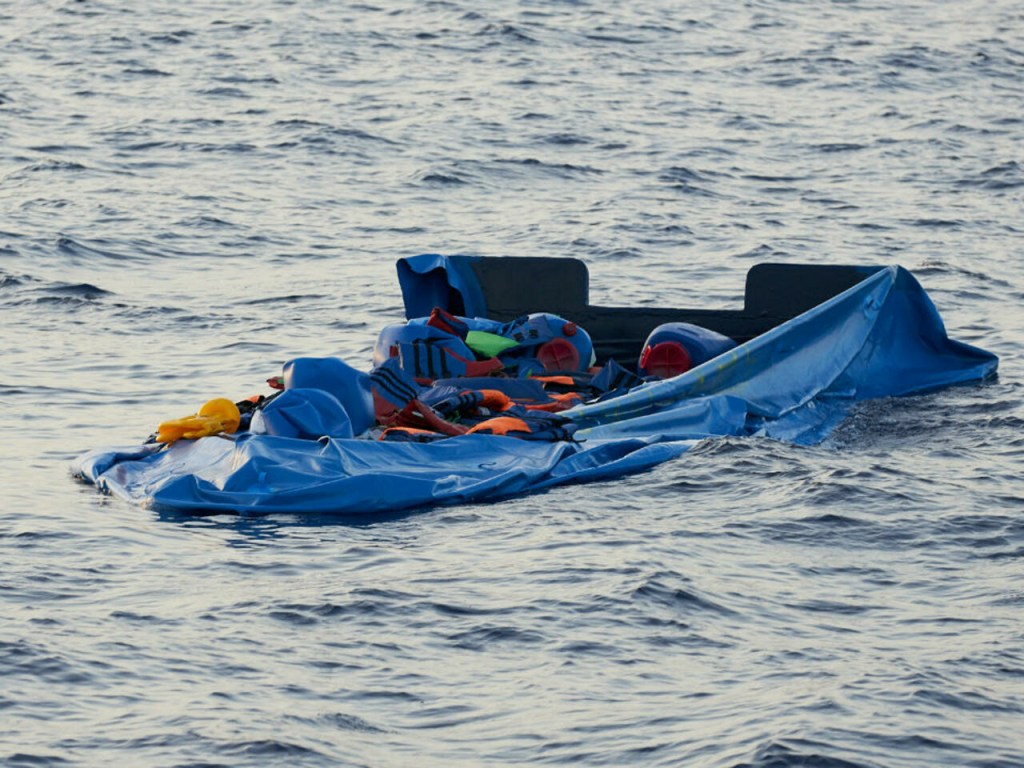
Migrant Boat – picture credit France 24

Crossing the Dover Strait from Calais depending on, wind and tides, speed of vessel etc. is going to take at least three to four hours. Crossing the shipping lanes is fraught with danger as all sailors know. This means that it is important to intercept emigrant boats before leaving the relative safety of the inshore waters. Maritime law requires interception of a such a vessel to be taken directly to the nearest safe place. If emigrant boats are allowed to stray too far towards the centre of the Channel this can become an issue between UK and French authorities. Should boats be turned around as they approach the other side of the channel (as the USA Coastguard does to Cuban refugees) or should a border be enforced in the centre of the Channel? Is this idea remotely practical in any case when emigrants dangle their children over the water as a threat to intercepting authorities or simply just jump into the water. At one point the Home Secretary Priti Patel wanted boats physically turned around, not appreciating or perhaps caring, how dangerous confrontations at sea are.

Newspaper articles and even presidents of countries will try to persuade the public that all or most emigrants are all criminals but statistically, the majority will fall into one of the other four groups already described.

Many will probably be without documentation often through no fault of their own. This issue could be solved by the often suggested policy of ‘creating safe routes’ and simply issuing temporary documentation. These can include biometric identification as is reasonably required by the UK government. (Scanning finger prints is part of process of identification of the known or wanted criminals and will already have been done. It takes a few minutes, not months, to do for each person.) The Prime Minister has lauded the idea of ‘safe routes’ in debate, but in reality the only safe routes the UK has set up are for Ukranian Nationals and a restricted number of Afghans.

My principle point, as I have almost certainly missed out many details and parts of a more general strategy simply because I am just writing this as a lay observer, is that controlling the mass movements of undocumented people is a complex issue. Enormous co-operation between nations is required, the sort of relationships that the European Union was partly set up to achieve.

There is an ‘elephant in the room’ however and they is why the UK is a honey pot to emigrants. Why do individuals and families wish to come to the UK so very badly they will risk their savings and their lives to get there? Perhaps the answer includes the facts that English is a lingua franca for many, it has given out UK passports following it’s Empire days (e.g. Hong Kong), it has a free health service based solely on residency and has a generous welfare system into which there is no immediate requirement to pay, in contrast to most other European countries.

picture credit: AA Milne and Walt Disney

The UK public might be proud of these humane and welcoming promises but it is cruel to dangle the carrot without letting go of it just as the donkey has finally completed the journey and this is precisely the strategy of the present government in most cases. In my view this is a slippery slope to the UK losing it’s reputation for fairmindedness.

This essay has been long and covered at lot of ground. This has been deliberate and well done if you have reached this far! My aim has to be to outline only the broad spectrum of issues around the mass movement of people around the globe, using the UK as a sorry example of ineptitude.

Governments ignore complexity at their peril. It is always tempting for policticians who often are vastly under qualified for the roles they attempt to do and say as little as possible. This is all very well for the ordinary person who knows they have no idea about international polictics, but leaders are expected to be better than this. The detail is most often where policies go wrong and ignoring detail is much the same as devil worship, for does he not love the same?

Let Me In – part one

Governments have to identify goals which are desired by their supporters and decide the means by which these goals can be achieved.

This simple statement makes sense, until the details and the means are examined in depth. Specifically, the means may not either be effective, or worse, they bring about unintended consequences which may cause harm.

An example of this is happening in the United Kingdom right now over the issue of immigration.

Voters in the Brexit referendum of 2014 had many concerns and one was a perception (stoked up by the media over inadequate public services and poor town planning rather than economists) that immigration into the UK was a problem. Brexit was posited as a means to ‘take control of our borders’. Unfortunately the ‘problem’ was incorrectly perceived in my view and I will explain why.

Economist promote immigration as it promotes growth and prosperity. The Tory governments of the last decades have known this and Home Secretaries such as Teresa May, did little to control immigration. Why would you when you need foreign workers? But after Brexit voted against the free movement of people within the European Union, unemployment in the UK now stands at 1.3 million.

picture credit; I Volunteer International

The present argument by the Johnson government, is that the ‘problem of immigration’ is the number of people who die on inadequate boats whilst trying to cross the English Channel. This emotive argument correctly demonises the illegal traffickers but fails to approach the problem from a strategic perspective. If they used safe boats would that be okay? Is this a sea worthyness of boats problem?

The absurdly narrow focus on what the problem is and how to solve it, only satisfies voters who are content with a simplistic problem / solution statement. To gain a full grasp of the problem, I shall outline as best I can, the breadth of the issue of mass movements of people into the UK and how improved ‘control’ of the borders of the UK could be achieved.

Firstly, there are five types of emigrants;

  1. Those escaping hardship in their own countries through famine, war, climate change through no fault of their own.
  2. Skilled and unskilled economic emigrants who are seeking work and higher remuneration.
  3. Political emigrants who are escaping persecution by their own government because of their political views and acts and seek political asylum.
  4. Emigrants who are seeking to be re-united with their families; a group that includes children travelling alone.
  5. Those outside of the law in any country involved in subversive and or illegal activities, either in the interests of their own government or for criminal motives.

For each of these groups, there has to be a specific solution to their desire to emigrate to another country to live and work. But before I examine these, there is one further beneficial general approach.

The conditions in countries which people are seeking to leave own a large part of the problem. You might expect diplomats from countries likely to become unwilling hosts to emigrants to spend a large part of their time and resources in working on this problem with other governments. I personally suggest this should include processing asylum claims in local embassies (excepting when appropriate, political emigrants) and issuing temporary visas on ’emergency passports’ to enable safe travel using conventional means. Buying a 50 euro airline ticket instead of paying people traffickers, is no financial burden on the UK government and puts illegality out of business. It is certainly less than chartering an aircraft for 500,000 pounds to take the unwilling to Rwanda, but who am I to point this out?

But let us assume that all the targeted aid and supportive diplomatic steps have been taken and people are still desperate to leave their own countries. What interventions are available and appropriate for each of the five types identified above?

Group 1. Escaping hardship;

  • In the short to medium term, build refugee camps.
  • Identify suitable locations for these and provide appropriate support.
  • Have international protocols and means in place to be ready for the next global catastrophe, through non-political global organisations that are trusted by those seeking help.

Group 2. Economic migrants;

  • Maintain physical border controls so that border crossings can be managed and legal crossings enabled.
  • Put in place means to screen those with and without documents to confirm identity, purpose, ability for self support and seek work opportunities or evidence offers of employment.

Group 3. Political emigrants;

  • These should be identified by host countries only, as they will not wish to be intercepted by the countries they leave.
  • They may be oblidged to cross borders by illegal means in order to remain safe.

This group is likely to be used by group 5 (criminals) so particularly high security measures and screening methods will have to be used by potential hosting countries.

Group 4. Seeking family re-union;

  • Set rules for family members to be able re-unite after non-self imposed trauma legally and permanently.
  • Have facilities and protocols in place to process unaccompanied children.

This group would benefit from being able to apply for a visa and /or residency before leaving their own country.

Group 5. Criminals; This is the group that makes it necessary to have strict controls on all the rest.

  • They need to be identified at the earliest opportunity and dealt with according to international law and extradition agreements, much of which may need revue and extending in scope to fit the present movement towards a ‘global community’ rather than nationalist self interest.

You can appreciate that these principles apply to most emigration and immigration, and examples abound in today’s current affairs. To keep this essay focused I shall use just the example of immigration into the UK and the policy that the government believes will stop people crossing the English Channel in unsuitable craft.

My first point is a fault in the government’s argument. They state that the aim is to stop people drowning in the English Channel. Clearly no person is going to be against this. However their method is to deter people getting into unsafe boats and how strong a deterrent this is going to be, is unproven. The counter argument suggests the policy is ineffective and costly, at which point government ministers will accuse those against the policy of being ‘in favour of allowing people to drown in the English Channel’.

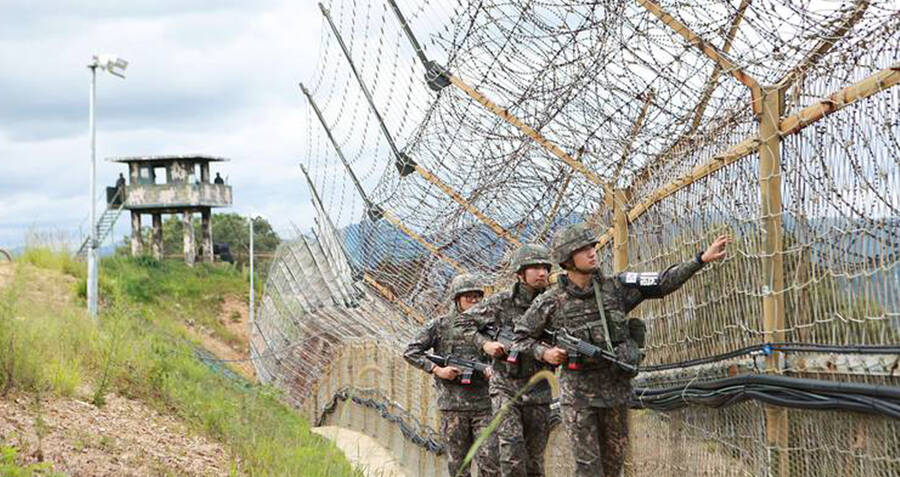
Unfortunately this extremely poor level of debate and problem solving has been carried over from the Brexit referendum in 2014. The focus of the ‘benefits’ of Brexit was on immigration, stating a desire to reduce numbers entering the UK. Not surprisingly, by being no longer a part of Europe the interests of the Mayor of Calais became no longer aligned with the UK. The solution for the French to the problems around refugee camps in Calais, was to do as little as possible to stop migrants leaving for the UK. For this reason they expressed no interest in accepting UK money for extra police and border controls on French territory. Such measures are popular with voters but are again ineffective. Emigrants who have already made long journeys are expert at avoiding detection. Effective ‘strong borders’, require measures in place similar to those between North and South Korea and it is unreasonable for Calais to accept machine gun posts, razor wire and mine fields along it’s beaches.

picture credit; All That is Interesting

So after the UK government has stopped accusing France of being ‘uncooperative’ rather than understanding the points about motive and means just made, the brutal ‘one size fits all’, send-emigrants-to-Rwanda solution is put in place. The British public – who have traditionally been internationally respected for being fair minded – are expected to accept that denying the human rights of desperate men, women and children will deter others from entering the UK illegally.

On the first day that this policy started the plane carrying eight emigrants, was grounded by the European Court of Human Rights and 440 people crossed the English Channel successfully in the other direction. Even after a year of this policy in operation – is it really likely that there will be fewer people crossing the English Channel in boats and if so how many fewer? Is denying human rights as a deterrent really acceptable?

In my view the government’s problem solving ability would hardly be accepted in a school debating society.

to be continued

Not Losing Our Heads

In my blogs I am often critical not of individuals but destructive thought patterns in common use. Thoughts have a life of their own both literally and metaphorically.

I shall ignore the former for now, and we are left with what Professor Carl G. Jung called the ‘collective unconscious’. This concept distinguishes the aptitude of a group of people to have shared unconscious awareness, similar the collective movements of a flock of birds. Sociologists who have studied the actions of rioters note how humans can act with a common purpose, which is part of the legal definition of ‘riot’. More worrying is that individuals are susceptible to consciously break personal moral codes – such as ‘thou shall not steal.’

picture by Kim Aldis, CC BY-SA 3.0, https://commons.wikimedia.org/w/index.php?curid=15534195

I witnessed rioters in the Brixton area of south London in April 1981 running out of shops through broken display windows carrying swathes of clothing and other looted ‘goodies’. They were almost certainly not checking clothing sizes or colours when grabbing stuff…they just wanted to steal.

At the present time the news channels are reporting riots in cities around the world. Large numbers of people have decided not to be vaccinated. This has been respected up until now but governments are getting frustrated by the numbers of Covid cases continuing to rise. Vaccination is seen as the solution to disease control even though vaccinated people still spread the virus by touch and in their breath, and vaccinated people are being admitted to hospitals. The principle benefit of vaccination is that you are less likely to die. This is incentive to the individual and managing beds in ICU’s.

What governments principally want is an end of the pandemic – an objective almost certainly shared by 99% of the population. You might ask the question then, ‘if they agree, why are they fighting?’

The problem lies as always in the detail. Generalisations rarely reveal the truth but rather hide it. Is it not absurd that the government representing the people – fights the people? It is not absurd that some people ( whether the majority or not ) disagree with the methods by which the common objective is achieved.

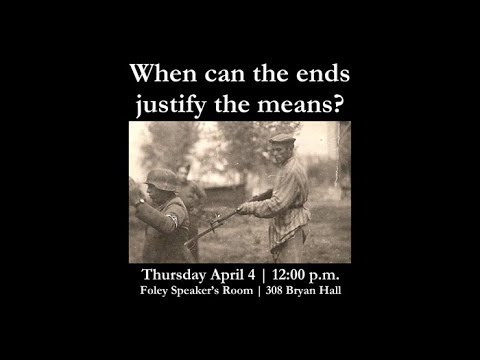
This is the classic ‘the end justifies the means’ thought pattern.

‘Morally wrong actions are sometimes necessary to achieve moral right outcomes’. Wikictionary

The riots in Brixton were race riots by a young black community who felt they were not being given the same opportunities as other races.

They must have been thoroughly committed to their perceived morally high aim to risk skewering their life chances with a criminal record.

The question will always remain in any circumstance, what is the right thing to do?

In order to prevent ‘loss of life’ police in Holland, in the last few days, have been shooting protesters with lethal firearms. For their political masters, this method of achieving fewer deaths by Covid infection justifies the potentially murderous means to control of the population.

In the Western liberal democracies, individual rights of personal choice and freedom have been enshrined in human rights and other laws for decades, whereas the opposite is true in autocratic regimes like communist China. Should we be surprised that personal freedom symbolised by the ‘vaccine or no vaccine’ debate is held aloft as a morally high aim by Western individuals?

‘Actions can be considered right or wrong only in consideration of the morality of the outcome’. This extract from Wikitionary’s definition brings in another twist to the ends and means conundrum. How extreme can you go doing bad things to reach a good thing?

The answer for some is that humans can choose to go as extreme as they want. Terrorists who the night before are stroking their purring cats, will decapitate a human in pursuit of their ‘noble’ political aim, such as creating an ‘Islamic State’.

The most hideous of deeds appears to be justifiable in the human mind when ‘a good cause’ is the objective.

How can this stupidity be tolerated? Surely a sense of proportion and restraint should always be part of our understanding? A violent act is disproportionate to an action which is not violent.

This introduces the concept of ‘justifiably’. You might question whether the late Nelson Mandela was justified to commit terrorist acts in support of a political aspiration, acts for which he was jailed. Clearly public opinion changed over the decades as his political aims – the ANC to govern – became reality. He and his comrades were lauded as ambassadors of peace and released and accelerated to high political office.

The other day in the USA, a defendant was found not guilty by a jury of murder of two men and wounding a third using a gun. His defense was ‘self defense’.

Few people – even those untrained in law – will argue against a citizen’s right to defend themselves. It must be one of the most basic of human rights to preserve the life of one’s self…a suitably high moral mountain from which to also defend oneself from criticism.

And yet the most important nuance is being ignored which is – was the level of violence used in the act of self defense, proportionate?

I do not know about the case in the USA however I am baffled as to how a young man under 18 (a child in UK law) is able to be trusted with a lethal firearm and carry it in public at a political demonstration. I am also baffled as to how three men could approach this young man in such a way that the defendant thought they were about to kill him. Were they pointing guns at him? But most of all, I am baffled as to how the accused was able to kill two men and wound another without suffering any injuries himself. Were they unarmed?

In the United Kingdom the legal definition of self defense includes the measure of proportionality. So if someone attacks you in the street with a folded umbrella you may use your umbrella, and even your ‘Avengers’ bowler hat as well, to defend yourself. You may not pull out a knife to defend yourself an umbrella attack. This law is extended to private places so that if you should come across a burglar in your house you cannot shoot them.

I once confronted a burglar in my house when I was working as an architect in London. I used extreme verbal force which clearly scared the hell out of him. I was pretty confident in Shotokan Karate at that time and I had the option to floor him as he ran passed me to jump out of the window. But I was concerned he would fall on the radiator, hit his head and die. So instead I picked up the phone and called the police. Being an artist, I also made a pencil sketch of his face which I gave to police when they arrived. This later turned out to be a ‘dead ringer’ for a suspect a few weeks later.

My point is that proportionality is the greater part of the choice to justify an action. The end is like any future event; open to change and rarely achieved first time or in the expected manner.

We live in an increasingly fake and simplistic world. Public debate and political leadership is being reduced to three word slogans.

Thinking rationally is under threat in my view. If we lose this we will lose our freedoms and our democracies and accept whatever extremity is imposed upon us for ‘noble’ political aims.

The word has always be mightier than the sawn-off shotgun. May it always be so.

The Oldest Profession

The Prime Minister of Spain, Perdro Sanchez, has announced his intention to make prostitution illegal as it ‘enslaves’ women. There certainly is no monetary benefit for the government to do this;

Prostitution was decriminalised in Spain in 1995 and in 2016 the UN estimated the country’s sex industry was worth €3.7bn (£3.1bn, $4.2bn). ( Source BBC News )

I live in Spain and when I first saw the ‘clubs’ on the edges of towns, I thought how sensible to make brothels legal, healthy and safe places. In the UK they are illegal and of course driven underground means illegal, unhealthy and unsafe. An estimated one in three Spanish men use them.

I am surprised that Snr. Sanchez uses such a crude approach to problem solving. The technique he is applying is commonly known as ‘throwing the baby out with the bath water’. In other words he has over simplified the problem and in doing so, lost the good as well as the bad.

Clearly a better approach to problem solving is to examine the detail first.

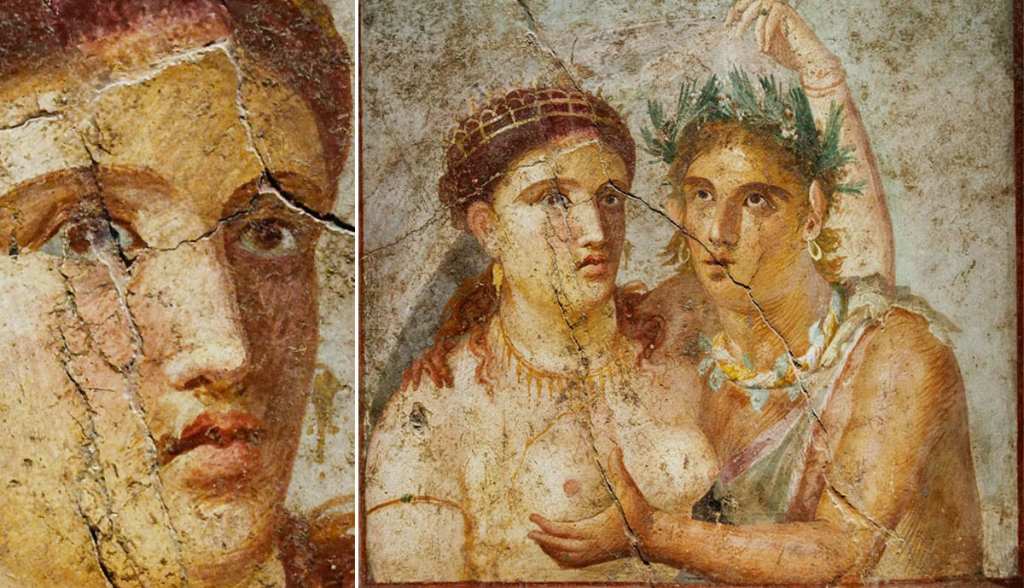
Prostitution is often referred to as ‘the oldest profession’. In ancient Egypt, Rome and Greece sex for money or sex without consent with slaves (or rape), was a social norm. Thankfully we have moved beyond slavery today, or have we?

Most people are aware that ‘sex slaves’ are imported into modern rich countries against their will. The organisers and pimps will attract young women with promises of a visa respectable job, a plane ticket, accommodation and a wage. Spurred on by a wish to get a better life for themselves, the victims eventually realise they have been trapped into slavery. A ‘debt’ has to be repaid for setting them up as a prostitute in another country. They are paid so little, if at all, that their prospects ever to move on are hopeless.

It should not be hard for a prime minister to focus his resources on finding such ‘sex slaves’ in his own country. A simple help line, a Facebook page and a team of volunteers giving support and passing intelligence to enforcement agencies is an obvious way forward. Slavery, rape, imprisonment, human trafficking and illegal immigration require no new laws.

The size of the problem should not be underestimated.

The Spanish police freed 896 women being exploited as sex workers in 2019 and estimate that over 80% of those working as prostitutes are victims of mafias. (source BBC News)

896 is a small proportion of the estimated 300,000 sex workers in Spain and the question should be asked of the police why only 896?

Whatever the mix, there are two types of prostitutes. Those who see themselves as legitimate ‘sex workers’ who demand and get respect and support from society and the state and those who are prostitutes against their will.

The second variety are really those who Mr Sanchez has legitimate concerns for but to fudge these concerns with ‘respect for women’ is to lose focus. The example I have given of sex trafficking and slavery, demonstrates that the Mafia is not interested showing respect to anybody. Strict enforcement of the law is absolutely necessary to protect sex workers and give modern slaves their freedom.

However, if a women chooses to become a sex worker and feels good in themselves for their free choice of occupation, who are we to judge? Some claim that this is economic co-ersion but by any measure is not a factory worker a victim of needing money to live?

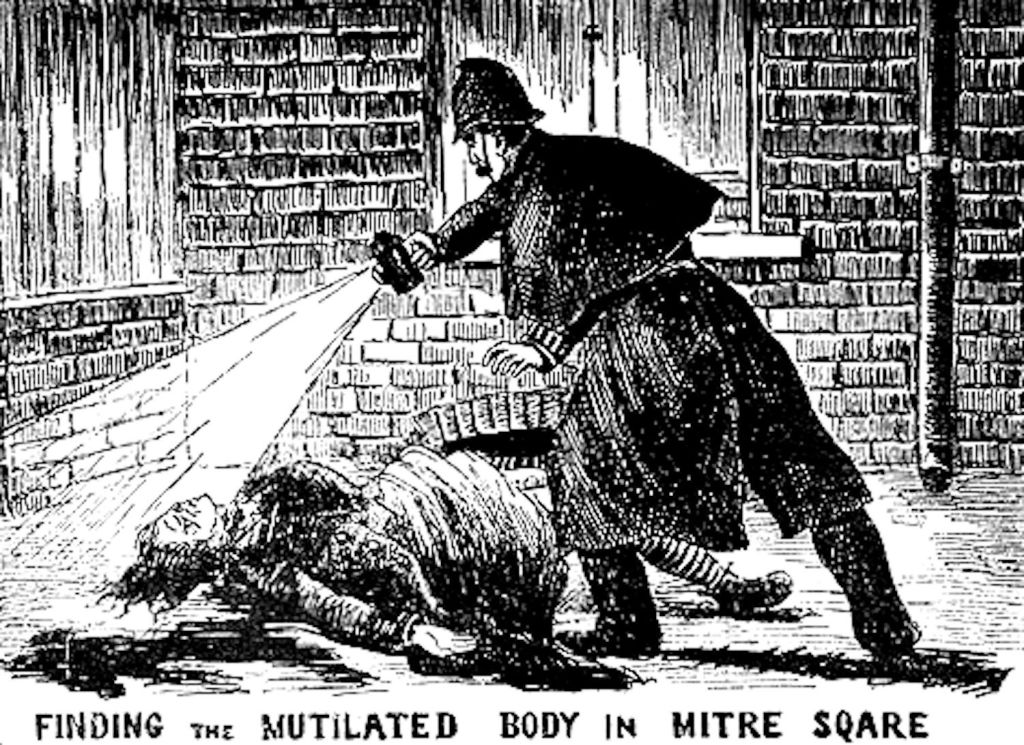
Judgment opens the gates to hypocrisy at the most extreme level. The Victorians in 19th century Britain were against all sorts of things based on religious dogma. This did not prevent them committing mass murder during colonisation and non-consensual sex. ‘Jack the Ripper’ was a sort of emblem of how hatred of women can emerge as acts of pure horror.

picture source New York Times

Clearly laws did not prevent Jack from committing his fowl acts. A new law in the 20th century in Spain is not going to change behavior and it’s causes either. The whole profession is going to be moved out of the benign influence of health workers, social workers, immigration officers, police… into an underworld where ‘respect’ is seen as weakness.

In my view Spain is already a flag ship for showing respect to men and women working in the sex industry. Is the ‘high moral ground’ of ‘respect for women’ a disguise for old fashioned prudery?

All humans need to express their sexuality, whether we like it or not. Marriage used to be the means of making such feelings ‘sacred’ and approved by God no less, but as communities have at least half of their population enjoying a single life, making sex illegal between consenting adults (even if one party is being paid) is opening the path to hell. History tells us that just as history tells us slavery is wrong.

Understanding the problem before reaching a solution, is a skill not taught in schools, churches or political science degrees. In my view, generalised slogans such as ‘respect women’ and ‘black lives matter’ create well intentioned feelings without knowing what is wrong and how to fix it.