Every Breath You Take

For about eight years now I have been driving a 2.2 litre diesel estate Toyota. The ‘Top Gear’ television presenters drove a selection of similar cars across Europe to see which went the furthest. Jeremy Clarkson found that his diesel Jag used so little fuel that he ran the air-con and anything else he could to use more fuel. Large cars have space for large fuel tanks, so their range can be phenomenal. Mine will drive from southern Spain to the north coast of Spain without stopping – a journey of 1000km.

Last week I hired an ultra small Toyota Aygo car in the UK; a nice little automatic with a petrol engine. When I came to fill up the tank I was disappointed to find that it had travelled about 45mpg whereas my trustee diesel gives me over 55 mpg.

So why are diesel cars getting such a bad press at the moment? Diesel engines were preferred in 1997 by the European Union as a response to the Tokyo Climate Change Protocol. These engines produce on average 120g of CO2 per km whilst petrol engines reach 200g of CO2 per km. This is because diesel engines cold burn and so use less fuel. These figures do not include the energy used to make and dispose of the vehicle most of which will come from fossil fuels. It makes sense to make cars that last several decades in order to stretch out the environmental impact of production and disposal.

But the problems with just the emissions from internal combustion engines, has been re-defined. Whilst CO2 emissions must continue to be reduced, it has been recognised that the toxic gases and particulates from engines are causing a serious health risk – especially for children.

So when you examine these two types of engines, the toxic gas produced by older diesel cars is Nitrogen Oxide, in various compounds. Petrol cars can reduce this with a catalytic converter whilst diesel cars require particulate filters that are regularly maintained. If they are maintained then the NO gases gases from diesel cars can be reduced by 90%.

Governments have been victims of their own ‘political’ thinking; putting problems into compartments rather than viewing the whole issue and how each aspect of it interconnects.

Complexity challenges even those minds with an expensive private education (i.e. politicians). The lazy solution is to reduce the problem to something people can understand – especially voters.

The bottom line is that neither petrol nor diesel engines should be in use in the 21st century. There should already be ‘electric only’ zones in all urban centres with buses and taxis leading the way.

Cars do not need to be scrapped on account of their motive power source becoming a problem. New zero carbon, zero particulate engines can be retro-fitted – even into fondly maintained ‘classic’ cars. Friends of the Earth believe we need to achieve this in less than a decade, whilst the UK government thinks 2050 acceptable.

When I was a student in London in the 1970’s, I hung a sign under my bicycle saddle with the words;

No Noise, No Fumes’

I didn’t buy a car until I was 30. Was I ahead of my time? No.

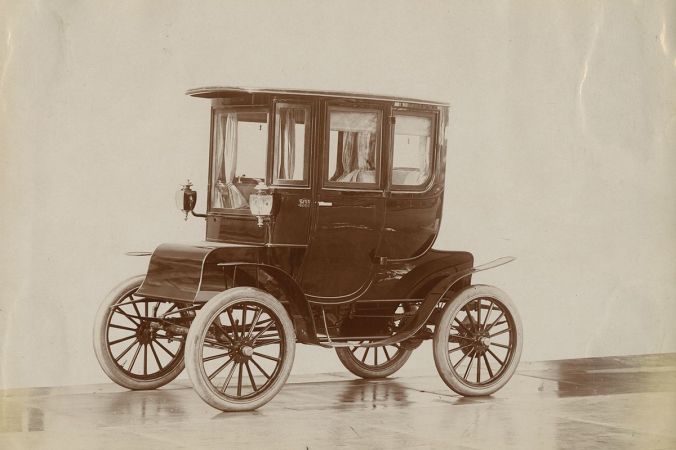
Fritchie Early Electric Car

Electric cars had been the brain child of inventors in the 1830s. By 1900, New York City had a fleet of electric taxis. The electric car designed by an American, Oliver Fritchie, could travel 100 miles between charges but it could not compete with the Model T Ford on price or range. The rest, as they say, is history, because in those times governments were oblivious to the consequential problem they were leaving their ancestors – us.

1970’s Electric Car – with only a 40 mile range and apparently you had to stand on the roof.

1974 Electric Car

Today governments spend considerable time and resources in a phoney ‘war’ against terrorism. ‘Phoney’ because conventional troops cannot overcome guerilla tactics – as was proved to be the case in Northern Ireland.

The massive expenditure of public money on this ‘war’ is justified because terrorism grabs the imagination and emotions of voters – by it’s very nature as a font of repeated horrors.

You might be forgiven for wondering which is the greater issue – millions of citizens  (especially the young) dying of lung related diseases caused by internal combustion engines or citizens dying in terrorist related incidents?

When that question is considered statistically – resources should be allocated to each problem in proportion to amount of human misery and suffering it generates. They should not be allocated on the basis of which problem gets most votes and the most media coverage.

Regrettably terrorist acts will generally sell more newspapers than children dying silently in hospitals of lung diseases or adults with heart problems.

Newspapers  inflict the final blow of horror and despair on behalf of the terrorists into the hearts and minds of  victimised populations. Margaret Thatcher knew this and ordered a policy of non-reporting of terror related stories in Northern Ireland.

To his credit, the Mayor of London, Sadiq Khan, has identified the toxic air of his city as a very real and serious contemporary problem. He has made small steps to reduce it – such as charging motorists of the most polluting vehicles to enter the centre of London. The European guidelines on air pollution were exceeded within the first two months in 2018 in London. Is this another reason for the UK to leave Europe? No more awkward tests of the atmosphere in our cities?

When the United Kingdom first became a member of the European Union one of the directives from the European Parliament was for the UK to clean up it’s bathing beaches.

This was duly ignored for the first year. Why should the UK not continue to send it’s children to play on filthy polluted beaches? But the following year the EU reminded the UK of it’s obligation in law. The UK reluctantly (one expects) began to clean up it’s inshore waters; beaches are now awarded Blue Flags for water quality and facilities.

Now in 2019 the River Thames in London has been transformed from a toxic environment in which nothing could live, into a clean river with fish and mammals such as seals – on view from the Houses of Parliament.

So why now should clean air be such an difficult objective for successive governments?

If the problem is short term planning on account of the four year term of office for elected representatives in parliament – then perhaps politicians need to start to deal with the complexity of uniting long term and short term objectives.

The current air pollution problems in the UK are not local – just look at Mombai and Beijing. There has to be consideration – however complex- on how to integrate solutions within complementary European and global strategies and policies.

Clean air has to be one of the most fundamental of human rights. If we cannot wish it on ourselves, how is it likely to ever happen for our long suffering environment?

Let Them Eat Happiness

Western culture has come a long way since it was ruled by royals and aristocrats – or has it?

Few French peasants would have even glimpsed the lifestyle of the immensely rich and powerful in the seventeenth and eighteenth centuries. They would have been unaware of what really went on behind the iron gates of Louis 14th’s palace at Versailles. The mirror lined rooms and the golden corridors of power might have well have been in another dimension.

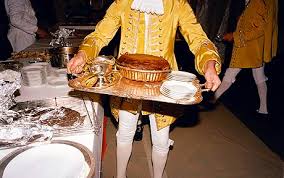
a plate of happiness

Eventually the Aristo’s and the royals have lost much of their wealth and most of their power. The wealthy industrialists took on their mantle in the eighteenth and nineteenth centuries in the West. Instead of taking taxes from the poor, they stripped nature and nations, and occupied the masses (and their children) in factories.

With their acquired wealth, they built mansions set in Inigo Jones style gardens, just as the elite before them had. They bought military commissions, titles and honours and entered parliament. Power too, was for sale. It was a different game but with the same lust for money and dominion over others, as played by the royals.

In the twenty first century there is an awakening to these processes as having been outrageously ‘unfair’. There appear to be glimmers of similarity between the Gillet jaune and the revolutionists of the French Revolution. No guillotine’s yet but this revolution has only just begun. Perhaps it is a Gilletine.

This time round, the capitalists and the so called ‘elite’ are in the firing sights of the missiles from the streets. The possession of most of the wealth by the few, reverberates around the internet like a pin ball in a crazy machine; lit up with flicking levers, lights and cartoon graphics. How can it be fair, we are asked, that the ‘elite’ have so much money? Are they killing off the humans to save the planet using fluoride, chem trails and advice to avoid vaccination? Lies and suspicion are great hunting dogs.

Confucius; he says, ‘when the duck puts his head above the reeds in the hunting season, he had better be ready to be shot at.’

For just as the Sun King and the royal families of Europe were human enough to be pulled kicking and screaming from their palaces, so are the modern elite.

Sun King gate

The injustice and the irony of the lessons of history are obvious, but a working alternative is not. Even an establishment introduced by the anarchist rioters, is an establishment; ergo the Soviet Union. If a hundred anarchists met in a town square to tell the masses to get rid of their leaders, there would appear amongst the anarchists, a leader.

Philosophically and scientifically it is true, that to every force there is an equal and opposite reaction. So when you put on your black anarchist costume and mask and join the ‘anonymous’ mob to riot, what is the problem you are trying to solve?

The problems of the French or Russian peasant made a long list; no clothes, no health, no food, no water, no home, no land, no animals, no day off etc.

The problems of modern westerners is none of the above as they have it all; health, food, transport, leisure, labour saving technology etc.

The problem appears to me therefore to be no longer external, but in the mind. It is built on the number one illusion in the hall of mirrors, that ‘money equals happiness’. We know this isn’t true but we still pursue it and want to be rich. The lines of people buying lottery tickets from the street vendors where I live in Spain, are an indication of the pursuit of wealth as being perceived as the same as the pursuit of happiness. Or just peep over the pond at the great USA and it’s everywhere in their way of life.

The pantheon of the Ancient Greek gods, has been replaced with so called ‘political elite’ and ‘celebrities’. Vane and pointless people who have had the luck of being in the right place at the right time, self promote on social media. They spread the myth that everything on their side of the palace (or Big Brother) wall is great. Instead of hiding, in the manner of the royals, aristocrats and industrialists, they tease the rest of us with videos and photos of their material success and happiness.

Even when the mascara is smudged with tears, even when cancer eats away the golden vocal chords, the golden divorce unfolds, the assasins bullet richochets amongst the pillars of the halls of power; the masses worship their sacrificed gods. And should an over dose of some not-so-whizzy drug, close down the not-so-happy participant in the great party of celebrity life, selective memories promote the deceased as a greater god for being dead. Goodbye Norma Jeane.

Various

And yet, as long as two thousand years ago, a man said;

I tell you the truth, it is hard for a rich man to enter the kingdom of heaven. Again I tell you, it is easier for a camel to go through the eye of a needle than for a rich man to enter the kingdom of God.

For if you change the problem from ‘not being rich’ or ‘others should not have riches’ or ‘I want power’ or ‘I want what he’s got’ or ‘give me what I am owed’ or ‘they spoilt everything for me’ or ‘I just want what I deserve’ or ‘you can make me happy, why don’t you’ or ‘if only I was rich’ –

to; ‘how can I be eternally happy?’ then that is an easier problem to solve. Most of the historical examples of people who became eternally happy did so by giving away their possessions and gave love to others. Well documented examples would be Prince Sidhartha, Jesus the Christ, Vishnu and Kali, Mother Teresa, St Francis of Assisi.

Lesser known examples are the monks, nuns, non- government agency relief workers, public servants, healers, charity workers, environmental activists, street sleepers, the wanderers and people who you may know personally.

We may not all be saints, and perhaps those posthumously awarded sainthood were not either, but we can aspire to share what we have, however much or little that may be.

The non-self centred may not hit the news headlines, they may not be seen in a queue for a lottery ticket, they may not self promote like politicians, they may not stand up against the politicians, they may not have flashy cars and houses or go for golden globes – but they exist.

Their happiness is not necessarily in this life time or even the next, but they will have seen over the wall into the garden of Paradise. It is not on this earth for this globe is not, and never will be, ‘golden’. It is but a shadow of the real Paradise where there is no chaos, no illusion, no entropy and certainly, no lottery.

The Idiots Guide to Fast Driving

The Idiots Guide to Fast Driving

Readers may remember my personal definition of a ‘slow driver’ as someone who drives at or just below the maximum permitted speed limit. These drivers are a curse to those who for whatever reason have set off on a journey without enough time to reach their destination. By an unmeasured observation I would estimate that at least eight or nine out of ten drivers fall into the latter category. For these these drivers, there is good news and bad news.

First the good news. Here are a few pointers to driving fast like an idiot. Tailgating is a favoured driving technique for idiots on the road. When asked if they drive faster when they are close to the vehicle in front or when including a gap to allow for breaking, fast drivers believe that being close is the faster option. This is presumably because they intend to message the ‘slow driver’ in front to speed up even though this is not something they are comfortable with. If there is a ‘speed trap’ ahead, it is not the tailgater who will be awarded a speeding fine. If fast drivers who tailgate need to improve their driving skills then they may wish to learn to overtake.

Tailgater’s are of two types. Those who overtake and those who do not.

I will include a personal story here of a lady driver who tail-gated me for a considerable number of miles including a long straight downhill in which it was safe to overtake. Because of she seemed unable to leave a breaking gap or overtake, I decided to abandon my normal route and take a left into a minor road. To my horror the lady tailgater did the same! Looking in my rear view mirror I indicated my intention to stop with my left indicator and gently slowed down to a stop. To my amazement the lady driver had done exactly the same and was positioned a few yards from my rear bumper. I watched as she was forced to engage reverse gear, stop, indicate and manoeuvre around my stationary vehicle. This is an extreme example of a non-overtaker.

The other affect of non-overtaker tailgaters on other road users is that they prevent other vehicles from overtaking. In the event of say a slow moving lorry travelling under the legal speed limit with a tailgater locked into it’s slipstream, there are now two vehicles to overtake instead of just one. This is considerably more dangerous for those behind the lorry and tailgate but is the only option. If the overtaker behind the tailgater suddenly has an oncoming vehicle appear the overtaker must pull into the safety gap between the tailgater and slow moving lorry. This usually infuriates the tailgater who feels that they have a right to not leave a gap in front of their car to allow others to overtake.

However tailgaters, can be over takers, and this is the second type. To them a slow moving vehicle (usually travelling just under the legal speed limit) is a hinderance to their journey, to be overcome at any cost.

Their first manoeuvre is to tuck in close behind the vehicle in front. If this is a lorry or van or caravan, they will become invisible to the driver in front. The rear view mirrors are unable to view the blind spot extending several car lengths behind. Any emergency stop by the forward vehicle will not take account of any vehicle behind. Any turning left or right at junctions or even an overtake will not be done whilst aware of the tailgater. This is particularly dangerous for motorcyclists who I have rarely seen tailgating, probably for this reason. The ultimate danger is of course the emergency stop or sudden change of speed by the vehicle in front, for which the tailgater will have no warning. Drive into the back of a lorry at your peril.

You would not think that it is not necessary to tailgate on a motorway when the overtaking lane is clear. But the ‘idiot’ driver often finds it necessary to do just this, particularly drivers of lorries and vans. Having driven for hundreds of thousands of miles just a few feet from the vehicle in front, why should anything untoward happen? I have watched vehicles stop on a motorway because two swans have landed and settled down ( later to both appear on Channel 4’s Breakfast show after a rescue by the two presenters in a sports car). I have followed at a safe distance a driver having an epileptic fit. The expression of the two young boys in the rear window as the door handles flew off because of hitting the safety barrier was nothing you want to see. The head on collision into two oncoming lanes of traffic under a bridge when the safety barrier stop, was also something you never want to see.

Lastly, fast drivers have ‘their own’ lane on motorways. It is the outside land. When positioned in this lane and travelling considerably in excess of the legal speed limit, all other vehicles have to give way to you. They cannot pull out in front of you as you approach, and those travelling the same lane but more slowly, they have to pull over to allow you to continue to break the law and pose a risk of a violent death to yourself and others.

So fast drivers, whoever you are, what horrors do you have to experience to make you want to slow down to the legal speed limit? The good news is you may not have to. European Legislation in four years time will mean that new cars will be fitted with technology that will make it impossible to drive above the legal speed limit. I remember this idea being common in Japan several decades ago. An annoying alarm sounded in cars when they went over the maximum permitted speed limit. Now with cameras and automatic breaking, the option of the driver to kill themselves and others by driving too fast is to be taken away.

Some may abhor this idea, as many did when wearing seat belts was made legally compulsory. ‘Why is my civil liberty to kill or injure myself being taken away?’

Those who voted against the power of Brussels to change UK legislation may have also voted against this removal of ‘liberty’, by voting to leave Europe. Why would any self respecting citizen of Great Britain and Northern Ireland want legislation ensuring Human Rights, Protection of the Environment, Animal Welfare and Food Hygiene standards, Consumer Rights, Manufacturing Standards, Food and Fishery Standards and Protection…for themselves and their children’s children? (What did the Romans ever do for us?)

So here comes the ‘bad news’ for fast drivers. In the longer term all cars will become driver-less. All cars will be driven at legal speeds and at safe distances between each other. The reason is that ‘freewill’ has enjoyed itself for too long. Ten people dying on the roads in the UK each day is not acceptable to me, and I suspect neither to the loved ones and relatives of road deaths.

There are plenty of ways a person can enjoy the wind in their hair. Walking up a hill on a windy day is one of them. Face the sun, close your eyes and breath.

I recommend it.

BBC Radio Europe

BBC Radio Europe

Wing Commander James Sutton DFC, was given a position in the BBC shortly after the war in July 1946. He had been a bomber pilot and saw first hand much of the destruction of Europe. Perhaps his part in the destruction of the many of the beautiful cities was behind his innovative idea. He said that it was when he kept seeing the slogan ‘Nation Shall Speak Unto Nation‘ over the entrance doorway to the BBC in Portland Place, that he had his vision for a new radio station.

Up until then the Home Service, Third Programme and the Light Programme had been the main stream radio stations. James Sutton proposed the a new radio station take to the air called ‘BBC Free Radio in Europe‘.

The then time Controller liked the concept and a working group was formed within the BBC. After a summer of deliberation in which some promising ideas around farming and fisheries, culture and entertainment, religious affairs, re-uniting families lost during the war and human interest stories from across Europe. Eventually it was the reality of not being able to fund such an ambitious project that stopped further progression.

But in the mid 1960’s another Controller read about the project and believed it was right for the times. There was then a great deal of discussion about the Common Market and whether the UK should join it.

Money was found by cutting some of the more expensive programmes in the World Service under whose direction the new station would be formed. It was to be called BBC Radio Europe with the mission statement;

Bringing Europe together.

There was certainly no shortage of material and quickly a broad menu of programmes was formed. Most well known was the Comedy Hour on Sundays with stars such as Franky Howard and Tony Hancock delivering humour that it was expected Europeans would understand. They did, and quickly the rather saucy, dry and clever wit of the writers adapted their material around European interest.

In Your Garden was to become another staple for European listeners. Presenters would visit well known and less well known gardens and interview gardeners there. A small part of the garden would be focussed on in great detail so that listeners might recreate the ideas and enjoy new planting techniques and garden design.

The list of successful programmes is too long to describe here but the point can be made of how the formation of BBC Radio Europe put it’s finger on the pulse of public opinions, needs and hopes. Where distrust and envy had been barriers to peace before the war, in some small way, BBC Radio Europe enabled all people whatever their culture and geographical background in Europe, to see over the fence and enjoy the company of neighbours.

There is always a slightly darker side as in all new ventures. MI6 were rumoured to have one time requested the ‘time signal pips’ be encoded with secret messages. Some boffin had worked out a way to compress a long string of Morse code into a single beep. Replayed slowly, the pip could be read and British agents across Europe instructed and informed.

The Controller put a complete ban on this idea, claiming it interfered with the principle of the BBC being detached in every way from Government. He was concerned, rightly, that should this technique be discovered the whole integrity of the radio station and perhaps even the BBC’s charter, would be compromised.

As the decades passed into the 90’s and 00’s, BBC Radio Europe became a progressive and instructive voice across the falling boundaries of Europe. Greater emphasis was placed on language skills and building on a common language such as English to bring people together. A spotlight was placed in programme schedules on the one time Soviet Union satellite countries such as Poland, Ukraine and Hungary as well as the minor Baltic States. BBC Radio Europe was believed to have provided valuable support to the people of Germany both prior and after unification of East and West. Families were re-united, reliable breaking news stories broadcast, new political directions for democrats of all parties, were all given a platform to speak.

Combined with the growth of the internet and the world wide web, BBC Radio Europe became a stronger voice then ever before. Many of the programmes were made available on the internet and to download although at first the choice was limited, soon the possibilities expanded into the ‘I-Player’ and ‘Sounds’, we know today.

At one time an ‘European Radio Licence’ scheme was discussed in the European Parliament. The proposal was to evolve BBC Radio Europe into a station controlled independently of all parliaments through subscription, on the lines of the BBC Charter. It would be based in central Europe, maybe somewhere like Lichtenstein, where it would continue to evolve independently and without prejudice towards one way of thinking or another.

The BBC were initially in agreement and indeed a trailblazer for what was in effect a new and very promising income source. The lessons of ‘missing the boat’ over the Pirate Radio evolution in the 1960’s had been learned. This time the BBC wanted to be on the side of the pirates, and rightly so for there was known to be another gathering storm of Nationalism within Europe and across the world.

The continued independence of radio programming was what killed the idea in the end. There was a growing feeling in the management of the BBC that BBC Radio Europe would become a monster which no one could control. They were thinking of right wing influences and quasi government organisations, infiltrating and gaining control of news content and programme scheduling.

Then came the nail that closed the lid on the coffin of BBC Radio Europe. From within the BBC strong right wing influences guided programme controllers and presenters into an agenda of patriotism or perhaps better named nationalism. Forward looking thinkers who had brought BBC Radio Europe into centre stage of ‘fairness and reasonableness’ were replaced by figures looking back to Britain’s Imperial past. This despite the fact that much of Britain’s prosperity is known to have been forged on the back’s of the poor of the so-called third world.

In this new world where borders are once again drawn with the steel pen of walls and border posts, the voice of BBC Europe has failed in it’s once optimistic vision.

BBC Europe will cease to broadcast on the day that the United Kingdom leaves the European Union. This will undoubtedly be a sad day for all citizens, not only of the UK but for the whole of Europe. Peace was bought at a high price in Europe. Radio Stations, you would like to think, are worth more than a sudden closure, after it’s long service to the freedom of the citizens of Europe.

All the above is entirely fictitious. There never was a BBC Radio Europe. Perhaps if their had been and many similar European combined enterprises based on communication and understanding, Europe and the World would be in a better place today.