The Ki Key

The Hidden Energy of Life

Western science has many new discoveries to make. The key to unlock the unknown is the simple question; ‘what do we not understand?’

For example; ‘we do not understand energy that is not electromagnetic.’

Such energies must exist as biological energetic processes called ‘life’, have no explanation. We do not have to look far into history and the present day to find indicators of knowledge of another type of energy. In ancient India it was called Prana, in Ancient China – Chi and in Ancient Japan -Ki. In the West it was named ‘Orgone’ by Wilhelm Reich.

This biological energy is commonly linked to healing such as Acupuncture and Reiki but it’s uses are more varied than that.

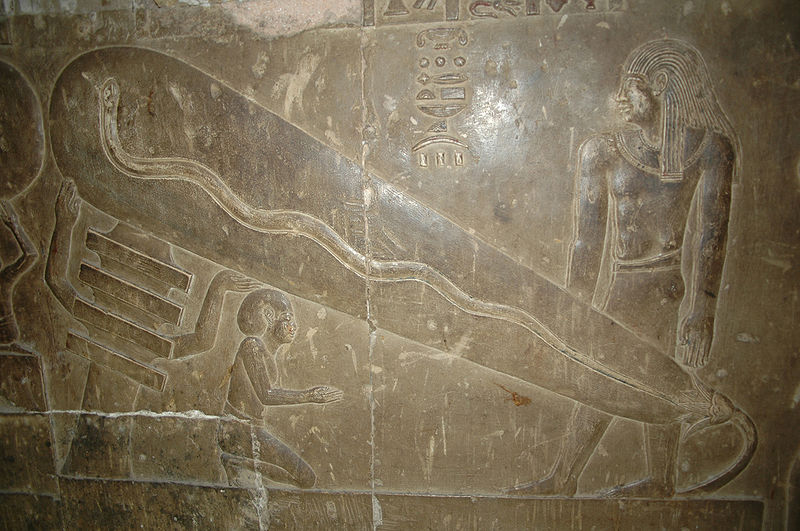
If we start with the human body, we have evidence that the Ancient Egyptians regarded the body as a receiver of energy from the sun as shown in this image.

The Ankh is a symbol of life and is being held up to absorb the solar rays. Today we are familiar with aerials receiving radio and television in a similar manner.

This biological energy is mapped as pervading the entire human body by Acupuncture practionitioners. The cause of the healing was not understood beyond the concept of ‘Chi’ energy, but the effects were, and it is so effective, it is still in use today.

If we follow the idea of the solar energy as associated with a biological energy from the Cosmos, then the seven planets of ancient times, also affect life on earth through their energetic characteristics. In ancient Greece they were deified as minor gods or archetypes, whose influence as precise ‘qualities’, pervaded every aspect of individual and collective behaviour on Earth. Today we call this astrology.

The energy from the planets affects each of the seven life energy nexuses in the human body known in ancient India as Chakras. Our consciousness as human beings is firmly linked with the ‘heavens’ in this way; obeying the Hermetic principle of ‘as above so below, as below so above.’

The Ancient Chinese combined heaven and humans with the planet earth, represented by the pictogram similar to the capital letter E. The evidence for ‘Ki’ is greatest in the form of the ancient structures built all around the globe.

There is increasing interest in the ‘energetic’ characteristics of megastructures such as pyramids, temples, churches and cathedrals, earthworks, roads, earthworks, hill figures, artificial cave networks and megaliths. All across the ancient world these structures were intricately aligned with and connected to this subtle energy associated with the movements of the sun, moon and the planets, earth and water. Modern water diviners are sensitive to the energy associated with underground water and can tell the water’s volume, depth and speed accurately.

Pyramids are found on every continent of the world (including Antarctica) and it is likely they were connected as a global network to balance and share this subtle energy globally; including sharing information. The present ‘world wide web’ is an analogous modern version of the same form and function.

Examination of the physiology and anatomy of the earth shows that this subtle ‘earth energy’ is associated locally with faults and fissures, springs and wells, water falls which were recognised by local indigenous tribes and cultures as ‘sacred’ with supernatural powers.

They were places where the physical third dimension met other dimensions and acted as ‘portals’ for other entities to interact with humans. In ancient times this was more common as humans were conscious of these subtleties and gods such as Athena would appear in human form to give advice, as recorded in ancient Greek legends. These entities overlap with the experience of so called ‘extra terrestrials’ today; more likely inter-dimensional intelligences who have never left planet Earth.

There was and is a mechanical reality to the generation, manipulation and storage of this subtle energetic system. Pyramids, barrows, dolmens and stone circles are a few of the centres of power used to interconnect and store energy for many purposes such as healing and initiation. The burials that took place at the end of civilisations have been incorrectly focused upon by modern archaeologists. If evidence is needed consider relatively modern Gothic cathedrals which were built for the living, not the dead.

This subtle energy was recorded by the psychiatrist Wilhelm Reich and he named it ‘orgone’. He saw that it accumulated in the human body and was discharged in the orgasm. Orgone is attracted to orgone and does not dissipate like heat energy. Nature can be seen to operate in the same cycle of build-up and discharge. The most familiar would be the accumulation of negative and positive ions in the earth and atmosphere, and the electrostatic discharge of lightning.

The ancient megastructures worked in harmony with nature in this way to regulate the natural flow of energy through the landscape in the same way as a capacitor and resistor in an electric circuit.

Weight and the pressure it creates was known by ancient builders to amplify this subtle energy. In a similar manner, quartz and other crystals build up and discharge piezo-electricity when compressed. The lintels over the uprights at Stone Henge and the T-shape upright stones at Gobleki Tepe in Turkey, performed this function as do the pyramids. It is clear that temples in Ancient Egypt, Greece and Italy have too many columns just to support the roof. Their precise orientation to the magnetic flux of the planet, matching proportions with the golden mean and phi geometry of human body, indicate a primary function of sacred edifices as centres for healing, heightened awareness and initiation.
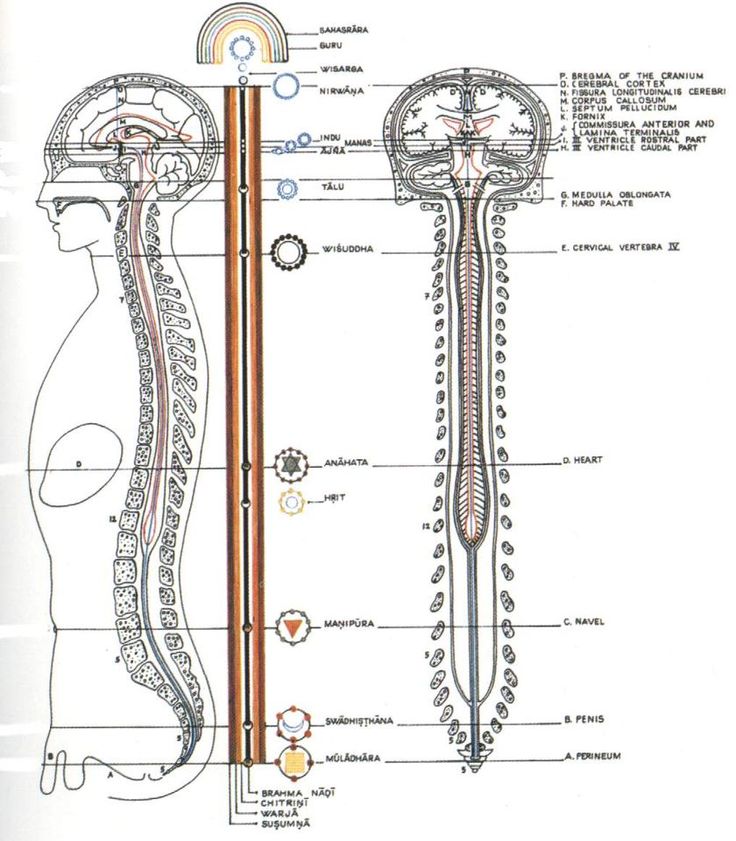
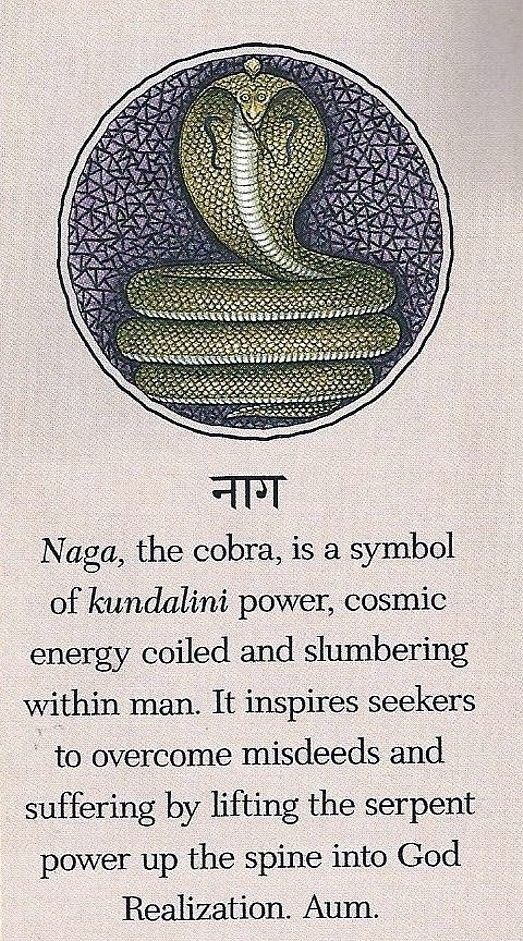
Finally, to experience this energy within one’s own body, there is a Yogic principle known as ‘kundalini’. This is depicted as a snake (or modern static wave form energy ) and is associated with the spinal column; also in wave form. In my view, the subtle energy which the Yogis call ‘prana’ is in a constant state of build up and discharge, before, throughout and after one’s life. There is no single ‘awakening’ moment when the Kundalini rises up the spine as is sometimes described. Rather the motion of the snake is as seen in nature as a perpetual ascension through the energetic nexuses (chakras). The accumulation purges and cleanses each chakra in turn until discharged naturally in sexual union or used for the process of ‘enlightenment’. For this reason and purpose, many mystics were and are, celibate.

The importance of subtlety of this primal ‘life energy’ awaits formal ‘discovery’ and scientific experimentation and explanation. We can be sure at this moment in history that human beings have forgotten what was once known and drove much of human spiritual evolution for thousands of years.

In my view, now is a good time to re-discover what we have lost, particularly as modern archaeology unearths new evidence almost daily. All that is necessary for archaeologists to advance their theories to another level, and replace ‘grave robbery’ with an understanding of esoteric energy; known once as key to the general advancement of human spirituality, but long ago forgotten.

picture credit: Life Sloka

Go Electric!

To go or not to go.

When I was in my first year at University I used to have debates with my parents about the harm made by internal combustion engines. Their reply was that if I did not approve of cars why do I ride in them? The answer was of course that at that time there was no alternative; unless you lived in cities. In London I rode my bicycle with a sign on the back saying ‘no noise, no fumes’ for a decade.

Fifty years later I have won my argument. London has introduced ‘low emission zones’ having recognised that the air pollution from vehicles is harmful to the health of it’s inhabitants.

When I retired in Spain I bought a Spanish made electric bicycle. At first it was great but after five years the battery had lost so much of it’s capacity to fully charge that I had to buy a new one. This cost me about a third of what I had paid for the bicycle. Then the computer had a problem and no e-bike specialist knew how to fix it and the BH factory was closed because of the pandemic. When the motor broke I took my bike down to the recycling centre and said goodbye to it. Never has a bicycle caused me so many problems.

Interestingly, many e-car owners are going through the same experience, only worse. They have invested considerably more money in an e-car than the cost of a bicycle and their anxieties must be proportionately larger.

Properganda or Proper Policy?

I will not list all the of the problems they face but here are a few;

*Recharging the batteries; those without a private drive will find it hard or impossible to charge in the street. Already pavements in cities have electric cables running across the pavement from homes to e-cars overnight.

*Recharging is expensive; unless you are recharging at home using your own photo voltaic panels, you will pay for your electricity.

*Mains electricity at home is not green electricity. In Spain mine is mainly produced by nuclear and gas fired power stations. Only 5% of my electricity is from renewable sources.

*Electricity sent to users via a national grid is highly inefficient, losing about 80% of the energy from the original source. Local power production will one day replace this but not yet.

*Electric cars are cheaper to maintain than internal combustion cars but there is not yet the infrastructure and technicians in place to repair broken e-cars.

*Electric cars are heavy and need expensive tyres.

*Electric car tyres put out more particulate matter into the air than diesel cars produce from their exhaust.

*Electric cars are heavy and some multi-storey car parks and car ferries may have to be redesigned.

*Lythium ion batteries have a risk of spontaneously combusting.

*Drivers of electric cars experience ‘distance anxiety’. For longer trips they will have to stop and find a charging point. While these are being increased in number, there is no strategic control over the number of these points and customer demand. Waiting for a recharge is not satisfactory for people in a hurry.

*If there is a traffic jam for any reason, e-car users could find themselves running out of electricity and being powerless (literally) to do anything about it. Apart from planned road closures and random accidents, extreme weather such as freezing blizzards can stop the traffic and cause deaths. Keeping the lights and heater on is not an option for e-car users.

*As one third of a cars energy consumption in it’s lifetime is consumed in it’s production. It makes sense therefore to make cars that last a long time. A diesel engine can do a million miles as often London taxis do before some are sent off to California for an overhaul and new life. The lifetime of new e-cars is unknown but certainly the batteries will the first to be replaced and that raises the question of where new rare earth materials are going to ethically sourced from…the moon?

At present, many e-car users are in the ‘honey-moon’ phase of ownership but already some are questioning whether their choice was really such a good one.

Car producers are also going through the same questioning process. Major companies such as Ford, General Motors, Apple and Volkswagen are applying the brakes.

It is without question that personal transport (outside of cities) is not going to go away. We love our cars and the convenience, privacy and comfort they provide. With the approach of the era of the self drive cars, users will be able to sit back and enjoy the ride…until a pesky teenager deliberately steps out in front of the car (just for a laugh) and forces an emergency stop…or a car jacker on a lonely road at night! Making moral decisions based on appearance of those stopping cars, is still over the horizon for AI. Does it recognise a police officer in uniform?

And then if you are used to driving over the speed limit (as most drivers are except when they approach a clearly signed speed enforcement camera) then you will find your journey times extended as your AI dutifully follows the traffic laws.

In the meantime drivers are left with the internal combustion engine. There are stories of some drivers who bought e-cars dusting off their old diesels and selling the Tesla.

Toyota appear to be the most ‘customer need’ focused car production company and have asked themselves the question; ‘how can we make the internal combustion engine green?’

Toyota Hydrogen Car

One answer is to use hydrogen as a combustible gas using electrolysis to split water into hydrogen and oxygen. I remember watching this being done on a science television programme back in the 1970’s and thinking then – ‘that is the future’. I was not wrong.

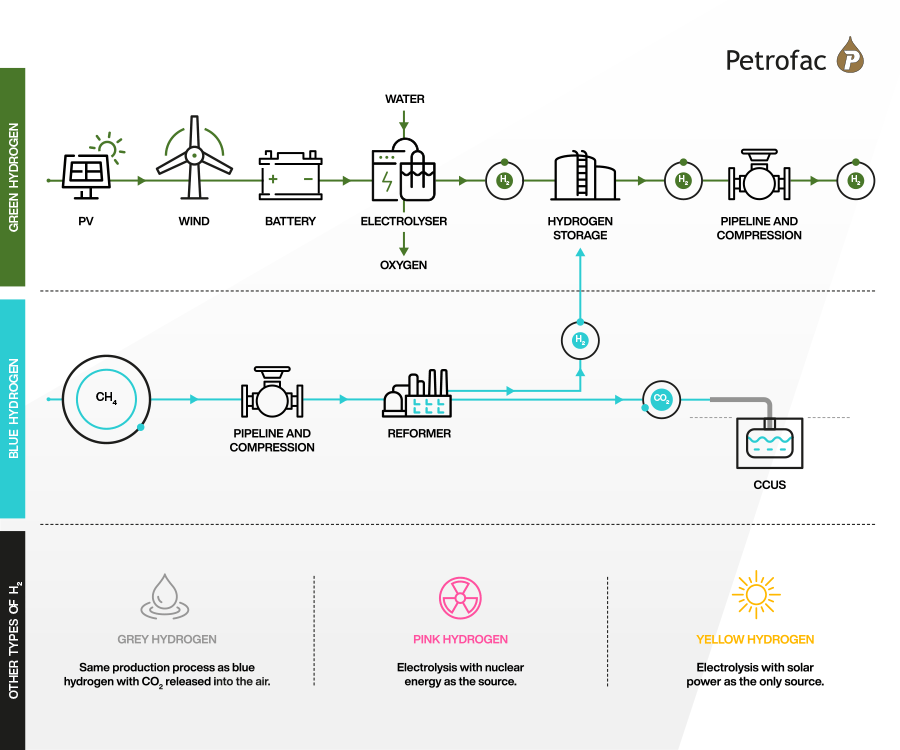
There are nuances regarding how ‘green’ hydrogen production is and the infographic below describes this.

There is another alternative fuel which is ammonia. This is a main component of many fertilisers and is a chemical made of hydrogen and nitrogen (NH3). It can be burnt in a combustion engine as a zero carbon fuel.

This essay has focused on electric cars but clearly heavy transport by train, ship and goods vehicles are substantial polluters are the moment. Hydrogen has always been a preferred route for the development of engines of the future for moving heavy goods around the world.

Science tends to have a momentum of it’s own. New inventions often take the lead in how society uses them and evolves. This new ‘green transport’ debate, raises the questions of how much the government provides subsidies for new enterprises and how important planet sustainability is believed to be by various governments around the world.

If these decisions are devolved to industry leaders it is likely that little will be done as we have observed over the last five decades or so, when ‘global warming’ was first highlighted as an issue. Politicians such as Margaret Thatcher took a very forward looking view as to the health of the planet and the effect of unrestrained industrial production and consumption. Private enterprise so far has followed the policy of ripping the planet apart. Only now is this policy biting back.

Perhaps today, it is down to the individual to vote with their feet. Move into a city, use public transport or a bicycle. Or move to the countryside and fit photo voltaic cells and solar water heaters to your house. Or just do nothing.

It depends how important breathing is to you.

What Seems to be the Problem?

Many media outlets provide harrowing examples of problems in the National Health Service in the UK today, so here are my ideas for attempting to solve them.

Firstly, I would determine what the government strategy for the National Health Service is. Cynics would say that based on the previous ten years, the aim of government has been to make the NHS fail. To define ‘failure’ quasi-scientifically, the first step is to introduce targets so that hospitals can fail to meet them. But logically, if targets were removed then failure would also. Successes would be highlighted instead, so staff are allowed to feel valued rather than judged negatively. Keeping staff moral high has numerous beneficial effects for the whole system including the patients.

However, if the government wants private hospitals for all, as in the USA, then that should be their stated aim and the public allowed to vote on that idea, either in a general election manifesto or two third majority referendum.

If the government want the NHS to protect the health of UK citizens then these are my ideas;

  1. Engage in preventative health as keenly as reactive health. This is difficult since ill people are more vocal than those who have no problems. However, if hospitals and doctors surgeries were paid when people were well, rather than for health interventions, then they would be incentivised to prevent illness. One example of this would be to include diet and nutrition and exercise regimes more fully in a medical doctor’s training.
  2. Presently resources are wasted on treating patients with imaginary and or minor ailments. The high street pharmacies are presently under-used as places for diagnosis and intervention of such complaints. Pharmacists are highly trained and if allowed to view patients records on line, would relived doctors from such complaints. Also, patients can be empowered to self help through information online to a far greater extent than has already been achieved. This is not to promote Doctor Google but to provide interactive consultation with a health consultant rather than an algorithm.
  3. Presently local doctor’s surgeries are often understaffed and GP’s overworked. One of the effects of this is for patients to be diverted to the Accident and Emergency Department at the local hospital. The first remedy I suggest is to change the name of this department to simply ‘Emergency Department’. People with minor cuts and bruises from ‘accidents’ are not ’emergencies’ and again could be treated in a local pharmacy ‘treatment room’ when the GP is not available.
  4. Training more doctors and health workers of all kinds is so basic that it should hardly need mentioning but sadly, it has been been neglected by politicians who did not write this intention into their manifestos.
  5. Presently A and E Departments are often unable to cope with demand in peak periods such as during winter flu season. This is partly due to ‘bed blocking’ where vital hospital beds are occupied by patients who are well but have no safe place to be discharged to. The other reason is a lack of staff as already mentioned. In response to the problem of ambulances queuing for long periods when they are needed to respond to emergencies, one hospital has set up a dedicated room for patients to wait for treatment. There are paramedics in the room who take over monitoring and keeping waiting patients comfortable and safe with the same equipment that is available in the back of an ambulance. The effect is to reduce ambulance waiting times at hospitals.
  6. The pay and conditions for health workers has been allowed to decline over the last ten years or so. The present strike by health workers is as a result of this as much as the general decline in their effectiveness to treat patients. During the recent ‘pandemic’ there was an ‘unlimited budget’ to ‘protect the NHS’. Getting back the money which was subject to fraud during this time would be a good start to begin to protect the NHS by paying living wages to health workers. The presence of food banks for staff in hospitals is unforgivable, as they are in high streets and goes back to staying healthy with a good diet, let alone suffering malnutrition. Planning for the next pandemic is also imperative.
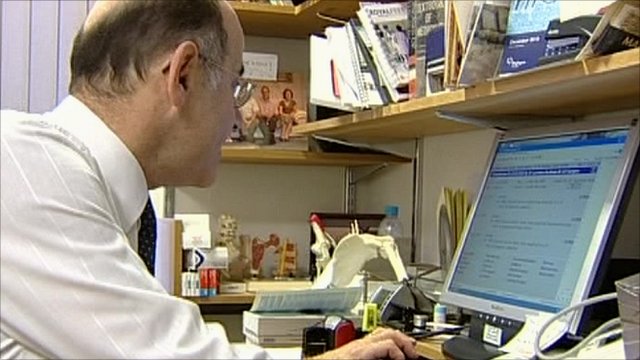
  7. Most public services have become burdened with the demand for recording information on computers. Doctors, nurses, police, fire personnel, social workers, teachers and many others have a general feeling that they spend to much time recording information on computers rather than dealing with people. These services all functioned before the invention of computers and they would benefit from a study into how to reduce the time spent recording information today by asking the question, why? One probable reason would be as a tool to supervise staff by managers and at it’s worse to be able to prove negligence and or malpractice by staff in a court of law. I would suggest that whilst public liability and duty of care is a vital ethical stance, the large financial pay outs is inappropriate. Private services have a contractual responsibility as money changes hands but in public service the ethics are different. You would like to think that most NHS patients merely wish to point out negligence so that mistakes ‘do not happen again’. If there has been a life altering error for a NHS patient then the same services will intervene at no cost to the patient for any extra home care. For instance patients might be offered insurance policies before operations with an element of risk and be asked to sign a document that they will not sue if something goes wrong with the operations due to this risk. People will take out insurance to go on holiday so this is not so absurd as it may seem. The effect will enable staff to operate under less stress about mistakes and as a consequence be more competent.

picture credit: BBC

This list is not exhaustive nor are all the ideas practical or good ones as the writer is not an expert in these matters, just an observer. But when there is an obvious problem, then problem solving must surely be attempted head on. Usually, rather than expensive professional ‘management consultants’ the best people to ask for problem definition possible solutions are the staff on the wards.

Managers often overlook the vital details that only staff will necessarily know about and be able relate to why things are not working.

There is also a case for different services and specialities within those services to share information about patients. A very simplified on line system as easy to use as a Facebook account could be used to function in a way the social media presently shares information to the benefit of those who need to know.

Thus mental health workers, pharmacists, care workers, mental health teams, police, social workers, teachers and many others, would be part of an overarching system of protection and service provision for each citizen. The more old fashioned ‘silo system’ of public service provision has begun to be dismantled but needs to speed up and widen.

Public expectation also needs serious consideration and the present promise of a ‘blank cheque’ for treatment and compensation when mistakes are made, needs comparing to the original aims and promises in the Beveridge Report of 1942 entitled ‘Social Insurance and Allied Services.’ The lesson is not to promise what cannot be delivered and if it can’t, explain why before, not after, being elected.

Snakes Alive!

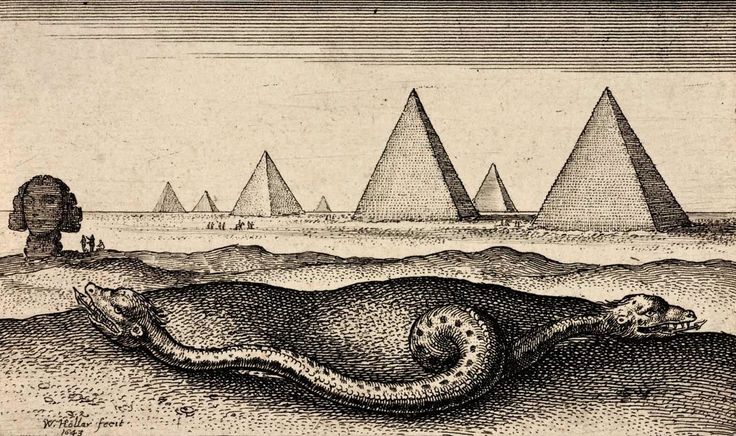
Serpent worship in some form has permeated nearly all parts of the earth.

Manly P. Hall

The 20th century author and mystic, Manly P. Hall then cites these examples of ‘serpent worship’ in his best known book, ‘The Secret Teachings of All Ages’.

Serpent mounds of the American Indians

Python; the great snake of the Greeks

Druids; sacred serpents

Scandinavia; Midgard snake

Burma Siam Cambodia; Nagas

Jews; brazen serpent

Orpheus; mystic serpent

Greek; snakes at the Oracle of Delphi

Egyptian Temples; sacred snakes, Uraeus coiled on foreheads of Pharaohs and priests

But clearly, from this general idea, there is plenty of detail to fill in. For ‘worship’ and ‘the use of symbols to express something greater than words’, are very different things. None of above list, in my view, are examples of worship of snakes as minor or major deities. They function rather as ‘tools’ for expression of energy and ‘symbols’ of natural law in some way.

Perhaps if we examine the snake as a symbol first, it will help us understand the root and branch of what universal and cultural expressions are being made.

The snake is of course a reptile and different from the mammalian kingdom by laying eggs and having cold blood. We know that reptiles are one of the earliest forms of life and are quite distinct from homo sapiens sapiens. However there is a ‘reptilian’ part of our brains that organises our most basic instincts and therefore we are not so far apart.

The snake moves in a most compelling way that even today makes human jump out of their way instinctively. Most snakes are poisonous and this memory is both in our bodies and our minds.

We should not be surprised that this poisonous aspect of snakes gives them power beyond their size, in fact the smaller snakes are often the most dangerous to humans. Alternatively the snakes that outsize humans several times are able to coil their bodies around us and crush us to death.

We should expect them therefore to be associated with ‘evil’ in our minds.

In addition the shape of snakes and how they move is fascinating to watch. They move on land and water as a ‘standing wave’, the tail taking exactly the same path as the rest of the body and the head.

Waves express energy as static and active states. We watch alternating current on our instruments as a sine wave and are immediately reminded of a snakes powerful and scintillating shape. They appear to move without moving and like energy have an ‘invisibility’ about them.

On a grand scale we see snakes represented in the landscape as rivers curling through flat plains and underground as coiling springs rising to the surface or plunging into the ‘underworld’.

Most compelling of all is the way in which this ‘earth energy’ or ‘chi’, ‘ki’ or ‘prana’, is coiled at the base of the human spine. Through yogic practices (the path to union with the Divine) as described by Arthur Avalon in his classic book ‘Serpent Power‘, human beings can experience the uncoiling of this energy vertically through the chakras and nadis associated with the spinal column and it’s rampant tower of nerves.

When we have ‘spine tingling’ experiences through realisation or fear, we can feel this primal energy and experience being intensely alive.

Not only in these peak moments but also the every day health of the body depends on the balance and even flow of prana as expressed in our every breath. Becoming unwell may have many causes but the return to health involves re-balancing of the powerful creative and destructive processes of living beings.

When we watch waves building and crashing on a beach we are able to tune to this understanding of a most basic truth of nature. Life is given and taken away. The caduceus is a rod entwined by counter coiling serpents is a symbol of this used even today in medicine.

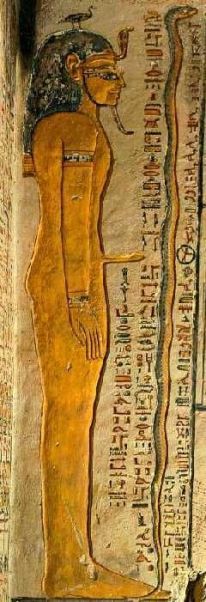
Perhaps the most intriguing and unspoken parts of the human body in which the serpent is expressed, is the male penis which is able to coil and stand erect like a cobra. In it’s standing moments it is able to literally express Prana in the life creating process as a most god-like creative experience of the human body. It literally creates the life of a new being and gives a surge of energy (experienced as ecstasy) so powerful that it enables a soul to be ‘kick started’ into this physical world.

The Ancient Egyptians depict the standing penis unselfconsciously in their wall paintings, but certain prudish visitors to these depictions chose to deface and remove them whenever they could! Perhaps they were influenced by the story in Genesis told in gilded form to wide eyed children.

The story of Old Testament the serpent in the Garden of Eden perpetuates the negative associations of the serpent as a symbol.

But the Tree of Knowledge of good and evil, thou shalt not eat from it; for in the day that thou eatest thereof thou shalt surely die. Genesis 2:17

And the argument of the serpent made to Eve giving her reason to disregard God’s command is clever (and reminds us of the ‘fake news’ of today!)

For God doth know that in the day that ye eat thereof, then your eyes shall be opened, and ye shall be as gods, knowing good and evil. Genesis 3:5

Interestingly the first example we are given of knowing good and evil is Adam and Eve realising they are naked and feeling this as an ‘evil’ to be redressed by ‘doing good’. They make ‘aprons’ to cover their genitals – a tradition echoed in the Masonic symbols of modern times.

Certainly Adam’s ‘serpent’ is so banished as rapidly as is tried today to the ‘fake news’ distributor.

We might also interpret that this sacred ‘knowledge’ is both a curse and a blessing. For accompanying the descent of human beings from eternal life (Heaven) into the physical world (a garden), they do indeed acquire the awareness of duality represented by the two extremes ‘good’ and ‘evil’.

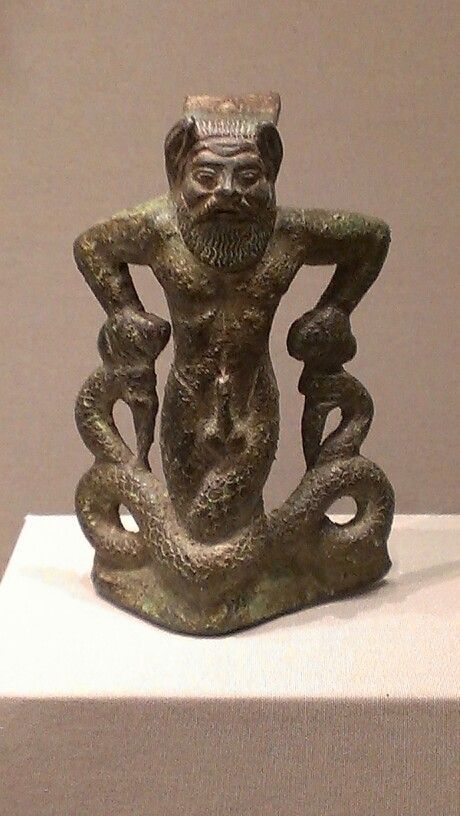
The dualistic form of thinking is a serpent with so many heads, humans cannot work out which one is real and we are turned to stone; made useless. This understanding is contained in the Greek myth of the goddess Medusa with her head made of serpents.

Psychologically we have descended from the bliss of ‘oneness with God’ to a psychotic state in which we cannot determine the difference between dream and reality, happiness and sadness, toil and rest, gain and loss, good and bad. Our lives are lived in this constant confusion created by a dualistic outlook; believing all things are polarised.

We have to look to the Eastern religions for the veil of this dualistic perception to be lifted. In Zen Buddhism they would only see the whole serpent, not it’s head or it’s tail or it’s body. The real world is a cosmic Unity; a place described as the original Garden of Eden or state of bliss.

Some alchemical gnostics in the West knew this truth and the symbol of the serpent swallowing it’s tail is the expression of this truth, as not told in the Bible.

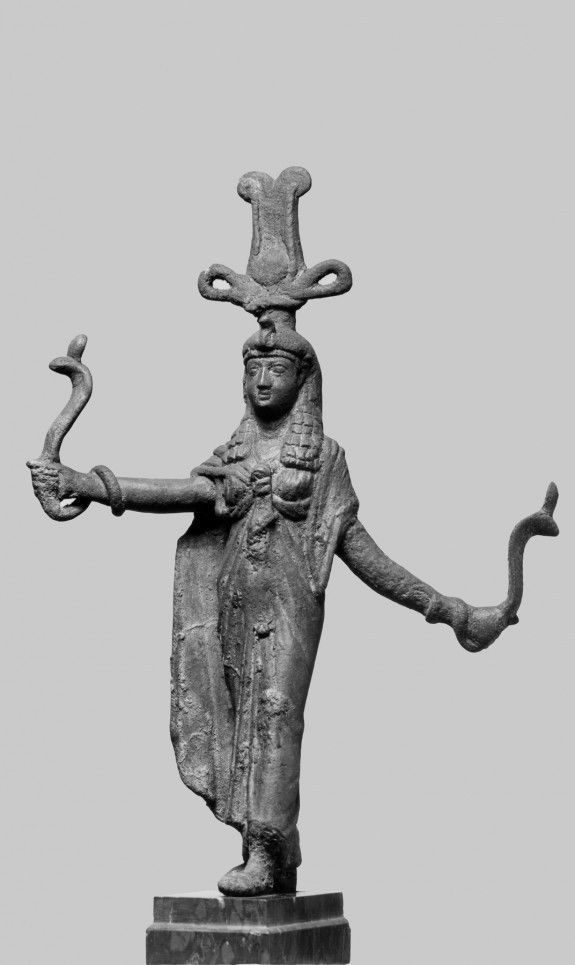
The serpent’s tale is then one of great complexity throughout history, well beyond what Manly P. Hall describes as being an ‘object of worship’. It appears as a figure holding two serpents in the manner of a pair of scales, with as much regularity as any other. The scales represent objective judgment; the giving of balanced views and feelings which we call wisdom.

It tells us we are not necessarily ruled only by our heads and the compulsions that we imagine derive from our thoughts, but rather we are a function of the coiling energy paths and nexuses in our own bodies. These are neither right nor wrong, good nor bad, but merely the experience of being neither an unborn human being, nor a dead one.

Pandemos

Common to all the people

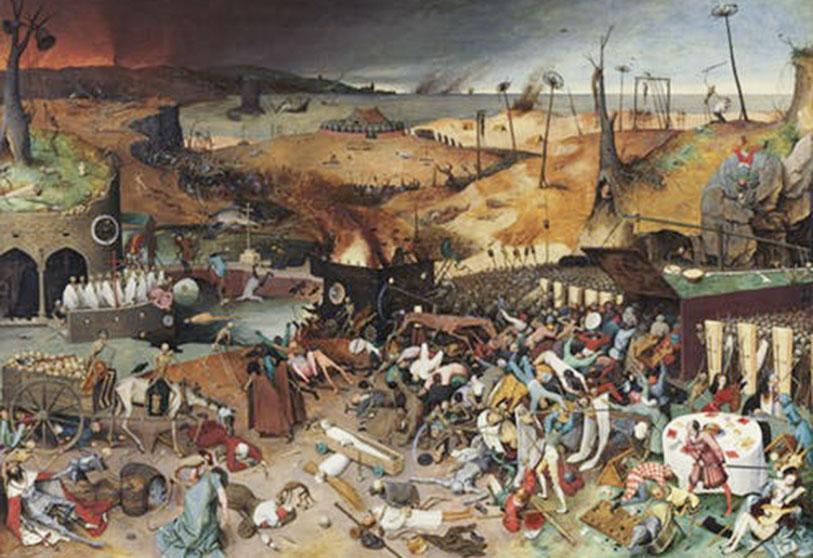
The thing with pandemics is that they are far from being ‘unprecedented’ as many politicians offer as an excuse for making mistakes. Historically there is a long list including the plague or ‘Black Death’ as it was known in England.

So aware are public health experts today that, certainly in the UK, pandemics are regarded as the number one risk. Governments have to be prepared for even the most unlikely eventualities and there will be a plan, somewhere. This will describe the risks – particularly the level of harm – and how to mitigate and eventually, eliminate, those risks.

A well thought out emergency plan will include the ‘hardware’ and ‘software’ needed. Warehouses across the country will store vast quantities of ‘just in case’ resources, from dried baby milk to personal protective equipment. Software will be posters and public information announcements already prepared for broadcasting to worried populations. It’s a whole area of expertise and those trained will be employed in all levels of government, from national to local. Protecting the population of a country is, after all, one of the primary functions of government.

Let us examine, pandemics caused by viruses. To mitigate and plan for a new viral infection there are six stages;

  1. Identify the origin of the virus and strictly control the contributory factors.
  2. Analyse the virus and it’s methods of transmission between hosts.
  3. Analyse the effects of the virus on the human body.
  4. Identify ways of preventing and treating the virus and it’s transmission.
  5. Share all of the hardware and software between countries of the World to do the above.
  6. Initiate prevention and treatment programmes throughout the global population.

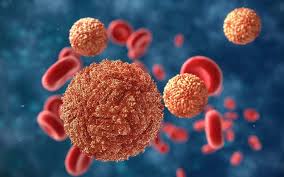
At the time of writing there is a pandemic which is estimated as causing between 100,000,000 and 400,000,000 infections a year, according to the World Health Organisation. There has been a dramatic growth of cases in recent decades and at least half of the world’s population are at risk.

picture credit: thenativeantigencompany.com

The virus causes mild symptoms but in some cases can produce acute flu-like symptoms in humans. There are four serotypes meaning it is possible to be infected four times. According the BBC News App, ‘explosive outbreaks can overwhelm hospitals.’ In it’s most lethal form, fatality rates are 1% of the population when proper treatment and care is available.

Readers will probably have realised by now that I am describing dengue fever or DENV.

It’s a viral infection that you certainly do not want to experience. It’s commonly known as ‘break bone fever’ as it causes severe pain in muscles and bones. Like all viruses it poses a significant threat to the human population.

The good news for those living in high risk urban areas in the tropics, is that a new method of prevention has given very promising results in trial. The BBC News App reports that infections in the city where the trial took place were cut by 77%.

The method used ticks item 4. in my list above. Researchers used a ‘miraculous’ bacteria (Wolcachia) to infect host mosquito’s that spread the virus. The bacteria makes it much harder for the DENV to survive in it’s shared host so the mosquito is less likely to cause an infection. The trial set about introducing this bacteria into the local mosquito’s; fighting fire with fire.

What we can learn, in common with most viral outbreaks is that the origin of the virus and it’s method of transmission must be thoroughly investigated (1. above).

With this understanding, whenever new virus’s are discovered, pandemics can be prevented more quickly and as we know – speedy intervention is vital to reduce transmission. In an ideal world, governments will work together. Knowledge and resources should be immediately sent to the centre of any outbreak and paid for by global contributions rather than the host country, in my view. NGOs and strategic public health organisations, I believe, should be given overall control of treatment of the outbreak, with politicians merely signing off the allocation of national resources. Each country contributes according to it’s means, the rich and those without any outbreaks (pre-pandemic) pay more.

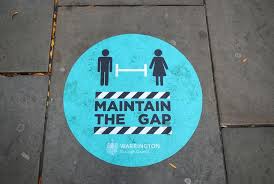
And if one pandemic is given disproportionately more publicity and resources than equally serious concurrent pandemics, what could possibly be the reason? Mind the mind gap!

The Puppet That Pulls the Strings

One of the seven principles of Hermetic philosophy, is the law of cause and effect. Sir Isaac Newton was strongly influenced in his development and application of the scientific method, by this law. It appears in one of his universal laws of thermodynamics as ‘to every action there is an equal and opposite reaction’.

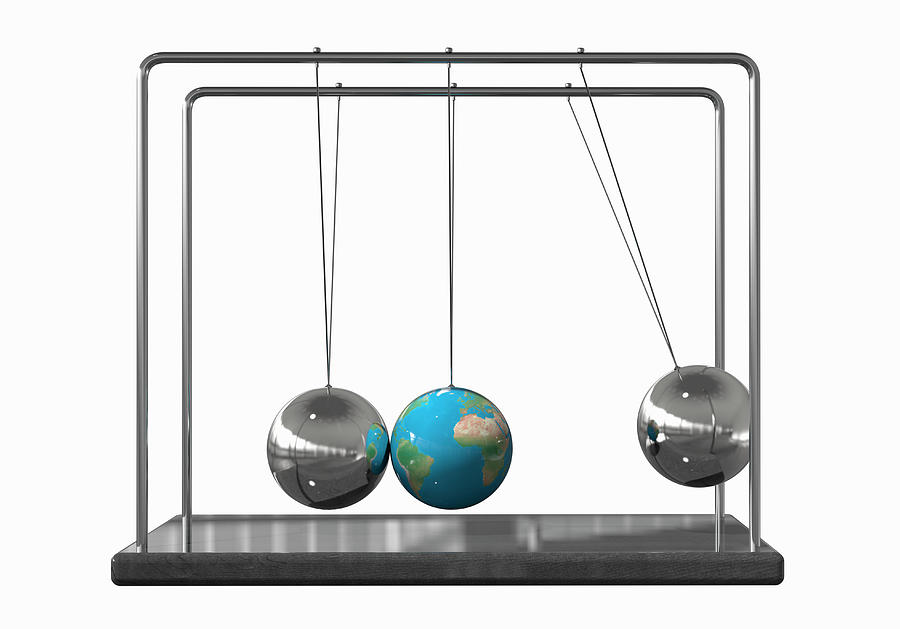
Can life be reduced to a sort of cosmic Newton’s Cradle, where impact at one end of a line of suspended spheres, sends kinetic energy invisibly through the line and appears miraculously at the other?

globe-as-ball-on-newtons-cradle

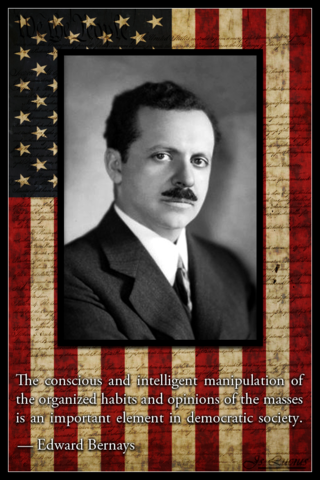
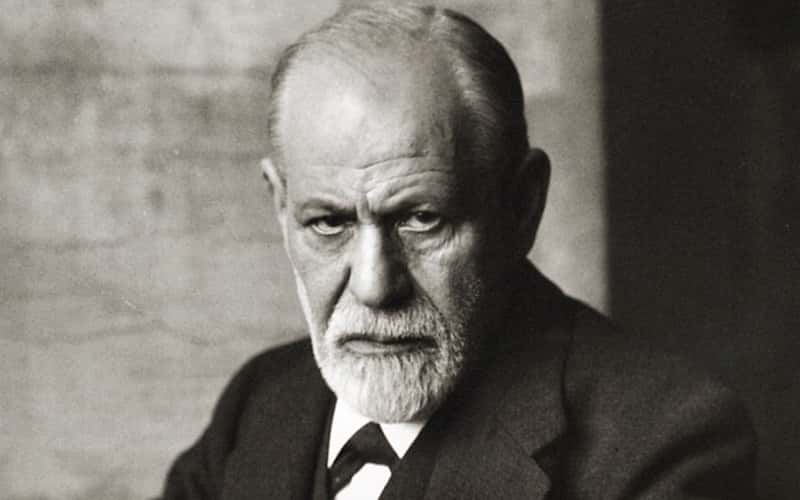
Surprisingly, in some respects, it can. When social groups are examined on a large scale, one psychologist found that they are highly susceptible to manipulation, ethically or not. His name was Edward Bernays and he was the nephew of Sigmund Freud.

Edward Bernays: would you buy a second hand car from this man?

Edward Bernays

Sigmund Freud – are you happy?

sigmund-freud_800

Freud wrote a book entitled ‘Group Psychology and the Analysis of the Ego‘. In this he examined how individuality and consciousness of the ‘I’ can be subsumed when a person identifies with a group. The larger ‘group’ consciousness becomes dominant to the extent that individual’s will acts in a way that they would not on their own.

Examples are everywhere, such as the group identity of the supporters of a football team. They will dress in the colours of their team and occupy a part of the stands where they can appear as a powerful group both visually and through by tribal chants. The power gained by the players when they score goals and win, is shared through this identification by the supporters. A normally disempowered ‘ordinary’ man will feed off the power gained by the group, causing extreme elation.

At it’s most benign this effect can be used in sports, advertising and public relations. At it’s most dangerous, it can be used in political propaganda to influence the minds of the masses to behave in accordance with the aims of a small group.

Examine the the governments of countries and institutions and you may discover a sleeping monster. On a whim, leaders are fully capable of influencing the mental processes and social patterns of the citizens of that country, without them being aware.

The roots of how this is possible lie in our ancestors, who organised themselves in tribes and hunting groups in and be more successful; especially when hunting large animals such as Mammoths. Although modern man has morphed away from this psychology into separate individuality, there are times when we regress.

Individuals will identify readily with various social classifications that can be exploited to divide the populace. Examples are race, class / cast, politics, education, religion, sexuality etc. The motives for doing this might be as ordinary as making them choose a particular type of soap bar, or as extraordinary as bringing them out onto the streets to protest and or riot.

Edward Bernays was interested in how governments could rise or indeed fall by this phenomena. He wrote in his book Propaganda;

If we understand the mechanism and motives of the group mind, is it not possible to control and regiment the masses according to our will without their knowing it?

and…

They systematic study of mass psychology revealed…the potentialities of invisible government of society by manipulation of the motives which actuate man in the group.

Sigmund Freud attempted to explain why people engage in group identification. He proposed the idea that the thoughts and feelings of an individual are in some way compensatory for suppressed desires.

‘A thing may be desired not for it’s intrinsic worth of usefulness, but because he has unconsciously come to see in it the symbol of something else, the desire for which he is ashamed to admit to himself.’

In other words, our actions are spurred on by thoughts that come from our shadow selves, rather than for any conscious, considered reasoning. The conscious mind in most people, has a conscience which prevents negative behaviour through the emotion of guilt.

Whatever it is you are thinking, don’t do it!

sleeping monster

But unconsciously there may be ‘commanding’ thoughts which dominate decisions and actions. In this way we are like children who have not learnt to filter information coming from the outside world. We just absorb impressions and later act out what is good or not. In this way a government could move it’s people to adopt ideas such as the mass slaughter of a minority population, which would be abhorrent to the conscious mind but unconsciously fulfil unexpressed desires.

It is extraordinary to think that these theories were created at the end of the nineteenth century. If proof was needed, the next century provided glaring examples such as the rise of the Nazi Party in Germany and the genocides in Rwanda, Cambodia and other countries.

Joseph Goebbels: Wimp turned bully                 picture credit: BBC.com

Goebbels

The leaders of the Third Reich used propaganda ingeniously. Joseph Goebbels produced films as a key means of engeneering the minds and thereby, opinions, of the population. He understood that in cinemas and theatres audiences can drop their individual critical faculties. They connect unconsciously with powerful messages that feed off repressed emotions and ideas, such as in this case the ‘problem’ of the Jews.

In Rwanda, the radio became a powerful tool for government propaganda which described the minority tribe as ‘cockroaches’ who needed to be eliminated. The old instincts of tribal mutual hatred, suppressed through the adoption of modern social norms, were allowed to become dominate and so powerful that neighbour would kill neighbour with a machete.

Freud wrote in his book Group Psychology and the Analysis of the Ego;

‘A group is extraordinarily credulous and open to influence, it has no critical faculty.’

recruiting in WW1

The actions of the young men in the First World War is another clear example. Thousands signed up without hesitation to enlist in a war that would ‘be over by Christmas’. With hindsight this uncritical and unfeeling mass psychopathy across Europe and beyond, was absurd. Even the mitigating influence of the closely related European royal families of that time, were sucked into the mass psychosis of hatred and fear.

If we take these ideas and fast forward to the present day, many suggest that there is a small group focused global social manipulation, that has had over one hundred years to perfect it’s dark arts.

The, once hidden, now overt aim is to establish a world government and a disempowerment of it’s citizens through draconian laws and the use of new technologies such as artificial intelligence, mass surveillance, cyber robotics and enforced compliance with the State through removal of individual choice.

To achieve this requires deceit on a global scale. The internet and international media is the modern propaganda tool to achieve what one hundred years ago was unthinkable by peaceful means.

Does a secular society fear dying more than a devout society?

fear of dying

The repressed fear which is being exploited in 2020, is the fear of dying. Each person feels this fear whether they admit it or not. Death is something not understood today. It makes those left behind uncomfortable and deaths of loved ones are dealt with expediently. It is taboo to discuss death in anything but the most trivial way, with meaningless platitudes such as ‘he passed away’.

Death by natural causes is far more socially and politically acceptable than death by warfare. The appearance of a new virus, whether by fair means or foul, is something all governments expect and plan for. The Covid 19 virus was foreseen and plans were in place to use it as a means to suppress and perhaps cull populations. The smartest way to disempower people is to ruin the black economies and other economic enterprises that are not global. Then introduce technology based solutions that remove the last vestiges of personal choice, such as the cash-less society which has been happening in China.

You might have expected the citizens of Communist societies to adapt readily to strict government controls and sure enough, the Chinese leadership spearheaded the practice of the ‘lock down’ with ruthless efficiency. The Western societies had little choice but to follow the same solution even though it is opposite to their social freedoms.

Whilst isolation is clearly the correct way to deal with an individual case of viral infection, there is a logical argument that not all citizens need to be locked down at once. This was done to protect inadequate health services, not individuals.

Freedom is a hard won prize, but when the option is presented as ‘death’, freedoms have been handed over without a fight.

picture credit: CNN.com

statue of liberty

This is how I personally see the end of 2020 and most of 2021. We will see a ramping up of the ‘problems’ substantiated by rising lines on graphs. 

This will occur as the vast quantities of government ‘free’ money will begin to run dry. The problems of unemployment have only been postponed, not solved. The consequence will be an impossible situation for previously law abiding families. We can expect to see large scale public unrest driven initially by hunger. Looting and civil urban warfare, even in countries that have not armed their citizens in the way the United States has, will become a problem. The governments of the world will claim to have little choice other than to take away personal freedoms even more.

The United States runs an extra risk as it approaches it’s elections in November 2020. President Trump is also about to hit the railway buffers and he will bend the rules of democracy to remain in power, in the way he has shown America he can many times already. In doing so, citizens aware of the threat to their democracy and using their rights under the Founding Fathers Constitution may legally form militias and take on the government forces.

Would you buy a second hand car from this man?                     picture credit Newsweek.com

donald-trump-2020-election

Whoever is controlling the puppet that you are, will be pulling your strings to make you jump as they want, not as you want. All you can do is pull back on the strings, and collectively that could be powerful.

Individuals will identify readily with various social classifications that can be exploited to divide the populace. Examples are Race, Class, Politics, Education, Religion, Sexuality etc. The motives for doing this might be as ordinary as making them choose a particular type of soap bar, or as extraordinary as bringing them out onto the streets to protest and or riot.

Did Condaleezza Rice start Black Lives Matter? Probably not.                              picture credit: AZ quotes

Obama on democracy

Edward Bernays was interested in how governments could rise or indeed fall by social manipulation. He wrote in his book ‘Propaganda’;

‘If we understand the mechanism and motives of the group mind, is it not possible to control and regiment the masses according to our will without their knowing it?’

and…

‘The systematic study of mass psychology revealed…the potentialities of invisible government of society by manipulation of the motives which actuate many in the group’.

If we take these ideas and fast forward to the present day, many suggest that there is a small group focused global social manipulation, that has had over one hundred years to perfect it’s dark arts.

The, once hidden, now overt aim, is to establish a world government and a disempowerment of it’s citizens through draconian laws and the use of new technologies such as artificial intelligence, mass surveillance, cyber robotics and enforced compliance with the State through removal of individual choice.

To achieve this requires deceit on a global scale. The internet and international media is the modern propaganda tool to achieve what one hundred years ago was unthinkable by peaceful means.

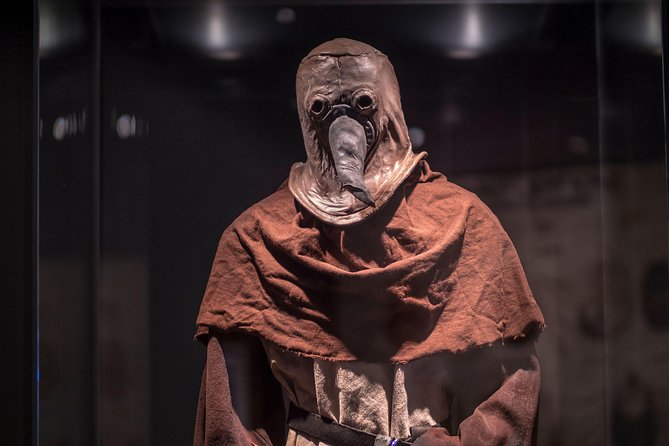
picture credit: Houston Museum of Science, Death by Natural Causes Exhibit

Death

Previous pandemics have wiped out half the populations of each town and village. When that is happens today, there is indeed a problem deserving the solution being offered.

Whoever is controlling the puppet that you are, is pulling your strings. Now is the time to start pulling back. You might be surprised to find out who is on the other end of the string!

Lock Down

The following essay is an examination of how the theory of one area of social problem solving, is similar to and can inform another.

There are elements in common between those who look after our health and those who try to keep crime off the streets. These are the four strategic similarities;

Problems can be prevented

Problems can be analysed

Causes can be detected

Causes can be treated

Corona virus is not new. SARS and then MARS are two recent examples, but throughout history humans have been literally, plagued by them. Each time they come and go, there are lessons to learn. These will help preparation for the next.

This may involve warehousing hospital supplies for instance. The span of time between outbreaks will help to inform the ‘use by’ dates on perishable items. Typical examples would be testing kits, ventilators, hand sanitiser, personal protective equipment, software and even signage.

South Korea has performed particularly well in dealing with the current corona virus pandemic. It puts this down to four key strategies, which are the same as those above;

Prepare

Test

Trace

Isolate

Having the means to deal with the next outbreak at the very earliest opportunity is essential. Countries that have experienced denial of a problem by it’s leaders, or have lacked equipment or funding (e.g.. for research ) are going to lose more citizens than those countries which have prepared.

The old adage ‘a stitch in time saves nine (stitches)‘ is wisdom from the past that we ignore at our peril.

Any police chief trying to reduce crime will be familiar with the principles of crime prevention. Simple and best value strategies for dealing with say, burglary can save the tax payer vast quantities of money needed to put one burglar behind prison bars. Ten pounds spent on preventing burglaries, might save a one hundred thousand pound court case.

Over the last few decades police have moved from the universal production of posters such as the ‘lock it or lose it!’ campaign and ‘watch out there is a thief about!’ to targeted prevention and detection.

It is clear that sending a crime prevention message that may or may not be highly relevant to a community is wasteful. It also raises an unwarranted anxiety of being a victim of crime within low risk areas of the country.

Instead police started analysing their computers and finding patterns. They were interested in where, when and how a particular crime was occurring – long before they asked the question ‘who was doing it’. This built up intelligence which is invaluable to inform the prevention of crime. For instance, if thieves were breaking into cars in town centre car parks, the analysts identified which car parks were most targeted, which parking spaces were being targeted, what time of day and day of the week etc. This might identify an area in a car park where they was a good escape route and poor lighting, no CCTV coverage and little footfall. All of these could be rectified by car park managers on advice from the police. The public would pay nothing and the car park manager would see a rise in the use of the car park and revenue.

The South Koreans were also good at identifying where corona virus victims were. Instead of fighting what Donald Trump and Boris Johnson called ‘the invisible enemy’, the Koreans analysed information from personal smart phone locations cross referenced to recent entry and exit of foreign countries. With this information they were able to target their testing and identifying ‘hot spots’ where transmission of the virus was likely to happen and or happening. They even used police detectives to trace individuals and their movements.

Police call this ‘detection’. It is the natural follow on from the initial process of finding out as much as possible because the problem is hidden, not invisible.

By targeting resources in this way there are two benefits. The first is that it is cheaper. This may sound callous but in fact cost can be a huge inhibitor to action.

The second advantage of targeting action, is that businesses can carry on, if only in a limited way. One tactic for instance would be for elderly high risk victims to be placed in isolation while low risk younger people to maintain the economy and public services.

Prevention and Detection are really two parts of the same process of ‘reduction’ whether you are considering health or crime. They exist on a spectrum between the two extremes. At each end of the spectrum, detection contains some prevention and prevention contains some detection. As an example, the final result of the criminal justice process is to put an offender in prison. One of the possible outcomes of this is hoped to be preventing that individual ever doing the same thing again. They usually do, but sometimes it works.

picture credit: detroitjournalism.cog

lock down detroitjournalism

It has been suggested that the present pandemic has been dealt with in a manner in which the cure is worse than the disease. The ‘lock down’ approach to entire populations has ramifications that will lead to huge public debt and austerity.

The question has to be asked, ‘is lock down the only way to deal with the pandemic? The answer is no, because the South Koreans didn’t have to go that far.

Their strategy meant that they did not need to lock down their populations, eliminating in part at least, mental and physical health problems resulting from isolation and economic austerity in the future. Although it was clearly not ‘business as usual’ it was a working compromise between the needs of people to maintain health and an income and the need to eradicate the virus as quickly and with the least cost of money and life.

By targeting their treatments to areas of the population in most need, they have provided a model that the rest of the world would do well to study and copy. Lessons learned should already be being digested and fed into the strategy for Covid 20, which we can expect is already hanging in a cave somewhere in the world.

When the Covid 19 strain was first detected in China the world watched. As a top down organised country China had more tools at it’s disposal than democracy’s, but the principles are the same. What the rest of the world might have also taken seriously is asking the question, ‘are we next?’ Governments might have looked to the World Health Organisation for an answer. For many weeks the WHO did not declare a pandemic was happening. What world leaders needed to know was when it would happen i.e. be proactive not reactive.

In the United Kingdom the medical journal The Lancet included an article on how the outbreak in China will become a pandemic. This was in January 2020. In February the country had a chance to prepare. It did not. At the end of March personal protective equipment, ventilators and testing kits are still being ‘rolled out’ – as the government puts it. New cases are doubling every three to four days. The government of course denies being slow in preparing for the pandemic and points to the fifty new hospitals they have built. But hospitals are for the treatment of victims, not preventing people becoming victims. The resources are sent to the results of a pandemic not preventing one.

The vital point here is ‘timing’. There are three possible outcomes from deciding when to take action.

The first is that measures are put in place too early. Ministers in the UK expressed concern that fatigue sets into the population if protective measures are introduced too early. They wanted to time maximum protective measures with maximum victims. There was an assumption that the patience of people to avoid their death or of loved ones, is limited. It could be argued that as more fatalities occur the more concentrated minds become.

The second possibility is that exactly the right moment is chosen. This is ideal but is best judged in retrospect, ‘wise after the event’.

The third possibility is that measures are put in place too late. In this case there will be the highest number of human deaths and the most expenditure of money.

Of these, the first two are proactive and in my view produce the best results.

Reacting to problems is to undertake stitching nine stitches instead of one.

Getting the warnings right, is where you might expect the World Health Organisation is the expert. Viruses are not new and statisticians and virologists can get together and draw up predictive curves. They should be good at this even if each country is different.

The tragedy is that politicians are self selected for their political ideals and personal appeal. They may not have the abilities to assess a situation and give precise direction at the appropriate time. They may not listen to their advisors and or may just use the advice to avert personal responsibility.

These principles of proactive and reactive management and decision making are as true for dealing with crime as for health. They are so universal that they can even be applied to playing a game of football, which is why clubs employ statisticians to analyse games in minute detail, as they progress and after.

There is nothing in life for which we are not equipped. The only real challenge is overcoming our own shortcomings.