Even a monkey can turn the Organ Grinder’s wheel
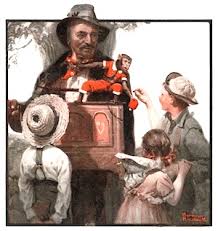
The following thoughts are likely to flatten the ego’s of some of those who consider themselves ‘artists’. It’s a personal view that is not much talked about, although perhaps many share it. But before I begin I need to emphasise that my argument is not an either/or polarised between this and that or artist and technician. All artists are to some degree technicians and all technicians are to some degree artists. The key here is the phrase ‘to some degree’ which is best described as a sliding scale. Where precisely on the scale is the matter for debate here because frequently I hear of technicians who call themselves artists, partly through vanity but also because of their inability to think without polarisation. Here is an example of what I mean.
The writer once took part in a concert in his local town. There were several musicians, violins, two Chinese pianists, a singer and my own contribution of humorous poems that I had written.
During the interval the performers shared a side room in which to relax. During the conversations I made a remark quite innocently but I immediately realised caused offence to the two pianists. I made to following remark, ‘it’s a great that there is at least one original performer in the concert’. It was meant quite innocently as an observation on the technician / creator dichotomy but clearly I hurt the pride of the musicians who must have been brought up to believe they are artists.
My view is indeed an unusual one but based on sound reasoning which is this. That musicians who are not extemporising but following musical notation by a third party, are fundamentally, copyists. They have learnt to become technically proficient at playing one or more musical instruments through repetition. In my view they are therefore technicians, more than artists.

They will argue that there is an art in the way they ‘interpret’ the composer’s instructions and I would not deny this. Any piece of written music can be played to express the emotions of the musician and in that there is indeed a golden nugget of artfulness. But I would reply that the composer’s contribution is 80% or 90% of the piece and the interpretation of the player is more as a technical expert, somewhere on the line between artist and technician.
Another personal example is from my experience as a young architect. I was being ‘mentored’ by a rather overweight gentleman called ‘Les’ in the Architects and Civil Engineers Department of a well known Corporation. Les smoked a pipe and overflowed the edges of his spinning chair with his large body. One day, an architectural technician came over to Les with some ideas that clearly Les didn’t think much of and sent him away. Les mumbled at me his notion that technicians were no good as designers, to which I replied sagely; ‘knowing the language does not make you a poet’. Les’s pipe almost popped out of his mouth with astonishment and a glimmer of respect that this ‘youngling’ had made a profound observation, and was not a complete fool after all.
An example from another creative art shows how broad this issue is. Consider painters. There are again two types of painters. A ‘copyist’ who copies original works of art, or photographs using a photographic style, and those who create a painting from life or imagination. At the most extreme, a copyist can become a ‘forger’; so skilled are they in mimicking the original artist. However, I would still maintain the artist who creates original art, is 80% to 90% an artist and the copyist is 20% to 10% an artist. A forger must be 100% technician or else be greeted by the police forgery squad in the morning.

comment: expect an early morning call
The same reasoning works in reverse. Original artists are never completely original. They will have been influenced by their training and life experience in who, what, how, why, when and where they create their art. This will include studying other artists, art history, media, photography and all the other experiences that bombard the senses. They will then knowingly or unknowingly express this in a novel or similar way to others and in this respect their ‘originality’ as an artist is indeed tainted. Only the truly most original and those expressing something of the ‘spirit of the age’, will find critical approval and become famous and founders, or part of, a group of mutually influential artists such as the Impressionists.
Consider how copyright law determines the topic of originality and ownership of an original work of art. I once went to a shop that sold the marine photographs by a photographer from the early twentieth century. The subject matter was mainly the magnificent sailing boats of that time taking part in the Americas Cup circumnavigating the Isle of Wight, England. I bought a book of these photographs and happened to comment to the owner of the shop (who was a descendant of the photographer) that I intended to copy them in water colour. To this he strongly, objected saying that they were protected by copyright law. He misunderstood copyright as only applying to exact copies, not representations, but no matter.

In this example there is a question of law which is, who has copied what? If the photographs were of just the sea and clouds then the photographer is largely responsible for the image, as nature is created for everyone as what we call today, ‘Freeware’. However when the photograph is principally of an artificial object, then the creator of that object (in this case a marine architect) must be presumed to own the image of the object or at least an ethical ownership of the image. A yacht might take years to design and build and photograph a fraction of a second. The ‘art’ of the photographer is the choice of view, light, background etc. to which some creative input has been made. Read a photography magazine. They are principally technical.
To think of a more exact ‘copying’ using a camera, if you went to the Louvre in Paris and took a picture of the Mona Lisa and started to sell these images, might not the museum object? After all copyright law protects exact copies of images, (not interpretations) and as the photographer has only used technical skill, these would be exact copies. The copyright once belonged to originator Leonardo di Vinci, who being dead, is passed to the current owner of the object.
Artificial Intelligence is now producing completely original images that exceed the creative imagination and technical prowess of even the most skilled artist. These are based on a vast ‘back catalogue’ of natural and man made images from the past that the AI has viewed, remembered and uses to create new art.
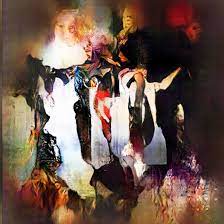
The owner of the AI algorithms might claim ownership of the ‘artificial art’ but the merit is clearly more applicable to the artificial intelligence than the human intelligence. The see-saw of balance between the technical skill and originality is once again subject to scalar opinion.
I personally do not believe the computer programmer who set the AI on the path of gathering and reinterpretation, is any more that a computer scientist. The seemingly ‘random’ connections taking place in the AI to produce originality, is the same process as takes place in neural connections in the brain of the artist but lacks ‘soul’ and ‘consciousness’.
As AI has no legal entity or ‘human right’; what it produces could arguably be without ownership by a human. No doubt the lawyers will debate this matter for the next century!
But in my view, AI is 99.999% technique, that is, a copyist. It has no concept of whether the images it produces are meaningful. When AI is able to prove it has a creative imagination, a soul and consciousness, I will concede.








 Matters Blog