Am I Mad?

(almost a palindrome…the art of speaking backwards)

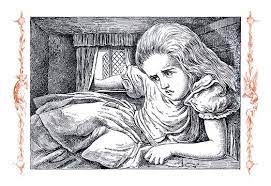
‘But I don’t want to go among mad people’, said Alice. ‘Oh you can’t help that,’ said the cat, ‘we are all mad here.’

…. extract from Alice in Wonderland by Lewis Carroll
December 14th – the birthday of Brian

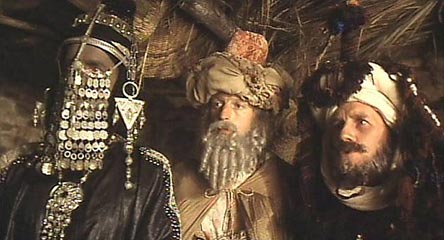
In the film ‘The Life of Brian’, when Brian was lying in a manger in Bethlehem, a group of exotic strangers with tall hats, entered the stable and started to offer him gifts. ‘Go away!’ repeatedly screams his mother. ‘But we come offering gifts,’ the magicians reply. ‘Gifts! Well why didn’t you say before!’

From birth, we are faced with a bewildering world. People are talking a language we do not understand. Later they arrange a religion for us to enter which we also do not understand. Then the poke us off to school to learn stuff we do not understand. Then we are sent off to work, until we are too old to understand. Then the great mystery wakes us up and we return from whence we came. The oddest thing is that we do not question any of this.
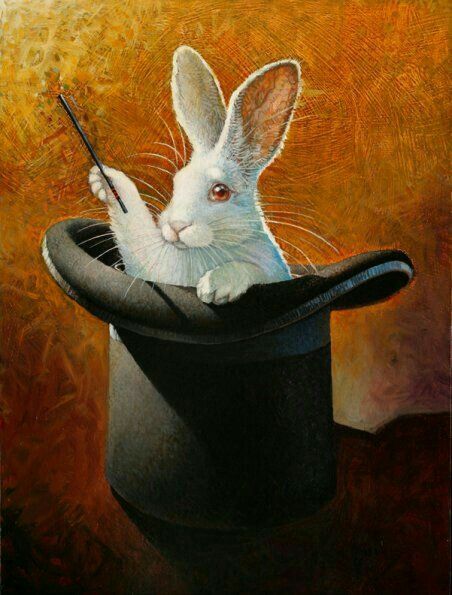
There is something that at a certain point in life, we would do well to understand; to look inside the Magi’s hat, so to speak. For most adults are similar to a placid audience about to watch a ‘magic show’. The magician has set up his props and practiced relentlessly until the show is seamless and the deceptions invisible to the untrained eye. The compliant audience follow the narrative and the hand gestures as if they know they have to in order for the deception to work. Sure enough, the final twist is more extraordinary than anyone’s wildest imagination. It’s a form of collective madness, but it’s fun. Like a joke, it gives us a jolt.

Recently, my dear mother died and I had to return to England for her funeral. The day after, I was sitting at London Airport for serveral hours in a somewhat depressed mood. ‘Departures Waiting’ is a compulsive merrygoround of brightly lit shops, overpriced restaurants and swathes of seating. Recently uncomfortable near horizontal chairs have been added in case you are too giddy or drunk to sit up properly. I watched my fellow passengers quizzically, for their high spirits indicated they believed they were ‘off’ on their long wished for, spring holiday in the sun. They imagined themselves sipping drinks on a beach or clubbing until the night wears thin, and had already begun to live the dream. When we arrived on the south coast of Spain, the weather was not as desired. For the next week it was windy, cold and constantly wet. It was weather that fitted my state of mind perfectly and made me think of those now, unhappy holiday makers huddled in their one star hotels playing endless rounds of cards.

‘The world is as it is’ is a simple truth but hard to realise. We tend to imagine the world is something else and mold our imaginations to fit our dream.
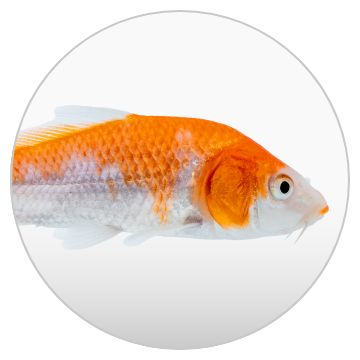
Once I stepped into a crowded underground train in London. There were no available seats except for one, on which a man had placed a goldfish in a polythene bag. I asked him to pick up his bag so that I could sit down. He refused saying that if he did that, the goldfish would die. I was not convinced by his conviction as he had clearly moved the fish already to get on the train, so I challenged him. His reply was the same. I decided to run with the surreal unreal. ‘Does the fish have a ticket?’ He didn’t take the bait on that hook but we continued to argue on his original fishocide position. Those around me were no doubt following this Socratean debate. A man behind me, got up and gave me his seat probably just to make me shut up. Was this kind man averse to nonsense or did he sacrifice his comfort in order to resume the ‘status qou’?

The late hypnotist and therapist Dolores Canon, spent much of her life travelling the world giving lectures and writing books on her work. She found that through hypnosis she could communicate with otherworldly entities, such as the great Nostradamus, connecting across time. One narrative given is that planet earth is presently undergoing a fundamental transition. Some souls will be able to see through the veils of secrecy of lies and tricks and frauds and take a completely new path in life; a path into what Dolores called ‘the New Earth’.

Now odd as this may sound without knowing Doloreses exemplary scientific methods, it may be obvious to readers that much in the modern western world is full of secrecy and lies and tricks and fraud. Politics is a good a example. Political parties in so called ‘democracies’ get randomly donated money to employ teams of persuaders, influencers, nudgers and even hypnotists to design their campaigns and write their speeches. The ‘Brexit’ campaign was designed and conducted in this manner, which is why those more level headed could not understand what the advantages of Brexit were and continue to be. It was all a fish; the infamous red herring.

The present build up to the elections in the United States of America should evoke a response in the average citizen voter;

‘I don’t want to vote for mad people.’

‘Oh, you can’t help that’, replies society, ‘we are all mad here.’

The world voluntarily followed (‘nothing to do with us’) China into a so called ‘pandemic’ based on a slightly harmful virus. We were told by governments across the globe that the situation was ‘unprecedented’ and the virus was deadly, despite the relatively small number of deaths compared to the normal daily death rate. The narrative of reversed common sense continued by insisting masks stopped transmission, cash spread the disease and door handles did not. Vitamin D was good for the immune system and stay indoors…etc. etc. Various novel and untested ‘vaccines’ were the solution to, what was in reality, an imaginary problem. Perhaps the phantom memory of the Black Death and so called Spanish Flu was invoked from the smoke of the cauldron of lies. If you could go back in time, you would see that those were real pandemics, killing half the population of some countries.
During the pandemic in communist China, citizens had to get a green ‘tested clear’ screen on their phones by taking a constant merry-go-round of tests every forty eight hours. The charade was absurd and only a small number of people saw through the illusion at the time at the risk of losing their jobs, fines and prison.

If you have a reflective and analytical mind, you might have been unconvinced by this carnival of absurd narratives and masked figures parading down the centre of your city like the Rio de Janeiro Carnaval on steroids!

If you are still following, let’s return to white rabbits and top hats. Clearly the only person who ever understands the magic tricks presented to the public, is the magician. We the audience, have no idea how to produce a white rabbit from an apparently empty top hat. Magicians are normal people, except that they know how to take ‘power’ from others. The audience sits open mouthed because they have given away their observational and thinking faculties (their power) to a devious stranger.

We all have the means to take back our power from whoever and whatever is trying to decieve us…even if it takes decades. If we are not in the dream, then we cannot be manipulated by it. This is the answer to those who ask ‘what is the meaning of life?’ Life in a lunatic asylum has no meaning. Only those with a truly objective view from high above the clouds might see the slights of hand and madness.

This following paragraph is distressing but real. In the Crocus City Hall in Moscow recently, gunmen shot dead at least 137 members of the audience and injured many more. These were people who had entered the hall for an entertaining evening, as they have done many times before. They would never have expected the horror that confronted them. The headline on ABC News is, ‘Moscow theatre shooting fans flames of a disinformation war.’ Not only did the audience anticipate nothing of the horror of that night but afterwards, governments produced ‘disinformation’ supporting their different versions of the facts.

A macabre example of ‘waking up’ to end this essay but a necessary prod in the ribs because we are all guilty of sleep walking through most of our lives.

In a mad back to front world, it is logical to refer to a ‘fairy story’ for a breath of common sense. Sleeping Beauty is a story familiar to most of us and yet it has a deeper provenance and meaning. In ancient Egypt, the god Osiris is killed by his evil son Seth and placed into a coffin and then a tree. This represents Osisris experiencing a life in a material body on earth. He sleeps whilst in the tree as does Sleeping Beauty for they are both unaware that they are dreaming and mistake dreams for life. In the case of Osiris it is his wife Isis, who discovers him and puts his broken body back together. Similarly, Sleeping Beauty is restored with a kiss from an enlightened being; her prince.

The tales are dark, as is any tale of murder, and yet we lovingly narrate them to our children and let their unconscious minds piece together the ageless wisdom and truth in the story.

The process of learning or ‘waking up’ is a mystery to most, but in present times, the cry to us all is just that, and wake up before you die, not afterwards.

Hot Cross Males

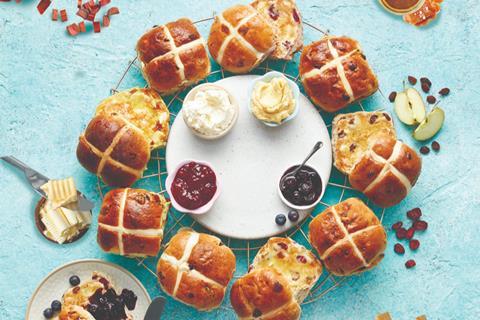
There is a tradition in England to bake special buns at the end of the Christian period of Lent. These are characterised by a white cross symbolising the cross on which, they believe, Jesus the Christ was crucified.

We are familiar with one of the meanings of the word cross is ‘annoyance’. Insignificant in itself but keep it in mind as you read on.

When I was a young student of architecture in London, we had lectures on the philosophy of architecture. I was greatly influenced by an American anthropologist named John Steel, whose philosophy of life in general appeared innovative and exciting to me. He said, for instance, that we should be wary of using right angles in our designs. He sited the geometry of astrology where an angle of 90 degrees indicates a clash, as does 180 degrees. In contrast, the angles of 60 and 120 degrees are harmonious.

I set about designing with architectural plans based on equilateral triangles. Other tutors cited the work of the great American architect Frank Llyod Wright who used this grid extensively. His buildings are greatly valued today for their harmonious relationship with nature and an ambience of content.

In the Chinese order of landscape and building design known as Feng Shui, the corner created by a right angle is called a ‘poisoned arrow’ and needs careful mitigation.

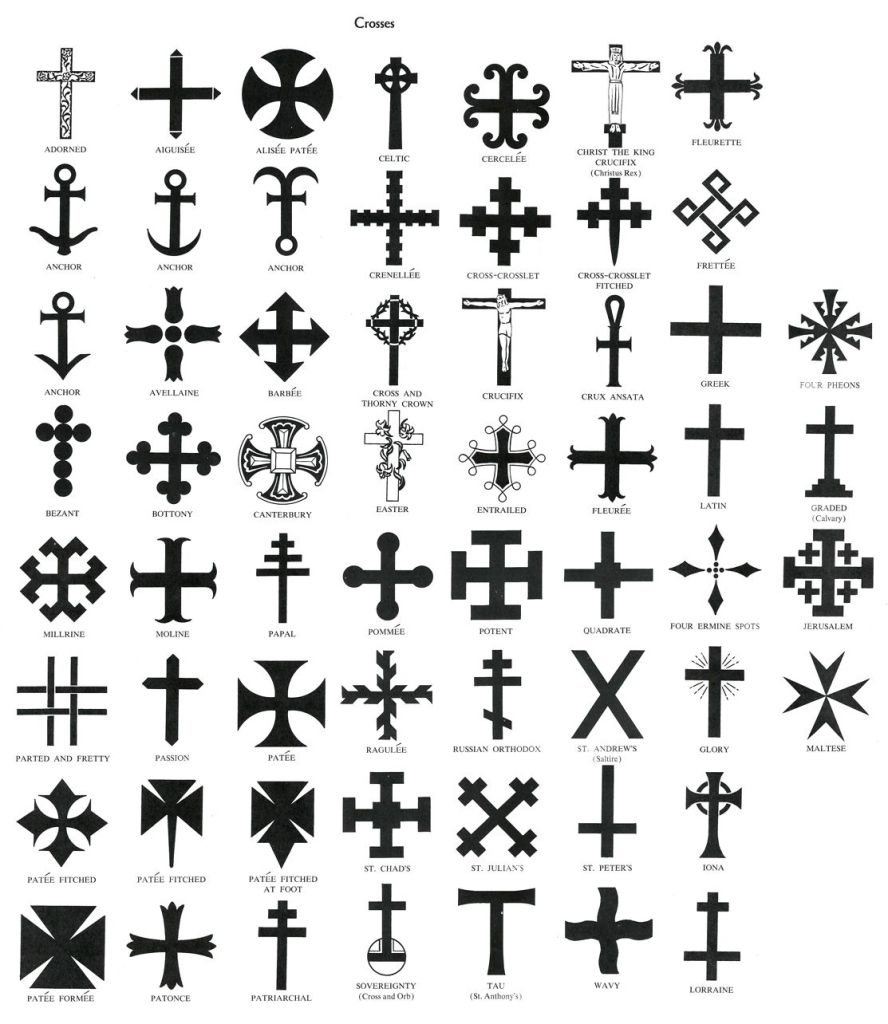
What this is leading up to is an invitation to consider the universal symbol of the cross; two lines that cross each other at right angles. It might be that it is not so benign a symbol after all; if only because it is a depiction of the causing extreme death of a human being.

The symbol of the cross is of course far older than Christianity, whether on the diagonal, vertical or the many other variations.

We should also remember the variation of the spinning cross known as the Swastika and it’s modern association with Facism. The spinning cross was a symbol of the sun for ancient cultures all over world. The Nazi’s reversed it’s direction in a doubtless, intentional Satanic reference because they studied and practiced spirituality for it’s power.

Jesus the Christ called himself ‘the light of the world’ and ‘the son of God’; but we rely on translations for this and it is possible that he came as the solar deity whom the ancient Greeks named Appollo. If modern day Christians are uncomfortable with this association then they are invited to read deeper into this subject.

Whether or not any of the above is absolutely true or relevent is not my thesis. Suffice to say that the crossing of straight lines is generally, a male and solar symbol.

Historically, much of mankind’s evolution over the last millenia, has been male or solar in character and I would argue that it is natural we would expect history to be filled with accounts of male humans fighting; war, opposition.

What was desperate to happen, in terms of human evolution, was the rise of the complimentary feminine principle known as the Divine Feminine. For we are not so bound by our religious dogmas today as to deny that God is equally female and male. The old stereo type of a white bearded ‘nice guy’ needs to be put into the ‘no longer believable box’. Humans were made in the image of the Divine male and the Divine female. Their physical bodies hold more in common than difference meaning the two genders have more in common than difference and are complementary in nature.

The power and relevance of the divine feminine appears in ancient Egypt. Their pantheon is a full of female gods as well as male. Isis and Osiris almost share the same name and are depicted, just as Mary and Joseph, with a divine child from their union.

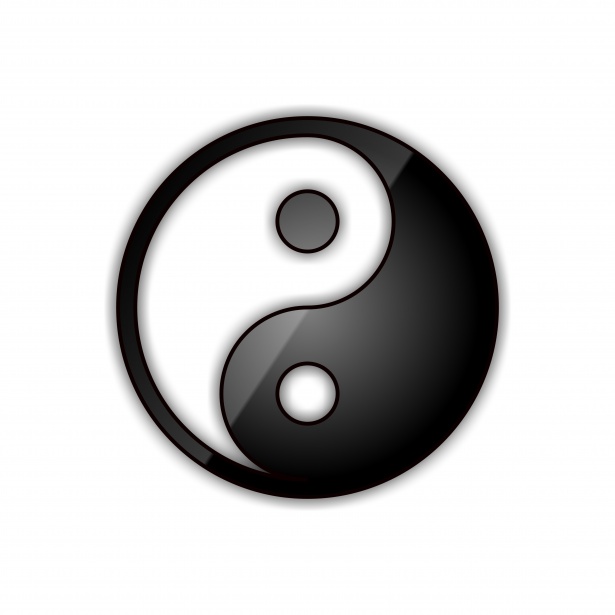
This balanced recognition of Divinity as a whole ‘yin and yang’ complimentaryness should have informed all of human endeavour to the present day but sadly, the alpha-male energy jumped ahead of the game.

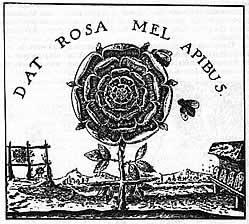
There were exponents of this Divine androgeny based on ancient Egyptian texts, the Greek Cabala and Jewish Cabala and Hermiticism, but they had to operate as a secret society. They were the Rosicrucians whose symbol was a vertical cross with a rose at it’s centre. The meaning is clear; that of a combination of male and female Divine energies forming a Unity.

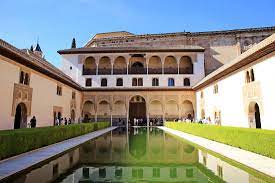
At a similar time came another religion based on the house of Abraham, Islam. Whilst today many Islamic cultural dogmas (such as dress codes) are based on tribe and tradition. In countries like Iran, enforcement of dress codes if enforced more for male power than to solve any problem. Early Islam was a beacon of feminine influence in society at many levels such as architecture and art. Sufi poets aspired loving feelings towards a soft and nuturing, Creator. Islamic architecture is renowned for it’s flowing depictions of nature and it’s geometric patterns. Courtyards and landscapes were intended as earthly depictions of paradise and were characterised by soft flowing waters and fountains. The contemplative, reflecting, geometric ponds in the Alhambra Palace and castle in Spain, were invitations for reflection and enjoying the solar heat from the cool embrace of shadowed courtyards.

Islam was and is, fundamentally, a lunar religion, still represented today by it’s use of the lunar rather than the solar calendar and it’s use of the crescent moon as a symbol.

This ‘feminine principle’ was carried by returning crusaders and travelling troubadours to the Christian Europe as chivalry. Many of the Crusader knights learnt from Islam the importance of respecting women and the essence that women contained and expressed in enchanting, subtle ways. This sea change should not be underestimated as it continues to inform and revolutionise the feminine principle in modern societies; expressed as ‘feminism’ in modern politics but culturally is far more profound.

The ‘Round Table’ of King Arthur was a practical representation of the sharing of power amongst equals. This replaced the Alpha-male monarch of previous centuries who killed all who opposed him. The circle is a geometric form which expresses harmony and potential infinite expansion and/or introspection. It is a planet and a universe all at once and has none of the negative values associated with a cross. But most of all, it is the maternal womb and the expression of the greatest thing that the Divine Feminine has to offer; completion and life.

It is today, in many European and other progressive countries, that women have been given principle parts to play in the affairs of government and social order. Their plain speaking and intuitive understanding of complexity, is in contrast to the previous male dominated ways. As leaders they have become highly respected, such as Ursula Gertrud von de Leyen in the European parliament.

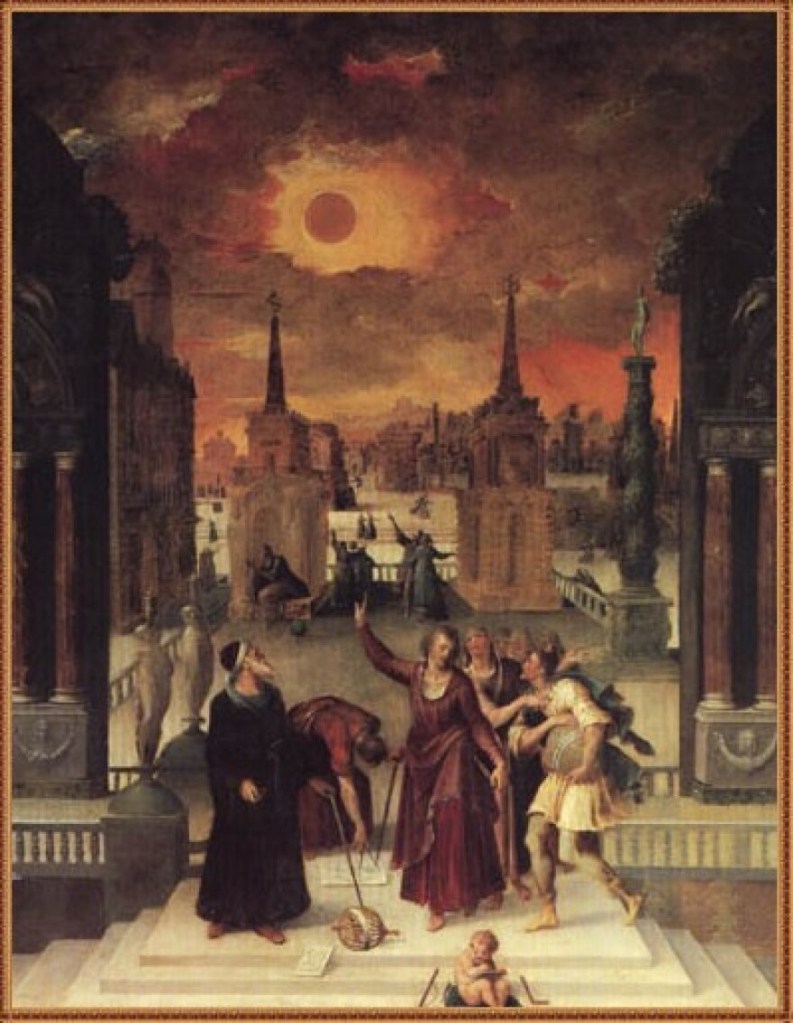
So may we this Spring season of renewal, view the ending of the male, solar dominated world (open to all to view across North America as a solar eclipse on 8th April 2024) and welcome those gifts that the Divine feminine brings to us in abundance; the natural world, procreation love and an end to those hot cross males!


The Solar Eclipse; a moment for feelings or fiesta?

Defence?

It’s all violence

At some point in it’s evolution, humanity has to decide whether to accept violence or not.

At present, it appears we accept violence within certain rules. We say that if you did not initiate the violence, then you can be violent towards the aggressor, to any degree. This is called ‘self defence’ and few can think of an alternative. But why should defence be more morally right than attack? Can either be justified? What is the difference, morally?

Suppose you were a citizen of the United States of America and you own a gun and know how to use it. You are woken in the middle of the night by a noise downstairs. You arm yourself and go down to investigate. You see a dark figure and shoot. At this moment you believe you are acting in self defence, as is your right. You switch on the lights and to your horror you see the body of your teenage son lying on the floor. He was creeping back into the house after a secret night drinking with his friends. This is not fiction. This happens.

Just because the law enables a gun to be the solution to your ‘problem’, was this the only solution? Were there other more proportionate actions you could have taken? Yes, you could have switched on the light before you shot at a higher risk to your own life, or you could have called the police. You could have just done nothing. Each approach is problematic but only one invites heart break.

I lived in a country where only specialist police carry guns, England. Good peace keepers should be skilled at talking down a potentially violent situation. It’s a technique and can be learnt. Now many officers carry a Taser non-lethal gun as well as non-lethal CS gas. Non-lethal is a practical half way to non-violence.

Between attack and defence there are a thousand grey variations. The best option is always somewhere between total war and total defence; not either or. Ultimately they both are characteristics of the same thing; violence.

Fortunately most sovereign countries do not attack each other and a state of peace exists. But we know that peace is a fragile situation, where historical, economic and political rivalry bubbles away under the surface like a dormant volcano. Violence has to be contained for peace to exist and this is created using ‘deterrence’. Joining forces with another group of nations is one method of deterring attack. Not being a threat is another and here we realise that it is impossible to deter another nation without them being scared of you. Russia is presently in this conundrum with it’s relationship to NATO countries.

We watched as Russia reached a tipping point and claimed that Ukraine had a Fascist army. Historically, the communists (Soviet Union) and fascists (Nazi Germany) were enemies and this history still clearly carries some import as ‘justification’. By fighting ‘fascists’ Putin possibly feels he has his predecessors moral high ground on his shoulder. Coupled with a perceived threat from an expanding NATO and Ukraine moving towards joining the European Union; Putin is clever though and he does not use the word ‘war’ or ‘attack’. He insists he is acting in ‘self defence’ to NATO’s growing threat and his military action is just a ‘special operation’.

Words are master deceivers and suit Putin well. Because two words, ‘attack’ and ‘defence’ are the same thing; a resort to violence is claimed to be justified.

Zionist politicians in Israel have more or less done the same thing. They have an historical antagonism towards the people of Palestine whom they have been squeezed into smaller and smaller enclaves. Any similarity between this and the Warsaw Ghetto in the Second World War is of course, purely coincidental. The question is whether Palestinian or Isaraeli fighters are defending their country by attacking their neighbour. Defence quickly escalates into violent action that can get wildly out of control. The question of ‘proportionate’ use of violence (an eye for an eye) is the current debate.

So how can non-violence ever replace violence? The answer is it probably can’t whilst humans are attached to a materialistic and territorial lifestyle which they guard with weapons. In this respect humans are less sophisticated morally than most animals who rarely fight their own species to the death.

We learn to deal with violent conflict as children in the school playground. When we become adults we are expected to rise above violence as a solution to problems.

Two boys start fighting in the playground. A huddle of eager spectators quickly forms around them. These bystanders are too immature to try to pull the boys apart and instead encourage them. A stronger third party with moral responsibility for order is required; a teacher.

The teacher breaks up the mob and marches the two boys off to the headmasters office.

‘He started it!’ is a common defence from children. Their false logic is that when attacked there is no other response than a defensive counter attack. There is usually an option to run.

If we change the scale of our example, to that of governments and countries, you will find that ‘he started it!’ is also used as a justification for the use of violence by sovereign states. Only a third party intervention from a body with higher moral and political authority has the power to stop and settle wars. After the horrors of the second world war the League of Nations and subsequently United Nations was created to step into this role. The objective voice of world opinion should, in theory, make the warring parties ‘see sense’ and the more mature aim of seeking a peaceful resolution.

The United Nations and the United States of America, could go to the preesnt Israeli Zionist government and point out that killing innocent women and children in Gaza is morally unjustifiable. Putin could be hauled into the headteacher’s office by the United Nations, but has not.

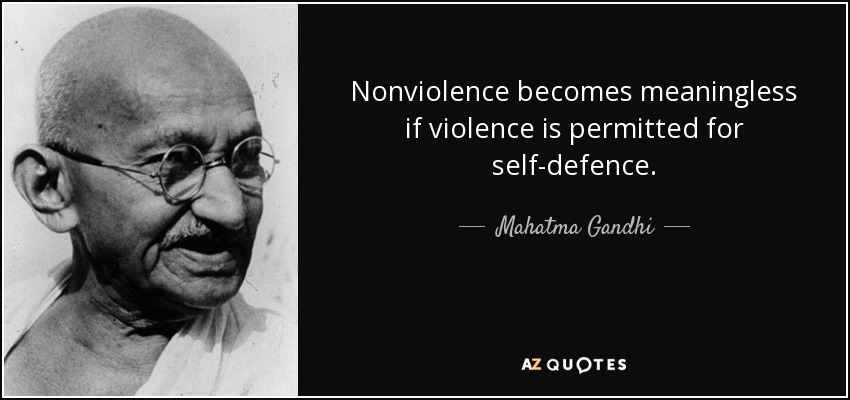
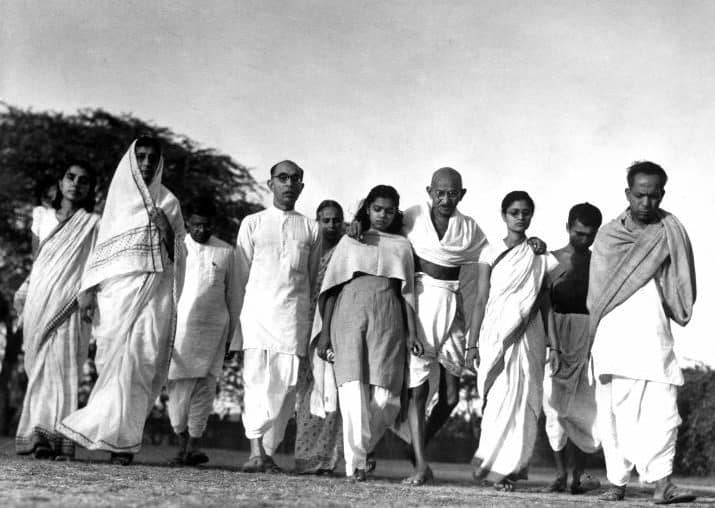
Mahatma Gandhi lead a nation using moral authority based on non-violence. He wanted the British to leave India and for Indian people to govern themselves. His tactics using moral discipline, diplomacy and example turned out to be more powerful than the military might of the British Raj.

War was described by Carl von Clausewitz as ‘ the extension of politics by other means.’ Personally, I would be more precise and describe war as the extension of politics by violent means. This creates the logical possibility that peace is the extension of politics by peaceful means.

Of course, peace is an abstract idea and never completely exists but there is a place close to total peace which might be reached using skilled, non-lethal force.

To use a personal example, when I was a boy at school, I never sought to fight. When I was inevitably confronted aggressively, I stepped forward, put my leg behind the thigh of the aggressor and pushed him to the ground. Yes, it was violent but it only hurt a bully’s pride.

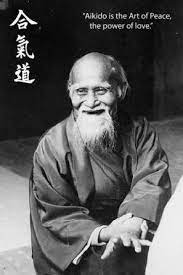
This was the extension of politics by peaceful means, meaning no one was hurt. Later in life I came across Aikido. This an unusual martial art in that it enables winning a fight without confrontation. For this reason it requires no strength and is ideal for women and the elderly.

An interesting example was given me by one of the teachers. He was on an ice-rink when he felt a hand going into his pocket and pulling out his wallet. Instinctively he grabbed the wrist of the thief and continued the forward movement of the pickpocket’s body. The result was to send him rapidly across the ice rink. In Aikido, the art is to avoid conflict using simple non-aggressive moves that eventually tire out or restrain the opponent until help arrives or submission.

City dwellers would do well to learn the tactics of pickpockets even if they do not feel able to defend themselves physically. Usually they work in teams in crowded places and choose victims carefully. This is done by the ‘spotter’. Then the thief moves in using much the tactics of the illusionist in a theatre to distract and act deftly. Then a third party intervenes by preventing escape or creating another distraction.

Governments would do well to learn from these examples at a micro scale of conflict. Having a clear aim is vital to managing any violent unsolicited action. The method of conducting the conflict and ending it with minimum force and casualties for both attacker and defender and vital. Fast and deft military moves have time and time again proved their worth on battle fields.

When Napoleon wanted to teach the Zhar of Russia a lesson for breaking their pact of unity in 1812, he formed an army and headed for Moscow. Contrary to most other opponents Napoleon had fought, the Russians did not line up and wait to be shot or cut down by flanking cavalry. Instead they conducted an extraordinary retreat, burning everything in their wake. Only when Napoleon reached Moscow did they choose their moment to swiftly counter attack. Napoleon’s army fled in disarray and only 5% of the original army returned to France.

Sun Zhu in his famous book on military tactics said, ‘engage with the ordinary, win with the extraordinary’. A little side stepping and originality can nimbly avoid a cataclysmic confrontation like Ukraine v Russia. ‘Give some ground,’ is one solution.

Special forces, such as the British Commando’s came to the forefront of military tactics in the Second World War, where small teams of four men used guerilla tactics against an unprepared enemy. Casualties for the attacking side were minimal compared to strategic gain.

Ultimately the choice is not whether to attack or defend but to avoid unecessary violence by what ever means possible. There are always alternatives that require imagination and focused problem solving techniques in exactly the same way the animals avoid killing their own species. There is no ‘perfect’ state of non-aggression where humans in their present terratorial state of consciousness are concerned. Perhaps in the future, peace will break out and violence will never be the preferred problem solving option. In the words of , ‘what if there was a war and nobody came.’

“Ah! There is the rub.”

The Wizard of Light

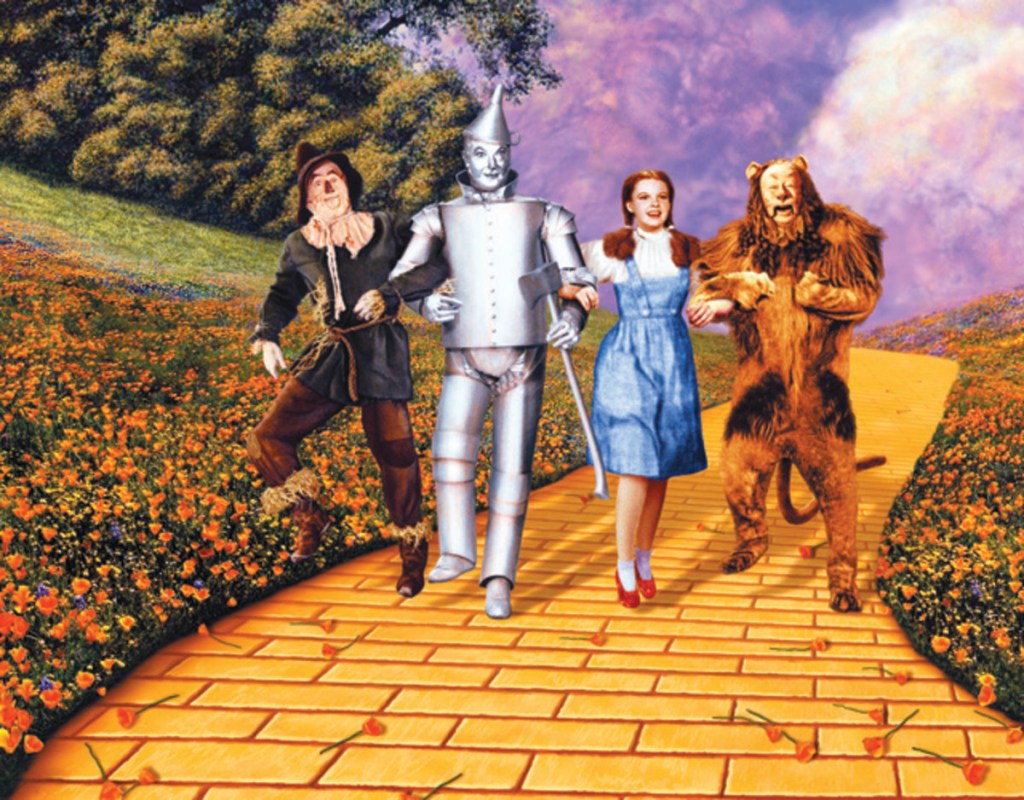
We Are Off to See the Wizard!

Most of us live ‘out there’. We see and feel our skin as the join between us and ‘that’; whatever ‘that’ is. For more and more people, the outside world is being discovered to be ‘not what it seems’ or in common parlance ‘fake’.

Films like The Matrix trilogy highlight the idea that what we look at is no more than some sort of construction. But who is making this illusory world?

In medieval times, before psychiatry and psychoanalysis, it was a widely held hypothesis that a being called God made the world and us. God therefore, had to be responsible for the running of human and if that gave you a problem you had an option to pray. Prayer was the only way humans were able to feel they had a say in the matter or else they abandoned themselves to kismet or fate. Both are soft options and unrealised humans, like soft options.

Mystics however held a different view, from times well before the Essenes and their Star pupil, Jesus the Christ. Mystics never believed in the story of an all controlling, Commander in Chief, deity. Instead they experienced directly a love of ‘God within’. As beings made ‘in the image of God’ (the literal consequence of what we now call fractal geometry) we are indeed God or as the poet and mystic Rumi said, a fragment of the mirror of God that shattered into countless pieces. We are, in other words, a shell within which energy and Mind (which is not us) are facilitated.

Picture a movie projector plugged into the electric wall socket and a light shining within the magic box. Out of the eye of this box are projected moving images in a most compelling way.

Because of a certain suseptability within the human mind, our attention becomes fixed on the world ‘out there’. Our attention moves from ‘here’ and ‘this’ (Self), to outside ourselves and we are transported to wherever and whatever (ego). So ‘ordinary life’ revolves around us in a merry go round that we call ‘experience’. Indeed it is because of our growing addiction to this series of dream sequences, that life can become a blur. In modern times the spinning world appears faster than ever and in a way and as a consequence, many feel overwhelmed by a lack of clarity and control. But there is a mechanism by which we can halt the confusion.

The ancient Greeks had an interesting take on how the human eye works. Whilst today we describe the eye as a camera or receiver of light, the ancient Greeks understood it as a projector. They thought the eye projected light, but perhaps they were describing how the process of mental projection works? Could it be that they intuited the idea that we create everything we see?

Quantum physics tells us that we are able to affect what we see by being an observer. The conundrum of Schroedinger’s cat imagines two realities present at the same time. Until the human observer makes a choice, the cat is both alive and dead.

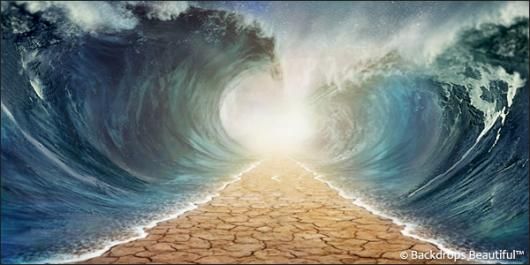
When Jesus the Christ preached, ‘you are the light of the world’ he meant that we hold the power within ourselves to be not only our own light (God), but able to illuminate the whole universe. We hold tremendous power and he demonstrated this with miracles. Moses did the same when one of his followers walked into the rising tide of the Red Sea to certain death…except instead reality shifted and the waters receded. Parting waters was one of the many spectacular ‘tricks’ in ancient Egyptian magic.

We know that in Ancient Egypt the so called ‘Emerald Tablets’ of the demi-god Thoth or Djbuti instructed all beings to ‘seek light’. This is not as simple a process as it sounds of course. The illusion of reality is strong and shadows and false figures have to be ruthlessly eliminated in what mystics call ‘the hero’s journey’. The archetype of the hero as a warrior on the physical plane is nothing compared to the life long war of mystics and seers for understanding of themselves or enlightenment. This inner battle is the true and only meaning of the Islamic ‘Jihad’, whereby the veils that cover the inner light are tantalisingly removed, represented by the dance of the seven veils and the tantalising feeling of the hidden essence.

It is important to understand how all of this can apply to our own modern lives. One of the great ‘inhibitors’ to the removal of the veils is, ironically, religion. I shall not name and shame any particular religion because they are probably all guilty in my view.

How religion interrupts and corrupts the ‘hero’s journey’, is by promoting the description of the world as being ‘out there’. Most distracting of all is the notion that the saints and the angels and the Divine are all ‘out there’.

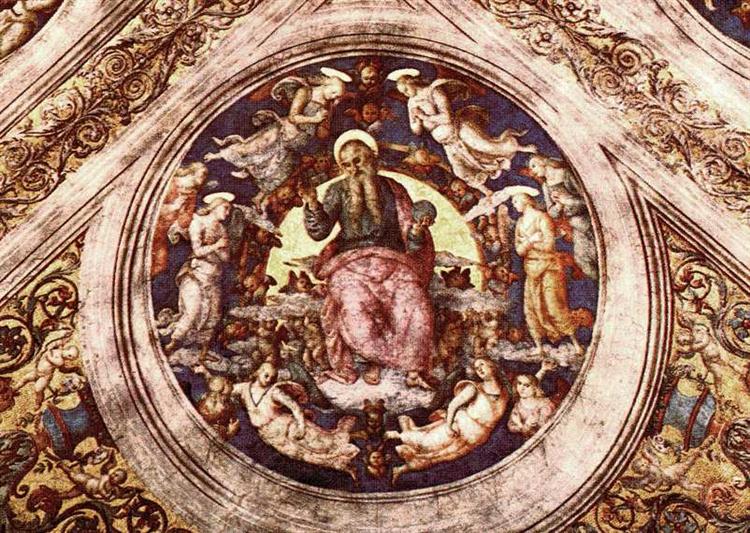
We might smile at the Renaissance painting of an old man sitting on a cloud today, as the archetypal God, but such a distortion of reality is still widely believed. Prayers are offered ‘to God’ as if such a being has both the time and interest in our self obsession. ‘You get on with it!’ one might hear a Divine voice command dismissively. Certainly in Christianity, humans were given ‘freewill’ at the beginning in the Garden of Eden, as a punishment rather than a gift. This Divine curse means we are always ‘on our own’.

If it sounds like heresy that God may not listen to prayers, then you are probably missing the point. Prayer was never intended to benefit a Universal Mind because God is by definition, complete in every way. Prayer is a mechanical process whereby a human mind can open paths to the human Soul, using those words that are not of one’s ego. Muslims are compelled to pray five times a day because it stops the ego in it’s tracks and can send our concentration inward. The body is bent in submission and the forehead (brow chakra) touches the ground. The arrogance of the ego is positioned (in Sajda) lower than the heart chakra, where Soul resides.

This process of ‘submission’ is found in most gnostic practises as a way of overcoming the constant demands of the lesser self (ego) and becoming aligned with the higher self (Self).

The words of the prophets to ‘know thyself’ are a hint to what today we might call ‘therapy’ or ‘psychoanalysis’. But these will not take you to a destination. They are principally an unveiling of an archetypal journey which is to travel inward to one’s higher Self, with skip in your step.

Body, Mind, Spirit and Heart on the Golden Road to the Wizard of Self 
picture credit Pacific Standard

Solutions Without Answers

Give a fool a hammer and the problem is a nail

Surely, your leaders and politicians must excel in one thing above all others; problem solving. I suggest this because all aspects of life are eventually about solving problems. It does not matter if you are trying to look after a home or a country, the principles of good management using skilled problem solving, are the same.

Astoundingly, the study of ‘problem solving’ is not freely available. In the academic world it is assumed that the skills learnt in schools and places of higher education are transferable to the ‘real world’. Well in my experience, I can say that most of those skills are not transferable, which is a problem in itself. Theory and practice should be salt and pepper, but they are not.

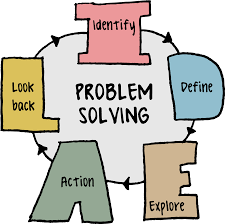
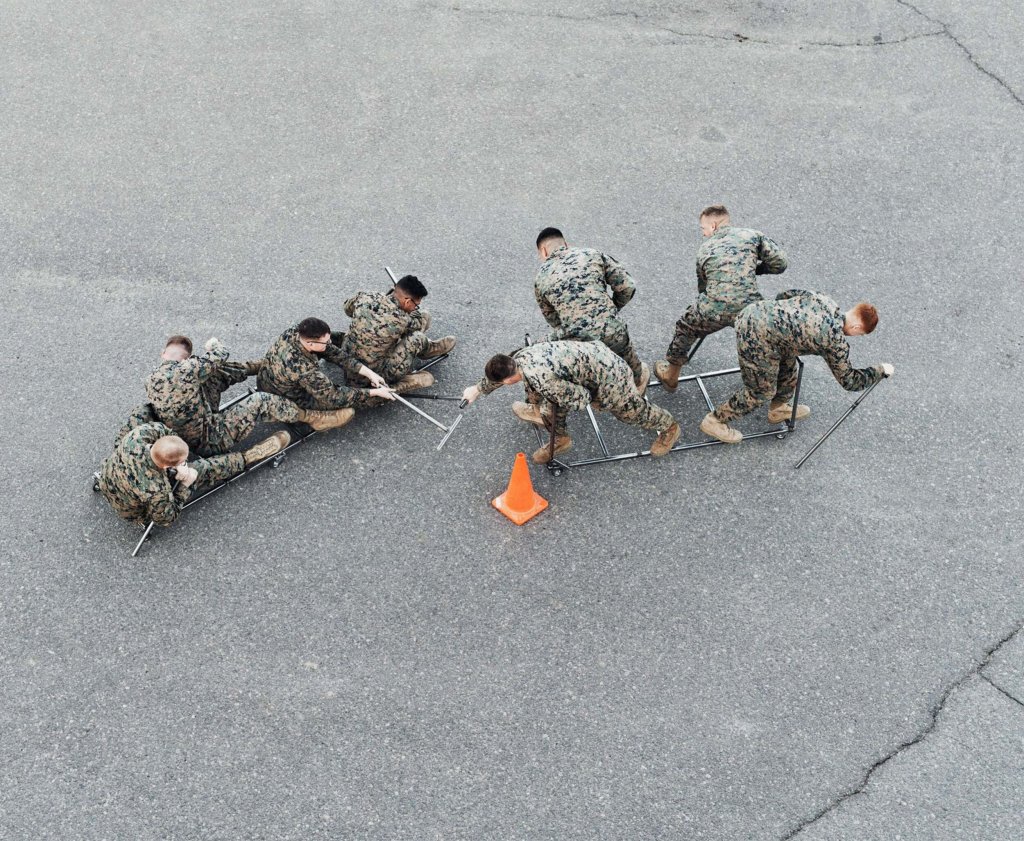
To solve a practical problem takes a special kind of thought process. Most importantly there must be a consistent intention aimed at a fruitful result. Technicians and those who learn practical ‘trades’ such as building walls with bricks or carpentry, become great problem solvers very quickly. If they make a mistake, it is plainly on view and has to be taken down and attempted again. Generally, the selection process for soldiers will involve problem solving. Recruits become part of a small team arranging logs and ropes and other props to overcome an obstacle. Real work in real time.

It is said rather cynically that ‘doctors bury their mistakes’; but it is true. It is unfortunately also true of many of today’s politicians and leaders who are entrusted with the welfare of the State and it’s citizens. If they make a wrong policy decision or invent a plan for some new project or public works that goes wrong, the failure is forgotten. Money is wasted on projects that any ordinary person would say is a waste of time and money (just read my earlier blogs on the UK High Speed train project predicting failure). Why, you might ask, does India have a Space Programme when there are thousands of villages in India without proper sanitation? I am only using India as an example. Avoiding and/or mismanagement of real and urgent problems happens in every country run by politicians with their own agendas, not the people’s

If a race of intelligent beings came down from the Planet Problemsolving, they would certainly be appalled at the ignorance of humans in a skill the PP inhabitants are taught from birth.

If humans cannot learn from present times, we can learn from history. In the Biblical era, when Herod heard there was a child to be born who would one day be King, his solution was simple and brutal. To kill all male babes under the age of two years. The solution to his problem was immoral, self centred, and ineffective. Have we improved?

Giovani: The Slaughter of the Innocents

Today, the State of Israel is being led by a person with Herod like, problem solving hypothesis. Because there are fighters who are against the State of Israel (as a consequence of decades of ill treatment towards Palestinians) Israel is using genocide to prevent further problems, just like Herod. And just as Herod assumed a massacre would get every child, so it is assumed that the Israeli government actions will eliminate every fighter who is against the Israeli State. But history tells us that using starvation, disease, killing and maiming, stopping fuel supplies in winter and stopping safe escape routes, will be condemned by world organisations like the United Nations. South Africa has emerged from apartheid in the last century and has been the loudest voice of condemnation. They have learnt from their history.

Hitler is perhaps one of the greatest despots in modern times, who used similar problem solving techniques indiscriminately. He constructed concentration camps with impregnable exterior defences, then filled them with people of direct and indirect Jewish blood. We know the rest. Indeed, the people who know this best are living in the State of Israel today.

Let us examine a less emotionally charged problem being played out over the English Channel at the moment. The problem always requires a definition and for voters in the 2016 referendum it was identified as ‘immigration’. The ‘Vote Leave’ champagne and UKIP party championed the idea that ‘immigrants are a problem to the country’, in the run up to the referendum. Whilst most economists would disagree with this concept ( the USA is a prime historical example of immigration creating prosperity ) the problem was described in emotional terms. We know that rational debate stops when emotions are stirred, if we have lived life at all! Emotional beliefs do not use constructive thinking patterns based on analysis of facts and figures. ‘Solutions’ were expressed as three word slogans such as ‘Take Back Control’, ‘Brexit means Brexit’ ‘Get Brexit Done’.

Broadcaster James O’Brien on LBC said: “I’m looking for a chronology of the meaningless slogans Brexiters used to give people an excuse not to actually look at any detail, evidence or do any thinking.”

As the supposed ‘problem’ of immigration, moved from fringe to mainstream politics, the ‘final solution’ became leaving the European Union. The principle of ‘understanding the problem’ by using statistics for instance, was ignored since only one third of UK immigrants actually came from the European Union. Many of those who did were short term immigrants, such as students and migrant workers. As the fish and chip shop owner said to me on the day of the Brexit vote in June 2016, ‘Who is going to pick my potato’s?’

But the emotions of hatred and fear were exploited using false facts by those in power (just as did the leaders of Nazi Germany) and the UK left the European Union in 2020. Since then, the ‘problem’ of immigrants has not gone away. For no obvious reason the ‘problem’ has be re-defined to be the three per cent of immigrants who enter the country without proper documentation.

Under international law these fall into three basic camps; asylum seekers escaping persecution, economic migrants and the criminal underworld. These categories however require time consuming investigation on a case by case basis.

You Can Use Old Slogans

Far simpler for the government to stir public emotions using a three word slogan which is ‘stop the boats’. Chillingly, the ‘solution’ is steered away from creating safe routes and tackling criminal gangs to being one of ‘deterrent’ or fear. By ‘fear of being sent to Rwanda’ the UK government intends to stop people from risking their lives crossing the English Channel.

The horror of this solution and all ‘final solutions’ is not characteristic of any country that wishes to hold it’s head high in the European Courts of Human Rights and the United Nations. Similarly, the government of Israel is prepared to ignore the Article 2 of the Genocide Convention. The false logic of ‘the end justifies the means’ convinces only the emotions.

The complexity of statistical analysis and testing and proof finding and ethics and morality and compassion and common sense and lessons learnt from history and comparing alternatives and cost benefit analysis, should be the bread and butter for problem solving by those who lead nations.

But complexity is ignored because it does not invite the answer, ‘yes’ or ‘no’. These two words are fundamental to what is the basis of the referendum method of problem solving.

  • Shall I kill all the male children under two years of age? Yes or no?
  • Shall I get rid of the Jews? Yes or no?
  • Shall I destroy Palestine and it’s people as a method to destroy their militant leaders? Yes or no?
  • Shall we leave the European Union? Yes or no?
  • Shall we ‘stop the boats’ by making it illegal to do so? Yes or no?

Each time the question assumes a problem with which the man on the proverbial omnibus, may not agree is a reasonable question to be asked. The question is too simple to answer for the complex mind, but easy for the simple mind.

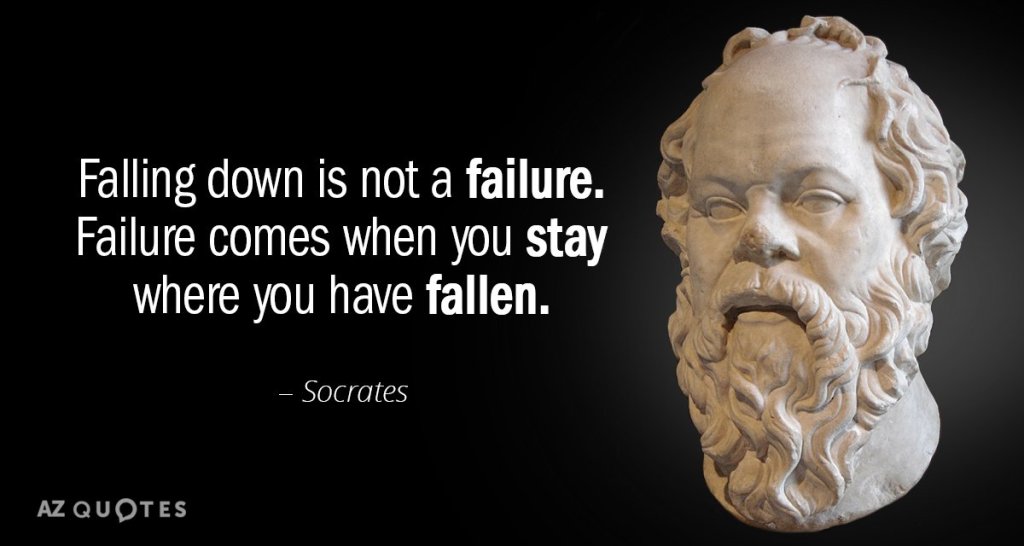
The so called ‘wisdom of the crowd’ is not something that history proves. Wisdom is unfortunately a rare commodity – whether two thousand years ago or the present day. We only have to listen to Socrates (470-399 BC) opinion about the ‘common man’…

The Silence of Words

Words have both sound and meaning and it is these aspects of words that I shall explore in this essay. My case shall be that there is a subtle and hidden level of meaning contained in the abscence of words as well within words; a fact we tend to ignore in our conventional Western tradition.

A child, when it is born, has no words in it’s head. It has not heard human language and it’s world is without word. It is an obvious yet obscure fact that every human infant is capable of learning any spoken language. It listens, and then one miraculous day – ‘da da’ – it speaks.

From that moment on this organic computer learns what we call an ‘operating system’ based on a language; amazingly, any language. This is all very marvellous and yet in the future our language inhibits meaning, rather than expands it.

At a certain stage in life, we might reflect and realise how words dominate our perception. We have become slaves to both the external and internal chatter of ‘things’. Words run away with themselves in our heads and much of the time we might wonder who we are and who is in charge.

Slavery of the body by another is a very old problem but slavery of the mind is even older. Early philosophers like Socrates, were sent to prison and even forced to commit suicide on account of their desire to cut through the prison bars of language and thought.

Religious and philosophical minds have, at various moments in history, produced a key to unlock the chains that hold us enslaved. In the West, this was done by encoding ritual using a language people did not understand.

In Catholicism this was the Latin language spoken by bilingual priests. Sadly, in recent times church elders have allowed religious incantations to be delivered in the vernacular. The congregation, who previously had been held rather in awe and suspense by the mystery of Mass, suddenly had this balloon popped and replaced by the humdrumness of ‘understanding’. Mystery was unwrapped like presents on Christmas day.

The ghost of Christmas Present

Only those with a deeper calling, such as Christian monks and nuns, are told to move their consciousness away from the meaning of the incantations and ‘just say the words with your mouth’ and ‘keep your consciousness on the presence of God.’ The mystical revelation was that words deceive by reducing mystery to common ‘understanding’. No one explained this to the uninitiated.

In contrast, Islam has not fallen into this trap and in most countries the original words of Divine Revelation are spoken in the original Arabic. Vast swathes of the Qur’an are learnt and recited, without necessarily knowing their meaning, by non-Arabic speakers. When spoken aloud the sound is as important as the meaning as the sounds of the holy words and phrases, even single letters, transmit a power from the Divine.

Exceptionally Mustafa Kemal Ata turk, President of Turkey in the 1920’s and 1930’s, ordered the Quran to be translated into Turkish as part of his ‘modernisation’ political philosophy. Nothing, as they say, is sacred.

Let us pause for a moment and consider the leap of faith that is being suggested here. Behind stories, myths and legends there was always a sacred understanding transmitted from generation to generation. For instance, the mystery of the ‘white stag’ that skips over the horizon or pales into the mist, so evading the hunter, is a mystery that captures and teases with a sense of rapture and bafflement.

This is ‘not knowing’ and has a value that has been largely ignored by ‘rational’ thinkers in the West.

The modern film ‘The Deer Hunter’ 1978 picks up on this theme of and man’s insignificance when compared to the mysteries of Nature. Amidst the heavy hammers of industrialisation, depicted poetically in the opening sequences of a steel works in Western Pennsylvania the central character ‘Mike’ proposes a hunting trip to his friends.

You know what those are? Those are sun dogs… It means a blessing on the hunter sent by the Great Wolf to his children… It’s an old Indian thing.”

It is hard normally, to sustain this sense of mystery in life, as we reduce it to ‘catch phrases’ and cliché in conversation. We talk to much and our words rattle around other people’s heads like toy trains on a table top track.

Personally, I have always enjoyed travelling in non-English speaking countries and not understanding a word anyone is saying. Instead of grabbing a phrase book to attempt to understand the hubble and bubble of random conversations, I smell the unusual air and absorb the colour of exotic flowers. In essence, the mind can and should be permitted to stand still and pause. There is benefit, if not buying vegetables in a market, from concentrating on the profound reality of consciousness without words; what we might call ‘being aliveness’.

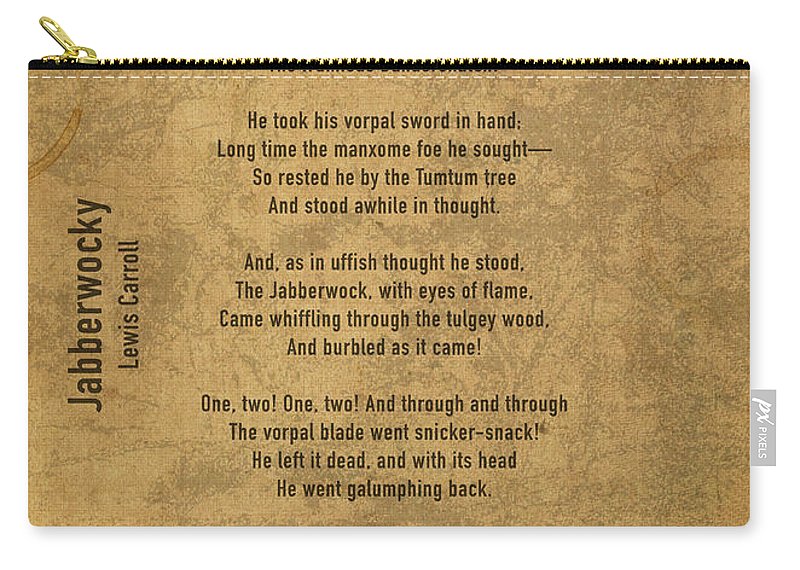
Lewis Carroll, is one of the great nonsense poets in the English language and has guided children and adults into the land of ‘not thinking’ for over a hundred years. ‘Beware the Jabberwocky’ is neither useful nor profound information, without mask or disguise. This sense of the absurd is like a door into the ‘not normal’, a place children love and adults avoid.

It would be wrong to be completely dismissive about words. In poetry and other sublimely expressive forms of language, they can explore and reveal areas of ourselves that are beyond thought, emotions and intuition. Initiation ceremonies into mystery schools are designed to bring about a consciousness that is completely without explanation by language; otherwise books would have replaced all knowledge and experience.

Unfortunately, in the roundabout of real and virtual worlds that we experience today, words come to us in a repetitive form. Anyone who has started to learn a language other than their mother tongue, will understand what it feels like to talk like a child to another adult. We converse like fools and (not wanting to insult the intelligence of animals), like ‘talking animals’.

If we are to search beyond the meaning of words, as far as our human soul will allow, then words perform a function most purely as sound; with or without a perceived meaning. This sound is the most fundamental form of creativity and inevitably appears in multiple opening verses of Genesis in the Bible that begin with, ‘And God said…’. In English these words have meaning but in the original Aramaic their would also be a magical power to the expression, just as magicians incant ‘spells’…Abracadabra! Words have the quality of spells and are learnt by a process dependent on ‘spelling’.

Pure sounds have an effect upon the human energetic system, in a most fundamental way, which is why the music we listen to is so important; as creative energy devoid of meaning. Destructive music such as Heavy Metal, attacks our ethereal essence and can lead to mental and physical illness, should we allow it. The Ancient Chinese respected ‘harmonious’ music for this very reason and viewed the opposite as a signature of decadence in decline in the State.

At the other extreme, music of a spiritual nature elevates our mood and perception in an experiential way. Various mystical traditions around the world, such as Sufism within Islam, embrace these ethereal qualities of music with ecstatic chanting.

There is a tradition in Yoga called Mantra Yoga which uses the repetition of sounds either silently or aloud to stimulate the human subtle energy system known as the ‘chakra’ and at the same time, stop the internal babble of the ordinary mind.

The Universe (of which we are a microcosm) is a cloud of sound as well as electromagnetic energy. Even the planets of our solar system vibrate at a different frequencies to one another and this mysterious concert has been recorded by modern astrophysicists. It is akin to the ‘music’ heard by mystics in trance as a constant hum or combination of harmonious overtones. Pythagoras proposed that the Sun, Moon and planets all emit their own unique hum based on their orbital revolution, and that the quality of life on Earth reflects the tenor of celestial sounds which are imperceptible to the human ear. This truth has often been represented allegorically in Western art as ‘choirs of angels’ playing musical instruments such as the harp and trumpet.

Perhaps the greatest example of the decadence that words can bring is contained in the Biblical story of the building of the Tower of Babel in Genesis. Here the Divine restraint from advancement of civilisation was used to confuse mankind with multiple languages instead of just one. The English language translates the word ‘babble’ as to ‘talk rapidly and continuously in a foolish, excited, or incomprehensible way’. Turn on your television sets today and discover that nothing has changed since this Biblical event! The world spins and makes us giddy, words fail us, we argue and fight, and all fall down.

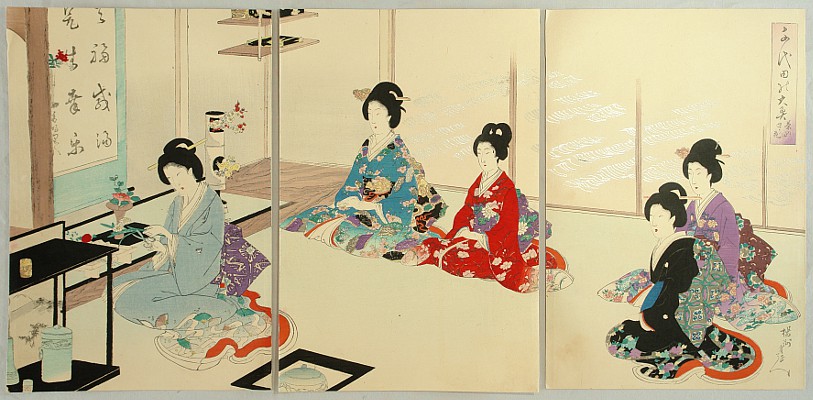
In the Eastern philosophies, you will find a great emphasis on non-verbal communication. Much of the Japanese tea ceremonies are conducted in silence and participants are taught to ‘know’ how to conduct the ceremony without the interruption of words. A Japanese friend of mine was late for her tea ceremony class and found herself standing outside the room in which the class was taking place. She knew she would be judged on knowing exactly when to open the door and enter the room.

The Era of Terror

In 2001 on September 11th there was an attack on the World Trade Centre in the city of New York and simultaneously other locations critical to national security. Many United States of America citizens felt threatened in their own country for the first time; horror was not happening somewhere else. President George W. Bush famously declared a ‘war on *error’ and many sympathetic and perhaps frightened nations, rallied to the clarion call.

The problem was, what is a *errorist? Is it an individual, a group, an army, a State or just a cause?

A definition of *errorism is;

‘The unlawful use of violence and intimidation, especially against civilians, in the pursuit of political aims.’

This definition creates an ambiguity as it so broad, it includes conventional warfare between countries. But perhaps all ‘war’ is a form of *errorism? At the other extreme, one person acting alone can be a *errorist. Attacks by one or many are high risk missions usually against a considerably superior force.

*errorism is mostly a means of engendering fear in a population for political aims and in my view is a tactic distinct from total war.

I list below five examples historical examples of *errorist conflicts. The question I am asking myself is ‘how could these have been better dealt with?’. The conclusion I reach is not what you might expect, given the cost that individuals and nations pay in efforts to ‘eliminate’ the *errorist/s.

  1. In Rwanda there was a mass murder carried out by one tribe against another. Even next door neighbours became enemies overnight and were dealt with brutally.
  2. The Irish Republican Army emerged from Southern Ireland against Northern Ireland using terror tactics. After three decades of getting nowhere with violence the IRA joined the government under the name of their political wing; Shin Feinn and a peace treaty ‘The Good Friday Agreement’ signed.
  3. A Coalition of Nations invaded Afghanistan on 7th October 2001. After a couple of decades they departed unceremoniously, leaving the Taliban extremists to form a government.
  4. The Green Peace ship ‘Rainbow Warrior’ was sunk by two agents of the French government in New Zealand’s Auckland Harbour as it threatened French projects in the region. The agents were sent to jail and Rainbow Warrior II was launched.
  5. The Archduke Ferdinand was assassinated by a Serbian in an act of terror that started the First World War, due to a complex system of Treaties within Europe.

In these examples it can be seen that the *errorist is unlikely to achieve their aim by the use of violence, whilst civilian populations suffer most. Governments also fail to ‘come out on top’ during protracted campaigns against politically motivated *errorists. If the head of the mole is hit, another one pops up.

The challenge, in my view, is one of problem solving: a subject assumed to exist where it often does not. Yes, if your country is attacked you use force to repel the attack, but when the enemy disappears as the smoke rises from the scene of carnage, who are your armies expected to fight? The best they can do is ‘patrol’ and in the process be picked off by an unseen enemy. So what would a ‘problem solver’ do?

If I can use the metaphor of the problem of driving a nail into a piece of wood, we may view it from a different perspective; a tried and tested problem solving technique.

(1) There are those who would argue that a hammer is too brutal and something soft, such as a banana should be used. The United Nations Peace Keeping Force during the Rwandan genocide in 1963/4 are an example of this. Because of strategic priorities and orders ‘not to fire unless in self defence’ they were powerless to stop the atrocities Hutu’s atrocities against the Tutsi.

(2) After decades of effort with little success, the person hitting the nail gets tired. The British Army during the decades of the Northern Ireland ‘troubles’ failed to achieve their aim of keeping the United Kingdom safe from *errorism. The two sides finally came together and shook hands as both finally realised the futility of violence.

(3) In Afghanistan the original nail turned into one of a multitude. As fast as nails can be driven in, others appear unexpectedly. Both the Russian invaders and the Coalition Armies failed to fight effectively against the guerrilla tactics of the Mujahidin and Taliban respectively. The Coalition was beaten militarily and politically, as was the USA in Vietnam.

(4) The nail fails to be driven in one stroke. The *errorists are detained, tried, put in prison but released before their sentences expired. The sinking of the Green Peace ship is an example of this. The building of a new ship to replace the old is an example of the futitily of violence.

(5) Sometimes the hammer produces an unintended spark which sets fire to the whole workshop. The assassination of the Arch Duke Ferdinand igniting the first World War is an example of this.

How our metaphorical nail got there in the first place and whether a skilled carpenter would have more success, or removing the wood from the nail, or not using a hammer, are just a few of the options unlikely to be considered.

What today is termed ‘soft politics’ must be a viable option to the ‘alpha male locking of horns’ approach of the past. Certainly there are lessons from the past which have repeatedly failed to be learnt.

In present times, matters which you might consider to be of the most extreme importance to individuals and nations are put in the hands of politicians and bureaucrats. If there are wise advisers in government or opposition or in the civilian population, they might be ignored or suppressed (prison) or ‘eliminated’ (deportation or execution). This process compounds the dissent in civilian populations.

In the 21st century one would hope that solving problems by direct confrontation is no longer an option. Wars are expensive and if for no other reason than this, governments need to face up to those who commit *errorist acts against them with the answer to a simple question; where did this come from? In my view, unpicking the answer is the beginning of a solution.

It’s Not a Phobia

Regular readers will know that I am interested in words and language and how sometimes a shortage of words limits the boundaries of thought.

My case is that there is no excuse for a shortage of words, in any language, as they are easy to make up.

The study of lexical semantics is concerned with this issue. It includes and in a manner requires the creation of new words in language through ‘common use’ rather than academic or inspired thought by an individual. Languages not only define themselves but give birth!

Perhaps the process of the movement of a word into common usage is a product of both conception by an individual and adoption by society because society has a use for it.

So here is my attempt as an individual, at introducing a new word into the English speaking world. My intent is that common understanding and adoption of it’s the word would correct a ‘vagueness’ and introduce a ‘precision’ in thought.

The word I propose to challenge, correct and replace is ‘Islamaphobia’.

This is why. A ‘phobia’ is generally understood as an extreme and irrational fear of something. In common use phobias relate to fear of spiders, rats and more abstract concepts like enclosed spaces.

I question here whether a phobia regarding a religion, and those who are members of that religion, really induce an ‘extreme and irrational fear’ in others. I mean, really?

Are there those who are extremely and irrationally fearful of Christianity? Are there those who are fearful a religion that has love as its founding ideal? People might have been fearful of it’s armies such as in the Crusades, but those armies were never the product of the ethics of the teachings of the Prophet Jesus of Nazareth.

So should modern societies be ‘extremely and irrationally fearful’ of the ethics of the teachings of the Prophet Muhammed?

I would argue no. Societies in the West are aware of being irrationally fearful when it manifests as a prejudice and this is more closely what is expressed in the word ‘Islamaphobia’. But is this prejudice rightly placed in the list of spiders, rats and enclosed spaces?

Perhaps a new word is needed to describe this prejudice against people of this faith.

There is one in common use for the prejudice against members of the Hebrew Faith and this is of course, anti-Semitism. It is not Semitic-phobia because there is no such word. It’s a bit weak.

So the word I suggest is used to describe prejudice against people of the Islamic faith is;

anti-Islamic‘. I have saved it to my ‘Word document’ dictionary, as it is not there.

Perhaps one day, it will be.

Life and Death

The Garden of Now

There is a tradition at this time of the solar year, of celebrating death. In South America there is the ‘Day of the Death’ and in Europe, ‘Halloween’ and ‘All Saints Day’. We see this archetype most vividly in nature as the cycle of death and rebirth. Many prophets and ancient gods lived out this archetype in their life story; one of the most famous being Jesus of Nazareth who was ‘resurrected from the dead’. The same archetype is celebrated in China at a different season, in the spring equinox as ‘Qingming’ when families celebrate their ancestors. To a dualistic mind; either end of the stick of ‘change’ will do.

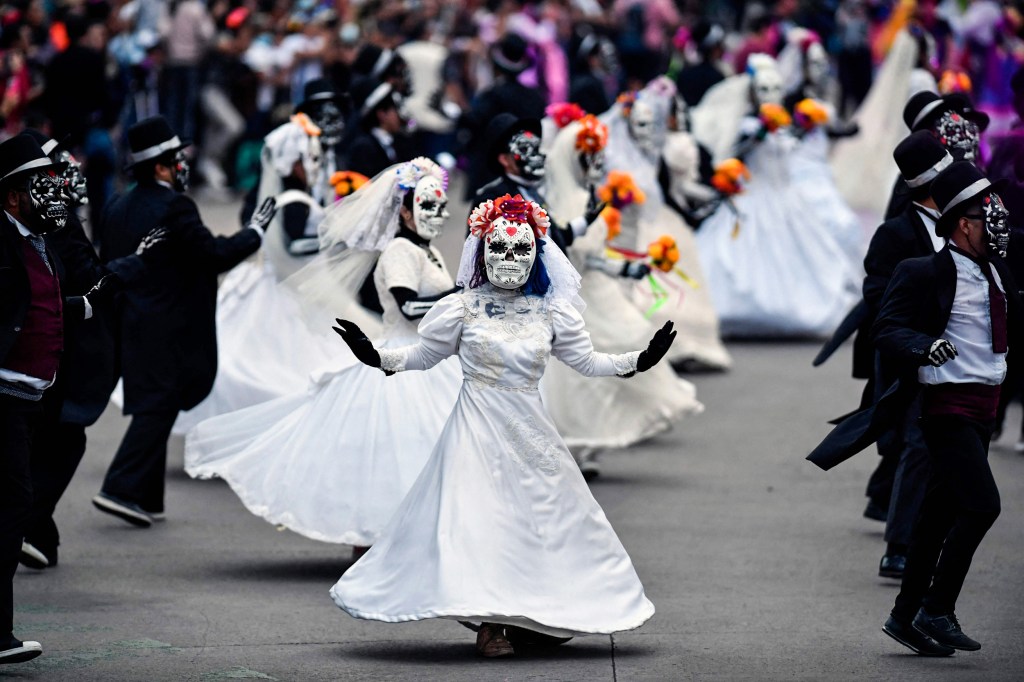
The Day of the Dead in Mexico picture credit: NBC News

Archetypes such as ‘life and death’ exist in all space and all time. They do not go away. Proof of this is that they exist in every moment of our daily lives.

I signed up for an on-line course last week which was a series of lectures given by Dr. Caroline Myss in Vancouver, Canada. Now since I am in Spain the ‘live’ presentation saved me and the environment, cost.

I have always been rather blasé about the benefit of ‘live’ broadcasts on the internet. I could not feel or understand the difference between a live broadcast and a recording. But as soon as I sat in the virtual ‘lobby’ waiting for the first lecture to start, listening to the virtual ‘hubbub’ of the live audience from around the world, I felt and realised the difference. It was exciting to be part of something happening in the present moment, in a way that recorded media is not.

Curious is it not? Recorded media is dead; out of time, out of the present.

Thoughts about the nature of time arose in my mind when the audience I have joined are sat down for a morning lecture and I am in the last rays of the setting sun. The ‘present’ is not a function of time or space. What we experience is our perception changing; what we observe in the present moment, does not.

Only now, as Earthling astronauts, can we acknowledge that there is only one globe. The idea that there are hundreds of sovereign states and ‘I am a citizen’ is outdated. Ancient Greeks had ‘city states’, Empires had ‘countries’ and now, in modern times, we just have ‘planet Earth’.

Thinking of the reason for this evolutionary process, it has always been science and technology that has brought societal change throughout history. For centuries people crossed rivers in boots and then boats. The ‘boatman’, whom you paid to take you across a river or estuary, appears in many ancient myths and legends. The most famous of which is probably ‘Charon’, the ferryman of Hades in Greek myth. He took souls who had left their bodies, across the rivers Acheron and Styx between the lands of the living and the dead.

Sometime in history, physical river crossings by boat were made obsolete by bridges which are probably one of the most revolutionising engineering achievements ever. The bridge builders of the 19th Century like Isambard Kingdom Brunel became the ‘celebrities’ of their time.

The concept of the suspension bridge, was to erect two towers (11) on each side of the river and string sagging wires between them in an inverted catenary arch. From these wires was hung the flat road and / or rail line.

I am writing this on the 11th November 2023, shortly after the celebration of the passage of the ‘Day of the Dead’ and the ‘dying sun’. The numbers 11 and 11 are not lost on those who understand numerology and there are many commentators who will explain better than I. The armistice after the 1st World War was declared on this day on the eleventh hour on the eleventh day of the eleventh month.

The future of the United States of America pivoted on an axis when the sky line of the city of New York changed forever, as souls were lost in the Twin Towers.

The least I need to suggest here however is that these numbers represent the archetype of change and form a sort of ‘portal’ or ‘gateway’ for human souls. A modern suspension bridge is a representation of this metaphor of transition; from here to there. A bridge enables a two-way flow of people’s souls; from life to death and death to life.

Another phenomena of the suspension bridge which was not anticipated by the engineers was that in an unusually strong wind the roadway will begin to resonate and flex, which in the extreme has torn a bridge down. Winds are associated with ‘change’ and decades as well as seasons are subject to archetypal change. The aircraft encountering ‘turbulence’ is a cause to tighten you seat belt.

The conflict in the Holy Land at present, is a manifestation, in my view, of decades of turbulence that are finally manifesting as an uncontrollable and destructive resonance. Decisions made historically by the wrong people for the wrong reasons, are finally showing their tragic poor design and fragility.

The Middle East conflicts highlight the question of where mankind is going in the future; when the pendulum of ‘war and peace’ finally stops.

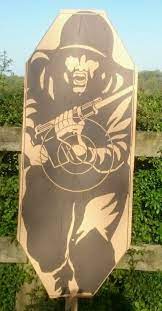
British Army
‘Figure 11 Target’

A catalyst for such a transition awaits us in the coming years or decades. This may be controversial but, whether you believe it will happen or not, the appearance of a non-human race on planet earth would be just such a catalyst. Whilst Hollywood and other government controlled media outlets with a covert ‘social engineering’ agenda, have done their best to portray ‘aliens’ as ‘alien’ (the clue is in the word) we should expect life, not death, from their integration with humanity.

Scientists who have devoted themselves to investigating governments and the ‘deep state’, such as Dr. Stephen Greer in the USA, describe a race of benign spiritual beings waiting in the wings. Their presence has long been known but the time for humanity to ‘upgrade’ by accepting that ‘we are not alone’, is for the Watchers to decide.

This would be the introduction of a third leg to the two legged stool (‘us and them’ dualistic mentality) on which humanity now sits and would be a great stabiliser for the Earth and its living things; from microbes to whales.

Suddenly the priorities that governments might face would not be how to overcome ‘enemies’ but how to balance the eco systems of the earth and regulate the use of earth’s bounty.

The ravaging forest fires as well as natural destruction by rising seas, volcanoes and earthquakes are portents of the world to come. Efforts to re-balance the living planet are vital now, in my view, in the way any ‘life and death’ situation is given priority.

The garden is a metaphor for benign harmonious change through design. Adam, in a state of unique bliss, was it’s first inhabitant but everything changed when ‘dualistic’ thinking, represented by Eve, changed everything. But it doesn’t have to be that way and all that is needed is or humans to non-dualise their thoughts and feelings, live in the present, to be in harmony with what is out there.

A New Flower in the Garden

Finding Oneself

Spiritual Love

How ironic that this present and looming war, is centred on the so called ‘Holy Land’. This small corner of the world has been the centre of spiritual love for millenniums.

What we should remember however is that those who wear religion as a mask, commit crimes against both humanity and themselves.

‘To thine own self be true.’

When the media use the names of the Abrahamic faiths of Judaism, Christianity and Islam, we should be fully aware that anyone can pick up this badge and wear it. It does not mean that a person represents that religion. Only by their actions will their true character and beliefs be revealed. Then we can make up your minds whether we are watching the work the Divine or the Devil.

I have written before about how weak the English language defines and describes ‘love’ (see my blog above called ‘Fifty Shades of Love’). A primary colour in the many shades of ‘love’, is ‘spiritual love’.

It is easier to define spiritual love by what it is not rather than what it is. Certainly it is not romantic love between humans. This is held in high regard by many societies and often rightly so, but when it fails it does so cataclysmically. The union of two ‘selves’ is tainted by projection of one’s anima or animus onto another, hidden bias, false expectation, unfounded optimism, lust and many other aspects of ‘being human’. These have played out in our theatres and cinema screens since the beginning of time.

To understand spiritual love it is essential to be able to see oneself as four components. The acronym BAHAMAS formed in my mind in a dream the other night and this is what it means;

Body:- most people confuse themselves with their body. The Buddhists cleverly ask that if you lose a leg are you not still yourself? Clearly, we are contained in a body, but are not one.

Heart:- this implies the emotional centre of ourselves which scientists observe is far more important in decision making than we give credit for. It achieves a high level of understanding through empathy and non verbal intelligence.

Mind:- again another place that people believe is where their ‘self’ resides. Certainly the brain is a sophisticated organic centre of consciousness but ‘Self’ can exist outside of the body as proved by many who are conscious post mortem, and return to tell the tale.

Soul or Spirit:- however you define these terms ( and many philosophers and religions differ) there is an overwhelming conscious feeling in most people of a power and intelligence within that is not us, but at the same time is us.

With these four categories it becomes slightly easier to understand what ‘be true to oneself’ means. For the ‘Self’ with a capital S (and the ego ‘self’ with a lower case s), is where spiritual love enters and emerges from within the experience we call ‘ourself’.

It is that part which the ‘crown chakra’ (in the Hindu description of the energetic human ‘body’) plays an important part. Along with the Pituitary and Pineal brain centred glands, it is the anatomical equivalent of the modem and microwave dish!

Energy (of the non-electromagnetic debased kind) containing information is universally present for all humans. The benign aspect of this is known as ‘Divine Love’ and my previous blog ‘The Poetic Universe’ attempts to describe this process. The destructive aspect of this is simply an ineffectively weak aspect of Divine Love which is known as ‘The Devil’. Remember that Hell is full of angels. This characteristic of ‘ineffective weakness’ is being played out in the Middle East at the present time and historically is how all quarrels begin; by weak or absent energetic characteristics such as compassion and respect for self and others. Such weakness can also be viewed as the absence of Divine Love or more precisely, a disasterous weakening of that Love which in good times brings happiness and fulfilment to all creatures on Earth and the planet itself.

Seen through the reverse end of this telescope, humans appear very small. But in reality we contain the Universe and this contradiction is evident in the truth already mentioned; ‘that we are not our bodies’. The only part of ourselves for which there is evidence (near death experiences and past life regression) of being eternal, is our Soul or Spirit. This is despite not being able to see it, in the same way we cannot see our head. Logically one should deny the invisible, or change perspective, or imagine what it is and this is what people do – but it does not help.

The human experience, physically and metaphorically, grinds down most of us and some end up as dust sooner than they may have liked. It is all part of being this illusionary entity which changes depending on from which angle it is viewed or imagined. Like Alice in Wonderland, we also can become hopelessly inflated (consider ‘celebrity culture’ and how these souls deal with fame or not) or hopelessly deflated; known presently as mental illness and depression.

Only by overcoming this Tsunamic wave of illusionary experience can humans identify with the ‘still small point’ of spiritual love which they contain. This is the Divinity within them and ironically, is not the ‘small self’ they once believed themselves to be.

What is left after the destruction of the ego by this wave is nothing and something. That something is a small light that somehow avoided being smothered. It has the quality of eternity because it reveals itself as indestructible. It is the ‘love of God’. English expresses this very well because ‘love of God’ implies a two way love between the lover and the beloved. In human love (which is a faint copy of spiritual love) this is known as ‘requited love’.

When human love goes wrong is when the love is not reciprocated. Many stories and enactments on stage and screen, feature this most heart breaking of human conditions.

The golden lining to this cloud however, is that it casts light on how spiritual love is free of the entitlement, judgment and placing of conditions (the marriage contract for instance) that stifles many romances.