Many present day thinkers, expound the present times as being highly consequential to the evolution of the earth and it’s inhabitants.
Whilst there are various extraordinary events playing out on the material plain, we should also consider what is going on in the plains parallel to us; as described in the Hermetic principle; ‘as above so below, as below, so above’.
A recent event caught the attention of the whole world as an intensely tragic and complex human story. I am referring to the Titan submarine disaster in which five brave explorers lost their lives.
Let us take a sideways view of the roots of that story as it is symptomatic, in my view, of far more consequential radical changes in human experience.
The Tower of Babel is featured in the old Testament as a pinnacle of human achievement, both literally and metaphorically. The building was intended to reach into the domain of the gods, in an act of vanity and false bravery that was punished by God using elemental destruction.
This tower, as were the pyramids of ancient Egypt, was intended to ‘fix’ a moment in time when the great cosmic cloud which was the original Universe, changed state and became matter. Imagine water vapour turning into liquid, then ice and that is the process which the Universe went through until the present day.
There are many indications that the great wheel which started this process is beginning to change direction. Matter is returning to energy and synchronically, humans in their physical and energetic bodies, will follow the same pattern; matter will return to Mind for they are both just energy (E=Mc2).
In gathering together the strongest possible materials to build a ship capable of withstanding enormous pressure, were it’s creators not guilty of a vain project against nature? And the greatest error of all, to take this ship to a place where thousands of people had died in horrific circumstances; the waters memory of a titanic tragedy?
On a parallel plane, there exist in this same place ‘thought beings’ of enormous energetic strength who were known in ancient times as Titans.
The Titan ‘Oceanus’ who rules the North Atlantic Ocean
Just because we no longer encounter spirit beings and choose to regard memory of them as ‘fantasy’, does not mean they no longer exist.
The popular trilogy of Matrix films describe the dual realities, where the hero Neo has to move into another dimension and fight the ‘programme’ or ‘thought being’ known as Smith, an almost impossible opponent, stronger even than the once dependable ‘Oracle’; a possible reference to the Oracle of Delphi in ancient Greece.
Let us take a downward journey into the metaphysical plane where Titans not only lurk today, but have been awakened by the cataclysmic events – many still to come – of the present era.
We should understand that the Titans fundamentally resist any change of consciousness in human beings and many people are experiencing such a change in the present time. They were known as Saturn’s ‘enforcers’ as they resist change by force.
‘Dionysus, like Zeus, represents the evolution of a new form of consciousness, and again the Titans were determined to nip it in the bud. Again we see that Titans are the consciousness eaters.’
The Secret History of the World’ by Jonathan Black; page 93.
Their mother is Gaia, the Earth goddess who has been subject to enormous stress and degradation by the vain and self centred activities of humans. She has started and will continue to engage the elementals (earth, air, fire, water, spirit) in destabilising human activities using earth movements, storms, forest fires, Tsunami’s and rising sea levels. These cataclysms, while daunting, are in fact the birth pains of the creation of a New Earth, as described in the accounts of Dolores Cannon (a modern day Oracle ), for those who wish to know more and have access to You Tube.
There is already a gate between the melting material plane and the next evolutionary experience of human beings; an ‘Oceangate’ into the so called ‘Fifth Dimension’.
The effect of this opportunity is a mental transition from regarding the Universe through an illusory dualistic pair of spectacles, into a single monocular Unity. Human history and art describes this struggle between opposites a rather ‘inevitable’ human condition. In reality, love and hate are purely concepts that bear no relation to the single emotion they represent, just as laughter and tears are dual aspects of just one feeling. Think of all ‘opposites’ and join them together on a flat continuum and you will understand.
In the same way that the animal kingdom evolved from one to two eyes, so humans will take one further evolutionary leap into intuitive perception and communication using the single pineal gland. This organ is a remnant of the vegetable ‘Lantern of Osiris’ depicted in ancient Egyptian paintings as sprouting from the centre of the forehead, also known as the ‘third eye’ in Eastern Yogic practice and is painted on the forehead as a Bindi, in Hinduism. New perception needs new organs and the opening of the ‘fire cone’ is just this.
Fontana de la Pigan, The Vatican, Rome
In Islamic tradition, we shall know of the metaphorical ‘end times’ (meaning transition not ending) when ‘end time’ events happen; such as the worship of the Antichrist or ‘One eyed one’.
Abu Hurairah (May Allah be pleased with him) said:
The Messenger of Allah (ﷺ) said, “Let me tell you something about Dajjal (the Antichrist) which no Prophet had told his people. He is blind (in one eye) and will bring with him something like Jannah and Hell; but what he calls Jannah will be in fact Hell.”
Could it be that the screens of our computers and cell phones represent just such a transition of consciousness from our physical reality into a virtual reality. This change is a technological mirror of change in parallel planes; from the 3/4D plane into the 5D. How many mobile phones are circulating the Kaaba in the pockets of the faithful at this very time?
AI is an abbreviation that hints at ‘An I’. In human consciousness we are moving towards ‘An I’; meaning union with the One, rather than the chaotic multiplicity of life today. This is the deeper level of understanding of the Universe; from the multiplicity of religions and all the converging areas of human experience into the One Mind, or as simply stated in the Old Testament of the Holy Bible;
And He said, ‘Say this to the people of Israel: ‘I AM has sent me to you’” (Exodus 3:14).
In conclusion, just as the process of ‘solidification’ into matter is the end result of the liquid and gaseous origins of the Universe, so our present ‘solid’ physicality is starting to melt. Between water and air are the waves that carry the energy which is the One Mind and the invitation is for us to ride with the waves.
Think of that, next time you sit on the beach watching the waves, and if you see the sea receed followed by a huge wave coming towards you, know that the only escape is to jump.
It’s a good question. Animals are simple enough, as their days consist of the need to satiate their needs for survival and emotions. Beyond this, whatever happens doesn’t bother them too much, so long as it isn’t a threat. Watching a cat snoozing or a hog gently feeding it’s young in mud, grants us this insight.
But as humans, surely our need for happiness goes deeper than the animals?
At the beginning of a life, we know a new born child has an instinct to seek it’s mother’s breast. After this physical and emotional nourishment, the infant can sleep, if only for a few hours before demanding the same again. At this level of development, humans are not obviously more sophisticated than animals, although admittedly, the process of complex learning, such as language, has undoubtedly begun.
Children can also become unhappy, as we know too well. The smallest discomfort or denial of pleasure creates a disturbance in the emotional well being of a child that we have all experienced. Unhappiness is the inevitable accompaniment to happiness and both become much of an adult’s life.
We are encouraged to immerse in this compulsive process of ‘pleasure seeking’ in a bid to overcome the roller coaster, which is the happy / unhappy continuum. Buddhist identify this pattern as ‘desire’ and recognise it as being a hopeless continuum; like the donkey following the carrot on a stick.
picture credit:Bloomberg
‘Recreational’ drugs try to break this cycle with the falacy of pursuing ‘happiness in a bottle’; where happiness is mistaken for chemically induced pleasure. Most people who have taken recreational drugs such as alcohol, will know that the ‘high’ comes at the cost of a ‘low’.
Despite this fickleness, the pursuit of pleasure is in some way less complicated than what one might call happiness. It can be induced by purely physical stimulation of the body. Happiness cannot.
To examine how pleasure and happiness are different, it might be that ‘happy’, has an emotional level as well an instinctual ups and downs. The heart gives us richer less tangible feelings of happiness that are less fleeting and can reward us even as a memory, for a lifetime. One’s marriage day is contained in the folded memories of the heart, like the birth of a child or one’s first love.
Happiness is in this way more constant than pleasure and is a function of both physical and emotional experience.
But we can climb this ladder one more rung if we consider the spiritual level of human experience. However much one may try to deny one’s spirituality, much of the progress of human civilisation documents this step upwards and is expressed in great works or sculpture, art and literature. The human experience is shown to be capped by spiritual experience and this results in what we call ‘contentment’. Religions and spiritual traditions around the world venerate people who reached ‘contentment’ by breaking attachment to this world and becoming an embodiment of the contentment found in love.
Souls who have attained a high level of spiritual contentment, will no longer be reliant on pleasure, and be ‘in but not of, the world’.
Neither will they be tugged hither and thither by emotional demands. Emotional feelings are not ignored, but observed dispassionately and recognised for what they are; passing, fleeting, capricious, irrational, beautiful, absorbing…a string of contradictory adjectives, which describe life.
Spiritual realms, we might observe, are not reached by being a slave to the world. Rather, they are reached by a process of no longer believing in unwanted connections to a ‘reality’ that is ultimately, not real.
A ‘holy man or woman’ historically has been recognised by this detachment from all pleasures and displeasure and all happiness and unhappiness. Torturers in the middle ages for instance, might inflict the most disturbing acts on their bodies. They might throw them into the deepest dungeon in the castle but evolved beings will emerge having removed the metaphorical thorn from the lion’s foot (the pain of life), as did Daniel in the Old Testament. No cruelty or threat of harm disturbs them, because they do not include this pattern of behaviour in their thoughts and emotions. Historically such stories of saints and prophets abound.
The great wheel of Fortune on which most people find themselves today, is in contrast, relentless.
Modern living in Western societies is hard for the majority. Depression and even suicide, has risen seemingly in proportion to one’s level of comfort. However rich a person is or famous, they find that they are not exempt from the torturer’s wheel because they are bound to it, as are most of us.
So long as people seek everything, except spiritual contentment, they will only ever achieve fleeting pleasure and happiness. The rest of the time they will be in the grip of desire for pleasure and happiness.
Only when the wheel stops, are you permitted, to step off.
We may consider ourselves ‘modern’ but most social scientists today will agree that we operate as members of a tribe. Class distinction is an example. In each class we accept difference of ‘rank’ with alarming credulity. We know that those ‘above us’ may not deserve automatic respect and yet that is the way it is.
Many of the politicians in power today are people who you would think twice to employ to clean the windows of your house, and yet they are tribal ‘chiefs’. So who are these people and why did we hand over our power to them?
The Beggar’s Opera: picture credit The British Libary
There has been a lineage of ‘royal families’ since prehistoric times. In Mesopotamia there was discovered a ‘King’s list’; a long line of Kings stretching back in time. In Ancient Egypt, hieroglyphs name a chronology of the Pharaoh’s who were the mid-point between man and the gods. Power was handed down as a birthright and royal families, including the Roman Caesar’s, accepted incest as a means to maintain the ‘blue blood’.
The problem with monarchs was always that there are good monarchs and bad ones. The self indulgences of dynasties such as the Bourbons in France, were persuasive catalysts to republican revolutionaries.
But what is interesting is the way in which since then, some Republics have morphed back into Monarchy’s. The United States of America is an interesting example. The Pilgrim Fathers were intent on leaving behind the absolute power of the royal families of Great Britain. The original Constitution of the United States of America handed power to the individual. The Freemasons who wrote this, including such figures as Thomas Jefferson and Abraham Lincoln, did not anticipate how power would slowly return to the president. Today, the President of the United States is given the freedom from prosecution and pomp once only afforded to Kings. If they have an idea they make it law. They are free to write ‘executive orders’ with as much alacrity as Popes write bulls and Monarch’s, decrees.
My point is that however far you try to strip an individual of absolute power, it doesn’t work. The present Presidents of China and Russia are examples of how to ‘eliminate the opposition’, in the same brutal manner as various Caesar’s in Ancient Rome. Today, there are more people living under dictators than democracies.
The only power that ‘the people’ retain is protesting on the streets. Today, many countries ruled by dictators, such as Iran, Myanmar, China, Russia, have had to deal with popular public demonstrations demanding basic rights for the individual. Often their pleas go unheard and their banners are without words.
picture credit: frank-ramspott
In all of these affairs, both of state and in business, there rises to the surface, persons whose suitability as figures of respect, is doubtful at best. Those who seek power over others are almost by definition the least worthy. In democracies, there is no election of those who wish to be even considered as candidates. ‘Running for office’ is left to self promotion and lambasting the opposition; characteristics generally found in the most narcissistic and least worthy personalities.
You may be wondering where this sad description of human self organisation is leading. Well, there has to be a solution to the problem.
In the many native tribes of North America, there was also a system of leadership which was known as ‘Goose Leadership’. A group would sit in a circle and a goose feather would be produced. The rule for the meeting was that only those who held this feather were able to speak.
The result was a collective assurance that if someone had some poor ideas, their influence would not hinder the others for long! Similarly, the inspired suggestions would be recognised and adopted.
The significance of the goose feather is of course, from the instinct of geese to share the lead role in their familiar V-shape flying formation.
What arises here is a noble social structure that is neither strong nor weak, rich nor poor. This is contrary to the binary ideal within other systems of social organisation where only wealth and power gain respect. Between absolute wealth and absolute poverty, there is always a more balanced, middle path.
The Prince Siddhartha Guatama was born in a palace and lived in northern India, with a life of luxury beyond imagination. But he was aware enough to realise that he was unfulfilled by this lifestyle.
He left his life of total sensory satisfaction to become a wandering ascetic and teacher. At one stage this left his body in a most withdrawn and malnourished state and statues sometimes depict him with his rib cage exposed and thin limbs. Aestheticism also did not satisfy him and he finally gave up the search for the right path, by sitting under a tree.
Here he attained enlightenment and the name Budh was applied to him as a form of respect which in it’s masculine form is Buddha, in the same way that Jesus was the Christ.
Buddha, “Awakened One” or “Enlightened One,” is the masculine form of budh (बुध् ), “to wake, be awake, observe, heed, attend, learn, become aware of, to know, be conscious again,” “to awaken” “”to open up” (as does a flower),””one who has awakened from the deep sleep of ignorance and opened his consciousness to encompass all objects of knowledge.”It is not a personal name, but a title for those who have attained bodhi (awakening, enlightenment).Buddhi, the power to “form and retain concepts, reason, discern, judge, comprehend, understand,”is the faculty which discerns truth (satya) from falsehood.
source: Wikipedia
A benign leader is not then, an individual concerned with status and personal wealth. Such a leader will discard these ‘trappings’ as of no value.
Most importantly, I am optimistic enough to believe that the leaders who will emerge for humanity in the near and far future, will have benign, spiritual qualities. They will not live in palaces but be content with a humble dwelling amongst the common people. They will own little, in the manner of the native American people, and be perfectly content.
‘Living by need and not greed’ as Manhatma Ghandi once advised, will become the norm. Many god-less people, used to unsustainable European materialist lifestyles, will have had their day. Their lives will become like those of Kings and Queens of the past who had to be beheaded before they understood their arrogance!
To give up riches and power requires considerable humility, the type present in those who we find begging on the streets. They may not have sought humility, but life – either fairly or unfairly – has brought them to the depths of despair.
We are all capable of beings King’s, as in the goose leadership model. We are also all capable of being beggars. Neither is a sustainable position however, either socially or spiritually. If we are to learn anything from the history of mankind, it is to realise that the ideal place for the individual to be is somewhere in the middle, without pride or greed and with the desire towards the common good for all.
Such a psychological transformation is contained in the concept of the ‘Beggar King’; the one who was once powerful and once the lowest, but has now found a ‘happy medium’; what the Buddha called, ‘The Middle Way’.
We live in a physical reality. From birth we engage with this moving and static universe and learn how it works; how to manipulate it and survive.
Then someone comes along who does ‘magic’. Perhaps it was at a children’s party when you first encountered a conjurer who made objects appear and disappear. Rows of coloured flags explode from her hat and little red balls pop out of her mouth.
Suddenly, rules that govern physicality are turned upside down, so like innocent children, we just laugh.
Later on in life, we understand that magicians are illusionists. They have studied the techniques of deception and taught themselves how to use them. Here are some;
Speed; prestidigitation, dexterity e.g. playing card tricks.
Misdirection; directing the audience so that they assume the contrary e.g. which ball the cup is in. Focusing the audience on one thing whilst doing another unnoticed, such as stage ‘banter’ and ‘slight of hand’.
Concealment; classic ‘smoke and mirrors’ such as using a curtain to hide a deceit.
Props; devices which appear to be not what they are; they have hidden doors, mirrors and compartments that reveal previously hidden objects.
Psychology; hypnotism, mentalism e.g. reading unconscious signalling in facial expressions to determine personal facts.
This list is not exhaustive but the main point is, magicians do not use obvious cheating. They know that they can be accused of using ‘stooges’ to perform pre-rehearsed actions. To counter this challenge, magicians use methods such as throwing a Frisbee randomly into the audience to choose who to invite to take part in the trick. Illusionists may be tricksters, but they will need to leave the audience without any explanation of what they have just observed, or lose credulity and reputation.
picture credit: EarthSky.org
Very recently an ‘air balloon’ was shot down over North America by the USA. The official story was that this balloon carried instruments used by China to spy on America. Questions were naturally asked as to how this and many other such balloons were not monitored or even known to exist, by those in charge of defending the nation. After some ‘re-calibration’ of America’s air space, surveillance and monitoring equipment, three new objects were found. Most significantly these were never ‘rationalised’ as balloons. One was described as ‘hexagonal’ and an ‘unidentified object with no obvious means of propulsion’ and the others of different shapes, equally unidentifiable. After several days, during which wreckage was recovered, it was announced that these three objects were in fact ‘weather balloons’. Do you get the feeling that matter is being described to make you form an opinion that the government want you to have?
The initials U.F.O were avoided quite deliberately for understandable reasons. Further obfuscation (misdirection) has been created because UFO’s are now called Unidentified Aerial Phenomena or UAP’s and there is an equivalent Unidentified Submersible Phenomena or USP’s. For those in the know, and as described by Dr. Steven Greer on You Tube for decades, there are clandestined (‘black ops’) projects outside of the military and government control which have built anti-gravity craft using alien reverse engineering obtained in the 1950’s. The other three UAP’s in question, were almost certainly examples of anti-gravity, human engineering. The cover-up to their undeniable discovery (prompted but not connected to the ‘weather balloon’ incident) is what the counter intelligence community term ‘stage craft’. This is a simile from our familiar family entertainment shows where illusionists make things appear and disappear at will.
This series of events is worthy of particular attention as they provide a clear example of how public perception can be manipulated to whatever the non-democratic departments of governments desire.
The illusionist techniques employed in such ‘minor’ incidents can of course be scaled up to gain public approval of serious government policy. Within the military known as ‘psychological operations’, there are ‘false flag operations’ where an innocent third party, such as a ‘hostile state’ is blamed using fabricated evidence.
picture credit: Wikipedia
For instance, the ‘Gulf of Tomkin’ incident was probably the tipping point that committed the USA to war in Vietnam in 1964. North Vietnamese motor torpedo boats are meant to have engaged American ships in the Gulf of Tomkin whereas there are other claims that these were not NVA’s craft but American. A more mainstream explanation to the illusion is that there was a ‘communication error’ by the Americans which stands out as being vague at best and unforgiveable at worst. In all cases, unforgiveable.
picture credit: Pinterest
That is not the only war needlessly started. In 2003 the USA and an allied co-coalition, invaded Iraq on the grounds that there were ‘weapons of mass destruction’ in Iraq. This despite the fact that UN observers had been searching for such weapons for months and found nothing. The war was justified as being intended to;
“disarm Iraq of weapons of mass destruction, to end Saddam Hussein’s support for terrorism, and to free the Iraqi people”. (source Wikipedia.com)
History or ‘hind sight’ now enables most people to see than none of these three objectives were justified or effective. There were no WMD’s. Hussein did not support Al Quaida and the Iraqi people did not necessarily find foreign invasion a better option to living under a cruel but stable dictator. Iraq was destroyed, leaving little working infrastructure and services, and the regional and tribal ‘commanders’ were left to fight each other in the power vacuum…so called ‘freedom’.
Similar examples of ‘illusion’ by politicians, industrialists, pharmaceuticals and clandestined world actors, are to be found almost everyday in current news reports.
My overall point is that a scientist is not a person who understands things, but one who questions things. In the material ‘reality’ that most people believe is ‘all and everything’, everyone needs to be scientifically sceptical about how world events are reported. The techniques of the illusionist are frequently applied in a manner that appears to be without motive. Discovering the motive is the final and most hard to find piece of the puzzle.
This subject is extremely complex and the ‘stage craft’ of the actors confirms we are watching an act, but this is not a kid’s party. Most people chuckle and sit back in their seats, rather than refuse to leave until what has really been going on, is explained. There is after all, always an explanation, it’s just that, with the serious problems of today, we get the feeling that we are never intended to find out what it is.
picture credit: AZ Quotes
All of this may be rather bleak. However, mankind was never sent here to change the world, just to learn to be a better human being. Perhaps we have to look at this problem from a completely different perspective and that is to consider why there even is matter at all. Perhaps the knowledge that matter is interchangeable with energy casts some understanding. If mind / Universal Mind was seeking to know itself it could not do this in a vacuum. It has to create a very dense version of energy, which is what we call matter. In this material universe we are able to perceive how energy works because the two are the interchangable; it’s just that matter goes slowly enough for us to interact with it intelligently.
Those lessons, which the material Universe with all it’s entanglements and complexity, are directly transferable to the energetic or spiritual universes and when applied, give the greatest understanding of this highest spiritual truths.
This essay will explore the philosophical implications of this idea from the insect kingdom, a ‘hive mind’. In a very special way it might enable us to explore the mystery of our own ‘consciousness’ as an individual, in a group, and in spirit. The ‘hive mind’ concept has been more widely understood, since the eponymous non-fiction book by Garett Jones published in 2015.
Today, scientists are exploring the question of how sentient, animals are. They define this as ‘having a sense of self’. Animals, seeing their reflection in a mirror, react as if another animal was present; a being which is non-self. But there are some life forms that move ‘as one’; such as a flock of birds. Their sense of ‘self’ or ‘being conscious of self’ , becomes subservient to their social group’s consciousness. Picture credit below of a bird shape murmuration, to Country Living Magazine;
I would argue that this capacity to act either as a group or individually, is found in nature on a graded scale, that is; solely, partially or totally and every grade between these. In other words, some (if not all living beings) are able to act both individually and collectively at different times depending on the objective.
Let us examine this idea in more detail. I would like to start with the mineral kingdom, as the understanding that minerals in their many forms is conscious, is not so odd. Indeed, most indigenous people’s live comfortably with this concept. However, as this idea may seem ‘odd’ to city living humans, let us start with the vegetable kingdom. This image from the National Forest Foundation shows a map of tree connections.
Certainly trees have a historical place in the line of sentient beings in the cultures of indigenous communities. Modern Japanese today venture into mature forests to absorb the energetic ‘atmosphere’ which they term, ‘tree bathing’. Scientists have discovered that trees communicate with each other through their roots and associated connecting fungi. One tree may tell another, for instance, of a disease or insect infestation, which is attacking it. The other trees then initiate chemicals into their own sap that will protect against this attack to themselves and collectively; a form of viral inoculation and lock down.
J.R.R. Tolkien in his book The Lord of the Rings, imagined a race of giant trees called ‘Ents’ who were as alive as humans. Today the film ‘Avatar’, features a civilisation of other worldly beings whose lives centre on a magnificent sentient tree with enormous spiritual significance to their society.
The insect world is clearly where the idea of a ‘hive mind’ originated. The queen, workers and drones each have their own specialisation which is hard wired into their DNA. As a group, bees communicate on matters of hive survival using dance to express information. Their consciousness could be defined as ‘collective’ for this reason and there is a limited sense of self in each bee; at least enough to ‘speak’ to others.
Ants and termites (above) operate in the same way as specialised entities with specific functions to act for the benefit of the community. The structures they can build are extraordinary in their size and complexity. Surely, only a sense of communal consciousness could maintain this level of concentration on the task and produce something far greater than the individuals power to do so.
Interestingly, some insects are more individualistic. A spider, for instance, generally works alone as it needs space to create it’s webs. Without anthropomorphising, such a creature must surely feel that it is separate from the reality it senses, otherwise it could not ‘plan to catch another life’.
In animals we find a similar spectrum of ‘degrees of self awareness’. The birds are the most well known for acting in flight as if they were one organism in some species. Scientists who have study these ‘murmurations’ have proposed that each bird acts a micro-second after it’s neighbour. This may be the case but it does not rule out a collective consciousness governing their behaviour.
Penguins survive in extreme climates by acting in favour of the community and the individual. Those on the outside of a large formation of birds standing in a blizzard, will be allowed to edge to the centre of the huddle and then start moving towards the perimeter again. This flow gives and even chance to each bird of enjoying the collective heat of their bodies.
At the other end of the spectrum of animals acting individually, is the wild and domestic cat. It appears to have a high degree of sense of ‘self consciousness’ and will act according to it’s own rules and commands. The Lion as the ‘King of the Jungle’ indicates this propensity to act according it’s own survival needs and a sense of ‘self’ compliments the demands of the pride.
The mysterious process of the evolution of the domestication of wild animals gives reason to consider how wild and domesticated animals differ. In what ways are they different mentally, as well as physically? Personally, I believe that domesticated animals have a higher degree of sense of self than their wild relatives. This is because their consciousness is less centred on survival and is able to focus more on itself. It feels both individual and aware of it’s relations with other sentient beings, such as humans and other domesticated animals.
With humans these matters become more complex. I would suggest that we are at the high end of the sliding scale of individuality; that is we are distinctly individual both in appearance and a sense of self or self consciousness. We might identify collective behaviour such as tribal dance or even military tattoos as a ‘hive mind’ ability. But personally, I believe this is merely ‘mimicking’ the hive mind consciousness through repetition. This is to rule out the spontaneous consciousness of the group as a whole but this effect only happens in special moments, as most dancers would assert.
Humans differ also in that we have access to another dimension of consciousness. Professor G.J. Jung called this the ‘collective unconscious’. This concept of a hidden process of motivation in human activity, is at first difficult to understand – which it is by definition of being ‘unconscious’. Humans can not only manipulate consciously, as in politics and advertising, but confuse personal identity with the collective. In other words, our sense of ‘self’ is easily confused. We believe that everything in our mind, is us. For instance, supporters of a team watching a football match become identified at an individual and collective level with the game they are watching. They may have dressed in colours of their team to create this illusion of identification, and will certainly feel to their core the associated feelings of success or failure with the (their) team and it’s individual members.
In other words, humans become confused at a most fundamental level, with what is ‘the hive mind’ and what is their own. There is a comfort and protection in this illusion and it is hard to break. At it’s most malign manifestation, a group of humans will riot and cause damage and injury to others that as individuals, they would never do. In some cases, whole nations can be caused to commit acts to harm other nations, known as war.
The few humans who have leapt out of this illusion are the prophets, saints and mystics. At a spiritual level, such persons have separated their individual sense of ‘self’ and entered what is called the ‘Universal Consciousness’. Such figures are revered in all religions and an example in modern western societies would be Jesus the Christ. He is revered for having ‘died for others’, in other words, to have completely surrendered to the hive mind both in the physical dimension and spiritually.
I would argue that the mineral, vegetable and animal kingdoms also have access to this spiritual / universal dimension of consciousness but not in a sentient way. In other words, they are so limited by their DNA , instincts and highly specialised physical bodies, that they cannot gain discernment of the ‘Universal Mind’ as humans may. We are uniquely able to enter higher dimensions outside of our own bodies. Humans who have physically died and then come back into their bodies recount remarkably similar spiritual experiences, ( including the most ‘hard headed’ scientists ) and their stories abound on social media.
In this spiritual kingdom, there is another, similar hierarchy of self awareness and communal awareness, on this planet.
If one can accept the idea that ‘mentality’ can exist in the ether without physical form, then it becomes easier to understand, if not experience, the other entities or beings, described historically and universally in the spiritual dimension.
These start with the identification of ‘spirits’ which are either of a natural or human origin, move through ‘jinn’ to higher intelligences such as angels and arch angels, and summit in the concept of ‘God’ – or to the non-believers, ‘Universal Mind’.
The concept of hive mind, enables one to grasp the idea of a universal consciousness. All of this, that we see as individuals, is an illusion. It is not ‘us’. Self is merely a manifestation of the infinite consciousness, the great Mind ‘who art in heaven’. It is expressed more perfectly in mathematics than attempts in words, however, geometry is traditionally the closest expression of the Creator’s Mind.
How apt it is then, that when the Great Bee Keeper in the Sky, lifts up the frame containing the honey of heaven, what have our little bees made? – why, a maze of perfect hexagons.
The Faerie ‘Puck’ in William Shakespeare’s ‘Midsummer Nights Dream’
The greatest mistake a human can make, in my view, is to not treat imagination as real. This does not mean that what we call ‘reality’, is unreal. Reality and imagination both have a vital role to play in our lives.
The character of Ebenezer Scrooge in Charles Dickens’s A Christmas Carol, had to learn this lesson three times in order to understand himself better. Three ‘spirits’ took him on three journeys into his own past, present and future. From objectively viewing his own character weaknesses, his false pride was beaten into submission and he learnt the most valuable life lesson of all – unconditional love. These ‘imaginary’ journeys and the lessons overpowered the lonely ‘refority’ he had built for himself.
All of us encounter these three ‘spirits’ in our lives, if we can make a leap of faith and objectify our ‘imaginary’ selves as ‘real’.
The first such spirit we encounter is in our childhood when we understand very little about the real workings of life. Rather, we ‘act out’ roles that our imaginary selves would like to be in the future…our ‘Christmas yet to come.’ The dressing up box is a most useful item, enabling children to assume wildly fanciful roles as magicians, dentists, racing drivers, astronauts and so on. The most ordinary prop fulfils the need for an exact semblance of physical reality in their imaginary world. Watching children at play is a most rewarding way to understand our own susceptibility to imaginary states of mind. When we are children, fantasy often overwhelms what we feel is our ‘objective self’ and teases us with pleasures and torments, in a safe way. But, like Peter Pan, some children refuse to ‘grow up’ into an adult. The world of frigates, flying and fairies is far too much fun to frizzle away.
The character of Walter Mitty is a literary example of how there can be a child in an adult’s body. Mitty lived in an absorbing ‘dream world’ with flights of fancy that would replay dreams with himself in the lead role. He would encounter a situation the real Walter Mitty would be completely unable to deal with, and compensate with his imagination; such as flying a plane or conducting an orchestra. This is the ‘ghost of Christmas present’ where as individuals we have moved on the adulthood, but in a failed way. Unlike Walter Mitty, most people engage with the ‘hum drum real world’ and it’s seemingly endless burdens and chores, punctuated by few delights. Remember the character played by Tom Hanks; Forest Gump? For this character, a string of exciting situations were both wild and implausible enough to be fantasy and yet were firmly, real. Forest, in contrast to Walter Mitty, had mastered the most important challenge of all; to successfully merge imagination with reality.
Our most important decision is to find what people call our ‘destiny’, but this often sounds rather a vague destination. Even the decision to find a career is an extremely difficult one for a young person. From the view of an elder, I would define ‘destiny’ as simply following the people and things that you love. Although this sounds simple it is of course much harder that it sounds, as there are often obstacles to our dreams. As a child my dream was to be an Admiral but when the time came, my eyesight was not good enough. Watching Lionel Andres Messi play football for Argentina in the 2022 World Cup, is to see a man fulfill his destiny as a footballer. Those who purchased his No.10 shirt and wore it to the match were merely living the dream of a third partie’s achievements, a dead end path to their own destiny.
When we follow and act out an overwhelming excitement to do something, this is our own dream becoming true. Unfortunately, it is a sad fact that less than 4% of Western Europeans are in what they would call ‘their dream job’. The rest find themselves working in order to earn money and have no dream. The servers in the restaurants in Hollywood are often ‘wannabe’ film stars. The lucky minority who are ‘successful’, appear on our television screens.
As well as finding the employment that makes us fulfilled, we must find a partner who fits our ‘imaginary ideal’ of a partner. This again is a huge challenge as the ‘ideal’ man or woman is rarely found and if found; is available and inclined to reciprocate those feelings. If the latter does happen, as in the fairy story of the prince and princess falling in love for ever and ever, then blue birds will sing among the pink clouds and the castle turrets will tower over the cheering crowds at their wedding. Walt Disney has relived this imaginary moment for millions of children and adults and I would argue it is not wrong to dream. Through all these types of stories, whether in ancient myths and legends or on soap TV and radio, we learn to match objectively, our imaginations with reality. It is like two QR codes marked on two sheets of glass. When they slide over each other, the two appear to be identical. The worlds of imagination and physicality are just as unique and, when blue birds start flying around your head for real, they are in perfect harmony.
To return to our Christmas Carol theme, we enter the final stage of life. The woman or man lose their beauty as their body withers with age but their mind is usually disproportionately active and many older people will give you their ‘feeling age’ as their early twenties. When you engage them in conversation, they will recount their times of ‘Christmas past’ when significant moments fulfilled them. These will be substantially real but also coloured by imagination. Like old black and white films that have been digitally ‘colourised’, life becomes a series of memories which are a mixture of physical reality and imagination. The best are of course, those moments when our ‘dreams come true’.
Memories are valuable, but we should not forget that our true self is always in the present.
For this reason we cannot compare ourselves with others and form judgements.
We can only use the ‘guiding spirit’ (who taps on the frozen window pane of our own self pity one night) to remind us of who we might be and that we are not that person yet. The Dickens story recounts how it is never too late to learn how to become better. It is never too late to live the dream that you always wished for. It is never too late, unless you are one of those people who refuses to be motivated by your own imagination; to follow your own ‘yellow brick road’ that leads to the encounter with the Wizard of Oz or purchase the ‘giant Christmas turkey’ that with unconditional love, fills the bellies of all, including Tiny Tim.
What Mr. Scrooge had learnt was that living the present moment is the ultimate present to oneself and those around you.
If the Inuit have multiple words for ‘snow’ then you might think that there are many words in English for ‘love’. Language has the ability to enable mutual understaning, even for the most mundane thing;
qanuk: ‘snowflake’kaneq: ‘frost’kanevvluk: ‘fine snow’qanikcaq: ‘snow on ground’muruaneq: ‘soft deep snow’nutaryuk: ‘fresh snow’pirta: ‘blizzard’qengaruk: ‘snow bank
So why does the word ‘love’, in all languages, fail to identify the spectrum of feelings it could and should represent?
Before we start, let us agree that the word ‘feeling’ affirms love is an emotion. It is not the instinct ‘lust’ although the two may often be confused! As it can with the love of beauty and attraction that is only ‘skin deep’. Perhaps these errors once ‘launched a thousand ships’ to enable Paris to seduce Helen of Troy, or was an epic love story?
Lust has been crystallised in the English language by the phrase ‘to make love’. But clearly, animals ‘make love’; if all that is meant is to have sexual intercourse. When looking up ‘roll in the hay’ in a thesaurus, there are twenty seven synonyms for this expression. Clearly, westerners are as interested in sex as the Inuits are snow.
But we are going to pass over lust and concentrate on it’s more sublime incarnation and affirm that love is one of the most sublime emotions that humans ever experience. Although not easy to find, It too has many shades if we can find words to ‘nuance’ it into sub-categories.
So if we think of how we ‘love’ in our daily lives we can identify several ‘objects’ for our love to directed.
Romantic love should be our first choice as here we find the core of the word and it’s associated feeling. Romance sends humans into true and false expectations that are sometimes completely out of character. In youth this feeling is unknown and untested. But we are already on a collision course with that special person who will come into our lives. The emotional ‘volcano’ that erupts can leave one without thought and speech so paralysing is the impact of the explosive force. And just as in the making of volcanic mountains, the results of the experience last forever; impermeable to all later hurricanes and earthquakes.
The greatest romantic love involves a kind of electronic circuit, where both ends of the battery connect in what is called ‘requited love’. It’s corollary, unrequited love has spawned many an ancient Saga such as Sir Lancelot’s love for King Arthur’s wife, Guinevere.
Then there is love which has a different character; more calm and assured. When we think of how we love members of our family, we use the same word ‘love’ although there is no sudden ‘falling in love’. We learn to love our parents and siblings from birth to grave, a process that is not one necessarily of our own making. It is like a cosmic ‘arranged marriage’ where a soul is placed into the intimate company of strangers, it’s family. What we call ‘paternal’ and ‘maternal’ feelings of love are curiously blended with their equivalent instincts of unconditional parental protection; in the same way that ‘romantic love’ depends, in subtle ways, upon instinctual drives.
When children are old enough to leave the ‘love nest’ they call home and go on their own way, their connection with ‘family members’ falls more to a purely emotional attachment instead of one based on physical dependence. But when parents have bad characters and the process of childhood has involved abuse by parents towards their children, the detachment of a child to the family home becomes a ‘release’.
In that situation we have moved to the opposite end of the scale of the ‘fifty shades of love’ and discover the word ‘hate’. Hate after all, is the same as love only destructive in it’s effects rather than constructive. But the emotions come from the same source.
Romantic lovers and family members sometimes find themselves in the space of mutual emotional hate at the beginning and or end of relationships. In Shakespeare’s play ‘Much Ado About Nothing‘ the principal characters of Benedict and Beatrice cannot stand the sight of each other. Through the play their characters develop towards a deeper understanding of their similarities rather than their differences. The English language deserves a word for the ‘love / hate’ relationship!
We find the same scarcity of words when we describe ‘love’ in the context of religion and the concept of ‘loving God’. Those religions founded on monotheism, place intermediaries between the Divine and ourselves such as the prophets and the saints, their disciples and the self elected clergy who claim to be able to understand what was going on in the lives of the characters in the holy books.
There are those who have a direct relationship with the Divine with no intermediaries. Their relationship with God is greater than any love for any human and many retreat to monasteries and nunneries to play out and understand these feelings. Is such a feeling irrational? Again we need another word for ‘love of God’ because without it, we can cancel without due consideration the possibility that prophets and mystics can unconditionally love God.
As we scan these ‘shades of love’ we find next a rather prosaic category of ‘love of places, activities and things’. These I place together as they are generally dismissed by the aforementioned mystics as being ‘illusions’ at worst and ‘not of benefit to the soul’ at best.
And yet ninety nine percent of human activity is centered on the places, activities and things that we love. People who express in exceptional and imaginative ways are the artists in society. They choose things that inspire a love, such as nature in it’s many forms and people in their many activities, that they wish to share with others.
Certainly artists are able to observe and understand their feelings of love and passion in a focused and controlled way. Just as the person smelling blends of tea in a tea factory, artists are able to savor their deepest emotions, such as love, and present their inspiration in a way that is agreeable to others.
An example might be the Moghul mausoleum, the Taj Mahal in Agra (picture credit Smarthistory). It was famously built by the Shah Jahan to express his eternal love for his favourite wife Mumtaz Mahal. This leads us into the idea that love between human beings can be regarded as limited by society (monogamy) or plural (bigamy). With such dilemmas we can observe how ‘uncontrolled’ our emotions can become in the eyes of ‘society’ and again many great works of literature and art have been inspired to explore how this plays out among the humble and the great.
We should not overlook one of the most extraordinary aspects of love between humans; that we have an infinite capacity for love. Our hearts are wells that do not run dry, circulating love as effeciently as blood. Which is why many religions extorty Universal love for all things. As Jesus the Christ said, ‘love thy neighbour’.
The subject of love is indeed an immensely contradictory and complex; partly because of a lack of words to describe it’s many faces and flavours but also because of what today is identified as ’emotional intelligence’. If the ‘e’ in emotion represents the ‘energy’ that causes feelings to erupt as if from nowhere, the ‘motion’ part of the word describes how feelings are constantly changing. If we form fixed beliefs in our minds and accomplish specific skills in our bodies that do not change, can we extrapolate this to the idea that emotions are the same?
It would be good to believe this and allow our emotions, thoughts and bodies to constantly learn ‘new tricks’ throughout our lives. Our minds may wish to give the appearance that they are ‘in control’ but our emotions can overrule mind and the decisions it makes.
‘Don’t believe a thing just because you thought it.’ Groucho Marx.
What differentiates love from mind and body, in my view, is that emotions can understand what we might term, ‘truths’. A woman for instance may take a dislike for a person who her husband admires for no explainable reason, just a feeling. And years later the husband arrives at the same conclusion using the circuitous route of logic and deduction.
At the most sublime level the words of the prophets and saints express eternal truths when they experience a direct and immutable Divine command. Since such commands are always based on love and light, all who follow these words will benefit.
We can conclude then that love has multiple incarnations and pushes and pulls us simple humans, in the way that asteroids and meteors dance with solar systems. There are irresistible forces at work that can propel us further and faster as well as sometimes, cause us to crash.
What appears to be important and yet missing, is the ability to use language in subtle and, yes, exquisite ways, to direct our course of destiny. If nothing deserves better attention, I would contend that what, who, how, where and when we submit our very own ability to love; then we have learned the greatest trick of all.
Very few people have come up with a good answer to the question of the meaning of life, the universe and everything. Perhaps the least reliable is in Douglas Adam’s ‘The Hitchers Guide to the Galaxy‘ where the computer gives the answer of ’42’.
In my view, the query itself may be wrong. It may be an impossible question, like the Koans beloved of the Zen masters in ancient China such as;
Q: Without speaking, without silence, how can you express the truth?
R: I always remember springtime in southern China. The birds sing among innumerable kinds of fragrant flowers.
‘OK smart guy. So if the meaning of life is a dead question, what should it be?’
Smart Guy replies, ‘how about; what is the challenge of life?’
This is a little easier to attempt to answer.
There are four interlinked aspects of ourselves. When these are understood individually (which could take a lifetime) and balanced (which could take another lifetime ) then a flowering of the human soul occurs. A poet might call it ‘the becoming the rose’, but before that, let us start at where we are.
As human souls we manifest into a physical body; from energy to matter.
A baby comes as a complete package ready to grow in four main areas;
Intellect The human brain is considered the nerve centre of the human being and consciousness appears to be centred here; although there are examples of near death experiences and other practices that induce consciousness to leave the body and return. The ‘mind’ learns the language of those around it and uses play to practice thought and actions that it will experience for real in the future.
Emotion This ‘feeling’ is generally experienced in the centre of the chest and heart. The nerve plexuses here connect directly with parts of the brain and can generate overwhelming imperatives that can override thought. Feelings are often completely correct despite the more usual reliance on rational thought, certainly in Western societies.
Instinct The body is controlled by conscious thought and automatically by the parasympathetic nervous system. Some bodily functions such as breathing, can be both consciously controlled or automatic.
Intuition The quietest of the four ‘imperatives’ yet possibly the closest to the question of what the challenge of life is. Many psychics, saints and seers have developed this faculty to a high degree and share their insights through example and teachings contained in art and ‘holy books’.
None of these four aspects of the ‘being human, roller coaster’ is particularly new. What may be new to you is the following very important consideration. That humans may acquire one of more of these four aspects of themselves to a certain level. What this level is ( e.g. how good you are at languages or art or dancing or wisdom ) can be ignored. What is important is; ‘are each of these four aspects of a person balanced?’
Now get personal and ask this question of yourself. How well balanced am I in these four areas of the my human experience?
We have to be careful, as the ego will resist any sort of challenge to it’s dominating ideas about itself. Ego’s like to feed the false notion that we are balanced individuals and good at most things.
‘I am’
But clearly, when we examine ourselves closely, we realise that we have not reached our full potential by any means of measurement. The challenge we face of becoming strong in all aspects of ourselves, is daunting and most of us fall well short of the target.
A metaphor for this task is an internal combustion engine that has four cylinders; each fired by a spark plug. It doesn’t matter what the cubic capacity is of each cylinder or even how many cylinders there are. What is critical is whether all cylinders are being fired in equal strength.
Perhaps you have driven a car that only has three cylinders working. The speed of the car is reduced and it is difficult to accelerate. If only two cylinders are working the engine may just judder to a halt.
Humans are similar. With these four aspects of being human consider how there are many permutations of weakness and strength.
A person who has a highly developed intellect might be a university professor with little emotional intelligence, is hopeless at dancing and sports and considers intuitive insights to be ‘flights of fancy’. The characterture is an elderly man who keeps losing his glasses, trips over carpets and forgets his wife’s birthday.
…among contemporary European people, only one of the three independent data necessary for obtaining a sound human mind has developed – namely, their so-called thought, which tends to predominate in their individuality; whereas without feeling and instinct, as every man with normal reason must know, the understanding accessible to man cannot be formed.
-introduction to ‘Meetings With Remarkable Men’ by G. I. Gurdjieff
A poet or artist might be very good at expressing their feelings, but intellectually they cannot understand, or at least see the value, of logical hypothesis and experimentation. They will buy a car because of it’s colour.
An athlete might be exceptionally good at running (lean and large lungs) or jumping (good speed and long legs ) and yet they may not be able to fill in a form at the post office, tell someone they love them or understand mystery.
Empathic seers and psychics might find themselves at the subject of jokes and accusations of ‘fraud’ and yet be correct more times than chance. Similarly they might struggle in the other areas of their full potential.
Of course these examples are charactertures, but we see their similitude’s in the ‘celebrities’ of modern culture and those we know.
This, in my view, is the challenge of being human. We have not one purpose but four precise, aspects of ourselves to nurture and harmonise within us.
There is nothing new about this idea. If we look back in time we see it as part of many human cultural experiences and remains most prominently in symbols. The concept of a ‘balanced human being’ is the cross.
This symbol is older than Christianity, and represents the division of the whole into four equal parts. There may be different ideas as to the meaning but it is common to many interpretations that where the horizontal crosses the vertical the centre, is a special place.
The Rosicrucians placed a rose in this centre as a symbol of a ‘fifth element’ – a transcendence. Only by being ‘geometrically balanced’ – as a cross is – can the fourfold aspects of our nature integrate in equal measure. At that harmonious place, one is at the ‘centre of the universe’.
At this spot, miracles can come from the depths of the human soul. Various saints of all religions, have demonstrated extraordinary abilities such as being in two places at once, manifesting physical objects from nothing, miraculous healing and other miracles. We, the ‘unbalanced’ and ‘imperfect’, watch on in awe and have no explanation for what we see.
The challenge, in my view, is to concentrate on reaching your own potential. We are each capable of excellence but this is difficult because our weaknesses are pushed into the shadow areas of ourselves to be ignored.
As children, one of the first things we explore is the miraculous experience of being in a body. We watch this as we see children run, skip and jump. But we may take a long time to learn to control our bodies. Most martial arts contain the teaching of moving into the centre of gravity of one’s body, which in most people is in line with the navel or sacral chakra. In Karate it is called the Hara, from where the student is taught to move the whole body. It is a mini-brain with it’s own supply of Ki energy. Masters of Aikido, even in old age, can produce a pulse of Ki energy from this centre to push a much stronger opponent across a room without physical contact.
The body never forgets it’s skills. It can act independently of mind such as in the old adage; ‘as easy as getting on a bike’.
There are also ‘reflexes’ which are part of the autonomic system of the body such as respiration, cardiac regulation and many other functions vital to life. The enteric nervous system is the intrinsic nervous system of the gastrointestinal functions. It has been described as “the Second Brain of the Human Body”.
In exactly the same way as our bodies, our mind, emotions and intuition learn and then repeat lessons and skills that become autonomous. To some extent, younger members of our tribe can learn from elders through such things as stories and sage advice, but generally, learning and personal development cannot be taught. It has to be experienced and recorded viscerally.
I am a teacher without a pupil and a pupil without a teacher.
When we have nurtured and grown our instincts, emotions, mind and intuition equally, we become balanced; in the same way that a cross can balance on one finger in its centre. This is known as ‘centreing’ or in Jungian psychology, ‘individuation’. We are no longer a ‘push over’ either physically, emotionally, intellectually or intuitively. The hardest shocks of life bounce off us and sent on their way. We do not become ‘victims’ and demand reparation. We are beyond argueing, sulking, resenting, blaming and all the other traits found in the unbalanced personality.
A Zen master was sitting in a room when an earthquake started. The other people in the room immediately started to panic and run screaming for the door, pushing each other out of the way in order to get to safety. The Zen master remained seated and upright.
The act of centering places an imaginary rod of iron vertically from the stars, through the top the head, through the chakras and into the earth below.
Once planted we do not move, other than to nod our head; as a rose in the garden moves with the breezes.
picture credit; The English Garden
Further reading:
Biorhythms describe the idea that the strength each of the four aspects of ourselves; mind, body, instinct, intuition…varies cyclically over time. For instance our physicality is governed by a 28 day cycle and during this time it follows a sine wave form from high to low. It is activated at birth so by calculating how many days since you were born, you will know where you are on this cycle. When your status is high is a good time to run a marathon. When it crosses the centre line of the graph is a ‘critical’ day and you will feel discombobulated before entering the less energetic 14 days of the cycle. To complicate matters the other three aspects of yourself are on different length cycles and the four combined describe how you are feeling. Fortunately there are Apps available to do the maths for you. This may help in ‘working backwards’ to achieving balance by being more aware of your whole self and it’s rhythms.
It is a curious fact that the experience of each human generation differs considerably from the world that their parents and grand parents experienced. Every twenty five years or so new science and technologies, new social norms, new artistic expression, new language, new opportunities…new everything, replace the old lamps with new.
The Evil Magician’s Deal in the story of Aladdin
Perhaps you know this from your own life experience? Then consider how extraordinary the changes must have been if you multiply a generation by a hundred. You will then be in 500BCE. We know roughly what people around the world were doing at this time but can we hope to understand how they experienced the world? When we think about this and contemplate the art, literature and stories, architecture and engineering, religious expression, military campaigns, and famous leaders, we realise that we really have no idea of what was in their minds. Why should we even expect to understand them?
When we consider the Ancient Egyptians of this time for instance, we know something about the everyday lives of the ordinary people and the aristocratic priests and pharaohs, but their religious and spiritual expressions baffle us.
We can imagine that consciousness of the time was intimately connected with the religious rituals intended to thank and gain the co-operation of the Pantheon of gods. The process produced visible and tangible effects that today we would describe as magical. The really big magic is described as a miracle; performed by saints and prophets.
What miraculous power was contained in the Arc of the Covenant did, for instance; a power that made Moses steal it from the Egyptians? Did he need the Arc to perform miracles such as winning battles against all odds?
The Magic of Heka
For this reason we might describe the Egyptian religion as being a ‘magical science’, in the same way perhaps that owners of mobile phones today interface with magic, for they do not understand how their devices work, only how to use them.
Various religions have always spun into and out of existence all over the world expressing experiences and ideas about the physical and energetic universes that we cannot even imagine today. They shared certain ethics, at least approximately, about treating others as you would like to be treated…but there were darker powers at work. The floors in many Cathedrals andMasonic Halls are black and white squares, in case we need reminding.
At some point in the last few millennium, spiritual disciplines were taken over by the ‘dark side’. The mystery schools of Rome and Greece selected initiates to keep the hidden abilities and powers out of the experience of the general populous, but inevitably this knowledge has leaked to those whose intentions are not honourable.
The Catholic religion persecuted the Jews and Muslims in Spain who said they had converted to Christianity. The Spanish Inquisitions used interrogation and torture to find out if their conversions were sincere. The reader can reflect on other examples of religions who have used evil means to satisfy perverted desires, such as religious wars and the treatment of indigenous peoples by missionaries.
One might ask; what has replaced the desire to worship a benign supreme being?
I would argue that science and scientific method has become the new world religion. The scientist who perhaps started this transition was the great mathematician and physicist, Sir Isaac Newton.
Issac Newton as an Alchemist
He modestly described himself as having the advantage of ‘standing on the shoulders of giants’ while others call him ‘the last of the magicians’. Certainly his best scientific work was done before he reached the age of thirty and in his later years he devoted himself to the pseudo-science of Alchemy and interpreting ancient Biblical texts. He never attempted to replace religious truth with scientific truth as they were the same.
But despite this, Newton became the tipping point that has propelled later generations ( including ourselves ) into a more mechanical interpretation of the universe. This we might reflect, is also why we cannot understand our ancestors who lived in a more ‘energetic’ world. Materialism became the new religion and it’s high priests today are scientists and inventors such as Bill Gates, Elon Musk and Mark Zuckerberg. All the miraculous journeys of the mystics to the planets and stars in ancient times are being re-enacted with hydrogen powered rockets and space craft.
Space X Rocket picture credit; Actual News Magazine
But over the centuries this new religion has performed the same split as previous religions. There is ‘good science’ and ‘bad science’; in other words, science has also a branch whose effects are malign. For example, when Albert Einstein realised how his theories contributed to the production of the first Atomic bomb, he is reported to have exclaimed, ‘I wish I had been a plumber.’ Scientists and politicians could have confined the knowledge of the power of the atom to secrecy; just as they did the ideas of ‘free electricity’ described in Nicola Tesla’s technologies, the electric car, the hydrogen engine and the tyre that does not wear out.
Instead the genii was out of the bottle and it will never be able to put back into it. This decision was attempted to be justified as ‘saving thousands of lives by ending the second world war more quickly’. How taking the lives of non-combatant civilians in their tens of thousands and not considering it a war crime is something for history to decide.
If those politicians had considered how the Atom bomb would mould the following centuries and the lives of their children and grand children, they might have anticipated loose canons like Kim Jun Ill in North Korea and the Iranians, gaining the geopolitical power that such weapons bestow.
picture credit; Independent.ie
Just as in Star Wars, the main players have been tempted to use their spiritual powers in malign ways. Right wing politicians of today use the promise of being ‘scientific’ to deceive voters. The use of ‘scientists’ to advise governments in the recent pandemic is an example of this. Most fields of science have a spectrum of members with differing opinions. It is too simple for governments to choose scientists whose ideas support the politician’s agendas.
Another simple example might be when a president of the United States is voted out, he challenges the counting of the votes. Hardly a clever argument since counting is taught in primary school, but such is the force of the personality of Donald Trump, that even after being proven wrong by the various courts and organisations with expertises in the presidential voting process, he still maintains the election was ‘rigged’.
Scientific method has always included the presentation of evidence to support and prove a hypothesis. Those in power today (or who advise the powerful) who have gone over to the dark side, reveal themselves by not presenting proof of what they say.
During the pandemic, advice from ‘experts’ was presented which has since been disproved. Even You Tube now no longer bans references to the high risk group being solely the over 60’s and that vaccinated individuals are as likely to transmit the virus as the non-vaccinated. This would have made a huge difference to how societies reacted to the pandemic as this was known using published scientific statistics from Israel in April 2020.
False science can be summed up as ‘irrational’. Politicians who make irrational statements have a unique advantage over the rational minded; they are very hard to predict and even harder to debate with. They will confuse people so much that reasonable conversation is impossible.
In conjunction with ‘bad ideas’ is the use of dominating personalities to challenge benign ideas and processes. Force does not mean physical violence necessarily, but in the infamous storming of the Capitol Building in Washington, we see that it is a weapon that the high priests of dark science and their followers are willing to use.
picture credit; CBC
This fateful combination of the irrational and force, was fatefully used by many historical figures such as Adolf Hitler and present day leaders such as Vladimir Putin.
It is naïve of opponents to dismiss their irrationality as mental illness, deceit or stupidity. A leader might have all of these characteristics which combined with aggression can overcome the most assertive opponents. Hitler’s own generals were exasperated by his unsound strategic decisions and overpowering personality.
So what are we to do? Should we look on and do nothing?
John Stuart Mill in 1867 in an address to St Andrew’s College said;
“Let not any one pacify his conscience by the delusion that he can do no harm if he takes no part, and forms no opinion. Bad men need nothing more to compass their ends, than that good men should look on and do nothing. He is not a good man who, without a protest, allows wrong to be committed in his name, and with the means which he helps to supply, because he will not trouble himself to use his mind on the subject.”
In my view inaction is not an option against present day threats. An example of inaction might be the attitude of the Europeans to Russia’s invasion of Georgia and now Ukraine. If we doubt this then there are warnings from the past that we might heed.
The Georgian Five Day War picture credit; fpri
In 1961 Dwight Eisenhower made the following warning to democracies in his farewell speech from the Whitehouse;
“In the councils of government, we must guard against the acquisition of unwarranted influence, whether sought or unsought, by the military-industrial complex. The potential for the disastrous rise of misplaced power exists, and will persist.”
Perhaps today we could add ‘media’ and ‘pharmaceutical companies’ to the list of those seeking to acquire ‘unwarranted influence’.
The president who succeeded him was John F. Kennedy who warned of the dangers posed to world peace;
“Our goal is not the victory of might but the vindication of right…not peace at the expense of freedom, but both peace and freedom, here in this hemisphere, and, we hope, around the world. God willing, that goal will be achieved.” –“Radio and Television Report to the American People on the Soviet Arms Build-up in Cuba (485),” October 22, 1962, Public Papers of the Presidents: John F. Kennedy, 1962.
Kennedy was a Catholic and appealed to the Pope to intervene in the Cuban Missile crisis; what you might call a ‘spritual intervention’.
As already explained, from the mystery schools of ancient Greece and Rome to the various secret societies of the present day, techniques in spiritual growth and personal power were taught. The original purpose was, of course, to be one with the Divinity which included a type of magic.
These techniques were based on the use of mind and energy and are the product of strict spiritual discipline. This should not be confused with religion, which is a pale copy for people who do not have the interest, time, stamina, spiritual calling, perseverance, courage or many other special qualities unique to the holy and saintlike beings of our past and present. The spiritual path is followed by a tiny fraction of one percent of the world’s population because it is uniquely demanding. It is the equivalent of the special forces in military organisations and The Knights Templar exemplified how these two areas of human experience have much in common.
Today one might believe the modern Freemason’s are the inheritors of this most secret and powerful knowledge. The face they turn to society is as solely as givers of charity to the needy but one does not have to research too deeply to find that there are other directions that they extend their power.
As in Star Wars, the ‘dark side’ usurps even the most holy, benign and righteous so that power moves from helping the poor and weak to helping the rich and strong. The right wing governments of today reflect this perversion. The predictions of past American presidents are confirmed as we see industry, pharmaceuticals, media, military, governments and oligarchs; support the elites at the expense of truth and freedom for the general population.
The power they use are on the surface is from ‘scientists’ and ‘economists’ but their real power is derived from what one might term ‘super nature’. The Nazi regime in the 1930’s in Germany were greedy to attain supernatural powers. Herman Goering was determined to find the ‘Holy Grail’ as described by Otto Wern and devoted much time and resources to acquiring knowledge on how to make a ‘superhuman’ race, the Aryans. Himmler included witch dances into SS ceremonies seen here in Poland in 1939.
Nazis Secretly Used Witcraft Intending to Extend the Reich
picture credit; Historynet
What we observe today in various governments around the world, is predicated and dictated by a group of leaders who influence and dictate under the general and historical term ‘illuminati’.
To finish on a lighter note, or perhaps more spine tingling, watch very carefully the magicians of today who demonstrate magic for entertainment. They maintain that they are mere illusionists and certainly most of them are. But ask yourself the question, when you see a magician put their hand through glass or lift impossible weights; how much of this is illusion and how much perverted spiritual powers? Then project these thoughts into every part of human society in the twentieth century.
Dynamo the Modern Magus
picture credit; poppytv.sg
Are we watching science or magic? Are we walking in the light or the dark?
As an appendix to this essay a poem by the author…
I described in a recent essay about how the knowledge of good and evil was a Divine punishment for the Biblical characters of Adam and Eve. Rather than interpreting this at the Sunday school level as a story, I suggested this was a description of a change of consciousness for mankind from a singularity to polarity.
The polarised (male / female) view of the universe is both a blessing and a curse, that we will continue to endure for evermore. With the power of discernment, man can break down the world into small pieces in order to understand how it works. Sadly at the same moment we lose the very important holistic understanding of the world in the same way that a child dismantling a clock is unable to put it back together.
The universe, the world, our minds, are, after all, interconnected. Any apparent seperation between opposites is a spectre designed to misguide us.
The concept of Heaven and Hell illustrates this apparition well. We are told that they are completely polar opposite places by the preacher in the pulpit, but in reality they are not.
They are the same.
Let me use a well known parable to illustrate. Imagine a large group of people seated around a long dining table. There is food in front of them into which they have to dip their spoons, but there is a difficulty. The spoons have long handles that extend beyond the width of the table. It is impossible to dip the spoon into the food and direct it into one’s mouth.
picture credit; celestialpeach.com
This tantalising situation is a kind of hell for the hungry people. If they remain as they are they will shrivel up and die of starvation. Only when an angelic thought enters one of their heads, does this hell morph into heaven.
The idea is simple. Each person uses their spoon to feed whoever is sitting in front of them.
We experience this frequently in our everyday lives, if we only pause to think. There are those who spend their time acquiring benefit only for themselves whether it is money, time, material possessions, opportunities. They might well become ‘rich’, but in reality they can experience great sadness, emptiness, frustration, loneliness. We can all think of examples of people who ‘had everything’ who committed suicide or went to prison or lost their social standing and friends for one reason or another.
As we go through life we are encouraged to be optimistic and happy from early childhood. And yet we know that some terrible experiences may be laying in wait for us; perhaps not now but perhaps in the next year or ten.
The unfortunate people of Ukraine are an present day example of how everything can go horriblly wrong through no fault of your own. One minute families are living content and comfortable lives and then the big bad wolf extends a paw with claws extended.
It sounds like a fairy tale, yes, in the way that we mean ‘fairies don’t exist’. Traditional children’s stories are false, we tell our young ones, but they are not. These are stories about heaven or hell in true life and how unpredictable it can be. That is why children’s ears prick up when they listen to a traditional ‘fairy story’ like Sleeping Beauty. They know or at least suspect things can go horribly wrong in life and that they need to remember the secret that undoes the evil witche’s spell.
In the beginning, the universe was created by God, or ‘consciousness’ if you prefer, and there was no Heaven or Hell. Only the creation of man and woman created these extremes of human experience. Man cannot ‘blame God’ when things go horribly wrong because there is no script and no intention of God to steer good people away from bad things. The Cosmic Mind is merely a Watcher, like the Watchers in the Book of Enoch or the Extra-terrestial Beings who some believe follow, but are forbidden to interfere with, life on our rare planet.
Rewards for ‘good behaviour’ do not exist in adult life although as children we are brought up to believe this will be the case. It is more that good behaviour by oneself sets an example of good character to others. This ‘example’ has the very strong power to change the behaviour of others, like in the story of the spoon, but some people are so fixated on ‘me and mine’ that they see good character as weakness.
I am convinced that task for humans is not to expect Heaven or Hell as a reward for good or bad behaviour. This is completely opposite to the views Bible thumpers of the middle ages and today!
picure credit: researchgate.com
We should not even try to steer others onto a path of a preferred behaviour by making our own judgements of people or situations. Most of the time, we do not know all the facts of a situation and are just as likely to sink the ship as make it sail into a safe harbour.
The path to Hell is paved with good intentions.
The only beneficial direction to travel is any that enables individuals to be of good character and show others the benefits of this. This in itself is a massive task as we know that the freewill we all have to change situations for the better or the worse, is extremely difficult to live with. It is like the snake in Walt Disney’s version of Rudyard Kipling’s ‘The Jungle Book‘, with it’s hypnotic spiralling eyes and suggestive, enchanting song, created no doubt with a memory of the Jungle as the Garden of Eden. Humans commit the most appalling acts and ‘self-forgiveness’, learning and moving on are, in my view, the only tools available.
picture credit; waltdisney corporation
Perhaps towards the end of life, a person may be able to sit back with true contentment, on e might say a Heavenly contentment, knowing that they now understand the weakness and power of being human and how quickly we can fall and rise. When you look at the smile of a very old person who has done their share of right and wrong, heaven and hell, you may just glimpse that they understand these ideas are the same place in our souls.
Edvard Much: Old Woman in a Rocking Chair
There was, is and always will be, a Unity; one ‘Consciousness’, one God. Take your pick you agnostics and gnostics; they are both the same.

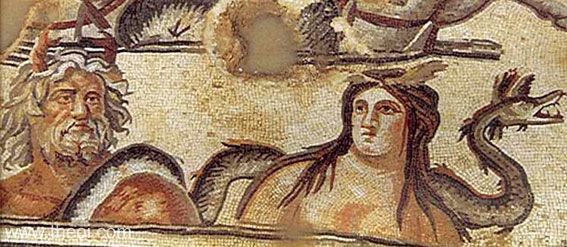
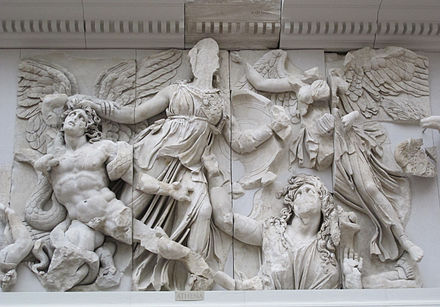


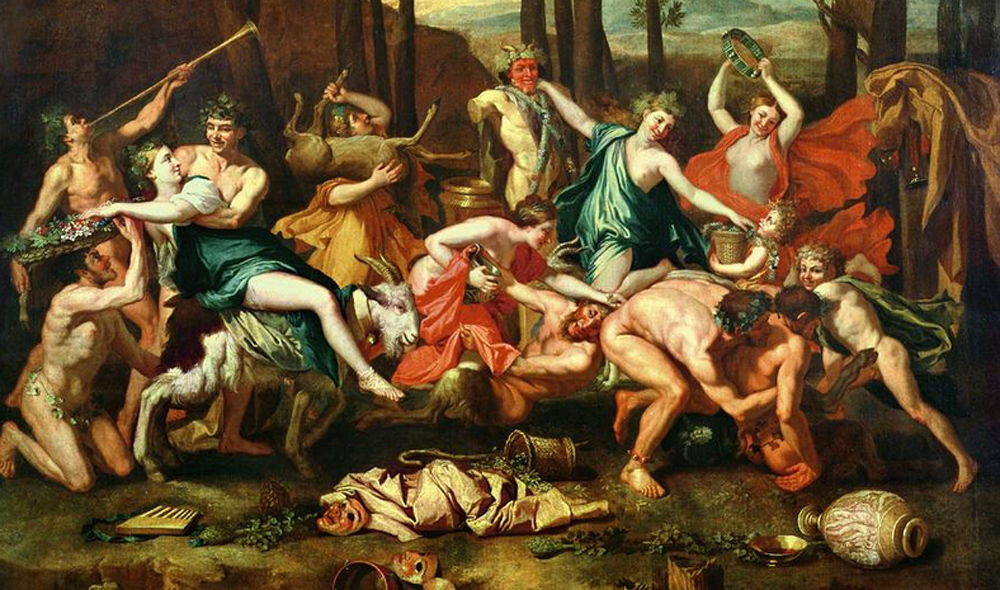



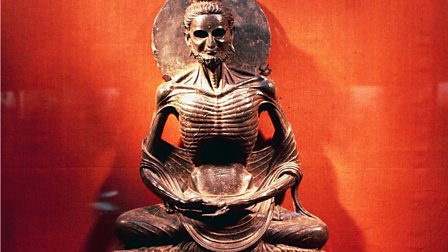
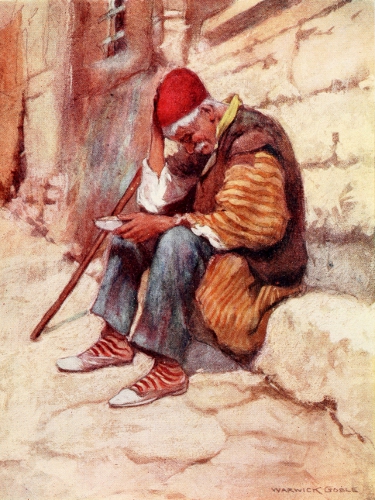





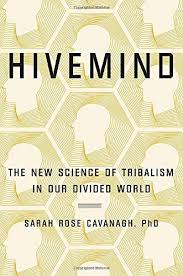

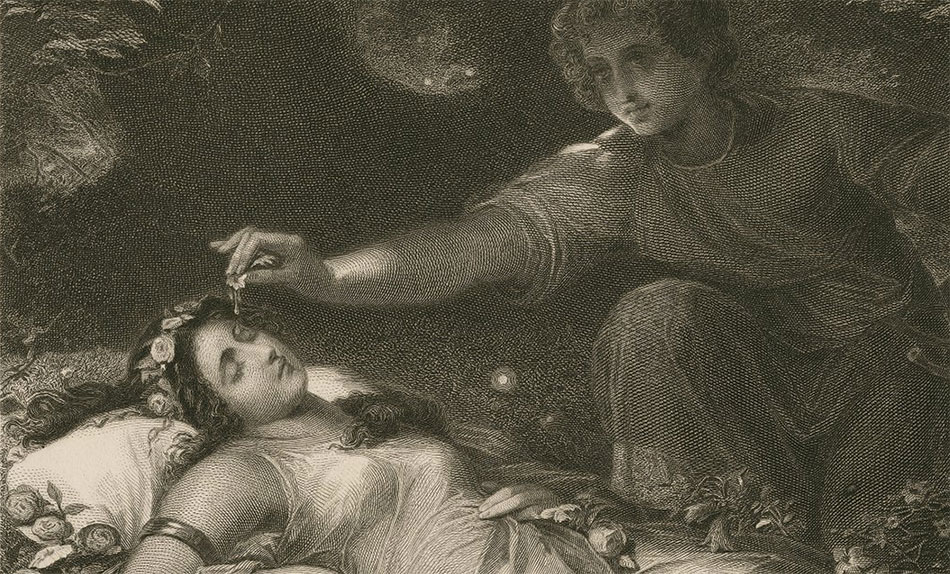
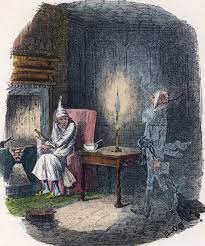

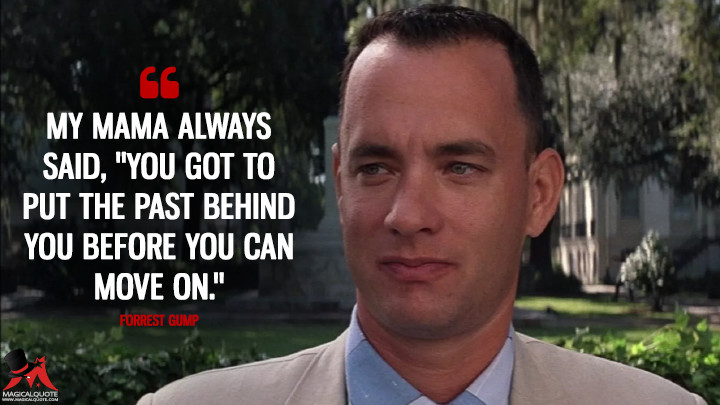


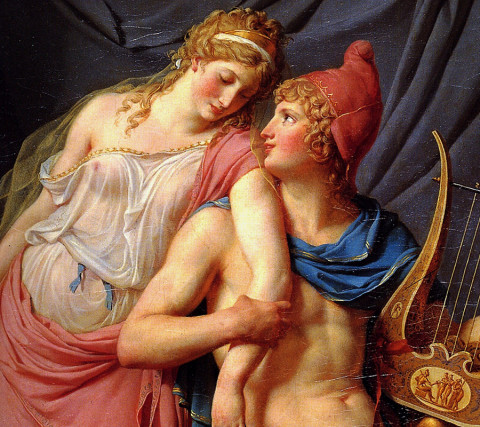



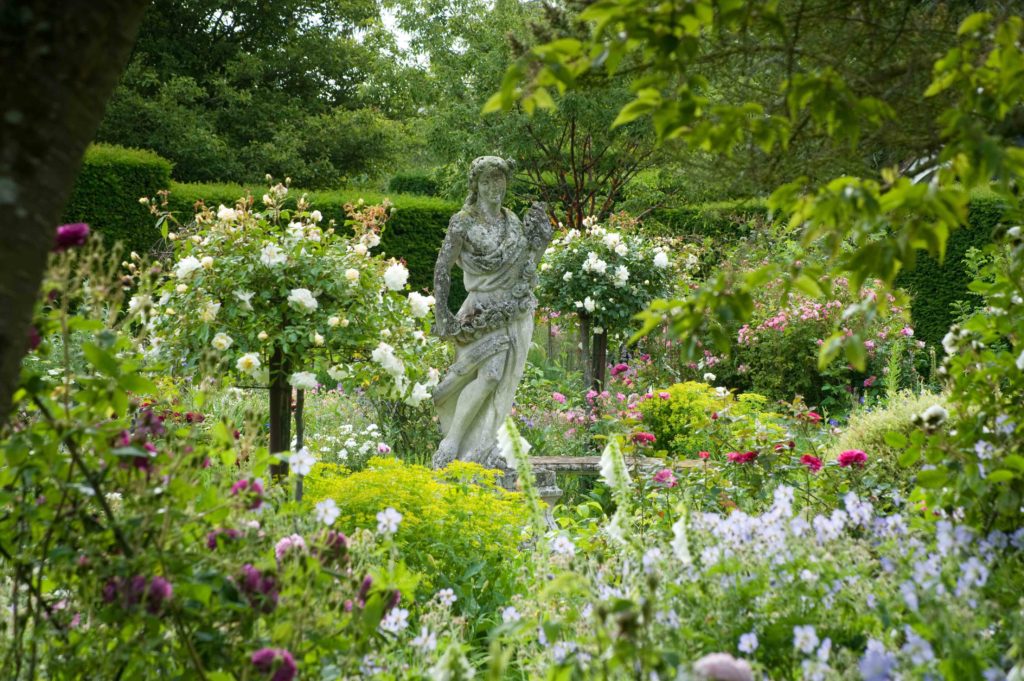


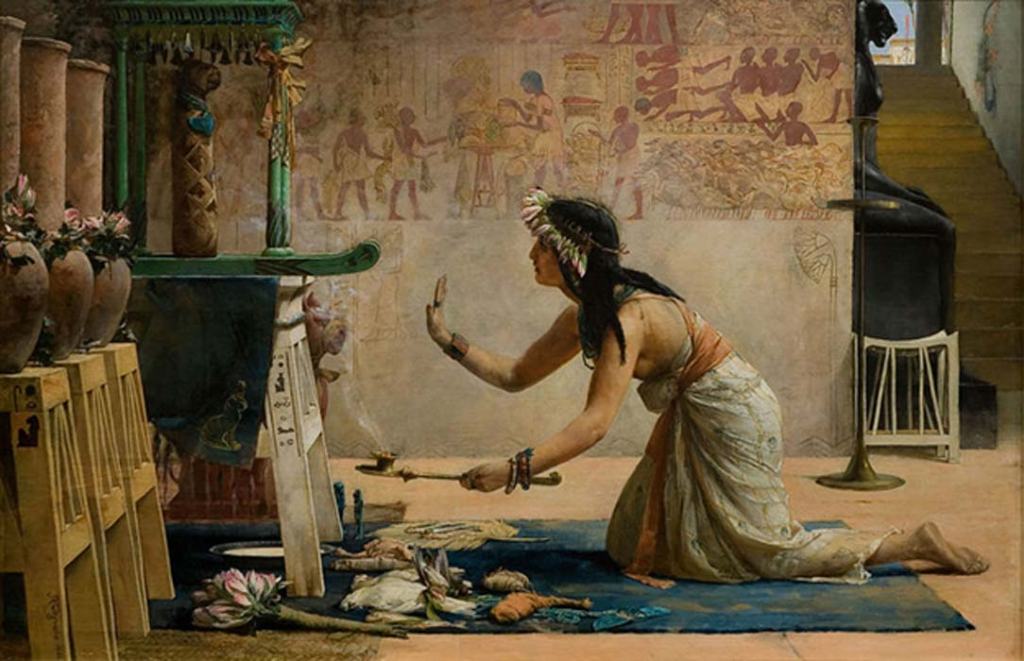





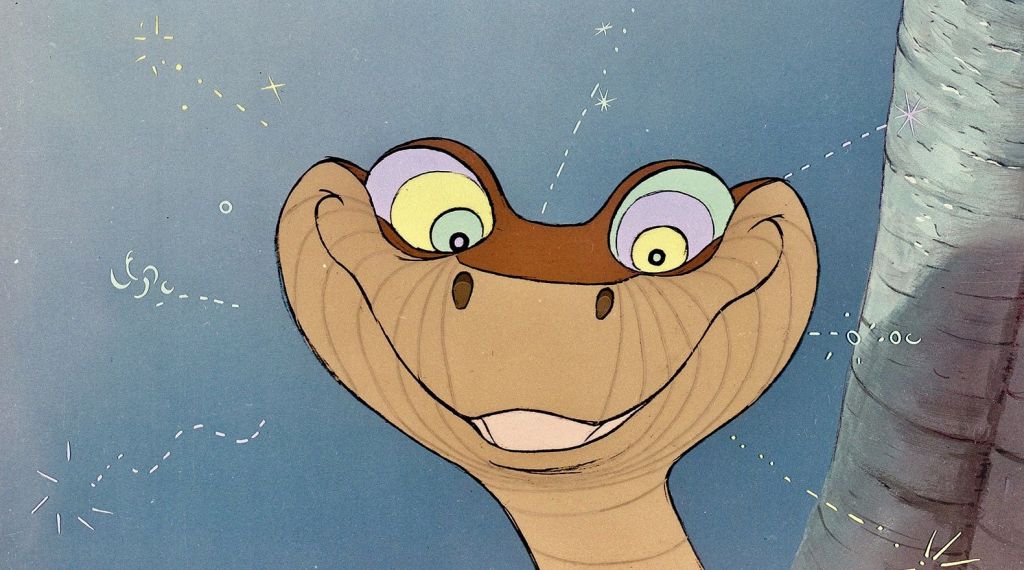

 Matters Blog