Looking Through the Glass

OK, look out of the window and tell me what you see.

I see some fields and trees and a couple of cows.

Think carefully. Tell me what is the first thing you see.

The fields.

Wrong. The first thing you see when you look out of any window is glass.

This little exchange may sound pedantic but it crudely illustrates how we ignore the way we perceive the world. Sweeping short cuts are made during the process of perception in order to to establish some sort of certainty of what is out there, for our deaf and blind brains.

The next logical step in this line of thought, is to consider how many other things we do not see, whether they be ideas or physical things.

I would argue that there are many more than we believe.

Take technological ‘evolution’. I avoid the word progress because there are examples of new technologies that were a step backwards rather than forward. The release of energy from matter in nuclear fission for instance, creates as many horrors as quick fixes for warfare or the provision of electrical power.

Nobody votes for new technology. One day you are sitting on the sofa eating your dinner when, on the news, they are demonstrating a car that drives itself. Or you are a farmer in nineteenth century England and suddenly you hear you neighbour starting up his new tractor.

These changes to our lives come about as if by stealth. Generally they are considered benign – that is the benefits out weigh the problems. The fact that all new technology is by definition ‘untried’ is something that neither proves nor denies a problem exists, in the present or future. So it is allowed to be produced.

The mobile phone, for instance, has revolutionised many people’s lives. Even children as young as three are given them. And yet there remains a question mark over the emission of microwave energy and the effect it has on young and adult brains. At present the young are thought to be particularly at risk because their brains are developing. Making a phone call in a car for instance, is the same as putting food in a microwave cooker, only it’s not food being cooked – it’s you and your family. Because this background energy has been with us for over a generation, it is not possible to establish a ‘control group’ to measure the development of brains. There are no humans alive now, who have lived without a constant background of microwave energy.

Of course there are checks and balances at work in various committees in Universities where research is done. Also government organisations monitor and grant licences to new technologies. The ethical concerns, the effect on other systems such as the environment, sustainability, disposability, carbon footprint etc. are just a few of the concerns applied to new technological developments.

The problem is not all countries judge new technology in the same way. If there is a political, monetary or social ‘quick gain’ to be made through say, shale gas fracking, then some country somewhere is going to do it.

And if in the eighteenth century what happened on the other side of the world didn’t matter because it was too far away; this century has no choice but to think global.

The trails of diesel exhaust from ships crossing oceans can be seen from space. Imported goods do not arrive without an environmental price tag.

It is as if technology has a mind of it’s own – and in the next few decades it will quite literally– using 5G and the ‘internet of things’.

But without innovative technologies, the planet would not be supporting the present human population. The number of people pre-industrial revolution, was small. England had about four million citizens when horses ploughed fields. Now there are over seventy million.

But new technology is not the only object seen in the window. Remember the glass.

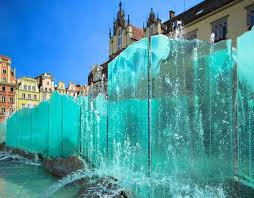
Glass in Wroclaw

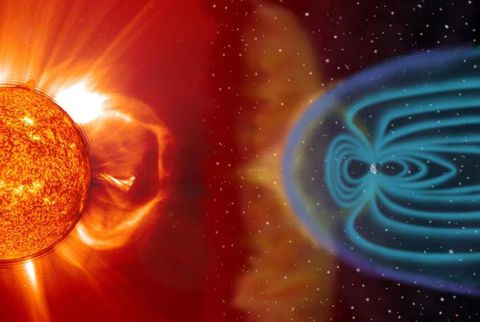
And it might not be a new technology that is about to alter the course of your life fundamentally. There are numerous ‘low balls’ that could change everything tomorrow. For instance there might be a series of powerful solar mass ejections, bombarding earth with cosmic rays so strong that the earth’s protective magnetosphere gives way. Computer systems go down, power grids and machinery of all kinds are cooked.

Solar Super Storm

Trusted technologies, reveal that they have been trusted too much. The impossible or ‘once in a thousand year event’, happens. Then mankind realises it had not seen the glass in the window.

The earth is a space craft and like all complex systems they are fine until they break down. Then back up systems have to be activated and emergency plans initiated…if they exist.

In the case of planet earth they do not. A ‘survivalist’ shelter designed for two weeks, two months or even two years, will eventually either be discovered or run out of supplies before the re-population even begins. Mad Max doesn’t even come close to the post apocalypse chaos.

The question for the present generation and for those yet to be born is;

‘what are the blind spots in our modern lifestyle that could leave human population exposed to near elimination and what is the back up plan to each eventuality?’

Governments, committees,  industrialists, academics  scientific researchers and technological inventors and innovators are our modern day ‘dictators’. You won’t be voting whether to survive disaster or not. Your trusted leaders just won’t have seen it coming because they too were looking through the glass, like Alice.

Let Them Eat Happiness

Western culture has come a long way since it was ruled by royals and aristocrats – or has it?

Few French peasants would have even glimpsed the lifestyle of the immensely rich and powerful in the seventeenth and eighteenth centuries. They would have been unaware of what really went on behind the iron gates of Louis 14th’s palace at Versailles. The mirror lined rooms and the golden corridors of power might have well have been in another dimension.

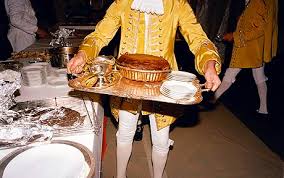
a plate of happiness

Eventually the Aristo’s and the royals have lost much of their wealth and most of their power. The wealthy industrialists took on their mantle in the eighteenth and nineteenth centuries in the West. Instead of taking taxes from the poor, they stripped nature and nations, and occupied the masses (and their children) in factories.

With their acquired wealth, they built mansions set in Inigo Jones style gardens, just as the elite before them had. They bought military commissions, titles and honours and entered parliament. Power too, was for sale. It was a different game but with the same lust for money and dominion over others, as played by the royals.

In the twenty first century there is an awakening to these processes as having been outrageously ‘unfair’. There appear to be glimmers of similarity between the Gillet jaune and the revolutionists of the French Revolution. No guillotine’s yet but this revolution has only just begun. Perhaps it is a Gilletine.

This time round, the capitalists and the so called ‘elite’ are in the firing sights of the missiles from the streets. The possession of most of the wealth by the few, reverberates around the internet like a pin ball in a crazy machine; lit up with flicking levers, lights and cartoon graphics. How can it be fair, we are asked, that the ‘elite’ have so much money? Are they killing off the humans to save the planet using fluoride, chem trails and advice to avoid vaccination? Lies and suspicion are great hunting dogs.

Confucius; he says, ‘when the duck puts his head above the reeds in the hunting season, he had better be ready to be shot at.’

For just as the Sun King and the royal families of Europe were human enough to be pulled kicking and screaming from their palaces, so are the modern elite.

Sun King gate

The injustice and the irony of the lessons of history are obvious, but a working alternative is not. Even an establishment introduced by the anarchist rioters, is an establishment; ergo the Soviet Union. If a hundred anarchists met in a town square to tell the masses to get rid of their leaders, there would appear amongst the anarchists, a leader.

Philosophically and scientifically it is true, that to every force there is an equal and opposite reaction. So when you put on your black anarchist costume and mask and join the ‘anonymous’ mob to riot, what is the problem you are trying to solve?

The problems of the French or Russian peasant made a long list; no clothes, no health, no food, no water, no home, no land, no animals, no day off etc.

The problems of modern westerners is none of the above as they have it all; health, food, transport, leisure, labour saving technology etc.

The problem appears to me therefore to be no longer external, but in the mind. It is built on the number one illusion in the hall of mirrors, that ‘money equals happiness’. We know this isn’t true but we still pursue it and want to be rich. The lines of people buying lottery tickets from the street vendors where I live in Spain, are an indication of the pursuit of wealth as being perceived as the same as the pursuit of happiness. Or just peep over the pond at the great USA and it’s everywhere in their way of life.

The pantheon of the Ancient Greek gods, has been replaced with so called ‘political elite’ and ‘celebrities’. Vane and pointless people who have had the luck of being in the right place at the right time, self promote on social media. They spread the myth that everything on their side of the palace (or Big Brother) wall is great. Instead of hiding, in the manner of the royals, aristocrats and industrialists, they tease the rest of us with videos and photos of their material success and happiness.

Even when the mascara is smudged with tears, even when cancer eats away the golden vocal chords, the golden divorce unfolds, the assasins bullet richochets amongst the pillars of the halls of power; the masses worship their sacrificed gods. And should an over dose of some not-so-whizzy drug, close down the not-so-happy participant in the great party of celebrity life, selective memories promote the deceased as a greater god for being dead. Goodbye Norma Jeane.

Various

And yet, as long as two thousand years ago, a man said;

I tell you the truth, it is hard for a rich man to enter the kingdom of heaven. Again I tell you, it is easier for a camel to go through the eye of a needle than for a rich man to enter the kingdom of God.

For if you change the problem from ‘not being rich’ or ‘others should not have riches’ or ‘I want power’ or ‘I want what he’s got’ or ‘give me what I am owed’ or ‘they spoilt everything for me’ or ‘I just want what I deserve’ or ‘you can make me happy, why don’t you’ or ‘if only I was rich’ –

to; ‘how can I be eternally happy?’ then that is an easier problem to solve. Most of the historical examples of people who became eternally happy did so by giving away their possessions and gave love to others. Well documented examples would be Prince Sidhartha, Jesus the Christ, Vishnu and Kali, Mother Teresa, St Francis of Assisi.

Lesser known examples are the monks, nuns, non- government agency relief workers, public servants, healers, charity workers, environmental activists, street sleepers, the wanderers and people who you may know personally.

We may not all be saints, and perhaps those posthumously awarded sainthood were not either, but we can aspire to share what we have, however much or little that may be.

The non-self centred may not hit the news headlines, they may not be seen in a queue for a lottery ticket, they may not self promote like politicians, they may not stand up against the politicians, they may not have flashy cars and houses or go for golden globes – but they exist.

Their happiness is not necessarily in this life time or even the next, but they will have seen over the wall into the garden of Paradise. It is not on this earth for this globe is not, and never will be, ‘golden’. It is but a shadow of the real Paradise where there is no chaos, no illusion, no entropy and certainly, no lottery.

The Cash Back of Notre Dame

Fortunately there were no casualties or deaths, following the fire that ripped through the roof of Notre Dame cathedral last week. People held their breath as they watched the ancient temple’s walls and windows silhouetted against towering flames.

When the last embers died, Parisians were stunned. It cannot be put into words what buildings sometimes represent to nations, and that certainly applies to this one. And yet, what has happened here?

An old building, medieval in places, has lost it’s roof and some of it’s treasures. Were we expecting Notre Dame to last for ever? If not, is a catastrophe like this not statistically likely? Nothing lasts for ever, unless you build like the Ancient Egyptians built their pyramids. So with that in mind, thanks can be given for what remains and the task of reconstruction ahead. In my view, there has been a kind of cleansing. Fire purifies, in the alchemical sense. It removes the dross and leaves the precious.

I heard on the news that architects will be invited to present a way to do this. Personally, as an architect, I would reconstruct the profile of the collapsed tower in structural glass. Light would pour into the building in a way that was never intended. Gothic has a taste for the shadows and dark spaces penetrated by beams of mysterious light from beyond. So I would use a layer of intelligent ‘glass’ that is able to form coloured images or colour blocks, in the way that an LED TV screen does. It will be able to change from black opaque to white opaque and all the colours in-between. In addition it will be able to describe moving coloured images. I would like to introduce the possibility of creating holograms high above the heads of the congregation and visitors. These might be on religious themes or taken from famous works of religious art. Really, the content could be decided by whoever has the right and the power to do so, with hopefully a chance for citizens to have their input too.

The place would be a source of spiritual refreshment from the inside and from out. That to me, surpasses the cluster of ancient roof timbers.

But all this is but a dream without funding – and should it be funded or left as a ruin because right now, we have more important things to do? What do I mean?

Enter the financiers. Men of high reputation and wealth, pledging billions of tax deductible Euros – although they say that the tax benefits are not a consideration. Suddenly money is available to repair a national monument which was not there to support war victims in Yemen or desperate refugees who move about the globe to escape poverty and politics and climate change. Some people are angry about that.

To me, some precious lives in Notre Dame cathedral survived. They are both priceless and with little monetary value. They are the inhabitants of the three bee-hives on the roof. Perhaps twenty thousand bees, frightened of smoke, kept indoors out of harms way. An ancient instinct to avoid forest fires kept them safe. I expect they are now carrying on their excursions into city parks and gardens to collect the golden pollen that makes their hives so special.

I am old enough to remember summer days and driving along motorways and fast roads collecting insects. They would die attached to the wind shield en-mass and their sticky bodies were hard to remove. Radiator grills and headlamps were similarly encrusted.

Today, forty percent of known insect species are extinct. When you drive, no insects appear on the wind shield for they are not there. One can only assume that modern farming practices using chemicals against so called ‘pests’ are largely to blame. Perhaps there is climate change and loss of habitat in the the list of causes as well.

If I had billions of Euros and I was considering giving back what I had, I would probably spend it on creating a world worth living in for our children and young people.

A brave few are presently sitting in the streets of London highlighting that there is an ‘extinction event’ in progress which has been and is, largely ignored.

I happen to believe they are right. The earth has been through six or seven known extinction events in it’s life. The fact that we are living in one now is as scary as it gets. Yet all the signs are clear to see; the loss of insects being one of them. The creatures at the base of the food chain are easily overlooked and yet the whole of the pyramid of life depends on this base layer. Without bees, Albert Einstein said, the world would end in four years.

What do we need from the wealthy individuals and States with money to invest? What do we really need? Space travel? One day, perhaps a single potato will cost a billion Euros. When it is the last one on the planet and it could keep you alive for two more days, it would be worth it.

Perhaps the loss of Notre Dame cathedral is a taste of things to come, as planet earth demands it’s ‘cash back’; the Promethean debt. For like Promethius we have stolen the special knowledge that fire represents, from the Gods. Now they want their due.

BBC Radio Europe

BBC Radio Europe

Wing Commander James Sutton DFC, was given a position in the BBC shortly after the war in July 1946. He had been a bomber pilot and saw first hand much of the destruction of Europe. Perhaps his part in the destruction of the many of the beautiful cities was behind his innovative idea. He said that it was when he kept seeing the slogan ‘Nation Shall Speak Unto Nation‘ over the entrance doorway to the BBC in Portland Place, that he had his vision for a new radio station.

Up until then the Home Service, Third Programme and the Light Programme had been the main stream radio stations. James Sutton proposed the a new radio station take to the air called ‘BBC Free Radio in Europe‘.

The then time Controller liked the concept and a working group was formed within the BBC. After a summer of deliberation in which some promising ideas around farming and fisheries, culture and entertainment, religious affairs, re-uniting families lost during the war and human interest stories from across Europe. Eventually it was the reality of not being able to fund such an ambitious project that stopped further progression.

But in the mid 1960’s another Controller read about the project and believed it was right for the times. There was then a great deal of discussion about the Common Market and whether the UK should join it.

Money was found by cutting some of the more expensive programmes in the World Service under whose direction the new station would be formed. It was to be called BBC Radio Europe with the mission statement;

Bringing Europe together.

There was certainly no shortage of material and quickly a broad menu of programmes was formed. Most well known was the Comedy Hour on Sundays with stars such as Franky Howard and Tony Hancock delivering humour that it was expected Europeans would understand. They did, and quickly the rather saucy, dry and clever wit of the writers adapted their material around European interest.

In Your Garden was to become another staple for European listeners. Presenters would visit well known and less well known gardens and interview gardeners there. A small part of the garden would be focussed on in great detail so that listeners might recreate the ideas and enjoy new planting techniques and garden design.

The list of successful programmes is too long to describe here but the point can be made of how the formation of BBC Radio Europe put it’s finger on the pulse of public opinions, needs and hopes. Where distrust and envy had been barriers to peace before the war, in some small way, BBC Radio Europe enabled all people whatever their culture and geographical background in Europe, to see over the fence and enjoy the company of neighbours.

There is always a slightly darker side as in all new ventures. MI6 were rumoured to have one time requested the ‘time signal pips’ be encoded with secret messages. Some boffin had worked out a way to compress a long string of Morse code into a single beep. Replayed slowly, the pip could be read and British agents across Europe instructed and informed.

The Controller put a complete ban on this idea, claiming it interfered with the principle of the BBC being detached in every way from Government. He was concerned, rightly, that should this technique be discovered the whole integrity of the radio station and perhaps even the BBC’s charter, would be compromised.

As the decades passed into the 90’s and 00’s, BBC Radio Europe became a progressive and instructive voice across the falling boundaries of Europe. Greater emphasis was placed on language skills and building on a common language such as English to bring people together. A spotlight was placed in programme schedules on the one time Soviet Union satellite countries such as Poland, Ukraine and Hungary as well as the minor Baltic States. BBC Radio Europe was believed to have provided valuable support to the people of Germany both prior and after unification of East and West. Families were re-united, reliable breaking news stories broadcast, new political directions for democrats of all parties, were all given a platform to speak.

Combined with the growth of the internet and the world wide web, BBC Radio Europe became a stronger voice then ever before. Many of the programmes were made available on the internet and to download although at first the choice was limited, soon the possibilities expanded into the ‘I-Player’ and ‘Sounds’, we know today.

At one time an ‘European Radio Licence’ scheme was discussed in the European Parliament. The proposal was to evolve BBC Radio Europe into a station controlled independently of all parliaments through subscription, on the lines of the BBC Charter. It would be based in central Europe, maybe somewhere like Lichtenstein, where it would continue to evolve independently and without prejudice towards one way of thinking or another.

The BBC were initially in agreement and indeed a trailblazer for what was in effect a new and very promising income source. The lessons of ‘missing the boat’ over the Pirate Radio evolution in the 1960’s had been learned. This time the BBC wanted to be on the side of the pirates, and rightly so for there was known to be another gathering storm of Nationalism within Europe and across the world.

The continued independence of radio programming was what killed the idea in the end. There was a growing feeling in the management of the BBC that BBC Radio Europe would become a monster which no one could control. They were thinking of right wing influences and quasi government organisations, infiltrating and gaining control of news content and programme scheduling.

Then came the nail that closed the lid on the coffin of BBC Radio Europe. From within the BBC strong right wing influences guided programme controllers and presenters into an agenda of patriotism or perhaps better named nationalism. Forward looking thinkers who had brought BBC Radio Europe into centre stage of ‘fairness and reasonableness’ were replaced by figures looking back to Britain’s Imperial past. This despite the fact that much of Britain’s prosperity is known to have been forged on the back’s of the poor of the so-called third world.

In this new world where borders are once again drawn with the steel pen of walls and border posts, the voice of BBC Europe has failed in it’s once optimistic vision.

BBC Europe will cease to broadcast on the day that the United Kingdom leaves the European Union. This will undoubtedly be a sad day for all citizens, not only of the UK but for the whole of Europe. Peace was bought at a high price in Europe. Radio Stations, you would like to think, are worth more than a sudden closure, after it’s long service to the freedom of the citizens of Europe.

All the above is entirely fictitious. There never was a BBC Radio Europe. Perhaps if their had been and many similar European combined enterprises based on communication and understanding, Europe and the World would be in a better place today.

I am Prime Minister

‘Today is the day we hold an historic meaningless vote. Two years ago I went over to the continent and told them what the terms of Brexit would be. At first the EU didn’t like my ‘red line’ attitude but after constant repetition they finally agreed; if only to shut me up (laughs self consciously).

Because no one knew what they had voted for when they voted to leave the EU, I have had to make up the terms of my meaningless Withdrawal Agreement. It’s so fraught with problems that I have had to paint parliament into a corner to get them to vote for it. This hasn’t worked so far but by constantly delaying parliamentary procedure, we are now where I want us to be – at the edge of the abyss.

So today you will all be voting for my deal…as they say on that interesting show Meaningless on tea time telly, ‘a very very good deal indeed‘. You all know the terms by now, as you have voted against them enough times. But as the alternative is falling off the cliff edge, I expect more of you will see that my Brexit is the only way forward.

‘What about a people’s vote?!’

‘I don’t know why I have to explain again but we have had the referendum ages ago. The people voted to leave. It is my mission to give the people what they want, even if the terms and conditions were not considered and  differ enormously from what people expected. But remember, we can’t just keep going back to the people asking the same question until we get the answer we want.’

‘That’s exactly what you are doing with your meaningless vote!’

‘Yes, but I am Prime Minister and I can do whatever I want. And I have told, I mean, agreed with the EU negotiators that every member of this house will strip naked, paint ourselves blue and dance around Parliament Square singing Britain Waves the Rules! That is a much better deal than staying the EU.’

‘No it’s not!’

‘Who said that?’

‘I did.’

‘See me afterwards.’

‘What about all the people who didn’t vote in the first referendum, who want to be heard now?’

‘If you mean women in refugee camps; – we have stripped her of her citizenship, so no longer a problem.’

‘No, I mean the two million sixteen year olds in 2016, who are now eighteen. It’s their future and they have a right to be heard. And then there are the UK citizens who live in Europe and were not allowed to vote on the grounds that this doesn’t concern them because they have lived out the UK for 15 years. Of course it concerns them…them more than anyone else!’

‘A second referendum will bring indecision and divisiveness.’

‘We have indecision and divisiveness now! Surely a second vote will either stop Brexit or give it more impetus and quieten dissenters.’

‘My deal is a very good deal and if you don’t agree to it then you are not being democratic and defending the rule of law and parliament…’

‘Why?’

‘Because I say so, because I am Prime Minister. So are we going to have this meaningless vote or not? Let’s get it over and this time, remember, if you don’t vote for my meaningless deal then you will have to keep voting until you vote in it’s favour.

If you vote for the good of the country instead of my meaningless deal, the repercussions will not be my fault but yours for being very naughty MP’s.

No indecision. Commit yourselves to be stupid and support the most uninformed plan anyone has ever concocted. You must vote and you must vote decisively, May. You may not vote ‘may not’ or wait until May.

Let’s be certain about one thing. I used to tell my teachers at school uncertainty, is not my middle name, it’s my last name.

Who Owns Knife Crime?

Should the citizens of the United Kingdom be afraid? Reading the headlines of the ‘red top’ newspapers – you should be. Because stories involving public violence sell newspapers and whip up politicians.

Why is a branch of violent death suddenly deemed unacceptable, when ten people die in motor vehicles in the UK every day? Clearly there is a tendency for the press and media to focus a spot light on stories that appear as fresh and ‘in the public interest’ i.e. exciting. Statistics showing an increase in knife crime need to interpreted by statisticians and explained to the public intelligently because we all know they often give a false picture of what is going on.

Crime is something most people have an opinion on but few understand. They call a burglary a robbery and a robbery a theft. Journalists often confuse the legal terminology and I expect the man on the omnibus would have trouble as well.

When children are murdering each other there certainly needs to be a debate. I would start that debate on whether the law needs another word for a child on the verge of adulthood. Should a seventeen year old be treated legally as a child when they can join the army and or get married?

Murder using a knife is a specific crime. It is however no different to murder using any other implement in it’s effect. Because firearms are hard to obtain in the UK, it is likely that a similar weapon will be preferred. A knife is certainly the weapon of the bully who uses it to cause intimidation and or cause injury or death. Rarely do cases emerge of a knife fight in which both parties use knives. This shows that those who carry a knife wish to intimidate and win a conflict rather than meet anyone on equal terms. This is bullying at it’s most extreme and behaviour pattern often learnt in the school environment and carried over into adulthood.

So when politicians are asking their civil servants who is responsible for stopping knife crime the answer is not as simple as ‘the police’. Policing is always the last resort. As Police Commissioner Cresida Dick said, ‘we cannot arrest our way out of this problem’.

Police presence as a deterrent does work but only under very specific circumstances. I once asked an ‘old time copper’ how many burglaries he had witnessed in the thirty years he spent walking the streets, he replied, ‘two’. Crimes are not generally omitted in front of the police neither do they tend to ‘come across’ them.

The mayor of New York became famous for reducing crimes on the streets at a time when violent crime was a problem. He did it simply by placing a police officer on each street corner. This had a significant effect on reducing crime in the area where crimes had previously been common. Perhaps they were moved elsewhere – deflected – some like shop lifting would be. This model however cannot always be copied and used elsewhere. It’s matter of police numbers.

So for once in my view, the UK Prime Minister, Teresa May is correct. There are many reasons for a spate in knife crime and all those with a handle on the problem need to get together. More police on patrol might have an effect in the short but random patrols – even targeted patrols – are modelled on military tactics and not part of a long lasting solution.

Who then are the owners of the ‘knife crime’ problem?

Parents

Relatives

Friends

Peers

Teachers

Social Workers

Youth Workers – Sociologists and Academic Researchers

Faith Leaders

Drugs Councillors

Mental Health Professionals

Prison Officers

Public Transport Operators and Staff

Entertainers – e.g. Rap Performers

Social Media Service Providers

Architects, Planners and Developers

Local Councils – Town Centre Managers, Retailers

Local Councils – Youth Services, Educational Establishments, Sports e.g. Martial Arts Teachers

The General Public – potential witnesses

Politicians

Police

The list is probably too short. You might think of others but my point is that the strands of the problem are complex and no single action will contribute to a reduction of the problem.

In each murder there will be some parties and partners who had the chance to impact on the likelihood of an individual child committing a murder. Parents probably top the list because of their intimacy in a family environment and ability to monitor the influences, moods, thoughts, companionship, peer demands, social freedoms and restrictions and every other aspect of their children’s lives.

The topic is considerably more complicated than focusing on gang culture and the use and supply of drugs – but these factors are certainly a part of the problem.

In the last few decades, Youth Services such as Youth Clubs and Sports Centres have been decimated by successive governments. I heard an interview with a man who lived in an area of London where gang culture ruled the streets for young people. He cited the start of the problems with the closure of the Youth Club and annual outings out of the city in which young people came together.

He had brought several warring gangs together through music. Young people who hated each other for reasons no more scary than geography i.e. territory came together to play music, sing and dance. It worked. He should be given a medal.

Drugs are inevitably a significant factor in the power and control of the gangs over their members. They are forced to operate in Mafia style battles over territory and people. Laced through this nightmare are the selling and consumption of illegal drugs that perpetuate the horror and force drug users and gang members into an downward spin.

Just because drugs are hard to control does not mean they are not part of the problem. This is an area where police do hold a significant strand and their powers to stop and search suspects need to be encouraged and used to the full. Local residents usually know exactly where drug dealing and users operate and good intelligence will empower police.

The fact that the victims and perpetrators are often under the age of eighteen is something for society to be deeply shamed about, for they have access to educational facilities and some sort of home lives which children in many poorer countries do not have.

There is not room to discuss even a small aspect of this problem here. One can only expect that the consensus amongst politicians is to do something other than spend money on knee jerk solutions.

Problems that evolve slowly with social change usually require slow time remedies. The public need to be told this and reminded of their duty to step up to their own responsibilities as shared owners of the problem.

How to Lose the Lottery

I remember times in the UK when there was no National Lottery. When I went to Australia I considered it quirky that there was a ‘Loto’ which concentrated the attention of the masses once a week. Profits went to social causes, one assumes, like taxes do, one assumes.

Not surprising then, that some regarded Lotteries as a form of voluntary tax. The logic of the possibility of owning more money than you can dream of for the expenditure of just one dollar, is too much. It is logical to enter a lottery, yes, because without a ticket you do not have a chance of winning.

What the Lottery advertising does not suggest is that the chance of winning can be questioned. The question is obviously, how likely am I to win the lottery? For the simple mind without any grasp of statistics or even arithmetic, this question is difficult. Surely, this would spoil the fun and why not, just take a chance?

Even when told that the chances of winning the National Lottery in the UK presently are fourteen million to one, precious pounds are handed over for an empty promise every week by many not really able to afford it. Their dreams have the better of them. Selfish desires are strong motivators.

I expect if they climbed aboard my ‘Reality Bus’ they might see the light. This bus, you see, will drive you passed a football stadium in which have been invited fifty thousand people. They sit in silent expectation, each reviewing their plans for what to do with the millions they hope to win. The guide on the Reality Bus asks how many of those in the stadium might win the lottery. Sun hats are removed as heads are scratched and partners quiz each other.

Is it a trick question?

Well, of course it is because at this moment the bus revs into life. After a few minutes it stops at the entrance to another identical stadium. Inside the stadium can be heard the discourse of another fifty thousand hopefuls. The same question is asked? Some on the bus begin to wonder how many more of these football stadiums there are. And they are correct to do so. All through the morning and afternoon, the bus drives up to another one hundred football stadiums each bristling with like minded people to those on the bus. The bus passengers are beginning to think about dinner. They are let off at the one hundred and first stadium to use the facilities. Some grab a quick pie and a beer on their way back onto the bus. The driver is keen to move on. He has done this journey many times and knows that they are going to be going through the night visiting another hundred identical stadiums.

Come breakfast time the passengers are looking tired and bewildered. How could there possibly be so many football stadiums full of people who are ALL expecting to win the same lottery?

The driver insists they have to drive on and by mid afternoon the bus stops at the two hundred and eightieth stadium. The guide stands up and holds the microphone to address the weary passengers.

‘So far we have passed by fourteen million people all expecting to win with a similar ticket or tickets that you purchased. I have to ask you now, how lucky do you feel?’

This is the point of the whole journey and the moment when the bus passengers finally understand the waste of money and time they have devoted to the purchase of a lottery ticket.

A voluminous hand of fate hangs over the audiences seated in the 280 football stadiums one by one. A clever inflatable ‘hand’ suspended from a helicopter provides this metaphor. As it leaves each stadium having conducted no positive selection, the crowds get up and leave in a dismal mood. ‘It’s not even as interesting as a nil nil footy match’ one hopeful contestant is heard to say.

At the 79th stadium, one lucky contestant is selected amongst whoops of joy from the winner – and moans of envy from the other 49,999 in the stadium.

The Reality Bus completes it’s journey with a visit to Mr. Mind Guru. This is an man from India who sits on a huge golden cushion in a small marquee. The bus passengers are seated on carpets and served tea and biscuits which they gulp hungrily. The guru explains that the secret of a happy life is not to be different to others by being ‘filthy rich’ – he almost spat out the words. The secret of eternal happiness is to cherish the things and people with whom and which one is surrounded. ‘Isn’t it?’

Despite the convoluted English, the audience confer and sort of understanding, as well as they are able following their sleep deprivation.

The audience are invited to burn their lottery tickets and pledge to give materially and with their time to as many worthy causes as they wish in some other way. This will bring them the greatest happiness – so they are told.

‘More happiness than all the tea in India – more happiness than in a selfish thought or a comparison of oneself with another.’

The audience trickle out of the marquee. Time has not been wasted. It has been a very truthful lesson.

The bus heads back to the first football stadium where another fifty hopefuls take their seats, for what they are told will be ‘the ride of your life’. Just49,950 hopefuls to be enlightened, from this stadium before the bus moves onto the next. 

Bored of the Border

At a critical time in UK politics, Teresa May is enjoying the sunshine in Sharm El Sheikh at the tax payer’s expense. There is an EU summit, but Brexit is not on the agenda. Brexit is due to happen in five weeks on the 29th March 2019. The scene is my house.

I put my steaming Irish Stew on the table just as the phone rang.

‘Yup’

‘Hello – the Right Honourable Teresa May here…’

‘Look, I’ve just put my dinner on the table, can I ring you back?’

‘Oh, yes – scratch my back a little higher darling…’

‘What did you say your name was?’

‘TM – the PM – ooh, lovely’

I suspected it was some sort of prank call.

When I had scooped up the last of my Danone Bifidus I eyed my phone, picked it up and speed dialled.

‘Bob! Thank you so much for ringing back.’

It wasn’t my name but I let it pass.

‘I’ve been told by Dave to call you when I get stuck up a gum tree.’

‘Do you mean Dave – captain-of-the-ship-talking-to-you-from-the-lifeboat-off-the-port-stern – Cameron?’

‘Yes, yes, him. Well he told me you were a bit of a clever Dick -a problem solver.’

She had my name wrong again. ‘Yes’

‘Well, I have a problem. It’s this Brexit thing. I keep trying but I can’t delay it any longer and I soooo want a hard Brexit. I’ve tried to string everyone along but I have run out of irrational reasons. You must have been following it, surely?’

Why was she calling me Shirley?

‘Go on Mrs. T.’

‘Well, it’s all over this Irish border back stop thing; between the North and South of the Ireland of Island.’

‘Island…it’s an island called Ireland.’

‘Yes, so, tell me what I should do? I mean, Dave knew about the Good Friday Agreement banning a hard border and yet like the silly ass he is, he still went ahead with the referendum. I mean – just because it was in the Tory party manifesto…which has never been a reason to carry out policy before. I mean, how stupid was that?’

‘On a scale of ten?’

‘Yes’

‘Ten.’

There was a long pause as if I was expected to produce a solution straight away. ‘So listen – was it Mother Teresa?’

‘No, the Right Honourable’

‘Okay Ron, here is what you do. First, that border with the farmers on their Massey Fergusons and lost tourists and local folks crossing all day and night.’

‘Yes’

‘Don’t move it. Don’t touch it. No barriers, no towers, no machine gun posts.’

‘Oh, thank you. Thank you!’

‘The border is totally fixed and that problem, is your solution. It’s a red line on the map and politically. So introduce all of your Trade and Customs checks away from the border.’

‘We thought of putting it in the Irish Sea but it was too wet.’

‘No, listen, you just move all your ‘border controls’ a few miles inland so that they are no longer literally, border controls. That leaves the real border frictionless and in full accordance with the Good Friday Agreement.’

‘Can I say robust?’

‘Sure.’

‘Robust.’

‘Even with two hundred or so border crossing points you can put in controls at suitable geographic locations.’

‘What locations?’

‘Well I thought loads of Payage’s. You know, Toll Booths, hundreds of them up and down, near to the border.’

‘Toll Booths?’

‘Yes, you see, all the traffic from Eire is not contributing it’s fair share to road tax in the UK. They are merrily wearing out UK roads and infrastructure without a care, so we stop them, and make them pay.’

‘Brilliant! Go on.’

‘…and they will need private health insurance, travel insurance, pet insurance and comprehensive vehicle insurance – which they can purchase by the day from the UK government.’

‘You mean we sting them for tax and insurance? I love it!’

‘Whilst this is going on, border control officers are doing their checks on vehicles. Number plate recognition cameras are hidden in the ‘Beware of High Tarrifs and Taxes – You Are Now Entering the United Kingdom’ warning road signs. They are alerted to any vehicles that they should be interested in. You know loaded with Somali terrorists and drug cartel bosses.

‘I love it! I’m so glad you called Alec. Dave was right. You are smart. But, I can see one other problem.  What about the other side? The EU insists on a hard border since it’s the edge of Europe.  I can see they are going to make it look like North Korea, however clever we are on our side.’

‘I know’

‘So’

‘When the wall goes up and the hostile vehicle mitigation barriers, anti-tank gun emplacements, mine fields…’

‘Oh no! Oh no!’

‘Don’t worry. That’s in my plan. When all that happens despite your robust objections as it being contravening the Good Friday Agreement and no one is listening to you…that is when you insist on a ‘border poll’…both north and south.

‘What pole? A north pole and a south pole? They are a long way away?’

‘No, a poll, you know, referendum? Both ends of the country vote on whether to unify the island of Ireland.’

‘I can’t see the IRA liking that’

‘It’s what they have been fighting for this last century’

‘Oh, yes, of course…1914…is that what it was about?’

‘…just make sure the referendum needs a majority that is as slim as possible. Do not require a super-majority of say 66% otherwise you won’t get the result you want. You know…just as in the Brexit referendum. Even a majority of one farmer who entered the polling booth by mistake looking for a lost lamb, just one casting vote will become the ‘will of the Irish people’. Your defence becomes a defence of democracy. Moral high ground and all that…’

‘I’m writing this down Dave…l a m b.’

‘Then Ireland is united, the Treasury are delighted with extra taxes for a while, and most importantly, Brexit can happen smoothly. You become Dame Margaret Teresa of Mumbai in the new year and everyone is happy!’

‘Oh Winston! You are so clever. Thank you. I hate strategy and you have really set the ship on a navigable course. So much smarter than Dave.’

‘Don’t mention it. We Irish Republican’s are always happy to work with the United Kingdom.’

Is Happiness Wrong?

Blaise Pascal was not only a scientist and mathematician but philosopher. He is known for his book entitled Pensees in which he stated;

‘All human problems stem from the inability to sit in a room alone.’

With the benefit of hindsight since the 1600’s when this was written, I would suggest an amendment to;

‘Some human problems stem from the inability to sit in a room alone.’

It remains certain though, that inaction of body and mind is a problem for a lot of people in the West. There remains in Western thought an imperative to voyage and discover new things, places, people. The myth of seeding the planets and stars with human beings is a modern manifestation of this, but at a contemporary everyday level, it manifests as exploring social media compulsively.

Inactivity is seen as something to be avoided and children are instructed to keep themselves busy. There is a notional link here between being engaged in something and being happy. If happiness could be measured on a scale of one to ten, then we might expect to be somewhere around five most of the time. At times of misfortune this would go down to one or zero and at times of fortune nine or ten. Being ‘unhappy’ would then become an impossible state of mind, as there was only a surfeit or depletion of happiness. As emotional beings connected to the world through our senses we could become addicted to happiness through sensual pleasure. However the power or thought has given mankind the ability to disconnect into the abstract worlds of mathematics, language, pattern and imagination. Here also we find happiness. The absence of these activities does not reduce a state of contentment if we abandon contentment as our goal.

A later philosopher to Pascal was Jeremy Bentham from the 18th and 19th Centuries. His famous ‘hand me down’ thought to humanity was his ‘fundamental axiom’ for a fulfilled life;

‘It is the greatest happiness of the greatest number that is the measure of right and wrong.’

The ‘pursuit of happiness’ found it’s way into the the American Constitution in 1776 as a noble aim for our endeavours. As a piece of legalised diplomacy though, it let’s the snake into the garden, as happiness means different things to different people.

Persons engaged in any or all of the ‘deadly sins’ of the Old Testament for instance (if slavery is ‘theft of freedom’) might also be condoned under this right of the constitution. It had to be so, for many Americans from the south were not totally convinced slavery was a bad thing.

When Nazi Germany mobilised it’s military might – with it’s people in general support, they appear in the contemporary movies as being at least eight or nine on the happiness scale. Yet with hindsight we can see that the second world war was wrong and should never have happened, any more than should the first. We have to conclude that we have here an example that one can be very wrong and very happy.

Returning to Pascal’s point about being able to ‘live with oneself’; it is sobering to ponder if the Nazi’s would have been better to have learnt to do this. Instead of finding ‘wrong’ in their society and supposed causes of ‘wrong’ their first endeavours would have been better directed within. Outward exploration of one’s ideals and opinions inevitably mean trampling over someone else’s, in this case Belgium and Poland and most of Europe. This is a manifestation of the inability to sit quietly. Faults that we find intolerable in others are usually those holding most power over our selves. This truth is known from ancient times and is recorded as ‘known thyself’.

When a child is bored, it is because the child has an idea that a change of mental or physical environment is necessary. For whatever reason, this function is not available to the child inwardly.

My English teacher ‘Windy Gale’ was fond of aphorisms and he posted examples around the classroom. One was;

‘There are no dull subjects, only dull minds.’ He was no doubt tired or reading dull essays from dull minds.

While quiet can at first be regarded as in some way lacking, once accepted it can become a ploughed field upon which crops grow and from these comes nourishment.

There was a television series on the world religions several decades ago, presented and written by the theatre producer, Ronald Eyre who died in 1992. In his conclusion he said poignantly that if he were able to bring all the world’s religious leaders into one room, he would expect there would be a pervasive silence. He meant that far from being arguments about dogma and doctrine, origin and authenticity; because these beings had advanced sufficiently into themselves they would not be ‘throwing stones’ at others.

In the twentieth century, the connection between any human being on the planet with another through social media, has expanded this capacity to do ‘wrong’ in the pursuit of ‘happiness’. The forces of ‘radicalisation’ for instance are able to engage the minds of ‘bored’ souls anywhere on the planet. They will break their roots and leave their families to cross borders into broken states to support an aim they perceive as needing salvation from unhappiness. I am of course thinking of the so called ‘Islamic State’ as an example. At this time it’s influence is almost broken but like all political philosophies and doctrines it will always remain as the written word and thought.

Those emerging from the war will have learnt much about being alone and being near one and zero on the happiness scale. They may find that on return to their host countries after trial, they will be placed in a room alone. The question they must face is, can they live with themselves and in doing so become happy? Perhaps then, they will find the happiness they did not find through doing wrong.

Kicking the Mexi-can Down the Road

Angel: Why have you decided that the wall between Mexico and the United States of America must be built?

Demon: Because it was an election promise that I made. Those who voted for me expect me to keep my promises. I keep my promises…don’t you Angels?

Angel: You did promise a wall but you also said that Mexico would pay for it. The question now is not over the wall, but who pays for it.

Demon: Yes, well I must have miscalculated how good kind and honest Mexicans are. I wanted them to pay for the wall and they are not doing what I want. But this proves what bad, very bad, people they are and why we need to keep them out. And all the other South American criminal gangs who want to come to live in our beautiful country. You know they sell drugs and murder? Is that okay for angels?

Angel: You have declared a state of National Emergency today. Is that to get around the Democrats who are blocking your demand for money to build the wall?

Demon: Demoncrats? Do you want to see American children murdered? We all love little human children don’t we? I know I do.

Angel: By most definitions, an emergency results from unseen circumstances. Undocumented migrants have been entering the USA – well since the Founding Fathers. How is it that undocumented immigration is suddenly ‘unexpected’?

Demon: Now you are just playing with words. I say what I mean and I mean to build a wall.

Angel: Even if you have to go against the checks and balances in the American Constitution?

Demon: Especially if the elite are stopping the will of the people. That’s in the Constitution too.

Angel: I’ve looked in Wikipedia and it says that undocumented immigrants increase the size of the U.S. Economy, contribute to economic growth, enhance the welfare of natives, contribute more to tax revenue than they collect, reduce American firms’ incentives to offshore jobs and import foreign-produced goods and benefit consumers by reducing the prices of goods and services.

Demon: Lies, all lies.

Angel: There is also evidence that immigrants commit less crime than natives and that enforcing illegal immigration has no effect on crime rates.

Demon: Are you making this up? Because if you are, I don’t think angels should be lying, do you?

Angel: Have you made a study on whether the wall will do what you expect it to? Will it be good value for money?

Demon: I’m never wrong. I don’t need a study to prove me right. The people voted for me. Are you saying they were wrong? That’s anti-democratic.

Angel: Let us imagine a wall. A wall that people cannot tunnel under, climb over, make holes in or go around at the ends…

Demon: Don’t need to imagine it. I can see it everyday in my mind. Gleaming and sturdy.

Angel: Let us imagine such a miraculous wall as you want…how will this change the status of those undocumented immigrants already inside the U.S.A.? How will it capture those who Visa overstay or violated their border crossing cards?

Demon: Let’s keep criminals out first, then we can P.U.R.G.E the aliens already here. I will make the holocaust look like a holoday camp. That’s good…get it?

Angel: And those seeking political asylum, who are now branded criminals. Those who handed themselves over to Border Control Agents were charged with criminal entry and if they had children with them, they were removed to detention centres.

Demon: Sounds like the reason the America people voted for to me. If you have a problem, then vote Democrat next time round.

Angel: We don’t vote.

Demon: Well there you are then. If you don’t buy a lottery ticket you won’t win the lottery. You know that’s true even if you don’t believe in democracy.