Regular readers will know that I am interested in words and language and how sometimes a shortage of words limits the boundaries of thought.
My case is that there is no excuse for a shortage of words, in any language, as they are easy to make up.
The study of lexical semantics is concerned with this issue. It includes and in a manner requires the creation of new words in language through ‘common use’ rather than academic or inspired thought by an individual. Languages not only define themselves but give birth!
Perhaps the process of the movement of a word into common usage is a product of both conception by an individual and adoption by society because society has a use for it.
So here is my attempt as an individual, at introducing a new word into the English speaking world. My intent is that common understanding and adoption of it’s the word would correct a ‘vagueness’ and introduce a ‘precision’ in thought.
The word I propose to challenge, correct and replace is ‘Islamaphobia’.
This is why. A ‘phobia’ is generally understood as an extreme and irrational fear of something. In common use phobias relate to fear of spiders, rats and more abstract concepts like enclosed spaces.
I question here whether a phobia regarding a religion, and those who are members of that religion, really induce an ‘extreme and irrational fear’ in others. I mean, really?
Are there those who are extremely and irrationally fearful of Christianity? Are there those who are fearful a religion that has love as its founding ideal? People might have been fearful of it’s armies such as in the Crusades, but those armies were never the product of the ethics of the teachings of the Prophet Jesus of Nazareth.
So should modern societies be ‘extremely and irrationally fearful’ of the ethics of the teachings of the Prophet Muhammed?
I would argue no. Societies in the West are aware of being irrationally fearful when it manifests as a prejudice and this is more closely what is expressed in the word ‘Islamaphobia’. But is this prejudice rightly placed in the list of spiders, rats and enclosed spaces?
Perhaps a new word is needed to describe this prejudice against people of this faith.
There is one in common use for the prejudice against members of the Hebrew Faith and this is of course, anti-Semitism. It is not Semitic-phobia because there is no such word. It’s a bit weak.
So the word I suggest is used to describe prejudice against people of the Islamic faith is;
‘anti-Islamic‘. I have saved it to my ‘Word document’ dictionary, as it is not there.
We live at a time when volcanoes of information are filling the sky with an uncertain grey dust and obscuring our horizons.
The internet may have enabled ‘nation to speak unto nation’ but instead of bringing understanding and concordance, the effect appears to be the opposite. People with little knowledge consider themselves expert.
I am often confused when at the end of a presentation the speaker asks the virtual or real audience, what they think. ‘Put your thoughts in the comments below’. Really? Who is the expert here? The speaker or the listener?
So how do we make decisions? What is real and true? What is fake?
With this ‘information age’ came a whole generation of young people who were given high expectations in life. ‘You too could one day be Prime Minister’. Statistically true but probably as likely as falling off a cliff.
Being an ‘expert’ has become raised in esteem at the same time as reducing it’s social value. Numerous professions are being disgraced by the media, such as the police, social workers, school teachers, health workers on the evidence of shocking but isolated incidents. It’s a compelling use of emotional persuasion rather that logical reasoning. Those who struggled to reach beyond a life of manual work, are being rewarded with low wages and flagging public confidence.
How has this happened? How do we decide things, really? Are our opinions being made for us?
There is a book that appeared in a permissive 1971 called ‘The Dice Man’ by George Cockcroft which I thoroughly recommend to adventurous readers. The theme of the book is a psychiatrist who starts to make every personal decision with a die. It’s as simple as that. The ‘moral’ values of this character’s life are eliminated and his behaviour become socially ‘exploratory’.
What the theme of the book shows us is that we make decisions and yet those decisions might as well be random for all the understanding we have about how they came about. One might also question where one is going in life.
To get to the rub here; humans decide using their heads, their hearts, their intuition or just randomly; including omission. Most of the time it’s a combination of all of these in unequal proportion of strength of influence.
If that sounds complicated, it is. And when two humans decide something together it gets a whole load more complicated. When a man meets a woman in a bar and they are both looking for a life long partner and wondering if ‘this is it?’, there is a lot of thinking, feeling, intuition and ‘do I feel lucky?’.
When a married couple are shown a house by an estate agent (or realtor), usually the husband is measuring the garage while the wife is in tears over the beautiful kitchen and views of the garden. Or they may both see nothing about the house that they like. Perhaps the agents description pressed the wrong buttons and they thought they were going to look at something else.
What about political decisions? If you live in a democracy you get a vote, now and again. How do you decide? Those whose tendency is to use their mind to make decisions, may read a party manifesto or listen to the speeches of candidates to form a decision based on information.
The problem with this is that the information is almost always biased. Candidates may have only selected facts that support their policies. This may unknowingly contain information that was generated by a hostile state and fed into the minds of politicians and voters alike. Then the bias is from randomly elsewhere and yet intelligent people base their decisions on it.
People are constantly mislead even by their own governments in the same way. For instance, a government might present as fact something that is not true. This has become prevalent in much of modern politics whether in the USA or the UK. The disgraced ex-prime minister Boris Johnson was known as a compulsive fibber even in his school reports and is still present in his ‘I don’t care’ decision making.
To give another example of biased decision making, only those scientists were quoted during the Sars 2 – Covid 19 pandemic whose ideas supported the policies of governments. For instance, if they were specialists in virology and immunology who thought untested RNA vaccines were the best solution to the problem of hospitals becoming overwhelmed, then they were selected to advise ministers and front with the public in interviews.
The decision making process before during and after the pandemic highlights the many strands to justifying decisions that affected people’s lives and livelihoods. The poor decisions displayed little understanding of how decisions should be made. Perhaps the problem was never hospital capacity but keeping people fit to continue to go to work and for children to study; all by using socially reassuring and cost benefited methods.
Much of the justification of actions by governments during the pandemic was accepted by the general public because persuasion was targetted at the emotions rather than the mind and good old ‘common sense’. Instead the emotion targetted at populations was fear. If governments can persuade their populations that they have to do x,y and z otherwise they will die or cause the deaths of others, then they gain a dominating position.
Proffesor Mark Woolhouse wrote in The Guardian newspaper
And nothing could be further from the truth, argues Professor Woolhouse, an expert on infectious diseases at Edinburgh University. “I am afraid Gove’s statement was simply not true,” he says. “In fact, this is a very discriminatory virus. Some people are much more at risk from it than others. People over 75 are an astonishing 10,000 times more at risk than those who are under 15.”
The argument ‘get vaccinated or you will be passing a fatal illness on to others’ has also since been proved to be factually incorrect! The drug companies had thought about this but only conducted research using eight (or was it ten) rabbits. As to harms associated with the vaccine, these were strongly denied and anyone suggesting they may cause myocardial disease was discounted as a ‘conspiracy theorist’. This expression has evolved into an emotional criticism rather than showing a basic understanding of the difference between a ‘theory’ and a fact.
Again there has since been found a high percentage of excess deaths in those vaccinated, either causal or temporally correlated; a situation that has not been publicised, explained or apologised for by either drug companies or governments.
The whole ‘pandemic’ situation can be seen with hindsight by the rational mind as a ‘storm in a tea cup’ stirred up initially by a despotic government to whom few other nations openly respect in most other matters, namely the China’s Communist Party.
Pandemic Politics picture credit: The Economist
Was ‘lock down’ ever a better alternative to ‘go to bed’? How did ‘lock down’ ever become acceptable to freedom loving democracies?
Emotionally, many were traumatised by events when they really didn’t need to be, especially by constant fear inducing reporting by the media. The only solution offered to the fear of death, was to be vaccinated.
There were some who didn’t understand the science and didn’t feel the fear but made a decision about whether to be vaccinated based on intuition. These are the people with who are hardest for governments to deal with. Novak Djokovich knew his own mind on the subject of vaccinations and spent time in detention in Australia for his principles.
In summary, most life decisions are far more complex than we have to tools to make. Victorian education was based on fear induced fact learning. Today unrealistically optimistic self belief is taught in schools. Perhaps in the future children and young people will be taught how to gain a rigorous understanding of their psychological, emotional, intuitive and ‘I just feel lucky’ characteristics. Ultimately, understanding oneself with any clarity takes a lifetime to achieve, if at all. Trial and error decision making is really not a good tool for life in my opinion but it happens to an alarmingly high degree not least in those who lead us.
Governments and citizens have become like rabbits caught in the headlights of change. They look left and right for a safe direction to run but like unfortunate lapins, our future depends on making swift, informed, ethical, unbiased, emotionally intelligent, compassionate and inspired decisions for ourselves, our loved ones and those who come after us.
You have one sixteenth of a second to decide. Your time starts now.
A Bomber crew are flying across a desert. Suddenly, all four engines cut out. They have miscalculated their fuel. The pilot sees a small dot of green below and glides the plane down to crash close by. The navigator lays the pilot down in the shade of a palm tree for the pilot has broken his leg. They discuss what to do and the navigator says he will explore at dusk on a bearing of 90 degrees. He does so and comes back in the morning reporting not having found anything. The next night he does the same with the same result. The pilot asks him why he set off in the same direction as the night before. The navigator replies that he wanted to be sure where he was going, by following his footprints.
That’s how many people get around, even those who can loose of their habits but do not. We learn a route and just keep going the same way. Probably the majority of the human population know how to get to only a limited number places, lierally and metaphorically, limiting their life experience.
In defence of this ‘keeping to a well known track’, humans live complex lives and repetition is a coping mechanism. We know that animals act in exactly the same way, scurrying through undergrowth on well worn paths and so doing become meat for hunters.
As humans should we not be more adventurous than animals? Even in our ‘modern’ city lives our culture encourages ‘everyday’ repitition. Many people listen to their favourite music tracks using the ‘repeat’ button the listen over and over again. Some book their holidays the day they return to go back to the same hotel a year later.
Like everything, exploring the unusual starts in our imagination. As creators we can imagine a thing and make it happen. That is very powerful but when a person lacks the ability to ‘think big’ or ‘out of the box’, then how can they progress through life? When you listen to conversation it is common to hear figures of speech such as ‘so’ (to start a sentence with a conjunction!), ‘to be honest’ or ‘in terms of’ repeated endlessly. They lack the ability to string together a line of words imaginatively without using meaningless words and phrases endlessly. Perhaps they are thinking faster than they speak and have never applied themselves to slow down. Perhaps their habitual words have become unconscious and if you challenged them you would only convince them they say ‘you know’ constantly by recording and playing back their conversations.
There is a verbal game show on BBC Radio 4 in which contestants have to speak for a minute without repetition, deviation or hesitation. It is not as easy as it sounds.
Sadly, much conversation involves listening to others giving accounts of situations in which they found themselves in the past. A simple trigger word such as ‘electricity’ will start them off on a story of how their house had no electricity for three days and they ran out of candles and matches they read books by more candles they found under the kitchen sink. If they have a partner, that person will be rolling their eyes because they have heard this story ad infinitum.
Repetition is boring. I said, repetition is boring.
Subtlety though, even something new, can quickly become a mere copy / repeat. The world of fashion for instance, challenges designers to think of some new design that has never been done before even if it is something as mundane as a new fabric design or hue.
‘Everybody, this year, is wearing blue!’
The designs hit the factories which start to make thousands of identical garments. At the office party the bosses wife discovers she is wearing exactly the same dress as his secretary. The secretary should have gone for the pink dress but had been made to feel it was ‘unfashionable’ by those who are paid to ‘set the trends’.
Japanese Soccer Fans pitcture credit: BBC
Happy souls who support a football team will do so with a level of loyalty that has them acting in greater unison than a school of fish; wearing the same football shirt, sitting in the same seat, eating the same hamburgers, singing the same songs.
Originality knows how to run for the hills, if we let it.
Religions are perhaps the strictest social organiser. They demand complete obedience to certain set norms in dress, behaviour and ritual; down to the greatest detail. Repetition of phrases, verses and even complete Holy books illustrates how humans can reduce their super computer brains to being mere SD cards, when prompted.
So what can be done to release humanity from reptition? How do we make the navigator in our heads walk on a bearing of 91 degrees and then 92 degrees each night; until a village is found at 112 degrees?
Sometimes it takes no more than just a mere tweek, to add variety to life. Those who commute to work probably follow the same route each day for years. Yet, there will always be other routes available even if they may take a minute or so longer. There may be alternative means of travel such as walking or riding a bicycle, performing cart wheels or sliding on ice. ‘Walking buses’ for groups of children is an excellent example of how simple changes can invigorate human activity.
Artists have always been beacons of innovative method and expression. Every author sits down and writes a book that no one has read before. It may follow perennial themes of love and war, but the story and characters will be entirely original. The more boundaries of literary norms that are broken the greater the appreciation of the book. James Joyce’s Ulysses is an example of stunningly novel literary…novel.
In every human activity success comes when imagination and the ability to explore the imagination, fuse into the entirely original. This is true for science as well as art, politics, engineering, design, exploration and all things humans reach out to in order to excel.
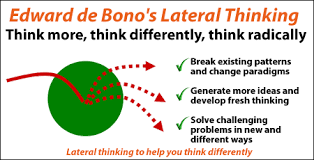
Learning how to think is a subject which is not taught in schools. This must surely be a folly partly produced by those who think repetitively. It is assumed that children already know how to think in the same way they acquire language; by repetition. This is true, of but of course the thinking skills involved in early learning are at risk of being mere copies of adults mechanical patterns of thinking. Psychologists like Edward de Bono created thinking tools that enabled the ability to think into infinity, or at least where no metaphorical human had thought before. Managers in commerce and industry sent their staff to learn his techniques and used them to gain commercial advantage.
If you asked the man or woman in the street to make up a new word in ten seconds, they would probably stumble. If you taught them the technique of substituting one vowel for another the task is simple. For example, ‘cat’ become cet, or cit or cot or cut. There we have two new words with no meaning yet ascribed.
Ask a friend to do something in the next minute that they have never done before and they might well just stare at the ceiling for a minute because that is what they always do when they cannot think. A person for whom imagination has no boundaries will roll up their shirt sleeve, dip their elbow in a tin of custard and write their name on the ceiling.
There we have two ends of the same problem. Thinking and acting via mere repetition and doing the same but in innovative ways. Somewhere in between these two extremes is a happy medium.
The human brain that can engage in acting whilst ‘not thinking’ such as a Zen Buddhist monk, can change their world. The pattern of logical thought becomes short circuited and the meditators brain changes frequency quite literally, to a completely new level.
Even though a Zen Buddhist monastery teaches using repetition, there is a level of awareness that eventually arises of it’s own accord; above the casual and ordinary whilst in the casual and ordinary.
In this way the world which humans perceive becomes unlimited and infinite in it’s possibilities. It is neither repetition nor innovation, but it is something. This insight is captured in the line which the singer Donovan wrote based on Buddhist philosophy;
‘First there is a mountain then there is no mountain then there is.’
How we live ultimately comes down to the energy patterns in our neural pathways; in the brain and spine and various nerve plexuses. How we think is directly related to how our synapses are used to work and from children and according even to gender, we run our own brains in increasingly mechanical ways.
At a more subtle level, our energy centres, or chakras, are also subject to becoming inbalanced due to overuse in one area or another. This is a whole new subject which I explore in another website chakracard.wordpress.com. But suffice to say that we live enclosed in what Don Juan in Carlos Castaneda’s book ‘The Fire From Within’ describes as a ‘luminous egg’. This is our energetic connection with the subtle worlds beyond physicality. This ‘egg’ can also be another boundary which Don Juan calls a ‘cocoon’. He explains , and I will give him the last word;
‘A mere glimpse of the eternity outside of the cocoon is enough to disrupt the coziness of our inventory.’ page 115
Most people hate war, especially soldiers, so why does it happen?
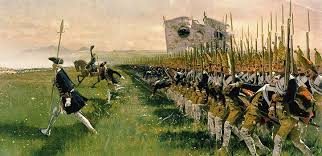
The problem is that war is an option of last resort. Ideally, all other options have been explored before war happens, but from then on, politics is ‘extended by other means’, to paraphrase the Prussian General Carl Von Clausevitz. War will persist until it is possible to stop it; a process far harder to achieve than starting it!
Each conflict is a set of unique circumstances and different ways to reach a peace. At worst the war will become one of attrition and it becomes impossible for both sides to continue. Alternatively, political and public support for a war wanes or perhaps an overwhelming third force compels surrender.
You would like to think that ‘how to stop a war’ is taught in military academies, but such executive decisions are more likely made my politicians rather than military leaders and politicians usually have no experience of ‘conflict resolution’ at this scale. Even in wars which have been wars of attrition, the conclusion of war requires considerable diplomatic skill. For if one side is forced into conditions of surrender that are too onerous and dishonourable, the process of recovery becomes excessively hard and national pride will almost certainly wish to seek redress sometime in the future.
The world might have learnt this lesson at the conclusion of the first world war, which was one of attrition and the intervention of a third party; the USA. The armistice terms demanded by the Allies, were so severe that they left a ticking time bomb, ready to start of the second world war.
picture credit: Family Search
The present war in Ukraine has been described by some as the beginning of the third world war, but there is another view. It could be argued that what is happening in Ukraine since 2004, when Russia annexed parts of Ukraine and later the Crimean peninsula, is an unfinished rumble from the second world war.
In that war, an American General raced against the Russians to roll his tanks into Berlin ; General George Patten. The politicians tolerated his outspoken gaffs, because he was a superb military leader. Patten was of the opinion that the allies should continue to Moscow and finish the war for good.
The politicians ignored his advice and the United States spent the next few decades fighting the influence of communism in what became known as, Mc Carthy era. Countries such as Cuba, China, Russia and Vietnam caused considerable headaches for the American politicians and military; awakening a culture of suspicion of ‘reds under the bed’.
There is an argument that the present war in Ukraine is unfinished communist expansionism in Europe. President Putin justified invading sovereign Ukraine to the Russian people, by stating that his strategic aim is to defend Russia against an expanding NATO threat. The two allies of the second world war were now facing each other; just as General Patten envisaged was needed to end the war.
The technology of war inevitably played it’s part in this conclusion. The use of the Atomic bomb by the USA in the Far East, brought the conflict there to a sudden halt. Communist sympathisers within the Allies, gave the secrets of the atom bomb and the Soviet Union. They speedily test fired an exact copy of the American atomic bomb, shocking the world. This mutual threat has forced an unsteady world peace ever since, dubbed ‘the Cold War’. Despite the efforts of the International Atomic Weapons Agency, set up to prevent the proliferation of nuclear weapons. Nine or so countries now have them and others want it.
It is important to realise that after the fall and fragmentation of the Soviet Union, Ukraine was left with fifteen pressurised water reactors of Russian VVER design and importantly, Soviet era strategic nuclear weapons.
Three of these ex-Soviet countries were persuaded to give up their nuclear weapons in the Budapest Memorandum on Security Assurances. Belarus, Kazakhstan and Ukraine agreed to give up their nuclear weapons between 1993 and 1996. The nuclear powers overseeing this process were the Russian Federation, the United States and the United Kingdom. They agreed not to use military force or economic coercion against these three countries unless for self defence or in accordance with the Charter of the United Nations.
The diplomats and lawyers who wrote the Budapest Memorandum were perhaps, not clear about what constitutes ‘self defence’. Most strategists and tacticions, know that the principle of striking the enemy before they hit you, creates an element of surprise that can bring about an early victory. Putin’s original ‘Special Military Operation’ was exactly this but, unfortunately for him, it didn’t knock out his opponent with the first punch. The surprise was Putin’s.
Putin constantly cites NATO as a growing threat, especially after the fall of Viktor Fedorovych Yanukovych, Ukraine’s president from 2010 to 2014. Yanukovych had promised the Ukrainian people in his election manifesto, that Ukraine would apply to join the European Union or at least set up special trade agreements which would lead to this. But after a phone call from the Kremlin, he renaged on this promise and there were riots in the streets. These were violently suppressed by the government leading to over 100 deaths. Yanukovych fled to Russia and Volodymyr Zelenskyy was elected president on the promise of European integration. Europe responded with indirect support.
Ukraine is a convenient buffer state for NATO because it has arguably, prevented World War III. It has so far, been a narrow escape for all, provided Trump isn’t elected and gives in to the Russians. The USA has not been good the diplomacy of war and should have learnt some important lessons, such as from the war in Vietnam.
picture credit: Shoeleather History
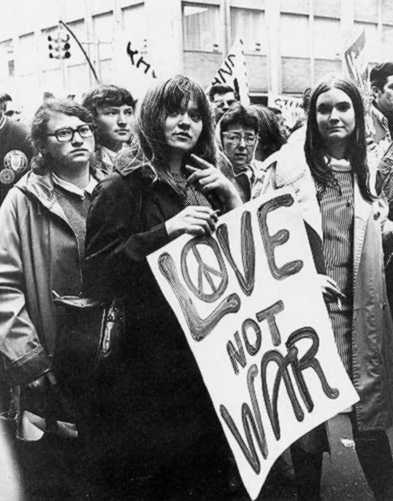
An indignant generation of young people in the United States rebelled against the war in Vietnam as it was played out graphically on their television screens. Newspaper reporters photographed the horror of war; photographs which stunned Americans and the world alike. Young men angrily burnt their call up papers in front of crowds of anti-war protesters as four successive Presidents presided over an unwinnable war. In a way, the protesters against this and later wars (such as the invasion of Iraq by the US and coalition forces in 2003) stuck their flag in the moral ‘high ground’. War was wrong.
Awakenings of conscience and consciousness happen at the individual level long before parliamentarians hear and reflect the ‘mood of the nation’. If war is going to be rejected as a method of ‘problem solving’, there has to be a global realisation of the immorality and futility of using violence against a fellow human being. It would be idealistic to suggest that this could happen in the near future but perhaps there is, a greater possibility for change than now, than there ever has been.
In my view, change will only happen with the introduction of a ‘third force’ which might be a charismatic world leader from this or another solar system, new technology or a third force with the means to eliminate humans, shared global problems of a catastrophic nature or just a spiritually and / or morally inspired realisation that violence is wrong.
picture credit: Physics World
The reference to ‘another solar system’ may have surprised readers! But the presence of advanced beings on earth is hardly a secret any more. The problem is that they are being characterised as violent and a threat to mankind. The narrative of ‘global security’ by successive U.S administrations, introduced ‘Star Wars’ under the Reagan and a whole new defence wing under Trump called the Space Development Agency. Hollywood has aided and abetted a global fear of invasion of ‘beings from outer space’ who wish humans harm.
The reality as described in Dr. Steven Greer’s film, ‘Close Encounters of a Fifth Kind’, is that highly evolved beings are watching and guiding us until we become peaceful towards each other and them.
Such a change of morals and consciousness is not a vain hope. There have been historical precedents. The crucifixion of one man in Roman Palestine, started a new religion based on love and compassion for all other people, including enemies.
Since then, sadly, religions have done as much to cause war as to prevent it. Countries at war, often claim that ‘God is on their side’ and yet logically, this cannot be true. Humans have free will and with that, responsibility.
The path to a planet where there is no war, is ultimately not in the hands of the politicians, lawyers, military leaders, religious leaders or industry; the arms industry has shown multiple times throughout history, that it is more interested in shares than ploughshares. The only possible novel outcome to being a victim of unrestrained violence, is for individuals to do nothing.
As the famous poster put it; ‘what if there was a war and nobody came?’
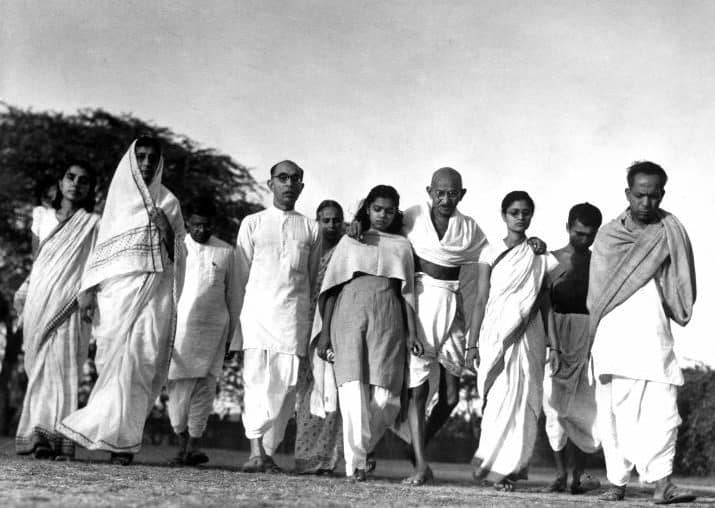
Mahatma Gandhi used non-violent protest to the British Raj, because that was how he was as an individual. His passive resistance, proved to be all that was needed to bring down the mighty British Raj in India. Peaceful overwhelming influence is an extraordinary power. When it fails, it makes powerful martyrs but when won, makes lasting peace. There will be a moment in the future for this to take place and until then we must wait.
There are two kinds of people alive today; the manipulators and the manipulated.
It is important to realise how we are manipulated and recognise it when we see it. In this essay only one method will be considered because it is easy to see.
There is an old saying; ‘the end justifies the means’. This encapsulates a very real problem, but the fact that the expression is so well known and easy to understand has in a way, bled the life blood from it. But if it was not still full of meaning, there would not be so many examples of it.
For instance; a world leader wishes to invade a neighbouring state. There are various reasons which might be; historical, to obtain economic gain, to bring freedom to enslaved inhabitants, to eliminate a threat of war, to change a bad government for a good one etc.
All or just some of these reasons are used to persuade a population of a moral need. Then comes the twist. In order to achieve the aim, means are used which are far more destructive than the supposed problem being eliminated.
President Putin’s invasion of Ukraine is an obvious example but let us look nearer to home, to that bastion of fairness and reasonableness, the United Kingdom.
Politicians promise to solve problems. In this case they promised to ‘take back control of our borders’ in the 2016 referendum on Brexit. A minority right wing party, UKIP, perceived ‘immigration’ as being ‘out of control’ and having a detrimental effect on the standard of living. This despite the economic rule that immigration is beneficial to a country and the history of United States of America being a prime example.
But ordinary people do not have degrees in economics and the far right politicians are well known to pick a ‘scape goat’ cause for a problem; the Nazi policies towards minorities in 1930’s Germany being a prime example.
All nations have problems with land borders. They are hard to control. But an island nation should have an advantage and so it should be with the UK. Given this ‘false problem’ of immigration, how can the government ‘take back control of it’s borders’?
A degree of problem solving skill is needed, a faculty that is not unfortunately taught in schools and universities, including it appears, Eton; one of the most expensive private (fee paying) schools in the UK.
It was thought that if the UK could stop people wanting to come to the UK from their own failing countries, a solution would be to stop their country from failing. This megalomaniac assumption suggest that a minor world power is able to solve problems in other countries.
Unfortunately, two thirds of the countries from which people flee to the UK are not in the European Union; countries like Afghanistan.
So voting to ‘take back control of our borders’ would largely, not be solved by leaving the European Union. La di dah.
In the case of Afghanistan, large amounts of money and human life had already been lost in trying to prop up an Afghan government and Army. History shows that complex tribal nations are almost impossible for successful intervention by third party states, and so it was in Afghanistan. The Americans decided to pull out their support, the Afghan government and Army collapsed and the power vacuum was taken over by the Taliban.
So it is obvious that removing the need to flee from a country is not in the power of any one nation or even a United Nations.
The rules of asylum state that this must be done in the first safe country entered. This however is absurd as a single country cannot reasonably take all the refugees from a neighbouring country, once a certain number has been reached. Italy is a good example where refugees from Tunisia arrive in boats in such numbers that the government cannot cope.
The European Union must take some of the blame for not taking an overview of it’s member states and allocating refugees, asylum seekers and immigrants in proportion to their ability to do so. Germany has taken a disproportionately large number compared to other EU nations, while Italy is begging for help. The problem perhaps was instrumental in the election of a right wing government there.
But let us return to the UK. Having voted to lose all influence over European Union policy by leaving, it weakened it’s influence in the countries through which immigrants pass. France is a prime example and now has to be given money by the UK to carry out border controls on the north coast of France, most of which will be ineffective as the majority of traffickers operate from the UK.
The problem is never clearly defined, as ‘immigrants’ have varied motives. The economic migrants used to help with harvesting seasonal crops in the UK and those have largely ceased to do this; crops have rotted in the fields as a result. Young Albanians work in the UK illegally and return with amounts of money that it would take decades for them to earn in Albania.
Genuine asylum seekers are not given safe routes by the UK government, excepting Ukrainians and Afghans for whom there is a system on line to get a visa.
Instead of extending this humane approach to all asylum seekers, who make up 80% of ‘illegal immigrants’, the UK government have put forward another idea.
This ‘means to an end’ is intended to be so harsh that it will dissuade those seeking asylum, many of whom are forced to arrive in unsuitable small boats on UK beaches. The government’s idea is to treat them all as having entered the country ‘illegally’ and to send them to a third country; Rwanda.
In doing so the government of the UK are choosing to ignore the human rights of the asylum seekers and ignore the ruling of the European Court of Human Rights, of which the UK is still a member (even though many who voted for Brexit did not realise this political independence of the ECHR).
Ironic that the UK had done much to promote Human Rights within the European Parliament when it had influence to do so.
Instead their ‘solution’ to immigration by asylum seekers is to class them as criminals for entering the UK illegally, and sending them to Rwanda.
Here, clearly, the end is being used to justify the means for if anyone should question why this policy is being followed the reply by government politicians such as the Chancellor Jeremy Hunt is words to the effect, ‘would you rather they drown?’
By concentrating the emotional decision on the horror of women and children drowning in a cold sea, the appeal to the faculties of their opponents is not rational but emotional.
The rational ‘problem solving’ has been skipped over and a ‘solution’ being tried that mostly works politically. Is it not rather being seen to act on an election promise in readiness general election next year?
What will happen to immigrants once they arrive in Rwanda is hardly advertised. No doubt the Rwandans have been given money as other advantages to their nation are doubtful. At worst the money supply will stop in a few years after a change of government and the Rwandans will get their machetes out again.
Thus it can be seen that horror and inhumanity is being ‘justified’ as being the only solution to ‘saving people from drowning in boats in the English Channel’.
The tail is most certainly wagging the dog and this is how our own thoughts can be manipulated to think what is happening is ‘okay’. Bad things are ‘justified’ as ‘an evil to stop a worse evil’. In reality, it’s an evil instead of a humane solution.
Should we not be instructing the problem solvers in ‘problem solving’? The books of Edward de Bono have been used by business leaders to teach this skill and the reader is recommended to study them if a life in politics is being considered.
We live in a physical reality. From birth we engage with this moving and static universe and learn how it works; how to manipulate it and survive.
Then someone comes along who does ‘magic’. Perhaps it was at a children’s party when you first encountered a conjurer who made objects appear and disappear. Rows of coloured flags explode from her hat and little red balls pop out of her mouth.
Suddenly, rules that govern physicality are turned upside down, so like innocent children, we just laugh.
Later on in life, we understand that magicians are illusionists. They have studied the techniques of deception and taught themselves how to use them. Here are some;
Speed; prestidigitation, dexterity e.g. playing card tricks.
Misdirection; directing the audience so that they assume the contrary e.g. which ball the cup is in. Focusing the audience on one thing whilst doing another unnoticed, such as stage ‘banter’ and ‘slight of hand’.
Concealment; classic ‘smoke and mirrors’ such as using a curtain to hide a deceit.
Props; devices which appear to be not what they are; they have hidden doors, mirrors and compartments that reveal previously hidden objects.
Psychology; hypnotism, mentalism e.g. reading unconscious signalling in facial expressions to determine personal facts.
This list is not exhaustive but the main point is, magicians do not use obvious cheating. They know that they can be accused of using ‘stooges’ to perform pre-rehearsed actions. To counter this challenge, magicians use methods such as throwing a Frisbee randomly into the audience to choose who to invite to take part in the trick. Illusionists may be tricksters, but they will need to leave the audience without any explanation of what they have just observed, or lose credulity and reputation.
picture credit: EarthSky.org
Very recently an ‘air balloon’ was shot down over North America by the USA. The official story was that this balloon carried instruments used by China to spy on America. Questions were naturally asked as to how this and many other such balloons were not monitored or even known to exist, by those in charge of defending the nation. After some ‘re-calibration’ of America’s air space, surveillance and monitoring equipment, three new objects were found. Most significantly these were never ‘rationalised’ as balloons. One was described as ‘hexagonal’ and an ‘unidentified object with no obvious means of propulsion’ and the others of different shapes, equally unidentifiable. After several days, during which wreckage was recovered, it was announced that these three objects were in fact ‘weather balloons’. Do you get the feeling that matter is being described to make you form an opinion that the government want you to have?
The initials U.F.O were avoided quite deliberately for understandable reasons. Further obfuscation (misdirection) has been created because UFO’s are now called Unidentified Aerial Phenomena or UAP’s and there is an equivalent Unidentified Submersible Phenomena or USP’s. For those in the know, and as described by Dr. Steven Greer on You Tube for decades, there are clandestined (‘black ops’) projects outside of the military and government control which have built anti-gravity craft using alien reverse engineering obtained in the 1950’s. The other three UAP’s in question, were almost certainly examples of anti-gravity, human engineering. The cover-up to their undeniable discovery (prompted but not connected to the ‘weather balloon’ incident) is what the counter intelligence community term ‘stage craft’. This is a simile from our familiar family entertainment shows where illusionists make things appear and disappear at will.
This series of events is worthy of particular attention as they provide a clear example of how public perception can be manipulated to whatever the non-democratic departments of governments desire.
The illusionist techniques employed in such ‘minor’ incidents can of course be scaled up to gain public approval of serious government policy. Within the military known as ‘psychological operations’, there are ‘false flag operations’ where an innocent third party, such as a ‘hostile state’ is blamed using fabricated evidence.
picture credit: Wikipedia
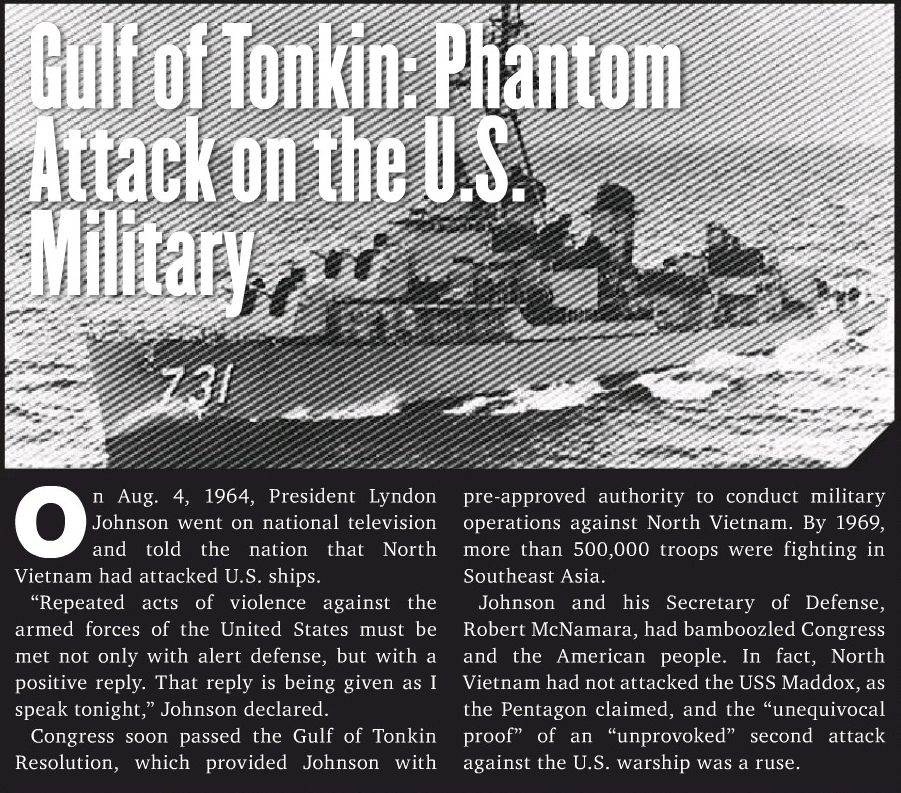
For instance, the ‘Gulf of Tomkin’ incident was probably the tipping point that committed the USA to war in Vietnam in 1964. North Vietnamese motor torpedo boats are meant to have engaged American ships in the Gulf of Tomkin whereas there are other claims that these were not NVA’s craft but American. A more mainstream explanation to the illusion is that there was a ‘communication error’ by the Americans which stands out as being vague at best and unforgiveable at worst. In all cases, unforgiveable.
picture credit: Pinterest
That is not the only war needlessly started. In 2003 the USA and an allied co-coalition, invaded Iraq on the grounds that there were ‘weapons of mass destruction’ in Iraq. This despite the fact that UN observers had been searching for such weapons for months and found nothing. The war was justified as being intended to;
“disarm Iraq of weapons of mass destruction, to end Saddam Hussein’s support for terrorism, and to free the Iraqi people”. (source Wikipedia.com)
History or ‘hind sight’ now enables most people to see than none of these three objectives were justified or effective. There were no WMD’s. Hussein did not support Al Quaida and the Iraqi people did not necessarily find foreign invasion a better option to living under a cruel but stable dictator. Iraq was destroyed, leaving little working infrastructure and services, and the regional and tribal ‘commanders’ were left to fight each other in the power vacuum…so called ‘freedom’.
Similar examples of ‘illusion’ by politicians, industrialists, pharmaceuticals and clandestined world actors, are to be found almost everyday in current news reports.
My overall point is that a scientist is not a person who understands things, but one who questions things. In the material ‘reality’ that most people believe is ‘all and everything’, everyone needs to be scientifically sceptical about how world events are reported. The techniques of the illusionist are frequently applied in a manner that appears to be without motive. Discovering the motive is the final and most hard to find piece of the puzzle.
This subject is extremely complex and the ‘stage craft’ of the actors confirms we are watching an act, but this is not a kid’s party. Most people chuckle and sit back in their seats, rather than refuse to leave until what has really been going on, is explained. There is after all, always an explanation, it’s just that, with the serious problems of today, we get the feeling that we are never intended to find out what it is.
picture credit: AZ Quotes
All of this may be rather bleak. However, mankind was never sent here to change the world, just to learn to be a better human being. Perhaps we have to look at this problem from a completely different perspective and that is to consider why there even is matter at all. Perhaps the knowledge that matter is interchangeable with energy casts some understanding. If mind / Universal Mind was seeking to know itself it could not do this in a vacuum. It has to create a very dense version of energy, which is what we call matter. In this material universe we are able to perceive how energy works because the two are the interchangable; it’s just that matter goes slowly enough for us to interact with it intelligently.
Those lessons, which the material Universe with all it’s entanglements and complexity, are directly transferable to the energetic or spiritual universes and when applied, give the greatest understanding of this highest spiritual truths.
Many media outlets provide harrowing examples of problems in the National Health Service in the UK today, so here are my ideas for attempting to solve them.
Firstly, I would determine what the government strategy for the National Health Service is. Cynics would say that based on the previous ten years, the aim of government has been to make the NHS fail. To define ‘failure’ quasi-scientifically, the first step is to introduce targets so that hospitals can fail to meet them. But logically, if targets were removed then failure would also. Successes would be highlighted instead, so staff are allowed to feel valued rather than judged negatively. Keeping staff moral high has numerous beneficial effects for the whole system including the patients.
However, if the government wants private hospitals for all, as in the USA, then that should be their stated aim and the public allowed to vote on that idea, either in a general election manifesto or two third majority referendum.
If the government want the NHS to protect the health of UK citizens then these are my ideas;
Engage in preventative health as keenly as reactive health. This is difficult since ill people are more vocal than those who have no problems. However, if hospitals and doctors surgeries were paid when people were well, rather than for health interventions, then they would be incentivised to prevent illness. One example of this would be to include diet and nutrition and exercise regimes more fully in a medical doctor’s training.
Presently resources are wasted on treating patients with imaginary and or minor ailments. The high street pharmacies are presently under-used as places for diagnosis and intervention of such complaints. Pharmacists are highly trained and if allowed to view patients records on line, would relived doctors from such complaints. Also, patients can be empowered to self help through information online to a far greater extent than has already been achieved. This is not to promote Doctor Google but to provide interactive consultation with a health consultant rather than an algorithm.
Presently local doctor’s surgeries are often understaffed and GP’s overworked. One of the effects of this is for patients to be diverted to the Accident and Emergency Department at the local hospital. The first remedy I suggest is to change the name of this department to simply ‘Emergency Department’. People with minor cuts and bruises from ‘accidents’ are not ’emergencies’ and again could be treated in a local pharmacy ‘treatment room’ when the GP is not available.
Training more doctors and health workers of all kinds is so basic that it should hardly need mentioning but sadly, it has been been neglected by politicians who did not write this intention into their manifestos.
Presently A and E Departments are often unable to cope with demand in peak periods such as during winter flu season. This is partly due to ‘bed blocking’ where vital hospital beds are occupied by patients who are well but have no safe place to be discharged to. The other reason is a lack of staff as already mentioned. In response to the problem of ambulances queuing for long periods when they are needed to respond to emergencies, one hospital has set up a dedicated room for patients to wait for treatment. There are paramedics in the room who take over monitoring and keeping waiting patients comfortable and safe with the same equipment that is available in the back of an ambulance. The effect is to reduce ambulance waiting times at hospitals.
The pay and conditions for health workers has been allowed to decline over the last ten years or so. The present strike by health workers is as a result of this as much as the general decline in their effectiveness to treat patients. During the recent ‘pandemic’ there was an ‘unlimited budget’ to ‘protect the NHS’. Getting back the money which was subject to fraud during this time would be a good start to begin to protect the NHS by paying living wages to health workers. The presence of food banks for staff in hospitals is unforgivable, as they are in high streets and goes back to staying healthy with a good diet, let alone suffering malnutrition. Planning for the next pandemic is also imperative.
Most public services have become burdened with the demand for recording information on computers. Doctors, nurses, police, fire personnel, social workers, teachers and many others have a general feeling that they spend to much time recording information on computers rather than dealing with people. These services all functioned before the invention of computers and they would benefit from a study into how to reduce the time spent recording information today by asking the question, why? One probable reason would be as a tool to supervise staff by managers and at it’s worse to be able to prove negligence and or malpractice by staff in a court of law. I would suggest that whilst public liability and duty of care is a vital ethical stance, the large financial pay outs is inappropriate. Private services have a contractual responsibility as money changes hands but in public service the ethics are different. You would like to think that most NHS patients merely wish to point out negligence so that mistakes ‘do not happen again’. If there has been a life altering error for a NHS patient then the same services will intervene at no cost to the patient for any extra home care. For instance patients might be offered insurance policies before operations with an element of risk and be asked to sign a document that they will not sue if something goes wrong with the operations due to this risk. People will take out insurance to go on holiday so this is not so absurd as it may seem. The effect will enable staff to operate under less stress about mistakes and as a consequence be more competent.
picture credit: BBC
This list is not exhaustive nor are all the ideas practical or good ones as the writer is not an expert in these matters, just an observer. But when there is an obvious problem, then problem solving must surely be attempted head on. Usually, rather than expensive professional ‘management consultants’ the best people to ask for problem definition possible solutions are the staff on the wards.
Managers often overlook the vital details that only staff will necessarily know about and be able relate to why things are not working.
There is also a case for different services and specialities within those services to share information about patients. A very simplified on line system as easy to use as a Facebook account could be used to function in a way the social media presently shares information to the benefit of those who need to know.
Thus mental health workers, pharmacists, care workers, mental health teams, police, social workers, teachers and many others, would be part of an overarching system of protection and service provision for each citizen. The more old fashioned ‘silo system’ of public service provision has begun to be dismantled but needs to speed up and widen.
Public expectation also needs serious consideration and the present promise of a ‘blank cheque’ for treatment and compensation when mistakes are made, needs comparing to the original aims and promises in the Beveridge Report of 1942 entitled ‘Social Insurance and Allied Services.’ The lesson is not to promise what cannot be delivered and if it can’t, explain why before, not after, being elected.
“Earth provides enough to satisfy every man’s needs, but not every man’s greed.“
picture credit; Meer.com
It’s not usual for the writer to look into the future. But at this moment in history, there is no need to be psychic to see where the world is heading and the consequences.
We live at a moment in time when change in the standard of living of the ‘developed countries’ is inevitable. The change will be what some would call a ‘reduction’ in this standard; meaning things will not be a cheap and plentiful as they have been in the past. For the rest of humanity the change will be having things that have not been available in the past, what will be an ‘increase’ in their standard of living to include all the essentials.
These are the essentials to life;
Shelter
Food and water
Health and reproduction
Education
Work
What will bring about this change is an increasing scarcity of these five necessities in both the ‘developed’ and ‘undeveloped’ countries, so that sharing of resources will be the only humane political direction.
The previous trend of ‘civilisation’ has been for certain countries to grow richer whilst others get poorer. The ‘master and slave’ Empires of history and the present day, are examples of this.
New technology, and primarily the ability to communicate on a global scale, is an essential part of ‘leveling down’ and ‘leveling up’, the uneven distribution of dwindling resources.
Technology, such as birth control and free health facilities has been changing the global demographic for many decades. As a consequence, families have been having fewer children because infant mortality has drastically reduced.
Smaller families has meant a reducing population in many parts of the world, such as China and parts of Europe.
The process of industrialisation was always founded on a false assumption; that more and more stuff can be made from limited resources. Whether those resources are fossil fuel sourced energy, raw materials, places to store noxious waste products, dwindling natural resources such as rare earth elements and the traditional metal ores.
All of these things and more, have become cheaper and more available but their limited availability and other factors means that the industrial train is about to hit the buffers.
Perhaps sharing more and making more with less and eliminating pollution would have held off this inevitable moment for longer but the global system of human development is too fragile and too complex.
The effect of industrialisation on nature has been ignored for convenience and perhaps not a little arrogance, but nature ultimately strikes back. What is wrapped up in the term ‘climate change’ is the tip of a rapidly melting ice berg of global human catastrophe.
picture credit; Friends of the Earth
Nature has a plentiful and powerful armory with which to fight back. Viruses, extreme weather, planetary warming, desertification leading to wars over scarce resources are and will put great demands on the human population to re-organise.
If humans had any self respect, they would respect this powerful process and become co-operative with nature. It has to, because the option to carry on as before is no longer available; unless wars, mass starvation, migration and pandemic diseases are ‘risks worth taking’.
There are some religious communities such as the Amish in States in the in the United States of America and Canada, who will not directly face fundamental changes to their way of life. Hundreds of years ago they decided for religious reasons that their ‘standard of living’ had reached a level that is sufficient for their needs. The number of Amish people has risen from 100,000 in 1989 to 251,000 and is predicted to increase. Respecting the boundaries of nature is a lesson many have learned, thus avoiding the hard process before being forced to.
An Amish Homestead picture credit Stuff.co.nz
Similarly, there are remote tribes in ‘undeveloped parts of the world who live in harmony with natural places and have done for millennium undisturbed. They have nothing to fear from nature, only their fellow humans.
Industrialised societies have taken far more than their fair share of nature’s bounty. The city dwellers who make up fifty per cent of these societies live on the promise of unlimited food from farms. Unfortunately soil needs constant replenishment when using factory farming methods and fertiliser is becoming increasingly expensive, to a point where growing crops is no longer profitable. City dwellers have become so cut off from nature that they might as well be living on the moon; totally unable to sustain themselves except by trade using ‘money’- a substance you cannot eat.
The dwindling of world resources and the consequences for national economies will require counter intuitive management. People who have more, will have less and people who have less will have more.
Food will no longer be shipped all over the world to satisfy the demand for non-seasonal, exotic, non-local, high protein, artificial fertiliser enhance ingredients.
Wine and olive oil, will not be for sale in shops in countries where wine and olive oil is not produced. Such luxury is only a recent expectation. Nations used to have their own diets and dishes based on local seasonal food. Northern countries drank mainly beer made from local grain crops and southern countries drank wine made from local grapes. Choice in food and drink will become more than halved and people will be grateful for what is available.
Politicians will have an almost impossible task of balancing the overwhelming and impending need for ‘developed’ populations to significantly reduce their ‘standard of living’.
Nobody votes to lose their holiday home/s, luxury car, cheap flights, energy wasteful house and bulging refrigerators. You might think this and you could be right, but when citizens understand the hardship that is the alternative, they will.
And if this sounds depressing then all is not necessarily gloomy, because humans have a unique skill at adaptation, both physically and mentally. Some of the poorest people on earth are also the happiest. Travelers who visit the homes of remote communities that are living off the land (whether forest, steppe or desert), find they are welcomed with dignity and honour and the food in the house is shared equally with them. This food may taste better than any they have had before because it is resourced locally, prepared traditionally and presented with love.
No factory on earth has ever made a product with love so should we be surprise that people who have ‘high standards of living’ often live loveless lives?
Here is that list again;
Shelter; simple, warm, light, organic houses and public buildings and gardens.
Food and water; locally sourced and stored, lovingly prepared and shared.
Health and reproduction; Enough health professionals for populations in order to prevent disease, educate and encourage healthy lifestyles, treated body with the mind and mind with the body, practice traditional medicine and techniques less based on chemicals. Because communities will support the elderly young people will manage the size of families using contraception.
Education; a holistic, approach to giving young people the skills and characters that promote informed and respectful relationships and communities.
Work; local activities that produce goods and services in ways that respect nature and the environment. Labour will not to use more energy and materials than nature can supply and live in a way that gives responsibility to all and shared rewards.
There are many micro-communities already living in this way according to their own religions and traditions. If you are fortunate enough to live near one my advice is sell everything and join them as have done many and joined Amish and similar communities.
You might be happier than at anytime in your life and if you are not happier, well you at least will be the same person you are now.
As so often happens, Hollywood is ahead of the curve and perhaps forcing, as well as, predicting change. There have been many ‘post apocalypse’ films in the last few decades. The apocalypse will only come if it is allowed to. As in most things, the trick is to be pro-active (ahead of the wave) rather than wait for it to swallow us whole.
I do not normally watch football matches. The reason is simply that I find them slow and the match result often unsatisfying. More on this later. One the other hand I can be persuaded to watch any sport where England takes part in a sporting final and where there is a high likelihood of a match of equals.
So I sat down to watch the European Final of Womens Football 2022 last night. History, we were told, was about to be made.
But first, some game theory. Many games simulate military strategy and football is no different. Each side has an area to defend. The resources of each side are matched with no particular advantage to either other than their own esprit de corps, skill and strategy. With these resources, the sides must defend at the same time and with the same force, as attack.
What happens when one side is considerably less skilled and less determined in it’s aim than the other…is that the more skilful side wins convincingly.
This gives rise to a certain inevitability as to the outcome giving the supporters and participants of the losing side enormous disappointment. Their expectations of winning were shown to be based on false confidence in their own ability.
This is why sides which are equal in every way, provide the greatest challenge to the players and entertainment to the supporters.
The game of football, however, provides a disappointing set of rules that restricts uncertainty and the excitement that comes from the expectation of gaining a winning advantage at any moment.
What works most against football being entertaining, is the system of low scoring. A 0-0 result is not uncommon and only slightly better is a draw of say 1-1. Ideally a score should reflect the skill of a side as closely as possible and in low scoring games, it is unlikely to do this. In fact sometimes the better side may lose due to some random misfortune such as an injury or poor refereeing decision, giving rise to indignation amongst players and supporters; the phenomenon of a ‘pitch invasion’ by angry supporters must happen more in football than any other sport.
If we examine how well high scoring games reflect the process of a match and outcome, such as tennis or cricket or snooker, players have a chance to change the course of the game almost every time they touch the ball. The better player or side will almost certainly be identified by the final score and both sides feel fair play has taken place.
Compare this with football, where much of the play and touch of the ball results in no particular advantage to either side. Players often kick the ball back into their own area rather than forward. They engage in a series of safe passes in which the ball moves between players of the same side with little risk of losing possession. During this time the grass grows another micro millimeter.
Losing possession is not even a great disadvantage to either side. Goal keepers regularly kick the ball away high in the air with only limited accuracy as to where it is going to land. The opposing side might intercept the landing with a header which is so uncontrolled that possession changes side yet again.
The prospect of the ball moving around the pitch in this manner gives no reward to either side. Players compensate for their frustration by taking a risk of injury to themselves or other players, with aggressive tackles. The result is that play stops whilst a fallen party rolls around theatrically on the ground in order for the referee to take the matter more seriously than is warranted. Medical teams are permitted to run onto the pitch to give ‘treatment’ that in olden days consisted of squeezing a wet sponge over an affected area and today consists of more elaborate physiotherapy, ICU teams and trauma psychologists.
So the game stops and starts with as much randomness as a demolition ball and certainly not as interestingly. At the end of 45 minutes of nothing, both sides rush off as if they need a break. During this time supporters argue or fight or get more drunk, and players are given a victory talk by their coaches and managers and anyone else who happens to be in the dressing room, telling them all to ‘work together as a team’ and ‘get the ball in the back of the net’.
At the end of another 45 minutes of lawn care, neither side has managed to kick the ball into the exceedignly large space enclosed by the goal posts. One almost gets the feeling that even if the opposing side was not present, a team working on it’s own to move the ball from one end of the pitch to the other and then between the goal posts, would find the challenge irritatingly difficult.
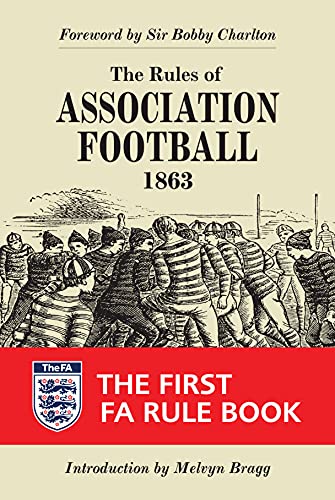
At the end of the game one side may have by some fluke, scored a goal and this sometimes unearned (even an own goal), event is considered enough in the Football Association rule book, to warrant deciding which is the better side.
Sweet FA
In the likely event of a draw, the most frustrating spectacle of a ‘penalty shoot out’ is commenced. Each side takes it in turns to stand right in front of the goal posts and kick the ball past the goal keeper. The success of this depends largely on randomness on behalf of the boot of the player, the arrangement of worm-casts, damage to the pitch over the penalty taking position, the strength and direction of the wind, the strength, height and direction of the sun, the clarity of mind of the players ( after brain damage caused by heading the ball too frequently in their career ) the clarity of mind of the goal keeper who has to guess which way the kicker is going to kick, and the conflicting chants of two opposing tribes of supporter.
In order for any game to avoid such a spectacle of chance to ‘decide’ the result of previous vain and worthless endeavours, I strongly suggest that a new system of continuous assessment is introduced.
This means that points will be awarded more often.
So to improve football certain changes might occur;
Use a point based system instead of counting goals.
Award 3 points for a goal, 2 for a corner and 1 for a side throw or hitting one of the football posts and horizontal bar by skill or fluke. This will keep the ball in play and the game moving and require skill and concentration.
Increase the size of the goal or remove the goal keeper completely.
Reduce or increase the number of players. For instance there could be one additional player coming on for each side every ten minutes. After half time players leave the pitch in the same way.
Change the size of shape of the ball. A ball as large as the players would be hilarious if nothing else.
Change the number of balls. Two balls could be in play at the same time, or twenty.
Allow hitting the ball with a fist instead of the head (to preserve brains)
Break the game down into more parts as in tennis, so that an uneven number of wins is required of sub parts of the game rather than have just the one result.
Permit obstacles on the pitch such as sand pits and water holes and or circus perfomers.
Give each player a giant inflatable hammer with which to hit each other.
There are no doubt many other variations to the rules of football that would create far greater entertainment. The key change to make however is to get rid of the unsatisfactory scoring system.
Games are invented by mankind and not received from God, and should never be subject to dogma. It’s okay to change / improve the rules.
People who resist change it is said, are willing to accept change only so long as the new version is the same as the old.
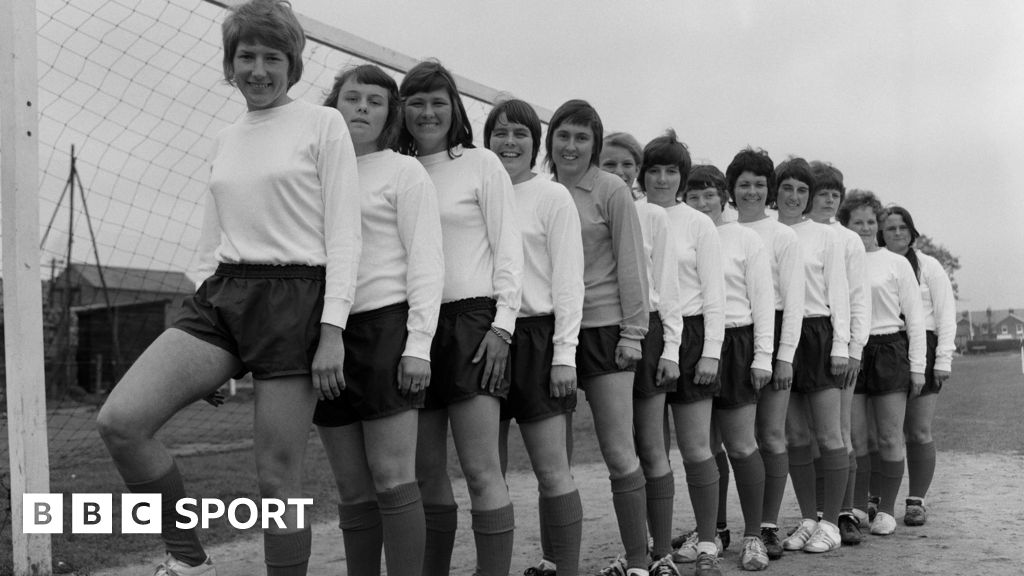
Flippant? Not really. Consider how after centuries of having male only matches, females are now also playing the game of football. Trouble is, it’s just more of the same.
Flippant? Then consider that football in this analogy illustrates how the human mind is resistant to change even when a particular mode of human behaviour and rules is clearly in need of improvement. Then, when change is finally accepted, it is often no change at all but the similitude of change.
Do you find that when you eat at home, you must put on some loud music to accompany your meal?
I expect that there are many who cannot face eating without background or foreground music or perhaps television, but your writer does not.
Therefore, for me, it is difficult to go to a restaurant anywhere in the world and enjoy the experience. The problem is that most restaurants seek to please their clients by playing music with apparently, little thought. I can see that their aim is to attract customers and an empty silent restaurant is not going to do that. So they replace the silence and empty tables with music. So when people get hungry and sit down in the restaurant, is this because of or despite of the music ? The restaurant fills up and as the music stays on the people start shouting at each other, just to be heard. The speakers are cleverly placed so that there is no table where the music does not play in their ears.
My question is, are restaurants getting it right?
Let’s imagine that you own a relatively successful restaurant What’s’ your management strategy towards ambient music?
Live, themed music, but look at the size of those speakers!
For starters, how many potential customers walk by your restaurant when they here your musical offering? Is this because they do not like your taste in music? Should they? Who else likes your taste in music? The majority of people? Really? You don’t know? Why not?
Music after all is a very personal thing. Young people are unlikely to want to go to a restaurant playing the classical greats…as are elder people unlikely to want to listen to heavy metal and grunge with their salad. There is no ‘one size fits most’ when it comes to musical taste.
Music cannot only be judged by it’s genre but by the volume that the music is played. There is a type of music intended to be played at a volume just enough to break the silence. In the 20th century this was dubbed ‘musac’ and wafted from ceilings in lifts and shopping centres. Today, there might be ‘ambient music’; a soft mosaic of chords and natural sounds that is so bland that it is hardly noticeable, yet gently calming.
At the other end of the scale there are some people who enjoy and expect music to be loud, and perhaps young people fall into this category, although of course, not all.
So as a manager and owner of a restaurant, how can you attract the maximum number of customers? Do you let the staff play their favourites (as many managers do) or have you understood the need to carefully attract the maximum number of diners.
The decision may not be difficult. If you own a Greek restaurant, do you play Greek music to remind people of their holidays in Greece? It may sound obvious but how often does this happen in your experience?
I once went to an idyllic restaurant on a sandy beach in Kerala, India. The food was delicious but the music was ‘intended’ to please westerners. After suffering ‘Pretty Woman’ by the Whoevers, I handed the waiter my cassette tape of classical Indian music and asked him to play it. The ambiance totally changed. Suddenly I was in India!
If you do not have a natural themed choice of music in your restaurant, how can you know what customers they like? The answer is to ask them. A simple question at the end of their meal about the music instead of ‘did you enjoy your meal?, would be a good start. Alternatively, a questionnaire printed on the place mat / menu enables a more anonymous and comprehensive response. It could include a question on the volume for instance.
A relaxing dining experience?
An obvious consequence to client satisfaction in your dining experience, is to offer some tables where there is deliberately no or very quiet music. This would please those whose taste in music is not ‘mainstream’, as already described. These would be ‘low music’ tables where there are no speakers hanging ominously from above. This particularly makes sense where there is pleasing natural ambient sound such as a river or the sea, birds, or wind in the trees. People need choice and the more people you can attract the more profit, surely?
There is a point where music becomes a contributory factor to noise. This can be defined in decibels, and happens when other sounds in the restaurant are taken into account. People natrually want to talk in restaurants and the level of noise in the restaurant will affect their ability to listen and talk to each other. There is a known effect where people talk above ambient noise levels in order to be heard. As more people talk the louder they have to talk. The effect is ear crunching.
Or perhaps the restuarant music is needed to conceal unwanted sounds. The noise from the kitchen, the TV on the wall, the busy road outside and other local noises that invade your restaurant, might be concealed by music but at a certain point, the music is the only sound in your control as manager. If people are shouting over it they are certainly not listening or enjoying it.
I personally will walk straight passed a restaurants if I do not like their music and or it is too loud. This means I just keep walking, and not because my taste in music is narrow. On the contrary it is very broad, but it is not ‘popular’. I have studied music and can play various musical instruments as well as sing, but given the option for music or not, regrettably my choice would always be the birds in the trees.
The bottom line is, as for most business enterprises; are you offering what people want or what you want to offer to people? Generally, businesses based on personal taste or expectation of the tastes of others to match your own, fail. There is no room for peronsal egos when seeking to serve others. To attract and please people, entrepreneurs in dining or any other business, need to know what people want. Businesses like Mc Donalds and Costa Coffee prospered because they understood this principle and make money.
So, when it comes to musical ambience in the dining experience, what do people want?