War of Words

Words, good slaves but bad masters.
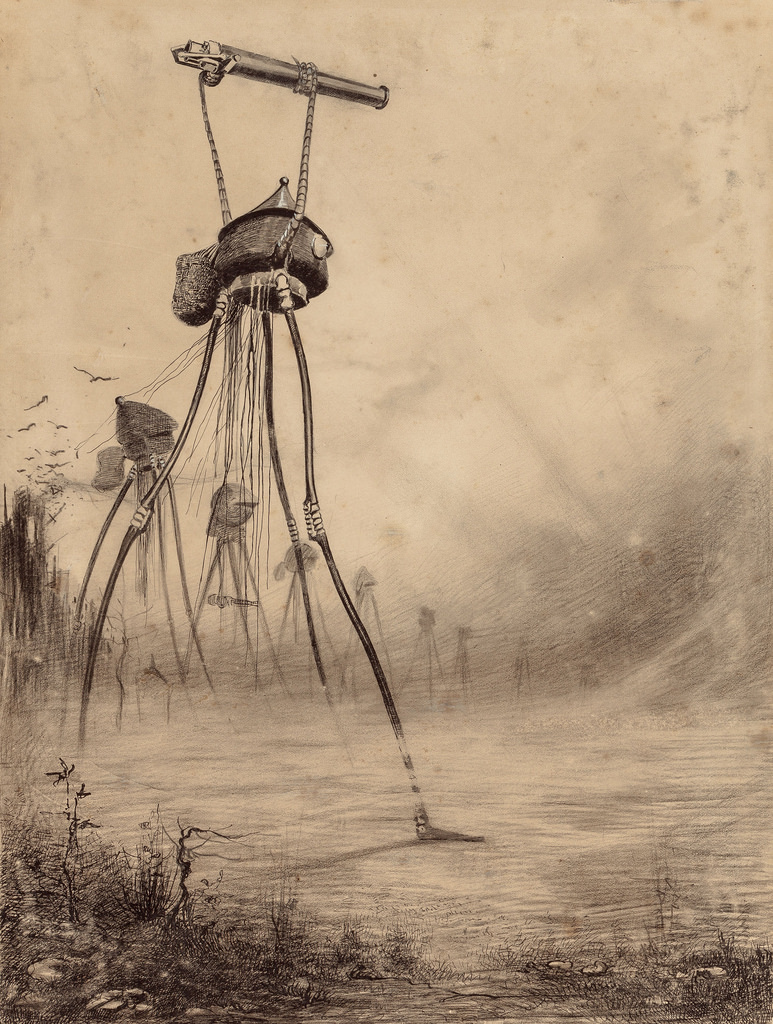
H.G. Wells wrote The War of the Worlds, a story about creatures from another part of the Universe invading the planet Earth and how the humans fought back. Words too can conquer worlds, especially the world in your mind. For this reason, I believe it is vital that we choose words that fit exactly the meaning we intend.

When speaking, we like to believe that we use words to converse clearly with others.

If there are no words in our own language we can create new words in fun and familiar ways. This linguistic phenomena is apparent in the speech of young people. New generations invent their own vocabulary with which to talk behind the backs of adults!

The power of language is it’s ability to open new perspectives on life. A restricted vocabulary will limit thoughts to the point that they no longer serve anyone’s best interest.

Words create our thoughts which can in inturn be inhibited by those words. Imagine a map of a city as a model of your neural pathways. Those journeys we repeat, such as to work, become familiar, almost over used. A map is also constrained by it’s boundaries. It does no show the whole world. The unreachable thoughts are as if in another dimension. Logic cannot venture beyond logic.

I listened to a debate on the radio recently in which scientists were challenging each other over the popular conundrum, ‘which came first, the chicken or the egg?’ They conjectured about birds as dinosaurs and an absurd point in time when the first egg was laid. Only one scientist suggested that change is a gradual process when viewed over long periods of time. No parrot changes colour over night. Evolutionary changes take thousands of years before being noticeable. There is no single moment when chickens and eggs come ‘into being’.
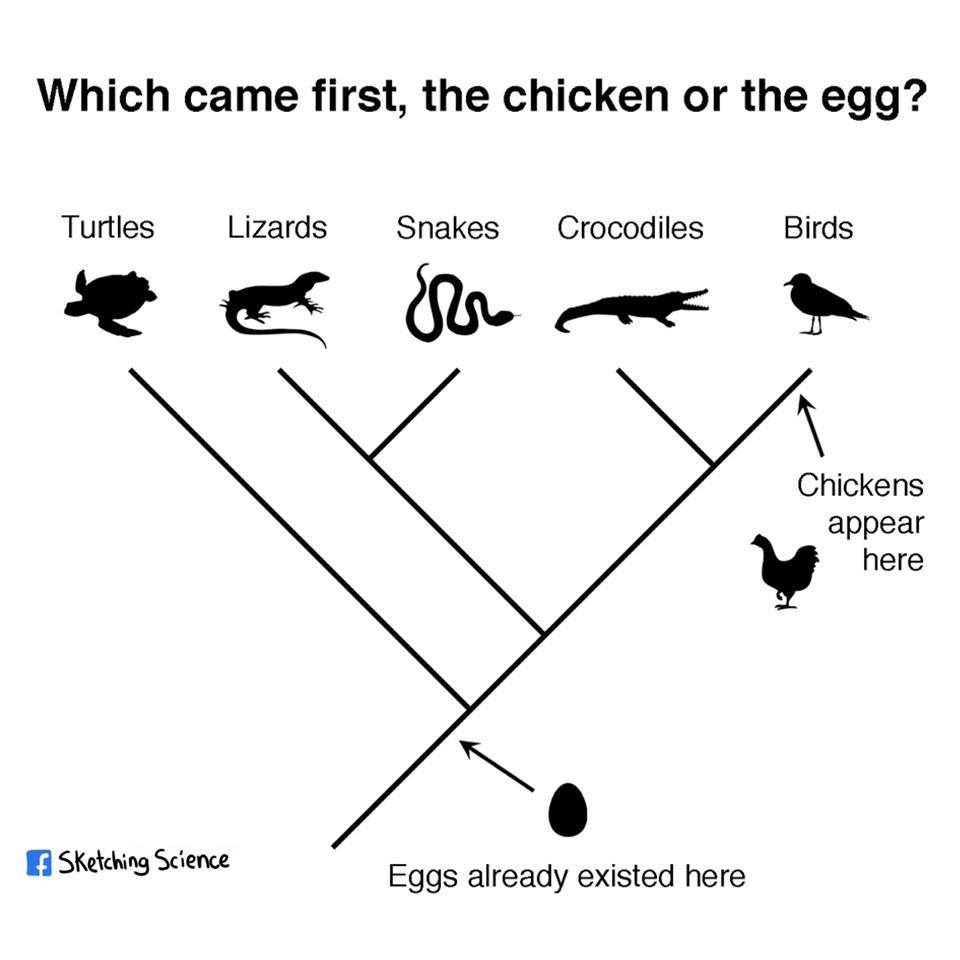
picture credit: The Australian Academy of Science

The same is true in astronomy. Do you believe the universe happened in a nano second as the so called ‘big bang’. Scientists are currently theorising that universes expand and contract over vast periods of time. The explosive power of the ‘big bang’ phrase, froze original thinking about how the universe began for decades. The universe was never a chicken, nor an egg…it is obviously both.

Semiotics is the science of language and meaning. In my view, we all benefit from understanding how we structure our thoughts using language and meaning. Here is an exercise;

Imagine a ‘cake’.

There are many categories we can use to describe cakes. There are cakes we sub-categorise by their ingredients such as a sponge cake, fruit cake, carrot cake and oat cake. Then there terms for cake which describe when we eat it, such as birthday cake, Christmas cake or wedding cake. Alternatively the means of production is a description such as home-made or shop-bought. Another way of thinking about cake is the origin of the recipe such as Black Forest, Dundee or French Fancies.

None of these sub-categories describe cake but the word cake includes all of the sub-categories. When we choose which cake is included in which sub-category we use thought to DISCRIMINATE between different cakes. This tool is an important power of mental faculty but unfortunately it’s meaning has changed in common usage. It has become to mean PREDJUDICE and in my view, there is a loss of meaning and ergo understanding, when these two are confused.

Discrimination is an objective skill whereas prejudice is subjective. When we think subjectively we mix emotions with logic. Feelings introduce prejudice for or against something in a way that cannot be explained logically. Insignificant examples are then used ‘prove’ to oneself and others that a prejudice is based on fact in a process known as ‘bias confirmation’.

Bear with me if you think I am stating the obvious but in my view much cultural, ethnic, racial, gender based, geographic, religious and political misunderstanding has it’s roots in how language governs thinking and in particular, prejudice.

A mind which for whatever reason developes a predjudice against a general category of something is in trouble. To use our previous example, it would be wrong to say ‘I don’t like cake’ when what is meant is that you do not like cake with a lot of cream.

When it comes to making prejudices against categories of fellow human beings we hit trouble. Any prejudice is more a product of intolerance, misunderstanding, eliteism, narrow mindedness and other unelightened views in the mind of the observer. However, we hear predjudice views in the news regularly so it is important to unpick how and why they are held.

Consider the term ‘anti-Semitism’. The German journalist Wilhelm Adolph Marr lived at the end of the nineteenth century. He popularised the term ‘anti-Semitic’ to describe anti-Jewish sentiment within political ideology and the general public.

This prejudice towards Jews we know has been present for thousands of years. What was new then was the term, ‘anti-Semitic’. It could be argued that this contributed to the start of the second world war and it remains in common usage today, so did it ever serve the world well?

Let us examine the term. We might question the meaning of the term Semite. Who can define what this means other than an anthropologist? Cynics might suggest the use of the term was a pseudo scientific device to impress and support a prejudice which in turn came from right wing views on eugenics.

Certainly just as ‘cake’ has many sub-categories, so does the word Semite. Historically a Semite might be from a specific geographical location such as Canaan, Judah, Judea, Israel or Palestine.

The term ‘Jew’ is entomologically derived from the tribe of Judea. Then of course there are sub-categories for a Jewish person by religion such as orthodox, conservative or reform. Then there are those who are Jewish but do not practice a religion such as non-practising Jews and those who do not believe in God such as Zionists; who might be Jewish or Christian.

Sometimes language is used to catergorise a ‘people’ and using this categorisation, Semites would be a group who speak Hebrew and / or Aramaic.

The Nazi’s in the 1930’s arbitrarily define a Jew by racial characteristics, not religion, derived from an elitist philosophy of the Aryan race being superior to others on which an extreme predjudice was based.

We might expect a national category of Jew, but the Supreme Court of Israel has determined there is no Israel nationality.

There are other sub-categories of Jewish identity such as by culture, ethnicity and politics, but I hope that I have made the point that the terms ‘Semite’ and ‘Jew’ mean many things to many people depending on what category you choose to define them.

Who is a Jew? picture: Instagram

There is a criticism of the term Semite as meaning Jewish by non-jewish people, that it ‘disingenuously’ excludes those who also identify themselves as Semite, such as Arabs. Does the term anti-semite poplarly applied to Jewish people, imply a denial that Arabs are also of Semitic origin?

In my view, the nineteenth century pseudo scientific phrase ‘anti-Semitic’ continues to obfuscate clear thought and sustains predjudice rather than exposing it. It has been used by politicians in particular with the intention including victims of the holocaust and stealing their suffering to gain the moral high ground. Such verbal smoke and mirrors has spawned wars and continues to do so to this day, unquestioned.

In my view, it time to clear our thoughts of words that do not describe precisely what they mean. This is not just a matter of taking sides but simply being clinically clear about where are ideas come from? Are they the product of predjudices? What are the intended and unintended consequences?

To be impartial in a debate that is more a minefield than a cornfield, let us reverse the coin and examine the current term for ‘hatred of Muslims’; Islamaphobia. Again, should we not question the use of this term? Should the psychological term ‘phobia’ really be used to describe a fear of spiders, snakes and Muslims? Clearly confusion, not clarity will result from humans being casually categorised using a word from the science of psychology incorrectly, rather than a clear expression most people understand.

Fortunately, words can serve us to correct such unclear thinking. We can invent new words or phrases in any language and in doing so, say exactly what we mean, fairly and without bias.

It should not be, but if a bigot wishes to describe a group of humans using a term of predjudice, then I suggest that those describing distaste of a sub-category of a human being, should use the prefix ‘anti’. This creates the terms anti-jewish or anti-muslim concisely and without ambiguity. Alternatively, the terms ‘jew hate’ and ‘muslim hate’ in countries where ‘hatred’ is an important aspect of a legal definition and unambiguous to all. The prejudice is clear to all and not spun with fake science. It also makes clear that these are irrational generalisations.

There is a war of the worlds, but it is contained in our heads, not the heads of other people who we may not understand.

In my opinion, the dangerous, self-unaware prejudices that thrive in the emotional biases of current politics, poison the thoughts of otherwise rational and compassionate human beings, and in doing so whole communities. Such hatred of difference is so divisive that it incites violence between one group and another. The simplest example is when governments of countries declare war on each other.

Words are powerful as they form a part of the process whereby we create and sustain our beliefs. How much of the horror that we see in the news today, started as copied or learnt bias, built on an emotional response to an unfiltered stimulus, that slipped under the barrier of compassion towards others.

It is clear to many but sadly not all, that those who express ‘anti’ views in the name of a religion, are not following the most basic rules of the religion they profess to follow.

Fortunately, those who are strongly, even violently prejudiced, are in a tiny minority. The general population do respect and are prepared to learn from, those who are different to themselves. The world’s religions all follow the principle of do-as-you-would-be-done-by.

Holy Smoke

And seeing through it!

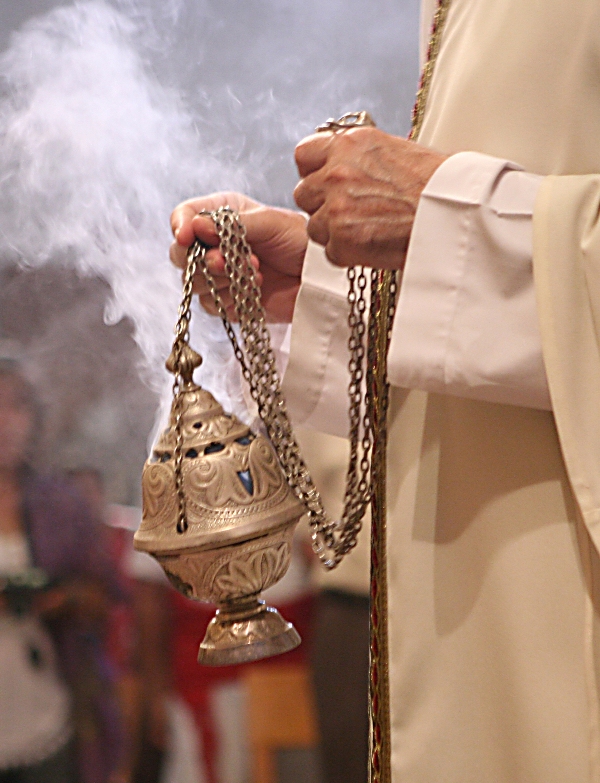
Burning Francinsense
picture credit Wikipedia

At the zenith of the Julian Calendar we have the festivals of ‘Christmas’ and ‘New Year’.

These celebrations carry warm and fond memories for many westerners. We can trace this back to childhood where children become the centre of attention and adults serve them for a few days; they pretend to be Santa Claus.

If, for whatever reason, you wish to influence the minds of adults for life, then you would start with the child because the child has no filters to prevent unconscious programming. The consumer industry that has grown around Christmas and the New Year suggests, very few adults can see through the smoke and mirrors.

Look objectively at these ‘festive times’. We tell stories to children about Santa Claus and a completely disconnected Nativity which they absorb with relish. And even though these are rather thin and bizarre narratives, children believe them.

Did shepherds really watch their flocks during the coldest nights of the year? Surely this nightly routine is only necessary when the sheep are lambing which is not in the winter months. Angelic hosts? Moving stars? Do kings saddle up camels and set off with other kings and no armed guard and courtiers towards a new light in the sky? And why give a babe in swaddling cloths such inappropriate gifts? Surely, a rattle, a soft toy and a blanket are more likely to raise cheeky smile?

This Bible story has the quality of a dream and in my view, for good reason. For just as dreams are constructed using symbols, so are these stories. Modern Jungian psychology is very comfortable with dream interpretation and symbols, as have peoples from around the world and throughout history.

The Roman church does not advertise that the nativity story is laid over identical ancient Egyptian and other traditions in which a child is born on 25th December of a virgin mother.

Isis Nursing Horus
picture credit Isiopolis

It’s interpretation of the gifts are as signs not symbols. They suggest that gold was given to show Jesus was ‘Christ the High Priest‘, in other words giving him power and authority, but a symbolic interpretation carries deeper meaning than signs.
In my view, the symbolic interpretation of the story is related to the winter solstice and a solar god rising and setting (Set being a destroying god from ancient Egypt). At this time the sun effectively dies and is placed in the ‘place of the skull’ or Golgotha. The round stone in front of tomb is closed for three days symbolises the sunrise not moving for three days on the horizon. When the sun moves again on 25th December is resumes it’s daily ascent into heaven.

This is not to say that Jesus the Christ was not a real person, but in my view, Jesus was born in the spring, did not die on the cross and lived his last days as far away from the evil Roman Empire as he could, in the Indian sub-continent, Kashmir.

The Tomb of the Prophet Isa or Jesus the Christ
picture credit Indian Heritage Walks

Surprise to see that there is no Santa Claus in the Bible because his is a symbolic story from another time and place which I have discussed in a previous blog; just as there are no cuddly Easter Rabbits or munchy chocolate eggs at Easter in holy scripture.

Here is a more serious alternative interpretation of the nativity story that might well have been within the teachings of the mystery schools and secret societies.

Consider the three kings as representing the pineal, pituitary and the hypothalamus neuroendrocine glands. These are all within the ‘place of the skull’. We should note that the birth most likely took place in a cave, a symbol of inner consciousness used by Plato, not a stable.

Many believe that much of human experience is ruled by our energy bodies as depicted in Hindu tradition by the chakras. Each month a sacred oil rises in the spine from the solar plexus and the part of the spine we call the sacrum. This is represented as the gift of myrrh from the pituitary gland. The hypothalamus is symbolised by gold, which is a pure, non-tarnishing, noble element, that freely conducts electricity. This charges the oil with golden, solar ions. Lastly the pineal gland secretes frankincense, a precious oil burnt in holy places to symbolise prayers rising into another dimension which becomes visible when the smoke disperses to reveal the source of the light. This was a new light and new consciousness on planet Earth.

I shall move onto the myth of the ‘new year’ in countries around the world which follow the Julian calendar. This was introduced by the dictator perpetuo, Julius Caesar in 45BCE, to replace the ten month Roman calendar. This was a solar calendar for a new sun god, with 365 days and a leap day every four years. It surfaces in the modern names of September, October, November and December (7,8,9,10) and starts on the first day of January.

But this random 1/1 date is not sympathetic with the cycles of nature. At this time, winter is dormant in the natural world. Animals and humans struggle to keep alive. Understanding natural cycles would suggest that the new year should start at the spring equinox when the days lengthen and there is more sun than darkness; a time of renewal and rebirth.

The Roman January god, Janus, had his two views of the world fixed on a melancholy past and an uncertain future. He was not a god of the moment and reality. He was not awake. Yet we celebrate January as the start of the new year, even to this day.

In the Rome influenced west, adults and children stay up until midnight. This hour is known in Wiccan circles as the ‘witching hour’ because at this time, the veils into the human world are opened and spirits may enter unneeded. Spirits are often consumed within an alcoholic drink to start the new year as one means to continue.
The Druid’s magical mistletoe, is used to give protection from such unwanted guests. It’s berries represent sperm and fertility. A future hope or ‘resolution’ is made real by a kiss beneath the mistletoe. It is an evergreen plant, and therefore provides protection throughout the year, even if unkept resolutions do not.
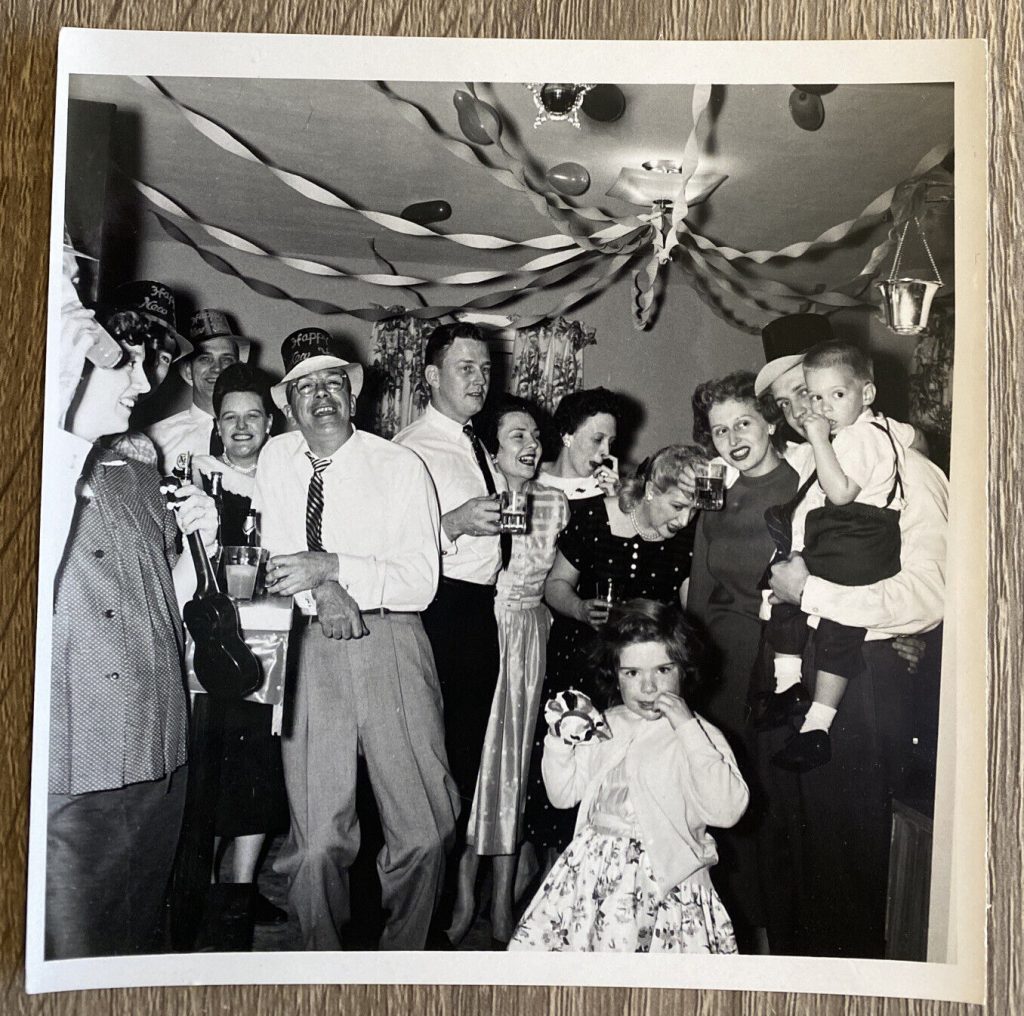
New Year Family Celebration 1950’s Britain

If these interpretations of Christmas and the New Year were explained to the general populace, their ‘programming’ from childhood is likely to resist any questioning; such is the unconscious power of childhood experience. The modern nativity and new year stories occur arbitrarily within the natural cycles. These children stories are unreal but are repeated without question. At the same time, fairy tales and myths (which are real) are described as unreal. This is the looking glass world which Alice ventured into.

In my view, this uncritical retelling of false narratives spills out into popular understanding and even ethics. For instance, exploiting rather than nurturing the natural environment, is a global policy that does not lead to fertile and happy communities. The erosion of natural habitats leading to reduction in the numbers and extinction of many species, I attribute to this dissonance with the natural world. We imagine it will last forever as that suits our modern self pleasing and comfortable way of live, but it will not.

Waking up from a dream is a slow and dizzying process. There are many who are casting aside these children stories that we were coaxed in our innocence with gifts and jollity to believe in. If our outer and inner ‘nature’ is ever truly understood, humans have a chance of being brought back from the abyss of shallow and false beliefs.

Magick, Majesty and Matrix

‘The world is an illusion, a dream. It only appears to be real

to the person who is unaware that it is a dream.’ Alan Watts

There is a famous story about a trickster named Rumpelstiltskin. The daughter of a Miller must spin straw into gold. Her father has promised the King she has this skill, but she does not. A strange impish man appears and spins straw into gold on behalf of the Miller’s daughter for three nights. In return, she has to promise him her firstborn child. When she marries the king, she forgets her promise. So, the strange man appears again and demands her child, but she refuses. He says she has three days to guess, otherwise he will take the child. A servant happens to find the little man who is singing a rhyme, which includes his name. The Queen reveals she now knows his name, and Rumpelstiltskin sinks into the ground.

https://www.grimmstories.com/en/grimm_fairy-tales/rumpelstiltskin

The story has appeared in different guises but has the same structure worldwide. Academics have categorised the form as ‘The Name of the Supernatural Helper’ in the genre of ‘fairy tales’.

Like most such tales, it hides meanings beyond the level of a nursery audience. The Miller is clearly also a trickster archetype, as he tells a complete lie to the King, putting his daughter in peril of being called a fraudster. She, in turn, must make a Faustian bargain with the Devil to hide the truth from the King.

It is worth noting that politics today contains similar patterns of lies and pacts with hopelessly untrustworthy tricksters, for personal power and gain. Both President Putin in Russia and the Zionist Israeli government have invaded and made war with their neighbours, disproportionate to the threat posed to their own countries. They expect the world to be fooled by their deceit. A trickster ‘Trump’ ineffectively poses as a ‘peace maker’ to gain a gold medal.

Historically, Jeffrey Epstein is alleged to have made pacts on behalf of shadowy organisations with a view to shaming and blackmailing public figures. He could not spin golden threads from straw, but he convinced many that he could.

Such alluring but shady dealing describes the energy of the trickster archetype well.

To the princess, the character of Rumpelstiltskin is both a blessing and a curse. Psychologically, the creature represents the trickster archetype within her own shadow animus. ‘Stiltskin visits her at night and produces the desired golden threads each morning for three days, to get her out of trouble. It is worth noting that three is a magical number, as in the expression ‘third time lucky’. Names, numbers and spells sustain the suspense of this story.

The transmutation of base matter into gold is a representation of an alchemical and psychological mutation of lead into the noble metal gold, and a feminine persona and a male animus into a noble human, respectively. Perhaps the Miller’s daughter learnt risky deceit for personal gain from her father – her animus model?

We must question why the gold is spun into gold ‘threads’ instead of, say, gold coins? The spinning wheel is again a very ancient symbol. Mahatma Gandhi used it to represent ‘honest work’ to make a political point, but the wheel also represents ‘wholeness’ and the turning of the Universe we call ‘time’.  

picture credit:
Ancient Egypt Online

A sphere is the shape on the crown of the great creator and sun god Ra.

A thread is another old symbol going back to Ariadne and the Minotaur in ancient Greece. It represents the ability of the rational mind to follow a line of reasoning, the product of which today is the basis of science. A thread also suggests woven cloth or carpets, as in the magic carpets of the One Thousand and One Nights tales. Today, the World Wide Web is capable of transporting anybody anywhere in the world instantly.

The whole of the ‘reality’ in which we live has been described as an illusory matrix. In The Matrix cinematic trilogy, the character Neo can move from one reality into another. The Matrix is depicted on a computer screen as lines of descending pictograms. This is certainly an oversimplification and a product of the limits of computers when the film was made.

picture credit: Hindu American Foundation

Two eminent scientists, University of London physicist David Bohm, a protégé of Einstein and one of the world’s most respected quantum physicists, and Stanford neurophysiologist Karl Pribram have put forward a theory that the whole Universe is a hologram. In his book ‘The Holographic Universe’ Michael Talbot describes a ‘revolutionary theory of reality’. We may be familiar with lasers producing talking images of people located elsewhere in real time. There is now a holographic performance by the Swedish pop group ABBA in a London theatre, which many find remarkably real.

Abba Voyage in London: picture credit The Standard Newspaper

A holographic Universe involves ‘warping and wafting’ lines of information-rich energy to create what humans experience as matter. The ancients demonstrated the pivotal moment of their supreme control of matter by building the pyramids on the Giza plateau. Their dynastic evolution moved from an energetic world focused on minor gods and the afterlife, into solid matter.

In a way, this is what Rumpelstiltskin is doing. He uses golden straw to create the eternal element, Au or Gold. Intriguingly, the symbol Au derives from the Latin aurum, for Aurora, the goddess of dawn. Each day, poetically, the beginning of a new world; a new beginning for mankind, and the Miller’s daughter. So perfect are her tricks that she transforms herself from a humble citizen into a Queen. This is the alchemical marriage, as depicted in many of the Alchemist’s works and represents spiritual perfection.

In the story, Rumpelstiltskin says that he wants nothing except a living child. He has mastered the material world and now craves what he can not create, a living child, or you might say, consciousness. This also happens to be the limit of modern science, but perhaps Artificial Intelligence will take up the role of the ancient demigods?

Agent Smith picture credit Weaving Movies Wallpaper

The Agent Smith character/s in the film The Matrix are demonic autonomous programmes which have penetrated the firewalls of The Oracle and threaten humankind.

Key to unravelling the complex layers of our story is the riddle of the trickster’s name. Today, passwords allow us to enter a programme and keep others out.

Words represent ideas, and ideas are the initial stage of the Creation process. ‘In the beginning was the word and the word was with God and the word was God.’ (John1.1)

In magical spells, words and their ‘spelling’ are important. The most well-known might be ‘Abracadabra’, which it has been suggested to mean ‘may it be so’. It is a spell of manifestation and, more darkly, deconstruction. Abracadabra can be spoken, losing one letter at a time to ‘deconstruct’ something.

Rumpelstiltskin, somewhat vainly, believes the princess will never discover his name. Commonly, tricksters can become victims of their vanity and underestimate those whom they are trying to deceive. The politics of the USA today is poisonous with self-important deceivers.

So fundamental to his very existence is the name Rumpelstiltskin that when revealed, he physically deconstructs as a programme uninstalls.

He never achieves his goal of possessing and perhaps creating life. He is beaten at his own game of deceit by one who is more deceitful. The Miller’s daughter has done this by confronting the mischievous spirit within herself. When humans confront their shadow side in this manner, they become whole or ‘holy’. The trickster disappears.

A child will readily listen to this tale, not knowing and not needing to know its levels of meaning. It is a healing story; one that may be carried through life as a mental ‘anti-virus’ programme, always scanning for what will spin the creation process through the realm of dreams.

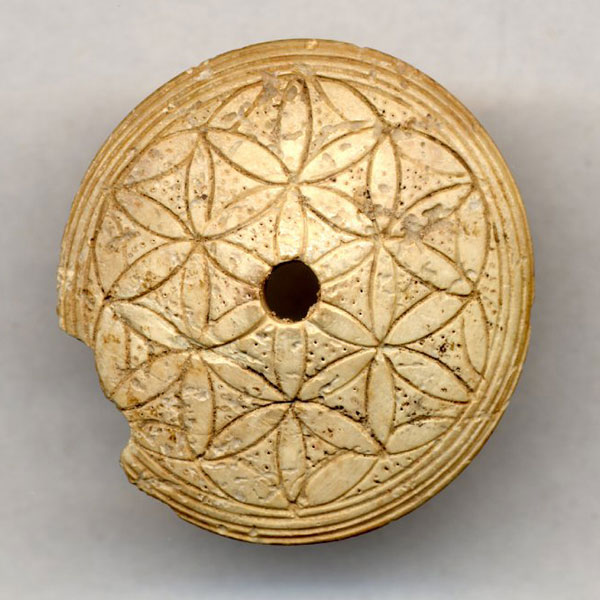
the Flower of Life picture credit Alziend

The Dark Side of Me

The sky is at times full of aeroplanes. Modern culture encourages ‘travel’ and ‘escape’ as a kind of adventure in which we must indulge. Like many wonders gifted to this generation, there comes with it, a compulsion for more and more of everything…like a billionaire who is never satisfied with living like Royalty. Previous generations have left us another type of wealth; hidden in stories which we call ‘fairy tales’.

“Ladies and gentlemen, please make sure your seat backs and tray tables are in their full upright position ready for take off;”

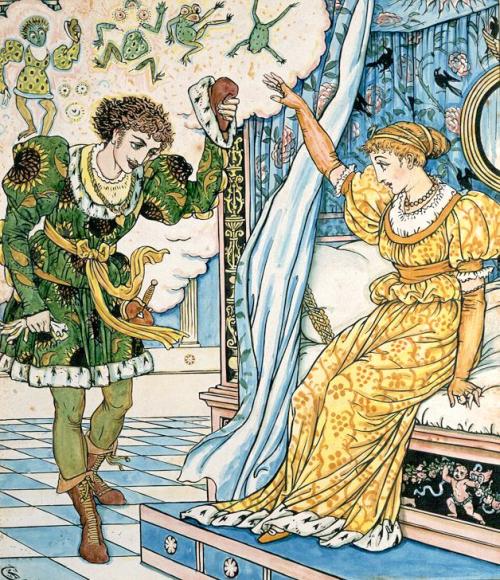
The Frog Prince

In the forest, a selfish princess accidentally drops her golden ball into a well. A frog offers to retrieve it in exchange for her friendship. She agrees but goes back on her word after getting the ball back and runs to her castle. The next day, she is eating with her father when the frog knocks on the door and requests to be let in. The king tells his daughter that she must keep her promise and she reluctantly obeys. The frog sits next to her and eats from her plate, then desires to sleep in the princess’s bed. She is disgusted at the idea of sleeping with the frog, but her father angrily chastises her for loathing someone who helped her in a time of need. She picks up the frog and places him in the corner of her bedroom, but he hops up to her bed and demands to sleep as comfortably as the princess. Furious, she throws the frog against the wall, but as he falls to the floor he has transformed into a handsome prince. He explains that he was cursed by a wicked witch and the spell could only be broken with the princess’s help. The next day, the two go to the prince’s kingdom where they will be married. (text credit: Wikipedia)

In modern versions, the transformation is triggered by the princess kissing the frog (a motif that apparently first appeared in English translations). In other early versions, it was sufficient for the frog to sleep for three nights on the princess’ pillow. There is more;

The frog prince also has a loyal servant named Henry (or Heinrich) who had three iron bands affixed around his heart to prevent it from breaking from sadness when his master was cursed. When the frog prince reverts to his human form, Henry’s overwhelming happiness causes the bands to break, freeing his heart from its bonds.

The adventure in this tale is the greatest of all – the inner journey. It is told from the point of view of a young princess. She is confronting herself in this story, and her eventual marriage to a prince shows her success in overcoming her unconscious destructive traits; that part of both men and women which Carl Jung called, the dark shadow. Note the contrasting floor tiles in the above illustration symbolising the union of ‘opposites’.

The forest and deep well symbolise that part of the princess’s psyche with which she is not familiar. She possesses a golden ball which symbolises perfection, something we all possess at birth but at some time in our lives will roll down a well.

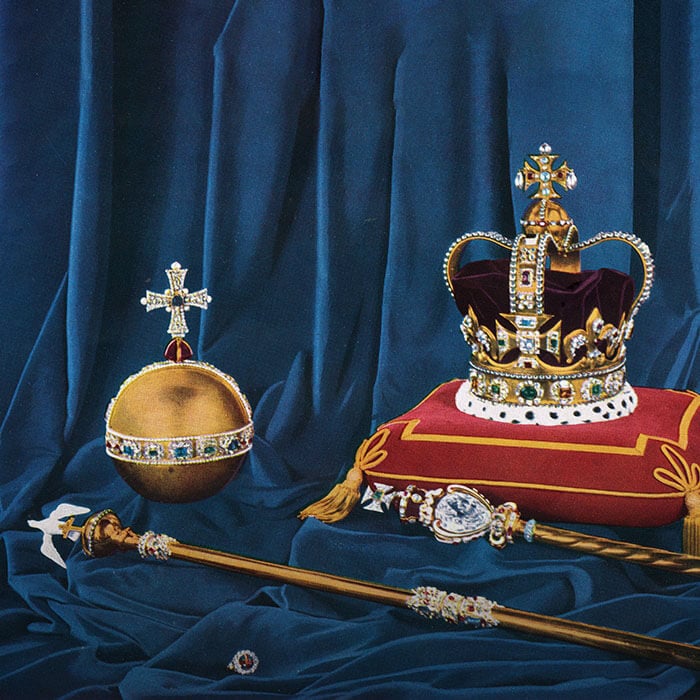
The Royal Orb and Sceptre: picture credit The Royal Mint

We have to experience this traumatic loss and in the story it is the cold, wet, male, instinctual, shadow side of the Princess that undertakes to retrieve her social position and inner perfection – a frog.

Like all psychic work it comes at a price. The princess makes a promise to her male shadow, that she quickly wants to forget. Her wiser and more honourable male animus, represented by the King, forcefully commands her to keep her promise.

The frog is equally insistent, knowing of the final goal of perfection if he can persuade the princess to overcome her inner loathing of her suppressed ‘maleness’.

The prince ‘frog’ is imprisoned in the Princess’s unconscious, a product of prejudice, fear, ignorance, and other self-destructive emotions. Another aspect of the male persona in women is symbolised by the frog’s servant Henry. He is also constricted by ‘supernatural’ powers with the three iron rings around his heart. Three is a symbolic number as in the Trinity meaning ‘wholeness’ or ‘oneness’. The number reoccurs when the frog spends three nights on the princesses pillow – a position suggesting psychic work of transformation through dreams.

The Four Alchemical Humors

In Alchemy, there are four humors representing ‘the chemical systems that regulate human behaviour’. The prince is changed from his false external appearance of being cold and wet to the warm and dry world of the Princess and her palace.

In older versions of the story the Princess throws the frog against the wall of her room in disgust, but the character of the servant and his ‘heart centred’ problem indicates that the coming together of the prince and the princess is from an emotional change leading to love for each other.

Psychologically, this is self understanding and love, and Jung named the process ‘individuation’. The male and female principles achieve perfection in union. (By the way, all gender references in this story can be reversed and the meaning is the same.)

The Princess’s inner work – so accurately described in this ancient tale – is partly why ‘fairy tales’ and ‘myths’ could not be banished from children’s books. Children have a great appetite for and demand these ancient tales. Their unprejudiced minds intuitively recognise the symbols and the true picture of the mind they represent.

They know that as well as walking and eating and drinking and sleeping and all those skills that a new body requires to be learnt – understanding Mind, is just as important.

The tourist planes one might cynically suggest are bursting at the doors with adult children from Neverland who, like J.M. Barrie’s Peter Pan, have never grown up; never moved out of their body into Mind; never kissed a frog.

The Earth’s moon has always symbolised femininity and the mystery hidden in all things feminine. It is ‘tide locked’ with our planet so that one side of her always is hidden. For many years this was referred to as the ‘dark side of the moon’ and as a metaphor for the hidden, the metaphor of ‘darkness’ fits. But in reality, the moon has phases and when she is ‘new’ her shadow faces Earth and we cannot see her. Her reverse side is then full of light and naturally, orbiting probes and satellites from Earth have photographed what is going on there.

When Apollo 8 flew around the moon for the first time and mission control waited nervously for their reappearance, the crew reported hearing haunting sounds. Rationalised as ‘feedback’ from instruments, one might be more curious; as the best scientists have always been.

A Golden Ball from the Moon: credit Meister Drucke

When a partial view of the moon is visible from Earth, the place between shadow and light reveals most detail. Professional and amateur astronomers have recorded seeing unexplainable lights, EAP’s and their shadows on the moon’s surface, buildings and roads and Spaceports with huge cigar shaped craft entering and leaving craters. In previous decades NASA redacted (shadowed) these images from it’s photos, but today there are photographs and video recordings of these phenomena in the public domain, some of which may be real.

The First Men in the Moon: H.G. Wells picture credit the Library of Congress

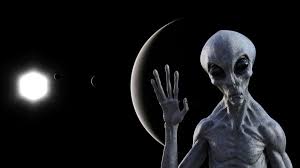
What is interesting is that the public have been ‘persuaded’ that the notion of extraterrestrial intelligent life is an unbelievable ‘fairy story’. Revealing the truth would cause ‘widespread public unrest’ (disgust at the sight of non-humans). They are therefore not prepared to reveal the truth and hide evidence; a kind of ‘curse’ on modern humans.

We are still in denial that we owe anything to this ‘Frog Prince’ and continue to live spoilt and shallow lives like immature princesses.

When an ‘alien’ frog comes along one day and demands a kiss, we must overcome our collective unconscious fears and invite it onto our pillow. In my view, this will happen in our lifetimes, and cannot remain repressed and hidden. It will be a process of personal and collective social development involving hatred, denial, and anger. Lasting integration and cooperation between species will only happen when there is a higher emotional collective bond between humans – love. The frog is watching and waiting.

“Make sure your seat belt is securely fastened and all carry-on luggage is stowed underneath the seat in front of you or in the overhead bins. Thank you.”

The Problem Problem

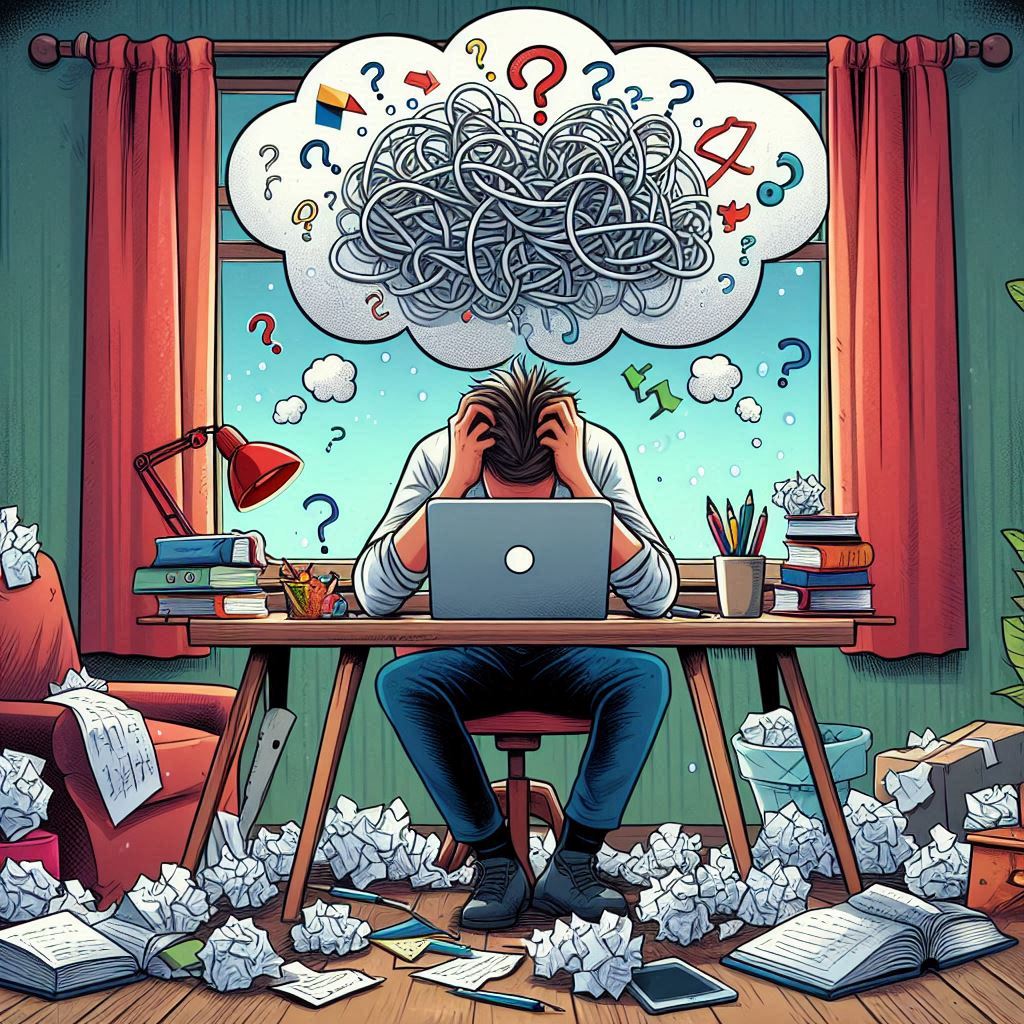
The problem with problems is that their solution requires skilful analysis and creativity.

This is obvious except – who teaches problem solving? Overcoming difficulties is something we expect children to ‘pick up’, as learnt behaviour. By the time we reach adulthood, overcoming complex challenges is assumed to have been mastered. Yet, the problems that we encounter through life, if not solved properly, can have just a devastating effect on our lives as a metaphorical bomb. It is the same for those in charge of large corporations and governments who are known to rely on learning from failure as a somehow justifiable, problem solving technique. The joker advises, ‘try everything until something works’.

There is a story which you are likely to know, about a group of people in a dark room describing an elephant. Each holds and touches a different part of the elephant, which stands patiently; wondering where the light switch is. At the end of their examination each describes the unique part of the elephant that they have examined. None of the participants has an overview of what the whole elephant looks like, so they are all wrong.

It’s a wise story. What it tells us is that everything is not as it appears. Many things are extremely complex and far larger than our expectations and experience and greater than our abilities to interact with them constructively.

As we go through a physical life on planet Earth, we are constantly challenged. The material world is in a constant state of entropy, causing repeated and unexpected disruption, such as your car breaking down or your body ageing.

Because we are human, our ego’s present us with a story about ourselves which says optimistically, ‘I can cope’ or pessimistically ‘I have to die sometime’. If we took a step back and looked at the problems humans suffer, our sense of ‘everything’s alright’ would be replaced humility without pessimism.

Religions have picked up on this and many require the congregation to fall to their knees in the face of that elephant that sits in our minds; vanity.

Yet, is it not courageous to look adversity in the face and smile? There is an archetype of this model which is ‘the hero’. He or She is a humble human who manages to overcome all sorts of impossible problems and captures the prize! Whether this is Odysseus on his epic voyage or Superman defending New Yorkers; heroes have super natural knowledge and powers.

Or do they?

In native communities, education of children consists of physically showing them the problems of bush-life and how to overcome them. An Australian First Nation child will be shown how to collect honey from trees without being attacked by bees and leaving enough for the colony to survive.

But in modern fast changing societies, complex problems are expected to be solved by those who have no prior instruction or experience. Government ministers frequently display an extraordinary naivety when it comes to their principal role, which is to allocate resources and make laws that solve society’s problems.

The examples are numerous. In the UK and many other nations, people are landing on beaches and demanding asylum; as is their right in most countries. The ‘sticks and carrots’ that have led them there are numerous and complex.

Attempts by nation states such as Spain, Greece, Italy and the United Kingdom to ‘stop the boats’, take hold of merely the elephants tail whilst imagining the little tassel on the end is the elephant. One government suggested that a threat of deportation to a third country will stop people reaching their shores in unsafe boats. Another political party takes hold of the metaphorical elephant’s leg and suggests that putting the organisers in jail will stop the problem; which again will not be ineffective because the elephant is not a leg.

In the Middle East, you have to ask what problem Israel’s government is currently trying to solve with open hostility against it’s neighbours. Problems of the people of the tribe Judea go back millennia, yet the Zionist government repeatedly tries to argue that the present problems started on 7 October 2024. Were it so simple to be true. Were the whole truth be known.

When the Sars-2 Covid virus was ‘mysteriously’ released in 2021/22, the problem was not examined in full, and when a solution was required, the pharmaceutical companies were able to react almost immediately. Inquiries into the response to the pandemic uncover ineffective, wildly expensive responses. Countries that did almost nothing like Sweden, and much of Africa came out the best.

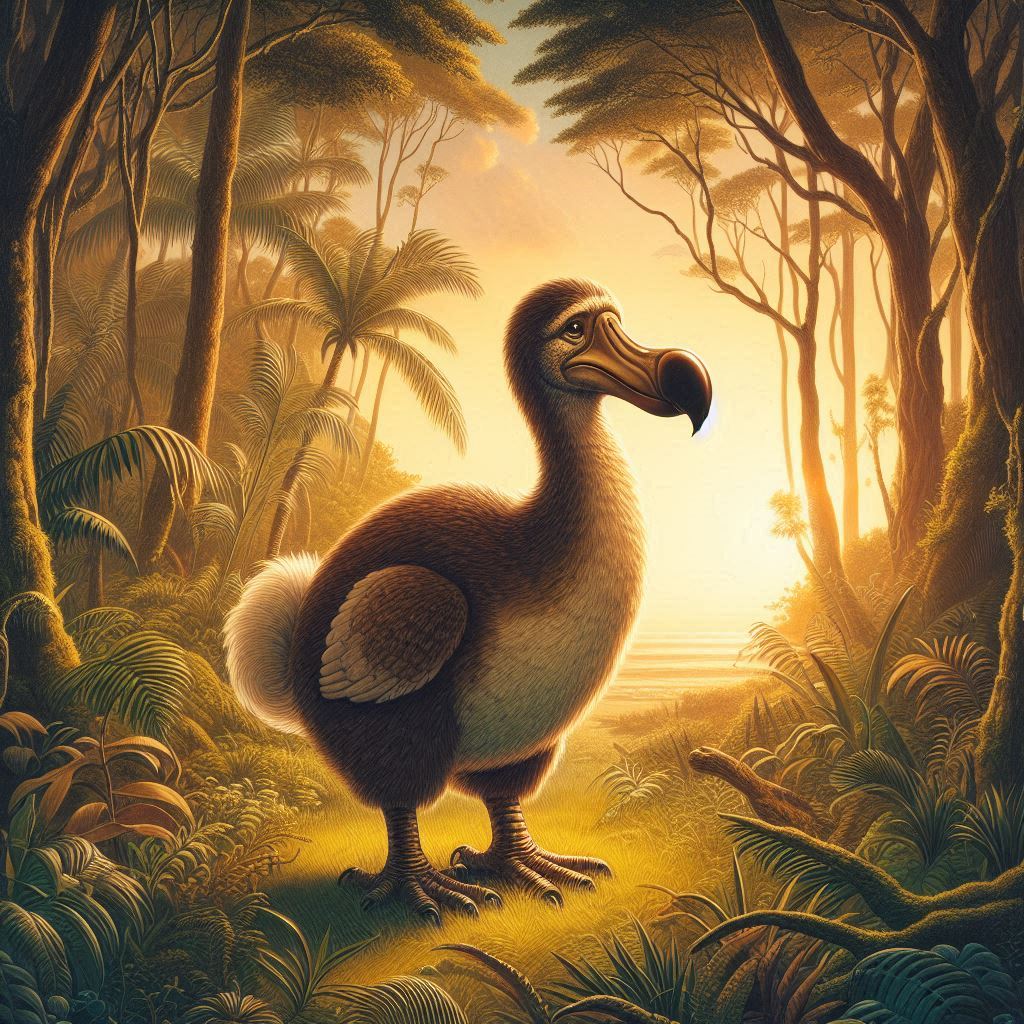
The ‘Do Do’ was a bird that flourished on the island of Mauritius until humans appeared in wooden sailing ships. The hapless birds wandered around in a dream, not expecting to be eaten by hungry sailors. The flightless birds had failed to solve their problem. The Portuguese word ‘do do’ means ‘stupid’ which the birds were not, but victims of those who should have understood sustainability.

Today, humans are facing similar population collapse or even extinction from multiple directions.

In my view, oligarchs and corporations, secret societies, media moguls, ‘big pharma’, the military industrial complex, and international criminal organisations exploit human weakness of poor problem solving by deliberately making problems. Interference in elections, rumour and propaganda, distortion of truth, psychological warfare, hacking, negative suggestion, assassination by ‘dirty tricks’, creating riot and unrest, reducing and disrupting food supplies, and many other techniques, are deployed against unwary populations. All whilst any government that genuinely cares for it’s citizens, is running to catch up.

Understanding the causes of problems is the first step to find a solution. The problem must be understood in every aspect of it’s nature and origin, in a unbiased and factual manner. Then a tested solution that is ‘cost benefit’ proven, has to be found and implemented in a timely manner.

When examining the many problems today, all over the world, you might expect a supposedly neutral and unbiased organisation such as the United Nations to have a department that is expert in defining and solving problems. The Secretariat, the Economic and Social Council and the General Assembly are ideally placed to work in this way, and yet world problems continue to cascade out of control. The United Nations has bravely spoken out early about the genocide in Palestine, but has not stopped it.

Stopping a descending spiral of harm, characteristic of weak problem solving, becomes a battle with a Giant, that even global organisations with their huge resources can not win.

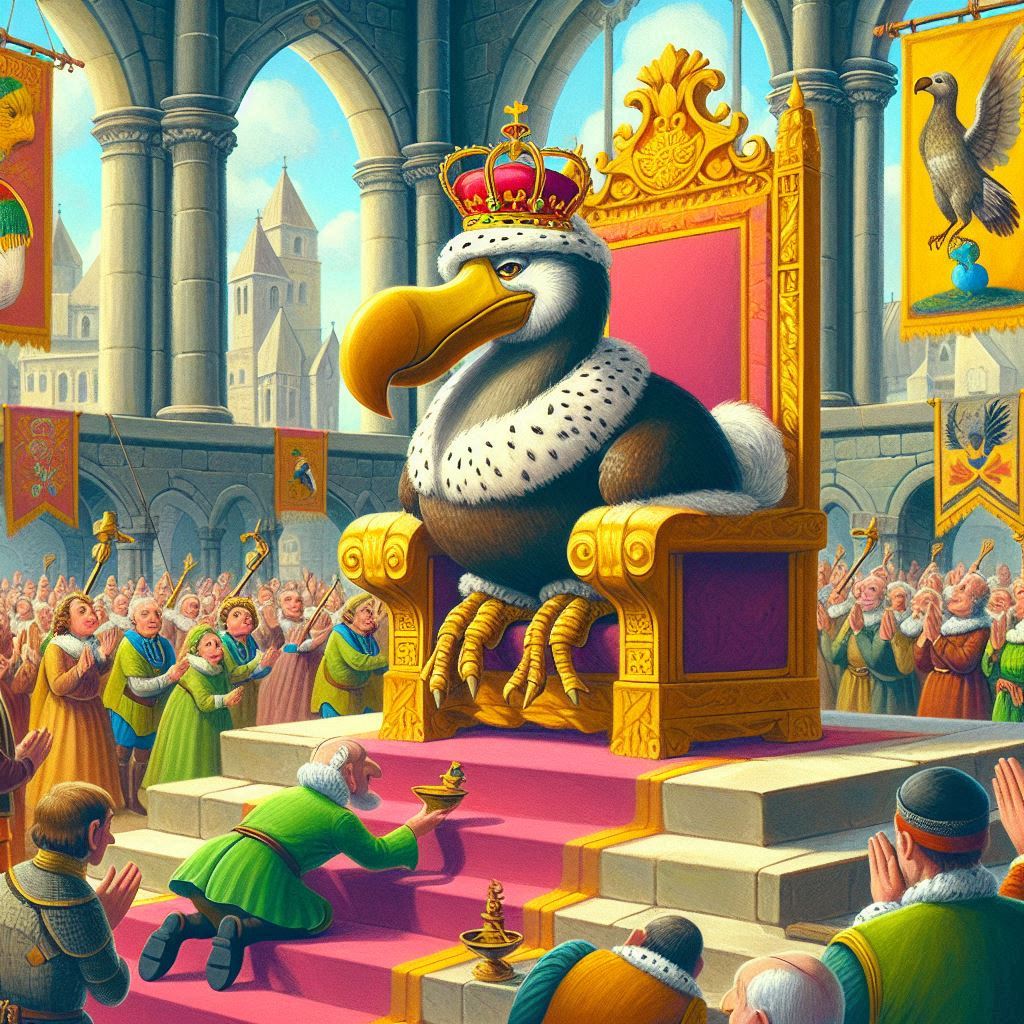
Have we put the Do Do’s in charge?

Stones and Plants

Having reached what is known in common parlance as ‘a ripe old age’, there occurs to me certain insights about the nature of human beings.

Principally, one is given to conclude that human souls, during their own short but sweet personal evolution, consist of two types;

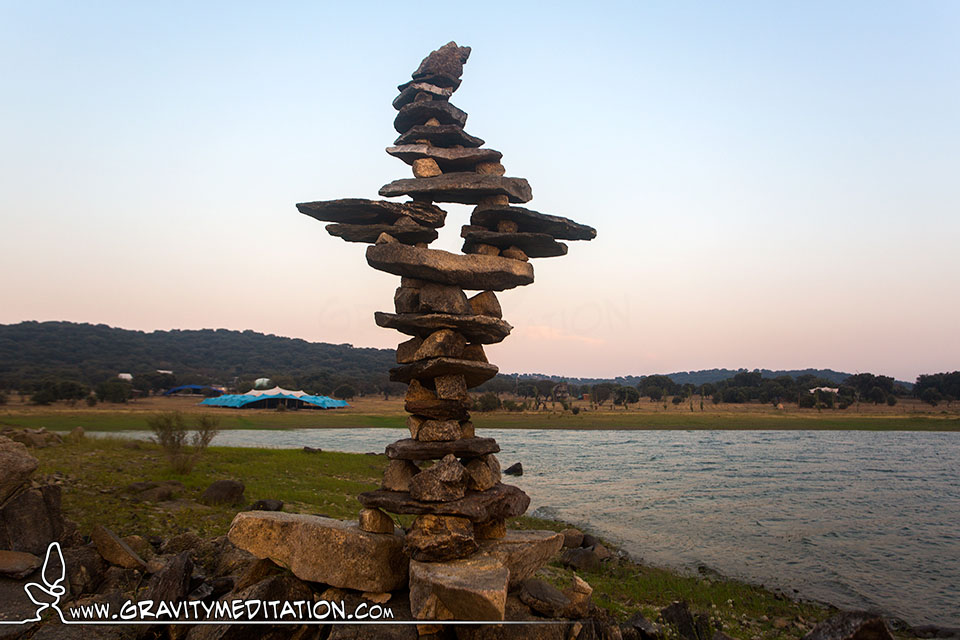
The first might considered to be ‘stones’; that is having as much knowledge and personal charm as a stone. This is not to ‘put down’ the mineral kingdom through comparison with those who are more obviously ‘alive’ and ‘should know better’. Indeed I have personally a great regard for stones of all kinds, as a result of my scientific theoretical understanding of ‘geology’ and ‘geomorphology’ and an artistic appreciation of the significant contribution of stones to the beauty of landscapes. Indeed I have in my possession companion stones, exhibiting curious colours, shapes, sizes, weights etc., as well as natural crystals of miraculous hues and geometries, precious minerals derived from 0res, and indeed a house made entirely of stones giving me shelter from whatever the weather and life is inclined to throw at me. Stones, in short, rock.

http://www.gravitymeditation.com

More metaphysically, I am one of those stark-raving-mad-nics who regard the mineral kingdom as having a complete social structure. This comprises of a noble King and Queen, courtiers and other ‘hangers on’ who are likewise, to be found in the human realm, where matters of high office and rank are ‘out for grabs’. It is true for me, and no doubt certain other ‘cranks’ party to ‘outlandish persuasions’, that the entire earth’s crust and what is below, goes about it’s business in a most conscious, caring and controlled manner. What I am trying to say is that the whole mineral kingdom is as much alive as you or I, but slower…look at a geological time chart to see how aeons pass by as stones do, in short, very little. As one who is a mere butterfly in comparison to the length of life of minerals, I believe that conscious evolutionary changes are almost impossible to observe in stones due to their considerable slow rate of change in all aspects of their lives. From another perspective, we to stones are no more than a spark lifted out of a metaphorical camp fire, which exhausts itself on oxygen in less than a second.

It is this particular quality of stones that brings them to mind as an apt metaphor for the subject of this essay; which I promise I shall come to when the twinkle of the moment is ‘right’. You see, in my unique and therefore unusual opinion, there are certain human beings who are born, live and die with much the same enthusiasm, as a stone. Their brief nascence appears to be a complete quandary to them; to and about which they show little curiosity or even care. They probably are not conscious that ‘existence’ is, in contrast, an issue of considerable fascination for others in their society. As a result, their life consists of certain fixed stations and ideas, about all and nothing, with which they bore those who are unfortunate enough to be within earshot of them. The aspirations of these ‘stone people’, one might conclude, are summarised in the word, horizontal.

Such stones are not the type with whom you wish to spend time in awkward situations, such as ‘stuck-in-a-lift’ or ‘drifting-in-a lifeboat’, following the occurrence of a power cut or submersion of a poorly navigated ocean liner.

picture credit: The Belfast Telegraph

Least of all to be desired, is the idea of forming a relationship with them if you any have a regard for wonder in life; with all it’s twists and turns and curiousnesses. Should you mention in polite conversation or correspondence to one of these mineralised munchins, a matter of considerable interest to yourself, you can certainly expect a glazed expression in place of an informed response, followed by a ‘passing on or over’ your interests in order to talk about something more agreeable to themselves, such as the price of cheese or cucumbers.

On the other hand, patient reader, as you probably are, up until now, eagerly anticipating information about the alternative human type; ‘champ at the bit’ no more. For there is a type of homo sapien sapien who exhibits a completely opposite metaphorical disposition to life than stones; these are ‘plants’. In a sustainably organic way, these merry souls plough through life, planting seeds, irrigating fields, de-pesting, fertilising and generally invigorating life’s very soil, in extremis. Naturally they pass on this envigoration to all fellow humans with whom they come into contact.

Theirs is a life exhibiting a general compulsion to explore ever aspect of their inner self as well as the eminently curious and absorbing exterior world. If change of direction is needed, they will mentally and emotionally transform themselves upwards, in order to enjoy new vistas and ways of seeing, much as in the manner of a broad bean plant escaping the humdrumness of ‘root consciousness’. One is reminded of the wisdom of Jack and his fabled ‘Stalk of a Bean’ through the ascent of which, he returned with a notable harp and a hen that laid solid 24 carat gold eggs.

picture credit: Jack and the Beanstalk – a silent film – (1902)

Being ‘rooted’ is no more an insurmountable challenge for humans of the plant-like nature, than it is for a physically disabled person to overcome their ‘limitations’ and discover wonderful gifts, that otherwise would have been unknown or unavailable to them.

In summary, plant people are eminently the best to grow with, and if you let them, they will lift you out of any circumstance in which you might find yourself ‘rooted’. They will always find out about some thing or matter if they do not know the answer, because they are aware of the fluid nature of knowledge and the fact that ‘not knowing’ carries no shame or closure of opportunities, but is eminently instructive and a ‘good moist and shady spot to start’. In an entirely organic manner, a plant person will carry you along with a skip in their step and a smile on the tips of their leaves, waiting to respond to a challenge, good or bad, and in so doing, gaining the attitude and skill of being able to overcome anything.

With a small amount of reflection and observation of future meetings and relationships with those whose nature is enclosed in a homo sapien sapien animal body, you should, I advise you; be acutely in remembrance of these two human types.

The magic of Mother Earth and Plants meeting;
Spherical Plasma Information Vortexs’s at work in Wiltshire, England this month.

picture credit: fr.news.yahoo.com

Perhaps this knowledge begins some self reflection as to in which corner you reside? If it does, then it is my personal understanding and belief that we are all to different extents and purposes, sometimes a rock and sometimes a plant and sometimes neither; the latter, from which, nothing good will happen.

picture credit: Pinterest

Beyond Good and Evil

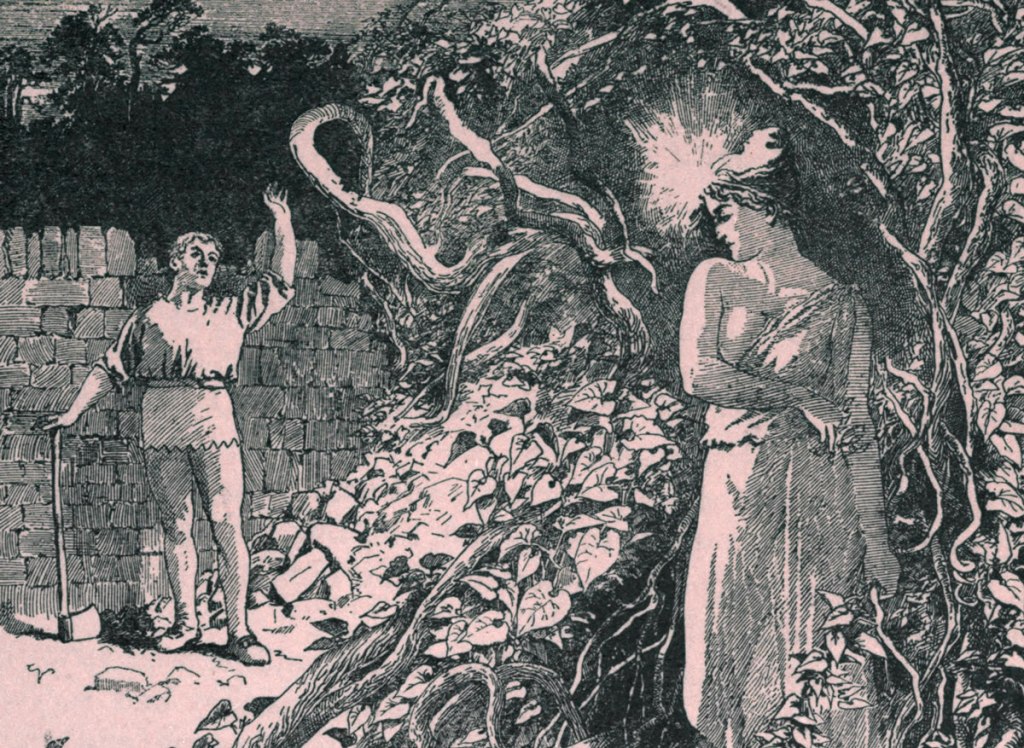
Genesis gives us the key to opening the door to everything. All we have to accept is that stories in Holy books almost certainly operate at many different levels beyond what is taught to children in Sunday School.

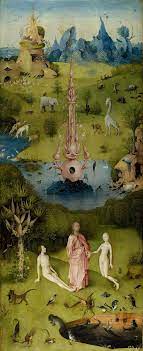
In the story of the original humans in the Garden of Eden, God ‘opens the eyes’ of Adam and Eve as punishment for Eve eating the forbidden fruit of the Tree of Knowledge. For in doing so their eyes are opened to the concept of ‘good and evil’, but we should not be side tracked by wondering what good and evil are. What is being revealed here, in my view, is that the Unity Consciousness of the blissful Garden, split into binary consciousness. If the reader overlooks the reference to newly realised binary opposites, then the message is repeated for reinforcement.

When Adam and Eve see each other naked, for the first time, their consciousness moves from being one, to two. This ‘same but different’ paradox between men and women is the same for all binary thoughts and words. Carl Jung suggested that the minds of men and women differ as metaphorically expressed by the nuanced differnces of their bodies.

The message in Genesis, is not about ‘good’ or ‘evil’ or ‘man’ or ‘woman’; it’s about binary thought; a fataly flawed characteristic.

But thinking in opposites creates an illusion of understanding. This is whispering serpent’…the one that slides down the ladders of thought.

In physics, nothing is black and white; there is just light and an absence of light and everything in between. But using opposites as a sort of ‘algebra’ for thought has enabled modern scientists to deconstruct nature and use it’s methods to make technology.

Batteries consist of negative and positive poles. The brain consists of left and right hemispheres. Breath goes in and out. Humans are born and die. Chromosomes are X and Y.

This is how have un-zipped the polarities that keeps atoms spinning, but there is a catch!

Our thoughts attach to the oversimplified opposites. Left and Right political views are a prime example of extremist views plunging the world into chaos. Edward de Bono introduced the non-binary word Po in his book Beyond Yes and No to express infinite possibility and a practical key to freedom of thought.

Opposite ideas should only ever be a mere framework for rational thought, otherwise the space in between disturbs ‘certainty’, leading to confusion and conflict. Consider a recent example;

In the United Kingdom, the Supreme Court has just ruled that a woman is a person who was born a ‘biological woman’. In other words, a ‘biological man’ cannot become a woman. This rule provides clarity for the lawyers; but is it true?

I would argue that the model does not fit neatly over reality. When it comes to the provision of public toilets, there will need to be a ‘third space’ for those with particular needs, for instance, those who feel different to their biological gender.

Is not an impossible problem for many ‘third spaces’ already exist as a ‘disabled toilet’. All that is needed now is a gender neutral sign on the door. Something that is not ‘men’ or ‘women’.

We see here that humans are not as simple as the rule of two ‘opposite’ biological genders. Consider the complexity of the body. We have a brain with left and right hemispheres. Each half has a nuanced contrast of functions; rational and creative respectively. Psychologically, each woman has an unconscious animus and each man has an unconscious anima. One in ten of us are left handed; the rest right. In some cultures, left is ‘evil’ and right ‘good’. There have been libraries written on the complexities of gender differences.

But we also experience a range of emotions, almost involuntarily, which can be categorised as ‘expansive’ or ‘passive’ in nature. Anger and valour are expansive and ‘male’, sadness and tenderness are ‘female’ emotions, for example. Of course, men and women have the whole range of emotions in varying degrees beneath the fig leaf.

Finally, the subtlest human characteristic that guides mind, heart and body is ‘intuition’. Albeit a peaceful, almost silent, internal voice, it has a function to guide us when we are lost. Another name for intuition is Soul, and yes, souls can be ‘good’ and ‘evil’ as illustrated in the Old Testament. There is a Bible story in which Joseph experienced wise, prophetic dreams. His soul’s ability to describe the future intuitively through the pathway of dreams is symbolised by his ‘coat of many colours’. Dream messages are not black and white, but as subtle as a colour from the subtle spectrum of light.

This level of subtlety is desperately needed today, in my view, if humankind is ever going to recreate the Garden of Eden on earth through deep compassion and understanding. If we do not, a Wasteland awaits.

Who is the third who walks always beside you? When I count there are only you and I together, but when I look ahead up the white road, there is always another one walking beside you, Gliding wrapped in a brown mantle, hooded. I do not know whether a man or a woman – but who is that on the other side of you?

What the Thunder Said (from line 359) from The Wasteland by T.S. Eliot

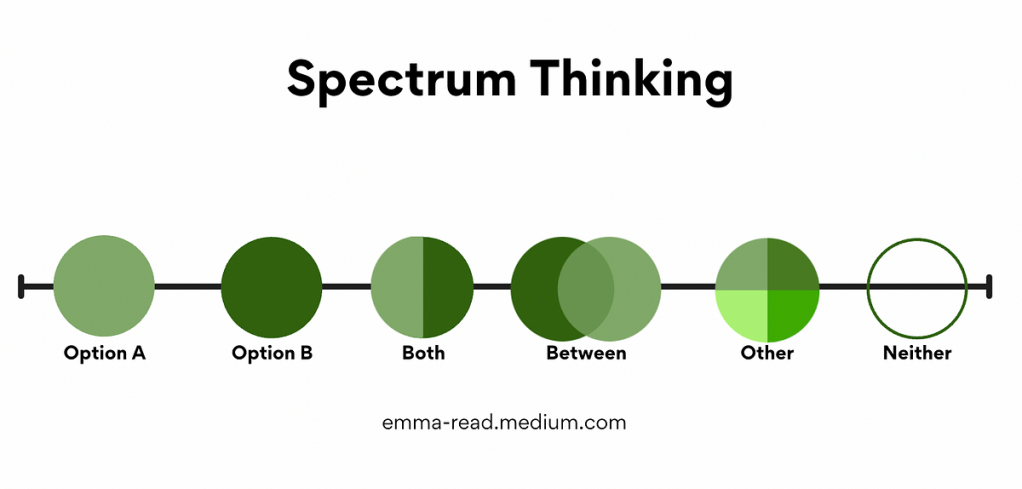
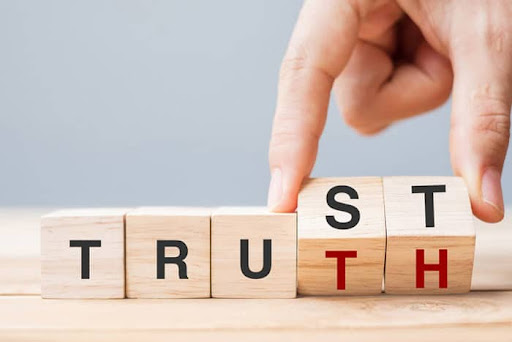
True or Not True?

That is the question

picture credit: Australian Academy of Humanities

The world is experiencing mental chaos in the present; not knowing what to believe. The news media is full of reports that appear to contradict even what was said the day before.

It is important therefore, for our thoughts to be as precise as we can and also our words.

As in the title of this essay, ‘truth’ is causing the confusion and we now longer know who to believe.

Numerous politicians are being routinely accused of ‘lying’. If we consider the meaning of the word then is ‘a statement intended to deceive’. Then there are are false ‘facts’ from unreliable sources, which may not be intended to decieve but do.

The famous Dunning Kruger effect states that amateurs are less concerned about understanding a subject than professionals, who have pondered on it for years. The less you know, the easier everything appears to be. The present administration in the United States of America has more than it’s far share of sufferers of this effect, who simplify complexity to below any standard of professional opinion.

There are also things openly ‘fictional’. These may contain some truth but are largely a product of imagination. Novels and films based on truth will declare that names and events are fictional for artistic and legal reasons. What is important is that we are not deceived into believing in fiction. The World’s religions and cults are particularly prone to this absence of adherence to truth, often for no other reason than there are based on the fog of ancient history and managed so as not to embrace the present.

The civil laws of most countries try to be based on ‘the truth, the whole truth and nothing but the truth’. Judges attempt to distinguish between true evidence and false evidence until something is believed to be ‘beyond doubt’. It still makes mistakes even after the most rigorous processes to remove doubt. Dictators who control the judiciary can get away, literally, with murder, using fabricated evidence or just no evidence at all.

What this shows us is that even after the most challenging and examination, ideas can turn out to be mere theory. In science, theories are subject to ‘peer review’ – critical examination by equally well qualified scientists. As the Ancient Greeks understood, theories should not be confused with facts. The present irrational dismissal of a theory because it suggests a ‘conspiracy’ (intent to cause harm) is irrational. To not investigate an accusation for emotional reasons is a clear divergence from truth, but convinces crowds.

‘Facts’ are illusive and can be the product of distortion. A satellite’s instruments may be malfunctioning or incorrectly calibrated. An individual politician may have an unconscious or deliberate bias. The process of believing that ‘climate change’ is true has taken decades, largely because it was contrary to the interests of companies that extract and sell fossil fuels. As with many complex issues, the theory was too large in scope for the general public to understand. Those who should lead opinion, politicians, often use distraction, omission, obfuscation, irrelevance, obstruction and discontinuity to align facts and fictions with political ideas.

Even when we believe something is true, it can still only be ‘relatively’ true. It might be an oversimplification that just happens to work. Basing the worth of money or tokens on gold reserves was just one such ‘truth’ that reassured governments and populations. Today physical or virtual tokens of ‘worth’ are less and less dependable.

Finally, philosophy has an angle on ‘truth’ and how to find it. If science and religions regard truth as constants and dogma, philosophers understand truth as malleable. There is no ‘fixed law’, other than the law that everything changes.

In Zen Buddhism, truth is whittled down to an individual regarding life’s purpose as no more or less than being present and observing; a formula much needed in our present times; especially when things go wrong!

Oh Bush warblers!

Now you have shit all

over my rice cake on the porch. Basho

The Two Mary’s

Resolving the Unresolved

The greatest influence on me as a male child growing up in the 1950’s and 60’s was naturally, my mother. She was my a ‘perfect woman’. To Jungian psychologists, this is the ‘anima’ upon which is modelled the feminine aspect of the male psyche.

But there is also a hidden, darker side to the male’s anima. Ideally hidden from child’s view, it was available in films, newspapers and magazines more openly than it is today. There was a ‘sexual revolution’ going on in the teenage generation above me and all was sex, drugs and rock and roll. ‘Flower (femininity) power’ countered the male Patriarchal aggression of the two world wars. Women were ‘burning their bras’.

Psychologists might view this as a healthy revolt against conformity through open expression of emotion. The mind bending drug culture and sexual freedom of that generation erupted and continues to this day.

The dream goes back to the Garden of Eden and the myths of Christianity. Adam and Eve were exposed to their own nudity and felt shame for the first time; their mutual feelings of new found lust moved into era of ‘covering up’, but the fig leaf was nowhere near big enough. The characters in the Old Testament carried out a lot of begetting and smote-ing. The Ancient World was like the Wild West and it needed a Sheriff to calm things down – Moses.

In the New Testament, Jesus’s mother, Mary, had to be ‘free of original sin’ meaning starting afresh. But how could the mother of the new Christ reproduce without being associated with the shame and guilt of sex? The answer was simple, sophisticated and a mind bender; the mother of Christ is a virgin.

Another convenient proof – after the fact – was provided. Mary’s husband, Joseph, was too old to be a father; so confirming Mary’s ‘immaculateness’. In Renaissance paintings of the Virgin Mary, her guiltless face looks lovingly down upon the infant Jesus, suckling at her breast. All was neatly explained.

Leonardo da Vinci’s ‘Madonna Litta’

The problem is; femininity isn’t like that. There is more than a hint of ambiguity in the archetypal feminine, because it is dark as well as a light; a destroyer as well as a creator.

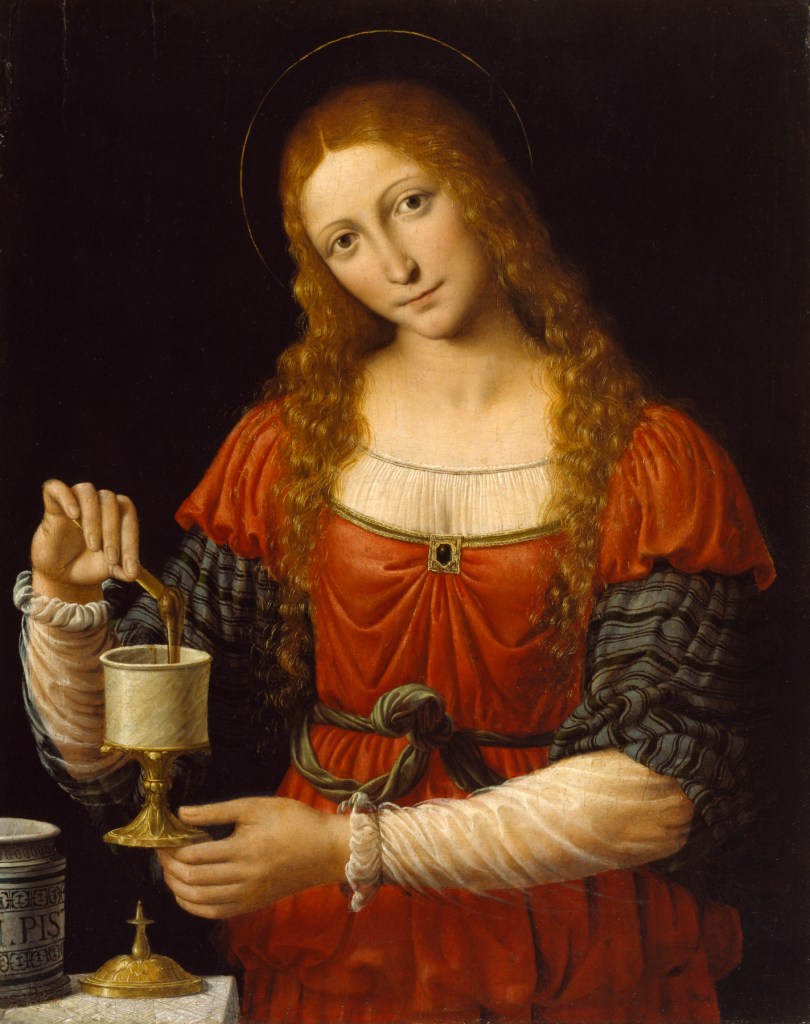
The church fathers cleverly wrote this contradiction into the script and they did it by depicting ‘Mary Magdalene’ as a prostitute. If Mary and Joseph didn’t ‘do it’, then Mary Magdalene certainly did and according to the Catholic Church, she did ‘it’ plenty. But we might regard this depiction of Mary Magdalene as suspect, not least because the word ‘prostitute’ does no appear in the Bible and because Magdalene or Magdala sported the uncompromising title; ‘The apostle of the Apostles’.

Saint Mary Magdalene by Bernadino Luini – Italy – 1524

How much should we go along with this dichotomy of femininity? Was Jesus in his later life, such a bad character as to keep company with a ‘fallen woman’? The fiction survived until 1969 when the Catholic church declared the Magdalene was not a prostitute after all. But was the damage to women in general irreparable? What were the consequences of this unjustified denouncement of womanhood – ergo the Divine Feminine – by the Patriarchy?

Most frustrating of all about the Magdalene lie is that there had always been another version of her in the Gnostic Gospels or Nag Hammadi Library of the Essenes. In ‘The Gospel of the Saviour’ Jesus describes her as ‘the woman who knows the All’. Jesus must have had many female disciples and it appears that he initiated Mary Magdalene to the highest level. In contrast, the male disciples come over in the Gospels asking dumb questions; you cannot raise the consciousness of those who are not ready – too much ego.

Even Simon Peter was in denial of his faith when asked. In my view Simon Peter, might have been nick named the ‘Rock’ by Jesus because he was spiritually calcified. The Roman Catholic Church in building itself upon the character of Simon Peter, has certainly reflected much of Peter’s stiffness through the centuries.

Mary Magdalene on the other hand was not bland and serves our understanding better as a complementary female counterpart to the male Christ figure. Her wisdom represents that part of the Divine feminine which men find hard to understand. To paraphrase Bob Dylan, she, ‘takes…aches…fakes…just like a woman…with her fog, her amphetamine and her pearls’.

Joan of Arc by Jean Auguste Dominque Ingres 1854

If a further example of the positive anima was needed, then the figure of ‘Joan of Arc’ serves well. She was a saintly virgin with the Creator speaking in one ear and King Charles VII in the other. Joan’s knightly armour represents the code of chivalry brought back by the male knights during the Crusades, a code that held women in the highest esteem and made men bend at the knees in their presence, literally and metaphorically. Joan of Arc was a gender reversed version of knightly chivalry and the reverence owed to perfect womanhood. As a Christlike heroarchetype, she had to suffer an early martyrdom in the hands of the Judas figure – the traitorous Duke of Burgundy. The character of St. Joan, you might feel, is just too goody goody. She needs less fire and more earthiness, more representative of the daily and nightly amours of the common man and woman. In a word; balance.

A more healthy expression of gender roles and spirituality can be found in sculptures of Indian Temples. The depictions of Tantric sexual intercourse in the statues must have made the Victorian missionaries blush. This was not the ‘virginal’ forbidden fruit that created so much male hypocrisy in Victorian society; from Royalty to the gutter creepers. In India we see an understanding and embracing of the spiritual power of sexual energy and an aspiration to achieve immortality through it, for both parties.

Hero Chamunda – Tantra at the British Museum

The two versions of femininity could not be clearer. Whilst the creation of the Raj was believed to be a ‘civilising’ of India and it’s people, the reverse could have been true. The depiction of sacred male and female sexual energy was brought back to Victorian England between the covers of the Kama Sutra and Arthur Avalon’s, ‘Serpent Power’. But their enlightened texts failed to remove the curtains from the legs of pianos of society’s ‘well to do’. Such sexual repression, psychologists now know, creates destructive, unconscious fantasies in the male psyche. A contemporary expression of this was the so called ‘Jack the Ripper’ who murdered prostitutes in Victorian London as readily as the Church burnt ‘witches’ in Mediaeval Europe; probably for the same reasons.

Edvard Munch – Vampire

In Jungian symbology, the negative anima in men is likened to a Vampire that sucks a man’s life blood and by implication, their very Soul; dangerous territory. The term for such a woman in 1930’s, 40 and 50’s was appropriately a ‘Vamp’. Her picture adorned many a barrack room wall. As an aside it is interesting that in the eponymous film, the God-fearing General George E. Patton angrily tore down a soldiers pin-up of Lorraine Bond with the words, ‘this is a barracks not a brothel!’

The evolution of the internet and instant ‘view in private’ pornography, has pushed images of the negative anima onto a new generation young, vulnerable males apparently without consideration of consequences. The pornography and sexual violence on view is far more mentally poisonous than those penny-slot machine Edwardian ladies undressing before voyeuristic butlers. The United Kingdom is currently considering a law to ban the under 16’s from social media, and Australia just dropped the idea.

In 1950’s Britain, the main stream media exploited the saucy postcard ‘seaside’ style of humour, ripe with sexual innuendo. In a sort of uniquely British way, sexual ‘goings on’ were laughed off socially as a bit of ‘slap and tickle’. The ‘Carry On’ films had audiences falling off their seats. Sex and gender jousts were fun and funny.

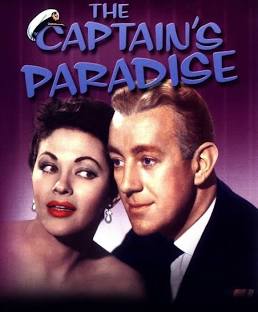
In this vane, Alec Guinness starred in a 1953 film called ‘Captain’s Paradise’. His character was the Captain of a ferry working between Gibraltar and Spanish enclaves in Morocco. The gag was that he had a wife and mistress with opposite and (for him) complementary characters. In Gibraltar his English middle class wife played by Celia Johnson, spent her days engaged in housework and domestic trivia, in preparation for her husband’s return. In the mid point of the ferry voyage, the Captain always turns his domestic wife’s photograph around in his cabin. Once the reverse side is a photo of his exotic lover played by Yvonne de Carlo. She is by nature a hedonistic, sexually alluring young woman who loves to drink and dance the nights away with her sea Captain. In the end it all goes wrong but the point is clear. Men idealise a particular woman who is a projection of both their negative and positive male anima.

It should be acknowledged that the female anima in the male psyche has an equivalent in women which Jung called the animus. The reader is invited to study this yin yang polarity. Let it be enough to know that the sacred dance in the affairs and affairs of men and women is one that can and should be, vital to their individual spiritual transcendence.

As a summing up and because I like an answer of any kind, I quote Joseph L. Henderson in ‘Man and His Symbols’ p. 157;

Any of us can see, of course, that there is a conflict in our lives between adventure and discipline, or evil and virtue, or freedom and security. But these are only phrases we use to describe an ambivalence that troubles us, and to which we never seem able to find an answer.

There is an answer. There is a meeting point between containment and liberation, and we can find it in the rites of initiation that I have been discussing…

…Initiation is, essentially, a process that begins with a rite of submission, followed by a period of containment and then by a further rite of liberation. In this way every individual can reconcile the conflicting elements of his personality: He can strike a balance that makes him truly human, and truly the master of himself.”

In highlighting the two Mary’s the ‘unresolved’ feelings within males needs such resolution. The Christian religion includes these processes in it’s rites of passage; (submission – mass) reconciliation (confession) and liberation (priesthood) but few ‘initiates’ become masters of themselves because, in my view, St. Peter keeps the key to himself. No gnostics may enter!

For me, the ‘sea captain’ of within, cannot and should not, keep up the charade. The individual needs of the women who are subject to anima projection, rightly demand their own initiation path.

The unresolved in worldly affairs takes place in order to illuminate and help us work through the contradictions within us all.

This ‘fight’ – which scales down in simplest of terms to ‘evil and virtue’ – is indeed hard to reconcile and much of the world’s greatest literature and other forms of expression, unpeels this angst before our eyes.

May we all sail on calm seas.

Time

My thoughts were turned to this subject when I scolded my cat Spooky. I shook my finger and looked cross. ‘Naughty! He slunk off guiltily. Just a few moments later he re-appeared and jumped up onto my lap. I realised that the incident had been completely forgotten in his mind, although in mine it was still fresh. I concluded that animals move through a series of disconnected events and are present most, if not all of the time, in the ‘now’. If they remember anything of the past it is only ever locked in their instinctual memory; the place where they store their ability to hunt and fall on four feet.

The Cat Righting Reflex, the perfect ‘Now!’

One might consider the well known psychology experiment by Pavlov who rang a bell before a dog’s meal time and he observed they salivated even though there was no food. Their response to the bell produced an anticipation of food. I would argue that the link is again instinctual memory rather than dogs imagining an event in the future as humans do.

Humans and animals experience time in the present, but humans go beyond this. We will form memories of past events from which we can recall at will. Films featuring an amnesiac character such as the Jason Bourne series of thrillers, show how difficult it is the function socially without memory.

Then we can imagine future events and manipulate in our minds how we will would like them to turn out or not. As children, we learn about danger by experience or parental instruction; ‘don’t put your hand in the fire’. By imagining an unpleasant future outcome, a bad experience can be avoided.

What the past and future have in common is the concept of time. Neither are occurring in the present moment. Therefore, we can argue, that before humans had the concept of time, events were experienced in the moment. Tribal myths and legends, passed on over the camp fire, were the only record of the past.

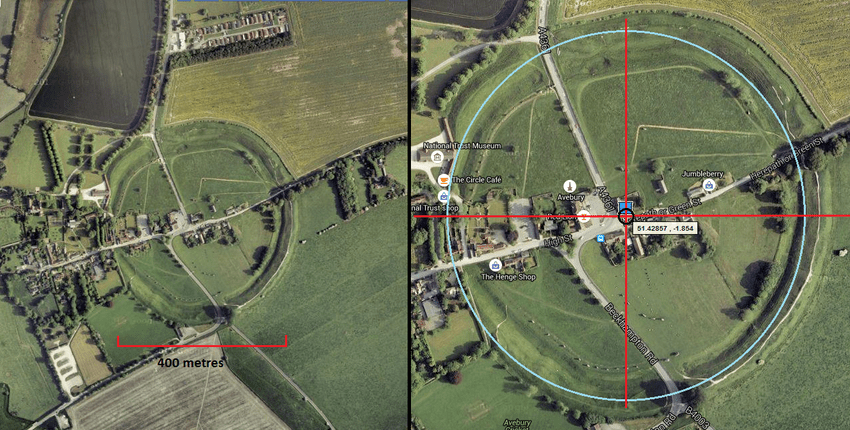
Avebury, England: Larger than Stonehenge containing Sun and Moon circles within a ditch and henge.

But these ‘disconnected events’ were at some time, observed to repeat as patterns. The passing of the seasons was undoubtedly a serious matter. Solar and lunar observatories were built all around the world and the Wiccan solar festivals remind us of this function. Megalithic henges and stone circles are commonly found to be astronomical calendars able to measure and predict the solstices and equinoxes. This was more than for agricultural use as archaeologists believe and relate to complex permutations of universal energies.

Although various crude clocks were used such as sun dials and candles, it was not until the 18th Century when an English clockmaker John Harrison invented the marine chronometer. This was a critical moment in history for it meant that navigation of the seas was made considerably safer. The precise time from an chronometer, reliably indicated the longitude on long sea voyages. When combined with the latitude from the height of the sun at midday, this gave navigators the precise position of the ship. The measurement of time not only fixed points in the day and night, but one’s location. Experiences in known time and space joined together in the age of science and reason.

Ariadne hands the thread to Theseus: depicting the wise aspect of his Anima

There is a story from Ancient Greece concerning Ariadne and her lover, Theseus. Theseus was charged with destroying the Minotaur, a flesh eating monster that lived in the centre of a labyrinth. Ariadne gave Theseus a ball of thread and instructed him to unwind it as he walked through the labyrinth, thereby finding his way out. Theseus successfully killed the Minotaur and escaped to Crete with Ariadne.

Ariadne gave Theseus a novel aid to connect the otherwise confusing experiences in the labyrinth, in a rational and repeatable way. Instead of disconnections which lead to the experience of ‘where am I?’, Theseus was able to rationally and repeatedly connect together these individual events. He was the first of Ariadne’s suitors to avoid being consumed by fierce panic and confusion, and by mastering time and location, escape.

The thread in this story, I suggest, represents Time with a capital ‘T’. Although an abstract concept and therefore not ‘real’ to the five senses, the continuity of experience created by time helps every human on their individual journey.

TI – ME

When we tie (TI-E) our experiences together we are able to overcome the monster within ourselves (–ME) and become our Higher Self.

The Sufi’s have an exercise which is conducted just before going to sleep. The entire day is recounted backwards in as great a detail as possible. There are no ‘conclusions’ or ‘observations’ to be made other than to ‘rewind’ daily experience.

In this way a continuous memory is formed of that day. This technique can be used after the death of the body as an objective review of one’s life is rewound before one’s eyes and beyond into the afterlife. Just as time does not exist in our dreams, so time ceases to be useful after death and we enter the fabled ‘eternity’. The fabled ‘lost souls’ of pergatory are those that have lost control of their ability to consciously move from one experience to another. Some even become locked in a repeated event in as described in the story of Tantalus. His condition was not ‘punishment’ as moralists believe but a state of mind.

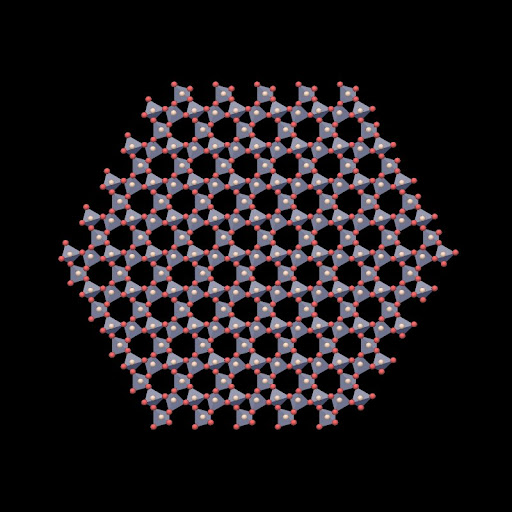
However sophisticated modern technology becomes, it can only ever approach the idea of infinitely fast things, never achieve them. When a quartz crystal has a tiny electric current pass through it it vibrates at 32,768 times a second. Nature is astoundingly constant in this respect and gave us quartz watches and other electronic devices. Just as quartz crystals are tetrahedral arrangements of oxygen and silicon atoms so precise that light passes straight through it, so it vibrates perfectly constantly.

The same clarity of experience is reproduced in spiritual practice by what is called ‘invocation’. In many mystical practices around the world, a student is tasked with the silent recitation of holy words. This ‘mantra’ is recited within the heart whilst experiencing, not negating, ordinary life. It is a task requiring Herculean concentration and effort, taking a lifetime to master, if ever at all.

The effect is to link the events of daily life in the way that an old fashioned movie film has regular cut outs on either side for the projector to connect with and move the film along at a regular speed. The illusion is one of still images that change imperceptibly and at thirty frames per second.

However difficult it is to understand how individual images scroll at speed, we do not need to know. The imperative is that one maintains the ‘I’ or ‘eye’ of the individual light bulb in the projector…whatever the story that is being projected.

Just as Theseus creeps closer to the centre of the labyrinth, so the observer creeps closer to their God within, using the technique of invocation. Like a cat watching a mouse hole, one’s concentration is fixed; mouse or no mouse.

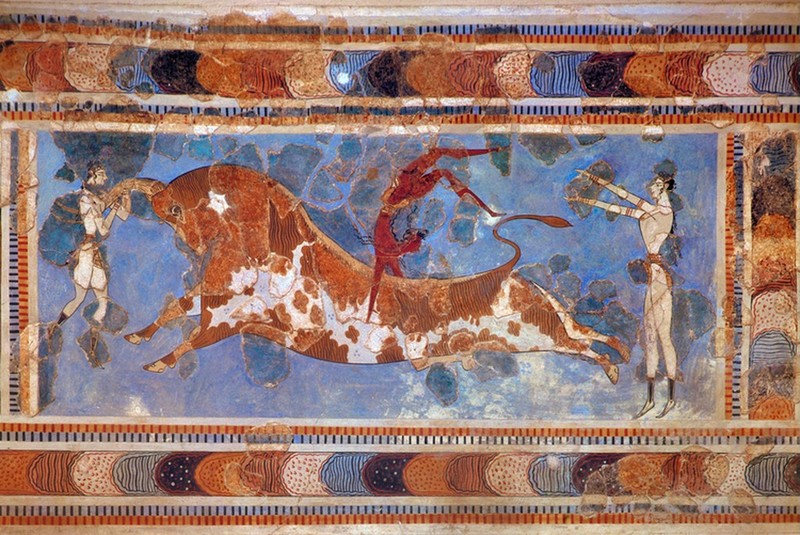
The Taurean Age of Civilisation on Crete, The Minoans

The slaying of the Minotaur in the age of Taurus, was central to the Minoan civilisation. The dark corridors of life have to be travelled so that the God-self can be discovered. The Beast or Minotaur is the same archetype as in the story of ‘Beauty and the Beast’. It is only truly known when love of true Self, slays the hideous ego.

This Jungian psychology is strangely connected to our modern day by the mystery of ‘time’ and the passing of discontinuous events that can warp into psychosis. The illusion of time becomes, in the clinically ‘sane’ at least, a constant ‘glue’ that makes experience appear continuous. But, just as in the beating chambers of the heart, time has an uncanny ability to increase and decrease it’s pace. Wonderful holiday experiences can fade all too soon while interminable waiting in the airport lounge has no end.

Physicists have there own story about this phenomon. In Albert Einstein’s ‘General Theory of Relativity‘, time is described as being something which can lengthen or shorten in it’s relation to space. ‘Time Dilation’ states that as an observer approaches the speed of light, time slows down. An astronaut might therefore return to Earth after a journey to the edge of the Universe at ‘warp speed’ and find that he or she is younger than their children.

Such concerns await us in the future. For the philospher, the task is to get to grips with the every day meaning of the passing of events. Can we keep a grip of the thread laid out to guide us through the labyrinth? Can we slay the monster within?

The Labyrinth in Chartres Cathedral, France: A Message from the Medieval Masons through time
picture credit: Helen Mueller